Falkirk Children's Commission Integrated Children's Services Plan 2017- 2020 - Falkirk ...
←
→
Page content transcription
If your browser does not render page correctly, please read the page content below
Falkirk Children's Commission Integrated Children's Services Plan 2017- 2020
Contents
SECTION                                                                                                            PAGE NUMBER

Foreword                                                                                                                2
Who/ What is this plan for?                                                                                             3
Integrated Children’s Services Plan Key Priorities                                                                      4
Poverty Context                                                                                                         5
Poverty Delivery Plan                                                                                                  6-8
Inclusion Context                                                                                                       9
Inclusion Delivery Plan                                                                                               10-12
Corporate Parenting Duties Context                                                                                     13
Corporate Parenting Duties Delivery Plan                                                                               14
Mental Health & Wellbeing Context                                                                                      15
Mental Health & Wellbeing Delivery Plan                                                                               16-19
Strategic Drivers                                                                                                      20
Linking Statutory Planning, Service Planning Priorities and ICSP Priorities. The National Improvement Framework.       21
Children’s Right and Participation of Children, Young People and Families in Service Planning / Development &
Decision Making                                                                                                        22
How do we prioritise our work?                                                                                         23
Appendices                                                                                                             24
1. Child Poverty Strategy for Scotland 2014 – 2017 Outcomes and Actions                                                25
2. Children and Young People Improvement Collaborative Stretch Aims                                                    26
3. Equality Outcomes 2010 – Falkirk Education Authority Equality Outcomes                                              27
4. What we achieved in our last plan                                                                                   28
5. Falkirk Children’s Commission Structure                                                                             29
6. The Golden Thread                                                                                                   30
7. Appendix 8 Wellbeing Definition as per the Children and Young People Scotland (2014) Act                            31
FOREWORD
Robert Naylor - Chair of Falkirk Children's Commission Leadership Group and Director of Falkirk Council Children’s Services.

I am pleased to endorse our Integrated Children’s Services Plan (ICSP) 2017-2020.

We want the best outcomes for all of our children in Falkirk and are committed to partnership working. Through the Children’s Commission and its Task
Groups, we will provide the best services we can with the resources we have. This plan will capture some of our duties in the Children and Young People
(Scotland) Act 2014 (CYP Act); Part 1 – Reporting on how we have taken steps to secure better, or further effect Children’s Rights; Part 3 – Children’s Services
Planning; Part 9 - Corporate Parenting, Part 6-8 - Early Learning and Childcare (Discretionary and Non-discretionary). This plan also links with our National
Improvement Framework for Scottish Education (NIF) Plan (Education (Scotland) Act 2016), Pupil Equity Funding (PEF) Plans. It reflects the Education Equality
Outcomes (Equality Act 2010), Child Poverty Strategy for Scotland and the stretch aims of the Children and Young People’s Improvement Collaborative (Old EYC/
RAFA). We continue to work to integrate our service plans, statutory plans and community planning partnership plans as much as is practicable (see pg. 4).
We will review our plan annually. Stakeholders will be involved in the co-creation, planning and scrutiny of our plan and their input will take place in various
forums throughout the year to feed into an annual report that must be submitted to Scottish Ministers in April each year.

We are delivering services in a challenging environment and our plan covers a period when there will be transformational change in public services and
budgets. An important part of doing this responsibly is listening to children and families. We are fully committed to safeguarding, supporting and promoting the
wellbeing of our children and young people (Section 96 (2) CYP Act) and listening to our families views to deliver services that meet needs and support children and
families to have the best outcomes. To help us hear families’ views, make best use of the data we have, and to inform our strategic needs assessment and future
plans, we are working with the Scottish Government on the Re-aligning Children’s Services Programme. It will give us health and wellbeing information and
data from children, young people and parents that will help us to consider how we commission and prioritise our service delivery.

In partnership, we will look at improving and making our services more efficient. We want to find creative ways to deliver services and allow us to meet the
needs of an ever growing young population in Falkirk. We will work together to develop local commissioning and seek external funding to deliver our plan in an
innovative way. We will link with other strategic groups to deliver on plans such as our Care Inspectorate Joint Inspection of Services for Children and Young
People in Falkirk improvement plan and our child protection improvement plan.

Research clearly states that it is important to intervene early for children and families to have the best chance of achieving positive outcomes. We continue to
be committed to targeting resources on prevention and early intervention. We know certain groups (see next page) are more vulnerable and our plan aims to
support these children and young people to have the best outcomes and achieve their full potential.

Using local and national evidence and information, we have identified 4 key priorities which are detailed in our plan. Our priorities reflect those of Falkirk’s
Strategic Outcome and Local Delivery (SOLD) plan (known nationally as LOIP), and those identified by the Children’s Commission Leadership Group.

We will use our plan to drive forward improvements across our services, be creative in how we can support families and, most importantly, to ensure we get it
right for every child in Falkirk.

                                                                                     2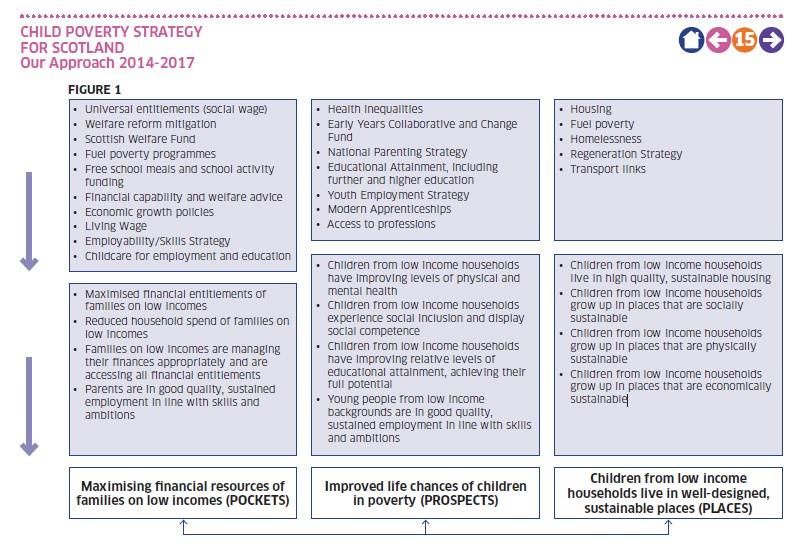
What/ who is this plan for?
Our plan is for everyone working with children and families in Falkirk. It is based on evidence we collect at regular intervals, our self-evaluation, recent Care
Inspectorate Care Inspectorate Joint Inspection of Services for Children and Young People in Falkirk findings, and most importantly, feedback from children and
families. Our plan is about the big priorities, what we need to do together across the Children’s Commission to make sure we have the resources to deliver
services that meet children’s needs. If you work with children and families, or related adult services, then this plan is for you. Your work must fit with the 7 key
priorities in this plan.

Our plan builds on the previous plan. It co-ordinates our work, drives improvement and provides a consistent approach to delivering services. This plan is a
dynamic plan and will be reviewed and changed to keep it up to date during its life (2017-2020), based on: what Falkirk people tell us, Scottish Government
priorities and local and national evidence. It is intended to be used electronically to make best use of the links and information that can be accessed via
hyperlinks. We want it to be an accessible and useful document that drives practice and service development. The Integrated Children’s Services Plan is a
statutory requirement of the Children and Young People (Scotland) Act 2014 – Part 3.

VISION: (SOLD Outcome 3)
Our children will develop into resilient, confident and successful adults.

Our vulnerable groups include those identified as protected characteristics groups in the Equality Act 2010.

                EQUALITY ACT 2010 – PROTECTED CHARACTERISTIC GROUPS                   CHILDREN’S COMMISSION – IDENTIFIED VULNERABLE GROUPS,
                                                                                      CHILDREN AND YOUNG PEOPLE WHO:
                Sex                                                                   Are on the child protection register or are care experienced children or
                                                                                      young people have a disability.
                Race                                                                  have a family member in prison.

                Disability                                                            are young carers.

                Religion or beliefs                                                   are living in poverty.

                Sexual orientation                                                    are affected by parental mental ill health, substance misuse or domestic
                                                                                      abuse.
                Gender re-assignment                                                  are affected by their own mental ill health/ substance use domestic
                                                                                      abuse.
                Pregnancy or maternity                                                are aged 16 – 21years (transitions to adult services can make young
                                                                                      people vulnerable).

                                                                                  3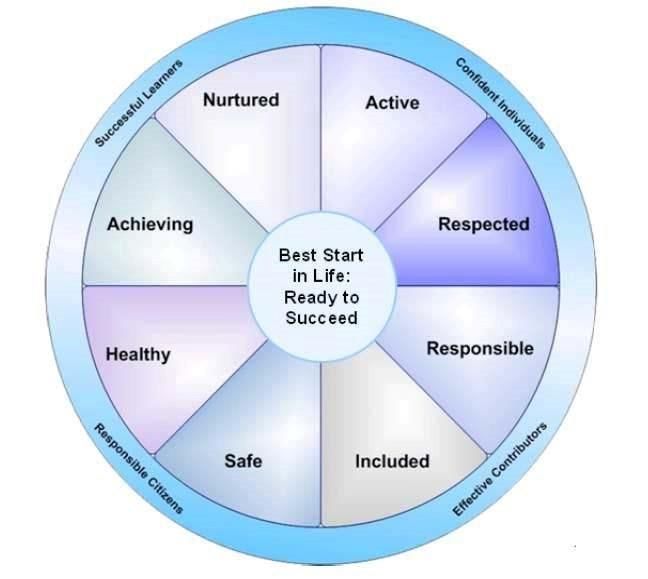
ICSP Key Priorities
SOLD Key Priority 4: Address the impact of poverty on children and young people
SOLD Outcome 3: Our children will develop into resilient, confident and successful adults:
o Inclusion - Children and young people live, learn and thrive in Falkirk.
o Implement the 6 corporate parenting duties in the Children and Young People
(Scotland) Act – Part 9
o Improving mental health and wellbeing (SOLD Key Priority 1)
4
POVERTY

 1 in 5 children/ young people in Falkirk live in relative poverty. That’s 21% or 7090 children and young
 people (CPAG 2014).

Over half of our children living in poverty don’t live in an SIMD (Scottish Index of Multiple Deprivation)
worst 15% area.

Children can experience poverty no matter where they live. Poverty ruins the life chances of too many
children and young people. We want to mitigate the effects of poverty to help all children to have the
best start in life and become successful.

 We will tackle the impact of poverty on children and young people and particularly want to improve outcomes around:
  • STIGMA
  • COST OF THE SCHOOL DAY
  • FOOD

We want to improve outcomes for Falkirk’s children and young people so that they:

   •   Have aspirations and can access learning opportunities and leisure/ recreational facilities no matter what their circumstances are

   •   Have any support they need to achieve their full potential and go on to training or employment when they leave school

   •   Without stigma, receive any benefits/ entitlements that maximize their family income and minimize the cost of going to school

   •   Have food to eat every day and can easily access free food.

                                                                                  5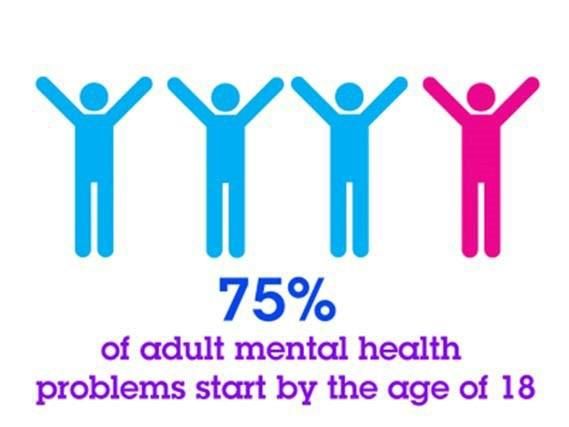
Falkirk Children’s Commission Delivery Plan – Children’s Commission Poverty Task Group
KEY PRIORITY: SOLD & ICSP – ADDRESS THE IMPACT OF POVERTY ON CHILDREN AND YOUNG PEOPLE

        OUTCOME                  KEY ACTION           SUB ACTIONS        SUCCESS MEASURES                   TIMESCALES     LEAD ORGANISATION
Tackle Impact of Stigma   Train Named Persons                          100% of Education and NHS      By December 2017   Children’s Commission
                          about impact of poverty                      Named Person will complete                        Poverty Task Group
                          and develop measures of                      e-module.
                          impact on practice.
                                                                       Number of Named Persons        September 2017
                          Decrease the number of                       attending Awareness day with
                          children entering school                     Child Poverty Action Group
                          with speech and language                     (CPAG)
                          difficulties.
                                                                       Decrease the number of         By December 2018
                                                                       children with previously
                                                                       identified speech and
                                                                       language concerns at 27- 30m
                                                                       assessment. (Currently 4% -
                                                                       CHSP Pre-school Nov 2015
                                                                       ISD Scotland)

                                                                       6
Cost of School Day   CPAG Cost of School Day                            Number of people and spread      By September 2017   Children’s Commission
                     Event.                                             of services attending                                Poverty Task Group
                                                                        Awareness day with Child
                                                                        Poverty Action Group (CPAG)

                                                                        Increase the number of           By June 2018        Children’s Commission
                     Work with Pupil Councils                           schools sending information                          Poverty Task Group
                     and other engagement                               about events that cost money
                     forums to raise                                    directly to parents.
                     awareness of cost of                                                                By June 2018
                     school day.                                        Develop all schools, flat rate                       Children’s Commission
                                                                        policy and increase the                              Poverty Task Group
                                                                        number of schools offering
                                                                        returnable deposits,
                                                                        discounted rates and pay in
                                                                        instalments for activities/
                                                                        trips.

                     Nursery Snack & Meals      Group to be             100% of children in Falkirk      August 2017         Children’s Commission
                     free to all under 5’s in   established to ensure   Council early years centres                          Poverty Task Group &
                     local authority early      policy updated and      will receive free school meals                       Falkirk Council Early
                     years centres.             processes clear re      and snacks.                                          Years and Head of
                                                budgets.                                                                     Finance.

                                                                         7
Food                         Work with Young            Work with DWP to             Increase uptake of those               June 2018                Children’s Commission
                             People including Pupil    identify numbers eligible     registered for free school meals. to                            Poverty Task Group
                             Councils and other        for Free School Meals in      100 %. Current average is:
                             engagement forums to      each school.                  Primary 93%, Secondary 83%                                      Children’s Commission
                             develop menus and                                                                                                       Poverty Task Group
                             identify barriers to
                             accessing free school
                             meals and identify areas
                             to test improvements.
                             Explore use of Young Scot
                             Cards for cashless
                             catering in schools.

                             Free School Meal            Eligible children, young    Number of eligible children and        August 2017              Children’s Commission
                             entitled – Summer Food     people and families can      young people accessing free food                                Poverty Task Group &
                             Programme.                 access food during the       over the summer via:                                            Fairer Falkirk
                                                        summer holidays.             Foodbank                                                        Partnership
                                                                                     Summer Programmes

                             Roll out ‘Focus on Your    TASK Identify SIMD and       Decrease the number of                 December 2018            Children’s Commission
                             Family’ family healthy     other areas to focus         children in the clinically                                      Poverty Task Group
                             weight programme           programme.                   obese category in p1 from                                       and NHS Forth Valley
                             prioritising areas of      TASK what is data on         1.9% to 1% (approximately                                       Dietetics.
                             deprivation.               healthy weight 0-5 that      18 children)
                                                        can identify areas for
                                                        improvement pre p1
                                                        healthy weight capture?

CROSS CUTTING ISSUES:
ISSUE                                                                               LINKED TO WHICH AREA OF THE COMMISSION/COMMUNITY PLANNING
Capture eligibility for Free School Meals working with the Department for           PARTNERSHIP/OTHER
                                                                                    Falkirk Council Data Users Gatherers Group, Falkirk Children and Young People
Work and Pensions.                                                                  Improvement Collaborative, Falkirk Dept. for Work and Pensions.
Poverty                                                                             Children’s Services EYPIP – standing agenda item.
                                                                                    Fairer Falkirk Partnership.
NAME OF LEAD OFFICER:       Liz Nolan                              DESIGNATION &          Aberlour – Assistant Director                   CONTACT DETAILS:
                                                                   ORGANISATION:

                                                                                      8
INCLUSION – LIVE, LEARN AND THRIVE IN FALKIRK
We want all of our children and young people to thrive and to be able to live and learn in Falkirk. While we know that most of our children and young people
do thrive in Falkirk, we acknowledge that some children will benefit from specialist education or placements based on their assessed needs. Where possible
we want to support children and young people to stay in Falkirk and grow up in their community. We have identified 3 key areas that we will focus on:
Transitions are a difficult time for many children and young people. We want to make sure our systems
and processes support transitions from early years to adulthood.
Inclusion and Outreach Support, to enable children to stay in Falkirk to live, learn and thrive, we need to
make sure children receive the right support at the right time. Staff must be confident and skilled to
support practitioners to meet the needs of the children in their care.
Early Learning and Childcare. The Children and Young People (Scotland) Act 2014 introduced new early
learning and childcare entitlements to replace the funded 12.5 hours/ week during term time of pre-
school education for 3 and 4 year olds. We are committed to increasing high quality, flexible early
learning and childcare which is accessible and affordable for all children and families. As with the
Scottish Government, our priorities are to; Improve outcomes for children, especially those who are
more vulnerable or disadvantaged; Support parents to work train or study, especially those who need
routes into sustainable employment and out of poverty.
We will improve outcomes for children and young people by:
• Ensuring all children have equal access to learning and opportunities that support their needs
• Transitions will be supported (see PSIF Action Plan - Transitions)
• Increasing the proportion of children educated in Falkirk by ensuring practitioners have the skills, knowledge and confidence to meet the majority of
needs
• Implementing the recommendations of the Inclusion Review to keep children supported in Falkirk and ensure those out with Falkirk maintain
community links.
• Develop outreach services to ensure staff are supported, confident and skilled to meet the needs of every child and make sure children, young people and
their families receive the right support at the right time.
9Falkirk Children’s Commission Delivery Plan – Children’s Commission Inclusion Task Group
KEY PRIORITY: ICSP AIM: Children and young people live, learn and thrive in Falkirk.
OUTCOME KEY ACTION SUB ACTIONS SUCCESS MEASURES TIMESCALES LEAD ORGANISATION
Transitions Implement PSIF Transitions Complete PSIF Action plan in place December 2017 Children & adult
Develop and Action Plan. Transitions Self with clear services
implement Evaluation and improvement transition Group.
effective systems to develop action plan. actions identified. Lead: Sara Lacey.
ensure smooth
transitions for Establish clear processes to Use results of audit of Quality of plans is June 2018 Commission
children, young ensure quality and Section 22 cases 2014, improved for non- Improvement,
people and their consistency of Child’s Plans to identify areas for statutory Child’s Inclusion and
families. for TAC plans and cases improvement. Plans. GIRFEC Groups
open to social work under and social work
Section 22 voluntary team manager.
measures. Lead: Cathy
Megarry
Reduce drift and delay for Implement Measures will be
Looked After Children Permanence and Care developed as part December 2018 PACE Leads
achieving permanence Excellence (PACE) of the programme. Group.
Programme in Falkirk. Lead: Jude
Breslin
10Inclusion and Develop and co- Identify Increase in the Dec 2018 Children’s Commission
Outreach Support ordinate multi- accommodation and number of Falkirk Inclusion Task group
Children and YP, agency approaches support needs for placements and Children’s
wherever possible, to inclusion and children and young available. Services Inclusion
are supported in outreach support people in Falkirk, at Group.
Falkirk. that allow more home and close to
children to remain home.
in Falkirk.
Increase the number of Increased number Vivien Thomson
foster and kinship of foster and
carers in Falkirk. kinship carers.
Implement the Family Family support is Children’s Services
Support Review: Co- accessible in all Service Manager Lead
ordinate and target localities and staff for Family Support:
family support services and parents know TBC
from early intervention how to access it.
to crisis support.
Increased number
Deliver early of parents attending Jude Breslin
intervention parenting Triple P or IY
and behaviour support courses.
including Psychology of
Parenting Programme
(PoPP)
11Early Learning
& Childcare Children’s
Improve outcomes Increase uptake of Undertake multi-agency Increased uptake of June 2018 Commission
for children, Eligible 2’s places improvement project to eligible 2 places. Inclusion Task
especially those and provide holistic improve the processes Further measures will be Group and multi-
who are more support to families. around eligible 2 children developed as part of the agency eligible 2
vulnerable or accessing entitled hours. project. improvement
disadvantaged, group.
Lead: Karen
Support parents to Thomson
work, train or study,
especially those who
need routes into
sustainable
employment.
CROSS CUTTING ISSUES:
ISSUE LINKED TO WHICH AREA OF THE COMMISSION/COMMUNITY PLANNING
File audits PARTNERSHIP/OTHER
Link with Child Protection Committee (CPC) and Commission Improvement Group
Early Learning & Childcare – free meals/ snacks for 2-5 yrs Link with Poverty Task Group and Children’s Services Head of Finance
NAME OF LEAD OFFICER: Cathy Megarry DESIGNATION & Service Manager Children’s Services CONTACT DETAILS:
ORGANISATION: Falkirk Council
12Corporate Parenting Duties in Falkirk
Corporate Parenting is defined in the Children and Young People (Scotland) Act 2014 as: “the formal and local partnerships between all services
responsible for working together to meet the needs of looked after children, young people and care leavers”.
Our recent Care Inspectorate Joint Inspection of Services for Children and Young People in Falkirk highlighted that we have proportionately lower than
national figures of Looked After Children. Nevertheless, of those who are Looked After, more than the national average are in non-Falkirk placements. Our
children appear to be more successful than the Scottish average at gaining positive destinations but sustaining these may not always be successful.
We know that looked after children have poorer outcomes than those who are not Looked After. These young people often have poorer mental health,
increased substance and alcohol use, are less able to cope with the ups and downs of life, less likely to go onto further education and sustain employment.
Our Social work data (July 2016), tells us that we have:
• 118 looked after children at home
• 105 children in local authority foster care
• 41 in other foster care
• 8 in LA care home
• 11 in residential school
• 4 secure accommodation
• 44 children looked after in kinship care
• 10 with prospective adoptive families
We will improve outcomes by:
• Establishing a collective vision for Corporate Parenting at the highest level as identified in our recent inspection
• Developing a Corporate Parenting Group (Task and Finish Group proposed in new structure) to deliver the priorities identified with the Champions Board.
• Developing a corporate parenting action plan that will include the Champions Board work, the LAC vocational pilot and any other work currently taking
place.
• We want to increase the number of placements we have in community based placements in Falkirk
We have established the Corporate Parenting Champions Board. The Champions Board is a consultative forum for young people to work in partnership with
strategic leads to influence service design. We will identify further improvement outcomes with young people on this board.
13Falkirk Children’s Commission Delivery Plan – Corporate Parenting Delivery Group
KEY PRIORITY: ICSP AIM: Develop formal and local partnerships between all services to meet the needs of looked after children and young people and care leavers by fulfilling the
six corporate parenting duties in the Children and Young People (Scotland) Act 2014.
OUTCOME KEY ACTION SUB ACTIONS SUCCESS MEASURES TIMESCALES LEAD ORGANISATION
6 duties of Corporate Parenting Identify key priorities and Group established and March 2017 Corporate Parenting Strategy
Part 9 of the Steering Group to be develop action plan. action plan and measures Group.
Act a r e established. Group established and in place.
implemented. action plan and measures
being identified by the
group.
Identify Key Priorities in Develop Family Firm Increase number of Looked August 2018
the Corporate Parenting Approach. Provide a range After Children going on to
Plan. of supported employment, positive destinations.
training and work
experience for Looked
After Children via council
and partners.
Learning and Develop awareness, Number of practitioners who August 2018
development. learning and development participate in learning around
about corporate parent corporate parenting.
role, duties of the Act and
Champions Board. Number and range of
practitioners accessing
training and awareness
sessions.
Champions Board. Develop Champions Members identified, young September 2017
Board. people engaged and launch
date agreed.
CROSS CUTTING ISSUES: LINKED TO WHICH AREA OF THE COMMISSION/COMMUNITY PLANNING PARTNERSHIP/OTHER
Awareness of duties of the Act – Part 9 and all other parts. Ensure all Commission Groups and Council structures are briefed on Duties of the Act
and Corporate Parenting. Link to the Commission Act Group.
NAME OF LEAD OFFICER: Vivien Thomson DESIGNATION & Service Manager Children’s Services CONTACT DETAILS:
ORGANISATION: Falkirk Council
14MENTAL HEALTH AND WELLBEING
In 2015 at a Children’s Commission consultation event, young people told us that support with
mental health and stress was a key priority for them.
Our data tells us that we have increasing referrals to CAMHS with year on year trends in June in
relation to exam stress.
Taking account of the Mental Health Strategy: 2017 – 2027, we will develop systems that
support early intervention via promotion and prevention. Some of our children and young people
have experienced loss, trauma and abuse and we want to make sure they have the support they
need to ensure they can thrive. We want to ensure those experiencing mental illness, thoughts of
self-harm/ suicide or significant distress can access the specialist resources and care they need.
Our referrals to CAMHS continue to increase. Not all children and young people who experience
mental distress need support from CAMHS. We want to support ALL of our staff to support children
and young people to have positive mental health and for them to feel confident to do this.
We want to improve the mental health and wellbeing of our children and young people to improve outcomes such as:
• Increased resilience to cope with life’s ups and downs
• Having the ability to manage stress including exam stress
• Good peer relationships
• Good relationships with their parents/carers who know what their children are doing
• Decreased risk behaviours like substance use, alcohol use and smoking
• Knowing who they can speak to at school or in their community when they are not coping – to get early support
15Falkirk Children’s Commission Delivery Plan – Children’s Commission Mental health and Wellbeing Task Group
KEY PRIORITY: SOLD: Improving Mental Health and Wellbeing
ICSP: All children and young people will be resilient and have timely access to care and support from practitioners who are skilled and confident.
(ACTIONS = from the Mental Health Strategy 2017 – 2027)
OUTCOME KEY ACTION SUB ACTIONS SUCCESS MEASURES TIMESCALES LEAD ORGANISATION
Falkirk children and Develop Commission Use re-aligning Data including re- December 2017 Children’s
young people will mental health and Children’s Services aligning children’s Commission Mental
be resilient and able wellbeing group and data to identify services data, Health and Wellbeing
to cope with life’s action plan to take areas of need and enables us to match Group.
ups and downs. forward work from improvement. needs to services
(Promotion) mapping exercise and identify
March 2016 and Identify shared improvement
from Realigning outcomes measures measures.
Children’s Services (Consider Falkirk
Data. outcomes Number of children October 2017 Children’s
Framework, NHS and young people Commission Mental
Goals based who display Health and Wellbeing
outcomes Test improving mental Group and CYPIC/
Viewpoint health and wellbeing. Data Group.
wellbeing tool -
gather information
on if wellbeing is
improving. Children’s
Commission
Expand infant mental Parenting
Five to Thrive Number of staff August 2017
health work including Partnership
Action 1: Review Steering Group to trained, number of
Personal and Social Aberlour perinatal staff stating positive
be reconvened to
Education (PSE), the mental health project impact on practice.
develop phase 2
role of pastoral and Five to Thrive. Children’s
plan.
guidance in local Number of young Commission Mental
authority schools, Develop a broad Education reps to people and staff who Health and Wellbeing
and services for PSHE curriculum table discussion at report they know December 2018 Group and Falkirk
counselling for that engages all Head teacher and about mental health Council Pastoral
children and young children and young EYPIP Meetings. and wellbeing, how Depute
people. people and train to access support or Headteachers.
staff to support this. find information.
16Children and families Develop information TASK: ensure key Mental Health March 2017 Children’s
have access to good for practitioners on representatives and wellbeing Commission
quality, accessible resources available to included in discussions meetings Mental Health
and timely support them to support to map services. established and Wellbeing
and services. (Care) children, yp and and Menu of Group.
Staff, children and families’ mental health resources for
young people and and wellbeing. practitioners is
parents know developed.
where and how to
access support Develop info graphic Share with all services
for children young working with children
people and families and young people and
and promote how we in school settings. Services share September 2017 Children’s
can support with info graphic and Commission
mental health and Develop social media links to resources Mental Health
wellbeing. Develop a campaign ‘Thrive in with parents. and Wellbeing
common strapline re Falkirk’ Group.
mental health ‘Thrive
in Falkirk’.
Children’s
Stress control – Promote adult stress Increased Commission
promote normalness control for parents. attendance at Mental Health
of stress and how we courses. and Wellbeing
can manage it best. Test use of Stress Young People October 2017 – June Group and
Control for Young and Adults 2018 School/
People in Falkirk report better Community
Schools. able to manage Resources.
stress.
Identify/ develop early Analyse inappropriate Number of young December 2017 Children’s
intervention supports. referrals to CAMHS to people/ parents Commission
identify trends and reporting timely Mental Health
opportunities for and easy access and Wellbeing
early intervention to support. Group and NHS
supports. FV CAMHS Tier 2.
Develop Parent focus
group.
17Action 8: Work with Develop a Number of staff December 2018 Children’s
partners to develop workforce that is trained in mental Commission Mental
systems and multi- confident to health, evidence Health and
agency support children, based approaches. Wellbeing Task
pathways that work in a young people and Group.
coordinated way to families, to Child’s Plan Audits – AND
support children’s mental improve mental mental health Children’s
health and wellbeing. health and needs are identified Commission
wellbeing, promote and actions being Improvement
attachment and taken to ensure Group.
manage trauma they are met.
experiences.
Develop tiered TASK: Establish key Decrease number of September 2017 Children’s
Practitioners will learning and learning pathways inappropriate CAMHS Commission Mental
have the confidence development for staff: eLearning, referrals by x amount Health and Wellbeing
and skills to ensure opportunities for all face to face, online by x date (NHS to Task Group.
early identification staff and specifically resources. provide data). Commission Learning
of needs and early for Named Persons. and Development
intervention TASK: develop Number of Named October 2017 – June Group.
(prevention) schedule of Persons trained. 2018
training:
CBT Number of Named
Action 2: Roll out Introduction Persons reporting
mental health to CAMH increased confidence
training for those Stress to support MHWB
who support young Control needs.
people in educational
settings.
18Staff understand TASK: Capture data Increase number of December 2017 Children’s
prevention and early on calls to PMHW calls to PMHW line. Commission Mental
intervention in age or help line and Health and Wellbeing
need and are establish baseline for Task Group.
confident to take calls.
action. Staff are able GIRFEC
to deal with distress Awareness raising Staff report they October 2017 – June Task Group/
and stress and sessions with staff - feel more confident 2018 Commission Learning
appropriately support Commission Cafes. to support young and Development
and signpost children, people and their Group.
YP and families. families with
mental health
support.
CROSS CUTTING ISSUES: LINKED TO WHICH AREA OF THE COMMISSION/COMMUNITY PLANNING
Adult mental health PARTNERSHIP/OTHER
SOLD Outcome 4 and Integration Joint Board Plan.
NAME OF LEAD OFFICER: ICSP - Jacqueline Sproule DESIGNATION & Manager CAMHS NHS Forth Valley CONTACT DETAILS:
SOLD - Patricia Cassidy ORGANISATION: Chief Officer Health and Social Care
SOLD 4 – Suzanne Thomson Partnership
NHS Forth Valley Senior Health
Promotion Officer
19STRATEGIC DRIVERS
The Children and Young People (Scotland) Act 2014 and Children’s Services Planning
We have a strong history of joint planning across services in Falkirk. The Children and Young People (Scotland) Act 2014 (Referred to in this plan as The Act),
now places a legal duty upon services to plan together to improve the wellbeing of their population and tackle inequalities (Part 3 of the Act). From 2017,
NHS and Falkirk Council have a duty to prepare a Children’s Services Plan every 3 years. In Falkirk, the Children’s Services Plan is known as the Integrated
Children’s Services Plan (ICSP). We have a duty to involve all children’s and related services, children, young people, families and wider society in the
preparation, planning, scrutiny and reporting of the ICSP.
The Act guidance sets out the strategic aims for a Children’s Service Plan:
(a) that ‘children’s services’ are provided in the way which:
1. best safeguards, supports and promotes the wellbeing of children (See appendix 3 for definitions)
2. ensures that any action to meet needs is taken at the earliest appropriate time and that, where appropriate, action is taken to prevent needs arising.
3. is most integrated from the point of view of recipient
4. constitutes the best use of available resources
(b) that ‘related services’ are provided in the way which, so far as consistent with the objects and proper delivery of the service concerned, safeguards,
supports and promotes the wellbeing of children in the area concerned.
Falkirk’s ICSP has been developed in accordance with the Act.
Getting it Right for every Child – GIRFEC
The Government’s vision is that Scotland is the best place in the world to grow up. For this to happen for all of
Falkirk’s children, including our most vulnerable, they must have access to the support they need to help them to
become the best they can be and have positive outcomes.
GIRFEC is the national approach to improving outcomes through public services. Based on the rights of children and
young people, it supports the wellbeing of children, young people and helps them and their parents to work in
partnership with the services that can support them when they need it. Key elements of the GIRFEC approach have
been introduced into law under the Children and Young People (Scotland) Act 2014. We are working hard to make
sure staff across the Commission, and related services, are supported to be able to meet all of the duties in the
Act.
20Linking Statutory Planning, Service Planning Priorities and ICSP Priorities
“Children’s Services Planning (ICSP in Falkirk) is part of a wider legal framework within which local planning and reporting takes place….At a local level, identifying and
clarifying the relationships between different planning and reporting processes has a number of potential benefits. “ P. 63-65 CYP Act Statutory Guidance on Part 3.
The Integrated Children’s Services Plan gives us a vehicle to bring several streams of planning together. This 2017 – 2020 plan has begun to weave parts of the act and
other statutory, policy drivers into one document, We want to build on this in Falkirk by exploring how we can better align the Integrated Children’s Services Plan with
Council Service Plans. We will build our use of evidence, consultation and data to inform our plans, single or multi-agency, to ensure we tackle disadvantage and
inequality, are accountable, and our joint working is effective. Our plans constantly evolve and our aim is to knit together our planning and reporting, where
practicable, to help us drive improvement in a targeted way. As we gather data from Re-aligning Children’s Services, build the data we have locally from our school
cluster data profiles that are being developed, our Community Planning Partnership Evidence Support Group and our Children’s Commission Data Group we will have
a clearer picture of the socio economic disadvantage in our communities and be able to jointly resource how we deliver services to meet these needs.
Our local education plan is being developed and will reflect the key priorities of the National Improvement Framework:
Improvement in attainment, particularly in literacy and numeracy
Closing the attainment gap between the most and least disadvantaged children
Improvement in children and young people’s health and wellbeing
Improvement in employability skills and sustained, positive school leaver destinations.
These priorities clearly align with our SOLD and ICSP priorities and the stretch aims of the Children and Young People’s Improvement Collaborative. All of our work is
underpinned by the United Nations Convention on the Rights of the Child (as per CYP Act Part 1) and the Education Authority Equality Outcomes (as per the Equality
Act 2010).
The Child Poverty Strategy for Scotland 2014 – 2017 outcomes are incorporated in our plans. The Children’s Commission will focus on ‘Improved life chances of
children in poverty’ – delivered via SOLD key priority 4, Address the impact of poverty on children. The SOLD delivery plans will address the other 2 outcomes from
the Child Poverty Strategy for Scotland.
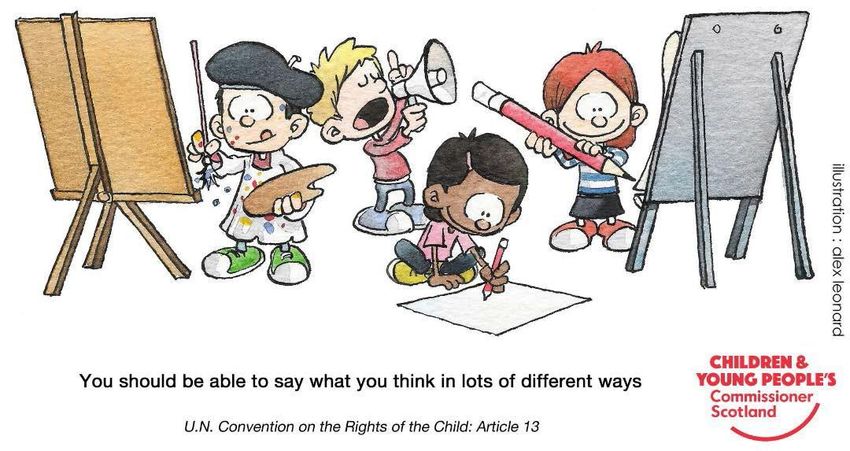
21Children’s Right and Participation of Children, Young People and Families in Service Planning / Development & Decision Making
Falkirk Children’s Commission will make sure our services meet
children and young people’s needs.
Within the current financial climate, it is more important than
ever that our services are targeted to those who need the support
most, including those who need early intervention. We regularly
gather views and feedback from people using our services.
We want more young people to be involved in planning and
developing Children’s Services and the Children’s Commission is
developing Falkirk Children and Young People Forum to do this.
The forum will link with existing young people’s groups as well as
bring groups together when we want to listen to young people on
certain priorities or issues.
The Forum will provide a consultative assembly for all groups, services and people supporting children and young people in Falkirk. The forum will engage with
children and young people through existing groups such as pupil councils, youth groups, and clubs, volunteering forums, champion’s board and all the other
groups that children and young people engage with. We want to ensure all children, young people and families views are at the centre of how we plan,
develop and improve our services.
We have been planning together as a Commission for many years and now have a duty to do so under part 3 of the Children and Young People (Scotland) Act
2014. The Act states that children and young people should be included in planning, scrutiny and reporting about the plan. We will do this through the Falkirk
Children and Young People Forum. Alongside planning, part 1, of the Children and Young People (Scotland) Act 2014 places a duty on a range of public bodies
(including all local authorities and health boards) to report, as soon as practicable after the end of each three-year period, on the steps they have taken to better
secure, or give further effect to, the United Nations Convention on the Rights of the Child (UNCRC) requirements. From 2017 we aim to report on all articles of
the UNCRC through our ICSP.
If you have young people/a group that would like to be part of Children’s Commission Planning please get in touch:
girfec@falkirk.gov.uk
22How do we prioritise our work?
We will build on our current self-evaluation and continue to use the wealth of information shared across services to make improvements. Our plan has been
informed by sound evidence. We will develop processes that enable us to carry out a multi-agency Joint Strategic Needs Assessment (JSNA) to help us pull all
of our data together. Collective data gives us a holistic picture of needs across Falkirk. We will use this data, along with our other evidence and feedback, to
continue to develop our priorities. To ensure our planning continues to be informed by robust data, information and feedback from children and families,
future work will be informed by the Scottish Government Realigning children’s Services Programme which will be part of our JSNA
Across the Children’s Commission, the Improvement and Planning Group will drive improvements and good practice across Falkirk, and measure the impact
for our children, young people and their families. The Improvement & Learning and Development Group will also support learning and development across
the Commission workforce.
Workforce Development Monitoring, Scrutiny & Quality Improvement
The Falkirk Children’s Commission workforce learning and development Falkirk Community Planning Partnership and Falkirk Children’s Commission
strategy drives workforce development across the Commission. Shared Leadership Group will scrutinise the impact of the Integrated Children’s
learning and development opportunities are developed in line with the 7 Services Plan. They will make sure we are doing what we should be doing
priorities in this plan alongside legislation and key priorities such as the in planning, reviewing and improving outcomes using appropriate tools to
Children and Young People (Scotland) Act 2014 and the National self-evaluate. We will report to the Community Planning Leadership Board
Framework for Child Protection Learning & Development in Scotland 2012. annually on our ICSP.
Our aim is to develop a competent and skilled workforce that is able to The Children’s Commission Improvement & Learning and Development
meet children and young people’s needs across the continuum from early Group uses available local and national data, evidence and information to
intervention to vulnerable groups. We will support staff to meet the needs monitor children’s rights progress, identify needs, improve practice and
of Falkirk’s children and young people across the continuum of need. We inform our Plan. We can better use data to show improvement, identify
will embed Child Protection and Public Protection as part of this gaps, and meet needs. The Commission Data Sub Group looks at data and
continuum and through the implementation of GIRFEC. We have also information for improvement to inform our planning. Our strong
agreed core competencies for staff, based on the Common Core of Skills partnership working enables us to collect a wide range of data to inform
and Knowledge and Understanding and Values for the Children’s our plan.
Workforce.
Statutory Duties:
The Children and Young People (Scotland) Act 2014, requires that our ICSP
We recognise that a variety of learning opportunities are needed to
should be written every 3 years. Our first plan will be 2016-2019 then
support staff. We have developed GIRFEC Falkirk Practitioner Pages – a
every 3 years with an annual review to make sure the needs of Falkirk’s
one stop shop for all learning, resources and information.
children and young people haven’t changed, that we are delivering in
accordance with Scottish Government priorities and that the plan is
deliverable within the ongoing budget constraints.
23Appendices
1. Child Poverty Strategy for Scotland 2014 – 2017 Outcomes and Actions
2. Children and Young People Improvement Collaborative Stretch Aims
3. Equality Outcomes 2010 – Falkirk Education Authority Equality Outcomes
4. What we achieved in our last plan
5. Falkirk Children’s Commission Structure
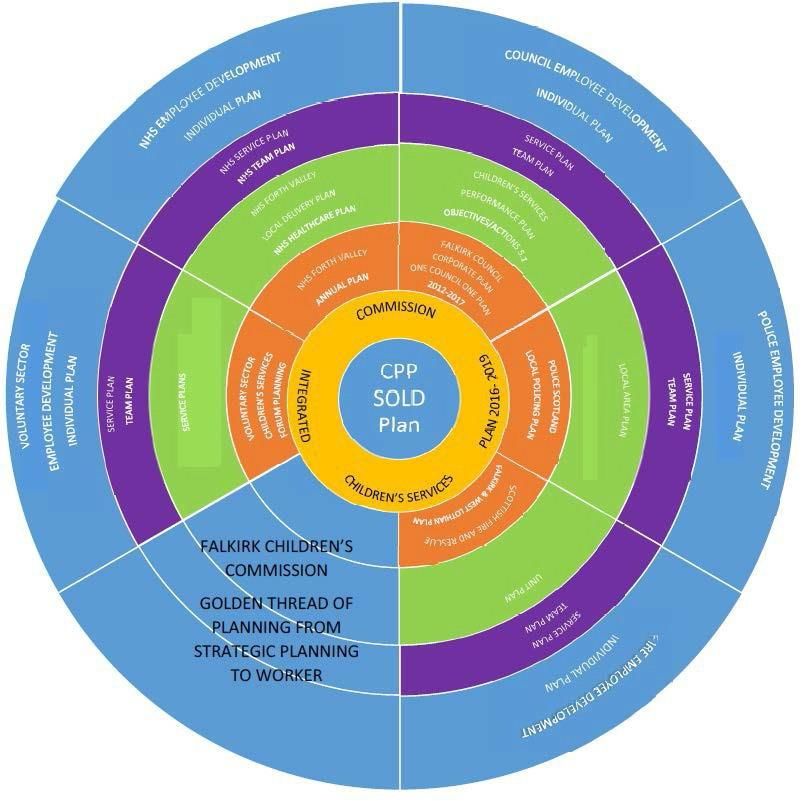
6. The Golden Thread
7. Appendix 8 Wellbeing Definition as per the Children and Young People Scotland (2014) Act
2425
Children and Young People Improvement Collaborative – Vision and Outcome Aims
Quality Improvement throughout the child and young person journey to achieve excellence and equity by getting it right for every child.
The CYPIC provides an overarching view of quality improvement work where specific quality improvement programmes for children and
families can be affiliated and supported.
 Pre-birth to 15 months                         15 – 30                                                                                     S1 – S3            S4 – S6+
                                                                       30 months – P1                 P2 – P4            P5 – P7
                                                months
The MCQIC aims are to       By 2020 at least   By 2020, at       By 2020, at       By 2020, at      By 2020, at        By 2020, at        By 2020, at        By 2020 at
reduce the incidence of     85% of Children    least 85% of      least 85% of      least 85% of     least 85% of       least 85% of       least 85% of       least 95% of
harm in women and           within each        children within   children within   children         children, within   children, within   children, within   young people
babies by 30% by 2019.      SIMD quintile of
This harm is defined for                       each SIMD         each      SIMD    within each      each SIMD          each SIMD          each SIMD          within each
                            the CPP will       quintile of the   quintile of the   SIMD quintile    quintile will      quintile will      quintile will      SIMD quintile
all 3 strands of the
                            have reached       CPP will have     CPP will have     will have        have               have               have               of the CPP
MCQIC programme –
                            all of their       reached all of    reached all of    successfully     successfully       successfully       successfully       will go on to a
maternity , neonatal
and paediatric care. For
                            developmental      their             their             achieved         achieved CfE       achieved CfE       achieved CfE       positive
example, in maternity       milestones at      developmental     developmental     early level      First level        Second level       Third level        participative
care – two of the           time of their      milestones at     milestones by     literacy,        literacy,          literacy,          literacy,          destination
defined aims are to         13 -15 month       the time of       the time of       numeracy and     numeracy and       numeracy and       numeracy and       on leaving
reduce the rate of          child health       their             their 4-5 year    are              progressing in     are progressing    are progressing    school
stillbirth and neonatal     review             27 – 30 month     child    health   progressing in   health and         in health and      in health and
mortality. QI work in the                      child health      review            health and       wellbeing as       wellbeing as       wellbeing as
CYPIC contributes to this                      review                              wellbeing as     evidenced by       evidenced by       evidenced by
programme and will be                                                              evidenced by     SHANARRI           SHANARRI           SHANARRI
encouraged and                                                                     SHANARRI         indicators by      indicators by      indicators by
supported                                                                          indicators by    the end of         the end of         the end of
                                                                                   the end of       primary 4          primary 7          secondary 3
                                                                                   primary 1
                       Maternity and Children Quality Improvement Collaborative (MCQIC) spans the child journey from pre-birth to 18+
    The aim is to improve outcomes and reduce inequalities by providing safe high quality care experience for all women, babies, children and families in the
                                                maternity, neonatal and paediatric healthcare settings in Scotland.
                                                     A suite of outcome measures include national stillbirth
 Stretch aims are essential to guide and evidence the progress of improvement work. They set a challenging ambition that harnesses the energy and
 motivation of those participating, and gives them something to strive towards. They should be measurable in order to demonstrate progress towards the
 desired outcome. Stretch aims differ from targets which are primarily set in order to achieve an expected goal, and to allow scrutiny and accountability of
 whether work achieves the level of success expected by the target.
                                                                             1
     Note: These national stretch aims for CYPIC will require review as new data becomes available and a better understanding of
                                                baseline performance is established.
Falkirk Council Education Authority Equality Action Plan 2017
Outcomes Key Action Sub Actions Success Measures Timescale Lead Organisation
Children and Young People with the Education staff to take part in Education SMT and Falkirk Council % of staff who have taken part Dec 2017 Children’s Services –
relevant protected characteristic raising awareness session on Corporate Services to agree key in awareness raising sessions. Education division and
groups, or who experience other the Equality Outcomes and the messages for staff. Falkirk Council
forms of discrimination and Equality Act 2010. Develop briefings for EYPIP and SIP Corporate Services and
disadvantage, are able to achieve and HQ staff. Falkirk Children’s
their potential. Share briefing with Children’s Commission Planning
Commission Planning Group. Group.
Develop pro forma based on Braes
Case Study.
Develop common processes Process map current systems for % schools report they know the 2021 Children’s Services
and improve data captured on data capture and identify areas for processes to report data Education Division.
protected characteristic groups improvement and what data needs captured on protected
and prejudiced based bullying. collected. characteristic groups.
Develop Action Plan that Identify current numbers of gypsy/ Increase the number of children 2021 Children’s Commission
includes identified protected traveller children in catchment from a gypsy/ traveller Inclusion and National
characteristic groups such as schools near to Redding site. background who attend high Improvement
BME and gypsy traveller children school and feel safe to attend. Framework (NIF) Task
and young people. (could be Groups.
incorporated into and reported
Consult with Black and ethnic Number of young people 2021 Children’s Commission
via Integrated Children’s
minority (BME) children and young consulted. NIF Task Group/
Services Plan)
people to understand any barriers Improvement plan produced Children’s Commission
and identify areas for improvement. with measures as identified by Children and Young
Use Realigning Children’s Services young people. People Improvement
data to inform data and information. Group.
Children and young people within Implement recognised standards SMT to agree which standards % of schools achieving 2021 Secondary
the relevant protected such as: schools will achieve and what will be Improvement
characteristic groups in Falkirk feel LGBT charter mark included in school improvement Partnership
safe where they learn and are Rights respecting plans.
supported to have positive mental schools Award
health and wellbeing.
All schools use restorative Schools will include in school
approaches. improvement plan.
27Appendix 1 - 2016 Plan
What we achieved in our last plan.
Our model of delivery, as stated in the 2010 – 2015 Integrated Children’s Services Plan, focused on the Domestic Abuse Pathfinder findings, Intensive
family Support Service IFSS, Coordinated Children’s Services Locality Approach and the Integrated Assessment Framework (now called the Child’s Plan).
All of the models have been reviewed independently and as part of a large Multi-Agency Group Review carried out in 2012.
The MAG review identified opportunities across the Children’s Commission and the Leadership Team worked closely together identifying a new Commission
Structure to ensure reporting and delivery of services is more streamlined and focused to meet our aims and improve outcomes for our children.
The learning from the reviews has informed the development of the Named Person Service which has replaced the Multi-Agency Group (MAG) processes
through the Children and Young People (Scotland) Act 2015.
A review of Family Support Services is currently being considered, IFSS are part of this. The review will look at the continuum of need and how our services
can best meet needs along a continuum from early intervention to crisis support. We are continuing to develop the Families Information Service to keep it
up to date with any changes we make and ensure families can find the information they need.
Domestic Abuse has been a continuous focus for the Child Protection Committee with practitioner forums and strategic work taking place with the
Commission learning & development group to support staff.
Our self-evaluation has been key to developing our new plan and priorities. It has helped all services to reflect and identify where we are doing well and
what areas we need to focus on. We will use feedback from our inspection, make better use of the data we have, and further strengthen our involvement
of children and families in our planning and scrutiny. We will implement Parts 1 and 3 of the Children & Young People (Scotland) Act 2014 into our planning
and reporting to ensure we meet the duties commencing 1st April 2017.
28Children’s Commission Structure 09.06.2017
FALKIRK COMMUNITY PLANNING STRATEGIC BOARD
PLAN: Strategic Outcomes Local Delivery (SOLD) Plan ‐ 4 Key Priorities & 6 Outcomes Champions Board
(ICSP Priority:
Corporate Parenting)
CPP EXECUTIVE GROUP
PUBLIC INTEGRATION FALKIRK CHILDREN’S FALKIRK
EQUALITIES & HEALTH & ECONOMIC
PROTECTION JOINT BOARD COMMISSION LEADERSHIP FAIRNESS DELIVERY WELLBEING GROUP PARTNERSHIP
CHIEF OFFICERS
(ICSP PRIORITY: GROUP GROUP SOLD Outcome 4
GROUP
Group
Improving
Mental Health & PLAN: Integrated Children’s
Wellbeing) Services Plan 2016‐2019
Child
Protection
Public
Committee
Protection
Lead Children’s Commission Planning Group
Chair: Falkirk Children and
Officers
Freda Young People
Group Chair: Damian Armstrong – Police
McShane Partnership
Scotland
Ann McLaughlin – NHS Forth Valley
Chair: TBC
Children’s Commission Children’s Commission
Improvement Group Learning and
Development Group
Chair: Matthew Davies,
Children’s Services Chair: Evelyn Kennedy
Children & Young People Realigning Children's Services
Improvement Collaborative (CYPIC) Task & Finish Group
INCLUSION TASK CORPORATE
POVERTY TASK GROUP MENTAL HEALTH & ‘THE ACT’ STEERING NATIONAL
PARENTING
GROUP Chair: Cathy WELLBEING GROUP GROUP IMPROVEMENT
DELIVERY GROUP
Megarry Children’s Children & Young FRAMEWORK (NIF)
Chair: Liz Nolan Chair: Jacquie PARENTING TASK
Services Chair: Vivien People (Scotland) for Scottish
Aberlour Sproule NHS Forth GROUP
Thomson Act 2014 Education Group
SOLD Priority 4 Valley CAMHS
Children’s Services Chair: Kim Carey
SOLD Outcome 3 Chair: Sara Lacey Chair: Rhona Jay
SOLD Priority 4 Aberlour
ICSP PRIORITY: SOLD Priority 4 Children’s Services Children’s Services
ICSP PRIORITY: Inclusion – Live And
Address the Impact Learn In Falkirk ICSP Priority:
ICSP Priority:
of Poverty on Improving Mental
Implement the
Children and Young Health and
Corporate Parenting
People) Wellbeing
Self Directed duties in The Act.
Support Group
FALKIRK WIDER CHILDREN’S COMMISSION
The foundation of the Children’s Commission. A multi agency forum for all practitioners working with children, young
people and their families providing involvement involved in planning, scrutiny and improvement. Ensuring that national
and local drivers and priorities are communicated.3. THE GOLDEN THREAD FROM
COMMUNITY PLANNING TO INDIVIDUAL
304. Wellbeing Definition – As Per the Children and Young People (Scotland) Act 2014
• Safe – protected from abuse, neglect or harm at home, at school and in the community.
• Healthy – having the highest attainable standards of physical and mental health, access to suitable healthcare, and support in learning
to make healthy and safe choices.
• Achieving – being supported and guided in learning and in the development of skills, confidence and self-esteem, at home, in school
and in the community.
• Nurtured – having a nurturing place to live in a family setting, with additional help if needed, or, where this is not possible, in a suitable
care setting.
• Active – having opportunities to take part in activities such as play, recreation and sport, which contribute to healthy growth and
development, at home, in school and in the community.
• Respected – having the opportunity, along with carers, to be heard and involved in decisions that affect them.
• Responsible – having opportunities and encouragement to play active and responsible roles at home, in school and in the community,
and where necessary, having appropriate guidance and supervision, being involved in decisions that affect them.
• Included – helping to overcome social, education, physical and economic inequalities, and being accepted as part of the community in
which they live and learn.
In relation to the concept of wellbeing, the terms “safeguards”, “supports” and “promotes” should be taken
to mean:
Safeguards – protects from harm or damage
Supports – gives assistance, approval, encouragement
Promotes – actively encourages or further develops.
31You can also read


