First evidence of retrospective findings of microplastics in harbour porpoises (Phocoena phocoena) from German Waters
←
→
Page content transcription
If your browser does not render page correctly, please read the page content below

contact: carolin.philipp@tiho-hannover.de

 First evidence of retrospective findings
            of microplastics in
harbour porpoises (Phocoena phocoena)
           from German Waters

                    C. Philipp, B. Unger, S. Ehlers,
                          J. Koop, U. Siebert

    26th of May 2021                        17th Meeting of the Jastarnia Group
Introduction

 Microplastics (MPs)
                                                              © ITAW – AW            © ITAW – AW
 •
Current Knowledge in Microplastic Occurrence in Marine Mammals

 • North Sea                                               • Baltic Sea
       • Netherlands:                                              • no study investigates microplastic occurrence
          • harbour porpoises, >1 mm                                 in marine mammals
          • harbour seals, > 300 µm
       • Great Britain: var. of species, > 35 µm

 • first time: investigation gastrointestinal tract (GIT) samples of marine mammals from German waters
   (North Sea and Baltic Sea)

 • since marine mammals are highly mobile, results could be compared with other studies from the North
   Sea (North Atlantic Area)

 • links between microplastic exposure & health status are scarce

                                                     [Bravo Rebolledo et al. 2013; Hernandez-Milian et al. 2019; van Franeker et al. 2018; Nelms et al. 2019 ]

26.05.2021                                                                                                                                                 3
Survey Area

                      © ITAW – AW, Carolin Philipp

26.05.2021                                           4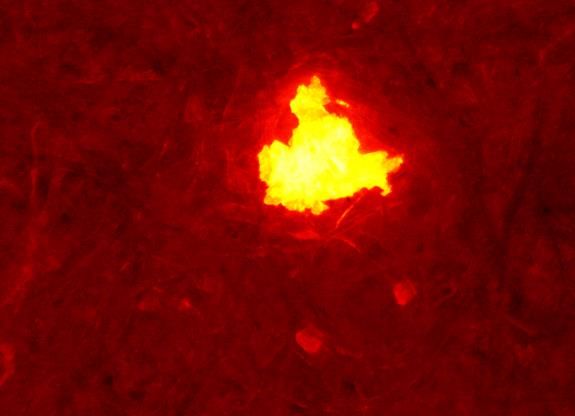
Sample Collection
© ITAW – AW
• Samples: collected since 2014
• intestinal samples (incl. faeces) of all three species
during regularly conducted necropsies
stored in glass jars at -20°C
Philipp et al. 2020
26.05.2021 5
Sample Collection
focussing on MPs ≥ 100 µm
• Samples: collected since 2014
100 µm 300 µm
• intestinal samples (incl. faeces) of all three species
during regularly conducted necropsies
stored in glass jars at -20°C intestinal
tissue
• Purification:
© ITAW – AW, Carolin Philipp
• samples are sewed into a double-layer washing
bags
• washing machine (enzyme detergents were added)
hard parts + intestinal tissue
rinsed into a glass beaker with saturated NaCl
solution (density separation)
filtered onto cellulose filters
26.05.2021 6
Materials & Methods

                                                                               focussing on MPs ≥ 100 µm
• How to identify microplastic particles?

     • Identification: Nile Red staining + Fluorescence microcopy

     • Polymer identification: µFTIR spectroscopy

               © ITAW – AW, Carolin Philipp   © ITAW – AW, Bianca Unger   © ITAW – AW

26.05.2021                                                                                                 7
Microplastic Burden
First evidence of retrospective findings of microplastics in harbour porpoises (Phocoena phocoena) from German waters

                                                                                                                                                                                                   17         13
                                                                                                                            North Sea                  Baltic Sea
                                                                                                                                     14                     16
                                                                                                                                                                                                   adult

                                                                                                                                123                        278         Mean±SDBS = 18.27 ± 14.54           juvenile
                                                                                                                            microplastics              microplastics   Mean±SDNS = 8.2 ± 7.89

                                                                                                                                     86 %                  100 %        significantly higher         no significant
                                                                                                                                                                           burden in the              differences
                                                                                                                                                                             Baltic Sea             concerning sex
                                                                                                                                                                                                        and age

                                                                                                                        26.05.2021                                                                                    8
Microplastic Burden: Identified Polymers in the Baltic Sea (µFTIR)
First evidence of retrospective findings of microplastics in harbour porpoises (Phocoena phocoena) from German waters
• Baltic Sea: subset of 34 particles were identified
Potential sources:
Polyester & Polyamide: lost fibres of washed cloths
Polyethylene & Polypropylene: packaging material
PEST, PE, PA & PP: fishing gear
• Do we have in general a higher microplastic occurrence in the Baltic Sea?
contradictive to studies focussing on microplastics in water & sediments
differences between fish species (pelagic & demersal)
© ITAW – AW, Carolin Philipp
26.05.2021 9
Conclusions
First evidence of retrospective findings of microplastics in harbour porpoises (Phocoena phocoena) from German waters
• harbour porpoises of the North Sea & Baltic Sea are exposed to microplastic
a significant higher burden was identified in individuals from the Baltic Sea
studies investigating demersal & pelagic fish species coincide with our results
• no differences between ages & sexes
no accumulation over the lifespan needs to be
continued in
egestion of microplastics is clearly determined future studies
• first evidence:
• a good nutritional status is likely joined with a high quantity of microplastics
• Do we have in general a higher microplastic occurrence in the Baltic Sea?
healthy individuals feed continuously high rate of ingestion/egestion
contradictive to studies focussing on microplastics in water & sediments
differences
• the favoured prey / feeding between
strategy might playfish species (pelagic & demersal)
a role
26.05.2021 10Thank you for your interest and your attention!
We would like to thank:
Federal Institute of Hydrology - Department 4
Prof. Dr. Jochen Koop
Sonja Ehlers
ITAW necropsy team for collecting the samples & data
Seal Rangers of Schleswig-Holstein for collecting carcasses
contact: carolin.philipp@tiho-hannover.de
26.05.2021 11References
Bravo Rebolledo, E. L., Van Franeker, J. A., Jansen, O. E., & Brasseur, S. M. J. M. (2013). Plastic ingestion by harbour seals (Phoca vitulina) in The
Netherlands. Marine Pollution Bulletin, 67(1–2), 200–202. https://doi.org/10.1016/j.marpolbul.2012.11.035
Hernandez-Milian, G., Lusher, A., MacGabban, S., & Rogan, E. (2019). Microplastics in grey seal (Halichoerus grypus) intestines: Are they associated with
parasite aggregations? Marine Pollution Bulletin, 146(August 2017), 349–354. https://doi.org/10.1016/j.marpolbul.2019.06.014
Nelms, S. E., Galloway, T. S., Godley, B. J., Jarvis, D. S., & Lindeque, P. K. (2018). Investigating microplastic trophic transfer in marine top predators.
Environmental Pollution, 1–9. https://doi.org/10.1016/j.envpol.2018.02.016
Philipp, C., Unger, B., Ehlers, S. M., Koop, J. H. E., & Siebert, U. (2021). First Evidence of Retrospective Findings of Microplastics in Harbour Porpoises
(Phocoena phocoena) From German Waters. Frontiers in Marine Science, 8(May). https://doi.org/10.3389/fmars.2021.682532
Philipp, C., Unger, B., Fischer, E. K., Schnitzler, J. G., & Siebert, U. (2020). Handle with Care—Microplastic Particles in Intestine Samples of Seals from
German Waters. Sustainability, 12(24), 10424. https://doi.org/10.3390/su122410424
van Franeker, J. A., Bravo Rebolledo, E. L., Hesse, E., IJsseldijk, L. L., Kühn, S., Leopold, M., & Mielke, L. (2018). Plastic ingestion by harbour porpoises
Phocoena phocoena in the Netherlands: Establishing a standardised method. Ambio, 47(4), 387–397. https://doi.org/10.1007/s13280-017-1002-y
.
26.05.2021 12You can also read


