Functional anti-friction and special coatings - future-oriented systems for the reduction of noise and improvement of the gliding properties ...
←
→
Page content transcription
If your browser does not render page correctly, please read the page content below
functional anti-friction
and special coatings
future-oriented systems for the reduction of
noise and improvement of the gliding properties
GLISS-COAT®

powerful and environmentally friendly systems

Aalberts surface technologies in Solingen is the                     We are happy to take care of our customers‘ chal-
right market partner for you when it comes to main-                  lenges regarding the reduction of friction, wear
tenance-free lifetime lubrication, permanent corro-                  and noise. You benefit from the following advan-
sion protection without greases or oils, and noise                   tages:
reduction.
                                                                     •    All GLISS-COAT®-coating systems “made in
                                                                          Solingen”

                                                                     •    Process diversity through individual
                                                                          requirements

                                                                     •    Material independent coating systems
                                                                          (metal, plastic)

                                                                     •    High temperature applications possible

                                                                     •    Economic functionality through elimination of
                                                                          maintenance, easier service and avoidance of
                                                                          production downtimes
we make                                                              •    Assurance of consistent quality through
your surfaces                                                             automated application methods
future-proof                                                         •    Interdisciplinary applications

                                                                     •    Our own development laboratory

Noise and high sound levels are increasingly a burden. Coatings provide an assistance.

All technical values published in this brochure are subject to the test conditions specified. We therefore emphasize that the appli-
cations and operating conditions, along with the end user’s practical experience, will ultimately determine the level of performance
achieved by the coating and/or coating system.

2    Aalberts surface technologies functional anti-friction and special coatings
what is GLISS-COAT®?

GLISS-COAT® refers to dry lubricating anti-friction
coatings developed by Alberts surface technolo-
gies reduce friction and wear. The coating materi-
als are water-soluble, free of heavy metals and can
be applied using various methods.

how are GLISS-COAT®-
layers created?
Individual parts are coated using automated flat
spraying systems, while small mass-produced parts
are treated in hot drums. The flow behavior of the
coatings is adjusted to avoid disturbing edge build-
up and drop formation at the edges and the bores.

Most GLISS-COAT®-coatings must be dried after
application to the surface of the workpiece to en-
sure that the systems obtain the desired properties
                                                             The coatings are developed and tested in our own laboratory.
in terms of adhesion, hardness, corrosion protecti-
on and lubrication.

GLISS-COAT®-refinable materials                              advantages of GLISS-COAT®-coatings
                                                             compared to greases and oilsölen
Depending on the process variant all technically             •   repulsion of dust and dirt
interesting                                                  •   formation of a homogeneous gliding layer
• metals                                                     •   firm anchoring to the substrate
• light metals                                               •   no discharge of the medium, therefore ecological
• plastics                                                       advantages
                                                             •   durable corrosion protection
Special applications, among others                           •   partial coating possible
• paper                                                      •   in many cases lifetime lubrication
• fleece                                                     •   minimization of noises (e.g. squeaking and
• plastic and metal foils                                        creaking)
• ceramics                                                   •   dry lubricating

                           future-oriented systems for the reduction of noise and improvement of the gliding properties     3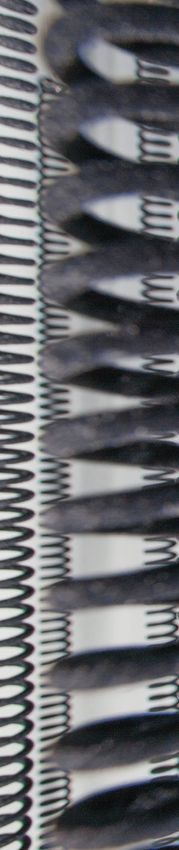
GLISS-COAT®

process variants

       100-W                200-W-                200-W-                200-W-             400-W               400-W-
       200-W                 60P                    KP                    S03                                    GD

    water-based,         universally           with additional       black dyed         high-               welding nozzle
    solvent-free         applicable            anti-corrosion        surface with       temperature         coating
    coating systems                            pigment               anti-friction      coating, usable
    (basic systems)                                                  properties         up to 600 °C

multifunctional combination coatings
GLISS-COAT® 2000
There are applications where a coating with GLISS-                    hard anodized to improve wear protection. A GLISS-
COAT® alone is not sufficient. In such cases, com-                    COAT®-coating has also been applied to the toothing
bination coatings consisting of an undercoat and                      surface. The combination layer GLISS-COAT® 2000
a GLISS-COAT®-layer are suitable (GLISS-COAT®                         produces a higher level of wear protection than each
2000). This is the case, for example, if special requi-               layer could produce individually. Therefore, the com-
rements are placed on wear and corrosion protec-                      bination also improves the service life. A pleasant si-
tion or on the high-pressure absorption capacity of                   de effect of the GLISS-COAT®-coating is the reduc-
the coating. If the component to be coated consists                   tion of noise.
of an aluminum alloy, a hard-anodized layer (HART-
COAT®) is often used as an undercoat.

The pin-disc tribometer test has shown that a combi-
nation of a GLISS-COAT®-layer and a HART-COAT®-
layer has a service life almost three times as long as
the corresponding GLISS-COAT®-layer alone. The
service life is defined here by the time in which the
coefficient of friction is below 0.3. The wear, measu-
red by the abrasion of the layer until the end of its
running-in period, is half as much with the combi-
nation coating as with the GLISS-COAT®-layer alone.

Toothed belt pulleys made of an aluminum alloy are
an example of a mechanical engineering applicati-                     Toothed belt pulley made of an aluminum alloy that has been
                                                                      hard anodized using the HART-COAT® process. The toothing
on. The toothed belt pulley has been completely                       surface was additionally coated with GLISS-COAT®.

4     Aalberts surface technologies functional anti-friction and special coatings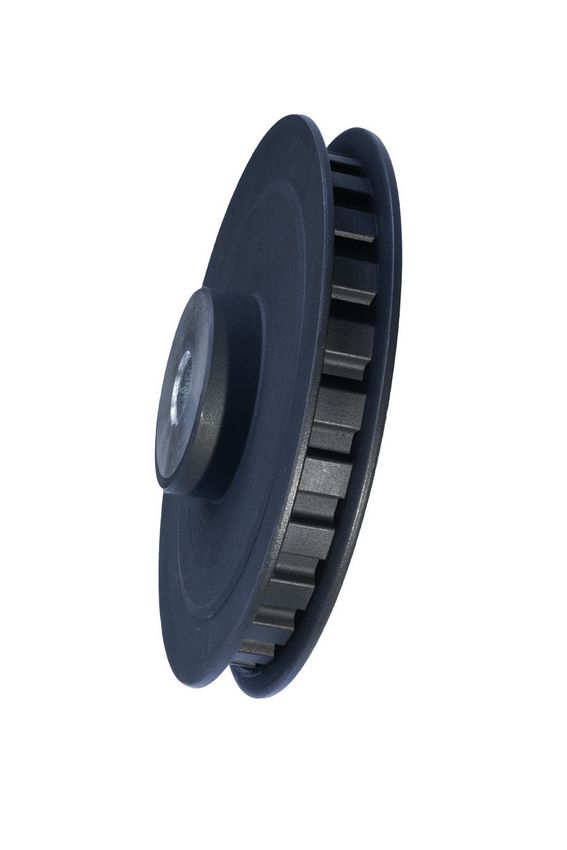
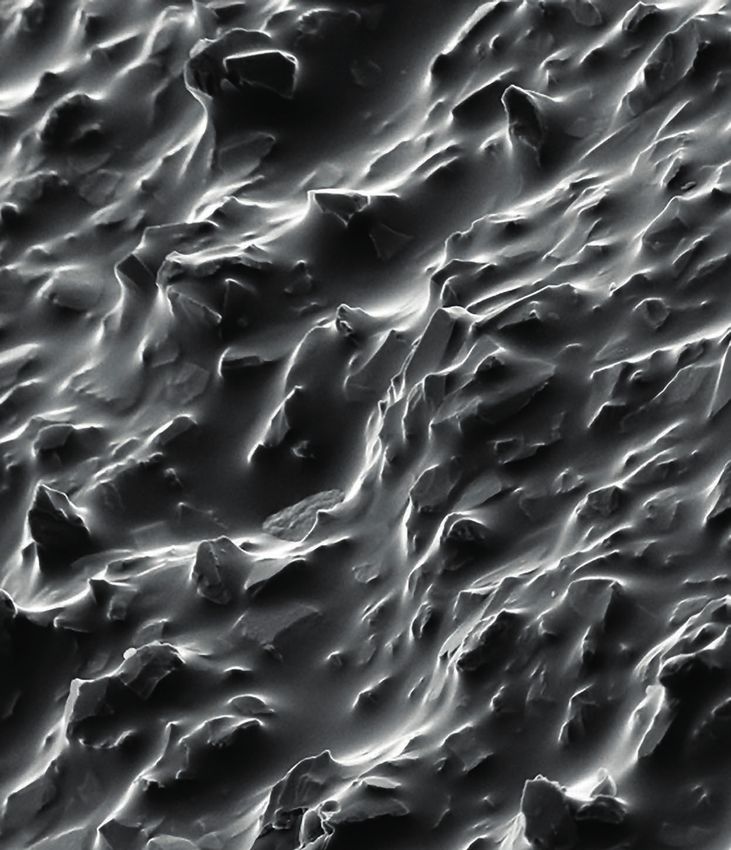
friction-enhancing coating
GLISS-COAT® STOP
Non-positive pigments are embedded in this layer
system (see section of the REM image on the right).
The static coefficient of friction of the layer is thus
significantly increased. The layer applied by spray-
ing connects two surfaces positively and thus ensu-
res the transmission of force.

                            future-oriented
                              future-oriented
                                            systems
                                              systems
                                                    for
                                                      for
                                                        the
                                                          the
                                                            reduction
                                                              reduction
                                                                      ofof
                                                                         noise
                                                                           noise
                                                                               and
                                                                                 and
                                                                                   improvement
                                                                                     improvement
                                                                                               ofof
                                                                                                  the
                                                                                                    the
                                                                                                      gliding
                                                                                                        gliding
                                                                                                              properties
                                                                                                                properties   55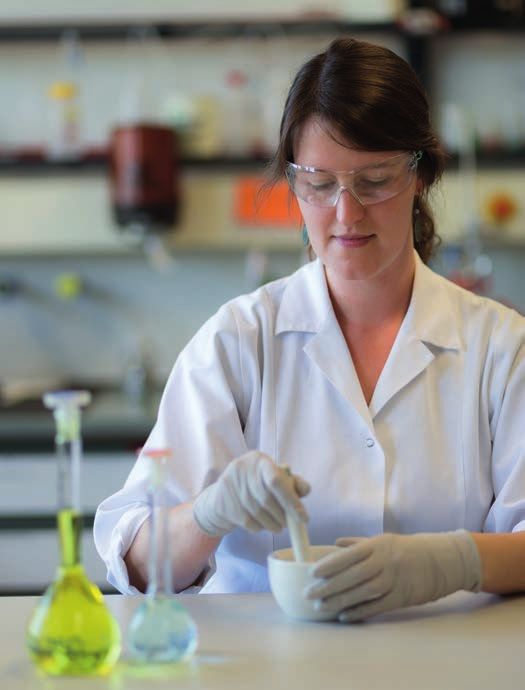
GLISS-COAT®

areas of application

GLISS-COAT® is used wherever dynamic friction in
tribological systems is to be improved, where per-
manent corrosion protection without greases and
oils is required or where noise reduction is a priority.

applications can be found in
industries such as
•   analytics
•   apparatus engineering
•   automotive industry
•   aviation
•   furniture industry
•   insert and outsert injection
    molding technology
•   lignite opencast mining
•   mechanical engineering                                                        Pendulum plates for swivel chairs, coated with
                                                                                  GLISS-COAT® 200-W-60P
•   medical technology
•   solar technology
•   textile industry
•   toolmaking
•   wind turbines

typical components for a
GLISS-COAT®-coating
•   bearings of engines, turbines and rotors
•   bolts, screws, nuts
•   coil compression springs for damping systems
•   gears
•   guides, rollers
•   movable vehicle interior components, e.g. hinge
    pins, bearing bolts, locking rods, guide plates
•   plain bearings, bushings
                                                                                  Shafts and springs made of steel, locking bolts
•   rolling bearings                                                              made of plastic for car seats, each with
•   seat locks                                                                    GLISS-COAT® surface.

•   spindles, shafts
•   valves, cocks
•   vehicle locks

6   Aalberts surface technologies functional anti-friction and special coatings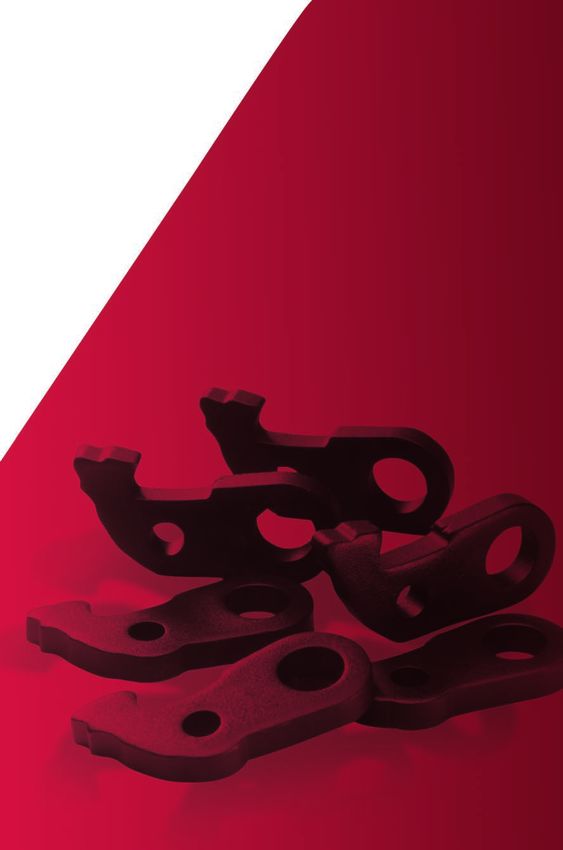
seat frame                                                        tailgate
                      fittings                                                          safety bearings
                      brackets                                                          springs
                      bearing bolts                                                     locking bars
                      interlocks

e-mobility                                                                                             locks
cupholders in                                                                                          bolts
lightweight                                                                                            safety bearings
construction                                                                                           pawls

motor brackets
                            1/

                                                                                        interior
                                                                                        armrests
assistance systems                                                                      hinge axes
round symmetric anchors                                                                 slides and plates for cup holders

1/ Applications of GLISS-COAT® in the car.

2/ A drum manufacturer has developed a so-called ZoomBassDrum.
The extendable and easily dismantled bass drum allows variable
sound production and easy access to the inside of the shell. In the
manufacturing process, the bass drum shells are now cut up and
equipped with a zoom system.

The sliding rods of the zoom system are provided with the dry-lubri-               2/
cating anti-friction coating GLISS-COAT®, so that the distances bet-
ween the shells can be adjusted easily and with little friction (infinite-
ly variable). The decorative, dark coating makes the use of lubricating
grease unnecessary.

3/ Polarizing filter rings for camera lenses are first chemically blacke-
ned and then coated with GLISS-COAT®. The black surface prevents
light reflections. The reduction in the coefficient of friction of their
surfaces facilitates assembly and disassembly of the polarizing filter
rings.                                                                             3/

4/ Automatic wind deflector systems reduce wind turbulence in con-
vertible vehicles on all seats. In order to be able to operate the sys-
tems reliably without the use of grease, parts of the open mechanics
(shown here in the rear) have been coated with GLISS-COAT®. In ad-
dition to the improvement in sliding properties, the black appearance
and corrosion protection also play an important role here.

                                                                                   4/

                                    future-oriented systems for the reduction of noise and improvement of the gliding properties   7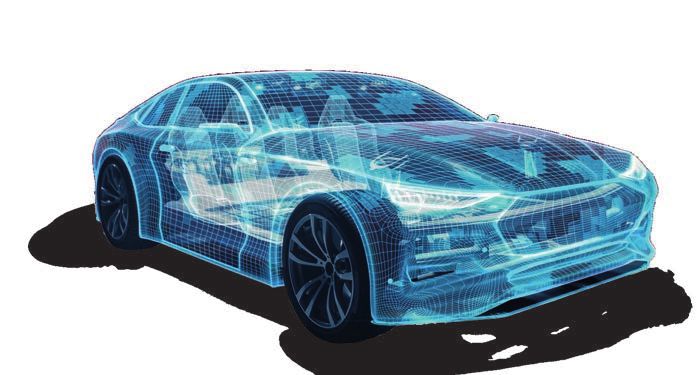
GLISS-COAT®

GLISS-COAT® FLOCK

GLISS-COAT® FLOCK is a coating to increase the                       layer properties
absorption capacity for impact and noise. For this
                                                                     •    anti-friction properties
purpose, a sliding GLISS-COAT®-adhesive is combi-
                                                                     •    flexible tolerance compensation
ned with polymer fibers.
                                                                     •    improved corrosion resistance
                                                                     •    increased wear resistance
During the frictional stress, a lubricating film is for-
                                                                     •    increases shock absorption
med both on the polymer fibers and on the surface
                                                                     •    prevents squeaking, creaking and impact noises
of the friction partner. The wear behavior is signifi-
cantly improved. This effect can be increased even
                                                                     applications
further by additional post-treatment and especially
the running-in behavior can be optimized.                            •    all types of springs
                                                                     •    boxes/casings
                                                                     •    guides
GLISS-COAT® FLOCK                                                    •    gliding mechanisms
refinable materials                                                  •    locking pins
•   anodized aluminum                                                •    profiles
•   blasted metal surfaces                                           •    running rails
•   phosphated ferrous materials                                     •    bearings
•   plastics                                                         •    partial coatings possible too

                         friction
                                                                          lubricating film

                         substrate

During the frictional stress, a lubricating film is formed both on
the polymer fibers and on the surface of the friction partner.

8    Aalberts surface technologies functional anti-friction and special coatings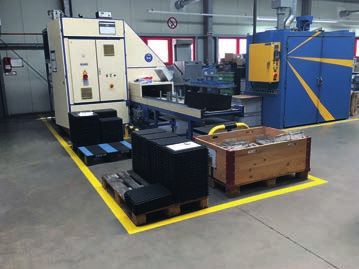
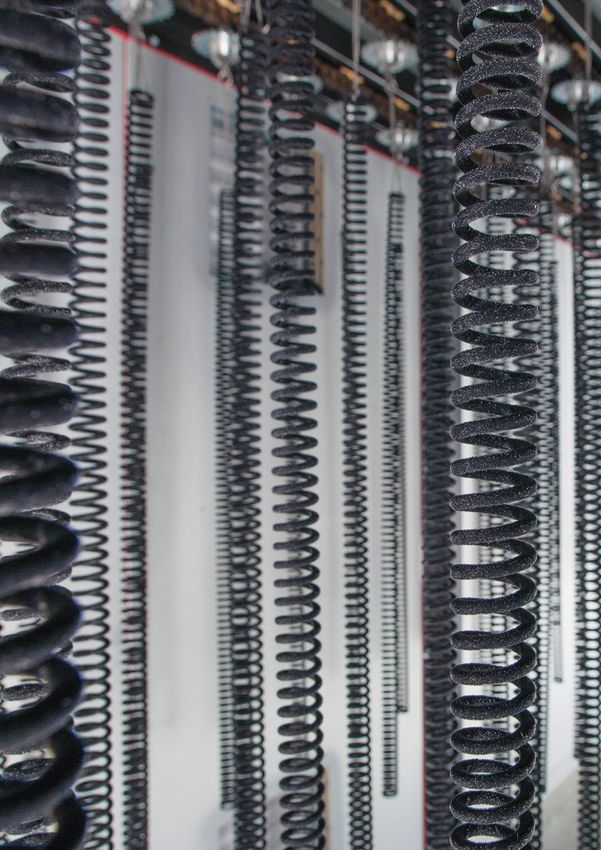
Compression springs coated with GLISS-
COAT® FLOCK for automatic tailgate ope-
nings of passenger cars can absorb shocks
and noise to a high degree.

                            future-oriented systems
                              future-oriented       for
                                              systems   the
                                                      for   reduction
                                                          the         ofof
                                                              reduction  noise and
                                                                           noise   improvement
                                                                                 and           ofof
                                                                                     improvement  the gliding
                                                                                                    the       properties
                                                                                                        gliding properties   99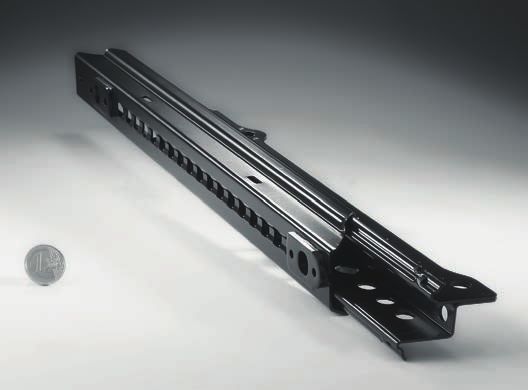
GLISS-COAT®center
competence

individual coating of round symmetrical
components
One of our specialties is the coating of round sym-                  characteristics of the individual
metrical components with bonded coatings. About                      coating of round symmetrical
15 million components of this type are coated by us
                                                                     components
every year.
                                                                     •    uniform coating application
                                                                     •    narrow tolerance range
Aalberts surface technologies in Solingen is the
                                                                     •    high output
competence center for the coating of round sym-
                                                                     •    partial coating possible
metrical components. The application of anti-fricti-
                                                                     •    suitable for water- and solvent-based bonded
on coatings is carried out on circular spraying ma-
                                                                          coating systems
chines. An example of typical round symmetrical
components are armatures for solenoid valves for
switching and braking systems, which are beco-
ming increasingly important in the automotive sec-
tor. Even after many millions of switching cycles, the
coated armatures show no impairment of their anti-
friction properties in endurance testing.

Installations for the coating of round symmetrical components.

10   Aalberts surface technologies functional anti-friction and special coatings
what are
phosphatings? what is CDC?
By chemical reactions of metallic surfaces with CDC (cathodic dip coating or e-coating) is a pro-
aqueous phosphate solutions a so-called conversi- cess in which the workpiece to be coated is elec-
on layer of firmly adhering metal phosphates is for- trically negative charged and is dipped into a paint
med. bath containing positively charged paint particles.
We carry out zinc-iron phosphatings and offer bar- These particles are attracted to the workpiece, de-
rel phosphatings with and without oiling and rack posited on it and form a uniform film over the entire
phosphatings without oiling. surface. After application of the paint coating, a he-
at treatment (baking) is carried out.
characteristics of phosphatings characteristics of CDC
• a simple solution for low corrosion protection • homogeneous coating thicknesses, even with
• frequently used as transport protection large quantities
• only suitable for mild steel alloys • corrosion protection and stone chip protection
• well established primer for further coatings (conditionally)
• good edge coverage
• all-side coating with defined contact point
• environmentally friendly and economical
• good cost-efficiency for small components
• good ductility (layer does not break even with
springs)
• good adhesion primer for further topcoats (wet
paint, powder, ...)
areas of application of CDC
• automotive industry (corrosion resistance)
• mechanical engineering (corrosion protection,
also for stamped parts)
• device components with complicated part
geometry
Steel guide rail with cathodic dip coating
future-oriented systems for the reduction of noise and improvement of the gliding properties 11GLISS-COAT®
www.aalberts-st.com
solingen@aalberts-st.com
Aalberts Surface Technologies GmbH
Dycker Feld 43
DE-42653 Solingen
+49 212 258 340
Germany
12 Aalberts surface technologies functional anti-friction and special coatingsYou can also read


