Geothermal energy A new and viable alternative energy source to help achieve Europe's climate ambitions - European ...
←
→
Page content transcription
If your browser does not render page correctly, please read the page content below
ISSN 2599-8293

          CORDIS Results Pack on
        geothermal energy
  A thematic collection of innovative EU-funded research results

                                                                      April 2020

 A new and viable alternative
energy source to help achieve
 Europe’s climate ambitions

                            Research and
                            Innovation
Contents

3
Warming up to promising sustainable heating and
                                                    Editorial
cooling technology                                  A new and viable alternative energy
5                                                   source to help achieve Europe’s climate
Deep metal reserves deliver renewable heat and
                                                    ambitions
valuable raw materials to the Earth’s surface
                                                    In the ongoing quest to combat climate change, new forms
                                                    of carbon-neutral, environmentally friendly energy sources
7                                                   are being prioritised by the European Commission, especially
World-record drilling depth signals potential for   following the unveiling of its Green Deal initiative. Geothermal
carbon-neutral Europe                               energy is one such promising avenue, and in this CORDIS
                                                    Results Pack we showcase the very latest innovative EU-funded
9                                                   research on both deep and shallow geothermal energy that
New stimulation methods for more efficient
                                                    will allow for a faster, wider and more efficient roll-out of this
EGS treatment                                       potentially game-changing alternative energy source.

11                                                  Geothermal energy is a local source of energy that can cost-effectively provide
                                                    baseload or dispatchable electricity, heat or a combination of both. It has already
Europe-Mexico collaboration tackles                 been used for thousands of years by humans (for example, bathing in hot springs
unconventional geothermal systems                   and room heating in ancient Roman times) and today has the potential to provide
                                                    a real alternative to conventional fossil fuel power plants and heating systems
13                                                  emitting considerable quantities of greenhouse gases. This would be not only in
                                                    Europe but also globally, in particular developing countries. In addition to simply
New materials for (cost-) efficient geothermal      producing energy, geothermal reservoirs may also act as energy and CO2 storage
energy systems in buildings
                                                    sites, providing another major benefit of the technology.

15                                                  A strong policy framework
Geothermal system innovations benefit
buildings large and small                           The European Commission fully supports research and development in geother-
                                                    mal technologies, funding research projects through its Horizon 2020 programme
17                                                  on both the direct use of heat and the use of extracted heat for electricity genera-
                                                    tion focussing on cost reductions and improved performance.
EU research helps extend working life of
geothermal wells                                    Historically, the funding levels for this form of renewable energy have been par-
                                                    ticularly low when compared to alternatives, such as wind, solar and biomass, but
19                                                  it has recently increased. For example, the EU’s Innovation & Networks Executive
                                                    Agency (INEA), which manages almost all of the projects in this specific Results
Generating electricity without sapping Europe’s
water supplies                                      Pack, has a total budget of EUR 172 million allocated towards geothermal energy.

21                                                  Now, following the announcement of the Commission’s dedicated Green Deal,
                                                    where the Commission has set the ambition for Europe to become the first
Increasing the productivity of insufficiently       carbon-neutral continent by 2050, the impetus to further develop and eventually
producing geothermal wells                          deploy geothermal technologies as a viable and serious contender as part of the
                                                    EU’s energy mix will only increase further.
23                                                  Twelve truly trailblazing projects
Alternative drilling technology for deep
geothermal applications
                                                    In this Results Pack, we feature 11 full CORDIS Results in Brief articles on the

25                                                  most recent EU-funded geothermal energy projects, plus a short introduction to a
                                                    still ongoing but very promising initiative, GEOTHERMICA. These 12 projects cover
Introducing GEOTHERMICA, an umbrella initiative     the full spectrum of geothermal energy research and provide a holistic overview
to help focus and target resources for the          of what the key priorities are for further development and investment in these
uptake and commercialisation of innovative          technologies so they become a vital source of alternative energy for Europe.
geothermal technologies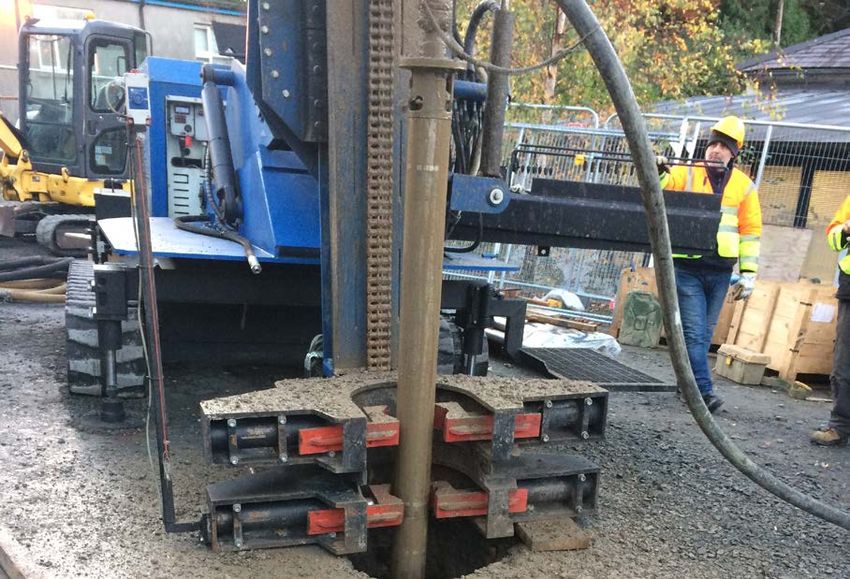
CORDIS Results Pack on geothermal energy
                                A new and viable alternative energy source to help achieve Europe’s climate ambitions

                      Warming up to promising
                      sustainable heating and
                      cooling technology
                      European buildings are sitting on a gold mine – geothermal energy. Now, major cost
                      reductions in technology together with decision support for experts and novices alike
                      should encourage uptake with important benefits for the environment.
© Riccardo Pasquali

                      Heating and cooling accounts for about half of the EU’s overall      The ground underneath buildings can provide heat in the winter
                      energy consumption. About 75 % of that is still supplied by fossil   and cooling in the summers. However, widespread adoption
                      fuels. Clearly, enhancing the sustainability of heating and cool-    of geothermal heating and cooling has faced economic and
                      ing could significantly reduce greenhouse gas emissions and          technical challenges. The EU-funded Cheap-GSHPs project has
                      mitigate climate change.                                             overcome these barriers and simultaneously delivered a freely

                                                                                                                                                            3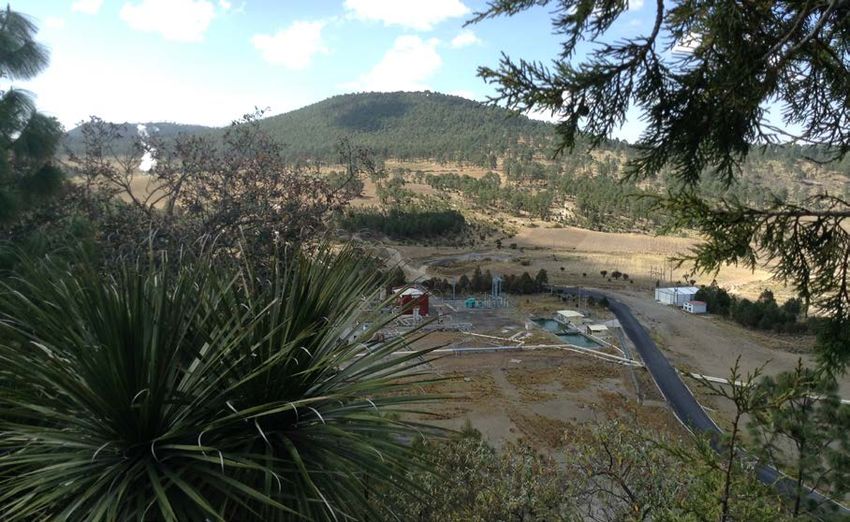
CORDIS Results Pack on geothermal energy
                       A new and viable alternative energy source to help achieve Europe’s climate ambitions

            available decision support tool to help prospective users evalu-       According to Bernardi: “The databases and tools enable creation
            ate options.                                                           of EUR/kW maps comparing the Cheap-GSHPs borehole heat
                                                                                   exchangers with traditional ones to assess the feasibility of
                                                                                   shallow geothermal energy.”
            Technological advances lower
            cost and enhance utility                                               Shallow geothermal for a
           According to project coordinator Adriana Bernardi: “Cheap-GSHPs         sustainable future
           targeted a 20-30 % reduction in total cost through improved
           design and installation of more efficient and safe shallow geo-         An important way to enhance the impact of the technology was
                                           thermal systems.” The team              raising public awareness. The project developed a technical bro-
                                           developed helicoidal ground             chure and a technical training manual in eight languages, as well
                                           source heat exchangers (GSHEs)          as a technical handbook in three languages focused on histori-
    Cheap-GSHPs has now                    with a smaller external diameter        cal buildings. Together with the DSS, all are freely available on
    made shallow geothermal                of the heat basket to facilitate        the project website. In an innovative and highly unusual action,
                                           drilling at greater depths. They        the project also offered free workshops and training courses
    energy solutions more
                                           complemented the design with            in countries throughout Europe in the language of the country.
    affordable in soil regions             a modified dry drilling meth-
    with high drilling costs               odology. Cheap-GSHPs also               Bernardi summarises: “Cheap-GSHPs has now made shallow
    thanks to an investment cost designed coaxial steel GSHEs                      geothermal energy solutions more affordable in soil regions
    reduction of 20-30 %.                  and improved existing vertical          with high drilling costs thanks to an investment cost reduction
                                           borehole installation technology,       of 20-30 %.” The project also delivered the new heat pump for
                                           the latter of which resulted in a       the retrofitting of existing and historical buildings and the DSS.
           patent application. Multiple pilots of both technologies across         Together, Cheap-GSHPs’ innovative, cost-effective and energy-
           Europe demonstrated increases in thermal energy exchange of             efficient technologies and tools could significantly enhance
           20-40 % when compared to the state of the art.                          uptake and reduce CO2 emissions associated with heating and
                                                                                   cooling Europe’s buildings, old and new.
            A novel heat pump using CO2 as a refrigerant for high-temperature
            terminals and piping was developed and a patent application
            submitted. It eliminates the need to replace conventional radia-
            tors and piping to accommodate the lower temperatures of
            typical GSHE heat pumps. Installed under the supervision of                P R OJ E C T
            UNESCO in the Nikola Tesla Technical Museum, Zagreb, the heat              Cheap-GSHPs – Cheap and efficient application
            pump will significantly reduce the costs for retrofitting buildings,       of reliable Ground Source Heat Exchangers and
            particularly historical and cultural ones.                                 Pumps

                                                                                       C O O R D I N AT E D B Y
            Equally accessible to novices                                              National Research Council in Italy

            and experts                                                                FUNDED UNDER
                                                                                       H2020-ENERGY
            Software and modelling tools developed to aid in design optimi-
            sation were also critical components of Cheap-GSHPs’ decision              C O R D I S FA C T S H E E T
            support system (DSS). The DSS represents a first of its kind, end-         cordis.europa.eu/project/id/657982
            to-end feasibility assessment for shallow geothermal installa-
            tions that includes drillability assessment, climatic data, building       P R OJ E C T W E B S I T E
            loads, heat pump/exchanger sizing, and regulatory structures.              cheap-gshp.eu

4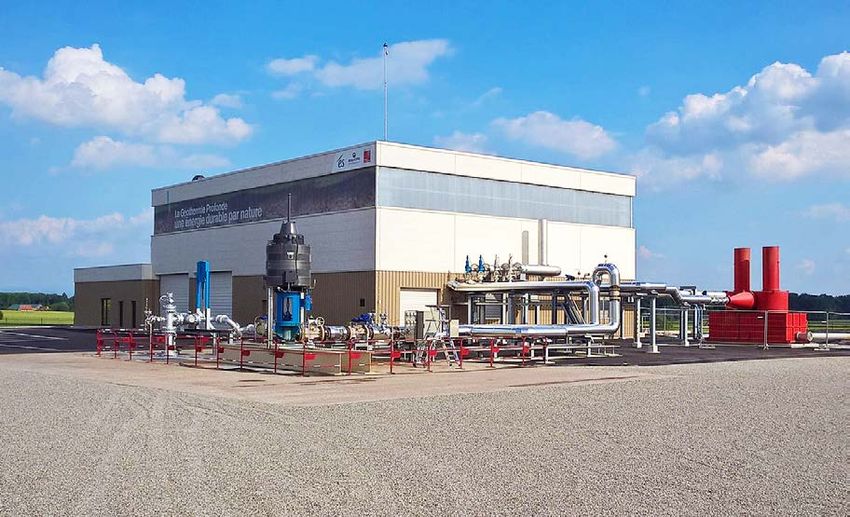
CORDIS Results Pack on geothermal energy
                                             A new and viable alternative energy source to help achieve Europe’s climate ambitions

                                   Deep metal reserves
                                   deliver renewable heat and
                                   valuable raw materials to
                                   the Earth’s surface
                                   The Earth reliably and sustainably produces a tremendous amount of geothermal energy
                                   that can be used for power and heat. Innovative technology will extract the heat from
                                   deeper and hotter sites, bringing out valuable metals as well.
© Alex Marakhovets, Shutterstock

                                   The total heat produced by Earth is immense, yet exploitation       The EU-funded CHPM2030 project has developed the technol-
                                   has to date been limited to shallow areas near the surface where    ogy to both harness this deep geothermal energy and extract
                                   the heat is carried up via groundwater transfers. Deeper in the     valuable metals from the geothermal fluid, something that has
                                   Earth’s crust, the temperature increases on average 25 °C per km.   never been done before.
                                                                                                                                                                       5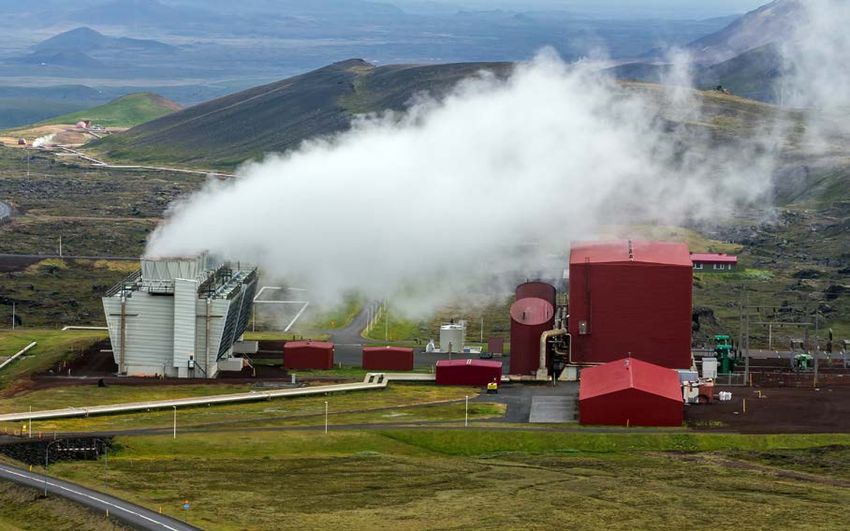
CORDIS Results Pack on geothermal energy
                       A new and viable alternative energy source to help achieve Europe’s climate ambitions

            A hot idea moves full steam                                            Impact far and wide as well as
            ahead                                                                  deep
            Enhanced geothermal system (EGS) technology relies on injecting        “A mathematical model of engineering subsystems enables
            cold water through a drill hole down to 4-5 km at high pressure,       stakeholders to simulate different scenarios and optimise sys-
            ‘enhancing’ natural fractures. The water is heated as it passes        tems,” says Hartai. A decision support tool that assesses eco-
            through the fractures in the hot rock and comes to the surface         nomic feasibility from both the energy and metal extraction
            through another drill hole where the hot vapour is used to pro-        revenue streams will remain available on the website of MinPol
            duce heat and energy.                                                  (Agency for International Minerals Policy), a private company that
                                                                                   participated in the project.
          The key barriers to EGS adoption are the efficiency of the under-
          ground heat exchanger and the costs of investment and opera-             As the project name suggests, CHPM2030 identified four
          tion. Project coordinator Éva Hartai explains: “Combined heat,           pilot sites after screening Europe’s mineral belts for their EGS
                                               power and metal (CHPM)              potential, and created a 2030 CHPM roadmap for exploiting
                                               extraction from the geo-            them. Actions, targets and milestones were also established
                                               thermal fluid will make             for 2050. An ambitious outreach campaign spread the word
                                               EGS more economically               through numerous multimedia materials, social media and the
    Combined heat, power and                   attractive. To accomplish           dissemination channels of project partner the European Federa-
    metal (CHPM) extraction from it, we identified deep metal                      tion of Geologists.
    the geothermal fluid will                  enrichments throughout
    make EGS more economically Europe that are relevant                            The innovative technology combined with extensive outreach
                                               for the CHPM technol-               and clear roadmaps should ensure widespread uptake. This will
    attractive. To accomplish it,              ogy, proved the applica-            increase energy independence and enhance economic com-
    we identified deep metal                   bility of the concept and           petitiveness with local extraction of strategic raw materials of
    enrichments throughout                     delivered a roadmap for             industrial relevance.
    Europe that are relevant for               implementation.”
    the CHPM technology, proved
                                                  In the CHPM2030 concept,
    the applicability of the
                                                  an efficient underground
    concept and delivered a                       heat exchanger relies on
    roadmap for implementation.                   the slow dissolution of
                                                  metal-bearing minerals to
            further open natural fractures. According to Hartai: “No high-             P R OJ E C T
            pressure stimulation is needed as it is accomplished via the               CHPM2030 – Combined Heat, Power and Metal
            leaching process itself. It also gradually increases the flow rate         extraction from ultra-deep ore bodies
            and thermal output of the wells over time. In addition, reverse
            power electrodialysis using the high-salinity geothermal brine             C O O R D I N AT E D B Y
            generates additional power so the total energy output of a CHPM            University of Miskolc in Hungary
            plant will be even higher than in a traditional EGS plant.”
                                                                                       FUNDED UNDER
            Amongst the most exciting results were experiments investigat-             H2020-ENERGY
            ing metal recovery using patented gas-diffusion electroprecipita-
            tion and electrocrystallisation (GDEx). As Hartai explains, “GDEx is       C O R D I S FA C T S H E E T
            a novel way to recover metals from dilute solutions. It enabled            cordis.europa.eu/project/id/654100
            nearly complete recovery of the relevant metals present. The
            GDEx experiments are upscalable and preliminary economic                   P R OJ E C T W E B S I T E
            feasibility calculations show positive results.”                           chpm2030.eu

6
CORDIS Results Pack on geothermal energy
                            A new and viable alternative energy source to help achieve Europe’s climate ambitions

                 World-record drilling
                 depth signals potential
                 for carbon-neutral Europe
                 Enhanced geothermal systems could be the very thing that brings geothermal energy
                 from the status of outsider to that of serious contributor to a carbon-neutral Europe.
                 Successful drilling tests in the DEEPEGS project are a major step towards such a future.

                 Geothermal energy is green, infinite and available virtually every-    This is where enhanced geothermal systems (EGS), and more
                 where. However, the full exploitation of its potential calls for new   specifically the DEEPEGS project, come into play. Back in
                 technologies able to exploit sites with naturally occurring heat,      April 2017, DEEPEGS made the headlines for its successful
                 but lacking both water and sufficiently high rock permeability.        4 659-metre-deep drilling into a geothermal field in Iceland. The
© Peter Petrov

                                                                                                                                                            7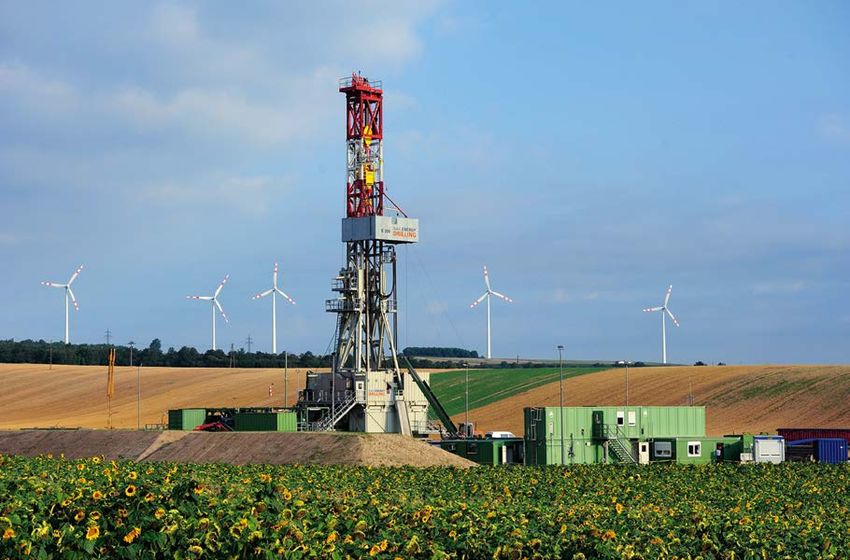
CORDIS Results Pack on geothermal energy
              A new and viable alternative energy source to help achieve Europe’s climate ambitions

    first-of-its-kind venture offered a wealth of learning opportuni-    French energy company, Fonroche Géothermie, to obtain clear-
    ties for the geothermal sector and is still a world record to this   ance in Vendenheim. As Fridleifsson points out, all projects close
    day.                                                                 to urban areas in continental Europe will need a high level of
                                                                         communication to get citizens and
    “The very high permeability of the superhot site at Reyk-            local authorities on board.
    janes below a 3-km depth came as a pleasant surprise,” says
    Gudmundur Ómar Fridleifsson, coordinator of DEEPEGS. “No drill       Project partners expect the pro-          The drilling to a 4 650-
    cuttings or drilling cooling fluids reached the surface below a      ject’s success in Iceland to impact           metre depth in high-
    depth of 3.2 km. The drilling to a 4 650-metre depth in high-        the market within 10 years. Until
                                                                                                                  temperature geothermal
    temperature geothermal systems had never been achieved               then, they will keep disseminat-
    before in an environment where 600 °C reservoir temperatures         ing the positive outcome of the
                                                                                                                  systems had never been
    have been confirmed.”                                                DEEPEGS project in order to con-             achieved before in an
                                                                         vince the geothermal industry to               environment where
    Low permeability is one of the barriers to EGS market develop-       drill into superhot systems for                    600 °C reservoir
    ment which the DEEPEGS project aimed to overcome. The project        increased power production. “The         temperatures have been
    team initially planned to conduct its permeability enhancement       lessons learned are of great value
                                                                                                                                   confirmed.
    experiments in southern France, where temperatures above             and have already led to advanced
    200 °C were expected below 4-km depths. However, things there        technological breakthroughs such
    didn’t exactly go to plan: delays accumulated in the three field     as deep casings and the testing of flexible couplings which are
    tests that the project planned to use and “as time passed we         being planned, all based on the experience gained in DEEPEGS,”
    realised that none of these three fields would be greenlighted,”     Fridleifsson concludes.
    explains Sigurdur G. Bogason, Chief Project Officer of DEEPEGS.

    The next milestone: winning
                                                                             P R OJ E C T
    continental Europe’s hearts                                              DEEPEGS – Deployment of Deep Enhanced
                                                                             Geothermal Systems for Sustainable Energy
    To proceed with their work, the consortium had to substitute             Business
    the three originally targeted fields with the geothermal site of
    Vendenheim, Alsace, where a multi-leg (multi-drain) enhance-             C O O R D I N AT E D B Y
    ment for increased permeability is currently being tested. If suc-       HS Orka in Iceland
    cessful, it could have an immediate impact on further utilisation
    of EGS in Europe. “Hot granites over 200 °C have already been            FUNDED UNDER
    drilled, while permeability enhancement is still ongoing,” Bogason       H2020-ENERGY
    points out.
                                                                             C O R D I S FA C T S H E E T
    One of the main problems faced by the consortium in France               cordis.europa.eu/project/id/690771
    was the sceptical attitude of French communities and authorities
    towards EGS, even though the technology is environmentally               P R OJ E C T W E B S I T E
    friendly. Huge communication efforts had to be deployed by the           deepegs.eu

8
CORDIS Results Pack on geothermal energy
                 A new and viable alternative energy source to help achieve Europe’s climate ambitions

       New stimulation methods
       for more efficient EGS
       treatment
       The DESTRESS project has been developing and testing new stimulation methods for
       enhanced geothermal systems. Their efforts should lead to reduced costs and increased
       environmental safety.

       There is essentially one barrier that separates conventional tech-   We are not exactly there yet. EGS still has some way to go
       niques from enhanced geothermal systems (EGSs): the ability          to prove its worth and attract investors, and efforts under the
       to produce affordable energy by pumping high-pressure water          DESTRESS project are meant to clear the path. Since 2016, the
       into a hot rock with low permeability. This process known as         project has been building upon advances in the oil and gas sector
       hydraulic stimulation would open a whole new world for society.      to develop new stimulation methods with a view to reducing cost,
       Geothermal resources that have not been economically viable to       increasing reservoir transmissivity and minimising environmental
       exploit so far would suddenly become a no-brainer.                   impact. This notably involves preventing seismic events and
                                                                            pollution of groundwater reservoirs.
© ÉS

                                                                                                                                                9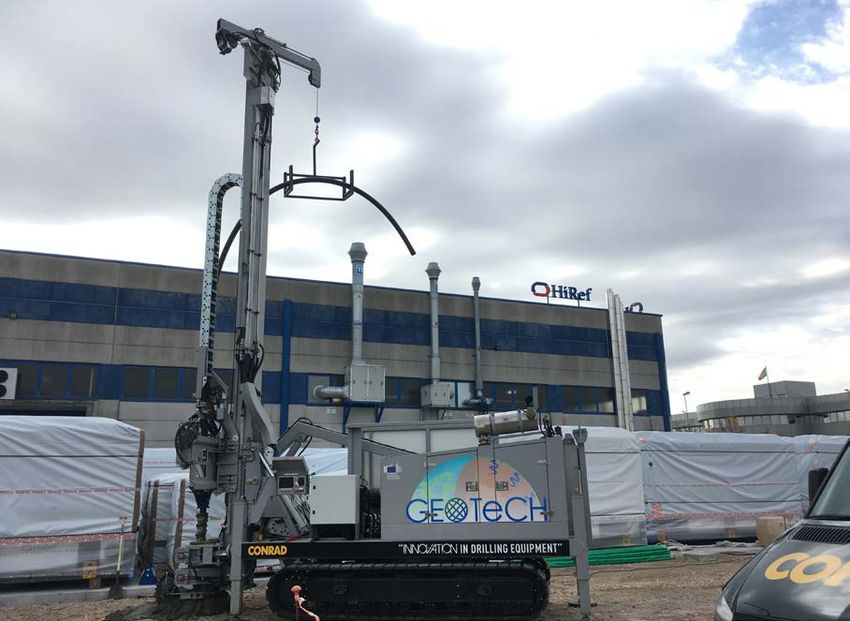
CORDIS Results Pack on geothermal energy
                   A new and viable alternative energy source to help achieve Europe’s climate ambitions

        “Inspiration came from hydrocarbon reservoir development, with         lessons learnt from DESTRESS operations, especially with regard
        one main difference: geothermal stimulation targets an envi-           to applied risk assessment and workflows, will positively influ-
        ronmental safe treatment of the reservoir,” says Ernst Huenges,        ence treatments to be performed later at other sites (for example
        Head of the International Centre for Geothermal Research               United Downs in the UK),” he says.
        (GFZ) at Helmholtz Centre Potsdam, Germany, and coordinator
        of DESTRESS. The project consortium also base their concepts           The potential for geothermal heat supply in Europe is huge and
        on extended risk assessment and recent scientific progress in          increasing demand for renewable energy supply makes EGS a
                                         fluid-rock interaction, enabling      tempting solution as long as potential environmental issues can
                                         a soft stimulation approach,          be managed positively. The DESTRESS team will be focusing on
                                         more accurate determination           a multi-stage stimulation over the next few months, which has
                                         of the stress field and the           yet to be demonstrated for geothermal systems with a sufficient
 Inspiration came from                   analysis of induced seismicity.       reliability level, in order to keep closing the remaining gaps.
 hydrocarbon reservoir
 development, with one main                  The DESTRESS concept is           From that stage onwards, commercialisation should not be too
                                             being applied at several sites.   far into the future. “We think we are close to commercialisation
 difference: geothermal
                                             “Our stimulation treatments       in newly developed wells,” says Huenges. “However, we recently
 stimulation targets an                      are being demonstrated in         learned that there is still additional development required in older
 environmental safe treatment                different geological environ-     wells because of integrity issues. Several stakeholders involved
 of the reservoir.                           ments and under different         in DESTRESS, along with a follow-up EU project, will continue to
                                             site-specific circumstances       develop new treatment solutions.”
         such as specific states of the well and various distances to
         cities. In each case, the required adaptations are related to the
         types of pathways for fluids. Pore space-type reservoirs require
         more chemical treatments to dissolve obstacles with acids, while
         fracture-type reservoirs react more to hydraulic-mechanical
         stimulation,” Huenges explains.                                           P R OJ E C T
                                                                                   DESTRESS – Demonstration of soft
         DESTRESS was divided into seven work packages, two of which               stimulation treatments of geothermal
         aimed to provide a demonstrator for innovative stimulation                reservoirs
         treatment: one for combined hydraulic-acidisation treatments
         in sandstones and other rocks; and one for cyclic hydraulic and           C O O R D I N AT E D B Y
         multi-stage stimulation in granites and tight sandstones.                 GFZ German Research Centre for Geosciences in
                                                                                   Germany

         A source of inspiration for new                                           FUNDED UNDER
                                                                                   H2020-ENERGY
         sites
                                                                                   C O R D I S FA C T S H E E T
         Although the project is due for completion at the end of Novem-           cordis.europa.eu/project/id/691728
         ber 2020, Huenges is confident that any stakeholder looking for
         similar treatments to solve productivity or injectivity problems          P R OJ E C T W E B S I T E
         at their own site could take DESTRESS as an example. “Surely,             destress-h2020.eu/en/home

10
CORDIS Results Pack on geothermal energy
A new and viable alternative energy source to help achieve Europe’s climate ambitions
Europe-Mexico
collaboration tackles
unconventional
geothermal systems
To help geothermal energy fulfil its low-carbon potential, GEMex (collaborating with
Mexican researchers) assessed and characterised two sites in the Trans-Mexican Volcanic
Belt, to propose ways to tap them.
© Anna Jentsch
Geothermal energy is underutilised, despite offering a local The EU-funded GEMex project was formed as a European con-
energy source, available 24/7. It could be used for heating sortium, in conjunction with a Mexican consortium, under the
and cooling throughout Europe and for electricity generation in auspices of EERA joint programme of geothermal energy. Work-
regions with higher geothermal temperatures such as Croatia, ing at two geothermal project sites in Mexico, Acoculco and Los
France, Germany, Greece, Hungary, Iceland, Italy, Romania and Humeros, it assessed their resources, characterising reservoirs
Serbia. and developing concepts for future site development.
11CORDIS Results Pack on geothermal energy
A new and viable alternative energy source to help achieve Europe’s climate ambitions
Exploring unconventional The concept for Los Humeros proposes well locations for access
to the deep, superhot fluids, and operational well designs (includ-
geothermal reservoirs ing suitable materials) for safe and successful operations.
While geothermal energy has been used in Europe and in Mexico “At Acoculco, a fracture zone was identified that could be con-
for some time, both regions’ consortium members were inter- nected to the borehole by hydraulic stimulation to make the
ested in unconventional geothermal systems: enhanced geother- reservoir more permeable and serve as a naturally water-bearing
mal systems (EGSs) and superhot geothermal systems (SHGSs). zone,” explains David Bruhn, project coordinator. “In Los Humeros,
work indicated a reservoir deeper than the one currently exploited
EGSs are geothermal reservoirs with promising high tempera- – this has not been investigated before.”
tures but without enough initial rock permeability or fluids in the
rock to transfer sufficient heat to the surface.
Sustainable site development
SHGSs are geothermal reservoirs with very high reservoir tem-
peratures (sometimes above 350 °C), higher than currently GEMex supports the EU’s Strategic Energy Technology Plan to
exploited anywhere. Such high temperatures would provide more develop and deploy low-carbon technologies. To help promote
energy per well than the standard geothermal installations. While European research, the project developed both an Open Access
ideal for geothermal electricity production, the harsh subsurface Database for sharing and publishing project data and results and
conditions challenge drilling and well completion methods and a Virtual Research Environment for knowledge sharing internally.
materials.
“GEMex’s proposals should speed up geothermal development
The Acoculco site is very hot (300 °C at 2-km depth), but two in Mexico and Europe, and with its predictive models reduce the
deep wells encountered hardly any fluids, necessitating an risk of wasted investment,” says Bruhn. “We are now discussing
EGS – never before accomplished in Mexico. Los Humeros is potential follow-up projects to include new wells targeting the
an operating geothermal sys- superhot zone in Los Humeros and perhaps to connect a perme-
tem where a superhot part able zone in Acoculco. As a scientist I would greatly welcome
of the geothermal field, with and support a Mexican deep drilling project.”
temperatures above 400 °C,
GEMex’s proposals should remains undeveloped.
speed up geothermal
development in Mexico and GEMex researchers applied
Europe, and, with its geological, geochemical, geo- P R OJ E C T
physical, volcanological and GEMex – Cooperation in Geothermal energy
predictive models, reduce
hydrological tests (including research Europe-Mexico for development of
the risk of wasted passive seismic, magnetotel- Enhanced Geothermal Systems and Superhot
investment. lurics, gravimetry and soil gas) Geothermal Systems
to characterise the reservoirs
at depth and determined rock and fluid properties and their C O O R D I N AT E D B Y
response to temperature and pressure changes in laboratory GFZ German Research Centre for Geosciences in
tests. Germany
The results of this research were combined with updated regional FUNDED UNDER
and reservoir models as the basis for further development and H2020-ENERGY
exploitation.
C O R D I S FA C T S H E E T
A concept for EGS at Acoculco considers the existing fracture cordis.europa.eu/project/id/727550
network and geological information, as well as the physical
properties of the rocks at depth, to propose hydraulic fracturing P R OJ E C T W E B S I T E
measures in one or both of the deep wells. gemex-h2020.eu
12CORDIS Results Pack on geothermal energy
A new and viable alternative energy source to help achieve Europe’s climate ambitions
New materials for
(cost-) efficient
geothermal energy
systems in buildings
Forget about the wind and sun. In the future, your house could very well be pumping
heat directly from the ground below, thanks to EU-funded efforts aiming to decrease
the cost of shallow geothermal energy systems.
Photovoltaic panels are easily the first power sources coming is an outsider that’s increasingly making noise in the sector:
to mind when considering renewable energy options. But there geothermal energy.
© Erich Mands
13CORDIS Results Pack on geothermal energy
A new and viable alternative energy source to help achieve Europe’s climate ambitions
With almost EUR 4 million of EU support, GEOCOND aims to turn properties and other critical specifications related to weldability
this potential into reality. The project Consortium has been work- and manageability.
ing on shallow geothermal energy systems (SGESs) for buildings
since May 2017, which is easily “New plastics have been also developed for other geometries
understandable in light of their like coaxials,” says Urchueguia. “Moreover, we have managed
tantalising promises. to produce a new family of grouting compounds with improved
specifications that have been tested in real-world conditions
The companies in the “SGESs have very interesting with excellent control of their properties; and we have devel-
Consortium are interested features. They are electric-driven oped an improved system of grout and phase change material
in pursuing the exploitation (heat pump), boast the highest mixtures to enable underground thermal storage at different
of the GEOCOND possible efficiency (most con- temperature levels.”
venient thermal source) and can
technologies which are at
serve heating, cooling and hot The project team is now focusing on its three pilot plants which
quite a high TRL level, water simultaneously. Besides, should soon be in operation. To be considered successful, these
especially the grouts and they are highly integrable into pilots must provide critical information to confirm the benefits
the plastics. buildings, can be combined with brought by GEOCOND to improve SGESs with regards to lower
other RES thermal or electric cost and higher efficiency.
sources, and are a proven and robust technology with the low-
est maintenance costs,” says Javier Urchueguia, Professor at “The companies in the Consortium are interested in pursuing the
the Polytechnic University of Valencia, GEOCOND coordinator. exploitation of the GEOCOND technologies which are at quite
a high TRL level, especially the grouts and the plastics. A 1 or
There is only one issue. So far, SGESs have been struggling to 1.5-year follow-up and upscale project could be enough to reach
attract end users, one of the reasons being its high initial cost. the requested market maturity for these products,” Urchueguia
GEOCOND is one of several projects aiming to overcome that concludes.
obstacle, specifically by formulating new materials for future
SGES installation. Together with other projects aiming to solve other problems
affecting SGESs – such as the lack of training, appropriate leg-
“SGE has traditionally used materials such as PE-100 that were islation and other technological limitations – GEOCOND is well
not specifically aimed at this application. This implies that their on track to play a key role in democratising geothermal energy
use for SGE is far from optimal. Big plastic suppliers were not for future buildings in Europe.
interested in producing new compounds, probably because the
scale of the market is still too narrow. This is why an initiative
such as GEOCOND was required,” Urchueguia explains.
GEOCOND’s research covers four key elements at the heart of
SGESs: plastic pipes with improved conductivity, grouts with
enhanced characteristics in different sizes, new materials to P R OJ E C T
store heat, and new materials increasing the capacity of the GEOCOND – Advanced materials and processes
surrounding ground to transfer heat. to improve performance and cost-efficiency of
Shallow Geothermal systems and Underground
The project is now in its final year, and the list of outcomes is Thermal Storage
already promising. Among other things, the Consortium has pro-
posed a new geometry to improve thermal efficiency, as well as C O O R D I N AT E D B Y
a new algorithm for material optimisation considering thermal, Polytechnic University of Valencia in Spain
energetic and economic variables.
FUNDED UNDER
H2020-ENERGY
Higher conductivity at lower
C O R D I S FA C T S H E E T
cost cordis.europa.eu/project/id/727583
The project’s new plastic compounds multiply the conductivity of P R OJ E C T W E B S I T E
PE-100 by a factor of three, all this while maintaining mechanical geocond-project.eu
14CORDIS Results Pack on geothermal energy
A new and viable alternative energy source to help achieve Europe’s climate ambitions
Geothermal system
innovations benefit
buildings large and small
If geothermal energy is to become widespread, it will have to become cheaper and more
efficient for everyday buildings. GEOTeCH has made innovations in drilling and
extraction technology that could help further release the power of these underground
energy resources for buildings.
© GEOTeCH coordination, Solintel
15CORDIS Results Pack on geothermal energy
A new and viable alternative energy source to help achieve Europe’s climate ambitions
Compared to fossil fuels, geothermal energy emits very little was demonstrated in small-scale office buildings in Amsterdam,
CO2 or other greenhouse gases. But to harness this heat-carrying Leicester and Padova. The FHX technology was demonstrated
fluid near the Earth’s surface, its temperature must be raised by in a large-scale office building in Barcelona, where it was also
heat pumps (usually borehole heat exchangers). However, typi- integrated with the HVAC system.
cal drilling technologies have a number of challenges that can
be mitigated, including: expensive equipment, specialist teams,
compressor noise, dangers from pres- A fitting solution
surised air (12-20 bars), potential
borehole instability, the significant The Barcelona demonstration showed that GEOTeCH could be
Our foundation heat quantities of drinking-quality water especially useful for larger new buildings to significantly reduce
exchangers have the required and poor working conditions. their energy consumption. “Our foundation heat exchangers have
the same heat exchange capacity as borehole heat exchangers
same heat exchange
The EU-supported GEOTeCH project but the implementation costs are 82 % lower,” says Dery Torres,
capacity as borehole designed, built and tested a drill-rig project coordinator.
heat exchangers, but which has already been commercially
the implementation released by Conrad (a project partner) To run the full system for larger buildings, which involves manag-
costs are 82 % lower. with hollow stem auger (HSA) drilling ing a geothermal heat pump for heating and cooling conditions
for shallow borehole heat exchang- where other thermal energy resources may be available, two
ers (BHXs). The rig can drill quickly in energy management systems (EMSs) were developed based on
loose soils (sand, gravel, clays), with minimal water usage. The machine learning techniques. Both used open-source interfaces
costs of those units, designed for small-scale buildings, are 70 % to work with existing building management systems, and their
of those for a comparable mud rotary rig, reducing barriers to functionalities were validated in two buildings: the BTEK Museum
entry for newcomers to the geothermal market. building, Derio, Spain and the Hollandsch Huys campus building,
Hasselt, Belgium.
The project also developed a foundation heat exchanger (FHX)
for use in larger buildings where it can be integrated with existing To bring the technology to market, the team are working to
heating, ventilation and air conditioning (HVAC) systems, bringing improve the performance of both the borehole and foundation
down overall costs. heat exchangers, by optimising fluid content, flow rate, materials
and the spiralling pitch for the borehole heat exchanger.
A geothermal solution for
small and large buildings
A ‘plug and play’ BHX solution was developed for smaller build-
ings based on a coaxial spiral heat exchanger, which can tap P R OJ E C T
energy from a shallower depth than usual. While this design has GEOTeCH – Geothermal Technology for €conomic
been available for a number of years, the project’s prototype Cooling and Heating
updated it with a coextrusion of the internal spiralled pipe. This
innovation allowed more cost-efficient performance at depths C O O R D I N AT E D B Y
of 20-50 metres, when compared to conventional U-loop heat Solintel M&P SL in Spain
exchangers.
FUNDED UNDER
GEOTeCH also developed an FHX for larger tertiary buildings, H2020-ENERGY
where a pipe is embedded into foundation structures, (e.g., walls).
This approach avoids the drilling, pipe laying and grouting neces- C O R D I S FA C T S H E E T
sary for BHXs. cordis.europa.eu/project/id/656889
Testing of the drilling technology and the heat exchangers was P R OJ E C T W E B S I T E
conducted at four buildings around Europe. The BHX system geotech-project.eu
16CORDIS Results Pack on geothermal energy
A new and viable alternative energy source to help achieve Europe’s climate ambitions
EU research helps
extend working life of
geothermal wells
Fresh concepts for high-temperature geothermal wells will speed up the development of
geothermal resources both in Europe and around the world.
The EU’s revised Renewable Energy Directive establishes a new Consortium members comprised experienced geothermal devel-
binding renewable energy target of at least 32 % by 2030, with opers, leading academic institutions, major oil and gas research
a clause for a possible upwards revision by 2023. This will help institutions, and SMEs with access to world-class research facili-
address uncertainty in energy supplies and reduce fears of global ties. These included test wells for validation of innovative tech-
warming. One part of this strategy is the growth of the geother- nologies and laboratories for material testing.
mal sector.
The GeoWell project developed and tested new reliable, eco-
New technologies tested
nomical and environmentally safe technologies for the design, Project partners focused on both traditional production wells
completion and monitoring of high-temperature geothermal and deeper wells where the pressure is as high as 150 bar and
wells (HTGWs). Researchers addressed all relevant steps in the temperatures exceed 400 °C, testing the technologies under in
geothermal well completion process, including cement and seal- situ conditions in laboratories and existing geothermal environ-
ing technologies, material selection and casing couplings to ments. They also tackled major bottlenecks like high investment
extend the lifetime of HTGWs. and maintenance costs by developing and validating innovative
materials and designs that exceed current concepts.
© Jón Ragnarsson, ÍSOR
17CORDIS Results Pack on geothermal energy
A new and viable alternative energy source to help achieve Europe’s climate ambitions
Researchers investigated novel cement and sealing technologies, EU-funded DEEPEGS project to make the technology available
casing materials and flexible couplings to minimise thermo- for the geothermal industry.
mechanical loadings. In addition, fibre optic cable technology and
applications for measuring temperature and strain in wells were
developed and successfully trialled at different temperatures Major benefits
and depths in wells located in Germany and Iceland.
The design and monitoring technologies developed by GeoWell
will provide significant economic benefits by reducing the risk
Innovative materials of casing failure and improving monitoring methods and risk
assessment. Furthermore, the development of new materials and
Cement samples were exposed to temperatures up to 450 °C in innovative solutions will help improve the integrity and safety
the Iceland Deep Drilling Project (IDDP-1) well. Following labo- of HTGWs, reduce the need for maintenance work, and extend
ratory analysis at ambient temperature, results showed that the working life of HTGWs.
Portland cement mixtures including silica are suitable for use
in geothermal applications. However, water pockets can lead GeoWell technologies can be applied at a wide range of tem-
to critical pressure build-up in peratures in deep geothermal wells throughout Europe. “The
cement sheaths. “These find- results will enhance the construction and operations of
ings resulted in the develop- HTGWs, especially by targeting integrity improvement to offer
ment of ‘pumpable’ cement new business opportunities for industries. This will definitely help
The results will enhance the with reduced water content Europe maintain its position as a world leader in geothermal
construction and operations without diminishing its seal- energy,” concludes Ragnarsson.
of HTGWs, especially ing properties,” says project
targeting well integrity coordinator Arni Ragnarsson.
improvement to offer new
The team also devised a
business opportunities for
ductile intermediate layer
industry that will help Europe between cement and casing
maintain its position as a to take up the strains gener- P R OJ E C T
world leader in geothermal ated by temperature change GeoWell – Innovative materials and designs for
energy. and evaluated nanomaterials long-life high-temperature geothermal wells
in small-scale tests for their
potential to reduce friction. “The developed formulation has C O O R D I N AT E D B Y
promising properties and a thin layer and is able to reduce the Iceland GeoSurvey in Iceland
friction forces by more than a factor of 10,” Ragnarsson explains.
FUNDED UNDER
Large temperature differences in geothermal wells regularly H2020-ENERGY
result in casing failures. Researchers therefore developed a flex-
ible coupling that allows axial movement of casing segments C O R D I S FA C T S H E E T
and tested several full-scale prototypes. Tensile tests were also cordis.europa.eu/project/id/654497
conducted on casing material using a dedicated high tempera-
ture rig, while corrosion tests were carried out in an autoclave. P R OJ E C T W E B S I T E
On-site testing of the flexible coupling is currently ongoing in the geowell-h2020.eu
18CORDIS Results Pack on geothermal energy
A new and viable alternative energy source to help achieve Europe’s climate ambitions
Generating electricity
without sapping Europe’s
water supplies
Innovative technologies will enable Europe’s electricity sector to power the continent
without depleting water reserves, and one EU-funded project has been leading the way.
© zhu difeng, Shutterstock
Water is an invaluable resource for humanity, and one that will environment considered, this still accounts for a fifth of water
become increasingly important to preserve as the global climate used. Reducing the impact of this industry on water reserves is
continues to change. Power generation is one of the most water- therefore a simple and promising route towards a sustainable
dependent industries, requiring vast amounts to cool generating future.
systems.
The Horizon 2020-funded MATChING project, consisting of a
In Europe, energy production accounts for 45 % of all water consortium from six EU countries, is spearheading the Euro-
extracted from natural sources; even with water returned to the pean effort to reduce the demand for cooling water through
19CORDIS Results Pack on geothermal energy
A new and viable alternative energy source to help achieve Europe’s climate ambitions
state-of-the-art technologies in thermoelectric and geothermal hybrid cooling systems in geothermal power production, based on
power plants. advanced fillings for more efficient cooling in high-temperature
sources, and closed-loop groundwater use in low-temperature
“MATChING aimed to reduce the water demand and improve sources. New anti-corrosion materials were developed to ensure
energy efficiency for cooling systems in the energy sector through financially viable techniques, and sustainable production for
the use of advanced and nano-technology-based materials and many years.
innovative configurations applied to both geothermal and fossil-
fuelled power plants,” comments Daniela Galla, MATChING Pro- “Many of the tests gave surprising results,” concludes Galla.
gramme Manager at Enel. “Elsewhere, the potential yearly gain in certain geothermal plants
using groundwater as a heat sink instead of air coolers ranged
In high-temperature geothermal sources, the results showed an from 4 % to 14 %. In this case, higher heat demands result in
average reduction in evaporated water of around 10 % in hybrid higher relative gains in power plant efficiency.”
operations compared to traditional wet operations, incurring
only a small energy penalty. Galla says this is “one of the best
results of the project.” Powering on
Technologies and techniques have been tested at six test sites
The future of cooling across the EU, in Belgium, France, Italy and Spain.
The MATChING project trialled a series of technological solu- The MATChING team is now analysing the results and using
tions, involving every single area of power plant cooling systems, them to improve the systems further. Some of the results are
including cooling towers, cooling water circuits, water conditioning being merged into other research projects or proposals for future
systems, groundwater cooling developments.
and steam condensers.
“The results achieved in the project are now in an exploitation
Innovative membranes phase, which includes technical feasibility and cost-benefit
MATChING aimed to reduce – some based on nano- analysis for specific applications,” says Galla.
the water demand and technology – and advanced
improve energy efficiency for materials were tested to see
cooling systems in the energy how they could improve water
conditioning and recovery. This
sector through the use of
boosts water supplies through P R OJ E C T
advanced and nano- the use of lower-quality MATChING – Materials Technologies for
technology-based materials waters – wastewaters from performance improvement of Cooling Systems
and innovative configurations power stations or from cool- in Power Plants
applied to both geothermal ing tower blow-down.
and fossil-fuelled power C O O R D I N AT E D B Y
The results suggest that water Enel Produzione SpA in Italy
plants.
intake can be reduced by over
30 % in thermal power plants FUNDED UNDER
with wet cooling. “Reductions are site-specific, depending on H2020-LEIT-ADVMAT
climate and water quality, and the net impact on cooling costs
varies among technologies,” Galla says. C O R D I S FA C T S H E E T
cordis.europa.eu/project/id/686031
Newly developed laser texturing techniques and nano-coatings
were used to promote condensation on the outside of con- P R OJ E C T W E B S I T E
denser tubes, increasing cooling efficiency. The project used matching-project.eu
20CORDIS Results Pack on geothermal energy
A new and viable alternative energy source to help achieve Europe’s climate ambitions
Increasing the
productivity of
insufficiently producing
geothermal wells
Researchers with the EU-funded SURE project are testing the use of radial water jet drilling
as a means of improving the performance and economic viability of geothermal wells.
Geothermal energy offers incredible potential. Not only is it a strategy, one that could eventually provide Europeans with a
renewable energy, it’s also clean energy, meaning it does not reliable source of baseload energy.
produce harmful greenhouse gases. As such, geothermal has the
potential to be a key component in Europe’s renewable energy
© N.Minton, Shutterstock
21CORDIS Results Pack on geothermal energy
A new and viable alternative energy source to help achieve Europe’s climate ambitions
However, before this happens, the production process needs to To do this, the project team conducted a range of experiments.
be improved so that it is economically viable – which is where This included studying the physical properties of various potential
the SURE project comes in. geothermal reservoir rock types and their reaction to various RJD
processes. “The objective of this experiment was to achieve a
“The technology we’re developing will improve the productivity complete understanding of the water jet/tooling-rock-interaction
of existing wells by providing an economically viable method for for a large variety of sedimentary and crystalline rocks,” com-
controlling the enhanced flow paths around a geothermal well,” ments Reinsch.
says Thomas Reinsch, a researcher at the German Research
Centre for Geosciences and SURE project coordinator. From these experiments, researchers created several tools,
including patent-pending components that can be used to
improve the water jetting technology. They also developed
The RJD advantage numerical models that can be used to, for example, determine
the rock destruction process and estimate improvement to a
At the heart of the project is radial water jet drilling (RJD). RJD well’s performance following RJD stimulation.
uses the power of a focused jet of fluids applied to a reservoir
rock through a coil that is inserted directly into an existing geo- “The SURE project has significantly advanced our knowledge
thermal well. This creates several small diameter holes running about RJD technology beyond the state of the art and across
nearly 100 metres from the existing well to the reservoir, allowing different spatial and temporal scales,” Reinsch concludes. “By
the initially unconnected increasing the productivity of insufficiently producing geothermal
permeable zone to drain wells, we are making the supply of geothermal energy economi-
into the main well. cally viable and environmentally sound.”
The SURE project contributed
“Because RJD does not
to significantly advancing our involve the amount of
knowledge about RJD fluid used in conventional
technology for geothermal hydraulic fracturing, it
energy purposes beyond the reduces the environmental
state of the art. impact of stimulation tech- P R OJ E C T
nologies,” explains Reinsch. SURE – Novel Productivity Enhancement
“Furthermore, when used to Concept for a Sustainable Utilization of a
access and connect a geothermal reservoir’s highly permeable Geothermal Resource
zones to the main well, RJD provides a higher degree of control
and thus an increase in performance compared to conventional C O O R D I N AT E D B Y
stimulation technologies.” GFZ German Research Centre for Geosciences in
Germany
Advancing the state of the art FUNDED UNDER
H2020-ENERGY
Within the SURE project, researchers set out to determine the
benefits and disadvantages of water jet drilling technology in C O R D I S FA C T S H E E T
comparison to more well-established stimulation processes. cordis.europa.eu/project/id/654662
“Our focus was on understanding the drilling process, optimising
it, and improving the performance – and predictability – of the P R OJ E C T W E B S I T E
technology,” says Reinsch. sure-h2020.eu
22CORDIS Results Pack on geothermal energy
A new and viable alternative energy source to help achieve Europe’s climate ambitions
Alternative drilling
technology for deep
geothermal applications
Enhanced geothermal systems have the potential to become a cornerstone of Europe’s
renewable energy strategy. To tap this potential, EU researchers have developed a
revolutionary water-jet-assisted roller-cone drilling system.
Europe’s dependence on non-EU sources of gas creates risks energy supply in Europe,” says Karin Rehatschek from Montanu-
for the EU’s energy security. One possible solution for easing niversität Leoben in Austria. Rehatschek is the coordinator of the
this dependence is the use of geothermal energy for heat and EU-funded ThermoDrill project, which developed an innovative
electricity. deep drilling technology for accessing geothermal energy.
“The use of geothermal energy as a renewable resource is a
fundamental prerequisite for ensuring a secure and sustainable
© RED Drilling & Services GmbH
23CORDIS Results Pack on geothermal energy
A new and viable alternative energy source to help achieve Europe’s climate ambitions
Breaking through strong rock expenditure and thus much-improved economics of the entire
geothermal project,” says Rehatschek.
formations
The ThermoDrill system can be fully integrated with existing
Enhanced geothermal systems (EGSs) have the potential to drilling infrastructure and technology, thereby boosting accept-
become a cornerstone of Europe’s future renewable energy ance of its deployment as a market-ready system in the future.
strategy, providing baseload energy 24 hours a day with near- With the ThermoDrill system, the consortium estimates that cost
zero carbon emissions. Already, the 24 MWth geothermal plant savings of approximately 20 % can be achieved for one deep
in Rittershoffen, France borehole (5 000 m). This
supplies process heat to amounts to around EUR
a nearby industrial site, 3 million.
while a plant in Insheim,
Germany, supplies 8 000 “Future advancements will
The use of geothermal energy as a renewable
households with electrical bring this drilling technol-
power.
resource is a fundamental prerequisite for ogy to market-readiness,
ensuring a secure and sustainable energy supply thereby paving the way
But before EGSs can be in Europe. for intensified utilisation
scaled up, the cost of of geothermal as an envi-
drilling must come down. ronmentally friendly alter-
“Most geothermal sources lie at depths ranging from 3 000 to native energy source throughout Europe – and even globally,”
5 000 metres below the surface and typically under hard rock concludes Rehatschek.
formations,” explains Rehatschek. “As drilling costs rise exponen-
tially with increasing depth, they represent the main cost drivers
of geothermal plants – often accounting for more than half of
all investment costs.”
To overcome this potential roadblock to harnessing the poten-
tial of EGSs, the ThermoDrill project developed a hybrid drilling PROJECT
technique that combines standard rotary drilling with water jet ThermoDrill – Fast track innovative drilling
cutting. The high-pressure water jet, which is placed directly system for deep geothermal challenges in
above the drill bit, pre-damages the rock on impact. This makes Europe
it significantly easier for the drill to penetrate the rock, thus
increasing the overall efficiency of the drilling process. COORDINATED BY
Montanuniversität Leoben in Austria
Enormous potential FUNDED UNDER
H2020-ENERGY
Final field tests, which were conducted in a 1.3 km deep borehole
in Austria, confirmed that the ThermoDrill technique can at least CORDIS FACTSHEET
double drilling speed. cordis.europa.eu/project/id/641202
“ThermoDrill’s enhanced effectiveness will lower drilling costs PROJECT WEBSITE
considerably, which in turn will lead to a reduced overall capital thermodrill-h2020.org
24CORDIS Results Pack on geothermal energy
A new and viable alternative energy source to help achieve Europe’s climate ambitions
Introducing GEOTHERMICA,
an umbrella initiative to
help focus and target
resources for the uptake
and commercialisation of
innovative geothermal
technologies
Europe aims to increase the share of renewable energy for direct heating and cooling,
industrial processes, power generation and energy storage. Geothermal energy today is
only utilised in a few niche market sectors and a few regions but has the potential to be
much more widely utilised. The EU-funded GEOTHERMICA project promises to
play a big role in making this a reality.
GEOTHERMICA’s ambitious objective is to combine the financial Now GEOTHERMICA has moved to embark on the next step: to
resources and know-how of 16 geothermal energy research and combine forces at the European level and realise significant
innovation programme owners and managers from 13 countries developments on a big scale through a platform of jointly funded
and to launch joint actions that demonstrate and validate novel European research and development (R&D) projects. For a first
concepts of geothermal energy utilisation within the energy call through the project, EUR 30 million was made available for
system that can be further developed with a view to full-scale a small number of major demonstration projects, with strong
commercialisation in mind. industry participation. Overall, the European approach gathers
together national funding efforts and provides the opportunity
In particular, the initiative aims at the direct use and power gen- to unite the geothermal knowledge of all participating countries.
eration from geothermal resources in an optimised way, which
includes integrated and combined systems (e.g. heat pumps GEOTHERMICA’s second call was launched at the end of 2019
and using the underground as a heating and cooling energy with an indicative budget of around EUR 20 million.
storage site).
25You can also read


