The Journey to Net Zero Energy - A Lessons Learned Report Mohawk College The Joyce Centre for Partnership & Innovation - Low Carbon ...
←
→
Page content transcription
If your browser does not render page correctly, please read the page content below

LOW
              CARBON        Presents
              AGENDA

The Journey to
Net Zero Energy
A Lessons Learned Report

Mohawk College
The Joyce Centre for Partnership & Innovation
Hamilton, Ontario, Canada

A Pilot Project of the Carbon Impact Initiative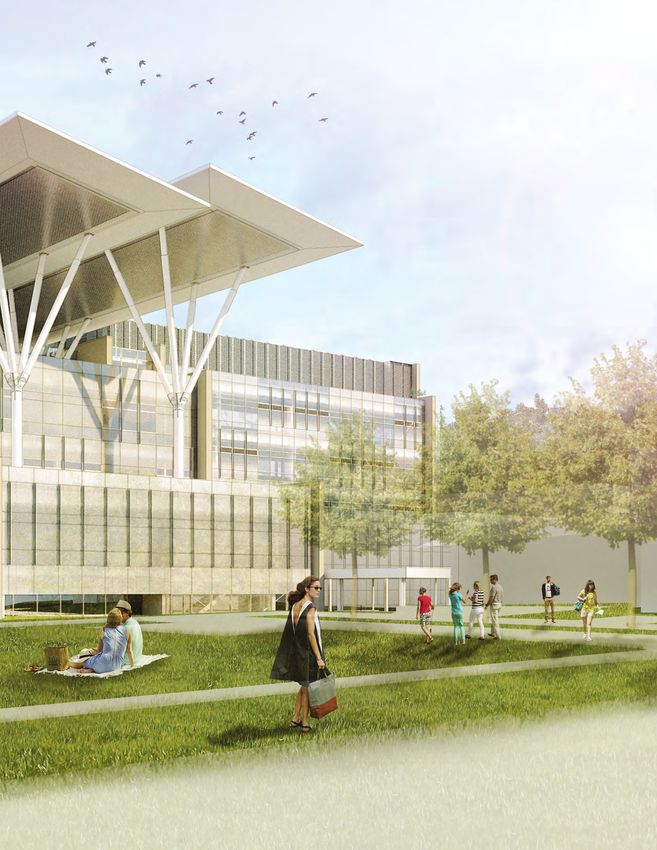
Cover Photo:
Courtesy of McCallum Sather and B+H Architects

 C Copyright 2018, EllisDon Corporation

Production Team:
      Andrew Bowerbank       Author, Graphic Design & Publication
         Kathleen Agustin    Content, Interviews, Research, Site Photos
    Natasha Arsenijevich     Content, Editing
Table of Contents

1    Executive Summary: The Journey to Net Zero Energy
3    Background: Launching the Carbon Impact Initiative
5    Defining Net Zero Targets
6    Developing a Market Standard
9    Mohawk College - Environmental Masterplan 2.0
11   The Joyce Centre for Partnership & Innovation
13   In Conversation With - Tony Cupido, Mohawk College
16   Intelligent Buildings - Its about Systems Thinking
19   The Development Process - Striving for Net Zero Energy
21   In Conversation With - Kevin Stelzer, B+H Architects
25   In Conversation With - Kathleen Agustin, EllisDon Corporation
31   In Conversation With - Andrew Visconti, EllisDon Corporation
34   Facilities Services - Maintaining Net Zero Energy Operations
37   Outcomes - A “Top 10” List of Lessons Learned
39   Looking Forward - Preparing for Market Transformation
42   Acknowledgments
43   Reader’s Notes

                                                            Mohawk College
                                                            The Joyce Centre for Partnership & Innovation
                                                            Hamilton, Ontario, Canada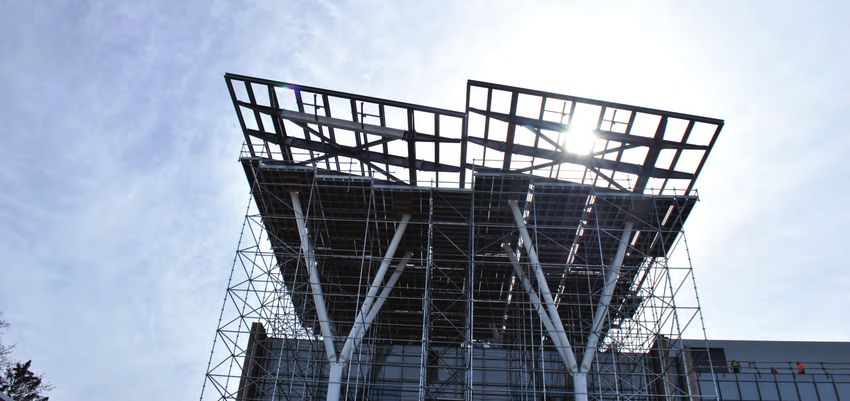
Executive Summary
The Journey to Net Zero Energy
A Lessons Learned Report: Constructing the Joyce Centre for Partnership & Innovation

Mohawk College’s Joyce Centre for Partnership and Innovation was the first pilot
project under EllisDon’s Carbon Impact Initiative. This project gave the design and
construction teams an opportunity to develop the practical onsite experiences
needed for future projects committing to high performance targets like Net Zero
Energy and Emissions.

A     t EllisDon, our breadth of knowledge
      and experience offers exceptional
service to clients. We are now focused
                                                   to put these interests into practice; this
                                                   is especially true of buildings targeting
                                                   aggressive levels of hyper-efficiency.
on becoming even greater than the sum              We also learned that the project budget
of our parts - one company, one result.            must account for an assigned Net Zero
We are determined to lead change in the            Energy Coordinator to manage
market, rather than merely anticipate it.          communications from the very beginning
The Net Zero Energy Joyce Centre was               of the construction process. We learned
the perfect project to showcase our                that a dedicated energy budget focused
commitment to the low carbon economy,              on systems integration is key to
while providing the college with a facility        performance success, and that designing
they can be proud of for many years to             for demand occupancy is important to
come. Through our efforts with Mohawk              ensure that tenants will enjoy a
College, we learned many lessons. This             comfortable immersive experience
report discusses the challenges, suggested         without impacting operations.
solutions, and lessons learned while               This report provides context for future
building Canada’s first institutional Net           Net Zero Energy projects and how success
Zero Energy building; supported by one-            can lead innovative market developments,
on-one interviews with representatives of          concluding with a “top 10 list” of lessons
the College, the architects, and EllisDon.         learned.
Of particular importance was the lesson of         You will see that this report is not a
collaboration. All project proponents need         technical document; it is designed to
to be brought to the table very early in the       illustrate the journey of all teams involved,
planning stages through an “integrated             and how, by working together in a
design” process. The market has been               collaborative environment, we can meet
discussing the need to adopt an integrated         a project’s Net Zero Energy objectives.
design model for years, but now we need

                                               1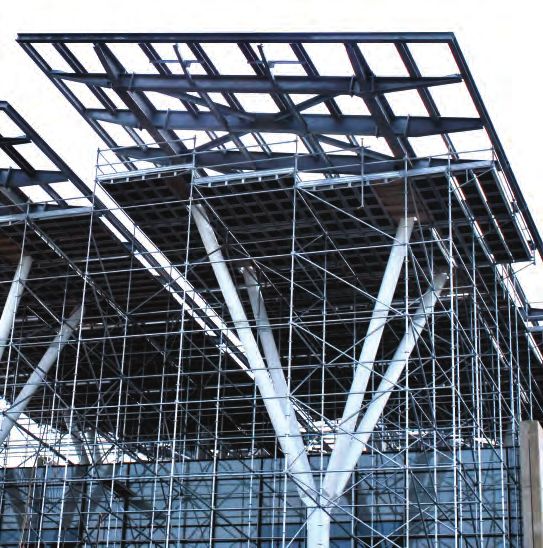
Joyce Centre                                      A “Top 10” List
Building & Energy Technology                      Recommended priorities to achieving
Specifications Overview                            Net Zero Energy as learned though the
                                                  development of the Mohawk College
Project Intent & Timelines:
                                                  Joyce Centre for Partnerships &
An applied research centre with classrooms,       Innovation.
technology labs, and lecture theatres.
                                                  1. Communication is Key
Ÿ   Three areas of academic focus:
    health, energy, technology.                   2. Create a “Net Zero Team”
The Centre will be open to students and           3. Apply Integrated Design
faculty for the Fall semester, 2018.
                                                  4. Prioritize the Wish List
Building Specifications:
                                                  5. Incorporate Building
Ÿ   Five Stories; 96,000sqft
                                                     Automation Systems
Ÿ   Capacity for 4,500 students
                                                  6. Manage Procurement
Energy Specifications:
                                                  7. Engage Contractors and Trades
Photovoltaics - 5,015m2 array producing
                                                     in the Development Process
500KWp AC; 1980 individual 330watt panels
[Canadian Solar].                                 8. Focus on the Energy Budget
Geothermal Field - 28 vertical bore
                                                  9. Engage Tenants in Operational
holes, 183m deep; 4 slinky loop circuits,
                                                     Efficiency Targets
each circuit contains a 305m pipe installed
in a 92m trench [GeoSource Energy].               10. Knowledge Sharing from
                                                       Cradle to Grave
Energy Management Strategy:
The needs and behaviour of the building’s
occupants were assessed to determine the
energy requirements. Parameters included:
Ÿ   Building enclosure performance
    to reduce heating & cooling losses;
Ÿ   Mechanical system performance
    to optimize ventilation, heating, and
    cooling distribution;
Ÿ   Electrical system performance
    to optimize lighting requirements.

                                              2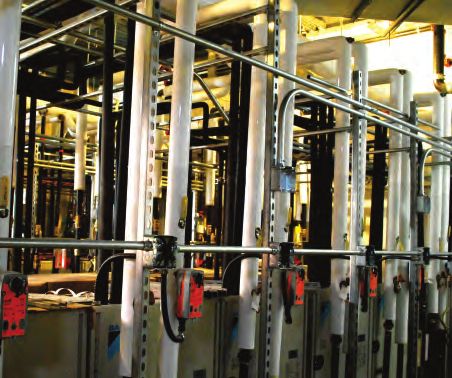
Background
Launching the Carbon Impact Initiative

In 2016, EllisDon Corporation created a unique sustainability strategy to prepare for
the next generation of “hyper-efficient” buildings and infrastructure. As a first step,
and together with like-minded corporate leaders, the Carbon Impact Initiative was
established as an industry-led response strategy to guide sustainable business
development and deliver projects that support Canada’s international commitments
on climate change. Mohawk College’s Joyce Centre for Partnership and
Innovation was the first pilot project in the Carbon Impact Initiative.
As a pilot project, it provided us with the practical, onsite experience needed to build
future projects committing to performance targets like net zero energy and emissions.

A     s populations grow and new
      technologies continue to rapidly
transform our markets, we must ensure
                                                 track the carbon emitted during the
                                                 life-cycle of projects, and support the
                                                 introduction of new clean technologies
that the design and development of our           that can meet the hyper-efficiency targets
urban centres are managed in a resource          required by clients.
responsible way so that future generations
                                                 We recognize that nations around the
have access to the expertise they need for
                                                 world are already leading a global shift in
long term success; this is the guiding
                                                 preparation for the new environmental
principle of the emerging low-carbon
                                                 realities we will be facing over the coming
economy.
                                                 decades. This Initiative represents the first
EllisDon has taken a leadership position         step in our collective efforts to provide the
in low-carbon strategies for Canada by           industry leadership required to meet
publically launching the “Carbon Impact          Canada’s international commitments on
Initiative,” in partnership with some of         climate change.
the most influential companies and
                                                 As economies restructure, and climate
agencies in the country. Our partners
                                                 change continues to impact our
include BASF Canada, WSP Group,
                                                 environment, we must do our part to
Enbridge Gas, Mitsubishi Electric, Avison
                                                 ensure cities and communities are
Young, Cricket Energy, Cisco Systems,
                                                 prepared to support the needs of future
and the Cement Association of Canada.
                                                 generations. It is our responsibility to
Through the Carbon Impact Initiative,            ensure the buildings we are constructing
we work together on pilot projects               are prepared to adapt. This means
targeting net zero energy and emissions,         responding to atmospheric conditions,

                                             3
but it also refers to cities that will need to       ideas and methodologies, and hiring
function in a world with ever-limiting               industry innovators. Innovation itself must
natural resources and skyrocketing                   dictate the way forward and shape our
operating costs. We are fortunate in                 thinking - we must be prepared to do
Canada that our easy access to abundant              what has never been done before.
natural resources, like fresh water, will
buffer us (to some degree) against climate           Our Guiding Principle
change, but we must recognize our                    As global markets shift in response to
responsibility to the international                  social, environmental, and economic
community. If Canada can be a leader in              conditions, we will be required to build
low-carbon strategies, such as resilient             more with less impact. According the
building design, we can then leverage                UN’s Intergovernmental Panel on Climate
Canada’s established reputation in                   Change, we will need to find a way to
research & development to lead the                   reduce 80% of GHG emissions by 2050
transformation of the building construction          from 1990 levels. To do so, we will need
sector around the world.                             to build resilient, adaptable communities
World markets continue to struggle with              that can respond to the latest technologies
economic stability. As such, we must                 at a faster pace. This will be no easy task,
carefully consider how to foster                     only big industry leaders who are ready
development in emerging markets,                     to step up and lead the marketplace can
provide alternatives to struggling assets,           drive this level of change. At EllisDon,
and capitalize on growth industries. We              our breadth of knowledge and experience
also need to recognize that advancements             offers exceptional service to clients and
in new technologies are changing our                 we are now focused on becoming even
industry at a rapid pace. We need to                 greater than the sum of our parts -one
be part of the change by investing in                company, one result. We are determined
cleantech development, incubating new                to lead change in the market rather than
                                                     merely anticipate it.

                                                 4
Defining Net Zero Targets
A review of recognized industry terms

I   n response to the emerging low
    carbon economy, there have been
a number of new terms and definitions
                                                     Embodied Carbon:
                                                     Refers to the total amount of carbon
                                                     dioxide (CO2) or carbon dioxide equivalent
introduced to the industry in an effort              (CO2e) generated from all inputs and
to establish a new level of energy                   outputs involved in the extraction,
efficiency and sustainable building                   refinement, processing, transportation and
practices. For clarity, the following                fabrication a material, product, or service.
definitions have been provided:
                                                     Carbon Neutral:
Net Zero (Site) Energy:                              Refers to achieving a state in which the net
Refers to a building or infrastructure project       amount of carbon dioxide (CO2) or carbon
that generates 100% of the energy needs              dioxide equivalent (CO2e) emitted into the
on-site through the use of renewable energy          atmosphere from the construction and
sources. In a Net Zero site energy project,          operation of a building or infrastructure
for every unit of energy consumed, a unit of         project is “Zero,” or balanced, by the
energy must be generated. This is an annual          actions taken to reduce and offset these
target based on operational demands.                 emissions. This is an annual target based
                                                     on operating emissions.
Net Zero (Source) Energy:
Refers to a building or infrastructure project       Operating Emissions:
without the onsite capacity to generate the          Emissions generated during the operational
required operational energy. To offset annual        phase of a building’s life-cycle, also known
consumption, energy is delivered to site from        as the “in use” phase. This includes
a recognized renewable energy provider.              emissions as a result of operational
                                                     systems, including mechanical, electrical,
Embodied Energy:                                     and information and communication
Refers to the total amount of energy                 technology (ICT), as well as ongoing
consumed during the extraction, refinement,           maintenance and repairs.
processing, transportation and fabrication
of a material, product, or service.

                                                 5
Developing a Market Standard
Supporting market transformation towards 100%
net zero carbon buildings by 2050
An Excerpt from the CaGBC’s Zero Carbon Building Initiative - www.cagbc.org

Mohawk College's Joyce Centre for Partnership & Innovation was selected by the
Canada Green Building Council as a national pilot project to demonstrate it’s new
Net-Zero energy carbon standard and validation process.

In May 2017, Canada Green Building                The requirements for achieving certification
Council (CaGBC) was the first GBC to               under the standard are
launch a dedicated Zero Carbon Building           as follows:
Standard, making carbon emissions the             1. Demonstrate Zero Carbon Balance
key indicator for building performance.
[It was] Developed through extensive              2. Provide Zero Carbon Transition Plan
consultation with representatives from               (Where fuels other than zero
over 50 industry organizations, utilities,           emissions biofuels are used onsite)
governments and companies across Canada.          3. Install Minimum 5% Onsite
CaGBC is also working with 16 of Canada's            Renewable Energy
most sustainable projects in the Zero             4. Achieve Thermal Energy Demand
Carbon Building Pilot Program, which will            Intensity Target
inform further development of the Standard
and accompanying resources and education.         5. Report Energy Use Intensity

Within this standard, “A zero carbon              6. Report Peak Demand
building” is defined as one that is highly         7. Report Embodied Carbon
energy-efficient and produces onsite, or
procures carbon-free renewable energy in an
amount sufficient to offset the annual carbon
emissions associated with operations.”

                                             6
“We're excited to witness one of the
first pilot projects using CaGBC's newly
developed Zero Carbon Building
Standard. Mohawk College incorporates
energy harvesting and conservation
technologies and is a giant leap in future-
proofing new buildings that are fit for
purpose, offer climate resilience as well
as an enhanced user experience. As the
Paris Agreement has set the international
challenge to reduce global emissions,
green buildings, such as the Mohawk
College, demonstrate that innovation and
energy efficiency can work together
without compromising design. ”
Terri Wills, CEO, World Green Building Council
78
Mohawk College
An Excerpt from the Environmental Masterplan 2.0

Mohawk committed to becoming a leader in sustainability when we adopted our first
comprehensive Environmental Management Plan four years ago. The plan was the
first of its kind for an Ontario college. It was a plan that set bold targets around
reductions in energy consumption and waste, and included setting the ambitious
goal of achieving a 20% reduction of 2007 baseline carbon emissions by 2020.

T     he Environmental Management Plan
      (EMP), first approved in November
2011, has been the blueprint and leading
                                                   To celebrate recent successes and
                                                   continue on with the task at hand, the
                                                   Sustainability Office held a series of
policy document for the College’s                  stakeholder consultations about the future
transformation towards becoming an                 of Sustainability at Mohawk. The result
environmentally, socially and financially           was a revised plan, EMP 2.0. This Plan
resilient institution.                             identifies a new target, calling for a 30%
                                                   reduction in 2007 baseline carbon
The Pillars, Strategies and Actions outlined
                                                   emissions by 2020, supported by updated
in the plan have been vital in making
                                                   Pillars, Strategies and Actions, which
Mohawk’s mark as an industry leader in
                                                   reflect the local, national and global
sustainability. As a result, Mohawk has
                                                   sustainability movement, relative to 2014.
exceeded the original target of a 20%
reduction in 2007 baseline emissions by            EMP 2.0 focuses on social sustainability,
2020, reaching a 24% reduction in carbon           supporting education, participation,
emissions eight years ahead of the EMP             further integration with Aboriginal
schedule.                                          Education and Student Services, “Social
                                                   Inc.” and the demonstration of innovation
Mohawk College remains committed to
                                                   at all Mohawk College campuses. The goal
conducting business in ways that
                                                   of the updated Plan is to continue to
positively impact people, the environment
                                                   reduce the College’s environmental
and the broader community. Mohawk
                                                   impact, while developing the sustainability
supports a multi-faceted definition of
                                                   leaders for tomorrow’s workplaces and
sustainability, recognizing the
                                                   communities.
interconnection between the economy,
society and environment.

                                               9
The regular activities of all Mohawk a culture of sustainability. This Plan
students and staff have a direct impact on guides the decision making process at
the College’s environmental and financial Mohawk and will continue to inform the
objectives. The continued fostering of a governance and application of college-
culture of sustainability will have a positive wide policies, procedures and overall
impact on the reduction of carbon operations.
emissions, operational costs and an
The updated Plan is a call for strong
improved quality of life for students, staff
leadership in all areas of College activity.
and the broader community.
Mohawk’s commitment to conducting
In particular, the focus of the revised plan business in ways which positively impact
is on Scope 3 emissions; those related to the people and the environment is also a
the day-to-day behaviours, actions and commitment to embedding principles of
activities of Mohawk College stakeholders. social, financial and environmental
The Plan’s emphasis on change sustainability into all that we do. The
management, increased awareness and enhanced Actions and Targets set out in
participation seeks to create opportunities this Plan will ensure long-term resiliency
for students and staff to make informed as a leading post-secondary institution,
decisions with an environmentally and will continue to inspire our graduates
conscious approach to daily life on and to practice greater sustainability in the
off campus. workplaces and communities in which
they serve.
The introduction and implementation of
initiatives, programs and incentives will
directly engage stakeholders in fostering
Groundbreaking Ceremony, September 30 2016
Mohawk College, The Joyce Centre for Partnership & Innovation
Hamilton, Ontario, Canada
10The Joyce Centre for
Partnership & Innovation
Ontario’s First Net Zero Energy Institutional Facility
www.mohawkcollege.ca
Located at the Mohawk College Fennell campus in Hamilton, Ontario, Canada,
the new 96,000 square-foot Joyce Centre for Partnership & Innovation will build
on Mohawk’s applied research strengths in the three focus areas of health, energy
and technology.
D oors open on the Joyce Centre for
Partnership & Innovation in Fall 2018.
It is the cornerstone of a record-setting
The Joyce Centre will include workshop
spaces, lecture theatres, industry training
centres, and advanced technology
$54.25 million renewal of technology labs demonstrations. Operated as a Net Zero
and classrooms. The five-level centre is also Energy facility, the Centre will showcase
a showcase of environmental sustainability Mohawk’s vision to be an environmental
as the region’s first Net Zero Energy leader for students, staff and partners have
institutional building. The Government of come to expect.
Canada’s $20 million investment in the
The Joyce Centre will be entirely dedicated
centre is the single largest federal
to the student experience and expand
infrastructure investment in Mohawk
experiential learning at Mohawk. Students
College’s 50-year history. Enrolment in
will enjoy greater access to laboratories,
technology programs is expected to grow
and the opportunity to learn through
from 3,500 to 4,500 students, and applied
“capstone” projects, industry placements,
research activity will increase by 50%.
co-op work terms, applied research &
The Joyce Centre will leverage new and development, and team competitions.
established partnerships to focus on This new facility will supply the much-
technologically advanced learning and needed graduates to our industry partners
lab spaces - all under one roof. Guided by and magnify our College’s regional
the Mohawk faculty and industry partners, economic impact.
students will cultivate their problem solving,
critical thinking, and technical skills using
cutting edge industry equipment and tools.
11Project Intent & Timelines:
An applied research centre with classrooms,
technology labs, and lecture theatres.
Ÿ Three areas of academic focus:
health, energy, technology.
The Centre will be open to students and
faculty for the Fall semester, 2018.
Building Specifications:
Ÿ Five stories; 96,000sqft
Ÿ Capacity for 4,500 students
Energy Specifications:
Photovoltaics - 5,015m2 array producing
500KWp AC; 1980 individual 330watt panels
[Canadian Solar].
Geothermal Field - 28 vertical bore
holes, 183m deep; 4 slinky loop circuits,
each circuit contains a 305m pipe installed
in a 92m trench [GeoSource Energy].
Energy Management Strategy:
The needs and behaviour of the building’s
occupants were assessed to determine the
energy requirements. Parameters included:
Ÿ Building enclosure performance
to reduce heating & cooling losses;
Ÿ Mechanical system performance
to optimize ventilation, heating, and
cooling distribution;
Ÿ Electrical system performance
to optimize lighting requirements.
12In Conversation With
Tony Cupido, Mohawk College
Tony Cupido, P.Eng
Ÿ Chief Buildings & Facilities Officer -capital construction,
day-to-day building operations on the Mohawk campus
Ÿ PhD in Civil Engineering: Green Buildings & Policy Development
W hat was the driver of
pursuing a building
targeting Net Zero Energy?
What approach did you take to
ensure all stakeholders were on
board with the Project?
Tony’s genuine interest in high As one can imagine, it can be a challenge
performance buildings and the to get multiple teams on-board and
opportunities they present for the future, actively work toward an aligned, and
played a key role in bringing the idea of aggressive sustainability target. When
a Net Zero energy building to the table. asked what approach was taken to
When given the opportunity to apply to achieve unity, Tony stated that “this
the Federal Post-Secondary Institutions project was a surprising exception -
Strategic Investment Fund, he believed internal agreement was easily reached
that there was no other way to and all teams remained ready to embrace
differentiate Mohawk College’s application the concept of Net Zero.” From the
than to set the bar at the highest level by beginning, Tony felt that communication
aiming to achieve Net Zero energy. was crucial to the project’s success;
The Joyce Centre for Partnership and articulating the project’s objectives,
Innovation is a flagship project, acting as particularly the Net Zero Energy
a catalyst for the adoption of high- sustainability target, was important.
performance buildings in Ontario. Not only This ensured that the engineers,
does it provide an example of the next architects, and construction management
generation of building performance, it also teams all had the right information and
serves as a living lab, demonstrating the understanding going into the project,
engineering principles required to create allowing for cohesive project execution.
and sustain buildings of this type.
13What significant challenges How important was the Federal grant
were faced? to make this project a reality?
Tony mentioned that “a significant Despite the schedule and market
challenge for the project was the quick challenges, the Strategic Investment Fund
schedule tied to the funding requirements.” was critical as it was a major contributor
He expressed how compressed schedules to the overall budget. “Without it,” said
can typically develop challenges due to Tony, “the project could not have moved
limited time spent on activities such as due forward from conception to construction.”
diligence, stakeholder engagement, design In addition to federal funding, generous
reviews, and commissioning. These donations were received from the Joyce
activities are of particular importance when Family Foundation, the Mohawk Student
bringing a Net Zero building to life. Ideally, Association, ArcelorMittal, and the
all such activities should be prioritized early Marinucci Family Foundation.
on in the project.
What design challenges did you come
What limitations and/or concerns did up against in the early stages of
you have in anticipation of meeting project development?
the funding requirements (e.g. The architectural team created a
milestones, schedule)? “Basis of Design” document to act as
The compressed schedule happened to the framework for building development.
fall outside of the typical educational This document was important in setting
institution schedule as the funding spacial requirements and recognizing any
program requirements called for the limitations for the inclusion of renewable
building to be completed by April 2018, energy systems.
which is also the last month of the winter As previously mentioned, the time
semester. As the building is to be used constraints did not allow for an in-depth
primarily by engineering students, they analysis of design, which made the
wouldn’t be able to occupy the building energy budget (produced by the energy
until the fall 2018 semester. consulting team) a critical tool in aligning
What was not anticipated was the energy consumption with the cost of the
market response. As all of the Strategic other building systems and their
Investment Funding had been released at applications.
once, with several other post-secondary Another challenge was ensuring that the
institutions aiming to meet the same PV system was robust enough to manage
program requirements, it created operational demand, and that sufficient
challenges in procurement and competition roof space was available from adjacent
since the market was flooded with similar campus buildings.
bids. Market demand resulted in limited
access to labour and materials, leaving “Mohawk College aims to be
little time and opportunity to fulfill a leader in sustainability and
necessary requirements. The Joyce Centre for Partnership
& Innovation fits perfectly into
the colleges Environmental
Management Plan.”
continued
14Do you have any recommendations Tony’s Recommendations:
for future projects targeting net zero 1. Get all building occupants to become
energy in Ontario re: government, active participants in the buildings they
industry, and academic involvement? spend time in (this is not limited to
Tony believes that the Governments of academic institutions).
Ontario and Canada have implemented 2. Plug loads should be monitored for
excellent legislation as it relates to energy consumption patterns.
greenhouse gas emissions, cap and trade,
and climate change. As we move forward, 3. Incorporate building automation
he believes there is a need for government systems (BAS) for the purposes of
to implement additional policy for all data collection, knowledge transfer,
ministries and organizations, federal and diagnostics of energy consumption.
and provincial, to realize the Net Zero
initiatives and initiate the Net Zero
movement. He believes that all public
sector buildings should be targeting Net
Zero, as a minimum.
Mohawk College
The Joyce Centre for Partnership & Innovation
Hamilton, Ontario, Canada
15Intelligent Buildings
Its about Systems Thinking
EllisDon is a market leader in the construction and operation of Intelligent Buildings.
Our portfolio now includes projects across Canada, including WaterPark Place,
George Brown’s Waterfront Campus, Oakville Trafalgar Memorial Hospital and
Brookfield Place (Calgary). However, installation of the intelligent infrastructure is
only the first step. If you are to make a building and its operation truly intelligent,
then you have to leverage both the technology and the information it provides to
drive performance.
E llisDon believes very strongly that a
key contributor to achieving a Net
Zero building is through the use of
user to drill down into each of the building
systems. It also provides a foundation for
advanced analytics, such as automated
technology. This commitment to fault detection.
technological advancement is embodied
The exponential increase of technology
by our Energy & Digital Services division
within buildings is fundamentally changing
who leverage the exponential growth of
how buildings are operated. We are
technology within buildings to ensure our
implementing cloud-based applications
clients achieve their sustainability goals.
that provide autonomous control of
It is critical for any building aiming to various building systems. These
achieve Net Zero Energy applications leverage the concepts of big
to implement tools that can maintain data, machine learning, and advanced
efficient operations. There is an old adage computing power, to drive increased
that states “you can’t manage what you building performance. We need to ensure
can’t see;” this is particularly true as that the operations team embraces the
it relates to facilities management and new tools that are now available and
achieving a building’s Net Zero energy subsequently use these
target. EllisDon has pioneered the tools to drive the building’s performance.
development of consolidated dashboards The adoption of these tools will be critical
for use by both operators and energy to the success of the facility.
managers. The consolidated dashboard
delivers a single pane of glass that “The only constant in life is change,
provides visibility over how the overall and we must be open to it because
building is functioning, while allowing the when we do, we all benefit.”
Robert Barnes, EllisDon Corporation
16“Significant effort has been
expended to achieve Net Zero Energy
design at The Joyce Centre for
Partnership & Innovation, starting
with establishing an energy budget.
We’ve worked diligently to enhance
the sustainability features of the
building including the selection of
natural material, maximizing natural
light and views, using finishes
strategically, water conservation
measures and green roofs.”
Joanne McCallum, McCullum Sather Architects
1718
The Development Process
Striving for Net Zero Energy

Over the past 15 years, interest in green building design has gone mainstream, in
part due to the effectiveness of rating systems like LEED that have educated the
market and guided building processes. Industry leading construction companies now
have in place the experience and expertise needed to deliver a green building to
clients, on time and on budget. The market is about to change as we find our way
in the emerging low carbon economy.

W       e are at a crucial time in the global
        energy efficiency market where
designers, developers, and property
                                                 Where LEED was a unified driver that
                                                 began the green building movement in
                                                 the 90’s, today's market is looking for
owners are being challenged to do more           more comprehensive mechanisms that
as Canada strives to meet the United             can ensure carbon reductions and energy
Nations goal of reducing GHG emissions by        savings. For LEED developments, the US
80% (below 1990 levels) by 2050.                 Green Building Council has now introduced
Provinces and municipalities are already         “version 4,” incorporating important
stepping up to meet the challenge - they         updates that include the consideration of
are asking the design community for a            construction material life-cycle impacts.
new level of “hyper-efficiency” in new            Most recently, the CaGBC has expanded
building projects; they are looking for life-    their portfolio beyond LEED, launching
cycle carbon accounting for all buildings        their Zero Carbon Building Standard.
and infrastructure; and they are                 Examples of new systems that have
establishing energy retrofit plans for            recently been introduced to the
existing buildings. Supported by the             mainstream market include Passive
leadership of federal government agencies        House, the Well Standard, Living
like the Federation of Canadian                  Building Challenge, and others.
Municipalities, major urban centres like         We are now moving to design and build
Toronto and Vancouver are already moving         projects that can generate as much energy
to implement city-wide zero emissions            on-site as they consume annually. These
targets.                                         “Net Zero Energy” buildings are not meant
New buildings and infrastructure projects        to be a one-size-fits-all solution for the
will need to find ways to meet these              market, but they do offer a leadership
targets, but there is no single solution.        target for the market to aspire to. For
                                                 example, a tall office tower in downtown

                                                19
Toronto would find it very difficult to and plug-load demands. This is especially
achieve Net Zero Energy (there is just not true of buildings targeting aggressive
enough space for on-site energy levels of hyper-efficiency. The market has
generation), but the design principles used been discussing the need to adopt an
to achieve Net Zero Energy on projects, integrated design model for years, but
like Mohawk College’s Joyce Centre, can now we need to put these interests into
be used to influence design to meet hyper practice.
efficiency targets for tall tower buildings. Through our efforts with Mohawk College,
Rather, a “Net Zero Emissions” target for we learned a valuable lesson about the
tall towers (as a continued example) importance of collaboration and about
would be better suited. Whatever the integrating all teams in the development
hyper-efficiency target (Net Zero Energy process as early as possible. For the next
or Emissions) established by the client, the project, we have learned that integrated
design community needs to be prepared design is crucial. Everyone involved in
to respond. development and operations must be
All project proponents need to be brought engaged from the very beginning.
to the table very early in the planning Knowing that we were up against some
stages through an “integrated design” tight timelines, everyone came together
process. This process must include experts to ultimately deliver a building that we
in intelligent building systems and facility can all be very proud of.
management to prepare for operations
Mohawk College
The Joyce Centre for Partnership & Innovation
Hamilton, Ontario, Canada
20In Conversation With
Kevin Stelzer, B+H Architects
Kevin Stelzer
Ÿ Principal with B+H Architects, specializing in laboratory,
retrofit-renewal projects and energy efficiency.
Ÿ Registered Architect (OAA, NLAA)
Ÿ Building Science Specialist of Ontario
A lthough B+H has global
experience developing hyper-
efficient buildings, did you anticipate
anticipated that a quick design turn-
around could make processes such as
procurement difficult, but no one
any challenges in applying these anticipated just how difficult.” Kevin
experiences specifically to the quickly learned that the local market
Mohawk College project? needed to be carefully analyzed in order
to have an organized bidding and
1. Kevin noted the difficulties in identifying
tendering strategy. What ensued was
a common evaluation protocol at this early
quite erratic at times; acquiring the
stage of the “Net Zero” market. The
desired labour and materials proved to
Canada Green Building Council’s “Zero
be a real challenge to keep pace with
Carbon Building Standard” had not yet
the schedule.
been released at the beginning of the
project so it could not be used for 3. The collaboration on design execution
reference. The team decided to use the was refreshingly less challenging than
Net Zero Energy metric from the “Living anticipated, despite the project's strict
Building Challenge” as the guideline for schedule. As an example, the design
the project. process was able to be flexible enough to
consider alternative options when
2. With a background in building science,
constructing the curtain wall for optimal
Kevin considers an energy budget just as
performance. Kevin understood and
important as cost and scheduling to the
appreciated that collaboration on high
design process, but this project posed
performance buildings is of great
some interesting time constraints to his
importance. The earlier all teams (from
usual way of doing things. In his typical
design through construction and
design approach, he first looks at building
operations) can be brought on board
area and location and then designs from
together, the better.
the energy perspective. He said that “he
21The Mohawk building is the first Net He also feels that the market needs to
Zero Energy academic building be prepared for the pricing strategy of
in Ontario – in your experience, what constructing high performance buildings
does this type of project mean for the and that the construction of buildings
market and the province? needs to be purposeful and thoughtful.
Kevin stated that “there is definitely an Can you describe your experience
interest in the academic institution market integrating all of the high
to strive for aggressive efficiency targets.” performance building systems
Observers often questioned him on the on the project?
build process and how the Mohawk project
In answering this question, Kevin said
compared to traditional builds. He also fielded
“meeting an energy budget with systems
a lot of questions around up-front cost
integration was actually my favourite
comparisons. He goes on to say that “high
design aspect.”
performance buildings are desired in the
market, but there is still more information He enjoyed the challenge of designing for
needed on what NZE truly means and what demand occupancy and seeing how stable
really goes into making NZE a reality.” To heat sources from the geo-exchange field
support NZE projects in the Greater Toronto and the VRF system came into play to
Region going forward, Kevin believes that create a pleasant social hub that people
regulations like the new Toronto Green would want to occupy. Students and
Standard Version 3 will increase enclosure faculty should enjoy an immersive
effectiveness across the board. This will be a experience in the teaching and learning
significant help in the way we design future spaces at the Joyce Centre for Partnership
NZE buildings. and Innovation. He mentions how “Tony
Cupido is looking forward to using the
Where do you see the future of low
building to teach students how to operate
carbon buildings going in Canada?
high performance buildings.”
Kevin feels that we need to foster stronger
At this point of the project, what is
collaboration between design and engineering
your one key takeaway?
disciplines. He recognizes the importance of
the building envelope in operational Kevin feels that the greatest challenge is
performance and looks at what trying to create an industry-wide culture
measures architects can implement on the of high performance buildings, in which
mechanical systems of buildings, in what protecting the atmosphere is truly valued
he refers to as “thermal autonomy” and where healthy buildings are created
(as presented by Loisos + Ubbelohde at the to enhance the occupant experience.
2013 CaGBC National Conference & Expo).
The concept measures “how much of the “As we enhance indoor
available ambient energy resources a environments we can have a
building can harness rather than how much much healthier impact on every
fuel heating & cooling systems will consume, aspect of architecture: innovation,
[linking] occupant comfort to climate, uniqueness, cultural goals, and
building fabric, and building operation”. local requirements”.
22“Through design and collaboration in
key industry initiatives such as the
Carbon Impact Initiative with
EllisDon and our partners, BASF is
continuing to learn and lead the next
generation of sustainable, durable
and cost effective construction
products which will take us into the
future of building science. There is
no question that net zero projects
like Mohawk College are
monumental and are leading the
construction revolution and we are
excited to be a part of it.”
Marcelo Lu, President, BASF Canada
2324
In Conversation With
Kathleen Agustin, EllisDon Corporation

                         Kathleen Agustin
                         Ÿ Project Coordinator, Sustainable Building Services, EllisDon
                         Ÿ Graduate, Sustainable Energy & Building Technology,
                           Humber College

M     any of the discipline leaders
      involved in the project are used
to working in silos, focused on their
                                                 This team was established after the
                                                 project had just started construction, in
                                                 response to an internal interest to ensure
areas of expertise, where they                   everyone was working from the same
conduct their work effectively in a              objective and understood the importance
linear process from design to                    of building Ontario's first institutional NZE
substantial completion. As the                   building. Everyone invited to join the team
integrated planning coordinator for              had their respective expertise on energy
The Joyce Centre, what were your                 efficient, green building design, but no
challenges in getting everyone to the            one had a clear understanding of how all
table to collaborate and discuss the             the pieces would fit together to achieve
bigger objectives for the project?               the new level of hyper-efficient building
                                                 performance required for the project.
Kathleen's introduction to this project
                                                 Over several meetings, questions
started with an internal EllisDon meeting
                                                 continued to be left unanswered and it
where executives from across divisions,
                                                 was evident that the communications
including Building Sciences, Sustainability,
                                                 between the construction team and
Construction Management, Mechanical/
                                                 consulting design team needed to be
Electrical Design, Energy and Digital
                                                 improved.
Services, Information Communication &
Automation Technology, came together             To solve this issue, recommendations on
to discuss what steps would need to be           building envelope tightness and
taken to ensure the Joyce Centre achieved        technology integration were discussed at
its Net Zero Energy target.                      length and a plan was introduced to
                                                 facilitate the decission making process. For

                                               25
example, energy modelling assumptions for her to be able to speak with so many
were understood to be critical in achieving passionate and intelligent individuals.
Net Zero Energy so the teams needed to This is just the first step in the adoption
ensure the model reflected what was of high-performance buildings in Ontario,
presented in the design and construction and Kathleen cannot wait to see how the
documents. It was also important to market will continue to support buildings
identify what expertise EllisDon could that represent the next generation of
provide to the project, beyond just energy efficiency in Canada.
traditional construction management
For the Joyce Centre, there were a
services. The EllisDon team had
lot of new innovative concepts and
recommendations; they realized that
technologies to consider that
they had to work closely with the design
required expertise not usually
teams and the client to ensure the project
considered in traditional building
met their targeted Net Zero Energy
design. What was your experience
objective. Everyone needed to collaborate
working with the teams to consider
to ensure success.
intelligent building technologies and
At the beginning of the construction facilities services early in the
process, a designated “Net Zero Energy planning process?
coordinator” had not yet been assigned.
EllisDon's technology experts were
This proved challenging for Kathleen,
engaged in a number of discussions,
as she took on this role, to catch up
internally, on what smart building systems
to developments in her efforts to facilitate
were being considered and how the
communications. The design team also
building's performance would be
worked on meeting the requirements for
monitored and managed. As the
the CaGBC Zero Carbon Building program.
integrated planning coordinator, Kathleen
Efforts were made to coordinate with the
recognised that EllisDon was limited in the
construction team to provide the
ability to introduce new technologies, but
necessary information required to meet
had the opportunity to review how the
the “embodied carbon” section of the
Joyce Centre would meet the planned Net
CaGBC report. There are a lot of moving
Zero Energy target with the design team
parts to manage in a commercial
and the client.
construction project to begin with; aiming
to achieve Net Zero Energy, along with EllisDon advised the client on the
CaGBC commitments, had many importance of creating a unified
assumptions and unknowns to manage. monitoring system that Mohawk College
could use for operational management,
Throughout Kathleen's involvement in
as well as for educational and promotional
the project, she was “very impressed by
value. EllisDon has the experience and the
everyone's genuine interest,” regardless
expertise in providing this service to other
of any set-backs, challenges, or
project types, such as data centres, in
misunderstandings. It takes a large team
which real-time information is collected
of very knowledgeable people to bring a
and shared. This is achieved through an
project like the Joyce Centre from idea to
interactive “dashboard” to communicate
reality. It was a very humbling experience
continued
26energy consumption and distribution, Kathleen's Recommendation # 2:
technology performance, occupancy levels, Assign a Designated Net Zero
plug-load management, heating and cooling Coordinator
loads, and more. An interactive dashboard
Dedicated resources are required to ensure
would be particularly useful for the Joyce
that all disciplines are aligned to meet Net
Centre to monitor the geo-exchange field
Zero Energy targets. With all the moving
and PV systems to compare and report on
parts in the design, construction, and
performance trends over time.
operation of a NZE building, there needs
Kathleen also reviewed how the team to be a knowledgeable member of the team
discussed the importance of engaging dedicated to coordinating communications.
specialists in facility management. For a Since it can be difficult to get all teams
building like the Joyce Centre, that will rely together at once, a live online document
on renewable energy and integrated with comments that can be reviewed in
communication systems, building operators real-time by each member would be useful.
will have to be trained to work in a highly Ideally, all disciplines should meet at major
technical Net Zero Energy environment. project milestones to ensure that design,
construction, and planned building
operations are aligned and understood.
Lessons Learned &
Recommendations Kathleen's Recommendation # 3:
Adopt a Practice of Integrated
Kathleen's Recommendation # 1: Design and Delivery
Understand Net Zero Energy
Design intent, construction processes,
It's critical to assemble a cohesive team and building operations need to be
in which all the members recognize the end- agreed upon and understood at the
goal. Team members must work together beginning of the project's development.
and communicate on how their respective A predetermined energy budget is also
roles can affect project outcomes. Priorities critical for a project of this type. Any
and critical components of a Net Zero Energy changes made to the project over the
building must be established and clearly course of design and construction must
communicated throughout the course of be reported to a dedicated energy team
the project's development. If necessary, so that models can be updated to advise
time should be taken to give presentations on how these changes can affect future
or summary documents to the team in order operational performance. Efforts to align
to confirm that all members understand all disciplines later during the construction
what Net Zero means from the onset, and process (in a reactive as opposed to
outline any requirements that might be proactive manner) is inefficient and limits
different than a similar code compliant a team’s ability to address issues without
building. When everyone understands the impacting the schedule or budget. It is
goal, how to get there, and how their challenging to make changes once
respective roles can affect outcomes, construction is underway, so it's important
project execution will be much smoother to have as many risks and assumptions
and cost effective. addressed at the beginning.
Mohawk College
Joyce Centre for Partnership & Innovation
Hamilton, Ontario, Canada
27On-going communications and open
collaboration is invaluable to maximizing
building performance. As new innovations
in building design are introduced to the
market (in response to the emerging low
carbon economy) it will be a challenge to
keep on top of the latest developments.
Any change in the construction industry is
going to be a challenge, but we need to
embrace this as an opportunity if we are
going to do our part to adapt to our
changing climate. We must all keep our
minds open and receptive to new
innovative ideas so that projects like the
Joyce Centre can influence future resilient
city developments.
Mohawk College
Hamilton, Ontario, Canada
Site Visits 2018
Mohawk College, The Joyce Centre for Partnership & Innovation
Hamilton, Ontario, Canada
28“EllisDon is committed to driving
innovation in the construction
sector and we must do so by
leading change, not just
responding to it. Collaborating
on projects like Mohawk’s NZE
Joyce Centre for Partnership &
Innovation is a critical step in
our on-going process to lead the
market towards a low carbon
economy.”
Geoff Smith, CEO, EllisDon Corporation
2930
In Conversation With
Andrew Visconti, EllisDon Corporation

                        Andrew Visconti
                        Ÿ Project Manager, Mohawk College Joyce Centre for
                          Partnership & Innovation
                        Ÿ Bachelor of Commerce, Ryerson University
                        Ÿ LEED Accredited Professional

W     hat were the noticeable
      differences between
managing the construction of a
                                                    construction process as a result of the
                                                    Net Zero Energy target. He did however
                                                    have to pay careful attention to the
high-performance building like                      drawing details, as Net Zero Energy
Mohawk’s NZE Joyce Centre for                       required a different mindset. He had to
Partnership & Innovation compared to                focus on the end goal at all times and
a code-compliant building? Any initial              watch closely for any potential issues
thoughts coming into the project?                   (such as ensuring wall tightness
                                                    specifications were followed by the
As a first step in his efforts as Project
                                                    trades to prevent air leakage concerns).
Manager, Andrew worked to understand
the scope and impact of a project targeting         Andrew noted that, a lot of emphasis was
Net Zero Energy. He had some questions:             placed on participation and collaboration
“Did it mean operating off-grid as a self-          from the construction team at EllisDon
sufficient building or would it be tied to           during the design phase. Efforts between
the grid? How would it be metered?                  design and construction were much more
What would be the best approach to take             integrated than he was used to and
this project from design to construction?”          communications were more focused and
                                                    involved (as opposed to simply passing
As the project got underway, Andrew
                                                    information along from the design team).
quickly realized he was facing a bit of a
                                                    He noticed that a lot of assumptions were
“perfect storm” that he had to navigate:
                                                    made up-front on how the building would
a compressed build schedule, a shortage
                                                    operate; occupancy schedules, electrical
of skilled labour, and difficulty sourcing
                                                    loads, and seasonal variances for the
materials. Andrew identified that there was
                                                    renewable energy sources had to be
one good thing going for the project - there
                                                    considered throughout the design/build
was no significant challenges to the overall
                                                    process.

                                               31
Given the compressed project What were your experiences
schedule, what activities seemed engaging contractors and trades
to have the biggest impact on the regarding the building performance
deadline? requirements?
Andrew anticipated that the tight deadline Engagement of contractors and trades
would have an impact compared to typical onsite was a very collaborative, two-way
project milestones, but “the construction communication process. This collaboration
schedule couldn’t wait, as there were helped Andrew understand perspectives
commitments to federal funding that from the trades in relation to the
had to be met. This affected certain expectations of the design team. This
deliverables from the design team.” allowed for inconsistencies to be caught
In one instance, he had to proceed with early and addressed quickly. Many times
the building’s structural approvals even over the construction process, plans had to
before the PV array was fully designed. change in response to unique challenges
onsite.
The curtain wall was also a challenge to
navigate as its development process did Andrew again referenced the exterior walls
not follow a traditional construction as “one of the most important components
schedule. Comprehensive performance of high performance building design.” The
testing and detailed design mock-ups construction team and design team had to
needed to be approved before the shop work together to coordinate construction
drawings could be distributed to the logistics and performance targets. For
construction team, then fabrication of all example, spray foam is not applied in a
curtain wall components needed to be consistent, uniform thickness to surfaces
completed prior to installation on site. (the team was concerned about the
On a positive note, the geo-thermal field potential time consuming process of
was separate from the building (not having to shave down over-spray).
underneath) so it’s design was done In order to meet the design specifications,
concurrently and did not affect the thermal resistance per inch was calculated,
schedule in any significant way. paying special attention to the foam’s
application. The result was a uniformed,
In order to meet the thermal performance
consistent application that provided
requirements, the building’s exterior walls
valuable information for the energy
required BASF’s Walltite polyurethane
modeling team to work with in their
spray foam insulation. Spray foam would
ongoing calculations.
provide superior wall tightness, but the
application process affected the schedule. Technical proficiency and proper
Areas of the building needed to be cleared installation sequencing from the trades
of people and loose materials before onsite were extremely valuable to the
application could commence. Traditionally, construction process, especially when
construction activities are coordinated connecting the photovoltaic solar energy
simultaneously, but the spray foam system. The system spanned multiple
application required activities to be done buildings on the campus. It was designed
consecutively resulting in additional steps to produce more power than the Joyce
to the construction sequence. Centre building alone required, and tied
continued
32into the greater campus grid to meet the Energy building would have been a positive
College’s overall clean energy strategy. addition to the collaboration efforts as it
The system had to be connected to would have provided team leaders with
multiple electrical rooms - quite the more information to better anticipate
challenge for the trades, but one that potential issues as the project evolved.
was coordinated well thanks to the
What is the one thing you will keep
collaboration of all involved.
in mind when you take on the next
Are there any added resources that Net Zero building?
you feel could have helped the
Andrew believes it will be very valuable
construction process?
to identify early in the process what is
Andrew believes it would have been important versus what is a “wish-list” item
beneficial to the mechanical and for the client. In other words, what items
electrical contractors if measurement and are absolutely “necessary” to hit a Net
verification (M&V) was introduced earlier in Zero Energy target? It all comes down to
the project. Having already gone ahead determining what critical components are
with their work, it was challenging to back- needed to mitigate risk.
track and execute the advice provided by
All unknowns in the design phase also
the M&V consultant.
need to be addressed as early as
It would also have been helpful to identify possible. The teams needed to work
and communicate everyone’s project together to understand one another’s
responsibilities earlier in the development expertise and how it fit into the building’s
process. A review of how these roles and performance requirements to streamline
responsibilities of the disciplines involved execution.
would contribute to a successful Net Zero
Mohawk College
Hamilton, Ontario, Canada
33You can also read


