Grab 'n Go: Session 8 Two-speed IT: It-organisering i en eksponentiel verden - juni 2016 #deloittegng
←
→
Page content transcription
If your browser does not render page correctly, please read the page content below

Grab ‘n Go: Session 8
Two-speed IT: It-organisering i
en eksponentiel verden
7. juni 2016             #deloittegng
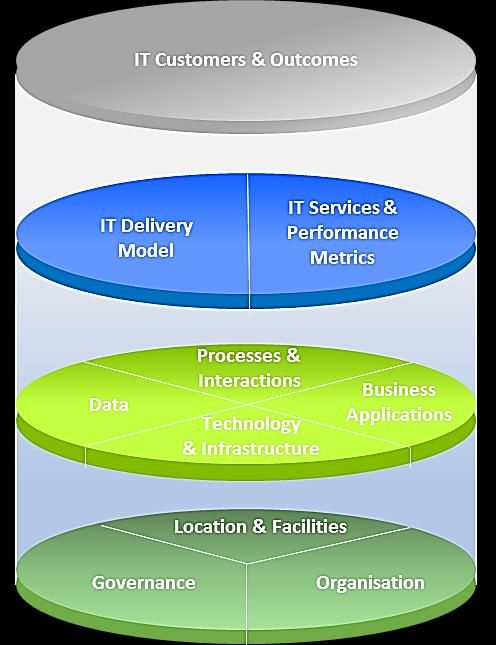
Who are we?

                   •                                          •                                               •

                   •                                          •
                                                                                                              •
                                                              •
                   •
                                                                                                              •

                                    Technology Strategy & Architecture, 3000+ practitioners globally

                                                              Enterprise &
Tech-Enabled           Technology          IT Business                          Cloud &                              IT Mergers &
                                                              Solution                                 IT Sourcing
Innovation             Strategy            Management                           Infrastructure                       Acquisitions
                                                              Architecture

                                               Technology practitioners in total 37.000+
 © 2015 Deloitte                                                                                                                    2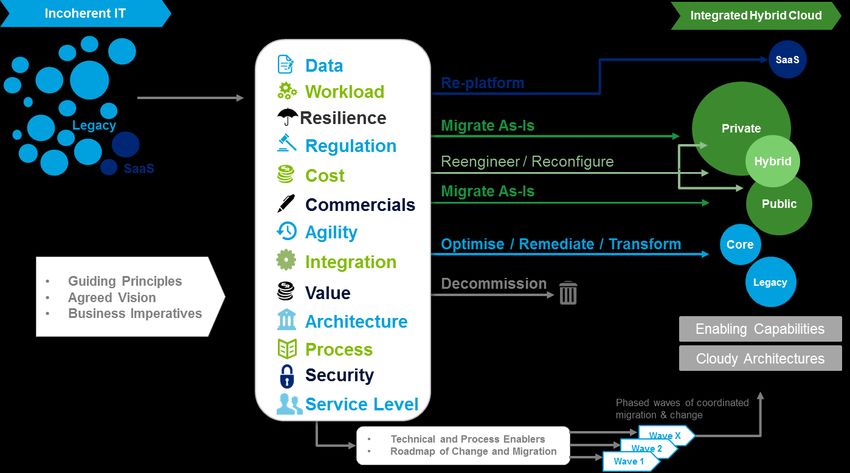
IT is an integrated part of the business and the product – running
at multiple speeds

                                     Business     Business

                                     Product     Product

                  Product-enabling technology
                                                           Multi-modal Tech
                                 Enterprise IT             Functions

© 2016 Deloitte                                                               3
Some industries have been ahead of the game but others will
quickly follow

© 2016 Deloitte                                               4

…this results in a new set of challenges for the IT organisations
   An increasingly disruptive digital world which requires speed, innovation and   …creates a complex agenda
                                   collaboration…                                           for CIOs

                  ...but also a need to keep it safe, scalable, sustainable…

© 2016 Deloitte                                                                                                5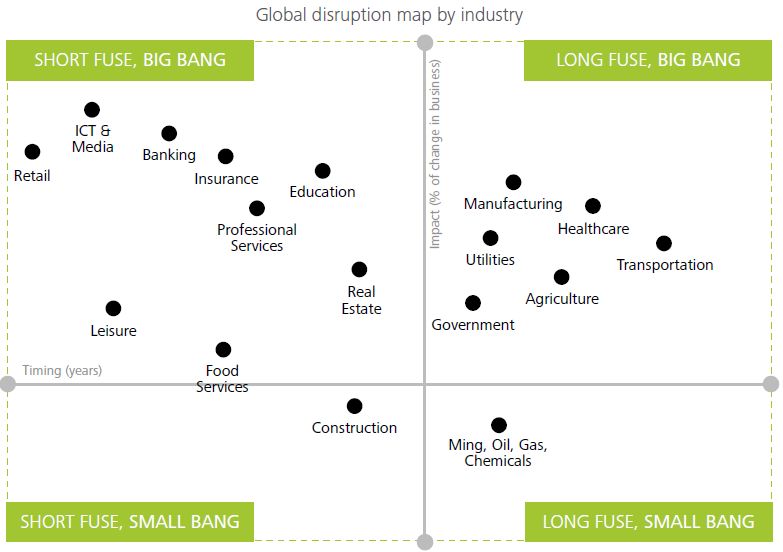
Agility and multi modes are emerging…but maturity is low

                                    Lower cost to serve                                                     DELIVER INCREASING
                  Standardisation
                                                                                                             BUSINESS DEMAND
                                       Effectiveness in delivery

                   £      DO IT BETTER FOR LESS                                                                                         Enable differentiation
                                                                                                                      Speed to market

                                                                                                                                    Exploit new technology
                                                                                                                                    breakthroughs

                                                                   Increased agility delivered; but often
                                                                   •   At too high cost
                                                                   •   Everything on-shore
                                                                   •   Decoupled from operations
                                                                   •   Agile for everything
© 2016 Deloitte                                                                                                                                                  6
A good design is vital to ensure the right balance
How do you design your future IT
organisation?
What is the best suited development
model?
Design
considerations
What role should IT play?
How can cloud computing be
leveraged appropriately?
How do you adapt your sourcing
model to new development models
and cloud?
© 2016 Deloitte 7IT delivery models © 2016 Deloitte 8
Designing for speed requires a comprehensive approach…

          A complex agenda…

                              Right speed IT

© 2016 Deloitte                                          9
…the first step is to define the delivery models that are right for
you…
A complex agenda…
Delivery models
© 2016 Deloitte 10Working styles, complexity and the nature of the applications drive
the delivery modes…
Agile, Scrum, Build modes Examples
Kanban • Customer apps, e.g. Mobile Pay
Innovation & • End-user apps, e.g. Expense
Prototyping management
• Solutions with no clear goal
• …
• Robotics
Business • Analytics
Cohabitation of
embedded • Intelligent processes
working modes - • Workflows
Right speeds • …
• CRM Salesforce
Cloud • HR WorkDay/Success factors
configuration • …
• SAP, Oracle ERP template roll-outs
ERP & • Core system replacements
Waterfall Enterprise • Customer core applications
© 2016 Deloitte
….Big programmes would combine several modes… 11…and must be fully integrated across your operational processes
and interactions…
ERP & Cloud Business Innovation &
Enterprise configuration embedded Prototyping
How will the users interact with the service desk?
Who will take care of functional support?
How will the solutions be maintained?
How will the solution be operated?
© 2016 Deloitte 12…with a clear understanding of how demand and change are
received and handled
Demand Change Operation
Third level support Second level support First level support
Application development Application maintenance Support Service desk management
Monitoring
Applications
Innovation & Prototyping
Business embedded
Cloud configuration Cloud configuration
Strategic programmes
Incidents
ERP & Enterprise ERP & Enterprise
New requirements
Problems
Small programmes
Small changes Events
Key Build Modes Support types Types of demand Embedded business capabilities
© 2016 Deloitte 13The new speed of IT is rapidly increasing and governance and
capabilities must mature…
Innovation &
Prototyping
Adapted
Architecture
Delivery Business
and solution
models Embedded
shaping
Portfolio and Sourcing and Cloud
financial contract Configuration
management management
Traditional
ERP &
Enterprise
© 2016 Deloitte 14…the right control requires IT to position itself in the context of the
chief digital officer (CDO)
CIO domain CDO domain
Traditional governance Adapted governance Stand alone
CIO CDO
EA and
PMO
strategy
New New New
Change Operations
modes modes modes
Fast IT #1 Fast IT #2 Fast IT #3
(Not fast enough) (Better option) (More shadow IT)
© 2016 Deloitte 15Cloud adoption © 2016 Deloitte 16
Cloud is a right-speed enabler giving users on-demand access to
large scale, elastic and shared computing capabilities
          A complex agenda…

                              Cloud

© 2016 Deloitte                                                   17
Cloud is offered in many forms, shapes and sizes
Cloud services Cloud delivery models Cloud characteristics
Application + Applications Software Scalable and elastic based
Software
supporting (SaaS)
technology
on demand
stack
Public cloud
Paid for based on
consumption
Platform
EXAMPLES
(PaaS)
Platform
Salesforce.com
Software-defined and
Big Machines
rapidly configurable
Microsoft Office 360 Private cloud
EXAMPLES
SAP Business
Force.com
ByDesign
Google App Engine A managed set of
Infrastructure
Infrastructure Microsoft Azure shared services
(IaaS)
Heroku
EXAMPLES
Amazon Web Servies Hybrid cloud An enabler for agile IT
RackSpace Cloud delivery
© 2016 Deloitte 18Cloud is a key accelerator for the new development modes…
Software Platform Infrastruc.
(SaaS) (PaaS) (IaaS) Public Private
Innovation &
Prototyping
Key features
Agility, enhanced control,
Build Modes
Business compliance and
embedded
operational efficiency
Coherent connectivity
Cloud between private and
configuration public
ERP &
Enterprise
© 2016 Deloitte 19‘One-size-fits-all’ will not work for most enterprises
Incoherent IT Integrated hybrid cloud
SaaS
Legacy
SaaS ? Private
Hybrid
Public
Core
Legacy
© 2016 Deloitte 20A holistic approach will drive the best outcomes – evaluate your IT
portefolio against these 13 themes
Data
Incoherent IT Integrated hybrid cloud
Workload
Resilience SaaS
Regulation
Cost
Legacy Commercials Private
Agility Hybrid
SaaS
Integration
Public
Value
Architecture
Core
Process
Security Legacy
Service Level
© 2016 Deloitte 21Balance is needed to reach the right destination © 2016 Deloitte 22
Smoothing your path to hybrid cloud – the common themes

   Start with an understanding                       Understand the                               Develop a clearly
   of applications and data to                 differentiating capabilities                      prioritised strategy
    clarify cloudy capabilities                that create value for your                           and road map
     that deliver most value                       business/customer

                          Drive out integration and                  Map cloudy requirements to
                     governance requirements to better               public/private capabilities to
                     understand likely costs to validate               understand delivery and
                        rationale and business case                        service options

© 2016 Deloitte                                                                                                         23
Four capabilities you need to build in your organisation
Investment in developing Flexibility in the IT cost
advanced integration model to cater for both
and data management traditional on-premises
capabilities to support a service charge back and
cloud-to-cloud-to-core consumption-based cloud
mode service charge back
Security architecture
IT operations team with and cloud identity/
deep understanding of access management
cloud technologies and skills are critical as the
with DevOps and agile cloud portfolio within the
expertise enterprise grows
© 2016 Deloitte 24Right sourcing © 2016 Deloitte 25
Generating value and flexibility through new sourcing models is
key to unpinning speed and maintaining cost control
          A complex agenda…

                              Sourcing

© 2016 Deloitte                                                   26
Evolution of outsourcing is moving towards 3.0….
Outsourcing 1.0 Outsourcing 2.0 Outsourcing 3.0
Past – The mega deal Present – Strategic sourcing Future – Convergence
1990’s to Post
Emerging
2005 2005
Smart sourcing focus
• Sole source • Multi-vendor • Integrated vendor models
• “1000 pager” • Improved contractual basis • Focus on service integration
• Focus on “The Deal” • Vendor management • Embrace the Cloud or die!
• Labour arbitrage • Enhanced capabilities • Everything “as a service”
• Niche advisory • Functional advisory • Automate using robotics etc.
• Obligation to innovate
• More agile and flexible contracts
• Transformation enabled
• Embrace multiple speed delivery models
© 2016 Deloitte 27…driven by a multitude of trends across the sourcing landscape
Supplier market shifts
• Increased Tier 1 competition
• Indian pure-plays dominate Infra
• Eco-system and niche partners emerging
Fine-grained operating models
• Unbundling and re-bundling Transformation wave
• From SIAM to Orchestration
• Limited insourcing • Ops tooling proliferation
• Greater tool-process-enablement • CyberSecurity
• Role of CIO debate • Application Rationalization
• New capability requirements emerging • Infrastructure footprint reduction
• Cloud readiness drives
• Consumerization in EUC
• Indian vendor R&D focus
• RPA pilots
New Sourcing models
“3rd generation” control and contract models • “Vertical slice” sourcing
• Emergence of Alliances, JVs and
• Ownership of process, tools and IP Utilities
• Exit rights and approaches • Evolution of ‘Ecosystem’ models
• Short Term and favourable terms • Convergence of ITO, BPO and SS
• Transparency and granularity Renewed risk focus • GBS, captive, co-source and mixed
• Regulatory and industry focus on third models
party risk • Industry solutions
• Increased vendor management spend
© 2015 Deloitte
• Data privacy regulation 28Moving to right-speed IT increases requirements to outsourcing
delivery models
Traditional +Right speed
• Multiple implementation modes
• Competitive pricing
• Increase use of onshore/landed resources
Application development • Fixed price/shared risk
• Time to market reduced by near shore teams
• Better access to skills and talent
• Distributed and duplicated SCRUM teams
• Low cost delivery • Convergence of AD and AM for selected areas
Application maintenance
• Managed services • Otherwise still low cost as much as possible
• Cloud orchestration is essential
Data centre • Different pricing models in cloud must be
• Low cost delivery
services defined
• Low cost still important
Infrastructure
Network and
• Specialist skills directly available • No major changes
telephony
• Low cost service desk
• Service Desk and Service Integration moving to
• Service integration
EUC independent 3’rd party or application provider
• Low cost delivery for software packaging and
• Mobile device management
distribution
© 2016 Deloitte 29…and aligning delivery modes to achieve value and speed is key
Requirements Near/Offshore potential Sourcing model Commercial
• Industry knowledge AD: 40% • Duplicated SCRUM teams Team- and value-based
Innovation & • Business insights AM: 40% across AD & AM pricing model of end-to-end
Prototyping • Innovation eco-system service teams
• End-to-end service teams
• Business insights AD: 0-10% • Onsite SCRUM team • Team-based pricing model
Business • Process/analytical skills AM: 50% working with super users
embedded • Possibility for AM split • Value-based, time and
Build Modes
when stabile material
• Functional and application- AD: 50-60% • Development through Fixed price, risk sharing,
Cloud specific knowledge AM: 90% Duplicated or distributed managed services
SCRUM teams
configuration
• Possibility for AM split
when stabile
• Application and process AD: 65-75% • More traditional AD and Fixed price, risk sharing,
ERP & knowledge AM: 90% AM split of team managed services
• Use of CoE for testing and
Enterprise assurance
© 2016 Deloitte 30…however, the current supplier landscape is struggling to keep up
Delivering Cloud
Service Maturity in new
as flexible as
integration is delivery models
promised seems
NOT working is low
difficult
• Suppliers are struggling to deliver • Many suppliers describe how • Waterfall and AD and AM split
successful service integration cloud services can be provisioned dominant
automatically – but struggle to
• Limited ability to work “outside” • New speeds at a high premium
deliver
own domains • Only basic pricing models in place
• Few suppliers have models that
• Customers are introducing cloud
really embraces public cloud • Innovation capabilities relatively
services without respecting the
models (amazon, google, azure low
service integration role of the SP
etc)
• Suppliers not organised to deliver
• Pricing models are often not
SI from AM
designed to handle cloud
• Customers are introducing cloud
infrastructure components without
defining responsibility for
managing them
© 2016 Deloitte 31What's next? © 2016 Deloitte 32
Good design is vital; successful deployment even more so

           How do you design your future IT                                         How do we embed the new model?
                             organisation?                                          And instil different ways of working?

     What is the best suited development                                            How do we change behaviours?
                                  model?                                            How do we get people to do things
                                                                   Deployment       differently?
                                                                   considerations
                                                  Design
                                                  considerations                    How do we build the requisite skills
                      What role should IT play?                                     and competencies to operate in the
                                                                                    new world?

                  How can cloud computing be                                        How do we transition to the new
                       leveraged appropriately?                                     model without degrading live
                                                                                    service and project delivery?

          How do you adapt your sourcing                                            How do we educate and re-direct
         model to new development models                                            existing vendors and partners to
                              and cloud?                                            the new model?

© 2016 Deloitte                                                                                                             33
Enjoy the rest of the day and please consider:
Do you have clearly defined development models that enable right-speed? And are they well-
aligned to operations and interactions across your organisation?
Do you have a clear strategy for where to use cloud and how to ensure connectivity across
your landscape?
Does your current sourcing model differentiate between your different development models?
And do they seamlessly embed cloud in terms of pricing and service management?
© 2016 Deloitte 34Kristian Skotte, Thomas Andersen, Jesper Kamstrup- Holm 7. juni 2016
You can also read


