HACKNEY CARRIAGE AND PRIVATE HIRE VEHICLE COMPLIANCE TESTING STANDARDS
←
→
Page content transcription
If your browser does not render page correctly, please read the page content below
HACKNEY CARRIAGE AND PRIVATE HIRE
   VEHICLE COMPLIANCE TESTING
           STANDARDS

Version 5 – 06/02/2020       Page 1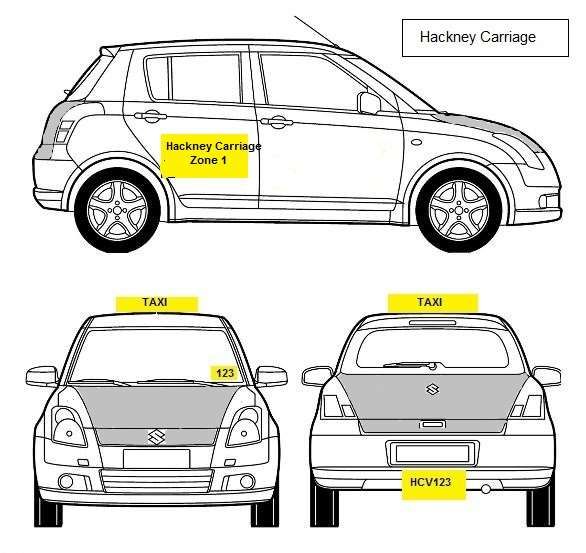
Contents

Introduction                                                                                                                                                                                                            4

Grandfather rights                                                                                                                                                                                                      4

Types of vehicles that may be licensed                                                                                                                                                                                  5

     Vehicle modifications ...................................................................................................................................................................................... 5

     Vehicle age ...................................................................................................................................................................................................... 5

     Emissions ......................................................................................................................................................................................................... 6

     Engine size ....................................................................................................................................................................................................... 6

     Imported vehicles ............................................................................................................................................................................................ 7

     Conversions ..................................................................................................................................................................................................... 7

     Multi seater vehicles ....................................................................................................................................................................................... 7

     Wheelchair accessible vehicles ....................................................................................................................................................................... 7

Appearance of the vehicle                                                                                                                                                                                               8

     Digital media screens ...................................................................................................................................................................................... 8

     Tinted windows ............................................................................................................................................................................................... 8

     Signage and livery............................................................................................................................................................................................ 8

The vehicle test                                                                                                                                                                                                        12

     Presenting a vehicle for test ............................................................................................................................................................................ 12

     Documents to be produced at the test ........................................................................................................................................................... 12

Version 5 – 06/02/2020                                                                                                                                                                                           Page 2
Procedures and standards of inspection 13 1. Electrical, wiring and equipment ................................................................................................................................................................ 14 2. Steering control .......................................................................................................................................................................................... 16 3. Brakes ......................................................................................................................................................................................................... 17 4. Tyres ........................................................................................................................................................................................................... 18 5. Seat belts and supplementary restraint systems ....................................................................................................................................... 19 6. Vehicle body and condition ........................................................................................................................................................................ 20 7. Fuel and emissions ..................................................................................................................................................................................... 26 8. Driver’s view of the road ............................................................................................................................................................................ 28 9. Tricycles and quadricycles .......................................................................................................................................................................... 31 10. Additional requirements............................................................................................................................................................................. 31 11. Ancillary equipment ................................................................................................................................................................................... 35 12. Signage and markings ................................................................................................................................................................................. 38 13. Vehicle safety devices................................................................................................................................................................................. 42 14. Wheelchair accessible vehicles................................................................................................................................................................... 43 15. Stretch limousines (novelty vehicles) ......................................................................................................................................................... 44 Version 5 – 06/02/2020 Page 3
Introduction
All hackney carriage and private hire vehicles licensed with Wakefield Council are subject to a compliance test, either annually if the vehicle is under 5
years old or every 6 months thereafter.
Hackney carriages and private hire vehicles are subject to much higher annual mileage and more arduous driving than normal private hire vehicles, to
ensure the safety of passengers and other road users a more stringent maintenance and testing regime is required to that of the standard MOT test, as
such all vehicles will be tested in accordance with:
MOT standards issued by DVSA.
The Council’s testing standards as prescribed in this policy.
A vehicle must meet the above standards in order to be granted a licence.
For ease of use the section numbering in this manual matches the DVSA MOT inspection manual. Any missing numbered sections indicate that no
further testing requirements are required to those in the DVSA manual.
This manual provides a working guide for proprietors, those involved in the maintenance of vehicles and for vehicle inspectors.
In developing these standards, Wakefield Council has had regard to the following:
National Best Practice Guide for the Inspection of Hackney Carriage and Private Hire Vehicles 2012, published by the Freight Trade Association
and the Public Authority Transport Network Technical Officer Group.
Taxi and Private Hire Vehicle Licensing best Practice guidance 2010, issued by the department for Transport.
Grandfather rights
Any vehicle licensed before (date of adoption of standards) may be eligible for certain grandfather rights which provide exemption from certain
requirements contained in this policy for a period of up to 2 years.
Version 5 – 06/02/2020 Page 4Types of vehicle that may be licensed
The following standards require that all licensed private hire and hackney carriage vehicles are of a prescribed type and achieve levels of
roadworthiness, comfort and appearance approved by Wakefield Council.
In summary, all vehicles must have:
A minimum of four road wheels.
Four doors (excluding rear doors/tailgate)
Capacity to carry at least four, but not more than eight, passengers, in addition to the driver.
The vehicle must be right hand drive.
All seating must face either forwards or backwards.
Vehicle Modifications
No change in the vehicle manufacturers (or their approved convertors) specification, design, condition or appearance of a vehicle can be made without
prior written approval from Licensing.
Vehicle age
Vehicles are subject to an upper age limit of 10 years for saloon vehicles and 12 years for multi seater,wheelchair accessible vehicles and Ultra Low
Emission Vehicles (ULEVs) which includes Plugin Hybrid Electric Vehicles (PHEVs) and Electric Vehicles (EVs), after which they must be removed from
the fleet.
We do not require a minimum age before which vehicles are first licensed.
Version 5 – 06/02/2020 Page 5Emissions
Wakefield Council has signed up to the West Yorkshire Low Emission Strategy which targets air quality problems across the region.
The policy promotes a transition to low emission vehicles across the taxi trade.
Vehicles must comply with the following emissions standards:
Petrol vehicles – Euro 5 petrol vehicle class. Applies to vehicles registered from 1st January 2011 onwards
Diesel vehicles – Euro 6 diesel vehicle class. Applies to vehicles registered from 1st September 2015 onwards
Petrol hybrid vehicles – Euro 4 petrol vehicle class. Applies to vehicles registered from 1st January 2006 onwards.
Ultra-low emission vehicles – 75g CO2/km and under
Engine size
Wakefield does not require licensed vehicles to have a minimum engine capacity. Vehicles, instead, must comply with the emissions standards above.
Imported Vehicles
A wide range of vehicles are suitable for use as hackney carriage or private hire, Best Practice guidance suggests that those that have been imported
independently (i.e. by somebody other than the manufacturer) must meet ‘type approval’ rules. This means that passenger vehicles at the time of first
registration in the United Kingdom must meet the technical standards of either:
European Community Whole Vehicle Type Approval (ECWVTA)
National Small Series Type Approval (NSSTA)
Individual Vehicle Approval (IVA)
Version 5 – 06/02/2020 Page 6Conversions Vehicles that have been converted by the vehicle manufacturers (or their approved convertors) or had certain modifications since original registration must be approved, to ensure that they meet the European Community Directives and Construction and Use Regulations. Therefore they must undergo a basic Individual Vehicle Approval (IVA) test at a Driver and Vehicle Standards Agency (DVSA) test station. If the vehicle is found to meet the requirements, a letter of compliance with the technical standards will be issued. On successfully passing the basic IVA test the “IVA letter of compliance” must be presented with the vehicle licence application. Further information about these requirements can be obtained at: www.gov.uk Seating capacities will be determined by the amount of passengers authorised on either the V5C document or the IVA letter. Multi Seater Vehicles Vehicles carrying more than 4 passengers but no more than 8 will be licensed provided they are either a manufacturer’s purpose built multi seater vehicle or a manufacturers’ approved conversion. The number of passengers such a vehicle will be licensed to carry will be determined by the number approved on the V5C document. Wheelchair Accessible Vehicles Wheelchair accessible vehicles are either purpose built, London style taxis or modified vehicles that have been approved by DVSA and possess an IVA. Capacities will be determined by the amount of passengers authorised on either the V5C document or the IVA letter. Digital media screens In vehicle digital media technology may be installed to vehicles for advertising and live feed material purposes subject to the conditions at annexe A. Version 5 – 06/02/2020 Page 7
Appearance of the vehicle
Tinted Windows
As per legal requirements, the front windscreen must let at least 75% of light through and the front side windows must let at least 70% of light
through.
All windows to the rear of the driver must allow a minimum of 70% light through.
Self-applied material/film is not permitted.
Signage and livery
A licence plate and window disc must be displayed. The plate must be securely fitted on the lower rear of the vehicle with the whole of the plate
visible at all times. Window discs should be fitted to the lower nearside corner of the windscreen.
A fare card/tariff card issued by the Council should be clearly displayed. Where a bulkhead is fitted, an additional fare card must be displayed in the
rear passenger compartment so as to be easily and clearly read by any passenger.
At least one no smoking sign must be clearly displayed in the vehicle.
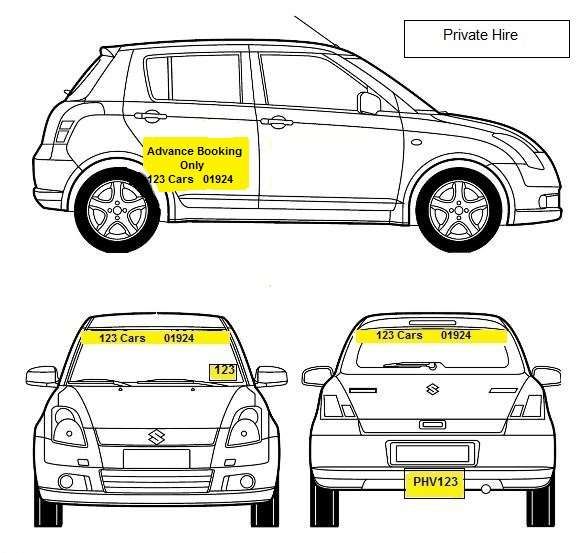
Private Hire Vehicles
Non-illuminated windscreen visor signs must be fitted to the top of the front and rear windows and across the entire length of the window. They
should be visible from the outside and in contrasting colours. The name of the company should be to the centre of the sign with the base station
telephone number at either side of it (mobile phone numbers are not permitted). The visor strip must not contravene the requirements set out in the
current MOT inspection manual by obscuring visibility.
As part of the door livery, the following will be included on each rear door sticker:
company name
telephone number (mobile phone numbers are not permitted)
‘Pre booking only’
A coloured background to the sign is permitted.
Version 5 – 06/02/2020 Page 8Required signage for Private Hire vehicles Version 5 – 06/02/2020 Page 9
Hackney Carriage Vehicles

Self-adhesive stickers (decals) provided by the council stating the vehicles licensing zone should be located on the exterior of both front doors.

Multi seater vehicles may display the word ‘Taxi’ on the side and/or rear panels of the vehicle either in black letters where the background is white or
white letters where the background is black.

The use of magnetic or temporary stickers is prohibited.

A white roof mounted sign (or built in sign) with the word ‘TAXI’ to the front and rear of the sign in black letters must be displayed.

Hackney Carriage vehicles may display ‘£1 back into town’ stickers where appropriate.

Version 5 – 06/02/2020                                                                                                                    Page 10
Required signage for Hackney Carriage vehicles

Version 5 – 06/02/2020                                Page 11
The vehicle test
Presenting a vehicle for test
The following will apply when a vehicle is presented for test:
To allow a thorough examination, the vehicle must be presented for test in a clean condition. The vehicle will fail the test if, in the opinion of
the vehicle examiner, the vehicle is so dirty that it would be unreasonable for the test to be carried out
A vehicle must be presented for test with the licence plate correctly displayed on the vehicle (unless it is a new application or if the licence
plate has been removed by an Authorised Officer or Police Officer)
The person producing the vehicle for inspection should arrive with their vehicle at Wakefield Council’s testing station reception 10 minutes
before their test appointment – a vehicle will not be tested if produced after the appointment time
Cancellation of a test must be made by contacting the Licensing Office at least 24 hours before the test appointment time. A full test fee will
be charged if a test appointment is cancelled without giving at least 24 hours’ notice before the test appointment time. Cancellation of a test
on a Monday must be made by contacting the Licensing Office by 4.00pm on the previous Friday
Wakefield Council reserves the right to take photographs and/or make video recordings of any vehicle presented for test in order to be able to
ascertain if any physical changes as a result of modification, structural repairs or maintenance have been made to the vehicle
Documents to be produced at the test
Where applicable, the documents below must be presented at the testing station when your vehicle is presented for a test
Valid documentation will need to be produced if the Documentation For further details
vehicle has any of the following: refer to page no:
Lift LOLER Certificate 42
Modification to vehicle Letter from Wakefield Council 5
Alternative fuel conversion Safety Certificate from approved installer 26
Version 5 – 06/02/2020 Page 12Fire extinguishers and first aid kits All licensed vehicles are required to carry a foam fire extinguisher, solely for the purpose of exiting the vehicle by extinguishing upholstery fires; it is not to fight a vehicle fire. Vehicle licence holders may want to consider carrying an additional powder fire extinguisher for the purpose of tackling vehicle fires. First aid kits are carried at the discretion of the driver/owner of the vehicle. Should the licence holder wish to carry a first aid kit. It is recommended that they comply with BS8599-2 as recommended by St John’s Ambulance as suitable for cars, taxis and commercial vehicles. Procedures and standards of inspection The following standards and methods of inspection are additional to that required to pass an MOT test and includes the requirements no covered by the MOT manual. The numbering below matches that of the MOT manual, where a numbered section is missing then no additional testing would be required to that of the MOT. Version 5 – 06/02/2020 Page 13
Section 1 - Lighting, electrical equipment and signalling equipment:

1.9        ELECTRICAL WIRING AND EQUIPMENT

 Method of Inspection                                                            Reason for Rejection

 This examination is limited to that part of the electrical system that can be
 readily seen without dismantling any part of the vehicle

 Check all electrical wiring for:
                                                                                 Wiring:
      a.    Condition
                                                                                     a. Positioned so that it is chafing/rubbing or clipped to a fuel
      b.    Security
                                                                                        line or likely to be damaged by heat so that insulation will
      c.    Position
                                                                                        become ineffective
      d.    Signs of overheating
                                                                                     b. With clear evidence of overheating
      e.    Heavy oil contamination
                                                                                     c. Heavily contaminated with oil
 Check all switches controlling all obligatory lights
                                                                                 Switches

                                                                                 Insecure or malfunction of a switch controlling an obligatory light

1.9        ADDITIONAL LAMPS

  Method of Inspection                                                             Reason for Rejection

  With the ignition switched on check:

  i. Reversing Lamps:                                                              i. A Reversing Lamp:

       a. The reversing lamps emit/show a diffused white light when reverse            a. That fails to operate or does not emit/show a white
          gear is selected                                                                diffused light
       b. The lamps extinguish/switch off when neutral gear is selected                b. Fails to extinguish/switch off when neutral or forward
       c. The lamps are in good working order and are secure                              gear is selected
       d. The lamps do not flicker when lightly tapped by hand                         c. That is not in good working order or is insecure
                                                                                       d. That flickers when tapped lightly by hand

Version 5 – 06/02/2020                                                                                                                Page 14
ii. Front Fog/Driving Lamps: ii. A Front Fog/Driving Lamp:
Check that:
a. A single front fog lamp emitting/showing a white or yellow diffused a. Inoperative or operates other than in dipped beam mode
light illuminates only when dipped beam is selected b. Operates incorrectly
b. A pair of matched fog lamps both emitting a white or yellow diffused c. Operates incorrectly
light should illuminate together
c. A pair of matched, long-range driving lamps, both emitting a white
diffused light should illuminate together
Version 5 – 06/02/2020 Page 15Section 2 – Steering
2.1 STEERING CONTROL - STEERING WHEEL
Method of Inspection Reason for Rejection
With both hands rock the steering wheel from side to side at right angles to
steering column and apply slight downward and upward pressure to the
steering wheel rim (in line with column). Note the following:
a. Steering wheel hub fractured
a. Fractures in steering wheel hub
b. Steering wheel rim fractured
b. Fractures in steering wheel rim
c. A steering wheel spoke loose or fractured
c. Steering wheel spokes loose or fractured
d. Jagged edges on steering wheel rim likely to injure the
d. Jagged edges on steering wheel rim
driver
e. If possible, check that the retaining device on steering wheel is fitted
e. A steering wheel hub-retaining device not fitted
2.1 STEERING CONTROL - STEERING COLUMN
Method of Inspection Reason for Rejection
a. Try to lift the steering wheel in line with the steering column and note a. Excessive movement of centre of steering wheel in line
the movement at centre of steering wheel with steering column (end float)
b. While steering wheel is rotated, check for deterioration in any flexible b. Note: Certain types of steering columns might show some
coupling or universal joint of steering column movement which is not due to excessive wear, e.g. those
c. Where practical, check any clamp bolts for presence and security of fitted with universal joints or flexible couplings
locking devices. (These may be located in the engine compartment or c. A flexible coupling or universal joint deteriorated, worn
under chassis) or insecure
d. A coupling clamp bolt or locking device loose or missing
Version 5 – 06/02/2020 Page 162.4 SUSPENSION SPRING UNITS AND LINKAGES
Method of Inspection Reason for Rejection
Coil Springs
a. Welding repairs a. Repaired by welding
Section 3 - Brakes
No additional requirements to MOT Inspection Manual
Version 5 – 06/02/2020 Page 17Section 4 – Tyres and road wheels
4.1 TYRES
Method of Inspection Reason for Rejection
Examine all the tyres (including spare wheel if fitted) to ensure each tyre meets Not in accordance with the ‘MOT Inspection Manual – Private
all the requirements laid down in the ‘MOT Inspection Manual – Private Passenger and Light Commercial Vehicle Testing’,
Passenger and Light Commercial Vehicle Testing’,
Note: Space saver tyres should only be approved with the support
a. The spare wheel must be accessible and must be carried if specified by of a method statement highlighting driver responsibilities with
the manufacturer regard to the maximum permitted speed and that space savers are
b. Where a tyre inflation kit is provided by the manufacturer this must be a temporary ‘get-you-home tyre’
present and in working order at the time of test
c. If a space saver tyre is used a method statement must be supplied
which highlights the driver’s responsibilities with regard to the a. Spare wheel missing or not accessible
maximum permitted speed b. Tyre inflation kit not present or working
c. Method statement not supplied on presentation for test
Note: A space saver tyre is a temporary ‘get-you-home’ tyre
d. Spare wheel insecure or spare wheel cage not installed to
d. Where a doughnut tank is fitted in the boot for Liquid Petroleum Gas manufacturer’s standards and British Standards
(LPG), the spare wheel, if still carried in the boot, must be properly e. The standards set out across are not met
secured. Alternatively, a spare wheel cage installed to manufacturer’s
standards and British Standards may be fitted to the underside of the
vehicle
e. The spare wheel should be securely located away from any contact with
passenger(s) travelling in the vehicle or entering/exiting from it
Version 5 – 06/02/2020 Page 18Section 5 – Seat belts and supplementary restraint systems
5.1 SEAT BELTS AND SUPPLEMENTARY RESTRAINT SYSTEMS
Method of Inspection Reason for Rejection
All seatbelt installations must comply with the Construction and Use
Regulations 1st October 2001 there amended and further interim requirements
from the guidance document available from the Driver and Vehicle Standards
Agency (DVSA). Entitled “Guide to the Changes to seat belt installations”. The
latest version is available from DVSA website at:
http://www.DVSA.gov.uk/DVSA/publications/manualsandguides/vehicletesting
manualsandguides.htm
Examine the vehicle and check the following:
a. All seatbelt casings must be in good condition a. Seatbelt casing damaged or inadequately repaired i.e.
b. Where 3 point seatbelts are fitted the top mounting must be suitable covered in tape
for all ages and located at shoulder height b. The standards set out across are not met
Version 5 – 06/02/2020 Page 19Section 6 – Body work and structure
6.1 VEHICLE BODY AND CONDITION – EXTERIOR
Method of Inspection Reason for Rejection
Structural Damage / Repairs
Check for clear physical evidence that the vehicle has not had significant If on examination of the vehicle (by at least two
structural repairs and/or deformation/distortion/twisting of the suspension, inspectors/officers from Wakefield Council) a joint professional
steering, bodywork or load bearing components opinion is reached that the vehicle’s performance would be
reduced in its ability to protect the occupants (including driver)
Wakefield Council reserves the right to reject a vehicle on presentation at test
were it to be involved in a further road traffic accident, the
vehicle will be rejected
Body Condition (Exterior) Body Condition (Exterior)
Examine the body and fittings thoroughly for security, corrosion, damage, a. An insecure, missing or damaged body panel, trim, step
appearance, poor repair/paint match and sharp edges that are likely to cause or accessory/fitting
injury b. Any sharp edge whatsoever which may cause injury
c. Heavy scuffing, abrasions or deformation/distortion to
front and/or rear bumper. Bumper bars which have
jagged edges, cracks, splits, projections, dents or
scratches. Colour mismatch or fading which is
significantly different to that of the rest of the paintwork
d. More than 8 stone chips visible on a bonnet/grill that
have not penetrated to the metal or more than four
stone chips that have penetrated to the metal
e. More than 8 stone chips on any panel including door
edges, provided the base coat has not been penetrated
f. More than 4 stone chips on any panel where the base
coat has been penetrated to the metal and is untreated
Version 5 – 06/02/2020 Page 206.1 VEHICLE BODY AND CONDITION – EXTERIOR (continued)
Method of Inspection Reason for Rejection
Body Condition - Exterior (continued) g. A single dent of more than 80mm, or more than three
dents of not more than 20mm in any one panel
Examine the body and fittings for security, corrosion, damage, appearance,
h. More than 4 scratches and/or abrasions of more than
poor repair/paint match and sharp edges that will cause injury
50mm in length in any one panel provided that the base
coat has not been penetrated
i. Dull, faded paintwork which has lost its gloss finish or
paint mismatch to a panel(s) or fittings to such an extent
that it detracts from the overall appearance of the vehicle
j. Evidence of poor repairs and/or paint finish to a panel(s)
or fittings including runs and overspray to adjoining
panels/trim that detracts from the overall appearance of
the vehicle
k. Rust/corrosion of any size including any that is covered by
signage
l. Badly aligned body panels
m. Parts improperly secured e.g. by wire/cable tie/tape
n. Poor appearance of the vehicle which will detract from
the positive image of Wakefield Council
Version 5 – 06/02/2020 Page 216.1 VEHICLE BODY AND CONDITION – BUMPER BARS
Method of Inspection Reason for Rejection
Examine the bumper bars and check:
a. They are secure to their mountings a. A loose bumper bar or mounting. A weakened bumper bar
and/or mounting is insecure because of poor repairs
b. A fractured mounting bracket. Mounting bolts so worn or
elongated that the bumper bar is likely to detach partially
or completely from the vehicle when in use. A bumper bar
b. The mountings are secure to the vehicle secured by wire or other temporary means is regarded as
insecure and must be rejected
c. Bumper bars which have jagged edges, cracks, splits,
projections, dents or scratches. Colour mismatch or fading
c. There is no evidence of damage which is significantly different to that of the rest of the
paintwork
6.1 VEHICLE BODY, SECURITY AND CONDITION – INTERIOR
Method of Inspection Reason for Rejection
Vehicle Body, Security and Condition - Interior
a. Examine thoroughly the interior for missing, damaged, insecure or a. Missing, damaged, insecure or loose fixtures, fittings,
loose fixtures, fittings, accessories (including communication and accessories or poor quality repairs
satellite navigation equipment) or poor quality repairs b. Dirty, missing, soiled, stained, worn, torn, split or
b. Dirty, missing, soiled, stained, worn, torn, split or insecure trim, carpets, insecure trim, carpets, seat belts, mats or headlining in
seat belts, mats, headlining. Remove mats and inspect carpets such a condition that they are likely to soil or damage
underneath for cleanliness and wear passengers’ clothing or luggage
c. Check that seats are secure, clean and not unduly worn c. Seat cushion(s) stained, dirty, torn, holed, worn, insecure,
poorly repaired or inner fibres exposed. A seat that does
not provide adequate support at base or backrest. Torn,
slashed or excessively stained seats are not acceptable
Version 5 – 06/02/2020 Page 22Note: If seats are excessively stained or dirty and seat covers have been fitted,
the vehicle will not fail the test provided the seats provide adequate support
and the inner fibres are not exposed
d. Check that the seat covers are not dirty, soiled, stained, worn, torn,
d. Seat covers dirty, soiled, stained, worn, torn, split or
split or poorly fitted
poorly fitted
e. Check that all head rests are present, secure, not damaged and in a
e. Missing, damaged or dirty head rests
clean and tidy condition
f. An interior light:
f. Examine all interior lights:
g. Missing or inoperative - all lights must illuminate if they
g. The vehicle must have interior lighting fitted in the passenger
are part of the manufacturer’s standard equipment.
compartment sufficient to illuminate the whole of that compartment
Interior light does not illuminate the whole of the
h. It must be possible to turn the lights on and off from both the driver
passenger compartment and footwell.
and passenger compartments
h. Cannot be turned on and off from both the driver and
i. The interior lighting must come on automatically when a door is
passenger compartments
opened
i. Does not come on automatically when a door is opened
j. The light casing must not be missing or damaged
j. Light casing missing or damaged
k. The luggage compartment shall have a permanently fitted light for
k. Where fitted - light does not work and/or switch on
illumination which operates automatically on opening the door/boot lid
automatically on opening the door/boot lid
l. Examine motion door locks and warning lights
l. Missing or defective motion switch/lock or warning light
m. Examine interior door locks, child locks, protective covers, grab
not illuminated
handles/rails and safety covers
m. Missing, defective or loose door locks, child locks,
n. Examine heating, demisting and air conditioning systems for correct
protective covers, grab handles/rails or safety covers.
operation, including passenger compartment controls where fitted -
Grab handles/rails that aid the blind and partially sighted
includes electric front and rear screen demisters
are worn to excess
o. Examine opening windows ensuring they lower and rise easily
n. A system(s), which does not function correctly, or any
p. Examine electrical wiring for condition, security, including intercom
part is missing including vents, controls or switches
systems
o. An opening window that is inoperative or difficult to open
q. Examine the boot for access, contents, cleanliness and water
and or close mechanism broken/missing
r. Examine parcel shelf
p. Frayed, chafing wiring, non-shielded terminals and cables
s. Check that the vehicle has been presented in a clean and tidy condition
that are a trip hazard. Cables that can be easily
and free from unpleasant odours
disconnected. Intercom system defective, warning light
inoperative or signs illegible/missing
q. Unable to open, close and/or lock boot lid. Failure of boot
lid support mechanism. Defective seals/evidence of
Version 5 – 06/02/2020 Page 23water. Dirty boot and/or carpets. Loose items stored in
boot (i.e. spare wheel, tools or equipment)
r. Parcel shelf missing or damaged (unless
manufacturer/Converter intended for it not to be there)
s. Vehicle presented in a dirty, untidy condition. Unpleasant
odours in vehicle
6.2 DOORS
Method of Inspection Reason for Rejection
Doors and Emergency Exits Doors and Emergency Exits
a. Examine the condition of all doors and emergency exits. Check door a. Missing, damaged, loose or worn handle, lock, striker plate
locks, striker plates, handles and hinges for security, wear and missing or hinge. Missing, loose or damaged trim / cover plate
and damaged trim/cover plates. b. A door or emergency exit does not latch securely in the
b. Check the presence, condition and correct functioning of all door stay closed or open position
catches and devices (including sliding doors) c. Signs describing the presence and method of opening an
c. Check that signs describing the method of opening emergency exit(s) emergency exit are missing, illegible or incorrect
are readily visible on/or adjacent/next to the exit and are legible d. A side / rear door mechanism does not:
d. A mechanism must be fitted that positively holds any side / rear i. Hold the door in the open position
passenger access door in the open position whilst in use and that ii. Require a deliberate effort to close
requires a deliberate effort to close e. A door stay catch or device missing, excessively worn or not
fulfilling its function
This is particularly important for wheel chair accessible vehicles to enable an
f. A door or emergency exit cannot be opened from both the
attendant (driver or guide) to assist the wheelchair passenger
inside and outside the vehicle by the relevant control
Version 5 – 06/02/2020 Page 24Section 7 – Fuel and emissions
7.1 EXHAUST SYSTEM
Method of Inspection Reason for Rejection
a. Where applicable, check for presence, security and adequacy of grease a. A heat shield missing, insecure or inadequate.
shields to hot exhausts
7.2 FUEL SYSTEM - PIPES AND TANKS
Method of Inspection Reason for Rejection
a. Check that fuel tank filler cap is: a. A filler cap missing or unsuitable or in such condition that
i. Present it would not prevent fuel leaking or spilling
ii. The correct type b. Damaged, chafed, insecure pipes or pipes so positioned
iii. Secure and seated properly to ensure correct function of sealing that there is a danger of them fouling moving parts
b. Examine pipes to see they are securely clipped to prevent damage by c. A fuel pipe immediately adjacent to or in direct contact
chafing and cracking and are not in a position where they will be fouled with electrical wiring or exhaust system
by moving parts d. Temporary/emergency fuel cap fitted
c. Check that no fuel pipe runs immediately next to, or in direct contact
with electrical wiring or the exhaust system
Version 5 – 06/02/2020 Page 257.3 Alternative Fuel (Liquid Petroleum Gas - LPG)
Method of Inspection Reason for Rejection
a. Check the installation meets the required standard i.e. storage vessel
must be in a suitable location e.g. the boot (in spare wheel well) or
a. Fuel tank is located in an inappropriate position i.e. in the
under the body
passenger compartment and/or the conversion is not
The installation and location must be approved by the Council. Each done to the required standard
vehicle will be assessed on its own merit. Such installations will be b. Safety certificate from an installer (approved by the
checked as part of the normal vehicle test UKLPG Association) not produced
b. A safety certificate by the installer (approved by the UKLPG Association)
carrying out the installation or a safety certificate from an installer
(approved by the UKLPG Association) that the installation has been
tested and meets the required safety standards must be produced at
the time of the test
UKLPG Association website - www.uklpg.org
Version 5 – 06/02/2020 Page 26Section 8 – Driver’s view of the road
8.1 MIRRORS - VIEW TO REAR
Method of Inspection Reason for Rejection
a. Check the condition of each mirror reflecting surface a. Mirror condition
i. A mirror reflecting surface deteriorated or broken
ii. Mirror crudely repaired or insecure on mounting
iii. Casing missing, damaged, or incorrect colour
8.2 WINDSCREEN - VIEW TO THE FRONT
Method of Inspection Reason for Rejection
Sit in the driver’s seat and check that there is reasonable view of the road The position or size of any object restricts the driver’s view of the
ahead, bearing in mind the original design of the vehicle. road ahead, bearing in mind the original design of the vehicle
a. Air operated wipers
i. Pipes inadequately clipped or supported
a. For all air operated wipers examine:
ii. Incorrect function of the wipers or leaking
i. The condition of any visible piping
components
ii. The function of the operating mechanism
iii. Incorrect operation of protection valves
iii. The function of necessary valves to protect the braking system
b. Equipment or objects not originally fitted to the vehicle as
b. Driver’s view: equipment or objects not originally fitted to the vehicle
part of the original design which obstruct the driver’s view
as part of the original design must not obstruct the driver’s view. In
particular, objects such as (but not limited to) pennants, cab
decorations and external stone guards/visors should not interrupt the
view through the swept area by the windscreen wipers
Version 5 – 06/02/2020 Page 278.5 Windows
Method of Inspection Reason for Rejection
Examine the vehicle and check that / for:
a. The vehicle has windows fitted on both sides of the vehicle and to the a. The standards set out across are not met
rear of the passenger compartment. A minimum of one window on b. The standards set out across are not met
each side of the vehicle shall be capable of being opened for the c. The standards set out across are not met
purpose of ventilation and passenger comfort d. The standards set out across are not met
b. All windows comply with Council Directive 92/22/EEC of 31 March 1992 e. The standards set out across are not met
on safety glazing and glazing materials on motor vehicles (as amended) f. A crack, surface damage or discoloration in glass that:
c. Only original manufacturer’s approved glazing is fitted. Aftermarket i. Impairs the driver’s front, side or rear view of the road
additions, e.g. film or spray coatings are not permitted or
d. All windows in front of, and to the side of, the driver must achieve a ii. Presents a danger to any person in the vehicle
minimum of 75% light transmission to the windscreen and 70% to the g. A missing or insecure windscreen or window
side in accordance with the Road Vehicle (Construction and Use) h. A windscreen or any other outside window missing, or any
Regulations 1986. windscreen, window, internal screen or partition insecure.
e. Windows to the rear of the driver must achieve a minimum light Any external window or windscreen is obviously leaking
transmission of 70%
f. The condition of all windscreens, internal screens, partitions, side, rear,
roof and door windows for cracks, surface damage and discolouration
g. Presence and security of all windscreens, side, roof, or rear windows, or
internal screens or partitions
h. Evidence of obvious leaks from all windscreens and side, rear, roof or
door windows
Version 5 – 06/02/2020 Page 288.5 Windows (Continued)
Method of Inspection Reason for Rejection
Examine the vehicle and check that / for:
i. Security and condition of guard rails, barriers at windows, internal screens or i. A guard-rail, barrier at a window, internal screen or
partitions partition that is insecure or damaged to the extent
that injury to passengers is likely
As far as is practicable check that:
j. The windscreen and/or other windows wholly or
j. Windscreens and other windows wholly or partly on either side of the driver’s partly on either side of the driver’s seat are not made
seat, are made from safety glass from safety glass
k. All other windows are made from safety glass or safety glazing k. All other windows not made from safety glass or
l. Any windows forming all or part of a screen, partition or door in the interior safety glazing
of the vehicle are safety glass or safety glazing l. A window forming part or all of a screen, partition or
door in the interior of the vehicle not made from
‘Safety glass’ means glass which, if fractured, does not fly into fragments likely to safety glass or safety glazing
cause severe cuts
Safety glass can be identified by evidence of one of the following markings:
BS 857
BS AU 178
An ‘E’ mark (including the number 43R)
An ‘e’ mark followed by a number, e.g. e11, in a square
Safety glazing means material other than glass which is so constructed or treated that
if fractured does not fly into fragments likely to cause severe cuts. There is no
marking requirement for safety glazing
Version 5 – 06/02/2020 Page 29Section 9 – Tricycles, quadricycles and motorcycles
Tricycles, quadricycles and motorcycles are not licensed by Wakefield Council
Section 10 – Additional requirements
10.1 CUSTOMISED VEHICLES
Method of Inspection Reason for Rejection
Examine the vehicle for any sign of customisation from the manufacturer’s Any customisation of the vehicle not approved in writing by the
standard i.e. body kits/spoilers, low profile tyres, wheels, exhausts. Licensing Office
10.2 ENGINE AND TRANSMISSION (ROAD TEST)
Method of Inspection Reason for Rejection
a. Road Testing a. Excessive noise or vibration from the engine, gear box or
clutch
Determine functionality, reliability and road worthiness of vehicle
b. Engine misfire
c. Difficulty in selection of gears
d. Clutch slipping
Version 5 – 06/02/2020 Page 3010.3 TRANSMISSION
Method of Inspection Reason for Rejection
Examine transmission, check for:
a. Cracked flanges a. A flange cracked
b. Security of bearing housings b. A bearing housing insecure to its fixing
c. Cracks or fractures in bearing housings c. A cracked or fractured bearing housing
d. Deterioration of flexible couplings d. Deterioration of a transmission shaft flexible coupling
e. Deterioration of bearing housing flexible mountings e. Deterioration of a flexible mounting of a bearing housing
f. Clearance between transmission shafts and adjacent components f. Evidence of fouling between any transmission shaft and an
adjacent component
10.4 OIL AND WATER LEAKS
Method of Inspection Reason for Rejection
a. Check vehicle for oil and water leaks from any assembly or component a. An oil or water leak from any assembly or component,
to the ground. which deposits fluids underneath the vehicle whilst
b. And/or which could be deposited on surrounding body work or onto stationary
the exhaust system. or onto the brake system b. Leaks which, when the vehicle is moving, could be
deposited on the surrounding bodywork, exhaust or brake
Note: If necessary, the engine can be run at idle speed to confirm the existence
system so that it would:
of an oil leak
i. Contaminate areas
ii. Potentially cause a health, safety or fire risk
Version 5 – 06/02/2020 Page 3110.5 BULKHEAD / DRIVER’S SAFETY SCREEN
Method of Inspection Reason for Rejection
Examine the vehicle and check that / for:
Where a bulkhead/driver’s safety screen is fitted: Bulkhead/driver’s safety screen is not:
a. It must be the full width and height of the vehicle a. Full width or height
b. Fitted directly behind the driver’s seat b. Fitted directly behind the driver’s seat
c. The upper section of the bulkhead/safety screen must consist of a clear c. Include a clear vision panel sufficient for the driver to be
vision panel sufficient for the driver to be able to see all the access able to see all the access doors and a substantial amount of
doors and a substantial amount of the passenger compartment the passenger compartment
d. A means of payment must be incorporated into the screen to enable d. Allow means of payment to be made to the driver from
payment to be made to the driver from within the vehicle within the vehicle
e. The bulkhead/safety screen must have no gaps so that a passenger e. Prevent a passenger reaching into the driver’s
could reach into the driver’s compartment from the passenger compartment
compartment f. The vision panel does not meet the requirements of the
f. The vision panel section of the bulkhead/safety screen must be standards set out across
constructed of either safety glass (without tint) to the standard g. No intercom system installed or installed but not
required for windscreens laid down in Regulations 30, 31 & 32 of The functioning correctly or no other means of communication
Road Vehicles (Construction and Use) Regulations 1986 or any clear between the driver and passenger i.e. a correctly
material with at least the same impact resistance and safety qualities as manufactured communication grid/hole
that of safety glass e.g. polycarbonate
g. Any bulkhead/safety screen system must allow verbal communication
between the driver and passenger
Version 5 – 06/02/2020 Page 3210.6 ENTRY AND EXIT REQUIREMENTS
Method of Inspection Reason for Rejection
Examine the vehicle and check that / for:
a. The vehicle must have a minimum of two means of exit from the passenger The passenger compartment behind the driver does not have:
compartment behind the driver, i.e. the vehicle will have four side facing
a. At least two means of exit
doors (excludes rear facing doors).
b. Exits that are free from obstructions
b. The exits must be free of any obstructions (excluding any manufacturers or
approved convertors seating layout design characteristics i.e. folding seats).
10.7 FLOORS, PASSAGEWAYS, STEPS AND HANDRAILS
Method of Inspection Reason for Rejection
Examine the vehicle and check:
a. For the presence and operation of step(s), hand holds, grab handles and a. Any step, hand holds, grab handles & hand rails;
or hand rails at the main access doors i. Missing
b. That all steps, floor areas and passageways, between seats, are free of ii. Insecure
obstructions, trip hazards and have a slip resistant finish iii. Damaged or deteriorated to the extent that it is likely
to cause injury
Note: Assessment should be done excluding any manufacturers or
iv. Retractable steps not operating correctly
approved convertors seating layout design characteristics i.e. folding seats.
b. Any step, floor area / passageway:
i. Presenting a trip hazard or slippery under foot
ii. Damaged or deteriorated to the extent that it is likely
to be a trip hazard or cause injury
Version 5 – 06/02/2020 Page 3310.8 REAR DOORS
Method of Inspection Reason for Rejection
Examine the vehicle and check that / for:
a. A mechanism is fitted that positively holds the access door in the open a. When open, doors are a hazard to other road users
position whilst in use and takes a deliberate effort to close b. Door mechanism does not:-
c. Hold the access door in the open position
d. Require a deliberate effort to close
10.9 SEATING
Method of Inspection Reason for Rejection
Examine the vehicle and check the following:
a. Side wards facing seats fitted
a. Only forward and / or rearward facing passenger seats are fitted b. Evidence of modification without letter of approval by
b. Check for evidence that seating layout or seatbelt installation has been Licensing.
modified since original test as a new applicant.
Version 5 – 06/02/2020 Page 34Section 11 – Ancillary equipment
11.1 FIRE EXTINGUISHER
Method of Inspection Reason for Rejection
Check the fire extinguisher for presence: A fire extinguisher is missing or:
a. the expiry date a. out of date
b. seal b. broken or missing seal
c. type – foam 1 Litre c. incorrect type
d. approved mark – EN3 d. no approved marking visible or other non-approved
e. The fire extinguisher must be kept in an accessible position inside the marking shown
vehicle. The extinguisher may be carried out of view, i.e. in a fastened e. in an obviously poor condition or discharged state
glove compartment provided there is a clear sign on the dashboard, f. Not fitted in an accessible position or its position is not
stating the location. clearly marked
11.2 HANDS FREE MOBILE PHONE KIT
Method of Inspection Reason for Rejection
a. Check that the hands free mobile phone kit is safe and secure a. The hands free mobile phone kit is not fitted safely and
securely
11.3 FARE METER
Method of Inspection Reason for Rejection
Examine the vehicle and check the following:
A meter is:
a. Hackney carriages must be fitted with a calendar-controlled fare meter a. Not fitted
that is fully activated and calibrated to the current fare card and which is b. Not calibrated
capable of charging no more than the permitted rate of fare at any time c. Not sealed
b. The fare meter must be securely fitted in a position so that the fare can
be easily and clearly read by any passenger inside the vehicle The meter is:
c. Private hire vehicles can be voluntarily fitted with a fare meter but where d. Insecure
fitted it must meet the above standards e. Obscured
Version 5 – 06/02/2020 Page 3511.4 COMMUNICATION EQUIPMENT
Method of Inspection Reason for Rejection
Check that:
a. Data Dispatch Systems and Communication Radios (2-way radios) a. Data Dispatch Systems or Communication Radios (2-way
where fitted, are securely and safely fitted radios) are not securely or safely fitted
11.5 WHEEL JACK
Method of Inspection Reason for Rejection
a. Examine the wheel jack: Wheel jack is
a. Missing
b. Damaged/not working correctly
11.6 WHEEL TRIMS
Method of Inspection Reason for Rejection
Examine all the wheel trims: Wheel trim is:
a. All four trims are on the vehicle and are not damaged a. Missing
b. Damaged
Version 5 – 06/02/2020 Page 36Section 12 – Signage and markings:
12.1 NO SMOKING SIGNS
Method of Inspection Reason for Rejection
a. Examine vehicle for at least one no smoking sign a. A no smoking sign is not displayed
12.2 DECALS
Method of Inspection Reason for Rejection
a. Check that all decals are correct, in good condition and located on the a. Decals damaged, incorrectly located, or missing
exterior of both front doors b. Visor encroaches on the swept area of the windscreen
b. Visors must not encroach on the swept area of the windscreen
12.3 LICENCE PLATE/DISCS
Method of Inspection Reason for Rejection
Examine the vehicle and check the following:
a. The vehicle licence discs are displayed in the nearside of the front Licence disc is:
windscreen
a. Missing
b. The vehicle licence plate must be securely fitted on the rear of the
b. Incorrectly positioned
vehicle and all the plate must be fully visible
Licence plate is:
a. Not securely fitted
Note: The licence plate and discs do not have to be displayed if it is a new
b. Not fully visible
application or the plate and discs have been removed by an Authorised Officer
c. Incorrectly positioned i.e. in the rear window
or Police Officer
Version 5 – 06/02/2020 Page 3712.4 FARE CARDS
Method of Inspection Reason for Rejection
Examine the vehicle and check the following:
Hackney Carriage: a. Fare card is missing or not clearly displayed.
a. A Council issued fare tariff card is clearly displayed.
Private Hire Vehicle:
b. A Council issued fare card is clearly displayed.
Where a bulkhead is fitted, an additional fare card must be displayed in the rear
passenger compartment so as to be easily and clearly read by any passenger
Note: Not applicable if first application
12.5 HACKNEY CARRIAGE ROOF SIGN
Method of Inspection Reason for Rejection
Check:
a. The vehicle is a Hackney Carriage a. The vehicle is not a Hackney Carriage
b. Ensure the sign is securely fastened to the vehicle b. Insecure sign
c. Functional test of the sign c. Illumination not consistent across the sign, i.e. all light
d. An illuminated roof sign with the word ‘TAXI’ in black letters is fitted – bulb(s) or LED(s) illuminated when switched on. Wrong
minimum size 450mm wide x 145mm deep x 110mm high lettering/colour
d. Incorrect size
Version 5 – 06/02/2020 Page 3812.6 CCTV
Method of Inspection Reason for Rejection
a. If CCTV is installed in the vehicle, check for signage relating to data a. Signage missing or incorrect
protection
12.6 UNAUTHORISED ITEMS
Method of Inspection Reason for Rejection
a. Check for any unauthorised signage or item attached to the vehicle a. Any unauthorised sign or item attached to the vehicle
which detracts from the overall appearance or image of the vehicle which detracts from the overall appearance or image of the
vehicle
12.7 SIGNAGE (WAV)
Method of Inspection Reason for Rejection
Examine the vehicle and check that / for:
a. Clear warning notices should be displayed to advise passengers not to a. Powered ramp warning notice defaced or none present
board a moving ramp or passenger lift as appropriate b. Where a tailgate/rear door(s) are included as an exit the
b. Where a tailgate/rear door(s) are included as an exit they shall be standards set out across are not met
clearly marked “Emergency Exit” together with clear instructions
relating to the means of opening. All markings shall be on the inside of
the vehicle in a minimum lettering size of 25mm
Version 5 – 06/02/2020 Page 39Section 13 – Safety features:
13.1 VEHICLE SAFETY DEVICES
Method of Inspection Reason for Rejection
Check that all safety features are fully activated e.g.
a. Warning light(s) on
a. Air Bags
b. Evidence that safety systems have been tampered with in
b. Seatbelt Restraint Systems
any way
c. Any safety feature that has been de-activated
Note: This is not an exhaustive list as safety features vary between vehicle
manufacturers
Version 5 – 06/02/2020 Page 40Section 14 – Wheelchair accessible vehicles 14.1 WHEELCHAIR ACCESS EQUIPMENT - LIFTS Method of Inspection Reason for Rejection Wheelchair Accessible Vehicles shall only be fitted with either of the following forms of wheelchair access equipment: a. Wheelchair Passenger Lift A purpose designed wheelchair lift that conform to the Lifting Operations and Vehicle not presented with a valid or current LOLER record of Lifting Equipment Regulations (LOLER), Regulations 1998. “Thorough Examination” by a competent person b. Ramp A manufacturer’s or approved converter’s ramp as originally supplied Ramp is not original Version 5 – 06/02/2020 Page 41
Section 15 – Stretch limousines (novelty vehicles)

15.4    VEHICLE BODY, SECURITY AND CONDITION – INTERIOR

  Method of Inspection                                                                    Reason for Rejection

  Limousines Vehicles - Additional items to be inspected:

       a. All fixtures and fittings i.e. mirror balls, drinks cabinets, televisions etc      a. Any fixture or fitting, that is loose or insecure or where
          must be stored securely and not hinder the ingress or egress from the                 walkways are blocked that prevents ease of ingress or
          passenger compartment                                                                 egress from the passenger compartment
       b. A notice identifying the maximum seating capacity to be displayed in               b. No maximum seating capacity sign or signs displayed and or
          the passenger compartment and clearly visible to all passengers. It may               a sign or signs not clearly visible to all passengers
          be necessary to display more than one sign indicating the maximum
          seating capacity

Version 5 – 06/02/2020                                                                                                                  Page 42
Annex A
WAKEFIELD METROPOLITAN DISTRICT COUNCIL
HACKNEY CARRIAGE AND PRIVATE HIRE VEHICLES
ADDITIONAL CONDITIONS FOR ADVERTISING INTERNALLY WITIHIN THE VEHICLE VIA SCREENS - DIGITAL MEDIA
TECHNOLOGY
Hackney carriage and private hire vehicles may install in-vehicle digital media technology to be used for advertising purposes and/or live
feed material subject to compliance with these conditions.
1. Only systems approved in writing by the Council can be installed. Systems currently approved by the Council are:-
DigiCab Media.
2. All broadcast material must comply with the OFCOM Broadcasting Code.
3. All films/video material must be classified by the BBFC as U or exempted from classification.
4. The only live feed material must be national or local news and weather.
5. All equipment must comply with Construction and Use Regulations.
6. All equipment must be designed, constructed and installed in such a way and in such material as to present no danger to passengers,
or the driver. This includes impact with the equipment in the event of an accident, or damage through vandalism, misuse, or wear
and tear.
7. The equipment must not interfere with any other safety, control, electrical, computer, navigation, satellite or radio system in the vehicle.
8. The intensity of any screen should not be visually intrusive or dazzling. The screen must not obstruct the passenger’s view of any
meter.
9. Any screen shall be no larger than15”.
10. Screens may be installed in the driver and front passenger seat headrests, or in other suitable locations as agreed by the Council.
11. The installation must not weaken the structure or any other component part of the vehicle or interfere with the integrity of the
manufacturers’ original equipment.
12. The design must be discreet and complement the interior furnishing of the vehicle.
13. The system must include safeguards to maintain the integrity of the system and prevent the display of unapproved material.
14. Passengers must be able to turn the screen off.
15. All equipment must be protected from the elements, secure from tampering and located so as to have no impact on the seating and
luggage capacity of the vehicle.
Version 5 – 06/02/2020 Page 43You can also read


