Helping to manage trading, events and filming in public places - Item 12 ...
←
→
Page content transcription
If your browser does not render page correctly, please read the page content below

Helping to manage trading, events and
      filming in public places
      Minimising public safety risks, nuisance and the
      misuse of council-controlled public places
      Setting rules for trading, events and filming in council-controlled public places, including
      markets, stalls, mobile shops, outdoor dining, hire of micromobility devices and
      recreational equipment, fundraising, promotions, display of goods,
      street performance, busking and pavement art

Statement of Proposal to make a new Auckland Council Public Trading, Events and Filming Bylaw 2022.
Public consultation takes place from Tuesday, 8 June to Friday, 9 July.
1            Have your say
Helping to protect the public
Every day across Auckland, a wide variety of trading activities, events and filming occur in public places
controlled by Auckland Council. These increase vibrancy and appeal of public places such as streets,
footpaths, local parks and civic spaces by enhancing amenity, and delivering social and economic benefits.
These activities may however also increase the risk of preventable collisions, accidents, injuries, obstructions,
nuisance or misuse of council-controlled public places. For example, by cluttering footpaths with furniture,
displayed goods or parked micromobility devices, or by overusing public spaces for private gain.

How Auckland Council protects you
We use a bylaw to regulate trading activities, events and filming in council-controlled public places. These
activities must either obtain an approval or comply with conditions of use, for example when, where and
how the activity is allowed. The current Bylaw:
   • requires permits for events and filming
   • requires licences for trading activities such as markets, mobile shops, outdoor dining, fundraising,
     promotional materials, street performances and hiring of micromobility or recreational equipment
   • requires all activities to comply with relevant conditions, including those which don’t need approval
     such as outdoor display of goods
   • contains exemptions for some activities that are not commercial or are below certain threshold such as
     sale of produce from the property it was grown or training provided by outdoor fitness operators.

The current rules are in Te Ture ā-Rohe Te Mahi Tauhokohoko me nga Takunetanga ki ngā Wāhi Marea /
the Trading and Events in Public Places Bylaw 2015.

Improving trading, events and filming rules
We recently checked how the rules are working and identified improvements. We propose a new bylaw:
   • continues to regulate trading, events and filming in a similar way to the current Bylaw
   • clarifies the need for rental micromobility devices to be approved under their own licence instead of a
     mobile shop licence as they currently are
   • clarifies which activities require an approval, don’t require an approval as long as certain conditions are met,
     and those which are not addressed in this bylaw
   • updates the title, structure, format, definitions, and wording to ensure that a new bylaw is easier to read,
     understand and comply with.

We want to know what you think
Starting on Tuesday, 8 June through to Friday, 9 July, we want you to tell us what you think about the
proposed new Auckland Council Public Trading, Events and Filming Bylaw 2022.
Visit www.aucklandcouncil.govt.nz/have-your-say for more information, to give your feedback and to find
out where you can drop in to a ‘have your say’ event.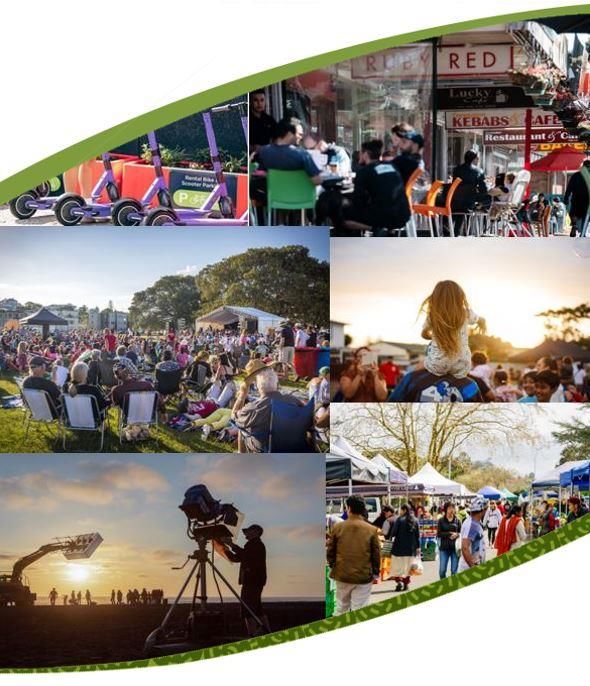
2           What is the Bylaw
Te Kaunihera o Tāmaki Makaurau Te Ture ā-Rohe Tauhokohoko, Whakahaerenga me te Tango Kiriata
Tūmatanui 2022 / the Auckland Council Trading and Events in Public Places Bylaw 2015 was made on 26
February 2015.
The purpose of the Bylaw is to regulate trading, events and filming in council-controlled public places to
protect public safety, minimise public nuisance and misuse of council-controlled public places.
Trading and Events in Public Places Bylaw 2015 Framework

                           TRADING AND EVENTS IN PUBLIC PLACES BYLAW 2015
                                           FRAMEWORK
                                                                           Exemptions to approvals
                                Approvals
                                                                   outdoor display of goods, art installed by
                 trading, events and filming activities in          council, goods or services delivered to
                 council-controlled public places such as          private premises, outdoor fitness classes
               parks, reserves, car parks and roads require         and training, regular amateur sporting
                   an approval from council or council-             activities, sale of produce outside the
                         controlled organisation                             property it was grown

                                                                         General approval conditions
                         Administrative matters
                                                                    times of operation, length of approval,
                   matters to consider when assessing              activity location, obstruction to a path of
                  applications, when approvals may be              travel, compliance with waste and traffic
                 granted (with or without conditions) or            plans, guidelines and polices for shared
                refused at council s discretion, objections          areas, other plans and policies, safety,
                to council decisions, renewals for current         health and hygiene requirements, use of
                            approval holders                        amplified music, at least 1.8m width of
                                                                              unobstructed footpath

                                                      Specific conditions
                markets and stalls, mobile shops, outdoor dining, fundraising, offering commercial services,
                distribution of promotional goods or materials, street performance and busking, pavement
                                    artists, events and filming, outdoor display of goods

                              Enforcement
                                                                            Transitional provisions
                   warnings, review of approvals, cost
               recovery, statutory powers under the Local            savings, transitional provisions and
                Government Act 2002, Land Transport Act                 revocations of legacy bylaws
                 1998, Health Act 1956, Litter Act 1979
3                What council proposes to change
Improving public trading, event and filming rules
We recently checked how the rules are working and identified improvements.
We are proposing to better minimise safety risks, nuisance and the misuse of council-controlled public
places by creating a new Auckland Council Public Trading, Events and Filming Bylaw 2022.
The main proposals in comparison to the current Bylaw are to:
                Main proposals                                         Reasons for proposals
     • continue to regulate trading,       • to retain a regulatory approach considered to be the most appropriate
       events and filming in a similar way   way to address public safety risks, nuisance and misuse caused by
       to the current Bylaw                  trading, events and filming in council-controlled public places.
                                           • the current approach requires Bylaw approval for most activities; allows
                                             certain limited activities without an approval; allows council to process
                                             applications for approval; and allows council to make additional rules in
                                             a ‘control’ (for example, conditions on activities that do not require a
                                             bylaw approval and how a bylaw approval will be considered).
     • clarifying the need for rental      • to reflect the significance of potential issues from rental of power-
       micromobility devices to be           assisted devices from council-controlled public places
       approved under their own licence • to better reflect the information, assessment criteria and conditions
       instead of a mobile shop licence      considered when processing these applications.
       as they currently are
     • clarifying which activities require • to clarify that the occasional sale of homemade goods by children
       an approval, don’t require an         outside their house is allowed (for example, the sale of lemonade)
       approval as long as certain         • to clarify that non-exclusive use of a council-controlled public place for
       conditions are met, and are not       informal recreation (for example, a family picnic) is allowed
       addressed in the Bylaw              • to reflect the right to protest under the New Zealand Bill of Rights Act1
                                           • to allow council to use controls to impose conditions on activities that
                                             do not require a bylaw approval.
     • updating the title, structure,      • to make a new bylaw easier to understand and comply with
       format, definitions, and wording to • to align a new bylaw with council bylaw drafting standards
       ensure that a new bylaw is easier • to explain the wider regulatory framework (other rules and permissions)
       to read, understand and comply      • to reflect that busking / pavement art are considered in a similar way
       with                                • to reflect that events and filming are considered differently
                                           • to clarify and streamline the approval framework
                                           • to clarify the matters council may address in a ‘control’.

If you want to know more, Appendix A shows what the proposed new bylaw would look like. Appendix
B provides a copy of the current Bylaw. Appendix C provides a summary of the differences between the
current and proposed new bylaw.

1   Freedom of expression (s14), Freedom of peaceful assembly (s16) and Freedom of association (s17).
4            How we implement the Bylaw
Several departments administer this Bylaw
The Bylaw is administered by several council departments and council-controlled organisations. For
example, the Licensing and Regulatory Compliance unit (licences all trading activities), Regional Service
Planning, Investment and Partnerships unit (permits small/large community and commercial events),
Alcohol Licensing and Environmental Health unit (oversees administration of rental micromobility
devices), Auckland Unlimited (permits major events) and Screen Auckland (permits filming).

Graduated enforcement approach
The Bylaw is enforced reactively for most activities as a result of service requests or complaints using a
graduated compliance model (information-education-enforcement) as illustrated in the Figure below.

Council staff investigate complaints and identify the best remedy. In the first instance, they encourage
voluntary compliance with the Bylaw through education and guidance or where appropriate, request
the situation is rectified within a specified timeframe. If this approach fails, they use the least coercive
enforcement such as a verbal or written warning, notice or seizure of equipment.
Licensing and Regulatory Compliance officers are responsible for Bylaw enforcement. For activities in
regional parks, enforcement is undertaken by parks staff and park rangers.
One-on-one approach to portfolio holding by event, filming and micromobility staff builds rapport with
organisers and operators, and ensures effective complaint management (investigation, monitoring, auditing).

5            How we got here
Decisions leading to the proposed changes
The Local Government Act 2002 requires council to review its bylaws to determine whether they are
effective, efficient and still necessary. The Bylaw must not be inconsistent with the New Zealand Bill of
Rights Act 1990.
Auckland Council reviewed the current Bylaw, reported its findings and considered the options at
meetings in October 2020 and February 2021.

Bylaw review and approval process

This Statement of Proposal was approved for public consultation by the Governing Body in May 2021 to
commence the process of making a new Auckland Council Public Trading, Events and Filming Bylaw.
Go to: www.aucklandcouncil.govt.nz/have-your-say for copies of the above decisions.
6         We want your input
You have an opportunity to tell us your views
We would like to know what you think about a new Public Trading, Events and Filming Bylaw 2022.
Appendix A
Te Ture ā-Rohe Tauhokohoko,
    Whakahaerenga me te Tango
       Kiriata Tūmatanui 2022
     Public Trading, Events and
         Filming Bylaw 2022
                             (as at xx xxxx 2022)

               Made by the Governing Body of Auckland Council

                             in resolution xx/xx/xx

                                  on xx xx xx

Bylaw made under sections 145, 146 and 149 of the Local Government Act 2002 and
section 22AB of the Land Transport Act 1998.
Summary
This summary is not part of the Bylaw but explains the general effects.
Every day across Auckland, a wide variety of trading, events and filming occur in public places
controlled by Auckland Council. These activities can increase vibrancy and appeal of public places by
enhancing amenity, and delivering social and economic benefits. These activities may also however
increase the risk of preventable collisions, accidents, injuries, obstructions, nuisance or misuse of
public places. For example, footpaths can become cluttered with furniture, goods or micromobility
devices, or overuse public spaces for private gain.
The purpose of this Bylaw is to minimise public safety risks, nuisance and misuse of council-
controlled public places caused by trading, events and filming, by –
allowing limited trading, events and filming subject to conditions (clause 6)
requiring prior approval from council for all other trading, events and filming (clause 7)
enabling council to prohibit trading in specified places (clause 8)
enabling council to prescribe conditions and requirements in relation to all trading, events and
filming (clause 9).
Other parts of this Bylaw assist with its administration by –
stating its name, when it comes into force and where it applies (clauses 1, 2 and 3)
stating the purpose of this Bylaw and defining key terms (clauses 4 and 5)
providing transparency about how council makes controls and processes approvals (Part 3)
referencing council’s powers to enforce this Bylaw, including powers to cancel an approval, seize
property, recover costs and seek monetary penalties up to $20,000 (Part 4).
The Bylaw is part of a wider framework. The Bylaw does not seek to duplicate or be inconsistent with
these requirements which include –
landowner approval (including but not limited to a lease or licence), particularly on parks
rules about activities on parks in any local or regional parks management plan
rules about food safety addressed in the Food Act 2014
additional rules about noise addressed in the Auckland Council Public Safety and Nuisance Bylaw
2013 and Resource Management Act 1991
rules about traffic and the sale of cars by the roadside addressed in the Auckland Transport Traffic
Bylaw 2012 and Auckland Council Traffic Bylaw 2015, and the Auckland Council and Auckland
Transport Signage Bylaw 2015
rules about waste plans addressed in the Waste Management and Minimisation Bylaw 2019
rules about protection of wildlife, flora, fauna, and significance of heritage areas addressed in the
Reserves Act 1977, Resource Management Act 1991, Waitakere Ranges Heritage Area Act 2008
rules about helmets and speed of micromobility devices (for example, e-scooters) and where they
can be ridden addressed in the Road Users Rule 2004 and enforced by the New Zealand Police
rules about drones (UAVs) addressed in the Auckland Council Public Safety and Nuisance Bylaw
2013, Civil Aviation (Offences) Regulations 2006, Privacy Act 1993 and by Auckland Transport
rules about the health and safety of workers addressed in the Health and Safety at Work Act 2015
the Commerce Act 1986, which prohibits anti-competitive behaviour.
Page 2Last updated
XX XXXX 2022 Auckland Council Public Trading, Events and Filming Bylaw 2022
Contents
1 Title 4
2 Commencement 4
3 Application 4
Part 1
Preliminary provisions
4 Purpose 4
5 Interpretation 4
Part 2
Trading, events and filming activities in council-controlled public places
6 A person may trade, hold events and film in certain limited circumstances 6
7 A person requires an approval to trade, hold events or film in most circumstances 7
8 A person is prohibited from trading in specified circumstances 8
Part 3
Controls and Approvals
Subpart 1 Controls
9 Council may make controls about trading, events and filming 9
Subpart 2 Approvals
10 This Subpart applies to people who must obtain or renew an approval 9
11 Applications for an approval must include required information and fees 9
12 Applications for an approval will be considered against relevant matters 9
13 Applications may be granted or declined 10
14 Conditions may be imposed if an application is granted 11
15 Display of an approval is required at all times 11
16 Duration of an approval is no more than 12 months 12
17 Transfer of an approval is not allowed 12
18 Council may review approval conditions in certain circumstances 12
Part 4
Enforcement powers, offences and penalties
19 Council may take action for failure to comply with an approval 12
20 Council can use statutory powers and other methods to enforce this Bylaw 13
21 Council may remove materials and recover costs 13
22 A person can be penalised for not complying with this Bylaw 13
Part 5
Savings and Transactional Provisions
23 Existing controls, approvals and compliance action to continue 14
24 Existing applications for approvals to be processed under this Bylaw 14
Page 3Last updated
XX XXXX 2022 Auckland Council Public Trading, Events and Filming Bylaw 2022
1 Title
(1) This Bylaw is the Te Kaunihera o Tāmaki Makaurau Te Ture ā-Rohe
Tauhokohoko, Whakahaerenga me te Tango Kiriata Tūmatanui 2022 / Auckland
Council Public Trading, Events and Filming Bylaw 2022.
2 Commencement
(1) This Bylaw comes into force on 26 February 2022.
3 Application
(1) This Bylaw applies to Auckland.
(2) For the avoidance of doubt, this Bylaw does not apply to any activity in clause
7(1)(b)(ii).
Part 1
Preliminary provisions
4 Purpose
(1) The purpose of this Bylaw is to help minimise public safety risks, nuisance and
misuse of council-controlled public places by –
(a) allowing limited trading, events and filming to be undertaken without
requiring a prior approval from council, subject to conditions;
(b) requiring prior approval from council for all other trading, events and filming;
(c) enabling council to prohibit trading in specified places; and
(d) enabling council to prescribe conditions and requirements in relation to all
trading, events and filming.
5 Interpretation
(1) In this Bylaw, unless the context otherwise requires, –
approval means a licence, permit or other form of permission granted under this
Bylaw and includes all conditions to which the approval is subject.
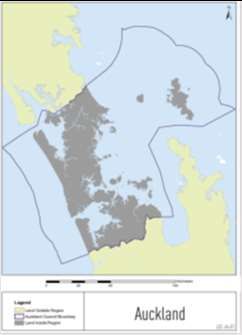
Auckland has the meaning given by section 4(1) of the Local Government
(Auckland Council) Act 2009.
Related information
The Local Government (Auckland Council) Act 2009 enabled the Local
Government Commission to determine Auckland’s boundaries in a map titled
LGC-Ak-R1. The boundaries were formally adopted by Order in Council on 15
March 2010, and came into effect on 1 November 2010.
Page 4Last updated
XX XXXX 2022 Auckland Council Public Trading, Events and Filming Bylaw 2022
council, means the Governing Body of the Auckland Council or any person
delegated or authorised to act on its behalf. In relation to making a control in
clause 9, the Governing Body of Auckland Council may only delegate this power
to a committee and / or the Chief Executive of Auckland Council who may sub-
delegate to a third-tier manager or above.
Related information
The Regulatory Committee makes decisions about controls as at November 2019 (GB/2019/109).
Auckland Council’s Licensing and Regulatory Compliance process applications for trading and
administer and enforce this Bylaw as at February 2021 (GB/2011/123).
Auckland Council’s Regional Service Planning, Investment and Partnerships process applications
and approvals for events as at November 2019 (GB/2019/109).
Auckland Unlimited process applications for events and filming as at February 2015 (GB/2015/4).
council-controlled public place means –
(a) a place that is under the control of council or a council-controlled
organisation that, at any material time, is open to or is being used by the
public, whether free or on payment of a charge; and
(b) to avoid doubt –
(i) includes any park, reserve, recreational ground, sports field, public
garden, public square, cemetery, beach, foreshore, dune, wharf,
breakwater, boat ramp, pontoon, road, footpath, access way, grass
verge, berm, and any part of those places; and
(ii) excludes any place under the control of the Tūpuna Maunga o
Tāmaki Makaurau Authority.
market means the whole of the place and the whole of the activity that –
has more than one stall at a common location;
offers goods and / or services for sale and / or hire; and
is for commercial and / or charitable purposes.
micromobility means small, lightweight devices personally driven by users (for
example, bicycles, e-bikes, electric scooters and skateboards, and electric pedal
assisted (pedelec) bicycles).
mobile shop means a vehicle or vessel (whether self-propelled or not) from
which goods and / or services are offered for sale and / or hire.
pavement art means temporary images or drawings for a purpose other than
advertising goods and / or services, created either directly on to the pavement or
on a removable surface (for example, on paper or plastic) laid out on the
pavement.
person includes an individual, a corporation sole, a body corporate, and an
unincorporated body.
premises means any separately occupied land, building, or part of the same.
Page 5Last updated
XX XXXX 2022 Auckland Council Public Trading, Events and Filming Bylaw 2022
stall means a stand, awning, table, vehicle or other temporary structure from
which goods and / or services are offered for sale and / or hire.
street performance / busking means the provision of entertainment in a
council-controlled public place (for example, playing an instrument, singing,
dancing, juggling, mime, puppetry, performance art, conjuring, aerobatics,
recitation, undertaking artworks and performing other acts of theatrical or visual
forms).
(2) Unless the context requires another meaning, a term or expression defined in the
Local Government Act 2002 or the Land Transport Act 1998 and used in this
Bylaw, but not stated in (1), has the meaning given by that Act.
(3) Related information and links to webpages do not form part of this Bylaw and
may be inserted, changed or removed without any formality.
(4) The Interpretation Act 1999 applies to this Bylaw.
(5) To avoid doubt, compliance with this Bylaw does not remove the need to comply
with all other applicable Acts, regulations, bylaws, rules of law, and terms of any
lease or licence.
Part 2
Trading, events and filming activities in council-controlled public places
6 Certain trade, event or film activities allowed without an approval
(1) A person may trade, hold an event or film in a council-controlled public place
without an approval if –
(a) the activity is specified in (2), (3) or (4) of this clause; and
(b) the activity complies at all times with any conditions in a control made
under clause 9.
(2) Trading in this clause means –
(a) the outdoor display of goods and / or services adjacent to business
premises from which the goods and / or services are usually provided;
(b) the installation of art by council or a substantive council-controlled
organisation as defined in the Local Government (Auckland Council) Act
2009;
(c) goods or services ordered in advance and delivered to premises next to a
council-controlled public place (for example, by a service delivery vehicle to
a private home or business);
(d) a mobile library service provided by council;
(e) a fitness class or training provided by an outdoor fitness operator; or
Page 6Last updated
XX XXXX 2022 Auckland Council Public Trading, Events and Filming Bylaw 2022
(f) the sale of produce adjacent to the premises where it was grown.
(g) occasional sale of goods from a stall by a person under the age of 16
adjacent to the residential premises where the goods were made (for
example, including the sale of cupcakes or lemonade made at home, but
excluding sale of goods associated with a Home Occupation as defined in
any Unitary Plan or District Plan).
(3) Events in this clause means –
(a) a regular sporting activity (for example, a practice, training or game) carried
out by amateur organised sports clubs in accordance with their lease or
licence.
(4) Filming in this clause means recording of moving or still images –
(a) of a private celebration or private event;
(b) for the purpose of current affairs or news;
(c) of premises for lawful property sale or rental purposes; or
(d) of premises for lawful building inspection purposes.
Related information about trading, events and filming in council-controlled public places
The Bylaw is part of a wider framework. Refer to Summary for examples of other applicable Acts,
regulations, bylaws and rules that a person who wishes to trade, hold an event or film in a council-
controlled public place must comply with.
7 Approval required to trade, hold an event or film in most circumstances
(1) Except as provided for in clause 6, a person must obtain an approval (for
example, a licence or permit) from council before conducting any of the following
activities in a council-controlled public place –
(a) trading, meaning the sale or hire of goods or services for payment, reward
or otherwise, including but not limited to –
(i) markets and stalls;
(ii) mobile shops;
(iii) outdoor dining for the purpose of providing food or drink;
(iv) production and sale of personal portraits;
(v) hire of micromobility devices;
(vi) hire of recreational equipment;
(vii) fundraising for a charitable cause, soliciting of any subscription or
collection of any one-off or on-going donation;
(viii) distribution of promotional goods and materials (for example a tasting,
sampling or giveaway);
(ix) street performance (for example, busking and pavement art); and
Page 7Last updated
XX XXXX 2022 Auckland Council Public Trading, Events and Filming Bylaw 2022
(x) any activity in clause 6(1)(a) to (g) that does not comply with any
conditions in a control made under clause 9.
(b) event, meaning a temporary organised activity that takes place on one or
more days conducted for the purpose of attracting revenue, support,
awareness, and/or for entertainment, community connection or competition –
(i) including a parade, wedding, private function, festival, concert,
celebration, multi-venue sports event, fun run, marathon, duathlon,
triathlon or the exclusive use of a place; but
(ii) excluding an indoor performance, indoor private function, protest or
the non-exclusive use of a place for informal recreation (for example,
a picnic in a park by an extended family); or
(c) filming, meaning the recording of moving or still images as part of an
organised activity whether or not for monetary gain (for example,
recordings for a documentary, educational curriculum, television, feature or
short film, social media or similar project).
Related information about applications for approval
For more information about how to apply view the following links:
Markets, mobile shops, outdoor dining, fundraising, offering commercial services, distribution of
promotional goods or materials, street performance / busking, pavement art and outdoor display of
goods for trading activities.
E-scooter, e-bike and bike for rental micromobility operators, including:
o Rental E-scooter licence assessment criteria and Rental Bike licence assessment criteria
o Rental E-scooter Code of Practice and Rental Bike Code of Practice
Note, currently the approval of a licence for the hire of e-scooters is limited by a tiered device cap up
to a maximum of 3200 devices across three tiers.
Event permit and Standard conditions for an event permit application for events.
Film permit and Auckland Film Protocol for filming.
8 A person is prohibited from trading in specified circumstances
(1) A person must not trade in a council-controlled place if prohibited in a control
made under clause 9.
Related information about prohibited trading
There are currently no controls that prohibit trading in council-controlled public places.
Part 3
Controls and Approvals
Subpart 1 Controls
Page 8Last updated
XX XXXX 2022 Auckland Council Public Trading, Events and Filming Bylaw 2022
9 Council may make controls about trading, events and filming
(1) Council may make a control for one or more of the following purposes –
(a) prescribing conditions in relation to trading, events and filming in council-
controlled public places specified in clause 6.
(b) prescribing requirements in relation to the approval of trading, events and
filming in council-controlled public places specified in clause 7.
(c) prohibiting trading in a council-controlled public place either generally or for
any specified category of trading and / or any part of council-controlled
public place.
Related information about controls
Current controls include:
Kaupapa Te Mahi Tauhokohoko me nga Takunetanga ki ngā Wāhi Marea 2015, Trading and
Events in Public Places Guidelines 2015
Trading and Events in Public Places Shared Spaces Guidelines 2017
Ngā Tikanga Hopu Whakaahua i te Rohe o Tāmaki Makaurau, Auckland Film Protocol.
To make decision, council must comply with the decision-making requirements under Subpart 1
of Part 6 of the Local Government Act 2002 (as reprinted on 26 March 2020).
Subpart 2 Approvals
10 This Subpart applies to people who must obtain or renew an approval
(1) This Subpart applies to a person who must –
(a) obtain an approval from council under clause 7; and
(b) renew an approval from council prior to its expiration.
(2) For the purposes of (1)(b), this Subpart applies with all necessary modifications
as if that renewal was an application for an approval.
11 Applications for an approval must include required information and fees
(1) A person to whom this Subpart applies must make an application that complies
with the requirements of council, including –
(a) the form and manner of the application;
(b) the information in the application;
(c) any further supporting information; and
(d) being accompanied by any fee.
(2) Without limiting (1), council may require an application for an approval to include
information on one or more of the following matters in this table
All applications for approvals may require the following information
(a) details of the applicant and person involved in the activity (for example, details of the person
offering goods for sale, performing services, or responsible for liaising with council);
Page 9Last updated
XX XXXX 2022 Auckland Council Public Trading, Events and Filming Bylaw 2022
(b) description, plans and maps, photos of the location (including multiple sites), nature, scale,
frequency and duration of the activity;
(c) specifications of any furniture, structures, equipment, side awnings, vehicles, signs, displays
and other items used or associated with the activity;
(d) assessment of impacts and proposed mitigation (read clause 12(2) and 14(2) for examples);
(e) the applicant’s experience, reputation and track record;
(f) public liability insurance; and
(g) details of other approvals required / obtained (read clause 12(2) and 14(2) for examples).
12 Applications for an approval will be considered against relevant matters
(1) Council when considering an application for an approval –
(a) will have regard to any matter it considers relevant and reasonably
necessary to determine the application in relation to this Bylaw’s purpose
(b) will have particular regard to any controls in clause 9; and
(c) may inspect places related to the application for the purpose for which the
approval is given.
(2) Without limiting (1), council may consider an application for an approval against
one or more of the following matters in this table.
All applications for approvals may consider the following matters
(a) location (including multiple sites), nature, scale, frequency and duration of the activity;
(b) specifications of any furniture, structures, equipment, side awnings, vehicles, signs, displays
and other items used or associated with the activity;
(c) actual or potential impact of the activity on the public, council-controlled public places and
surrounding environment, for example:
(i) impacts as a result of noise, glare, light spill, odour, anti-social behaviour;
(ii) impacts on appearance and amenity;
(iii) impacts to native fauna, flora and heritage features;
(iv) obstruction or hazards to pedestrian or vehicular visibility, access or flow;
(v) obstruction of access by emergency, maintenance or utility services;
(vi) the impact on nearby business premises; and
(vii) cumulative impacts of this approval in addition to other existing approvals;
(d) how any actual or potential impacts may be mitigated, for example through waste
management and minimisation, traffic management, safety and risk management, adverse
weather, emergency, customer conduct plans;
(e) whether the location is already approved for another activity under this Bylaw;
(f) suitability of the applicant to hold an approval taking into account any known past operational
issues and the applicant’s experience and track record;
(g) whether the applicant is a registered charity or a member of a registered organisation;
(h) whether the activity complies with relevant requirements in any Act, regulation or Bylaw to
enable the activity to occur for example, obtaining and complying with an approved waste
management and minimisation plan or compliance with food safety legislation;
(i) whether landowner approval (if required) has been obtained;
(j) whether the activity is consistent with relevant Auckland Council policies and plans.
13 Applications may be granted or declined
(1) Council may grant or decline an application for an approval having regard to
matters in clause 12.
Page 10Last updated
XX XXXX 2022 Auckland Council Public Trading, Events and Filming Bylaw 2022
14 Conditions may be imposed if an application is granted
(1) Council may impose any conditions on an approval it considers appropriate to
achieve the purpose of this Bylaw.
(2) Without limiting subclause (1), council may impose conditions about any one or
more matters in this table.
All approvals may include conditions about the following matters
(a) location (including multiple sites), nature, scale, frequency and duration of the activity;
(b) specifications on the use of any furniture, structures, equipment, side awnings, vehicles,
signs, displays and other items used or associated with the activity;
(c) limits on the number of items used or associated with the activity (for example, the number
of micromobility devices that may be offered for rent);
(d) times of operation (days and hours), including any ‘set up’ and ‘pack down’ times;
(e) mitigating actual and potential impacts on the public, public place and surrounding
environment (for example street, flora and fauna, heritage features, nearby residential or
business areas) from the activity (for example in relation to public safety, nuisance and
misuse of public places);
(f) ensuring a continuous accessible path of travel for pedestrians and vehicles free of
nuisance, obstruction or hazards:
(i) particularly near intersections, bus stops, vehicle crossings, traffic islands, driveways,
grass verges and accessways;
(ii) by developing queue management strategies; and
(iii) by maintaining a minimum of unobstructed footpath width of no less than 1.8 meters;
(g) restrictions on the use of amplified sound;
(h) ensuring that the activity or any goods or materials sold or distributed are not discriminatory,
defamatory and objectionable, and do not cause widespread or serious offence, threaten
harm, incite or counsel any person to commit any offence;
(i) type, quality and standard of goods or materials sold or distributed or services offered;
(j) ensuring materials used for pavement art are washable, leave no residue, are non-slippery,
and are not an advertisement;
(k) display and provision of identification and information;
(l) the manner in which people undertaking the activity can approach the public for money;
(m) compliance with approved impact mitigation plans (for example, a traffic management plan);
(n) any relevant matters contained in a control in clause 9;
(o) compliance with requirements in any other relevant Act, regulation or Bylaw;
(p) compliance with relevant Auckland Council policies and plans and any shared space
guidelines or policies;
(q) landowner approval is obtained before conducting the activity;
(r) reporting and / or monitoring before, during and / or after the activity;
(s) holding and maintaining appropriate public liability insurance;
(t) payment of one or more bonds, fees and / or charges;
(u) a termination plan to remove any equipment or items used or associated with the activity in
the event the approval is suspended or cancelled.
15 Display of an approval is required at all times
(1) A person must prominently display an approval granted to them in a manner that
is able to be read by the public at all times the approval is used.
(2) However, (1) does not apply if the approval expressly provides otherwise.
Page 11Last updated
XX XXXX 2022 Auckland Council Public Trading, Events and Filming Bylaw 2022
16 Duration of an approval is no more than 12 months
(1) The duration of an approval is for a period up to 12 months unless otherwise
specified in the approval.
17 Transfer of an approval is not allowed
(1) Any approval under this Bylaw attaches to the person who obtained it and is not
transferable to any other person.
(2) However, (1) does not apply if the approval expressly provides otherwise.
18 Council may review approval in certain circumstances
(1) Council may review an approval granted under this Subpart –
(a) to be consistent with any changes to legislation;
(b) to deal with any public safety, nuisance or misuse issues which arise from
the exercise of the approval (for example, unsafe or hazardous conditions,
unreasonable obstruction, damage); and
(c) if the activity is likely to interfere with any authorised works by council,
Auckland Transport or a network utility operator.
(2) For the purposes of Subclause (1), this Subpart applies with all necessary
modifications as if that review was an application for an approval (for example,
the conditions on the approval may be amended or the approval may be
suspended or cancelled).
Related information about applications for approval
For more information about how to apply, matters considered and conditions, view the links in the
related information note under clause 7.
Relevant council policies and plans may include the Auckland Plan, Auckland Unitary Plan, Auckland’s
Climate Plan, Events Policy, Auckland’s Major Events Strategy, Smokefree Policy, Waste Management
and Minimisation Plan, Provisional Local Alcohol Policy and Gambling Venue Policies.
Part 4
Enforcement powers, offences and penalties
19 Council may take action for failure to comply with an approval
(1) This clause applies to a person who has been granted an approval whom –
(a) fails to comply with the approval, including any condition of an approval; or
(b) provided inaccurate information on any application for an approval which
materially influenced the decision made on the application.
(2) Council may take any one or more of the following actions against a person to
whom this clause applies –
Page 12Last updated
XX XXXX 2022 Auckland Council Public Trading, Events and Filming Bylaw 2022
(a) issue a written warning which may be used as evidence of a bylaw breach
during any subsequent consideration of an approval or enforcement action;
(b) review of the approval which may result in its amendment, suspension or
cancellation;
(c) forfeiture of any bond or security;
(d) the use of statutory powers in clause 20; or
(e) the use of statutory penalties in clause 21.
(3) For the purposes of (2)(b), Subpart 2 of Part 3 applies with all necessary
modifications as if a review was an application for an approval.
20 Council can use statutory powers and other methods to enforce this Bylaw
(1) Council may use its powers under the Local Government Act 2002 or the Land
Transport Act 1998 to enforce this Bylaw.
Related information about enforcement
Council powers under the Local Government Act 2002 (as reprinted on 26 March 2020) and
Land Transport Act 1998 (as reprinted on 1 December 2020) include court injunction (section
162), removal of works (section 163), seizure and disposal of property (sections 164, 168),
powers of entry (sections 171, 172, 173), cost recovery for damage (section 176) and power to
request name and address (section 178).
Council can also use other methods for example, audit, advice, information or warnings.
21 Council may remove materials and recover costs
(1) Council may under section 163 of the Local Government Act 2002, remove or
alter any material or thing in breach of this Bylaw and may recover any costs of
removal or alteration from the person who committed the breach.
22 A person can be penalised for not complying with this Bylaw
(1) A person who fails to comply with this Bylaw commits an offence and is liable to a
penalty under the Local Government Act 2002 and the Land Transport Act 1998.
(2) However, a person does not commit an offence if the person proves that the
failure to comply was due to compliance with the directions of council.
Related information about penalties
A person who is convicted of an offence against this Bylaw is liable to a fine not exceeding:
$20,000 under section 242 of the Local Government Act 2002 (as reprinted on 26 March 2020)
$500 under section 22AB of the Land Transport Act 1998 (as reprinted on 1 December 2020).
Alternatively, council may impose a penalty under section 15 of the Litter Act 1979 where a
breach of this Bylaw is also an offence under that Act (for example, an instant fine up to $400).
Part 5
Savings and Transactional Provisions
Page 13Last updated
XX XXXX 2022 Auckland Council Public Trading, Events and Filming Bylaw 2022
23 Existing controls, approvals and compliance action to continue
(1) This clause relates to the Auckland Council Trading and Events in Public Places
Bylaw 2015 / Te Ture ā-Rohe Te Mahi Tauhokohoko me nga Takunetanga ki ngā
Wāhi Marea 2015 (2015 Bylaw).
(2) Guidelines, protocols, controls, policies or codes of practice referred to in clauses
7(1), 10(2), 11(1)(h) and 25(1)(b)(i) of the 2015 Bylaw in (1) are –
(a) deemed to be controls made under clause 9 of this 2022 Bylaw; and
(b) continue to apply until amended, replaced or revoked by council.
Related information about controls
Guidelines, standards, controls, policies or codes of practice made under the Auckland Council
Trading and Events in Public Places Bylaw 2015 are the:
Kaupapa Te Mahi Tauhokohoko me nga Takunetanga ki ngā Wāhi Marea 2015, Trading and
Events in Public Places Guidelines 2015
Trading and Events in Public Places Shared Spaces Guidelines 2017
Ngā Tikanga Hopu Whakaahua i te Rohe o Tāmaki Makaurau, Auckland Film Protocol.
(3) Every approval (for example, a licence or permit) made using the 2015 Bylaw in
(1) continues to apply until the expiration date in that approval or until it is
renewed, reviewed, suspended or cancelled.
(4) Any existing compliance or enforcement action (including inquiry) by council
under the 2015 Bylaw in (1) that was not completed before the date this Bylaw
commences, will continue to be actioned under the 2015 Bylaw as if it were still in
force and as if this Bylaw had not been made.
24 Existing applications and renewals of approvals to be processed under this
Bylaw
(1) Any application for an approval under the 2015 Bylaw in clause 23(1) not
approved or declined before the date this Bylaw commences, will continue to be
processed as if it had been applied for under this Bylaw.
(2) Any application to renew an approval made using the 2015 Bylaw in clause
23(1), will be processed as if the approval had been applied for under this Bylaw.
25 Existing markets considered to have an approval under this Bylaw
(1) This clause applies to all markets approved to operate in a council-controlled
public place prior to the commencement of the 2015 Bylaw in a community lease,
resource consent or landowner approval.
(2) Every market in (1) is deemed to be approved under this Bylaw and this Bylaw
applies (for example, offences and penalties) with all necessary modifications.
Related information about markets
Page 14Last updated
XX XXXX 2022 Auckland Council Public Trading, Events and Filming Bylaw 2022
Auckland Council and legacy councils have in the past used various regulatory and non-
regulatory tools to approve markets in public places. Examples include:
Market Location Owner Method of Approval
Auckland Transport Carpark Auckland Landowner approval
Browns Bay Market 29-31 Anzac Road Browns Transport from Auckland
Bay Transport
Auckland Community Lease
Clevedon Village Clevedon A & P
Council with Clevedon A & P
Farmers Market Showgrounds
Association
Coatesville Settlers Hall and Auckland Pre-amalgamation
Coatesville Market
carpark Coatesville Council resource consent
Grey Lynn Farmers Grey Lynn Community Centre Auckland Community Lease
Market and Carpark Council
Auckland Landowner approval
Auckland Transport Carpark
Mangere Market Transport from Auckland
at Mangere Town Centre
Transport
Auckland Landowner approval
Auckland Transport Carpark
Otara Market Transport from Auckland
at 1 Newbury Street Otara
Transport
Auckland Landowner approval
Swanson Car Boot Swanson Train Station and Transport from Auckland
Market Auckland Transport Carpark and KiwiRail Transport and
KiwiRail
Auckland Landowner approval
Auckland Transport Carpark
Takapuna Market Transport from Auckland
at 40 Anzac Street, Takapuna
Transport
Titirangi War Memorial Hall Auckland Operating as a
Titirangi Market and Carpark, 500 South Council permittable activity on
Titirangi Road reserve land
Page 15Last updated
XX XXXX 2022 Auckland Council Public Trading, Events and Filming Bylaw 2022
Related information, Bylaw history
Date Description
01 November 2010 Made legacy bylaws about trading in public places1 (Section 63 Local
Government (Auckland Transitional Provisions) Act 2010)
01 November 2010 Commencement of legacy bylaws about trading in public places (Section 63
Local Government (Auckland Transitional Provisions) Act 2010)
20 May 2014 Review of legacy bylaws about trading in public places completed
(RBC/2014/20)
29 May 2014 Proposal to make new bylaw about trading, events and filming in council-
controlled public places and to revoke legacy bylaws (GB/2014/49)
26 February 2015 Made the Auckland Council Trading and Events in Public Places Bylaw 2015
(GB/2015/4)
5 June 2015 Public notice of making of the Auckland Council Trading and Events in
Public Places Bylaw 2015 and revocation of legacy bylaws
01 July 2015 Commencement of Auckland Council Trading and Events in Public Places
Bylaw 2015 and revocation of legacy bylaws (GB/2015/4)
22 August 2019 Amendment of Auckland Council Trading and Events in Public Places
Bylaw 2015 (clauses 10(3) and 11(1)) (GB/2019/83)
13 October 2020 Review of Auckland Council Trading and Events in Public Places Bylaw
2015 completed (REG/2020/64)
27 May 2021 Proposal to make a new bylaw about trading, events and filming in council-
controlled public places (GB/2021/###)
[TBC] Made the Auckland Council Public Trading, Events and Filming Bylaw 2022
(GB/2021/###)
[TBC] Public notice of making of the Auckland Council Public Trading, Events
and Filming Bylaw 2022
26 February 2022 Commencement of the Auckland Council Public Trading, Events and
Filming Bylaw 2022 (GB/2021/###) and revocation of the Auckland Council
Trading and Events in Public Places Bylaw 2015 (section 160A Local
Government Act 2002)
1 Legacy bylaws made: Auckland Regional Council Parks Bylaw 2007 (Part 2); Auckland City Council
No 20 - Public Places Bylaw 2008 (clauses 20.6 – 20.7); Franklin District Council Trading in Public
Places Bylaw 2008; Chapter 7 (Events and Trading in Parks and Public Places) of the Manukau City
Consolidated Bylaw 2008; Part 3 (Trading in Public Places) of the North Shore City Council Bylaw
2000; Papakura District Council Trading in Public Places Bylaw 2008; Chapter 5 (Trading in Public
Places) of the Rodney District Council General Bylaw 1998; Waitakere City Council Public Places
Bylaw 2010 (Part 5).
Related information, next bylaw review
This Bylaw must be reviewed by 26 February 2027. If not reviewed by this date, the Bylaw will expire on
26 February 2029.
Page 16Last updated
XX XXXX 2022 Auckland Council Public Trading, Events and Filming Bylaw 2022
Find out more: phone 09 301 0101
or visit aucklandCouncil.govt.nz
Page 17Appendix B
As at 25 October
2019                          Trading and Events in Public Places Bylaw

       Trading and Events in Public Places Bylaw 2015
         Te Ture ā-Rohe Te Mahi Tauhokohoko me nga
             Takunetanga ki ngā Wāhi Marea 2015

                                     (as at 25 October 2019)

                           Governing Body of Auckland Council

                                      Resolution in Council

                                         26 February 2015

Pursuant to the Local Government Act 2002, Local Government (Auckland Council) Act 2009,
and the Land Transport Act 1998 the Governing Body of Auckland Council make the following
bylaw.

Explanatory note:

The Local Government (Auckland Council) Act 2009 provides for Auckland Council and Auckland
Transport to make bylaws under the Local Government Act 2002 and Land Transport Act 1998 to allow
trading in public places with reasonable controls. The bylaw also includes clauses on events and filming in
public places. Public places includes streets, roads, parks, recreation grounds and other public land
owned, managed or under the control of Auckland Council and its council controlled organisations,
including Auckland Transport.

This explanatory note is for information purposes only and does not form part of this bylaw.

                                                   1
As at 25 October
2019 Trading and Events in Public Places Bylaw
Contents Page
1 Title ................................................................................................................................ 4
2 Commencement ........................................................................................................... 4
3 Application.................................................................................................................... 4
Part 1
Preliminary Provisions
4 Purpose ......................................................................................................................... 4
5 Interpretation ................................................................................................................ 4
Part 2
General
6 Requirement to hold an approval ............................................................................... 8
7 Exemptions to holding an approval ........................................................................... 9
8 Designated public places ............................................................................................ 9
Part 3
Approvals and other administrative matters
9 Application for approval.............................................................................................. 9
10 Deciding an application............................................................................................... 9
11 Approval conditions .................................................................................................... 9
12 Fees ............................................................................................................................. 10
13 Display of an approval ............................................................................................... 10
14 Review of an approval ............................................................................................... 11
Part 4
Trading and events in public places
15 Markets and stalls ...................................................................................................... 11
16 Mobile shops .............................................................................................................. 11
17 Outdoor dining .......................................................................................................... 11
18 Fundraising ................................................................................................................ 12
19 Offering commercial services .................................................................................. 12
20 Distribution of promotional goods and materials ................................................. 12
21 Street Performance / busking .................................................................................. 12
22 Pavement artists ........................................................................................................ 13
23 Events and Filming .................................................................................................... 13
24 Outdoor displays of goods ....................................................................................... 13
Part 5
Enforcement powers
25 Non-compliance with conditions of approval ......................................................... 13
26 Removal of material or things .................................................................................. 14
27 Exceptions .................................................................................................................. 14
Part 6
Offences and penalties
28 Bylaw breaches ......................................................................................................... 14
.........................................................................................................................................
Part 7
Savings, transitional provisions and revocations
29 Savings and transitional provisions ........................................................................ 14
30 Revocations ................................................................................................................ 15
2As at 25 October
2019 Trading and Events in Public Places Bylaw
1 Title
This bylaw is the Auckland Council Trading and Events in Public Places Bylaw 2015.
2 Commencement
This bylaw comes into force on 1 July 2015.
3 Application
This bylaw applies to Auckland.
Part 1
Preliminary provisions
4 Purpose
(1) The purpose of this bylaw is to provide for the control of events and trading in
public places by:
(a) regulating trading activities and the conduct of persons selling or offering
goods or services in public places by requiring approval from the
council, Auckland Transport or other council controlled organisation;
(b) regulating events and filming in roads and other public places by
requiring operators to obtain an approval;
(c) setting general and specific conditions for trading and events in public
places to ensure that appropriate standards of health and safety,
pedestrian and vehicle access and visual amenity are maintained;
(d) prescribing for fees in respect of any approval in relation to matters
specified in subclauses (1)(a) and (b).
5 Interpretation
(1) In this bylaw, unless the context otherwise requires,—
Act means the Local Government Act 2002 or Land Transport Act 1998 as the context
requires.
amenity means the natural or physical qualities and characteristics of an area that
contribute to people’s appreciation of its pleasantness, aesthetic coherence, and
cultural and recreational attributes.
approval means a licence, permit or other form of approval granted under this bylaw
and includes all conditions to which the approval is subject.
Auckland has the meaning given by the Local Government (Auckland Council) Act
2009.
Explanatory note: section 4(1) states: “Auckland means the area within the
boundaries determined by the Local Government Commission under section
33(1) (as that determination is given effect to by Order in Council under section
35(1)).”
charity means a non-profit organisation that raises funds for the benefit of the needy,
a community group, an environmental cause, or the benefit of the public.
commercial services means selling or hiring any goods or services which are offered
or provided in a public place in exchange for payment, reward or otherwise. This
3As at 25 October
2019 Trading and Events in Public Places Bylaw
includes, but is not limited to, the production and sale of personal portraits, hiring
recreational equipment or, any other service of any kind whatsoever.
continuous accessible path of travel means an uninterrupted route to or within
premises or buildings that provides access to all services and facilities.
council means the governing body of the Auckland Council or any person delegated
or authorised to act on its behalf.
council controlled organisation has the same meaning as substantive council
controlled organisation in the Local Government (Auckland Council) Act 2009.
Explanatory note: section 4(1) states: “substantive council-controlled organisation”—
(a) means a council-controlled organisation that is either wholly owned or wholly
controlled by the Council and either—
i. is responsible for the delivery of a significant service or activity on behalf of the
Council; or
ii. owns or manages assets with a value of more than $10 million; and
(b) includes Auckland Transport.
dangerous materials and objects means any material or object that pose risk or
hazard to the public and performers. Dangerous materials include flammable materials
and chemicals, fire, fireworks, smoke, flares, heated elements or anything giving off
heat or toxicity that could harm or damage the public or the environment. Dangerous
objects include chainsaws, knives, whips, spears, swords, spikes and sharp objects of
any kind that could harm the public or performers.
event means an organised temporary activity that takes place on one or more days
including an organised gathering, parade, protest, wedding, private function (which is
independent of premises), festival, concert, celebration, multi-venue sports event of a
significant scale, fun run, marathon, duathlon or triathlon. For the purposes of this
bylaw an indoor performance, indoor private function, tasting and sampling activity,
giveaway, market, sports practice or training is not an event.
filming means the recording of images, moving or still, for commercial purposes or at
a scale that might unduly obstruct use of a public place, but excludes the recording of
a private celebration or event or the recording of current affairs or news for immediate
release.
footpath means a path or way principally designed for, and used by, pedestrians.
fundraising umbrella organisation means any organisation recognised by the
council as coordinating fundraising activities across charities, and includes the Public
Fundraising Regulatory Association.
market means the whole of the place and the whole of the activity, where more than
one stall at a common location where goods and / or services are offered for sale or
hire, whether for commercial or charitable purposes.
market operator means any person who operates a market.
4You can also read


