Heraeus Dental Science Venus Diamond Venus Diamond Flow Scientific Compendium
←
→
Page content transcription
If your browser does not render page correctly, please read the page content below

Heraeus Dental Science

Venus® Diamond
Venus® Diamond Flow
Scientific Compendium

                         Experts in dialogue.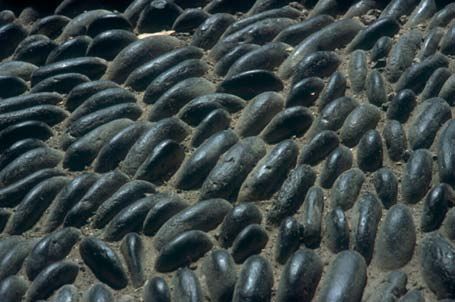
Preface                                                                                                                       Content

After five years of continuous development the universal       On the subsequent pages we will illustrate the history and     Venus Diamond / Venus Diamond flow
nano hybrid-composite Venus Diamond® from Heraeus has          the chemical background behind the new VENUS nano
been available to dentists.                                    hybrid composites to allow you to understand why these         Introduction ......................................................................................................................................................... 04
                                                               materials are the Diamond Class of composites.
The invention of new innovative products is always a pro-                                                                     Product description ............................................................................................................................................... 08
tracted process which several ups and downs. But set-backs     To give further evidence on the outstanding material proper-      ■ Venus Diamond ............................................................................................................................................ 08
also stimulate new developments and enable breaking new        ties of Venus Diamond and Venus Diamond Flow various              ■ Venus Diamond Flow ..................................................................................................................................... 12
grounds. Progress is possible only by doing things in a        study results are summarized in this compendium.               Mechanical properties of Venus Diamond and Venus Diamond Flow ........................................................................... 14
different way.                                                                                                                Clinically proven worldwide – Study overview ........................................................................................................... 15
                                                               We kindly invite you to test Venus Diamond and Venus
The development of Venus Diamond started with a survey         Diamond Flow by yourselves.
in different countries to identify what dentists expect from                                                                  In vitro studies ..................................................................................................................................................... 17
a perfect composite.
                                                                                                                              Mechanical properties ........................................................................................................................................... 18
Low shrinkage, stable consistency and improved gloss                                                                            ■ Shrinkage and shrinkage stress ...................................................................................................................... 18
stability were identified as the main demands by the dental                                                                     ■ Mechanical stability ...................................................................................................................................... 27
practitioners.                                                                                                                  ■ Degree of conversion .................................................................................................................................... 34
                                                                                                                                ■ Radiopacity .................................................................................................................................................. 37
In the following our scientists translated the ideas into                                                                       ■ Ambient light sensitivity ................................................................................................................................ 40
practice by intensive research. While this process construc-                                                                    ■ Water sorption and water solubility ................................................................................................................. 42
tion principles and building blocks of the well-known com-                                                                      ■ Wear Resistance............................................................................................................................................ 44
posite technology had to be completely reinvented.
                                                                                                                              Compatibility to adhesives ..................................................................................................................................... 49
                                                                                                                                ■ Shear bond strength ...................................................................................................................................... 51
                                                                                                                                ■ Marginal integrity .......................................................................................................................................... 53

                                                                                                                              Aesthetics ............................................................................................................................................................ 55
                                                                                                                                ■ Colour adaptation potential ............................................................................................................................ 57
                                                                                                                                ■ Stain resistance ............................................................................................................................................ 59
                                                                                                                                ■ Polishability and gloss retention .................................................................................................................... 61

                                                                                                                              In vivo studies ...................................................................................................................................................... 67

                                                                                                                              Clinical studies of Venus Diamond .......................................................................................................................... 68
                                                                                                                                 ■ Class III, IV and V cavities – University of Iowa ................................................................................................ 69
                                                                                                                                 ■ Class V cavities – University of Brescia ............................................................................................................ 70
                                                                                                                                 ■ Class III and IV cavities – University of Brescia ............................................................................................... 71
                                                                                                                                 ■ Class I and II cavities – SUNY at Buffalo ......................................................................................................... 72
                                                                                                                                 ■ Class I and II cavities – LMU Munich .............................................................................................................. 73
                                                                                                                                 ■ Handling evaluation by general dental practitioners ......................................................................................... 74

                                                                                                                              Clinical study of Venus Diamond Flow ..................................................................................................................... 75
Dr. Andreas Utterodt                                                            Dr. Janine Schweppe                              ■ Class V cavities – University of Brescia ............................................................................................................ 75
R&D Manager for Composites                                                      Scientific Affairs Manager
Heraeus Kulzer GmbH, Wehrheim, Germany                                          Restoratives & Impressions International
andreas.utterodt@heraeus.com                                                    Heraeus Kulzer GmbH, Hanau, Germany           Biocompatibility ................................................................................................................................................... 76
                                                                                janine.schweppe@heraeus.com
                                                                                                                              References ........................................................................................................................................................... 78

2                                                                                                                                                                                                                                                                                                     3
Introduction Introduction
The wish to be beautiful and healthy is as old as mankind. Small abrasive food substances could abrade the “exposed” However, the advantages of smooth surfaces and improved
The structure of a silane molecule
Beautiful and harmonious teeth are a calling card and per- matrix easily until the filler particle was lost. Due to the size wear properties are gained at the expense of considerably
fect aesthetics in restorations are becoming a key factor for of the lost single filler particle the surface roughness of the reduced fracture toughness. As the surface area of smaller
patients when choosing their dentist. O H restorations increased dramatically like a rough coastline. filler particles is larger in comparison to their volumes, they
Si O O CH3 Polymer network
O H
Si O Si CH2 CH2 CH2 O C C CH2 cannot fill to such a high density as macro-filled com-
Composition of composites O H O posites. This leads to higher polymerisation shrinkage.
Si O O
The discovery of the potential of Bis-GMA as crosslinker for O H
dental materials by Prof. Bowen in 1962 was the starting SiO-part Methacrylate-group Those micro-filled composites containing solely fumed
point of the development of direct tooth coloured filling silica filler particles are called ho-mogeneous micro-filled
materials. This crosslinker was a mile stone in the begin- composites.
ning of modern restorative dentistry: For the first time
dentists were enabled to prepare minimal-invasive and The filler particles are not only bonded mechanically to the A new technical method, developed by Heraeus Kulzer at
tooth-coloured restorations with the introduction of micro- monomer matrix, they also undergo chemical bonding with the end of the 70’s, was used to increase the filler content
filler composites in the 80s. it. These molecules – called silanes due to their chemistry despite this: finely milled, pre-polymerised micro-fillers
(word made up from Silicone and Methane) – exhibit two were added to micro-filled composite in addition to the
The term “composite” actually only refers to the fact that different functional groups. On one side, the silane mole- pure inorganic SiO2 fillers.
the material is composed of several components, i.e. at cules react with the SiO groups on the surface of the filler
least 2 different phases (e.g. monomers and fillers). Accord- and are polymerised into the growing network via the meth- Abrasion principle in macro filler resin composites
Schematic comparison:
ing to this broad definition, glass-ionomers, compomers, acrylate group on the other side of the molecule.
Homogeneous versus inhomogeneous
resin-based composites and ormocers are included in this Aesthetic revolution – Microfiller composites
micro-filled composite
group. They all have something in common – they cure to The reinforcement of the filler particles depends on their The next milestone in the evolution were the micro filler
form a polymer network with glass, quartz or ceramic filler chemistry (e.g. silicic acid, quartz or glass filler particles) composites which were introduced in 1974.
particles embedded in it. as well as the particle size and distribution. In general, the Very easy polishing and remarkable aesthetics are their
harder and larger the particles, the higher the strengthening main characteristics. As the name micro filler indicates the Inhomogeneous Homogeneous
In the narrow sense, “composite” is used to describe resin- effect (but: the worse the polishing properties). Only the size of the inorganic filler particles is very small (0,04 μm). Micro-filler Micro-filler
based composites – this is what is meant when the follow- correct combination of different filler particle fractions pro- Due to the small size of these agglomerated filler particles, composite composite
ing text refers to “composite”. Composites are based on duces optimum mechanical and polishing properties. Com- micro-filled composites can be polished to a long-lasting
polymerisable monomers (e.g. Bis-GMA, TEGDMA, ormocer posites are categorised according to their viscosity, basic and excellent luster and their smaller surface area helps
monomers, UDMA) reinforced with various sizes and types chemistry, curing mechanism or the size of the filler parti- prevent the filler particles being dislodged from the matrix.
of filler particles. Inorganic fillers have to be added to the cles used. The most common type of classification involves This can be seen clearly in the picture of an historical foot-
monomer system to attain the degree of strength which the filler particle sizes – it actually mirrors the “evolution“ path: People have been walking over it for 500 years: all
enables resin based composites to be used in stress bearing of composites over the last decades. filler particles have been polished to a high lustre but none Homogeneous micro-filled composite was turned into
posterior areas. have been dislodged. heterogenous (inhomogeneous) micro-filled composite,
The beginning – Macrofillers This prevents large “potholes” forming (as described before). which contained pre-polymerised micro-filled composite
First milestone during the development of resin composite constituents in the form of “organic macro-fillers“. This
materials were macro filler composites in 1965. Filler par- enabled the polymerisation shrinkage to be reduced to an
ticles with filler sizes between 10 –100 μm were added to acceptable level but without compromising the excellent
the resin matrix. polishing properties and elasticity. The heterogenous
micro-filled composite concept has been proven for anterior
These macro filler composites had the advantage of an restorations and still applies today. Durafill® VS composite
increased strength and suitable shrinkage level. But the is a classic member of this group – it has been used
bigger filler particles were much more prone to abrasion successfully in clinical practice for almost 30 years.
and a sufficient aesthetics was not achievable. How has
the abrasion worked? The glass of each filler particle has Despite this, one has to admit that even heterogenous
optimal mechanical properties as a solid body. Within the micro-filled composites are not strong enough to be placed
composite (reinforced polymer) these particles are embed- in regions exposed to masticatory loading.
ded into a “softer” matrix. Due to the size of these grand
filler particles the wide space between the fillers was filled A historical footpath in Teguise, Lanzarote – shows the micro-filled
with matrix only. composite principle
4 5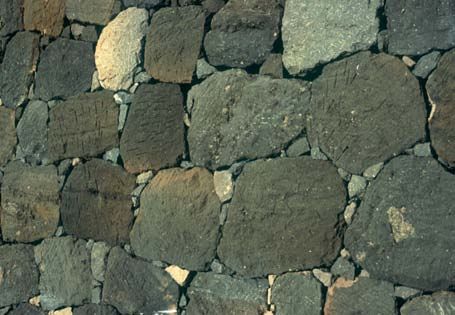
Introduction                                                                                                                    Introduction

These disadvantages limited the usage of micro filler com-      Those materials resists high mechanical loading due to          A composite in a bonded cavity does not have the                              Low shrinkage stress and high mechanical stability –
posites to anterior restorations. Hence, efforts were made to   the macro fillers and show simultaneously an excellent          ability to shrink freely1. Therefore, shrinkage stress due to                 Venus Diamond
develop materials which can be used also for posterior          polishing behaviour based on the limited maximum filler         pulling forces within the composite and on the interface                      Secondary caries and fractures are the main failure reasons
regions.                                                        size. The packaging density is also increased which             restoration-adhesive- tooth arises during the blue light                      of resin composites in the last years4. Therefore, modern
                                                                improves additionally strength and shrinkage of the             induced polymerisation.                                                       composite restoration materials also need to have an excel-
The best of two worlds – Hybrid composites                      materials.                                                                                                                                    lent mechanical performance.
During the following years the development was focused on                                                                       Shrinkage stress which is influenced by further factors like
the combination of the advantages of micro- and macro           For highest aesthetic demands – nanooptimised composites        rheological flow properties of the unpolymerised composite                    Those considerations led to the development of Venus
filler.                                                         In the last decade nano particles were added to hybrid com-     and rigidity of the cured material lead to crucial problems                   Diamond which is a universal composite resin with out-
                                                                posites and also nano hybrid composites were developed.         for the longevity of a dental restoration. Tooth integrity can                standing low shrinkage stress and mechanical properties.
                                                                Nano filler composites are also a sort of hybrid composites     be affected by hairline cracks, cusp deflection or even frac-
                                                                but instead of using a milled glass filler fraction agglomer-   ture of cusps. Also, marginal integrity can be influenced                     The corresponding flowable composite Venus Diamond
                                                                ated nano cluster are used.                                     negatively by a high shrinkage stress: marginal gaps, stain-                  Flow was also created following the principle of a reduced
                                                                                                                                ing or even secondary caries and postoperative sensitivity                    shrinkage stress combined with a high mechanical stability
                                                                Nano particles are smaller than 100 nm. The advantage of        can occur as consequence2, 3.                                                 beside the excellent flow behaviour.
                                                                adding nano scale particles described for most of the com-
                                                                sposites is the improved filler packing density. Shrinkage is   Some of the modern low shrinkage composites are opti-
                                                                reduced whereas strength and wear resistance is increased.      mised to exhibit a low shrinkage and/or low shrinkage
                                                                                                                                stress, but not all of them showing excellent mechanical
                                                                In Venus Diamond the main advantage of the addition of          properties.
                                                                nano particles is an improved aesthetical appearance of
                                                                the restoration. On the one hand discrete nano particles
                                                                (not agglomerated) improve the translucency of a resin
Principle of hybrid composites                                  composite. They are smaller than the wavelength of visible
                                                                light and are hence invisible for the human eye. This
Hybrid composites which are containing a mixture of differ-     increases the translucency of the material which optimises
ent sizes of fillers were born. These composites were devel-    the so called chameleon effect of the filling material.
oped for universal use: anterior and posterior restorations
could be made from the same material.                           On the other hand nano particles improve the polishing of
                                                                the restoration. The luster is stable for a long period of
                                                                time.

                                                                The addition of nano particles led to more resistant and
                               Sub-
                              micron
                                                                aesthetic restorations. But still one problem of resin com-
                           hybrid < 1 μm                        posites remained untouched: the shrinkage and shrinkage
                                                                stress reduces the longevity of restorations.
                       Venus®, Charisma
                                                                                                                                1
                                                                                                                                    Braga RR, Ferracane JL: Contraction stress related to degree of conver-
                          Ultrafineparticle                     Minimising an old problem – Low shrinkage composites                sion and reaction kinetics. Dent Res. 2002 Feb;81(2):114-8.
                      hybridcomposite < 3 μm                    Therefore, the development of low-shrinkage composites          2
                                                                                                                                    Bausch JR, de Lange K, Davidson CL, Peters A, de Gee AJ: Clinical
                                                                came recently into the focus of dental manufacturers. Every         significance of polymerization shrinkage of composite resins. J Pros-
                                                                resin composite shows certain shrinkage during polymeri-            thet Dent. 1982;48(1):59-67.
               Fineparticle hybridcomposite < 5 μm
                                                                sation.                                                         3
                                                                                                                                    Tandbirojn D, Versluis A, Pintado MR, DeLong R, Douglas WH: Tooth
                                                                                                                                    deformation patterns in molars after composite restoration. Dent Mater
                     Hybridcomposite < 10 μm                    Several solutions were created to reduce the shrinkage              20 (6), 2004:535-542
                                                                problem: the usage of different matrix chemistry (e.g. Filtek   4
                                                                                                                                    Bernardo M, Luis H, Martin MD, Leroux BG, Rue T, Leitão J, DeRouen
                                                                Silorane, 3M ESPE), elevation of filler load (e.g. Grandio,         TA: Survival and reasons for failure of amalgam versus composite pos-
Hybrid composites are classified by the mean particle size.     VOCO), increased weight and length of crosslinkers (e.g.            terior restorations placed in a randomized clinical trial. JADA, 2007,
Charisma and Venus are representatives of this material         Kalore, GC) or decreased crosslinking density (e.g. ELS,            138 (6): 775-783.
class as a typical sub-micron hybrid composites.                Saremco). But these actions have mostly not a direct
                                                                related impact on shrinkage stress.
6                                                                                                                                                                                                                                                                      7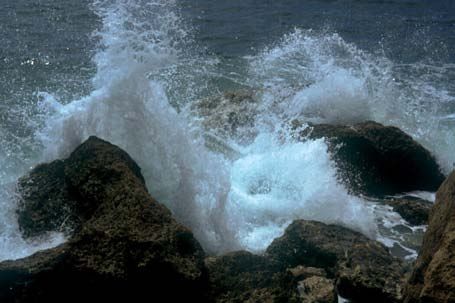
Product description                                                                                                                          Product description
Venus Diamond                                                                                                                                Venus Diamond

Venus Diamond is a new nano-hybrid universal composite                       Chemical Background and Advantages
that combines low shrinkage stress and excellent strength                    The Diamond Formula                                               TCD – rigid core structure – prevention of vibration move-                 Side Chains – optimized size for improved elasticity and
in a unique way. This material can adapt perfectly to the                    A patented matrix and a newly developed nano-hybrid filler        ment to achieve a higher packing density of molecules for                  reduced contraction stress for reduced marginal gap for-
colour of the surrounding tooth structure and features an                    system lead to improvements in aesthetics, durability and         low shrinkage behaviour                                                    mation
outstandingly natural look.                                                  handling: Venus Diamond is based on novel urethane cross-
                                                                             linkers including the special low shrinkage TCD-DI-HEA.
These outstanding features are caused by the new diamond
formula which is based upon a new cross linker chemistry                     During the last decades of composite development the
and an optimized filler system including special silica nano                 main progress was done in the filler system. Only few efforts
particles.                                                                   were made to design new matrix systems.

Composition of Venus Diamond at a glance                                     Therefore, the majority of modern composites rest upon the
                                                                             50 years old Bis-GMA-cross linker matrix.
    Monomers            TCD-DI-HEA and UDMA

                        80–82 %-m (63,5–65,1%-vol) filler                    The common used Bis-GMA is a very rigid cross linker
                        Range of filler particle size: 5 nm–20 μm
    Fillers                                                                  which is characterized by low shrinkage behaviour. But
                        Barium Aluminium Fluoride glass
                        Highly discrete nanoparticles                        Bis-GMA has a very high viscosity which could not be              Urethane Structure – generation of improved crosslinker                    increased mechanical performance and improved bio-
                                                                             handled5. Its consistency is comparable with viscous honey.       reactivity for higher double bond conversion causing                       compatibility
    Further             Rheology modifier, initiator system,
    ingredients         stabilizers, pigments
                                                                             Therefore, Bis-GMA is need to be combined always by very        TCD-DI-HEA – the improved dental crosslinker exclusive from Heraeus Kulzer
                                                                             short cross linkers like TEGDMA which have a diluent effect
Indications                                                                  and reduce the viscosity of the matrix to allow proper
Venus Diamond offers all features one is looking for in a                    handling of the material. But increasing the TEGDMA-frac-       The TCD- cross linker possesses equally to Bis-GMA a rigid                   excellent mechanical properties like flexural strength of
single composite. For this reason Venus Diamond can be                       tion and lowering the Bis-GMA part leads to higher shrink-      backbone which reduces the packing density of the mono-                      Venus Diamond. Because of this elastic behaviour shrink-
used for various indications:                                                age and shrinkage stress of the composite6. However, the        mers in the uncured state.                                                   age stress during light curing is reduced as the elasticity of
   Direct restoration of Class I–V cavities                                  excellent shrinkage properties of Bis-GMA are annihilated                                                                                    the side chains has the ability to compensate shrinkage
   Direct composite veneers                                                  to achieve good handling properties.                            Due to the Brownian motion all monomers are moving.                          stress to a certain degree. This may lead to perfect restora-
   Aesthetical corrections of teeth (i.e. diastema closure,                                                                                  Larger monomers show heavy vibrations which leads to                         tion margins.
   repairing of congenital defects in teeth, etc.)                           The only way the researchers at Heraeus Dental have seen        increased distance of the monomers. The stiff core of the
   Temporary splinting of teeth loosened by trauma or peri-                  to overcome the shrinkage issue was to develop a complete       TCD-monomer we introduce with Venus Diamond reduces                          For further optimisation of the cross linking matrix of Venus
   odontal disease                                                           new cross linker technology. The TCD-urethane cross linker      this vibration and the monomers can minimise the distance                    Diamond contains a special dendritic urethane-cross linker.
   Indirect restorations (inlays, veneers)                                   was identified as the perfect solution in this challenge. TCD   between themselves. The reduction of the distance is                         This cross linker has binding areas in all planes which
   Restoration of primary teeth                                              is the abbreviation of Tricyclodecane which is the rigid core   favourable when the cross linkers start with the radical                     advances the formation of a 3D-network which also contrib-
   Core build-up                                                             structure of the new crosslinker.                               polymerisation reaction. The resulting shrinkage of the                      utes to a paramount mechanical resistance towards masti-
   Repair of porcelain and composite restorations (in com-                                                                                   polymer matrix which is determined by the changed dis-                       cation load. The high molecular weight improves additional
   bination with an adequate repairing system)                               The advantages of the special structure is depict in the        tances during the curing process is therefore lower.                         the low shrinkage properties of Venus Diamond.
                                                                             illustration below.
                                                                                                                                             Urethan acrylates are well known as very reactive cross-
                                                                                                                                             linkers for radical polymerisation. This applies also to the
                                                                                                                                             TCD-monomer. The consequence is a higher degree of
                                                                                                                                             conversion compared with conventional Bis-GMA-based
                                                                                                                                             composites. That means a higher double bond conversion
5
    Santerre JP, Shajii L, Leung BW: Relation of dental composite formu-                                                                     in the material is achieved which induces outstanding
    lations to their degradation and the release of hydrolyzed polymeric-                                                                    mechanical strength.
    resin-derived products. Crit Rev Oral Biol Med 12 (2), 2001: 136-51
6
    Gonçalves F, Pfeifer C S, Ferracane J L, Braga R R: Contraction stress                                                                   Further advantages of the TCD cross linker are the side
    determinants in dimethacrylate composites. J Dent Res 87: 367–371                                                                        chains of the monomer which are responsible for the elas-
    (2008)                                                                                                                                   ticity of the resulting polymer network. This explains the

8                                                                                                                                                                                                                                                                                     9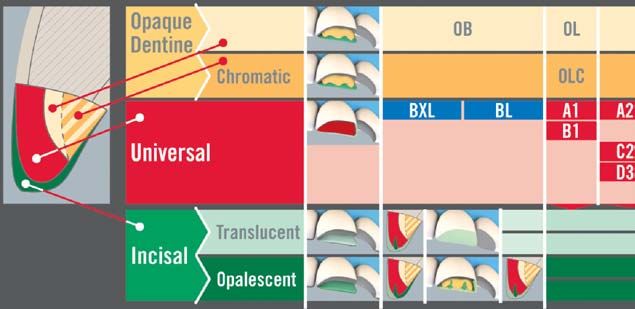
Product description Product description
Venus Diamond Venus Diamond
The Diamond Filler System The refraction index of the fillers and matrix are perfectly The Diamond Class
Apart from the matrix also the filler system of Venus aligned to achieve additionally masked margins. The combination of different particle sizes, optimum filler
Diamond was re-engineered basically. density and content leads to high wear resistance. Venus
In thin layers the restoration absorbs the shade of the Diamond offers a unique combination of minimal shrinkage
Venus Diamond is a modern highly filled nano-hybrid surrounding tooth structure which results in invisible resto- stress as well as high flexural strength and durability.
composite and possesses a very high filler packing density. ration margins. However, with increased layer thickness
The filler ratio is 80–82 % by mass and 63.5–65.1% chroma and translucency is elevated which yield to a high
by weight. The filler size ranges between 5nm and 20μm. aesthetic performance which is demanded for example in MPa MPa
The filler are made class IV restorations.
from Barium-Alumin- 8 180
ium-Fluoride glass The Diamond Comfort u 160
7
which facilitates the Further adaptations of the initiator system, stabilizers and
good optical proper- modifiers improved the handling properties of Venus 6 u u u 140
ties but also the Diamond. u 120
Flexural Strength
Shrinkage Stress
superior radiopacity. 5
To permit easy and comfortable use for the dentist the u 100
4
The advantages of working time is extended and the material shows superb 80
this very dense filler handling characteristics. Venus Diamond does not stick to 3
system are reduced the instrument and is sculptable for precise reconstructions 60
shrinkage, excellent of functional surfaces. 2
40
High packaging density of mechanical stability
1 20
Venus Diamond and a long-lasting The Diamond Effect
polishing result. A new shade concept with 27 opaque dentine shades, uni- 0 0
versal shades and incisal shades are available in a wide
dio
l
T
m
e
d
ixfi
an
eX
on
era
an
The added nano particles are discrete species created by a range. Together with the unique superior colour adaptation
lor
Qu
am
em
oC
Gr
Si
Di
pr
Ev
sol-gel-process which means that they are not agglomerated this allows perfect restorations for high aesthetic demands:
tek
Su
us
ic
n
Fil
tr
which leads to higher translucency and an outstanding Multiple-shade restorations in complex cases and single-
tek
Ve
Te
Fil
colour adaptation potential. shade restorations for less complex cases can be performed
easily. ■ ■ Shrinkage Stress ◆ ◆ Flexural Strength Source: Heraeus Kulzer R&D. Internal data. Data on file.
Excellent strength, low shrinkage stress of Venus Diamond
3 Levels of translucency guide
10 11
Product description Product description
Venus Diamond Flow Venus Diamond Flow
The new flowable nano-hybrid composite Venus Diamond The Diamond Filler System The Diamond Class
Flow is the perfect complement for Venus Diamond. It per- The filler system is improved in the same way like Venus Venus Diamond Flow possesses a unique combination of
fectly fits to the shade system of Venus Diamond and Diamond with a broad filler range between 20nm and 5μm. high flexural strength and low shrinkage stress. This makes
follows also the Heraeus philosophy of using new matrix As fillers Barium-Aluminium-Fluoride-Silicate glass, Ytter- the restoration more resistant and more durable.
systems for a improvement of the material properties. bium-Fluoride and Silicium Oxide are used. The filler con-
tent is 65 % by mass or 41% by volume.
Therefore, Venus Diamond Flow can be used to create MPa MPa
aesthetically perfect, durable restorations. The fillers produce an outstanding radiopacity and also 20 120
paramount optical properties. u
18 u u
It possesses optimal handling properties and produces an
100
excellent match to the shade of the adjacent tooth structure The Diamond Comfort 16
due to its innovative diamond formula. The newly developed nano-hybrid system provides optimal
14
u
Shrinkage Stress after 24h
flow properties that facilitate the practice routine. 80
Indications 12 u
Flexural Strength
An increasing number of dentists prefer flowable com- Venus Diamond Flow creates a uniform, smooth surface in 10 60
posites for very easy placement of minimally invasive resto- areas of the cavity that are difficult to access. This is the
8
rations. Venus Diamond Flow has exceptionally good perfect completion for the higher viscosity composite.
40
handling properties with easy customisation of the shade – 6
making it ideal for various indications: Venus Diamond Flow retains its shape and position follow-
4
ing application. It flows only when pressure is applied with 20
Enlarged fissure sealing an instrument due to its thixotropic characteristics, which 2
Cavity lining – as the first layer for Class I and II cavities ensures that it does not flow out of the cavity before light
0 0
Class V fillings curing. This is a particular advantage with Class V restora- x-flow Filtek Tetric Evo Flow Revolution Venus
Minimally invasive Class I and II fillings in areas not sub- tions. Supreme XT Flow Formula 2 Diamond Flow
jected to masticatory forces
■ ■ Shrinkage Stress ◆ ◆ Flexural Strength Source: Heraeus Kulzer R&D. Internal data. Data on file.
Minimally invasive Class III fillings The Diamond Effect
Small repairs of direct and indirect restorations com- Venus Diamond Flow perfectly matches the shade of the
Excellent strength and low shrinkage stress of Venus Diamond Flow
bined with a suitable bonding agent adjacent tooth structure, which produces a highly aesthetic
Splinting of mobile teeth appearance and makes the restoration virtually indistin-
guishable from the natural tooth. An attractive shine is
Chemical Background and Advantages easily and quickly attained due to its excellent polishing
properties. This is a characteristic that impresses both
The Diamond Formula dentists and patients.
Venus Diamond Flow is also based on a new low shrinkage
stress matrix system: UDMA and EBADMA are used as
cross linkers.
12 13
Mechanical properties Clinically proven worldwide
Venus Diamond and Venus Diamond Flow Study overview
Mechanical properties of Venus Diamond and Venus Diamond Flow at a glance Numerous studies have been performed on Venus Diamond The following chapters describe investigations performed
and Venus Diamond Flow by leading independent scientific to characterise Venus Diamond in further details and in
institutes all over the world. comparison to other currently used restoratives.
Mechanical properties Venus Diamond Venus Diamond Flow
Flexural strength [MPa] 169 117
Modulus of elasticity [GPa] 12.6 4.8
Compressive strength [MPa] 391 332
Hardness 578 216
Hardness under 2 mm 521 226
Sensitivity to ambient light @ 8kLux [s] 210 100 in vivo
in vitro
Shrinkage [%-vol] Watts method 1.5 3.4
Shrinkage force [MPa] after 1 h of water storage 2.8 2.02 External Testing
of Venus Diamond and
Venus Diamond Flow
Shrinkage force [MPa] after 24 h of water storage 4.0 2.3
by 20 Study Groups worldwide
Reflection [%] after brush abrasion (100.000 cycles) 7.0 7.1
Abrasion depth [μm] after ACTA method (300.000 cycles) 19 33.3 North America Asia Europe Europe
Dr. Yaman Dr. Kurokawa Dr. Kleverlaan, Prof. Finger
Wear resistance depth [μm] after mastication simulation 120.9 159.2 University of Michigan Niigata University Prof. Feilzer University of Cologne
(1.5 Mio cycles) Ann Arbor2 Japan1 Academic Center Germany1
for Dentistry
Dr. Pimenta Dr. Kanehira Dr. Schattenberg,
Radiopacity [%-Al] 325 295 Amsterdam
University of North Carolina Tohoku University Prof. Ernst
The Netherlands1
at Chapel Hill, et al.1 Sendai University of Mainz
Japan1 Prof. Breschi, Germany1
Source: Internal tests by Heraeus Kulzer R&D. Data on file Prof. Paravina
Prof. Cadenaro
University of Texas, Dr. Takahashi Dr. Koplin
University of Trieste
Dental Branch at Houston1 Tokyo Medical and Fraunhofer Institut of
Italy1,2
Dental University Mechanics and Materials
Dr. Vargas
Japan1 Prof. Cerutti Freiburg
University of Iowa1
University of Brescia Germany1
Dr. Suzuki
Prof. Munoz Italy1,2
Showa University Dr. Ilie
State University of New York
Tokyo Dr. Heintze, Ludwig-Maximilians-
at Buffalo1
Japan1 Prof. Roulet University
Dr. Christensen Ivoclar Vivadent AG, Munich
Dr. Endo
TRAC Research Foundation Schaan Germany2
Tohoku University
Provo, Utah1 Liechtenstein1
Sendai Prof. Hickel, Prof. Manhart
South America Japan1 Ludwig-Maximillians-
Prof. Braga University
University of Sao Paulo Munich
Brazil1 Germany1
1
= Venus Diamond
2
= Venus Diamond Flow
14 15
In vitro studies
Mechanical properties
Mechanical properties Mechanical properties
Shrinkage and shrinkage stress Shrinkage and shrinkage stress
Mechanical properties such as shrinkage, shrinkage stress, This stress is also described as shrinkage stress or contrac- Several variables like the elasticity of a composite resin/
flexural strength, rigidity, hardness, abrasion stability and tion stress. High stress values can lead to failure of bond adhesive, the rheology during curing, the light curing or the
degree of conversion are important parameters that deter- formation with the surrounding tooth structure10, 11. Further, type of monomer influences the development of this stress.
mine durability of fillings, particularly in stress-bearing high stress levels can increase marginal gaps and staining,
areas. Measurements conducted in in-vitro-studies provide postoperative sensitivity and the development of secondary This explains why not only should been paid attention to
preliminary information on clinical longevity of composite caries. Also the integrity of the remaining tooth structure low shrinkage characteristics of a dental composite. More
fillings. can be affected by high stress values which lead to hairline important are factors which are helping to reduce shrinkage
cracks and fractures12, 13. stress14.
The process of polymerisation provokes a certain percent-
age of volume shrinkage of resin materials during shrink- So, a low degree of volume loss and shrinkage stress helps
Delamination/Microleakage
Tooth hairline cracks
age. The reason for this behaviour is that crosslinkers have ➔ Marginal discolouration
➔ White lines
improving marginal adaptation, thus minimizing the risk
➔ Secondary caries
a certain distance from each other before curing. During ➔ Postoperative sensitivity ➔ Tooth fracture of a “loss of retention, secondary caries, marginal staining
the curing process the monomers have to overcome this and deterioration, and hypersensitivity.”15 And this, in turn,
distance to crosslink. contributes to the longevity of composite fillings.
Venus Diamond and Venus Diamond Flow induce very low
polymerisation stress levels due to their special developed
After polymerisation is the distance between crosslinkers closed crosslinker matrix.
Dental resins cannot shrink freely as they are bonded with
an adhesive system to the tooth surface. Due to the geom-
etry of the cavity the composite filling is bonded mostly to
more than one wall. This is described with the c-factor of a Delamination/Microleakage
➔ Postoperative sensitivity
cavity7. The more tooth walls are involved in the cavity the
higher is the c-factor.
Set of problems related to high shrinkage stress
Space between crosslinkers prior polymerisation
C-factor is determined by cavity geometry
Because of the bonding to the cavity walls and the shrink-
ing of the resin, a certain stress develops in the system
tooth, adhesive layer and composite during polymerisation8. 10
Koplin C, Jaeger R, Hahn P: Kinetic model for the coupled volumetric 13
Tandbirojn D, Versluis A, Pintado MR, DeLong R, Douglas WH: Tooth
This stress is also influenced by the cavity geometry, cavity and thermal behavior of dental composites. Dent Mater. 2008 Aug; deformation patterns in molars after composite restoration. Dent
extent and the application like curing and filling method9. 24(8):1017-24. Mater 20 (6), 2004:535-542.
Stress is determined as the force per unit area. 11
J.R. Condon, J.L. Ferracane, 1998: Reduction of composite contrac- 14
Tandbirojn D, Pfeifer CS, Braga RR, Versluis A: Do Low-shrink Com-
tion stress through non-bonded microfiller particles, Dental Materials posites Reduce Polymerization Shrinkage Effects? JDR, 2011, 90 (5):
7
Feilzer AJ, De Gee AJ and Davidson CL: Setting Stress in Composite 9
Kurokawa R, Finger WJ, Hoffmann M, Endo T, Kanehira M, Komatsu 14; 256-260. 596-601.
Resin in Relation to Configuration of the Restoration. J Dent Res, M, Manabe A. Interactions of self-etch adhesives with resin com- 12
Bausch JR, de Lange K, Davidson CL, Peters A, de Gee AJ: Clinical 15
Kurokawa R, Finger WJ, Hoffmann M, Endo T, Kanehira M, Komatsu
1987 66: 1636-9 posites. J Dent 2007; 35: 923-9. significance of polymerization shrinkage of composite resins. J Pro- M, Manabe A. Interactions of self-etch adhesives with resin compo-
8
Braga RR, Ferracane JL: Contraction stress related to degree of conver- sthet Dent. 1982;48(1):59-67. sites. J Dent 2007; 35: 923-9.
sion and reaction kinetics. Dent Res. 2002 Feb;81(2):114-8.
18 19Venus® Diamond – In vitro studies Venus® Diamond – In vitro studies
Shrinkage and shrinkage stress Shrinkage and shrinkage stress
Setting Shrinkage Stress of Venus Diamond. Setting shrink- Materials and Methods Interactions of self-etch adhesives with resin composites Materials and Methods
age of Venus Diamond determined in the ACTA dilatometer Shrinkage stress was determined using a tensilometer The mean percentage of volume shrinkage during polymeri-
during the first 30 min. The measurement for polymerisa- Source sation was evaluated using the bonded-disk method accord-
Source tion shrinkage was carried out with the ACTA dilatometer Kurokawa R, Finger WJ, Hoffmann M, Endo T, Kanehira M, Komatsu M, ing to Watts and Cash. Polymerisation shrinkage stress was
Kleverlaan CJ, Feilzer AJ, Academic Center for Dentistry Amsterdam during the first 30 min after light curing. Manabe A., Niigata University, Japan investigated using photoelastic measurements: Composite
(ACTA), unpublished test report. Data on file. 2008 J Dent 2007; 35: 923-9 was filled in cylindrical holes with a diameter and depth
of 4 mm in Araldit B epoxide plates. After curing the com-
Objective Objective posite the localization and diameter of the first order iso-
This study had the aim to measure setting shrinkage stress In the context of a study with the objective of exploring chromatic ring was determined after 15 min, 1h, 24h and
and volumetric shrinkage during polymerisation. Three interactions of self-etch adhesives with resin composite, 1 week. Shrinkage stress calculations were done on that
materials have been tested: Venus Diamond (Heraeus shrinkage and polymerisation contraction stress was meas- base.
Kulzer), Tetric Evo Ceram (Ivoclar Vivadent) and Filtek ured on three resin composites: Venus Diamond, Venus
Supreme XT/Plus (3M ESPE). (both Heraeus Kulzer) and Beautifil (Shofu).
Results Results
Volumetric polymerisatic shrinkage Setting shrinkage stress Shrinkage Stress
% MPa
MPa
16 7
3.0
14
2.3 2.4 12 6.5
2.1
Shrinkafe stress
2.0 1.8 10
1.7 1.8
Volume
1.6 8 6
1.3 1.6 1.6
Median shrinkage stress
1.5
1.0 6
1.0 5.5
4
2 5
0.0 0
1 min 5 min 10 min 15 min 1 5 10 15 30 60 120 180 240 300 600 900 1200 4.5
Time (s)
4
n Venus Diamond n Filtek Supreme n Tetric Evo Ceram n Venus Diamond n Filtek Supreme n Tetric Evo Ceram
3.5
Venus Diamond possesses excellent low shrinkage and low shrinkage stress behaviour
3
15min
1h
24h
7d
15min
1h
24h
7d
15min
1h
24h
7d
Conclusion
Beautiful Venus Venus Diamond
Venus Diamond exhibits lowest shrinkage stress and volu-
metric shrinkage in this test.
Best shrinkage stress values for Venus Diamond
Beautifil exhibited 2.58 %, Venus 2.74 % and Venus
Diamond 1.53 % volume shrinkage after 5 min. Venus
Diamond showed the lowest volumetric shrinkage and the
lowest shrinkage stress values amongst the tested com-
posites.
Conclusion
There is no correlation between bond strength and marginal
adaption. But reduced shrinkage and low shrinkage stress are
important determinants of marginal adaptation.
20 21Venus® Diamond – In vitro studies Venus® Diamond – In vitro studies
Shrinkage and shrinkage stress Shrinkage and shrinkage stress
Polymerisation stress, shrinkage and elastic modulus of Materials and Methods Shrinkage stress of new experimental low shrinkage resin Materials and Methods
current low-shrinkage restorative composites 10 different composites with different matrix chemistry composites Cylindrical cavities in Araldit B epoxide resin plates
were evaluated: Venus Diamond, Durafill (both Heraeus (diameter: 5 mm) were filled with the different composite
Source Kulzer), Filtek Z250, Filtek Supreme Plus, Filtek Silorane Source materials and then cured with a QTH curing device for
Boaro LCC, Gonçalves F, Guimarães TC, Ferracane JL, Versluis, Braga RR (all three 3M ESPE), Heliomolar (Ivoclar Vivadent), Aelite Schattenberg A, Meyer GR, Gräber H, Willershausen B, Röhrig B, Ernst C-P 60 s. Polymerisation shrinkage stress (in MPa) were calcu-
University of Saõ Paulo, Brazil LS Posterior (Bisco), Point 4 (Kerr), ELS (Saremco) and University of Mainz, Germany lated based on the diameter and localisation of the first
Dental Materials 26, 2010: 1144-50 N’Durance (Septodont). Shrinkage Stress was evaluated Deutsche Zahnärztliche Zeitschrift 62, 2007: 518-24 order of isochromatic curves 5 min and 24 h after curing.
using a universal testing machine, shrinkage was tested by
Objective a mercury dilatometer. Post-gel shrinkage was measured Objective
Comparison of low shrinkage composites in terms of shrink- by strain-gages and elastic modulus was determined by a Objective of this study was to examine the polymerisation
age stress, shrinkage and flexural modulus. 3-point bending test. contractions stress of experimental low shrinkage resin
composites (KO 152/Dentsply, Venus Diamond/Heraeus
Kulzer, Hermes/3M ESPE) as compared to new but
Results established products (Tetric EvoCeram/Ivoclar Vivadent,
QuiXfil/Dentsply, Xtrafil/Voco).
MPa %
5 0.7
u u u Results
4.5 0.6
Post-gel volumetric shrinkage
u u 0.5 MPa
Shrinkage stress
4
u u 5
u u 0.4
3.5 u 4.5
0.3
4
3
Mean shrinkage stress
0.2
3.5
2.5 0.1 3
2 0 2.5
2
ce
e
4
lus
r
50
lar
S
ll
d
rio
an
on
rafi
EL
int
ran
mo
Z2
eP
ste
lor
am
Du
Po
1.5
Du
lio
Si
tek
em
Po
Di
He
N’
tek
pr
Fil
S
us
1
eL
Su
n
Fil
Ve
lit
tek
0.5
Ae
Fil
0
■ ■ Shrinkage Stress ◆ ◆ Post-gel shrinkage
m
l
l
2
em s/
ry
d
iXfi
rafi
on
15
ch me
ist
era
am
Qu
Xt
K0
ne Her
oC
Di
Ev
Low post-gel shrinkage leads to reduced shrinkage stress in Venus Diamond
us
ic
n
tr
ora
Ve
Te
sil
Shrinkage stress correlated with post-gel shrinkage (except Conclusion
■ ■ t = 5min ■ ■ t = 24 h
for Filtek Silorane which showed high stress). Venus Not all low-shrinkage composites in this test demonstrate
Diamond exhibited a total volumetric low shrinkage of low polymerisation shrinkage values.
Excellent shrinkage stress values for Venus Diamond
1.8 [%] and an flexural modulus of 4.5 GPa. Venus
Diamond revealed reduced shrinkage and shrinkage stress
results in this test. especially its post-gel shrinkage is
very low. Conclusion
New low shrinkage composites demonstrate significantly
reduced shrinkage stress.
22 23Venus® Diamond flow – In vitro studies Venus® Diamond – In vitro studies
Shrinkage and shrinkage stress Shrinkage and shrinkage stress
Contraction Stress and Extent of Polymerization of Flowable Materials and Methods Contraction stress of low-shrinkage composite materials Materials and Methods
Composites Shrinkage stress during polymerisation was assessed using assessed with different testing systems. The evaluated materials were Filtek Silorane LS (3M ESPE),
a high-compliance and a low-compliance stress-strain Venus Diamond (Heraeus Kulzer), Tetric EvoCeram (Ivoclar
Source analyzer. For the high compliance measurement the setups Source Vivadent), Quixfil (Dentsply), and Filtek Z250 (3M ESPE).
Codan B, Navarra CO, Marchesi G, De Stefano Dorigo E, Breschi L, with the different composites were connected to a load- Marchesi G, Breschi L, Antoniolli F, DiLenarda R, Ferracane J, Cadenaro M Shrinkage stress during polymerisation was assessed using
Cadenaro M sensor. The contraction force (N) generated during polym- University of Trieste, Italy a high-compliance and a low-compliance stress-strain
University of Trieste, Italy erisation was continuously recorded for 300 s after photo- Dental Materials 26, 2010: 947-53 analyzer. For the high compliance measurement the setups
J Dent Res 89 (Spec Iss B): 3057, 2010 (www.dentalresearch.com) initiation. The low-compliance system consisted of two with the different composites were connected to a load-
stainless steel cylinders as bonding substrates which were Objective sensor. The contraction force (N) generated during polym-
Objective attached to an extensometer. This time the force (N) neces- The contraction stress of a silorane-based material and a erisation was continuously recorded for 300 s after photo-
Purpose of the research project was to measure the polym- sary to keep specimen height constant was recorded by new low-shrinkage nanohybrid composite were compared to initiation. The low-compliance system consisted of two
erisation stress and extent of polymersisation of different the load cell for 300 s after photo-initiation. Micro-Raman three conventional dimethacrylate-based resin composites stainless steel cylinders as bonding substrates which were
flowable composites: Venus Diamond Flow (Heraeus spectography was used to calculate the extent of polymeri- using two different measuring systems. attached to an extensometer. This time the force (N) neces-
Kulzer), X-flow (Dentsply), Filtek Supreme XT/Plus Flow sation of the tested materials. sary to keep specimen height constant was recorded by the
(3M ESPE), Tetric Evo Flow (Ivoclar Vivadent), Revolution- load cell for 300 s after photo-initiation.
Formula 2 (Kerr).
Results
Results
MPa
MPa %
3
10 p 70
2.5
Extent of Polymerisation
8 p 60
p
Contraction Stress
Mean contraction stress
of feedback system
6 2
50
4 1.5
40
2 1
0 30
0.5
X-flow Tetric Venus
EvoFlow Diamond
Flow 0
■ ■ Low Compliance p p Extent of Polymerisation Stress after 40s Stress after 300s
■ ■ High Compliance
■ Filtek Silorane ■ Filtek Z250
Venus Diamond Flow demonstrates lowest shrinkage stress ■ Tetric Evo Ceram ■ Venus Diamond
■ Quixfil
Venus Diamond Flow showed significantly the lowest shrink- Conclusion
Study confirms lowest stress rates for Venus Diamond
age stress and highest extent of polymerisation in this Venus Diamond exhibits a low shrinkage stress potential in
investigation. both testing setups.
Venus Diamond depicts in both test setups the lowest Conclusion
shrinkage stress values. In the feedback system those Venus Diamond exhibits the lowest shrinkage stress values
values were significantly lower than the competitor values. in both testing setups. Contraction stress is higher when
measured in a test system with a feedback. This study
confirms that reducing the shrinkage does not ensure
reduced shrinkage stress.
24 25Venus® Diamond – In vitro studies Mechanical Stability
Shrinkage and shrinkage stress
Comparative investigation of an experimental composite and Materials and Methods Flexural strength reflects which bending force a material Compression strength is defined as the capacity of a mate-
three other composites The volumetric behavior during and after the curing of endures before fracture. Composite materials for posterior rial to resist pushing forces in axial direction. Dentine
four dental composites was measured by the “Archimedes’ restorations need to resist at least a flexural strength of shows a compressive strength of approx. 300 MPa16. There-
Source principle”. With the initiation of the curing process, five 80 MPa according to ISO 4049. Especially in thin layers or fore, a composite material should need at least a compara-
Koplin C, da Silva Rodrigues G, Jaeger R buoyancy weighing measurements were taken. overhanging areas high flexural strength values are impor- ble or exceeding value to withstand the chewing forces.
Fraunhofer Institut of Mechanics of Materials, Freiburg, Germany, 2008. tant to avoid fracture of the restoration. Venus Diamond
Data on file exhibts highest flexural strength values to resist the masti- Venus Diamond exhibts outstanding compression and
cation forces. diametral tensile strength figures to minimize the risk of
Objective restoration fractures during service.
Purpose of this study was to evaluate volume shrinkage Flexural strength of flowable composites is lower due to a
during polymerisation. Measurements were conducted on decreased filler load. Nevertheless, Venus Diamond Flow Hardness is defined as ability to resist a localised compres-
the following composite filling materials: Venus Diamond reveals also a high flexural strength compared with other sive load without deforming plastically. During mastication
(Heraeus Kulzer), Tetric EvoCeram (Vivadent Ivoclar), Filtek flow composites. restorations are exposed to various food particles like seeds
Supreme XT/Plus (3M ESPE) and EsthetX (Dentsply). which are very hard. These particles involve the risk of fill-
The value of the flexural modulus or modulus of elasticity is ing fractures. Therefore, it is advantageous to use a hard
increased the more the material resists to its deformation restoration material to reduce filling failures. The high
Results under load. Materials with high flexural modulus are rigid cross-linked matrix together with the high filler load and
whereas materials with a low flexural modulus are elastic. dense filler packability causes the increased hardness of
%
This flexural modulus needs to be good balanced as com- Venus Diamond which enables long-lasting reconstructions.
3 posites should not be too rigid or elastic. According its indi-
2.5 cation the flexural modulus of a resin composite is adjusted.
Universal composites need higher rigidity because of the
Volume Change
2 direct applied mastication load. Contrary, flowable compos-
1.5 ites need to be more elastic to act as a stress breaker. Venus
Diamond and Venus Diamond Flow have indication-opti-
1
mised flexural moduli.
0.5
0
Tetric EsthetX Filtek Venus
EvoCeram Supreme XT Diamond
Venus Diamond features the lowest volumetric shrinkage
Diamond is the hardest mineral.
Conclusion
In this test Venus Diamond has a shrinkage of 1.62 % and
therefore the lowest within this group of tested composites.
Elastic and ridgid examples
Diametral tensile strength also characterizes the fracture
resistance of a material. The higher the diametral tensile
strength values the higher is the resistance to breaks.
16
Watts DC, El Mowafy OM, Grant AA: Temperature-dependence of Com-
pressive Properties of Human Dentin. J Dent Res, 1987, 66: 29-32
26 27Venus® Diamond – In vitro studies Venus® Diamond – In vitro studies
Mechanical stability Mechanical stability
Flexural Strength and E-module of Venus Diamond, Tetric Materials and Methods Calculating internal stress during curing of dental com- Materials and Methods
EvoCeram and Filtek Supreme XT A 3-point bending test according ISO Standard 4049 was posites Compression strength was determined by application of a
performed to determine flexural strength and modulus of force on upright cylindrical composite specimen (4mm
Source elasticity. Source diameter, 8mm height) until fracture. Diametral tensile
Kleverlaan CJ, Feilzer AJ Koplin, da Silva Rodrigues G, Jaeger R strength was measured by a force application on the edge
Academic Center for Dentistry Amsterdam (ACTA) Fraunhofer Institut of Mechanics of Materials, Freiburg, Germany of composite discs (6mm diameter, 3mm heigth) until
Test report 2008. Data on file J Dent Res 88 (Spec Iss B): 145, 2009 (www.dentalresearch.org) breakage.
Objective Objective
Aim of the Study was to compare the flexural strength Purpose of this study was to evaluate diametral tensile and
and modulus of elasticity of Venus Diamond with Tetric compression strength of different universal composites.
EvoCeram (Ivoclar Vivadent) and Filtek Supreme XT Measurements were conducted on the following composite
(3M ESPE). filling materials: Venus Diamond (Heraeus Kulzer), Tetric
EvoCeram (Vivadent Ivoclar), Filtek Supreme XT/Plus
(3M ESPE) and EsthetX (Dentsply).
Results
MPa GPa
Results
200 12
MPa MPa
u 10
u
Modulus of Elasticity
150 60 350
Flexural Strength
8
u u 300
Diametrial tensile strength
u
Compression strength
100 6 55 u 250
4
u
200
50 50
2 150
0 0 100
45
Tetric Filtek Venus 50
EvoCeram Supreme XT Diamond
40 0
■ ■ Flexural strength ◆ ◆ Modulus of elasticity Tetric EsthetX Filtek Venus
EvoCeram Supreme Diamond
XT
Venus Diamond depicts topmost flexural strength
■ ■ Diametral tensile strength ◆ ◆ Compression strength
Conclusion
Excellent mechanical features of Venus Diamond
Venus Diamond demonstrates the highest flexural strength
and flexural modulus values in this investigation.
Conclusion
Venus Diamond reveals the best diametral tensile and
excellent compression strength to resist mastication forces
in this test.
28 29Venus® Diamond – In vitro studies Venus® Diamond flow – In vitro studies
Mechanical stability Mechanical stability
Comparative evaluation of mechanical characteristics of Materials and Methods Study report: Bis-GMA free flowable nano-hybrid composite Materials and Methods
nanofiller containing resin composites Durafill VS (Heraeus Kulzer) and Filtek Z250 (3M ESPE) Flexural strength and flexural modulus were obtained by
were used as micro filled and micro hybrid references. The Source 3-point-bending test according to ISO guideline 4049.
Source nano filler containing products were: Filtek Supreme XT Ilie N, Ludwig-Maximilians-Universität, Munich, Germany 2009 Tested materials were Venus Diamond Flow (Heraeus),
Takahashi H, Finger WJ, Endo T, Kanehira M, Koottathape N, Balkenhol (3M ESPE), Grandio (Voco), Kalore (GC), MI Flow (GC), Data on file Revolution Fomula 2 (Kerr), Tetric Evo Flow and Tetric
M, Komatsu M Tetric EvoCeram (Ivoclar Vivadent), and Venus Diamond Flow (both Ivoclar Vivadent), X-Flow (Dentsply) and Filtek
Advanced Biomaterials, Department of Restorative Sciences, Division of (Heraeus Kulzer). The following material characteristics Objective Supreme XT Flow (3M ESPE).
Oral Health Sciences, Graduate School of Medical and Dental Sciences, were determined after 24 hours water storage of the speci- Aim of the study was to compare the flexural strength and
Tokyo Medical and Dental University, Tokyo, Japan mens (n=6): Flexural strength, yield stress (0.02 %) and the flexural modulus of six different flowable composites.
American Journal of Dentistry, in press 2011 modulus, tensile strength, and modulus, diametral tensile
strength, Knoop hardness, and fracture toughness.
Objective Results
Purpose of this investigation was the determination of basic
mechanical characteristics of six commercially available MPa GPa
A
nano filler containing resin composites compared to a micro 200 10
B A, B
hybrid and a micro filled reference material. The tested u
hypothesis was that there are no differences in terms of u u B 8
Mean flexural Modulus
150
Mean flexural strength
the mechanical properties between the materials. B u
C 6
u
Results 100 u
4
MPa MPa·m0.5
50
250 4 2
D
D C C B A, B A B
u u 3.5
0 0
Mean fracture toughness
200 3
Mean flexural strength
2
low
w
w
w
w
C B
Flo
Flo
Flo
Flo
ula
C, D
oF
2.5
u B
u B
X-
rm
T
ic
d
Ev
u
eX
on
tr
u u
Fo
Te
ic
150 2
am
em
tr
ion
Di
Te
pr
lut
A 1.5
Su
us
vo
n
u
tek
Ve
Re
100 1
Fil
0.5 ■ ■ Flexural Strength ◆ ◆ Flexural Modulus
C B B B B B A C
50 0
Venus Diamond Flow reveals an optimised flexural modulus
50
XT
dio
e
m
w
ll
d
lor
on
rafi
Flo
era
Z2
an
me
am
Ka
Du
oC
MI
Gr
pre
Di
Ev
No significant differences between specimens with same Conclusion
Su
us
ic
n
tek
tr
letters were found. Venus Diamond Flow exhibits in both tests good macro-
Ve
Te
Fil
■ ■ Flexural Strength
mechanical properties compared with commercial available
◆ ◆ Fracture toughness
flowable composites.
Venus Diamond shows supreme resistance to mastication load
No significant differences between specimens with same Conclusion
letters were found. The nano filled Filtek Supreme XT and the nano hybrids
Grandio and Venus Diamond show mechanical properties
Venus Diamond achieved a tensile strength of 74.36 MPa, very similar to the micro hybrid Z250 and could thus be
a yield stress of 78.48 MPa, flexural modulus of 10.924 used for the same universal clinical indications, whereas
GPa, tensile modulus of 10.539 GPa, diametral tensile MI Flow and the prepolymer loaded Kalore and Tetric
strength of 58.82 MPa and a knoop hardness of 41.62 EvoCeram should be used more restrictedly for restoration
kgf/mm2. Venus Diamond achieved excellent mechanical of posterior teeth.
results. Particulary flexural strength and fracture toughness
were superior compared with the other tested composites.
30 31You can also read


