HISTOLOGICAL CHARACTERISTICS OF FOLLICULOGENESIS IN MURRAH WATER BUFFALOES DURING THE EARLY POSTPUBERTAL PERIOD
←
→
Page content transcription
If your browser does not render page correctly, please read the page content below
Bulgarian Journal of Veterinary Medicine, 2020, 23, No 1, 8088
ISSN 1311-1477; DOI: 10.15547/bjvm.2156
Original article
HISTOLOGICAL CHARACTERISTICS OF FOLLICULOGENESIS
IN MURRAH WATER BUFFALOES DURING THE EARLY
POSTPUBERTAL PERIOD
V. MANOV, V. PLANSKI & G. S. POPOV
Faculty of Veterinary Medicine, University of Forestry, Sofia, Bulgaria
Summary
Manov, V., V. Planski & G. S. Popov, 2020. Histological characteristics of folliculogenesis
in Murrah water buffaloes during the early postpubertal period. Bulg. J. Vet. Med., 23, No
1, 8088.
A characteristic feature of water buffalo heifers is that they approach breeding maturity later than
bovine heifers. From a physiological and endocrinological view, this is related to a later puberty,
which affects the overall reproductive performance of water buffalo. The aim of this study was to
highlight some morphological characteristics of the water buffalo (Bubalus bubalis) ovaries in the
early postpubertal period. The results showed active ovaries of the examined specimens. Some of the
follicles had no oocyte, but were with normal structure and physiological activity. Histology is a de-
finitive method for examination of ovarian activity in water buffaloes. In some of the ovulating folli-
cles the oocyte was absent during early puberty. The presence of corpora lutea confirmed the endo-
crine maturity of the hypothalamus-pituitary-gonadal endocrine axis in 11–14 months old heifers
despite the absence of oocytes.
Key words: corpus luteum, estrus, follicle, ovary, ovulation, postpubertal period, water
buffalo heifer
INTRODUCTION
Water buffalo heifers attain breeding ma- variable and is influenced by a wide vari-
turity later than bovine heifers which is ety of factors, including climate, geo-
attributed to later onset of puberty, affect- graphic area, breed, season of birth, and
ing the overall reproductive performance. nutrition (Peeva et al., 1993).
In dairy cattle, reproductive performance Research papers documenting the time
is mainly affected by milk production of onset of puberty in water buffaloes vary
(Slavkova et al., 2017), whereas live body considerably in their findings as to age
weight gain and the season of puberty ranges at which this can be expected to
onset are more important for reproductive occur. According to Jainudeen & Hafez
management in water buffaloes (Planski et (1993), the river-type buffaloes approach
al., 2017a). Water buffalo puberty age is puberty at 15–18 months of age, whereas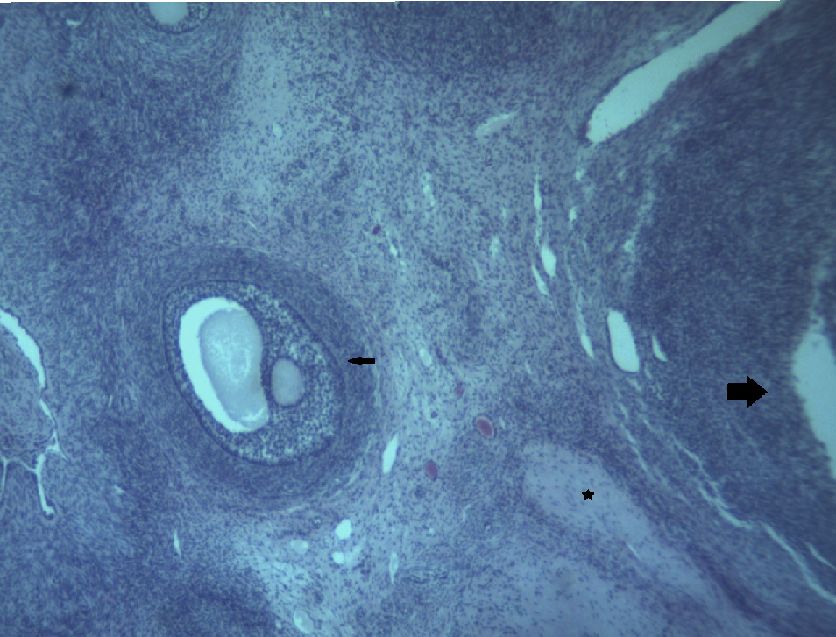
V. Manov, V. Planski & G. S. Popov

the swamp-type buffaloes exhibit normal        1.8±0.6 and 7.8±2.0 day respectively. The
estrus at 21–24 months of age. The onset       researchers noted that the dominant folli-
of puberty in water buffalo is not currently   cle diameter did not differ significantly
clearly defined (Peeva et al., 1993;           between the two models, but on the day of
Borghese et al., 1996; Terzano et al.,         ovulation, dominant follicles were by
1997; Campanile et al., 2001; Singh et al.,    more than 4 mm greater than the subordi-
2010; Roy et al., 2016). Most of the find-     nate follicles (Р≤0.05).
ings are based on visual observations              Follicular growth, recruitment, regres-
rather than scientific methods that take       sion and ovulation have been defined in
into account the endocrine status of the       30 normally cycling Murrah water buffalo
animals during this period. Using visual       cows (Baruselli et al., 1997). One, two or
observation, the earliest detected estrus in   three waves of follicular dynamics were
Bulgarian local water buffaloes has been       found out. Structural development of the
recorded at 21 months of age. Using ra-        dominant follicle was longer in 2 and 3
dio-immunoassay (RIA) for hormone as-          wave models without significant diffe-
sessment in the same breed and crosses         rence in the diameter. The number of fol-
with Murrah, the first estrus has been en-     licular waves and cycle duration depended
docrinologically confirmed at 19.9 months      on the activity of the corpus luteum.
of age by Kanchev et al. (1989). In most           Ovarian histology was used to define
of the presented studies in the literature,    the normal reproductive cycle and chan-
onset of puberty has been calculated retro-    ges associated with pregnancy in water
spectively from the first calving date         buffalo (Baithalua et al., 2013). The ova-
(Borghese, 2005). According to Roy et al.      ries and uteri of slaughterhouse specimens
(2016) and Planski et al. (2017b), the use     were examined. The classification of the
of serum levels of progesterone to calcu-      stage of cycle or pregnancy detected was
late the onset of puberty is controversial.    based on the maturity and development of
Campanile et al. (2001) used both RIA          the corpus luteum, superficial follicles and
puberty confirmation and ultrasound            foetal size. Large luteal cells were circular
scanning to confirm the morphological          in shape with central nuclei and multiple
structure in the ovary responsible for the     cytoplasmic lipid droplets. Small luteal
high progesterone levels.                      cells were bundle shaped, with eccentric
    Taneja et al. (1996) characterised the     irregular nuclei and a small number of
growth and regression of ovarian follicles     lipid droplets. The diameter of small
in water buffalo, describing 7 full cycles     luteal cells was approximately 12–23 µm,
in 5 adult females using ultrasound scan-      whereas the large cells were of signifi-
ning once daily. Ovarian mapping was           cantly larger size (25–55 µm). The ob-
used, and a size of 14 mm for dominant         served size increase was related to the
follicles was specified. The results showed    maturation of the corpus luteum (CL). The
one or two follicular waves in each cycle,     progesterone serum level was proportional
each wave being characterised by the           to the number of luteal cells present,
presence of one dominant and multiple          hence the high levels of serum progeste-
subordinate follicles. In the one wave cy-     rone recorded during diestrus and preg-
cle, the cohort of follicles starts to de-     nancy. The authors concluded that during
velop at day 1.3±0.7 post oestrus. In the      puberty, the mid diestrus CL was not fully
two wave model, the cohorts start at           mature and that, unlike cattle, was unable

BJVM, 23, No 1                                                                           81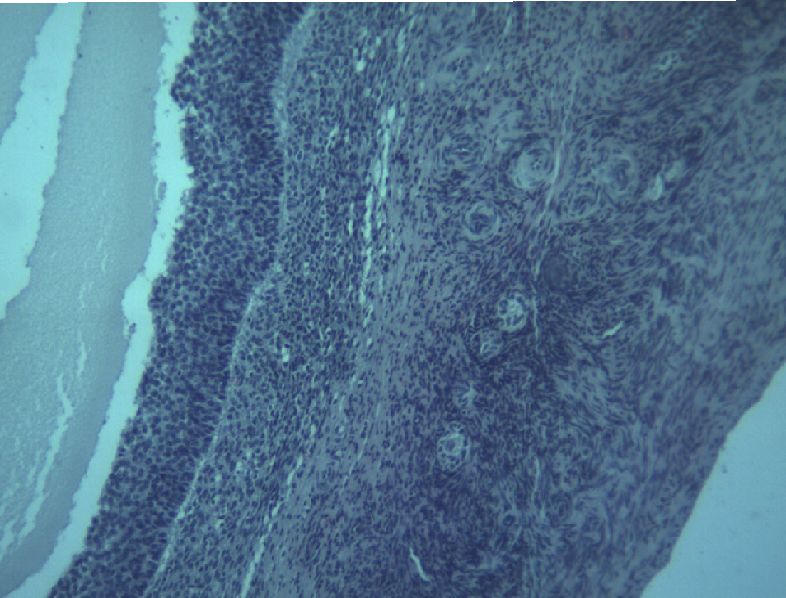
Histological characteristics of folliculogenesis in Murrah water buffaloes during the early ….

to supply sufficient progesterone to sup-             were then sliced into 5 µm layers. The
port pregnancy, supporting a hypothesis               preparations were then denatured and
of luteal insufficiency.                              stained using haematoxylin/eosin. The
    The aim of this study was to examine              prepared slides were then examined inde-
the ovaries of water buffalo heifers during           pendently by two pathologists at the De-
the early post pubertal period, using histo-          partment of Internal Diseases, Pathology
logical examination of the follicular dy-             and Pharmacology at the Faculty of Vete-
namics at different stages of the ovarian             rinary Medicine, University of Forestry,
cycle.                                                Sofia, Bulgaria. The pathologists were
                                                      unware of the history of the animals the
                                                      samples were derived from. Specimens
MATERIALS AND METHODS
                                                      were examined by light microscopy with
Animals and age of puberty onset                      different magnifications including immer-
                                                      sion and a buildup camera. The software
We had access to 76 Murrah water buffalo              Euromex Bio Blue was used to prepare
heifers assigned for slaughtering. Exami-             and save the photographs. The total num-
nation was carried out on animals born                ber of examined slices was 48 (12 for
during different seasons – once they were             each examined animal).
collected in the yard prior to slaughtering.
The average age of the animals was 482
±42 days. The examined 76 heifers were                RESULTS
observed visually for signs of estrus
                                                      In all examined animals, the ovaries were
3 times a day. The observed signs were:
                                                      active, with distinct cortical and medullary
standing at mounting, presence of clear
                                                      zones. In the periphery of the cortex, pri-
mucous vaginal discharge and vulvar
                                                      mordial follicles were noted between bun-
swelling – according to the method de-
                                                      dles of connective tissue. These follicles
scribed by Suthar & Dhami (2010).
                                                      contained an oocyte and one layer of
Histological examination of the ovaries               epithelial cells. The primary follicles are
                                                      displayed on Fig. 1 and 2. They were out-
Four heifers were randomly selected from
                                                      lined with the presence of oocyte and one
those recognised in estrus. They were at
                                                      layer of epithelial cells around. Their av-
the age of 11, 12, 14 and 15 months re-
                                                      erage diameter, including the external
spectively. To ascertain the exact age of
                                                      layer was about 36 µm.
the animals, the ear tag numbers of the
                                                          In the deep layers of the parenchyma,
heifers were checked against the Bulga-
                                                      secondary follicles with developed oo-
rian Food Safety Agency database.
                                                      cytes were present and surrounded by a
    After slaughter, the ovaries of these
                                                      thick protein membrane. Around this
heifers were collected and preserved in
                                                      membrane, cuboid and prismatic cells
3.7% formaldehyde. The histological ex-
                                                      with a trophic function were present (co-
amination of the collected specimens was
                                                      rona radiata). Most externally was the
carried out at the Institute of Experimental
                                                      theca folliculi connective tissue mem-
Morphology and Anthropology at the
                                                      brane, which possessed epithelioid cells
Bulgarian Academy of Sciences. The
                                                      and small capillaries (Fig. 3).
preparation was classical and the speci-
mens were fixed in paraffin blocks, which

82                                                                                   BJVM, 23, No 1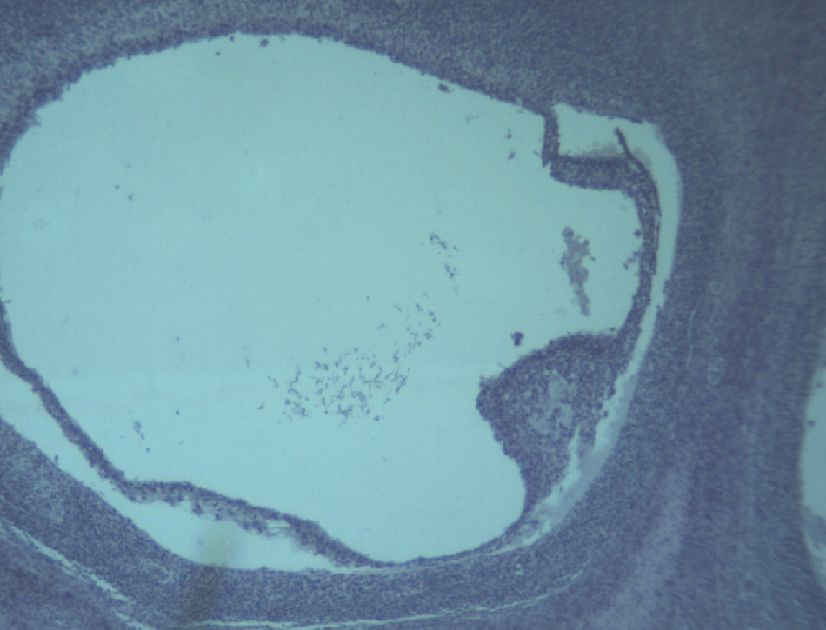
V. Manov, V. Planski & G. S. Popov

Fig. 1. Ovary from a water buffalo heifer – 11 months of age: cortical zone with growing follicles in
                              different stages. Scale bar: 153.14 µm.

 Fig. 2. Ovary from a water buffalo heifer – 12 months of age: primordial follicle (length 30.59 µm)
                         and connective tissue cells. Scale bar: 17.30 µm.
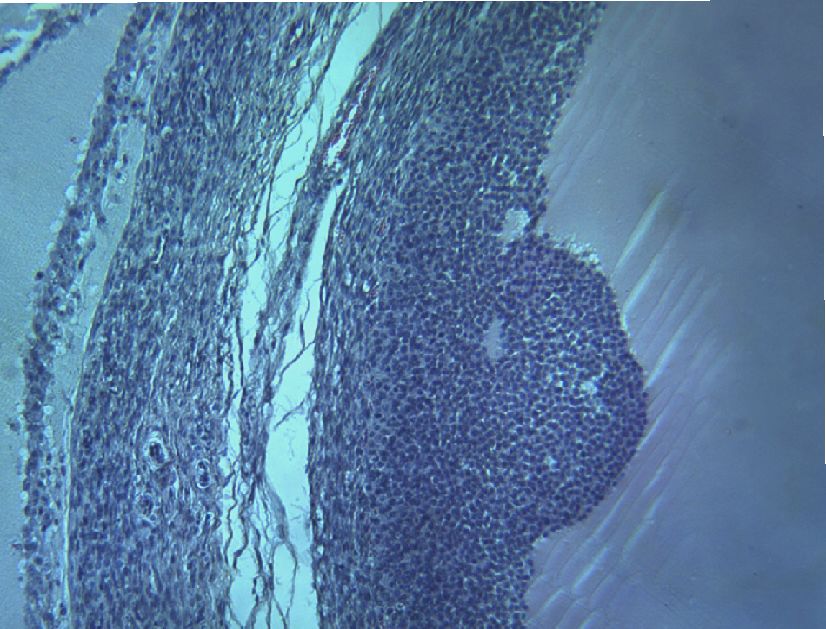
    Tertiary follicles were present towards               In the ovaries originating from the 15-
the medulla of the ovarian parenchyma in              month-old animal, atretic post-ovulation
14- and 15 month-old animals. These fol-              follicles containing corpora lutea were
licles had well developed follicular fluid            present (Fig. 7 and 8). The average diame-
cavities and were surrounded with follicu-            ter of the tertiary follicle was about 420
lar epithelium. Surrounding the lumen, the            µm, but most of them visualised on the
oophoral cumulus was detected (Fig. 5                 slides were ellipsoidal. Both longitudinal
and 6). No visible oocytes were present in            and transversal measurements were taken
the tertiary follicles.                               to obtain the specified average diameter
                                                      (Fig. 7).

BJVM, 23, No 1                                                                                     83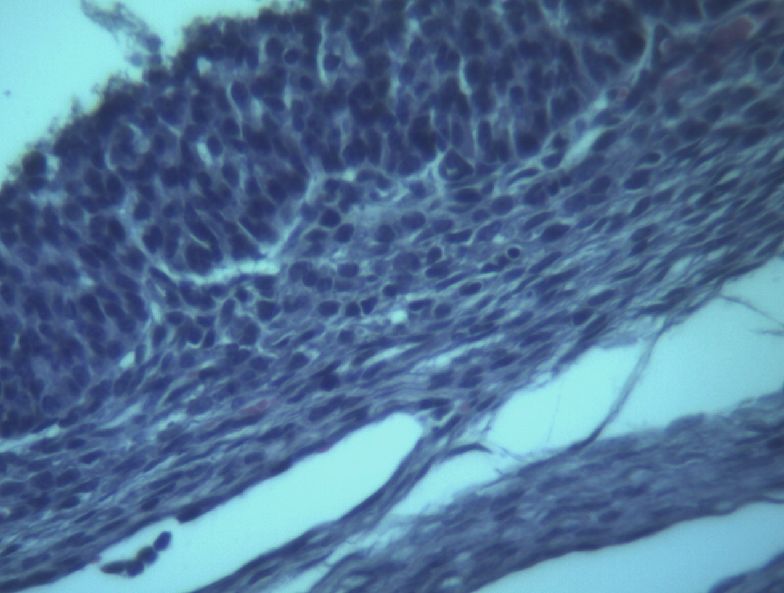
Histological characteristics of folliculogenesis in Murrah water buffaloes during the early ….

    The corpora lutea consisted of                        heifers. Histological findings demon-
luteotrophs with central nuclei and cyto-                 strated different stages of follicular devel-
plasmic lipid droplets. Small luteal cells                opment and follicular maturation in the
with bundle shape and eccentric nuclei                    11-month-old heifer. Additionally, the
were also visualised (Fig. 8).                            absence of active or regressing corpora
                                                          lutea is suggestive of insufficient primary
                                                          cycles occurring during the earlier stages
DISCUSSION
                                                          of puberty, and consequently in the post-
The histological examination carried out                  pubertal period.
provided significant information on the                       In many specimens, the observed folli-
nature of folliculogenesis in water buffalo               cles lacked a visible oocyte. This provides

Fig. 3. Ovary from a water buffalo heifer – 11 months of age: secondary follicle, theca granulosa and
                       connective tissue external layer. Scale bar: 17.30 µm.мес

Fig. 4. Ovary from a water buffalo heifer – 14 months of age: ovarian cortex with tertiary follicle (length
36.67 µm), a few primary follicles in the periphery under the tunica albuginea. Scale bar: 66.67 µm.

84                                                                                        BJVM, 23, No 1
V. Manov, V. Planski & G. S. Popov
Fig. 5. Ovary from a water buffalo heifer – 14 months of age: tertiary follicle with oophoral cumulus.
Scale bar: 66.67 µm.
Fig. 6. Ovary from a water buffalo heifer – 15 months of age: tertiary follicle with oophoral cumulus
and absent oocyte. Scale bar: 66.67 µm.
support to the hypothesis that insuffi- the size of the examined atretic follicles
ciency of the cycle is present on an ova- was about 500 µm which is significantly
rian level. This insufficiency appears to smaller compared to the size of the bovine
last for a few cycles before and after pu- atretic follicles ≤5 mm as described by
berty, or perhaps during the entire Rodgers & Irving-Rodgers (2010).
parapubertal period. The rest of the cha- The presence of active corpora lutea
racteristics of follicular morphology are on the histological sections of some of the
consistent with those observed in sexually older heifers suggests that there was endo-
mature animals. It must be stressed that crine induced control of luteal tissue re-
BJVM, 23, No 1 85Histological characteristics of folliculogenesis in Murrah water buffaloes during the early ….
Fig. 7. Ovary from a water buffalo heifer – 15 months of age: atretic follicle, 500.47 µm (narrow
arrow), tertiary follicle (thick arrow) and luteal tissue (star). Scale bar: 153.14 µm.
Fig. 8. Ovary from a water buffalo heifer – 15 months of age: corpus luteum. Luteotrophs with
central nuclei and cytoplasmic lipid droplets (thick arrow), and small luteotrophs with bundle shaped
nuclei (thin arrow). Scale bar: 66.67 µm.
quired for successful cycling in these ani- The presented characteristics of the
mals. Further study of the hormone pro- ovarian structures are comparable with
files of water buffalo heifers would clarify available results (Taneja et al., 1996;
the endocrine component of the cycle in Baithalua et al., 2013). The similarity is
the postpubertal animals with follicles restricted to the type of the present struc-
without oocytes. tures but not to the histological characte-
86 BJVM, 23, No 1V. Manov, V. Planski & G. S. Popov
ristics. Data similar to ours are presented ftp.fao.org/docrep/fao/010/ah847e/ah847e.
in the work of Baithalua et al. (2013) pdf.
which was focused on CL cell characteris- Borghese, A., M.T erzano, V. Barile, A.
tics, but not on general histology and fol- Catalano, A. Maltati. 1996. Onset of pu-
licular dynamics. berty in buffalo heifers in different feeding
The presented structures in our results and management systems. In: Proceedings
of the International Symposium on Buffalo
support the thesis for small tertiary follicle
Resources and Production Systems. Cairo,
atresia previously stated by Fassi Fihri et Egypt, pp. 41–46.
al. (2004) and Rodgers & Irving-Rodgers
Campanile, G., R. Di Palo, B. Casparini, D.
(2010). Occio & M. J. Zicarelli, 2001. Effects of
Our findings are also similar with the early management system and subsequent
average dimensions for the examined diet on growth and consumption in buffalo
structures presented by Eurell & Frappier heifers. Livestock Production Science, 71,
(2006) for the secondary follicle – 120 183–191.
µm. The visual characteristics of the folli- Eurell, J. A. & B. Frappier, 2006. Textbook of
cles also match the description of the cited Veterinary Histology, 6th edn, Blackwell
authors. Publishing, USA.
Fassi Fihri, A., K. H. Hajji & H. Lakhdissi,
2004. Histological exploration of follicular
CONCLUSIONS population of the Moroccan bovine (Oul-
mes-Zaers) breed. African Journal of Bio-
Histology is the definitive method for
technology, 3, 294–298.
examination of ovarian activity in water
Jainudeen, M. R. & E. S. E. Hafez, 1993. Re-
buffalo. In some of the ovulating follicles
productive cycles. In: Reproduction in
the oocyte is absent during early puberty Farm Animals, 6th edn, Lea and Fabiger,
in water buffalo heifers. The presence of Philadelphia, pp. 315–329.
corpora lutea confirms the endocrine ma-
Kanchev L., N. Bankov & L. Kostov, 1989.
turity of the HPG endocrine axis in the Biology and Biotechnology of Reproduc-
11– 14 months old heifers despite the ab- tion, BAS Publishing, Sofia (BG).
sence of oocytes. Peeva Ts., K. Vankov, M. Tsankova, O.
Polihronov, A. Dragoev & A. Danev,
REFERENCES 1993. All for Buffalo. Agrocomplex Ltd,
Sofia (BG).
Baithalua, R. K., S. K. Singha, Ch. Gupta, A. Planski, V., S. Yotov, M. Karadaev, Y. Ilieva,
K. R., A. Saxenaa, Y. Kumara, R. Singh K. Hristov & D. Dimitrov, 2017a. Deter-
& S. K. Agarwala. 2013. Cellular and mination of puberty onset in Bulgarian
functional characterization of buffalo (Bu- Murrah buffalo heifers through blood pro-
balus bubalis) corpus luteum during the gesterone analysis. International Journal
estrous cycle and pregnancy. Animal Re- of Current Microbiology and Applied Sci-
production Science, 140, 138–146. ences, 6, 308–314.
Baruselli, P. S., R. G. Mucciolo, J. A. Visin- Planski, V., S. Yotov, P. Parvanov, M. Ka-
tinz, W. G. Viana & R. P. Arruda, 1997. radaev, Y. Ilieva, K. Hristov & D. Dimit-
Theriogenology, 47, 1531–1547. rov, 2017b. Influence of melatonin treat-
Borghese, A. 2005. Buffalo Production and ment on puberty onset in buffalo heifers
Research. Food and Agriculture Organi- from bulgarian murrah breed. Tradition
zation. Rome, Italy, pp. 17–27, ftp:// and Modernity in Veterinary Medicine, 2,
56–60.
BJVM, 23, No 1 87Histological characteristics of folliculogenesis in Murrah water buffaloes during the early ….
Rodgers, R. J. & H. F. Irving-Rodgers, 2010. Taneja, M. A. Ali & G. Singh, 1996. Ovarian
Morphological classification of bovine follicular dynamics in water buffalo.
ovarian follicles, Reproduction, 139, 309– Theriogenology, 46, 121–130.
318. Terzano, G. M., A. Galasso, V. L. Barile, C.
Roy, A. K., M. Singh, P. Kumar & B. S. Pacelli, N. Mutemurro & A. Borghese,
Kumar, 2016. Effect of extended photo- 1997. Effect of feeding system and puberty
period during winter on growth and onset on blood metabolites trends in buffalo
of puberty in Murrah buffalo heifers. Vet- heifers. In: Proceedings of the Fifth World
erinary World, 9, 216–221. Buffalo Congress, Caseita, Italy, pp. 951–
Singh, J., S. P. S. Chuman, D. Dadarwal, M. 956.
Hamparkhe, G. S. Whaliwal & A. K. Jain,
2010. Estimation of blood plasma metabo-
lites following melatonin implants treat-
ment for initiation of ovarian cyclicty in Paper received 07.02.2018; accepted for
true anestrus buffalo heifers. Indian Jour-
publication 16.03.2018
nal of Animal Sciences, 80, 229–231.
Slavkova, S., N. Markov, S. Stoycheva, 2017.
Reproductive characteristics in reproduc- Correspondence:
tion of Bulgarian black and white cattle in
the region of Pleven depending on the Georgi Stoychev Popov,
level of productivity. Journal of Mountain Faculty of Veterinary Medicine, University of
Agriculture on the Balkans, 20, 72–79. Forestry,
Sofia, Bulgaria 1756
Suthar, V. S. & A. J. Dhami, 2010. Estrus
phone 0883488898,
detection methods in buffalo. Veterinary
e-mail: georgistpopov@yahoo.com
World, 3, 94–96.
88 BJVM, 23, No 1You can also read


