How do I Balance Robust Security with a Frictionless Online Shopping Experience for Cardholders? - SOLUTION BRIEF
←
→
Page content transcription
If your browser does not render page correctly, please read the page content below

SOLUTION BRIEF
PAYMENT SECURITY

How do I Balance Robust
Security with a Frictionless
Online Shopping Experience
for Cardholders?

SOLUTION BRIEF
CA DATABASE MANAGEMENT FOR DB2 FOR z/OS                            DRAFT

           Payment Security solutions from CA Technologies can

           help reduce friction and decrease abandonment in

           Card Not Present (CNP) transactions by identifying

           legitimate cardholders and allowing them to proceed

           directly to checkout. Transactions that are deemed risky

           can be denied or subjected to step-up authentication.
3 | SOLUTION BRIEF: PAYMENT SECURITY                                                                           ca.com

                     Executive Summary

                     Challenge
                     The explosive growth of eCommerce has focused attention on security concerns associated with online payment
                     transactions. Cardholders worry about the safety of online transactions while card issuers are concerned about
                     balancing the risks and costs of payment fraud with a loss of revenue caused by transaction abandonment. The
                     3-D Secure protocol allows payment card issuers to reduce fraud in payment transactions by verifying cardholder
                     identity during Card Not Present (CNP) transactions. Before a transaction is authorized, a cardholder can be
                     challenged to enter a password, answer a question, or use some other form of authentication credential. This
                     interruption in the transaction often causes legitimate customers to abandon the purchase resulting in loss of
                     revenue for the issuer. The challenge is how to reduce fraud without impacting the user purchase experience.

                     Opportunity
                     The basic 3-D Secure protocol has helped issuers reduce CNP fraud, however there are areas for improvement.

                     • If cardholder authentication credentials have been compromised, fully-authenticated fraud may occur.
                     • The 3-D Secure protocol by itself doesn’t differentiate between genuine cardholders and fraudsters so all
                       transactions need to be authenticated and cardholders must enroll.
                     • 3-D Secure provides an interface for authentication but doesn’t include strong authentication capabilities.

                     Payment Security solutions from CA Technologies add robust security to 3-D Secure programs.
                     CA Transaction Manager enables you to implement your choice of 3-D Secure program, Verified by Visa,
                     MasterCard SecureCode, American Express SafeKey and Diners Club ProtectBuy. CA Risk Analytics analyzes
                     CNP payment transactions in real time and determines the likelihood of fraud. You can bypass cardholder
                     authentication challenges for most legitimate transactions and transparently identify potential fraud even
                     if the cardholder’s authentication credentials have been compromised. Finally, for those transactions that
                     are deemed risky, you can use CA Mobile OTP to strongly authenticate suspicious transactions.

                     Benefits
                     You can achieve the right balance of security and cardholder convenience by implementing layered
                     security for CNP payment transactions. CA Risk Analytics contributes to a frictionless shopping experience
                     while reducing fraud losses and decreasing transaction abandonment. This translates into a better online
                     shopping experience for your customers and a better bottom line for your business.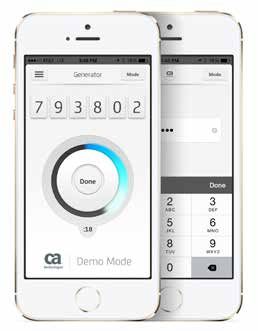
4 | SOLUTION BRIEF: PAYMENT SECURITY                                                                                                      ca.com

                      Section 1:

                      Fraud Reduction: At What Price?
                      Online shopping is fraught with risk. When a cardholder is using a card online, the normal authentication
                      methods aren’t available (viewing driver’s license, photo id and signature, or chip-based cards with PIN
                      verification for EMV–compliant payment cards). In addition, the verification numbers on the back or front
                      of the card are not a deterrent if the card was stolen. The primary solution to this problem is 3-D Secure, a
                      service that is designed to make online transactions safer by authenticating cardholders making online
                      purchases. 3-D Secure programs serve to reduce fraud in online transactions, control costly chargebacks
                      and increase customer confidence so they will shop online more frequently. However, the impact of
                      requiring cardholders to enroll in the programs and authenticate has caused an increase in transaction
                      abandonment, which adversely affects issuer interchange revenue. The chargeback process is costly and
                      generally inefficient, which increases the cost of fraudulent transactions above and beyond the actual
                      transaction amount.1 Today, 3-D Secure services can benefit from a transparent approach to
                      authenticating cardholders during their transactions. Cardholder behavior patterns, devices used, location
                      and other factors can be analyzed in real time allowing the majority of legitimate transactions to continue
                      without any change to the user experience during checkout.

                      3-D Secure provides the base layer
                      The 3-D Secure protocol allows payment card issuers to verify cardholder identity during CNP transactions
                      conducted via the internet. Before a transaction is authorized, a cardholder can be challenged to enter
                      their authentication credential such as a Static Password, a Knowledge-based Response (QnA) or a
                      One-Time Password (OTP). This additional layer of authentication has helped issuers and online
                      merchants to counter ever-increasing CNP fraud.
Figure 1.
3-D Secure Protocol

                        Normal Merchant Pages                                  Directory
                                                                              Server (DS)                                          1. User clicks on “purchase”
                        3-D Secure Protocol
                                                                                                                                   2. Merchant redirects user
                        Authentication Pages                                                                             Access
                                                                                                                         Control      to ACS
                                                                                                                         Server
                                                                                                                          (ACS)    3. Issuer optionally
                                                                                                                                      authenticates user and
                                                                                                                                      authorizes transaction
                                                                                                                   Card Issuer
                                                                                     Authentication
                                                                                                    4                              4. Merchant accepts
                                                                                       Response
                                                                                                                                      the authorization and
                                                                                                           3 Authentication           completes the purchase
                                                                                                                 Dialog               for the user
                          Merchant
                        Plug-in (MPI)
                                                                          2
                                                                     Request for
                                        Merchant                    Authentication
                                                                                                    AT&T

                                                         1
                                                       Normal
                                                   Purchase Pages
5 | SOLUTION BRIEF: PAYMENT SECURITY                                                                         ca.com

                     The basic 3-D Secure solution has helped issuers substantially reduce CNP fraud, however, there
                     are multiple challenges in the way basic 3-D Secure solutions work.

                     • Optional authentication can be made mandatory to avoid fraud at authentication, but the downside is
                       that all cardholders, genuine and fraudulent, are challenged for authentication credentials resulting in a
                       poor user experience and an increase in transaction abandonment.
                     • Allowing users to “opt-out” and not authenticate could provide a loophole for fraudsters by allowing
                       them to bypass authentication during the transaction.
                     • Compromised credentials could lead to “fully authenticated fraud” where the fraudster has obtained
                       the cardholder’s credential though password cracking, phishing, social engineering or other attacks or
                       fraudulently impersonates a cardholder and enrolls an account in 3D-Secure.

                     The intelligent risk analytics approach
                     When using only the basic 3-D Secure solution, genuine and fraudulent cardholders are subject to
                     the same authentication challenge and user experience. This can be alleviated through the effective use
                     of intelligence and analytics to identify legitimate cardholders allowing them to checkout
                     without interruption. Using techniques such as device identification, merchant details, geo-location,
                     transaction context and historical user behavior, suspicious transactions can be denied or appropriately
                     challenged to provide stronger authentication credentials.

Figure 2.
                                                       Cardholder Visits Merchant Site for Purchase
CA Risk Analytics
Outcomes

                                                         Evaluate Risk of 3-D Secure Transaction

                                     Low Risk                         Medium Risk                           High Risk
                                  (Allow Advice)                    (Inc Auth Advice)                     (Deny Advice)

                                                                     Additional Auth
                                                                     for Cardholder                Fail
                                                                    (Questions/ OTP)

                                                                                 Success

                                                                                                            Purchase
                                       Cardholder Completes Purchase
                                                                                                             Denied

                     CA Risk Analytics assigns a risk score. Issuer policies use the score to separate
                     transactions into low, medium and high risk.
                     By applying sophisticated risk evaluation intelligence, online shopping transactions are invisibly analyzed
                     and assigned a risk score. Issuer policies use the score to match the type of authentication experience for
                     the transaction. You can set your policies to provide a pleasant shopping experience for the majority of
6 | SOLUTION BRIEF: PAYMENT SECURITY                                                                              ca.com

                     legitimate cardholders or all premium cardholders, for example. By applying the correct follow-up
                     mechanism for the perceived level of risk, issuers can avoid the trap of deploying “one size fits all”
                     security measures. Figure 3 outlines the variety of risk possibilities and suggested counter measures.

                                               There is a high degree of confidence in the user’s identity and other parameters
Figure 3.                ALLOW                 of the requested action look to be of acceptable risk.
CA Risk Analytics
outcomes with
                                               While  there is confidence in the user’sinidentity, this request merits
                                                                                                                  otherfollow-up
suggested counter
measures
                         ALERT                 There is a high
                                               examination
                                                                degree of confidence
                                                             by the
                                               of the requested     helplook
                                                                 action
                                                                                          the user’s
                                                                         desktoorbesecurity
                                                                                                     identity
                                                                                            team. risk.
                                                                                     of acceptable
                                                                                                              and       parameters

                                               Additional confirmation in the user’s identity is suggested before proceeding
                         INCR AUTH             with request.

                         DENY                  This is a high-risk transaction. Suggest that the transaction be blocked.

                     Dynamic authentication for risky transactions
                     When additional authentication is recommended after the risk assessment, dynamic authentication
                     can effectively validate the identity of the shopper. In the past, this took the form of a password or
                     knowledge-based question and answer. For a higher level of security, some issuers use a one-time-
                     password (OTP) sent via SMS. For even great security and convenience the cardholder’s mobile
                     phone can be used as an authentication device. It’s important to use the most reliable form of
                     authentication for these transactions as the goal is to take all available steps to deny the transactions
                     that are true fraud as part of the assessment.

                                                                               Cardholder behavior
                                                                               patterns, devices used,
                                                                               location and other factors
                                                                               can be analyzed in real
                                                                               time allowing the majority
                                                                               of legitimate transactions
                                                                               to continue without
                                                                               any change to the user
                                                                               experience during checkout.
7 | SOLUTION BRIEF: PAYMENT SECURITY                                                                       ca.com

                     Section 2:

                     CA Technologies Multilayered Payment Security
                     Today’s eCommerce landscape is expanding. In 2012, North American companies alone reported losing an
                     average of 0.9% of total online revenue to fraud, translating to $3.5 billion2 in fraud losses. Further, the
                     expected adoption of EMV cards in the U.S. will improve security in card present transactions but as
                     evidenced in the U.K., this will potentially drive more CNP fraud.3 Throw in an 82%2 increase in mobile
                     commerce sales which has an even higher fraud rate than eCommerce and you have a ”perfect storm” of
                     converging fraud. How can you reduce fraud and provide security for your cardholders CNP transactions
                     yet not deny their legitimate transactions or annoy them with requests to authenticate?

                     At CA Technologies, we understand the importance of reducing fraud losses while creating a friction-free
                     customer experience. Our roots in secure digital payment technology are strong. In fact, we co-created the
                     3-D Secure protocol for online payment security that helped define the market. As new payment technology
                     options have become available, we have responded with the development of sophisticated payment
                     security solutions that help to keep fraud losses in check while providing a frictionless customer
                     authentication experience.

                     Payment Security solutions from CA Technologies use a multilayered security approach to helping issuers
                     reduce fraud and improve the online shopping experience for CNP transactions no matter where, when or
                     on what device your cardholders use to shop.

                                                                               CA Payment Security
                                                                               solutions use a
                                                                               multilayered security
                                                                               approach to helping
                                                                               issuers reduce fraud
                                                                               and improve the online
                                                                               shopping experience
                                                                               for CNP transactions
                                                                               no matter where, when
                                                                               or on what device your
                                                                               cardholders use to shop.
8 | SOLUTION BRIEF: PAYMENT SECURITY ca.com
3-D Secure provides the foundation
CA Transaction Manager allows issuers to offer a 3-D Secure security service to cardholders. It enables
full compliance with Verified by Visa, MasterCard SecureCode, JCB J/Secure, American Express SafeKey
and Discover/Diners ProtectBuy cardholder authentication programs. It supports individual banks, global
banks, service providers and processors who offer card management services. The flexible architecture
facilitates integration with existing card issuer systems including home banking and fraud management
systems and provides the foundation for adding advanced risk analytics to invisibly authenticate a
legitimate cardholder without impact.
Key Benefits:
• Reduce fraud loss by adding an authentication layer to CNP transaction processing.
• Achieve compliance with 3-D Secure programs.
• Increase customer confidence for online shopping transactions.
• Configure business rules, security and user experience for each card portfolio.
But as noted, while reducing fraud, basic 3-D Secure impacts CNP transactions causing higher
abandonment rates, lost interchange fees and higher operational costs due to chargeback processing.
Silent authentication is key
CA Risk Analytics transparently assesses the fraud risk of an eCommerce transaction in real-time during
authentication. It identifies legitimate transactions allowing the majority of cardholders to continue their
purchase without impact. Using sophisticated advanced analytics, a behavioral neural network model and
a flexible set of dynamic rules, it examines current and past transactions, device characteristics, location,
user behavior and historical fraud data to evaluate risk. The calculated risk score is then used by your
policies to decide whether to allow the purchase, request step-up authentication, send an alert or deny
the purchase. A comprehensive case management system allows immediate access to fraud data so that
analysts and customer support representatives can prioritize and take action on cases, query fraud data
and manage alerts.
Key Benefits:
• Measure fraud risk in every transaction
• Reduce friction in the customer shopping experience
• Provide protection for existing payment programs
• Integrate with external fraud management systems
• Aggregate fraud data from multiple channels9 | SOLUTION BRIEF: PAYMENT SECURITY ca.com
Figure 4. Truth
CA Risk Analytics Data
work flow Risk Model, Case
Analytics
Historical Data Management
Policies Approve
User ID
Alert CSR
Risk Degree of Business Additional Q&A
Device ID Assessment Risk (Score) Rules 2nd Channel
Location ID
Decline
User Profile
Contextual Preferences
Information
(Date, Tx Type, Amount)
Risk assessment during authentication or authorization?
Most issuers have robust risk management systems in place that are employed during the authorization
phase. CA Risk Analytics does its risk assessment during the authentication phase and is meant to
complement authorization systems. There is a rich set of parameters available at the time of authentication
not available during authorization. Factors included in the authentication risk assessment are device
identification, geo-location, and contextual information. Because there are more factors available to
authenticate the cardholder, Risk Analytics during authentication has a better ability to isolate legitimate
cardholders from fraudsters. Table 1 provides a comparison of factors available at authorization and
authentication.10 | SOLUTION BRIEF: PAYMENT SECURITY ca.com
Table 1. Authentication Authorization
Parameters that are
Account Take Over Fraud
factored in risk
assessment during FYP Fraud †
authentication and
Enrolment Fraud †
authorization.
Device Information
User Machine Characteristics †
Geo-location Data
Cardholder IP address †
Geo location information †
Derived Data – Checks for the
following:
Negative IP List †
Suspected Country †
Trusted Aggregator †
Zone Hopping †
User Velocity †
Transaction Velocity †
Device Velocity †
Transaction Data
Merchant Information † †
Currency † †
Transaction Amount † †
User Specific Data
Previous transactions † †
Risk level (designated by the
† †
issuer)
Authentication & Authorization
Decisions
Authentication Decision † †
Additional Authentication
(2FA, OTP, QnA) †
Ability to interact with cardholder
†
during the transaction, e.g. IVR11 | SOLUTION BRIEF: PAYMENT SECURITY ca.com
Figure 5.
Assessed Risk Level
Assessed Risk Level
Risk Assessment Deny Deny
during
authentication Potentially Lost Txn
provides the option Increased Auth
Potentially Fraud Txn
to require stronger
authentication
Approve Approve
for suspicious
transactions
whereas during During Authentication During Authorization
authorization the
only choices are
approve or deny.
Unlike authorization-level fraud systems that can only take binary decisions (approve or deny),
CA Risk Analytics can apply increased authentication for transactions that fall in the gray area shown in
Figure 5. Denying a legitimate transaction could mean lost interchange fees for the issuer and ultimately
cause the cardholder to use another card.
Invoke strong authentication for suspicious transactions
CA Mobile OTP provides strong authentication using the cardholder’s mobile phone as a PIN generator.
Typically, an issuer sets a policy based on the risk score that allows cardholders to complete low risk
transactions without impact and outright denies high-risk transactions. For medium risk transactions, the
user can be challenged to provide an authentication credential. In these cases, you need a credential that
provides a high level of assurance of the cardholder’s identity. The CA Mobile OTP app generates a
one-time password than can be entered when the cardholder is asked to authenticate.
Key Benefits:
• Easy for customer to use
• Supports variety of mobile devices
• Can be used across multiple channels12 | SOLUTION BRIEF: PAYMENT SECURITY ca.com
Section 3:
Why Not Get the Best of Both Worlds?
There’s no question that the end goal for eCommerce transactions is to reduce fraud. More specifically,
the goal is to accurately identify and accept legitimate transactions while weeding out and denying
fraudulent ones. Fraud wreaks havoc on customers, merchants and issuers. Customers that have been
subject to fraud may not be responsible for the fraudulent charges but certainly are inconvenienced by the
hassle of following up and making sure the charges are removed from their statements. Merchants have
to deal with the loss of revenue. In fact, shoppers frequently abandon an online transaction for fear that
the eCommerce site is not secure. Issuers bear the burden of analyzing transactions, determining true
fraud and processing chargebacks not to mention the loss of interchange fees.
Therefore, the goal of reducing fraud has to be balanced with the customer experience. Friction in the
shopping experience also causes transaction abandonment and issuers need to be mindful to keep the
interruption in shopping to a minimum. You don’t want to deny a valued cardholder’s legitimate
transaction. You don’t want to continually challenge your good customers with authentication requests.
The benefits of layering intelligent risk analytics on top of the basic 3-D Secure service allow issuers to
get the best of both worlds: Issuers can reduce fraud losses and improve the customer shopping
experience thereby reducing transaction abandonment.
Benefits of CA Risk Analytics include:
• Reduction in fraud loss over and above basic 3-D Secure deployment
• Increase in the number of transactions that are processed without customer impact
• Decrease in shopping cart abandonment
• Overall reduction in the operational costs associated with processing fraud13 | SOLUTION BRIEF: PAYMENT SECURITY ca.com
There’s no question
that the end goal for
eCommerce transactions
is to reduce fraud. More
specifically, the goal is
to accurately identify
and accept legitimate
transactions while
weeding out and denying
fraudulent ones.
Section 4:
The CA Technologies Advantage
CA Technologies has the experience and technology to help issuers reduce fraud in eCommerce
transactions while maintaining a pleasant customer online shopping experience.
Experience. Our 3-D Secure solution is used by 13,000 card issuers and protects over 120 million cards. In fact,
we co-wrote the 3-D Secure protocol with Visa to create an effective way to help prevent payment fraud. We’ve
been in operation since 2000; first branded as Arcot TransFort. The cloud service is hosted from SSAE-16 Type II
SOC1 audited, secure and redundant data centers. We annually certify our compliance with Payment Card Industry
(PCI) data security standards and the 3-D Secure programs. Our services help you get up and running quickly.
Optimal flexibility. Offers optimal implementation flexibility to configure business rules, security
features and user experience for each portfolio of cards. Multiple authentication options allow you to
configure authentication by card range. Multiple administrator levels allow you to separately configure
customer service agents, supervisors and administrators to meet security and compliance requirements.
Advanced Risk Models. Employs advanced models to evaluate the risk of a transaction in-flight using the
amount, currency, merchant name and card identifier in combination with information that is uniquely
made available during authentication including device ID, merchant URL, device IP address and
information from third-party data providers. It separates fraud from non-fraud, assigns a risk score,
rank-orders the score and passes it to the rules engine.14 | SOLUTION BRIEF: PAYMENT SECURITY
Flexible, field-programmable rules. Works in combination with the models to enforce bank policies based
on the risk score. Rules bucket transactions into low, medium and high risk and action—allow, deny or
authenticate—is taken based on risk tolerance. Rules can be based on transaction and session criteria and
exception policies can be implemented by class of cardholder. Rules can be added or changed on the fly.
Total transparency to fraud data immediately. Allows fraud analysts to view fraud activity in real time
and immediately take action to prevent fraud of a similar nature.
Real-time case management and reporting. Organizations can input “truth data” based on actual
results, manage individual user profiles, and examine cases awaiting review. Using simple point and-click
screens, analysts can instantly prioritize and take action on cases, query fraud data and manage alerts.
An audit trail is produced that annotates each recommended action. Built-in reports provide statistical
summaries and detailed case analyses.
Section 5:
Next Steps
If you’re looking for a solution to CNP fraud that takes 3-D Secure to the next level, look no further.
Payment Security solutions from CA Technologies provide the best of both worlds: significant fraud
reduction and a frictionless customer experience for the majority of legitimate cardholders.
To learn more about Payment Security solutions from CA Technologies visit ca.com/payment-security.
To have a salesperson contact you please email us at paymentsecurity@ca.com.
Connect with CA Technologies at ca.com
CA Technologies (NASDAQ: CA) creates software that fuels transformation for companies and enables
them to seize the opportunities of the application economy. Software is at the heart of every business,
in every industry. From planning to development to management and security, CA is working with
companies worldwide to change the way we live, transact and communicate – across mobile, private
and public cloud, distributed and mainframe environments. Learn more at ca.com.
1 CyberSource 2013 Online Fraud Report
2 Based on eMarketer projections
3 Figures reported by the U.K. Payments Administration
Copyright © 2015 CA. All rights reserved. All trademarks, trade names, service marks and logos referenced herein belong to their respective companies. CS200-92020_0115You can also read


