Increased Incidence of Perforated Appendicitis in Children During COVID-19 Pandemic in a Bavarian Multi-Center Study
←
→
Page content transcription
If your browser does not render page correctly, please read the page content below
ORIGINAL RESEARCH
                                                                                                                                                     published: 07 May 2021
                                                                                                                                             doi: 10.3389/fped.2021.683607

                                                Increased Incidence of Perforated
                                                Appendicitis in Children During
                                                COVID-19 Pandemic in a Bavarian
                                                Multi-Center Study
                                                Frank-Mattias Schäfer 1*, Johannes Meyer 1 , Stephan Kellnar 2 , Jakob Warmbrunn 3 ,
                                                Tobias Schuster 4 , Stefanie Simon 5 , Thomas Meyer 6 , Julia Platzer 7 , Jochen Hubertus 8 ,
                                                Sigurd T. Seitz 9 , Christian Knorr 10 and Maximilian Stehr 1
                                                1
                                                  Department of Pediatric Surgery and Pediatric Urology, Cnopfsche Kinderklinik, Nuremberg, Germany, 2 Department of
                                                Pediatric Surgery, Klinikum Dritter Orden, Munich, Germany, 3 Department of Pediatric Surgery, Klinikum Schwabing,
                                                Technical University Munich, Munich, Germany, 4 Department of Pediatric Surgery, University Hospital Augsburg, Augsburg,
                                                Germany, 5 Department of Pediatric Surgery and Pediatric Urology, Klinikum Nürnberg, Nuremberg, Germany, 6 Department
                                                of Pediatric Surgery, Pediatric Urology and Pediatric Trauma, Hospital for General, Visceral, Vascular and Pediatric Surgery,
                                                University Hospital Würzburg, Würzburg, Germany, 7 Center for Pediatric and Adolescent Medicine, Children’s Hospital St.
                                                Marien gGmbH, Landshut, Germany, 8 Department of Pediatric Surgery, Dr. von Hauner Children’s Hospital, University
                           Edited by:
                                                Hospital Munich, Munich, Germany, 9 Department of Pediatric Surgery, University Hospital, Friedrich-Alexander-Universität
                  Spencer W. Beasley,
                                                (FAU) Erlangen, Erlangen, Germany, 10 Department of Pediatric Surgery and Pediatric Orthopedics, Barmherzige Brüder
    University of Otago, Christchurch,
                                                Hospital – St. Hedwig Regensburg, Regensburg, Germany
                         New Zealand

                        Reviewed by:
                         Ernesto Leva,          Introduction: Since early 2020 the COVID-19 pandemic and statutory preventive
               University of Milan, Italy
                                                reorganization of treatment capacities with cancellation of elective surgery as well as
              Radoica Radivoje Jokic,
         University of Novi Sad, Serbia         curfew regulations led to vastly decreased utilization of primary health care.
                   *Correspondence:             Materials and Methods: To assess whether there are negative effects on pediatric
                 Frank-Mattias Schäfer
        mattias.schaefer@diakoneo.de
                                                acute care in Bavaria during the spring 2020 lockdown a state-wide retrospective
                                                multi-center study was performed to analyze the rate of perforated appendicitis during
                    Specialty section:          lockdown. Children who have been operated on during the corresponding period in
          This article was submitted to
                                                2018/19 served as control group.
                       Pediatric Surgery,
                a section of the journal        Results: Overall, 514 patients (292 boys, 222 girls) were included (2020: 176 patients;
                  Frontiers in Pediatrics
                                                2019: 181 patients; 2018: 157 patients). Median age was 11.2 years. Four hundred
            Received: 21 March 2021
             Accepted: 12 April 2021
                                                thirty-nine patients (85.4%) underwent laparoscopic surgery, 69 (13.4%) open surgery
             Published: 07 May 2021             and 1.2% underwent conversion from laparoscopic to open surgery. In 2020 a perforation
                              Citation:         rate of 27.8% (49/176 patients) was found, in 2018–2019 perforation rate was 20.7%
      Schäfer F-M, Meyer J, Kellnar S,
                                                (70/338 patients, p = 0.0359, Cochran-Mantel-Haenszel-Test). Subgroup analysis
  Warmbrunn J, Schuster T, Simon S,
        Meyer T, Platzer J, Hubertus J,         showed that in younger patients (≤11.2 years), in 2020 perforation rate was significantly
 Seitz ST, Knorr C and Stehr M (2021)           higher with 37.6% (32/85 patients), while 22.2% (39/176) in 2018/2019 (p = 0.014,
    Increased Incidence of Perforated
        Appendicitis in Children During
                                                Fisher’s exact test).In boys perforation rate was significantly higher in 2020 with 35.0%
   COVID-19 Pandemic in a Bavarian              (35/100 patients) compared to 21.4% in 2018–2019 (p = 0.0165, Fisher’s exact test).
                   Multi-Center Study.
             Front. Pediatr. 9:683607.          Conclusion: During the period of curfew regulations in Bavaria the rate of perforated
      doi: 10.3389/fped.2021.683607             appendicitis in childhood increased significantly, especially in younger children and boys.

Frontiers in Pediatrics | www.frontiersin.org                                          1                                                May 2021 | Volume 9 | Article 683607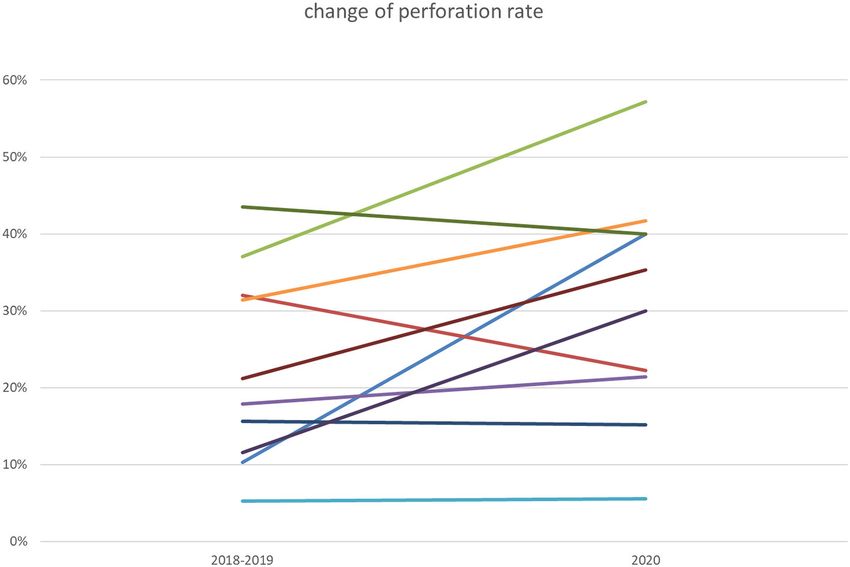
Schäfer et al.                                                                                                 Perforated Appendicitis During COVID-19 Pandemic

                                                Potentially this has to be attributed to delayed presentation to pediatric surgery care.
                                                Because of potential long-term sequelae of perforated appendicitis these adverse effects
                                                during curfew have to be taken into account for future political decision making to
                                                ensure reasonable patient care and avoid collateral damage in near-future or on-going
                                                pandemic situations.

                                                Keywords: appendicitis, perforation, perforated appendicitis, COVID-19, pandemic

INTRODUCTION                                                                             Data collection included sex, age, clinical, and histological
                                                                                      description of the intraoperative findings, length of stay before
In early spring 2020 the emergence of the COVID-19 pandemic                           and after the operation, the mode of surgery (open, laparoscopic,
(1) has led to dramatic and so far unprecedented challenges                           single-port, converted), length of antibiotic treatment, status of
to the health systems worldwide. Since both the magnitude                             COVID-19 testing (if applicable) and need for re-operation.
of the outbreak and statutory preventive measurements varied                             The patients were grouped into four different groups
regionally to a large extent, the influence of these measures                         depending on the intraoperative and histologic findings: (a)
can be studied under different circumstances. In Bavaria, one                         subacute/negative, if clinical and histopathologic both reports
of the largest states of Germany, a state-wide reorganization of                      revealed no relevant appendicitis; (b) acute to gangrenous, if
available treatment capacities with the cancellation of elective                      a varying degree of appendicitis was noted, but no perforation
surgery was ordered and curfew regulations (“lockdown”) were                          either in clinical or pathologic report, (c) Perforated appendicitis
imposed on the general public beginning on March 20, 2020.                            if either documentation by the attending surgeon or the
This—and similar measures in other states of Germany—led                              description of perforation in the histopathologic report stated
to a vastly decreased utilization of primary health care in the                       perforation. This was defined as primary outcome measure.
emergency departments (2). This has been reported also in                             In group (d) intraoperative findings not fitting in any of the
other regions with a much higher incidence of COVID-19 cases,                         other groups were collected (e.g., oxyuriasis, neuroendocrine
such as New York, where in a single institution a reduction of                        tumor of the appendix). Since it’s a well-known fact that in
pediatric emergency cases to 13% compared to the same period                          acute appendicitis there is only weak concordance between
in the previous year was noted (3). Parental fear of seeking care                     perioperative diagnosis and histopathology report, we decided
during the pandemic is potentially contributing to this change,                       not to distinguish non-perforated appendicitis into additional
as well as the wish not to overburden the strained hospital                           subgroups such as phlegmonous or gangrenous appendicitis
resources with—seemingly—trivial health care problems. This                           (6, 7). If there was discordance between clinical description
behavior may lead to a severe impairment of overall public health                     and histopathology report, the worse of the two was used
in various fields, which has been termed “Corona Collateral                           for our study classification (e.g., if intraoperative finding was
Damage Syndrome” (4).                                                                 termed “subacute appendicitis” and histopathologic description
   In this study we aim to investigate whether this is also the                       was “phlegmonous appendicitis” the latter was used to group
case in pediatric appendicitis, which is one of the most common                       the case.
emergency surgeries in (pediatric) surgery with about 100 per                            Microsoft Excel 365 R (RRID:SCR_016137) was used for data
100,000 patient-years in Europe and America with an age peak                          collection, statistical analysis was performed using GraphPad
between 10 and 19 years (5).                                                          Prism R , RRID:SCR_002798) version 7.0 (San Diego, USA)
   Therefore, we conducted a Bavarian state-wide study                                using Fisher’s exact test/chi-square test, one-sided ANOVA
including all major pediatric surgery institutions to evaluate the                    and Cochran-Mantel-Haenszel-test. ReviewManager R (RevMan,
rate and clinical course of pediatric acute appendicitis during                       RRID:SCR_003581) version 5.4.1 was used to create the Forest
lockdown and assess potential collateral damage.                                      plot. Statistical significance was assumed at p < 0.05. Odds
                                                                                      ratios (ORs) and 95% confidence intervals (CIs) were calculated
                                                                                      for comparisons.
MATERIALS AND METHODS
After procurement of institutional ethics committee approval
(ref. no.: 338_20 Bc) medical charts of all patients
Schäfer et al. Perforated Appendicitis During COVID-19 Pandemic
TABLE 1 | Basic demographic data of all patients with acute appendicitis during the CoVID-19 curfew and control groups 2018–2019.
2018 2019 2018–2019 2020 p
n = 157 n = 181 n = 338 n = 176
Sex
Female 62 (39.5%) 84 (46.4%) 146 (43.2%) 76 (43.2%)
Male 95 (60.5%) 97 (53.6%) 192 (56.8%) 100 (56.8%) 0.43a
Mean age (years) 11.3 11.1 11.2 11.2 0.91a
Range (years) 2.8–17.9 1.5–17.9 1.5–17.9 3.0–17.9
a One-sided ANOVA.
appendicitis (oxyuriasis, neuroendocrine tumors) did not differ
TABLE 2 | Primary and secondary outcome of patients with acute appendicitis
during the study period 2020 and the combined control period 2018–2019.
within the years.
For subgroup analysis the patients were divided in two age
2020 2019–2018 p groups (11.2 years), according to the mean
n = 176 n = 338 age of the study population. In the group with the younger
patients, in 2020 perforation rate was 37.6% (32/85 patients),
Operation on …
while 22.2% (39/176) in 2018/2019 (p = 0.014, Fisher’s exact test).
… admission day 118 (67.0%) 185 (54.7%) 0.0081a
In older patients >11.2 years perforation rate was 18.7% (17/91
… day after admission 43 (24.4%) 133 (39.3%)
patients) in 2020 and 19.1% (31/162 patients) in 2018/2019 (p
… 2 days or more after admission 15 (8.5%) 20 (5.9%)
= n.s., Figure 4A). Subgroup analysis for sex showed that in
Severity of appendicitis
boys perforation rate was significantly higher in 2020 with 35.0%
Perforated 49 (27.8%) 70 (20.7%) 0.035b
(35/100 patients) compared to 21.4% in 2018–2019 (p = 0.0165,
Acute/phlegmonous to gangrenous 119 (67.6%) 252 (74.6%)
(non-perf.) Fisher’s exact test). In girls, no significant difference could be
Negative/subacute 6 (3.4%) 13 (3.8%) noted (Figure 4B).
Other finding 2 (1.1%) 3 (0.9%) Length of stay was 4.9 days (±0.123) during the control
Laparoscopic to open surgery 3 (1.7%) 3 (0.9%) 0.42a periods and 5.3 days (±0.198) in 2020 (p = 0.06; Table 2).
conversion rate To rule out that the higher perforation rate in 2020 was due
Mean length of stay (d) 5.3 4.9 0.07a to delayed surgery after admission we determined the rate of
Range (d) 2–17 2–20 patients who were operated on at day 0 (admission day), day 1 or
Antibiotics given (%) 145 (82.4%) 279 (82.5%) >0.99a later (Table 2). The data showed that the percentage of patients
If so, length of AB therapy (d) 4.4 3.8 operated on admission day was higher than in previous years
Range (d) 1–15 1–45
(67.0 vs. 54.7%, p = 0.0081, Fisher’s exact test). For patients with
Reoperations (%) 4 (2.2%) 6 (1.8%) 0.74a
perforated appendicitis alone, this rate was 77.6% in 2020 (38 of
a Fisher’s exact test. 49 patients) and 72.9% in 2018–2019 (51 of 70 patients, p = 0.67,
b Cochran-Mantel-Haenszel-test.
Fisher’s exact test).
Bold indicate to highlight statistically significant differences. Italics indicate to show these
lines are subitems to the lines before.
Mode of surgery: The rate of laparoscopic surgery increased
during the years: In 2018, 123 of 157 patients (78.3%) were
During the study period, no pediatric patient with COVID-19 operated on laparoscopically, which increased to 157 of 181
infection could be identified. However, because of limited testing patients (86.7%) in 2019 and 159 of 176 patients (90.3%) in 2020.
resources and state policy especially during the first weeks of the No patient was treated by primary abscess drainage. Conversion
study period, only 39.8% (70 of 176) of the patients had been rate from laparoscopic to open surgery was overall low in all
tested preoperatively. groups (1.8% in 2020, 1.1% in 2018–2019, p = 0.67, Fisher’s exact
The number of patients included per institution varied test) and showed no significant difference. Likewise, the need for
between 7 and 33 during the COVID-19 period and between 10– re-operation was low and not statistically different (2.2% in 2020
36 and 8–28 in 2019 and 2018, respectively. Total number of vs. 1.8% in 2018–2019, p = 0.74, Fisher’s exact test, cf. Table 2).
patients per institution ranged from 33 to 97. The summary of Reasons for re-operation in 2020 were intraabdominal abscesses
clinical outcome is shown in Table 2. in two cases, ileus and concomitant ovarian cyst in one case each.
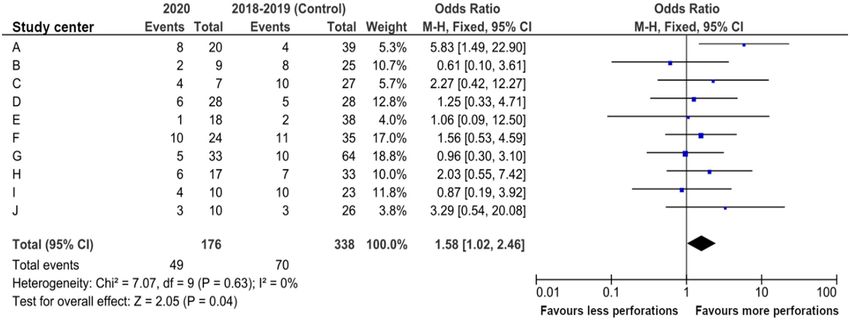
Overall perforation rate was 27.8% (49 of 176 patients) In 2018 and 2019 reasons were intraabdominal abscess formation
in 2020 (5.6–57.1% within the different institutions) and 70 in four cases, wound infection and post-operative bleeding in one
of 338 patients (20.7%) in 2018–2019 (5.3–43.0%) (Figure 1), case each.
which was significant when compared to 2020 (p = 0.0359,
OR 1.58, 95% CI 1.02–2.46; Cochran-Mantel-Haenszel test, DISCUSSION
Figure 2). Comparison of appendicitis grading based on the
above-mentioned distinction (Figure 3 and Table 2) showed that The available data regarding the influence of COVID-19
the rate of negative appendectomy as well as findings other than associated curfew measures on pediatric appendicitis is far from
Frontiers in Pediatrics | www.frontiersin.org 3 May 2021 | Volume 9 | Article 683607Schäfer et al. Perforated Appendicitis During COVID-19 Pandemic FIGURE 1 | Change of perforation rate 2020 compared to previous years: Seven of ten participating centers noted an increase of perforation rates. FIGURE 2 | Forest plot of Cochran-Mantel-Haenszel test with details of study centers for perforated appendicitis per institution 2020 compared to the combined control period 2018–2019 (OR, odds ratio; CI, confidence interval). conclusive with some centers reporting an increase of pediatric Similar results have been reported from other geographic and adult appendicitis during the corona pandemic (8) while areas: In a single-center study on adult appendicitis in Argentina, others showed a marked decrease (9, 10) or no significant changes a statistically significant increase in complicated appendicitis (11). Already early on during the pandemic the first report of compared to the previous years (47 vs. 17%) has been found (13). a delayed diagnosis in a small group of pediatric patients with In a study from Australia, the rate of complicated appendicitis complicated appendicitis was published (12). increased from 24.6% in 2019 to 47.9% in 2020 (14). Also, In our study we could show that during the spring wave in a recent global survey regarding the treatment of acute of COVID-19 there was a significantly higher proportion of appendicitis during the pandemic, 34.2% of the participating perforated appendicitis in Bavarian children (27.8%) compared surgeons asserted that patients presented with more advanced to the previous years while the rate of acute/uncomplicated stages of the disease (15). The only other multi-center study appendicitis decreased at the same time and the overall number available regarding the rate of pediatric perforated appendicitis of patients remained stable. originates from New York City Metropolitan region, an area Frontiers in Pediatrics | www.frontiersin.org 4 May 2021 | Volume 9 | Article 683607
Schäfer et al.                                                                                       Perforated Appendicitis During COVID-19 Pandemic

                                                                            behavior of the population and therefore to regional differences
                                                                            in both spread of the disease as well as negative side effects of the
                                                                            lockdown measures, which are not apparent if looking on federal
                                                                            data (21).
                                                                               The finding of an elevated perforation rate in 2020 is
                                                                            corroborated by a tendency to a longer length of stay in this year,
                                                                            although not statistically significant. A possible confounding
                                                                            factor which counterbalances the length of stay may well be a
                                                                            tendency to earlier dismissal in 2020 compared to the control
                                                                            group years due to either parents’ or surgeons’ wishes to ease
                                                                            hospital workload in the face of expected COVID-19 cases.
                                                                            However, no objective data is available to confirm this.
                                                                               We believe that the decrease in utilization of primary
 FIGURE 3 | Grading of appendicitis in % of cases per group.                healthcare as noted during the pandemic has led to a delay
                                                                            in presentation of children with appendicitis and therefore to
                                                                            an increased rate of perforation especially in younger children.
                                                                            It is known that infrequent health care utilization in general
with an extremely high incidence of COVID-19 and hence a                    is associated with higher odds of perforated appendicitis in
crushing hospital burden (8): Similar to our study they noted               children. This association correlates with visit frequency in
a 45.5% decrease in uncomplicated appendicitis together with a              the year before presentation, even when adjusted for socio-
21.1 and 29% increase in perforated and gangrenous appendicitis,            economic background (22). It seems probable that similar effects
respectively. They could show that there was no difference                  are to be expected, if—through statutory measures and explicit
in either the severity of appendicitis or the treatment course              recommendations toward the public—the overall frequency of
between COVID-19 positive vs. negative children. In our study,              primary health care visits of parents with children is reduced as
the finding that no children were identified which were positive            was the case in the first wave of COVID-19 pandemic (2).
to COVID-19 is concordant with data that hospitalizations of                   In the study by Fisher et al. a longer symptom duration of
COVID-19-positive children in Germany were very rare during                 patients with perforation was noted (71 vs. 47 h in the control
the spring pandemic, albeit only less than half of the patients             period), hinting to a delayed presentation (8). One other study
were tested preoperatively, since routine testing of all patients was       found not difference in overall duration of symptoms in days
introduced only later in the year (16).                                     during shelter-in-place orders 2020 compared to 2019 (23);
   An early single-center report from the USA found a                       however, since appendicitis is a rapidly progressing disease a
diminished number of overall appendicitis patients while noting             measurement in days does not reflect the rapid course of the
an increased rate of complicated appendicitis (17). In contrast,            disease. Because of the retrospective nature of our study, duration
Kvasnovsky et al. described an unchanged number of pediatric                of symptoms in hours was not available throughout the medical
appendicitis cases in a single tertiary referral center during              records and therefore could not be included in the analysis.
COVID-19 pandemic (18). In our data we could not detect                        There are several further strengths and weaknesses to our
a significant state-wide decrease in overall acute appendicitis             study. One strength is the determination of start and end date
patients during the study period. However, in a recent study                of the study and control groups: First, the start date was chosen
using data from the largest German insurance provider (AOK),                as the beginning of the state-wide lockdown measures which
a significant reduction in overall numbers of both adult and                were imposed on a short notice and therefore communicated
pediatric appendectomies during spring lockdown in 2020                     widely through multiple media types (including traditional media
was noted. This decrease affected only appendectomies due                   such as TV and social media). Thus, this probably influenced
to acute simple and non-acute appendectomies. Numbers for                   population behavior in a stronger degree than e.g., the day of the
appendectomies in acute complex appendectomies remained                     occurrence of the first case of COVID-19 in a given country (to
unchanged. Female patients in the age group 1–18 years showed               which a large proportion of the population may not even have
the strongest decrease (19). While this decrease could not be               been aware of at that time) and which has been chosen in other
shown in our study, subgroup analysis for age and sex showed                studies (9). Second, the selection of control groups in the same
that the increase in perforation rate was solely due to an increase         time frame during the previous years helps to eliminate seasonal
in younger patients (
Schäfer et al. Perforated Appendicitis During COVID-19 Pandemic
FIGURE 4 | (A) Perforation rate depending on age groups shows increase of overall perforation rate is solely due to increased perforation rate in younger patients
(*Fisher’s exact test). (B) Perforation rate depending on sex shows increase of overall perforation rate in boys is significantly higher in 2020 (*Fisher’s exact test).
this, because longstanding trends in abdominal (pediatric) amalgamated grading system as mentioned above seemed most
surgery, such as tendencies to reduce antibiotic treatments reasonable for the study purpose. Another weakness is that data
and an increase in laparoscopic surgery might disguise or was only procured from pediatric surgery departments while an
distort our study results (25, 26). Also, the study is necessarily unknown number of children were probably also operated on in
retrospective in nature, since no contemporary study group adult surgery departments.
is available. Several changes to standard treatment of appendicitis have
One other weakness of the study is the inherent been proposed during the COVID-19 pandemic: First, the
difficulty of standardized grading of appendicitis and the reversion from laparoscopic surgery to open surgery for
low concordance between perioperative description by appendicitis has been argued as potentially beneficial because
the surgeon and histopathology findings. Additionally, of the possible reduction in aerosole production and therefore
histopathologic examination is not standardized and may reduced risk of virus transmission (15). Therefore, despite low
vary from hospital to hospital (27). There is not even consensus evidence, in some regions especially in the first phases of
whether histopathologal or clinical description (which will the pandemic, rates of open appendectomies (in adults) have
influence post-operative treatment more than the pathology increased during the pandemic (29). In our study, however, this
report) should be considered gold standard (6, 28). Thus, an phenomenon could not be noted. Rate of laparoscopic surgery
Frontiers in Pediatrics | www.frontiersin.org 6 May 2021 | Volume 9 | Article 683607Schäfer et al. Perforated Appendicitis During COVID-19 Pandemic
continued to increase in accordance with recent trends from the or pediatric surgery care due to the “stay-at home” policy,
literature (26). parent’s fear of the hospital environment or the wish not to
Second, in areas of diminished operative capacities due to strain hospital workload further with seemingly manageable
high numbers of COVID-19 patients a conservative approach conditions. Because of potential long-term sequelae of perforated
to appendicitis in situations of overwhelming strain on the appendicitis such as intestinal adhesions with obstruction these
health system has been advocated (30–32). Nevertheless, data adverse effects of a reduced utilization of health care facilities
from NYC metropolitan region showed that even in regions during curfew should be considered for future political decision
with crushing hospital burden it was still possible to commit to making: To avoid collateral damage in near-future or on-going
surgical care of pediatric patients during the COVID-19 surge pandemic situations, it is important to advise legal authorities not
(8). Fortunately, this situation did not emerge in Bavaria during to discourage the population to seek timely medical attention in
the Spring 2020 pandemic wave, where operative capacities for case of emergency conditions.
emergency cases were sufficient throughout the study period.
This is supported by the time of appendectomy after admission: DATA AVAILABILITY STATEMENT
Patients with appendicitis did not show a longer preoperative
delay in hospital compared to the previous years. Overall rate of The raw data supporting the conclusions of this article will be
operation on admission day increased significantly, which can be made available by the authors, without undue reservation.
attributed to the increased severity but also potentially to under-
utilized hospital capacities with a higher availability of operation ETHICS STATEMENT
theater time.
The German Society of Pediatric Surgery accordingly stated The studies involving human participants were reviewed
that emergency and exigent surgery should not be postponed in and approved by Ethikkommission der Friedrich-Alexander-
any case. Therefore, no different approach in the management Universität (FAU) Erlangen, Krankenhausstr. 12, 91054
of appendicitis was adopted in the participating centers. Surgical Erlangen, Germany. Written informed consent from the
treatment of acute appendicitis in childhood should remain gold participants’ legal guardian/next of kin was not required
standard except in the extreme situation of non-accessibility of to participate in this study in accordance with the national
the operating room or the necessary staff (5, 33). Future attention legislation and the institutional requirements.
should be directed to possible differences in the later course of the
pandemic to assess the effect of specific influencing factors, such AUTHOR CONTRIBUTIONS
as changing curfew regulations or different behavior during later
pandemic waves. In the last months during the further course of F-MS designed the study, collected data, analyzed the data, and
the pandemic, both federal and state-driven legislation has led drafted and revised the paper. JM, SK, JW, TS, SS, TM, JP, JH,
to a rapidly changing and overlapping mixture of restrictions in STS, and CK collected data and drafted and revised the paper. MS
Bavaria, which leads to great difficulties in assessing these factors, designed the study, and drafted and revised the paper. All authors
and this evolving situation is still on-going. contributed to the article and approved the submitted version.
CONCLUSION ACKNOWLEDGMENTS
During the period of curfew regulations in Bavaria the rate of The authors thank Dr. Benjamin-Schwab-Eckhardt, Cnopfsche
perforated appendicitis in childhood and adolescence increased Kinderklinik Nürnberg, and Dr. Piet Koeppen, Klinikum
significantly, especially in younger and male patients. Potentially Kempten, for helpful discussions and critical review of
this has to be attributed to a delayed presentation to pediatric the manuscript.
REFERENCES 5. Teoule P, Laffolie J, Rolle U, Reissfelder C. Acute appendicitis in
childhood and adulthood. Dtsch Arztebl Int. (2020) 117:764–74.
1. Cucinotta D, Vanelli M. WHO declares COVID-19 a pandemic. Acta Biomed. doi: 10.3238/arztebl.2020.0764
(2020) 91:157–60. doi: 10.23750/abm.v91i1.9397 6. Bliss D, McKee J, Cho D, Krishnaswami S, Zallen G, Harrison M, et al.
2. Ramshorn-Zimmer A, Schröder R, Fakler J, Stöhr R, Kohls E, Discordance of the pediatric surgeon’s intraoperative assessment of pediatric
Gries A. Notaufnahme während der Coronapandemie: Weniger appendicitis with the pathologists report. J Pediatr Surg. (2010) 45:1398–
non-COVID-19-Notfälle. Dtsch Arztebl. (2020) 117:A-1201/ 403. doi: 10.1016/j.jpedsurg.2010.02.048
B-1016. 7. Fallon SC, Kim ME, Hallmark CA, Carpenter JL, Eldin KW, Lopez ME, et
3. Hassoun A, Kadenhe-Chiweshe A, Sharma M. New York’s COVID-19 shelter- al. Correlating surgical and pathological diagnoses in pediatric appendicitis. J
in-place and acute appendicitis in children. J Pediatr Surg. (2021). 56:635– Pediatr Surg. (2015) 50:638–41. doi: 10.1016/j.jpedsurg.2014.11.001
6. doi: 10.1016/j.jpedsurg.2020.08.027 8. Fisher JC, Tomita SS, Ginsburg HB, Gordon A, Walker D, Kuenzler
4. Stock L, Brown M, Bradley G. First do no harm with COVID-19: KA. Increase in pediatric perforated appendicitis in the New York City
corona collateral damage syndrome. West J Emerg Med. (2020) 21:746– metropolitan region at the epicenter of the COVID-19 outbreak. Ann Surg.
7. doi: 10.5811/westjem.2020.5.48013 (2021) 273:410–5. doi: 10.1097/SLA.0000000000004426
Frontiers in Pediatrics | www.frontiersin.org 7 May 2021 | Volume 9 | Article 683607Schäfer et al. Perforated Appendicitis During COVID-19 Pandemic
9. Tankel J, Keinan A, Blich O, Koussa M, Helou B, Shay S, et al. the COVID-19 pandemic. J Laparoendosc Adv Surg Tech. (2020) 31:243–
The decreasing incidence of acute appendicitis during COVID- 6. doi: 10.1089/lap.2020.0749
19: a retrospective multi-centre study. World J Surg. (2020) 24. Ilves I, Fagerstrom A, Herzig KH, Juvonen P, Miettinen P, Paajanen
44:2458–63. doi: 10.1007/s00268-020-05599-8 H. Seasonal variations of acute appendicitis and nonspecific
10. Zvizdic Z, Vranic S. Decreased number of acute appendicitis cases in pediatric abdominal pain in Finland. World J Gastroenterol. (2014)
population during the COVID-19 pandemic: any link? J Pediatr Surg. (2021) 20:4037–42. doi: 10.3748/wjg.v20.i14.4037
56:199–200. doi: 10.1016/j.jpedsurg.2020.08.016 25. van Rossem CC, Schreinemacher MH, van Geloven AA, Bemelman WA,
11. La Pergola E, Sgro A, Rebosio F, Vavassori D, Fava G, Codrich D, et al. Snapshot G. Appendicitis collaborative study, antibiotic duration after
Appendicitis in children in a large Italian COVID-19 pandemic area. Front laparoscopic appendectomy for acute complicated appendicitis. JAMA Surg.
Pediatr. (2020) 8:600320. doi: 10.3389/fped.2020.600320 (2016) 151:323–9. doi: 10.1001/jamasurg.2015.4236
12. Snapiri O, Rosenberg Danziger C, Krause I, Kravarusic D, Yulevich A, Balla 26. Masoomi H, Nguyen NT, Dolich MO, Mills S, Carmichael JC, Stamos MJ.
U, et al. Delayed diagnosis of paediatric appendicitis during the COVID-19 Laparoscopic appendectomy trends and outcomes in the United States: data
pandemic. Acta Paediatr. (2020) 109:1672–6. doi: 10.1111/apa.15376 from the Nationwide Inpatient Sample (NIS), 2004-2011. Am Surg. (2014)
13. Dreifuss NH, Schlottmann F, Sadava EE, Rotholtz NA. Acute appendicitis 80:1074–7. doi: 10.1177/000313481408001035
does not quarantine: surgical outcomes of laparoscopic appendectomy in 27. Tind S, Qvist N. Acute appendicitis: a weak concordance between
COVID-19 times. Br J Surg. (2020) 107:e368–9. doi: 10.1002/bjs.11806 perioperative diagnosis, pathology and peritoneal fluid cultivation. World J
14. Lee-Archer P, Blackall S, Campbell H, Boyd D, Patel B, McBride C. Increased Surg. (2017) 41:70–4. doi: 10.1007/s00268-016-3686-8
incidence of complicated appendicitis during the COVID-19 pandemic. J 28. Imran JB, Madni TD, Minshall CT, Mokdad AA, Subramanian M, Clark AT,
Paediatr Child Health. (2020) 56:1313–4. doi: 10.1111/jpc.15058 et al. Predictors of a histopathologic diagnosis of complicated appendicitis. J
15. Ielpo B, Podda M, Pellino G, Pata F, Caruso R, Gravante G, et al. Surg Res. (2017) 214:197–202. doi: 10.1016/j.jss.2017.02.051
Global attitudes in the management of acute appendicitis during COVID-19 29. Prieto M, Ielpo B, Jimenez Fuertes M, Gonzalez Sanchez MDC, Martin
pandemic: ACIE appy study. Br J Surg. (2020). doi: 10.1002/bjs.11999. [Epub Antona E, Balibrea JM, et al. National survey on the treatment of acute
ahead of print]. appendicitis in Spain during the initial period of the COVID-19 pandemic.
16. Streng A, Hartmann K, Armann J, Berner R, Liese JG. [COVID-19 in Cir Esp. (2020). doi: 10.1016/j.ciresp.2020.06.018. [Epub ahead of print].
hospitalized children and adolescents]. Monatsschr Kinderheilkd. (2020) 30. Basamh M, Rajendiran A, Chung WY, Runau F, Sangal S. Management of
168:615–27. doi: 10.1007/s00112-020-00919-7 appendicitis during the COVID pandemic: lessons from the first month of
17. Orthopoulos G, Santone E, Izzo F, Tirabassi M, Perez-Caraballo AM, the outbreak. Br J Surg. (2020) 107: e450–1. doi: 10.1002/bjs.11910
Corriveau N, et al. Increasing incidence of complicated appendicitis during 31. Verma S, Garg P, Verma A, Sirohi V. Careful non-operative management with
COVID-19 pandemic. Am J Surg. (2020). doi: 10.1016/j.amjsurg.2020. surveillance of acute appendicitis during COVID-19 pandemic. Indian J Surg.
09.026. [Epub ahead of print]. (2020) doi: 10.1007/s12262-020-02620-1. [Epub ahead of print].
18. Kvasnovsky CL, Shi Y, Rich BS, Glick RD, Soffer SZ, Lipskar AM, et 32. Ganesh R, Lucocq J, Ekpete NO, Ain NU, Lim SK, Alwash A, et
al. Limiting hospital resources for acute appendicitis in children: lessons al. Management of appendicitis during COVID-19 pandemic; short-term
learned from the U.S. epicenter of the COVID-19 pandemic. J Pediatr Surg. outcomes. Scott Med J. (2020) 65:144–8. doi: 10.1177/0036933020956316
(2020). doi: 10.1016/j.jpedsurg.2020.06.024. [Epub ahead of print]. 33. Collard M, Lakkis Z, Loriau J, Mege D, Sabbagh C, Lefevre JH, et al. Antibiotics
19. Maneck M, Gunster C, Meyer HJ, Heidecke CD, Rolle U. Influence of alone as an alternative to appendectomy for uncomplicated acute appendicitis
COVID-19 confinement measures on appendectomies in Germany-a claims in adults: changes in treatment modalities related to the COVID-19 health
data analysis of 9797 patients. Langenbecks Arch Surg. (2021) 406:385– crisis. J Visc Surg. (2020) 157:S33–42. doi: 10.1016/j.jviscsurg.2020.04.014
91. doi: 10.1007/s00423-020-02041-4
20. Aneiros B, Cano I, Garcia A, Yuste P, Ferrero E, Gomez A. Pediatric Conflict of Interest: The authors declare that the research was conducted in the
appendicitis: age does make a difference. Rev Paul Pediatr. (2019) 37:318– absence of any commercial or financial relationships that could be construed as a
24. doi: 10.1590/1984-0462/;2019;37;3;00019 potential conflict of interest.
21. Chae SH, Park HJ. Effectiveness of penalties for lockdown violations during
the COVID-19 pandemic in Germany. Am J Public Health. (2020) 110:1844– Copyright © 2021 Schäfer, Meyer, Kellnar, Warmbrunn, Schuster, Simon, Meyer,
9. doi: 10.2105/AJPH.2020.305903 Platzer, Hubertus, Seitz, Knorr and Stehr. This is an open-access article distributed
22. Baxter KJ, Nguyen H, Wulkan ML, Raval MV. Association of health care under the terms of the Creative Commons Attribution License (CC BY). The use,
utilization with rates of perforated appendicitis in children 18 years or distribution or reproduction in other forums is permitted, provided the original
younger. JAMA Surg. (2018) 153:544–50. doi: 10.1001/jamasurg.2017.5316 author(s) and the copyright owner(s) are credited and that the original publication
23. Finkelstein P, Picado O, Muddasani K, Wodnicki H, Mesko T, Unger S, in this journal is cited, in accordance with accepted academic practice. No use,
et al. A retrospective analysis of the trends in acute appendicitis during distribution or reproduction is permitted which does not comply with these terms.
Frontiers in Pediatrics | www.frontiersin.org 8 May 2021 | Volume 9 | Article 683607You can also read


