Introduction to Energy Services Acquisition Program (ESAP) - ENERGY SERVICE MODERNIZATION P3 Contract Information Session - Buyandsell.gc.ca
←
→
Page content transcription
If your browser does not render page correctly, please read the page content below
Introduction to Energy Services
  Acquisition Program (ESAP)

  ENERGY SERVICE MODERNIZATION
            P3 Contract
        Information Session

              September 21st, 2017
          Real Property Services Branch
     Public Services and Procurement Canada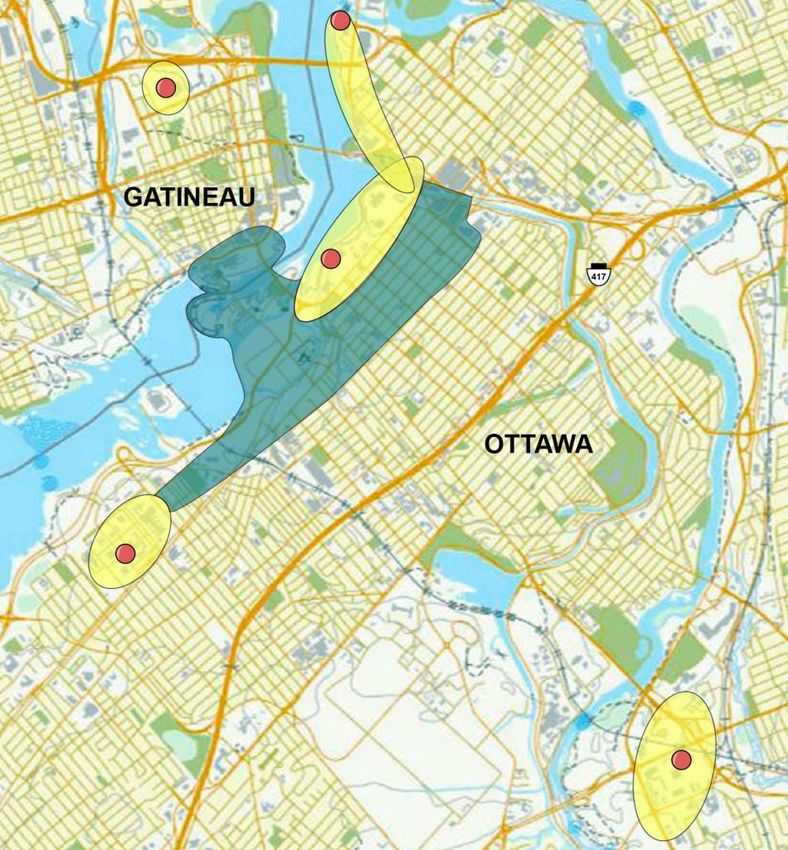
Presentation Index

                           Index
            Welcome
   4 – 13   Introduction
   14 – 22 Scope of the P3 contract
   23 – 31 Key commercial terms
   32 – 45 Procurement Process
   46 – 50 Security Requirements

                                      2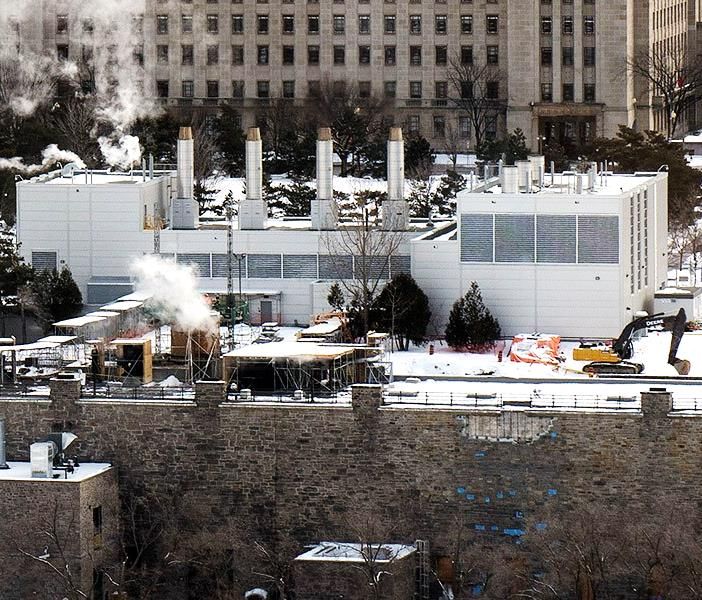
Welcome
• Agenda review
• Introduction of panel members
• Logistics (exits, facilities, follow up)
• La présentation et les questions en français
• Presentation (does not in any way modify the content of
  the RFQ)
• Respondents can submit RFIs using the process
  identified in RFQ

                                                            3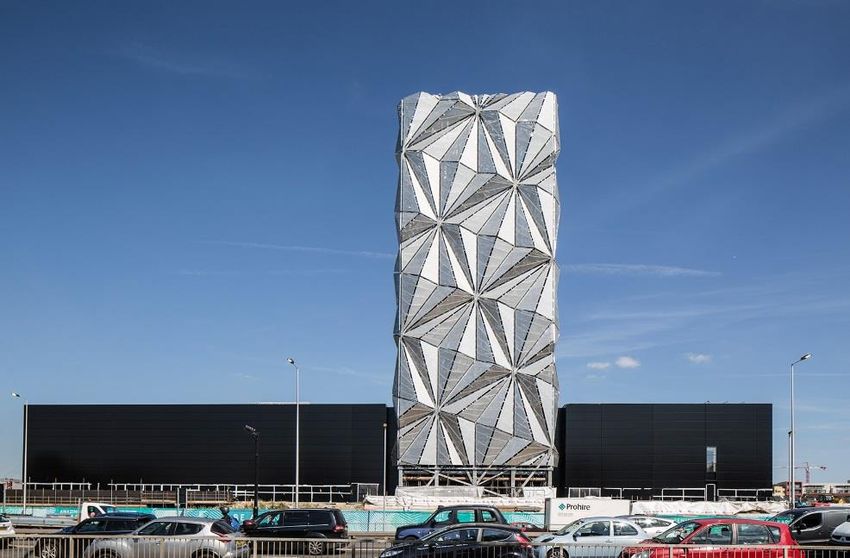
Introduction
Program Overview
Energy Services Acquisition Program (ESAP)
is modernizing the District Energy System (DES)

                                                    Introduction
which provides heating and cooling services to
over 80 federal buildings in the National Capital
Region (>1.6M m2 of floor space), accommodating
55,000+ occupants.

                                                        5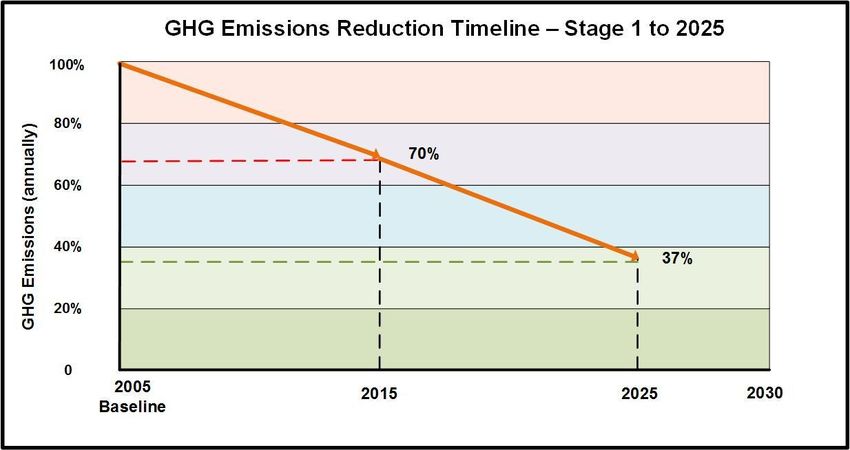
ESAP objectives
• Improve the Government of Canada’s environmental
  performance

                                                                 Introduction
• Reduce costs of building heating and cooling operations
• Increase safety and reliability of heating and
  cooling operations
• Leverage private sector’s innovation, capacity and expertise
• Promote growth of district energy system throughout the
  NCR
• Integrate an education platform as part of the system’s
  transformation and operation
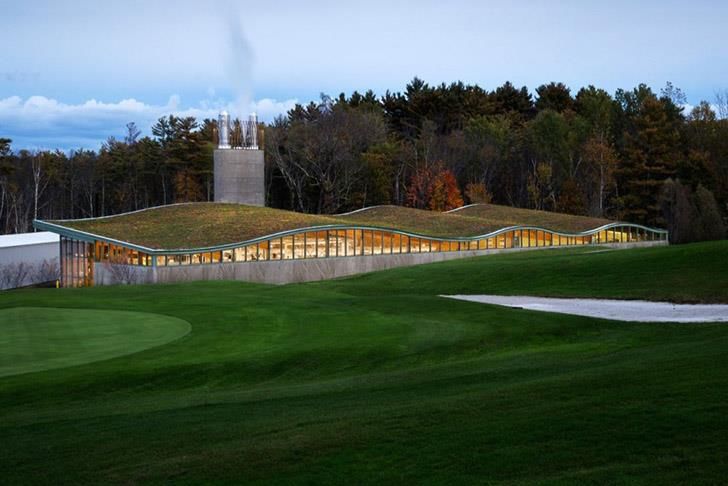
• Design Cliff CHCP to be an architectural landmark

                                                                     6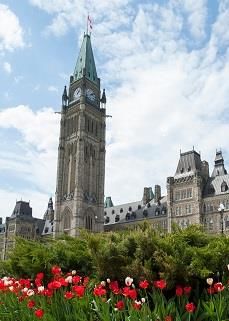
Supporting Government Priorities

The ESAP program will help the Government of Canada to meet the
following commitments:

                                                                            Introduction
• Paris Agreement committing Canada to reducing GHG emissions by 30%
  by 2030;
• Federal Sustainable Development Strategy and Greening Government
  committing to lead by example by greening government operations and
  reducing emissions in government buildings and fleets by 40% by 2030 at
  the latest; and
• Pan-Canadian Framework on Clean Growth and Climate Change
  committing to move toward smart and sustainable buildings that use less
  energy and open the way for using renewable energy sources

                                                                                7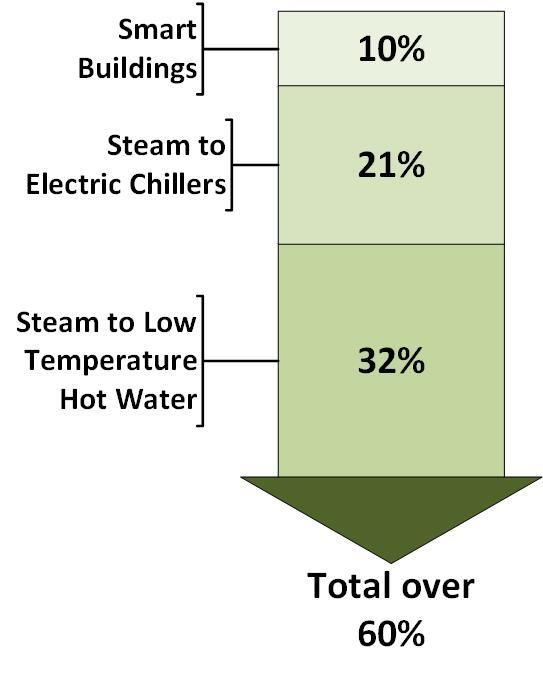
ESAP Consists of Two Stages

Stage 1 – DES Modernization           Stage 2 – Deeper Greening

                                                                          Introduction
– Convert to industry-standard low    – Convert base load to carbon
  temperature hot water                 neutral fuels – achieve low
  technology (LTHW)                     carbon government
– Switch from steam to                – Increase the number of
  electric chillers                     government buildings connected
– Implement Smart Buildings data        to the DES
  analysis to improve efficiency      – Expand and share carbon
– Test new carbon neutral fuels for     neutral energy with non-federal
  deeper greening - pilot projects,     buildings in the community
  feasibility studies

                                                                              8
Reduction of GHG
Emissions by Component
• By 2025, GHG emissions
Introduction
will be reduced by over
60% of our 2005 baseline
emissions as a result of
Stage 1
99%
10
IntroductionFinancial Commitment in 2016
• Budget 2016 committed new
funding to ESAP to:
Introduction
o upgrade the aging DES
to use more efficient
technologies (Stage 1); and
o explore using renewable
sources of energy (start of
Stage 2)
• A Treasury Board (TB)
Submission was approved
in December 2016 Cliff heating and cooling plant
11Aesthetic Requirements
Cliff CHCP is to be an architectural landmark.
Aesthetics will be an important element of the
Introduction
project
12ESAP Project Team
• Procurement Authority: Public Services and Procurement
Canada (PSPC, formerly known as PWGSC)
Introduction
• Government Legal Advisor: Department of Justice (DoJ)
• Legal Advisor: Norton Rose
• Technical Team: FVB Energy, EverGreen Energy, &
Stantec
• Project Management: Tiree
• Financial Advisor: PwC
• HR Advisor: E&Y
13Scope of P3 Contract
Scope of P3 Contract

                                                                   Scope of P3 Contract
Transition    • 3 to12 months
  Phase

             Construction
               Phase      • 2020 to 2025

                Operation and Maintenance Phase   • 2020 to 2055

                                                                       15
Scope of P3 Contract
Private Partner’s Construction Phase responsibilities
Scope of P3 Contract
• Modernization of the District Energy System:
- Generation assets: 5 plants 4 plants
- Distribution assets: 4 distribution networks 2 networks
• Operations and maintenance of existing assets during Construction
Phase
• Coordinate building connections with Canada as the LTHW
building conversion process is completed
16Scope of P3 Contract
Scope of P3 Contract
Private Partner’s Operation Phase responsibilities
• Operating and maintaining the DES during Construction and
Operation phases
• Meeting or exceeding the targeted efficiency levels and GHG
emissions reduction
• Supporting Canada with the expansion of the DES to other
public and private customers in the NCR
17Scope of P3 Contract
Scope of P3 Contract
Canada’s responsibilities
• Undertaking the LTHW heating building conversions for all
connected federal buildings
• Implementing the Smart Buildings Initiative to make
Government of Canada buildings more energy efficient
• Billing and payment collection from the different customers of
the district energy system
• Exploring alternative fuel options
18Scope of P3 Contract
Scope of P3 Contract
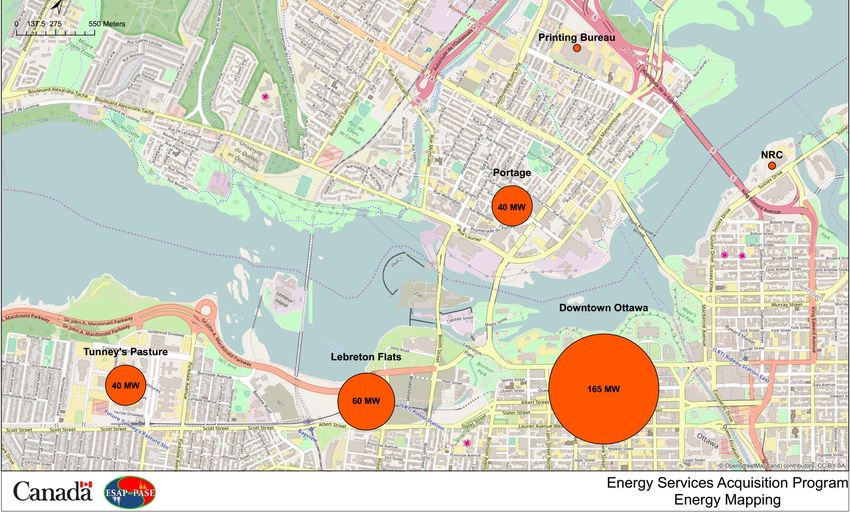
Opportunity to
expand the system to
other users in the
NCR
Existing PSPC
DES locations
Potential DES
Growth and
Expansion
19Expansion Potential
Scope of P3 Contract
20Estimated P3 Contract Value
Scope of P3 Contract
Nominal Total ($)
Design and construction costs $700 Million
Total O&M costs $1,400 Million
Fixed O&M costs $500 Million
Lifecycle costs $200 Million
Fuel and electricity $700 Million
Total $2,100 Million
Note: Costs related to expansion and alternative fuel options are not included
21Questions?
22
Scope of P3 ContractKey Commercial Terms
The Delivery Model

                                                                                   Key Commercial Terms
• For DES Modernization (Stage 1), it is a single Design-Build-
  finance-Operating-Maintenance (DBfOM) contract
    – DB = design build – this phase will take five years – 2020 to 2025
    – f = finance of the construction phase for a seven year term – 2020 to 2027
    – OM = operations and maintenance – 2020 to 2055
• This contract model is anticipated to achieve best value for
  money and risk allocation, control of the project and contractual
  flexibility to expand the system
• Draft Project Agreement is expected to follow the typical
  Canadian P3 Project Agreement (non-recourse financing
  solution)
• Project Agreement will wrap all risks (design, construction,
  financing, operation and maintenance) under one single contract

                                                                                      24
Anticipated P3 transaction structure
Key Commercial Terms
PSPC
Project Agreement
- Design, build, finance, operate and maintain
Debt Private Partner Equity Developers
Lenders
SPV Leaders
Design- O&M
Builder Provider
Design-Build Agreement O&M Agreement
- Fixed-price, fixed schedule, warranty - Fixed-price, includes lifecycle
- Construction security - Operating period security
25ESAP Contractual Structure
• Project Agreement: all risks including interface risk between
Key Commercial Terms
construction and operation under one contract
• Private Partner will have flexibility to design their optimal
organizational structure and financing solution
• Project Agreement is expected to be adapted during the RFP
phase to address innovations and optimize allocation of risks
26Anticipated Payments
Availability based contract: reliability, efficiency, security and quality
Key Commercial Terms
• Interim O&M payments during the construction phase:
- Fixed operation and maintenance payments based on availability of
the asset and technical specifications
- Variable fuel and electricity payments (flow-through cost)
• Substantial completion payment
• O&M payments of the new infrastructure
- Fixed operation and maintenance payments based on availability of
the asset and performance specifications
- Fuel and electricity (flow-through cost) and adjusted based on
efficiency targets
- Validation payment (after 2 years of operations) based on
performance specifications
27Risk allocation
Private
Risk allocation Canada
Partner
Key Commercial Terms
Approvals and Permits
Environmental assessment (EA) approvals
Compliance with environmental regulations
National Capital Commission (NCC) design approvals
NCC land use
Construction and municipal permits
Operating permits
Transition Phase
Operation, maintenance, and lifecycle replacement of Existing Infrastructure
Efficiency of Existing Infrastructure
28Risk allocation
Private
Risk allocation Canada
Partner
Key Commercial Terms
Design and Construction Phase
Operation, maintenance, and lifecycle replacement of Existing Infrastructure
Efficiency of Existing Infrastructure
Design and construction of the District Energy Infrastructure
Buildings conversion to LTHW
O&M Phase
Operation, maintenance, and lifecycle replacement of the District Energy
Infrastructure
Efficiency of the District Energy Infrastructure
Building demand, building energy consumption and commodity price risk
Procurement, management and optimization of the input fuel
Metering
Customer billing and collection
Handback requirements
Finance
Financing during Design and Construction Phase and Validation Period
Financing of future District Energy Infrastructure expansion
29Commercialization of the DES
Key Commercial Terms
Private
Roles PSPC
Partner
Marketing
Business development
Energy Supply Agreements
Design of rate structures
Customer service
Meter reading
Billing clients
Desk services: emergencies, clients' requests linked with DES
Desk services: issues beyond ETS and billing
Improvements and infrastructure expansion within Project
Agreement
Identification of work required
Capital investment decisions
Design, build, operate and maintain
30Questions?
31
Key Commercial TermsProcurement Process
Procurement Process
• Stage 1 – Request for Qualifications (RFQ)
Procurement Process
– Identify the three highest ranked Qualified Respondents and
invite them
– Qualified Respondents will have to sign the Submission
Agreement prior to be invited to proceed to RFP stage
• Stage 2 – Request for Proposals (RFP)
– Three Qualified Respondents to submit technical and
financial proposals
– Proponent offering the best value for Canada will be
selected as Preferred Proponent
– RFP will have provisions for:
Commercially Confidential Meetings
Proposal Design Fee
33Procurement Process
Key Activities
STAGE 1 – REQUEST FOR QUALIFICATIONS
Procurement Process
Introductory Meeting / Information Session September 21, 2017
End of Enquiry Period October 16, 2017 16:00 EDT
Response Submission Deadline November 1, 2017 14:00 EDT
Response Evaluation Completion January 2018
STAGE 2 – REQUEST FOR PROPOSALS
Expected RFP release to Proponent February 2018
Expected Proposal Submission Deadlines:
Technical November 2018
Financial January 2019
Expected Announcement of Preferred Proponent February 2019
Expected Financial Close May 2019
Substantial Completion March 2025
34Integrity
Integrity Framework
Procurement Process
• Canada is committed to doing business with individuals and companies that
respect the law and act with integrity. All respondents will be required to
comply with the Integrity Provisions set out in the RFQ
– A respondent must certify compliance with the integrity provisions included in the
RFQ.
Conflict of Interest
• Ineligible Parties are identified in Section 15.4 of Appendix E.
– The list is non-exhaustive
Section 3.7 of the RFQ: Respondents may request an Advance Ruling
for integrity/conflicts of interest issues
35Response Preparation Instructions
• Respondents must be mindful of the RFQ instructions
Procurement Process
• Conditional responses and variations from the requirements of the
RFQ may render the response non-compliant
• Documents marked as “Master”
– In case of discrepancy between wordings, the “Master” copy will prevail.
• Page Limitations
– Are identified per criterion within Appendix C – Rated Evaluation Criteria
– Page count limitations do not apply for Package 1 (Appendix B – Mandatory
Forms and Certifications)
– Any additional pages will not be considered for evaluation
• Additional format instructions for size and type of paper, numbering
system, font size, etc. are indicated in the RFQ
36Response Preparation Instructions
• Date and Place of Delivery of Responses
Procurement Process
− Deadline: 1 November 2017, at 14:00 (Eastern Daylight
Time)
− Address:
Public Services and Procurement Canada
Bid Receiving Unit
11 Laurier Street
Place du Portage, Phase III
Tower B, Room 0B2
Gatineau, Québec
37Response Preparation Instructions
• Enquiries
Procurement Process
Manu Malik
E-mail Address: TPSGC.PASE-ESAP.PWGSC@tpsgc-pwgsc.gc.ca
• Addenda and Q&A published on a regular basis, as
required
• Deadline for submission of Enquiries
− Monday 16 October 2017 at 16:00 EDT
38Response Preparation Instructions
• Package 1 (Forms and Certifications)
Procurement Process
– One (1) bound, signed master, marked as “Master”, and six (6) hard copies as well
as two (2) separate USB data storage keys each containing electronic copies in
both Microsoft® Office compatible format and searchable Adobe Acrobat®
compatible PDF format
• Package 2 (Technical and Financial Capability and Experience)
– One (1) bound, signed master, marked as “Master” and six (6) hard copies of each
of the following sub-packages:
– Team Partnering – Sub-Package A
– Design Capability and Experience – Sub-Package B
– Construction Capability and Experience – Sub-Package C
– Operations and Maintenance Capability and Experience – Sub-Package D
– Financial Capability and Experience – Sub-Package E
– Two (2) separate USB data storage keys each containing electronic copies in both
Microsoft® Office compatible format and searchable Adobe Acrobat® compatible
PDF format
39Forms and Certifications
Procurement Process
• Respondents must submit the following mandatory
documents as part of their Response:
– Master RFQ Submission Form;
– Team Member Consent Declaration Form;
– Corporate Profile;
– Directors of the Respondent Team Form; and
– Respondent Team Information Form.
40Evaluation Criteria
Procurement Process
Notes:
• A respondent needs to obtain the minimum scores identified in the
RFQ for each of section A to E, as applicable.
PACKAGE 2: TECHNICAL AND FINANCIAL CAPABILITY AND
EXPERIENCE
MINIMUM
RATED CRITERIA WEIGHTING
SCORE
Team Partnering Total : 10% N/A
Design Capability and Experience Total : 20% 12 / 20
Construction Capability and Experience Total : 20% 12 / 20
Operations and Maintenance Capability and
Total : 35% 21 / 35
Experience
Financial Capability and Experience Total : 15% 9 / 15
41Evaluation Criteria
• Response Submission Requirements
Procurement Process
– What must be submitted
– The form and content that is expected
• Evaluation Criteria
– Outlines the attributes of the response that will be rated
– Details conditions that will impact the rating
42Evaluation Criteria
Procurement Process
• Section A will assess the Respondent Team Structure and
Project Development Capability and Experience
• Assessment will be based on the following factors:
• Respondent Team Composition, Structure and Approach;
• Respondent Team’s Experience Working Together; and
• Project Key Individuals
43Evaluation Criteria
• Sections B through D will assess Design, Construction and
Procurement Process
O&M Capability and Experience
• Assessment will be based on the following factors:
• Experience (Comparability of each project reference and
Capability collectively demonstrated by project references);
• Approach; and
• Project Key Individuals
44Evaluation Criteria
Procurement Process
• Section E will assess Financial Capability and Experience
• Assessment will be based on the following factors:
• Financial Capacity;
• Financial Approach;
• Financial Experience;
• Project Key Individuals; and
• Ability to Secure Guarantees and Obtain Insurance
45Security requirements
Security Clearance – RFQ Stage

                                                             Security Clearance
• No security clearances are required to submit a
  response to the RFQ
• However, it is anticipated that security clearances will
  be required in the RFP stage

                                                                47
Security Clearance – RFP Stage
• Canada will provide Proponents with technical drawings and
information about existing facilities and future specifications,
Security Clearance
some of which will be sensitive, including information related to
the distribution networks and tunnels
• It is anticipated that Proponent team members requiring access
to this Sensitive Information to prepare the proposal will be
required to meet the following security requirements:
• Facility Security Clearance at the level of “Secret” (for
firms)
• Personal Security Clearance at the level of “Secret” (for
individuals)
• Important to note that not all Proponent team members working
on the RFP submission will require security clearances, just
those requiring access to this Sensitive Information
48Security Clearance – RFP Stage
Security Clearance
• Potential Respondents are encouraged to initiate
clearance processes now through Canadian
Industrial Security Directorate (CISD)
• Security clearances for personnel clearance at the
Secret Level may take up to a year or more to obtain.
• Canada will not be responsible if required
security clearances are not obtained in an
appropriate time frame by any Proponent
49All information regarding this RFQ is available
on:
www.buyandsell.gc.ca
Please direct any Enquiries regarding the RFQ
to the Canada Contact Person at:
TPSGC.PASE-ESAP.PWGSC@tpsgc-
pwgsc.gc.ca
50You can also read


