Investor Presentation - Quarter Ended June 30, 2020 - Lytham ...
←
→
Page content transcription
If your browser does not render page correctly, please read the page content below

Investor Presentation

Quarter Ended June 30, 2020

Safe Harbor Statement
Statements in this presentation regarding Lincoln’s business that are not historical facts may be “forward-looking
statements” that involve risks and uncertainties. Forward-looking statements should not be read as a guarantee of
future performance or results and will not necessarily be accurate indications of the times at, or by, which such
performance or results will be achieved. Forward-looking statements are based on information available at the time
those statements are made and/or management’s good faith belief as of that time with respect to future events and
are subject to risks and uncertainties that could cause actual performance or results to differ materially from those
expressed in or suggested by the forward-looking statements. Important factors that could cause such differences
include, but are not limited to: our failure to comply with the extensive regulatory framework applicable to our
industry or our failure to obtain timely regulatory approvals in connection with a change of control of our company
or acquisitions; our success in updating and expanding the content of existing programs and developing new
programs in a cost-effective manner or on a timely basis; risks associated with changes in applicable federal laws and
regulations, including final rules that took effect during 2011 and other pending rulemaking by the U.S. Department
of Education; uncertainties regarding our ability to comply with federal laws and regulations regarding the 90/10
rule and cohort default rates; risks associated with the opening of new campuses; risks associated with integration
of acquired schools; industry competition; our ability to execute our growth strategies; conditions and trends in our
industry; the COVID-19 pandemic and its impact on our business and the U.S. and global economics; general
economic conditions; and other factors discussed in our annual report on Form 10-K for the year ended December
31, 2019. For a discussion of such risks and uncertainties, which could cause actual results to differ from those
contained in the forward-looking statements, see “Risk Factors” in Lincoln’s annual report on Form 10-K for the year
ended December 31, 2019. All forward-looking statements are qualified in their entirety by this cautionary
statement, and Lincoln undertakes no obligation to revise or update this news release to reflect events or
circumstances after the date hereof.

                                                                                                                    2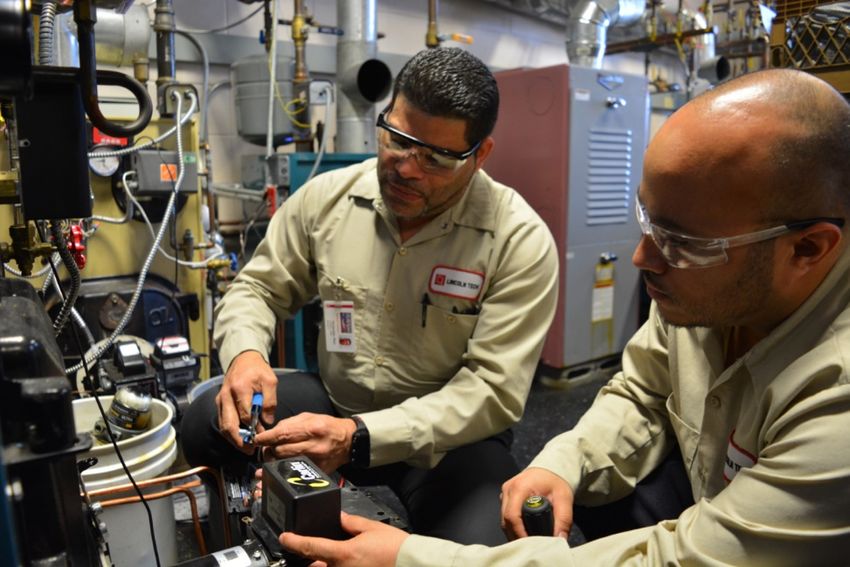
Investment Opportunity
• The Skills Gap - Employers cannot find enough technically trained employees
• Lincoln is a leading, technical, hands-on educator and trainer serving high demand
  industries (transportation, skilled trades and healthcare) facing this Skills Gap
• Enrollment and revenue grew organically while facing a strong employment market
  which is now accelerating with high unemployment
• Significant operating leverage with Lincoln’s 22 campuses currently operating at
  approximately 45% of full capacity
• 2019 financing transactions provide resources to accelerate growth
• Lincoln can emerge from COVID-19 disruption in an excellent position for growth
    • Lincoln has historically benefited from economic slowdowns – unemployment
       drives enrollments and operating leverage rapidly expands profitability
    • Renewed attention on healthcare careers
    • Methods of operating under distance learning can be retained to deliver
       education under a more efficient hybrid strategy going forward

                                                                                     3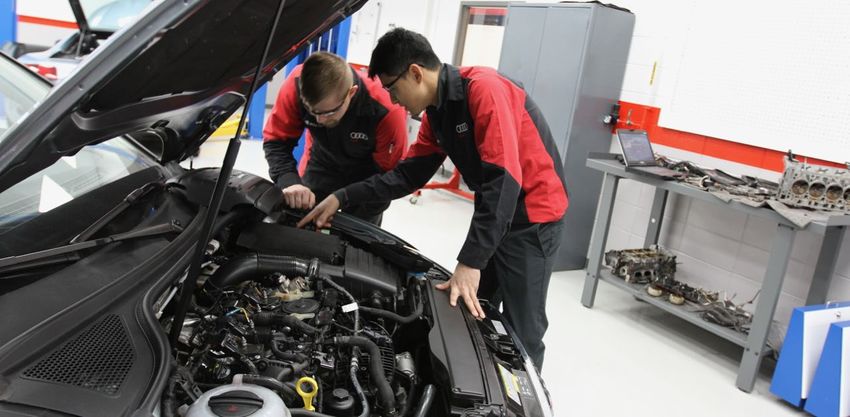
Entering 2020 : A New Chapter for Lincoln
2012 – 2017          2018 – 2019            2020 & beyond
Survival             Turnaround             Growth

    • Pressures          • Leadership           • Achieving
      throughout           changes                organic
      industry           • Positive new           growth
    • Programs             student starts       • Resources to
      realigned          • Enrollment             accelerate
    • Campuses             growth                 growth
      closed             • Return to            • Increase
    • Cost cutting         profitability          marketing
                         • Financing            • Expand and
                           transactions           add programs
                                                • Add
                                                  campuses

                                                                 4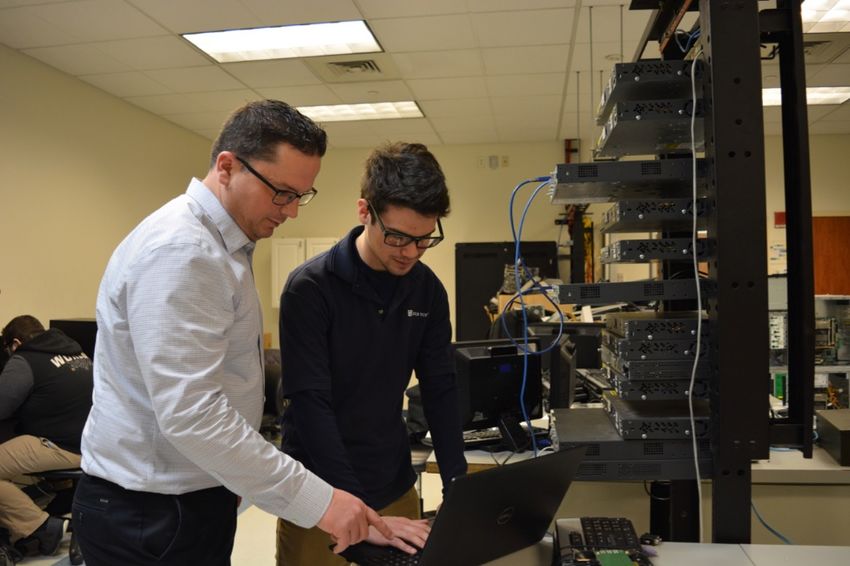
2020 Priorities Pre-COVID-19

     Deliver on 2020                            • Revenue and student start growth of 3% to 5%
                                                • EBITDA of $15 to $17 million; Operating income of $7 to $9 million
     financial goals*                           • Capital expenditures of $6.5 million to $7.5 million

    Support existing                            • Campus capital projects and new training equipment
                                                • Expand industry partnerships
        growth                                  • Improve pay and benefits to attract and retain performers

                                                • Introduce successful programs to new campuses
 Invest to accelerate                           • Add new programs
                                                • Evaluate opportunities to expand footprint through either adding
       growth                                     new campus or strategic acquisition
                                                • Increase marketing to drive additional start growth

 Provide students                               • Continue to deliver strong student outcomes
  with training to                              • Maintain program affordability
                                                • Leverage industry partnerships
bridge the skills gap
* These financial goals were per-COVID 19 and guidance was withdrawn on May 13, 2020                                   5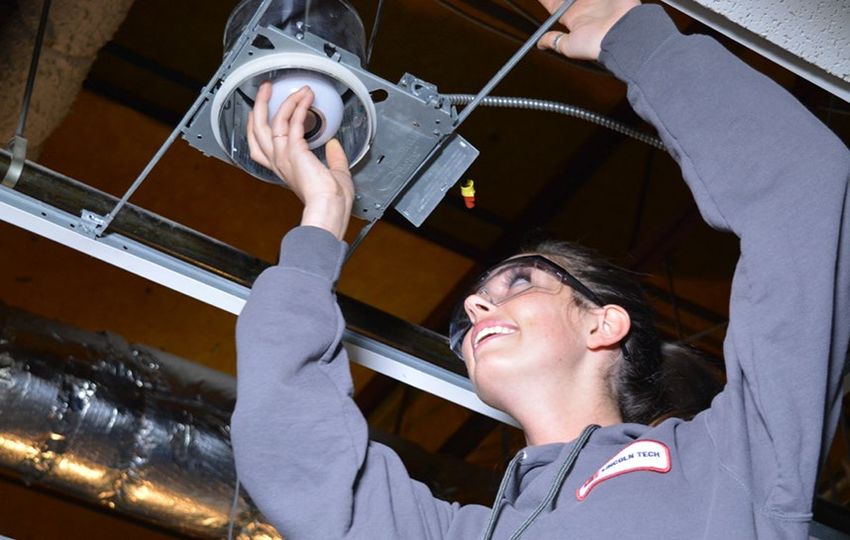
Impact of COVID-19
 Initial Response                Medium Term                            Longer Term

Education
             Rapidly moved all programs to distant learning delivery

             Certain skills require hands-on / in lab training

             Obtaining 3rd party approvals to allow students to graduate on time

Student
             94% of students remain active with distant learning delivery

Population   Active population remains higher than last year through end of June, +7.5%

             Retention is stronger & new enrollments are increasing

Operations
             Providing all student services remotely
             Additional expenses to date offset by cost reductions
             All campuses are open
             Operations modified for social distancing - 9:1 student instructor ratio vs 15:1 pre COVID 19

Future
             High unemployment should increase enrollments

             Growing interest in healthcare careers

             Teaching remotely has taught us how to deliver skills training more efficiently

                                                                                                             6
Strategy driving superior performance
Key elements of Lincoln’s strategy are driving our superior results as demand
for skilled training grows and we navigate the COVID-19 pandemic environment

Diversified      Leading provider of automotive, skilled trades, and healthcare programs

Programs         Tremendous interest and demand for our Healthcare Programs

                 Healthcare and Other Professions new student starts up +6.8% and population up +17.9%

Online           Years of experience delivering online education

Experience       Highly successful transition to remote learning and now to our hybrid approach

                 Q2 revenues declined by only -1.7% despite campuses being closed for most of the quarter

Financial        Exiting non-core campuses and programs had produced bottom-line profitability in 2019

Profile          Established an expense structure that provides significant operating leverage as enrollment grows

                 YTD EBITDA increased +$6.5 million on revenue growth of +$5.7 million

                                                                                                              7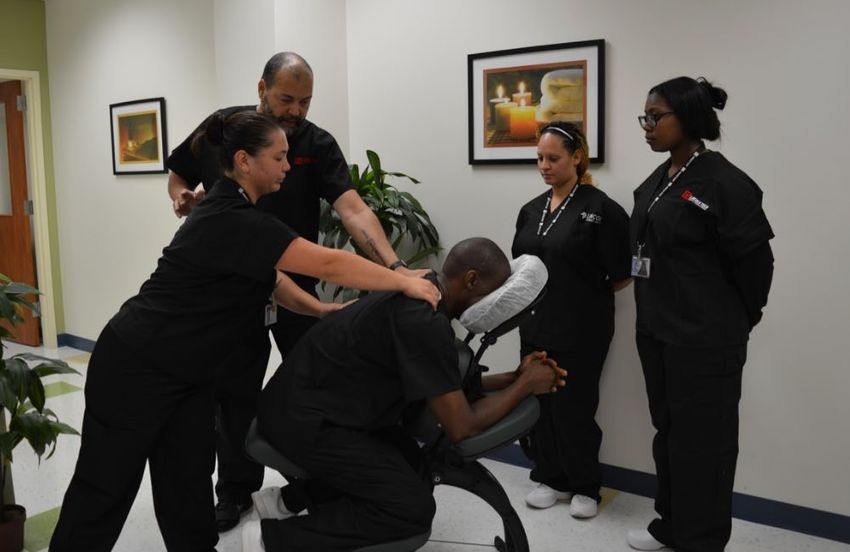
Lincoln Graduates are Essential Workers
Approximately 90% of our students are pursuing careers that the U.S
Department of Homeland Security considers Essential Critical Infrastructure
Workers.

                                                                              8
Company Overview
Nasdaq : LINC
• A national leader with nearly 75 years of experience
• Focused on providing hands-on training serving national, large regional, and
  local employers in transportation, skilled trades, and healthcare
• Strong student outcomes and regulatory record
• The growing “middle skills gap” will drive growth for the next decade
• Increased student starts has returned Lincoln to profitability
• High operating leverage as enrollment grows
• Recent financing transactions provide flexibility to accelerate growth
• Opportunities to expand footprint and program offerings for additional growth

   Stock Price as of 06/30/2020          $4.05   Revenues (2019)           $273 million
   52-week Price Range           $1.66 - $4.31   EBITDA (2019)             $13.4 million
   Common Shares Outstanding      32.4 million   Institutional Ownership           71%
   Market Capitalization        $103.3 million   Insider Ownership                   9%
   Average Volume (3 mo.)              47,063
                                                                                           10
Lincoln Today
• Headquartered in West Orange, NJ
• Operates 22 campuses in 14 states with approximately 12,300 students
• Two segments focused on “middle skills training”
Transportation and Skilled Trades Healthcare and Other Professions
13 Campuses 9 Campuses
Approximately 7,800 students* Approximately 4,500 students*
High employer demand for training in Growing demand for healthcare
Automotive, Diesel, HVAC, CNC, professionals
Welding, Electrical
Growing list of industry partners Strong demand by students especially
for licensed practical nursing
11
* as of 06/30/2020Campuses Across the Country
Opportunity for expansion in the South and West
12Demand for “Middle Skills Training”
Middle-skill jobs, which require education
beyond high school but not a four-year
degree, make up the largest part of
America’s labor market.
Low
(Source: National Skills Coalition)
Skill
20%
US Job Opening Middle
by Skill Level Skill
(2012-2022) 49%
High
Skill
31%
Source: NSC analysis of long-term occupational projections
from state labor/employment agency.
13Drivers of Organic Demand for Training
Simple Supply and Demand Imbalance
Aging workforce & Growing
Simple jobs have
retirement of baby manufacturing,
become more complex
boomers leaves many transportation,
with the need to
middle skill jobs construction and
understand technology
vacant healthcare sectors
Decline in career & Societal emphasis on
technical education at getting a
high schools 4-year college degree
14Significant Opportunity for Organic Growth
BLS data for annual new hires for Lincoln’s top programs
Transportation and Skilled Trades Healthcare and Other Professions
Automotive Technology 76,000 LPN 63,000
Diesel Technology 42,000 Medical Assisting 95,000
Collision Repair 17,100 Dental Assisting 46,000
Electrical 82,000 Culinary 146,000
Welding 46,000 Baking & Pastry 29,000
HVAC 39,000 Cosmetology 85,000
Electronic Systems Technology 12,000 Aesthetics 8,000
CNC Manufacturing Technology 17,000 Information Technology 44,000
Lincoln’s Market Share ~1.5% Lincoln’s Market Share ~0.5%
National figures cited above are based on projected annual job openings which refers to the average annual job openings due to growth and net replacement. This
data was compiled from the U.S. Dept. of Labor, Bureau of Labor Statistics, for the years 2016 through 2026, www.careeronestop.org, captured on March 27,
2018. State-specific employment projections can also be found at careeronestop.org.
15Lincoln’s Workforce Solution Differentiator–
Not your local Community College
• Superior graduation rates (68% vs 30%) and placement rates
• Develop training programs with feedback from employers and key industry
associations to understand gaps and needs
• Integrate industry preferred licensing and certifications into the curriculum
• Expect students to meet employability standards for appearance, attendance and
professional attitude while in school
• Build labs and shops that replicate the working environment using professional
grade equipment and tools
• Incorporate cutting edge education technology with animations, videos and
simulations to make learning active and engaging
• Offer an accelerated program with multiple entry points to allow students to
graduate quickly and enter the workforce earlier
• Provide robust student support services to ensure strong outcomes
16National Presence – Goal to be #1
17Growing Base of Industry Partners
• Positions Lincoln as long-term solutions provider for both entry level technicians
and advanced workforce training
• Employers appreciate the technical and soft skills of our students
• Partners provide validation of the quality of our education
• Co-branding opportunities with elite partners helps attract new students
• Partners provide better job opportunities for our graduates
18Operating Leverage in Current Campuses
• As enrollment grows, significant operating leverage - minimal incremental
expenditures are required (faculty, staff, and training aids)
• Organic revenues are growing in the low single digits even with strong economy
with expanding margins
• Historically, enrollments have accelerated during a recession
Year Ending Last Recession
12/31/2019 12/31/2010
Campuses 22 22 Analysis of same campuses
Population ~11,300 ~17,900 6,000+ more students
Utilization ~40% ~65% better utilization
same school revenue
Revenues $273 $414
approximately 50% higher
EBITDA $13.4 $80.3 Significant operating leverage
19Experienced Management Team (Years at Lincoln)
Scott Shaw Brian Meyers Stephen Buchenot Chad Nyce
President and CEO EVP, CFO & Treasurer EVP of Campus EVP, Chief Innovation
(18) (16) Operations (27) Officer (Financial Review
YTD June Revenue, Starts, & Average Population
($ in millions)

                            Revenue                                      Average Population

                     $127             $133                                               11,422
                                                                          10,497 +8.8%
                              +4.5%    $92
                      $88                                                                7,302
                                                                           6,935

                                      $41                                  3,561         4,120
                      $38

                  YTD Jun 2019    YTD Jun 2020       Starts             YTD Jun 2019 YTD Jun 2020

                                             5,836            6,145
                                                     +5.3%
                                             3,849            4,022

                                             1,987            2,123

                                         YTD Jun 2019    YTD Jun 2020                               22
Student Starts
Transportation and Skilled Trades
Q2 YTD June
2,302
2,028
13.5%
3,849 4,022
4.5%
Q2 2019 Q2 2020 YTD Jun 2019 YTD Jun 2020
Healthcare and Other Professions
Q2 YTD June
1,127
949 2,123
1,987
18.8% 6.8%
Q2 2019 Q2 2020 YTD Jun 2019 YTD Jun 2020
23Average Student Population
Transportation and Skilled Trades
Q2 YTD June
7,298 6,935 7,302
6,827
+5.3%
+6.9%
Q2 2019 Q2 2020 YTD Jun 2019 YTD Jun 2020
Healthcare and Other Professions
Q2 YTD June
4,254 4,120
3,578 3,561
+18.9% +15.7%
Q2 2019 Q2 2020 YTD Jun 2019 YTD Jun 2020 24Revenue ($ in millions)
Transportation and Skilled Trades
Q2 YTD June
$92.0
$88.4
$44.0 $42.9
-2.5% +4.1%
Q2 2019 Q2 2020 YTD Jun 2019 YTD Jun 2020
Healthcare and Other Professions
Q2 YTD June
$40.5
$38.5
$19.5 $19.6
+5.4%
+0.1%
Q2 2019 Q2 2020 YTD Jun 2019 YTD Jun 2020
25Total Operations ($ in millions)
• Approximately 12,300 students enrolled at 22 campuses as of 06/30/2020
• Key metrics such as revenue, average population and student graduation rates
continue to grow
$132.5
$126.8
$63.6 $62.5
Margin Margin Margin Margin
-$0.2 $3.0 $3.6
-.2% 4.9% -$3.0 -2.3% 2.7%
Q2 2019 Q2 2020 YTD Jun 2019 YTD Jun 2020
26Transportation and Skilled Trades ($ in millions)
• Approximately 7,800 students enrolled at 13 campuses as of 06/30/2020
• High demand for training in Automotive, Diesel, HVAC, CNC, Welding, Electrical
• Growing list of industry partners
$92.0
$88.4
$44.0 $42.9
Margin Margin Margin Margin
$6.5 $13.0
$4.2 9.6% 15.2% $7.9 8.9% 14.1%
Q2 2019 Q2 2020 YTD Jun 2019 YTD Jun 2020
27Healthcare and Other Professions ($ in millions)
• Approximately 4,500 students at 9 campuses as of 06/30/2020
• Growing demand for healthcare professionals
• Strong demand by students especially for Licensed Practical Nursing
$40.5
$38.5
$19.5 $19.6
Margin Margin Margin Margin
9.8% 14.6% $3.0 7.8% $5.0 12.3%
$1.9 $2.8
Q2 2019 Q2 2020 YTD Jun 2019 YTD Jun 2020
28Increasing Profitability ($ in millions)
Total Company EBITDA on a Trailing 12-month basis
$25.0
$20.0
$15.0
$10.0
$5.0
$0.0
Q2 Q3 Q4 Q1 Q2 Q3 Q4 Q1 Q2
2018 2018 2018 2019 2019 2019 2019 2020 2020
TTM EBITDA:
• Lincoln’s EBITDA has increased in each quarter of 2019 as compared to 2018
• 06/30/2020 EBITDA was +$3.0M vs. -$153K on 06/30/2019
29COVID-19 CARES Act
Student Funds
Funds Received $13.7M
Funds Distributed $11.4M
Number of Students that received funds 12,749
Institutional Funds
Funds Received $13.7M
$1.3M has been used by the Company
Funds used for laptops for those whose programs did not have them
PPE for safety
$12.4 million left for future COVID expenses
30EBITDA & Net Income Pro Forma Summary* ($ in millions)
Q2 YTD
2019 2020 2019 2020
Revenue:
Transportation $44.0 $42.9 $88.4 $92.0
HOPS $19.5 $19.6 $38.5 $40.5
Total Revenue $63.6 $62.5 $126.8 $132.5
EBITDA
Transportation $4.2 $6.5 $7.9 $13.0
HOPS $1.9 $2.8 $3.0 $5.0
Corporate -$6.3 -$6.3 -$13.8 -$14.4
Total EBITDA -$0.2 $3.0 -$3.0 $3.6
Net Income
Transportation $2.5 $4.9 $4.3 $9.7
HOPS $1.8 $2.7 $2.8 $4.7
Corporate -$7.4 -$6.8 -$15.6 -$15.4
Total Net Income -$3.1 $0.8 -$8.5 -$1.0
31Pro Forma Operations Seasonality*
Pro Forma EBITDA Seasonality
($ in 000's)
Q1 Q2 Q3 Q4 TY
2018 $ (4,033) $ (540) $ 4,039 $ 10,977 $ 10,442
2019 $ (2,814) (153) 4,125 12,197 13,355
2020 $ 544 $ 3,000 $ - $ - $ -
Pro Forma Starts Seasonality
Q1 Q2 Q3 Q4 TY
2018 2,707 2,874 4,623 2,113 12,317
2019 2,859 2,977 4,779 2,319 12,934
2020 2,716 3,429 - - -
32
* 2018 excludes transitional segment (closed schools) and is presented as pro forma operations. Refer to appendix.Liquidity
• $45 million credit facility
• $20 million funded term loan – Outstanding as of 06/30/2020 approx. $18.1M
• $10 million delayed draw term loan – Zero as of 06/30/2020, $10 million available
• $15 million revolving line of credit ($10 sublimit for standby letters of credit) - $11million
available as of 06/30/2020
• Improved balance sheet due to financing activities
As of 06/30/2020
Cash, restricted cash and cash $26.0M
equivalents*
Credit agreement availability $21.0M
Total Liquidity** $32.5M
Outstanding Debt $18.1M
*Includes $14.5M of CARES act funds that has not been completely distributed. $11.9M in Cash and
$2.6M in Restricted Cash.
** Excludes all CARES act funds
33Real Estate Assets
Owned Facilities Leased Properties
• $60m Appraised Value • 19 School Facilities
• Denver, CO • 1 Corporate Headquarters
• Grand Prairie, TX
• Nashville, TN
• $30m Net Book Value
Goals:
Continue to right-size facilities
• Suffield, CT * Space reduction
* A vacant former school property that is up Sublease
for sale.
Increase utilization with new
programs
342020 Financial Guidance
Given the complex and evolving public health and economic landscape from
the ongoing COVID-19 pandemic coupled with the limited foresight into the
campuses’ reopening dates and a modified operating plan all pose many
challenges including our financial forecasting ability. As a result, at this time
we believe it is prudent to withdraw our previously disclosed full year 2020
guidance. We will re-evaluate this decision when our operating environment
becomes clearer.
35Investment Merits
• A national leader in hands-on transportation, skilled trades, and healthcare training
• Organic revenue growth with increasing profitability
• The skills gap will drive growth for the next decade
• In a down economy, Lincoln’s growth and profitability can increase substantially
• Opportunities to expand footprint and program offerings for additional growth
• Capacity at campuses provides high operating leverage on incremental growth
• $66.7 million of tax loss carryforwards reduces future cash outflows*
• Strong student outcomes and regulatory record
* Subject to 382 limitation and not reflected on balance sheet due to having a full tax valuation allowance.
36Appendix
Use of Non-GAAP Financial Information
This presentation contains non-GAAP (Generally Accepted Accounting Principles) financial measures, which
are intended to supplement, but not substitute for, the most directly comparable GAAP measures.
Management chooses to disclose to investors these non-GAAP financial measures because they provide an
additional analytical tool to clarify the results from operations and help to identify underlying trends.
Additionally, such measures help compare the company's performance on a consistent basis across time
periods. Management defines As Reported as actual operating results derived from previously filed annual
and quarterly financial information submitted to the Securities and Exchange Commission. Management
defines EBITDA as loss before interest expense, interest income, income taxes, depreciation and
amortization. Management defines Pro forma as actual operating results derived from previously filed
annual and quarterly financial information submitted to the Securities and Exchange Commission excluding
unusual and non-recurring transactions such as closed school operations, gain on sale of assets and interest
normalization. Management defines interest normalization as adjusting interest expense on debt from prior
years using the Company’s current credit agreement terms. To obtain a complete understanding of the
company's performance, these measures should be examined in connection with revenue, operating loss
and net loss, determined in accordance with GAAP, as presented in the financial statements and notes
thereto included in the annual and quarterly filings with the Securities and Exchange Commission. Since the
items excluded from these measures are significant components in understanding and assessing financial
performance under GAAP, these measures should not be considered to be an alternative to revenue,
operating loss and net loss as a measure of the company's operating performance. Exclusion of items in the
non-GAAP presentation should not be construed as an inference that these items are unusual, infrequent or
non-recurring. Other companies, including other companies in the education industry, may calculate non-
GAAP financial measures differently than the Company does, limiting their usefulness as a comparative
measure across companies. A reconciliation of the historical non-GAAP financial measures to the most
directly comparable GAAP measures is included in the following slides.

                                                                                                         38
Financial Statements
Our financial statements reflect the following operational results:
1. Consolidated operations – consists of total operations from the 2 on-going
campus segments (Transportation and Skilled Trades & Healthcare and Other
Professions), transitional segment campuses & corporate expenses
2. Transitional segment operations – consists of campuses that have been closed
• As of January 1, 2019 there are no operations in the Transitional segment
• In 2018 we had one campus under the Transitional segment
3. Pro-forma operations – reflects operations from the 2 on-going segments &
corporate but excludes the Transitional segment (closed campus in 2018)
39Pro Forma Operations EBITDA Reconciliation* ($ in thousands)
For the Year Ended December 31, 2018 For the Year Ended December 31, 2019
Transportation Healthcare Transportation Healthcare
and Skilled and Other and Skilled and Other
Trades Professions Transitional Corporate Total Trades Professions Transitional Corporate Total
Net Income (loss) $ 17,659 $ 6,466 $ (5,994) $ (24,676) $ (6,545) $ 21,979 $ 7,588 $ - $ (27,552) $ 2,015
Add-back:
Interest expense, net 2 3 - 2,386 2,391 - - - 2,955 2,955
Provision for income taxes - - - 200 200 - - - 268 268
Operating Income (loss) $ 17,661 $ 6,469 $ (5,994) $ (22,090) $ (3,954) $ 21,979 $ 7,588 $ - $ (24,329) $ 5,238
Depreciation and amortization 7,568 250 18 585 8,421 7,236 409 - 471 8,115
EBITDA $ 25,229 $ 6,719 $ (5,976) $ (21,505) $ 4,467 $ 29,215 $ 7,997 $ - $ (23,858) $ 13,353
Pro Forma EBITDA Add-Back:
Transitional $ 5,976 $ -
Pro Forma Operations EBITDA $ 10,443 $ 13,353
40Quarterly EBITDA Reconciliation ($ in thousands)
For the Three Months Ended For the
March 31, June 30, Sept 30, Dec 31, Year Ended
2020 2020 2020 2020 2020
Net Income (loss)
Total Company $ (1,750) $ 783 $ - $ - $ -
Add-back:
Interest expense, net 354 327 - - -
Provision for income taxes 50 50 - - -
Operating Income (loss) $ (1,346) $ 1,160 $ - $ - $ -
Depreciation and amortization:
Total Company 1,890 1,874 - - -
EBITDA $ 544 $ 3,034 $ - $ - $ -
41Quarterly EBITDA Reconciliation ($ in thousands)
For the Three Months Ended For the For the Three Months Ended For the
March 31, June 30, Sept 30, Dec 31, Year Ended Mar 31, Jun 30, Sep 30, Dec 31, Year Ended
2018 2018 2018 2018 2018 2019 2019 2019 2019 2019
Net Income (loss)
Total Company $ (6,874) $ (4,104) $ (600) $ 5,032 $ (6,545) $ (5,467) $ (3,063) $ 1,339 $ 9,206 $ 2,015
Transitional (131) (899) (1,865) (3,099) (5,994) - - - - -
Pro Forma Total $ (6,742) $ (3,205) $ 1,265 $ 8,131 $ (551) $ (5,467) $ (3,063) $ 1,339 $ 9,206 $ 2,015
Add-back:
Interest expense, net 563 531 625 673 2,391 552 827 754 822 2,955
Provision for income taxes 50 50 50 50 200 50 144 50 24 268
Operating Income (loss) $ (6,130) $ (2,625) $ 1,940 $ 8,854 $ 2,040 $ (4,865) $ (2,093) $ 2,143 $ 10,052 $ 5,237
Depreciation and amortization:
Total Company 2,100 2,088 2,102 2,131 8,421 2,050 1,940 1,982 2,144 8,116
Transitional 4 4 4 8 18 - - - - -
Pro Forma Total 2,097 2,084 2,098 2,123 8,402 2,050 1,940 1,982 2,144 8,116
EBITDA $ (4,033) $ (540) $ 4,039 $ 10,977 $ 10,443 $ (2,816) $ (152) $ 4,126 $ 12,197 $ 13,354
42You can also read


