Is a One Health Approach Utilized for Q Fever Control? A Comprehensive Literature Review - MDPI
←
→
Page content transcription
If your browser does not render page correctly, please read the page content below
International Journal of
           Environmental Research
           and Public Health

Review
Is a One Health Approach Utilized for Q Fever
Control? A Comprehensive Literature Review
Md Rezanur Rahaman 1 , Adriana Milazzo 1 , Helen Marshall 2 and Peng Bi 1, *
 1    School of Public Health, The University of Adelaide, Adelaide, South Australia 5005, Australia;
      mdrezanur.rahaman@adelaide.edu.au (M.R.R.); adriana.milazzo@adelaide.edu.au (A.M.)
 2    Adelaide Medical School and Robinson Research Institute, The University of Adelaide, Adelaide,
      South Australia 5005, Australia; helen.marshall@adelaide.edu.au
 *    Correspondence: peng.bi@adelaide.edu.au

 Received: 15 January 2019; Accepted: 23 February 2019; Published: 28 February 2019

 Abstract: Q fever, a zoonotic disease transmitted from animals to humans, is a significant public
 health problem with a potential for outbreaks to occur. Q fever prevention strategies should
 incorporate human, animal, and environmental domains. A One Health approach, which engages
 cross-sectoral collaboration among multiple stakeholders, may be an appropriate framework and
 has the underlying principles to control Q fever holistically. To assess whether components of
 One Health for Q fever prevention and control have been applied, a comprehensive literature
 review was undertaken. We found 16 studies that had practiced or recommended a One Health
 approach. Seven emerging themes were identified: Human risk assessment, human and animal
 serology, integrated human–animal surveillance, vaccination for at-risk groups, environmental
 management, multi-sectoral collaboration, and education and training. Within the multi-sectoral
 theme, we identified five subthemes: Policy and practice guidelines, information sharing and
 intelligence exchange, risk communication, joint intervention, and evaluation. One Health practices
 varied between studies possibly due to differences in intercountry policy, practice, and feasibility.
 However, the key issue of the need for multi-sectoral collaboration was highlighted across most of
 the studies. Further research is warranted to explore the barriers and opportunities of adopting a One
 Health approach in Q fever prevention and control.

 Keywords: Q fever; zoonotic disease; prevention and control; environmental; One Health; multi-sectoral

1. Introduction
     Q fever, a zoonotic disease transmitted from animals to humans, is a significant public health
problem worldwide. It is mostly occupationally acquired, and despite the availability of a vaccine for
human use, at least in Australia, some countries continue to bear a substantial disease burden [1,2].
The annual incidence of Q fever notifications in the USA ranges from 0.28 to 2.40 cases per
million persons. The reported incidence in England and Wales is similar to that in the USA.
However, the annual reported incidence in Australia is higher with 15–49 cases per million persons [3].
     The high incidence of infection in humans together with potential for spread through animal
movements, magnitude of animal and human involvement, suboptimal national preparedness for
outbreak control, and diagnostic challenges make Q fever control an important international public
health priority [4,5]. Furthermore, infection in animals is associated with abortion storms particularly
in goats, livestock culling, and reduced milk and meat production [6]. Reduced livestock production
combined with human health costs derived from clinician visits, laboratory testing, hospital admission,
and lost productivity signifies the impact of Q fever warranting an international response [6,7].
     On average, an acute Q fever infection can cost a patient 7.5 days off work [6]. In an Australian
study the cost of compensation claims from Q fever was estimated to be >A$3 million per annum,

Int. J. Environ. Res. Public Health 2019, 16, 730; doi:10.3390/ijerph16050730     www.mdpi.com/journal/ijerph
Int. J. Environ. Res. Public Health 2019, 16, 730 2 of 22
which today is approximated at A$4.3 million per annum, given inflation rates of the Australian dollar
over 15 years [8]. Though immunization can largely abate these costs, screening of prior immunity
through serology and skin tests, followed by vaccination if non-immune, is associated with high
costs (≈A$300), and these costs are often responsible for lower immunization rates among at-risk
occupational groups such as abattoir workers and farmers [9,10].
Considering the human-animal interface of zoonotic diseases, a One Health approach provides
a strong framework in dealing with the economic challenges associated with Q fever [2,11–13].
One Health holistically engages human, animal, and environmental health professionals in
collaborating nationally and globally for the pursuit of healthy living of humans and organisms [14].
Coordination and collaboration includes improving human surveillance, instituting animal
surveillance and ensuring data sharing and intelligence exchange between veterinary and public
health agencies, establishing communication, improving clinicians’ knowledge and attitude toward
Q fever management, strengthening laboratory facilities, improving veterinary control measures,
environmental monitoring, human and animal sero-surveillance, and access to screening and
vaccination [11,15].
The aim of this review was to examine whether a One Health approach to Q fever control
was applied and to identify gaps in practice and recommendations. One Health components
that were considered for this review include human and animal serological surveys; knowledge,
attitude, and practices among practitioners and farmers; One Health literature reviews; ecological
correlations using multi-sectoral data; and outbreak investigations involving human, animal,
and environmental domains.
2. Materials and Methods
2.1. Search Strategy
In order to identify all published studies on Q fever that utilized one or more components of
a One Health approach, a systematic literature search was conducted in CINAHL, Embase, PsycINFO,
PubMed, Scopus, and Web of Science databases until 13 June 2018. Searches were restricted to
English language only. A logic grid using indexing languages (Emtree, MeSH) and/or keywords
was developed for each database (see Table S1—Supplementary file for detailed search strategy).
Keywords such as “Q fever” and “One Health”, their synonyms and closely associated words were
used. Additionally, references cited in the included studies were pearled for possible relevance.
Because a limited number of studies applied a One Health approach to Q fever, the literature search
was extended to include conference abstracts and proceedings.
2.2. Eligibility Criteria
Studies that met one of the following two criteria were included:
Studies that described the practice of one or more components of One Health in Q fever prevention
and control;
Studies that did not practice but recommended a One Health approach to Q fever prevention
and control.
Excluded studies were those not having a One Health practice and/or recommendation focus in
Q fever control. Books and book chapters were also excluded.
2.3. One Health Practice, Recommendation, and Observed and Expected Outcomes
Studies including serological surveys, outbreak investigations, ecological correlation, and systematic
reviews that adopted a One Health approach from the outset were considered as practice. In contrast,
published literature that recommended this approach for Q fever control was considered as recommendation.
As highlighted in Table 1, One Health practices resulted in observed outcomes whereas recommendations
were made with expected outcomes.Int. J. Environ. Res. Public Health 2019, 16, 730 3 of 22
Table 1. Characteristics of the studies that used one or more components of One Health in Q fever prevention and control.
Observed and/or Expected
Study and Location Study Type One Health Comments
Outcomes
Practiced
[16] Q fever included in the Diagnostic challenges
Cross-sectional Risk factor survey among farmers, herders
South Africa differential diagnosis of related to febrile
and veterinary staff
febrile illnesses illnesses identified
Positive Q fever
Human serology Small sample size and
serology demonstrated
non-random selection of
Recommended participants limit
generalizability of
Education and training related to zoonosis the results
Educated clients for better
for human health and
disease prevention
veterinary practitioners
Practiced
[17] One Health focus was
Systematic review Risk factors reviewed:
Europe/Belgium drawn from the
One Health is a model for
Netherlands experience,
Occupational factors e.g. farmers, Q fever control addressing
which may fail to
abattoir workers complex interactions
appreciate the subtleties of
Husbandry factors e.g. goat farming between the
Q fever epidemiology that
Environmental factors e.g. infected reviewed factors
determine possible control
livestock transportation options in other countries
Recommended
Q fever monitoring in high
incidence countries Promote optimum health
of humans, animals
and environment
Collaboration across disciplinesInt. J. Environ. Res. Public Health 2019, 16, 730 4 of 22
Table 1. Cont.
Observed and/or expected
Study and location Study type One Health Comments
outcomes
Practiced
[18] Risk factor survey in rural
Cross-sectional Positive Q fever serology No association between
Côte d’Ivoire farming communities
at the farm and animal abortions and Q
community level fever seropositivity
Human and animal serology contradicting findings in
other studies e.g.
Recommended Netherlands’ outbreak
Educate community about zoonosis by Reduced human
combining public health and animal health exposures to Q fever
Recommended
[19] Impromptu response to
Review Global zoonosis surveillance system Stakeholders meet,
Africa/Tanzania endemic zoonosis
interact, share experiences
and embark on agreed
Coordinated response to upon decisions
Strengthen national core capacities
future disease threats
Reduction of animal
Interventions targeted at Q fever source e.g.
abortions and human Q
livestock vaccination
fever cases
Less fragmentation, less
Community trust, engagement
inequalities for
and collaboration
sustainable developmentInt. J. Environ. Res. Public Health 2019, 16, 730 5 of 22
Table 1. Cont.
Observed and/or expected
Study and location Study type One Health Comments
outcomes
Practiced
[20]
Cross-sectional Positive C. burnetii
Spain
antibodies in wild and
domestic ruminants
Wild and domestic ruminant serology Inclusion of human
First evidence of
antibodies in serology would have
European wildcats provided a strong One
Health practice and
Recommended helped further
understanding of Q fever
C. burnetii epidemiology epidemiology in Spain
at
Multidisciplinary studies required human-livestock-wildlife
interface will be
better understood
Practiced
Risk factor survey among randomly C. burnetii exposure
[21] Studying only cattle limits
Cross-sectional selected households was heterogeneous
Kenya extrapolation of results to
settings such as the
Cattle brought from Netherlands where small
Human and cattle serology livestock markets had ruminants are the
highest seroprevalence main reservoir
Without full explanation
Human and cattle of socio-cultural factors, it
Spatial correlation of cattle and human is premature to conclude
seroprevalence was
seropositive samples certain ethnic groups had
not associated
increased exposure risks
Recommended
Livestock markets be targeted for Q fever Reduction of C. burnetii
control interventions (e.g. animal serology shedding in previously
and vaccination) exposed animalsInt. J. Environ. Res. Public Health 2019, 16, 730 6 of 22
Table 1. Cont.
Observed and/or expected
Study and location Study type One Health Comments
outcomes
Practiced
[22] Ecological
Q fever notification was
Netherlands correlation
correlated with
Netherlands’ outbreak analyzed Q fever
environmental conditions, An estimated 8% of Q
notification data, farm data and climate data
e.g. wind current fever cases was notified in
and humidity 2009 outbreak. This, in
part limited the authors'
Recommended conclusion of the causal
Ecological research on outbreak associations between
Spatially planned farming human notifications and
associated data
environmental predictors
Practiced
Q fever knowledge was
[23]
Cross-sectional Knowledge, attitude and practices survey low among most
Kenya
among medical, veterinary and wildlife participants (94% human How stakeholders’
workers, and farmers health providers had little knowledge contributes to
or no knowledge) a One Health
collaboration, and why
Recommended this multi-sectoral
Provide healthcare professionals updated Q approach is important is
fever knowledge Effective control of not discussed
Q fever
Strengthen multi-sectoral collaboration
Help community
Community sensitization
members prevent Q feverInt. J. Environ. Res. Public Health 2019, 16, 730 7 of 22
Table 1. Cont.
Study and location Study type One Health Observed and/or expected outcomes Comments
Practiced
Comprehensive risk assessment techniques and
consensus control measures developed
Multidisciplinary epidemiological
Workers protected by HEPA* filters Key similarities with the Dutch
investigation and animal serology
Goats identified as likely source of the outbreak outbreak include outbreak
[24] Outbreak Controlled human cases without source control
source, both occurred at goat
Australia investigation
farm; use of human vaccination;
and application of a One Health
Skin and serological testing for workers, Could not prevent infections in workers’
approach. Differences include
subsequent vaccination family members
magnitude of the outbreaks,
livestock vaccination was not
PCR testing of aborted materials, vaginal Ongoing farm environmental contamination due to used in the Australian outbreak
swabs, environmental samples intensive breeding and milking goats demonstrated because of manufacturing
biosecurity concerns
General measures e.g. biohazard
sign erection
Presumably these public health measures controlled
the outbreak
Site surveillance launched
Health education
Management of farm environment e.g.
manure management
Recommended
Mandatory vaccination for all
Prevent acute Q fever cases
occupational contacts
Further research to identify possible Traditionally held views that interstate importation
interstate introduction of Q fever of C. burnetii to Victoria may be established
Livestock and wildlife prevalence of C. burnetii
Validation of IFA
could be established
Livestock vaccination Reduced environmental sheddingInt. J. Environ. Res. Public Health 2019, 16, 730 8 of 22
Table 1. Cont.
Study and location Study type One Health Observed and/or expected outcomes Comments
Practiced
Largest goat farm had abortion
[25] Ecological Q fever notification data, veterinary and waves, bulk tank milk and almost
Netherlands correlation farm data analyzed all samples positive for C. burnetii – Largest goat farm caused a smaller
considered as the most likely source outbreak in 2008, with a larger
community outbreak
following year
Several unsafe farm practices Public health and veterinary health
Largest farm visited, and farmers
related to manure and removal of professionals should work together
interviewed on risk factors
birth products on an alert mechanism to identify
any potential human Q fever
Likely period of infection and outbreaks ahead of time
Atmospheric dispersion model used
airborne propagation shown
Recommended
Consider farms with history of C. burnetii
These could guide future Q fever
infection as potential source of
control strategies
human outbreaks
Use meteorological forecast data
Recommended
[26]
Feature/Review Better linking etiology and
Africa/Tanzania
epidemiology of C. burnetii in
humans and animals
Syndromic surveillance and targeted
Early detection of possible
collection of diagnostic materials e.g. One Health approach provides a
human outbreaks
aborted products holistic management perspective in
Identification of key
intervention points a cost-effective fashion and is most
Cost-effective interventions viable option to minimize
misdiagnosis, assess zoonotic
impacts and utilize disease
Early diagnosis, prompt treatment control methods
Improved communication across sectors
and better control strategies
Q fever becomes a global disease
Regional data on Q fever burden is essential
control priorityInt. J. Environ. Res. Public Health 2019, 16, 730 9 of 22
Table 1. Cont.
Study and location Study type One Health Observed and/or expected outcomes Comments
Practiced
[27]
Summarized 8 pig associated zoonoses, their Misdiagnosis and underreporting
Lao People’s Focusing only on pigs led the scope
Review risks and impacts were common
Democratic Republic of wide range of zoonotic reservoirs
(Laos) remained unexplored. Inclusion of
Recommended
a range of reservoirs could have
Improved diagnostic approaches Reduced diagnostic errors and offered a stronger case scenario of
improved notification advocating for a One
Strengthen disease surveillance systems Health approach
Unique aspect is emphasizing
socio-cultural determinants
Designing socially and culturally of zoonoses
Interdisciplinary collaboration and research
appropriate control methods
Practiced
[28] Conference Summarized “One Health” studies among
One Health programs were shown
Africa/Chad proceedings/Review mobile farmers
Livestock vaccination coverage to be efficient (e.g. joint vaccination)
higher than human vaccination in and acceptable (e.g. health
Linked human and animal farming communities assessment using mobile phone).
health studies
Better access to care for mobile Public health and veterinary
Summarized human and animal farmers and their families interventions which are
intervention (e.g. coordinated, accessible, resource
Camel breeding associated with
vaccination) studies saving and based on community
human C. burnetii seropositivity
Combined human and animal needs are successful
serological studies
Recommended
Demographic and disease
Integrated zoonotic surveillance using cell
surveillance and control methods
phone for mobile farmers to be established
for mobile populations
Social and cultural complexities of
Social and anthropological studies zoonotic infections will
be understoodInt. J. Environ. Res. Public Health 2019, 16, 730 10 of 22
Table 1. Cont.
Study and location Study type One Health Observed and/or expected outcomes Comments
Practiced
Multidisciplinary outbreak investigation by
[29] Outbreak
veterinarians, public health nurses, medical Extent and epidemiology of this
USA investigation A good example of applying One Health approach to
doctors, epidemiologists and Q fever and outbreak was determined
reference diagnostic laboratories Q fever
Personal communications were established with
principal author, detail information sourced
Livestock contact had strong and incorporated
Risk factor survey and human serology
association with Q fever Moreover, this conference abstract was published in a
slightly different way in 2016 as cited in reference [30]
Goat and cattle samples were
Ruminants’ milk, vaginal swab, placenta,
positive for C. burnetii
manure and environmental samples
Birthing areas had highest
were tested
concentration of C. burnetii
Recommended
Prevent future C.
Health education and change in burnetii transmission
farm practices Reduce lost productivity and
ensure better livelihoods
Recommended
[31]
Review Dispute between human health providers Better Q fever control through
Netherlands Communication gap between human and animal
and veterinarians be dissolved agreed measures
health sectors was identified in an outbreak
investigation, although it was believed that both
Better diagnostic methods Improved Q fever notifications sectors were working together. One Health as a
method of bridging that gap needs practical
Reduced human exposure through interactions rather than written words
Livestock vaccination Only goat as reservoir was discussed without
prevention of animal abortions
considering other species e.g. sheep and cattleInt. J. Environ. Res. Public Health 2019, 16, 730 11 of 22
Table 1. Cont.
Study and location Study type One Health Observed and/or expected outcomes Comments
Practiced
Multidisciplinary diagnostic facilities Sample testing from a range Local, state and federal levels involving public and
of sources private partnerships that combine human, animal and
[32] ecological sectors helps minimize resource exhaustion
Review Quick result production
USA in control of zoonotic diseases
Less communication pitfalls
Stewardship and collaborations
among stakeholders
Public-private partnerships Coordinated local responses
against diseases and threats
Joint investigation of Q fever cases
Positive Q fever
Human and animal serology
serology demonstrated
Recommended
Vector borne disease control requires human, Shared resources and expertise
animal and vector surveillance Animals and humans are protected
* HEPA: High-efficiency particulate arrestance; IFA: Immunofluorescence assay.Int.Int.
J. Environ. Res.
J. Environ. Public
Res. Health
Public 2019,
Health 16,16,
2019, x 730 11 12
of of
1922
3. 3.
Results
Results
Sixteen
Sixteenstudies
studies(15 (15full
fullpublications
publicationsandand11conference
conference abstract)
abstract) from
from 2009 to 2018
2009 to 2018 were
were included
includedin
inthis
thisreview.
review.TheTheearliest
earliest OneOne Health
Health studystudy
waswas published
published in 2009.
in 2009. A PRISMA
A PRISMA flow flow
diagramdiagram as
as shown
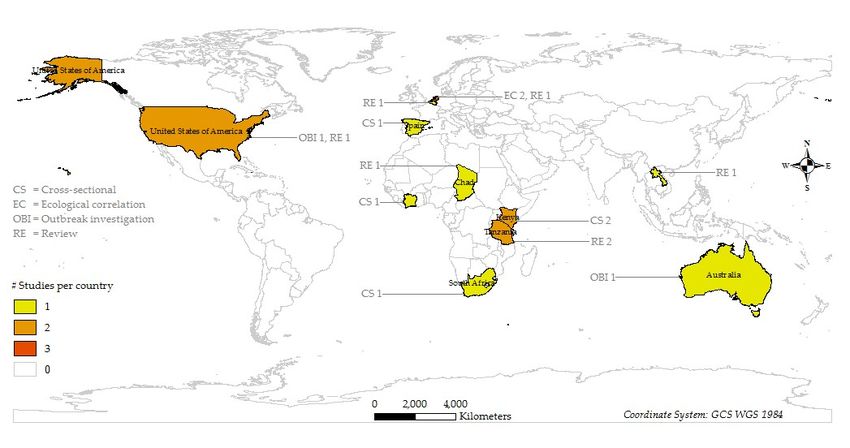
shown in Figure 1 illustrates the study selection process. Four types of studies were included
in Figure 1 illustrates the study selection process. Four types of studies were included in this review: in this
review: Cross-sectional
Cross-sectional study study
(n = 5),(necological
= 5), ecological
study study (noutbreak
(n = 2), = 2), outbreak investigation
investigation (n = 2),(n and
= 2),review
and
review
(n = 7).(nMost
= 7). studies
Most studies were conducted
were conducted in Africa
in Africa (n = 7)(n
and= 7) and Europe
Europe (n = 5).(nWhile
= 5). all
While all cross-
cross-sectional
sectional studies
studies were were conducted
conducted in these
in these regions, regions,
outbreak outbreak investigations
investigations were carried were
out in carried
Australia out(n in
= 1)
Australia
and the (nUSA= 1)(nand
= 1).the USA 2(nshows
Figure = 1). Figure 2 shows the
the distribution and distribution
design of theandstudies.
design A of summary
the studies. of Athe
summary of the studies
studies including their including their location,
location, study studyOne
type, whether type,Health
whether One Health
approach approachand/or
was practiced was
practiced and/orobserved
recommended, recommended, observedoutcomes,
and/or expected and/or expected
and commentsoutcomes, and
on their comments
strengths on their
and weaknesses
strengths
is given and weaknesses
in Table 1. is given in Table 1.
Figure
Figure 1. 1. PRISMA
PRISMA flow
flow diagram
diagram of of
thethe study
study selection
selection process.
process.
Int. J. Environ. Res. Public Health 2019, 16, x; doi: www.mdpi.com/journal/ijerphInt. J. Environ. Res. Public Health 2019, 16, x 11 of 19
Int. J. Environ. Res. Public Health 2019, 16, 730 13 of 22
Figure 2. Distribution of studies that used a One Health approach to Q fever by location and study design.
Figure 2. Distribution of studies that used a One Health approach to Q fever by location and study design.
Int. J. Environ. Res. Public Health 2019, 16, x; doi: www.mdpi.com/journal/ijerphInt. J. Environ. Res. Public Health 2019, 16, 730 14 of 22
The major themes elicited from this review were human disease risk, human and animal serology,
integrated surveillance, vaccination, environmental management, multi-sectoral collaboration,
and education and training.
3.1. Q Fever Risks to Humans
Human disease risks were examined by nine studies. Occupational risks included working
in abattoirs; veterinary practices; farming, particularly goat farming; and transporting of infected
livestock [17]. In the two Q fever outbreaks, livestock contact with manure and birth products was
associated with human disease (RRs = 2.7 and 5.65) [24,29]. Additionally, in the USA, family members
with frequent livestock contact (RR = 4.8) and in Australia those working in the office or close to the
dairy without air filters (RR = 5.49) were found to be associated with Q fever. Proximity, defined as
living within 1 kilometer of a farm with infected animals, was a risk factor in the Netherlands Q fever
outbreak (RR = 46) [25]. These results suggest that occupational and environmental factors are pivotal
in Q fever transmission.
3.2. Human and Animal Serology
3.2.1. Human
Serological testing was carried out in seven studies. Of the seven studies, two performed human
serology, one animal serology, and four both human and animal serology. In South Africa, 28/73
(38%) non-malarial febrile patients and 39/64 (61%) farmers, herders, and veterinary workers were
Coxiella burnetii IgG positive [16]. In a Q fever outbreak in Australia, 32 (31%) individuals had
unknown/no screening results. Of the remaining 72 cases with available results, 42 (58%) had
positive Q fever serology [24]. In another outbreak in the USA, 81/135 (60%) persons had positive
Q fever serology [29,30]. Contrary to the high seroprevalence among these occupational groups,
the seroprevalence in a Kenyan community (n = 2049) was 2.5% [21].
3.2.2. Animal
Animal serological studies found that 13.9% of cattle, 12.4% of goats, and 9.4% of sheep were C.
burnetii seropositive in West Africa [18]. In Kenya, 10.5% of cattle, and 15% of goats in the Australian
outbreak were seropositive [21,24]. A Spanish study found 22%–33% of European wildcats, Spanish
ibex, and domestic sheep, and less than 2% of other species were seropositive [20]. These results
underscore the importance of human and animal serology in quantifying Q fever risks and designing
targeted control measures.
3.3. Integrated Q Fever Surveillance
Seven studies have shown that an integrated animal–human surveillance system by
veterinary and public health authorities offers better disease monitoring than siloed surveillance
systems [5,19,24–28,32,33]. Bond et al. [24] used integrated surveillance during their outbreak
investigation in Australia and kept it under operation after the investigation was over. An integrated
surveillance system can address multiple similar zoonoses simultaneously with the existing workforce.
For example, appropriately trained farmers can use a syndromic approach such as animal abortions
for considering Q fever, brucellosis, leptospirosis, and borreliosis and reporting this to veterinarians
and human health authorities. This cost-effective surveillance system provides regional zoonotic data
that can be used for global zoonotic disease surveillance priorities as shown in Figure 3 [19,26,27].
Integrated surveillance systems should have an integrated diagnostic facility where samples from a
range of sources including human, animal, and environmental are tested guiding coordinated decision
making and responses (see Figure 3) [32]. Unfortunately, an integrated Q fever surveillance system has
rarely been implemented, except in a few circumstances such as in the San Diego County laboratory
that has coordinated diagnostic facilities [32].Int. J. Environ. Res. Public Health 2019, 16, 730 15 of 22
Int. J. Environ. Res. Public Health 2019, 16, x 12 of 19
Figure 3. Schematic illustration of a One Health global zoonoses surveillance system. Conceptualized
Figure 3. Schematic illustration of a One Health global zoonoses surveillance system. Conceptualized
from [19,26,27,32]. * GHSA: Global Health Security Agenda; ¢¢ IHR: International Health Regulations.
from [19,26,27,32]. * GHSA: Global Health Security Agenda; IHR: International Health Regulations.
3.4. Vaccination
3.4. Vaccination
Vaccination was practiced and/or recommended in five studies, of which four recommended
Vaccination
livestock was Human
vaccination. practiced and/or recommended
vaccination was extensiveininfive studies, of outbreak
the Australian which fourandrecommended
was effective
in reducing human cases [24]. The authors recommended mandatory human vaccinationeffective
livestock vaccination. Human vaccination was extensive in the Australian outbreak and was in
for those
reducing human cases [24]. The authors recommended mandatory human vaccination
having occupational contact with livestock. In contrast, livestock vaccination is a cost-effective for those having
occupational because
intervention contact with livestock.
it provides In contrast,
human health livestock vaccination
benefits through is a control
source cost-effective intervention
[19,31]. This can
because
be it provides
carried human
out at farm health
levels or atbenefits through
livestock source
markets wherecontrol [19,31].contamination
C. burnetii This can be carried out [19,21].
is high at farm
levels or at livestock markets where C. burnetii contamination is high [19,21]. However, the
However, the available livestock vaccine is limited because of its biosecurity risks [24]. In the Australian available
livestock vaccine is limited because of its biosecurity risks [24]. In the Australian outbreak investigation,
these risks were considered and livestock were not vaccinated, as was the case in the NetherlandsInt. J. Environ. Res. Public Health 2019, 16, 730 16 of 22
outbreak investigation, these risks were considered and livestock were not vaccinated, as was the case
in the Netherlands outbreak [24]. No study has shown the efficacy of livestock vaccination or the
quantified associated biosecurity risks.
3.5. Environmental Management
Six studies practiced environmental management toward Q fever prevention and control including
environmental sample testing (n = 2), environmental data analysis (n = 3), and an environmental risk
factor review. Twenty eight (61%) of the 46 swab samples taken from the vagina and birth products of
goats were C. burnetii positive in the Australian outbreak. However, air and bedding samples from the
farm were not positive [24]. In the USA outbreak, 17%–26% of goat samples, 2%–7% of cattle samples,
and the bulk tank milk filters were positive for C. burnetii. Though fecal samples were negative, 8/26
(31%) of the environmental samples including birth products, carcass, and manure were positive [30].
Environmental measures in the Australian outbreak investigation included manure storage in litter
sheds, followed by composting and removal; immediate removal of aborted materials; and notifying
goat buyers about the Q fever status of farms [24]. For an efficient Q fever control, an integrated
surveillance system coupled with an environmental management component is warranted.
3.6. Multi-Sectoral Collaboration Including Joint Research
Of the 16 studies, 13 (81%) directly discussed a multidisciplinary approach to Q fever control.
Given the complex interactions between animals, humans, and the environment, a cross-disciplinary
approach to Q fever control is required [17,26]. The results for this theme are categorized under the
five subthemes discussed in the following sections.
3.6.1. Policy and Practice Guideline Development
Nationally, Q fever control guidelines should be developed for health practitioners, industries,
and their employees. For example, Simpson et al. [16] recommended an update of the conventional
febrile treatment guidelines to include zoonoses such as Q fever. Countries also need to formulate
specific agriculture- and husbandry practice-related policies at the national level [17]. While globally,
the World Health Organization’s priority zoonotic diseases need to be revisited to include endemic
zoonoses [27]. In terms of practice, guidelines and strategies to reduce human transmission were
developed for patients, practitioners, and communities in the Australian and USA outbreaks [24,29].
Dunne and Gurfield [32] in their review showed how human and animal health laboratories were
unified for testing a range of samples and coordinated decision-making. However, public health
policies on Q fever control are limited except for those developed during outbreaks.
3.6.2. Information Sharing and Intelligence Exchange
Eleven (69%) studies discussed this subtheme. Knowledge of human, animal, and environmental
domains provides opportunities for regular and planned interactions among stakeholders. This in
turn builds trust, stewardship, and empowerment whereby disease control strategies are formulated
through shared information and intelligence [16,17,19]. Moreover, such interaction opens the scope
for transdisciplinary research that helps our understanding of the epidemiological and sociocultural
complexities of Q fever [20,26,27]. For example, the Netherlands community Q fever outbreak in
2009 was also associated with a smaller outbreak in 2008. This recurrence was identified through
the analyses of cross-disciplinary data [25]. Furthermore, sharing information and intelligence had
demonstrated benefits in controlling both the Australian and USA outbreaks [24,29]. A joint diagnostic
facility is, amongst others, a model par excellence because it offers greater access to information
required for coordinated actions, as it is the functional endpoint of multiple related disciplines [32].Int. J. Environ. Res. Public Health 2019, 16, 730 17 of 22
3.6.3. Risk Communication
Five studies discussed risk communication. At the community level, risk information needs to
be disseminated by both human- and animal-health authorities to increase the credibility of health
messages. Credible messages may encourage individuals to refrain from risk behaviors such as
sharing sleeping areas with livestock [16,23]. Likewise, risk communication through public–private
partnerships reduces communication pitfalls and is cost effective [32]. In both the Australian and
USA outbreaks, multidisciplinary risk assessment improved communication across stakeholders and
helped formulate agreed risk reduction guidelines [24,29].
3.6.4. Joint Intervention
Joint interventions, such as human and animal vaccination through cross-sectoral collaboration,
provide superior disease control choices over a single approach [19,24]. These interventions are
resource saving, devoid of duplication, and free from communication barriers [19]. In their
outbreak investigation, Bond et al. [24] adopted this approach by including human vaccination,
general biosecurity measures, and public health interventions.
3.6.5. Evaluation
Periodic evaluation is crucial when a disease control program is implemented for possible
adjustment of the program components [18]. However, program evaluations are not reported, and
therefore studies are needed in future.
3.7. Education and Training Including Community Engagement
Six studies discussed this theme: Practitioners’ education and training (n = 2), community
education and engagement (n = 3), and both (n = 1). Q fever knowledge was very limited
among healthcare providers in Kenya. Most of them had no or poor knowledge about the
disease, its transmission and treatment [23]. Medical and veterinary practitioners need updated
knowledge about Q fever, risks of transmission, diagnosis, and management to educate their clients
on how to prevent zoonotic diseases [16,30]. Likewise, community members, particularly at-risk
populations, should be targeted for audiovisual educational promotion on how to reduce their zoonotic
risks [18]. Educating the community is an integral part of zoonosis control as it provides individuals
with informed choices for practicing risk reduction strategies. Additionally, this offers a socially
purchased benefit of community trust and engagement [19,23]. If education providers are trustworthy,
target groups take ownership of the zoonosis prevention process. An example is the educational
campaigns for workers’ families in the Australian outbreak response whereby general practitioners
were requested to promote optional vaccination among them [24].
4. Discussion
This review summarizes contemporary published evidence on using a One Health approach for
Q fever prevention and control. Although Q fever is ubiquitously distributed [1,34], the contexts,
magnitudes, and risks are not homogeneous. Therefore, One Health components and practices varied
between studies. For example, the origin of the outbreak and delayed institution of an investigation
were similar in the Australian and the Netherlands outbreak. However, Netherlands’ investigation
was bigger in magnitude, culled animals, restricted ruminant breeding, and made animal notification
mandatory [24,35]. Although an outbreak investigation per se may be less appropriate to generalize,
all practices in this review contribute to a strong generic One Health model for Q fever prevention
and control.
Despite the fact that Q fever infection may occur without occupational exposure, such as sporadic
cases living in proximity to infected animals, our review has identified common occupational groups at
risk including farmers, abattoir workers, and veterinarians [17,36]. However, apart from Bond et al. [24]Int. J. Environ. Res. Public Health 2019, 16, 730 18 of 22
no other studies acknowledged the occupational risks and advocated for mandatory vaccination
of occupational contacts, most likely because the vaccine is only registered for use in Australia.
Furthermore, the Australian investigation also addressed the environmental transmission through
promoting vaccination among people living in the vicinity [24]. These findings emphasize that the
extrapolation of vaccination practices is required to avoid further outbreaks.
Human vaccination is 97%–100% efficacious when given outside the natural incubation
period [37–39]. However, high screening and vaccination costs and access to general practitioners
are often viewed as challenges [9,40]. Some studies have shown that unlike human vaccination,
animal vaccination is cost effective as it reduces shedding of the bacterium in animals, environmental
contamination, and the likelihood of disease transmission to humans [19,31]. From a One Health
perspective, concurrent human–animal vaccination at livestock markets would offer one of the best Q
fever prevention strategies. It reduces C. burnetii contamination in animals and allows mass vaccination
of farmers who perceive cost and access to care as barriers [9,19,21]. However, given that the available
livestock vaccine has manufacturing biosecurity concerns, caution must be exercised in the event a
concurrent vaccination program at livestock markets is planned.
Human serology plays an important role in quantifying Q fever burden. High seroprevalence
among occupational groups in this review is similar to that of goat farmers in the Netherlands [41] and
may indicate that Q fever prevention should target occupational contacts. Unlike this, low population
seroprevalence is consistent with the Netherlands and USA national rates that makes the general
population a less appropriate target for interventions [21,30,41]. In contrast, as animals are
asymptomatic carriers [42], their serology can identify species that have previously been infected and
can have some role in identifying flocks or herds where C. burnetii is endemic. However, it has been
shown that there is no association between antibody response and shedding of the organism [18],
which represents the true public health risk.
Given that Q fever is under-diagnosed and underreported, human surveillance is the most
reliable option for burden estimation [43,44]. Animal surveillance is important because human
outbreaks are preceded by animal infections that may manifest with abortions, warning public health
professionals to activate an alert mechanism [33,34,45]. The integration of the two surveillance systems
could reduce communication pitfalls, save resources, and provide zoonotic data for national and
global coordination [19,26,27,32]. Although in the Netherlands an integrated surveillance system was
instituted, it was challenged by inadequate coordination and lack of trust and stewardship between
stakeholders [31]. Enserink [31] therefore argued that for the functionality of an integrated surveillance
system stakeholders need to resolve all possible inter-sectoral disputes beforehand.
Another major domain of One Health is the environment that allows host–reservoir interactions,
propagates disease transmission, and deserves meticulous consideration in Q fever control [17].
The fact that soon after shedding C. burnetii settles in dust, becomes aerosolized, and infects humans
makes environmental management a key factor in disease control [7,46]. Such management practices
varied between settings. For example, the Australian and the Netherlands outbreaks practiced manure
management while the latter restricted humans and transports [24,35]. These measures were key to
the successful control of both outbreaks [24,35] and, therefore, deserve inclusion in Q fever prevention
and control practices.
Multi-sectoral collaboration is the central theme of this review. Although a majority of studies
explicitly emphasized a multi-sectoral and collaborative approach, very few outbreak responses
applied this in practice [11,32]. In the USA and Australian outbreaks, both countries lacked prior
policies for collaboration. One reason is the enduring bureaucracies and disputes between veterinary,
public health, and environmental sectors that hinder countries formulating and implementing the
multi-sectoral policies identified by Enserink [31] in the Netherlands outbreak. This disintegration
needs to be resolved ahead of time whereby heterogeneous stakeholders cooperate and collaborate
on a homogenous platform. In reality, many countries are yet to have intellect and skill sharing thatInt. J. Environ. Res. Public Health 2019, 16, 730 19 of 22
provides cross-sectoral data, ensures continued vigilance, and expedites timely response should an
event surge [32].
Several studies have identified that inter-sectoral collaboration is the building block of joint
risk communication. If risk communication to the community is conducted by different authorities
individually, it is likely to confuse the community [19]. On the contrary, when joint risk communication
is carried out, individuals feel that authorities are trustworthy and self-motivate themselves to follow
health messages [16]. Moreover, joint risk communication could be a milestone for reforming a fragile
health system [19]. It mediates the success of joint interventions by assisting individuals in making
informed decisions. An example is the joint vaccination in Chad for mobile farmers’ children and their
livestock. This intervention was cost effective and more importantly set a milestone for veterinary and
public health coordination [28]. However, joint intervention is not limited to joint vaccination only
as is observed in the Australian outbreak investigation where human vaccination was coupled with
several public health actions [24].
Considering the complexities of practice where One Health programs are used, evaluation
becomes mandatory for accommodating changes deemed necessary as the evidence evolves [47].
However, our review did not identify any such program evaluation. Finally, education and training of
health practitioners and at-risk groups are crucial in shaping their attitude and practice related to Q
fever prevention. Practitioners’ knowledge makes them vigilant as a high level of suspicion is required
for Q fever diagnosis, given its inapparent clinical course [35,48,49]. Similarly, at-risk populations’
knowledge helps them refrain from practicing high-risk behaviors [8,19,23,50].
5. Conclusions
This review presents an up-to-date evidence base for controlling Q fever in a One Health
approach. One Health programs need to be based on human, animal, and environmental domains.
These programs are highly context specific and their success depends on their flexibility to incorporate
required changes. Emerging themes may be employed alone or in a combination of different One
Health programs based on intercountry policy, practice, and feasibility. However, as long as the holistic
underpinning of the multi-sectoral collaboration is preserved, programs are likely to function well.
Further research into the barriers and opportunities of adopting a One Health approach to Q fever
prevention and control is warranted.
Supplementary Materials: The following resource is available online at
http://www.mdpi.com/1660-4601/16/5/730/s1, Table S1: Logic grids showing subject headings and keywords
used for searching databases until 13 June 2018.
Author Contributions: Conceptualization, M.R.R., A.M., H.M., and P.B.; data curation, M.R.R.; formal analysis,
M.R.R.; investigation, M.R.R. and A.M.; methodology, M.R.R.; project administration, P.B.; resources, M.R.R.;
software, M.R.R.; supervision, A.M., H.M., and P.B.; validation, M.R.R. and A.M.; visualization, M.R.R.;
writing—original draft preparation, M.R.R.; writing—review and editing, A.M., H.M., and P.B.
Funding: This research received no external funding.
Acknowledgments: Md Rezanur Rahaman is supported by the Adelaide Scholarships International (ASI)
scholarship of the University of Adelaide.
Conflicts of Interest: The authors declare no conflict of interest.
References
1. Terheggen, U.; Leggat, P.A. Clinical manifestations of Q fever in adults and children. Travel Med. Infect. Dis.
2007, 5, 159–164. [CrossRef] [PubMed]
2. McQuiston, J.H.; Childs, J.E. Q fever in humans and animals in the United States. Vector Borne Zoonotic Dis.
2002, 2, 179–191. [CrossRef] [PubMed]
3. Australian Government, Department of Health. National Notifiable Diseases Surveillance System. Available
online: http://www9.health.gov.au/cda/source/cda-index.cfm (accessed on 20 February 2019).Int. J. Environ. Res. Public Health 2019, 16, 730 20 of 22
4. Anderson, A.; Bijlmer, H.; Fournier, P.E.; Graves, S.; Hartzell, J.; Kersh, G.J.; Limonard, G.; Marrie, T.J.;
Massung, R.F.; McQuiston, J.H.; et al. Diagnosis and Management of Q Fever—United States, 2013:
Recommendations from CDC and the Q Fever Working Group; CDC—National Center for Emerging and Zoonotic
Infectious Diseases: Atlanta, GA, USA, 2013; pp. 1–28.
5. Burke, R.L.; Kronmann, K.C.; Daniels, C.C.; Meyers, M.; Byarugaba, D.K.; Dueger, E.; Klein, T.A.; Evans, B.P.;
Vest, K.G. A review of zoonotic disease surveillance supported by the armed forces health surveillance center.
Zoonoses Public Health 2012, 59, 164–175. [CrossRef] [PubMed]
6. Van Asseldonk, M.A.P.M.; Bontje, D.M.; Backer, J.A.; van Roermund, H.J.W.; Bergevoet, R.H.M. Economic
aspects of Q fever control in dairy goats. Prev. Vet. Med. 2015, 121, 115–122. [CrossRef] [PubMed]
7. Palmer, C.; McCall, B.; Jarvinen, K.; Krause, M.; Heel, K. “The dust hasn’t settled yet”: The national Q fever
management program, missed opportunities for vaccination and community exposures. Aust. N. Z. J. Public
Health 2007, 31, 330–332. [CrossRef] [PubMed]
8. Kermode, M.; Yong, K.; Hurley, S.; Marmion, B. An economic evaluation of increased uptake in Q fever
vaccination among meat and agricultural industry workers following implementation of the national Q
fever management program. Aust. N. Z. J. Public Health 2003, 27, 390–398. [CrossRef] [PubMed]
9. Lower, T.; Corben, P.; Massey, P.; Depczynski, J.; Brown, T.; Stanley, P.; Osbourn, M.; Durrheim, D. Farmers’
knowledge of Q fever and prevention approaches in New South Wales. Aust. J. Rural Health 2017, 25, 306–310.
[CrossRef] [PubMed]
10. Garner, M.G.; Longbottom, H.M.; Cannon, R.M.; Plant, A.J. A review of Q fever in Australia 1991–1994.
Aust. N. Z. J. Public Health 1997, 21, 722–730. [CrossRef] [PubMed]
11. Dantas-Torres, F.; Chomel, B.B.; Otranto, D. Ticks and tick-borne diseases: A one health perspective.
Trends Parasitol. 2012, 28, 437–446. [CrossRef] [PubMed]
12. Whitney, E.A.S.; Massung, R.F.; Candee, A.J.; Ailes, E.C.; Myers, L.M.; Patterson, N.E.; Berkelman, R.L.
Seroepidemiologic and occupational risk survey for Coxiella burnetii antibodies among United States
veterinarians. Clin. Infect. Dis. 2009, 48, 550–557. [CrossRef] [PubMed]
13. Noah, D.L.; Noah, D.L.; Crowder, H.R. Biological terrorism against animals and humans: A brief review and
primer for action. J. Am. Vet. Med. Assoc. 2002, 221, 40–43. [CrossRef] [PubMed]
14. CDC—National Center for Emerging and Zoonotic Infectious Diseases. One Health. Available online:
https://www.cdc.gov/onehealth/index.html (accessed on 15 August 2018).
15. Dorko, E.; Rimarova, K.; Pilipcinec, E. Influence of the environment and occupational exposure on the
occurrence of Q fever. Cent. Eur. J. Public Health 2012, 20, 208–214. [CrossRef] [PubMed]
16. Simpson, G.J.G.; Quan, V.; Frean, J.; Knobel, D.L.; Rossouw, J.; Weyer, J.; Marcotty, T.; Godfroid, J.;
Blumberg, L.H. Prevalence of selected zoonotic diseases and risk factors at a human-wildlife-livestock
interface in Mpumalanga province, South Africa. Vector Borne Zoonotic Dis. 2018, 18, 303–310. [CrossRef]
[PubMed]
17. Mori, M.; Roest, H.J. Farming, Q fever and public health: Agricultural practices and beyond. Arch. Public
Health 2018, 76, 2. [CrossRef] [PubMed]
18. Kanoute, Y.B.; Gragnon, B.G.; Schindler, C.; Bonfoh, B.; Schelling, E. Epidemiology of brucellosis, Q fever and rift
valley fever at the human and livestock interface in northern Cote d’Ivoire. Acta Trop. 2017, 165, 66–75. [CrossRef]
[PubMed]
19. Cleaveland, S.; Sharp, J.; Abela-Ridder, B.; Allan, K.J.; Buza, J.; Crump, J.A.; Davis, A.; Vilas, V.J.D.; de
Glanville, W.A.; Kazwala, R.R.; et al. One health contributions towards more effective and equitable
approaches to health in low- and middle-income countries. Philos. Trans. R. Soc. Lond. B Biol. Sci. 2017, 372.
[CrossRef] [PubMed]
20. Candela, M.G.; Caballol, A.; Atance, P.M. Wide exposure to Coxiella burnetii in ruminant and feline species
living in a natural environment: Zoonoses in a human-livestock-wildlife interface. Epidemiol. Infect.
2017, 145, 478–481. [CrossRef] [PubMed]
21. Wardrop, N.A.; Thomas, L.F.; Cook, E.A.; de Glanville, W.A.; Atkinson, P.M.; Wamae, C.N.; Fevre, E.M. The
sero-epidemiology of Coxiella burnetii in humans and cattle, western Kenya: Evidence from a cross-sectional
study. PLoS Negl. Trop. Dis. 2016, 10, e0005032. [CrossRef] [PubMed]
22. Van Leuken, J.P.G.; Swart, A.N.; Brandsma, J.; Terink, W.; Van de Kassteele, J.; Droogers, P.; Sauter, F.;
Havelaar, A.H.; Van der Hoek, W. Human Q fever incidence is associated to spatiotemporal environmental
conditions. One Health 2016, 2, 77–87. [CrossRef] [PubMed]Int. J. Environ. Res. Public Health 2019, 16, 730 21 of 22
23. Ndeereh, D.; Muchemi, G.; Thaiyah, A. Knowledge, attitudes and practices towards spotted fever group
rickettsioses and Q fever in Laikipia and Maasai Mara, Kenya. J. Public Health Afr. 2016, 7, 545. [CrossRef]
[PubMed]
24. Bond, K.A.; Vincent, G.; Wilks, C.R.; Franklin, L.; Sutton, B.; Stenos, J.; Cowan, R.; Lim, K.; Athan, E.;
Harris, O.; et al. One health approach to controlling a Q fever outbreak on an Australian goat farm. Epidemiol.
Infect. 2016, 144, 1129–1141. [CrossRef] [PubMed]
25. Ladbury, G.A.F.; Van Leuken, J.P.G.; Swart, A.; Vellema, P.; Schimmer, B.; Ter Schegget, R.; Van der Hoek, W.
Integrating interdisciplinary methodologies for one health: Goat farm re-implicated as the probable source
of an urban Q fever outbreak, the Netherlands, 2009. BMC Infect. Dis. 2015, 15, 372. [CrossRef] [PubMed]
26. Halliday, J.E.B.; Allan, K.J.; Ekwem, D.; Cleaveland, S.; Kazwala, R.R.; Crump, J.A. Endemic zoonoses in the
tropics: A public health problem hiding in plain sight. Vet. Rec. 2015, 176, 220–225. [CrossRef] [PubMed]
27. Burniston, S.; Okello, A.L.; Khamlome, B.; Inthavong, P.; Gilbert, J.; Blacksell, S.D.; Allen, J.; Welburn, S.C.
Cultural drivers and health-seeking behaviours that impact on the transmission of pig-associated zoonoses
in Lao People’s Democratic Republic. Infect. Dis. Poverty 2015, 4, 11. [CrossRef] [PubMed]
28. Greter, H.; Jean-Richard, V.; Crump, L.; Béchir, M.; Alfaroukh, I.O.; Schelling, E.; Bonfoh, B.; Zinsstag, J. The
benefits of ‘one health’ for pastoralists in Africa. Onderstepoort J. Vet. Res. 2014, 81, 1–3. [CrossRef] [PubMed]
29. Biggs, H.M.; Turabelidze, G.; Todd, S.R.; Slifka, K.J.; Drexler, N.A.; Pratt, D.; McCurdy, G.; Lloyd, J.K.;
Kato, C.Y.; Sun, D.; et al. Q fever outbreak on a large United States Goat and cattle dairy: A one health
investigation. In 63rd Annual Meeting; American Society of Tropical Medicine and Hygiene: New Orleans,
LA, USA, 2014; Volume 91, p. 199.
30. Biggs, H.M.; Turabelidze, G.; Pratt, D.; Todd, S.R.; Jacobs-Slifka, K.; Drexler, N.A.; McCurdy, G.; Lloyd, J.;
Evavold, C.L.; Fitzpatrick, K.A.; et al. Coxiella burnetii infection in a community operating a large-scale cow
and goat dairy, Missouri, 2013. Am. J. Trop. Med. Hyg. 2016, 94, 525–531. [CrossRef] [PubMed]
31. Enserink, M. Humans, animals—it’s one health. Or is it? Science 2010, 327, 266–267. [CrossRef] [PubMed]
32. Dunne, G.; Gurfield, N. Local veterinary diagnostic laboratory, a model for the one health initiative. Vet. Clin.
North Am. Small Anim. Pract. 2009, 39, 373–384. [CrossRef] [PubMed]
33. Gubernot, D.M.; Boyer, B.L.; Moses, M.S. Animals as early detectors of bioevents: Veterinary tools and a
framework for animal-human integrated zoonotic disease surveillance. Public Health Rep. 2008, 123, 300–315.
[CrossRef] [PubMed]
34. Rodolakis, A. Zoonoses in goats: How to control them. Small Rumin. Res. 2014, 121, 12–20. [CrossRef]
35. Van der Hoek, W.; Morroy, G.; Renders, N.H.; Wever, P.C.; Hermans, M.H.; Leenders, A.C.A.P.;
Schneeberger, P.M. Epidemic Q fever in humans in the Netherlands. In Coxiella Burnetii: Recent Advances and
New Perspectives in Research of the Q Fever Bacterium; Toman, R., Heinzen, R.A., Samuel, J.E., Mege, J.-L., Eds.;
Springer: Dordrecht, The Netherlands, 2012; Volume 984, pp. 329–364.
36. Australian Government. The Australian Immunisation Handbook, 10th ed.; Commonwealth of Australia:
Canberra, Australia, 2015; pp. 355–362.
37. Van Holland, B.J.; Soer, R.; de Boer, M.R.; Reneman, M.F.; Brouwer, S. Preventive occupational health
interventions in the meat processing industry in upper-middle and high-income countries: A systematic
review on their effectiveness. Int. Arch. Occup. Environ. Health 2015, 88, 389–402. [CrossRef] [PubMed]
38. Gefenaite, G.; Munster, J.M.; van Houdt, R.; Hak, E. Effectiveness of the Q fever vaccine: A meta-analysis.
Vaccine 2011, 29, 395–398. [CrossRef] [PubMed]
39. Marmion, B.P.; Ormsbee, R.A.; Kyrkou, M.; Wright, J.; Worswick, D.A.; Izzo, A.A.; Esterman, A.; Feery, B.;
Shapiro, R.A. Vaccine prophylaxis of abattoir-associated Q fever: Eight years’ experience in Australian
abattoirs. Epidemiol. Infect. 1990, 104, 275–287. [CrossRef] [PubMed]
40. Milazzo, A.; Featherstone, K.B.; Hall, R.G. Q fever vaccine uptake in South Australian meat processors prior
to the introduction of the national Q fever management program. Commun. Dis. Intell. 2005, 29, 400–406.
41. Schimmer, B.; Lenferink, A.; Schneeberger, P.; Aangenend, H.; Vellema, P.; Hautvast, J.; van Duynhoven, Y.
Seroprevalence and risk factors for Coxiella burnetii (Q fever) seropositivity in dairy goat farmers’ households
in the Netherlands, 2009–2010. PLoS ONE 2012, 7, e42364. [CrossRef] [PubMed]
42. NASPHV. Compendium of Measures to Prevent Disease Associated with Animals in Public Settings, 2009: National
Association of State Public Health Veterinarians, Inc. (NASPHV); RR-5; Centers for Disease Control and
Prevention: Atlanta, GA, USA, 2009; pp. 1–21.Int. J. Environ. Res. Public Health 2019, 16, 730 22 of 22
43. Cosic, G.; Djekic, J.; Duric, P.; Seguljev, Z.; Petrovic, M.; Rajcevic, S. Epidemiological characteristics of Q fever
in Vojvodina province, Serbia, from 1985 to 2009. Arch. Biol. Sci. 2012, 64, 1363–1368. [CrossRef]
44. Chiu, C.K.; Durrheim, D.N. A review of the efficacy of human Q fever vaccine registered in Australia. N. S.
W. Public Health Bull. 2007, 18, 133–136. [CrossRef] [PubMed]
45. Ganter, M. Zoonotic risks from small ruminants. Vet. Microbiol. 2015, 181, 53–65. [CrossRef] [PubMed]
46. Graves, S.; Stenos, J. Rickettsioses in Australia. Ann. N. Y. Acad. Sci. 2009, 1166, 151–155. [CrossRef]
[PubMed]
47. CDC—Program Performance and Evaluation Office. Introduction to Program Evaluation for Public Health
Programs: A Self-Study Guide. Available online: https://www.cdc.gov/eval/guide/index.htm (accessed on
10 August 2018).
48. Lai, C.H.; Sun, W.; Lee, C.H.; Lin, J.N.; Liao, M.H.; Liu, S.S.; Chang, T.Y.; Tsai, K.F.; Chang, Y.C.; Lin, H.H.;
et al. The epidemiology and characteristics of Q fever and co-infections with scrub typhus, murine typhus or
leptospirosis in Taiwan: A nationwide database study. Zoonoses Public Health 2017, 64, 517–526. [CrossRef]
[PubMed]
49. Ralph, A.; Markey, P.; Schultz, R. Q fever cases in the Northern Territory of Australia from 1991 to 2006.
Commun. Dis. Intell. 2007, 31, 222–227.
50. Sloan-Gardner, T.S.; Massey, P.D.; Hutchinson, P.; Knope, K.; Fearnley, E. Trends and risk factors for human
Q fever in Australia, 1991–2014. Epidemiol. Infect. 2017, 145, 787–795. [CrossRef] [PubMed]
© 2019 by the authors. Licensee MDPI, Basel, Switzerland. This article is an open access
article distributed under the terms and conditions of the Creative Commons Attribution
(CC BY) license (http://creativecommons.org/licenses/by/4.0/).You can also read


