JOHANNA LOVE DUST, DRAWING AND TIME - Exploring the relationship between scientific image-making and hand-drawing - The University of ...
←
→
Page content transcription
If your browser does not render page correctly, please read the page content below
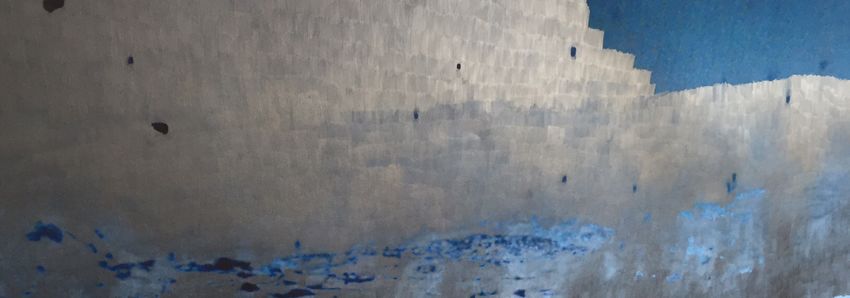
JOHANNA LOVE

DUST, DRAWING AND TIME

Exploring the relationship between scientific
image-making and hand-drawing
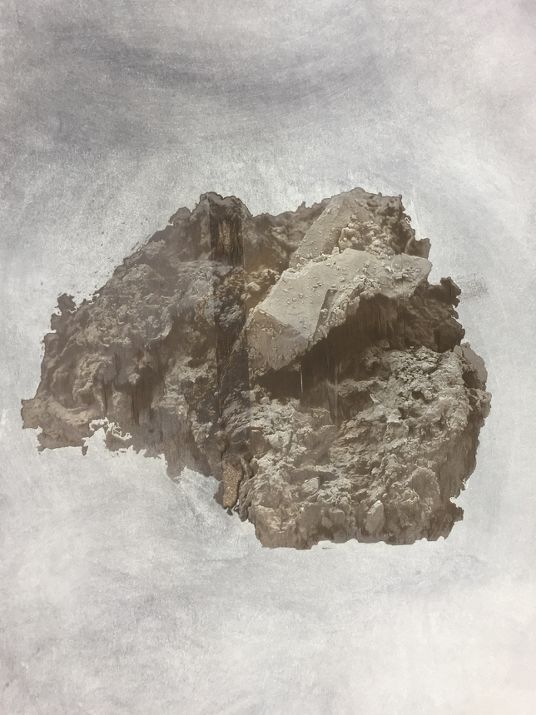
JOHANNA LOVE

           RESEARCH OUTPUT

                                                                      Lichtlose Luft
                                                                          Johanna Love

                                                                     20 September to 31 October 2016
                                                                  PV Tuesday 20 September 16.30 to 18.30.

                                                         PARCspace, Room W224, London College of Communication,
                                                                           London, SE1 6SB.

                  Open Tuesdays from 12noon to 3pm, and other times by appointment. To arrange a visit, please contact Melanie King at m.king@lcc.arts.ac.uk

                Lichtlose Luft                    Dust, Drawing and Time was a body of artefacts, drawings,
              Solo exhibition                     lithographs and laser etchings, that were exhibited and
PARCSpace, London College of                      published in 2015-2017. The research sought to examine
       Communication, 2016                        problems of human perception in relation to modern
              Publicity image                     technology.

                                                  It used drawing and photography to question the scientific image as one
                                                  that remains detached and outside experience, sitting at the precipice of
                                                  our perceptual understanding, resulting in a body of artefacts

                                                  Dust was collected and, using laboratory equipment, large photographic
                                                  images were obtained of individual dust particles. They were then
                                                  submitted to digital manipulation and further manual intervention
                                                  through drawing. The resulting artworks were exhibited and published.

                                                  The research takes what is beyond perception (particles of dust) and
                                                  gives it an embodied presence through the physical action of pencil on
                                                  paper. The process of drawing from or within the original photographic
                                                  image interrogates the results of imaging through technology and
                                                  scientific methods. Graphite and digital interventions bring these images
                                                  back into the physical, material world through a living, imaginative
                                                  interpretation. Love published a journal article reflecting on aspects of
                                                  the research (Love, 2020).

                                                                                   02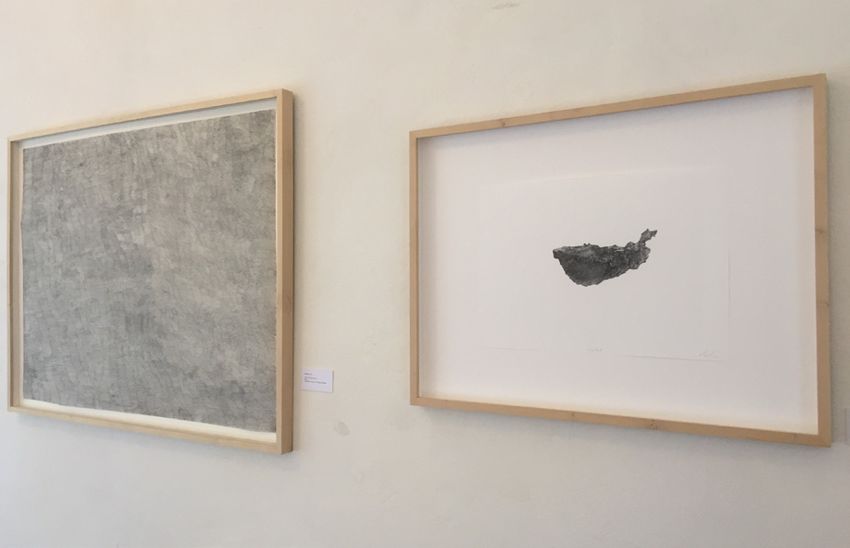
UNIVERSITY OF BRIGHTON

Dust, Drawing and Time

           Galerie im Gartenhaus
            GIG MUNICH

             BAUMSTR. 11 RGB
              80469 MÜNCHEN

  JO LOVE
           7. November – 5. December 2015

      Montag – Donnerstag 12:30 – 18 Uhr UN.VBG

ERÖFFNUNG: Samstag 7. November, 15 – 18 Uhr

                                                       Jo Love
                                                Solo exhibition
                                     GiG Gallery, Munich, 2015
                                               Publicity image

                         03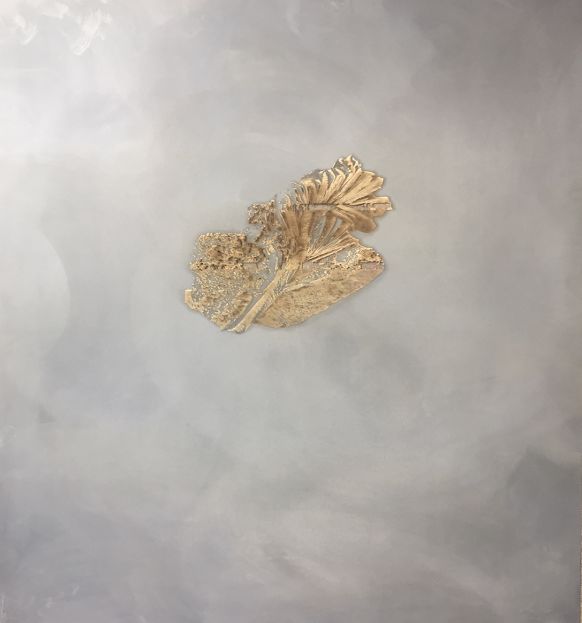
JOHANNA LOVE

Dust, Drawing and Time

                                  Beleuchten I
                                          2016
                      graphite pencil on paper
                               120cm x 140cm

            04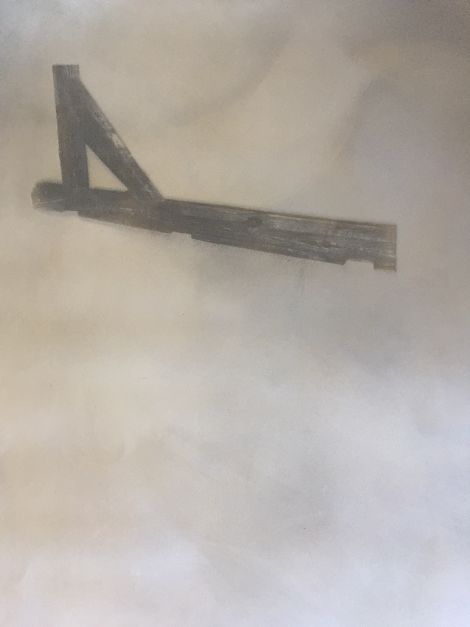
UNIVERSITY OF BRIGHTON

Dust, Drawing and Time

                                     Beleuchten III
                                              2016
                          graphite pencil on paper
                                   120cm x 140cm

              05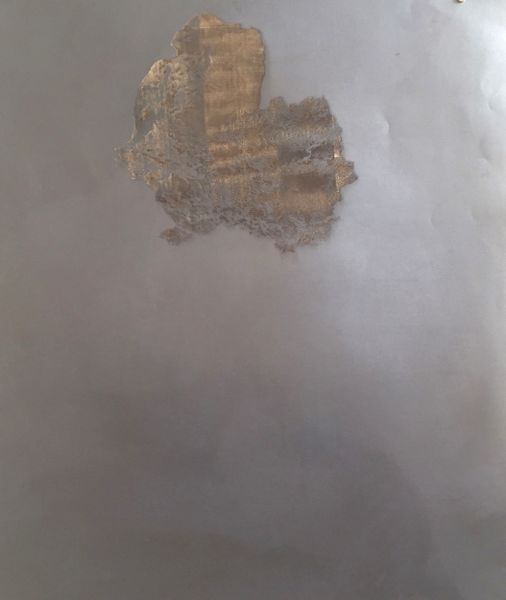
JOHANNA LOVE

Dust, Drawing and Time

                                Beleuchten IV
                         (Neumunsterschestr.)
                                          2017
                      Graphite pencil on paper
                               120cm x 140cm

            06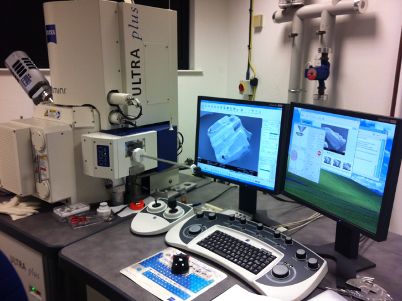
UNIVERSITY OF BRIGHTON

Dust, Drawing and Time

                         Graphite pencil on paper
                                  100cm x 130cm

              07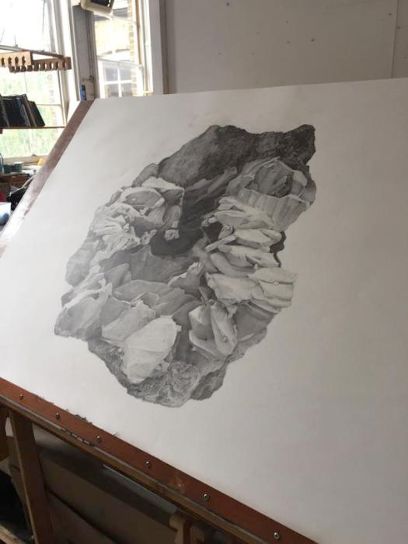
JOHANNA LOVE

Dust, Drawing and Time

                      Stone Lithograph
                          20cm x 30cm

            08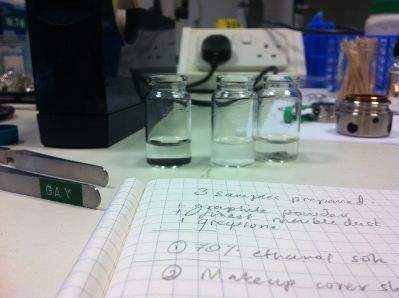
UNIVERSITY OF BRIGHTON

Dust, Drawing and Time

                              Stone Lithograph
                                  20cm x 30cm

              09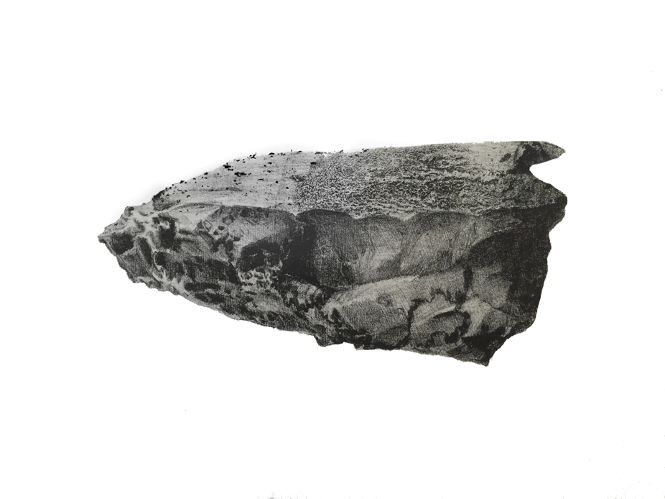
JOHANNA LOVE

Dust, Drawing and Time

                      Laser etching on paper

            10
UNIVERSITY OF BRIGHTON
Dust, Drawing and Time
Laser etching on paper
11JOHANNA LOVE
Dust, Drawing and Time
Laser etching on paper
12UNIVERSITY OF BRIGHTON
Dust, Drawing and Time
Laser etching on paper
13JOHANNA LOVE
Dust, Drawing and Time
Lichtlose Luft
PARCSpace, London College of
Communication, 2016
Jo Love
Solo exhibition, GiG Gallery,
Munich, 2016
14UNIVERSITY OF BRIGHTON
RESEARCH QUESTIONS
This research set out to test how visual
representations may invite or preclude a
viewer’s human attachment and experience,
depending on the methods of production.
Working with a material (dust) that is at once familiar
and yet inaccessible to human perception except
through technologically-produced images, which
remain outside experience, it asks:
• how drawing and print can transform scientific
imagery through the physical engagement of
surface, weight and material;
• how this practice can re-establish a connection
to human experience, generating new
understandings of the material presence and
significance of dust.
Beleuchten IV
Studio work in progress
15JOHANNA LOVE
RESEARCH CONTEXT
The research used a theoretical framework
based on the writings of Maurice Merleau-
Ponty and Vilém Flusser, whose work highlights
differences in visual perception of images
derived through a scientific technological
approach and those made through drawing by
hand.
Science provides us with imagery that goes beyond
human perception and therefore remains detached
from human understanding of scale, weight and
mass. By re-drawing scientific imagery, the project
attempts to re-instate the image back into the world
of human experience and the imagination.
The process of drawing asserts a new perception and
experience of the scientific image. Understanding
that tactility is fundamental and central to human
experience and perception, the artist is able to re-
negotiate and re-imagine the image through the
touch and weight of the drawing.
The project builds on previous research which
examined how the existence of dust on the surface
of photographic printed images shifted visual
perception.
In taking dust through the processes of science
and art, Love generates a discussion as to how we
understand images made through scientific imagery
and technology and those made through drawing by
hand.
Laser etching on paper (detail)
16UNIVERSITY OF BRIGHTON
RESEARCH PROCESS
Love adopted a practice-based, multi-method
approach for this project to develop a dialogue
between scientific and technological imaging
and the making of artefacts within the context
of fine art drawing and printmaking.
1. Collecting the dust
Love visited the site of her old family house in
Hamburg, Germany to collect physical samples
of dust from the attic and cellar, selecting this
because of its powerful and personal connotations
around place, time and ruin.
2. Understanding the potential of electron
microscopy
Love explored the methods of scientists producing
imagery of objects outside normal perceptual
experience: Dr Alex Ball, Head of the Imaging and
Analysis Centre at the Natural History Museum,
London, and Dr Peter Grindrod, Senior Scientific
Researcher at the Regional Planetary Image Facility
(RPIF) at UCL.
Working with Dr Ball, a Scientific Electron
Microscope (SEM) was used to reveal and digitally
image the house dust, which showed a mix
including dust mite carcasses, vegetable matter,
pollen and building rubble.
3. Production and exhibition of artworks
Love examined the resulting SEM images then
considered and experimented with artistic Scientific Electron Microscope (SEM) at the
process. Processes of drawings and printmaking Natural History Museum, London
added a sense of scale, weight and mass to the (top) Creating samples
SEM images. A methodological cycle of action and (bottom) Using the machine
reflection methods allowed the artwork to develop
through drawing and print languages.
Love recorded her heightened awareness in
the Natural History Museum blog, recognising
that imagination took over from scientific factual
understanding when the dust particles were
photographically enlarged and enhanced through
SEM.
Through the practice, she confirmed the sense that
the image derived from modern digital technology
lacked the human sense of a relationship with the
original dust, or a trace of engagement with materials
and process.
17JOHANNA LOVE
Dust, Drawing and Time
SEM (Scientific Electron Microscope) image file from dust sample ...
18UNIVERSITY OF BRIGHTON
Dust, Drawing and Time
... and its reinterpretation: Beleuchten I, 2016. Graphite drawing on paper 120cm x 140cm
19JOHANNA LOVE
RESEARCH INSIGHTS
This research explored the relation between
‘scientific’ image-making and manual
intervention through hand-drawing and
printing.
Love used a process that began with personal
and emotional awareness in the collection of dust
samples, systematically taking these through the
scientific laboratory-based process to achieve images
of microscopic particles at a scale and clarity that
seems beyond imagination or understanding.
Whilst dust is not within our unaided perception,
it nevertheless has a cultural presence and set of
connotations. Love took the ‘objective’ images of
collected dust produced by scientific visualisation,
and worked with that imagery to gradually re-
introduce elements that it seemed to exclude. In this
way she created new images and new ways of seeing
the ever present phenomenon of dust that pervades
our environment. She discovered that the process
of graphite drawing re-established the human
understanding from which it began. It mediated
between the objective and the deeply personal and
emotional forms of vision, to provide the viewer with
a new visual experience.
By undertaking this process, Love gained a
heightened sense of how visual images are
characterised through human emotional connectivity
and perception, particularly where this differs from
scientifically produced imagery.
The exhibition was designed to ensure audiences
were aware of the process and could themselves
engage with the perspectives that were important to
the research. The exhibition included quotations
from Merleau-Ponty, the philosophical germ of the
work, juxtaposed with a description of the SEM
scanning used.
The research invited audiences to share something
of the artist’s emotional connectivity with the dust
collected from a site of historic change and personal
importance. The exhibition introduced concepts from
materiality, history and time in response to the artistic
re-working of technologically-created images.
(top) Laser etching
(middle) SEM image file from dust sample
(bottom) Exhibition installation view from Dust,
Drawing and Time: Artist in Residence (2018)
20UNIVERSITY OF BRIGHTON
PARCspace, Room W224, London College of Communication, London, SE1 6SB.
Lichtlose Luft
Johanna Love
20 September to 31 October 2016
Private View 20 September 16.30 to 18.30.
PARC space, Room W224, London College of Communication, London, SE1 6SB.
Open Tuesdays from 12noon to 3pm, and other times by appointment.
This exhibition presents a selection of current work by British artist Johanna Love, who is working closely
with scientists at The Natural History Museum, London and The Regional Planetary Image Facility (RPIF) at
UCL, London. Through a combination of photography and drawing, the project seeks to examine problems
of human perception in relation to modern technology. It questions the scientific image as one that remains
detached and outside of our experience, sitting at the precipice of our perceptual understanding, and
making visible matter that is beyond human vision.
What drives this work is a fascination with how tiny specks of dust – what seems most insubstantial – has the
material power to fascinate, to generate and to sustain thought. The scientific technical image is a starting
point for the work, either obtained through the electron microscope or the digital scanner. However, it is
always submitted to some kind of digital manipulation and then manual intervention through drawing. In
drawing from or within the original photographic image, there is a critique of technology and a questioning
of the scientific approach. Through the process of drawing and digital manipulation, there is an attempt to
bring the image back into the physical, material world of the living and imagination, for as Merleau Ponty
(1964) states, ‘science manipulates things and gives up living in them.’
Johanna Love is an artist and academic living in London. She is currently MA Printmaking Pathway Leader at Camberwell
College of Arts and Senior Lecturer in Fine Art Printmaking at the University of Brighton. She exhibits widely both
nationally and internationally. Recent exhibitions include Johanna Love, GiG Gallery, Munich; A small constellation of
photographic evidence, Cheng Art Gallery, Beijing; Behind the eyes: making pictures, Gallery North, Newcastle;
Viewfinder, Artspaceh Gallery, Seoul, Korea; British Printmaking Japan, Kyoto Museum & Art Gallery, Japan; Scope: New
Photographic Practices, Tsinghua University, Beijing.
PARC space, Room W224, London College of Communication, London, SE1 6SB.
Open Tuesdays from 12noon to 3pm, and other times by appointment. Contact Melanie King at
m.king@lcc.arts.ac.uk
http://www.photographyresearchcentre.co.uk/what-we-do/exhibitions/2016-lichtlose-luft
Publicity for PARCSpace
exhibition
21JOHANNA LOVE
DISSEMINATION
Exhibitions Love, J. (2018) ‘Jo Love: the concept of dust’,
Natural history Museum blog’ https://
Jo Love (November 2015) Solo exhibition, GiG naturalhistorymuseum.blog/2018/05/17/
Gallery, Munich. https://gig-munich.com/2015/11/ contemporary-art-at-the-natural-history-museum/
[Accessed October 2021] [truncated version of original set of posts now
available. Accessed October 2020]
Lichtlose Luft (2016) Solo exhibition. PARCSpace,
London College of Communication. https://core. Chance, V. and Ganley, D. eds. (2018) Re:Print.
ac.uk/download/pdf/188258513.pdf [Accessed London: Marmalade, Publishers of Visual Theory.
October 2021]
Love, J. (2020) ‘Drawing dust’. Drawing: Research,
Dust , Drawing and Time: Artist in Residence (2018) Theory, Practice, 5(2) pp.193-208. December 2020.
solo residency, publication with solo exhibition in https://www.ingentaconnect.com/contentone/
Kloster Bentlage, Germany. 22-26 September 2018. intellect/drtp/2020/00000005/00000002/art00002
https://druckvereinigung-bentlage.de/johanna- [Accessed October 2020]
love [Accessed October 2021]
Symposia
Artist of the Day, Day Eight: Johanna Love selected by
Rebecca Salter RA. (3 July 2018) Solo exhibition at Love, J. (2015) ‘Somewhere between Printmaking,
Flowers Gallery, Cork Street, London. https://www. Photography and Drawing: Viewing contradictions
flowersgallery.com/exhibitions/482-artist-of-the- within the printed image’. Hybrid Practices in
day-2018/ [Accessed October 2021] Printmaking Symposium, Chelsea College of Arts,
London, 24 April. https://ualresearchonline.arts.
Marks Make Meaning: Drawing Across Disciplines
ac.uk/id/eprint/10230/ [Accessed February 2021]
(12-29 March 2018) Group exhibition, University
of Brighton Gallery, Brighton. http://arts.brighton. Love, J. (2015) ‘Dust: Exploring new ways of
ac.uk/whats-on/gallery/gallery-exhibitions-2018/ viewing the printed photographic image’.
marks-make-meaning-drawing-across-disciplines Shadows: Material photography in a digital
[Accessed October 2021] culture. Photography and the Archive Symposium,
London College of Communication, London,
Under a darkening sky (20 September - 11 October
18 May. https://ualresearchonline.arts.ac.uk/id/
2019) Solo exhibition. Standpoint Gallery, London.
eprint/10241/ [Accessed February 2021]
https://standpointlondon.co.uk/gallery/2019/
johanna-love/johanna-love.php [Accessed
October 2021]
Publications
Love, J. (2015) Somewhere between Printmaking,
Photography and Drawing: Viewing contradictions
within the printed image. Journal of Visual Art
Practice, 14(3) pp.214-223. http://www.tandfonline.
com/doi/full/10.1080/14702029.2015.1094239
[Accessed February 2021]
Love, J. (2017) Lichlose Luft: Lightless Air. London.
Camberwell Press.
22UNIVERSITY OF BRIGHTON
REFERENCES
Chance, V. and Ganley, D. eds. (2018) Re:Print. London: Marmalade, Publishers of Visual Theory.
Flusser, V. (1984) ‘Towards A Philosophy of Photography.’ Bennett, D. ed. European Photography. Berlin:
Göttingen.
Love, J. (2017) Lichlose Luft: Lightless Air. London. Camberwell Press.
Love, J. (2018) ‘Jo Love: the concept of dust’, Natural history Museum blog, 17 May 2018. https://
naturalhistorymuseum.blog/2018/05/17/contemporary-art-at-the-natural-history-museum/ (accessed
October 2020)
Love, J. (2020) ‘Drawing Dust’. Drawing: Research, Theory, Practice, December, 5(2) pp.193-208. https://www.
ingentaconnect.com/contentone/intellect/drtp/2020/00000005/00000002/art00002
Merleau-Ponty, M. (2012 [1945]) Phénoménologie de la perception. Paris: Gallimard. Translated Landes, D.A.
Phenomenology of Perception. New York: Routledge.
(overleaf) Beleuchten IV (detail)
(Neumunsterschestr.) 2017
23JOHANNA LOVE
Dust, Drawing and Time
24You can also read


