Key Stage 2 (Prep School) - CURRICULUM GUIDE 2020-21 - Digital asset management for teams
←
→
Page content transcription
If your browser does not render page correctly, please read the page content below
YEARS
                              3-6
                            PREP SCHOOL

Key Stage 2
(Prep School)
CURRICULUM GUIDE
2020-21

Exceptional People
Outstanding Opportunities
Academic Excellence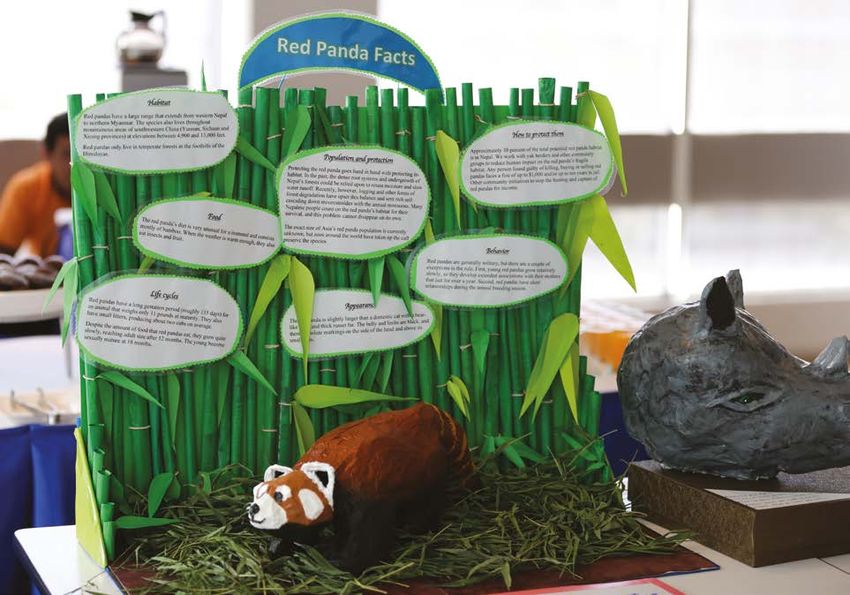
MISSION STATEMENT

Intus si recte ne labora – if the heart is right, all will be well

Shrewsbury International School offers an inspirational English language education for carefully
selected students, caring for them in an organisation committed to continuous improvement,
and providing outstanding opportunities both in and out of the classroom. We recruit the finest
teachers and staff, providing them with the resources to nurture outstanding students and
exemplify the pioneering spirit and traditions of Shrewsbury School. From our Junior School
students, enthusiastically developing their interests and passion for learning, to our exemplary
Sixth Form leaders graduating to embark on careers at the world’s leading universities,
Shrewsbury International School is established around its innovative, ambitious, dynamic
international community.

                                                                       Key Stage 2 (Prep School)     3
                                                                          Curriculum Guide 2020-21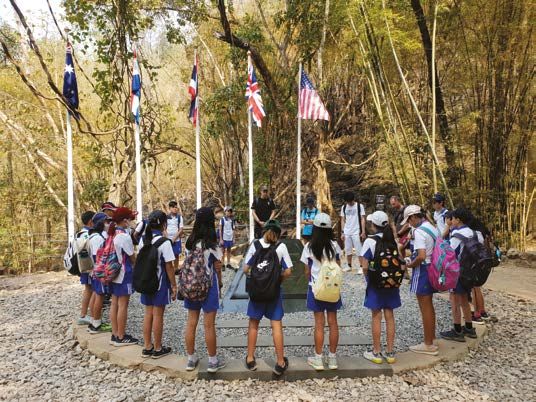
KS2 Curriculum Guide 2020-21. Mdf: 20 July 2020 11:30 am 08/09/20

                                                   Key Stage 2 (Prep School)
                                                                         Curriculum Guide 2020-21
                                                   4
CONTENTS

MISSION STATEMENT                            3
WELCOME FROM THE HEAD OF PREP                6
PREP SCHOOL LINES OF COMMUNICATION           7
A GUIDE TO THE NATIONAL CURRICULUM OF        9
ENGLAND AND KEY STAGES
AN OVERVIEW OF THE KEY STAGE 2 CURRICULUM   10
TYPICAL TIMETABLE                           11
HOME LEARNING                               12
PASTORAL CARE AND WELL BEING                14
KEY STAGE 2 TIMELINE                        15
CURRICULUM OVERVIEW                         16

CURRICULUM INFORMATION                      19
  CURRICULUM INFORMATION – YEAR 3           20
  CURRICULUM INFORMATION – YEAR 4           22
  CURRICULUM INFORMATION – YEAR 5           24
  CURRICULUM INFORMATION – YEAR 6           26
  DESIGN TECHNOLOGY                         28
  DRAMA                                     28
  COMPUTING                                 29
  MODERN FOREIGN LANGUAGES (MFL)            29
  MUSIC                                     30
  PHYSICAL EDUCATION (PE)                   31
  THAI STUDIES                              32
  ENGLISH AS AN ADDITIONAL LANGUAGE (EAL)   33

YOU-TIME EXTRA CURRICULAR ACTIVITIES        35

ACADEMIC CALENDAR 2020-2021                 36

KEY CONTACTS                                37

                                                 Key Stage 2 (Prep School)     5
                                                    Curriculum Guide 2020-21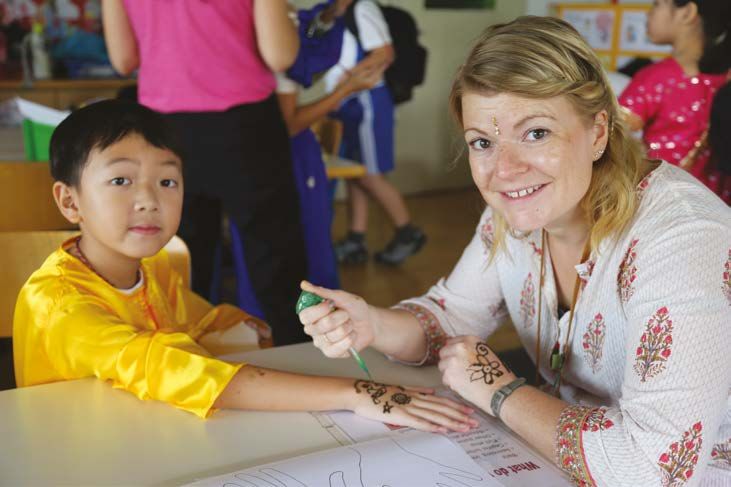
WELCOME FROM THE HEAD OF PREP

Dear Parents,

I would like to extend a warm welcome to you and your family
from the team here at Shrewsbury International School Bangkok.

As Assistant Principal of the Prep School, I believe very much in
developing the whole child, not just academically but also socially
and emotionally through a creative curriculum approach; a happy,
confident child is a successful one.

Shrewsbury International School is a vibrant, exciting and
challenging place for children to learn and thrive. While respecting
the language and culture of Thailand, all children develop English
as the language of the classroom and the corridors.

In the Junior School we have a ‘Character Strength’ each half term,
which we focus our assemblies around, follow up discussions and
classroom activities. These are used at home and at school to
strengthen children’s understanding of themselves and the wider world.

We recognise that you know your children best and you are still the most important teachers in
their lives. We can work together to ensure your child has rewarding and enriching experiences to
develop a life-long love for learning.

At Shrewsbury we strive to promote and enrich positive relationships with our parents and
the community. Our staff is committed to working as a team; you will find us to be open and
approachable

While a handbook cannot fully convey the wonderful atmosphere and ethos of our school, I hope
it will give you a flavour of what we offer to you and your child. Please do not hesitate to speak
to myself or any members of the team who will be more than happy to help you further with any
other questions.

I am looking forward to getting to know you and supporting your child on their exciting learning
journey through Shrewsbury and beyond. My very best wishes for your child’s every success and
happiness.

Debbie Brown

Assistant Principal (Prep School)

6    Key Stage 2 (Prep School)
     Curriculum Guide 2020-21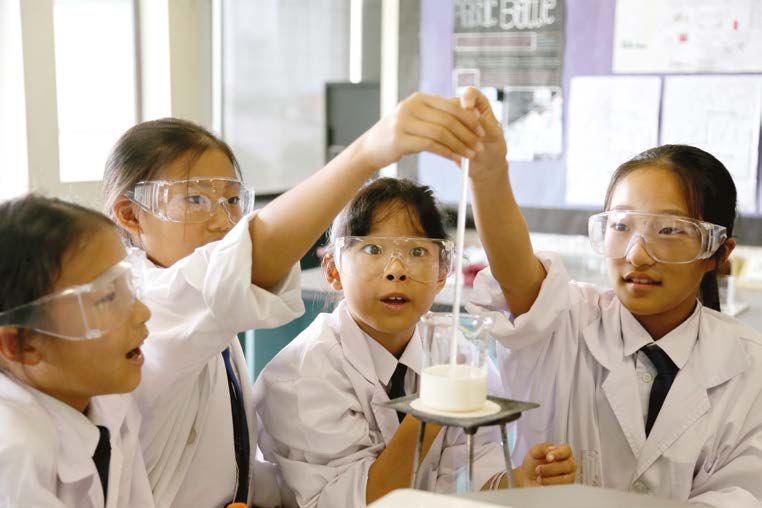
PREP SCHOOL LINES OF COMMUNICATION

Communication between school and home is a vital aspect of school life at Shrewsbury
International School. To support this all children in the Prep school have a Communication Book
where they can record Home Learning and messages between school and home can be written.
Every morning the Class Teacher is available to meet and greet their class, and hand them
back safely to parents and carers at the end of the day. This also acts as an ideal time for small
messages to be passed between home and school.

Regular Parent in Partnership presentations are provided to all parents by Prep leaders and
teachers. Tea and Topic events further enhance a wider form of communication, helping Parents
to engage with the life of the school, and provide useful information on how they may support
their own child’s development and learning. Presentations, performances, topic days and
assemblies are arranged to help communicate to parents about their child’s learning and invite
them to share in and celebrate their successes.

At the start of each academic year, a parent Class Representative is selected for each class. Their
role will be to support the Class Teacher in arranging special events and helping to communicate
information to all parents.

ELECTRONIC COMMUNICATIONS
Most formal information (including letters, consent forms etc.) is shared either via email, and/or
is uploaded to Parent Portal https://parents.shrewsbury.ac.th. Each family has their own Parent
Portal account which is accessed via secure login.

In the event of unexpected school closure, daily lessons and activities will be shared via our virtual
learning platforms. For Prep School these include Firefly and Google Classroom.

Year 1 to Year 6 also have their own blog, where you can find out what has been going on in the
classroom: e.g. http://blogs.shrewsbury.ac.th

                                                                         Key Stage 2 (Prep School)     7
                                                                            Curriculum Guide 2020-21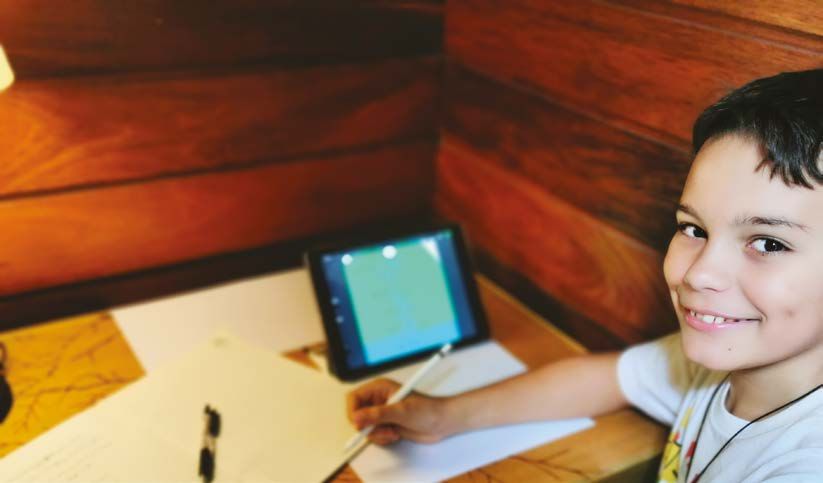
KEY ACADEMIC STAFF

Mr Christopher Seal              Principal               principal@shrewsbury.ac.th
Ms Siobhan O’Brien               Acting Head of Junior   siobhan.w@shrewsbury.ac.th
Ms Debbie Brown                  Assistant Principal     deborah.b@shrewsbury.ac.th
Ms Cassie Lockwood               Assistant Principal     cassandra.l@shrewsbury.ac.th
Mr Thomas O’Brien                Year 6 Team Leader      thomas.o@shrewsbury.ac.th
Mr Joseph Keane                  Year 5 Team Leader      joseph.k@shrewsbury.ac.th
Mr Joel Cuthbertson              Year 4 Team Leader      joel.c@shrewsbury.ac.th
Ms Sarah Newman                  Year 3 Team Leader      sarah.n@shrewsbury.ac.th
Mr Philip Pethybridge            Director of EAL         philip.p2@shrewsbury.ac.th
Ms Sarah Woods                   SEN Cordinator          sarah.w@shrewsbury.ac.th

8    Key Stage 2 (Prep School)
     Curriculum Guide 2020-21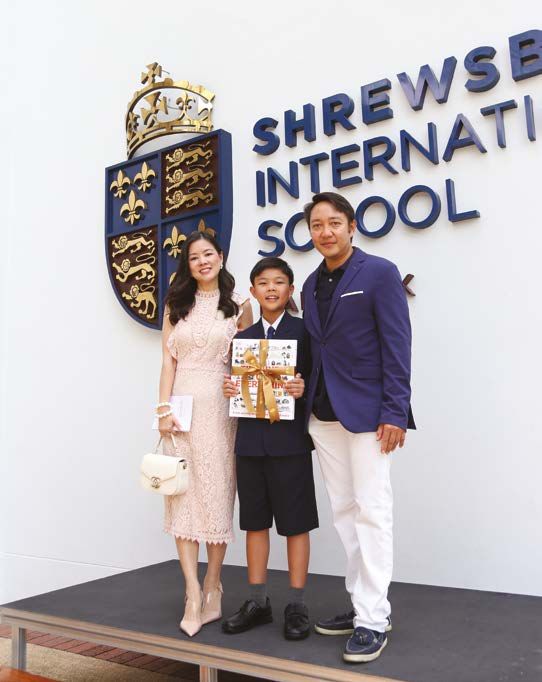
A GUIDE TO THE NATIONAL CURRICULUM OF
ENGLAND AND KEY STAGES

Shrewsbury International School follows the National Curriculum of England - adapted and
developed to meet the needs of our talented, multi-lingual, international student body. The table
below will help students and parents to understand the various Key Stages.

In Britain, education is compulsory for all children between the ages of 5 and 16 with clear
provision made for students from 3 to 18. Children are placed in year groups based on their age
on 31st August. Progress between Year Groups is usually automatic, although students may be
out of their age group for exceptional reasons. Year Groups are clustered into Key Stages and a
defined curriculum is produced for each Key Stage. Throughout each Key Stage there are ongoing
assessments to monitor and track each child’s academic progress.

At Shrewsbury International School, students study International General Certificate of Secondary
Education (IGCSE) over the two years of Key Stage 4, from the age of 14. All students study a
compulsory core of Literacy, Numeracy and Science plus a number of optional subjects. The
IGCSE examinations are a formal assessment of a child’s ability in each of the subjects they
have studied. The route for students wishing to go to university is to continue into Key Stage
5, also known as Sixth Form, to follow two-year Advanced Level courses. GCSE and IGCSE are
internationally recognised academic standards and used, alongside Advanced Levels, as part of
the academic selection process for entry into the leading universities around the world.

  AGE ON                          CURRICULUM STAGE
                  YEAR                                                SCHOOL [DIVISION]
 31 AUGUST                      [EXAMINATION COURSE]

      3            EY1
                                Early Years Foundation Stage
      4            EY2
                                                                  Junior School [Pre-Preparatory]
      5             Y1
                                        Key Stage 1
      6             Y2

      7             Y3

      8             Y4
                                        Key Stage 2                 Junior School [Preparatory]
      9             Y5
      10            Y6

      11            Y7

      12            Y8                  Key Stage 3
      13            Y9                                                     Senior School
      14           Y10
                                    Key Stage 4 [IGCSE]
      15            Y11

      16            Y12
                                Key Stage 5 [Advanced Level]        Senior School [Sixth Form]
      17            Y13

                                                                       Key Stage 2 (Prep School)     9
                                                                          Curriculum Guide 2020-21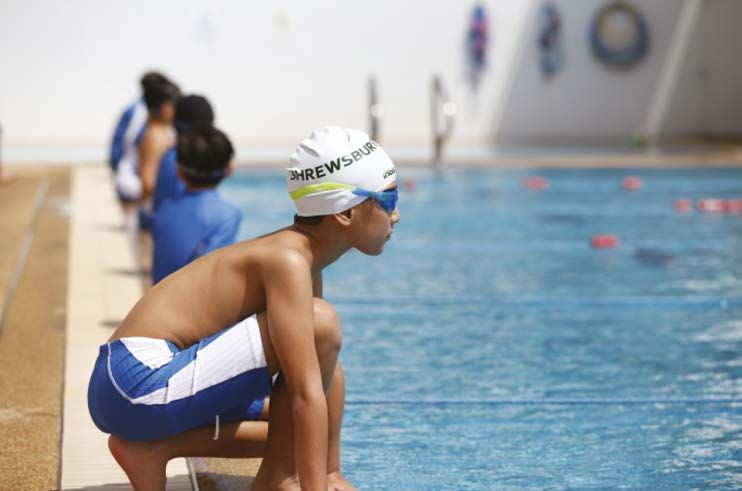
AN OVERVIEW OF THE KEY STAGE 2
CURRICULUM

All students follow a broad, creative and balanced curriculum across Years 3, 4, 5 and 6. The
curriculum follows the National Curriculum of England but is adapted for our multi-lingual,
international context. The core curriculum is based on Maths, English and Science, taught by class
teachers, who also teach the children Drama, Art and Humanities. Computing is taught by class
teachers in Year 3 to 6 with the support of a specialist teacher. In Year 5 and 6 Drama is taught by
a specialist teacher. Thai, Modern Foreign Languages, Physical Education, Design and Technology
and Music are taught by specialist teachers throughout Key Stage 2. The majority of lessons are
taught in mixed ability classes throughout the Key Stage.

                                    TEACHING                     LESSONS PER 10-DAY CYCLE
     SUBJECT
                                     GROUP
                                                      YEAR 3        YEAR 4       YEAR 5          YEAR 6

     English                           Form               10           10           10             10

     Maths                            Form(*)             10           10           10             10

     Science                           Form               2             2           2              2

     Thai                               Set               5             5           5              5

     Modern Language                    Set               2             2           3              3

     Physical Education                Form               3             3           3              3

     Swimming                          Form               2             2           2              2

     Learning for Life                 Form               2             2           2              2

     Art                               Form               2             2           2              2

     Design Technology                 Form               2             2           2              2

     Drama                             Form              (**)          (**)          1              1

     Topic                             Form               5             5           5              5

     Computing                         Form              (***)         (**)        (***)          (***)

     Music                             Form               3             3           3              3

     Reading                           Form               8             8           8              8

(*) Maths in Year 6 is taught in sets.
(**) Drama is taught through Topic in Years 3 & 4 culminating in a whole year group production
(***) Computing taught through other subjects with the support of a Computing specialist.

Library time and Assemblies also occur within the 10 day cycle.

10     Key Stage 2 (Prep School)
       Curriculum Guide 2020-21
TYPICAL TIMETABLE
From Year 3 onwards students follow a 10-day timetable. Days 1 and 6 fall on the Monday of
alternate weeks, days 2 and 7 fall on Tuesdays, and so on.
The day starts with the children meeting their class teacher in the playground at 7.30am. After
registration time they start their first lesson of the day. In the morning they have four lessons,
each of 55 minutes, with a 20-minute break between the second and third lesson. After the lunch
break the children meet for afternoon registration at 12.40pm and then have two more lessons,
with the fifth lesson of the day being 55 minutes and the final lesson a shorter 35-minute period.
The children are taken down to the playground at 2.20pm, to be met by parents or carers. Any
children not collected after 2.30pm will go to a supervised late pick up or supervision room.
Those children who have a “You-Time” or an Excellence activity have a snack in the canteen.
YOU-TIME
Day PERIOD 1 PERIOD 2 PERIOD 3 PERIOD 4 PERIOD 5 PERIOD 6
Assembly/
1 Maths Music PE DT English
Reading
2 Thai MFL English Maths Music Reading
Assembly/
3 Swim Maths Topic English Reading
L4L
Registration
Registration
4 Topic Maths Science Drama Art English
B re a k
Lunch
5 English Topic Music Maths English Reading
Assembly/
6 Topic Maths Thai/MFL DT MFL
Reading
7 English Thai Science Maths Topic Reading
Assembly/
8 Maths Science Topic Thai English
Reading
9 English Swim Thai Maths Art Reading
English
10 Topic Maths PE Thai L4L
Subject Key
DT: Design Technology
PE: Physical Education
MFL: Modern Foreign Languages
L4L: Learning for Life
Key Stage 2 (Prep School) 11
Curriculum Guide 2020-21HOME LEARNING
The academic programme at school is supported by carefully chosen Home Learning
assignments. These tasks may come in a variety of forms that reinforce, extend and consolidate
work that stretches students’ understanding further. Home Learning also includes preparation for
a new topic and structured daily reading and spelling.
Students are given a timetable that indicates when Home Learning tasks are set and to be handed
in for each of the subject areas. They are increasingly expected to use their Communication Book
to independently record and plan carefully to ensure that all tasks are completed to the best of
their ability and to time.
As a guide students should expect to complete between two and two and a half hours per
week of Home Learning. As well as this all students are expected to read in English every day.
All children are given weekly spelling tasks and will be expected to read and fill in their Reading
journal daily.
HOMEWORK GRIDS
Students are given ‘homework grids’ at the start of each new topic. Generally they are asked to
complete one task per week. The tasks range from art and crafts to science to family-oriented
homework to ICT. The range of choices allow students to choose activities that they are interested
in and enjoy, and develop this enjoyment further whilst learning about their new topic.
12 Key Stage 2 (Prep School)
Curriculum Guide 2020-21EXAMPLE HOMEWORK GRID
MATHS WRITING HEALTH & WELLBEING
• Can you make your own fraction • FOBISIA Short Story • Choreograph a dance to
wall using coloured strips of Competition ‘Home’ - refer to represent different natural
paper or online using ‘shapes’? Firefly for more details disasters
• Bake a cake or make a pizza. • Can you write an explanation • Speak to a member of your
When you cut it up and share it, text explaining how a particular family about the 2004 Indian
what fractions are you cutting it natural disaster occurs. What Ocean earthquake and Tsunami.
into? Take a photo to record happens when a volcano erupts, Interview them to find out about
for example? their memories and experiences
• ‘Speed of Sound’ - research • Keep a diary of your sleep,
world records for things that exercise, diet or screen time
move at, or faster than the over a week. Show your
speed of sound. Can you make a Self-Awareness by making a
‘record breakers’ fact sheet? suggestion for improvement
EXPRESSIVE ARTS READING
• Create a model of a volcano - • Read the poem called ‘The
either one that erupts or not Sound Collector’ by Roger
• Make a mixed media (using McGough. Can you write your
more than one type of art own version of the poem
resource) piece of art work of a based on the sounds you hear
natural disaster at school, at home or around
Bangkok. You could even record
• Make a model of a building
yourself performing it
or city that has defenses that
would protect it from a natural • Research the 10 deadliest natural
disaster disasters of all time and create
a fact sheet, quiz or Top Trumps
cards
COLLABORATE TOPIC GET OUTSIDE
• Make a tin can phone. Use it to • Play the online game: http:// • Practice using money. Go
chat to your friends or family www.stopdisastersgame. shopping with a family member.
and send secret messages org/stop_disasters/ Can you Help to pay for the shopping.
• Research a particular natural manage to stop the natural Can you work out how much
disaster - present it in any disasters occurring?! change you will get?
way you like! Make it fun and • Can you learn ‘Morse Code’? • Build a shelter to protect
engaging Write a secret message to your yourself from a natural disaster
• Write a song or rap about teacher using Morse Code or make a model of a shelter for
natural disasters. Can you • Can you make a timeline of your a natural disaster
record yourself performing it or life? Use pictures to put exciting
perform it to the class? or memorable events in order
Key Stage 2 (Prep School) 13
Curriculum Guide 2020-21PASTORAL CARE AND WELL BEING
Shrewsbury International School is a warm, friendly and caring school that welcomes children
from all cultures, backgrounds and experiences. It is important to us that we maintain an ethos
where each child can be happy, secure, valued and fulfilled and their individuality is recognised
and respected. The social and emotional well being of every child is a priority for all our staff.
In our Learning for Life programmes we cover issues such as personal wellbeing, health and
relationships and comparative religions.
Each half term we have a ‘Character Strength’ which underpins assemblies, discussions and
work in class. Linked to this we have a strong ‘student voice’ in the school – children have
responsibilities which they are proud of such as becoming Heads of School, Music Captains,
Sports Captains, House Captains, School Council representatives, Library Monitors and Play
Leaders. Children know they can make a difference to our school community and the wider world.
We celebrate the success of all learners through daily positive feedback in lessons, recognition
in regular ‘Celebration Assemblies’, feedback in Communication Books to parents, special
certificates and events throughout the year. Outstanding achievement is recognised formally
though our annual Speech Day and Prize Giving Ceremony.
We provide our children with many opportunities to perform, present and listen in a variety of
situations. They are encouraged to participate in assemblies, class performances and whole
school events to share their achievements and talents whilst developing and strengthening their
confidence and self belief.
The House System at Shrewsbury helps to enhance the sense of community within the school.
All children from Year 1 to Year 13 are members of a House which are named after 6 Nobel Peace
Prize Winners. The many House events unite children from different classes, ages, cultures and
friendship groups to work together. They build vital teamwork skills, pride in themselves and
respect for their peers.
Our children actively support organised charity work, through annual events such as ‘Fundraising
week’, ‘Peace Day’ or annual ‘Fun Run’, as well as responding to natural disaster relief programmes
such as the flooding in Thailand and earthquake in Nepal. The school supports charities locally,
nationally and internationally. This enables our children to be proactive, to empathise and to
understand the difficulties of others and realise that collectively we can help to support and
rebuild communities.
We have an excellent team of Learning Mentors who help all new children to settle into the
school. They also support any child who may require help to build their confidence, friendships
and emotional well being. This is complimented by a Listening team comprising trained members
of staff from across the school who are always available should a child wish to talk to an adult in
confidence.
In Year 6, there is a strong focus on preparing the children for transition from Junior School into
Senior School. The Junior School staff work closely with Senior School colleagues in planning and
teaching transition units of work in all subjects. The children are introduced to their new teachers
and surroundings during several visits to the Senior School and work on further developing their
independence and organisational skills.
14 Key Stage 2 (Prep School)
Curriculum Guide 2020-21KEY STAGE 2 TIMELINE
The following timeline is indicative and subject to change
SEPTEMBER Meet the Teacher
TERM 1 OCTOBER Parent Teacher Conference
YEAR 3 DECEMBER Full Report
Parent Teacher Conference
TERM 2 FEBRUARY
Year 3 Performance
TERM 3 JUNE End of Year Reports
SEPTEMBER Meet the Teacher
TERM 1 OCTOBER Parent Teacher Conference
DECEMBER Full Report
YEAR4
TERM 2 FEBRUARY Parent Teacher Conference
End of Year Report
TERM 3 JUNE Year 4 Performance
Residential Trip - Suan Sampran
SEPTEMBER Meet the Teacher
OCTOBER Parent Teacher Conference
TERM 1
NOVEMBER Residential trip - Khao Yai National Park
YEAR 5 DECEMBER Full Report
TERM 2 FEBRUARY Parent Teacher Conference
MAY Balloon Debate
TERM 3
JUNE End of Year Report
SEPTEMBER Meet the Teacher
OCTOBER Parent Teacher Conference
TERM 1
NOVEMBER Residential Trip - Kanchanaburi
DECEMBER Full Report
YEAR 6
TERM 2 FEBRUARY Parent Teacher Conference
MAY Fairbairn Exhibition
TERM 3
End of Year Report
JUNE
Graduation Assembly
Key Stage 2 (Prep School) 15
Curriculum Guide 2020-21CURRICULUM OVERVIEW
Shrewsbury International School has adopted the best aspects of the English National Curriculum,
adapted and developed this further to meet the needs of our talented, multi-lingual, international
students. The children in Years 3, 4, 5 and 6 are taught Literacy, Maths, Science, Humanities,
Computing, Art and Learning for Life by their class teacher. An integrated learning approach is
followed, with key objectives and skills taught through a range of challenging, innovative and
creative topics that change every half term.
The topics are developed so they are meaningful and purposeful, they may be centered on a
novel, the environment, an animated film, a period in history, or be science based. A topic based
approach allows learning to be put into real-life contexts, with a deeper understanding gained
and greater connections made.
ENGLISH
Reading forms an integral and critical part of the eNGLISH curriculum. The Power of Reading is a
teaching strategy that is used throughout the Junior School to raise attainment and engagement
in reading and writing for all. Students are encouraged to experience different genres and text
types and to read for pleasure. Guided Reading takes place every day, where the children and
teachers are given the opportunity to work in small focused groups, developing a particular
reading skill. We encourage the children to see reading as a thinking process and provide
opportunities for them to analyse, discuss and develop their own opinion about a text.
Talk for Writing is a teaching strategy used throughout the Junior School to help accelerate the
acquisition of spoken and written literacy. In this method, the children are introduced to text type,
both fiction and non-fiction, and exposed to a range of different examples which they read and
analyse. This gives them an opportunity to familiarise themeslves with the language and structure
of a particular genre, whilst beginning to recognise common language features. The children
then learn to recite texts, enabling them to fully internalise the vocabulary and language features
within. The children then work with the text, changing different elements, to begin to make it their
own. Finallly they are provided with creative opportunities to use their new knowledge on their
own independent composition.
MATHS
Our mathematics curriculum has been designed to emulate some of the best pedagogy from
around the world. The curriculum in Early Years, Key Stage 1 and Key Stage 2 is designed to
allow children to become increasingly secure in their number facts, and to progress to their
Senior School education able to communicate mathematically and to solve challenging everyday
problems.
16 Key Stage 2 (Prep School)
Curriculum Guide 2020-21Every maths lesson is planned to incorporate activities that challenge children and that help to
develop their skills in three key areas; mathematical fluency, reasoning and problem-solving.
Mastering these skills helps children to become confident mathematicians, and in turn, enhances
their understanding of the world around them and their learning in other subjects, especially the
sciences.
Our mastery approach to teaching Maths encourages discussion, collaborative paired work and
‘hands-on’ learning. We use pictorial representations and highly visual resources to help explain
mathematical concepts, and help children to “see” and understand the patterns and structures
that underlie them. To assist this, Teachers are equipped with a range of tactical, hands-on
resources including Dienes blocks, bead strings and Numicon.
We follow the Numeracy programme outlined in the 2014 National Curriculum of England, which
aims to ensure that all students:
Become fluent in the fundamentals of Numeracy, including through varied and frequent
practice with increasingly complex problems over time, so that students develop conceptual
understanding and the ability to recall and apply knowledge rapidly and accurately.
Reason mathematically by following a line of enquiry, conjecturing relationships and
generalisations, and developing an argument, justification or proof using mathematical
language.
Can solve problems by applying their Mathematics to a variety of routine and non routine
problems with increasing sophistication, including breaking down problems into a series of
simpler steps and persevering in seeking solutions.
USEFUL WEBSITES
Here are some useful websites you may like to look at with your child:
(Some may require sign up or subscription to receive full functionality)
www.bbc.co.uk/bitesize/
http://mrnussbaum.com/
https://www.khanacademy.org/
https://www.ttrockstars.com/
SCIENCE
Students learn about a wide range of living things, materials and phenomena. Students are
encouraged to go beyond a simple description and explain what they experience using simple
scientific models and theories. Students are also taught to begin to appreciate and evaluate the
impact that science has on our lives. In their practical work students develop a more systematic
approach to investigating problems and learn to use a wide range of scientific conventions to
communicate their ideas.
Key Stage 2 (Prep School) 17
Curriculum Guide 2020-21TOPIC
The learning of history and geography forms a central part of every topic. Children are
encouraged to undertake independent research, develop their analytical skills and become more
aware of the world around them. Day trips are arranged to support the theme, with residential
visits for Years 4, 5 and 6.
ART
The children gain experience of using different media, such as sculpture, printing and painting. All
children develop their creativity and ideas through sketchbooks they keep from Year 3 to Year 6.
Many lessons are taught in our specialist Art room.
LEARNING FOR LIFE (PERSONAL, SOCIAL AND HEALTH
EDUCATION)
Every half term we have a ‘Character Strength’ which is shared in Assembly and then discussed
and followed up with work in the class. Character Strengths include: Respect, Imagination, Self
Awareness, Resilience, Courage and Collaboration. In addition teachers continually support the
children in their social and emotional development through the Learning for Life programme.
Some aspects of world religions are studied through themes.
18 Key Stage 2 (Prep School)
Curriculum Guide 2020-21CURRICULUM INFORMATION
Key Stage 2 (Prep School) 19
Curriculum Guide 2020-21CURRICULUM INFORMATION – YEAR 3
In Year 3, the children follow the English National Curriculum through six half termly topics. The
class teacher teaches all subjects (apart from specialist lessons Thai, Modern Foreign Language,
PE, Swimming, Design Technology and Music) in a cross curricular, innovative and creative manner
covering all the age appropriate key skills.
YEAR 3 TOPICS
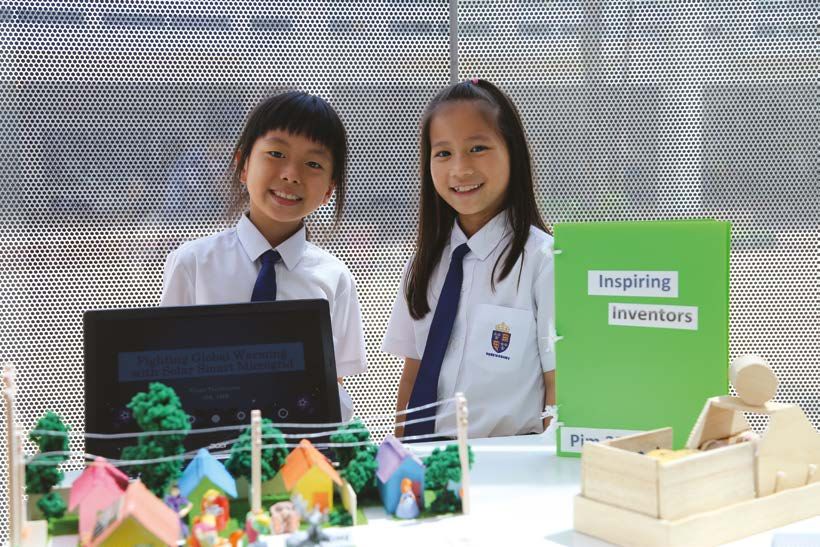
Inspiring Inventors
Super South America
Roaming Romans
Endangered Animals
Show Stoppers!
Ancient City Adventure
20 Key Stage 2 (Prep School)
Curriculum Guide 2020-21YEAR 3 SAMPLE TOPIC-BASED CURRICULUM FOR ENDANGERED
ANIMALS
Are you aware that, on average, 5,000 species of animals become extinct each year? Together we
locate different species around the world who are losing their homes and whose body parts are
being used as fashion accessories. Can we do more to help?
Let’s investigate and help save their lives...
SUBJECT ACTIVITIES COVERED
Research and write non-chronological reports about endangered
animals and different conservation projects in Asia
Use information paragraphs to give details of an endangered animal in
ENGLISH Asia
Invent our own endangered animal to write a report on
Use storytelling techniques to tell stories about endangered animals and
write our own story based on our invented endangered animal
Learn to use coordinates to plot a graph
Use measure and weight to find out how much different endangered
MATHS animals weigh, how tall they are, how much they eat
Use data handling techniques to create graphs about endangered animals
habitats
Create food webs and food chains for different species
SCIENCE Identify habitats and their features
Consider why different animals are suited to different environments
Use atlases to locate where endangered animals live
Use drama to consider different points of view about endangered animals
HUMANITIES
and conservation issues
Consider how humans impact on different habitats
Create animal prints or prints of animals
Make an animal template and print onto bag or t-shirt
ART
Learn to draw the outline of different endangered animals
Make stencils of endangered animals
Key Stage 2 (Prep School) 21
Curriculum Guide 2020-21CURRICULUM INFORMATION – YEAR 4
In Year 4, the children follow the English National Curriculum through six half termly topics. The
class teacher teaches all subjects (apart from specialist lessons Thai, Modern Foreign Language,
PE, Swimming, Design Technology and Music) in a cross curricular, innovative and creative manner
covering all the age appropriate key skills. To enhance the children’s learning, understanding and
enjoyment of the curriculum, day trips and residential trips are fully integrated into the curriculum.
YEAR 4 TOPICS
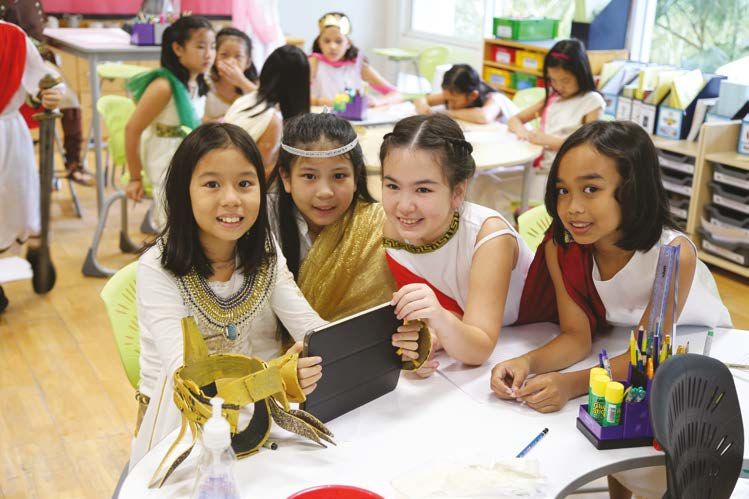
Ancient Egypt
Magic and Mystery
Amazing Asia
Show Time (focusing on the Year Group production)
Natural Disasters
Bright Sparks
22 Key Stage 2 (Prep School)
Curriculum Guide 2020-21YEAR 4 SAMPLE TOPIC BASED CURRICULUM – INCREDIBLE INDIA
As we immerse ourselves into this magical topic, our senses will be filled with the sights, sounds
and smells of amazing Asia. We will decorate our classrooms and ourselves with beautiful rangoli
patterns, become artists as we design and create batik masterpieces and we will have a true taste
of Asia when we visit a Gurdwara!
SUBJECT ACTIVITIES COVERED
Reading, writing and exploring through drama a range of traditional tales
set in India
ENGLISH
Researching using a wide range of sources children will become experts in
their chosen field. They will then create an interactive information text on
this topic
Position and Direction: Using maps of Asia children will learn to use
directional language to describe position of key locations in Japan, China,
MATHS Thailand or India
Problem solving with money: Working with Thai Baht as well as Pound
Sterling for a truly global understanding
Studying living things and their habitats children will learn about the vast
range of wildlife found across Asia
SCIENCE
Using investigative skills to learn how animals and humans adapt to their
environment
Using map work skills to describe Asia in terms of economic development,
HUMANITIES
climate, terrain, towns, cities, and rivers
Designing and creating Rangoli Patterns
ART Using Batik onto textiles to produce an Indian decoration
Key Stage 2 (Prep School) 23
Curriculum Guide 2020-21CURRICULUM INFORMATION – YEAR 5
The focus of our varied and challenging curriculum is to encourage the children to become more
independent, creative and motivated learners. To enhance the children’s learning, understanding
and enjoyment of the curriculum, day trips and residential trips are fully integrated into the
curriculum. Examples of these are the residential trip to Khao Yai where the children spend two
nights in the National Park exploring all it has to offer.
The class teacher teaches all core subjects apart from the following specialist lessons - Thai,
Modern Foreign Language, PE, Swimming, Design Technology and Music. These lessons are
taught by specialist teachers.
YEAR 5 TOPICS:
Bangkok and Khao Yai
Space
Groovy Greeks
Journey to Jo’burg
Charity Enterprise
24 Key Stage 2 (Prep School)
Curriculum Guide 2020-21YEAR 5 SAMPLE TOPIC BASED CURRICULUM – GROOVY GREEKS
Turn back the sundials and experience the world of Greek myths and legends. Delve into the
fascinating history of Ancient Greece through tales, drama and archaeology and develop your
understanding of the unique legacy of this civilisation...how the Greeks have shaped the modern
world.
SUBJECT ACTIVITIES COVERED
Learn about the structure of myths through drama and role-play. Create a
hero, setting and mythical beast to be woven into an historical narrative
ENGLISH
Write a recount from the perspective of an Athenian or Spartan,
demonstrating an understanding of the differences and similarities of
these two renowned city-states.
Statistics, including averages and graphs, using mythical beast and
Archimedes’ eureka moment.
MATHS Addition, subtraction, multiplication and division with a final outcome of a
Greek Puzzle book.
Number and place value
Find out if you can really move the Earth with a long enough lever, as
proposed by Archimedes.
SCIENCE
Help Hermes choose some new shoes based on friction investigations
Experiment with air resistance...how can we slow down an olympic athlete?
Unearth the mysteries of the past with an archeological dig
Research aspects of Ancient Greek life such as warfare, Gods, beasts,
HUMANITIES
government and city-states
Locate and map a range of Ancient Greek sites.
Study the patterns and images used on Ancient Greek Pottery
Design a vase using this knowledge and depict a scene based around myth
ART writing
Create the 3D base using clay before painting and evaluating the outcome
and learning
Key Stage 2 (Prep School) 25
Curriculum Guide 2020-21CURRICULUM INFORMATION – YEAR 6
Year 6 is the final year of Primary education before the children move to Senior School. The
focus of our varied and challenging curriculum is to encourage the children to become more
independent, creative and motivated learners. In Year 6, students have the opportunity to take
on positions of responsibility as House Captains, Sports Captains, Music Captains, and Heads of
School. They can also mentor younger children by working as Play Leaders.
To enhance the children’s learning, understanding and enjoyment of the curriculum, day trips and
residential trips are fully integrated into the curriculum. The day trips focus on children developing
greater awareness of their community and social responsibilities. The children visit local schools
having designed and made games to teach the children English. The residential trip sees the
children travelling to Kanchanaburi to visit museums, cemeteries and the Thai-Burma railway,
to learn about the circumstances local labourers and prisoners of war found themselves in and
how they built the railway. We also focus on team building skills in readiness for the children’s
transition to Senior School.
The class teacher teaches all core subjects apart from the following specialist lessons - Thai,
Modern Foreign Language, PE, Swimming, Design Technology and Music. These lessons are
taught by specialist teachers.
YEAR 6 TOPICS
Life on the River
Explorers
Shakespeare and the Performing Arts
Moving Up (Transition)
World War 2 – (2 x half terms. Asian perspective and European perspective)
26 Key Stage 2 (Prep School)
Curriculum Guide 2020-21YEAR 6 SAMPLE TOPIC BASED CURRICULUM – WORLD WAR 2
What are World Wars and how do they start? Why did WW2 change the face of history?
Using primary and secondary sources, our residential to Kanchanaburi and hands on experiences
the students will gain an understanding of how this world event affected children around the
globe.
SUBJECT ACTIVITIES COVERED
The Blitz experience emotive poems using a range of poetic techniques.
ENGLISH
Newspaper reports and digital media based on the Year 6 residential
Ratio, proportion, weights and measures based on rationing
MATHS Data handling - countryside and city locations of evacuees
Area and perimeter of vegetable patches for Dig for Victory
How we see - investigations linked to the Black out, to time spent in an air
SCIENCE raid shelter and how our eyes adjust
Cook using rationed ingredients
Causes of World War 2 The Blitz Experience and life as an Evacuee
Learn about a child’s experiences during World War 2 from Germany,
HUMANITIES
Japan, Britain, Philippines and Thailand
Look at the role of propaganda
Learn how to draw the human figure
Study of the work of artists who draw the human figure, including
Giacometti and Jack Chalker
ART
Detailed sketches of people, paying attention to proportion, positions,
angles and perspectives.
Produce 3D sculptures in the style of Giacometti
Key Stage 2 (Prep School) 27
Curriculum Guide 2020-21DESIGN TECHNOLOGY
The DT curriculum is designed around the topics
the children are studying and encourages them
to use their imaginations when designing a wide
assortment of objects, ranging from a tasty snack
to a cuddly cushion. A variety of practical skills
are taught using different tools, materials and
equipment. They work with food, textiles, wood,
plastic, card and paper.
The children develop both their creative and
problem solving skills as well as being able to
work independently. Evaluating their own work
and the work of others is also an integral part of
the DT curriculum.
DRAMA
Pupils use Drama in many different subjects
to enhance their learning. It is a valuable tool
which allows pupils to experience and visualise
alternative situations and bring their learning to
life.
In Years 3 and 4, pupils will mostly use Drama
within other subject lessons such as Literacy
and topic work. Role play areas are used to
enhance children’s understanding. Children in
Years 3 and 4 puts on a fantastic show of singing,
dancing, and drama. These shows build on pupils
performance skills and are the focus of their
learning.
In Years 5 and 6, the pupils are taught by specialist Drama teachers for 1 session in the 10 day
cycle. These sessions are linked to the half-termly topics and focus on enhancing pupils’ Drama
skills. Drama skills develop the children’s ability to act in role, with a focus on voice, physicality
and gestures. It also enhances their personal confidence and ability to perform to an audience.
Group work skills are also incorporated into many of the activities.
28 Key Stage 2 (Prep School)
Curriculum Guide 2020-21COMPUTING
Children in Years 3 to 6 are taught Computing
by their class teacher supported by a specialist
Digital Literacy Teacher. We integrate Computing
into every subject of our topic based curriculum
by utilising the latest hardware and software
programmes to make the children’s learning both
inspiring and relevant.
The use of iPads as a learning tool and the
creative use of other digital technologies allow
the children to collaborate on projects, explore
multimedia through the use of animation, picture
editing, video editing and digital storytelling. For
example, Year 4 make their own documentaries,
utilising technology such as Green Screens and
Animation Software.
Learning using technology is firmly embedded in the curriculum. Taking advantage of the
portability of tablet devices, the children bring their own iPads to school in Years 4, 5 and 6. This
enables them to access and continue their work both in school and at home. They develop the key
skills of locating, organising, understanding, evaluating and analysing information through the use
of digital technology and are able to show their learning in a variety of creative ways.
Through their activities, students will learn to plan and evaluate their projects, and reflect on how
they can meet the targets that have been set. They will be encouraged to collaborate in projects
and share information, as well as draw on their learning experiences from their class topics.
MODERN FOREIGN LANGUAGES (MFL)
The four languages on offer at Shrewsbury International School are Mandarin Chinese, French,
Japanese and Spanish. Students choose one language from this list at the start of Year 3 and
normally study this language throughout Key Stage 2.
Languages are part of the cultural richness of all societies and the world in which we live and
work. Learning languages contributes to mutual understanding, a sense of global citizenship and
personal fulfillment. The ability to communicate in another language is a lifelong skill through
which students will learn to appreciate different countries, cultures, communities and people.
Students will develop their listening, speaking, reading and writing skills and to express
themselves with increasing confidence. They will develop their communication skills and will
explore the structures of language which will lay the foundations for future study of other
languages. This will also support the development of literacy skills in the students’ own language.
Key Stage 2 (Prep School) 29
Curriculum Guide 2020-21MUSIC
The aims of the music curriculum are to foster an enjoyment of music through a balance of
composing, performing and appraising activities. Learning about and singing a variety of songs
from around the world will help to develop their understanding and social skills.
The children learn to play instruments (keyboards, tuned and untuned percussion, as well as
any instruments they may be learning to play privately) and sing with increasing confidence,
skill, expression and awareness of their own contribution to a group or class performance. They
improvise and develop their own musical compositions, in response to a variety of different
stimuli; with increasing personal involvement, independence and creativity. They explore their
thoughts and feelings through responding physically, intellectually and emotionally to a variety of
music from different times and cultures.
We approach music learning from a thematic basis; ensuring that the children’s learning is linked
to their Year Group-wide creative curriculum. For example, Year 5 pupils will explore the concept
of ‘timbre’ through a wide-ranging study of Greek, Thai and Western music. This links with their
learning with their class teacher and with other specialist teachers. This thematic approach
applies throughout the Prep School.
Pupils have many opportunities to perform as a group and as individuals; to their own class and to
a wider school audience through assemblies and recitals.
30 Key Stage 2 (Prep School)
Curriculum Guide 2020-21PHYSICAL EDUCATION (PE)
Children are given the opportunity to experience a range of sports and activities.
These fall within the following areas:
Outwitting an opponent (Games)
Performing at maximum levels (Athletics)
Accurate replication of movement (Gymnastics)
Swimming and personal survival
The children are taught in 6 mixed gender ability sets. The students receive 5 sessions over the 10
Day cycle: 3 PE and games lessons, and 2 swimming.
Within PE and games sessions, students develop not only their practical skills but also other
concepts that are important in developing an all-round physically educated student. These key
concepts are:
Making and Applying Decisions
Evaluating and Improving Performance
Developing an understanding about the importance of leading an active and healthy
lifestyle during school and beyond into adult life.
The children receive two swimming lessons per 10 day cycle as part of the PE curriculum, children
further develop the aquatic skills learnt in Key Stage 1 while learning to apply these into a range
of aquatic activities including: Waterpolo; Syncronised Swimming; Aquathon (swim and run);
Personal Survival; Lifesaving; Competitive swimming; Swimming for health and fitness; Aquatic
Fitness
Key Stage 2 (Prep School) 31
Curriculum Guide 2020-21THAI STUDIES
To meet the requirements of Thai Ministry of Education, Thai Studies is a compulsory subject
for both Thai and foreign students at all international schools in Thailand. The goal of the Thai
National Curriculum is to produce students who achieve academically, are attuned to Thai
customs and social etiquette, and happy in their learning.
OBJECTIVES FOR THAI STUDENTS
To develop the use of language in listening,
speaking, reading and writing accurately
and effectively showing full comprehension
To read Thai literature, stories, poetry,
proverbs, folktales and idioms for a variety
of purposes with understanding and
enjoyment
To learn moral and social responsibility
through historical and cultural activities
such as Wai Kru, Loy Krathong, King’s
Birthday and Songkran
To acknowledge and take pride in Thai
culture, society and local wisdom
OBJECTIVES FOR NON-THAI STUDENTS
Developing every day usage of Thai, with focus on the four language skills: listening,
speaking, reading and writing
To understand and respond to simple daily language appropriately
To develop the ability to read and write simple Thai words and sentences
To express appreciation and show respect of the unique and diverse culture and ways of life
in Thailand
To share and exchange different cultures, festivals and celebrations
To understand the role of monarchy and Royal Family and their contribution throughout
Thai history
Both Thai and Non-Thai students have opportunities to enjoy traditional Thai culture through
special days and occasions, such as Wai Kru Day, Loy Krathong Festival, King’s Birthday,
Makhabhucha Day, Visakhabhucha Day, Songkran Festival, and Coronation Day.
32 Key Stage 2 (Prep School)
Curriculum Guide 2020-21ENGLISH AS AN ADDITIONAL LANGUAGE
(EAL)
At Shrewsbury International School we consider all our students to be English language learners.
We understand that language acquisition is an ongoing and integral part of learning across a
broad and rich curriculum. This is just as true for children who speak English at home as for those
who do not.
As a vibrant international school that welcomes children from all over the world, we acknowledge
that our students join us with differing levels of proficiency in English, and that it is the
responsibility of every teacher to help students to develop and improve their English language
skills.
Regardless of the subject they are teaching, teachers plan and deliver lessons that include a focus
on and planning for the promotion of English language acquisition. As a community of language
learners that recognises how the speaking of English brings our international community together,
we place high importance on cooperative learning among students; throughout the school day
children are given ample opportunity to use English during
discussion, problem solving and hands-on activities. As well as improving the sense of community,
this approach provides authentic contexts in which to develop language, the kinds of context that
we know work best for developing English.
SUPPORT FOR CHILDREN NEW TO ENGLISH
Our team of English language specialists works closely with mainstream teachers to provide
targeted support and specially adapted activities for children new to English. This support is
always in the context of what is being taught in the classroom so that children build their skills in
English at the same time as building their skills in other subjects.
Following assessment on application to the school, or on referral from class teachers, we may
decide that a child will benefit from joining our English Plus programme. Once in the programme
their progress is regularly monitored and assessed until we are confident that they have reached a
point where they can cope independently in the classroom.
ENGLISH PLUS LESSONS
As well as receiving in-class support, children can attend English Plus lessons. In English Plus
lessons children preview, consolidate and review vocabulary, language forms and curriculum
content from their mainstream lessons, and develop their English language skills via a variety of
other activities. In this way they are better prepared to use “everyday English’, and to access and
understand the content of curriculum subjects.
Key Stage 2 (Prep School) 33
Curriculum Guide 2020-21LANGUAGE AT HOME
It is important to remember that development in English is supported by development in a child’s
mother tongue. Children who are strong in their first language stand a better chance of being
strong in additional languages too.
Parents can help their children by talking in their first language with them about their day and
what they have learnt about at school. Parents can also be fabulous role models in using English
where necessary. This is not to suggest that parents should enforce English at home but that
when a situation calls for English – such as at school, when meeting English-speaking friends, or
when on holiday in an English-speaking country – parents’ use of English shows their children
what a valuable tool speaking English can be.
While maintaining competency in the mother tongue is crucial, it can be beneficial to promote
English language learning during long breaks from school, such as during the summer holidays,
by encouraging your children to read English books, play with other English-speaking children, or
join clubs and activities that are run in English.
34 Key Stage 2 (Prep School)
Curriculum Guide 2020-21YOU-TIME EXTRA CURRICULAR ACTIVITIES
Shrewsbury’s extensive co-curricular programme is designed to allow students to explore their
interests and to develop skills outside of the classroom. These opportunities can help contextualise
and to reinforce learning in the classroom, and further develop communication, collaboration
and leadership skills. They also help to bring balance to a student’s school experience, serving to
enhance their wellbeing and in doing so, benefiting their academic performance. At Shrewsbury
we see the co-curriculum as complementary to academic studies and an essential part of daily life.
Shrewsbury’s co-curricular programme is divided into three main streams:
1. YOU-TIME ACTIVITIES:
These activities are for students from Year 1 to Year 13. Different activities are offered for different
year groups. Access to different types of activities throughout the year allows students to explore
different interests and make new friends outside of class. The wide ranging and stimulating
programme affords all students an opportunity to explore new interests, develop passions and
fulfill potential.
2. ADDITIONAL ACTIVITIES:
These activities are for students from Year 1 to 13 and are operated by external agencies and
providers. These are paid activities and parents will be charged and invoiced for their child’s
participation in additional activities during the term.
3. EXCELLENCE PROGRAMME ACTIVITIES:
Our Excellence Programmes aim to support students in a range of areas, including Music, Drama
and Sport, to help them to pursue excellence and to reach their full potential. Excellence activities
usually involve trial, audition or invitation to attend.
THE ACTIVITIES BLOCKS
There are four consecutive activity blocks that run throughout the academic year, and which
reflect the sporting seasons of Bangkok’s International Schools Athletics Conference (BISAC) in
which our sporting sides compete.
Each block lasts around 8-10 weeks. Students can choose new activities for each activity block,
giving them an opportunity to try new activities on a regular basis. Many activities, such as the
school orchestra, choirs or golf team, continue all year round.
Key Stage 2 (Prep School) 35
Curriculum Guide 2020-21ACADEMIC CALENDAR 2020-2021
Note: All dates listed below are provisional and subject to further announcement and change to
public holidays that may be issued by government departments. for latest term dates please refer
to our website https://www.shrewsbury.ac.th/riverside/events-community/term-dates
Staff Training Friday 28 August 2020
Start of Term 1a Monday 31 August 2020 7.30am
School Closed: Memorial Day for the
passing of the late King Bhumibol Tuesday 13 October 2020
Adulyadej
End of Term 1a (half term break starts) Friday 16 October 2020 4.00pm
TERM 1
School Closed: Chulalongkorn Memorial
Friday 23 October 2020
Day
Start of Term 1b Monday 26 October 2020 7.30am
School Closed: H.M. the late King
Monday 7 December 2020
Bhumibol Adulyadej’s Birthday
End of Term 1b Friday 18 December 2020 12.50pm
Thursday 7 January 2021
Staff Training
Friday 8 January 2021
Start of Term 2a Monday 11 January 2021 7.30am
TERM 2 End of Term 2a (half term break starts) Friday 19 February 2021 4.00pm
Start of Term 2b Monday 1 March 2021 7.30am
End of Term 2b Friday 9 April 2021 12.50pm
Start of Term 3a Monday 26 April 2021 7.30am
End of Term 3a (half term break starts) Friday 21 May 2021 4.00pm
TERM 3 Start of Term 3b Wednesday 26 May 2021 7.30am
School Closed: H.M. The Queen’s
Thursday 3 June 2021
Birthday
End of Term 3b Friday 2 July 2021 12.50pm
36 Key Stage 2 (Prep School)
Curriculum Guide 2020-21KEY CONTACTS
SHREWSBURY INTERNATIONAL SCHOOL BANGKOK RIVERSIDE
1922 Charoen Krung, Wat Prayakrai, Bang Kholaem, Bangkok 10120
Tel: +66 2 675 1888 Fax: +66 2 675 3606
Email: enquiries@shrewsbury.ac.th
Website: www.shrewsbury.ac.th/riverside
ACADEMIC
Mr Chris Seal Principal principal@shrewsbury.ac.th
Ms Siobhan O’Brien Vice Principal (Acting Head of Junior) siobhan.w@shrewsbury.ac.th
Ms Deborah Brown Assistant Principal (Prep) deborah.b@shrewsbury.ac.th
ADMINISTRATIVE
Khun Jip Director of Admissions jip@shrewsbury.ac.th
Ilka Hodapp Admissions Executive ilka.h@shrewsbury.ac.th
Khun A PA to Vice Principal, Head of Junior a.v@shrewsbury.ac.th
Key Stage 2 (Prep School) 37
Curriculum Guide 2020-2138 Key Stage 2 (Prep School)
Curriculum Guide 2020-21SHREWSBURY INTERNATIONAL SCHOOL BANGKOK, RIVERSIDE 1922 Charoen Krung Road, Wat Prayakrai, Bang Kholaem, Bangkok 10120, Thailand. Tel: +66 2 675 1888 Fax: +66 2 675 3606 Email: enquiries@shrewsbury.ac.th Website: shrewsbury.ac.th/riverside COPYRIGHT © 2020 BY SHREWSBURY INTERNATIONAL SCHOOL BANGKOK. ALL RIGHTS RESERVED. REF: 20 July 2020 11:30 am
You can also read


