Extending The Classroom: The Library Learning Commons A Curriculum Support Document 2018
←
→
Page content transcription
If your browser does not render page correctly, please read the page content below
Extending The Classroom:
  The Library Learning Commons
      A Curriculum Support Document – 2018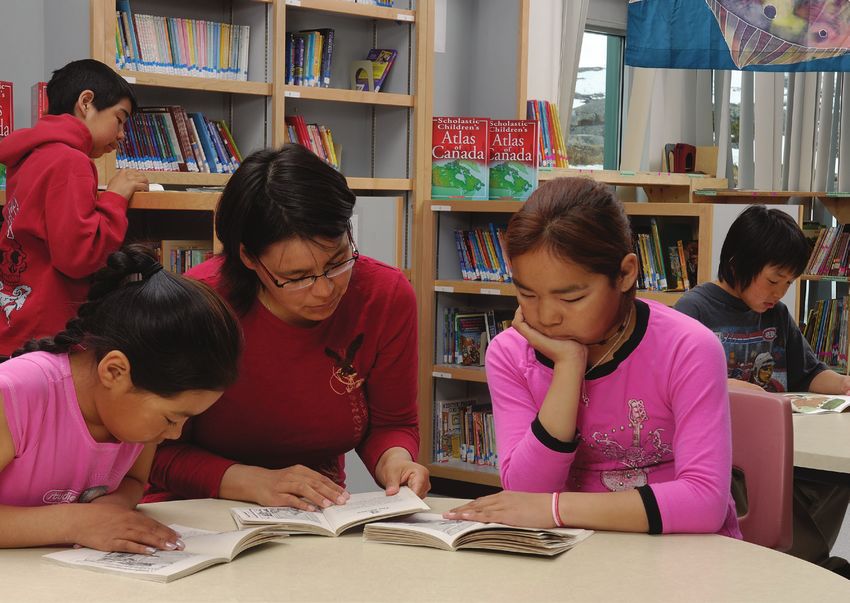
MISSION STATEMENT

           Department of Education and Early
               Childhood Development

                       Mission Statement

          The Department of Education and Early Childhood
      Development will improve provincial early childhood learning
       and the K-12 education system to further opportunities for
              the people of Newfoundland and Labrador.

EXTENDING THE CLASSROOM: THE LIBRARY LEARNING COMMONS 2018	i
ii EXTENDING THE CLASSROOM: THE LIBRARY LEARNING COMMONS 2018
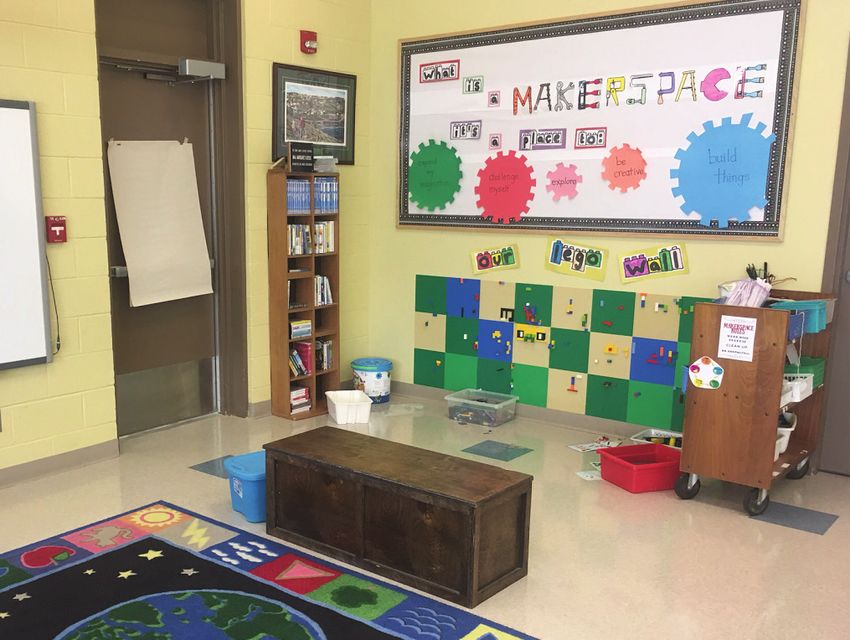
TABLE OF CONTENTS

Table of Contents
Acknowledgements...................................................................................... iv
Section One: The Library Learning Commons
    Introduction: The Library Learning Commons..............................................................1
       Purpose and Rationale.............................................................................................2
       Standards of Practice...............................................................................................2
       What it Looks Like in Our Schools...........................................................................4
       Differences at a Glance............................................................................................7
Section Two: Student Learning Competencies
    Learning Skills..............................................................................................................8
    Inquiry..........................................................................................................................9
Section Three: Teaching Practice and Pedagogy
    Developing and Maintaining a Library Learning Commons ......................................10
      The Emerging Commons.......................................................................................10
      Developing and Maintaining...................................................................................13
      Planning and Leading Transitions..........................................................................15
      Achieving Change..................................................................................................16
      Maximizing Potential..............................................................................................17
      Behind the Scenes.................................................................................................17
    Teaching Practices, Strategies, and Activities............................................................18
      Cross-Curricular Approaches: What is happening?...............................................18
Section Four: FAQs and Resources
    Frequently Asked Questions (FAQs)..........................................................................20
    Resource Links..........................................................................................................21
Appendices.................................................................................................. 23
References.................................................................................................. 37

EXTENDING THE CLASSROOM: THE LIBRARY LEARNING COMMONS 2018	iii
TABLE OF CONTENTS

iv                  EXTENDING THE CLASSROOM: THE LIBRARY LEARNING COMMONS 2018
ACKNOWLEDGEMENTS

Acknowledgements
The Department of Education and Early Childhood Development for Newfoundland and Labrador
gratefully acknowledges the contribution of the following committee members in the completion of
Extending the Classroom: The Library Learning Commons:

Aaron Aikens                                         Janice Harnum
Elizabeth Park Elementary                            Anthony Paddon Elementary

Alison Edwards                                       Katherine Rowsell
Prince of Wales Collegiate                           Corner Brook Regional High School

Anna Powell                                          Leigh Borden
Department of Education and Early                    Holy Trinity Elementary
Childhood Development
                                                     Mario Jarvis
Beth Power                                           Holy Name of Mary Academy
Macdonald Drive Junior High
                                                     Nicole Kelly
Bobbie Keeping-Sibley                                Newfoundland and Labrador English
Gill Memorial Academy                                School District

Corinne Billard-Penney                               Regina North
Anthony Paddon Elementary                            Department of Education and Early
                                                     Childhood Development
Gillian Grandy
Sacred Heart Elementary                              Stephanie Abbott
                                                     Gill Memorial Academy
Heather Godden
Beachy Cove Elementary                               Susan McCormack
                                                     St. Paul’s Intermediate
Janet Critch
St. Kevin’s Junior High                              Wendy Hynes
                                                     French Shore Academy

EXTENDING THE CLASSROOM: THE LIBRARY LEARNING COMMONS 2018                                         v
ACKNOWLEDGEMENTS

vi                 EXTENDING THE CLASSROOM: THE LIBRARY LEARNING COMMONS 2018
THE LIBRARY LEARNING COMMONS

Section 1: The Library Learning Commons
Introduction                         A school library learning commons (LLC) involves a whole school
                                     approach, presenting exciting opportunities for collaboration among
                                     all curriculum areas and within the school community. Within a
The Library Learning                 library learning commons, new relationships are formed among
Commons                              learners, new technologies are realized and utilized, and both
                                     students and educators grasp new ways to learn. A library learning
                                     commons provides opportunities for participatory learning in an
                                     authentic environment. It is a physical and virtual environment
                                     within the school which becomes a flexible, active hub for both
                                     collaborative and independent learning.
The title, Library Learning
Commons (LLC), is                    The school library plays an essential role in the implementation of
interchangeable throughout           this innovative vision for education. Each member of the school
this document. It may also           community plays an important role in creating a space that inspires
be referred to as LLC,               students to actively engage in their learning.
Library, Learning Commons,           A library learning commons approach is based upon a cross-
and/or Commons.                      curricular perspective that recognizes literacy, numeracy,
                                     knowledge, thinking, communication, and application as foundations
                                     for learning how to learn (adapted from OSLA).

                                                                    Innovative

                                                   Collaborative                  Accessible

                                         Engaging                                          Creative

                                                                    Library
                                       Adaptable                   Learning                    Authentic
                                                                   Commons

                                     The library learning commons
                                      • adapts to the needs and configuration of students and the
                                        school;
"A Learning Commons is about          • encourages collaboration among students and teachers;
common physical and virtual           • focuses on the 4Cs (collaboration, communication, critical
places to experiment, practice,         thinking, and creative thinking);
celebrate, learn, work and
                                      • helps develop technological, teamwork, and leadership skills;
play...it is more than a room...it
is about changing school culture      • maximizes use of an accessible library space;
and about transforming the way        • promotes engagement of all learners;
learning and teaching occurs."        • provides opportunities for students to adapt and to learn how to
(Koechlin, Rosenfeld, and
                                        learn in authentic environments;
Loertscher, 2010, 9)                  • provides physical and virtual spaces where learners make
                                        meaningful connections through investigation, experimentation,
                                        research, and reading; and
                                      • supports a shift from content to process focused education.

EXTENDING THE CLASSROOM: THE LIBRARY LEARNING COMMONS 2018                                                 1
THE LIBRARY LEARNING COMMONS

                                     As society continues to experience a pedagogical shift in learning,
Purpose and                          students are provided with more opportunities to make connections,
Rationale                            collaborate, communicate, think critically, and be creative. Their
                                     learning is purposeful, authentic, active, and student centered.
                                     The school library is a vital part of any school community. It is
                                     because of changing pedagogy that many schools are using the
                                     school library and other spaces as a starting point to reinventing
                                     themselves to better serve all stakeholders. Extending the
    "We have gone from being
                                     Classroom: The Library Learning Commons offers guidance for
    a warehouse of books to
                                     schools who wish to learn more about the LLC approach. Focus
    a busy, vibrant place for
                                     is on student learning competencies and teacher practice and
    students and faculty to gather
                                     pedagogy, as well as professional learning resources for teachers.
    and learn in a connected and
    collaborative environment."      The LLC approach compliments the Newfoundland and Labrador
                                     curriculum which is organized by outcomes and is based on The
    (Cicchetti, 2010, 52)
                                     Atlantic Canada Framework for Essential Graduation Learning
                                     in Schools (1997). Essential Graduation Learnings (EGLS) offer
                                     clear goals for education by describing the knowledge, skills, and
                                     attitudes expected of all students who graduate from high school.
                                     The LLC approach helps students make connections and develop
                                     abilities that will empower them to learn how to learn as they meet
                                     the shifting and ongoing demands of life, work, and study.

Standards of Practice                The Canadian Library Association (CLA) promotes five core
                                     standards of practice for school library learning commons in
                                     Canada. These standards may be used to "guide the transformation
                                     of school libraries to create future-oriented hubs of learning,
                                     innovation, and knowledge creation" (Leading Learning, 2014, 4).
                                     They include
                                       • advancing the learning community to achieve school goals;
                                       • cultivating effective instructional design to co-plan, teach, and
                                         assess learning;
                                       • designing learning environments to support participatory
                                         learning;
                                       • facilitating collaborative engagement to cultivate and empower
                                         a community of learners; and
                                       • fostering literacies to empower life-long learners.
                                                      		                  (Leading Learning, 2014, 8)

2                                          EXTENDING THE CLASSROOM: THE LIBRARY LEARNING COMMONS 2018
THE LIBRARY LEARNING COMMONS
These standards focus on key concepts that drive teaching and learning practices within a library
learning commons. The CLA provides transitional growth stages for the development of an LLC. The
following chart outlines these stages.
These terms indicate the transitional growth stages
of a Library Learning Commons:
EXPLORING
The school community is utilizing the Standards of practice for school library learning commons in Canada to begin
the review of its school library and to assist in developing goals and action plans for moving forward. The growth
continuum charts begin with schools already in the first phase of learning commons transitions but will also assist
those schools in the exploring phase to establish points of entry.
EMERGING
The school community has embraced the Library Learning Commons concepts and it has established a Learning
Commons Leadership Team to begin the work of preparing the library facility, collections, technologies and teaching
and support staff for renewed focus on learning in changing environments.
EVOLVING
The Library Learning Commons Leadership Team is building a collaborative school culture with teachers and students
with a focus on inquiry learning that utilizes the teaching expertise, resources, technologies and spaces of the Library
Learning Commons.
ESTABLISHED
The school Library Learning Commons is dedicated to building teaching partnerships to design and guide engaging
and effective collaborative learning and participatory knowledge building experiences.
LEADING
The school Library Learning Commons is central to leadership and empowerment of all learners, students and teachers,
who actively participate in, and contribute to, their learning communities.
LEARNING FOR THE FUTURE
From: Leading Learning, Standards of Practice for School Library Learning Commons in Canada, Canadian Library
Association, (2014).
9 Leading Learning Canadian Library Association • Association canadienne des bibliothèques
EXTENDING THE CLASSROOM: THE LIBRARY LEARNING COMMONS 2018 3THE LIBRARY LEARNING COMMONS
Several key components must be in place in order to design and
What it Looks Like in implement a successful library program. These include:
Our Schools
Library
Physical Virtual
Participants
Space Space
Resources Learning
Commons
Participants
The library learning commons is designed to include all members
of the school community as partners in learning. All partners build
on their personal and school strengths collectively. The teacher
librarian (TL) is an active teacher, one who offers expertise to help
facilitate change and oversee the daily functioning of the space.
The TL collaborates with classroom teachers to plan and facilitate
Appendix A: LLC cross-curricular learning experiences.
Planning Template
Many schools have teacher librarians who are also classroom
teachers. They are not always physically available to the many
students who make use of the LLC; therefore, schools may develop
a team approach to facilitate the development of their space. It is
important to encourage shared responsibility for both the creation
and the operation of the learning environment. In some instances,
it may be advantageous for a committee to oversee the planning
and general operation while other partners assist with development
ideas and daily running.
These partners may include:
Teachers -
"We wanted to make the classroom,
Students
specialists,
space a 'third space', different TLs
from home and different
from a classroom, all the
while ensuring that we were
supporting and extending District
Personnel Administrators
what was happening in the
classroom."
(Mueller, 2015, 14)
School
Community
Support
Members
Staff
Families
4 EXTENDING THE CLASSROOM: THE LIBRARY LEARNING COMMONS 2018THE LIBRARY LEARNING COMMONS
Physical Space
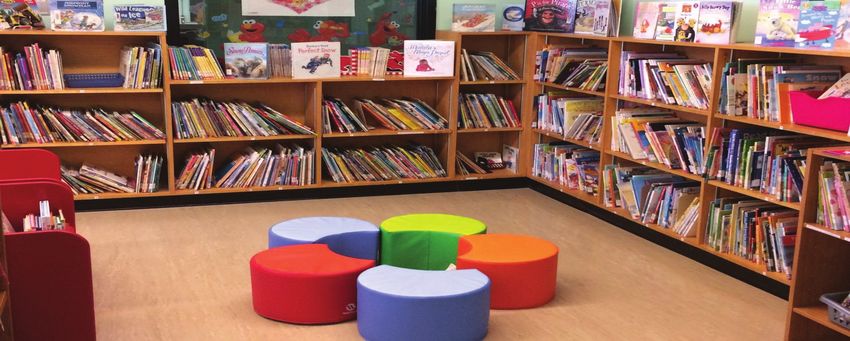
Physical space is designed to be welcoming and flexible. The
school library is an ideal location for a flexible learning commons;
however, such a space is not always available. Another area of
the school or a combination of several areas within the school
may provide students with spaces to work both independently and
collaboratively. Physical space is designed to accommodate diverse
learners and a variety of group configurations. To ensure students
see themselves in the space, they must have opportunities to
provide input into how it is designed. Visual clutter can lead to
distraction and disruption, especially for those who are susceptible
to sensory overload; therefore, it is important to consider all
components of the space. Colours, materials, and layout impact
how students behave and interact with their environment.
Consideration should be given to
• creating attractive and functional storage areas;
• finding ways to avoid clutter;
• using natural objects and materials as well as invitations and
provocations to enhance learning;
• adding soft, neutral colours; and
• displaying student created visuals (consider how walls can be
used effectively as part of an educational environment).
Physically setting up a safe, inclusive, accessible space may
be accomplished by moving any available excess furniture to a
common area(s). Consider features associated with room layout:
• accessible bookshelves • listening equipment
• accessible technology • makerspace
• collaborative teacher space • movable tables
• comfortable seating • reading spaces
• independent/collaborative • recording equipment
student spaces • tutoring table/booth
Within the physical space, support for projects involving computers
and other digital devices can be accomplished by
• ensuring accessibility for all students;
• including appropriate software to meet the needs of all
students;
• including computers for individual and collaborative use;
• including an interactive white board;
• providing access to a printer, charging stations, and Wi-Fi;
• providing dedicated computer stations for specialized projects
(e.g., video editing, robotics); and
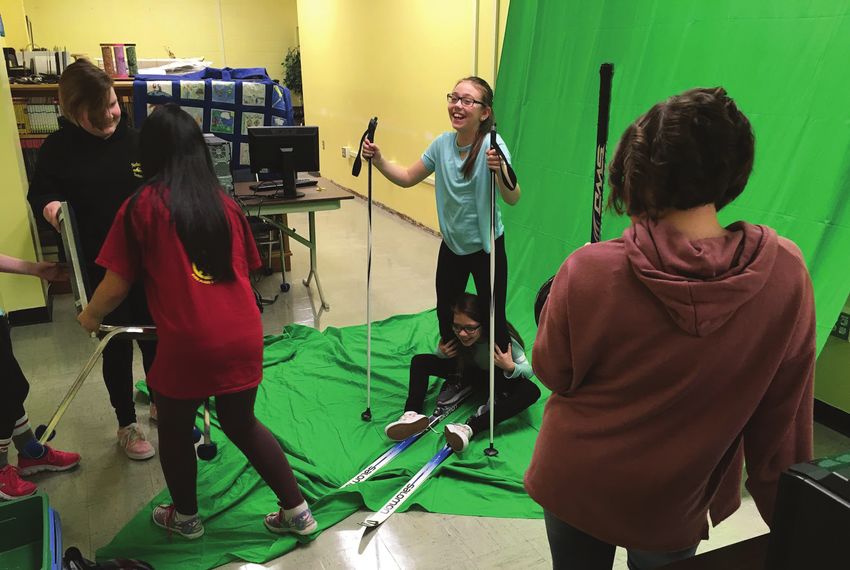
• setting up a digital production center (cameras and computer
equipment for editing and video creation).
EXTENDING THE CLASSROOM: THE LIBRARY LEARNING COMMONS 2018 5THE LIBRARY LEARNING COMMONS
Virtual Space
A virtual learning commons (VLC) is a digital learning community.
Both students and teachers "collaborate to establish the VLC
as a place where individuals and groups are actively learning,
communicating, and building together in real time. This participatory
"The Learning Commons community of learners is powered by software which allows many
creates virtual spaces that are contributors, and it is as public or private as the school wishes it to
flexible and inviting. It helps be" (Loertscher, Koechlin, and Rosenfeld, 2012, 2). Students and
students view learning as a life teachers have limitless access to an online presence for learning.
pursuit." This may include
(Ontario School Library • access to databases and NL Public Library collections (a NL
Association, 2010, 8) Public Library card will provide access to a digital library and
numerous other resources);
• access to and support for educational uses of social media
(e.g.,Tumblr©, Twitter©, Instagram©, Pinterest©);
• access to teacher sites that include tutorials, assignments, and
resources;
• a focus on online resources and databases (e.g., magazine
databases, encyclopedias, approved links); and/or
• virtual communication (e.g., Google Drive©, email, Skype©,
flipped classrooms).
Web Content Accessibility Guidelines (WCAG) will provide a range
of recommendations for making online content more accessible.
Library Collection: Development and Maintenance
The library collection includes print materials and a variety of other
resources that are necessary to make the environment engaging
and useful. They may include
• a wide selection of reading material (e.g., fiction, nonfiction,
magazines, posters, digital texts, and virtual library);
• alternate format materials;
• e-readers and tablets;
• exemplars made available at the writing station;
• professional learning (PL) for teachers;
• supply station (e.g., markers, paper, artistic tools); and/or
• visual representations of advertisements, art, etc.
Collection maintenance is important for any library space. Books
and other resources must be maintained and updated on a regular
basis. Ensuring that students have access to current, engaging
reading materials can be accomplished by
• canvassing student preferences,
• keeping magazine renewals (for student interest and for teacher
PL) up to date,
• organizing promotions such as book fairs,
• providing easy access for requests (for students and teachers),
and/or
• setting up a 'teaser' shelf or table at the entrance to the LLC.
6 EXTENDING THE CLASSROOM: THE LIBRARY LEARNING COMMONS 2018THE LIBRARY LEARNING COMMONS
Differences between a more traditional learning resource centre
Differences at a (LRC) and a library learning commons (LLC) may include those
Glance outlined below.
Traditional Learning Resource Centre Library Learning Commons
Fixed shelves and furniture, populated by Movable furniture, low shelves (unless on perimeter),
print materials multiple spaces, diverse collection of texts (print, digital,
and multimedia)
Generic wall displays Wall displays showcasing student strengths and
successes
Computers housed in a separate room Computers and mobile devices available to individuals
and groups
One class at a time uses the space More than one class at a time, students from two
or three classes, or a couple of students from
several different classes moving in and out, working
collaboratively
Space is open during scheduled class time Access at recess, lunch, and after school, as well as
only student access to virtual learning commons (during and
after school hours)
Consists primarily of print resources A balance of digital and print resources that are
engaging and current
Teachers plan for their own classes when Teachers collaborate with other teachers or with other
accessing the library partners to plan subject based and cross-curricular
activities
All students work on the same task A variety of tasks are underway using a range of
resources
Main activity is book borrowing Space is utilized by a variety of groups (e.g., teacher PL,
community visitors, guest speakers), and for a variety of
activities (e.g., grade level assemblies)
In school access to library collection only Web based access to library collection, databases, book
recommendations, etc.
Adapted from: Together for Learning: School Libraries and the Emergence of the Learning Commons, (OSLA), (2010)
EXTENDING THE CLASSROOM: THE LIBRARY LEARNING COMMONS 2018 7STUDENT LEARNING COMPETENCIES
Section 2: Student Learning Competencies
A library learning commons provides opportunities for growth and
Learning Skills skill development. Students will draw upon previous knowledge
attained as they continue to develop learning competencies.
Life and
Career
Skills
"To become independent
learners, students must gain
not only the skills, but also the
disposition to use these skills,
Literacy Learning
along with an understanding of
their own responsibilities and
and
Innovation
self-assessment strategies. Skills
Combined, these four elements
build a learner who can thrive
in a complex information
environment."
Student learning competencies encompass three broad areas
(Standards for the 21st century which are then further subdivided:
Learner, AASL, 2) • Learning and Innovation Skills – Learning and innovation
skills enhance a person’s ability to learn, create new ideas,
problem solve, and collaborate. These skills will help foster
lifelong learning:
-- Collaboration
-- Communication
-- Creative Thinking
-- Critical Thinking
• Literacy – Literacy is a process of receiving information and
making meaning from it as well as having the ability to identify,
understand, interpret, communicate, compute, and create texts,
images, and sounds. This includes three components:
-- Information and Communication Technology Literacy
-- Numeracy
-- Reading and Writing
• Life and Career Skills – Life and career skills are skills that
address leadership, the interpersonal, and the affective. These
skills are crucial in today's emerging world:
-- Flexibility and Adaptability
-- Initiative and Self-Direction
-- Leadership and Responsibility
-- Productivity and Accountability
-- Social and Cross-Cultural Skills
8 EXTENDING THE CLASSROOM: THE LIBRARY LEARNING COMMONS 2018STUDENT LEARNING COMPETENCIES
The library learning commons is a vibrant and energetic
Inquiry environment where inquiry is fundamental to the development of
all other skills. Inquiry focuses on learning new information that is
useful and applicable; it involves posing questions and developing
explanations for phenomena. Students become risk takers, yet
The essence of inquiry … know when to seek guidance. Teachers should guide students
“Inquiry ... requires more than to use inquiry in all aspects of their learning as they explore,
simply answering questions investigate, process, and create.
or getting a right answer. Teacher librarians and classroom teachers collaborate to facilitate
It espouses investigation, student inquiry that is rich in experience and reward. Classroom
exploration, search, quest, teachers contribute important knowledge of subject content and
research, pursuit, and study. student needs while teacher librarians contribute knowledge of
It is enhanced by involvement available resources and strategies to help students build inquiry
with a community of learners, skills.
each learning from the other in
social interaction.”
(Kuklthau, Maniotes & Caspari,
2007, p. 2) The graphic below outlines a model for inquiry that can be adapted
for use with students.
A Model for Inquiry : Ontario School Library Association
EXTENDING THE CLASSROOM: THE LIBRARY LEARNING COMMONS 2018 9TEACHING PRACTICE AND PEDAGOGY
Section 3: Teaching Practice and Pedagogy
Developing and Maintaining a Library Learning Commons
The Emerging Planning and developing a library learning commons is a school
community initiative and should be part of the school development
Commons plan. All stakeholders should agree that it is a priority even though
all may not immediately act as leaders or even participants.
Each school must have a culture which supports both independent
and collaborative learning. Members of the school community will
collaboratively plan how to use the learning commons to facilitate
that learning while addressing curriculum outcomes. Design and
use of the LLC will be unique to each school. This will be based
on factors such as student needs and interests, availability of
teacher librarians, teacher and administrative support, community
partnerships, school configuration, location, and student population.
A successful LLC includes inquiry-based learning, is project based,
and involves embedded learning experiences throughout the
school.
Three key elements are necessary in order to program for success:
Initial Support Program Expectations Resource Availability
includes includes includes
• a dedicated • realistic goals, • involvement of the
implementation team, community,
• time considerations,
• careful direction and and • movement of resources
monitoring, and to a central location, and
• meeting of curriculum
• stakeholder support. outcomes. • identification of school
assets and challenges.
10 EXTENDING THE CLASSROOM: THE LIBRARY LEARNING COMMONS 2018TEACHING PRACTICE AND PEDAGOGY
Initial Support Implementation Team
This is not a solo process. The whole school community may be
part of the planning process. It is important to work with the larger
school community to gather support in the beginning stages. In
schools where teacher librarians are also classroom or specialist
teachers, it is important to promote, during all stages, a shared
responsibility for the LLC.
Direction and Monitoring
During development, all participants need to be aware of the
purpose of the changes as well as the goals that have been set.
The school development process can assist with setting direction
and evaluating each step along the way.
Stakeholder Support
The school community should be aware of what is happening and
more importantly, why it is happening. Regular school community
updates regarding any changes within the culture of the school will
continue to build interest in and support for new initiatives.
Program Expectations Realistic Goals
It must be understood that this process is a larger cultural change
within a school. It is unique to each school and may be a multi-
year process. Attainable and measurable goals should be set.
Realistically, a school may set and attain one goal at a time rather
than attempting multiple goals at once. Timing is dependent on
availability of and access to personnel and physical resources.
Strengths and challenges should be evaluated to ensure that
choices are being made with the culture and needs of the school
community in mind.
Appendices
• B: Collaborative Time Considerations
Planning Guide
• C: Cross-Curricular Planning time, teacher schedules, and teacher allocation must
Planning Template be considered. Each school will have different staff numbers and
• D: Sample Curriculum different teacher librarian allocations. A teacher librarian may lead
Support Plan
a team towards a LLC transition but all team members will need to
consider time for collaboration and planning.
Curriculum Outcomes
In all stages of planning, curriculum outcomes and course goals
must be at the forefront. Implementation team members should
consult with all applicable staff members and pertinent district
personnel to ensure that curriculum outcomes are addressed.
EXTENDING THE CLASSROOM: THE LIBRARY LEARNING COMMONS 2018 11TEACHING PRACTICE AND PEDAGOGY
Resource Availability Community Involvement
The use of student and community volunteers will provide valuable
support to the development and operation of the LLC. Direct
recruitment of volunteers has proven successful in daily operations
and will help to promote the program. In addition, partnerships
formed within the community can be very helpful.
Physical Resources
"Participatory learning An initial goal of the planning committee will be to determine a
includes the many ways that space within the school that can be used for the LLC. This space
learners (of any age) use new should be one that is accessible to all students, can be utilized
technologies to participate in by larger groups, can easily house technological requirements
virtual communities where they and physical resources, and can be transformed to meet many
share ideas, comment on one needs. In many schools, the library is uniquely equipped to serve
another's projects, and plan, this purpose. In schools where such a space is not available,
design, implement, advance, or consideration should be given to using smaller, multiple spaces.
simply discuss their practices, This may be sections of classrooms or the end of a hallway.
goals, and ideas together." Once a space is identified, some useful resources should also be
chosen for that site. Resources may continue to be housed in other
(Davidson and Theo, 2010, 12) locations throughout the school as well in order for all students to
have continued access.
Assets and Challenges
Every school is unique, with a variety of both assets and
challenges. The implementation team must determine the best use
of assets as well as the focus of their collection, development, and
maintenance.
12 EXTENDING THE CLASSROOM: THE LIBRARY LEARNING COMMONS 2018TEACHING PRACTICE AND PEDAGOGY
Developing and A library learning commons is not a product that has a beginning
and an end. It is an interactive, supportive, adaptable space that
Maintaining continues to change and develop as each school evolves. Four
general phases are considered necessary for its development and
maintenance.
Plan and Prepare
Build a Foundation
Set the Stage
Implement and Revise
Phase 1: Plan and Prepare
• Change the physical space; when it looks different, everyone
knows that something different is happening. Ask: What is
possible? What do you have? What would you like to have?
• Determine how staff members are currently using the library
space and ask how they would like to see it being used;
determine whether additional spaces are available for use in
case groups or individuals need either a space that is quiet or
Appendix E: one that offers more opportunity for louder interactions.
• Start-up and Year-
end Checklist • Develop an action plan; include short and long term goals that
are based on the school development plan.
• Ensure that the space is accessible to all students.
• Establish a library learning commons leadership team that
represents the school community (staff, students, community).
• In K-6 schools, consult with local early learning services to
determine how their spaces enhance creativity and learning.
• Study professional literature to determine how this approach is
used in different contexts.
Phase 2: Build a Foundation
• Arrange collaborative planning and teaching times based on
schedules.
• Contact other schools to learn how they use their learning
commons.
• Expand the library learning commons community to inform and
include more families.
• Explore creative solutions to ensure that the learning commons
is available to students and staff for the entire school day.
• Form partnerships with groups who may be able to offer
support (e.g., NL Public Libraries, NLTA Teacher Librarians
Special Interest Council, The Literacy Foundation, service
groups).
• Participate in professional learning communities (e.g., EECD
Professional Learning Site, Teacher Librarian Google Group,
teacher led professional development).
• Provide professional learning for staff and invite staff members
to act as team leaders.
EXTENDING THE CLASSROOM: THE LIBRARY LEARNING COMMONS 2018 13TEACHING PRACTICE AND PEDAGOGY
Phase 3: Set the Stage
• Arrange furniture so the space is open, modern, accessible,
and welcoming. Students should feel an immediate connection
and a sense of belonging over time.
"It is to be emphasized that • Consider buying new print resources.
the transformation from school • Encourage students to create wall murals and posters and to
library to the learning commons offer suggestions for the space.
perspective is a 'whole school' • Ensure that a plan is in place to catalogue and circulate library
transformation. Thus the integral materials.
work around learning and • Make connections with other teachers to collaboratively meet
teaching should not be viewed curriculum outcomes; consider cross-curricular approaches.
as 'extra work' or needing 'extra
• Promote use of the space (e.g., fact-sheet, web page).
time' but inherent and vital to the
support and growth of the whole
• Revive and update existing library collection; keep relevant
school development plan."
books (involve students, staff, and families in decisions
regarding resources to keep and those that are needed).
(Leading Learning, CLA, 2014, 22)
Phase 4: Implement and Revise
• Be prepared that unanticipated changes may need to occur as
the learning commons evolves; embrace change as a part of
necessary growth rather than as weakness or failure.
• Conduct regular learner surveys to determine changes that are
working and those that are not.
• Develop a checklist that informs how well learner needs are
being met.
14 EXTENDING THE CLASSROOM: THE LIBRARY LEARNING COMMONS 2018TEACHING PRACTICE AND PEDAGOGY
During the initial stages of development, realistic expectations
Planning and Leading must be considered. In many cases, individual schools will already
Transitions embrace and use some or all of the strategies needed to carry out
an effective transition. For example, many schools will need minimal
physical changes, some will have current reading materials, others
will have classes who work well across curriculum areas, and yet
others will have peer tutoring available at lunch time and after
school. The key is to bring these and other good practices together
into a space (or spaces) that can be used and supported by all.
Organization may take several forms. A three-year plan is a realistic
way of developing a learning commons. In this case, it may be
beneficial to use a planning template such as the one below.
Year 1 Year 2 Year 3
Transitions
• physical changes
• schedule changes
Timelines
• monthly
• yearly
Strategies
• action items
Responsibilities
• student
• staff
• community
• outside partners
Resources
• budget
• time
• people
Indicators of Success
• surveys
• interviews
• assessments
Adapted from: Koechlin, C., Loertscher, D., and Rosenfeld, E. (2010). Building a Learning Commons: A Guide for
School Administrators and Learning Leadership Teams. Salt Lake City, UT: Hi Willow research and Publishing
EXTENDING THE CLASSROOM: THE LIBRARY LEARNING COMMONS 2018 15TEACHING PRACTICE AND PEDAGOGY
Achieving lasting change must consist of small steps and will
Achieving Change take time. Each school must plan changes based on available
resources. The actual space will be comprised of physical
and virtual areas. The physical area will provide a welcoming
atmosphere while the virtual area will provide live and digital
interactions between students within and outside the school
building. Tips for achieving change are outlined in the chart below.
The Add inviting messages and The Add a link from the school
Physical signs. Virtual webpage to the LLC
Space Space webpage.
Consult students and sketch Add a video which explains
a design. the LLC.
Create both quiet and Ask students to create
collaborative work areas. tutorials.
Create comfortable seating Include a teacher
areas. professional learning
section.
Ensure the space is
accessible to all students. Research components of a
virtual LLC.
Establish stations for
specialized work. Share links to outside
content and sources.
Include portable and fixed
technology stations.
Support school events.
Use accessible shelving.
Adapted from: Leading Learning, Standards of Practice for School Library
Learning Commons in Canada, Canadian Library Association (2014).
16 EXTENDING THE CLASSROOM: THE LIBRARY LEARNING COMMONS 2018TEACHING PRACTICE AND PEDAGOGY
While a virtual LLC can be accessed by students from their
Maximizing Potential classroom, from a mobile device, or from home, it is challenging for
a physical LLC to be open and available for the whole day. Each
school is unique based on its student needs and interests, grade
configuration, geographical location, scheduling demands, and
available resources.
In many schools, the teacher librarian will lead the transition;
however, support is needed from all stakeholders. Having a strong
community volunteer base will build capacity and help form new
partnerships. In many cases, students within the school community
will act as leaders and will offer their time to help organize and run
the physical space, add content to the virtual commons, and tutor
outside of class time. In other schools, one or more teachers may
take on the role of lead teacher(s) and support one or more specific
components (e.g., create a virtual commons, coordinate scheduling
and collaborative opportunities). In all schools, strong administrative
support for the initiative is essential. One of the following scenarios
may apply to each school:
Limited
Part time
Full time time Lead Two or Lead
(25-90%) Lead
TL works (TEACHING PRACTICE AND PEDAGOGY
Teaching Practices, Strategies, and Activities
Cross-Curricular Approaches: What is Happening?
When planning, teachers often collaborate with other teachers from the same or from a different
curriculum area. The LLC offers a space and therefore an opportunity for students to work alongside
peers who are working on a different topic or within a different curriculum area.
Use formal and informal assessments to measure success of tasks completed. This may range from
longer surveys to quick exit card activities.
Cross-Curricular Approaches: What is happening? Any combination of activities may occur
What Students What Teachers What Teacher Student Result
Activity
are Doing are Doing Librarians are
Doing
• choosing fiction and • listening to • supporting Students
nonfiction texts for and discussing reading • develop a love for
different purposes students’ instruction reading/viewing
• choosing texts based on reading • canvassing • experience
Reading and Viewing
a topic or genre • modelling students for incidental learning
• choosing texts based on reading/viewing purchasing • read about
interests • guiding reading suggestions topics they like
• sharing information • showing how to at their own pace
• sitting comfortably use the library without further
(individually or in groups) • co-teaching expectations
• guiding students as they choose
reading/viewing material
• sharing book talks
• facilitating the use of alternate format
materials
• listening to a presenter • supporting • facilitating Students
• listening to audio books students in presentations • become active
or podcasts audio choices • signing out listeners
Listening
• listening to peers share audio books and • make critical
a project, book, or equipment decisions based
experience on what they have
• using websites to learn • participating in discussion (may be heard
French, Spanish, etc., student or teacher led)
pronunciation
• working on a task with • co-teaching Students will develop
classmates • collaborating with other teachers • collaboration skills
Collaborating
• working on different • conferencing with students • leadership skills
topics/tasks with groups • working with volunteers (e.g., as they • team building
of students from different facilitate presentations, read to/with skills
classes in the same students, or help in some other way)
space
• working with other
students virtually
18 EXTENDING THE CLASSROOM: THE LIBRARY LEARNING COMMONS 2018TEACHING PRACTICE AND PEDAGOGY
What Students What Teachers What Teacher Student Result
Activity
are Doing are Doing Librarians are
Doing
• building skills associated • conferencing with students Students
Independently
with independent work • monitoring student writing, research, • develop
Working
• developing personal etc. independence
interests • supporting students as they learn and confidence
• working on personal independent work skills
writing/research
• investigating topics both • guiding and • helping students Students
informally (e.g., personal conferencing and teachers • develop critical
interest) and formally with students find resources thinking skills
using various devices, • helping • teaching
books, magazines, students find research skills
people, etc. resources • teaching
information
Inquiring
literacy skills
• modelling research and inquiry
processes
• helping students effectively use
resources
• writing for a specific • conferencing with students Students
purpose • co-teaching • strengthen writing
• writing for pleasure • collaborating with other teachers skills
Writing
• writing independently or • helping students select and use • develop writing
collaboratively technology enjoyment
• writing through different • modelling writing • match writing
mediums • working with small and larger groups of style with purpose
students
• listening to/viewing • adding curriculum related videos to the Students
online tutorials virtual learning commons • develop
• peer tutoring during • monitoring peer conferencing and peer leadership skills
lunch or after school tutoring
Tutoring
• welcome help
(e.g., an assignment) • suggesting or providing resources from others
• tutoring or being tutored (e.g., links, paper copies, resource
(either planned or people)
unplanned/informal)
• using prepared tutorials
via a handout
• formal sharing in • providing • presenting a Students
small or large groups opportunities for variety of ways • become better
using part or all of the self-reflection to "show what
Presenting
presenters
Sharing/
commons you know" • develop
• informal sharing through metacognitive
discussions, small • facilitating and participating skills
groups, visual displays,
etc.
EXTENDING THE CLASSROOM: THE LIBRARY LEARNING COMMONS 2018 19RESOURCES Section 4: FAQs and Resources Frequently asked Questions (FAQs) “What we want is to see the child in pursuit of knowledge, and not knowledge in pursuit of the child.” George Bernard Shaw What research supports the library learning commons approach? In 2014 The Canadian Library Association published ‘Leading Learning: Standards of Practice of School Library Learning Commons in Canada’. This document, and others are listed on the References page. Who should lead the transformation from traditional library to library learning commons? Leadership will depend on the school. In larger schools, this may be the teacher librarian, while in smaller schools, one or more classroom teachers or classroom teachers and the teacher librarian may work together. Why is support of the school administrator necessary? A library learning commons can transform the learning culture of a school. Administrator support is necessary in order for the pedagogy and school's cultural changes to be viable. What do I do if there is little support for the development of a library learning commons? Determine what aspects of a library learning commons will fit into what you are currently doing and that you can viably do in your day to day job. Incorporate what you can to enhance the learning of your students. Small steps are important. How can students play a role in development and maintenance? Students can be an ally in evaluating and selecting resources to purchase. They can offer ideas that help develop the library learning commons into a place that is safe and welcoming for all. 20 EXTENDING THE CLASSROOM: THE LIBRARY LEARNING COMMONS 2018
RESOURCES

FAQs Continued

What kind of professional learning is available to assist schools?
There are online communities that support schools when creating a library learning commons. Connecting
with peers who are also moving in the same direction will be beneficial for both.

How is a library learning commons different from many current learning resource centres?
A library learning commons is often more interactive than a traditional learning resource centre. The
school has made a commitment to provide a space that is student centered. Staff members focus on
cross-curricular and collaborative activities and a variety of tasks are being completed using a range of
resources.

How is the library learning commons connected to current skill development?
A library learning commons provides opportunities for students to develop learning competencies in
the areas of literacy, learning and innovation skills, and life and career skills, all of which are essential
learning skills.

How do we measure success of the library learning commons?
Ask the students as well as teaching partners. If students can articulate what they are doing in the library
learning commons, collaboration they have experienced, technologies they have used, learning that has
taken place, etc., then it is a success. Feedback from teachers will help to determine future plans and
goals.

How can the library learning commons strengthen student achievement?
A library learning commons helps promote active participant learning. By changing the way that teachers
and students interact, students are building a new understanding of their curriculum. They can then apply
their understanding to all facets of their learning.

Resource Links                          Resource links to websites and videos related to developing and
                                        maintaining a library learning commons can be found on the
                                        Department of Education and Early Childhood Development's
                                        professional learning website. This site can be accessed at
                                        https://www.k12pl.nl.ca/.

EXTENDING THE CLASSROOM: THE LIBRARY LEARNING COMMONS 2018                                                      21
APPENDICES 22 EXTENDING THE CLASSROOM: THE LIBRARY LEARNING COMMONS 2018
APPENDICES

Appendices
Table of Contents

Appendix A: Library Learning Commons Planning Template...................... 24
Appendix B: Collaborative Planning Guide..........................................................25
Appendix C: Cross-curricular Planning Template...............................................26
Appendix D: Sample Curriculum Support Plan...................................................28
Appendix E: Start-up and Year-end Checklist.....................................................29
Appendix F: Team Teaching Models......................................................................31
Appendix G: Scheduling...........................................................................................32
Appendix H: Weeding the Collection.....................................................................33
Appendix I: Partner Flyer..........................................................................................34
Appendix J: Sample Volunteer Letter....................................................................35

EXTENDING THE CLASSROOM: THE LIBRARY LEARNING COMMONS 2018                                                        23
APPENDICES

Appendix A: Library Learning Commons Planning Template

The template below may be helpful to teacher librarians and teachers when making broad, long-term
plans for the current year and beyond.

                     What I am                                                        Goals for next year
                                       What I want to do      Goals for this year
                   currently doing                                                       and beyond

 Physical &
Virtual Space

 Facilitating
  Students

Collaborative
 Planning:
 Teachers

Collaborative
  Planning:
 Community

  Library
 Collection:
Development

   Library
  Collection:
 Maintenance

Digital Devices

24                                        EXTENDING THE CLASSROOM: THE LIBRARY LEARNING COMMONS 2018
APPENDICES
Appendix B: Collaborative Planning Guide
The template below may be helpful to teacher librarians and teachers when planning for a specific student
learning experience.
Collaborative Planning Guide
Teacher ____________________________ Unit of Study ___________________________
Date ___________ Number of students _________
Meeting time(s) __________________ Projected Unit Timeline __________________
Outcomes Student grouping
• Individuals
• Large groups
• Pairs
• Small groups
Assessment Evaluation
• Teacher • Anecdotal • Rubric
• Teacher Librarian • Checklist • Self-evaluation
• Peer • Formative • Summative
• Self • Grade • Other
Culminating Task
Anticipated Resources Sample Lessons and Supports
• Fiction • APA /MLA Style Guide
• Internet • Book talks
• Nonfiction • Brochure and newsletter design
• Online databases • Debate preparations
• Reference • Informational writing outlines
• Tablets/computers • Note-taking
• Videos • Online database searches
• Other • Presentation tips
• Website evaluation
• Other
Notes
EXTENDING THE CLASSROOM: THE LIBRARY LEARNING COMMONS 2018 25APPENDICES
Appendix C: Cross-Curricular Planning Template
The template below may be helpful when independently or collaboratively planning cross-curricular
student learning experiences.
Unit/Lesson Title Grade Level
Subject(s) Time-frame
Big Ideas
Goals and Curriculum Expectations
(outcomes, essential questions, related content, and culminating task)
Knowledge/Concepts Skills/Competencies
(that students will acquire) (that students will acquire)
Resources, Materials, and Space Responsibilities
(needed for tasks) (teacher, TL, etc.)
26 EXTENDING THE CLASSROOM: THE LIBRARY LEARNING COMMONS 2018APPENDICES
Appendix C: Cross-Curricular Planning Template (continued)
Making Connections
What activation activities will best determine prior knowledge? What instruction will take place? How
can students help plan learning and assessment? What questions will students need to answer? How
can instruction be differentiated?
Learning Checkpoints (scaffolded strategies and activities to support student learning)
Checkpoint 1 Checkpoint 2 Checkpoint 3 Checkpoint 4 Checkpoint 5
Student Assessment and Reflection
Self-Assessment and Reflection Peer and Teacher Assessment
Unit Evaluation
EXTENDING THE CLASSROOM: THE LIBRARY LEARNING COMMONS 2018 27APPENDICES
Appendix D: Sample Curriculum Support Plan
A curriculum support plan is an important component that can guide the work of teacher librarians.
This plan can help a TL organize a cycle, a month, or several months. It is important that TLs not feel
overwhelmed with numerous responsibilities and tasks.
Subject Grade Level
Developed By
September October November December →
Grade
Big Ideas/Topics Big Ideas/Topics Big Ideas/Topics Big Ideas/Topics
Lessons/ Lessons/ Lessons/ Lessons/
Collaborative Units Collaborative Units Collaborative Units Collaborative Units
Grade 1
Resources Resources Resources Resources
28 EXTENDING THE CLASSROOM: THE LIBRARY LEARNING COMMONS 2018APPENDICES
Appendix E: Start-up and Year-end Checklist
The table below includes a sample checklist of library learning commons tasks to be completed at the
beginning and end of the school year.
Start-up Checklist
• Ask classes to create posters for the LLC
• Contact families regarding volunteering
• Coordinate a student tech team
• Create labels for classroom circulation bins
• Delete from cataloguing program, students who have moved to another school
• Email staff conference regarding availability of resources, schedules, etc.
• Enter names of new students into cataloguing program
LLC Admin
• Finalize LLC schedule – set up reading clubs, set peer reading time, etc.
• Meet with teachers to share library offerings, flexible schedules, calendars, etc.
• Process and catalogue any new items
• Set up book and magazine displays
• Shelve or bin books as necessary
• Update alternate format materials
• Update class and staff lists
• Update LLC wall schedule and post wall calendar
• Update online subscriptions
• Visit classes to share library offerings and book scheduled class times
• Add electronic schedules
Tablets and Computers
• Charge carts
• Check apps and update per grade level request
• Check interactive whiteboard function
• Check printer
• Check workstations
• Ensure charge stations are connected and employed
• Post cycle schedule for cart
• Post two-cycle fixed and flex schedule
• Edit, print, and distribute volunteer recruitment letter
Volunteers
• Email last year’s volunteers, update mail list and call replies
• Set volunteer orientation date(s) am, pm
Other
EXTENDING THE CLASSROOM: THE LIBRARY LEARNING COMMONS 2018 29APPENDICES
Appendix E: Start-up and Year-end Checklist (continued)
Year-end Checklist
• Clean/tidy tables, counter, chairs, etc.
• Collect classroom circulation bins
• Make announcements re: books to be returned
LLC Admin
• Print and distribute overdue notices
• Remove wall displays, etc.
• Sort basket books
• Wash and store stuffed animals
• Weed and store magazines
• Collect and check all tablets and laptops
• Make announcements re: leave PCs and peripherals plugged in
• Make announcements re: tablets and laptops to be returned with cords and charge blocks
ICT
• Run tablet updates, etc.
• Shut down tablets for summer storage
• Ask tech team reps to delete grade level drive folders, etc.
• Clean lab
Lab
• Shut down lab PCs
• Clean carts and keyboards, etc.
Other
30 EXTENDING THE CLASSROOM: THE LIBRARY LEARNING COMMONS 2018APPENDICES Appendix F: Team Teaching Models Teacher librarians and teachers may work together using the six models of co-teaching as outlined in Friend and Cook’s Co-Teaching: Principles, Practices, and Pragmatics as presented at the New Mexico Public Education Department Quarterly Special Education Meeting, Albuquerque, NM, April 29, 2004. One Teach, One Observe One person observes while the other teaches. Teachers decide in advance what types of information are to be gathered during the observation and agree on a system for gathering the data. Afterwards, the teachers jointly analyze the information. That is, observation should be a deliberate part of the lesson, not just incidental checks of student activity. One Teach, One Drift One person instructs while the other circulates throughout the room providing assistance to students as needed. If both are familiar with the curriculum content, either teacher may lead instruction. Parallel Teaching The class is divided into two groups of approximately the same size. Both teachers plan the lesson(s) jointly and teach the same topic simultaneously. This approach gives each teacher an active – but separate – instructional role in the classroom. Students can be strategically placed in the two groups. Station Teaching (Centres) Teachers divide students and content. Each teacher then teaches the content to one group and subsequently repeats the instruction for the other group. A third station may be set up for independent work. Rotation through stations can occur during one or several class periods. Alternative Teaching One teacher works with the larger group while the other works with a smaller group of students. The larger group completes the lesson while the smaller group either completes an alternative lesson or the same lesson at a different level. This arrangement might take an entire class period or it might be used for just a few minutes at the beginning or end of a lesson. For this approach to be successful, the purpose for the small group and its membership should vary. If both are knowledgeable of the curriculum content, either teacher may lead either group. Team Teaching Both teachers are delivering the same instruction at the same time. This is often called “tag team” teaching. This implies that each speaks freely during large-group instruction and moves among all the students in the class. Instruction becomes a conversation, not turn-taking. This co-teaching approach is affected more than any other by individuals’ teaching styles. This is the most interpersonally complex co- teaching approach. When a wide range of abilities exists within a class, this model may be less effective than others. EXTENDING THE CLASSROOM: THE LIBRARY LEARNING COMMONS 2018 31
You can also read


