Know the fish, know the rules - Precious habitat Special protection Exceptional fishing
←
→
Page content transcription
If your browser does not render page correctly, please read the page content below
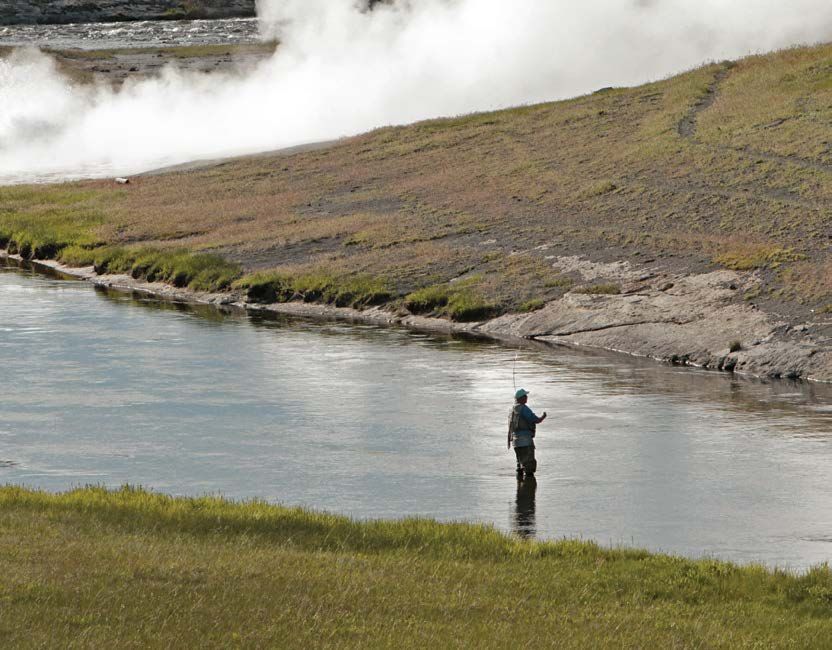
Yellowstone National Park

                               Fishing
                               Regulations
                                       2020

           Know the fish, know the rules
Precious habitat • Special protection • Exceptional fishing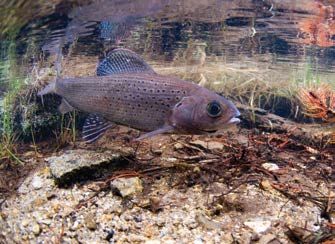
Purpose of Yellowstone Fishing Regulations
Fishing regulations in Yellowstone National Park are structured to strongly
support native fish conservation goals. Cutthroat trout are the sole, native
trout of the park and were the dominant fish species here prior to
Euroamerican settlement. Cutthroat trout, Arctic grayling, mountain white-
fish, and other native fishes are important to the ecology of Yellowstone.

Introduced nonnative fish cause loss of native fish
The abundance of native fish has been reduced because of impacts by intro-
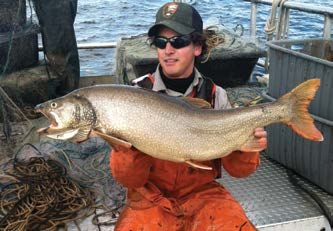
duced nonnative fish, including brook, brown, lake, and rainbow trout. These
nonnative species continue to contribute to the decline in the park’s native
fish population by competing for food and habitat, preying on native fish, and
degrading the genetic integrity of native fish through hybridization.

Anglers assist with native species conservation
Angling is one way that the nonnative fish can be selectively removed
from an area without damaging the native fishery. Within the Native Trout
Conservation Area, anglers are strongly encouraged, and in some cases
required, to harvest nonnative fishes. This harvest will help to conserve the na-
tive fish and the natural ecosystems they support.

Stay Safe and Legal
You are responsible for following all park regulations. Consult Yellowstone’s
park newspaper, Backcountry Trip Planner, or rangers at visitor centers and
backcountry offices to learn more.

• Stay on established trails in thermal areas for your safety and to protect these
  fragile areas.

• Do not discard fish carcasses or entrails along stream banks or the lake
  shore as they will attract bears.

• Do not feed any animals, including birds, squirrels, and coyotes.

Bear Warning • Bears and other wildlife may appear in areas frequented by
people—even on trails, boardwalks, and along roads. Do not approach wildlife
and remain at least 100 yards (92 meters) away from bears and wolves, and 25
yards (23 meters) away from all other wildlife.
• Be alert—watch for bears and bear sign, like fresh tracks or scat.
• Make noise in areas where visibility is limited.
• Carry bear spray and know how to use it.
• Avoid hiking or fishing alone. Try to
  stay with a group of three or more people.
• DO NOT RUN if you encounter a bear.
Contents

General Regulations........................................................................ 2–6
Seasons, dates, fishing hours, permit requirements, tackle restrictions, catch
and release, mandatory kill, and possession limits.
   Fishing................................................................. 2
   Boating................................................................ 6
Releasing Fish................................................................................... 7
Regional Regulations....................................................................... 8–15
Summary and exceptions to general regulations for each region of the park.
   Northwest Region Regulations........................ 8
   Northeast Region Regulations......................... 10
   Southwest Region Regulations......................... 12
   Southeast Region Regulations.......................... 14

Fish Identification............................................................................ 16–20
Know each fish species on sight in order to comply with native trout conserva-
tion requirements.
   Native.................................................................. 16
   Nonnative........................................................... 18

Angler Etiquette............................................................................... 21
Frequently Asked Questions........................................................... 22
Glossary............................................................................................ 24

                                                                                                          1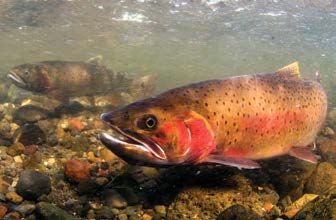
General Regulations
    Fishing
    Fishing/angling is defined as any
    activity using an attended single rod
    or line for the purpose of attempt-
    ing to attract, capture, or possess any
    fish from waters within Yellowstone
    National Park. All other methods to
    attract, capture, or possess fish are
    prohibited.

    Fishing hours and season dates
    The season begins the Saturday            Anglers 15 years of age or younger
    of Memorial Day weekend (usu-             have two options:
    ally the last weekend in May) and         1. Children 15 or younger may fish
    extends through the first Sunday in          without a permit if they are fishing
    November. Exceptions are listed in           under the direct supervision of an
    regional regulations (p. 8–15).              adult who has a valid park fishing
                                                 permit.
    Hours are daily from sunrise to
    sunset. Fishing with an artificial        2. Children 15 or younger may obtain
    light is prohibited. Some areas are          a free permit that must be signed by
    closed to human entry, have trail or         a responsible adult; with this per-
    seasonal closures, off-trail travel and      mit, a child can fish without direct
    daylight hour limitations, or party          adult supervision.
    size recommendations. See the Bear
    Management Area restrictions in the       With either option, the accompany-
    Backcountry Trip Planner for specific     ing adult is responsible for the child’s
    rules and information.                    actions and must ensure the child
                                              complies with all fishing regulations
    Streams may be temporarily closed due     and provisions.
    to low water levels and high water tem-
    peratures to protect fish populations.    Gear restrictions

    Fishing permits                           Each angler may use only one rod,
                                              which must be closely attended
    Anglers 16 years of age or older          at all times and used for angling
    must be in possession of a valid          only—intentional snagging of fish is
    Yellowstone National Park fishing         prohibited.
    permit to fish in the park.
    Park rangers may check permits and        Only lead-free artificial lures
    inspect tackle, fish, creels, or other    (e.g., spoon or spinner) or flies may
    containers where fish or tackle may       be used. Leaded fishing tackle such
    be stored.                                as leaded split-shot sinkers, weighted
                                              jigs (lead molded to a hook), and soft
2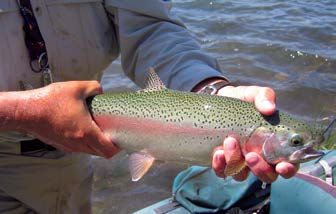
General Regulations

                                               FAQ: Why are barbless
                                               hooks required?
                                               Barbless hooks reduce injuries
                                               and the time needed to handle
                                               fish, and improve the overall
                                               condition of trout in heavily-
                                               fished waters of the park.

A single pointed hook is the best choice
for fishing in Yellowstone. Three-point     are allowed. Organic baits include
hooks can severely injure fish and are      fish or fish parts, minnows, salmon
often constructed with toxic lead solder.   eggs, worms, insects, or foodstuffs
                                            such as bread or corn. Inorganic baits
lead-weighted ribbon for nymph fish-
                                            include rubber worms and plastic
ing are not allowed.
                                            “twister” tails. Scented attractants
Hooks must have points that are             (liquid and solid baits) are illegal.
barbless, or the barbs must be              Putting any substance in the water for
pinched down by pliers. Lures may           the purpose of attracting fish (chum-
have only one hook with single,             ming) is illegal.
double, or triple points.
                                            Felt-soled footgear prohibited
Each fly may have only one hook. Up         To reduce the potential for
to two flies may be used on a single        introduction or spread of aquatic
leader (also called “dry and drop-          invasive species, footgear with
per,” or “hopper and dropper”).             absorbent felt or other fibrous
                                            material on the soles are prohibited.
Except for feathers and other typical
fly-tying materials, the hook must be       Tackle exceptions
bare. No organic or inorganic baits
                                            Non-toxic split-shot, sinkers, and jig
                                            heads molded with bismuth-tin, mo-
                                            lybdenum, or tungsten are allowed.
   FAQ: Why is fishing lead-                Lead core line and heavy (> 4 lb.)
   free in Yellowstone?                     downrigger weights used to fish for
   Lead is a toxic environmental            deep-dwelling lake trout are permis-
   contaminant. It accumulates in           sible because they are too large to be
   fatty tissue, eventually caus-           ingested by wildlife.
   ing lead poisoning. Wildlife
                                            Artificial lures are not allowed on the
   such as waterfowl, cranes,
                                            Firehole River, Madison River, and
   and shorebirds are vulnerable
                                            lower Gibbon River (below Gibbon
   because of their largely fish-
                                            Falls); these streams are fly fishing
   based diets.
                                            only.
                                                                                      3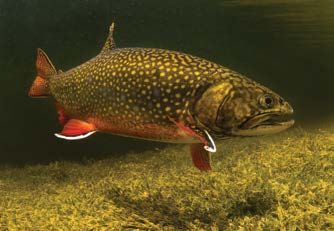
General Regulations
Possession limits
All native fish must be released Each angler must be able
unharmed. Natives include cutthroat to correctly identify various
trout, mountain whitefish, and Arctic fish species.
grayling. See pages 16–17 for photos ALL NATIVE FISH MUST BE
and further descriptions. RELEASED UNHARMED
North
Entrance
! Northeast
! Entrance
! Mammoth .
Cr
u gh
Tower Slo
C r.
!
te
ut
B
da
So
NORTHEAST
REGION
La
ma
rR
Norris
iv
! Canyon
er
N O RT H W E ST !
REGION
River
el
Y
lo w
n
! Madi s on River Gibbo
sto
! e
Madison
n
West Ri
v
Entrance
¹
er
Fishing Bridge
!
Fi
Lake
r eho l
!
e Bridge !
Bay
Riv
East
! Entrance
er
Old ! Yellowstone
Faithful Lake
West Thumb! SOUTHEAST
!
Grant
Village
REGION
SOUTHWEST
REGION
Bechler South
!
! Entrance
Nonnative Trout Tolerance Area Streams Park Boundary
Native Trout Conservation Area Roads Region Boundary
0 5 10 20 miles
4
General Regulations
           Native Trout                     brook, brown or lake trout; only
           Conservation Area                one of which may be a brown trout.
All native fish must be released un-      It is the responsibility of the angler
harmed. No possession limit for non-      to be able to identify fish by species.
native fish, including brown, brook,      Unintentionally killed fish should be
rainbow, and lake trout (p. 8–15).        returned to the water so they can be
• All rainbow trout, brook trout,         consumed by wildlife.
  and identifiable cutthroat x rain-
  bow hybrids caught in the Lamar
  River drainage (including por-
  tions of Slough and Soda Butte
  creeks) and the Yellowstone
  River drainage below Lower Falls
  and above Knowles Falls must
  be killed—it is illegal to release
  them alive (p. 10).
                                          Brook trout markings.
• All lake trout caught from
  Yellowstone Lake must be killed—        Evidence of species in possession
  it is illegal to release them alive.    Skin must remain attached so the
                                          fish species can be visibly identified.
           Nonnative Trout
                                          Gills and entrails may be removed
           Tolerance Area                 in the field, but must be discarded
All native fish must be released          only within the waters where the fish
unharmed. Possession limits exist for     were caught.
nonnative fish in this area. An angler
must cease fishing in the area im-        Disposal of fish and entrails
mediately after filling the possession    Dispose of fish and/or fish entrails
limit (p. 9 and 12).                      within the waters where the fish
                                          was caught but not within 100 feet
• Firehole River, Madison River,
                                          (30.5 m) of boat ramps, docks, or
  lower Gibbon River (downstream
                                          backcountry campsites. Fish can also
  of Gibbon Falls)—possession of up
                                          be disposed of in park trash cans.
  to five brook trout is allowed. Catch
  and release all rainbow and brown       Bridge, marina, and boat dock
  trout. Whitefish are an important       restrictions
  native species in the Madison River     No fishing from any road bridge,
  and they must be released.              marina, or boat dock*. Accessible fish-
                                          ing platforms and ramps are located
• Lewis River system above Lewis          near Madison Junction (p. 8) and at
  Falls, including Lewis and              Grant Village boat launch (p. 14).
  Shoshone lakes and their tributar-      *Fishing is permissible from boat docks at
  ies—possession of five combined         backcountry sites on Yellowstone Lake.
                                                                                       5
General Regulations
Boating
Vessel inspections & permits
Boating season operates on the same
dates as fishing season. All vessels—
including float tubes—require a boat
permit, a life vest for each passenger,
and an emergency sound device such
as a whistle or air horn. All vessels
must be checked by National Park
Service inspectors to ensure that they
are free of aquatic invasive species
before entering any park waters. See
Yellowstone’s Boating Regulations or
All vessels, including float tubes, require the park website for more details.
an inspection and a permit.
Aquatic invasive species jeopar- 3. DRY. Ensure all gear is clean and
dize the ecological, recreational, completely dry for 5 days—in-
and economic values of the entire cluding waders, boots, clothing,
Yellowstone area. Please protect and nets—before fishing another
Yellowstone waters by: stream or lake in the park.
1. CLEAN water, mud, plants, fish, 4. DO NOT BRING BAIT into
and all other foreign material from Yellowstone National Park. No
your boats, trailers, and other natural or organic bait such as min-
equipment—including waders, nows, salmon eggs, worms, insects,
boots, clothing, and nets—use or foodstuffs—alive or dead—are
high-pressure, hot (>140°F) water allowed.
to treat all gear before you enter
Yellowstone National Park. 5. NEVER MOVE water, fish, other
animals, or plants from one stream
2. DRAIN your boat hull and live well or lake to another. It is illegal to
in a safe location (a flat, paved, transport live fish within the park.
dirt, or gravel area) away from all
park surface waters. Do not dump See Yellowstone’s aquatic invasive
water from other sources into species brochure or the park website
Yellowstone waters. for additional details.
6Releasing Fish
your hands to see what it does. If it
struggles to keep itself upright, hold
the fish around its tail and beneath its
belly with its head facing upstream
into the current. Move the fish gently
back and forth toward and away
from the current. You should notice
the gills opening and closing due to
the rush of water. This is like giving
a fish mouth-to-mouth resuscita-
tion. When the fish has recovered, it
Hold the fish with wet hands, beneath the should swim away on its own.
belly, behind the pectoral fins. Use forceps
or small pliers to remove the hook. Tackle, lures, and hooks
Hooks and lures typically have barbs
For all native fish and any nonnative
when purchased. With small pliers
fish you intend to release, bring the
you must pinch down the barbs.
fish in as quickly as possible. Do not
Without barbs, more skill is required
play the fish to exhaustion.
in landing and bringing in fish, but
Unhook the fish in quiet water such hook removal is easier and less trau-
as an eddy or slow spot. Do not drag matic to the fish.
the fish across land. Use forceps or
Spinning lures typically have three
small needle-nosed pliers to quickly
hooks called treble hooks. With wire
remove the hook.
cutters you can snip off one of the
Always make sure your hands are hooks or snap one off with pliers; you
wet if you must handle the fish. Dry also must pinch down all the barbs.
hands damage a fish’s protective Two hooks are still effective, easier to
mucous film. Hold the fish with one remove, and less traumatic.
hand around the tail section and the
If the fish is deeply hooked, cut the
other beneath the belly, just behind
line, do not pull out the hook. Most
the pectoral fins. Never grab or hold
fish can survive with hooks left in.
a fish through the gills unless it is
already dead.
If you want a photo of the fish, make
sure the photographer is ready before
you handle the fish. Make it quick.
Never just throw a fish back into
the water. If a fish becomes passive,
it is probably close to exhaustion.
Gently remove the hook within calm
water, then lightly cradle the fish with
7Regional Regulations
If a stream or lake is not listed by name or as a tributary, general regulations
apply. You must follow bear management and hydrothermal area restrictions
listed in the Backcountry Trip Planner, which is available in backcountry of-
fices or at www.nps.gov/yell/planyourvisit/backcountryhiking.htm.
Northwest Region:
Includes the Madison and Gallatin
river drainages, including Firehole
and Gibbon rivers and tributaries.
Permanently closed to fishing:
• Firehole River from road bridge
.5 mile (.8 km) upstream of Old
Faithful to road bridge at Biscuit
Basin, 200 yards (182 m) either side
of Midway footbridge.
• Madison River from Seven Mile
Bridge upstream 250 yards (226 m).
Fly fishing only: Madison River,
Firehole River, Gibbon River below Solfatara Creek near Norris
Gibbon Falls (not including their campground.
tributaries). Use only artificial flies
regardless of the type of rod or line. Madison: Gibbon River near Tuff
Cliffs; Large meadow areas of the
Possession limits Firehole, Gibbon, and Madison riv-
ers near Madison Junction.
Native Trout Conservation Area:
• Catch and release all native fish. Old Faithful: Firehole River at picnic
areas; Nez Perce Creek.
• No possession limit on nonnative
fish. ô Accessible ramp & platform
At the Mount Haynes Overlook,
Nonnative Trout Tolerance Area:
approximately 3.5 miles (5.6 km)
• Limit of 5 brook trout. west of Madison Junction. Please see
the Yellowstone Accessibility Guide
• Catch and release all rainbow and or www.nps.gov/yell for more
brown trout. information.
Where to take young anglers
Norris: Gibbon River at Virginia
Meadows or other meadows;
8Northwest Region Regulations
n
CT
ime
S pe
c
Roads!
Flyfishing ONLY
Gallat
F an Closed to all fishing
in !
CT Park Boundary
MW
BN Nonnative Trout Tolerance Area
RT
HWY 191
Native Trout Conservation Area
Gra yl i n Bear Management Areas
g
GY Accessible Ramp & Platform
CT
To Mammoth
eiss
n
BK
G
D u ck BN
le GY
C ou g Ma p
ar RT
BK BK Norris bon !
•
Gib
RT
ar
Coug GY BK
MW CT MW RT To
BN
BN
RT
Canyon
RT Madison
West • •
Entrance Seven M ad i s o n G i b b on
Mile
Fi r
e BK
Bridge BN
RT z P er c e
ho
le
Ne
BK
y
BN
air
RT F
Midway Foot
Bridge
h
L i t t le F i r e o l e
BN
RT
!
Old To Grant
Faithful Village
!
e
ol
!
eh
BK
Fir
9Northeast Region Regulations
Northeast Region: ,,,,,North Entrance
,,
Includes the Yellowstone and Lamar , • Gardiner, MT
rivers and tributaries between the CT, MW, Kno
north park boundary and Chittenden BK, BN, Fal
Bridge near Canyon. RT
G • Mammoth
Blacktail
BK
len
Pond
G a rd
Bl
Joffee
ne Lake BK BK
er
r
BK
dn
Lava
ar
G
BK
an
di
In BK
n
O b s i dia
Norris Can
!
To Norris
• Blacktail Pond area is closed to Possession limits
public use and travel, including an-
gling, until July 1 to protect nesting Native Trout Conservation Area:
birds and sensitive vegetation. Madison
• Catch and release all native fish.
!
• Only a State of Montana fish- • No possession limit on non-
ing license is required to fish the native fish.
Yellowstone River, downstream of
All nonnative fish, including rain-
Gardiner, Montana.
bow trout, brook trout, and identi-
Permanently closed to fishing: fiable cutthroat x rainbow hybrids
must be killed in these areas:
• Trout Lake inlet stream is perma-
nently closed to fishing to protect • Lamar River drainage including all
spawning cutthroat trout. tributaries and lakes.
• Yellowstone River, from
Chittenden Bridge near Canyon • Yellowstone River below Lower
downstream through the Grand Falls and above Knowles Falls,
Canyon of the Yellowstone to a including north side tributaries.
point directly below Silver Cord
In areas downstream of these loca-
Cascade, is permanently closed to
tions, killing of nonnative fish is
fishing to ensure angler safety.
recommended.
10Northeast Region Regulations
e
Northeast
r o aring
CT RT CT
owles
h
CT • Entrance
ff a l o
RT
ug
ble
ls o
Sl
Peb
l
CT He l
Bu
McBride
RT Lake
CT
RT
Tower
a ck
• Trout Lake
tai
Tower Fall
te
CT
l
ut
er RT B CT
e
w
To da
ch
CT o
S
Ca
RT
CT
RT
ne
to
ws CT
l lo CT
Ye
nyon• Silver Cord Cascade
La
Chittenden Bridge ar
m
CT
!
!
!
Roads All rainbow trout, brook
Park Boundary trout, and identifiable
cutthroat x rainbow trout
Bear Management Areas hybrids must be killed.
Native Trout ,,, Yellowstone River down-
Conservation Area stream of Gardiner, MT:
Closed to all fishing Only a State of Montana
fishing license required.
11Southwest Region Regulations
Southwest Region: Includes the Snake and Lewis riv-
ers and tributaries; Heart Lake;
Lewis and Shoshone lakes; Falls and
Bechler rivers and tributaries.
Heart Lake opens July 1.
Possession limits
Nonnative Trout Tolerance Area:
• Waters above Lewis Falls, including
Lewis and Shoshone lakes and the
Lewis Channel—possession limit
of five nonnative fish in combina-
tion, only one of which can be a
brown trout.
To
Old Faithful Old Faithful
!
!
D eL a cy
West
! Thumb
!
!
Shoshone Grant
BN Lake
BK
Lewis
LT
Channel
BN
Lewis
BK
Lake
LT
Bo
r CT
ve CT
und a
CT
MW H
i
rR
RT Lewis
LT L
h le
Falls
ry Cre e k
B ec
r
L ew is R i v e
RT
BK
CT e R ive r
CT S na k
Bechler Riv e r BN
! F a lls CT
RT South Entrance
!
12Southwest Region Regulations
• Do not discard lake trout carcasses
along the lake shore as they will
likely attract bears.
Native Trout Conservation Area:
• Catch and release all native fish.
• No possession limit on nonnative
fish.
Where to take young anglers
Grant: Aster Creek near Lewis Falls;
Lewis Lake shoreline; pullouts along
the South Entrance Road.
!
Lake
Roads
Park Boundary Western shore of Shoshone Lake.
Native Trout Conservation Area
Nonnative Trout Tolerance Area
Bear Management Areas
Heart
Lake
CT
CT
MW Sn
ak
e
Riv
er
CT
13Southeast Region Regulations
Southeast Region:
Includes the Yellowstone River
upstream of Chittenden Bridge near
Canyon, Yellowstone Lake and its
tributaries, Middle Creek of the
North Fork Shoshone River.
Yellowstone River opens July 15.
Permanently closed to fishing on
the Yellowstone River:
• Fishing Bridge and an area one
mile (1.6 km) downstream (toward
Canyon) and 1/4 mile (.4 km) up-
stream (toward Yellowstone Lake)
from the bridge.
• The Yellowstone River 100 yards
(91 m) up- and downstream of • Bridge Bay Marina/Harbor and
LeHardys Rapids. Grant Village Marina/Harbor and
their channels to the lake.
• The Yellowstone River and its
tributaries in Hayden Valley from • Pelican Creek from its mouth to a
the confluence of Alum Creek up- point two miles (3.2 km) upstream.
stream to Sulphur Cauldron. Possession limits
Yellowstone Lake opens with the Native Trout Conservation Area:
general season • Catch and release all native fish.
Streams flowing into Yellowstone
Lake, its tributaries, and areas • No possession limit on nonnative
within 100 yards (91 m) of each fish. All lake trout must be killed.
stream’s outlet open July 15. Access
Where to take young anglers
to many areas is restricted by Bear
Management Area Closures, see Lake Village: Along Gull Point Drive or
the Yellowstone Backcountry Trip at Sand Point.
Planner for details.
Grant: Aster Creek near Lewis Falls;
Permanently closed to fishing Lewis Lake shoreline; Yellowstone
along Yellowstone Lake: Lake shoreline near Grant Marina.
• The shoreline of Yellowstone Lake ô Accessible ramp & platform
from West Thumb Geyser Basin
to Little Thumb Creek is closed to An accessible fishing area is located
protect fragile thermal resources. at the Grant Village boat launch.
14Southeast Region Regulations
Yellowstone Lake.
Norris
! To
! Canyon
er CT
Ot t
CT
Ye l l o
um
t w st Sulphur
ou
Al
Tr eCauldron
on
Elk ntler
CT
Mud LeHardys
A
Volcano Rapids
Lake !
!
Bridge ! Fishing
Bay Bridge East
Entrance
Ar
nic a
CT !
To
Old CT
Faithful LT
CT
CT
le
bin e d
CT
West BN id
um
M
ol BK
! Thumb C
RT
CT
Grant
!
CT
CT
To South CT
Entrance
CT Y
Roads
el l o
Closed to all fishing
w s to
Park Boundary CT
ne
Native Trout Conservation Area CT
Bear Management Areas
!
15Fish Identification—Native
Each individual angler must be able to correctly identify various
fish species and comply with appropriate rules and regulations.
ALL NATIVE FISH ARE CATCH-AND-RELEASE ONLY
Cutthroat Trout—CT
Widely distributed in many drainages.
dark spots on light
background
few spots on head
red or orange jaw
slash
Cutthroat trout subspecies
Two subspecies of cutthroat trout are found in Yellowstone: the westslope cut-
throat and the Yellowstone cutthroat (which has both large- and finespotted
varieties).
Westslope cutthroat trout (Oncorhynchus Yellowstone cutthroat trout (large-spotted
clarkii lewisi). form; Oncorhynchus clarkii bouvieri).
16Fish Identification—Native
Mountain Whitefish—MW
Distributed throughout Snake and Lewis
rivers, other areas as noted on map.
large
scales
small mouth,
no teeth body almost round
on cross-section
Arctic Grayling—GY
large, sail-like
dorsal fin
large scales
dark spots on front
half of body
Distributed throughout Gibbon River,
sometimes in Madison and Firehole rivers.
17Fish Identification—Nonnative
Rainbow Trout—RT
Widely distributed due to historic
stocking. Not present in Yellowstone Lake,
Yellowstone River above the Upper Falls,
or the Snake River.
numerous
spots on
head
often white
on edge of fins small scales
Cutthroat trout x rainbow trout hybridization
x rainbow trout hybrids have white
tips on the anal and paired pelvic fins
and must be killed.
Combating hybridization
Once hybridization occurs, a cut-
In waters where rainbow trout have throat population can only be re-
been introduced, there has been a stored to genetic purity if all fish are
serious degradation of the cutthroat removed from a stream and geneti-
trout population through interbreed- cally pure cutthroat are reintroduced.
ing. Presently, hybridized cutthroat To reduce hybridization in cutthroat
trout exist throughout the Bechler, trout habitat, anglers are encouraged
Falls, Gallatin, Gardner, and Lamar to harvest nonnative trout in the
river drainages, and the Yellowstone Native Trout Conservation Area.
River below the Upper Falls.
Hybrids will have characteristics
consistent with both species, often
making identification difficult. In
the Yellostone and Lamar rivers and
tributaries in the Northeast Region of
the park, rainbow trout and cutthroat white tips on fins
18Fish Identification—Nonnative
Brown Trout—BN
Distributed in Gallatin, Gibbon, Firehole,
Madison, Lewis, Snake, Gardner, and
the Yellowstone rivers. Not present in
Yellowstone Lake, Bechler or Falls rivers.
©BIG SKY ANGLERS
pale haloes
around black spots
Brook Trout—BK
light spots, dark
worm-like markings background
red spots with
blue haloes
dark and light edge on fins
Widely distributed due to historic
stocking. Not present in Yellowstone Lake,
Yellowstone River above the Upper Falls,
or the Gallatin River.
19Fish Identification—Nonnative
Lake Trout—LT
numerous
spots on
head
deeply
forked
white spots, dark tail
background often white
on edge of fins
Distributed in Heart, Lewis, Shoshone, and Yellowstone lakes.
All lake trout MUST BE KILLED in Yellowstone Lake
If you do not want to keep the fish, puncture the air bladder and drop it
into water as deep as possible. In the backcountry, dispose of fish
entrails and remains in fast moving or deep water. Do not discard trout
carcasses along streams as they will attract bears.
air bladder
20Angler Etiquette
Yellowstone hosts tens of thousands • Do not encroach on another
of anglers each year, concentrated angler’s space and keep out of sight
in just a few months. For your own of other anglers, if possible.
enjoyment, the enjoyment of those
around you, and the protection of • During late July and August, when
our aquatic resources, please remem- water temperatures can be high, do
ber to be courteous and observe the most of your fishing early and late
following behavior. in the day. Allow fish to rest during
the heat of the day.
• Use established trails and avoid
sensitive wetland vegetation such
as bogs and seeps. Heavy trail use
in these areas causes erosion and
loss of habitat essential to many of These actions are illegal and
Yellowstone’s wildlife. destructive.
• Anglers must stay on established • Possessing a native cutthroat
trails in thermal areas and must trout, or any other native
not cross these areas or approach fish.
thermal features. • Releasing a nonnative fish
• Avoid using the streambed as a alive within a mandatory kill
pathway. Your footsteps can dam- area.
age aquatic habitats and kill eggs • Moving any live fish, water,
and fry in the gravel. sediment (mud), fish eggs,
• Do not overfish a good fishing fish parts, or other aquatic
area. Fish for a while, and then animals or plants within the
move on. park—whether intentional
or not.
• Bringing any aquatic invasive
species, water, mud, plants,
or bait (live or dead) into the
park.
ä If you witness a viola-
tion please report it im-
mediately to a law enforcement
ranger, or call 307-344-7381
and press “0” to immediately
reach park dispatch.
Walking in stream beds can damage
delicate aquatic habitats.
21Frequently Asked Questions
Fishing is a long-standing tradition in Early park managers transplanted fish to
Yellowstone’s waters. stock the park’s fishless waters.
Why are the same fish species ingest it. Only non-toxic alternatives
regulated differently in different to lead are allowed (see p. 3, for one
areas of the park? exception). Of particular concern in
Park fishing regulations are designed Yellowstone are the alarmingly low
to protect native fish and aquatic populations of trumpeter swans and
ecosystems, provide recreational loons.
opportunities, and also preserve the Yellowstone is making a substantial,
tradition of angling in Yellowstone. on-the-ground effort to conserve
Cutthroat trout, Arctic grayling, native fish in several areas. These
mountain whitefish, and other native actions, which are currently focused
fishes are important to the ecology in the Lamar and Grayling Creek
of Yellowstone. Nonnative trout are drainages and Yellowstone Lake, are
important to the angler experience described in the park’s native fish
in Yellowstone, and angling is an conservation plan. The goals of the
important part of the park’s cultural plan are to reduce the risk of extinc-
history. tion, restore and maintain the eco-
logical role, and create sustainable
In Yellowstone, bald eagles, os- angling and viewing opportunities for
preys, pelicans, otters, grizzly bears, native fish.
and other wildlife take precedence
over humans in using fish for food. Where did the nonnative fish
Park management and regulations come from?
reflect this priority. For example, When Yellowstone became a national
some waters are closed to fishing to park, more than 40 percent of its
protect threatened and endangered waters were barren of fish—including
species, and sensitive nesting birds. Shoshone Lake, Lewis Lake, and the
Regulations ban lead tackle because Firehole River above Firehole Falls.
the lead concentrates in aquatic Early park managers transplanted fish
environments, posing a risk of lead into new locations, produced more
poisoning to waterfowl that might fish in hatcheries, and introduced
22Frequently Asked Questions
Why can’t we fish from
Cutthroat trout are the sole, native trout Fishing Bridge?
of Yellowstone National Park.
Fishing Bridge, situated over
nonnative species. By the mid-20th a cutthroat trout spawning
century, more than 310 million fish area, was once a popular place
had been stocked in the park. to fish. Declining numbers of
cutthroat trout caused park
The ranges and densities of the park’s officials to close the bridge to
native fish species have been substan- fishing to protect the spawning
tially altered during the past century, fish.
mostly because of introduced nonna-
tive fish.
depend on them as a food source,
What are the ecological impacts especially during spring when the
of cutthroat trout conservation? cutthroat are spawning in small inlets
Cutthroat trout are the sole, na- and tributary streams. In many cases,
tive trout of Yellowstone National nonnative fish cannot serve as a
Park and were the dominant fish substitute for cutthroat trout be-
species here prior to Euroamerican cause they occupy different habitats.
settlement. For example, lake trout live deep in
Yellowstone Lake and are not gener-
Because cutthroat trout inhabit rela- ally accessible to the park’s native
tively shallow waters, many animals fish-eating animals.
Preserving cutthroat trout will help
to preserve all of the animals that
depend upon them as a food source;
will ensure that visitors can continue
to see them spawning near Fishing
Bridge, LeHardys Rapids, and other
places; and that future generations
will be able to experience them by
angling in the many wild, scenic wa-
More than sixteen species depend on ters the park has to offer.
cutthroat trout as a food source.
23Glossary
Bait—all dead or live organisms or ed-
©JAMES MARSH
ible parts thereof; natural or artificial
food or products thereof; chemically
treated or processed fish eggs or ani-
mal products; artificial dough, paste
or edible lures; and rubber worms,
rubber leeches, or twister tails. This
definition does not apply to hair or
feathers used as fly-tying material.
Artificial Fly—a hook, in which a
minimum of half the shank of the Barbless Hook—a hook manufac-
hook is dressed with conventional tured without a barb or a hook on
natural or synthetic material in a which barbs have been filed off,
common method known as fly tying. closed (point of the barb has been
This includes dry flies, wet flies, crimped or pinched so the barb
streamers, egg patterns, and nymphs. touches the hook shank), or has oth-
Hair, feathers, metallic colored tape, erwise been completely removed.
tinsel, mylar, bead eyes, dumbbell
Catch-and-Release—a fish must be
eyes, beads (metal, glass or plastic),
carefully and immediately returned
foam, rubber and lead-free metal
alive to the water from which it was
wire, tape or body wrap may be used
caught.
as an integral part of the design and
fly pattern. Closely Attended—a person fishing
must be able to immediately control
Artificial Lure—a man-made or
their line or rod at all times in order
artificial device, complete with a
to react to a potential strike.
hook, intended to attract and entice
a fish for the purpose of taking them; Drainage—the stream proper and
excludes artificial flies and attractors. area of land which includes all
streams, lakes and tributaries that
Attractor—a hook-less device at-
drain into that stream.
tached to a fishing line between the
end of a rod and an artificial fly or ar- Dropper—an artificial fly being used
tificial lure or that provides addition- as a second artificial fly on a two
al motion or other visual attraction. artificial fly rig. A dropper is com-
Typical attractors include but are not monly attached to a primary fishing
limited to dodgers, lake trolls, such as line or artificial fly by means of tippet
Ford fenders, willow leaf, or cowbell or other fishing line.
flashers, artificial rubber or molded
plastic (soft or hard beads). Fly Fishing—artificial flies may only
A strike indicator is not considered be attached to a line for the purpose
an attractor. of attracting and enticing fish for
take, regardless of the type of rod or
line used.
24Glossary
of attracting fish by scent; excludes
non-scented materials or chemicals
specifically designed and produced
to cause flies to float or sink.
Snagging—taking or attempting to
take a fish by the use of an artificial
fly or artificial lure in any manner or
method that the fish does not vol-
untarily take the hook in its mouth.
Fishing only by means of a bare hook
that is not an artificial fly or artificial
Hook—a bent wire device, for catch- lure, regardless of manner or meth-
ing fish, to which a single, double or od, will be considered snagging.
treble point is attached to a single
Stream—water in a permanent or
shank.
seasonal bed or channel with a cur-
• Single Point: a hook with only one
rent that is usually continuous in one
point.
direction and includes creeks, rivers,
• Double Point: a hook with two
ditches, sloughs and ponds created
points on a common shank.
by beavers. Streams may not flow
• Treble (triple) Point: a hook with
continuously during low-flow pe-
three points on a common shank.
riods. Ponds or puddles in a stream
Invasive (nonnative) Species—a channel during low-flow periods
species that: shall be considered to be a stream.
• Does not naturally occur or is
Strike indicator—a hook-less, un-
alien to the ecosystem under
scented floating device attached to a
consideration.
line or leader to signal a strike at an
• Cause, or are likely to cause, eco-
artificial fly or artificial lure.
nomic or environmental harm or
harm to human health. Tributary—a stream that flows into a
• Invasive species can be plants, larger stream, river or lake.
animals, and other organisms (e.g.
microbes). Upgrading—the practice of sub-
stituting captured fish for fish in
Lake—a body of standing water in a possession.
depression of land and includes res-
ervoirs and ponds (excluding ponds Yellowstone Native Fish Species—a
created by beavers). species that is endemic or indigenous
to Yellowstone National Park.
Scented Attractants—any substance
that has been added, infused or
applied to an artificial fly, artificial
lure, line, or hook for the purpose
25For More Information If you have questions about information in this guide, please contact: Visitor Services Office P.O. Box 168 Yellowstone National Park, WY 82190 307-344-2107 For more information about Yellowstone fisheries, go to: www.nps.gov/yell/planyourvisit/fishing.htm All maps and photos are NPS (public domain) except: Pages 16,17, and 19 ©Jay Fleming Photography. Page 3, ©New South Wales Department of Trade and Investment, Regional Infrastructure and Services. Page 17, mountain whitefish ©Zac Sexton. Page 19, brown trout ©Big Sky Anglers. Page 24, “Perfect Fly” salmon fly ©James Marsh.
You can also read


