Guidance Document Conservation of Tidal Thames Fish through the Planning Process October 2016 - ZSL
←
→
Page content transcription
If your browser does not render page correctly, please read the page content below
Guidance Document
Conservation of Tidal Thames Fish
through the Planning Process
October 2016

Zoological Society of London   marineandfreshwater@zsl.org
Regent’s Park                  zsl.org/thames
London, NW1 4RY
2

Partnership
This Guidance Document has been developed by the Zoological Society of London (ZSL), kindly supported
by the National Lottery through the Heritage Lottery Fund. This is a collaborative initiative between the
institutions listed below.

Contents

3     Goal of the Guidance Document
4     Overview
5     Detailed Guidance
      5       How fish use the Tidal Thames
      7 – 10 Development and Fish Conservation
		            7     Complete a baseline fish survey at your proposed site
		            7     Schedule works to avoid important ecological events for fish
		            7     Incorporate fish-friendly habitat and structures when designing the development
		 10               Plan ways to reduce impact on fish during works
      12     Case Study: Smelt Conservation Project
      14     Regulation Relevant to Tidal Thames Fish
16    Annex 1: List of Fish Species in the Tidal Thames
17    Annex 2: List of Protected Fish Species in the Tidal Thames
18    Annex 3: Brief introduction to species regulation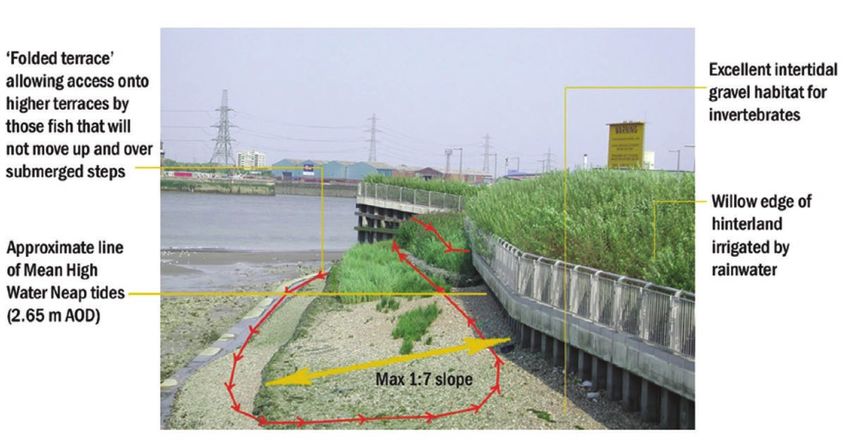
3

Goal of the Guidance Document
Our goal is to ensure that important life stages of fish     The document provides links to other reports/
species and their habitats are protected in the Tidal        webpages/documents to signpost the reader to where
Thames. We have developed this Guidance Document             to find additional information.
for Developers, Planners, Biodiversity or Environmental
Officers in Local Government and Ecological Consultants      The Guidance Document focuses on fish conservation
to provide a single point of reference for information       in the Tidal Thames between Teddington Lock and
relating to fish conservation in the region. This will       Gravesend*. This includes the Tidal Thames bordering
help all parties to adhere to legally-binding regulation     Thurrock Unitary Authority, Gravesham Borough Council
to protect fish and their habitats (Annex 2 and 3), and      and Dartford Borough Council; as well as the City of
improve fish conservation in the Tidal Thames.               London and the 15 London Boroughs bordering the
                                                             Tidal Thames: Barking & Dagenham, Bexley, Greenwich,
The document is divided into two sections, Overview          Hammersmith & Fulham, Havering, Hounslow,
(p. 4) and Detailed Guidance (p. 5-18), and it has been      Kensington & Chelsea, Lambeth, Lewisham, Newham,
developed for:                                               Richmond upon Thames, Southwark, Tower Hamlets,
• Developers when drawing up designs.                        Wandsworth and Westminster.
• Planners during the pre-application development
  stage.
• Biodiversity/Environmental Officers to help
  feedback on information they receive throughout
  the planning process.
• Environmental Consultants working to help all
  parties.

                                                                                              Thurrock Unitary Authority

                                                                             Dartford Borough Council
                                                                                                               Gravesham
                                                                                                             Borough Council

*Throughout this document, the use of “Tidal Thames” refers to this area.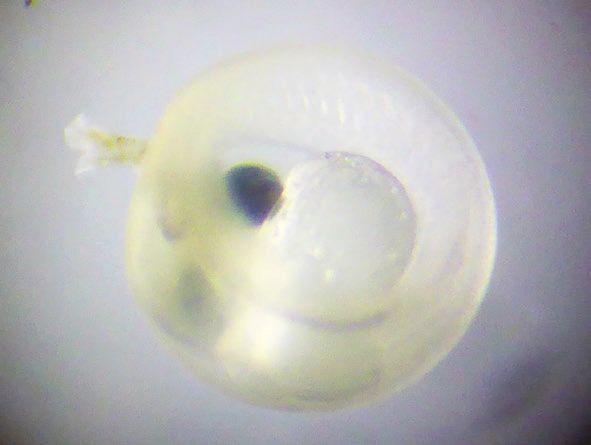
4

Overview

Importance of the Tidal Thames for Fish                           leading example of blue-green infrastructure and how
The Tidal Thames is an estuarine ecosystem that plays             an estuary can provide multi-functional ecosystem
an important role in supporting North Sea fish stocks by:         services in an urban environment.
• Providing the conditions needed for fish to spawn
  (lay eggs) and for juvenile fish to grow                        How Development affects Fish
                                                                  All development (construction, operation and
• Being a rich foraging ground for fish                           decommissioning) beside the Tidal Thames, on the Tidal
                                                                  Thames foreshore or in the waterway has the potential
• Allowing migratory fish to move between saltwater               to impact fish. Developers and Planners should consider
  and freshwater (and vice versa)
                                                                  and reduce the potential impact on fish throughout
                                                                  the planning process. This document only details
Since 1964, 125 fish species have been recorded in the            guidance relating to fish conservation, but we encourage
Tidal Thames, 15% of which are protected under local,             Developers to consider all other wildlife during the
national and international regulation (see Annex 1 for full       planning process.
list of species and Annex 2 and 3 for protected species).
                                                                  Contact Point
The Tidal Thames is the heart of London’s Blue Ribbon             There are a number of individuals and organisations
Network and is not only an important habitat for                  who have researched fish ecology and behaviour in
fish, but also a vital corridor for transport of goods            the Tidal Thames. If you have a question regarding
and people; recreational and commercial boating;                  fish conservation in the Tidal Thames please email
development and wellbeing. By ensuring that                       marineandfreshwater@zsl.org and we will forward
developments in or beside the Tidal Thames enhance                your email onto the relevant individual/organisation.
conditions for fish, the Tidal Thames will become a

    Development beside the                   Potential Impacts                             Ways to reduce impact
         Tidal Thames                        Loss of important fish habitat
                                                                                           1. Complete a baseline fish
                                             Change to hydrodynamics                       survey at your proposed site
                                             Increased sediment
                                             deposition or suspension                      2. Schedule works to avoid
                                                                                           important ecological events for
                                             Water pollution
     Development on the                                                                    fish
    Tidal Thames foreshore                   Change to water temperature
                                             Impulsive sound and vibration                 3. Incorporate fish-friendly
                                             sources                                       structures when designing the
                                                                                           development
                                             Artificial light pollution
                                             Change to shadow structure                    4. Plan ways to reduce impact
                                                                                           on fish during works
        Development in                       Entrainment or
         the waterway                        impingement of fish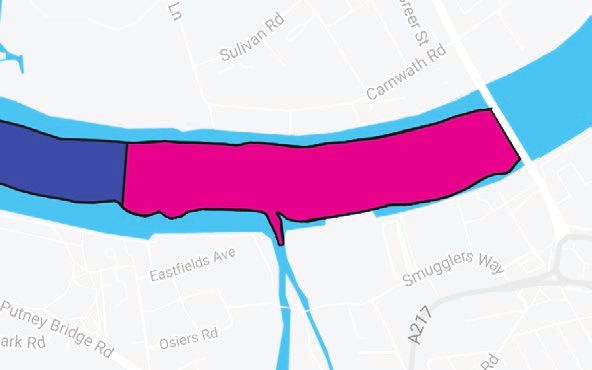
5

Detailed Guidance

How fish use the Tidal Thames                               Intense development and flood defence has caused
There is large variation in the number, location and        the Tidal Thames to be much narrower than it naturally
seasonality of different fish species and their life        would be (encroachment), which has led to faster tidal
stages in the Tidal Thames. This is influenced by the       flows. The Environment Agency (EA) tends to resist
lifecycle and ecology of each fish species, but also by     encroachment into tidal waters to ensure that intertidal
environmental conditions, such as temperature and           areas are protected.
rainfall.
                                                            A common behaviour displayed by juvenile fish to
Fish in the Tidal Thames can be grouped into four           overcome faster tidal flows is to use the tides selectively
categories:                                                 to help movement upstream and/or downstream. For
1. Fish that spend their entire life in the Tidal Thames.   example, a fish moving upstream on the flooding tide
                                                            may seek refuge in slow-flowing waters during the ebb
2. Fish that are present mainly in the freshwater           tide to maintain its position. This is known as Selective
   dominated area of the Tidal Thames, normally found       Tidal Stream Transport (STST) and means that areas
   above Hammersmith (but this is highly dependent on       of slower flowing water are very important for fish
   rainfall)                                                ecology in the Tidal Thames. Adult fish species with
                                                            poor swimming ability may also require areas of slower
3. Fish that use the Tidal Thames to spawn or grow
                                                            flowing water to help their migration.
   whilst they are juveniles, before returning to the
   North Sea
                                                            The following infographic gives an indication of where
4. Fish that migrate through the Tidal Thames to            and when you are likely to find the most common fish
   freshwater or saltwater.                                 species found in the Tidal Thames and those fish species
                                                            protected by regulation (p.6). This infographic provides
                                                            an overview of main trends, but is subject to change
                                                            depending on the environmental conditions and the
                                                            amount of rainfall in any given year.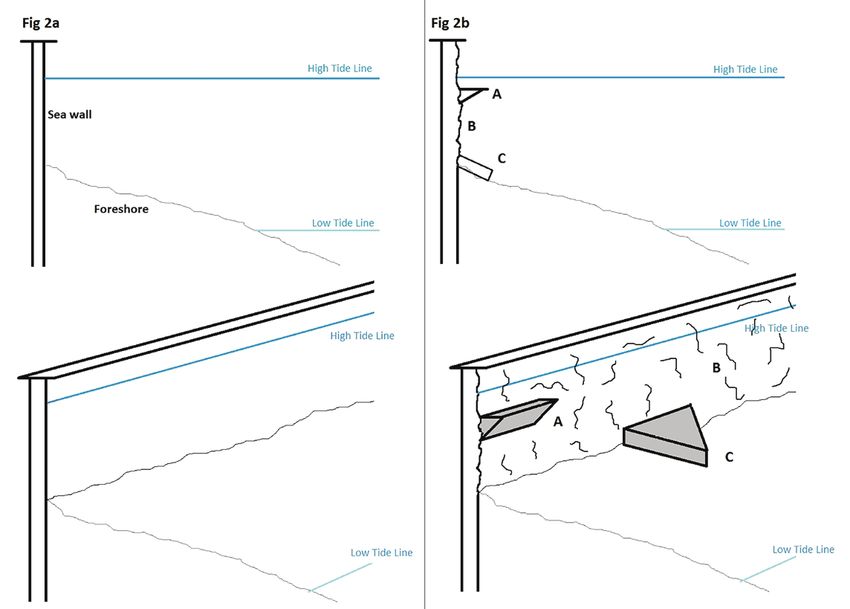
6

Common and Protected Species
                                                                              Teddington Lock   Wandsworth
                                                                     Type                                              O2 Arena to             Spawning
           Common Name                      Scientific Name                   to Wandsworth     Bridge to O2
                                                                    of fish                                           Gravesend (L3)             Event
                                                                                 Bridge (L1)     Arena (L2)

             Atlantic Cod                   Gadus morhua                 3                                                 A,B,C,D

           Atlantic Salmon                    Salmo salar                4       A,B,C,D             A,B,C,D               A,B,C,D

               Barbel                       Barbus barbus                2       A,B,C,D

          Brown/Sea Trout                    Salmo trutta                4       A,B,C,D             A,B,C,D               A,B,C,D

              Bullhead                       Cottus gobio                2       A,B,C,D

           Common Dace                    Leuciscus leuciscus            2       A,B,C,D              A,B,C                    A             at L1 during B

           Common Goby                  Pomatoschistus microps           1       A,B,C,D             A,B,C,D                  B,C          at L1 during A & B

             Dover Sole                       Solea solea                3                           A,B,C,D               A,B,C,D       at L2 & L3 during A & B

            European Eel                   Anguilla anguilla             4       A,B,C,D             A,B,C,D               A,B,C,D

           European Plaice               Pleuronectes platessa           3                                                 B,C,D

          European Seabass               Dicentrarchus labrax            3         B,C                B,C                  A,B,C,D

           European Smelt                 Osmerus eperlanus              4        B,C,D              A,B,C,D               A,B,C,D         at L1 during A & B

           European Sprat                  Sprattus sprattus             3                                                 A,C,D

              Flounder                     Platichthys flesus            3        B,C,D              A,B,C,D               A,B,C,D           at L3 during B

               Herring                     Clupea harengus               3                                                 A,B,C,D

        Long-snouted Seahorse           Hippocampus guttulatus           1                                                  C,D

          Nilsson’s pipefish             Syngnathus rostellatus          1                           B,C,D                 B,C,D

               Pouting                     Trisopterus luscus            3                                                  A,D

            River Lamprey                 Lampetra fluviatilis           4        B,C,D

                Roach                        Rutilus rutilus             2        B,C,D              B,C,D                 B,C,D             at L1 during B

             Sand Goby                  Pomatoschistus minutus           1                            A,B,C                A,B,C,D         at L2 during A & B

    Short-snouted Seahorse             Hippocampus hippocampus           3                                                    B,C

             Twaite Shad                      Alosa fallax               4                                                 A,B,C,D

               Whiting                   Merlangius merlangus            3                                                 A,B,C,D         at L3 during B & C

                    Type of fish key                           L1   L2           L3                    Location/Timing key                  Protection Status

    1        Spend entire life in Tidal Thames                                                   A          January - March            Blue - protected species
                                                                                                 B          April - June               Navy - common species
    2        Mainly present in freshwater                                                        C          July - September           Grey - protected and
             dominated Tidal Thames                                                                                                    common species
                                                                                                 D          October - December
    3        Use the Tidal Thames to spawn
             or grow whilst juveniles

    4        Migrate through the Tidal
             Thames to freshwater or saltwater

*Further information on protected species is found in Annex 2 and 3
7
Development and Fish Conservation
All development (construction, operation and Development should avoid habitats identified as essential
decommissioning) beside the Tidal Thames, on the for fish biology, such as spawning grounds, unless the
Tidal Thames foreshore or in the waterway has the impact is temporary and can be completed during the
potential to impact fish. Whether this impact is positive months that fish do not spawn.
or negative, temporary or permanent, and what level
of impact it causes depends on the design of the 3. Incorporate fish-friendly habitat and
development, scheduling of works and the consequence structures when designing the development
of development activities. Fish conservation can be improved through the creation
of additional foreshore habitat and the sensitive design of
Developers and Planners should consider the impact on structures that have physical contact with the river (e.g.
fish throughout the planning and development process bridge piers, river walls etc.). The information below provides
and find ways to mitigate and manage impacts if they an overview, much of which is covered in the Environment
cannot be avoided. Permanent loss of intertidal and/or Agency’s Estuary Edges Document in more detail.
subtidal habitats should be avoided.
Hydrogeomorphological studies to model changes
The information below suggests some of the major steps in water movement and sediment transport must
to reduce the impact of development on fish in the Tidal be conducted during the design process of in-river
Thames. structures to increase likelihood that they will help,
rather than hinder, fish and do not negatively impact
1. Complete a baseline fish survey at your flow and scour patterns. We would recommend
proposed site consulting with local environmental partners regarding
The infographic provided on the previous page gives the appropriateness of different options. An important
an indication of what fish species you would expect to step is to provide some funding to monitor the
be present at different times of the year in different impact these structures have on fish communities
areas of the Tidal Thames. However, due to the dynamic after installation, to inform the design of future
nature of the Tidal Thames, it is important to complete developments.
a baseline fish survey prior to planning a development
to assess what species are present at the proposed 3a. Create additional or more-natural
site, if site-specific data are not already available. These foreshore habitat
surveys should focus on those fish species protected • Structures that provide areas of reduced water
under regulation (Annex 2 and 3). flow and/or back-eddies could aid fish migration or
movement of juvenile fish. This could include installing
The design of the baseline survey will depend on the concrete structures or current deflectors (Fig.2).
location of the proposed development, but should
• The building of carefully designed terraces and/or
be completed during the months where works are
artificial slopes in a setback development will increase
planned to be completed. Once the fish species present the diversity of the foreshore and provide improved
at the site have been identified, the below steps can habitat for fish. In general, terraces/slopes need to
be focused to eliminate and/or mitigate the impact of include a shallow gradient to allow use by both flat
development specifically for those species. fish and pelagic fish species. Another option is to
create a folded terrace, where different steps of a
2. Schedule works to avoid important terrace are connected at one end by a slope to allow
ecological events for fish fish movement between the levels (Fig.1). Planting
Wherever possible, construction and decommissioning with a range of native plant species, appropriate
should be carefully planned to avoid key ecological events for the particular area of the Tidal Thames, such as
such as fish spawning, fish aggregation and fish migration. saltmarsh species and reeds, should increase stability
The timing of these ecological events are species and and increase the number of different habitats available
location specific, so all fish species present or moving to fish. Additional options to secure sediment are
through the proposed site of a development should be recommended (e.g. brushes) due to the high velocity
considered independently and then as a fish community of the Tidal Thames current. The materials used
as a whole (p. 6). need to be carefully considered and specific for each
development (p. 14 of Estuary Edges Document).8
• The creation of an intertidal embayment (a shallow 3b. Modify structures with physical contact
bay set back into the foreshore) in a setback with the river – this could include river
development may provide important shelter or areas walls, bridge piers, bridge abutments,
for fish to spawn. bridge footings, jetty/wharf piles etc.
• Increase the surface complexity of structures in
These examples need to be carefully planned, the water to provide more places for algae and/or
designed and modelled to ensure they would help fish invertebrates to colonise. For example, this could be
conservation. achieved through cladding of building materials with
a more complex structure. This is likely to benefit fish
Case studies in the Tidal Thames are included in the by providing more cover and/or food (Fig. 2).
Estuary Edges Document. One particularly successful • Create areas with overhanging platforms, which may
example was completed in 1997 at the Greenwich provide cover for fish and reduce predation (Fig. 2).
Peninsula Terraces (Case Study 6, p. 37-40 of Estuary
Edges Document). The gently sloping folding terraces • Include structures that provide areas of reduced
planted with common reed, grey club-rush, sea club- water flow and/or back-eddies which could aid
rush and sea aster have proved to be an important movement of juvenile fish or fish migration. This
habitat for a range of juvenile fish species, including the could include installing concrete structures or on the
European Bass (Fig. 1). foreshore in front of structures. These would have to
be carefully designed and modelled to ensure that
they lead to reduced flow (Fig.2).
These options can be incorporated into riverside
structures at a relatively low cost, but would need to be
designed specifically for each location.
3c. Design of Sustainable Drainage Systems
(SuDS)
Sustainable Drainage Systems (SuDS) are prioritised in the
National Planning Policy Framework and are recommended
for all developments. It is vital that Developers create
a drainage strategy during construction and in the final
development to ensure that run off from site does not
affect the intertidal system of the Tidal Thames. Poorly
designed drainage systems can lead to pollution, local
erosion and habitat damage.9 Figure 1: A good example of the creation of terraces in a setback development to aid fish conservation. This example is taken from the Estuary Edges Document and is located at Greenwich Peninsula. Surveys at this site have found large numbers of juvenile fish using the intertidal saltmarsh habitat. Figure 2: Examples of options that can be used to modify structures to improve habitat for fish. Fig 2a. Shows an un-modified sea wall and Fig 2b. shows a modified sea wall with A: an overhanging platform, B: increased surface complexity on seawall, C: structures to reduce water flow
10

4. Plan ways to reduce impact on fish during works
Some of the major impacts of construction that affect fish are listed below. These impacts can be caused through a
variety of works, for example: dredging (capital and maintenance); piling (percussive and vibro); construction work
completed in-river; development on the side of the river; run-off from a construction site; works completed on a river
bank; works on slipways, river walls, abutments; general maintenance of boats etc.

 Impact of construction                  Possible negative effect on fish            Suggestions of how to reduce impact

 Increased sediment deposition           Smother important fish habitats, e.g.       Ensure works are carefully planned
                                         spawning grounds, which can cause           and staff are adequately trained to
                                         reduced water flow and reduced fish         reduce chance of pollution from the
                                         egg survival.                               construction site.

 Increased suspended sediment            Reduce fish feeding behaviour by            Ensure in-water construction
                                         obscuring prey items.                       completed in dry and isolated habitat
                                                                                     where practical (i.e. by building a coffer
                                                                                     dam, caisson or equivalent).

                                         Reduce oxygen exchange by interacting       Ensure Sustainable Drainage Systems
                                         with mucus on fish gills.                   (SuDS) have been put in place during
                                                                                     the construction period to avoid direct
                                                                                     run off into the Tidal Thames.

                                         Reduce light levels and photosynthetic      Ensure any benthic grabs are
                                         activity for plants and plankton.           completed using a closed method to
                                                                                     avoid sediment loss.

                                         Disrupt social fish structures, migratory   Monitor sediment/pollution/
                                         patterns or displace fish.                  temperature levels and stop works
                                                                                     when an agreed threshold has been
                                         Cause a stress response in fish.            reached.

 Pollution of material through run       Some of the sediments in the Tidal
 off or resuspension of contaminated     Thames hold toxic chemicals from the
 sediment, leading to reduced water      industrial era, which could lead to fish
 quality (some materials can be          mortalities if they are suspended.
 toxic to fish; others may pollute the
 watercourse leading to changes in pH,   Change to natural salinity levels can
 salinity or oxygen content affecting    reduce fish growth or success of
 fish)                                   breeding.

                                         Fish need sufficient concentrations of
                                         oxygen in the water to survive. Sudden
                                         reductions in dissolved oxygen content,
                                         caused by point source pollution, can
                                         lead to large fish kills.

                                         Change to environmental variables can
                                         affect fish migration, key ecological
                                         events or socialisation.

 Change to water temperature             Increased temperature can reduce
                                         dissolved oxygen content.

                                         Change to natural water temperatures
                                         may prevent some fish migrations.
11
Impact of construction Possible negative affect on fish Suggestions of how to reduce impact
Impulsive sound sources and vibration Can cause the swim bladder of some Use low-noise techniques whenever
(e.g. pile driving) fish species to rupture and cause fatal practicable.
internal injuries.
Choose methods to reduce noise
attenuation (e.g. sleeving, muffling,
pile jackets, acoustic baffles, bubble
curtains).
Can cause fish to avoid a particular Have a soft start approach to allow fish
area which could affect fish migration to move away from the noise source.
and key ecological events.
Ensure there is a break in noise
production each day to allow any fish
excluded from an area to migrate
further upstream or downstream in
these break periods.
Artificial light pollution Some fish species avoid areas with Install directional lights to minimise
increased artificial light; others can be projection onto the water.
attracted by the light. Both of these
could alter fish migration or movement Build in break periods during
in the area. construction, where artificial lights are
turned off, to allow any fish excluded
from the area to migrate further
upstream or downstream.
Removal of areas of low-water flow Juvenile fish use areas of low water Avoid permanent loss of habitat in all
(e.g. eddies) flow to rest and avoid being flushed development. Adequately mitigate for
down river during fast flows or an this loss if it cannot be avoided.
ebbing tide. The loss of these areas
may hinder migration of a range of fish Limit the levels of foreshore
species. compaction by limiting machine use
and using matting when possible.
If temporary loss of habitat is not
avoidable, ensure this does not
coincide with important ecological
events.
Temporary or permanent loss of Intertidal and subtidal habitats are vital Reinstate any temporary lost habitat at
intertidal or subtidal habitat for fish to spawn, to avoid predation the end of the construction period.
and provide refuge during movements
in a tidal ecosystem. Loss of these
habitats reduces overall fish survival
and production.
Change to shadow structure Increased shadow may lead to reduced Model shadow creation in the design
growth of algae, with implications for process and reduce the amount of
fish that feed on them. shadow on the Tidal Thames where
possible.
Change to water movement/scour due Fish movement depends on the flow Model potential impact of change of
to structure being in the river of water. Any change to this may water movement/scour and design
affect where fish are located in the development to have minimal impact.
Tidal Thames or provide a barrier to
migration.
Water abstraction Can lead to the entrainment or Consult expertise in appropriate
impingement of fish leading to fish screening options, including the
mortality. appropriate location and design of
water offtake structures.12
Case Study: Smelt Conservation Project
Background water temperature, tidal state, freshwater flow, salinity
The European smelt (Osmerus eperlanus) is a small and lunar phase. Following spawning, juvenile smelt
predatory fish that inhabits cold-water estuaries drift with the currents until they are large enough to
including the Tidal Thames. Once common in the UK, swim independently. They remain in the Tidal Thames
it has suffered significant declines since the early 19th throughout the summer.
century due to water pollution, over exploitation and
destructive river engineering. Improvements to water Location of Smelt Spawning
quality in the latter half of the 20th century have During the ZSL ichthyoplankton surveys at Wandsworth
allowed smelt to return to 36 water courses in England Bridge, juvenile smelt estimated to be less than one day
including the Tidal Thames. old were caught in 2015 and 2016 (Fig. 3a), while smelt
eggs in “pre hatching” stage were also caught in 2016 (Fig.
Importance of Smelt 3b). This suggested that the Wandsworth Bridge sampling
The presence of smelt in an estuary can be used site was in close proximity to where smelt spawned.
as an indicator of good water quality due to their
sensitivity to pollution. They are listed as a London HR Wallingford completed detailed numerical modelling
and UK Biodiversity Action Plan species, as a Feature of ZSL’s ichthyoplankton survey dataset and their
of Conservation Importance (FOCI) species for the analysis showed a close match between the model
Marine Conservation Zone process and as a Natural results and the survey data when simulated smelt
Environment and Rural Communities (NERC) Species of hatchlings were released at Wandsworth Bridge.
Principal Importance. When the modelled hatchlings were released at other
locations, the correlation between the data and model
Smelt Conservation Project results was not as strong. The results suggest that smelt
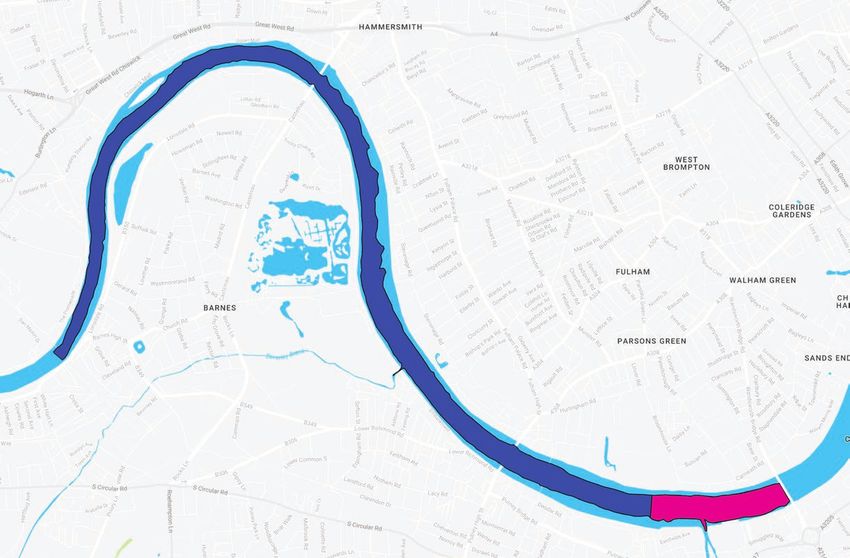
Although the Tidal Thames holds one of the largest- spawn in the area between Wandsworth Bridge and
known breeding populations of smelt in the UK, the 600m upstream of this point (Fig.4). However, it cannot
specific spawning location had not been identified. be ruled out that the spawning area could extend
ZSL initiated the Smelt Conservation Project in 2014 to further West to Barnes Bridge (Fig. 4). Full results can be
complete surveys to identify the spawning ground as well found at HR Wallingford 2016.
as engaging hundreds of Londoners to help with surveys
and complete research on the history of smelt in the Tidal Conservation Advice
Thames. Full results can be found on the ZSL website. • ZSL advise that no development affecting the subtidal
habitat of the predicted spawning ground should be
Key Results permitted during the months where smelt are likely
to spawn: late February, March and April.
Timing of smelt spawning
• Any proposed development in this area should
• 2015 analysis suggests a potential spawning date of specifically evaluate the potential impact on smelt
19 March 2015 and hatching date of 2 April 2015. and find ways to adequately reduce and/or mitigate
• 2016 analysis suggests that spawning occurred from this impact.
1 March to 2 April 2016 and hatching occurred from
22 March to 13 April 2016.
The data indicate that smelt spawn over an elongated
period of five weeks during March and the beginning
of April, with a one to three week peak spawning
period within that window. The specific timing and
length of the smelt spawning period each year is likely
to be dependent on a range of environmental factors:13
a b
YS
Figure 3a: Photograph of juvenile smelt caught on 2 April 2015 showing presence Figure 3b: Photograph of a smelt egg caught on 23 March 2016 under
of yolk sac (marked YS). These are estimated to be less than one day old. a light microscope. This is the “pre hatching” stage of smelt.
N
Figure 4: Location of predicted smelt spawning ground. Pink shows the most likely spawning ground and dark blue
shows potential extension of this spawning ground upstream14
Regulation Relevant to Tidal Thames Fish
Habitat focused Regulation also regulates any work in, on, under or over the Tidal
Thames through four consents/licenses: (1) River Works
Water Framework Directive (2003) License, (2) Dredging License, (3) Estates Consent, (4)
The Water Framework Directive (WFD) (Directive Vessel License and must consider the environmental
2000/60/EC) became law in England and Wales in 2003 impact in all applications. The PLA’s The Vision for
via the Water Environment (WFD) (England and Wales) the Tidal Thames was updated in July 2016 and states
Regulations. The WFD has four main goals: (1) to prevent “The 20 year Vision will see the river the cleanest since
deterioration in water status, (2) all water bodies the Industrial Revolution, with improved habitats and
achieve good ecological status, good chemical status awareness of heritage”.
and good groundwater status (or potential), (3) reduce
and eliminate sources of pollution and (4) contribute South East Marine Plan (May 2016)
to achieving objectives of sites protected by other EU Marine plans are developed to inform and guide marine
legislation. The Tidal Thames is classified as a ‘heavily users and regulators across England, managing the
modified water body’ and transitional water under the sustainable development of marine industries alongside
WFD. Its current status is ‘moderate ecological potential’ the need to conserve and protect marine species and
with the aim of reaching good ecological potential by habitats. The Marine Management Organisation (MMO)
2027. is responsible for preparing the ten marine plans in
England. The Tidal Thames is encompassed within the
National Planning Policy Framework (March 2012) South East Marine Plan, to be completed before 2021.
The National Planning Policy Framework was published
in March 2012 to make the planning system less complex, The London Plan (March 2016)
promote the use of Local Plans and help achieve The London Plan outlines the London Mayor’s strategies
sustainable development in England on an economic, social dealing with housing, transport, economic development
and environmental scale. Section 11 of the Framework and environment, and provides an overarching
details how planning must conserve and enhance the framework to guide local plans in the 33 London
natural environment. This section includes policy regarding Boroughs. Chapter 7 of the London Plan relates to the
protecting landscapes, recognising ecosystem services, Environment and includes specific policies relating to the
minimising impacts on biodiversity, reducing pollution Tidal Thames:
and mitigating contaminated land. Each Borough/District
has its own Local Plan. In addition, the Greater London Policy 7.19: Biodiversity and Access to Nature notes
Authority is responsible for preparing the London Plan and that developments should not adversely affect
Kent County Council has responsibility for minerals and designated European Sites, a protected species, a
waste planning in Kent. The National framework and local priority species or habitat identified in a Biodiversity
planning policies are both subject to consultation processes Action Plan (BAP). The Tidal Thames is listed as a London
and should inform the planning process. Regional BAP habitat and as a Site of Metropolitan
Importance for Wildlife.
National Policy Statement for Ports (January 2012)
The National Policy Statement for Ports outlines the Policies 7.24 to 7.28 states that development proposals
framework for assessing new port and associated should restore and enhance the Blue Ribbon Network
infrastructure development. Section 5 identifies the key through (a) opening culverts and naturalising river
considerations regarding biodiversity and geological channels, (b) increasing habitat value, (c) preventing
conservation, including: dredging, cargo handling, ballast development into water spaces, (d) protecting the
water, erosion of habitats, noise pollution and light pollution. foreshore, (e) resisting the impounding of rivers and (f)
protecting the open character of the network.
Port of London Authority Environmental Guidance
(July 2016) Policy 7.29: The River Thames specifically states that
The Port of London Authority (PLA), as a statutory development should link with the relevant Thames
harbour authority, must comply with environmental Policy Area Strategies (TPAS) to ensure coordinated
legislation, government policy objectives and its own planning across the 16 Boroughs that border the
policy initiatives regarding the environment. The PLA Thames. There are three current TPAS: Thames Strategy15
Hampton-Kew, Thames Strategy Kew-Chelsea and Tidal Thames Habitat Action Plan (2002)
Thames Strategy Tower Bridge to Gravesend. Some The Tidal Thames Habitat Action Plan was developed
London Boroughs have their own riverside strategies, by the Thames Estuary Partnership Biodiversity Action
which should be consulted alongside the TPAS. Group to feed into the London Biodiversity Action
Plan. It assesses the state of the Tidal Thames habitat,
The Mayors Biodiversity Strategy (March 2015) identifies current work and issues affecting the habitat
The Mayor’s Biodiversity Strategy was published in 2002, and provides recommended actions to improve the
and partly updated in 2015, to provide the framework quality and quantity of habitat.
to protect and enhance London’s natural environment.
The Strategy closely links with the London Plan and The London Rivers Action Plan (January 2009)
focuses around four major areas: (1) Protection of The London Rivers Action Plan was developed to identify
Sites of Importance for Nature Conservation (SINCs), key stretches of river in need of restoration and focuses
(2) increasing access to the natural environment, (3) on non-tidal freshwater Tributaries of the Tidal Thames.
greening of the urban environment and (4) protection of
the Thames and London’s other waterways. Species focused Regulation
There are a number of local, national and international
Essex Biodiversity Action Plan (2011) regulations that prioritise and/or list species to aid
The Essex Biodiversity Action Plan was developed by conservation, protection and management. These
the Essex Biodiversity Project and sets out the vision lists include a number of fish species and form the
for the County to conserve biodiversity between 2010 basis of the majority of environmental legislation and
and 2020. There are specific Visions for Floodplain and policy regarding species-based conservation. These are
Coastal Grazing Marsh, and Coastal Saltmarsh, as well embedded in planning laws and the nine regulations
as a section focusing on the status of Marine Habitats in relevant to fish conservation in the Tidal Thames are
the Essex. summarised in Annex 2. In addition, there are specific
regulations for the European Eel. See Annex 3 for an
Kent Biodiversity Action Plan (2009) introduction and links to each regulation.
The Kent Biodiversity Action Plan was developed by
the Kent Biodiversity Partnership in 1997 and updated
in 2009. It includes 19 Kent Habitat Action Plans
(HAP), including the Intertidal Sediment HAP, and 16
Biodiversity Opportunity Areas (BOA), including the
Thames-side Green Corridor BOA, both of which set out
specific targets to protect fish species, foreshore habitat
and subtidal habitat in the Tidal Thames.
Thames River Basin District River Basin
Management Plan (December 2015)
The main tool to deliver the WFD is outlined through
regional River Basin Management Plans (RBMP).
The Thames River Basin District (TRBD) River Basin
Management Plan was created by the EA in 2009
and updated in 2015. Implementation of the TRBMP
is managed by the Your tidal Thames Catchment
Partnership. The priority river basin management issues
to tackle are outlined in page 86 of the TRBD RBMP.16 Annex 1: List of Fish Species in the Tidal Thames The fish species listed below have been caught in the tidal River Thames between Fulham and Tilbury since 1964. It has been compiled by the Environment Agency, but is not necessarily indicative of the species currently present in the Tidal Thames 10-spined Stickleback Dab Lumpsucker Scaldfish 3-Bearded Rockling Dace Mackerel Sea Skipper 3-spined Stickleback Dory Minnow Sea Snail 4-Bearded Rockling Dover Sole Montagu’s Sea Snail Sea Stickleback 5-Bearded Rockling Dragonet Nilsson’s Pipefish Shore Rockling Allis Shad Eckstrom Topknot Northern Rockling Short Spined Sea Scorpion Anchovy European Eel Norway Bullhead Short-snouted Seahorse Angler Fish European Plaice Painted Wrasse Smooth Hound Atlantic Cod European Smelt Painted Goby Snake Pipefish Atlantic Salmon Flounder Perch Solenette Ballan Wrasse Garfish Pike Spiny Dogfish Barbel Golden Mullet Pilchard Sprat Bass Goldfish Pogge Sting Ray Black Goby Goldsinny Pollack Straight-nosed Pipefish Black Sea Bream Grayling Poor-Cod Streaked Gurnard Bleak Great Pipefish Pouting Tadpole-Fish Blue Mouth Greater Sand Eel Rainbow Trout Tench Blue Whiting Greater Weever Raitt’s Sand Eel Thick-Lipped Mullet Bream Grey Gurnard Red Gurnard Thin-Lipped Mullet Brill Gudgeon Red Mullet Tompot Blenny Broad-Nosed Pipefish Haddock Roach Transparent Goby Brown/Sea Trout Hake Roach-Bream Hybrid* Trigger-Fish Bullhead Herring Rock Goby Tub Gurnard Butterfish Lampern Roker Turbot Carp Lemon Sole River Lamprey Twaite Shad Channel Catfish Leopard Spotted Goby Rudd Wels Catfish Chub Lesser Weever Ruffe Whiting Coalfish Ling Sand Eel Worm Pipefish Common Goby Loach Sand Goby Zander** Conger Eel Long Rough Dab Sand Goby (P.lozanoi) Corkwing Wrasse Long Spined Sea Scorpion Sand-Smelt Crucian Carp Long-snouted Seahorse Scad (Horse Mackerel) *Roach-Bream hybrid is included in this species list due to its prevalence in the Tidal Thames ** Zander is included on this list, but it is a non-native species to the Tidal Thames.
Table 1: Summary of regulation relevant to fish species that have been identified as present in the Tidal Thames since 1964

                                                                                NERC           Bern                    MCZ Species
                                                              Wildlife and                                                              London       UK BAP
                                                                              Species of   Convention    Habitats       Features of
      Common Name                         Scientific Name     Countryside                                                             BAP Priority   Priority
                                                                               Principal    Protected    Directive     Conservation
                                                                  Act                                                                   Species      Species
                                                                             Importance       Fauna                     Importance

 Atlantic Cod                       Gadus morhua                                 Y                                                                      Y

 Atlantic Salmon                    Salmo salar                                  Y          Annex III    Annex II, V                       Y            Y

 Barbel                             Barbus barbus                                                        Annex V

 Brown/Sea Trout                    Salmo trutta                                 Y                                                         Y            Y

 Bullhead                           Cottus gobio                                                          Annex II

 Common Goby                        Pomatoschistus microps                                  Annex III

 Dover Sole                         Solea solea                                  Y                                                                      Y

 European Eel                       Anguilla anguilla                            Y                                                         Y            Y

 European Plaice                    Pleuronectes platessa                        Y                                                                      Y

 European Smelt                     Osmerus eperlanus                            Y                                          Y              Y            Y

 Herring                            Clupea harengus                              Y                                                                      Y

 Long-Snouted Seahorse              Hippocampus guttulatus     Schedule 5        Y                                          Y                           Y

 River Lamprey                      Lampetra fluviatilis                         Y          Annex III    Annex II, V                       Y            Y

 Sand Goby                          Pomatoschistus minutus                                  Annex III
                                                                                                                                                                Annex 2: List of Protected Fish Species in the Tidal Thames

 Short-Snouted Seahorse             Hippocampus hippocampus    Schedule 5        Y          Annex II                        Y                           Y

 Twaite Shad                        Alosa fallax               Schedule 5        Y         Annex II, V                                     Y            Y

 Whiting                            Merlangius merlangus                         Y                                                                      Y
                                                                                                                                                                                                                              17

*See Annex 3 for an introduction to each regulation
18
Annex 3: Brief introduction to species regulation
• Wildlife and Countryside Act - The Wildlife and • Natural Environment and Rural Communities (NERC)
Countryside Act 1981 consolidates and amends Species of Principal Importance - There are 943
existing national legislation to implement the species of principal importance included on the S41
Bern Convention and European Birds Directive list. These are the species found in England which
in Great Britain. The Act makes it an offence were identified as requiring action under the UK BAP
(subject to exceptions) to intentionally kill, injure and which continue to be regarded as conservation
or take any wild animal listed on Schedule 5, and priorities under the UK Post-2010 Biodiversity
prohibits interference with places used for shelter Framework.
or protection, or intentionally disturbing animals
• Marine Conservation Zone (MCZ) Features of
occupying such places. The Act also prohibits certain
Conservation Importance (FOCI) – during the MCZ
methods of killing, injuring, or taking wild animals.
planning process it was identified that particular
• European Habitats Directive - The Habitats Directive attention needed to be made towards protecting
ensures the conservation of a wide range of rare, threatened, rare, or declining species and habitats
threatened or endemic animal and plant species. – referred to together as Features of Conservation
Adopted in 1992, the Council Directive 92/43/EEC Importance (FOCI). These species and habitats may
of 21 May 1992 on the conservation of natural be more sensitive to pressures and hence need
habitats and of wild fauna and flora aims to promote targeted protection.
the maintenance of biodiversity, taking account of
• UK Biodiversity Action Plan Priority (BAP) Priority
economic, social, cultural and regional requirements.
Species – UK BAP Priority species are those that were
Over 1,000 animal and plant species listed in the
identified as being the most threatened and requiring
directive’s annexes are protected in various ways:
conservation action under the UK Biodiversity Action
• Annex II species (about 900): core areas of their Plan (UK BAP).
habitat are designated as Sites of Community
• London Biodiversity Action Plan (BAP) Priority Species
importance (SCIs) and included in the Natura
– London Biodiversity Partnership identified a total of
2000 network. These sites must be managed in
214 priority species that are under particular threat
accordance with the ecological needs of the species.
in London and are listed under the London BAP
• Annex IV species (over 400, including many Annex Priority species.
II species): a strict protection regime must be
applied across their entire natural range within
the EU, both within and outside Natura 2000 sites.
• Annex V species (over 90): Member States must
ensure that their exploitation and taking in the
wild is compatible with maintaining them in a
favourable conservation status.
• The Convention on the Conservation of European
Wildlife and Natural Habitats (the Bern Convention)
– The UK Government ratified the Bern Convention
in 1982. The principal aims of the Convention are
to ensure conservation and protection of wild plant
and animal species and their natural habitats (listed
in Appendices I and II of the Convention), to increase
cooperation between contracting parties, and to
regulate the exploitation of those species (including
migratory species) listed in Appendix III. To this
end the Convention imposes legal obligations on
contracting parties, protecting over 500 wild plant
species and more than 1,000 wild animal species.19 Your Notes
zsl.org
You can also read


