Boom and Bust 2018 TRACKING THE GLOBAL COAL PLANT PIPELINE - Christine Shearer, Neha Mathew-Shah, Lauri Myllyvirta, Aiqun Yu, and Ted Nace - End Coal
←
→
Page content transcription
If your browser does not render page correctly, please read the page content below
Boom and Bust 2018
TRACKING THE GLOBAL COAL PLANT PIPELINE

Christine Shearer, Neha Mathew-Shah, Lauri Myllyvirta, Aiqun Yu, and Ted Nace
BOOM AND BUST
ABOUT THE COVER ABOUT THE GLOBAL COAL PLANT TRACKER
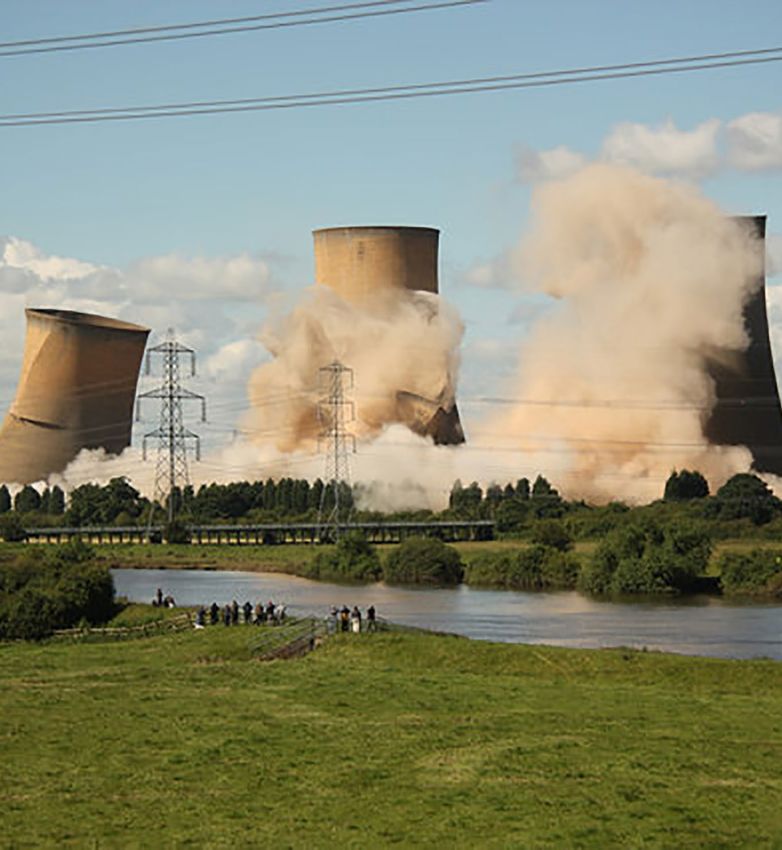
The cover shows the demolition of the cooling towers of The Global Coal Plant Tracker is an online database that
High Marnham power station in Nottinghamshire, England. identifies, maps, describes, and categorizes every known
Photo copyright © by Richard Croft and licensed under this coal-fired generating unit and every new unit proposed
Creative Commons License: http://bit.ly/2CQKoGw since January 1, 2010 (30 MW and larger). Developed by
CoalSwarm, the tracker uses footnoted wiki pages to doc-
ument each plant and is updated biannually. For further
ABOUT COALSWARM
details, see Tracker Methodology at EndCoal.org.
CoalSwarm is a global network of research-
ers developing collaborative informational
resources on fossil fuels and alternatives. AUTHORS
Current projects include the Global Coal Plant Christine Shearer is Senior Researcher for CoalSwarm.
Tracker, the Global Fossil Projects Tracker (coal, oil, and gas Neha Mathew-Shah is Campaign Representative for Sierra
infrastructure), the CoalWire newsletter, and the CoalSwarm Club’s International Climate Program. Lauri Myllyvirta
and FrackSwarm wiki portals. is energy analyst at Greenpeace East Asia. Aiqun Yu is
China Researcher for CoalSwarm. Ted Nace is Director of
CoalSwarm.
ABOUT THE SIERRA CLUB
The Sierra Club is America’s largest and most
influential grassroots environmental organiza- PRODUCTION
tion, with more than three million members Design by Charlene Will. Additional design and page layout
and supporters. In addition to helping people by David Van Ness.
from all backgrounds explore nature and our
outdoor heritage, the Sierra Club works to promote clean
PERMISSIONS/COPYRIGHT
energy, safeguard the health of our communities, protect
wildlife, and preserve our remaining wild places through This publication may be reproduced in whole or in part
grassroots activism, public education, lobbying, and legal and in any form for educational or nonprofit purposes
action. without special permission from the copyright holders,
provided that acknowledgement of the source is made.
No use of this publication may be made for resale or other
ABOUT GREENPEACE commercial purpose without the written permission of
Greenpeace uses peaceful protest the copyright holders.
and creative communication to expose global environmental
Copyright © March 2018
problems and to promote solutions that are essential to a
by CoalSwarm, Greenpeace USA, and Sierra Club
green and peaceful future. With over 40 associated offices
located throughout the world, Greenpeace works to protect
our oceans and ancient forests, and to end toxic pollution, FURTHER RESOURCES
global warming, nuclear threats, and genetic engineering.
For additional data on proposed and existing coal plants,
Since 1971, Greenpeace has been the leading voice of the
see Summary Statistics at EndCoal.org, which provides
environmental movement by taking a stand against pow-
over 20 tables providing results from the Global Coal
erful political and corporate interests whose policies put
Plant Tracker (GPCT), broken down by province, nation,
the planet at risk. Greenpeace furthers its mission through
and region. For links to reports based on GPCT data, see
research, advocacy, public education, lobbying, and litiga-
Reports at EndCoal.org. To obtain primary data from the
tion with a staff that includes scientists, lawyers, campaign-
GCPT, contact Ted Nace (ted@tednace.com).
ers, policy experts, and communications specialists.
COALSWARM / SIERRA CLUB / GREENPEACE REPORT | MARCH 2018 | 2
Boom and Bust 2018
TRACKING THE GLOBAL COAL PLANT PIPELINE
Christine Shearer, Neha Mathew-Shah, Lauri Myllyvirta, Aiqun Yu, and Ted Nace
EXECUTIVE SUMMARY
For the second year in a row, all leading indicators ■■ A 23% drop in construction activity; a 38% drop in
of coal power capacity growth dropped steeply in the past two years.
2017, including pre-construction planning, construc-
tion starts, and project completions, according to ■■ A geographic narrowing of plant construction:
the Global Coal Plant Tracker. The decline was due only seven countries initiated construction at more
primarily to central government restrictions in China than one location.
and declining financial and policy support in India,
■■ A growing phase-out movement, supported by 34
although capacity under development in the rest of
countries and subnational entities
the world also declined.
With declining deployment and high levels of retire-
Continuing the record pace of the past three years,
ment, coal power capacity is now caught in a squeeze:
global retirements during the year exceeded 25,000
if current trends continue, by 2022 yearly retirements
megawatts (MW).
will exceed new capacity and the global coal fleet will
Key developments in 2017 included: begin to shrink.
■■ A 28% year-on-year drop in newly completed coal While the prospect of an end to coal power expansion
plants; a 41% drop in the past two years. is a welcome development for climate and health, it is
arriving late in the game relative to the stark impera-
■■ A 29% year-on-year drop in construction starts; tives of what is needed. In order to meet the goals of
a 73% drop in the past two years. the 2015 Paris climate agreement, the current pace
of progress must be accelerated, including canceling
■■ A 22% year-on-year drop in pre-construction coal power projects under development and hasten-
activity; a 59% drop in the past two years. ing retirement of aging coal fleets in Europe and the
United States.
COALSWARM / SIERRA CLUB / GREENPEACE REPORT | MARCH 2018 | 3
BOOM AND BUST
SQUEEZE: FALLING CONSTRUCTION, RISING RETIREMENTS
For the global coal fleet to grow, annual building Among these indicators, the level of construction starts
of new plants must exceed annual retirements, as provides a particularly useful way of predicting future
has occurred over the past decade. But multiple deployment of new capacity, since it is both robust
indicators, including new plants commissioned, con- (construction starts are widely reported, require final
struction starts, and implementation rates, all point to regulatory approval, and represent large commitments
a downturn in new coal power capacity. Meanwhile, of funds) and forward looking (construction requires
the pace of retirements of older plants is steadily two years in China and four years elsewhere).
rising. As a result, coal power is caught in a squeeze.
If current trends continue, by 2022 yearly retirements Although ongoing construction is currently underway
will exceed new capacity and the global coal power at 260 locations in 35 countries, construction starts are
fleet will begin to shrink. more geographically confined. During 2017, construc-
tion started at 62 locations in twelve countries, includ-
As shown in Table 1, all metrics of coal plant devel- ing 45 greenfield locations and 17 locations where
opment activity show signs of decline. As of January existing power stations were adding units. The twelve
2018, these include: countries where construction starts took place were
Bangladesh, China, India, Indonesia, Japan, Mongo-
■■ A 28% year-on-year drop in newly completed coal lia, Pakistan, the Philippines, Poland, Russia, Sene-
plants; a 41% drop in the past two years. gal, and South Korea. Of these, only seven countries
(Bangladesh, China, India, Indonesia, Japan, Pakistan,
■■ A 29% year-on-year drop in construction starts; a
and South Korea) started construction at more than
73% drop in the past two years.
one location.
■■ A 22% year-on-year drop in pre-construction activ-
For charting the future of the coal fleet, even more
ity; a 59% drop in the past two years.
useful than construction data alone is a combina-
■■ A 23% drop in construction activity; a 38% drop in tion of two indicators: construction starts and trends
the past two years. in the retirement of coal power capacity. As shown
Table 1. Changes in the Global Coal Plant Pipeline from January 2016 to January 2018.
Change from Change from
January 2016 January 2017 January 2018 January 2017 to January 2016 to
(MW) (MW) (MW) January 2018 January 2018
Announced 487,261 247,909 174,884 –29% –64%
Pre-permit 434,180 222,055 168,127 –24% –61%
Permitted 168,230 99,637 103,613 4% –38%
Announced+ Pre-permit + Permitted 1,089,671 569,601 446,624 –22% –59%
Started Construction (Past 12 Months) 169,704 65,041 45,913 –29% –73%
In Construction 338,458 272,940 209,566 –23% –38%
On Hold 230,125 607,367 634,777 5% 176%
Completed (Past 12 Months) 101,624 83,785 60,195 –28% –41%
Operating 1,914,579 1,964,460 1,995,818 2% 4%
Source: CoalSwarm Global Coal Plant Tracker, January 2018. Includes units 30 MW and larger.
COALSWARM / SIERRA CLUB / GREENPEACE REPORT | MARCH 2018 | 4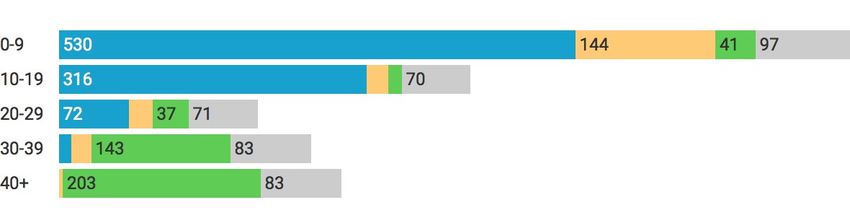
BOOM AND BUST

in Figure 1, the past two decades have seen a strong                            is unlikely to be deeply affected by policies aimed at
upward trend in coal plant retirements, with 97,193                             propping up coal. Already, 290,130 MW of the global
MW retired over the past three years (2015–2017),                               coal fleet has passed the weighted mean life expec-
65,877 MW over the previous three years (2012–2014),                            tancy (39 years, according to the Global Coal Plant
and 42,334 MW in the three-year period prior to that                            Tracker) and an additional 315,580 MW of currently
(2009–2011).                                                                    operating coal plants will do so by 2030.1 While it is not
                                                                                possible to predict exactly what year the level of old
Because the growth in coal plant retirements is fun-                            plant retirements will surpass the level of newly oper-
damentally driven by the demographics of the rapidly                            ating plants, current trends indicate that retirements
aging coal fleets of Europe, the United States, and                             will exceed additions by 2022; at that point, the global
other long-industrialized countries (see Figure 2), it                          coal fleet will begin to shrink.

Figure 1. Global Coal Power Retirements 2000–2017, Yearly and Three-Year Moving Average (MW)

Sources: 2000–2010 Platts WEPP; 2011–2017 CoalSwarm Global Coal Plant Tracker. Global Coal Plant
Tracker data Includes units 30 MW and larger.

Figure 2. Coal Power Capacity by Age and Region (GW)
China = blue, India = yellow, US/EU28 = green, Rest of the World = grey

Source: CoalSwarm Global Coal Plant Tracker, January 2018. Includes units 30 MW and larger.

1. Similarly, Steven Davis and Robert Socolow reported the median retirement age of coal plants to be 37 years, based on their analysis of the Platts
WEPP database. Davis and Socolow, “Commitment accounting of CO2 emissions,” Environmental Research Letters (2014)

COALSWARM / SIERRA CLUB / GREENPEACE                                                                                 REPORT | MARCH 2018 | 5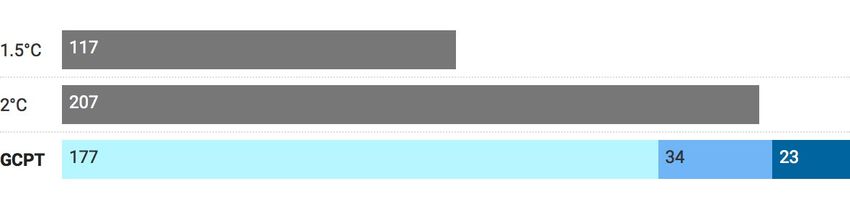
BOOM AND BUST
CLIMATE IMPACT
As shown in Figure 3, lifetime carbon dioxide emis- implemented, corresponding to the average rate in
sions from currently operating coal plants along with the 2010–2017 period (see Table 2), and that the plants
coal plants under construction and in pre-construc- will be retired at age 40 (or in five years if already 40
tion development far exceed the available carbon or older). As calculated by Climate Analytics (2016),
budgets for international climate goals at the current the global coal plant budgets from 2017 to 2050 for
level of operating hours per year. The figure assumes 1.5°C and 2.0°C are 117 and 207 Gigatonnes (Gt),
that 34% of proposed coal plant projects will be respectively.
Figure 3. Global Coal Power Emissions Compared to Coal Carbon Dioxide Budgets (Gigatonnes)
40-year lifetime for coal plants, 52.5% average capacity factor (IEA 2017)
Dark grey = total coal CO2 budget (2017–2050)
Light blue = operating coal plants (2017– )
Medium blue = projects under construction
Dark blue = pre-construction projects (assuming 34% implementation).
Source: CoalSwarm Global Coal Plant Tracker, January 2018. Includes units 30 MW and larger. Coal plant
emissions estimated from the Global Coal Plant Tracker (GCPT). Carbon budgets for coal plants developed by
Climate Analytics (2016).
Table 2. Coal Plant Implementation Rate by Region, 2010–2017
MW %
Implemented Halted Implemented Halted
(operating or in construction) (cancelled or shelved) (operating or in construction) (cancelled or shelved)
East Asia 533,732 758,814 41% 59%
South Asia 187,443 578,957 24% 76%
SE Asia 70,107 95,902 42% 58%
non-EU Europe 9,608 64,373 13% 87%
Africa and Middle East 15,297 40,724 27% 73%
Eurasia 5,667 22,494 20% 80%
EU28 24,770 71,644 26% 74%
Latin America 9,967 23,662 30% 70%
Canada/US 16,659 29,668 36% 64%
Australia/NZ 144 8,956 2% 98%
Total 873,394 1,695,194 34% 66%
Source: CoalSwarm Global Coal Plant Tracker, January 2018. Includes units 30 MW and larger.
COALSWARM / SIERRA CLUB / GREENPEACE REPORT | MARCH 2018 | 6BOOM AND BUST
The sum of all carbon dioxide emissions from coal Union (59 GW, or 20%). To meet international climate
plants operating and under development is 233 Gt, goals, the retirement of these aging plants must be
higher than the budgets for 1.5°C and 2.0°C. In order to accelerated. Toward that end, a positive development
meet the 1.5°C budget, all current development of coal in 2017 was increasing momentum for a coal phase-
plants must be cancelled and much of the current fleet out. To date, at least 34 countries and subnational
must be retired before plants reach 40 years of age. entities have committed to phasing out existing
Even the less ambitious 2.0°C budget requires much coal plants and placing a moratorium on new coal
higher cancellation rates for coal plants in planning plants that lack carbon capture and storage, and at
and construction, and accelerated retirement of coal least 127 businesses have made a commitment to
plants 40 years of age or older. go 100% renewable (RE100), and 24 businesses and
other organizations have committed to powering
As shown in Figure 2, most of the 290 GW of global their operations without coal. (Powering Past Coal
coal plants 40 years of age and older are located in Alliance 2017, RE100)
the United States (144 GW, or 50%) and the European
COALSWARM / SIERRA CLUB / GREENPEACE REPORT | MARCH 2018 | 7BOOM AND BUST
REGIONAL AND COUNTRY NOTES
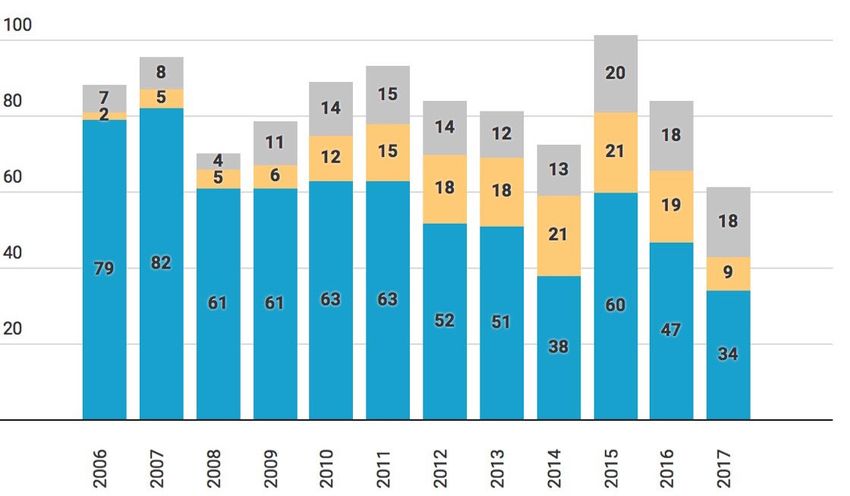
As shown in Figure 4, China and India have dominated While much of the decrease in the coal power pipe-
the development of new coal power capacity over the line has occurred in China and India, Figure 5 shows
past decade. In 2017, both China and India showed that the coal power pipeline is shrinking in the rest
declines, leaving other countries with a larger propor- of the world as well. Outside China and India, total
tional share of overall newly operating capacity. coal power capacity in pre-construction and construc-
tion dropped 6% in the past year and 26% in the past
two years.
Figure 4. Newly Operating Coal Power Capacity By Year (Gigawatts)
China = blue, India = yellow, Rest of the world = grey.
Source: CoalSwarm Global Coal Plant Tracker, January 2018. Includes units 30 MW and larger.
Figure 5. Coal Power Capacity in Pre-Construction and Construction,
January 2016 to January 2018 (Gigawatts)
China = blue, India = yellow, Rest of the world = grey.
Source: CoalSwarm Global Coal Plant Tracker, January 2018. Includes units 30 MW and larger.
COALSWARM / SIERRA CLUB / GREENPEACE REPORT | MARCH 2018 | 8BOOM AND BUST
As shown in Table 3, coal plants are under active additional coal plants representing potentially billions
development (construction and pre-construction) of dollars of wasted capital.
in 60 countries. Of these, 15 countries account for
90% of active development. The following is a coun- Internationally, Chinese financial institutions are
try-by-country analysis of a dozen hot-spot countries, the world’s largest funder of overseas coal plants,
as well as the United States and the European Union. investing US$15 billion in coal projects from 2013
to 2016 through international development funds,
China: From 2006 to 2017 China commissioned 692 with another US$13 billion in proposed funding
GW of coal-fired capacity, more than twice the amount (NRDC 2017). CoalSwarm estimates Chinese firms are
commissioned in the rest of the world combined. The involved in the construction, ownership, or financing
rapid expansion coupled with a 2015 to 2016 spurt of at least 16% of all coal-fired power stations under
in provincial coal permitting is now competing with development outside China.
the country’s ambitious renewable goals, leading to a
power overcapacity crisis. India: Perhaps no country better exemplifies the rap-
idly changing energy economic landscape than India.
In response, the central government began restricting The country added 152 GW of coal power capacity
new coal plants in 2016, including restricting permit- from 2006 to 2017, second only to China. Yet renew-
ting in nearly every province (with exceptions for proj- able energy costs have fallen 50% in two years (BNEF
ects located in impoverished areas and for residential 2017), and in financial year 2016–2017, India for the
heat and power projects). In 2017 the central govern- first time added more renewable energy capacity than
ment began suspending hundreds of coal projects by thermal power capacity. A recent analysis (Green-
name, with 98 GW shelved in January and 93 GW in peace 2017) found that 65% of the country’s existing
September (and 21 GW of overlap). coal power capacity is not competitive compared to
new tariff bids for solar and wind power.
Altogether, the 2016–2017 restrictions have effectively
led to the suspension of an estimated 444 GW of coal- In response, private capital is rapidly withdrawing
fired capacity under various stages of development in from coal power projects. All of the 6,920 MW that
China. While over 16 GW of coal projects appear to be entered construction in 2017 was sponsored by state-
advancing in violation of the restrictions, the mea- owned entities with public funding. Facing economic
sures have radically slowed China’s coal plant pipeline, pressure, about 16 GW of India’s operating coal plants
from 708 GW under active development (pre-construc- currently lack a power purchase agreement, while
tion and construction) in 2015, to 211 GW under active over 17 GW are frozen in construction, primarily
development in 2017. Newly commissioned coal plants due to a lack of financing. Prospects for future coal
have dropped from a 2006-to-2015 average of 61 GW power are also dimming: the country’s draft 2016
per year to 47 GW in 2016 and 34 GW in 2017. National Electricity Plan calls for rising demand to be
met with 275 GW total renewable energy capacity by
Despite the suspensions, China continues to lead the 2027, with no coal plants needed beyond those under
world in the amount of coal power capacity under construction.
development, with 116 GW of pre-construction capac-
ity and 95 GW under construction. Additionally, 37 GW There is also pressure on the country’s operating coal
of proposals have been suspended by restrictions that fleet to lower air pollution emissions. A recent report
end in 2017, and many of the remaining suspensions (Greenpeace 2016b) identified air pollution hotspots
end in 2020, raising questions around whether the in India visibly linked to coal plant clusters. In 2017
suspended projects will resume active development. the Ministry of Power reported that 89% of existing
Analyses by Greenpeace (2016a) and Carbon Tracker coal plant capacity, or 166GW, was not in compliance
(2016) have found the country’s existing coal plants with the country’s sulphur dioxide emission limits.
already far exceed domestic power needs, with More than 300 coal plants nationwide missed their
COALSWARM / SIERRA CLUB / GREENPEACE REPORT | MARCH 2018 | 9BOOM AND BUST
December 7, 2017 deadline to install pollution con- Indonesia: Since 2010, Indonesia has commissioned
trols, leading to a legal battle over when the plants will 17,673 MW of coal power capacity, and it currently has
comply with the law. 12,015 MW under construction. Both numbers exceed
the amounts in any country outside China and India.
Vietnam: Vietnam continues to be a hotspot for coal As part of its 2017–2026 energy plan, state-owned util-
power. Although no coal plants entered construction ity PLN has called for 24 GW of coal-fired capacity to
in 2017, large numbers of proposed projects are in be supplied by independent power producers through
active development. Guided by the country’s National 25-year guaranteed power purchase agreements, even
Power Development Plan VII, revised in 2016, the if the power is not used. According to a recent study
country has 12,100 MW of announced projects, 15,040 (IEEFA 2017), PLN projections greatly overestimate
MW in pre-permit development, 8,750 MW permitted, future demand growth, and at least nine coal proj-
and 10,635 MW under construction. These projects ects should be cancelled to avoid locking the utility
are largely driven by overseas finance from China, into uneconomic coal contracts for decades. In one
Japan, and South Korea, according to a GreenID report sign that the government is beginning to rein in the
(Vietnam Investment Review 2017). Recently, the US unsustainable level of coal power expansion, Energy
Export-Import Bank application for the Long Phu-1 and Mineral Resources minister Ignasius Jonan
coal project was withdrawn. Although solar and wind said the government would no longer approve new
power have lagged in Vietnam, especially in compar- coal plants on the island of Java, and the 2,000 MW
ison to China and India, a boom in renewable power Jawa 5 coal plant was cancelled.
may be in the offing. Due to its extensive coastline,
Vietnam enjoys a high potential for wind power, and Bangladesh: With nearly 18 GW of capacity in
numerous projects have been undertaken in the pre-construction development and over 4 GW under
southern coastal provinces of Binh Thuan, Soc Trang, construction, Bangladesh remains a significant
Bac Lieu, and Ca Mau. Solar projects are similarly con- hotspot of coal power development. The bulk of these
centrated in coastal areas but are also found at inland proposals include foreign assistance, most notably
provinces such as Dong Nai. by banks in China, whose companies and finance are
involved in over half (12.5 GW, or 56%) of Bangladesh’s
Turkey: Although no coal plants entered construc- in-development coal power capacity. Additionally,
tion in 2017, 1,300 MW of coal power capacity is three coal import terminals are under construction.
currently in ongoing construction at three locations. Proposed coal projects have encountered significant
Turkey continues to have large numbers of coal power public opposition over land acquisition, leaving most
projects in pre-construction planning, including of the plants years behind schedule.
15,410 MW announced, 19,001 MW in pre-permit
development, and 7,349 MW permitted. Most of these Japan: Japan has commissioned 5 GW of coal-fired
projects are a lingering result of the rush by numerous capacity since 2006, with another 13.5 GW currently
companies to propose coal plants under the country’s proposed and 5 GW under construction. About 2.5 GW
shift toward privatizing its electricity markets. In the of proposed coal capacity was suspended in 2017, with
past several years, many have been abandoned, often no new coal proposals added. Civil society groups,
in the face of strong opposition from local communi- Japan’s Environment Minister, and an Advisory Panel
ties. Nevertheless, the government continues to press to the Foreign Minister on Climate Change have
ahead with plans for a large expansion in coal power. called on the government to rethink its coal plans
Analysts have pointed out that rapidly falling prices of at home and abroad. (Advisory Panel 2017) Japan
solar power, combined with Turkey’s high solar poten- is the second biggest public financier of overseas
tial, provide a more flexible and less risky approach to coal-fired power capacity, with US$10 billion (NRDC
the country’s energy strategy. (IEEFA 2016) 2017) already invested in coal projects from 2013 to
COALSWARM / SIERRA CLUB / GREENPEACE REPORT | MARCH 2018 | 10BOOM AND BUST
2016 through international development funds, and South Africa: Two more units of the 4,800 MW Medupi
another US$9 billion of proposed funding. power station went into operation in 2017, bringing
half of the plant to completion. 2,400 MW of coal
Egypt: Despite the country’s exceptionally high solar power remains under construction at Medupi and
energy potential, four large coal projects are currently 4,000 MW is under construction at the Kusile power
under consideration in Egypt: Safaga power station station. An additional 5,540 MW is in pre-construction
(2,000 MW), Ayoun Moussa power station (2,640 planning at eight locations, as part of the country’s IPP
MW), Marsa Matruh power station (4,000 MW), Coal Program. With South Africa facing oversupply
and Hamarawein IPP coal project (6,000 MW). The from the coal plants under development combined
Hamarawein project has recently advanced, with with the country’s 42 GW of operating coal power
three international consortiums submitting bids and capacity, a recent study (Meridian Economics 2017)
nine local banks announcing the intention to provide found the country could save billions through the
US$1.5 billion in loans. Meanwhile, bids for large early decommissioning of old coal plants, the suspen-
solar PV projects have been submitted in Abu Dhabi sion of Kusile units 5 and 6, and the cancellation of
and the United Arab Emirates for US$24.20/MWh and new coal plants. In March 2017, the North Gauteng
US$29.90/MWh, much lower than levelized costs for High Court ruled that a climate change assessment
coal power. must be done prior to the authorization of the IPP
Thabametsi power plant, casting doubt on the future
Pakistan: The amount of coal power capacity in
of the KiPower and Colenso power stations.
Pakistan surged in 2017 with the commissioning of
2,260 MW of new plants. Previously, only 40 MW was South Korea: The country commissioned over 5 GW of
built from 2006 to 2016. Pakistan has an additional coal-fired capacity in 2017 and 5 GW in 2016, amounts
9.2 GW of proposed coal-fired capacity and 3.2 GW exceeded by only China and India in both years.
under construction. The country inaugurated its Recently elected president Moon Jae-in has vowed to
first coal terminal in 2017 at Port Qasim. Chinese cease permitting new coal plants and to phase out old
technology and finance are at the center of Paki- coal plants. While government leaders had proposed
stan’s coal plans, with Chinese firms involved in switching its current coal proposals to natural gas,
about half (6.3 GW) of the coal plants under devel- South Korea’s December 2017 energy plan proposed
opment. Many of the coal proposals are part of the that only the 1,160 MW Dangjin Eco power station be
China-Pakistan Economic Corridor, a multi-billion changed to a gas-fired project, leaving 7,359 MW of
dollar plan that includes US$33 billion in energy infra- coal-fired capacity under development. Yet the coun-
structure projects, primarily fossil fuels. try also plans a fivefold increase in renewable installs
to 58.5 GW by 2030. Despite signs of a domestic policy
The Philippines: In October, the growing potential
shift toward renewables, South Korea remains a major
for solar energy in the Philippines was demonstrated
source of finance for coal projects internationally,
by a Meralco power purchase agreement (PPA) for
providing over US$8 billion for coal-fired power proj-
solar power at US$58 per MWh, half the cost of the
ects outside the country since 2008. (SFOC 2018)
company’s PPAs for coal power. Nevertheless, the
Philippines continues to have numerous coal projects Thailand: Strong public opposition has
under development, including 7,560 MW in pre-con- caused the postponement of plans for the 870
struction development and 4,581 MW in construction. MW Krabi power station and the 2,200 MW
However, only 105 MW of projects moved into con- Thepha power station, leaving 4,656 MW of proposed
struction in 2017, raising the likelihood that much capacity, none of which is permitted for construc-
of the pre-construction pipeline will not move to tion. The only coal plant advancing in Thailand is a
completion. 600 MW replacement unit under construction at the
Mae Moh power station. In 2017 Prime Minister Prayut
COALSWARM / SIERRA CLUB / GREENPEACE REPORT | MARCH 2018 | 11BOOM AND BUST
Chan-o-cha proposed raising the target contribution European Union: As of February 2018, ten EU coun-
for renewables from 33% to 40% in the country’s tries with coal-fired power capacity had ended coal
Power Development Plan (2015–36). use for power generation or had pledged to phase out
it out by 2030: Austria, Belgium, Denmark, Finland,
United States: Despite pro-coal rhetoric and moves France, Italy, Netherlands, Portugal, Sweden, and the
against environmental regulation by the Trump United Kingdom. In the UK, electricity provided by
Administration, coal power capacity continued to coal dropped from 39% of overall generation in 2012
decline in 2017, with numerous companies announc- to just 2% in 2017 (Carbon Brief 2016), with the coun-
ing plant retirements. As of the end of 2017, 266 coal try planning to retire its remaining 15.5 GW of coal-
plants had retired or committed to retirement, with fired capacity by 2025. The Netherlands plans to retire
264 plants remaining in the U.S. coal fleet. The year its 5,860 MW of coal-fired capacity by 2030, including
2017 also marked some major announcements of 3,500 MW commissioned recently in 2015–2016. While
future retirements, including three heavily polluting Germany has 50 GW of coal plant capacity and an
Texas plants—Monticello, Big Brown, and Sandow—all additional 3,120 MW under development, the country
of which have retired in the first few months of 2018. plans to set an end date for coal use in 2019. Outside
With no coal power under construction or active Germany, EU countries that continue to pursue new
development, and retirement of 74 GW of coal power coal plants are the Czech Republic, Greece, Hungary,
capacity since 2010, the United States is moving Poland, and Romania.
steadily away from coal.
Table 3. Coal Power Capacity in Development and Operating by Country (MW)
January 2018 (units 30 MW and larger)
All Active
Country Pre-Construction Construction Development Shelved Operating
China 116,175 94,828 211,003 435,162 936,057
India 87,731 43,628 131,359 82,355 214,910
Vietnam 35,890 10,635 46,525 2,800 14,971
Turkey 41,760 1,130 42,890 29,589 18,469
Indonesia 25,890 12,015 37,905 14,600 28,584
Bangladesh 17,883 4,115 21,998 4,085 250
Japan 13,596 4,979 18,575 1,300 44,578
Egypt 14,640 0 14,640 0 0
Pakistan 9,195 3,190 12,385 8,720 2,450
Philippines 7,560 4,581 12,141 1,694 7,206
South Africa 5,540 6,352 11,892 1,650 42,101
Poland 5,700 3,390 9,090 0 29,401
Thailand 4,656 600 5,256 3,070 5,457
Mongolia 6,830 835 7,665 1,350 706
South Korea 2,100 5,259 7,359 3,660 37,973
Zimbabwe 6,650 0 6,650 1,800 950
United Arab Emirates 3,000 2,400 5,400 270 0
Bosnia & Herzegovina 4,080 0 4,080 0 2,073
Cambodia 3,190 135 3,325 1,200 370
Germany 2,020 1,100 3,120 0 50,400
COALSWARM / SIERRA CLUB / GREENPEACE REPORT | MARCH 2018 | 12BOOM AND BUST
Table 3. Coal Power Capacity in Development and Operating by Country (MW) (continued)
All Active
Country Pre-Construction Construction Development Shelved Operating
Brazil 2,566 340 2,906 600 4,355
Serbia 2,850 0 2,850 0 4,405
Taiwan, China 2,049 800 2,849 7,600 18,207
Malawi 2,820 0 2,820 700 0
Malaysia 0 2,600 2,600 0 11,008
Botswana 2,400 132 2,532 1,804 600
Mozambique 2,440 0 2,440 1,620 0
Myanmar 2,030 0 2,030 10,430 160
Tanzania 1,890 0 1,890 0 0
Oman 1,800 0 1,800 0 0
Morocco 350 1,386 1,736 0 2,585
Ukraine 1,320 0 1,320 600 23,259
Nigeria 1,200 0 1,200 2,000 0
Colombia 900 250 1,150 0 1,393
Greece 450 660 1,110 0 4,375
Kenya 1,050 0 1,050 130 0
Dominican Republic 0 770 770 0 305
Russia 480 240 720 226 48,690
Laos 700 0 700 626 1,878
Ghana 700 0 700 1,400 0
Ivory Coast 700 0 700 0 0
Czech Republic 0 660 660 0 9,052
Iran 0 650 650 0 0
Kazakhstan 0 636 636 0 12,000
Romania 600 0 600 0 5,115
Niger 600 0 600 0 0
Kosovo 500 0 500 0 1,290
Hungary 500 0 500 0 1,274
FYROM 429 0 429 0 800
Chile 0 375 375 2,135 5,101
Panama 0 320 320 0 0
Zambia 300 0 300 600 330
Tajikistan 300 0 300 0 100
Georgia 300 0 300 0 0
Kyrgyzstan 0 300 300 1,200 840
Montenegro 254 0 254 0 225
Senegal 0 125 125 600 30
Argentina 0 120 120 0 470
Madagascar 60 0 60 0 120
Jordan 0 30 30 0 0
COALSWARM / SIERRA CLUB / GREENPEACE REPORT | MARCH 2018 | 13BOOM AND BUST
Table 3. Coal Power Capacity in Development and Operating by Country (MW) (continued)
All Active
Country Pre-Construction Construction Development Shelved Operating
United States 0 0 0 1,295 278,823
Australia 0 0 0 2,666 24,872
United Kingdom 0 0 0 0 15,508
Spain 0 0 0 0 10,601
Canada 0 0 0 1,000 9,743
Italy 0 0 0 490 9,180
Hong Kong, China 0 0 0 0 6,608
Mexico 0 0 0 0 5,351
Bulgaria 0 0 0 0 5,059
Israel 0 0 0 0 4,900
Netherlands 0 0 0 0 4,837
North Korea 0 0 0 300 3,500
France 0 0 0 0 3,392
Denmark 0 0 0 0 2,805
Uzbekistan 0 0 0 300 2,522
Finland 0 0 0 0 2,202
Portugal 0 0 0 0 1,978
Moldova 0 0 0 0 1,610
Slovenia 0 0 0 0 1,469
Ireland 0 0 0 0 915
Slovakia 0 0 0 0 913
Sri Lanka 0 0 0 1,200 900
Guatemala 0 0 0 0 887
Austria 0 0 0 0 635
New Zealand 0 0 0 0 500
Croatia 0 0 0 0 335
Sweden 0 0 0 0 252
Mauritius 0 0 0 0 195
Peru 0 0 0 0 139
Namibia 0 0 0 0 120
Reunion 0 0 0 0 96
Syria 0 0 0 0 60
Guadeloupe 0 0 0 0 38
Venezuela 0 0 0 1,000 0
Swaziland 0 0 0 200 0
Democratic Republic of Congo 0 0 0 500 0
Guinea 0 0 0 250 0
Total 446,624 209,566 656,190 634,777 1,995,818
China & India 203,906 138,456 342,362 517,517 1,150,967
Rest of the World 242,718 71,110 313,828 117,260 844,851
COALSWARM / SIERRA CLUB / GREENPEACE REPORT | MARCH 2018 | 14BOOM AND BUST CONCLUSION: AN ACCELERATING TRANSITION As the sudden contraction of the coal plant pipeline large amounts of capital on potential stranded assets; over the past two years demonstrates, economic and ongoing resistance by local communities to the transitions are not linear propositions, especially impacts of coal plants, mines, and infrastructure. when they are the result of a convergence among Together with growing retirements from aging coal multiple political and economic drivers. In the case fleets in North America, Europe, and other long-in- of the shift away from coal, these drivers include the dustrialized countries, these multiple factors are fall in the cost of renewable energy, the pace of which ending the era of coal power expansion and signaling has exceeded even optimistic predictions; a gathering the beginning of a global phase-out of the coal fleet. movement among countries, states, cities, and busi- Yet despite the speed of change so far, the pace must nesses to phase out coal use; the pressure to deal with be quickened, including increased cancellation of coal degraded urban air quality, especially in the major projects and accelerated retirements, if we are to meet cities of East and South Asia; the increasing reluctance international goals for a livable climate. by banks and other financiers of coal plants to risk COALSWARM / SIERRA CLUB / GREENPEACE REPORT | MARCH 2018 | 15
BOOM AND BUST

REFERENCES
BNEF (2017). “India’s Clean Energy Transition.”           IEA (2017). World Energy Outlook. http://bit.ly/2HLIk6f
http://bit.ly/2GDYoWv
                                                          IEEFA (2016). “Turkey at the Crossroads.”
Carbon Brief (2016). Simon Evans. “Two Charts Show        http://bit.ly/2HFOwwF
How UK Coal Use Is Collapsing.” http://bit.ly/2HICeUj
                                                          IEEFA (2017). Yolanda Chung. “Overpaid and Underuti-
Carbon Tracker Initiative (2016). Matthew Gray. “Chas-    lized: How capacity payments to coal-fired power
ing the Dragon? China’s coal overcapacity crisis and      plants could lock Indonesia into a high-cost electricity
what it means for investors.” http://bit.ly/2HLwt8w       future.” http://bit.ly/2HIBcrp

Climate Analytics (2016). Marcia Rocha et al. “Implica-   Meridian Economics (2017). Grové Steyn, Jesse Bur-
tions of the Paris Agreement for Coal Use in the Power    ton, and Marco Steenkamp. “Eskom’s Financial Crisis
Sector.” http://bit.ly/2HG8Xto                            and the Viability of Coal-Fired Power in South Africa.”
                                                          http://bit.ly/2HJe4cv
Advisory Panel to the Foreign Minister of Japan (2017).
“Promote new diplomacy on energy through leading          NRDC (2017). Han Chen and Jake Schmidt. “Power
global efforts against climate change” (provisional       Shift: Shifting G20 international public finance from
translation). http://bit.ly/2HK4bLw                       coal to renewables.” http://on.nrdc.org/2HIIpry

Greenpeace (2016a). Lauri Myllyvirta and Xinyi Shen.      Powering Past Coal Alliance (2017). “Declaration.”
“Burning Money.” http://bit.ly/2HFEkV3                    http://bit.ly/2HDN7qh

Greenpeace (2016b). Lauri Myllyvirta, Sunil Dahiya,       RE100. “Companies.” http://there100.org/companies
and Nandikesh Sivalingam. “Out of Sight: How
coal burning advances India’s air pollution crisis.”      SFOC (2018). Joojin Kim and Soyoung Lee. “Financing
http://bit.ly/1Wd2s54                                     Dirty Energy: How Korean Public Financial Institu-
                                                          tions Support Coal Power.” http://bit.ly/2HLlFHh
Greenpeace (2017). “Uncompetitive: Coal’s cost
disadvantage grows as renewable tariffs plummet.”         Vietnam Investment Review (2017). “China funds coal
http://bit.ly/2HL25e6                                     away from home.” http://bit.ly/2HGbvaW

COALSWARM / SIERRA CLUB / GREENPEACE                                                  REPORT | MARCH 2018 | 16
You can also read


