Patterns of Pelagic Fish Diversity in Floodplain Lakes of Whitewater and Blackwater Drainage Systems Within the Central Amazon River Basin of Brazil
←
→
Page content transcription
If your browser does not render page correctly, please read the page content below
ORIGINAL RESEARCH
                                                                                                                                             published: 29 July 2021
                                                                                                                                     doi: 10.3389/fevo.2021.602895

                                            Patterns of Pelagic Fish Diversity in
                                            Floodplain Lakes of Whitewater and
                                            Blackwater Drainage Systems Within
                                            the Central Amazon River Basin of
                                            Brazil
                                            Flávia K. Siqueira-Souza 1 , Lawrence E. Hurd 2 , Kedma C. Yamamoto 1 ,
                                            Maria Gercilia M. Soares 3 , Gregory J. Cooper 4 , James R. Kahn 1,5 and
                                            Carlos E. C. Freitas 1*
                                            1
                                             Department of Fisheries Sciences, Federal University of Amazonas, Manaus, Brazil, 2 Department of Biology, Washington
                          Edited by:        and Lee University, Lexington, VA, United States, 3 Coordenação de Pesquisa em Biologia Aquática, Instituto Nacional
               Roksana Majewska,            de Pesquisas da Amazonia, Manaus, Brazil, 4 Department of Philosophy, Washington and Lee University, Lexington, VA,
  North-West University, South Africa       United States, 5 Williams School of Commerce, Economics and Politics, Washington and Lee University, Lexington, VA,
                                            United States
                         Reviewed by:
                Luciano F. A. Montag,
     Federal University of Pará, Brazil     The Amazon River Basin, one of the world’s most threatened ecosystems, has an
                          James Albert,
  University of Louisiana at Lafayette,
                                            enormous diversity of fish species, a result of temporally and spatially complex habitat
                          United States     containing biogeochemically different river systems. The annual hydrologic cycle results
                    William Crampton,       in floodplain lakes during low water and inundates forests during high water, exposing
         University of Central Florida,
                          United States     fish to different resources and environmental conditions. The two principal river systems
                  *Correspondence:          in the central Brazilian Amazon are blackwater, with nutrient-poor acidic water, and
                   Carlos E. C. Freitas     nutrient-rich whitewater. Although species-rich, the Amazon Basin is data-poor in terms
                cefreitas@ufam.edu.br
     orcid.org/0000-0001-5406-0998
                                            of comparative studies on a regional scale. We analyzed data sets from independent
                                            sampling studies of pelagic fish in 16 floodplain lakes, nine whitewater (Rio Solimões)
                   Specialty section:       and seven blackwater (Rio Negro), in the central Amazon Basin of Brazil. Our findings
         This article was submitted to
    Biogeography and Macroecology,
                                            suggest striking similarities in pelagic fish diversity patterns. Species richness was
                a section of the journal    virtually equal (165 in whitewater and 168 in blackwater). Both species richness, and
    Frontiers in Ecology and Evolution
                                            number of migratory species, per lake increased toward the confluence of the rivers
      Received: 04 September 2020
                                            in both systems in our study. The proportion of unique species was also similar in
          Accepted: 23 June 2021
           Published: 29 July 2021          whitewater lakes and blackwater (41 and 43%, respectively), boosting total regional
                               Citation:    richness to 237 species. However, species composition in whitewater lakes was
         Siqueira-Souza FK, Hurd LE,        more homogenous (lower β diversity), and species composition was associated with
        Yamamoto KC, Soares MGM,
Cooper GJ, Kahn JR and Freitas CEC
                                            conductivity and pH in whitewater, but with dissolved oxygen and transparency in
       (2021) Patterns of Pelagic Fish      blackwater. Therefore, regional fish diversity cannot be represented by sampling one
          Diversity in Floodplain Lakes
                                            lake or even one drainage system, but must include multiple lakes from both systems.
        of Whitewater and Blackwater
 Drainage Systems Within the Central        These two systems may differ in sensitivity to anthropogenic stressors such as damming
         Amazon River Basin of Brazil.      and deforestation.
           Front. Ecol. Evol. 9:602895.
      doi: 10.3389/fevo.2021.602895         Keywords: Amazon Basin, fish conservation, fish species diversity, floodplain lakes, tropical biodiversity

Frontiers in Ecology and Evolution | www.frontiersin.org                          1                                             July 2021 | Volume 9 | Article 602895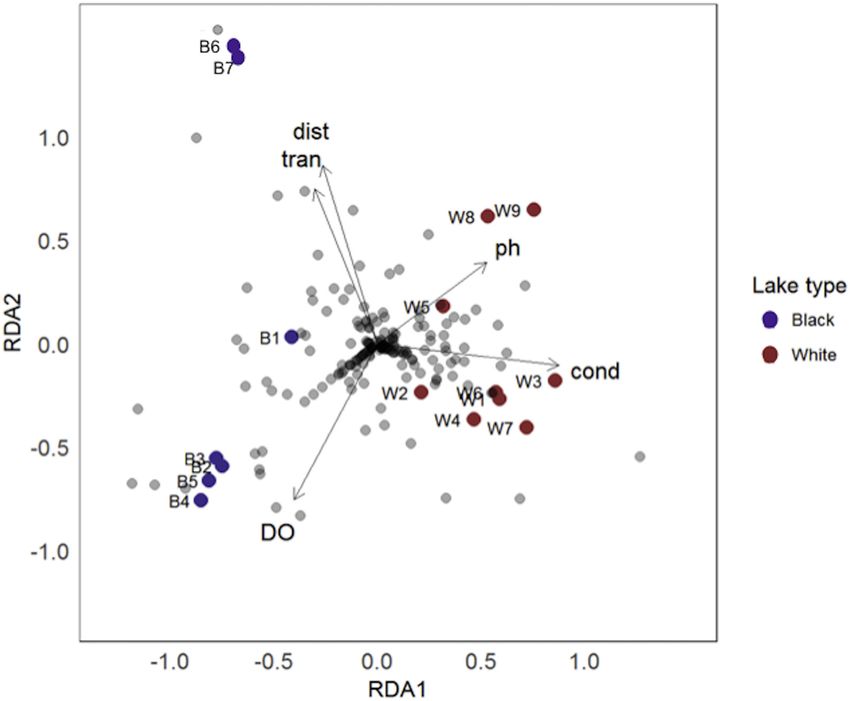
Siqueira-Souza et al.                                                                                              Amazonian Floodplain Fish Diversity

INTRODUCTION                                                                these systems, but the main blackwater artery in this region is the
                                                                            Rio Negro, with floodplains known as igapós, and the principle
The Amazon River Basin is the world’s largest freshwater                    whitewater river is the Rio Solimões (Rio Amazonas west of the
ecosystem, with an aquatic surface area of 93,000 km2 (Allen                border with Columbia), with várzeas. The confluence of these two
and Pavelsky, 2018). This enormous ecosystem is home to                     rivers occurs at the city of Manaus, and downriver from that point
an extraordinary diversity of fish. At least 2,716 fish species,            is known in Brazil as the Rio Amazonas.
including 1,696 of which are endemic to the basin, have been                    Rivers in the whitewater system carry a high load of suspended
identified so far (Reis et al., 2016; Dagosta and Pinna, 2019). It is       nutrient-rich sediments to the floodplain during the flood season,
also one of the earth’s most endangered ecosystems, largely from            causing the water to be the color of heavily creamed coffee
ongoing anthropogenic stressors to its hydrology and biodiversity           and supporting highly productive terrestrial and aquatic plant
such as dam building that reduces connectivity among habitats               communities, including floodplain forests (Furch, 1984; Junk
(Kahn et al., 2014; Hurd et al., 2016; Santos et al., 2018), oil and        and Piedade, 1997; Junk et al., 2011). In contrast, blackwater
gas development (Finer et al., 2008), overfishing of both food              rivers (the color of strong tea) are very poor in nutrients
species and ornamental fish (Campos et al., 2015; Costa-Pereira             and more acidic than whitewater, and thus very low in net
and Galetti, 2017; Castanho et al., 2019), invasive alien species           primary productivity (Bogotá-Gregory et al., 2020). Most of
(Latini and Petrere, 2004), deforestation (Lobón-Cerviá et al.,             the productivity in the blackwater system is in the form of
2015), urbanization (Tregidgo et al., 2017), and droughts caused            allochthonous input from the adjacent forests, especially when
by deforestation and global warming (Castello et al., 2013; Freitas         high water floods them and allows fish close access to such
et al., 2013; Nazareno and Laurance, 2015). These problems have             forest products as vegetation, insects, and fruits (Furch, 1984;
caused growing concern over the question of how to preserve fish            Loebens et al., 2019). In fact, it is very likely that fish were the
species richness and also conserve fishery stocks, which are the            first frugivorous vertebrates to disperse terrestrial plant seeds
most important sources of protein for human communities in the              (ichthyochory), beginning in the Paleozoic (Horn et al., 2011).
region (Castello et al., 2013). We therefore need to understand                 Much of the literature reporting comparative fish species
patterns of species distribution within this basin well enough              richness between these two drainage systems tends to show
to design ways to preserve aquatic biodiversity. Our aim is                 higher richness in whitewater than in blackwater area, although
to discern how pelagic fish species diversity, which includes               this finding is not uniform. For instance, in a survey of
many species harvested for human consumption, is distributed                published comparisons of fish diversity between these two
between physically different drainage systems that flow through             systems Crampton (2011) found that the western whitewater
the central portion of the Amazon River Basin in Brazil.                    habitats tended to have more species than the blackwater
    The putative evolutionary causes that generated the enormous            drainage, but Saint-Paul et al. (2000) reported that blackwater
diversity of fish species in this basin, such as geologic age,              fish assemblages were 10% more diverse than those in whitewater.
productivity, adaptive radiation, and extensive allopatry have              The failure to agree on this is probably largely due to differences
been discussed and conjectured by many authors. Recently,                   in how and where different studies were conducted.
Albert et al. (2020) concluded that historical geologic processes               Most of the published studies comparing fish diversity
periodically interrupted aquatic connectivity and created isolated          between systems have been limited in terms of landscape area
areas that set the stage for habitat specialization and allopatric          or number of lakes, comparisons of unequal areas between
speciation, which was more important than adaptive radiation                blackwater and whitewater, types of habitat sampled within
within habitats in explaining the development of high overall               lakes, and sampling methodology. Much of the difficulty in
diversity. The present-day physical environment includes an                 making comparisons of this kind is rooted in scale dependence.
annual hydrologic cycle that alternates between complete                    Differences in species composition among lakes of the same
inundation of floodplain forests at high water, and formation of            drainage system result in high β-diversity (Freitas et al., 2014),
floodplain lakes with varying degrees of connection (or isolation)          so representation of species richness must be based on multiple
from river channels at low water. This “flood pulse” (Junk et al.,          lakes. Within each lake there are different habitats (e.g., open
1989), in which water depth can vary 15 m or more depending on              water, shoreline, and macrophyte meadows in whitewater lakes)
specific location along the rivers, is considered to be the dominant        that fragment the within-lake distribution of resident species
feature of the physical environment for fish species in this                so that all of these must be sampled (Siqueira-Souza et al.,
region (Junk et al., 1997; Silva et al., 2020). Floodplains occupy          2016). There is also a temporal scale: since fish assemblages
73,500 km2 (Hess et al., 2015), providing important habitat for             vary in species composition among the hydrologic seasons, it
Amazonian fish, some of which remain on the floodplain all                  is necessary to sample during both high and low water periods
their lives, dispersing into the flooded forests to feed at high            in order to obtain representative fish species diversity (Merona
water and then returning to open water of the lakes as the water            et al., 1993; Scarabotti et al., 2011; Siqueira-Souza et al., 2016).
recedes. Others migrate out of the lakes to spawn in rivers when            Finally, sampling methodology of many studies were inadequate
the boundaries between lakes and the river channels are erased              to capture fish that are too small for the gill nets employed, or
during high water season (Fernandes, 1997).                                 have behaviors that did not bring them into contact with the
    There are two different aquatic systems in the central Amazon           collection gear. Thus, the number of species sampled do not
Basin of Brazil, based on biogeochemistry: whitewater and                   constitute total fish diversity in these studies, but are still useful
blackwater. Many smaller tributaries contribute flow to each of             for assessing species richness of selected groups.

Frontiers in Ecology and Evolution | www.frontiersin.org                2                                         July 2021 | Volume 9 | Article 602895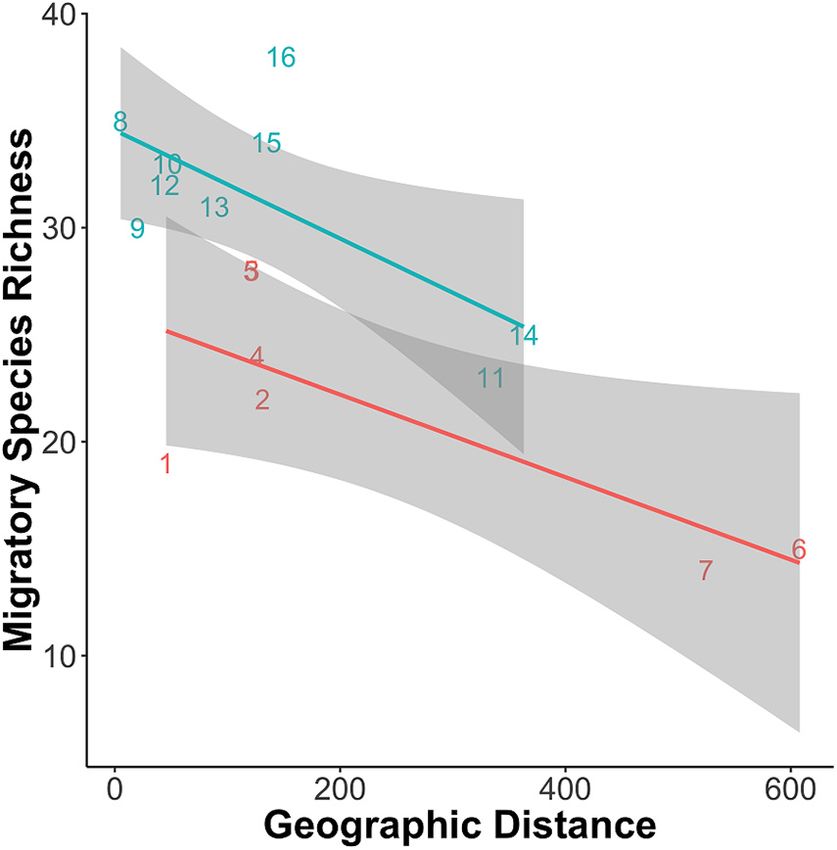
Siqueira-Souza et al.                                                                                            Amazonian Floodplain Fish Diversity

   The most common sampling strategy for fish in the basin has             gillnets of standardized dimensions: 20 m long by 2 m high
involved deployment of gill nets with varying mesh sizes (Saint-           (deep), with mesh sizes of 30, 40, 50, 60, 70, 80, 90, 100, 110, and
Paul et al., 2000), which are adequate for medium-large body               120 mm between opposite knots of the stretched mesh. Although
size pelagic fish but not for smaller fish, or for benthic species         samplings were carried out by independent groups, all sampling
during high water season when nets don’t reach the bottom of the           events proceeded according to the same protocol: gillnets were
lakes. A notable exception to this sampling limitation is Bogotá-          deployed at 0600 (daybreak) and left for 48 h at each collection
Gregory et al. (2020), who used a variety of sampling gear to              site, and fish were collected from them every 6 h to minimize
get a more accurate picture of total fish diversity, and arrived at        the predation effect (mainly foraging by piranha) on entangled
the conclusion that whitewater fish had higher fish diversity than         fishes. Floodplain lake habitats have consistent sub-habitats: open
blackwater (and also than clearwater, which does not occur in our          water, floating macrophyte meadows (in whitewater; they do
part of the Amazon Basin).                                                 not occur in blackwater), and the flooded forest at the margins
   We examined patterns in the species richness of moderate-               of the lakes except at low water (Siqueira-Souza et al., 2016).
to-large size pelagic fish inhabiting floodplain lakes of the Rio          Therefore, gillnets were set at each of these sub-habitats during
Negro and Rio Solimões in the Central Amazon River Basin of                every sampling period. Fish collecting for all these studies was
Brazil, specifically located upstream from the merging of the two          done under licenses 16889-2, 30052-1, 34446-3, and 50662-1
rivers at Manaus. Specifically, we assessed pelagic species richness       (Instituto Chico Mendes de Conservação da Biodiversidade–
in individual lakes (α-diversity), comparison of richness among            ICMBio/Brazil).
lakes within each system (β-diversity), comparison of numbers                  Because the lakes in our combined data set were not all
of shared and unshared species between the systems, physical               sampled for the same number of years, owing to having
properties of the water associated with diversity in each system,          come from different local studies that were not initially
and geographic distance of lakes from the confluence of the                related to each other, the question arises of whether the
two rivers. We also noted those species with known migratory               data are biased because of potential variability in species
behavior. We were able to compare multiple unpublished                     composition between successive years. We saw no indication
data sets from several independent studies, carried out by                 of this in any of our multiple-year data sets. In fact, although
different research teams working on local censuses, for different          fish are free to move in and out of lakes during high
reasons, in either the blackwater or whitewater system, but that           water, which could result in random assortment among lakes,
employed the same sampling protocol to census fish species in              other researchers, e.g., Petry et al. (2003); Arrington and
floodplain lakes. Further, these comparisons are from lakes in             Winemiller (2006), and Fernandes et al. (2014) have noted non-
relatively close regional proximity, which reduces the potentially         random species composition, indicating affinity for a specific
confounding factor of wider geographical variability within the            habitat that may qualify some regional species distributions
basin (Bogotá-Gregory et al., 2020).                                       as metapopulations (Hurd et al., 2016). Stability of species
                                                                           assemblages is even true for small temporary pools, and the
                                                                           variation in species composition declines with increasing volume
MATERIALS AND METHODS                                                      of water (Espírito-Santo and Zuanon, 2017).

Study Sites                                                                Data Analysis
Fish sampling was conducted by independent teams of                        We constructed a rarefaction curve for each lake. Rarefaction
researchers at 16 lakes along the middle and lower reaches of the          gives us an expected number of species from a small sample
Rio Negro (seven lakes) and Rio Solimões (nine lakes) upstream             drawn at random from a larger pool of individuals (Gotelli and
of the confluence of these two rivers that forms the main channel          Colwell, 2001), so the curve generated by plotting accumulated
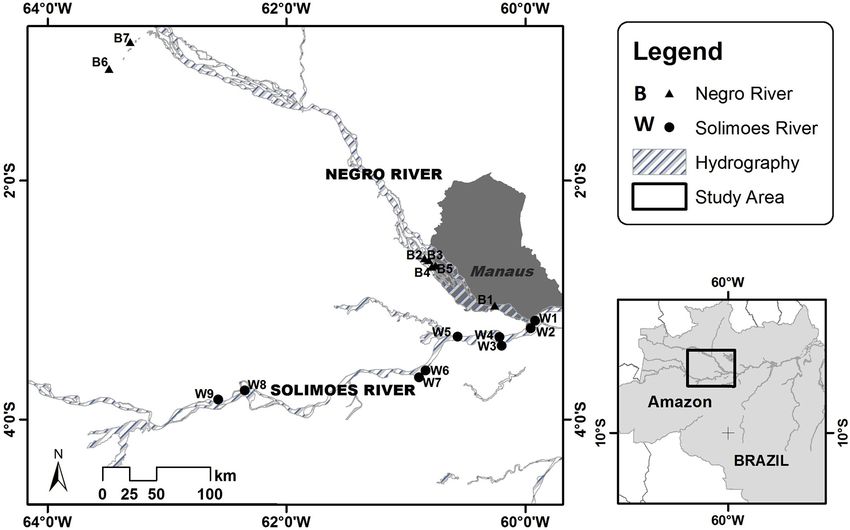
of the Rio Amazonas (Figure 1). The lakes varied substantially             numbers of species against number of individuals sampled
in area and depth over the seasons of the hydrologic cycle, and            tells us how close we have come to representing most of the
except at low water include flooded forests at their margins, but          species actually present in the lake (i.e., α-diversity). Since
the range of sizes (surface areas) of the whitewater and blackwater        we were specifically interested in species richness rather than
lakes we sampled did not differ between systems (Appendix 1).              relative abundance, it was important not to exclude rare species
                                                                           from our analyses.
Fish Sampling                                                                  We investigated the potential importance of lake size, distance
The fish assemblages of 16 Amazonian floodplain lakes were                 between each lake and the confluence of Rios Negro and Solimões
sampled by independent research groups from the Federal                    and environmental variables such as conductivity, dissolved
University of Amazonas (UFAM) and the National Institute of                oxygen, pH, temperature, and transparency on the taxonomic
Amazonian Research (INPA) between 2005 and 2013 (Appendix                  structure of local fish assemblages using Redundancy Analysis
1). Nine of these were whitewater lakes located on the floodplain          (RDA) (Ter Braak and Verdonschot, 1995). The number of fish
of the middle and lower reaches of the Rio Solimões, and seven             belonging to each taxon was Hellinger-transformed prior to RDA.
were blackwater lakes along the Rio Negro (Figure 1).                      We tested for significance using a Monte-Carlo permutation test
    All lakes in this combination of studies were typical of               with 999 random permutations under the null model of no effect.
Amazonian floodplain lakes, and were sampled during both high                  We used Moran’s I statistic (Fortin et al., 1989) to test the
and low water seasons of the hydrologic cycle for between 1 and            spatial correlation between species richness and the geographical
8 years (Appendix 1). The sampling gear consisted of floating              distance between sampling sites and the confluence of Solimões

Frontiers in Ecology and Evolution | www.frontiersin.org               3                                        July 2021 | Volume 9 | Article 602895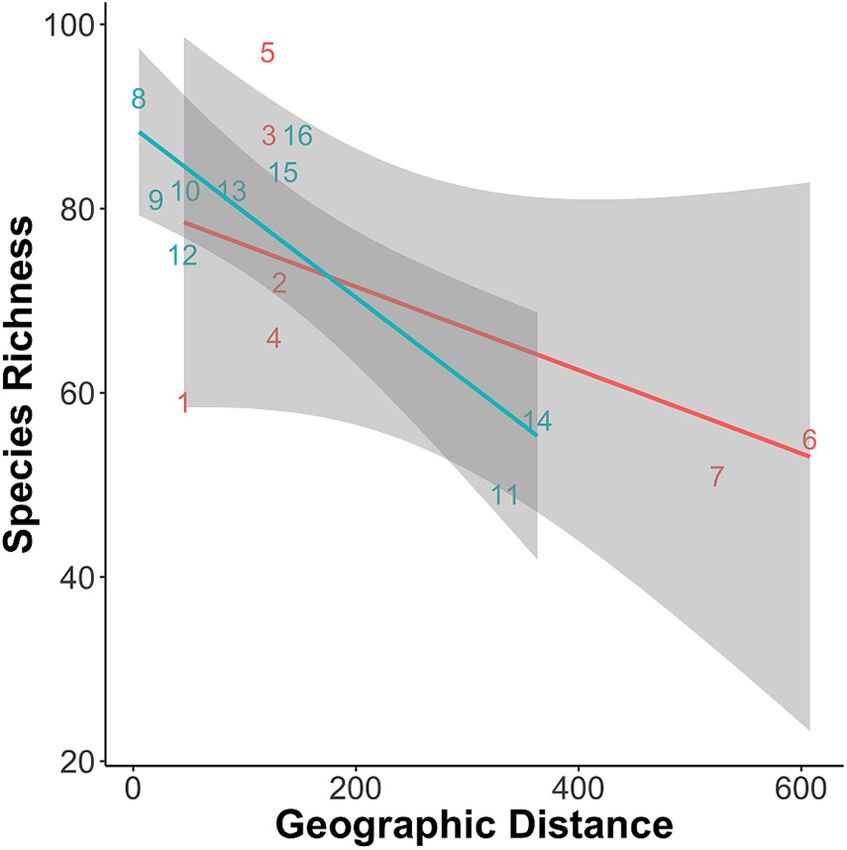
Siqueira-Souza et al.                                                                                                               Amazonian Floodplain Fish Diversity

  FIGURE 1 | Map of the floodplain region showing position of lakes that were sampled for fish species. The Rio Negro is the main blackwater river, flowing southeast
  toward the confluence with the Solimões, the main whitewater river. B, blackwater lakes; W, whitewater lakes. Numbers of lakes are in order of increasing distance
  from the confluence of the two rivers.

and Negro River for both systems. This procedure was                                   richness (Appendix 3). Fish community composition (Appendix
repeated using known migratory species richness and the same                           4) revealed that pelagic species richness was nearly identical
geographical distances. To test the null hypothesis that there                         between blackwater lakes (total S = 160) and whitewater lakes
is no influence of the geographic distance on the fish diversity                       (S = 161) although there were substantial differences in species
we performed generalized linear models based on Poisson                                composition between the systems. Mean overall abundance of
probability distribution (Zuur et al., 2009) using the number of                       fish in blackwater lakes (1,487.28) also was not significantly
species as response variable (Yi) and geographic distance between                      different than of whitewater lakes (1,890.11) (t14 = -0.314,
the sampled lake and the confluence of the two rivers as predictor                     P = 0.723). Almost the same number of species were unique
variable (Xi). This procedure was carried out for the lakes of both                    (unshared between systems) to each system: 74 or 31.6% in
systems separately.                                                                    whitewater lakes; 73 or 31.2% in blackwater, which is reasonably
   Given the possibility that migratory species might be able to                       consistent with overall endemism for the region (Reis et al., 2016).
move between the two drainage systems, thus complicating the                           Thus, there were more unshared (147) than shared (87) species
assignment of “home” habitat, we also performed generalized                            between these two systems, so that combined (regional) species
linear models based on Poisson probability distribution (Zuur                          richness was 234, substantially higher than if all species had been
et al., 2009) using the number of known migratory species                              found in both systems (Appendix 4).
(Appendix 2) as response variable (Yi) and geographic distance                             The RDA resulted in R2 = 0.666 with two significant axes
between the sampled lake and the confluence of the two rivers as                       [RDA1: F = 7.132, Pr(>F) = 0.01 and RDA2: F = 3.811,
predictor variable (Xi):. This procedure was carried out for the                       Pr(>F) = 0.005]. A gradient was strongly associated with axis
lakes of both systems separately.                                                      RDA1 and indicates that species composition of lakes differed
   All statistical analyses were carried out using R Statistical                       between the two systems, with blackwater lakes to the left
Software (R Development Core Team, 2012). RDA were done                                of whitewater lakes in Figure 2. Blackwater lakes appear less
with Vegan package (Oksanen et al., 2010), GLMs were fitted                            homogeneous (greater β-diversity) than whitewater lakes on axis
using the CAR (Fox and Weisberg, 2011) and MASS packages                               RDA2, and showed a pattern where lakes nearer the confluence
(Ripley et al., 2013) and Moran’s I estimates were calculated using                    of the two systems are on the lower side of the graph, and the
the APE package (Paradis et al., 2004).                                                lakes located more distant are on the upper side (see Figure 1 for
                                                                                       position of lakes). This pattern is not as evident in whitewater
                                                                                       lakes, although the lakes W8 and W9, located more distant of
RESULTS                                                                                the confluence, also are on the upper side of the RDA plot. The
                                                                                       key environmental variables that ordered the type of each lake
Rarefaction curves were asymptotic, showing that the sampling                          by its fish species richness were conductivity, dissolved oxygen
effort was adequate to represent the bulk of pelagic fish species                      and pH, whereas transparency and distance from the confluence

Frontiers in Ecology and Evolution | www.frontiersin.org                           4                                              July 2021 | Volume 9 | Article 602895
Siqueira-Souza et al. Amazonian Floodplain Fish Diversity
TABLE 2 | Results of generalized linear models between total species richness
and geographic distance to the confluence of the Negro and Solimões River
drainage systems.
Negro Estimate Z-value P-value
Intercept 4.4018 65.721Siqueira-Souza et al. Amazonian Floodplain Fish Diversity
FIGURE 3 | Species richness in each lake (α) plotted against distance of the
lake to the confluence of the two drainage systems. Lines are eye-fit just to FIGURE 4 | Migratory species richness in each lake (α) plotted against
emphasize decline in α with distance from the confluence of the river. distance of the lake to the confluence of the two drainage systems. Lines are
eye-fit just to emphasize decline in α with distance from the confluence of the
river.
TABLE 3 | Results of generalized linear models between migratory species
richness and geographic distance to the confluence of the Negro and Solimões
River drainage systems.
Negro Estimate Z-value P-value whitewater to more acid blackwater (Farias and Hrbek, 2008;
Lima and Ribeiro, 2011).
Intercept 3.2846 27.403Siqueira-Souza et al. Amazonian Floodplain Fish Diversity
basic biological information for many species, such as well- DATA AVAILABILITY STATEMENT
defined trophic niche positions that would allow us to calculate
functional diversity, and more complete information on life The original contributions presented in the study are included
cycles, migratory behavior, physiological responses to water in the article/Supplementary Material, further inquiries can be
chemistry, and biogeographic distribution. directed to the corresponding author.
CONCLUSION
ETHICS STATEMENT
We identified several patterns in our data that reveal both
similarities and differences between pelagic fish assemblages of Ethical review and approval was not required for the animal study
whitewater and blackwater floodplains in the sampled region of because the license to the samplings included a description of the
the central Amazon River Basin of Brazil. Overall, there were fish catches to support the ethical requests.
surprisingly more similarities than differences.
Similarities: total number of species caught, number of shared,
and unshared species (more shared than unshared between
systems), number of migrating species, abundance of fish, and AUTHOR CONTRIBUTIONS
the decline in both α-diversity and number of migrating species
with upstream distance from the confluence of the Rios Negro FS-S, KY, and MS collected the data. FS-S, CF, LH, GC, and
and Solomões. JK designed the study and methodology. CF and LH performed
Differences: heterogeneity of fish assemblages (β-diversity) statistical analysis. All authors contributed to writing of the
was lower among whitewater lakes, and fish diversity was manuscript and approved the submitted.
associated with different physical factors in the two systems:
conductivity and pH in whitewater, and dissolved oxygen and
transparency in blackwater.
Information from comparative sampling of fish in different
FUNDING
areas and drainage systems can be important to efforts at Fish sampling for the various studies from which we compiled
conservation. Designing intelligent strategies for conserving the data were supported by: CNPq (Grant 563073/2010-1); INCT
dwindling fishery stocks and preserving the remaining Adapta; CF was funded by CNPq (Grant 302807/2015-2); CF,
biodiversity of the Amazon Basin may depend in part on FS-S, KY, and MS were funded by FINEP (PIATAM Project);
recognition that the different systems and spatially separated LH was funded by a Lenfest grant from Washington and Lee
areas within them have different vulnerabilities. For instance, University, and by the Herwick Professorship Endowment. GC
deforestation will reduce allochthonous sources of food that are was also funded by a Lenfest grant. JK was funded by a Lenfest, by
crucial to blackwater fish, depressing β diversity among lakes the Hendon Professorship Endowment, and through a fellowship
(Arantes et al., 2017, 2019), but may be less important to species from the CAPES (Grant 3344/2013).
living in productive whitewater. On the other hand, upriver
damming will fragment migratory routes of some species in both
systems (Barthem et al., 1991). Damming also may negatively
affect whitewater floodplains more than in blackwater because SUPPLEMENTARY MATERIAL
in addition to reducing migration it will reduce sediment flow
and prevent nutrients that support both aquatic and terrestrial The Supplementary Material for this article can be found
productivity from reaching the lowland wetlands of the Central online at: https://www.frontiersin.org/articles/10.3389/fevo.2021.
Amazon (Forsberg et al., 2017). 602895/full#supplementary-material
REFERENCES Amazon River floodplain. J. Appl. Ecol. 55, 386–395. doi: 10.1111/1365-2664.
12967
Albert, J. S., Tagliacollo, V. A., and Dagosta, F. (2020). Diversification of Araújo-Lima, C. A. R. M., and Ruffino, M. L. (2003). “Migratory fishes of the
Neotropical freshwater fishes. Ann. Rev. Ecol. Evol. Syst. 51, 27–53. Brazilian Amazon,” in Migratory Fishes of South America: Biology, Fisheries and
Allen, G., and Pavelsky, T. M. (2018). Global extent of rivers and streams. Science Conservation Status Montreal, eds J. Carolsfeld, B. Harvey, C. Ross, and A. Baer
362, 585–588. doi: 10.1126/science.aat0636 (Canada: World Fisheries Trust).
Alò, D., Lacy, S. N., Castillo, A., Samangiego, H. A., and Marquet, P. A. (2020). Arrington, D. A., and Winemiller, K. O. (2006). Habitat affinity, the seasonal flood
The macroecology of fish migration. Global Ecol. Biogeogr. 30, 99–116. doi: pulse, and community assembly in the littoral zone of a Neotropical floodplain
10.1111/geb.13199 river. J. North Am. Benthol. Soc. 25, 126–141. doi: 10.1899/0887-3593(2006)
Arantes, C. C., Winemiller, K. O., Asher, A., Castello, L., Hess, L. L., Petrere, 25[126:hatsfp]2.0.co;2
M., et al. (2019). Floodplain land cover affects biomass distribution of fish Barthem, R. B., Goulding, M., Leite, R. G., Cañas, C., Forsberg, B. R., Venticinque,
functional diversity in the Amazon River. Sci. Rep. 9:16684. E., et al. (2017). Goliath catfish spawning in the far western Amazon confirmed
Arantes, C. C., Winemiller, K. O., Petrere, M., Castello, L., Hess, L. L., and Freitas, by the distribution of mature adults, drifting larvae and migrating juveniles. Sci.
C. E. C. (2017). Relationships between forest cover and fish diversity in the Rep. 7:e41784.
Frontiers in Ecology and Evolution | www.frontiersin.org 7 July 2021 | Volume 9 | Article 602895Siqueira-Souza et al. Amazonian Floodplain Fish Diversity
Barthem, R. B., Ribeiro, M. C. L. B., and Petrere, M. (1991). Life strategies of some Furch, K. (1984). “Water chemistry of the Amazon basin: the distribution
long distance migratory catfish in relation to hydroelectric dams in the Amazon of chemical elements among freshwaters,” in The Amazon: Limnology and
Basin. Biol. Conserv. 55, 339–345. doi: 10.1016/0006-3207(91)90037-a Landscape Ecology of a Mighty Tropical River and its Basin, ed. H. Sioli (Berlin:
Bogotá-Gregory, J. D., Lima, F. C. T., Correa, S. B., Silva-Oliveira, C., Jenkins, D. G., Springer), 167–199. doi: 10.1007/978-94-009-6542-3_6
Ribeiro, F. R., et al. (2020). Biogeochemical water type influences community Gotelli, N. J., and Colwell, R. K. (2001). Quantifying biodiversity: procedures and
composition, species richness, and biomass in megadiverse Amazonian fish pitfalls in the measurement and comparison of species richness. Ecol. Lett. 4,
assemblages. Sci. Rep. 10:15349. 379–391.
Campos, C. P., Garcez, R. S., Catarino, M. F., Costa, G. A., and Freitas, C. E. C. Hauser, M., Duponchelle, F., Hermann, T. W., Limbrug, K. E., Castello, L., Stewart,
(2015). Population dynamics and stock assessment of Colossoma macropomum D. J., et al. (2020). Unmasking continental natal homing in goliath catfish from
caught in the Manacapuru lake system (Amazon Basin. Brazil). Fish. Manag. the upper Amazon. Freshw. Biol. 65, 325–336. doi: 10.1111/fwb.13427
Ecol. 22, 400–406. doi: 10.1111/fme.12139 Hess, L. L., Melack, J. M., Affonso, A. G., Barbosa, C., Gastil-Buhl, M., and Novo,
Castanho, D. G. R., de Deus, C. P., Zuanon, J., Santorelli, S., Leitão, R. P., and E. M. (2015). Wetlands of the lowland Amazon basin: extent, vegetative cover,
Teresa, F. B. (2019). Simulation of over-exploitation of ornamental fish and and dual-season inundated area as mapped with JERS-1 synthetic aperture
its consequences for the functional structure of assemblages of Amazonian radar. Wetlands 35, 745–756. doi: 10.1007/s13157-015-0666-y
streams. Ecol. Freshw. Fish 29, 533–541. doi: 10.1111/eff.12524 Horn, M. H., Correa, S. B., Parolin, P., Pollux, P. J. A., Anderson, J. T., Lucas, C.,
Castello, L., McGrath, D. G., Hess, L. L., Coe, M. T., Lefevre, P. A., Petry, P., et al. et al. (2011). Seed dispersal by fishes in tropical and temperate fresh waters: the
(2013). The vulnerability of Amazon freshwater ecosystems. Conserv. Lett. 6, growing evidence. Acta Oecol. 37, 561–577. doi: 10.1016/j.actao.2011.06.004
217–229. doi: 10.1111/conl.12008 Hurd, L. E., Sousa, R. G. C., Siqueira-Souza, F. K., Cooper, G. J., Kahn, J. R.,
Costa-Pereira, R., and Galetti, M. (2017). Frugivore downsizing and the collapse of and Freitas, C. E. C. (2016). Amazon floodplain fish communities: habitat
seed dispersal by fish. Biol. Cnserv. 191, 809–811. doi: 10.1016/j.biocon.2015. connectivity and conservation in a rapidly deteriorating environment. Biol.
07.011 Conserv. 195, 118–127. doi: 10.1016/j.biocon.2016.01.005
Crampton, W. G. R. (2011). “An ecological perspective on diversity and Junk, W. J., and Piedade, M. T. F. (1997). “Plant life in the floodplain with special
distributions,” in Historical Biogeography of Neotropical Freshwater Fishes, eds reference to herbaceous plants,” in The Central Amazon Floodplain: Ecology
J. S. Albert and R. E. Reis (California: University of California Press), 165–189. of a Pulsing System, ed. W. J. Junk (Berlin: Springer-Verlag), 147–186. doi:
doi: 10.1525/9780520948501-012 10.1007/978-3-662-03416-3_8
Dagosta, F. C. P., and Pinna, M. D. (2019). The Fishes of the Amazon: distribution Junk, W. J., Bayley, P. B., and Sparks, R. E. (1989). “The flood pulse concept in river-
and biogeographical patterns, with a comprehensive list of species. Bull. Am. floodplain systems,” in Proceedings of the International Large River Symposium
Museum Nat. History 431, 1–163. doi: 10.1206/0003-0090.431.1.1 (LARS), ed. D. P. Doge (Otawwa: Canadian Special Publication of Fishery and
Duponchelle, F., Isaac, V., Doria, C., and Herrera-R, G. A. (2021). Conservation of Aquatic Sciences), 110–127.
migratory fishes in the Amazon basin. Aquatic Conserv. Mar. Freshw. Ecosyst. Junk, W. J., Piedade, M. T. F., Schöngart, J., Cohn-Haft, M., Adeney, J. M., and
31, 1087–1105. doi: 10.1002/aqc.3550 Wittmann, F. (2011). A classification of major naturally-occuring Amazonian
Duponchelle, F., Pouilly, M., Pecheyran, C., Hauser, M., Renno, J. R., Panfil, J., lowland wetlands. Wetlands 31, 623–640. doi: 10.1007/s13157-011-0190-7
et al. (2016). Trans-Amazonian natal homing in giant catfish. J. Appl. Ecol. 53, Junk, W. J., Soares, M. G. M., and Saint-Paul, U. (1997). “The fish,” in Ecology of a
1511–1520. doi: 10.1111/1365-2664.12665 Pulsing System, ed. W. J. Junk (Berlin: Springer), 385–408.
Espírito-Santo, H. M. V., and Zuanon, J. A. (2017). Temporary pools provide Kahn, J. R., Freitas, C. E. C., and Petrere, M. (2014). False shades of green: the
stability to fish assemblages in Amazon headwater streams. Ecol. Freshw. Fish case of Brazilian Amazonian hydropower. Energies 7, 6063–6082. doi: 10.3390/
26, 475–483. doi: 10.1111/eff.12292 en7096063
Farias, I. P., and Hrbek, T. (2008). Patterns of diversification in the discus fishes Latini, A. O., and Petrere, M. (2004). Reduction of a native fish fauna by alien
(Symphysodon spp. Cichlidae) of the Amazon basin. Mol. Phylogenet. Evol. 49, species: an example from Brazilian freshwater tropical lakes. Fish. Manag. Ecol.
32–43. doi: 10.1016/j.ympev.2008.05.033 11, 71–79. doi: 10.1046/j.1365-2400.2003.00372.x
Fernandes, C. C. (1997). Lateral migrations of fishes in Amazon floodplains. Ecol. Lima, F. C. T., and Ribeiro, A. C. (2011). “Continental-scale tectonic controls of
Freshw. Fish 2, 36–44. doi: 10.1111/j.1600-0633.1997.tb00140.x biogeography and ecology,” in Historical Biogeography of Neotropical Freshwater
Fernandes, C. C., Podos, J., and Lundberg, J. G. (2004). Amazonian ecology: Fishes, eds J. S. Albert and R. E. Reis (California: University of California Press),
tributaries enhance the diversity of electric fishes. Science 305, 1960–1962. doi: 145–164. doi: 10.1525/9780520948501-011
10.1126/science.1101240 Lobón-Cerviá, J., Hess, L. L., Melack, J. M., and Araujo-Lima, C. A. R. M. (2015).
Fernandes, I. M., Henriques-Silva, R., Penha, J., Zuanon, J. A., and Peres-Neto, The importance of forest cover for fish richness and abundance on the Amazon
P. R. (2014). Spatiotemporal dynamics in a seasonal metacommunity structure floodplain. Hydrobiologia 750, 245–255. doi: 10.1007/s10750-014-2040-0
is predictable: the case of floodplain-fish communities. Ecography 37, 464–475. Loebens, S. C., Farias, E. U., Freitas, C. E. C., and Yamamoto, K. C. (2019). Influence
Finer, M., Jenkins, C. N., Pimm, S. L., Keane, B., and Ross, C. (2008). Oil and of hydrological cycle on the composition and strucuture of fish assemblages in
gas projects in the Western Amazon: threats to wilderness, biodiversity, and an igapó forest, Amazonas, Brazil. Boletim do Instituto de Pesca 45, e432.
indigenous peoples. PLoS One 3:e2932. doi: 10.1371/journal.pone.0002932 Lovejoy, N. R., Willis, S. C., and Albert, J. S. (2010). “Molecular signatures of
Forsberg, B. R., Melack, J. M., Dunne, T., Barthem, R. B., Goulding, M., Paiva, Neogene biogeographical events in the Amazon fish fauna,” in Amazonia:
R. C. D., et al. (2017). The potential impact of new Andean dams on Amazon Landscape and Species Evolution: a Look into the Past, eds C. Hoorn and F. P.
fluvial ecosystems. PLoS One 12:e0182254. doi: 10.1371/journal.pone.0182254 Weselingh (Oxford: Blackwell), 405–417. doi: 10.1002/9781444306408.ch25
Fortin, M. J., Drapeau, P., and Legendre, P. (1989). Spatial autocorrelation López-Fernández, H., Winemiller, K. O., and Honeycutt, R. L. (2010). Multilocus
and sampling design in plant ecology. Vegetatio 83, 209–222. doi: 10.1007/ phylogeny and rapid radiations in Neotropical cichlid fishes (Perciformes:
bf00031693 Cichlidae: Cichlinae). Mol. Phylogenet. Evol. 55, 1070–1086. doi: 10.1016/j.
Fox, J., and Weisberg, S. (2011). An {R} Companion to Applied Regression, 2nd Edn. ympev.2010.02.020
Thousand Oaks: SAGE Publications. Merona, B., de, and Gascuel, D. (1993). The effects of flood regime and fishing
Freitas, C. E. C., Laurenson, L., Yamamoto, K. C., Forsberg, B. R., Petrere, M., effort on the overall abundance of an exploited fish community in the Amazon
Arantes, C., et al. (2018). Fish species richness is associated with the availability floodplain. Aquat. Living Resour. 6, 97–108. doi: 10.1051/alr:1993010
of landscape components across seasons in the Amazonian floodplain. PeerJ Miyazono, S., Aycock, J. N., Miranda, L. E., and Tietjen, T. E. (2010). Assemblage
6:e5080. doi: 10.7717/peerj.5080 patterns of fish functional groups relative to habitat connectivity and conditions
Freitas, C. E. C., Siqueira-Souza, F. K., Florentino, A. C., and Hurd, L. E. (2014). The in floodplain lakes. Ecol. Freshw. Fish 19, 578–585. doi: 10.1111/j.1600-0633.
importance of spatial scales to analysis of fish diversity in Amazonian floodplain 2010.00438.x
lakes and implications for conservation. Ecol. Freshw. Fish 23, 470–477. doi: Nazareno, A. G., and Laurance, W. F. (2015). Brazil’s drought: beware
10.1111/eff.12099 deforestation. Science 347:1427. doi: 10.1126/science.347.6229.1427-a
Freitas, C. E. C., Siqueira-Souza, F. K., Humston, R., and Hurd, L. E. (2013). Oberdorff, T., Dias, M. S., Jézéquel, C., Albert, J. S., Arantes, C. C., Bigorne, R.,
An initial assessment of drought sensitivity in Amazonian fish communities. et al. (2019). Unexpected fish diversity gradients in the Amazon basin. Sci. Adv.
Hydrobiologia 705, 159–171. doi: 10.1007/s10750-012-1394-4 5:eaav8681. doi: 10.1126/sciadv.aav8681
Frontiers in Ecology and Evolution | www.frontiersin.org 8 July 2021 | Volume 9 | Article 602895Siqueira-Souza et al. Amazonian Floodplain Fish Diversity
Oksanen, J., Blanchet, F. G., Friendly, M., Kindt, R., Legendre, P., and Siqueira-Souza, F. K., Freitas, C. E. C., Hurd, L. E., and Petrere, M. (2016). Amazon
McGlinn, D. (2010). Vegan: Community Ecology Package. R Package Version floodplain fish diversity at different scales: do time and place really matter?
1.17-6. Hydrobiologia 776, 99–110. doi: 10.1007/s10750-016-2738-2
Paradis, E., Claude, J., and Strimmer, K. (2004). APE: analysis of phylogenetics Ter Braak, C. J. F., and Verdonschot, P. F. M. (1995). Canonical correspondence
and evolution in R language. Bioinformatics 20, 289–290. doi: 10.1093/ analysis and related multivariate methods in aquatic ecology. Aquat. Sci. 57,
bioinformatics/btg412 255–289. doi: 10.1007/bf00877430
Petry, P., Bayley, P. B., and Markle, D. F. (2003). Relationships between fish Tregidgo, D. J., Barlow, J., Pompeu, P. S., Rocha, M. D. A., and Parry, L. (2017).
assemblages, macrophytes and environmental gradients in the Amazon River Rainforest metropolis casts 1,000-km defaunation shadow. Proc. Nat. Acad. Sci.
floodplain. J. Fish Biol. 63, 547–579. doi: 10.1046/j.1095-8649.2003.00169.x U. S. A. 114, 8655–8659. doi: 10.1073/pnas.1614499114
Pyron, A. A., and Burbrink, F. T. (2013). Phylogenetic estimates of speciation and Vannote, R. L., Minshall, G. W., Cimmins, K. W., Sedell, J. R., and Cushing, C. E.
extinction rates for testing ecological and evolutionary hypotheses. Trends Ecol. (1980). The river continuum concept. Can. J. Fish. Aquat. Sci. 37, 130–137.
Evol. 28, 729–736. doi: 10.1016/j.tree.2013.09.007 Vásquez, A. G., Alonso, J. C., Carvajal, F., Moreau, J., Nuñez, J., Renno, J. F.,
R Development Core Team (2012). R: a Language and Environment for Statistical et al. (2009). Life-history characteristics of the large Amazonian migratory
Computing. Vienna: R Foundation for Statistical Computing. catfish Brachyplatystoma rousseauxii in the Iquitos region. Peru. J. Fish Biol.
Reis, R. E., Albert, J. S., Di Dario, F., Mincarone, M. M., Petry, P., and Rocha, L. A. 75, 2527–2551. doi: 10.1111/j.1095-8649.2009.02444.x
(2016). Fish biodiversity and conservation in South America. J. Fish Biol. 89, Zuur, A. F., Ieno, E. N., Walker, N. J., Saveliev, A. A., and Smith, G. M. (2009).
12–47. doi: 10.1111/jfb.13016 Mixed effects models and extensions in ecology with R. Springer doi: 10.1007/
Ripley, B., Venables, B., Hornik, K., Gebhardt, A., and Firth, D. (2013). MASS— 978-0-387-87458-6
Modern Applied Statistics with S. 4. Available Online at: http://www.stats.ox.ac.
uk/pub/MASS (accessed September 4, 2019). Conflict of Interest: The authors declare that the research was conducted in the
Röpke, C. P., Amadio, S. A., Winemiller, K. O., and Zuanon, J. (2016). Seasonal absence of any commercial or financial relationships that could be construed as a
dynamics of the fish assemblage in a floodplain lake at the confluence of the potential conflict of interest.
Negro and Amazon Rivers. J. Fish Biol. 89, 194–212 doi: 10.1111/jfb.12791
Saint-Paul, U., Zuanon, J., Correa, M. A. V., Garacia, M., Fabré, N. N., Berger, U., Publisher’s Note: All claims expressed in this article are solely those of the authors
et al. (2000). Fish communities in central Amazonian white- and blackwater and do not necessarily represent those of their affiliated organizations, or those of
floodplains. Environ. Biol. Fishes 57, 235–250. doi: 10.1023/a:1007699130333 the publisher, the editors and the reviewers. Any product that may be evaluated in
Santos, R. E., Pinto-Coelho, R. M., Fonseca, R., Simões, N. R., and Zanchi, F. B. this article, or claim that may be made by its manufacturer, is not guaranteed or
(2018). The decline of fisheries on the Madeira River, Brazil: the high cost opf endorsed by the publisher.
the hydroelectric dams in the Amazon Basin. Fish. Manag. Ecol. 25, 380–391.
doi: 10.1111/fme.12305 Copyright © 2021 Siqueira-Souza, Hurd, Yamamoto, Soares, Cooper, Kahn and
Scarabotti, P. A., López, J. A., and Pouilly, M. (2011). Floodpulse and the dynamics Freitas. This is an open-access article distributed under the terms of the Creative
of fish assemblage structure from Neotropical floodplain lakes. Ecol. Freshw. Commons Attribution License (CC BY). The use, distribution or reproduction in
Fish 20, 605–618. doi: 10.1111/j.1600-0633.2011.00510.x other forums is permitted, provided the original author(s) and the copyright owner(s)
Silva, P. B., Arantes, C. C., Freitas, C. E. C., Petrere, M., and Ribeiro, F. R. V. (2020). are credited and that the original publication in this journal is cited, in accordance
Seasonal hydrology and fish assemblage structure in the floodplain of the lower with accepted academic practice. No use, distribution or reproduction is permitted
Amazon river. Ecol. Freshw. Fish. 30, 162–173. doi: 10.1111/eff.12572 which does not comply with these terms.
Frontiers in Ecology and Evolution | www.frontiersin.org 9 July 2021 | Volume 9 | Article 602895You can also read


