Laneway Houses How-to Guide - City of Nelson
←
→
Page content transcription
If your browser does not render page correctly, please read the page content below
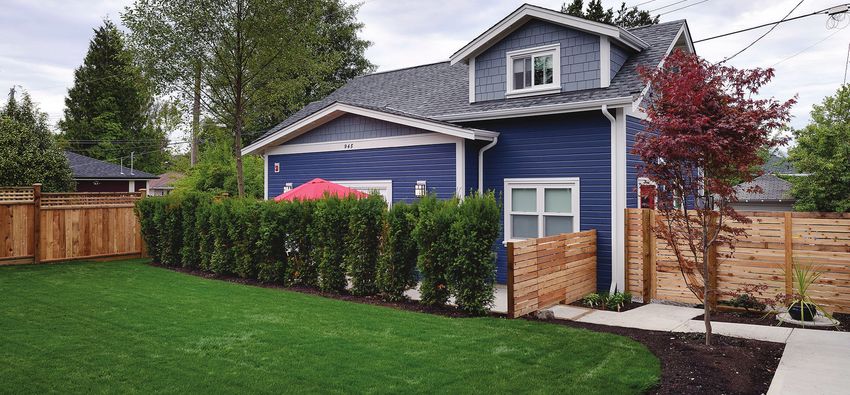
How-to Guide
Laneway Houses
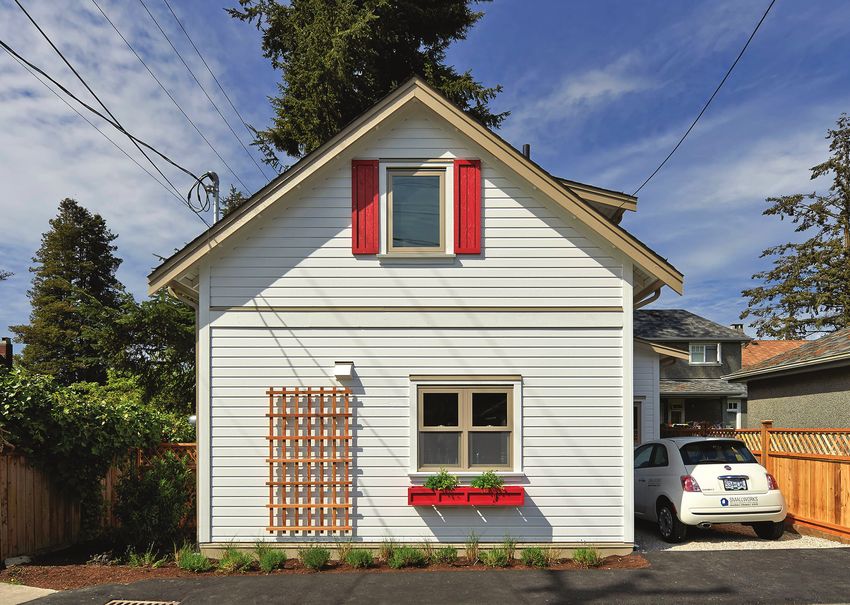
Contents
This guidebook outlines the process of
building a laneway house in the City of
Nelson, whether you are a homeowner-
1 Introduction
What is a laneway house?
3–4
3
developer or a professional builder.
How can you use a laneway house? 4
While this document hopes to capture
2
everything you need to know as succinctly
as possible, it will point to other resources
should you have further questions and
Steps to Get Started 5–8
want to know specifics about your build.
We hope this how-to-guide addresses Is your lot eligible? 5
your questions.
Plan your project 5
Estimated costs 6
Application process 7
Pre-reviewed designs 8
3 Regulations
Maximum lot coverage
9– 14
9
Access 10
Location on the lot 11
Height 12
Size 13
Parking lot 14
Design 14
4 Resources & Contact Information
Bylaws and regulations
15
15
Key forms 15
Contact 15
5 Appendix: Design Guidelines 16–20
How-to Guide to Laneway Houses in Nelson | 2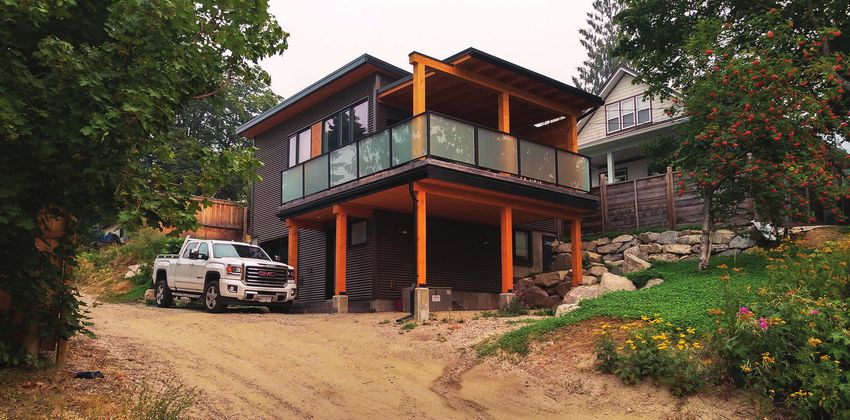
Photo credit: Smallworks

1    Introduction

                           A laneway house is a detached apartment-sized living space of up to 958ft² typically
What is a laneway house?   located in the backyard of a single-family detached house. It does not have to be
                           adjacent to a back lane. You can build a laneway house even if your property does not
                           back on to a lane.

                           To qualify as a laneway house, the space needs to have its own kitchen, bathroom,
                           sleeping and living space; some include garage space but some have no garage or
                           carport at all. Previously, the City of Nelson called laneway houses detached secondary
                           dwelling units.

                               A secondary suite is an additional dwelling within or attached to the
                               principal house.

                                                                   How-to Guide to Laneway Houses in Nelson | 3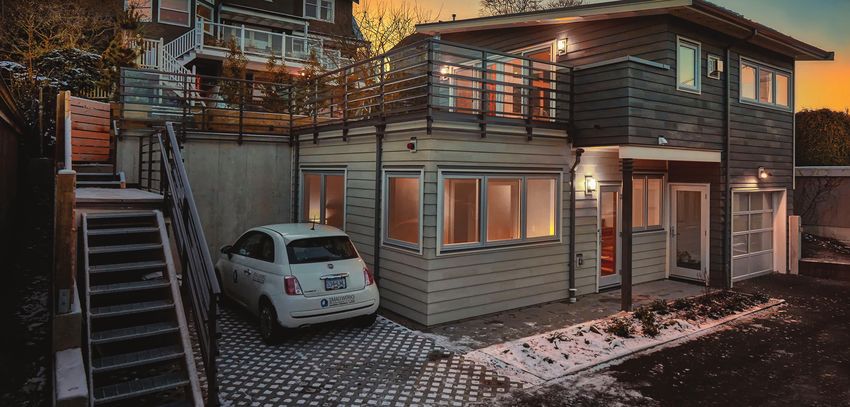
How can you use a laneway house?

   Rent it out to long-term tenants                                  Live in it yourself and downsize
   Rental vacancy rates in Nelson have recently been near 0%,        People looking to downsize find laneway housing an
   making the creation of new rental housing a meaningful way        attractive alternative to moving. Many choose to live in the
   to improve our city’s liveability, while earning additional       laneway house and rent out the primary house, or let their
   rental income.                                                    children and grandchildren live in the primary home. New
                                                                     laneway houses therefore don’t only add laneway houses to
                                                                     the rental housing stock, but entire houses as well.

                                                                     “Aging-in-place” is a term commonly associated with laneway
                                                                     houses. People whose house has too many stairs or other
                                                                     accessibility issues can consider building a more accessible
                                                                     detached dwelling that will allow them to live on their own
                                                                     property. In other cases, people build a laneway house to
   House family or adult children                                    house an on-site caregiver.

   Some use their new laneway house to create a custom house
   for their adult children and their families, or aging parents.
   Sometimes they’ll enter into a co-ownership agreement with
   their children to help them build credit history and equity and
   get them onto the housing ladder. In a tight housing market       Limitations on use
   where locals may be forced to leave the city or even the
                                                                     New laneway houses are not allowed to be used for short-
   region, building a laneway house might make the difference
                                                                     term vacation rentals (for example, Airbnb). Moreover,
   between keeping friends and family in-town or seeing
                                                                     laneway houses cannot be subdivided or stratified, which
   them move away.
                                                                     means you cannot sell it separately. It is an accessory use,
                                                                     meaning that it must be on a lot with a primary house. Think
                                                                     of it as a detached secondary (or basement) suite.
   More information on co-ownership can be found
   on page 6 of this report: www.smallhousingbc.org/
   small-changes-big-gains/

  Photo credit: Smallworks
Introduction                                                                          How-to Guide to Laneway Houses in Nelson | 4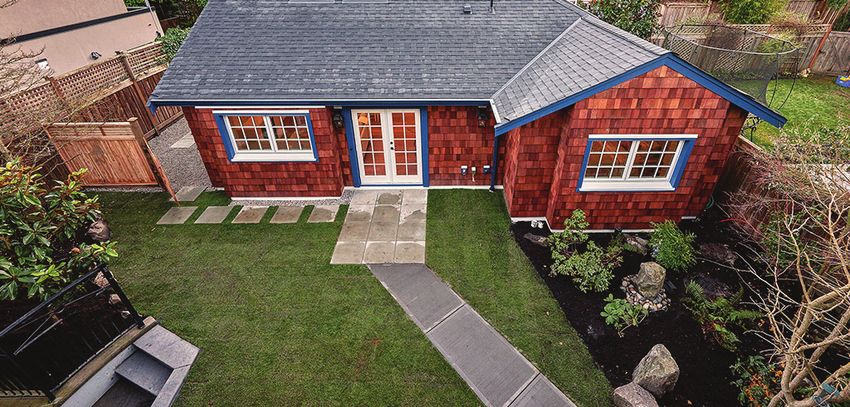
2          Steps to Get Started

                                         Laneway houses are permitted on most residential lots. To determine what zone your
 a. Is your lot eligible?                property is, use our interactive zoning map online at www.nelson.ca/zoning. Each zone
                                         outlines the number of dwelling units you may have.

Zone        Lot size(s)                    Permitted uses

R1          Up to and including 276m²      One single-detached house

            Over 276m² and up to 555m²     Two dwelling units: you can have a house plus either a secondary suite or a
                                           laneway house

            555m² or greater               Three dwelling units: you can have a house, a laneway house, and a secondary suite

R3          Up to and including 278m²      Two dwelling units: you can have a house plus either a secondary suite or a
                                           laneway house

            Over 278m²                     Unlimited density: a laneway house is possible in nearly all scenarios, contingent on
                                           lot coverage restrictions

R6, CD6,    Various lot sizes              Please contact Development Services staff for more details (contacts at the end of
and CD8                                    this document)

                                         Code compliance
 b. Plan your project
                                         When designing your laneway house, ensure your site plan and building plans conform
                                         to all City of Nelson bylaws, as well as the provincial Building Code.

                                         If you are looking into modular housing options, ensure that the model you are interested
                                         in meets the provincial Building Code as well as the minimum width of 4.5 metres and
                                         minimum size of 26m² (280ft²).

                                         Owner-builder requirements
                                         Most laneway applicants hire a professional architect or homebuilder to design and
                                         manage their project. If you are not a licenced builder and want to build your laneway
                                         house yourself, provincial regulations require you to pass the Owner Builder Exam
                                         offered through BC Housing. Even if you intend on subcontracting aspects of the project,
                                         you are required to take the exam. More information can be obtained from BC Housing
                                         at www.bchousing.org/licensing-consumer-services/owner-builder/.

                                         Hiring a designer/builder
                                         You can commission a design by hiring an architect or a residential home designer.
                                         The Architectural Institute of British Columbia maintains a directory that will let you
                                         search by name or city. Visit: aibc.memberpro.net/ssl/main/body.cfm?menu=directory.
                                         BC Housing also has a directory of licensed residential builders: lims.bchousing.org/
                                         LIMSPortal/registry/Licence/.

                                                                                 How-to Guide to Laneway Houses in Nelson | 5
The cost of constructing a laneway house, just like any other house, is highly variable
    c. Estimated costs                             depending on topography, location, design, size, and material choices, which can
                                                   fluctuate over time. In 2017, consultation with local builders provided the following
                                                   laneway construction estimates based on various sizes: $206,000 (475ft²), $219,000
                                                   (700ft²) and $237,000 (900ft²).

                                                   Other post-construction costs to consider:

                                                   • Adding a laneway house will increase the assessed value of your property,
                                                     as would any addition or renovation to your home.

                                                   • As of July 2018, the annual water and sewer utility and waste collection costs are
                                                     $1,171 per year, per dwelling unit, but a laneway house or secondary suite qualifies
                                                     for a 75% discount: the total additional charges for the laneway house are $322.

                                                   Note: costs may change without notice. For up-to-date charges, consult the Fees and
                                                   Charges Bylaw.

  Item                                               Estimated costs as of May 2019

  Water and sewer connections                        No connection charge if there is already a residential dwelling on the property. You
                                                     are responsible for any necessary construction costs to extend the servicing lines to
                                                     the laneway house.

                                                     You may need to upgrade the water line, which is charged at-cost. Contact
                                                     Development Services to inquire about your property.

  Storm sewer system connection                      $1,000, plus construction costs (if applicable). Contact the Engineering Technician
                                                     at Development Services for more information, as there are many site-specific
                                                     considerations.

  Hydro connection (electrical)                      Adding a laneway house may require a service extension; the costs for this are
                                                     highly variable. Contact Nelson Hydro for a quote.

  Gas (if required)                                  $25 and up. Contact FortisBC for a quote.

  Building Permit fee                                Contingent on construction costs. For example, a $200,000 project will entail a fee
                                                     of $1,855, plus a $600 deposit.

  Development Permit fee (if applicable)             $450

  Plumbing permits                                   Costs vary depending on the number of fixtures. For a laneway house cost is often
                                                     between $100 and $150. Contact Development Services for more details.

  Lot consolidation                                  If a new building will straddle an internal lot line, or be constructed within the
                                                     required setbacks of a lot line, even if you own both lots, the subject lots must be
                                                     consolidated. Costs vary, but are often as low as $100. Contact the Land Title and
                                                     Survey Authority of British Columbia.

  Other costs include, but are not limited           Contact a professional for estimates.
  to: construction, design, landscaping and
  parking, plumbing and electrical, engineering,
  land surveying and all other charges not
  mentioned above

Steps to Get Started                                                                         How-to Guide to Laneway Houses in Nelson | 6
You need a building permit for any construction or structural renovation. If you hire a
    c. Application process                        builder or developer, they will often take care of the application process for you. Many
                                                  documents are required at the time of submission, including all building plans, site plan,
                                                  site survey (this requirement may be waived by the City), and BC Housing’s Licensing
                                                  & Consumer Services’ approval (formerly the Homeowner Protection Office). To learn
    If your project requires development
                                                  more about the building permit process, visit www.nelson.ca/162/Building-Permits.
    and building permits, you should count
    on the entire process taking several          Links to key application forms can be found in section 4 of this document. Alternatively,
    months, so be sure to apply well before       you can pick up the forms at Development Services on the second floor of City Hall.
    you intend on beginning construction.
    The development permit means that             Outlined are the first steps in building your laneway house:
    City staff will conduct a more rigorous
    review of your plans to verify alignment
    with the design guidelines. Your laneway          a. Before you apply to build a laneway house, you must obtain approval
    house will not be approved unless staff              from BC Housing’s Licensing & Consumer Services. It provides consumer
    are satisfied that your design meets the             protection for owners of newly constructed homes. For more information,
    City’s design guidelines for laneway houses          visit www.bchousing.org/licensing-consumer-services.
    (see appendix).

    Disclaimer: We do not provide any
                                                         THEN
    guarantees for processing times. Permit
    processing times are highly dependent
    on the season and the number of permit            b. If your laneway house is 5 metres in height or less, you can proceed to apply
    applications we receive. The most                    for a building permit.
    common causes for delays are incomplete
                                                         OR
    applications, plans that do not meet
    Building Code or municipal bylaws, or                If your laneway house is over 5 metres in height, you will first need to apply
    plans that fail to demonstrate compliance            for a development permit (the application fee is $450); only then can you
    with the regulations.                                proceed to apply for a building permit. To learn more about development
                                                         permits, visit: www.nelson.ca/179/Development-Permits.

                                                      What is a development permit?

                                                      A development permit application is a separate application from the building permit
                                                      application and is required only for laneway houses that are taller than five metres
                                                      in height. While a building permit application review only involves ensuring that
                                                      the construction plans meet the requirements of City bylaws and the Building Code,
                                                      a development permit review entails a review of the design and configuration of
                                                      the project to ensure that it aligns with the principles and requirements of design
                                                      guidelines that are part of the Official Community Plan. The development permit
                                                      application is a process that allows for discussion between staff and applicants
                                                      if the plans as submitted do not conform to the design guidelines. Therefore, it is
                                                      important to carefully read through the guidelines prior to preparing your plans. It
                                                      is also a good idea to meet with a planner at Development Services prior to drafting
                                                      your plans.

                                                      City Council opted to require a development permit and design review for laneway
                                                      houses over five metres (the previous height limit), instead of requiring a variance in
                                                      order to allow for two-storey laneway houses.

Steps to Get Started                                                                         How-to Guide to Laneway Houses in Nelson | 7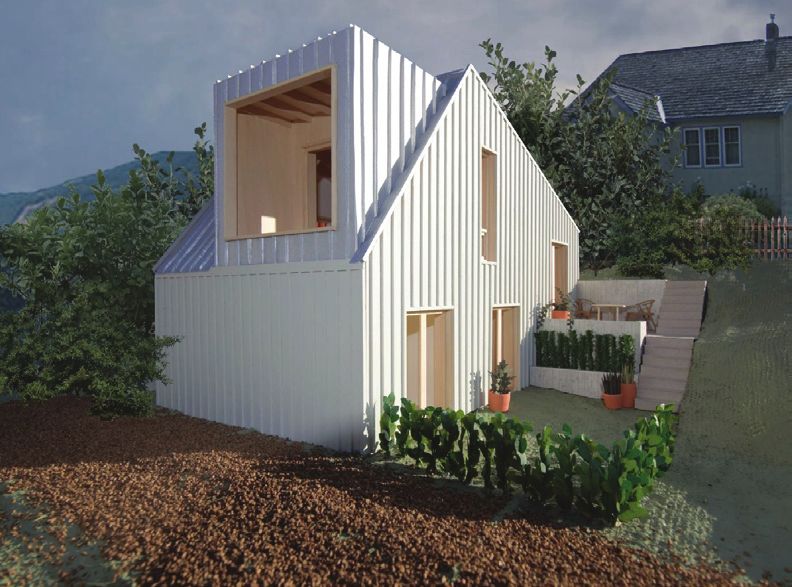
Following the City of Nelson's 2019 Laneway House Design Competition, the City of
          d. Pre-reviewed designs                            Nelson now sells pre-reviewed plans for three different laneway house designs for
                                                             $1,000 plus GST for laneway houses to be built in the City of Nelson. You benefit from a
                                                             quicker application review process, a $450 development permit refund (in certain cases),
                                                             and an award-winning design at a low cost.

                                                             Pre-reviewed designs are only one option. If you want to build a laneway house, you are
                                                             not required to use a pre-reviewed design. You may still submit your own custom design.
The Kootenay Three-Step
553 - 848 square-feet

Nelson Peaks
850 square-feet

The Pica
350 - 462 square-feet (plus 443 sq. ft. basement option)

                        For More Information refer to the City's "Guide to Purchasing Pre-Reviewed Plans", which you can pick up at
                        the Development Services office or download at www.nelson.ca/designcompetition

      Steps to Get Started                                                                            How-to Guide to Laneway Houses in Nelson | 8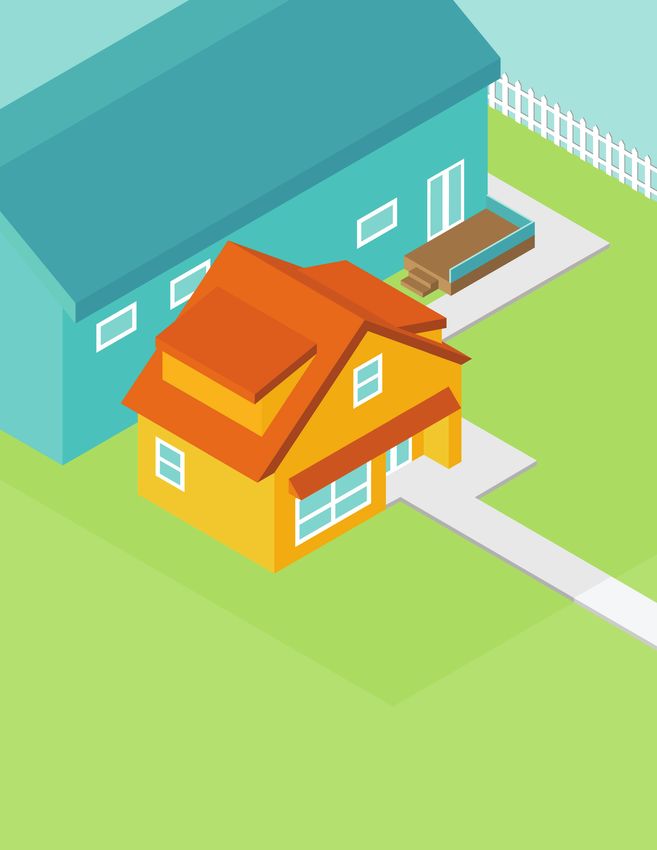
3        Regulations

                                              “Lot coverage” means the area of all buildings and structures (including stairs, porches,
Maximum lot coverage                          balconies, decks, breezeways, and covered exterior open space over 2-feet high) on a lot.

                                                Zone               Lot size                             Lot coverage
Note: The following information is
for the R1 and R3 zones only. Contact           R1                 Under 370m²                          40%
Development Services staff for information
on other zones (see contacts in section 4).                        370m² or larger                      35%
All buildings must be in compliance with
the provincial Building Code.                   R3                 Under 278m²                          45%

                                                                   278m² or larger                      40%

                                                An additional 5% lot coverage may be permitted for the purpose of constructing a
                                                laneway house that does not exceed 4.5m in height.

                                                                                      How-to Guide to Laneway Houses in Nelson | 9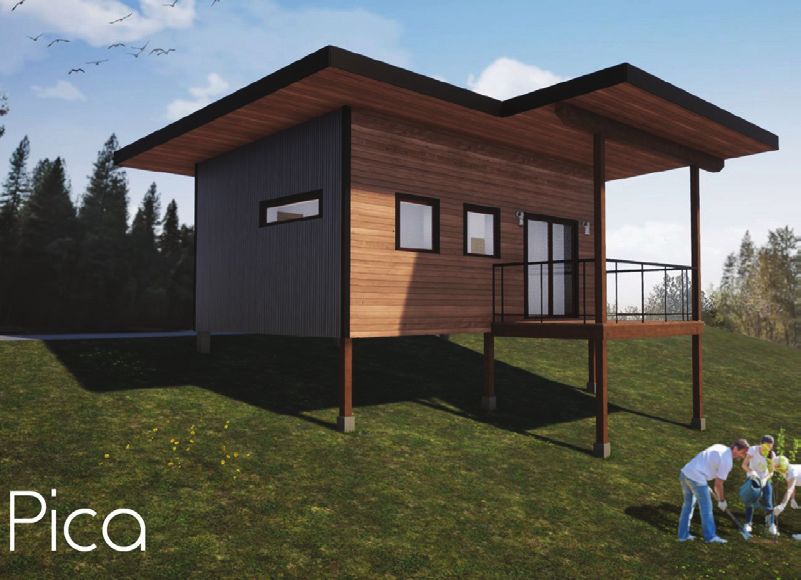
The way you access the lane, by foot or by car, is up to you; you can design your laneway
   Access                    house so that your day-to-day access is primarily from the lane or from the street.

                             Regardless of how you configure your lot, emergency access regulations require that
  Emergency access path      there be an access path from the street at which property is addressed. For example,
                             if your address is 123 Baker Street, there must be a 1 metre-wide footpath from Baker
                             Street to the primary entrance of each dwelling unit.

                             Here are the emergency access requirements:

                                 • The distance required to walk from the front street curb to the primary
                                   entrance of a dwelling unit shall not exceed 45 metres.

                                 • A clear and unobstructed path of a minimum width of 1.0 metre shall be
                                   available and accessible from the street to the entrance of a dwelling unit.
                                   The path shall consist of a hard surface to not delay access by emergency
                                   responders and:

                                     ›› No sudden drop-offs or hedges shall obstruct this path;

                                     ›› Exterior lighting shall illuminate the pathway from the street frontage
                                        to the entrance of each dwelling unit in order to limit the probability of
                                        delays or ineffectiveness in emergency response operations;

                                     ›› If a fence will block the path, there shall be a gate that can be unlatched
                                        from the direction of travel from the street and not have any locks or
                                        require any special knowledge to operate; and

                                     ›› The path shall be maintained and kept clear of snow and debris
                                        throughout all seasons.

                                 • The civic address assigned by the City must be legible and displayed as to be
                                   plainly visible from the street to which the civic address is assigned (and near
                                   the pathway from the street to the laneway house) and at the primary entry
                                   to the dwelling unit.

                                 • A dwelling unit shall have an exterior light at every entrance.

  Photo credit: Smallworks
Regulations                                                         How-to Guide to Laneway Houses in Nelson | 10
A laneway house does not have to be next to the lane, or even necessarily in the
Location on the lot backyard. However, there are minimum setback requirements that stipulate how far the
laneway house must be from each of your property lines.
There are some exceptions for existing non-conforming structures. For example, if you
would like to convert an existing building (such as a garage) into a laneway house, you
may be able to do this even if it is too close to the property lines. Contact Development
Services staff to discuss your situation if this applies to you.
Zone Type Minimum setback
R1 Front lot line 4.5m
Rear lot line 1.5m
Side lot line 1.5m
Side lot line 1m
(if the front lot line is less than 9.2m)
R3 Front lot line 3m
Rear lot line 1m
Side lot line 1m
R1 Minimum setbacks
Regulations How-to Guide to Laneway Houses in Nelson | 11The City of Nelson calculates height from the highest point of the roof
Height down to the average finished ground elevation (grade) at each corner
of the building.
Average finished ground elevation =
Corners (A+B+C+D) ÷ 4
Side elevation Plan view
On the right are the height limits
that apply to a laneway house: Laneway house 5.8m
Above-garage suite 6.1m
A laneway house with parking at-grade
Regulations How-to Guide to Laneway Houses in Nelson | 12The maximum gross floor area (interior living space on all floors) is 89m² or
Size approximately 958ft². Gross floor area excludes crawl spaces, sundecks, carports,
and garages.
The minimum gross floor area is 26m² (approximately 280ft²) and the minimum width/
depth of the building is 4.5 metres.
Generally, the building footprint must be smaller and shall not exceed the greater of:
• 65m² (approximately 699ft²) for a laneway house over 4.5 metres in height,
• 80m² (approximately 861ft²) for a laneway house up to 4.5 metres in height, or
• 8% of the lot area.
In general, this calculation
only benefits exceptionally Note: the maximum building footprint does not include exterior decks.
large properties.
Floorplan credit: Smallworks Ground floor Second storey
Size calculation example:
Building footprint = the area of the ground floor
Gross floor area = the area of both floors
Regulations How-to Guide to Laneway Houses in Nelson | 13In general, a laneway house requires one additional parking space over and above the
Parking parking requirement for the existing house. This parking space must be entirely within
the property lines and conform to the minimum dimensions of 6 metres by 2.75 metres.
In many cases, older homes are not subject to a parking requirement, which means
the property may only need a total of one parking space. To encourage homes in the
Electric Vehicle Charging Requirements R1 zone to have both a laneway house and a secondary suite, the maximum parking
requirement for the entire site is three spaces. There are some exceptions to the one-
At least one parking space must be wired
stall parking requirement, including if there are already two parking spaces on-site and
for 240-volt Level-2 electric vehicle
there is ample street parking available. They can be found in section 7.9 of the Off-Street
charging (EV-ready). This is simply the
Parking and Landscape Bylaw. To learn more about the parking requirements for your
same type of outlet required for a laundry
lot, contact a planner at Development Services (contacts in section 4).
machine, for example. This requirement
adds minimal cost (typically a few hundred
dollars) and allows for easily installation
of an electric vehicle charger in the
future. Doing this wiring at construction is
substantially less than post-construction.
Design Consult the City’s design guidelines for laneway houses (see appendix) and
design your project accordingly. The goal of the design guidelines is to help
you achieve minimal neighbour impact (and thus happy neighbours) as well as
environmental sustainability.
Photo credit: Smallworks
Regulations How-to Guide to Laneway Houses in Nelson | 144 Resources & Contact Information
City of Nelson Zoning Map and Bylaw:
Bylaws and guidelines www.nelson.ca/zoning
City of Nelson design guidelines for laneway houses:
www.nelson.ca/LWH_Guidelines
All bylaws:
www.nelson.ca/bylaws
Building Permits, Development Permits (for laneway houses over 5 metres in height), and
Key forms all other forms:
www.nelson.ca/applications
Development Services
Contact Email: development@nelson.ca
Phone: 250.352.8260
Monday to Friday
8:30am to 4:30pm
2nd floor, City Hall
310 Ward Street
Nelson, BC V1L 5S4
To contact Nelson Hydro:
Online: www.nelsonhydro.ca
Phone: 250.352.8206
This guide was published in September 2018 (updated March 2020) and has been made available
solely to assist potential applicants. It is intended for informational purposes only and it is not
exhaustive of all requirements, fees, and regulations. Bylaws, other regulations, and other information
may change from time to time and the City of Nelson is not obligated to update this document and
does not guarantee the accuracy or completeness of this document, nor for the content of external
links. In all cases, the City’s standing bylaws prevail. This document presents a summary of key
information from these bylaws, and may not be comprehensive of all applicable bylaws. It is the
property owner’s responsibility to ensure that they are in compliance with all bylaws.
How-to Guide to Laneway Houses in Nelson | 155 Appendix: Design Guidelines
5.1 Laneway houses
a. Applicable Area
A development permit is required in all areas of the City of Nelson for a laneway
house over five (5) metres in height. Nonetheless, developers of all other laneway
houses will be provided with the following design guidelines in order to ensure
the success and quality of laneway housing in Nelson.
These guidelines apply to the laneway house and the property containing the
laneway house, and not the principal house.
b. Application Requirements
The applicant for a laneway house development permit must justify how the
project design complies with the following principles:
i. Design the laneway house to be a good neighbour by minimizing impact on
neighbouring properties’ sunlight, views, and privacy by minimizing shade,
shadow and overlook onto adjacent properties. Respect the rhythm, scale,
and height of the existing streetscape. The proposed setbacks of the laneway
house and the lot’s slope represent a major consideration in the design
review process.
ii. Design buildings for durability, sustainability, and other objectives of the City’s
Official Community Plan.
iii. Incorporate design elements that create visual interest and variety, respect
natural topography, respect the architectural rhythm of the neighbourhood,
and consider preservation or enhancement of trees and vegetation.
Plans must demonstrate:
i. the location of all buildings and structures;
ii. the proposed siting of parking areas;
iii. the extent and nature of existing and proposed landscaping;
iv. the proposed exterior finish, materials, and colour of buildings and roofs; and
v. the proposed locations of all exterior lighting.
You should discuss the proposal with your neighbours before applying for a
Development Permit. Their input and perspective can help you develop a better
design. If applicable, illustrate where you have taken neighbours’ concerns or
input into account.
Schedule H—City of Nelson Official Community
Plan Bylaw No. 3247, 2013 Development Permit
Area – Design Guidelines (Page 102)
How-to Guide to Laneway Houses in Nelson | 16c. Neighbourhood Fit and Minimal Neighbour Impact
Roof and Building Envelope
Buildings shall minimize the amount of shadow cast on to private open space and
buildings of adjacent properties.
On steeply sloping sites, the views from adjacent properties should be respected
by adapting the scale, massing and location of the laneway house to follow the
topography and natural features of the site.
Rooftop outdoor space is generally prohibited to protect privacy of neighbours.
Rooftop decks may be considered, particularly for single-level units, if it can be
demonstrated how opportunities for overlook can be avoided.
Façades
Windows must be designed to respect privacy and reduce overlook onto
neighbouring properties.
• Clear eye-level windows are permitted on the lane side (if applicable) and
facing the street and may be permitted on portions of the building that can be
demonstrated not to impact privacy or create overlook on existing or future
neighbouring site development. Exceptions for windows oriented towards
adjacent properties may be considered if design features are provided that
mitigate privacy concerns. For example, windows with opaque glass that
permit light into the laneway house but prevent overlook into adjacent yards,
or other design solutions may be acceptable.
• Upper level windows facing the interior of the property and side yards should
be modestly sized.
Upper-level decks and balconies are permitted on exterior side setbacks and
on elevations facing the lane. It must be demonstrated how overlook will be
avoided. Other upper-level deck and balcony locations may be considered where
opportunities for overlook can be demonstrated to be avoided. Second-storey
decks should not face adjacent properties.
All lane elevations, especially those without doors facing the lane, should be
articulated and include design that create a sense of scale and architectural
interest. This could include verandas, porches, planters, window boxes, windows
indicating main living spaces, street address, entry gates, lighting, or cladding
material. Direct connections between indoor living spaces and usable outdoor
landscaped spaces are encouraged.
Create visual interest by providing variations in height and massing as well as
articulation of all façades, including the lane façade. Dormers and building faces
shall not be windowless.
Schedule H—City of Nelson Official Community
Plan Bylaw No. 3247, 2013 Development Permit
Area – Design Guidelines (Page 103)
Appendix: Design Guidelines How-to Guide to Laneway Houses in Nelson | 17Architectural style should complement the design of the principal residence,
but the intent is not to create a “miniature version” of the primary building.
The laneway house must be distinguishable, with a reduced height and scale.
Vinyl siding is not permitted.
Siting
A laneway house shall be sited to minimize shadowing on other properties.
Often, this means on the southern portion of the lot, except where topography or
retention of existing significant trees or landscape prevents this. In placing the
laneway house on the property, efforts shall be made to maximize remaining
open space and usable green space. Buildings should be integrated into natural
slopes and other significant features.
Where feasible, all properties which abut a lane should access the property from
the lane and all parking should be in the rear yard. Laneway houses on a corner
lot should front the side street. Its primary windows, balcony, deck, and entrance
should be oriented toward the street or the lane, where feasible.
Existing trees must be preserved where possible. Removal of any tree due to the
construction of the laneway house must be included as part of the Development
Permit plan. Siting should respect mature trees both on site and on adjacent
properties. This means locating the laneway house so as to minimize impact on a
tree’s root system.
• In the event that a laneway house cannot be sited without adverse impacts
to either mature landscape or shading on adjacent properties, the following
hierarchy of policies apply:
›› Protect mature landscape on adjacent properties.
›› Protect mature landscape on subject property.
›› Minimize shading on adjacent properties. Care should also be taken to
minimize the visual impact on adjacent properties. However, this does
not mean that the laneway house will not be completely unseen from
adjacent lots.
Any noise-generating HVAC systems, such as heat pumps, must be located where
noise will be most minimal for neighbouring properties. Efforts must be made to
muffle any noise for the benefit of neighbouring properties.
Schedule H—City of Nelson Official Community
Plan Bylaw No. 3247, 2013 Development Permit
Area – Design Guidelines (Page 104)
Appendix: Design Guidelines How-to Guide to Laneway Houses in Nelson | 18d. Parking
Parking is required to be accessed from a lane where such lane is developed
or is already used year-round for parking access by a majority of the properties
on the block.
In order to optimize open space, reduce shade and shadowing on neighbouring
properties, and minimize building bulk, uncovered parking and carports are
preferred over garages.
Surface parking spaces shall consist of permeable surfaces such as permeable/
porous pavers, gravel, grassed cellular paving, impermeable wheel paths with
Examples of permeable parking. (Credit: City of ground-cover planting in the centre and sides, or a comparable alternative
New Westminster) satisfactory to the City.
Garage doors must be consistent in quality, materials and details with the overall
design and be partially glazed or incorporate windows in order to enhance the
public realm.
The width of driveways should be minimized and shared between units wherever
possible. Multiple driveways are strongly discouraged and may not be permitted
under the Subdivision and Development Servicing Bylaw.
The presence of garage doors along roadways must be minimized in order
to enhance the pedestrian experience. Where front-facing garage doors are
Garage doors with glazing. (Credit: City of unavoidable, impact on the public realm will be mitigated by:
New Westminster)
a. Designing residential units with enough width to include attractive entrances
and windows between garages; and
b. Providing interior spaces that overlook the street.
If front or exterior side yard modifications are part of the permit application,
parking and driveways shall not occupy more than 50% of the area of the front
yard or, where the site has a flanking side street, not more than 50% of the area
flanking side yard.
A carport or garage shall be wide enough only for one vehicle. Refer to the Off-
Street Parking and Landscape Bylaw for dimensions.
You are encouraged to provide at least one bicycle parking space for each unit.
Bicycle parking should be secure and weather-protected.
Carport being used as a flexible space. (Credit: Ramsay
Worden Architects)
Schedule H—City of Nelson Official Community
Plan Bylaw No. 3247, 2013 Development Permit
Area – Design Guidelines (Page 105)
Appendix: Design Guidelines How-to Guide to Laneway Houses in Nelson | 19e. Landscaping, Energy, and Sustainability
All laneway houses should consider additional current and future opportunities
for sustainable design where possible including:
• Passive solar design integrated into the architecture and landscape design.
• Energy efficient design and internal infrastructure including structural
supports for future solar panels.
• Opportunities for natural ventilation to optimize air quality and reduce
mechanical cooling.
Obscuring evergreen hedges are encouraged on all interior side property lines
and on rear property lines. Define and screen outdoor spaces through the use
of landscaping such as plantings, architectural elements such as trellises, low
fencing or planters, and changes in grade and elevation. All screen and fence
material should be attractive, durable, and contribute to the quality of the
residential landscape design. Chain link fence is not permitted.
Pathway lighting. (Credit: City of New Westminster) Landscape and building design that incorporates rainwater retention, infiltration
and harvesting including rain gardens, permeable surfaces, rain barrels and/
or vegetated swales is required. Redirecting water from drain pipes into
vegetated areas is recommended. The drainage plan must ensure that rainwater
is filtered before entering the municipal system and is not directed onto
neighbouring properties.
Green roofs are encouraged as benefits include reducing stormwater runoff,
improving water quality, reducing urban heat island effect, conserving energy,
creating wildlife habitat, and prolonging the life of the roof membrane. An added
benefit is that the green roof may soften the appearance of the laneway house
from neighbouring lots.
30% of the lot area shall consist of live plant material. The use of indigenous,
drought-resistant plants is highly encouraged. Planting of deciduous trees for
summertime shading is encouraged where feasible.
In areas where slopes are in excess of 30%, the City may require that tree
preservation areas be established to control erosion and/or protect banks. The
City may require that works be constructed to protect vegetation where there is a
desire to preserve significant or landmark trees or where concern may be created
by the development of the land.
Carefully considered exterior lighting creates safe, welcoming, and clearly
identified building entrances, lanes, and access pathways. Lighting is also
required for emergency access. Lighting shall be down-cast and is also expected
to be energy-efficient LED, non-glare, and neighbour-friendly. “Warm colour
temperatures” ranging from 2700K to 3000K are recommended.
A 0.6m landscaped setback between the laneway house and lane should be
provided, except where there is parking.
Schedule H—City of Nelson Official Community
Plan Bylaw No. 3247, 2013 Development Permit
Area – Design Guidelines (Page 106 –107)
Appendix: Design Guidelines How-to Guide to Laneway Houses in Nelson | 20Tracy Ly (tracyly.com)
Development Services Monday to Friday
Graphic design by
8:30am to 4:30pm
2nd floor, City Hall
310 Ward Street Email: development@nelson.ca
Nelson, BC V1L 5S4 Phone: 250.352.8260
How-to Guide to Laneway Houses in Nelson | 21You can also read


