Heritage Caledon Walking Tour Series Bolton Tour - west side of village
←
→
Page content transcription
If your browser does not render page correctly, please read the page content below
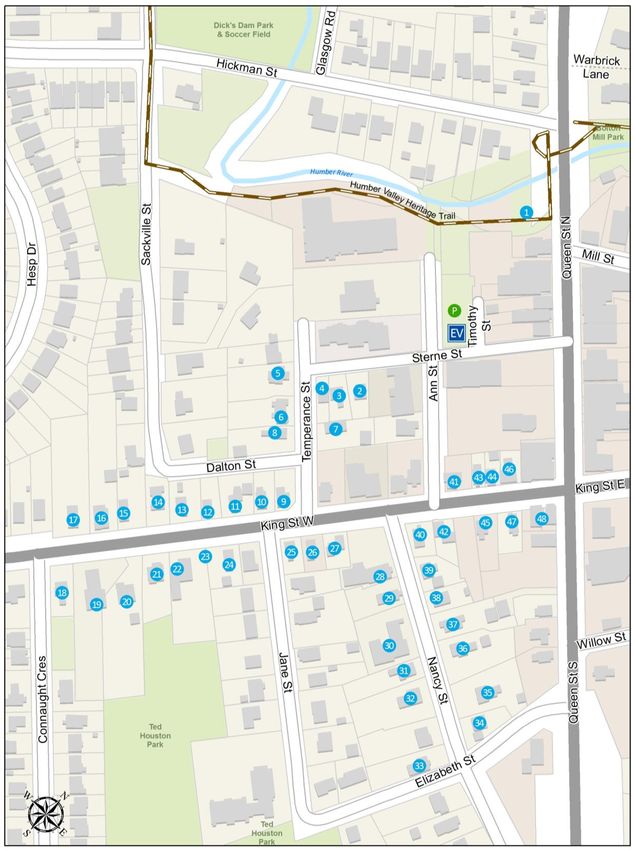
Heritage Caledon Walking Tour Series
   Bolton Tour – west side of village

 Electric Vehicle Charging Station
                                     Please respect private property
                                                                       Last Updated: May 13, 2021.
                                              Page 1 of 11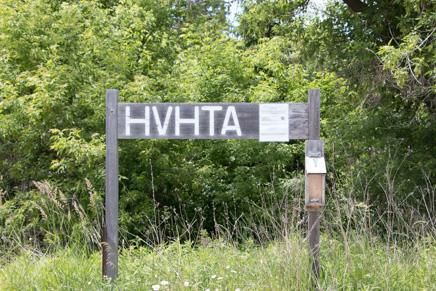
The land which forms the Town of Caledon is part of the Ajentance Treaty Lands and Territory of the Mississaugas
of the New Credit. We acknowledge all the indigenous people who have walked this land in the past and who walk
it today. We are grateful to have the opportunity to live and work on this land, and by doing so, we give respect to
                                                  our first nations.

                                     * Designated under the Ontario Heritage Act

1                                    Humber River Heritage Park                Kiosk: Early Bolton Industry
                                     This kiosk is standing on land reclaimed from the river in the early
                                     1960s when the sharp bend in the Humber River was removed. The
                                     river was shifted closer to Hickman Street to prevent ice jams from
                                     forming under the bridge. The Humber was designated as a
                                     Canadian Heritage River in 1999.

1b                                   Humber River Heritage Park      Plaque: Bolton Agricultural Works
                                     This commemorative plaque details the history of William Dick’s
                                     foundry.

2                                    48 Sterne Street       William Buist House                  circa 1884
                                     This red brick Edwardian Classical style house was likely built by
                                     George Watson for William Buist, who moved here after selling the
                                     saw and woollen mills in Glasgow which he and his brother had
                                     operated for 20 years. Buist retired in 1906 and sold the house to
                                     George Nunn who was an agent selling Heintzman pianos, sewing
                                     machines and Dominion & Bell organs. Note the turned woodwork
                                     on the wrap-around verandah as well as limestone trim.

3                                    52 Sterne Street         Victorian Gothic cottage          circa 1870s
                                     This 1½ storey Ontario Cottage has the characteristic centre entry
                                     flanked by symmetric windows and arched window in the centre
                                     gable. The exterior is clad in wood. The shutters appear to be
                                     original and are functional rather than merely decorative. Note the
                                     clear etched glass in the transom light over the door. In the 1940s-
                                     50s this was the home of Ken and Sarah Devins.

4                                    56 Sterne Street       Edwardian Classical Style             circa 1900
                                     This ‘four square’ red brick house is built in the Edwardian Classical
                                     style, characterized by an asymmetric floor plan, attic dormer
                                     window, full front verandah with classical column supports and
                                     pyramidal hipped roof. For many years into the 1960s, it was the
                                     home of Mrs. Alice Goodfellow and her twin sister Miss Monkman.

                                                   Page 2 of 11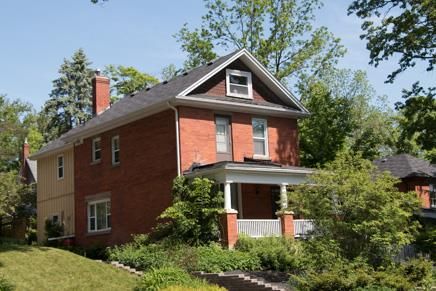
5    34 Temperance Street *Shore-Nease House                       circa 1872
     This Victorian Gothic house was built by Henry Shore using red and
     yellow brick in a style typical of an urban village setting. The trillium
     patterned fretwork on the decorated wooden porch has been
     repeated on adjacent buildings. From 1892-1969, it served as office
     and surgery to Bolton doctors, including Dr. Lepper, Dr. A. Jackson,
     Dr. Graham and Dr. Taylor.

6    24/26 Temperance Street Worker Flats                      mid-1880s
     This Victorian Gothic duplex was built for harness maker David
     Pearsy to house workers by Henry Shore. To attract employees,
     local businessmen often needed to provide accommodation.
     Duncan McDermid later became the owner. These apartments
     evolved to rental accommodation and have been well maintained
     over the years.

7    21 Temperance Street Yellow Brick ‘four square’               circa 1900
     This is the only yellow brick house in Bolton and its pink mortar is
     equally unique. It is built in the Edwardian Classical style,
     characterized by an asymmetric floor plan, pyramidal hipped roof
     and attic dormers on the north and east side. The front verandah
     would originally have been open on all sides. Note the broad, flat
     sandstone lintels above all the windows. This was the home of
     Jabez Wakely, a former farmer who retired to Bolton.

8    20 Temperance Street Duncan McDermid House                  circa 1885
     This 1½ storey Victorian Gothic house, with its detailed red and
     yellow brick patterning was built for Duncan McDermid by Henry
     Shore. It originally had a highly decorative front verandah. From
     1890 until his death in 1905, it was the home of John Colborne
     Switzer, a merchant and former owner of the Toronto Hotel (Station
     Hotel). It was later sold to coal and lumber merchant, village
     councillor John Arnott in 1909. In 1931 Elsie Hardwick bought it.
     Her son Otto managed Bolton’s first pasteurizing plant. BA oil
     dealer Eldred and Hilda Camplin bought it in 1952.

9    63 King Street West Edwardian Classical Style               circa 1900
     This frame house with stucco exterior was built by Joseph Strong
     around the turn of the century. For years this was the home of Mrs.
     Kirby, along with her son Allan, a painting contractor, and his wife
     Margaret Bedell. It now houses professional offices.

10   69 King Street West ‘Four square’ Edwardian Classical circa 1900
     This is the first in a row of red brick homes built by Joseph Strong
     and his sons and it has a characteristic pyramidal hipped roof,
     dormer window and prominent full verandah. C.C. Case, manager of
     the Imperial Bank of Canada branch, lived here until 1930. As it was
     visible from the bank steps, bank staff could watch for him to leave
     before scampering inside to take their posts. Dr. Wylie lived in it
     when he came to Bolton in 1932. It now houses professional offices.

                   Page 3 of 11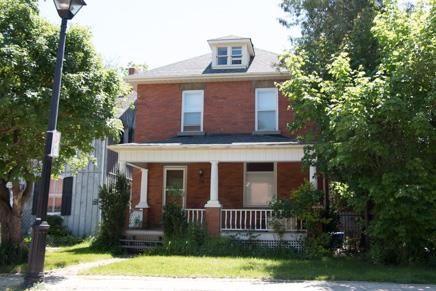
11   75 King Street West Joseph Strong House                     circa 1894
     This ‘four square’ Edwardian Classical house was built by Joseph
     Strong for his family. Strong operated a harness making shop by the
     bridge on Queen Street North before becoming a bricklayer/builder.
     With his sons, he built the row of red brick homes on the north side
     of King Street west of Temperance Street, in the period from 1910-
     12. His son Stephen inherited this house in 1922. Later owners
     included Charlotte Dick in 1934, Wallace and Sarah Elliott in 1946.

12   81 King Street West Hannah E. Jaffary House                 circa 1911
     This ‘four square’ Edwardian Classical style house was built by
     Joseph Strong. Hannah E. Jaffary, a former teacher, lived here with
     her relatives, the Smiths, who owned it. She was appointed as the
     village librarian and was a very active member of the Women’s
     Institute. Bert and Lillian Allengame, who operated ‘Bolton Florist’,
     lived here into the 1960s. It now houses professional offices.

13   85 King Street West W.A Caldwell House                     circa 1911
     This Edwardian Classical home was built by Joseph Strong for
     William Caldwell, manager of the Bolton Telephone Company, who
     lived here until 1922. Ernest Beamish, owner of the Beamish
     Butcher store then purchased it, and in 1942, it was inherited by his
     daughter Lenna and her husband Ernest Wilkinson. They were
     followed by Jennie and Ernest Stewart in the 1960s. The front
     verandah was originally open. Note the decorative shingling in the
     attic.

14   91 King Street West Simpson House                        late 1890s
     This Edwardian Classical home was built by Joseph Strong for Mr.
     Simpson. Several years later Simpson severed the south side of the
     lot where #85 was then built. Former owners of this property
     include Mrs. Mabel Roadhouse, Donald and Jean Smith in the 1960s,
     then Bill and Sandy Wilson until 1981. The current owner built the
     board and batten front addition. Note the two magnificent bur oak
     trees in front of the house.

15   99 King Street West W.A. Jaffary House                     circa 1911
     This Edwardian Classical style home has a decorative frieze across
     the full verandah which is supported by classical columns. It was
     built by Joseph Strong for Wyatt A. Jaffary, who operated Jaffary’s
     store at the NE corner of King/Queen Street. It later became the
     home of Orland and Gertrude Downey in 1938. Orland, a local
     businessman, was Bolton Reeve. One of their five daughters, Edith,
     lived in it until 2006.

16   105 King Street West Edwardian Classical House             circa 1911
     This red brick house has the characteristic pyramidal hipped roof
     and prominent verandah with classical column supports. Mr.
     McKinley lived here in the 1940s, followed by Ross and Gladys
     Elliott. The current owner, who grew up down the street, has lived
     here since 1992.

                  Page 4 of 11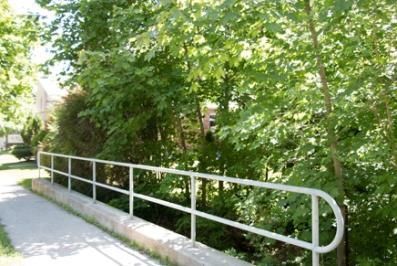
17   113 King Street West David McKinley House                    circa 1911
     David McKInley grew up in and around Bolton and in the early 1890s
     headed to the US to pursue his career. He succeeded, took an early
     retirement and returned to Bolton. He picked this very deep lot
     rising above Bolton for this red brick Edwardian Classical style house
     which Joseph Strong built. Note the decorative verandah frieze and
     shingled attic window surround. John and Mary McKinley inherited
     the house in 1930; later owners include the Keyes and the Nelsons.

18   118 King Street West Hannah J. Jaffary House                circa 1900
     This Edwardian Classical red brick house was the first house built by
     Bill Black in Bolton. It was owned by Wyatt Jaffary’s daughter
     Hannah and was listed for sale in 1911 in Lincoln Hutton’s booklet
     ‘Bolton, Beautiful and Bountiful’. Jaffary’s Creek, named after
     Hannah’s family, runs behind it.

19   110 King Street West Caven Presbyterian Church             circa 1875
     This landmark Victorian Gothic church was built in 1875 by George
     Watson, Master Builder. The inaugural service was conducted by
     Reverend Caven, Principal of Knox College at the University of
     Toronto, after whom the church was named. The red and yellow
     brick is local from Norton’s Brickyard. Note the magnificent spire
     and beautiful entry doors with the gothic window above.

20   102 King Street West Presbyterian Manse                     circa 1885
     This large Victorian Gothic home was built by George Watson for the
     Presbyterian minister and family. The red and yellow brick used in
     the house is local from Norton’s Brickyard. Note the contrasting
     brick patterning details. Jaffary’s Creek runs behind the house.

21   96 King Street West        Coventry Cottage             date unknown
     This house was reportedly built as a cottage in the nearby hamlet of
     Coventry, later moved here and placed on a new foundation. While
     the addition on the west side is recent, the carefully restored wood-
     shingled front porch with decorative trim is original to the house.
     The owner’s mother grew up here and recounts stories about floods
     and living in the vicinity of Jaffary’s Creek. The owner’s
     grandparents, school principal A.P. and Euloine Rowe, lived here
     into the 1970s.

22   88 King Street West Byron Leavens House                     early 1920s
     This 1½ storey brick Craftsman style bungalow was built for Byron
     Leavens, son of ‘The Enterprise’ owner Frank Leavens. Leavens
     served in France in WW1 and as Postmaster in Bolton from 1927
     until 1945. He had just built a new post office building at 29 Queen
     Street North when he died unexpectedly. His wife Mary became
     Postmistress until 1947 and she remained here until the house was
     sold in the early 1960s.

                  Page 5 of 11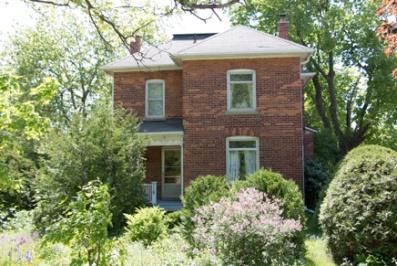
23   Jaffary’s Creek originates as a stream west of Coleraine Drive where
     modern containment ponds now divert most of its flow. But springs
     and run-off continually feed the creek bed east of Station Road. This
     allows the creek to flow behind homes on the south side of King
     Street West and through concrete culverts beneath the ‘Royal
     Courtyards’ to where it exits into the Humber River below the
     McFall Dam. In the past, the south riverbank kept the mill pond high
     to power the mill but prevented the creek from draining, causing
     frequent flooding in the village core.

24   78 King Street West Daniel Mabee House                       circa 1920
     This Edwardian Classical style house with its characteristic
     asymmetric floor plan and prominent verandah was built by Bill
     Black for Daniel Mabee, who operated the corner grocery store at
     King/Queen Streets. In 1929, Mabee sold it to William Westlake,
     Agricultural Society President who in turn sold it to Thomas Keyes in
     1942. Harold Egan, partner in the Egan Funeral Home and Egan
     Brothers’ Store, and his wife Mary lived here from 1947 to 1971.

25   64 King Street West Noble House                              circa 1895
     This frame Victorian Gothic style cottage was the home of Eliza A
     Noble, widow of Christopher Noble, and their three daughters,
     Mary, Ethel (Elizabeth Ann) and Daisy (Alexandria Victoria) who
     inherited the house in 1908. Mary and Daisy were dressmakers, and
     Ethel trained as a visiting nurse. It was Ethel and Daisy’s home until
     they were both in their late 80s. Note the beautiful porch fretwork.

26   58 King Street West          Greenwood House               early 1920s
     William Greenwood and his wife Olga Robinson lived in this 1½
     storey Craftsman style bungalow from 1922 until the late 1960s. He
     worked at the Imperial Bank of Canada (now CIBC), at the corner of
     King and Queen Streets; he started in 1909 as a teller, served in
     WW1, became bank manager in 1930 at an annual salary of $2500
     and retired in 1948. Their home now houses professional offices.

27   52 King Street West William McKinley House                  circa 1895
     This red brick Victorian Gothic house was built for William McKinley.
     It remained in the McKinley family for several generations, including
     Annie McKinley who lived here until 1936. She is best known for her
     poetry, including a tribute she penned to Laurel Hill Cemetery. The
     house was purchased by grocer William E. Stubbs in 1943.

28   8 Nancy Street          Bolton United Church               circa 1876
     This Victorian Gothic style brick church was built by George Watson
     for the Wesleyan Methodists. The church cost $6000 to build, and
     $6823 had been raised by the end of the opening day services
     leaving the congregation debt-free. After church union in 1925, it
     became Bolton United Church. For safety, the original spire was
     removed in the 1926. A Sunday school wing was added in 1978.

                  Page 6 of 11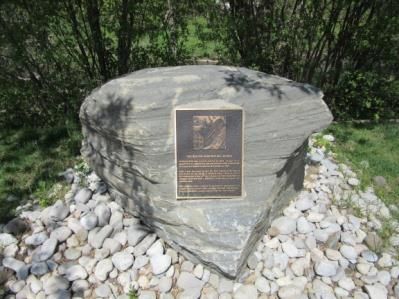
29   16 Nancy Street          *Masonic Hall                      circa 1876
     Members of True Blue Lodge #98 built this frame building. In 1889,
     they added beautiful carved furniture and improved the interior.
     The striking quality, design and colour scheme of the ceiling
     wallpaper, hung by an itinerant paperhanger, makes it an
     outstanding example of late Victorian design. In 1894, the building
     was raised for a new foundation and basement. Brick cladding was
     added in 1903 and a new entrance, columns and railings in 1973.

30   22 Nancy Street         Christ Church Anglican            circa 1874
     Christ Church was built on property donated by James Stork, a local
     seed and grain merchant. Nancy Street was named after his
     daughter. The brick church replaced earlier mud-brick and frame
     structures. Since 1874, the church has undergone several
     renovations, including the 1959 parish hall addition. When the
     Sanctuary was enlarged in 1986, the original bricks from Norton’s
     brickyard were re-used on the extended wall facing the street.

31   34 Nancy Street         Charles Watson House               circa 1886
     This Edwardian Classical style brick house has the characteristic
     pyramidal hipped roof with front dormer window. It was built by
     George Watson for his brother, Charles Watson. Charles, a
     stationer, lived here until 1914 when his widow Sarah inherited it.
     Erie Kaake lived here from the 1940s to 1977; it had a working
     outhouse until the 1950s. The house was restored by a local resident
     in the late 1970s ‘to keep up the neighbourhood’.

32   38 Nancy Street         George Watson House                circa 1873
     This seven room Victorian Gothic brick house, with its long front
     verandah, was built by George Watson in a cross-like shape which
     gave all main floor rooms three exterior walls. Watson, wife
     Margaret Bell, and children Minnie, Eva and Fredrick lived here until
     1888 when it was purchased by the Methodist congregation as
     manse. The Watsons moved to Toronto where George continued
     his career as a house builder. After church union in 1925, Bolton
     United’s members retained it as their manse. It has been privately
     owned since 1997.

33   56 Nancy Street         Ontario Cottage                     mid-1870s
     George Watson acquired this property in 1873 and likely built this
     house shortly thereafter. Ted Wand, who ran ‘Master Meat Market’
     on King Street East, owned it from the 1940s-mid 70s, followed by
     Thelma and Allan Einboden. For years, the original brick exterior
     was hidden beneath aluminum siding. With its removal in 2015 by
     the building’s new owner, this classic red brick cottage has emerged.

34   51 Nancy Street                                        Built in 1945
     Harris and Jemina Hudson were the first owners of this corner
     house, followed by Laura and Robert J. Rutherford in 1954.

                  Page 7 of 11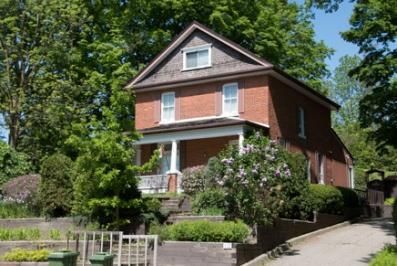
35   45 Nancy Street          *Joseph Watson House                  circa 1885
     This Victorian Gothic style house was built by George Watson for his
     older brother Joseph, who retired to Bolton in 1888 from
     farming/carpentering in King Township. The house displays a higher
     degree of detailing than others of this style with elaborate
     patterned fretwork, drop finials and patterning created with the
     local red and yellow brick. It is similar in design to 83 King Street
     East, also built by Geo. Watson. Joseph lived here until 1920. The
     owners since have carefully preserved it.

36   31 Nancy Street          *George Smith House                  circa 1884
     This Italianate style home was built by George Watson for Margaret
     and George Smith. The red and yellow bricks were locally made and
     its exterior architectural features and beautiful enclosed porches are
     original. Smith, a sign painter and letterer, sat on the first village
     Council and was noted for his very realistic interior faux-wood
     graining. Erie Smith Schaefer inherited the house in 1933, living
     here with her husband Alex of ‘Smith & Schaefer’ Hardware.

37   25 Nancy Street          *Alice Goodfellow House            circa 1884
     This 1½ storey Victorian Gothic home was built by George Watson
     for Alice Goodfellow using local red and yellow brick. The end gable
     patterning and the enclosed front porch are excellent examples of
     late 19th century urban architecture. Alice’s sister Margaret Smith
     lived next door. On Alice’s death in 1901, her brother-in-law Albion
     farmer James Goodfellow and his wife Marion retired here. It was in
     their family until 1999.

38   19 Nancy Street          Edwardian Brick Cottage             circa 1915
     This small, single storey version of an Edwardian Classical style
     house has characteristic features including an asymmetric floor plan
     and front verandah with classical column supports as well as the
     flush end gable window. It is from the same period and has similar
     style features as the two storey red brick homes on the north side of
     King Street West.

39   11 Nancy Street          Dr. Stewart House                 circa 1887
     This Neoclassical style house with its beautiful doorway was built
     using local red and yellow brick by George Watson for Sandhill-born
     Dr. Robert L. Stewart. Stewart moved to Toronto in 1911. James
     Ruston bought it, passing it on to daughter Minnie and husband
     John Harper in 1929. John grew up in Bolton, worked at Norton
     Brickyard and then made a 53 year career working at the Schaefer
     Hardware Store on Queen Street North, retiring in 1955.

     Tour continues on the south side of King Street West referencing
     houses on both the north and south side

                   Page 8 of 11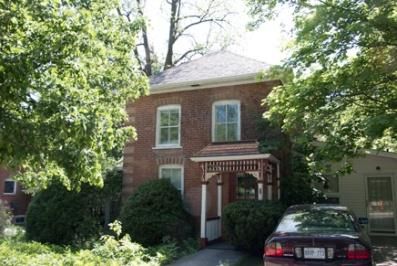
40   32 King Street West Schaefer House                        circa 1932
     This frame house was built by Fredda and Bert Schaefer using
     lumber salvaged from a house they tore down in the nearby hamlet
     of Castlederg. To the rear is an addition from the 1950s. Bert
     Schaefer owned ‘Schaefer Hardware’ on Queen Street North.

41   23 King Street West Dr. Bonnar House                        circa 1884
     Dr. Bonnar and his wife Margaret came to Bolton in 1870. He first
     practiced in a frame house that was later sold and re-located.
     George Watson built this red and yellow brick Victorian Gothic
     office-residence in its place. Dr. Bonnar’s name is etched in the
     transom glass above the front door. He served on the village
     Council, School Board, Library Board and Cemetery Board, and was
     coroner of Peel County for many years. The Bonnars’ daughter Mrs.
     Mary Frampton lived here until 1952.

42   28 King Street West Neoclassical House                       pre-1891
     This Neoclassical style frame house is visible on the 1891 Goad
     insurance map. The Shaws purchased it in 1910 and dressmaker
     Mary Shaw remained here until the mid-1970s. It now houses
     professional offices.

43   15 King Street West Walford Cottage                         early 1860s
     This early cottage was inherited by Samuel A. Walford in 1867. By
     the 1940s, it was home to Dr. William R. Richardson, a WWII dentist,
     and his wife Velvin Potter, whose sister Eulalia Potter Elliott lived
     next door at #11.

44   19 King Street West Ontario Cottage                        early 1880s
     This cottage, visible on the 1891 Goad insurance map, replaced a
     1850s post office run by postmaster Samuel Walford. It was the
     home of Mrs. Dean for many years and she raised 20 or 21 foster
     children. Farmer Issac Taylor retired here in the 1960s, followed by
     Mrs. Stewart Cameron whose son Bruce ran ‘Cameron’s Store’ at 49
     Queen Street North.

45   20 King Street West Banks House                                pre-1891
     Albion-born Ann Jane Corless and her husband Alexander Banks and
     their four children lived in this red brick Victorian Gothic house from
     the late 1880s until they moved to Toronto around 1910. Daniel and
     Alice Henderson, also born in Albion, were married in 1902 and
     moved into the house in 1914. Dan worked for Beamish Butchers
     for some 50 years. Daughter Olive, a member of the women’s 1925
     All- Ontario softball championship team, lived here until 1997.

                  Page 9 of 11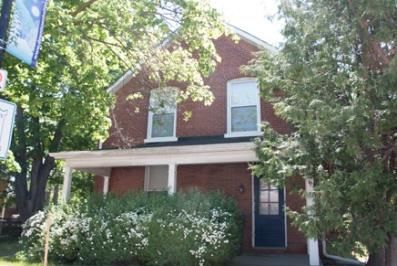
46    11 King Street West T. D. Elliott House                     circa 1884
     This Victorian Gothic house was built by George Watson using local
     red brick with yellow brick trim for Thomas D. Elliott’s marriage to
     Helen Evans, daughter of ‘Squire’ George Evans, Queens Hotel
     owner and local magistrate. T.D. became Innkeeper, managing all
     hotel operations including stables and the successful stud business.
     Later, son Elwyn ‘Jacky’ and his wife Eulalia Potter lived here until
     Eulalia’s death in the 1990s. The house was re-bricked in 2008.

47   12 King Street West ‘The Castle’                            mid-1870s
     A rare example of the Second Empire style with its mansard roof and
     square projecting bay, this house was built for Ann Roberts. In
     1893, ownership passed to her son William L. Roberts and from him
     to Margaret Jane Osburn in 1907. Olga and Wesley Strong and their
     son Charlie lived here until 1923 when Wes’s health failed. Charlie,
     a legendary storyteller, died in 2018 at 100. In the early 1940s,
     Hayhoe Brothers who then operated the Bolton Flour Mill, housed
     their mill manager Percy Gee and his family here. Margaret Dickson
     purchased the house in 1948 and left it to her daughter Pearl and
     husband Lee Morrison who raised eight children here.

48   6 King Street West      Barber Shop                        circa 1900
     This building has been a Barber Shop for close to a century. From
     post WW1 until the late 1960s, it was Bill McCabe’s shop. It became
     John’s Barber (John Guaragna) Shop from 1969-79 and since then
     has been Carmine’s Barbershop, first operated by Carmine and now
     by his son-in-law.

49   Humber Valley Heritage Trail entrance
     The Humber Valley Heritage Trail Association is a volunteer group
     which has accepted responsibility for developing and maintaining a
     pedestrian trail through the Humber River Valley from the Trans
     Canada Trail on Humber Station Road near Albion Hills Conservation
     Area in the Town of Caledon, through Bolton, to Binder Twine Park
     in Kleinburg in the City of Vaughan.

                  Page 10 of 11
Early Bolton History Timeline
▪ 1819: Albion Township survey is completed by Chief Surveyor James Chewitt.
▪ 1819: Chewitt is paid with 2535 acres of land in Albion which includes several mill sites.
▪ 1819: James Bolton receives land grant for 100 acres in Albion, about 7 km NE of what is now Bolton.
▪ 1821: George Bolton purchases Chewitt’s 200-acre mill site along the Humber River.
▪ 1822: George Bolton helped by his older brother James Bolton start building a small grist mill and dam.
▪ 1824: Grist mill starts operating commercially, owned and operated by George Bolton.
▪ 1830: George Bolton provides land for first log school (at Mill Park entry off Lumber Lea).
▪ 1836: George Bolton opens a log store at King Street East and Mill Street.
▪ 1837: James Bolton supports Mackenzie Rebellion, flees to USA in the aftermath and dies there.
▪ 1840: Mr. Pexham builds a tannery and house along the Humber River on the north side.
▪ 1840: Bolton has 14 log buildings, two blacksmiths, two shoemakers, a tailor and a hotel.
▪ 1842: A mudbrick school is built on King Street East near David Street. Samuel Walford is the teacher.
▪ 1842: Primitive Methodist Chapel is built along King Street East. It still stands today.
▪ 1843: Mudbrick Congregational Church is built on the NE side of the river, beside the tannery.
▪ 1843: Mill Cottage, Bolton’s earliest residence, is built. It still stands today.
▪ 1845: James Cupper Bolton buys the grist mill from his uncle George, enlarging it downstream and
builds a sawmill on the original mill site.
▪ 1846: Charles Bolton starts selling building lots along south edge of village, now King Street East.
▪ 1847: George Evans, a shoemaker, builds a large brick hotel called ‘The Exchange.’
▪ 1848: Mudbrick Anglican Church is built with consecrated burying ground.
▪ 1850: Downstream grist mill is enlarged again as demand for flour continues to grow.
▪ 1850: James Cupper Bolton builds a general store on Queen Street near Mill Street.
▪ 1852: Large brick commercial building is started at NE corner of Queen/King Streets. It still stands.
▪ 1854: Surveyor T. C. Prosser lays out lots and streets, creating Bolton’s first map.
▪ 1854: Matthew Gray starts up his brickyard.
▪ 1855: The grist mill and store are sold to Edward Lawson. In 1860 they are sold to John Gardhouse.
▪ 1869: William Dick starts his foundry business.
▪ 1870: Toronto and Grey Bruce Railway line is built between Weston and Bolton in 14 months.
▪ 1872: Bolton is incorporated as a Village. Lambert Bolton is the first Reeve.
▪ 1874: Large brick school is built by George Watson and named James Bolton Public School.
▪ 1880: Doig Block is built using brick on the west side of Queen Street, north of Sterne Street.
▪ 1881: The grist mill is sold to Andrew McFall. He later builds a grain elevator near the train station.
▪ 1885: Bolton’s men.s baseball team wins the three counties championship.
▪ 1886: Rutherford Block, east side Queen St. N., is built in brick after fire destroys the frame stores.
▪ 1888: J.N. Bolton buys a newsweekly and calls it ‘The Enterprise.’
▪ 1888: First long distance telephone line is installed in Samuel Snell’s drugstore.
▪ 1894: Laurel Cemetery Company is formed.
▪ 1908: Bolton Telephone Company is formed.
A 40th Anniversary Project of Heritage Caledon in 2016
Information courtesy of the Albion Bolton Historical Society
Technical, mapping and heritage support from the Town of Caledon
Page 11 of 11You can also read


