MAKING MATHS STICK END OF YEAR FOUR - WWW.WHIZZ.COM @MATHSWHIZZTUTOR @MATHSWHIZZTUTOR - WHIZZ EDUCATION
←
→
Page content transcription
If your browser does not render page correctly, please read the page content below
Making Maths Stick
   End of year four

    Maths-Whizz account details:

 Username

 Password

            www.whizz.com
            @MathsWhizzTutor
            @MathsWhizzTutor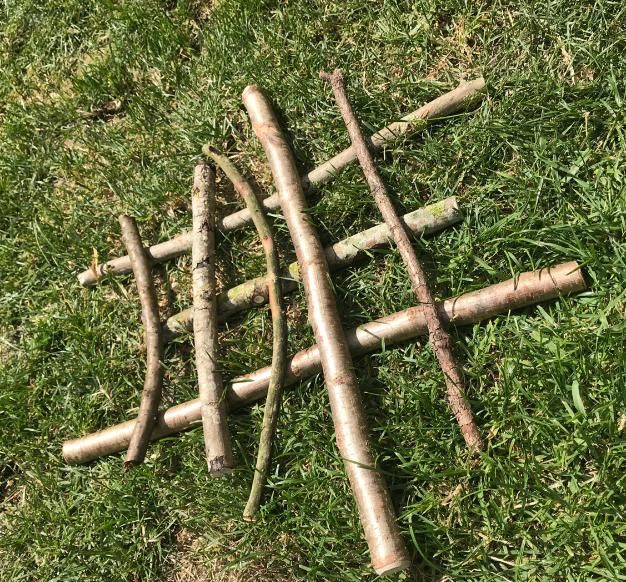
Contents
Introduction . . . . . . . . . . . . . . . . . . . . . . . . . . . . . . . . . . . . . 2

Weekly progression chart . . . . . . . . . . . . . . . . . . . . . . . . . . . 3

Activity one - Counting stick . . . . . . . . . . . . . . . . . . . . . . . . 4

Activity two - Spot the shapes . . . . . . . . . . . . . . . . . . . . . . . 5

Activity three - Crossing sticks . . . . . . . . . . . . . . . . . . . . . . . 6

Activity four - Perimeter . . . . . . . . . . . . . . . . . . . . . . . . . . . . 7

Activity five - Make a 2D shape . . . . . . . . . . . . . . . . . . . . . . 8

Activity six - Rock, paper, maths . . . . . . . . . . . . . . . . . . . . . 9

Activity seven - Mayan numbers . . . . . . . . . . . . . . . . . . . . 10

Activity eight - Equivalent fractions . . . . . . . . . . . . . . . . . . 11

Activity nine - Sticky triangles (Nrich) . . . . . . . . . . . . . . . . 12

Activity ten - Mayan addition . . . . . . . . . . . . . . . . . . . . . . . 13

Activity eleven - Common nim . . . . . . . . . . . . . . . . . . . . . . 14

Activity twelve - Follow the trail . . . . . . . . . . . . . . . . . . . . 14

Resources . . . . . . . . . . . . . . . . . . . . . . . . . . . . . . . . . . . . . 15

Glossary . . . . . . . . . . . . . . . . . . . . . . . . . . . . . . . . . . . . . . . 18
Making Maths Stick
Did you know?                                             We’ve also created a fun activity pack, full of ideas,
                                                          activities and games to bring the maths your children
At Whizz Education, we’ve been examining our live         have been learning at school to life, and all inspired by
learning data which shows that children can lose          the outdoors! The activities and games can be done at
2.6 months' worth of learning when their learning         home, in the local park, the wood, in the garden or
is disrupted for 6 weeks (say, because of the             (when the time is right) when you’re on holiday or
summer holiday or school closures).                       visiting friends.. Our activities involve a wide range of
                                                          engaging, hands-on activities and games. Every
This is known as learning loss and we’ve decided          activity aims to encourage enquiry, creativity and
to do something about it.                                 teamwork in making maths fun.

                                                          Getting started
                                                          Everything you need can be found outdoors or in
                                                          cupboards at home, so you can be creative! For rainy
                                                          days or if you want to (or simply have to) stay indoors,
                                                          you can use paper straws, spaghetti, pencils, beans or
                                                          building blocks. If you’re outside, remind children to
                                                          be kind to the environment - be careful not to disturb
                                                          or damage trees or plants, use what you find on the
                                                          ground instead. And always wash your hands before
                                                          handling food and drinks.

Turning learning loss into learning
gains                                                     What’s in the pack?
We recommend children continue to use Maths-              There are 12 activities, for each year group - have a
Whizz throughout the year, achieving at least 3           look through and you can choose the pack that
Progressions each week (that’s likely to take between     matches the year group your child has just finished or
45 and 60 minutes per week). So, over several             the year group they will join in September. Try to
weeks, not only will children be able to maintain their   complete two a week throughout the holidays.
maths knowledge, they will also make additional
progress as well. For such a small amount of time
each week the gains are huge!                             Connect with us!
                                                          Share what you have been up to with us through
                                                          Twitter or Facebook - just search @MathsWhizzTutor.
Making Maths Stick                                        We will share the best of your posts with our
                                                          followers each week! Most of all, have fun Making
We’ve created a handy chart for you to stick up at
                                                          Maths Stick.
home as a way of tracking the Progressions your child
has made on Maths-Whizz over the coming period.

                                                                                                                      2
Week one

                       Activity one - Counting stick
                     Key skills                                            Activity

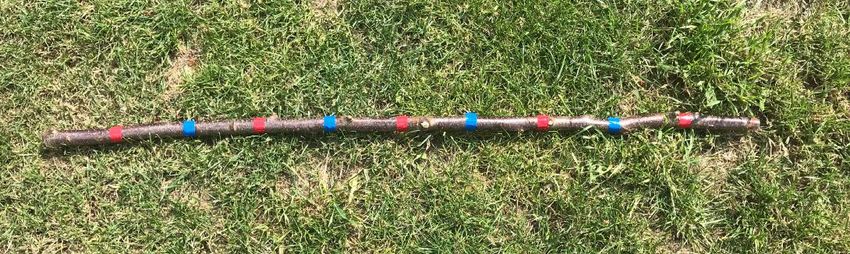
•   To be able to count forwards and backwards       •   Using the resources, make a counting stick (no
    from zero or any given number.                       longer than a metre) and with your child work out
                                                         how to divide it into 10 equal parts.
•   To count in multiples.
                                                     •   Mark each division with a pen, tape or tie string.
                    Have ready                           This is now ready for all sorts of counting.

•   A stick, broom handle or pole at least a metre   •   Each mark/division can represent whatever you
    long, OR...                                          want it to. Point to the division as you count.

•   Draw a chalk line on paving slabs, or even use
    the edge of a table and tape.

                                        For example, you could …

                     Count up and down in tenths or hundredths

                             Recall multiplication facts to 12 x 12

                        Count up and back in fractional amounts

                                                                                                              4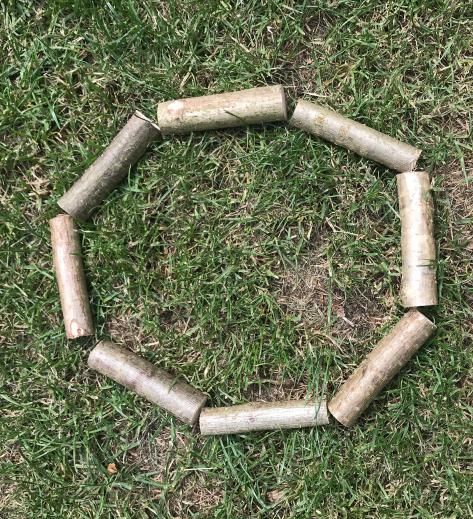
Week one

                    Activity two - Spot the shapes
                    Key skills                                              Activity

•   To compare and classify geometric shapes based   •   Have a look around you and see if you can find
    on their properties and size.                        (and take a photo of) a shape with:

                   Have ready                                 four sides.

•   Yourself.                                                 four equal sides.

•   Possibly a camera.                                        four right angles.

                                                              one pair of parallel sides.

                                                              two pairs of parallel sides.

                                                              line of symmetry.

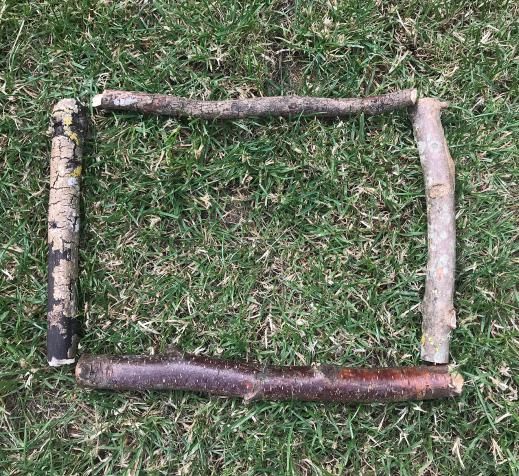
                                                     •   You could make the shapes you see with sticks!

                                                                                                          5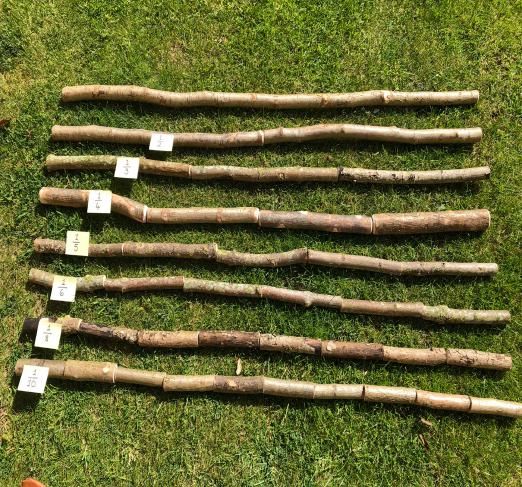
Week two

                      Activity three - Crossing sticks
                      Key skills                          •   Have a go with six sticks.

•   To problem solve.                                     •   Explore different variations.

                      Have ready

•   Sticks or alternatives.

                        Activity

•   Take 8 sticks. You can only place them
    horizontally or vertically to each other.

•   Unless all sticks are parallel to each other then
    sticks placed horizontally will always cross sticks
    placed vertically.

•   For example, with 8 sticks placed like this there
    are 12 places where the sticks cross.

            1
                                       2

                3                      4

                  5                         6

                                           8
                                                          •   How many different numbers of crossings are
                                                              there?
                  7

                                                          •   If all lines are parallel, how many crossing
              9                                               points will there be?
                                       10
                                                          •   What is the next largest number of crossings
              11                       12                     after zero? Can you explain your answer?

                                                          •   What is the largest number of crossings? Can
                                                              you explain your answer?
•   If I changed the direction of some of the sticks
    would the number of crossings change?                 •   Explore for different numbers of sticks.

                                                                                                             6
Week two

                             Activity four - Perimeter
                      Key skills

•   To calculate the perimeter of rectilinear figures.

                     Have ready

•   Sticks or strips of scrap paper.

                       Activity

•   Using sticks/ paper make a shape with the
    perimeter of:

          25cm.

          40cm.

          1
          2 m.

          64cm.

          1m.

•   Can you make other shapes with the same
    perimeters?

                                                         Try making 3, 4, 5 and
                                                         6 sided shapes all with
                                                          the same perimeter!

                                                                                   7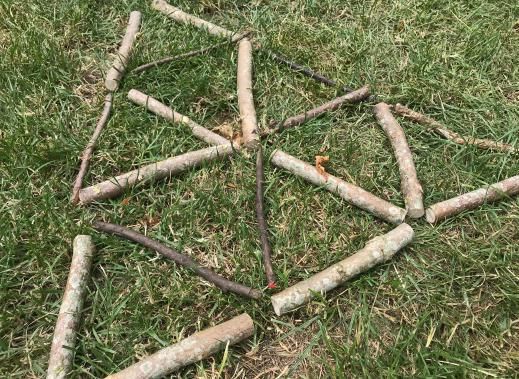
Week three

        Activity five - Make a 2D shape
                                              Key skills

                        •   To make shapes based on their properties and size.

                                             Have ready

                        •   Sticks or alternatives, all the same length.

                                               Activity

                        •   How many hexagons can you make with 18 sticks?
                            How many octagons can you make? What other
                            shapes can you make with 18 sticks?

                        •   Brad makes a rectangle using sticks. How many
                            identical rectangles could he make with 18 sticks.
                            Can you make one rectangle using all 18 sticks?

                        •   Make your own shape, how many sticks did you
                            use?

                                                                                 8
Week three

                   Activity six - Rock, paper, maths
                      Key skills                          •    You can play this game, but another version is
                                                               Rock, Paper, Maths.
•   To practice quick recall of addition and
    multiplication facts.                                 •    Instead of shaping your hands to one of these
                                                               commands this time either using one hand or two
                    Have ready                                 both players show so many fingers.

•   Two players.                                          •    You need to decide whether you are adding or
                                                               multiplying and then calculate the answer using
                       Activity                                the number of fingers shown. It’s the first player
                                                               to shout out the answer.
•   There is a game called Rock, Paper, Scissors. The
    two players after the count of three would shape      •    For example:
    their hand into a rock, paper or scissors at the
    same time.                                            Player 1 holds up 6 fingers

•   For rock make your hand into a fist. For paper hold
    your hand flat. For scissors put two fingers out.

•   You discover who wins because scissors beats
    paper, paper beats rock and rock beats scissors.

•   This is what happens - SCISSORS cut PAPER
    wraps ROCK blunts SCISSORS

                                                          Player 2 holds up 8 fingers
                                          bl
   s
cut

                                            unt
                                               s

                                                          If adding 6 + 8 = 14

                                                          OR

                   w raps                                 If multiplying 6 x 8 = 48

                                                                                                                    9
Week four
Activity seven - Mayan numbers
Key skills Activity
• To understand place value in a different • The Mayans had a number system to help them
number system. keep track of the date. They counted in twenties.
Have ready • Their numbers look like beans, sticks and shells.
• An assortment of materials to represent the • Let’s have a look…
counting system below.
• Mayan place value frame (see resources).
• Mayans arranged their sticks and beans in layers.
• Our numbers are written horizontally but the
Mayans worked vertically.
10Week five
Activity seven - Mayan numbers (cont.)
• The Mayan number system is base 20 and the • So 2458 would be:
numbers are written in a vertical place value
format using powers of 20: 1, 20, 400... as
opposed to our Arabic horizontal base 10 number
system of 1, 10, 100...
• So 58 would be:
• Have a go at using the materials to write different
numbers using the Mayan place value grid.
Activity eight - Equivalent fractions
Key skills
• To recognise and show equivalent fractions.
Have ready
• Sticks or alternatives.
Activity
• Collect lots of sticks of different lengths.
• Compare the length of the sticks.
• Have a go at building a fraction wall.
11Week five
Activity nine - Sticky triangles (Nrich)
Key skills
• To problem solve.
Have ready
• Small sticks, cut straws, cocktail sticks, strips of
paper.
Activity
• Make one small triangle.
• Add another row and count the number of small
triangles and count the sticks.
• Have a go and see what patterns you can find.
Find a good way to record your results.
• See if you can predict the numbers for rows of
triangles you have not drawn.
• When you have done all you can with triangles,
see if you get the same sort of results with
• Now make it into 4 small triangles by adding 6 squares. Then think of other shapes which might
sticks. make number patterns as they grow.
12Week five
Activity ten - Mayan addition
Key skills Activity
• To add using a different number system. • With the addition frame, try adding two numbers
using the Mayan number system.
Have ready
• Try just the 1s and 20s first.
• An assortment of materials.
• For example:
• Mayan addition frame (see resources).
• Now let’s extend to adding larger numbers.
13Week six
Activity eleven - Common nim
Key skills Activity
• To problem solve. • To play the ancient game of Nim, place the 7
objects in a pile and decide who will go first. In
Have ready the next game, the other player will go first.
• Seven objects like stones, sticks, counters. • Each player takes turns to take away either one
or two objects. The loser is the player who takes
• It is a game for two players. the last counter.
• The player who takes the last object wins.
• Keep playing until you work out a winning strategy.
• Think about; Does it matter who has the first
turn? What happens when you start the game
with more objects?
Activity twelve - Follow the trail
Key skills
• To describe position, direction and movement.
Have ready
• Sticks or alternatives.
Activity
• Lay a trail of sticks through woods, park, your
garden or even in your home.
• Agree a trail code, for example, cross sticks
means dead end, arrow turn left or right or
straight ahead.
• Use positional language to describe how you get
through your trail.
14Resources
Resources

            Mayan place value frame

                                      16
Resources
Mayan addition frame
17Glossary
Glossary

       Acute angle                              Angle                       Anti-clockwise

An angle smaller than a right       An amount of turn. Angles are      Turning the opposite way to the
angle. It is an angle between 0°    measured in degrees.               clock.
and 90°.

             Area                               Array                          Ascending

                           w

               l
The area of a shape is a measure    A regular arrangement of           Going up or increasing in order
of how much surface it has.         numbers or objects. It has rows    from smallest to largest.
Area = length x width               and columns usually in the form
                                    of a rectangle.

            Circle                          Clockwise                             Corner

A shape with every point at its     Turning the same way as a clock.   A corner is a point where two or
edge at exactly the same distance                                      more lines meet.
from the centre.

                                                                                                          19
Glossary
Cuboid Denominator Descending
1
2
Solid shape with six rectangular The number below the line in a Going down or reducing in size.
faces. fraction.
Diagonal Diameter Half
A straight line that joins any two A line that passes from one side One of two equal parts. When
corners which are not adjacent. of a circle through the centre to something is divided into two
the other side. equal parts, each part is one half.
Hexagon Horizontal Irregular polygon
Any polygon with six straight Same direction as the horizon. Shapes that do not have all their
sides. sides the same length. They have
different sized angles.
20Glossary
Numerator Obtuse angle Octagon
1
2
The number above the line in a An angle that measures between Any polygon with eight straight
fraction. 90° - 180°. sides.
Parallel lines Perimeter Perpendicular lines
Lines that stay at the same The distance around the outside One line is at right angles to
distance apart. of the shape. another line.
Polygon Property Quadrilateral
w
l
Any 2D shape with straight A property of a shape is a Any polygon that has four sides.
sides. Polygons can be regular or particular fact or feature of it The four angles add up to 360°.
irregular that makes it part of a group
with the same properties.
21Glossary
Quarter Radius Rectangle
Is one of four equal parts. Is the length of a straight line A four-sided flat shape. It has
from the centre of a circle to its two pairs of opposite, equal
circumference. parallel sides and each angle is
a right angle.
Rectilinear Right angle Side
A rectilinear shape is a shape An angle of 90°. It is a quarter turn. A side of a shape is the line
whose edges are all straight lines. that forms part of the edge or
All polygons are rectilinear shapes. perimeter.
Square Square-based Straight lines
pyramid
A flat shape with four straight A straight line is half a turn. It is
and equal sides. The angles in its Has a face that is square and the two right angles.
corners are all right angles. other four faces are triangles.
22Glossary
Symmetry Three-dimensional Triangle
shape
The ‘Line of Symmetry’ is the Any polygon with three sides. The
imaginary line where you could Three-dimensional shapes are angles of a triangle add up to 180°.
fold the image and have both solid shapes.
halves match exactly.
Turn Two-dimensional Unit fraction
shape
1
x
When something turns it spins, Has a numerator of 1 and any
rotates, revolves, or whirls. Two dimensionsal shapes are number as a denominator.
flat shapes.
Vertical Volume
h
w
l
At right angles to a horizontal line. Volume of an object is the amount
of space it fills. To find the volume
you multiply the length by the
width by the height.
Volume = l x w x h
23You can also read


