Making Reasonable Adjustments to Dementia Services for People with Learning Disabilities
←
→
Page content transcription
If your browser does not render page correctly, please read the page content below

Making Reasonable Adjustments to
Dementia Services for People with
Learning Disabilities

    1

    Operated by Public Health England
Making Reasonable Adjustments to Dementia Services for People
with Learning Disabilities

About Public Health England
We work with national and local government, industry and the NHS to protect
and improve the nation's health and support healthier choices. We address
inequalities by focusing on removing barriers to good health.

We were established on 1 April 2013 to bring together public health
specialists from more than 70 organisations into a single public health service.

Public Health England’s mission is to protect and improve the nation’s health and to
address inequalities through working with national and local government, the NHS,
industry and the voluntary and community sector. PHE is an operationally
autonomous executive agency of the Department of Health.
www.gov.uk/phe

Prepared by: Amanda Kenney
For queries relating to this document, please contact:
amanda.kenney@ndti.org.uk
© Crown Copyright 2013
Published September 2013
PHE gateway number: 2013179

2

Operated by Public Health England
Dementia and People with Learning
Disabilities Contents

Contents
Dementia and People with Learning Disabilities Contents ..................................................... 3
Easy Read Summary .............................................................................................................. 4
Improving Health and Lives Reasonable Adjustments Briefing............................................... 6
Reasonable Adjustments ....................................................................................................... 7
People with Learning Disabilities and Healthcare .................................................................. 7
Dementia and People with Learning Disabilities Evidence and Research ............................... 8
Policy and Guidance .............................................................................................................. 9
National Indicators .............................................................................................................. 10
Resources............................................................................................................................ 11
Examples of Reasonable Adjustments and Case Studies ...................................................... 14
Conclusion .......................................................................................................................... 21
References .......................................................................................................................... 22

3

Operated by Public Health England
Easy Read Summary

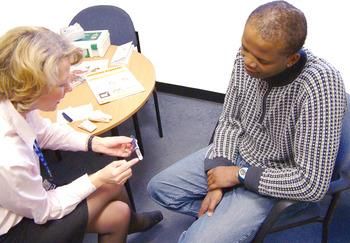
                                    What is dementia? Dementia is
                                    the name of an illness in the
                                    brain. People who have dementia
                                    forget how to do things. They
                                    also forget things they did in the
                                    past.

                                    People with learning disabilities
                                    are five times more likely to
                                    develop dementia than people
                                    without learning disabilities.

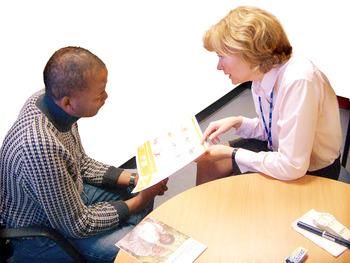
                                    It can be difficult for people with
                                    dementia and family carers to get
                                    the right support.

4

Operated by Public Health England
The law says public services
                                    should put ‘reasonable
                                    adjustments’ in place to help
                                    people with learning disabilities
                                    use them. This means they need
                                    to change their services so they
                                    are easier to use.

                                    This report has lots of
                                    information about reasonable
                                    adjustments in dementia
                                    services. Professionals and carers
                                    can use them to get better
                                    services for people with learning
                                    disabilities and dementia.

                                    The report also has some
                                    examples of how local services
                                    have put reasonable adjustments
                                    in place so that people with
                                    learning disabilities and dementia
                                    can use dementia services.

5

Operated by Public Health England
Improving Health and Lives
Reasonable Adjustments Briefing

    Improving Health and Lives (IHAL) aims to get better data and information about the
    health and healthcare of people with learning disabilities, and supports
    commissioners, providers and others to use this information. It was set up in April
    2010, following a recommendation in the Report of the Independent Inquiry into
    Access to Healthcare for Learning Disabilities (the Michael Report).1

    IHAL is a collaboration between three organisations: Public Health England, the
    Centre for Disability Research at Lancaster University and the National Development
    Team for Inclusion. Public Health England was established on 1 April 2013 bringing
    together more than 70 organisations into a single public health service. It works with
    national and local government, industry and the NHS to improve the nation’s health
    and support healthier choices. Public Health England addresses inequalities by
    focusing on removing barriers to good health.

    This report is the fifth in a series focusing on how health services can make specific
    areas of healthcare better and easier for people with learning disabilities to use. The
    aim is to share ideas and good practice in areas of healthcare that are particularly
    important and difficult. More details are available from our database of Reasonable
    Adjustments, which is available at www.ihal.org.uk/adjustments/

6

Operated by Public Health England
Reasonable Adjustments

    Under English laws about equalities, public sector organisations have to tailor the
    way they provide care so that disabled people are not at a disadvantage. This may
    mean making physical adjustments to buildings such as providing lifts, wide doors
    and ramps. Importantly, it also means making whatever alterations are necessary to
    policies, procedures, staff training and service delivery to ensure that they work
    equally well for people with learning disabilities. As far as possible, public sector
    organisations have to think about what might be needed in advance, not wait until
    people get into difficulties or ask for help. Training staff about what people with
    learning disabilities are likely to need is a good start.

People with learning disabilities and healthcare

    By learning disabilities, we mean a significant general impairment in intellectual
    functioning (typically defined as having an IQ of less than 70) starting in childhood. 2
    It does not include conditions like dyslexia where people have a specific difficulty
    with one type of skill but do not have wider intellectual impairment.

    In England, approximately 1.2 million people have learning disabilities (290,000
    children, 900,000 adults).3 On average, people with learning disabilities have
    poorer health and die younger than others. 3-7

    A lot of reports have shown that people with learning disabilities get worse
    healthcare than others.

7

Operated by Public Health England
Dementia and People with Learning Disabilities
Evidence and Research
Dementia in people with learning disabilities is becoming more common. This is
because:
1. Dementia becomes more common as people get older and people with
learning disabilities are living longer.
2. People with a learning disability are five times more likely to develop
dementia as they get older compared to the general population.38
3. People with Down's syndrome have a specific additional risk of developing
dementia. For them, this often happens at ages from 35 to 45 onwards. 40
The growing number of people living with both a learning disability and dementia
means that commissioners and providers need to plan to ensure the right support is
available in sufficient quantities. Some people with learning disabilities begin to
develop dementia while still living with family carers. They may also need support.
8
Operated by Public Health EnglandPolicy and Guidance
This section describes some of the policies and guidance available to support
people with dementia. People with learning disabilities should be able to access
dementia services, with appropriate reasonable adjustments in a way which works
equally as well as for people without learning disabilities.
National Institute for Clinical Excellence (NICE) guidance for the clinical
management of dementia is available at:
http://guidance.nice.org.uk/CG42/NICEGuidance/pdf/English
A commissioning guide for people with dementia produced by the Royal
College of General Practitioners is available at: www.rcgp.org.uk/revalidation-
and-cpd/centre-for-
commissioning/~/media/Files/CIRC/LD%20Commissioning/RCGP%20LD%2
0Commissioning%20Guide%20v1%200%202012%2009%2024%20FINAL%
20pdf.ashx
The Dementia and People with Learning Disabilities Charter details the
requirements of the National Dementia Strategy and required outcomes.
www.friendsaction.co.uk/resources/dementia-and-people-learning-
disabilities-charter
In the USA, the National Task Group (NTG) on Intellectual Disabilities and
Dementia Practices was formed as a response to the National Alzheimer's
Project Act (NAPA). One objective of the NTG is to highlight the additional
needs of individuals with intellectual and developmental disabilities who are
affected or will be affected by Alzheimer’s disease and related disorders. The
work includes:
The early detection of dementia;
Recommendations for the evaluation and management of dementia for
people with intellectual disabilities;
A national strategy for people with intellectual disabilities and dementia to
remain their communities and receive quality support, and
Guidelines for community care and support.
A link to further information can be found in the Resources section of this report
on page 11.
The Department of Health Six Lives Progress Report on Healthcare for people with
9 Learning Disabilities (Insert ref) 2013 section in relation to reasonable adjustments
states that service provider and commissioners are encouraged to visit the PHO
website and use the reasonable adjustments database. This Dementia Reasonable
Adjustments report in cited in the progress report. It further states that dementia is
Operated by Public Health England
one of the priorities for Public Health England in 2013 and 2014.National Indicators The Public Health Outcomes Framework for 2013–1648 includes the following indicator under Domain 4: Healthcare public health and reducing premature mortality: ‘Reduced number of people living with preventable ill health and people dying prematurely while reducing the gap between communities.’ www.gov.uk/government/uploads/system/uploads/attachment_data/file/193619/Im proving-outcomes-and-supporting-transparency-part-1A.pdf.pdf The Department of Health Mandate to the NHS Commissioning Board 2013-2015 includes indicators for both the premature deaths of people with learning disabilities and enhancing the quality of life for people with dementia. www.gov.uk/government/uploads/system/uploads/attachment_data/file/127193/m andate.pdf.pdf The NHS Outcome Framework 2013/14 also includes the following indicators: 1.7 Reducing the premature deaths of people with a learning disability and 2.8 Enhancing the quality of life for people with dementia www.gov.uk/government/uploads/system/uploads/attachment_data/file/213055/12 1109-NHS-Outcomes-Framework-2013-14.pdf 10 Operated by Public Health England
Resources

 The following sub-sections include some examples from practice, resources and
 links to other easy read resources, which can be found on the Easyhealth site:
 www.easyhealth.org.uk; the picture of health site:
 www.apictureofhealth.southwest.nhs.uk ; the Alzheimer’s Society site
 www.alzheimers.org.uk; the Down’s Syndrome site: www.downs-syndrome.org.uk;
 the British Institute for Learning Disabilities site: www.bild.org.uk; the Royal College
 of Psychiatrists site: www.rcpsych.ac.uk and the LDPHO reasonable adjustments
 database www.improvinghealthandlives.org.uk/projects/reasonableadjustments

 The resources are in four key sections:-

     1.   Strategy and outcome measures
     2.   Guidance and information
     3.   Supporting people
     4.   Information leaflets

 Please note, some resources may be available from more than one site, but we
 have only included one link per resource, and we have only included resources that
 are free to download, although the Easyhealth site includes resources you can buy.

Theme          Description           Provider        Link

Strategy &
Outcome
Measures

Living Well    Department of         Department of   www.gov.uk/government/publictions/living-well-with-
with           Health Dementia       Health          dementia-a-national-dementia-strategy
Dementia       Strategy

Quality        Measuring the         Faculty for     http://dcp-ld.bps.org.uk
outcome        quality of outcomes   Learning
measures for   for people with       Disabilities
people with    dementia
dementia

11

Operated by Public Health England
Guidance
and
Information
Ageing and Ageing and its Down’s www.downs-syndrome.org.uk
people with consequences for Syndrome
learning people with Down’s Association
disabilities Syndrome
Information Structured Dudley www.improvinghealthandlives.org.uk
pack dementia Community
information pack for Services
people with
learning disabilities
and family carers
Dementia Guidance on the Royal College www.rcpsych.ac.uk
and people assessment and of
with learning diagnosis, Psychiatrists
disabilities treatment and
support of people
with learning
disabilities who
develop dementia
Royal Dementia Royal College www.rcn.org.uk
College of information and of Nursing
Nursing supporting
Dementia resources
Information
Dementia Learning disabilities NHS Kent and www.improvingheealthandlives.org.uk
pathway assessment Medway
pathway flowchart Case study on page 15 of this report.
Down’s Psychosocial Foundation for www.learningdisabilities.org.uk
Syndrome interventions for People with
and people with Down’s Learning
dementia Syndrome and Disabilities
dementia
Health in Health in later Mencap www.mencap.org.uk
later years years for people
with learning
disabilities
Living with Video about NHS Choices www.easyhealth.org.uk/content/living-dementia
dementia dementia
12
Operated by Public Health EnglandHome for Preparing to Joseph www.jrf.org.uk
good support people with Rowntree
learning disabilities Foundation
in residential
settings when they
develop dementia
Care and Guidelines for National http://aadmd.org/ntg
detection structuring Taskforce on
screening community care Intellectual
and support and Disabilities
early detection and Dementia
screen for dementia Practices
Supporting
People
Supporting For staff working Joseph www.jrf.org.uk
Derek with people who Rowntree
have a learning Foundation
disability and
dementia
Hot tips Tips for supporting MacIntyre www.improvinghealthandlives.org.uk
people with Charity
dementia Case study on page 16 of this report.
Information
Leaflets
Carers Information for Cheshire and www.easyhealth.org.uk
carers Wirral
Partnership
NHS
Foundation
Trust
Easy read Explaining about Cheshire and www.easyhealth.org.uk
dementia Wirral
Partnership
NHS
Foundation
Trust
Easy read Explaining about 2gether NHS www.apictureofhealth.southwest.nhs.uk
dementia Foundation
Trust and
Picture of
Health
13
Operated by Public Health EnglandEasy read Easy-read Older Derbyshire www.ldhealthnetwork.org.uk
People’s Mental Community
Health Team leaflet Foundation Case study on page 13 of this report.
Trust
Examples of Reasonable Adjustments
and Case Studies
Raising awareness of learning disability and dementia in Bradford
Examples
The Bradfordof Reasonable
Ageing Adjustments
Learning Disability and Dementia (BALDAD) group was formed
to raise awareness and help meet the needs of people with learning disabilities and
dementia.
In line with the Greenlight Tool—national guidelines about supporting people with
learning disabilities to access mainstream mental health services wherever
possible—BALDAD have agreed a pathway whereby people with mild learning
disabilities access generic memory clinics. People with moderate to severe learning
disabilities access the specialist learning disability pathway and learning disability
memory clinic.
Terms of reference for the group, the learning disability/dementia pathway and Older
Adults Interface model are available.
For further information please contact Lesley.taylor@bdct.nhs.uk
14
Operated by Public Health EnglandGood practice in Derbyshire
Derbyshire Community Foundation NHS Trust have developed:-
An integrated Mental Health and Learning Disabilities Service care pathway for
people with dementia.
A joint working pathway.
A NICE guidance checklist.
Learning disability training for staff working with older people including a
questionnaire for new staff that determines their understanding of learning
disabilities and dementia and their subsequent training requirements.
http://www.improvinghealthandlives.org.uk/adjustments/
Dementia training for learning disability staff.
Accessible life stories folders adopted for all people using the service (not just
those with learning disabilities).
A link worker network for Learning Disability and Mental Health.
For further information please contact gaynor.ward@derbshcft.nhs.uk
Kent Community Healthcare Trust – small changes can make all the difference
Kent Community Healthcare Trust (KCHT) worked with a small service that was
experiencing difficulties with people wishing to "wander about". The service adapted
their small patio to make a raised walkway that wrapped around the entire building,
enabling people to walk around safely without straying from the property.
KCHT are doing further work on a multidisciplinary team pathway and offering a
baseline functioning assessment for people with Down’s syndrome over 30 years.
The mailshot leaflet should be available in July.
The dementia pathways were reviewed and amended so that people with learning
disabilities could access the memory clinics in Older People Mental Health services
where relevant, either independently or supported. Previously, people with learning
disabilities had been excluded from this service.
A link to the dementia pathway can be found in the Resources section of this paper
on page 12.
For further information contact pene.stevens@kcht.nhs.uk
15
Operated by Public Health EnglandMacIntyre Charity – Dementia Special Interest Group MacIntyre is a national charity that provides a wide range of services for children and adults with learning disabilities and autism. Responding to the challenge posed by the changing needs of an ageing population, MacIntyre set up a Dementia Special Interest Group to bring together staff from across the organisation who were supporting people who had or were at risk of developing dementia to share best practice, provide peer support and find out about what was happening across the country. It soon became clear that people were being very creative and person-centred in the support that was being provided and the most valuable part of the experience in bringing everyone together was the sharing of stories. The group captured many of these examples and compiled a booklet that is available to anyone who may find it useful. The booklet is updated with new tips and ideas each time the group meets. A link to the Hot Tips booklet can be found in the Resources section of this report on page 13. For further information contact emma.killick@macintyrecharity.org 16 Operated by Public Health England
Designing a therapeutic environment in Greenwich
The Older Person’s Service (TOPS) is a specialist day service provided by Oxleas NHS
Foundation Trust and commissioned by the Royal Borough of Greenwich for older
people who have a learning disability and a diagnosis of dementia.
The following is a list of changes which were made in the course of the refurbishment
of two wards. The changes are in line with good practice around supporting people
with dementia.
Red crockery, i.e. cups & plates.
Both male and female toilets have red toilet seats.
Panic alarms in toilets are supported by photographic instructions.
Vibrant red hand rails in main corridor.
Brightly coloured card has been used on transport in order to distinguish and
highlight certain steps.
Day sessions, such as gardening, arts and crafts, relaxation etc. are graded in
order to assess ability of users in attendance.
A modified generic dementia baseline assessment for people with learning
disabilities.
Weekly assessment of people’s wheelchairs and aids as deterioration can be
very rapid around posture and seating.
Regular referrals to speech and language therapy.
Hand massage and aromatherapy sessions.
The day service hosts a monthly aging issues clinic, which is supported by the
multidisciplinary team and carers as well as people with learning disabilities, who
are supported to attend and contribute.
Twice-weekly reminiscence sessions run by an occupational therapist.
A pilot project is looking at producing one-minute DVDs of service users when they are
first referred to the service, which, with their consent, can be used as a visual baseline.
The DVD will be used when hospital admission is required so that hospital staff have
an understanding of the person’s functioning prior to becoming unwell, enabling them
to understand what patients are capable of doing, so they can be supported
accordingly.
For further information please contact kaye.jones@oxleas.nhs.uk
17
Operated by Public Health EnglandManchester Learning Disability Partnership
Manchester Learning Disability Partnership has developed a number of tools and
processes to support people with learning disabilities who have dementia:
A series of top tip sheets for carers (family carers, support staff and whoever
is working with/supporting people with dementia) regarding challenging
behaviour, a suitable environment, eating and drinking issues,
communication, personal care and maintaining skills (currently being
evaluated).
A baseline screening service for people with Down's syndrome before the
age of 30. The assessments are repeated periodically.
A multidisciplinary dementia and an interventions pathway.40 Development of
a screening project for people with Down's syndrome given the increased
prevalence of early onset dementia. (British Journal of Learning Disabilities,
6(4), 18-26).
Accessible information sheets about the assessment process for
carers/people with learning disabilities.
Multidisciplinary dementia interventions review process where everyone with
dementia is reviewed every six-months by a multidisciplinary group. At this
meeting a dementia interventions checklist is completed to ensure everyone
has equal access to the dementia interventions available.
Dementia awareness and dementia interventions training is provided
regularly throughout the year for carers.
A copy of the presentation made by Dr. Jervis in November 2012 (which
provides more detail on the above) can be found at:
www.improvinghealthandlives.org.uk/adjustments/?adjustment=261
For further information please contact n.jervis@manchester.gov.uk
18
Operated by Public Health EnglandSurrey and Borders Partnership NHS Foundation Trust – Reasonable adjustments and people with learning disabilities and dementia Easy-read information: Three booklets have been produced in association with BILD to help people with learning disabilities understand about getting older and dementia. The Journey of Life uses pictures and easy-read text to help the person understand the stages of life. Starting at birth, the book explains the life stages in the context of the amount of care a person may need at each of the stages. About My Friend uses pictures and easy- read text to help people with learning disabilities understand what happens to a friend when they develop dementia. Finally, About Dementia uses easy-read text to explain what dementia is, who gets dementia and what happens when you get dementia. See: www.bild.org.uk/our-services/books/health-and-well-being/the-journey-of-life/ www.bild.org.uk/our-services/books/health-and-well-being/about-my-friend/ www.bild.org.uk/our-services/books/health-and-well-being/about-dementia/ Information for family and staff carers: A number of resources have been developed to help staff and family carers understand about dementia and people with learning disabilities, and help people live well with dementia. Karen Dodd (Surrey and Borders Partnership NHS Foundation Trust) and Diana Kerr (University of Edinburgh) worked together with the Down’s Syndrome Association to produce a Learning Disabilities and Dementia Workbook for staff and family carers This book is a useful guide to help carers to offer the most effective care possible as the person’s condition progresses and their needs change. Throughout the book there is signposting to other sources of information and resources as well as to various services which may be needed by the individual. Completion of the book leads to a more detailed understanding of the person, their situation and their individual needs. It also acts as a written record of the changing needs of the person and the actual actions that have been taken to ensure these needs are met. Karen Dodd and others have also worked with the Down’s Syndrome Association to develop a number of DVDs to support families and staff carers. www.downs-syndrome.org.uk/shop/publications/medical-and-health/for- professionals/1091-downs-syndrome-and-dementia-workbook.html www.downs-syndrome.org.uk/shop/publications/medical-and-health/for-families/adults- 18/1087-downs-syndrome-and-dementia-philosophy-of-care.html www.downs-syndrome.org.uk/shop/publications/medical-and-health/for-families/adults- 18/1086-downs-syndrome-and-dementia-forget-me-not.html www.downs-syndrome.org.uk/shop/publications/medical-and-health/for-families/adults- 18/1085-downs-syndrome-and-dementia-fighting-for-andrew.html For further information please contact DrKaren.Dodd@sabp.nhs.uk 19 Operated by Public Health England
Your Healthcare Community Interest Company (Surrey/South West London) –
Reasonable adjustments to the environmental contexts for people with
learning disabilities and dementia
As part of our dementia care pathway, when someone with a learning disability is
diagnosed with dementia, we complete an assessment of the living environment to
try and assess which aspects of the environment are enabling and which may be
potentially disabling, now or in the future, and give appropriate recommendations for
reasonable adjustments to be made. The recommendations from the assessment are
related to information covered in advanced training and this will enable carers to
‘problem-solve’ any future potential problems. We then produce a detailed report with
clear recommendations about what is working well and what might need to change,
and feed this back to the staff team, along with further written guidance about how
environments can affect people with dementia.
The environmental assessments we complete are largely led by psychology.
However, we plan to liaise with occupational therapy colleagues to develop the
environmental aspects of our work with people with learning disabilities and
dementia.
Clinical examples
A client who kept waking up in the night (day-night reversal) and wanting to go
to the day centre found it difficult to believe that it was not time to go out when
faced with waking night staff who were fully dressed, watching television telling
him it was the middle of the night. We suggested to staff that they should have
a dressing gown and pair of slippers they can put on when the client gets up,
to help cue the client in to the verbal message that it is the middle of the night
and not time to go to the day centre.
Some clients find difficulty in moving between different coloured or textured
thresholds, e.g. from a plain cream carpet in the living room to a complex,
multi-coloured patterned carpet in the hallway. Therefore, we recommend that
reasonable adjustments are made to carpets or floorings, such as having all
one colour throughout the house and avoiding large patterned carpets
because they can appear like holes or different depths to people with
dementia. Carers have approached our team for advice about ‘do’s’ and
‘don’ts’ before making changes to the environment such as redecorating or
altering fixtures and fittings.
/Continued
20
Operated by Public Health England We often recommend that staff use red toilet seats and sometimes red tape to
line the outer edges of the bath suite to enable people to continue to navigate
and use the bathroom independently because some people may find it
increasingly difficult to identify different features in the bathroom.
With guidance from speech and language therapists, we often recommend
that visual, olfactory and/or tactile indicators/cues are used to help clients
identify different rooms around the house, particularly if clients have additional
sensory impairments.
We often recommend that furnishings are era-appropriate to fit with a person’s
long-term memory as it rolls back with the process of the dementia, often
suggesting that staff make reasonable adjustments by purchasing furnishings
and equipment that are familiar to the person.
A major issue that sometimes cannot be changed about the environment is the
layout of the building and location of bedrooms and accessible bathrooms. At
all times, we try to make recommendations for reasonable adjustments to
enable people with learning disabilities and dementia to stay in their own
homes. However, due to lack of available space on the ground floor, and
home structures that do not allow for other more major adjustments such as a
lift, we may recommend that someone needs to move and make suggestions
about what type of environment would be suitable. Alongside physiotherapy
colleagues, we often request that reasonable adjustments such as track
hoisting to be fitted.
For further information contact Joanne.Coombs@yourhealthcare.org
Conclusion
People with learning disabilities are more likely to develop dementia than their non-
disabled peers. Therefore it is important for public sector organisations to put
reasonable adjustments in place so that people with learning disabilities continue to
live fulfilling lives and can access dementia services effectively. This report
signposts professionals, support workers and family carers to numerous resources
that can be used to enable people with learning disabilities maintain quality of life
and access dementia services. A number of examples of how these resources are
being used have been included.
21
Operated by Public Health EnglandReferences
[1] P. Bartlo and P. J. Klein, “Physical activity benefits and needs in adults with
intellectual disabilities: systematic review of the literature,” Am J Intellect Dev
Disabil, vol. 116, no. 3. pp. 220–232, 2011.
[2] S. A. Cooper, “High prevalence of dementia among people with learning
disabilities not attributable to Down’s syndrome,” Psychol Med, vol. 27, no. 3.
pp. 609–616, 1997.
[3] Department of Health, “Valuing People Now: Summary Report March 2009 -
September 2010. Good Practice Examples.” Department of Health, London,
2010.
[4] Department of Health, “Valuing People Now: The Delivery Plan .” Department
of Health, London, 2009.
[5] Department of Health, “Valuing People Now: A new three-year strategy for
people with learning disabilities,” Department of Health,, London, 2009.
[6] Department of Health, “Promoting Equality: Response from Department of
Health to the Disability Rights Commission Report, ‘Equal Treatment: Closing
the Gap’.”Department of Health, London, 2007.
[7] Department of Health, “‘Six Lives’ Progress Report.”Department of Health,
London, 2010.
[8] Department of Health, “Improving outcomes and supporting transparency: Part
1: A public health outcomes framework for England, 2013-2016.” Department
of Health, London, 2012.
[9] Disability Rights Commission, “Equal Treatment - Closing the Gap,” Disability
Rights Commission, London , 2006.
[10] E. Emerson, S. Baines, L. Allerton, and V. Welch, “Health Inequalities &
People with Learning Disabilities in the UK: 2012 ,” Improving Health & Lives:
Learning Disabilities Observatory, Durham, 2012.
[11] E. Emerson, C. Hatton, J. Robertson, H. Roberts, S. Baines, F. Evison, and G.
Glover, “People with Learning Disabilities in England: 2011.” Improving Health
& Lives: Learning Disabilities Observatory, Durham, 2012.
[12] E. Emerson and P. Heslop, “A Working Definition of Learning Disabilities.”
Improving Health & Lives: Learning Disabilities Observatory, Durham, 2010.
22
Operated by Public Health England[13] E. Emerson, B. Vick, B. Rechel, I. Muñoz, J. Sørensen, and I. Färm, “Health
inequalities and people with disabilities in Europe.” European Regional Office
of the World Health Organization, Copenhagen.
[14] Equality and Human Rights Commission, “The essential guide to the public
sector equality duty,” Equality and Human Rights Commission, Manchester,
2011.
[15] Equality and Human Rights Commission, “Equality Act 2010 guidance for
English public bodies (and non-devolved bodies in Scotland and Wales).
Volume 1: The essential guide to the public sector equality duty,” EHRC,
Manchester, 2010.
[16] Equality and Human Rights Commission, “Equality Act 2010 guidance for
English public bodies (and non-devolved bodies in Scotland and Wales).
Volume 5: Your rights to equality from healthcare and social care services.”
EHRC, Manchester, 2010.
[17] G. Glover and M. Ayub, “How People with Learning Disabilities Die.” Improving
Health & Lives: Learning Disabilities Observatory, Durham, 2010.
[18] Government Equalities Office, “Equality Act 2010: What do I need to know? A
summary guide for public sector organisations,” HM Government , London,
2010.
[19] Government Equalities Office, “ Equality Act 2010: What Do I Need to Know?
Disability Quick Start Guide.” Government Equalities Office, London, 2010.
[20] C. Hatton, H. Roberts, and S. Baines, “Reasonable adjustments for people
with learning disabilities in England 2010: A national survey of NHS Trusts,”
Improving Health & Lives: Learning Disabilities Observatory , Durham, 2011.
[21] S. M. Havercamp, D. Scandlin, and M. Roth, “Health disparities among adults
with developmental disabilities, adults with other disabilities, and adults not
reporting disability in North Carolina,” Public Health Rep, vol. 119, no. 4. pp.
418–426, 2004.
[22] House of Commons Health Committee, “Health Inequalities: Third Report of
Session 2008–09. Volume I,” House of Commons, London, 2009.
[23] House of Lords and House of Commons Joint Committee on Human Rights, “A
Life Like Any Other? Human Rights of Adults with Learning Disabilities,” The
Stationery Office Limited, London, 2008.
[24] M. Marmot, Fair society, healthy lives : the Marmot review. [London]: Marmot
Review, 2010.
23
Operated by Public Health England[25] Mencap, “Death by Indifference,” Mencap, London, 2007.
[26] Mencap, “Death by indifference: 74 deaths and counting. A progress report 5
years on,” Mencap, London, 2012.
[27] P. R. Messent, “The contribution of physical activity and exercise to quality of
life of adults with learning disabilities. [electronic resource],” 1996. .
[28] J. Michael, “Healthcare for All: Report of the Independent Inquiry into Access
to Healthcare for People with Learning Disabilities,” Independent Inquiry into
Access to Healthcare for People with Learning Disabilities, London, 2008.
[29] D. Morin, J. Merineau-Cote, H. Ouellette-Kuntz, M. J. Tasse, and M. Kerr, “A
comparison of the prevalence of chronic disease among people with and
without intellectual disability,” Am J Intellect Dev Disabil, vol. 117, no. 6, pp.
455–463, 2012.
[30] NHS East Midlands, “The Equality Delivery System for the NHS, and The
Equality Delivery System for the NHS Grades Manual, 29th July 2011 edition.,”
2011.
[31] J. O’Hara, J. McCarthy, and N. Bouras, “Intellectual Disability and Ill Health.”
Cambridge University Press, Cambridge, 2010.
[32] Parliamentary and Health Service Ombudsman and Local Government
Ombudsman, “Six lives: the provision of public services to people with learning
disabilities,” Parliamentary and Health Service Ombudsman and Local
Government Ombudsman, London, 2009.
[33] V. P. Prasher, “Overweight and obesity amongst Down’s syndrome adults,” J
Intellect Disabil Res, vol. 39 ( Pt 5), pp. 437–441, 1995.
[34] D. Richards, “Behaviour change guidance. National Institute for Health and
Clinical Excellence,” Evid Based Dent, vol. 8, no. 4. pp. 98–100, 2007.
[35] United Nations, “Convention on the Rights of Persons with Disabilities ,” United
Nations, New York, 2006.
[36] World Health Organization, “Rio Political Declaration on Social Determinants of
Health (http://www.who.int/sdhconference/declaration/en/),” World Health
Organization, Geneva, 2011.
[37] J. M. J. A. A. Straetmans, H. M. J. Van Schrojenstein Lantman-de Valk, F. G.
Schellevis, and G.-J. Dinant, “Health problems of people with intellectual
disabilities: the impact for general practice.,” The British journal of general
24
Operated by Public Health Englandpractice the journal of the Royal College of General Practitioners, vol. 57, no.
534, pp. 64–66, 2007.
[38] A. Strydom, T. Chan, M. King, A. Hassiotis, and G. Livingston, “Incidence of
dementia in older adults with intellectual disabilities.,” Research in
developmental disabilities, vol. 34, no. 6, pp. 1881–5, Jun. 2013.
[39] N. Jokinen, M. P. Janicki, S. M. Keller, P. McCallion, and L. T. Force,
“Guidelines for Structuring Community Care and Supports for People With
Intellectual Disabilities Affected by Dementia,” Journal of Policy and Practice in
Intellectual Disabilities, vol. 10, no. 1, pp. 1–24, Mar. 2013.
[40] N. Jervis and L. Prinsloo, “How we developed a multidisciplinary screening
project for people with Down’s syndrome given the increased prevalence of
early onset dementia,” British Journal Of Learning Disabilities, vol. 36, pp. 13–
21, 2008.
25
Operated by Public Health EnglandYou can also read


