50 SHADES OF GREY: OIG AUDITS OF ACADEMIC ANESTHESIA DEPARTMENTS
←
→
Page content transcription
If your browser does not render page correctly, please read the page content below

50 SHADES OF GREY:
    OIG AUDITS OF ACADEMIC
    ANESTHESIA DEPARTMENTS
                 Stanley W. Stead, M.D., M.B.A.
                          President, Stead Health Group, Inc.
                 Section Chair, ASA Section on Professional Practice
                       AMA Relative Value Update Committee
                          AMA CPT Assistant Editorial Panel
               Professor of Anesthesiology and Pain Medicine, UC Davis

                     DISCLOSURES

•   I serve as a health care economic consultant to a variety of entities
    including: physician practices, hospitals, health systems, universities,
    states and the US government.

•   I am a major stockholder in my company, Stead Health Group, Inc.

•   This presentation does not contain information or services for
    which I could derive a financial benefit.

                               © 2012 Stead Health Group, Inc.                 2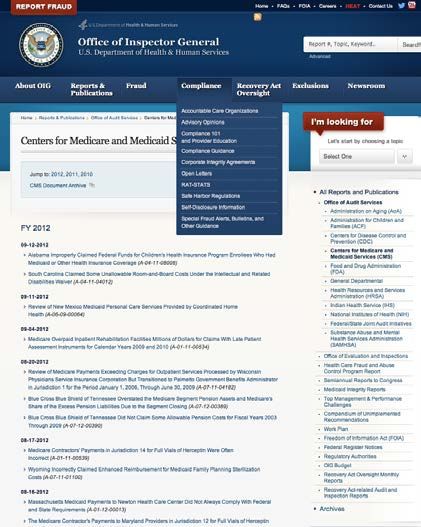
OVERVIEW

• Review the Medicare regulations regarding anesthesia and pain
  medicine
• Understand the how the HHS OIG is reviewing your claims and
  using the false claims act
• Strategies for meeting both clinical and documentation needs
• Legal protections afforded state institutions from the False Claims
  Act
• Establishing a defensive strategy to minimize exposure

                           © 2011 Stead Health Group, Inc.                             3

            THERE’S MONEY IN
             ENFORCEMENT!

                                          •     ROI of 17 to 1
                                                  •     OIG recovers $17
                                                        for each $1
                                                        invested in
                                                        enforcement
                                                        activities
                                     http://oig.hhs.gov/reports-and-publications/oas/cms.asp

                           © 2012 Stead Health Group, Inc.                             4
THERE’S MONEY IN
               ENFORCEMENT!

•   False Claims Recoveries:
    •   $3 billion/yr (FY 2011) ($8.7B since 2009)
    •   Whistleblowers accounted for $2.8B
•   “[H]ealth care accounted for the lion's share . . .
    $2.4 billion (80%)
•   DOJ Press Release (Dec 19, 2011), available at
    http://www.justice.gov/opa/pr/2011/December/
    11-civ-1665.html/08-civ-992.html

                             © 2012 Stead Health Group, Inc.              5

               FALSE CLAIMS ACT
•   The False Claims Act (FCA) (31 U.S.C. §§3729-3733) is a federal
    statute that imposes penalties on entities that improperly bill the
    government. In the health care arena, this means knowingly
    submitting false claims to the Medicare or Medicaid programs for
    reimbursement.
•   Examples of false claims include:
    •   Upcoding
    •   Misrepresenting the services that were rendered
    •   Submitting claims for services that were not performed
    •   Unbundling
    •   Submitting claims for unreasonable costs.

                             © 2012 Stead Health Group, Inc.              6
FALSE CLAIMS ACT

•   In order to encourage individuals with the knowledge of
    wrongdoing to come forward, the FCA allows those individuals,
    called “relators,” to file a civil suit, a qui tam action, against the
    wrongdoer in the name of the government. See 31 U.S.C.
    §3730(b). In return for reporting the wrongdoing and for being a
    party to the suit, the relator receives between 15% and 30% of the
    award. 31 U.S.C. §3730(d)(1)&(2).

•   Unfortunately, this monetary incentive, which often equals millions
    of dollars, could give rise to abuse and may result in claims that are
    aptly termed “parasitic.”
                             © 2012 Stead Health Group, Inc.                 7

    FALSE CLAIM ACT MAY NOT
     BE APPLICABLE TO STATE
          INSTITUTIONS
•   State agencies are not “persons” subject to FCA liability
•   The University is a state agency and thus not a “person,” and
    therefore may not be sued under the FCA
•   The “University Associates” are typically business units of the states
•   The “defendants” are therefore not “persons” and may not be sued
    under the FCA
•   The University will vigorously contest the applicability of the FCA
    and potential FCA liability in this case

                             © 2012 Stead Health Group, Inc.                 8
REVIEW OF THE GOVERNMENT
AUDIT PROTOCOL
Ø Audit period: Typically selected over a period of years
Ø Dates of service selected via multiple criteria
Ø Judgmentally selected by OAS
Ø Selected based on relator documents by DOJ
Ø Dates of service actually audited may be arbitrary
Ø Request for all relevant records - open ended
© 2012 Stead Health Group, Inc. 9
MEDICARE PAYMENTS
FOR ANESTHESIA SERVICES
Ø Statutory
§ Omnibus Budget Reconciliation Act (OBRA) of
1989 (Pub. L. 101-239). . Section 1848(b)(2)(B) of
OBRA established Anesthesia Base + Time
Methodology
§ OBRA 1990, (Pub. L. 101-508)
Ø Regulatory
§ Medicare - Medicare Carrier Manual, Chapter 12
• Sections 50 (Payment), 100 (Teaching), 140
(CRNA Payment)
§ Medicaid - guided by state
© 2012 Stead Health Group, Inc. 10COMPLIANCE RISK
Federal government has been funding
increased enforcement efforts, believing that
recoveries through settlements and
prosecutions are an important way to
combat and deter improper billing.
Incentive for whistleblowers “qui tam” 15-30% of proceeds
(or settlement)
Automatic Office Inspector General (OIG) Investigations -
criminal investigations on a phone call from an employee
(former or current)
MACs are using computer screens and post-payment
audits © 2012 Stead Health Group, Inc. 11
BILLING COMPLIANCE:
AVOIDING “FRAUD & ABUSE”
“I will not encounter billing compliance
• Billing
problems so long as you provide good
patient careWRONG!
Requirements
and Billing and are not out to cheat the
Compliance system.”
You do not need to intend to cheat the
system to incur substantial financial liability
for bills you (or others) submit for your
services, especially if the patient was a
Medicare, Medicaid or other federal
program beneficiary.
© 2012 Stead Health Group, Inc. 12WHAT IS THE RISK?
• False Claims: triple damages + $11,000
per claim
• Improper submitted claim for $450:
$12,350 ($11,000+3*$450)
The government does not have to
establish specific intent to defraud and
it is no defense that the Group
provided other reimbursable services
or that it did not have actual
knowledge that the claims were false.
© 2012 Stead Health Group, Inc. 13
CRIMINAL FALSE CLAIMS
LAWS
• Prohibit knowingly & willfully making false statement in claim to
gov’t, or
• Submitting false & fictitious claims
• Knowledge of falsity not required
• “Willful blindness”/deliberate ignorance sufficient for liability
© 2012 Stead Health Group, Inc. 14CALCULATING TIME
• Continuous, actual presence
• Starts: when begin to prepare patient for anesthesia
• Pre-op exam time is not anesthesia time
• When does time start when doing other, separately paid
services ?
• Post-op pain epidural
• Ends: when patient may be safely transferred for post-op care
• If presence of “Qualified Individual” ceases, use discontinuous time.
• NEVER ROUND TO THE NEAREST FIVE MINUTES
© 2012 Stead Health Group, Inc. 15
TIME
• Medicare/Medicaid: Report Actual Time - without approximation
• Payment Rounded to nearest tenth of hour
• Private payors
• Varies
• Managed care contract may address
• But new standardization of forms may lead to all payors using actual
time
• Time in minutes is now reported via X12 5010 instead of time
units
© 2012 Stead Health Group, Inc. 16DOCUMENTING TIME FOR
ANCILLARY PROCEDURES
• Document time of preop block (or line placement)
• Document: start & stop of preop block time
• Separate from anesthesia time
• If not documented, OAS assumes fraud
• No need to deduct time if lines placed intraoperatively
© 2012 Stead Health Group, Inc. 17
QUALIFIED PROVIDERS & TIME
• Time stops if “qualified individual” not w/patient
• “Qualified individual” who can be medically directed:
• AAs & CRNAs (& student NAs)
• Residents, interns
• Not a “Qualified individual”
• Medical student
• Holding area/circulating nurse
© 2012 Stead Health Group, Inc. 18DISCONTINUOUS TIME
• Can aggregate discontinuous segments of anesthesia time
• E.g., delays in starting surgery; regional cases
• Anesthesia time & monitoring w/in each block of time must be
continuous
• Must document start & end times of any separate segments of
anesthesia time
• Consider impact of discontinuous time on
• Concurrencies – number of cases being “medically directed”
• Residents and CRNAs
• Do they appear as working on more than one case at the
same time?
© 2012 Stead Health Group, Inc. 19
FREQUENCY DISTRIBUTION
OF MINUTES
Evidence of Rounding to 5 minute interval on End Time
© 2012 Stead Health Group, Inc. 20MEDICAL DIRECTION WITH
RESIDENTS AND NURSE
ANESTHETISTS
Medical
Direction
1:2, 1:3 or 1:4
© 2012 Stead Health Group, Inc. 21
BILLING GROUP PRACTICES
Ø “It is our intent to use the example in section
15018C to illustrate the policy' and not to limit
the policy only to pre or post anesthesia care.
Under the principle. in this section, we would
allow another member of the group to
substitute for the performing physician during
the intraoperative period. Of course, we would
allow this policy only if all members of the
group have appropriately reassigned their
benefits to the group and the medical record
documents the performance of the various
activities by the different members of the
group. It would be appropriate for the group to
submit the claim in the name of the
anesthesiologist who spend the largest amount
of time with the case.”
Letter from Terry Kay, Nov 25, 1997
© 2012 Stead Health Group, Inc. 22MEDICAL DIRECTION AND
TEACHING
Ø When Medical Direction is performed by more than one physician,
each Teaching Physician must personally document his or her
presence during specific services and the specific services he or she
performed. Additionally, both must personally document their
immediate availability during the portion of the case during which
they provided medical direction. The documentation must clearly
show when the transfer occurred and that all the elements of
medical direction were met and by which anesthesiologist.
Ø When more than one anesthesiologist is involved in a medically
directed case, the charge is submitted under the name of the
anesthesiologist who spent the most time on the case. When cases
are billed under the Anesthesia Teaching Physician rules, they are
billed under the name of the anesthesiologist who started the case.
MCM, Ch 12, Section 100
© 2012 Stead Health Group, Inc. 23
MEDICAL DIRECTION (CONT.)
Ø Physician must participate only in the most demanding
procedures of the anesthesia plan, including, if applicable,
induction and emergence.
Ø Physician must document in the medical record that he or she
performed:
§ the pre-anesthetic examination and evaluation
§ provided indicated post-anesthesia care
§ were present during some portion of the anesthesia monitoring
§ were present during the most demanding procedures, including induction
and emergence, where indicated.
MCM, Ch 12, Section 50C
© 2012 Stead Health Group, Inc. 24MEDICAL DIRECTION (CONT.)
Ø Physician can medically direct two, three, or four concurrent
procedures involving qualified individuals, all of whom could be
CRNAs, AAs, interns, residents or combinations of these
individuals.
Ø For services furnished on or after January 1, 2010, the medical
direction rules do not apply to a single resident case that is
concurrent to another anesthesia case paid under the medical
direction rules or to two concurrent anesthesia cases involving
residents.
MCM, Ch 12, Section 50C
© 2012 Stead Health Group, Inc. 25
MEDICAL DIRECTION (CONT.)
Ø If anesthesiologists are in a group practice, one physician member
may provide the pre-anesthesia examination and evaluation while
another fulfills the other criteria. Similarly, one physician member
of the group may provide post-anesthesia care while another
member of the group furnishes the other component parts of
the anesthesia service.
Ø However, the medical record must indicate that the services were
furnished by physicians and identify the physicians who furnished
them.
MCM, Ch 12, Section 50C
© 2012 Stead Health Group, Inc. 26MEDICAL DIRECTION (CONT).
Ø However, if the physician leaves the immediate area of the operating
suite for other than short durations or devotes extensive time to an
emergency case or is otherwise not available to respond to the
immediate needs of the surgical patients, the physician’s services to
the surgical patients are supervisory in nature. Carriers may not
make payment under the fee schedule.
MCM, Ch 12, Section 50C
© 2012 Stead Health Group, Inc. 27
RESIDENTS AND NURSE
ANESTHETISTS
SERVICE DESCRIPTION OF SERVICE
Personal Performance
Anesthesiologist performs case
alone, oversees one OR at a time
Medical Direction
Anesthesiologist directs up to
four ORs simultaneously. Must
perform all seven steps
Medical Supervision
Anesthesiologist supervises more
than four ORs simultaneously
CRNA (Without Supervision)
CRNA performs case without
anesthesiologist present
© 2012 Stead Health Group, Inc. 28RESIDENTS AND NURSE
SERVICE
ANESTHETISTSPAYMENT TO PHYSICIAN PAYMENT TO CRNA
Personal Anesthesiologist receives 100% of
No CRNA payment received
Performance payment
• Anesthesiologist receives 50% of
• CRNA receives 50% of payment
payment
• Where CRNA employed by
Medical Direction • If anesthesiologist fails to hospital, hospital receives 50%
performs 7 steps, 3 units for
of payment
preop and 1 unit for presence at
induction
• CRNA receives 50% of payment
Anesthesiologist receives 3 units for
Medical • Where CRNA employed by
preop and 1 unit for presence at
Supervision hospital, hospital receives 50%
induction
of payment
• CRNA receives 100% of
CRNA Without payment
No Payment to Anesthesiologist
Supervision • If employed by hospital, hospital
receives 100% of payment
© 2012 Stead Health Group, Inc. 29
MEDICAL SUPERVISION
Ø The Part B Contractor may allow only three base units per
procedure when the anesthesiologist is involved in furnishing more
than four procedures concurrently or is performing other services
while directing the concurrent procedures. An additional time unit
may be recognized if the physician can document he or she was
present at induction
MCM, Ch 12, Section 50C
© 2012 Stead Health Group, Inc. 30FAILED MEDICAL DIRECTION
Ø Failed Medical Direction occurs when any portion of the Medicare
rules of Medical Direction is not provided or documented or when
a non-allowed activity is performed during medical direction.
§ If a Certified Registered Nurse Anesthetist (CRNA) is involved in
a failed medical direction case, STATE LAW MAY permit billing
under a CRNA’s name with the –QZ modifier and payment at
100% allowable
§ No anesthesiologists fees should be billed for failed medical
direction cases
© 2012 Stead Health Group, Inc. 31
7 STEPS AND 6 EXCEPTIONS
1. Perform preanesthetic exam
2. Prescribe anesthetic plan
3. Personally participate in most demanding parts of the
procedure
4. Ensure performance by qualified anesthetist
5. Monitor at frequent intervals
6. Remain physically present/available for immediate
diagnosis
7. Provide indicated post-anesthetic care
1. Addressing an emergency of short duration in the immediate
area
2. Administering a labor epidural
Exceptions 3. Periodic (not continuous) monitoring of an obstetric patient
4. Receiving patients entering the operating suite for the next
surgery
5. Checking or discharging patients in the recovery room
6. Handling scheduling matters.
Medicare Claims Processing Manual, Chapter 12
Physicians/Non-physician Practitioners, p120-122.
© 2012 Stead Health Group, Inc. 32MEDICAL DIRECTION RISKS
• Why is medical direction a risk area?
• Rules are detailed and specific
• Not always intuitive
• Must document all 7 steps
• Lack of documentation can lead to
inability to explain what services
actually were provided
• Biggest areas of risk:
• Not meeting all seven steps of
medical direction
• Performing activities not listed in
the six exceptions
© 2012 Stead Health Group, Inc. 33
IMMEDIATELY AVAILABLE
Ø Concept of “immediately available may seem obvious, but
specifics are undefined
Ø “Physically present and available for immediate diagnosis and
treatment of emergencies” 42 C.F.R. 415.110
Ø No specifics about proximity
Ø “The CMS is not defining availability in terms of geographic
location vis-à-vis the operating room” Claims Processing Manual,
Ch. 12, Section 100.1.2(A)(Surgery)
Ø 2011 OPPS Final Rule- “physically present…but without reference
to any physical boundary.”
© 2012 Stead Health Group, Inc. 34IMMEDIATELY AVAILABLE
No clear guidance from CMS
Expert opinion of anesthesiologist
with years of experience in medically
directing and medically supervising
anesthesia services:
If anesthesiologist can move
between locations within the same
operating room suite, he/she is
usually deemed to be “immediately
available” to address any
emergency.
© 2012 Stead Health Group, Inc. 35
IMMEDIATELY AVAILABLE
• Anesthetizing locations
• Main OR suite, Labor & delivery
• Other areas -- e.g., MRI, EP, ambulatory surgery
• Must remain physically present & immediately available
• Even for permitted exceptions
© 2012 Stead Health Group, Inc. 36IMMEDIATELY AVAILABLE
AMBIGUITIES
• Additional areas to be defined:
• When does emergence occur?
• A process, not a single point
• How frequently must you monitor cases for “frequent”
monitoring?
• Single time frame won’t apply to all cases
• How what locations are considered physically present: time and
distance
© 2012 Stead Health Group, Inc. 37
MEDICAL DIRECTION
AMBIGUITIES
• What is “short” duration?
• Need for common definition
• “Receiving” patients for next surgery
• Doesn’t permit preanesthetic exam (unless CRNA w/you)
• How far away can you be and still be immediately available?
• Again, need common definition
© 2012 Stead Health Group, Inc. 38MEDICAL DIRECTION: OTHER
SERVICES
• Example of services that cannot be
personally performed while medically
directing:
• Pain blocks
• Easy target for investigators &
RACs: Are medically directing
physicians doing pain blocks?
© 2012 Stead Health Group, Inc. 39
RULES APPLY TO EXCEPTIONS
• Even if carrier says you can do other things, you still must meet medical
direction requirements:
• Participate in most demanding portions
• Monitor at frequent intervals
• Must remain immediately available
• Can’t routinely rely on exceptions
• “We do not expect that a physician who is directing the
administration of anesthesia to four surgical patients would be
involved routinely in furnishing any additional services to other
patients. . . .
• Carriers will review hospital records to ensure that such
circumstances do not occur frequently [and] are of short
duration . . . .” © 2012 Stead Health Group, Inc. 40BREAKS FOR COLLEAGUES
• Medically directing physician cannot
provide a “break” for a CRNA
• Would be personal
performance
• Can’t medically direct &
personally perform at the same
time
• Have “like” provider relieve “like”. (eg
CRNA relieves CRNA, Resident
relieves Resident)
© 2012 Stead Health Group, Inc. 41
INTRAOPERATIVE HANDOFF
• Billing risk: failure to document
• Change in medically directing
physician AND
• The time of the handoff
• Change in CRNA, Resident or
AA
• Change in “type” CRNA ->
Resident
© 2012 Stead Health Group, Inc. 42INTRAOPERATIVE “HAND-
OFFS”
• Medicare -- Medically Directed procedure
• Anesthesiologists within a group practice may substitute for
each other
• Medical record must identify who provided which services
• Bill in name of physician with most time on case
• Teaching Rule: Bill in name of physician who started the case
© 2012 Stead Health Group, Inc. 43
HANDOFF DOCUMENTATION
• Consider developing a standard
template for handoffs
• AHRQ - MATCH (Managing
at Transitions and Clinical
Handoffs)
• ACS - Standards for Surgical
Handoffs
© 2012 Stead Health Group, Inc. 44DEFINITION OF
CONCURRENCY
Ø Concurrency is defined with regard to the maximum number of
procedures that the physician is medically directing within the
context of a single procedure and whether these other
procedures overlap each other.
Ø Concurrency is not dependent on each of the cases involving a
Medicare patient. For example, if an anesthesiologist directs three
concurrent procedures, two of which involve non-Medicare
patients and the remaining a Medicare patient, this represents
three concurrent cases
© 2012 Stead Health Group, Inc. 45
CONCURRENCY EXAMPLES
Turnover Turnover Personally
Room 1 Case Case Case Performed
or 1:1
Case Turnover Case
Room 1 Medical
Room 4 Case Case Direction
1:2
Room 3 Case Case Case Case
Room 8 Case Case Case
Room 9 Medical Direction
Case Case
1:3 & 1:2
8:00 10:00 12:00
© 2012 Stead Health Group, Inc.
14:00 46CALCULATING
CONCURRENCIES
• Time measured in minutes
• Overlap of one minute = concurrency
• Personally performed case, resident or CRNA services:
• No overlapping times
• Medically directed case: Up to 4 concurrent cases permitted
• In case of intraoperative handoff, must calculate concurrencies for
each medically directing anesthesiologist
• Cannot use concurrencies for only one of the anesthesiologists
• E.g., the one with the most time on the case
© 2012 Stead Health Group, Inc. 47
DAILY COMPUTERIZED
CONCURRENCY REPORT
Concurrency by Attending
© 2012 Stead Health Group, Inc. 48CONCURRENCY MAPS FOR
EACH DAY
© 2012 Stead Health Group, Inc. 49
STRATEGIES: MULTIPLE
RESPONSIBILITIES
• Don’t personally perform if medically directing
• Hand off cases to a colleague
• Watch if Case 2 starts during Case 1
• CRNAs can’t be in 2 cases at once
• Don’t shave time for back-to-back cases
• Appearance of manufactured, not actual, time
• Inconsistency with hospital times?
© 2012 Stead Health Group, Inc. 50STRATEGIES: MULTIPLE
RESPONSIBILITIES
• Don’t personally perform if medically directing
• Hand off cases to a colleague
• Watch if Case 2 starts during Case 1
• CRNAs can’t be in 2 cases at once
• Don’t shave time for back-to-back cases
• Appearance of manufactured, not actual, time
• Inconsistency with hospital times?
© 2012 Stead Health Group, Inc. 51
PERSONAL PERFORMANCE
Anesthesiologist performs case alone,
OR oversee one Operating Room at a time
© 2012 Stead Health Group, Inc. 52PERSONAL PERFORMANCE
• If personally performing, anesthesiologist is fully occupied
• Cannot have responsibility for other cases
• E.g., labor epidural
• Cannot leave room
• E.g., present during bypass
• If personally performing: Can’t bill for more than one patient at a
time
• Cannot be in “continuous actual presence” for more than one
patient at a time
© 2012 Stead Health Group, Inc. 53
MEDICAL NECESSITY
• Medicare (& other payors) only pay for services that are medically
necessary
• Problem areas:
• MAC
• Anesthesia for GI procedures
• Anesthesia for EP procedures
• Anesthesia for Pain procedures
• Multiple post-op Pain procedures
© 2012 Stead Health Group, Inc. 54ANESTHESIA FOR
COLONOSCOPY BY ZIPCODE © 2012 Stead Health Group, Inc. 55
WHAT IS DOCUMENTATION?
• Manual (handwritten) (if no EMR) indications of:
• Presence & services provided
• CMS view: If the service isn’t documented, it wasn’t provided
• Check-offs & initials not sufficient
• Don’t show service provided
• Can’t disprove testimony to contrary
© 2012 Stead Health Group, Inc. 56MAJOR RISK AREA
• Patient’s record must show
• What Services provided
• Who provided them
• To document care
provided
• To justify coding of the
service
• To support claim for
payment
• When they were provided
© 2012 Stead Health Group, Inc. 57
COMMON DOCUMENTATION
ERRORS
• Inadequate documentation of:
• Time
• Medical direction
• Intraoperative handoffs
• Precise procedure performed
• Insertion of invasive monitoring lines
• Monitoring of labor epidurals
© 2012 Stead Health Group, Inc. 58DOCUMENTATION
• Avoid Global Statements such as: “I personally participated in
induction, emergence, and key portions of the anesthetic and
remained immediately available throughout.
• Itemized compliance statements:
• “Participated in induction” -- signature
• “Participated in emergence” -- signature
• “Participated in key portions (identify) -- signature
• It is best to have individualized style in documenting services
© 2012 Stead Health Group, Inc. 59
DOCUMENTING LABOR
EPIDURALS
• Documentation:
• What services provided?
• Who provided them?
• Times of monitoring?
• Who
• Performed the preop?
• Inserted the epidural?
• Monitored? • When did monitoring occur?
• Removed catheter? For how long?
© 2012 Stead Health Group, Inc. 60POST-OP PAIN
DOCUMENTATION
• Surgeon’s request
• Preferably, have surgeon document
• Epidural/block primarily for post-op pain
• Anesthesia for surgical procedure not dependent upon efficacy
of regional technique
• Time for pain service not included in anesthesia time
© 2012 Stead Health Group, Inc. 61
RECENT OAS/OIG AUDITS
• Spanned 6-10 Years
• Based upon a sample of 20 days within those 10 years
• < 400 Medicare and Medicaid services
• Inexperienced OAS team (no anesthesia experience)
• Non-random sample (relator driven)
© 2012 Stead Health Group, Inc. 62OAS/OIG CLAIMS ANALYSIS
Analysis of Medicare Claims and Error Rates/Dollars
Error Type Description Monetary Adjustment
1 "AA" modifier used instead of "QK" modifier. 50% allowed
2 Overlapping surgeries in different buildings. Unallowable
3 Overlapping surgeries in same building, different floor. Unallowable
4 Overlapping surgeries in same operating suite. Unallowable
5 Miscellaneous: No post-op record, missing initials, etc. Unallowable
© 2012 Stead Health Group, Inc. 63
OAS/OIG SAMPLING
METHODS
• Nonprobability Sampling
• Judgmental Sampling - sample based on who they think would be
appropriate to study. Introduces self-selection bias, making it unlikely
that the sample will accurately represent the broader population.
• Validity of the estimates of the parameters is unknown.
© 2012 Stead Health Group, Inc. 64CRITICAL DATA
Ø Patient Identification
§ MRN, Name
Ø Case
§ Procedure, Anesthesia Start and Stop Times
§ Providers: attending, resident, nurse anesthetist
§ Type of Anesthesia, Room number
§ Factors effecting Medical Direction/Supervision
Ø Claim
§ CPT, Providers, Time, Modifiers, Units billed
© 2012 Stead Health Group, Inc. 65
SOURCE DOCUMENTS
Ø OR LOG
Ø CMS 1500 Form(s) or alternately Account Detail Data
Ø Remittance Information
Ø Operating Room Record
Ø Anesthesia Pre-Anesthetic Assessment
Ø Anesthesia Record
Ø Post Anesthesia Care Unit
Ø PACU Admission Orders
Ø Operative Report
Ø Interdisciplinary Notes
© 2012 Stead Health Group, Inc. 66OR RECORD
© 2012 Stead Health Group, Inc. 67
ANESTHESIA RECORD (UPPER
HALF)
© 2012 Stead Health Group, Inc. 68ANESTHESIA RECORD
(LOWER HALF)
© 2012 Stead Health Group, Inc. 69
ANESTHESIA PRE/POST OP
(UPPER)
© 2012 Stead Health Group, Inc. 70ANESTHESIA PRE/POST OP
(LOWER)
© 2012 Stead Health Group, Inc. 71
POST OP NOTES – PACU
ORDERS
NOT POSTOP DOCUMENTATION
© 2012 Stead Health Group, Inc. 72POST OP NOTES -
INTERDISCIPLINARY NOTES
© 2012 Stead Health Group, Inc. 73
ANESTHESIA PRE/POST OP
(LOWER)
PLAN
© 2012 Stead Health Group, Inc. 74CMS 1500 FORM IS PART OF
YOUR DOCUMENTATION
© 2012 Stead Health Group, Inc. 75
REVIEW OF OAS
ANESTHESIA AUDIT
Ø Case information extracted for each case
Ø Daily list of providers, rooms
Ø Time Mapping of all cases 3 ways:
§ Case by Anesthesiologist and Room
§ Case by 2nd Provider and Room
§ Case by Room and 2nd Provider
Ø Verification of room number, times and providers
Ø Concurrency mapping each case to determine appropriate modifier
© 2012 Stead Health Group, Inc. 76AUDIT REVIEW CHALLENGES
Ø Missing components of patient record
Ø Poorly imaged copies
Ø Paper-based records with legibility issues
Ø Contradictory information
Ø Providers with very similar or same names (eg, RES Yeh, RES Yuh, )
Ø Same numbering system for rooms across multiple locations (LR 3,
L&D 3, OSS3, Rm 3)
Ø Academic Anesthesia is a GROUP PRACTICE. Anesthesia attending
physicians cover for each other.
© 2012 Stead Health Group, Inc. 77
OAS MEDICARE REVIEW
10/10/03
© 2012 Stead Health Group, Inc. 78OAS MEDICARE REVIEW
10/10/03
Ø States that there are case “Overlaps”
Ø Found an overall 70% error rate
© 2012 Stead Health Group, Inc. 79
CASES: ANESTHESIOLOGIST
AND ROOM
No Overlaps Observed © 2012 Stead Health Group, Inc. 80CONCURRENCY:
ANESTHESIOLOGIST AND ROOM
Ø NO OVERLAPS
Ø 1:2 UNTIL 14:50
Ø Case 1812266 in OSS #2
§ OR record says OSS #2 , Anes record OSS #3; Attending N
relieved Attending B at 1530
Ø Case in1735668 in OSS #3
§ Started by Attending G, relieved by Attending B after15:30,
who provided the majority of the care, and therefore case was
billed in his name. © 2012 Stead Health Group, Inc. 81
CASES: ROOM AND 2ND PROVIDER
© 2012 Stead Health Group, Inc. 82CASES: 2ND PROVIDER AND ROOM
© 2012 Stead Health Group, Inc. 83
CONCURRENCY OF
ANESTHESIOLOGIST AND ROOM
Case transitioned to Attending On Call
© 2012 Stead Health Group, Inc. 84CASE 1735668
Started by GXXXX
Assumed by BXXXXX
No Handoff
documentation
Poor Documentation on
Steps of Medical Direction
Attending and Times in
Conflict with Nursing
Notes
© 2012 Stead Health Group, Inc. 85
CASE 1735668 – STARTED BY G
© 2012 Stead Health Group, Inc. 86CASE 1735668 – NURSING NOTES,
STARTED BY GXXX
© 2012 Stead Health Group, Inc. 87
CASE 1735668 – ANESTHESIA
RECORD, COMPLETED BY BXXXX
© 2012 Stead Health Group, Inc. 88CASE 1735668 – PACU NOTE,
COMPLETED BY BXXX
NOT A POST OPERATIVE VISIT
© 2012 Stead Health Group, Inc. 89
AUDIT TAKEAWAYS:
ENFORCEMENT FOCUS
• Medical Direction - need to document ALL SEVEN STEPS
• Time: Start/Stop/Handoff times
• Everyone is tracked: Attendings, Residents and CRNAs
• Immediately available - physically present
• Handoffs and Breaks
• Post Operative Visit
• Overlaps: Pain blocks and anesthetic administration overlaps
• Documentation - poor documentation resulted in high error rate
• Extensive “forensic” chart review reduced error rate to < 5%.
© 2012 Stead Health Group, Inc. 90CONCLUSIONS
• Develop an anesthesia-specific compliance plan addressing:
• Documentation by clinicians (and who is responsible)
• Time (and which times are to be used: Nursing/Anesthesia)
• Handoffs
• Permissible activities during Medical Direction
• Immediately available (distance and time)
• Plan for an audit to happen
• Conduct a “gap” analysis of your vulnerabilities
• Conduct a practice audit under a “privileged and confidential”
protection and act upon it
© 2012 Stead Health Group, Inc. 91
Thank You
Stan.Stead@Stead-Group.com
© 2011 Stead Health Group, Inc. 92PREANESTHESIA
PRE-ANESTHESIA EVALUATION TJC CMS ASA SHG BILL
Patient Name, Gender, DOB (Identity Confirmed) x x x x
Surgeon Name x x
Date and Time x x x x
Diagnosis x x x x
Proposed Procedure and Site (side) x x x x
Pertinent History x x x x
Pertinent Physical x x x x
Airway Exam x
Pertinent Family History - Disease or Anesthetic Complication x x
ROS - including obstructive sleep apnea x x x
Anesthetic History x x x
Medication x x x x
Allergies x x x x
Vital Signs x x x
Height and Weight x
Review Objective Diagnostic Data (Labs, ECG, Xray, etc.) x x
Assignment of Physical Status (P1-P6, E) x x x
Prescription of Anesthetic Plan and Premedication x x x x
Anesthetic Risk, Complications discussed and Patient Consent x x x x
Anesthesiologist printed name and Signature x x x x
!
© 2012 Stead Health Group, Inc. 93
INTRAOPERATIVE
INTRAOPERATIVE DOCUMENTATION TJC CMS ASA SHG BILL
Patient Name, Gender, DOB (Identity Confirmed) x x x x x
Surgical Procedure(s) x x x x x
Surgeon Name and assistants x x x
Preoperative and Postoperative Diagnoses x x x x x
Anesthesia Start Date and Time x x x x
Anesthesia Stop Date and Time x x x x
Surgery Start, Surgery Stop x x
Preop Antibiotic ordered, time administration was complete x *
NPO status x x
“Time Out” before procedure x x x
Thermal regulation x x
Patient Position, Positioning and padding x x x x
Location (OR #) x x
Anesthesia Machine, Ventilator, Equipment Check Performed x x x
Monitors(oxygenation, ventilation, ECG, circulation, NMB, temp) x x x x
PreInduction Patient Assessment (Change from Preop) x x x x
Premedication x x x
Allergies x x x x
Airway mgmt. (blade, ET. LMA) x
Invasive Monitors (Aline,CVP,PA) start/stop times, indication, sterility x x x x x
Additional monitors (TEE, EEG, Doppler) x x x
Continual Monitoring throughout procedure x x x
Anesthesia Technique(s) or Type(s) x x x x x
Vital Signs recorded every five minutes x x x x
Medications Administered x x x x
Time, Types and Amts of I(IVs, blood) & O(urine, blood loss) x x
Blocks performed (times, type, technique, indication, sterility) x x
Key events (induction, time out, incision, closure, extubation) x x x
Standard abbreviations, if used x x
Controlled substance disposition x x
Time or periods of time of Transfer of Care (if occurs) x x x x x
Anesthesiologist printed name and signature x x x x x
! © 2012 Stead Health Group, Inc. 94PREANESTHESIA
PRE-ANESTHESIA EVALUATION TJC CMS ASA SHG BILL
Patient Name, Gender, DOB (Identity Confirmed) x x x x
Surgeon Name x x
Date and Time x x x x
Diagnosis x x x x
Proposed Procedure and Site (side) x x x x
Pertinent History x x x x
Pertinent Physical x x x x
Airway Exam x
Pertinent Family History - Disease or Anesthetic Complication x x
ROS - including obstructive sleep apnea x x x
Anesthetic History x x x
Medication x x x x
Allergies x x x x
Vital Signs x x x
Height and Weight x
Review Objective Diagnostic Data (Labs, ECG, Xray, etc.) x x
Assignment of Physical Status (P1-P6, E) x x x
Prescription of Anesthetic Plan and Premedication x x x x
Anesthetic Risk, Complications discussed and Patient Consent x x x x
Anesthesiologist printed name and Signature x x x x
!
© 2012 Stead Health Group, Inc. 95
INTRAOPERATIVE
INTRAOPERATIVE DOCUMENTATION TJC CMS ASA SHG BILL
Patient Name, Gender, DOB (Identity Confirmed) x x x x x
Surgical Procedure(s) x x x x x
Surgeon Name and assistants x x x
Preoperative and Postoperative Diagnoses x x x x x
Anesthesia Start Date and Time x x x x
Anesthesia Stop Date and Time x x x x
Surgery Start, Surgery Stop x x
Preop Antibiotic ordered, time administration was complete x *
NPO status x x
“Time Out” before procedure x x x
Thermal regulation x x
Patient Position, Positioning and padding x x x x
Location (OR #) x x
Anesthesia Machine, Ventilator, Equipment Check Performed x x x
Monitors(oxygenation, ventilation, ECG, circulation, NMB, temp) x x x x
PreInduction Patient Assessment (Change from Preop) x x x x
Premedication x x x
Allergies x x x x
Airway mgmt. (blade, ET. LMA) x
Invasive Monitors (Aline,CVP,PA) start/stop times, indication, sterility x x x x x
Additional monitors (TEE, EEG, Doppler) x x x
Continual Monitoring throughout procedure x x x
Anesthesia Technique(s) or Type(s) x x x x x
Vital Signs recorded every five minutes x x x x
Medications Administered x x x x
Time, Types and Amts of I(IVs, blood) & O(urine, blood loss) x x
Blocks performed (times, type, technique, indication, sterility) x x
Key events (induction, time out, incision, closure, extubation) x x x
Standard abbreviations, if used x x
Controlled substance disposition x x
Time or periods of time of Transfer of Care (if occurs) x x x x x
Anesthesiologist printed name and signature x x x x x
! © 2012 Stead Health Group, Inc. 96RECOVERY ROOM
RECOVERY ROOM DOCUMENTATION TJC CMS ASA SHG BILL
Start Date and Time x x x x
Monitor(physiol status, mental status, pain level) x x x
Pt. arrival status (LOC, Vital Signs, Meds, Fluids, Events) x x x
Documentation of any care by Anesthesiologist x x x
Pt. Discharge status (LOC, recovery, Vital Signs) x x x x
Met criteria for discharge or Discharged by Criteria (Aldrete Score) x x x
Date and Time of Discharge x x x x
Anesthesiologist signature x x x x
!
© 2012 Stead Health Group, Inc. 97
POST ANESTHESIA
DOCUMENTATION
POST ANESTHESIA DOCUMENTATION TJC CMS ASA SHG BILL
Date and Time of evaluation x x x x
Evaluation of recovery x x x x
Evidence of Anesthesia Awareness x x x x
Anesthesiologist printed name and signature x x x
!
© 2012 Stead Health Group, Inc. 98BILLING AND CODING
STANDARDS
Name Description Type
ASA Relative Value Guide® Anesthesia Unit Values by Anesthesia CPT® code Reference
ASA CROSSWALK® Maps Surgical CPT® codes to Anesthesia CPT® codes. Reference
BCBS Policies Blue Cross Blue Shield Medical Policies Reference
CPT® codes Current Procedure Terminology codes Reference
ICD-9 codes 5 digit diagnostic codes Reference
Medicaid Policies Policies of State Medicaid Program Reference
Medicare Policies Policies of CMS Medicare Reference
Medicare LCD Policies Medicare Local Carrier Determination Policies Reference
Other Carrier Policies Medical Policies Reference
!
© 2012 Stead Health Group, Inc. 99
PRE ANESTHESIA EVALUATION
REQUIREMENTS
© 2012 Stead Health Group, Inc. 100POST ANESTHESIA
EVALUATION FORM
© 2012 Stead Health Group, Inc. 101You can also read


