Mid West Investment Plan 2011 2021 - Mid West Development ...
←
→
Page content transcription
If your browser does not render page correctly, please read the page content below
Mid West
Investment Plan 2011 – 2021
Mid West Vision
“Making the Mid West a better place to live, work, study and invest!”

Prepared by the Mid West Development Commission in consultation
with Federal, State and Local Government agencies and non
government organisations.
Chairman’s Foreword                          1   SECTION 2                                                       11
Introduction                                 2   MID WEST INVESTMENT PLAN OBJECTIVES                             11
Overview of Mid West Investment Plan        3     Project Objectives Summary                                      12
  Mid West Investment Plan Structure        4      Outcome 1: Substantial Increase in Population                  16
  Consultation                              4      Outcome 2: Refreshed and Revitalised Mid West                  18
  Project Prioritisation                    4      Outcome 3: Enhanced Regional Unity and Promotion               19
                                                   Outcome 4 - Balanced Urban and Coastal Development             20
  Process                                   4
                                                   Outcome 5 - Improved Government Services                       21
SECTION 1                                   5      Outcome 6 - Effective Health Service Delivery                  22
THE MID WEST REGION                         5      Outcome 7 - A Skilled and Educated Mid West Community          25
 Regional Summary                           6      Outcome 8 - Positive Outcomes for Aboriginal People            27
  The Mid West region and Sub Regions       6      Outcome 9 - Improved Regional Infrastructure to Facilitate Coastal
                                                   and Inland Development                                         28
  Local Government in the Mid West          6      Road transport                                                 29
  Murchison                                 6      Rail                                                           29
  North Midlands                            7      Outcome 10 - Prosperous and Diverse Primary Industries         33
  Batavia Coast                             7      Outcome 11 - Diversified and Enhanced Minerals
                                                   and Energy Industries                                          34
 Coordinated Planning In the Mid West       8      Outcome 12 - Continued Expansion of the
  Mid West Regional Planning Committee      8      Tourism Industry.                                              35
  Infrastructure Coordinating Committee     8      Outcome 13 - Establishment of New and
                                                   Innovative Industries and Services                             36
  Mid West Strategic Infrastructure Group   9      The SMART Economy                                              36
 Mid West Economy                           9      Manufacturing                                                  37
 Infrastructure in the Mid West             9      Outcome 14 – A Valued and Protected Environment                38
  Oakajee                                   10   SECTION 3                                                       39
  Mid West Energy Stage 1 and 2             10   FLAGSHIP PROJECTS AND INITIATIVES                               39
  SMART Mid West and Murchison                     “Flagship” Projects Summary Table                              40
  Radio-astronomy Observatory               10   References and Supporting Information                           43
                                                 Acronyms                                                        43
                                                 Appendix 1: Sub Regions of the Mid West                         45
                                                  Batavia Coast sub region                                        45
                                                   City of Geraldton-Greenough                                    45
                                                   Shire of Chapman Valley                                        45
                                                   Shire of Irwin                                                 46
                                                   Shire of Northampton                                           46
                                                  Murchison sub region                                            47
                                                   Shire of Cue                                                   47
                                                   Shire of Meekatharra                                           48
                                                   Shire of Mount Magnet                                          48
                                                   Shire of Murchison                                             48
                                                   Shire of Sandstone                                             49
                                                   Shire of Wiluna                                                49
                                                   Shire of Yalgoo                                                49
                                                  North Midlands                                                  50
                                                   Shire of Carnamah                                              50
                                                   Shire of Coorow                                                50
                                                   Shire of Mingenew                                              50
                                                   Shire of Morawa                                                51
                                                   Shire of Mullewa                                               51
                                                   Shire of Perenjori                                             51
                                                   Shire of Three Springs                                         51
Chairman’s Foreword                                              2. Enhance the
                                                                    liveability of
                                                                    communities
The impetus for the development of the Mid West                     - in particular
Investment Plan (MWIP) was the Leaving a Legacy                     those which, with the
Workshop held in Perenjori in April 2010. A key message             right public and private
from the Minister for Regional Development, Hon                     investment, can capture
Brendon Grylls MLA, to the participants was to undertake            benefits from
integrated planning that clearly outlined the region’s              nearby major
strategic priorities.                                               projects.
It was a clear call for the region’s strategic priorities           These benefits
to be articulated via a “master plan” as the Mid West               include
region enters a period of unprecedented growth                      employment
and opportunity. By engaging the community and                      opportunities, attraction
government in local decision making, the resultant MWIP             and retention of at
summarises the community needs and can be used                      least a portion of
to leverage funding and support applications through                major projects’
Federal and State Government programs.                              workforces, and
                                                                    business expansion
The March 2011 edition of Mid West Development                      and attraction; and
Commission’s (MWDC) Mid West Major Projects
Summary highlights that more than $19 billion worth              3. Progress aspirational projects (renewable energy,
of projects are being planned or proposed for the Mid               SMART projects), which communities and MWDC
West over the next 5-7 years. This creates intense                  believe will help enhance and diversify the region’s
challenges that must be addressed as well as wonderful              economic base.
opportunities to be captured. These projects will bring          The full MWIP contains 300+ projects collectively
with them considerable infrastructure development, much          valued in excess of $3 billion (excluding Oakajee and
funded by the private sector, which must be supported            SKA related projects). However, the first stage in
by appropriate public investment.                                implementation will focus on the delivery of “Flagship”
In particular, the projects will assist to significantly boost   projects, moving onto other projects identified as
the population of the Mid West with one study indicating         High Priorities in the future.
that the population of the Mid West has the potential to         This document reflects the processes taken to identify
grow from its current 55,000 to around 80,000 by 2021.           the regional needs and the local decision making
The development of the MWIP, in concert with the                 involved in setting priorities. One of the major challenges
preparation of the Western Australian Planning                   in developing the MWIP was the complexity of this
Commission’s (WAPC) Mid West Regional Planning                   large, diverse region and dealing with how the regional
and Infrastructure Framework (MWRPIF), creates an                needs and priorities will change over time. Therefore,
integrated process that works across portfolios and/             this version of the MWIP reflects the needs of 2010/11
or agencies to overcome “silo” planning. The MWRPIF              across the Mid West’s three sub regions, taking into
is being prepared by the Department of Planning (DOP)            consideration predictions of population growth and
in consultation with the WAPC’s Mid West Regional                economic development in the future. However, to
Planning Committee (MWRPC) and Infrastructure                    maximise the benefit to the region, this plan must form
Coordinating Committee (ICC). It is important to note            the beginning of a ‘living’ process, annually updated and
that the MWIP takes much of its strategic context from           reviewed to ensure that the Mid West remains a great
the MWRPIF to ensure investment, both public and                 place to live, work, study and invest.
private (where appropriate), is targeted to deliver the          In closing, a document such as this can only be as strong
best and most sustainable outcomes for Mid West                  as the level of commitment and input from the regional
communities and in alignment with the MWRPIF.                    stakeholders. It is clear that the Mid West community
The MWIP has significant local government, Mid West              has made a strong contribution to the consultation
based agency and industry support. Developed on the              process in the development of the MWIP. I would like to
basis of the Mid West’s three distinct sub regions, the          specifically note the support provided by the Department
goals of the MWIP are to:                                        of Regional Development and Lands throughout the
                                                                 development of this plan and thank all other people and
1. Revitalise decayed social and community                       agencies involved.
   infrastructure in a number of communities/sub
   regions;

                                                                 Hon. Murray Criddle
                                                                 Chair Mid West Development Commission Board

                                                                                                       Mid West Investment Plan 1
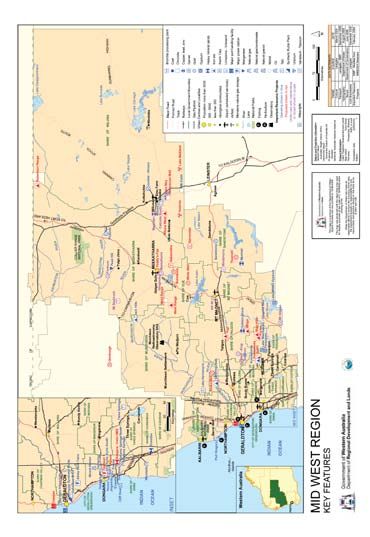
Figure 1: the Mid West Region

                                   Introduction
                                   The Mid West and the Western Australian Government
                                   are ideally placed to plan for sustainable futures
                                   having gained from the experiences from previous
                                   phases of economic growth, particularly in the Pilbara
                                   and Goldfields. Recognising the negative impact in
                                   other regions from inadequate provision of economic,
                                   community and social support infrastructure is a
                                   significant incentive to think and plan for balanced, long
                                   term outcomes.
                                   The benefits of timely and strategic public investment in
                                   the Mid West will have impacts that extend outside of the
                                   region, even providing nationally significant outcomes
                                   including:
                                   •   optimising returns for the Mid West’s export
                                       industries with a well developed and efficient
                                       infrastructure framework;
                                   •   creating diversity of industry which lays a platform for
                                       sustainable growth; and
                                   •   reflecting relevant, proactive planning approaches
                                       that meet local community needs and aspirations.
                                   MWDC intends to use the MWIP in conjunction with
                                   the MWRPIF to secure and guide public and private
                                   investment into the Mid West region.

2 Mid West Investment Plan
Overview of Mid West
Investment Plan
Together with the MWRPIF, the MWIP is designed to
provide a strategic direction for the Mid West region
over the next ten years to 2021. The MWIP outlines the
community priorities in the Mid West as a set of projects
designed to have an impact across the region. In the
development of this document, the intent has been to
characterise the region and its component sub regions
and outline the specific objectives that MWDC considers
important in delivering its vision across the region.
Through the process, the MWDC has taken the following
into consideration:
•   Recognise that a ‘balanced’ region requires
    investment in both the economic and social/
    community support infrastructure to support the
    aspirational goals of the community;
•   Engage the wider community and all tiers of
    government to identify existing and emerging
    infrastructure pressures throughout the Mid West and
    Western Australia over the next 10 to 20 years;
•   Collate these infrastructure requirements and
    prioritise according to relevant criteria;
•   Work with the public and private sectors to identify
    investment opportunities and form working
    partnerships to deliver projects to the region in a
    timely fashion;
•   Create a greater level of certainty about the priorities
    and timing of major infrastructure development;
                                                               To deliver on the priorities within the MWIP, effective
•   Provide a framework for identification of infrastructure
                                                               partnerships will be required between:
    needs and a process for ensuring new projects are
    incorporated into an evolving MWIP; and                    •   Local government
•   Develop project budgets based on an appropriate            •   Regional Development Council
    mix of investment from both the public and private
                                                               •   Department of Regional Development and Lands
    sectors.
                                                               •   Western Australian Regional Development Trust
In addition, the following aspirational goals were in place
and projects that were considered high priority generally      •   Aboriginal groups
satisfied one or more of the following criteria:               •   Non government organisations
•   capturing opportunities;                                   •   Planning committees
•   improving the quality of life:                             •   Communities
•   increasing social equity;                                  •   State government departments
•   enhancing economic diversity and productivity; and         •   Federal government – including Regional
•   reducing the impacts on the environment.                       Development Australia
                                                               •   Industry eg Geraldton Iron Ore Alliance
                                                               •   Non profit organisations

                                                                                                       Mid West Investment Plan 3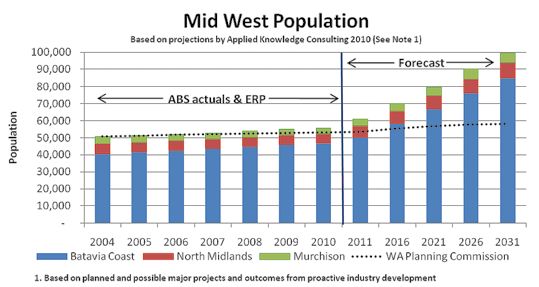
Mid West Investment Plan Structure
   The Plan is presented in three sections. SECTION ONE         A ‘Master List’ of the recognised infrastructure needs
   provides an outline of the Mid West and the social,          was developed through reference to the Mid West
   economic, planning and infrastructure considerations         Infrastructure Analysis (WAPC, 2008) and consultation
   taken into account in the development of the MWIP.           with local government at the sub regional Country Local
   SECTION TWO outlines the objectives for the Mid West         Government Fund (CLGF) planning workshops. Further
   region, with each having a series of priorities to provide   detail was obtained through direct dialogue with regional
   a focal point for actions. SECTION THREE – PRIORITY          government and non government organisations in
   PROJECTS and MASTER LIST details the initiatives and         interviews and two workshop events. The workshops at
   projects required to be undertaken in the Mid West to        the beginning and end of the consultation phase provided
   enhance the Region’s economic and social development.        several opportunities for regional decision making.
   The key components of the MWIP are the investment            Furthermore, the MWDC maintains a register of proposed
   in economic infrastructure (railways, roads, ports,          and planned projects in the region.
   communication, electricity and utilities) and the social
   and community infrastructure (health, education, town        Project Prioritisation
   revitalisation and recreation facilities).                   Through this process, an agreed list of Mid West projects
                                                                was assessed and prioritised into three categories:
   Consultation                                                 •   High – projects that will provide significant economic
   To ensure the projects that make up the MWIP reflect             and/or social benefit to the local community and
   the community views, extensive consultation and                  demonstrate regional benefits. Essential for
   assessment of existing planning processes occurred               economic growth;
   throughout the region. In establishing the potential
   projects within the Mid West, all tiers of government,       •   Medium – projects that provide valuable social and/
   non profits, industry, community and private sectors were        or economic benefits. Broad regional benefit and
   consulted directly on at least two occasions and more            important for regional growth; and
   frequently via telecommunication.                            •   Low – provide some social and/or economic benefits
                                                                    as well as broader regional benefits. Worthwhile for
                                                                    regional growth.
                                                                After further consolidation of project details, the MWDC
                                                                Board identified the “Flagship” projects. These were
                                                                categorised as absolutely essential to the region and had
                                                                a demonstrated need to be progressed substantially or
                                                                completed within four years, therefore requiring urgent
                                                                funding consideration.
                                                                It is important to note that priorities identified in the
                                                                MWIP were determined by sub regional communities
                                                                and the MWDC Board. The focus of many of these high
                                                                priorities and “Flagship” projects has been on community
                                                                related infrastructure, noting that these predominantly
                                                                sub regional projects were generally not the focus of the
                                                                MWRPIF.

                                                                Process
                                                                Each of the projects has been divided into relevant
                                                                categories, which include the following. The key areas
                                                                under which the MWIP is being developed include:
                                                                •   Infrastructure and Services
                                                                •   Community Development and Town Centre
                                                                    Revitalisation
                                                                •   Tourism
                                                                •   Industry
                                                                •   Housing and Land Development
                                                                •   Utilities
                                                                •   Health
                                                                •   Education
                                                                •   Energy
                                                                •   Maritime
                                                                •   Environment

4 Mid West Investment Plan
SECTION 1
THE MID WEST REGION
Mid West Investment Plan 5Regional Summary Murchison
The Murchison comprises the shires of Cue, Murchison,
Meekatharra, Yalgoo, Wiluna, Sandstone and Mount
The Mid West Region and Sub Regions Magnet. It covers 88% of the region’s landmass but
The Mid West extends from Green Head to Kalbarri has only 6% of the Mid West population (approximately
and more than 800 km inland to Wiluna, covering 3,450). Retaining and growing population share is a
approximately 466,766 km2 or nearly one-fifth of the area significant challenge and largely dependent on influencing
of Western Australia. The region is home to an Estimated a change in fly-in/fly-out (FIFO) workforce approaches
Resident Population (ERP) of 54,984 (Australian Bureau of of resource companies. Despite low population, the
Statistics (ABS) 2009) in settlements ranging from small Murchison hosts the majority of existing and proposed
villages to a regional city. resource projects.
Due to the remote location and ‘radio quietness’ of this
Local Government in the Mid West sub region, the Murchison has been selected as one of
The large area and widely dispersed settlements are two possible sites for the 1.5 billion Euro International
serviced by 18 local governments in the Mid West, Square Kilometre Array (SKA) radio telescope. Through
divided into three distinct sub regions that demonstrate the development of the preliminary studies and
similarities of environment, land use, demography, construction of the Australian Square Kilometre Array
industry and issues. Throughout the development of Pathfinder (ASKAP) at the Murchison Radio-astronomy
the MWIP, consultation with local government and the Observatory (MRO), this internationally significant
community has been along sub regional groupings. scientific project has already delivered tangible benefits
Importantly, experience has shown that effective to the region, which are expected to increase as the
engagement necessitates such an approach, providing project progresses.
each sub region with the capacity and opportunity to
Historically, the production of wool on pastoral stations
present their specific local priorities. Further details
was the complementary industry to mining. Over a
of each of the local governments are provided in
decade of dry seasons, increasing predation by wild dogs
Appendix 1.
and global economic impacts on wool markets have all
negatively impacted the pastoral industry. Tourism is an
increasingly important industry for the economic diversity
of the region and outback tourism has great potential for
growth.
Approximately 30% of the Murchison sub region’s
population is Aboriginal, however, ABS population
estimates of the Aboriginal population is likely to be
significantly understated. There is evidence of significant
social disadvantage in Murchison communities, with
education and health outcomes below the regional
average. However, this tends to be obscured in data
presented on a regional basis.
6 Mid West Investment PlanNorth Midlands Given its climate
The North Midlands comprises the shires of Carnamah, and latitude, the
Coorow, Morawa, Perenjori, Mingenew, Three Springs North Midlands are
and Mullewa and is home to 10% of the Mid West identified as one of
population (approximately 5,400). A significant proportion Australia’s best locations for
of the North Midlands (11%) population are Aboriginal, renewable energy projects,
however, some towns have higher proportional Aboriginal with wind, solar and hot
populations. For example, 28% of people in Mullewa and rocks all providing
23% of people in Morawa identify as Aboriginal. real development
opportunities.
The North Midlands population tends to be older, as While renewables
young people often leave to pursue education and work would provide
opportunities elsewhere. Once again, retaining and economic
growing its population share is a challenge to the North diversity, this development
Midlands, where the ageing demographic tends to retire is impeded by current
to the coast. reliance on access
Since the first settlement of this sub region in the mid to the South West
1800s, agriculture has dominated the landscape and Interconnected System
remains the predominant industry base supporting (SWIS) transmission
the population. Farm amalgamation, a decade of dry infrastructure, which is
seasons, increasing fuel prices, declining profit margins, inadequate for current
uncertainty in commodity markets and GFC related credit loads, let alone forecast load growth.
constraints have all driven structural adjustment within
the agriculture sector. Batavia Coast
The Batavia Coast sub region comprises the primary
More recently, a number of iron ore projects within close
centre of Geraldton-Greenough and the surrounding
proximity to towns such as Perenjori and Morawa have
shires of Chapman Valley, Irwin and Northampton. The
been developed and two long life magnetite projects
majority (84%) of the region’s population lives in the
(Karara and Asia Iron Extension Hill) provide major
coastal locations of Geraldton, Dongara and Kalbarri,
economic opportunities for a number of North Midlands
with 37,900 people (est. 2009) residing in the City of
communities. Concerns have been raised about housing
Geraldton-Greenough.
availability and the timely provision of social infrastructure
in Morawa and Perenjori in particular, to capture benefits Geraldton is the regional centre for retail, manufacturing,
associated with these projects. commercial fishing, shipping, transport, health services,
education (preschool through to tertiary level) and is
On the coastal fringe of the North Midlands, including
the seat of Mid West government business. Geraldton
the coastal towns of Green Head and Leeman, western
is at the heart of a sub region characterised by rapidly
rock lobster (WRL) fishing is a significant local industry.
growing communities within these coastal shires, which
Since 2009/10, the WRL industry has undergone major
will provide the base for the population expansion in the
changes due to alarming biological indicators driving
Mid West region.
the Department of Fisheries to adopt an alternative
fisheries management strategy. The introduction of The Batavia Coast attracts significant numbers of visitors
a Total Allowable Catch for the fishery and individual keen to experience the coastline in proximity to good
quota allocations to licence holders is probably the most amenities. Completion of the Indian Ocean Drive will
substantial change to the WRL industry since 1963 when increase opportunities and further development of tourist
it was declared a limited entry fishery. The changes will product.
assist ensure the viability of the industry as well as the
Centres in the Batavia Coast have the potential to
sustainability of the fishery.
facilitate fly-in/fly-out (FIFO) or drive-in/drive-out (DIDO)
There is growing pressure for the coastal settlements arrangements to their respective mines and base their
of Green Head and Leeman to expand. This pressure usual residence in these coastal localities.
will increase now that Indian Ocean Drive has been
completed and there is potential for further development
pressure and increased tourist numbers in the coastal
areas of this sub region.
Tourism is important in the North Midlands with coastal,
holiday peak seasons being a focus for many southern
Western Australians. However, the inland attractions of
heritage and wildflowers are driving the development
of new tourist trails to capitalise on attractions that are
available outside of the relatively short wildflower season.
Mid West Investment Plan 7Coordinated Planning in the Mid West Mid West Regional Planning Committee
Good regional investment planning is essential to The DOP and WAPC operate a number of Regional
the delivery of balanced outcomes over such a large Planning Committees throughout the State. The MWRPC
and diverse region. An estimated $19 billion worth of is developing the MWRPIF. This sets the strategic
projects are planned or in progress in the Mid West over planning framework at a regional level and endeavours
the next 5-7 years. The major proposed project is the to address the region’s major strategic economic
Oakajee development, which is considered “the single infrastructure priorities such as port, rail, industrial
most important project for Western Australia’s economic estate and infrastructure service corridors etc. As part
development over the next 50 years” (Premier Colin of developing the Framework, a process was run by the
Barnett, March 2009). MWRPC and the DOP to identify and prioritise regional
infrastructure requirements in the Mid West. For the
Oakajee will trigger major investment through the
purpose of this process, infrastructure was broadly
region. Development of suitable social and community
classified as being regionally significant if it would:
support infrastructure will complement the substantial
economic infrastructure existing and proposed for the • support or enable the development of the regional
Mid West. The MWIP aims to identify the opportunities economy; and/or
for investment in infrastructure to support regional growth • perform a function that caters for a regional
and be prepared for the real pressures likely to be placed catchment.
on existing infrastructure by massive developments such
as Oakajee and its associated mining projects. The Identifying the Mid West’s regionally significant
timely provision of socio-economic infrastructure affords infrastructure requirements involved extensive
a unique opportunity for hinterland communities to consultation with State Government agencies and other
capture long term benefit from the resources sector. regional stakeholders.
In order to address challenges and capture opportunities, Once identified, the regional infrastructure projects
considerable coordination between the various planning were prioritised by the MWRPC and the Infrastructure
processes currently being undertaken in the region is Coordinating Committee (ICC) at a joint workshop held
required. Courtesy of the MWIP and the MWRPIF, the in November 2010. The outcomes of this process were
Mid West is now ideally placed to deliver infrastructure in endorsed by both committees in February 2011 and have
line with regional strategic planning. subsequently been incorporated into the MWRPIF. The
Framework will soon be released by WAPC as a draft
document for public comment along with a supporting
document, the Mid West Regional Infrastructure Priorities
Project 2010 Workshop Paper, which consolidates the
proceedings and outcomes of the joint workshop.
Infrastructure Coordinating Committee
The Committee consists of Directors General of the
State Government Departments involved in the provision
of infrastructure in the State and advises the WAPC on
planning for the provision of physical and community
infrastructure throughout the State. It has the powers to
coordinate the metropolitan development program, the
country land development program, and the provision of
infrastructure for land development.
The ICC was actively involved in the process run by
the MWRPC to identify and prioritise the Mid West’s
regional infrastructure requirements and participated in
the November 2010 joint workshop. In February 2011
the ICC endorsed the findings of the joint workshop with
the MWRPC and supported the release of the Mid West
Regional Infrastructure Priorities Project 2010 Workshop
Paper. This process will allow the WAPC, through the
ICC, to provide the State Government with a coordinated
position on the Mid West priority regional infrastructure
requirements.
8 Mid West Investment PlanMid West Strategic Infrastructure Group 1. Heavy rail
The Mid West Strategic Infrastructure Group (MWSIG) transport is
was established in mid 2005 by the MWDC to support critical for
the timely development of strategic infrastructure (roads, some large
rail, port, power, water etc) necessary to facilitate major mining projects and the
projects. This Group, which continues to meet bi development of a robust
monthly, focuses on resources projects and specifically rail network will be
the establishment of an iron ore industry in the Mid West. instrumental to
MWSIG provides a regular forum for regional officers to the prosperity
keep up to date with progress of the many current and of current
planned projects for the Mid West, and acts as a key and future
regional coordination group. resource
projects;
Mid West Economy 2. Establishment of rail and
Despite the challenges of servicing a large geographic infrastructure corridors,
area, the advantage of the Mid West is its broad including detailed
economic base. It is dominated by mining with major alignment planning,
contributions from agriculture, retail, tourism, fishing, land acquisition and
aquaculture, construction, renewable energy, technology assembly;
and manufacturing industries.
3. Future water supply
The Gross Regional Product (GRP) for the Mid and associated infrastructure requirements for the
West region in 2009/10 (see fig. 2) was $4.5 billion, hematite and magnetite projects are uncertain;
representing a 2.4% contribution to Gross State Product
4. Power supply has been identified as inadequate by
(Mid West: a region in profile 2011 - Department of
industry and several local governments. This has
Regional Development and Lands (RDL); MWDC). Mining
the potential to act as an impediment to additional
constitutes 52% of the GRP for the region.
growth and development;
Figure 2. 2009/10 Gross Regional Products by Sector (%)
5. Parts of the road network throughout the region
Retail, 11 Manufacturing, 9 require upgrades based on current condition and this
Oil & Gas, 1 will be exacerbated by ongoing and increased heavy
Tourism, 5
Mineral Sands, 6
vehicle usage;
6. Uncertainty regarding the full scale of resource
Copper & Other operations, and actual population growth rates,
Agriculture, 16
Minerals, 10 means that the demonstrated need for government
investment will remain a contentious issue;
7. Strategic planning support has not kept pace with the
Iron Ore, 7 Fishing, 4
increased volume of statutory planning applications;
Construction, 3 and
Nickel, 8 8. A number of inland towns have declining populations
Gold, 20
and are working to gain economic growth as a spin
off from resource development in the region. It is not
Infrastructure in the Mid West clear how growth in this sector will influence these
towns, but there is a strong desire to plan to identify
The WAPC’s Mid West Infrastructure Analysis (MWIA)
and capture benefits wherever they exist. One such
(2008) provided options for consideration by Government.
opportunity is to make towns (eg Morawa, Perenjori,
This report recommended a more realistic medium term
Dongara, Geraldton) more ‘liveable’ such that some
projection to ensure the existing core infrastructure,
proportion of the mining workers from nearby Karara
particularly rail, roads, port and social infrastructure is
and Extension Hill may reside locally.
upgraded and maintained, and further strategic planning
for urban and industrial growth is undertaken. Within The growth of the resources sector in the Mid West is
the region key infrastructure is in need of revitalisation somewhat limited by the current state of the infrastructure
and reinforcement. There are constraints to future in the region. The Mid West Infrastructure Forum held
development imposed by inadequate capacity across a in Geraldton by the MWDC in April 2005 highlighted two
number of key areas. major infrastructure bottlenecks in getting product from
the mine to market. These are 1) the lack of an efficient,
The MWIA was undertaken to identify the current and
high capacity rail network; and 2) that the Geraldton port
future demands for infrastructure that had a whole
is constrained by the size of ships it can handle. The
of region impact. This examination of Mid West
establishment of a strategic (heavy) industrial area was
infrastructure identified the following as key issues:
noted as a potential third obstacle. The establishment of
Oakajee would address these bottlenecks.
Mid West Investment Plan 9Oakajee Mid West Energy Stage 1 is the construction of
The proposed development of the Oakajee deepwater transmission lines from Pinjar to Eneabba (Carnamah),
port and industrial estate (initially driven by the high which connects through to the Karara and subsequently
volume hematite and magnetite iron ore projects) is to Asia Iron (Extension Hill) mining projects east of
anticipated to create significant economic activity and Morawa / Perenjori. Mid West Energy Stage 2 involves
pressures on existing infrastructure. State and Federal the construction of power lines from Eneabba to Oakajee
funding of $678 million for common use port facilities (159 km). It is identified as a key regional priority
reflects the importance of the Oakajee project at national and the State Government is seeking funding for this
and state levels. development through Infrastructure Australia.
The existing Geraldton Port will continue to play a vital This infrastructure will enable the region to optimise the
role in facilitating new mineral exports but does not have significant opportunity for a diverse renewable energy
the capacity to manage expected iron exports upwards of sector from demonstrated wind resources, potential
45 mtpa and potentially 100 mtpa. In addition, Geraldton wave energy, geothermal leases, some of the highest
Port is constrained by depth and urban development. solar indices in Australia for photovoltaic or solar thermal
plants and ample land to develop bio fuel resources.
Mid West Energy Stage 1 and 2 The 20% target for renewable energy in 2020 and likely
carbon pricing place the Mid West in an advantageous
The provision of power is seen by regional stakeholders,
position to become a focus for the production of
including MWDC, as the single biggest impediment to
renewable power.
growth in the Mid West region. The major development
projects that are planned heighten the Mid West’s need
SMART Mid West and Murchison Radio-
for a secure, high capacity electricity transmission
network to underpin the future economic and social astronomy Observatory
growth of the region. The proposed project is broken into MWDC has progressed a SMART Mid West policy
two phases and involves upgrading the existing 132 kV to for over a decade. It involves the development
a double circuit 330 kV transmission line. and integration of education, training and research
institutions within the Mid West, together with the
technology, processes and infrastructure by which they
operate. An objective is the transfer and involvement
of this knowledge base to Mid West industry and the
community. The MWDC has used SMART Mid West
to form partnerships with education and technology
stakeholders and some of the notable outcomes include
the establishment of the Geraldton Universities Centre
(GUC), the Separation Point Marine Precinct (SPMP), the
Mid West Science Summits and the ASKAP project.
The Mid West is establishing one of the world’s premier
sites for radio astronomy at the MRO in Boolardy Station
– 280km north east of Geraldton. The Federal and State
governments (and a range of other partners) have already
committed funds to precursor projects including the
Australian Square Kilometre Array Pathfinder (ASKAP)
and the Murchison Widefield Array (MWA) project. This
commitment has included the development of the
National Broadband Network (NBN) project between
Perth and Geraldton and further connection between
Geraldton and the MRO. There is a commitment to build
a facility support centre in Geraldton to support radio
astronomy projects. There is also potential to facilitate
the development of locally based technology industries.
There is significant opportunity to identify and capture
synergies with all ‘SMART’ projects and infrastructure
to diversify the Mid West’s economic base, enhance
communications and service delivery, and increase
student participation in tertiary education. The
development of the region’s renewable energy sector,
and the further development of the GUC and the Durack
Institute of Technology (Durack) are in keeping with this
ethos.
10 Mid West Investment PlanSECTION 2
MID WEST INVESTMENT PLAN OBJECTIVES
Mid West Investment Plan 11Project Objectives Summary Outcome 2
A refreshed and revitalised Mid West
Outcome 1
• Revitalisation of the smaller towns throughout the
Sustainable increase in population Mid West with investment in essential recreational,
• Population growth across the Mid West Region. cultural and heritage facilities.
• Retention of current residents. • Investment in streetscapes and main street programs
• Conversion of FIFO to DIDO workforce to resident to improve the aesthetic appeal of towns.
population. • Resources available to address structural or land/
• Continued and focused promotion of the Mid West as planning issues that may be required to improve main
a desirable place to live, work, study and invest. street or town functionality.
• Attraction of the `retiree’ demographic to the Mid • Investment in the local Community Resource
West. Centres (CRC) (Telecentres) to support community
development initiatives.
• Population retention of youth linked to employment
and education opportunity. • Investment in Childcare facilities to enable parents to
fully engage in employment opportunities that may
• Reduced need to leave the Mid West for training or be available.
higher education.
• Improved access to, and participation in, artistic and
• Retention of the `younger’ demographic to settle in cultural activities and facilities.
the Mid West for lifestyle, business, employment and
family reasons. Outcome 3
• Coordinated planning to accommodate predicted Enhanced regional unity and promotion
population growth and account for rapid escalation in • A collaborative and unified approach to development
population as major projects commence. in the region.
• Provision of quality housing and accommodation to • The marketing and promotion of the region as a
meet the needs of all sectors. complete package as a place to visit, live, work,
study and invest.
• Demonstrate the investability/liveability of the Mid
West to attract and retain people to the region.
Outcome 4
Balanced urban and coastal development
• Phased urban development including residential,
commercial and tourism uses and public open space.
• Provision of residential and industrial land sufficient
for present and future needs.
• Planning and delivery of services to ensure
community and industry infrastructure progress
concurrently.
• Development of eco friendly accommodation options.
Outcome 5
Improved government services
• Improvement of services through identifying gaps in
service delivery.
• Exploring alternative delivery models for government
services to remote communities.
• Provision of better quality government buildings,
offices and staff housing in the Mid West.
• Further development and availability of health and
education resources to the community to improve
regional quality of life and attract and retain people.
• Improved tax rebates and allowances for staff
working in regional areas.
12 Mid West Investment PlanOutcome 6 Outcome 8
Effective health service delivery Positive
• Long term positive health outcomes for the region’s outcomes for
residents. Aboriginal people
• Develop a broader range of health service provision. • Improved health and
• Development of specialist services that can be education outcomes
accessed across the region. for Aboriginal
people in the
• Provision of appropriate locally based aged care and Mid West.
independent living facilities to encourage people to
remain in the region. • Targeted
programs and
• Improved Aboriginal health outcomes across the Mid services for Aboriginal
West region. groups, particularly youth
and women’s support
Outcome 7 programs.
A skilled and educated Mid West community • Culturally
• Increase the level of participation in higher education appropriate facilities
across the Mid West. to permit Aboriginal
• Increase range and capacity of university and training people of all ages to
options available at GUC and Durack. gather, learn and play.
• Industry relevant training and education options • Improved employment and business opportunities for
accessible to the whole Mid West community. Aboriginal residents.
• Enhanced capacity building for community leaders • Enhanced self determination through increased
and groups, and retention of these skills in the Mid participation in local and state governments and
West. regional organisations.
• Attraction of skilled people to the region. • Further enhancement of Aboriginal art programs
• Implementation of Mid West Gascoyne Workforce • Hostel accommodation available to support
Development Plan. Aboriginal people to access health and education
services.
• Quality information technology and communication
services. • Support for recently established Mid West Aboriginal
Workforce Development Centre (MWAWDC).
• Increased numbers and choice of traineeship and
apprenticeships based in the region.
• Ongoing partnerships with industry in the region
to ensure delivery of suitable training to meet local
demands.
• Enhancement of research and SMART facilities
to drive innovation and creativity, and support
entrepreneurship.
Mid West Investment Plan 13Outcome 9 Outcome 10
Improved regional infrastructure to facilitate Prosperous and diverse primary industries
coastal and inland development • A diverse and resilient primary industry sector.
• Improved power infrastructure. • Further diversification of fishing, agricultural and
• Improved roads systems where main arterials are pastoral industries.
safe and meet increased traffic loads. • Value adding opportunities capitalised.
• Improved communication technology and services. • Improved key infrastructure to support industry,
• Adequate, safe, secure and well managed water particularly water, energy, transport and
supplies. communications infrastructure.
• Improved facilities for sewage and wastewater • Sustainable practices adopted as standard in the Mid
treatment. West agriculture, pastoral and fishing industries.
• Regional waste facility/facilities. • Continued investment in horticulture, agriculture
and pastoral activities, and fisheries research and
• Expansion of alternative and renewable energy management.
resources.
• Enhancement of research and SMART facilities to
• Improved airport facilities at large regional centres drive innovation and creativity, and support private
and smaller outlying towns. sector entrepreneurship.
• Development of ports, harbours, marinas, jetties • Encourage investment in aquaculture and fish
and boat ramps to support industry and suit the farming.
commercial and recreational needs of the region.
• Enhanced job and career development and
• Implementation of important cross regional initiatives succession planning in primary industry to retain
to continue to connect the inland to the coast eg younger generations within the family business.
PortLink project.
• Rail networks to adequately support mining and Outcome 11
agriculture industry needs. Diversified and enhanced minerals and energy
• Infrastructure corridors planned to meet current industries
and future needs for transport, energy and utilities • New mining and oil and gas ventures commenced in
infrastructure. the Mid West.
• Greater level of exploration for natural resources.
• Promotion of Mid West communities as sources of
labour and services for new mining, and as bases for
FIFO or DIDO operations
• Provision of relevant support infrastructure such as
power, rail and roads.
• Development of Geraldton and Oakajee ports and
industrial estate to support start up projects and
products.
• Provide port facilities that cater for both bulk and
‘boutique’ (relatively low volume containerised)
exports.
14 Mid West Investment PlanOutcome 12
Continued expansion of the tourism industry
• Mid West region to be a major tourism destination
with an established brand.
• Attractions and services to satisfy a diverse profile of
tourists.
• Unique tourism experiences eg wildflowers, Abrolhos
Islands, Outback Pathways and Aboriginal Tourism.
• Abrolhos Islands promoted as an accessible,
ecofriendly tourism site.
• Improved air services both within and to the region.
• Broad range of accommodation types available.
• Safe and regularly improved road networks eg
additional passing lanes along the Indian Ocean
Drive.
Outcome 13 Outcome 14
Establishment of new and innovative industries A valued and
and services protected natural and built environment
• Encouraging innovation and creativity across all • Appropriate assessment, management and regional
sectors eg SMART Mid West. planning of the competing demands on the natural,
built and social landscape e.g. land and water.
• Identify and pursue new opportunities such as the
development of renewable energy initiatives. • An appropriate coastal management strategy is in
place and resources committed to protection and
• Developing collaborative advantage through clusters management as required.
and technology business hubs eg Mid West as the
centre for renewable energy in Western Australia. • A long term approach to sustainable natural resource
management.
• Increased export opportunities for Mid West
products. • An effective and adequately resourced regional waste
management strategy.
• Development in partnership research facilities eg
SKA, climate change, renewable energy, Abrolhos • Balance between a growing economy, environmental
Islands research facilities at Rat Island etc. and community values.
• Heritage sites identified, protected and conserved.
• Increased use of renewable energy at large (utility)
and small (domestic and civic buildings) scales.
• Climate change and carbon neutral approaches to
planning.
• Appropriate management of the crown conservation
estate.
Mid West Investment Plan 15Outcome 1: QUICK FACTS & STATS
Substantial Increase in Population Source for statistics: ABS 2009
The estimated population of the Mid West Region in 2009 • The ERP of the Mid West region in 2009 was 54,984.
was 54,984 (ABS, 2009), 2.4% of the total population
• Geraldton ERP (2009): 37,895
of Western Australia. In 2004, the WAPC forecast the
population of the Mid West to increase to 58,100 in • North Midlands ERP (2009): 4,555
2031, however, by 2009 the region’s population had • Batavia Coast ERP (2009): 46,978
almost reached the projected estimate for 2015 of
55,000 residents. These variances continue to challenge • Murchison ERP (2009): 3,451
the appropriate planning for community and social
support infrastructure throughout the region. Population
projections for Western Australia also show that the
average age of the population will increase, which also
needs to be factored into infrastructure planning.
The City of Geraldton-Greenough has the largest
population of the region’s 18 local government areas
with 37 895 residents, 68.9% of the regional total. The
smallest is in the Shire of Murchison with an estimated
114 residents. In the 10 years to June 2009, the region’s
population increased at an average annual rate of 1.0%
(See Table 1 for Population details by local government
area (RDL 2011)). The highest population increase was
in the Shire of Irwin, where the ERP grew at an average
annual rate of 2.2%. The greatest decline was in the
Shire of Meekatharra, with an average of -3.2% per
annum over the same period.
Aboriginal people make up 10.6% of the Mid West
population, with 5,493 estimated residents. The Shire
of Meekatharra has the highest proportion of Aboriginal
people at 51.6% of the population. With some Aboriginal
people being transient, the number and location of
Aboriginal people is difficult to quantify, particularly in the
Murchison. This has implications for service delivery.
Figure 3: Mid West Population Growth
16 Mid West Investment PlanTable 1: Population Scenarios (Mid West Region
Investability Model Phase Three – Applied Knowledge
Consulting 2010)
Source 2016 2021 2026 2031
ABS 63,014 (2015) 70,601(2020) 79,103(2025) 88,628(2030)
WAPC 55,400 57,000 57,800 58,100
Economic
Forecast 63,990 72,960 81,305 90,431
Economic
Forecast with
multiplier 70,089 79,824 89,988 99,681
Table 2: Population growth in the Mid West 1999-2009 by
local government (RDL 2011 Regional Snapshot)
AAGR Aboriginal
% share
Region/LGA 1999 2009 1999- % share
2009
2009 % 2006
MID WEST 49,847 54,984 100.0% 1.0 10.6%
Carnamah (S) 857 763 1.4% -1.2 5.9%
Chapman Valley (S) 873 1,069 1.9% 2.0 4.1%
Coorow (S) 1,478 1,185 2.2% -2.2 1.6%
Cue (S) 391 302 0.5% -2.5 38.8%
Geraldton/Greenough (C) 31,854 37,895 68.9% 1.8 9.0%
Irwin (S) 2,898 3,595 6.5% 2.2 2.2%
Meekatharra (S) 1,690 1,218 2.2% -3.2 51.6%
Mingenew (S) 599 457 0.8% -2.7 5.9%
Morawa (S) 1,048 882 1.6% -1.7 11.6%
Mount Magnet (S) 798 664 1.2% -1.8 24.7%
Mullewa (S) 1,100 878 1.6% -2.2 30.1%
Murchison (S) 157 114 0.2% -3.1 34.5%
Northampton (S) 3,244 3,541 6.4% 0.9 5.7%
Perenjori (S) 620 536 1.0% -1.4 11.1%
Sandstone (S) 147 133 0.2% -1.0 25.2%
Three Springs (S) 787 732 1.3% -0.7 6.4%
Wiluna (S) 985 755 1.4% -2.6 40.7%
Yalgoo (S) 321 265 0.5% -1.9 42.8%
Source: ABS 2009
Mid West Investment Plan 17Outcome 2:
Refreshed and Revitalised Mid West • Upgrading of existing road, energy,
Effective regional development relies on the provision telecommunications and rail networks;
and maintenance of infrastructure. Without adequate • Reducing the impact of heavy vehicles through
infrastructure in power, water, telecommunications townsites;
and social infrastructure, towns and whole regions
will deteriorate, forcing the population towards the • Restoring the capacity of existing essential service
metropolitan area or major regional centres. Maintaining infrastructure to cater for current needs and future
and upgrading infrastructure is essential to ensure the growth;
region and its communities can meet the current and • Enhancing the ability of inland towns to attract new
future needs of its residents, as well as attract and retain residents and businesses; and
new residents.
• Providing local government with adequate planning
A constant theme in consultations with the Mid West resources to support future growth arising from major
local governments was the need for revitalisation and/or projects including Oakajee and related developments.
enhancement of their towns with investment in essential
recreational, cultural and heritage facilities. In general, Sporting and recreational facilities in many towns are
enhancements to socioeconomic infrastructure and either lacking altogether or out dated and no longer able
improvements to the aesthetics and functionality of main to meet current needs. Swimming pools, sporting clubs
street and town areas were consistently identified. and town halls are probably highest on the list of priorities
for upgrades, as a large number were built back in the
A number of common issues have been identified that 1960’s-70’s and require upgrading or replacement.
affect most local governments in the Mid West, including:
With the ageing population the provision of aged care
facilities is of increasing importance. In particular,
investment in aged care that provides pathways from
low through high and to intensive care will have benefits
by retaining several generations of families within the
community. Elderly people who are no longer able to stay
on their rural properties or who want to move out of larger
homes require a secure place that can accommodate
their needs, while also remaining connected to friends
and family in the region. In this respect, supportive health
facilities are fundamentally important to retaining people
in communities.
The lack of infill sewage in a number of communities can
impact the environment, have health implications and will
require future investment to facilitate further growth and
development in the region. As awareness of the benefits
of recycling programs and reducing the environmental
footprint penetrates the community, the need for
sub regional landfill sites for commercial and household
waste and a regional waste strategy is becoming
increasingly important.
Availability of land (residential, commercial, industrial)
is fundamental to regional development and the ability
of communities to capture benefit from major projects.
Innovative models to encourage both public and private
investment need to be developed to meet this need.
Roads are a key priority for local governments in regional
areas and this was reflected in the Mid West local
government workshops. The large region and dispersed
population centres means that all residents are reliant
on quality and safe road infrastructure for the operation
of their businesses, supporting industry and private
activities.
18 Mid West Investment PlanOutcome 3:
Enhanced Regional Unity and Promotion
The Mid West region is one of nine Regional Development
Commission regions in Western Australia. Each of the
sub regions within the Mid West (Batavia Coast, North
Midlands and Murchison) are distinct and their population
centres are significant distances from each other. The
development of these sub regional groupings as well
as dialogue between local governments on reform has
enhanced a collective perspective to regional planning.
Working together would improve the region’s leverage in
attracting developments, residents and services.
A united approach to planning for infrastructure
investment across the Mid West is required to ensure that
project development and delivery of infrastructure occurs
efficiently and equitably. While the MWRPIF will address
infrastructure needs at a regional level, there is a need for
a similar, sub regional approach for economic, community
and social infrastructure. In collaboration with the DOP,
the MWDC intends to work within that space and provide
MWIP as an ongoing vehicle for sub regional needs
assessments over time.
Tourism is primarily promoted through Australia’s Coral
Coast and Australia’s Golden Outback; the former being
a zone that stretches from Lancelin to Exmouth and the
hinterland covered by the latter. There is much to be
gained by a unified approach to marketing and promoting
the Mid West as a great place to live, work, study and
invest.
Mid West Investment Plan 19Outcome 4: A significant portion of each local government’s
Balanced Urban and Coastal Development population is located in a few centres. If this trend
continues, much of the growth predicted by 2021
The Mid West region covers an area of over 472,000 km2
will occur in these centres. Coastal centres such as
with a coastline that stretches approximately 330 km.
Geraldton-Greenough, Kalbarri, Port Denison, Leeman,
With a total population of around 55,000 the area has
Greenhead and Dongara are experiencing strong
a very low population density overall. With the steady
subdivision activity and this trend looks likely to continue.
decline of the agricultural and pastoral industry in much
The Murchison sub region faces a challenge in population
of the Mid West there has been a marked shift in the
retention.
demographic structure of the region.
The WAPC, with the DOP, has established the MWRPC.
People have moved away from the inland shires towards
The MWRPC is one of four new regional committees
coastal local governments such as Geraldton-Greenough,
established in Western Australia in response to economic,
Irwin, Coorow, Northampton and Chapman Valley. The
social and environmental pressures in the regions.
recent population figures substantiate this movement, as
there has been a steady population decline in many of Local governments and the DOP are conscious of the
the inland local governments over the preceding decades pressures of the demographic movement to coastal
and a proportionate incline in the population density of communities and the strains it places on social
the coastal local governments. The trend over the last infrastructure. For example the DOP, City of Geraldton-
four decades is almost a tale of two differing scenarios Greenough and the Shire of Irwin have initiated a
- local government areas with coastal communities (eg coastal planning project in the Dongara to Cape Burney
Leeman and Greenhead) have more than doubled in coastal area. This project will provide strategic planning
population while the rural (eg Mingenew) and pastoral guidance for future sustainable development, subdivision
areas (eg Murchison) have seen a slow and steady and land use along the Dongara to Cape Burney coastal
decline in population over that time. That said, a number strip underpinned by sound environmental principles.
of inland towns are reversing declining population as a It will result in the development of a strategic coastal
consequence of resource project developments. management plan that will be used by planners,
developers and the community.
A number of inland local governments also consider
that the anticipated resource developments in the region
could be leveraged to attract new employment and
business opportunities to existing towns. With new major
projects comes an increase in the regional workforce, and
this potential workforce will have a direct impact on the
size of the regional population. The effect on the local
communities will predominantly be gauged by the use of
FIFO workers in comparison with the number of resident
employees.
The City of Geraldton-Greenough has been proactive in
developing a sustainable future city planning initiative.
To make the most of the unprecedented development
opportunities and challenges facing the greater Geraldton
region, the City, supported by a $300,000 grant from
MWDC (through the Royalties for Regions Regional
Grants Scheme), is leading an innovative project to create
a collaborative vision and plans for the future. This
project will fully engage the local and regional community
to develop a long term framework for sustainable
development and growth for the region. The resulting
plan will provide all sectors of the region with a greater
level of agreement, clarity and certainty about the future.
20 Mid West Investment PlanYou can also read


