Modeling the Evolving Power Sector and Impacts of the Final Clean Power Plan - JENNIFER MACEDONIA, BLAIR BEASLEY, ERIN SMITH JUNE 2016
←
→
Page content transcription
If your browser does not render page correctly, please read the page content below
Modeling the Evolving Power
Sector and Impacts of the Final
       Clean Power Plan
 J E N N I F ER   M A C ED ON IA,   B L AI R  B E A S L EY,   E R I N   S M I T H

                                J U N E   2 0 1 6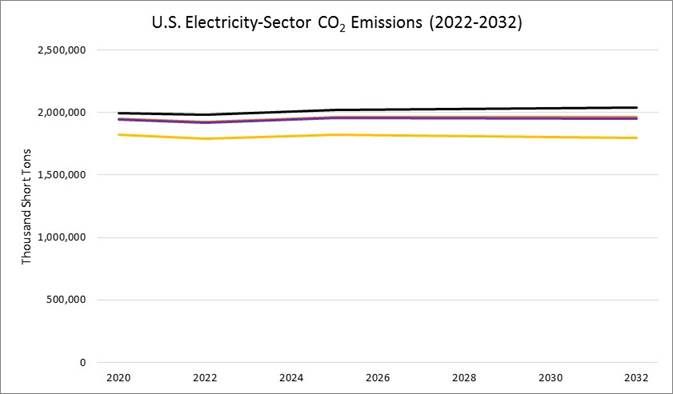
TABLE OF CONTENTS

                                                   •     High-Level Insights

                                                   •     Assumptions and Scenarios

                                                   •     Results and Findings
                                                           -    Evolving Baseline: Natural Gas and Renewables
                                                           -    Clean Power Plan Drives CO2 Below Baseline
                                                           -    Impact of Policy Pathway: Dual Rate vs. Mass
                                                           -    Credit and Allowance Prices
                                                           -    Impacts on the Generation Fleet
                                                           -    Factoring in Future CO2 Constraints
                                                           -    Patchwork of State Policy Choices
                                                           -    New Units and Updating Allocations

                                                   •     Appendix
                                                            - Model description and caveats
                                                            - Scenario descriptions
                                                            - Detailed assumptions

We
  appreciate
  comments
  from
  Dallas
  Burtraw,
  David
  Hoppock,
   Imran
  Lalani,
  Chris
  MacCracken,
  Meghan

McGuinness,
   Eddy
  Moore,
  and
  Tracy
  Terry.
  All
  errors
  and
  content
  are
  the
  responsibility
   of
  the
  authors.   2
High-Level Insights
HIGH-LEVEL INSIGHTS: GAS PRICE DRIVING TRENDS
• Low natural gas prices are
expected to drive many of the
power sector trends projected
under the Clean Power Plan (CPP)
• Lower gas prices:
– Increase the share of natural gas in
the generation mix
– Lead to additional coal retirements
– Depress wholesale electricity prices,
which make some of the existing
2030 Henry
Hub
Prices
nuclear fleet vulnerable to early (2012$/MMBtu)
retirement AEO
2015
Reference $5.61
– Influence how gas-fired generation BPC
No
CPP
$5.53
competes with renewable investments (High
Gas
Price)
to displace coal in compliance scenarios BPC
Reference $4.74
AEO
2016
No
CPP Case $4.53
Note:
AEO
stands
for
Annual
Energy
Outlook,
which
i s
published
annually
by
the
U.S.
Energy
Information
Administration 4HIGH-LEVEL INSIGHTS: EVOLVING BASELINE
• State energy policies, falling natural gas prices, and the extension of
federal tax incentives for renewables mean many states are
currently on track to comply with the Clean Power Plan
– The Production Tax Credit (PTC) and Investment Tax Credit (ITC) accelerate
wind and solar deployment, increase coal retirements, and reduce CO2
(even in the absence of the CPP)
• The CPP is not binding in the early years
– In most individual states, and
– Where states participate in trading
approaches at the interconnect level,
whether rate-based, mass-based with
existing units only, or mass-based
with existing and new units
• Even so, the CPP is projected to
accelerate and drive additional CO2
reduction and clean energy
investment
Note:
The
No
CPP
(EE)
case
is
a
business-‐as-‐usual
case
with
additional
energy
efficiency
i nvestments
available. 5CO2 IS BELOW CPP GOALS IN EARLY YEARS
Regional Electricity-Sector CO2 Emissions for Existing Sources
Note:
The
electricity-‐sector
emissions
shown
above
i nclude
all
c overed
CO2
emissions
from
existing
utility-‐scale
generation
i n
the
c ontiguous
U.S.
Emissions
from
new
units
and
units
that
are
not
c overed
by
the
CPP
are
not
i ncluded.
The
scenario
Mass
(existing)
assumes
all
states
6
implement
mass-‐based
interconnect
trading
c overing
only
existing
units
under
the
CPP.HIGH-LEVEL INSIGHTS: UNCERTAINTY AND TRADING
• The impacts from the final Clean Power Plan are dependent on:
- Market factors,
- State decisions yet to be made, and
- Perceptions about future carbon constraints
• Trading provides compliance flexibility across a broad range of potential
futures and a mechanism to approach least cost
• Allowing “banking” of allowances/credits for future use incentivizes early
reductions and reduces cumulative and future costs of reducing CO2 emissions
• Expanding trading regions over larger
areas tends to increase the benefits and
could help to offset uncertainty and
mitigate impacts of unforeseen events
- For example: unexpected
outages/retirements, wide range of
potential technology futures, extreme
weather such as droughts
7HIGH-LEVEL INSIGHTS: STATE POLICY CHOICE
• State implementation policy choices will influence the cost of compliance, as
well as the effectiveness of the program
- Broad adoption of rate-based trading with the subcategory rates would be
more expensive than broad adoption of mass-based trading
- Broad adoption of mass-based trading covering both new and existing units,
with each state choosing the new source complement (NSC), would result in
both lower cumulative CO2 emissions and lower cost than rate-based trading
• For the Eastern Interconnect,
- A patchwork scenario, with most states adopting
mass-based trading (w/NSC) and 6 ERC-surplus
states adopting rate-based policy
• Increases generation and CO2 in rate states
• Lowers cost for many mass-based states
• But would not be as effective at reducing CO2 emissions
- While least expensive, broad adoption of mass-based policies covering only
existing units would be least effective in terms of CO2 emissions
8HIGH-LEVEL INSIGHTS: POLICY IMPACTS ON FLEET
Nuclear
• The fate of vulnerable nuclear plants is sensitive to state CPP policy choice
- The CPP, particularly mass-based policy with the new source complement, helps
protect existing vulnerable nuclear plants from premature retirement
- If future CO2 stringency beyond CPP is expected, a least-cost path would retain
existing nuclear and avoid most premature nuclear retirements
Renewable Energy (RE)
• Even with relatively low gas prices, additional RE deployment beyond that driven
by the PTC/ITC is expected in most policy scenarios
• In the Eastern Interconnect, the modeled rate-based scenario projects
somewhat more RE than mass-based scenarios (without RE allocations)
• Mass-based scenarios may deploy more RE if states provide RE/energy
efficiency incentives beyond the mass-based CPP goal
– For example, through the allocation process or by strengthening state incentives
in conjunction with CPP goals
– States may want to consider whether additional RE/energy efficiency incentives
are warranted in conjunction with mass-based policy frameworks
9HIGH-LEVEL INSIGHTS: IMPACT OF ENERGY EFFICIENCY
• Modeling highlights the importance of energy efficiency (EE) for cost
containment and for smoothing the transition in generation and capacity
mix
• When offered beyond the level of EE built into AEO2015 demand
projections, efficiency reduces the price of allowances and ERCs under the
policy cases, along with the costs for each case relative to the cases without
efficiency
– Policy scenarios with demand and supply side efficiency options allow more
coal generation and, as a result, do not build as much new NGCC or
renewable generation
• Efficiency, as an additional compliance option, has the largest impact in the
dual rate run, where EE supplies a significant amount of lower cost ERCs
and allows 2030 coal generation to increase significantly over other cases
(that are limited to EE levels as built into the AEO demand forecast)
– Relatively higher coal generation increases co-pollutant sulfur dioxide (SO2)
10HIGH-LEVEL INSIGHTS: TREATMENT OF NEW UNITS
• Potential risk/magnitude of leakage is dependent on various assumptions (e.g., gas
prices, EE) and factors that may not be fully captured in modeling
– Potential for leakage tends to increase the more CPP goals diverge from the baseline
– Low allowance price diminishes leakage concerns, particularly in early years
– Factoring the future risk of CO2 emissions into investment decisions would tend to
accelerate the shift to cleaner generation and dampen potential for leakage
• Mass-based policy coverage of existing units is projected to result in higher CO2
emissions than either dual rate or mass with new units, in part because:
– The rate-to-mass conversion varies between existing units and new source complement
– New NGCC, that would in many cases be built regardless, is treated differently and,
frees up room under the mass (existing) budget for more coal generation
• The need to protect against leakage varies by state
– If “CPP-defined leakage” is occurring, more NGCC builds and/or a reduction in existing
gas capacity factors might be expected when only existing units are covered under mass
– Modeling with updated assumptions about the evolving baseline shows evidence of CPP-
defined leakage in some states, but many states do not have such indicators
• While coverage of new units under mass may prevent CPP-defined leakage within mass
states, it could increase “rate-state leakage”, or CO2 increases in rate states
– Updating output-based allocation could help mitigate both forms of leakage
11Assumptions and Scenarios
BASIS OF ANALYSIS
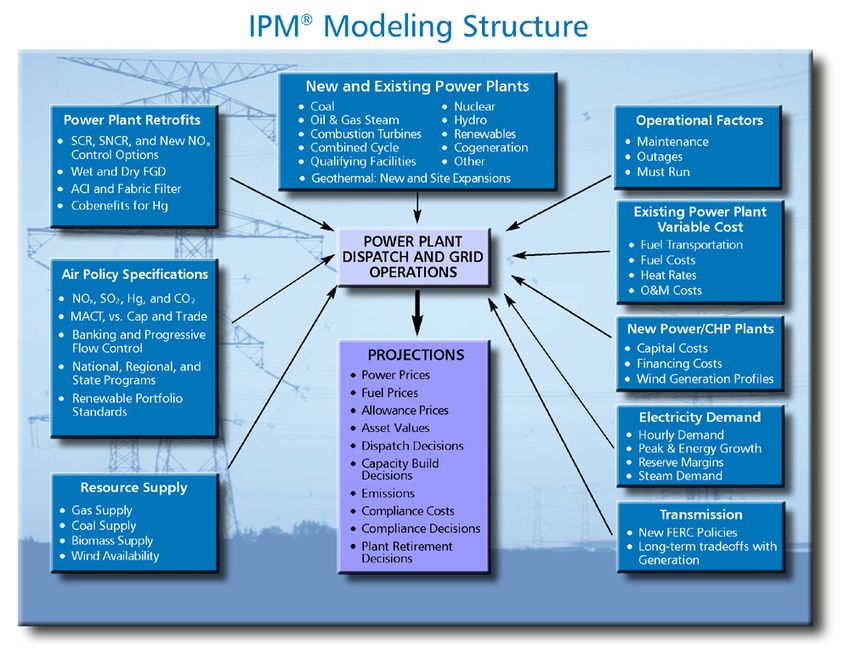
• This Clean Power Plan (CPP) analysis is informed by economic modeling
using the commercial version of the Integrated Planning Model (IPM) run by
ICF and is based on assumptions and scenarios defined by the Bipartisan
Policy Center
– IPM is a national dispatch model intended to show broad trends and
highlight key drivers through multi-scenario analysis
• The model determines the least-cost means of meeting electric
generation requirements while complying with constraints, such as: air
regulations, transmission constraints, and plant-specific operational
constraints
– Caution is important when interpreting localized state-level results
• IPM is optimized at the regional/national level and may not capture all
local or company-specific factors
– Modeling results should be viewed as a tool to supplement other inputs
• No single scenario and/or set of assumptions should be interpreted as
providing “the answer”SUMMARY OF KEY ASSUMPTIONS
Source of
Assumptions
Unit-‐level characteristics
AEO 2015
&
NEEDSv.5.15
AEO
2015
Natural
Gas
Supply
& Costs Fuel
supply
curves based
on mid-‐point
between
AEO
Reference case
&
High Gas
Resource
(low
gas
price)
cases
Renewable
Energy Cost ICF market
research
(PTC/ITC
extension
included)
Nuclear Retirements All
units
retire
at
their
60-‐year
relicensing date
Electricity Demand AEO
2015
demand forecast
No
new
transmission
is
built.
The
cost
of
new
generation
includes
a
Transmission
representative
cost
for
tying
into
the
existing
grid
Banking
of
Allowances None;
except in
banking
sensitivity
run
Renewable Portfolio
Standards Represented at
the
I PM
Z onal
level
CPP
Policy
Regions Eastern
I nterconnect,
Western
Interconnect,
ERCOT
EE
Sensitivities:
Cost
of
Additional
EE
3-‐step
cost
curve: (2.3-‐3.2
cents/KWh)*
Supply
of
Additional
EE ½ EE
supply
from
EPA
Heat
Rate
I mprovements EPA
Note:
2.3-‐3 .2
c ents/KWh
represents
only
5 5%
of
the
total
resource
c ost
of
EE
investments,
assumed
to
be
the
utility
portion
of
ratepayer-‐
funded
EE;
the
assumed
total
resource
c ost
i s
4 .2-‐5 .8
c ents/KWh.
14MODELING SCENARIOS
Reference
No
111(d)
Policy
Additional
EE
No
PTC/ITC
Gas
Price
Mass-‐based
Mass-‐Based
Core
Policy
Runs
Rate-‐based
Mass-‐based
Regional
National
Rate-‐based Regional
State
Goals
Patchwork
Trading
Trading
State
Goals Dual
Rate
(existing
and
Runs
(existing
and
(existing
and
Trading new
units)
new
units) new
units)
Existing
units
only
Policy
Variations
Most
Mass
Allocation
Methods (E+N),
6
rate
states
Banking
of
Most
Mass
Allowances
(existing),
6
rate
states
Gas
Price
Sensitivities
EE
Sensitivities
15
Note:
Descriptions
of
all
modeling
scenarios
are
available
i n
the
Appendix
on
slides
5 9-‐6 2.Evolving Baseline: Natural Gas and Renewables
THE EVOLVING BASELINE
• A combination of recent policy changes and evolving market forces
brings business-as-usual (BAU) CO2 emissions below the early Clean
Power Plan trajectory
Key Areas of Change in the Baseline
- Decreasing Gas Price: Between the AEO 2015 Reference case
and the AEO 2016 No CPP Case, the projected 2030 price for
natural gas dropped by $1.08/MMBtu
- PTC/ITC: In 2015, Congress passed a PTC/ITC extension,
lowering near-term costs for utility-scale wind projects that
begin construction by 2020 and solar projects that begin
construction by 2022 (and, to a smaller extent, for continuing
solar deployment)
- Decreasing RE Costs: The projected total overnight costs for
new deployments of utility-scale wind and solar fell by about
18% and 26% between AEO 2015 and AEO 2016
Note:
BPC’s
business-‐as-‐usual
projections
do
not
i nclude
1 11(d)
or
1 11(b)
policies.
Final
state
and
federal
environmental
policies
as
of
August
2 015
are
represented,
as
is
the
extension
of
the
federal
Production
Tax
Credit
(PTC)
and
Investment
Tax
Credit
(ITC).
17
AEO
2016’s
Reference
case
includes
the
Clean
Power
Plan.
The
AEO
2016
No
CPP
Case
i s
a
business-‐as-‐usual
case
that
does
not.INTERACTION BETWEEN GAS PRICE AND CONSUMPTION
• Lower natural gas prices
lead to increased gas
usage which, in turn,
puts upward pressure
on gas prices
- The price feedback
is dynamically
factored into
consumption
choices in IPM
• Input gas supply/price
assumptions have
significantly more
impact on gas usage
than the CPP policy
• In 2030, CPP increases
gas consumption over
Reference case-levels by
5% and gas prices by
3%, when states
implement Mass (E+N)
trading
18LOW GAS PRICES DECREASE COAL GENERATION
• The Reference case natural gas price curve results in more gas and less
coal generation than a no CPP case with higher assumed gas prices
- Compared to a higher gas price case, the Reference case leads to:
- 35% increase in gas generation
- 16% decrease in coal generation, and 24 GW more coal retirements
19LOW GAS PRICES LEAD TO ADDITIONAL CO2 REDUCTIONS
• Reference case gas assumptions lead to lower electricity-sector CO2
emissions in the business-as-usual case and in the early years of a
mass-based CPP case, compared to higher gas price scenarios
− CO2 is 3% lower in 2022 and 5% lower in 2030 Reference case
Note:
The
electricity-‐sector
emissions
shown
above
i nclude
all
CO2
emissions
from
utility-‐scale
generation
i n
the
c ontiguous
U.S.,
20
both
c overed
and
uncovered
by
the
CPP.PTC/ITC LEADS TO INCREASED U.S. WIND CAPACITY
• The Reference case, which includes the PTC/ITC, approaches 130 GW
installed wind capacity by 2021 (adding 55 GW beyond 2015)
- On top of expected/projected additions, an additional 33 GW of wind is
projected to be built by 2021 with the tax extenders
130
G W
33
G W
Historic
Data Model
Output
Sources:
EIA:
Electric
Power
Annual
2 012,
2 013,
and
2 014.
AWEA:
“ U.S.
Wind
Industry
Fourth
Quarter
2 015
Market
Report.”
Projected
data
from
BPC
scenarios
using
IPM.
21
Note:
No
CPP
(no
PTC/ITC)
is
a
business-‐as-‐usual
case
with
no
PTC/ITC
extension.
PTC/ITC LEADS TO INCREASED U.S. SOLAR CAPACITY
• The Reference case, which includes the PTC/ITC, reaches national 50 GW
installed utility-scale solar capacity by 2023 (adding 36 GW beyond 2015)
- On top of expected/projected additions, an additional 25 GW of utility-scale
solar is projected to be built by 2023 with the tax extenders
- More aggressive assumptions about future declines in the price of solar
could be expected to trigger additional solar deployment beyond 2023
50
GW
25
GW
Historic
Data Model
Output
Sources:
EIA:
Electric
Power
Annual
2 012,
2 013,
and
2 014.
SEIA:
“ U.S.
Solar
Market
Insight
2 015
Q4.”
Projected
data
from
BPC
22
scenarios
using
IPM.
Clean Power Plan
Drives CO2 Below Baseline

                            23
CO2 EMISSIONS ARE BELOW CPP MASS GOALS IN 2022
• Although business-as-usual emissions are projected to comply with the CPP
in most states in 2022, the policy drives additional reductions
• In scenarios with interconnect trading, CO2 is lower than new source
complement mass goals for most of the interim period
- Expectations of future CPP requirements drive additional early reductions
- The ability to bank allowances for future use adds value to early CO 2 reductions,
accelerating reductions and lowering future allowance prices
Extra
allowances
available
to
bank
for
future
use
Note:
The
electricity-‐sector
emissions
shown
above
i ncludes
all
CO2
emissions
from
utility-‐scale
generation
i n
the
c ontiguous
U.S.,
except
24
emissions
that
are
not
c overed
by
the
CPP,
such
as
small
fossil
units.REGIONAL CO2 IS BELOW CPP MASS GOALS IN 2022
Regional Covered Existing and New Electricity-Sector CO2 Emissions
Note:
The
electricity-‐sector
emissions
shown
above
i ncludes
all
CO2
emissions
from
utility-‐scale
generation
i n
the
c ontiguous
U.S.,
except
25
emissions
that
are
not
c overed
by
the
CPP,
such
as
small
fossil
units.EXISTING SOURCE CO2 IS BELOW EARLY CPP GOALS
• At the U.S. level and in the majority of states, if only existing-fleet CO2 is
considered, BAU emissions remain below CPP mass goals through much of the
interim period, building a bank of allowances for use in 2030 and beyond
- The BAU emissions trajectory would create a bank of 446 million tons by 2028
Note:
The
electricity-‐sector
emissions
shown
above
i ncludes
all
c overed
CO2
emissions
from
existing
utility-‐scale
generation
i n
the
c ontiguous
U.S.
Emissions
from
new
units
and
units
that
are
not
c overed
by
the
CPP
are
not
i ncluded. 26Impact of Policy Pathway: Dual Rate vs. Mass
SYSTEM COSTS ARE HIGHER UNDER DUAL RATE
• At the U.S. level, compliance costs are higher when all states comply using dual-rate
compared to mass-based approaches
• Mass (existing) has the lowest cost and is the least stringent of the three runs
- Some individual states have lower cost under Dual Rate or Mass (N+E)
• While all costs decrease, comparative trends remain largely the same when
incremental EE is available
Difference from
Reference
(2032)
Dual Rate -‐15%
Mass (E+N) -‐12%
Mass
( existing) -‐4%
Note:
Absolute
costs
shown
above
do
not
reflect
the
downward
pressure
energy
efficiency
is
expected
to
have
on
generation
costs. 28
Emissions
shown
above
include
all
CO2
emissions
from
utility-‐scale
generation
in
the
contiguous
U.S.,
both
covered
and
uncovered
by
the
CPP.COSTS AND EMISSIONS IN THE EAST TRACK U.S. TRENDS
• Similar to U.S. trends, in the Eastern Interconnect as a whole,
- Compliance costs are higher when all states comply using dual-rate
- Without additional features, such as to mitigate leakage, Mass (existing)
achieves a small reduction in CO2 at minimal cost, compared to Reference
- Individual state results vary and depend on choices of surrounding states
Difference from
Reference
(2032)
Dual Rate -‐17%
Mass (E+N) -‐13%
Mass
( existing) -‐3%
Note:
Absolute
costs
shown
above
do
not
reflect
the
downward
pressure
energy
efficiency
is
expected
to
have
on
generation
costs. 29
Emissions
shown
above
include
all
CO2
emissions
from
utility-‐scale
generation
in
the
contiguous
U.S.,
both
covered
and
uncovered
by
the
CPP.ERCOT BENEFITS IF ALL STATES CHOOSE DUAL RATE
• Trends in ERCOT differ from U.S. trends, when all states choose the same policy
- ERCOT has higher costs and lower CO2 with broad adoption of Mass (E+N)
- Dual Rate follows the business-as-usual trajectory until 2025, then trends down
- Mass (existing) is lowest cost, but CO2 emissions grow above Reference case levels
- ERCOT/TX is not assumed to trade with other states, but is influenced by the policy
choices and wholesale price impacts of some other states
Difference from
Reference
(2032)
Dual Rate -‐5%
Mass (E+N) -‐8%
Mass
( existing) 1%
Note:
Absolute
costs
shown
above
do
not
reflect
the
downward
pressure
energy
efficiency
is
expected
to
have
on
generation
costs. 30
Emissions
shown
above
include
all
CO2
emissions
from
utility-‐scale
generation
in
the
contiguous
U.S.,
both
covered
and
uncovered
by
the
CPP.IN THE WEST, POLICY TREATMENT OF NEW UNITS HAS
LESS IMPACT ON COST AND CO2
• In the Western Interconnect, like in the U.S. as a whole, the Dual Rate run
is the most costly
• However, the treatment of new units is less impactful in the West, and the
two mass runs have similar costs and CO2 emissions
Difference from
Reference
(2032)
Dual Rate -‐15%
Mass (E+N) -‐9%
Mass
( existing) -‐10%
Note:
Absolute
costs
shown
above
do
not
reflect
the
downward
pressure
energy
efficiency
is
expected
to
have
on
generation
costs. 31
Emissions
shown
above
include
all
CO2
emissions
from
utility-‐scale
generation
in
the
contiguous
U.S.,
both
covered
and
uncovered
by
the
CPP.Credit and Allowance Prices
32ERC & ALLOWANCE PRICES VARY BY POLICY DESIGN
• Without banking, prices for ERCs/allowances would be zero in the interim period
• Banking adds value to early reductions and stabilizes the allowance price over
time and across regions
2030
ERC/Allowance
Prices
ERC:
$18.61/MWh ERC:
$13.20/MWh
Allowance
(E+N):
$10.47/Ton Allowance
(E+N):
$4.23/Ton
Allowance
(E+N,
Banking):
$8.58/Ton Allowance
(E+N,
Banking):$8.37/Ton
Allowance
(existing):
$10.77/Ton Allowance
(existing):
$1.40/Ton
ERC:
$8.36/MWh
Allowance
(E+N):
$3.41/Ton
Allowance
(E+N,
Banking):$6.95/Ton
Allowance
(existing):
$0.73/Ton
• Leaving new units out of mass-based approaches:
- In the East and ERCOT, results in a lower allowance price
- In the West, results in a higher allowance price (until 2040)
Note:
Prices
are
from
scenarios
that
no
have
additional
EE
beyond
EE
i ncluded
i n
AEO
forecast
demand.
Scenarios
allow
for
trading at the
33
interconnect
l evel.
The
Mass
(E+N,
Banking)
scenario
allows
banking
of
allowances
from
2 022-‐2 040.EE IMPACT ON ALLOWANCE/CREDIT PRICE
• Availability of EE for compliance lowers both ERC and allowance prices
• If additional EE is available, then including new units under a mass-based
approach lowers the allowance price in 2030
- If only existing sources are covered, allowance prices drop off in later years
2030
ERC/Allowance
Prices
(With
Additional
EE)
ERC:
$14.98/MWh ERC:
$6.23/MWh
Allowance
(E+N):
$1.52/Ton Allowance
(E+N):
$0/Ton
Allowance
(existing):
$7.41/Ton Allowance
(existing):
$0.21/Ton
ERC:
$1.18/MWh
Allowance
(E+N):
$0/Ton
Allowance
(existing):
$0/Ton
Note:
Scenarios
allow
for
trading
at
the
i nterconnect
l evel.
34Impacts on the Generation Fleet
NUCLEAR RETIREMENTS ARE SENSITIVE TO GAS
PRICES AND CPP POLICY
• With $4/MMBtu gas, some existing nuclear is vulnerable to early retirement
- If gas is in the $5 range, premature retirements are cut in half
• State CPP policy choice has the potential to help vulnerable nuclear
- Mass (E+N) delays at least half and, when accounting for banking, delays
more than 3/4 of the premature nuclear retirements
- However, the advantage of a mass-based framework for the economics of
existing nuclear is nearly lost in scenarios where new units are not covered
Over
6
GWs
premature
nuclear
retirements
delayed
by
a
decade
or
more
36
Note:
These
scenarios
have
no
additional
EE
beyond
EE
included
i n
the
AEO
2 015
forecast
demand
TRADEOFFS BETWEEN COAL AND NUCLEAR CAPACITY
• Lower gas and renewable prices spur additional coal retirements
• The most coal retires under the Mass (E+N) scenario, in part due to the
policy’s incentive to keep nuclear capacity online longer
• Policy runs with additional EE (not shown below) have relatively fewer coal
retirements (e.g., 11 GW of CPP-driven coal retiring between 2018 & 2033 in
Dual Rate with EE compared to 19 GW in Dual Rate)
- Without CPP, energy efficiency investments would increase coal retirements
37
Note:
Scenarios
have
no
additional
EE
beyond
EE
included
i n
the
AEO
2 015
forecast
demand
REGIONAL WIND CAPACITY
• Even before the CPP begins, CPP runs have more near-term wind to
capture tax credits before they phase out, particularly in the East
• In the absence of additional RE incentives (e.g., allocations, state
policies), the mass-based approach generally drives fewer RE builds
than dual rate in the East;; however
- Banking strengthens early mass-based incentives for wind deployment
38
Note:
Scenarios
have
no
additional
EE
beyond
EE
included
i n
the
AEO
2 015
forecast
demand
REGIONAL UTILITY-SCALE SOLAR CAPACITY
• The PTC/ITC extension incentivizes additional utility-scale solar
capacity, particularly in ERCOT
• CPP policy impacts on solar vary by region
- While broad adoption of dual rate incents more solar in the East, broad
adoption of mass-based policy spurs more solar in ERCOT
- Utility-scale solar deployment is less dependent on CPP path in West
39
Note:
Scenarios
have
no
additional
EE
beyond
EE
included
i n
the
AEO
2 015
forecast
demand
Factoring in Future CO2 Constraints

                                      40
EXPECTATION OF TIGHTER CARBON CONSTRAINTS IN 2030
AND BEYOND COULD ALTER NEAR TERM INVESTMENTS
• The Increased Stringency scenario assumes states comply with existing source CPP
mass until 2030, when more stringent limits apply to both new and existing sources
and escalate to a 65% reduction of CO2 from 2005 levels by 2040. The scenario does
not allow banking of allowances.
• Expectations of future carbon policies impact near-term capacity mix
- With a future constraint in the forecast, IPM predicts additional wind/solar
builds, more coal retirements, and fewer nuclear retirements as the least-cost
path, even in years before the increased stringency policy takes effect
31
G W
m ore
w ind
&
76
G W
solar
36
G W
less
coal
Delays
5
G W
of
nuclear
retirements
41Patchwork of State Policy Choices
PATCHWORK (E+N)
• This analysis includes two patchwork scenarios to test what happens when
states choose different compliance pathways
- The scenarios are meant to be illustrative rather than predictive and are
not intended to capture all probable combinations of state policy choices
• Patchwork (E+N) assumes most states comply using Mass (E+N) with
interconnect trading and 6 states choose dual-rate trading
- Dual Rate: FL, GA, IA, NJ, SC, and TN
- Mass (E+N): All other states
Dual Rate States
Mass-Based (E+N)
Western Interconnect
IA NJ
Mass-Based (E+N)
ERCOT
TN Mass-Based (E+N)
SC Eastern Interconnect
GA
FL
43PATCHWORK (EXISTING)
• Patchwork (existing) assumes most states use Mass (existing) with
interconnect trading and 6 states choose dual-rate trading
- Dual Rate: FL, GA, IA, NJ, SC, and TN
- Mass (existing): Most other states
• CA and RGGI states comply using Mass (E+N) and do not trade with
Mass (existing) states
- RGGI states continue to trade within RGGI
Dual Rate States
Mass-Based (existing)
IA NJ Western Interconnect
Mass-Based (E+N)
California
Mass-Based (existing)
TN
ERCOT
SC
GA Mass-Based (existing)
Eastern Interconnect
FL Mass-Based (E+N)
RGGI
44PATCHWORK SHOWS POTENTIAL RATE-STATE LEAKAGE
• The mix of implementation approaches in Patchwork (E+N) leads to
ramped up generation in dual-rate states
- This includes coal, gas, and wind generation above Reference case levels
- In many dual-rate states, emissions in Patchwork (E+N) are above BAU
- Real world factors (e.g., regulator reviews) may limit some coal increases
• Differing state policies lead to differing operating costs and incentives
- Because the assumed rate-based states have low-cost ERC generation and
limited options to sell ERCs, their ERC surplus allows increased fossil
generation in-state
- When mass states are assumed to cover new units, new NGCC units face
higher operating costs if built in mass states than in other rate states,
spurring CO2 rate-state leakage
• However, in the second patchwork run, Patchwork (existing), when most
mass states are assumed to only cover existing units, the potential for
leakage to rate states is diminished
• While Patchwork runs do not model measures to mitigate leakage,
updating output-based allocation approaches have the potential to mitigate
both forms of potential leakage (i.e., rate-state leakage and CPP-defined
leakage)
45PATCHWORK IMPACTS COST AND CO2
• Comparing policy options, lower cost generally corresponds with more CO2
- An exception is Mass (E+N), which has lower cost than & similar cumulative CO2 to rate
• Adding a few rate states in Patchwork (E+N) reduces compliance costs, b/c rate-
state leakage weakens CO2 stringency
• However, adding a few rate states in Patchwork (existing) adds cost, b/c
- Compared to Mass (existing), rate lowers CO2
- CA/RGGI were assumed not to trade with other Mass (existing) states
46
Note:
Emissions
i nclude
all
CO2
emissions
from
utility-‐scale
generation
i n
the
c ontiguous
U.S.,
both
c overed
and
uncovered
by
the
CPP.“ERC ISLANDS” LOWER ERC AND ALLOWANCE PRICES
• ERC prices decrease under the Patchwork runs as the dual-rate states
assumed in these runs are largely generators of ERCs
- ERC prices are not binding in Patchwork (existing) until 2034
• The dual-rate states ramp up generation, particularly in Patchwork (E+N),
to both earn and use ERCs and provide some of this electricity to
neighboring mass-based states. This decreases pressure on the mass caps
and lowers allowance prices in the East
47SIGNS OF CO2 LEAKAGE TO RATE-BASED STATES
• At the U.S. level, there are fewer NGCC builds under Patchwork (E+N)
• Patchwork (existing) and Mass (existing) have similar new NGCC builds and
similar stringency (the least stringent of all policy runs)
• At the state level, NGCC build decisions are impacted by whether or not the
majority of mass-based states cover new units
- About 70% of new NGCC builds in Patchwork (E+N) occur in dual-rate
states, as new units are not covered by the rate policy but are covered
under the Mass (E+N) scenario
- When the mass-based policy covers existing units only, new builds in dual-
rate states fall from 30 GW to 13 GW by 2033
48IMPLICATIONS OF PATCHWORK POLICY CHOICES ON COSTS
• Policy choices of surrounding states impact generation shifts,
ERC/allowance prices, and thus, total system costs
• Although Patchwork (E+N) has relatively lower overall costs for the East, it
has higher costs in many of the dual-rate states (GA, IA, NJ, TN)
- Increased costs are driven by increased in-state generation
• All 6 rate states in Patchwork (existing) had higher costs from choosing
rate, compared to if they chose Mass (existing) 49New Units and Updating Allocations
U.S. CO2 EMISSIONS ARE LOWER WHEN CPP
MASS-BASED POLICY COVERS NEW UNITS
• CO2 emissions vary depending on the policy treatment of new units
• Given these baseline assumptions, changing mass (existing) allocation to
EPA’s proposed Federal Plan approach does not have a significant impact
- In large part, b/c Reference case existing-source CO2 is already below CPP
goals for most of the interim period and allowance prices remain low
Due
to
the
similar
trajectories,
CO 2
emission
lines
overlap
for
Mass
(existing)
and
Mass
(FP
O BA)
Difference from
Reference
(2032)
Mass (E+N) -‐12.0%
Mass
( existing) -‐4.0%
Mass
( FP
OBA) -‐4.4%
Note:
Mass
(FP
OBA)
covers
existing
units
only
and
allocates
a
portion
of
allowances
by
updating
OBA
per
EPA’s
proposed
federal
plan/model
rule.
Emissions
i nclude
all
CO2
emissions
from
utility-‐scale
generation
i n
the
c ontiguous
U.S.,
both
c overed
and
uncovered
51
by
the
CPP.MORE COAL GENERATION REMAINS WHEN
NEW UNITS ARE NOT COVERED BY MASS
• At U.S. level, comparing generation mix under Mass (E+N) vs. Mass (existing):
- CO2 emissions from new NGCC are similar
- Because CO2 from new NGCC does not count toward the goal, there is more
room for additional coal generation under Mass (existing)
• Compared to Mass (existing), in Mass (FP OBA): gas generation decreases by
0.3%, RE generation increases by 1.2%, and CO2 emissions in 2022-2032
decrease by 0.4%
52
Note:
Emissions
i nclude
all
CO2
emissions
from
utility-‐scale
generation
i n
the
c ontiguous
U.S.,
both
c overed
and
uncovered
by
the
CPP.POTENTIAL LEAKAGE TO NEW NGCC BUILDS
• Between 2022 and 2030, more reductions are required and, thus, more
new NGCC units are built nationwide in the scenario that covers new units,
compared to scenarios that do not
- However, Mass (existing) increases new NGCC builds in some states and, in
some cases, updating OBA helps balance incentives between new & existing gas
• Relatively low gas and renewable energy price assumptions keep allowance
prices low and limit the incentive for CPP-defined leakage to new NGCC
53POTENTIAL LEAKAGE INDICATOR: CAPACITY FACTORS
FOR EXISTING GAS GENERATION
• Nationwide, capacity factors for existing NGCC units are relatively constant across
scenarios with $0 allowance/ERC prices in the early years
• By 2030, positive GS-ERC prices under Dual Rate shift generation to existing gas
units, while Mass (E+N) helps maintain existing nuclear generation instead
- The portion of updating output-based allocation to existing gas in Mass (FP OBA)
helps maintain capacity factors at existing gas units in some individual states
54Appendix
IPM BACKGROUND
• IPM is a dispatch model that
seeks to minimize total
production costs across North
America.
• IPM represents economic
activity in key components of
energy markets – fuel
markets, emission markets,
and electricity markets.
• Since the model captures the
linkages in electricity markets,
it is well-suited for developing
integrated analyses of the
impacts of alternative
regulatory policies on the
power sector.
• Past applications of IPM have
included capacity planning,
environmental policy analysis
and compliance planning,
wholesale price forecasting,
and asset valuation.
56MODELING CAVEATS: IPM STRUCTURAL LIMITATIONS
• Input electricity demand forecasts are at a regional level over 75 regions, which do not
correspond with state boundaries.
• The model sites new generation builds in the least-cost location available to meet regional
demand. The model does not fully capture transmission constraints or other real-world
limitations that may make siting new units more favorable in one state as compared to
another.
• IPM has a detailed representation of utility-scale generation. It does not capture the impact
of distributed generation beyond what is included in the AEO demand forecast.
• IPM does capture transmission bottlenecks, but the model is not a granular transmission
model.
• State RPS policies are modeled as regional RPS policies to reflect REC trading. However, the
model does not account for power purchase agreements that designate out-of-state
ownership of RECs.
• State energy efficiency policies are also modeled as regional policies.
• The model does not capture all factors related to the integration of variable resources,
including some real-world transmission constraints. The model includes some assumptions
to capture limitations to RE deployment, including:
- Utility-scale solar builds are limited to 7.5 GW per calendar year. Utility-scale wind builds are
limited to 15.7 GW per calendar year. Builds that exceed these limits face increased capital
costs.
- Utility-scale wind and solar generation is limited to 20 percent of net energy load by
technology type. The model also imposes capacity limits for each technology type.
57MODELING CAVEATS: BPC INPUT ASSUMPTIONS
• Scenarios include the level of energy efficiency that is built into the AEO 2015 electricity
demand forecast, unless otherwise noted.
– Only energy efficiency sensitivity runs offer additional demand-side energy efficiency
and coal plant heat rate improvement options.
• To help with comparisons across scenarios, core runs do not bank allowances/ERCs for
future use.
– The banking sensitivity run highlights expectations for a more stable allowance price
and lower cumulative costs than core runs indicate.
• The model does not award ERCs to the existing end-use energy efficiency that is included
in the AEO 2015 demand forecast.
- EE ERCs are awarded to additional energy efficiency investments in the energy
efficiency sensitivity runs.
• The model does not attempt to capture transaction costs associated with buying ERCs,
such as the costs of performing due diligence to minimize the risk of challenges.
• In all policy runs, CA and RGGI are assumed to comply with Mass (E+N).
- CA does not trade with the rest of the West in the Dual Rate runs or in Patchwork
(existing). Only Patchwork (existing) captures the latest RPS requirements in CA.
- RGGI trades only with itself in the Dual Rate run and Patchwork (existing).
- In the results reported in this analysis, costs from CA are always included with the
Western Interconnect and costs for RGGI are always included in Eastern Interconnect.
58SCENARIO DESCRIPTIONS
Scenario Description
Reference This
is
the
business-‐as-‐usual case
absent
a
111(d)
or
111(b)
policy.
Final
state
environmental
policies
as
of
August
2015
are
represented,
including
renewable
portfolio
standards,
energy
efficiency
standards,
and
criteria
pollutant
rules.
Final
federal
environmental
policies
are
also
represented,
as
is
the
extension
of
the
federal
Production
Tax
Credit
(PTC)
and
Investment
Tax
Credit
(ITC)
passed
by
Congress
in
2015.
No
incremental
EE.
No
CPP (EE) Identical to
Reference,
but
includes
the
option
for
incremental
EE
Reference
case
with
EE beyond
what
is
captured
in
AEO
2015
demand
forecast.
No
CPP
(No PTC/ITC) Identical to
Reference,
but
does
not
include
the
extension
of
the
Reference
case
without
the
federal
PTC
and
ITC
passed
by
Congress
in
2015.
PTC/ITC
No
CPP
(High
Gas
P rice) Identical
to
Reference,
except
gas
prices
are
based
on
the
AEO
Reference
case
with
High
2015’s
Base
Case.
Gas
Price
State Rate Each
state
must
comply
with
the
blended, state-‐specific
rate-‐based
Rate-‐Based
State
Goals targets.
Trading
is
permitted
among
sources
within
a
give
state.
No
incremental
EE
or
banking
of
allowances.
59SCENARIO DESCRIPTIONS
Scenario Description
Dual
Rate Each
state
must comply
with
the
dual
rate
standards,
which
apply
Dual
Rate
Interconnect
separate
steam
boiler
and
NGCC
emission
rate
standards.
Trading
of
Trading ERCs
and
GS-‐ERCs
is
permitted
among
sources
within
a
given
interconnect.
No
incremental
EE
(above
AEO
demand
forecast).
No
ERCs
issued
for
EE
built
into
the
AEO
demand
forecast.
Dual
Rate
(EE) Identical to
Dual
Rate,
but
includes
the
option
for
incremental
EE
to
Dual
Rate
Interconnect issue
ERCs.
Trading
with
EE
State Mass
(E+N) Each
state
must
comply
with
the
state
mass-‐based
target
for
Mass-‐Based
State
Trading
existing
sources
plus
the
new
source
complement.
Trading
is
(existing
and
new
units) permitted
among
sources
within
the
state. No
incremental
EE
or
banking
of
allowances.
Mass
(E+N) Each
state
must
comply
with
the
state
mass-‐based
target
for
Mass-‐Based
Interconnect
existing
sources
plus
the
new
source
complement.
Trading
is
Trading
(existing
and
new
permitted
among
all
sources
in
a
given
interconnect. No
units) incremental
EE
or
banking
of
allowances.
Mass
(E+N,
EE) Identical to
Mass
(E+N),
but
includes
the
option
for
incremental
EE.
Mass-‐Based
Interconnect
Trading
(existing
and
new
units,
with
EE) 60SCENARIO DESCRIPTIONS
Scenario Description
Mass
(E+N,
High
Gas
Price) Identical
to
Mass
( E+N),
except
gas
prices
are
based
on
the
AEO
2015’s
High
Gas
Price Base
Case.
Mass
(E+N,
Banking) Identical
to
Mass
( E+N),
except
banking
of
allowances
is
allowed
from
2022
to
2040.
Mass
(existing) Each
state
is
assigned
its existing
source
budget.
Trading
is
permitted
Mass-‐Based
Interconnect
among
all
sources
in
a
given
interconnect. CA
&
RGGI
comply
with
Mass
Trading
( existing
only) (E+N)
and
can
trade
with
sources
in
their
interconnects.
No
incremental
EE
or
banking
of
allowances.
Mass
(existing,
EE) Identical to
Mass
( existing),
but
includes
the
option
for
incremental
EE.
Mass-‐Based
Interconnect
Trading
( existing
only,
with
EE)
Mass
(FP
OBA) Identical
to
Mass
( existing), except
allowances
are
allocated
according
to
Proposed Federal
Plan
EPA’s
Proposed
Federal
Plan.
Thus,
most
allowances
are
allocated
by
Allocation historic output-‐based
allocation
(OBA).
The
remaining
allowances
are
allocated
to
existing
NGCC
based
on
updating OBA
as
well
as
a
renewable
energy
set
aside.
Mass
(100% OBA) Identical
to
Mass
( existing), except
allowances
are
allocated
with
100%
Updating
Output-‐Based
updating
output-‐based
allocation
to
all
covered
fossil
generators,
based
Allocation on
the
output
from
the
previous
compliance
period.
61SCENARIO DESCRIPTIONS
Scenario Description
National
Mass
(E+N) Identical
to
Mass
(E+N),
except
trading
is
allowed
at
a
national
level
Mass-‐Based
National
Trading
instead
of
a
regional
level.
(existing
and
new
units)
Patchwork
(E+N) All
states
comply
with
interconnect
mass-‐based trading
with
new
Most
states
Mass
(E+N),
6
source
complement
budgets.
Trading
is
permitted
among
sources
in
Dual-‐Rate
states a
given
interconnect.
The
exception
is
FL,
GA,
IA,
NJ,
SC, and
TN,
which
comply
using
the
dual-‐rate
standards
with
interstate
trading.
No
incremental
EE
or
banking
of
allowances.
Patchwork
(existing) Most
states
comply
with
interconnect
mass-‐based trading
with
Most
states
Mass
(existing),
existing
source
budgets.
Trading
is
permitted
among
sources
in
a
6
Dual-‐Rate
states given
interconnect.
The
exception
is
FL,
GA,
IA,
NJ,
SC, and
TN,
which
comply
using
the
dual-‐rate
standard
with
interstate
trading.
In
addition,
CA
and
RGGI
comply
with
Mass
(E+N).
CA
has
intrastate
trade.
RGGI
states
trade
only
with
each
other.
No
incremental
EE
or
banking
of
allowances.
Increased Stringency Each
state
is
assigned
its existing
source
budget.
Trading
is
permitted
among
all
sources
in
a
given
interconnect.
In
2030,
a
new
carbon
policy
on
new
and
existing
sources
is
imposed,
leading
to
a
65%
reduction
of
electricity-‐sector
CO2 emissions
from
2005
levels
by
2040.
There
is
no
banking
of
allowances. 62OTHER ASSUMPTIONS TESTED
Source of
Assumptions
Unit-‐level characteristics
NEEDSv.5.13
ICF’s
2015
Integrated
Gas
Module
(same
input as
EPA
RIA)
&
Natural
Gas
Supply
& Costs
fuel
supply
curves
based
on
AEO
2015
Reference
case
Renewable
Energy Cost ICF market
research
(No
PTC/ITC)
All
units
can
continue to
run
past
their
60-‐year
relicensing
Nuclear Retirements
date
(operating
costs
increase
with
age)
Unlimited
banking
throughout
the
modeled
time
horizon;
Banking
of
Allowances
Unlimited banking
during
the
interim
compliance
period
7 trading
regions:
West,
MISO,
SPP,
ERCOT,
SERC,
Other
PJM,
CPP
Policy
Regions
RGGI
EE
Sensitivities:
Supply
of
Additional
Various
supplies
tested
Energy
Efficiency
Heat
Rate
Improvements BPC
HRI
methodology
63WIND & SOLAR COSTS
• Capital costs and Fixed Operating and Maintenance (FOM) costs reflect the
impact of the federal PTC/ITC extension.
U.S.
Overnight
Capital
Costs
&
FOM
(2012$/kW)
Onshore
Utility-‐Scale
Vintage
Wind Solar
PV
2016 1,103 1,393
2018 1,196 1,330
2020 1,427 1,294
2022 1,598 1,337
2025 1,616 1,571
2030 1,470 1,508
2040 1,337 1,377
FOM 32.9 23.4
Average
Step
1
Average
Levelized
Cost
of
Electricity
for
W ind
(2012$/MWh)
No
PTC PTC-‐ Model
Year
2016 PTC-‐ Model
Year
2020
U.S. 66 45 57 64EE COSTS
• All scenarios are based on AEO 2015 demand forecast.
• In policy scenarios that allow incremental EE* (beyond AEO 2015), end-use
EE is available to serve electricity demand using an assumed three-step
supply curve with cost increasing as the supply available at each step is
exhausted. In 2020, costs are: 2.3, 2.6, and 3.2 cents/KWh. Costs in each
block increase by .3 cents/KWh starting in 2021. An assumed participant
portion (45% of the total resource cost of EE) is added separately to the
compliance cost.
2020
EE Cost Units
=
Cents/KWh Units
=
$/MWh
Step
1 Step
2 Step
3
Step
1 Step
2 Step
3
Utility Portion 2.3 2.6 3.2 23 26 32
Participant Portion 1.9 2.1 2.6 19 21 26
Total
Resource
Cost 4.2 4.7 5.8 42 47 58
*
Except
for
the
High
Cost
EE
scenario,
where
costs
are
increased
by
50%
at
each
step
in
the
three-‐step
cost
c urve
65RUN YEAR MAPPING
Calendar Year Model
Year Calendar
Year Model Year
2016 2016 2029 2030
2017 2016 2030 2030
2018 2020 2031 2030
2019 2020 2032 2030
2020 2020 2033 2030
2021 2020 2034 2040
2022 2022 2035 2040
2023 2022 2036 2040
2024 2025 2037 2040
2025 2025 2038 2040
2026 2025 2039 2040
2027 2025 2040 2040
2028 2030
66COMPONENTS OF TOTAL ADJUSTED COST (TAC)
TAC= TSC + EE Participant Costs + Import/Export + Net Allowance/Credit Cost
• Total System Cost (TSC): Includes all costs associated with generation, such as new
capacity, fuel, and other operating & maintenance costs, as well as compliance costs
such as the utility portion of end-use energy efficiency. For a state, this includes in-
state generation only.
• EE Participant costs: We assume 55% of the total resource cost of an end-use
energy efficiency measure is born by the utility and 45% of the cost is paid by the
consumer/participant. While the utility portion is included in TSC, and thus impacts
wholesale electricity costs, the participant portion is a separate line item.
• Generation shift adjustment: Some scenarios result in generation shifts between
states/regions so that the cost of in-state generation may go down, while the cost
of importing power goes up (or vice versa). To better account for total costs to
deliver energy, this adjustment estimates the cost associated with changes in net
electricity imports/exports. Because IPM uses regional (rather than state-level)
electricity demand, state-level imports are estimated compared to the Reference
case.
• Net allowance/credit cost: The value of the net position in emission credits or
allowances (i.e., to what degree is state a net buyer or seller of credits/allowances in
a regional trading program). For state implementation, credits don’t cross borders;;
thus this cost is zero. For regional scenarios, this nets to zero at the regional level.
67CPP POLICY REGIONS
• In CPP policy scenarios with regional trading, electric generating units
are able to trade within one of three regions
• CA is assumed to comply using a mass-based policy that covers new
sources in all policy runs, including mass (existing) and dual-rate runs
- CA does not trade with the rest of the West in dual-rate runs
• States in the Regional Greenhouse Gas Initiative (RGGI) also comply
using a mass-based policy that covers new sources in all policy runs
- RGGI states continue to trade with RGGI states in dual-rate runs
• The model dispatches EGUs according to electricity markets with
represented transmission bottlenecks
Western Eastern
Interconnect Interconnect
ERCOT
68www.bipartisanpolicy.org
You can also read


