Molecular Characteristics of Staphylococcus aureus From Food Samples and Food Poisoning Outbreaks in Shijiazhuang, China
←
→
Page content transcription
If your browser does not render page correctly, please read the page content below
ORIGINAL RESEARCH
                                                                                                                                               published: 22 June 2021
                                                                                                                                      doi: 10.3389/fmicb.2021.652276

                                             Molecular Characteristics of
                                             Staphylococcus aureus From Food
                                             Samples and Food Poisoning
                                             Outbreaks in Shijiazhuang, China
                                             Guoping Lv 1* † , Ruiping Jiang 2† , Han Zhang 1 , Lei Wang 2 , Lijie Li 2 , Weili Gao 2 ,
                                             Hong Zhang 2 , Yantao Pei 3 , Xiuping Wei 2 , Hongyan Dong 1 and Liyun Qin 2*
                                             1
                                              Basic Medicine College, Hebei University of Chinese Medicine, Shijiazhuang, China, 2 Shijiazhuang Center for Disease
                                             Control and Prevention, Shijiazhuang, China, 3 College of Life Science, Hebei Normal University, Shijiazhuang, China

                            Edited by:
                  Dan Cristian Vodnar,       As an opportunistic pathogen worldwide, Staphylococcus aureus can cause food
    University of Agricultural Sciences
              and Veterinary Medicine        poisoning and human infections. This study investigated the sequence typing, the
             of Cluj-Napoca, Romania         penicillin (blaZ) and methicillin (mec) resistance profiles of S. aureus from food samples
                         Reviewed by:        and food poisoning outbreaks in Shijiazhuang City, and the staphylococcal enterotoxin
                        Daniela Bianchi,
                                             (SE) types of the S. aureus isolates from food poisoning. A total of 138 foodborne
  Istituto Zooprofilattico Sperimentale
 del Piemonte, Liguria e Valle d’Aosta,      S. aureus isolates were distributed into 8 clonal complexes (CCs) and 12 singletons.
                                     Italy   CC1, CC5, CC8, CC15, CC97, CC59, CC398, CC88, and CC7 were the predominant
                Calinoiu Florina Lavinia,
     University of Agricultural Sciences     CCs of foodborne S. aureus isolates. Moreover, CC59, CC15, and CC5 were the most
               and Veterinary Medicine       prevalent CCs in food poisoning outbreaks. SEE was the most commonly detected SE
              of Cluj-Napoca, Romania
                                             in food poisoning isolates. One hundred thirty-three S. aureus isolates harbored the
                    *Correspondence:
                                             penicillin-resistant gene blaZ, and nine isolates carried the mec gene. The present study
                           Guoping Lv
               lvguoping116@163.com          further explained the relationship between S. aureus and foods and food poisoning and
                             Liyun Qin       indicated the potential risk of S. aureus infection.
               qinliyun-2007@163.com
     † These   authors have contributed      Keywords: Staphylococcus aureus, food poisoning, MLST, antibiotics resistance, staphylococcal enterotoxin
                    equally to this work

                    Specialty section:       INTRODUCTION
          This article was submitted to
                     Food Microbiology,      As an important Gram-positive spherical pathogen, Staphylococcus aureus can release a variety of
                a section of the journal     heat-stable staphylococcal enterotoxins (SEs) into food (Hennekinne et al., 2012; Wang et al., 2017;
              Frontiers in Microbiology      Oliveira et al., 2018) responsible for staphylococcal food poisoning (SFP) in human population.
          Received: 12 January 2021          SFP is characterized by foodborne gastroenteritis (Argudín et al., 2010; Hennekinne et al., 2012;
            Accepted: 11 May 2021            Lv et al., 2014), and it was recognized as one of the most prominent culprits in food poisoning
           Published: 22 June 2021           outbreaks worldwide (Hennekinne et al., 2012; Wu et al., 2016). S. aureus can carry multiple SE
                             Citation:       genes and produce different SEs and SE-like toxins. The SEs (SEA to SEE; SEG to SEI; SEK; SEM
     Lv G, Jiang R, Zhang H, Wang L,         to SET) and SE-like toxins (SElJ; SElL; SElU to SElZ) were reported as responsible agents for food
  Li L, Gao W, Zhang H, Pei Y, Wei X,        poisoning outbreaks (Ono et al., 2008; Argudín et al., 2010; Hennekinne et al., 2012; Lv et al., 2014).
  Dong H and Qin L (2021) Molecular
                                             SEA, SEB, SEC, SED, and SEE were the most common toxins implicated in SFP (Hennekinne et al.,
    Characteristics of Staphylococcus
aureus From Food Samples and Food
                                             2012; Kadariya et al., 2014).
 Poisoning Outbreaks in Shijiazhuang,           Multilocus sequence typing (MLST) analysis of S. aureus is important for the prognosis of
  China. Front. Microbiol. 12:652276.        infection, and it provides means to trace epidemiologically related strains contributing to the
     doi: 10.3389/fmicb.2021.652276          tracking of the contamination source. The MLST types of S. aureus vary with regions and sources

Frontiers in Microbiology | www.frontiersin.org                                    1                                            June 2021 | Volume 12 | Article 652276
Lv et al. Molecular Characteristics of Foodborne S. aureus
(Pereira et al., 2009; Cheng et al., 2013; Rao et al., 2015; Thapaliya Staphylococcus Enterotoxin Detection
et al., 2017; Htun et al., 2018; Kitti et al., 2018; Wu et al., 2018; Li Staphylococcal enterotoxins of the SPF isolates were detected
et al., 2019). by ELISA using a RIDASCREEN SET A, B, C, D, E assay kit
The MLST genotype of S. aureus has been reported to (R-Biopharm, Pfungstadt, Germany). S. aureus isolates were pre-
influence the complications, severity, and mortality of infection; enriched in BHI broth, and the supernatant of 24-h cultures of
the strains of CC5 and CC30 exhibited a significant trend toward one colony grown in BHI at 37◦ C was centrifuged at 6,000 × g
increased levels of hematogenous complications (Chen et al., for 10 min at 4◦ C. The supernatant was aseptically filtered by a
2010). The sequence type 121 of S. aureus (ST121) infected the 2.0-µm Millipore filter, and the filtered sample was added into
patients who often required long hospitalization and prolonged an ELISA plate. The enterotoxins were tested according to the
antimicrobial therapy (Rao et al., 2015), CC398 were associated protocol recommended by the manufacturer’s instructions. The
with high mortality (Bouiller et al., 2016). absorbance was measured at 450 nm in the Epoch ELISA reader
Staphylococcus aureus can acquire the antibiotic resistance (BioTek, Winooski, VT, United States).
determinants that may confer resistance to many antibiotics.
High resistance of S. aureus to penicillin was observed (Wu DNA Extraction
et al., 2018; Li et al., 2019; Dastmalchi Saei and Panahi, 2020); Staphylococcus aureus isolates were grown overnight in BHI
moreover, the resistance to most beta-lactams and the other broth at 37◦ C. Genomic DNA was extracted using a bacterial
antibiotics except ceftaroline and ceftobiprole was reported for genomic DNA extraction kit (DNeasy Blood and Tissue Kit,
methicillin-resistant S. aureus (MRSA) strains (Lakhundi and Qiagen Inc., Redwood City, CA, United States) according to the
Zhang, 2018; Wu et al., 2018; Li et al., 2019). MRSA infections are manufacturer’s instructions.
associated with higher mortality rates than the infections caused
by methicillin-susceptible strains. MRSA isolates carry a mobile Detection of mec and blaZ
genetic element of staphylococcal cassette chromosome mec All the isolates underwent antimicrobial resistance gene typing.
(SCCmec), the determinant that encodes low-affinity penicillin- The presence of two antimicrobial resistance genes of blaZ and
binding protein (PBP) similar to PBP2a or PBP20 . The mec genes mec was assessed together with the reference gene of nucA,
share ≥70% nucleotide sequence identity with the mecA gene (Ito using a multiplex PCR assay. The three pairs of primers used
et al., 2012; Lakhundi and Zhang, 2018). are listed in Table 1. The PCR mixture contained 4 µl mec-
This study aimed to characterize S. aureus isolates from SFP F (2.5 µM), 4 µl mec-R (2.5 µM), 4 µl blaZ-F (2.5 µM),
outbreaks and the food samples isolated in Shijiazhuang, China. 4 µl blaZ-R (2.5 µM), 4 µl nucA-F (2.5 µM), 4 µl nucA-R
In particular, MLST genotypes and the presence of beta-lactam- (2.5 µM), 2.5 µl genome DNA template, 5 µl 10 × Ex Taq
resistant genes of blaZ and mec were determined on all isolates. In buffer (Mg2+ plus) (20 mM), 4 µl dNTP mixture (2.5 mM
addition, the enterotoxigenic status of SFP isolates was explored. each), 0.5 µl TaKaRa Ex Taq DNA polymerase (TaKaRA, China),
MATERIALS AND METHODS TABLE 1 | Primers used in the study.
Bacterial Isolates Primers Nucleotides Sequence(50 –30 ) Target gene Amplicon size
(bp)
One hundred and thirty-eight S. aureus isolates were used in this
study. Eighty-two of the strains were isolated from food samples mec-F ACCACCCAATTTGTCTGCCAGTT mec 800
in 2011–2019, and 56 strains were isolated from 20 SFP outbreaks mec-R TGGCTCAGGTACTGCTATCCACCCC
in 2009–2016. All the isolates were identified as S. aureus using blaZ-F CAAAGATGATATAGTTGCTTATTCTCC blaZ 421
conventional microbiological methods including Gram staining blaZ-R TGCTTGACCACTTTTATCAGC
and catalase and coagulase tests and then stored in a Brain Heart nucA-F CGCTTGCTATGATTGTGGTAGCC nucA 126
Infusion (BHI) medium with 40% glycerine at −80◦ C. Species nucA-R TTCGGTTTCACCGTTTCTTGGCG
was confirmed by Matrix-Assisted Laser Desorption Ionization arcC-F TTGATTCACCAGCGCGTATTGTC arcC 456
Time of Flight Mass Spectrometry (MALDI-TOF MS) System arcC-R AGG TATCTGCTTCAATCAGCG
(Bruker, Berlin, Germany) before further experiments. aroE-F ATCGGAAATCCTATTTCACATTC aroE 456
aroE-R GGTGTTGTATTAATAACGATATC
Primers glpF-F CTAGGAACTGCAATCTTAATCC glpF 465
All the primers used in the study were synthesized by TaKaRa glpF-R TGGTAAAATCGCATGTCCAATTC
(TaKaRa, Beijing, China) (Table 1). Three pairs of primers of gmk-F ATCGTTTTATCGGGACCATC gmk 417
mec, blaZ, and nucA were designed using the PrimerSelect gmk-R TCATTAACTACAACGTAATCGTA
program of the DNASTAR software according to the reported pta-F GTTAAAATCGTATTACCTGAAGG pta 564
sequences from the Gene Databank (NCBI, NIH, Bethesda, MD, pta-R GACCCTTTTGTTGAAAAGCTTAA
United States). The primers of MLST were available from the tpi-F TCGTTCATTCTGAACGTCGTGAA tpi 402
MLST website1 . tpi-R TTTGCACCTTCTAACAATTGTAC
yqiL-F CAGCATACAGGACACCTATTGGC yqiL 516
1
http://saureus.mlst.net yqiL-R CGTTGAGGAATCGATACTGGAAC
Frontiers in Microbiology | www.frontiersin.org 2 June 2021 | Volume 12 | Article 652276Lv et al. Molecular Characteristics of Foodborne S. aureus
TABLE 2 | Resistance gene characterization of S. aureus isolates. nucA, mec, and blaZ. The mec and blaZ PCR fragments were
sequenced using Sanger dideoxy DNA sequencing (Sangon,
Genes Isolates of food samples Foodborne outbreak isolates
Shanghai, China), and the sequences were blasted in NCBI
mec+ mec- blaZ+ blaZ- mec+ mec- blaZ+ blaZ- BLAST web.
Number 5 77 78 4 4 52 55 1
% 6.1 93.9 95.1 4.9 7.1 92.9 98.2 1.8 MLST of S. aureus Isolates
Seven housekeeping genes of S. aureus of arcC, aroE, glpF, gmk,
pta, tpi, and yqiL were adapted for MLST. These seven
and 14 µl double-distilled water. The PCR conditions were as housekeeping genes were amplified by PCR according
follows: initial denaturation at 94◦ C for 5 min, followed by to the original and alternative protocols available from
35 cycles of denaturation at 94◦ C for 30 s, annealing at 68◦ C the MLST website (see text footnote 2). The amplicons
for 60 s, extension at 72◦ C for 60 s, and a final extension were sequenced using Sanger dideoxy DNA sequencing
at 72◦ C for 10 min. All the PCR products were analyzed by (Sangon, China). The sequences were compared with the
QIAxcel system (Qiagen, Germany). Separation was performed known alleles in the MLST database to determine the allele
using the AM320 method (100 ng/µl sample was injected at the number, ST types, and CCs. The isolates that did not match
voltage of 5 kV for 10 s and separated at the voltage of 6 kV with the previously identified STs were submitted to the
for 320 s). The samples with two fragments were considered database and assigned as new STs. The phylogenetic tree
positive to nucA and mec or blaZ according to the fragment was constructed using BioNumerics 7.6.2 (Applied Maths,
size, and the samples with three fragments were positive to Sint-Martens-Latem, Belgium).
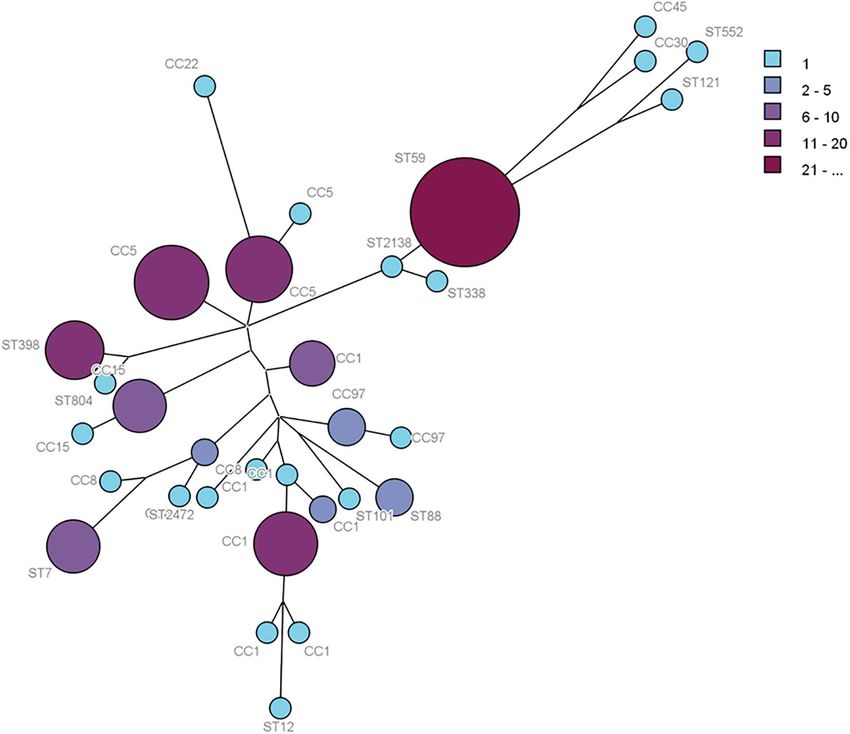
FIGURE 1 | Phylogenetic tree of 138 S. aureus isolates based on MLST allelic profiles. Each circle represents CC type or singleton, and the size and color depth of
each circle correspond to the number of samples (1, 2–5, 6–10, 11–20, and ≥21).
Frontiers in Microbiology | www.frontiersin.org 3 June 2021 | Volume 12 | Article 652276Lv et al. Molecular Characteristics of Foodborne S. aureus
RESULTS isolates, 82 isolates from food samples, and 56 isolates from food
poisoning outbreak were respectively distributed into 31 distinct
Presence of mec and blaZ STs, 25 STs, and 15 STs. The 31 STs were divided into eight CCs
Of the 138 S. aureus isolates, 133 isolates harbored the penicillin- by eBURST, and 12 STs were singletons. The minimum spanning
resistant gene of blaZ and nine isolates harbored the methicillin- network was built from the core genome MLST allelic profiles of
resistant gene of mec (Table 2). Four blaZ-negative isolates 138 S. aureus isolates with CCs and singletons (Figure 1). The
were isolated from food samples, and one blaZ negative CCs of cladogram showed high diversity. The most prevalent
isolate was isolated from SFP outbreaks. The nine mec-positive foodborne S. aureus isolates were CC1, CC5, CC8, CC15, CC97,
isolates originated from four SFP outbreaks, and five mec- CC59, CC398, CC88, and CC7; other clonal complexes were
positive isolates originated from food samples (four cooked foods isolated sporadically (Figure 1).
and one hamburger). In SFP isolates, ST59 was the most prevalent type (32.1%,
n = 18), followed by ST6 (25.0%, n = 14), ST15 (10.7%, n = 6), ST5
(8.9%, n = 5), and ST398 (5.3%, n = 3). The other 10 STs, including
STs and CCs of S. aureus Isolates ST9, ST2791, ST72, ST1003, ST30, ST464, ST7, ST88, ST338, and
Multilocus sequence typing analysis allowed the distribution of ST804, accounted for 1.8% (n = 1), respectively (Table 3).
the isolates in CCs, defined as those STs that matched the central Eighty-two S. aureus isolates were identified from eight kinds
genotype, and singletons that differed from all STs in the dataset of food samples (Table 3). ST1 was the most prevalent isolate
and did not belong to any CC. The 138 foodborne S. aureus (14.6%, n = 12), followed by ST5 (11.0%, n = 9), ST59 (9.8%,
TABLE 3 | Molecular characteristics of STs in foodborne S. aureus.
CCs STs number Food Foodborne outbreak
Cooked food Juices Milk Bread Hamburger Snacks Raw meats Frozen food
CC1 ST1 4 1 0 0 0 0 3 4 0
ST9 2 0 0 0 0 0 2 2 1
ST188 2 0 0 0 0 0 0 0 0
ST1920 1 0 0 0 0 0 0 0 0
ST2139 0 0 0 1 0 0 0 0 0
New 0 0 0 0 1 0 0 0 0
ST2791 0 0 0 0 0 0 0 0 1
CC5 ST5 7 0 0 0 2 0 0 0 5
ST6 3 0 0 0 0 0 1 0 14
ST965 0 0 0 0 0 1 0 0 0
CC8 ST72 0 0 0 0 0 0 0 0 1
ST630 0 0 0 0 0 2 0 0 0
ST1821 1 0 0 0 0 0 0 0 0
CC15 ST15 3 0 0 0 0 0 0 0 6
ST1003 0 0 0 0 0 0 0 0 1
CC22 ST22 0 0 0 0 0 0 0 1 0
CC30 ST30 0 0 0 0 0 0 0 0 1
CC45 New 1 0 0 0 0 0 0 0 0
CC97 ST464 4 0 0 0 0 0 0 0 1
ST7 ST7 3 0 1 1 0 0 1 2 1
ST12 ST12 0 0 0 0 0 0 0 1 0
ST59 ST59 3 2 0 0 0 1 2 0 18
ST88 ST88 1 0 0 0 0 0 0 2 1
ST101 ST101 0 0 0 0 0 0 1 0 0
ST121 New 0 0 1 0 0 0 0 0 0
ST338 ST338 0 0 0 0 0 0 0 0 1
ST398 ST398 4 0 2 0 0 1 1 0 3
ST552 ST552 0 0 0 0 0 0 1 0 0
ST804 ST804 0 0 0 0 0 0 0 0 1
ST2138 ST2138 1 0 0 0 0 0 0 0 0
ST2562 ST2562 0 0 0 0 0 0 1 0 0
Total 40 3 4 2 3 5 13 12 56
Frontiers in Microbiology | www.frontiersin.org 4 June 2021 | Volume 12 | Article 652276Lv et al. Molecular Characteristics of Foodborne S. aureus
n = 8), ST398 (9.8%, n = 8), ST7 (9.8%, n = 8), ST9 (7.3%, n = 6), there were some correlations between STs and SE types in the
ST6 (4.9%, n = 4), ST464 (4.9%, n = 4), ST15 (3.7%, n = 3), SFP isolates. The isolates of ST15, ST6, and ST5 were respectively
ST88 (3.7%, n = 3), and ST188 (2.4%, n = 2). Other STs were of SEE, SEA-SED-SEE, and SEC-SED-SEE types. However, the
isolated sporadically (Table 3), including ST12, ST22, ST101, ST59 isolates in food poisoning outbreaks were of SEA-SEB-SEC
ST552, ST2138, ST2139, ST2462, ST1821, ST965, and ST1930 and or SEB-SEC types (Table 4). The SE characteristics of the strain
three new STs. Twenty-five STs were divided into 7 CCs and 10 might be related with its region and source. So, more literature
singletons (Table 3). Twelve ST1 isolates originated from four data is needed to prove the correlations.
kinds of food samples (four from cooked food, four from frozen The prevalence of foodborne S. aureus would increase the
food, three from meat, and one from juice). Nine ST5 isolates risk of causing human infection and food poisoning. The STs of
were taken from two kinds of food samples (seven from cooked epidemic S. aureus in foods were respectively ST1, ST5, ST59,
food and two from hamburgers). The distribution of the other STs ST398, ST7, ST9, ST6, ST464, ST15, and ST88 in descending
is shown in Table 3. order. ST1, ST5, ST6, ST7, ST9, ST15, ST59, and ST398 were
the common STs of foodborne isolates in China (Wu et al.,
Production of Enterotoxins in Isolates of 2018; Li et al., 2021). They had different characteristics in SFP
SFP Outbreaks outbreaks in this study. As the low-risk SFP isolates, ST1, ST7,
The production of SEA, SEB, SEC, SED, and SEE was evaluated and ST9 are widely distributed in foods, but ST1 isolates were
for the 56 S. aureus isolates from food poisoning outbreaks, and not involved in any SFP outbreaks, and ST7 and ST9 isolates
eight distinct SE profiles were identified (Table 4). The most rarely caused food poisoning. ST6 and ST15 were the highly
prevalent SEA-SED-SEE accounted for 25.0% (14/56), followed frequent isolates in SFP outbreaks, whereas ST5, ST59, and ST398
by SEA-SEB-SEC 23.2% (13/56), SEE 17.9% (10/56), SEB-SEC isolates were the highly frequent isolates in SFP outbreaks and
10.7% (6/56), SEC-SED-SEE 8.9% (5/56), SEA-SEE 1.8% (1/56), food contamination.
and SEA-SEB-SED-SEE 1.8% (1/56). SEA, SEB, SEC, SED, and ST464 was the main isolate in cooked food, and it caused one
SEE were not detected in six strains. SFP outbreak. The other dominant clones were ST5, ST398, ST1,
ST15, and ST59. ST1, ST9, and ST59 were the dominant clones
from raw meat in this study. With the exception of ST464, these
DISCUSSION STs were the prevalent isolates in retail meat and meat products
of China (Wu et al., 2018). ST398, ST15, and ST59 were also
Staphylococcal food poisoning outbreaks are often caused by the main STs from sushi samples in Beijing, China (Li et al.,
foodborne S. aureus. The CCs of SFP isolates have their 2021). The ST5, ST15, and ST398 isolates were also the prevalent
distribution characteristics. In this study, the isolates were foodborne S. aureus in other countries (Thapaliya et al., 2017; Li
assigned to 12 CCs in SFP outbreaks, including CC5, CC59, et al., 2019). ST1, ST5, ST15, ST59, and ST398 were also included
CC15, CC30, CC8, CC1, CC97, CC38, CC398, CC7, CC804, in hospitals, community, and animals (Li et al., 2017, 2018; Bi
and CC88. Among them, CC59, CC15, CC5, and CC398 were et al., 2018; Peng et al., 2018; Heaton et al., 2020). The pollution of
the predominant CCs. While in Tokyo, Japan, CC8, CC6, CC5, these isolates was closely related to animal and human activities.
CC508, CC59, CC20, and CC30 were the prevalent CCs of the The transmissions of these strains also increased the chance of
SFP isolates in the descending order (Suzuki et al., 2014). Some acquiring drug resistance.
epidemic CCs of SFP isolates were also the prevalent CCs in foods
and hospitals. CC1, CC5, CC8, CC15, CC97, CC7, CC59, and
CC398 were the most prevalent clonal complexes in food samples TABLE 4 | SE characteristics and the related STs of SFP S. aureus isolates.
in this study. CC5, CC8, CC188, CC59, CC7, and CC398 were the
SE types Number STs
most prevalent CCs in the teaching hospitals of China (Li et al.,
2018). The high prevalence of CC59, CC15, CC5, and CC398 was SEA-SED-SEE 14 ST6
related with the SFP outbreaks. These CCs are common in China SEA-SEB-SEC 13 ST59
and often detected in foods, animals, and humans (Bi et al., 2018; SEE 6 ST15
Li et al., 2018; Peng et al., 2018; Wu et al., 2018). The S. aureus 1 ST464
strains from humans and animals can contaminate foods; they 1 ST7
are also a major cause of food contamination. 1 ST72
The SE produced by S. aureus is the direct cause of SFP. In this 1 ST88
study, eight distinct SE types were identified from food poisoning SEB-SEC 5 ST59
isolates. SEE was the most commonly detected SE in SFP isolates, 1 ST338
followed by SEA, SEC, SEB, and SED. SEA, SEB, SEC, SED, or SEC-SED-SEE 5 ST5
SEE was not detected in several isolates, but other types of SEs SEA-SEE 1 ST1003
could be produced by these strains, so they should be analyzed by SEA-SEB-SED-SEE 1 ST30
more sensitive methods such as SE gene detection. Meanwhile, – 3 ST398
the assay kit should be improved to detect all types of SEs and 1 ST9
SE-like toxins in the future, because many other SEs and SE-like 1 ST2791
toxins can also cause food poisoning outbreaks. In this study, 1 ST804
Frontiers in Microbiology | www.frontiersin.org 5 June 2021 | Volume 12 | Article 652276Lv et al. Molecular Characteristics of Foodborne S. aureus
Nine MRSA isolates were obtained from foodborne S. aureus 2014; Li et al., 2017; Bi et al., 2018). ST398 was also common
isolates. ST15, ST59, and ST338 were the ST types of four MRSA in communities and hospitals (Li et al., 2018; Peng et al., 2018).
isolates from SFP outbreaks, and ST5, ST15, and ST59 were the These epidemic isolates are widely distributed in the environment
ST types of the other five MRSA isolates from food samples. including humans, animals, and foods. Their transmissions in the
Two MRSA ST59 isolates were detected in sushi samples from environment have epidemiological correlation. It is important for
Beijing, China (Li et al., 2021). ST5, ST15, and ST59 were also public health to control the transmissions of foodborne S. aureus.
the ST types often detected among iatrogenic isolates. They were
the prevalent isolates from healthcare-associated MRSA (HA-
MRSA) and community-associated MRSA (CA-MRSA) of China CONCLUSION
(Li et al., 2018; Peng et al., 2018; Wu et al., 2018; Yuan et al.,
2019). The contamination of these STs in food was associated with This study provides the epidemic characteristics of foodborne
human activities. The proportion of MRSA isolates in foodborne S. aureus isolates in Shijiazhuang, China. ST1 was the
S. aureus strains was 6.5% in this study. The low contamination predominant isolate in food samples, followed by ST5, ST7, ST59,
rate of foodborne MRSA has been reported in China. MRSA was ST398, ST9, ST6, and ST464. Moreover, ST59 was the dominant
present in 7.9% of 1,150 S. aureus isolates from retail food and ST in food poisoning outbreaks, followed by ST6, ST15, ST5, and
approximately 7.1% of S. aureus isolates from meat and meat ST398. The food poisoning isolates can produce one or more
products (Wang et al., 2017; Wu et al., 2018). The proportion of SEs. SEE was the most commonly detected SE in food poisoning
MRSA in hospitals and healthy human carriers was higher than isolates. Most of the foodborne S. aureus isolates contained the
that of the foodborne S. aureus in China. The MRSA accounted blaZ gene, and several isolates were MRSA. The prevalence and
for 36.5% in teaching hospitals (Li et al., 2018), 44.7% in clinical transmission of foodborne S. aureus will increase the risk of
S. aureus (Yuan et al., 2019), and 14.8% among the healthy adult infection. These data could help us understand the contamination
carriers (Fan et al., 2016). The prevalence of foodborne MRSA is and transmission of this bacterium.
due to the human activity that spreads the bacteria through the
food chain. It is possible that the transmissions between humans
and foods are bidirectional. DATA AVAILABILITY STATEMENT
In this study, 96.4% (133/138) of the foodborne S. aureus
isolates contained the blaZ gene-encoding penicillin resistance. The original contributions presented in the study are included
The resistance of S. aureus to penicillin was prevalent in in the article/supplementary material, further inquiries can be
China, which respectively accounted for 84.6% (735/868) in directed to the corresponding authors.
meat samples (Wu et al., 2018), 83.7% (963/1150) from retail
foods (Wang et al., 2017), and 90.7% (98/108) among healthy
adult carriers (Fan et al., 2016). The penicillin resistance rate
AUTHOR CONTRIBUTIONS
of S. aureus in China was higher than that in other countries. GL and LQ performed the research. GL and RJ analyzed the
Seventy-three percent (108/148) of the S. aureus strains from data and wrote the manuscript. HaZ performed the blaZ and
food products were resistant to penicillin in Portugal (Pereira mec testing and analysis. RJ, LW, HoZ, and YP contributed
et al., 2009) and 56.8% (50/88) in Denmark (Li et al., 2019). The to the MLST analysis. LL, WG, XW, and HD performed
prevalence of penicillin-resistant strains of foodborne S. aureus the detection of staphylococcus enterotoxins. All authors have
increases the risk of infection in humans. approved the manuscript and agreed with submission to your
Staphylococcus aureus can spread through the food chain. esteemed journal.
As the most prevalent foodborne ST, ST1 was also included
in humans and animals and could cause infections at some
time (Chen et al., 2017; Li et al., 2017; Peng et al., 2018; Wu FUNDING
et al., 2018). As the common foodborne STs, ST6 and ST7 were
included in the transmission in communities and hospitals (Fan This work was supported by the Science and Technology
et al., 2016; Li et al., 2018; Peng et al., 2018). ST59 and ST5 Program of Hebei Province (No. 17275506D).
were the main pathogenetic isolates and the predominant clonal
lineages in community and healthcare in China (Bi et al., 2018;
Li et al., 2018; Peng et al., 2018; Yuan et al., 2019). ST59 was the ACKNOWLEDGMENTS
common food-related MRSA in China (Wu et al., 2018). ST398
and ST9 were the main livestock-associated S. aureus and the We sincerely thank all the participants who took
prevalent isolates to cause bovine mastitis in China (Yan et al., part in this study.
REFERENCES Bi, Z., Sun, C., Börjesson, S., Chen, B., Ji, X., Berglund, B., et al.
(2018). Identical genotypes of community-associated MRSA (ST59)
Argudín, M. A., Mendoza, M. C., and Rodicio, M. R. (2010). Food poisoning and and livestock-associated MRSA (ST9) in humans and pigs in rural
Staphylococcus aureus enterotoxins. Toxins (Basel) 2, 1751–1773. doi: 10.3390/ China. Zoonoses Public Health 65, 367–371. doi: 10.1111/zph.
toxins2071751 12443
Frontiers in Microbiology | www.frontiersin.org 6 June 2021 | Volume 12 | Article 652276Lv et al. Molecular Characteristics of Foodborne S. aureus
Bouiller, K., Gbaguidi-Haore, H., Hocquet, D., Cholley, P., Bertrand, X., Li, T., Lu, H., Wang, X., Gao, Q., Dai, Y., Shang, J., et al. (2017). Molecular
and Chirouze, C. (2016). Clonal complex 398 methicillin-susceptible characteristics of Staphylococcus aureus causing bovine mastitis between
Staphylococcus aureus bloodstream infections are associated with high 2014 and 2015. Front. Cell Infect. Microbiol. 7:127. doi: 10.3389/fcimb.2017.
mortality. Clin. Microbiol. Infect. 22, 451–455. doi: 10.1016/j.cmi.2016.01.018 00127
Chen, B. J., Xie, X. Y., Ni, L. J., Dai, X. L., Lu, Y., Wu, X. Q., et al. (2017). Lv, G., Xu, B., Wei, P., Song, J., Zhang, H., Zhao, C., et al. (2014). Molecular
Factors associated with Staphylococcus aureus nasal carriage and molecular characterization of foodborne-associated Staphylococcus aureus strains isolated
characteristics among the general population at a Medical College Campus in in Shijiazhuang, China, from 2010 to 2012. Diagn Microbiol. Infect. Dis. 78,
Guangzhou, South China. Ann. Clin. Microbiol. Antimicrob. 16:28. doi: 10.1186/ 462–468. doi: 10.1016/j.diagmicrobio.2013.12.006
s12941-017-0206-0 Oliveira, D., Borges, A., and Simões, M. (2018). Staphylococcus aureus toxins
Chen, H., Liu, Y., Jiang, X., Chen, M., and Wang, H. (2010). Rapid change of and their molecular activity in infectious diseases. Toxins(Basel) 10:252. doi:
methicillin resistant Staphylococcus aureus clones in a Chinese tertiary care 10.3390/toxins10060252
hospital over a 15-year period. Antimicrob. Agents Chemother. 54, 1842–1847. Ono, H. K., Omoe, K., Imanishi, K., Iwakabe, Y., Hu, D. L., Kato, H., et al. (2008).
doi: 10.1128/AAC.01563-09 Identification and characterization of two novel staphylococcal enterotoxins,
Cheng, H., Yuan, W., Zeng, F., Hu, Q., Shang, W., Tang, D., et al. (2013). Molecular types S and T. Infect. Immun. 76, 4999–5005. doi: 10.1128/IAI.00045-08
and phenotypic evidence for the spread of three major methicillin-resistant Peng, H., Liu, D., Ma, Y., and Gao, W. (2018). Comparison of community- and
Staphylococcus aureus clones associated with two characteristic antimicrobial healthcare-associated methicillin-resistant Staphylococcus aureus isolates at a
resistance profiles in China. J. Antimicrob. Chemother. 68, 2453–2457. doi: Chinese tertiary hospital, 2012-2017. Sci. Rep. 8:17916. doi: 10.1038/s41598-
10.1093/jac/dkt213 018-36206-5
Dastmalchi Saei, H., and Panahi, M. (2020). Genotyping and Antimicrobial Pereira, V., Lopes, C., Castro, A., Silva, J., Gibbs, P., and Teixeira, P. (2009).
resistance of Staphylococcus aureus isolates from dairy ruminants: differences Characterization for enterotoxin production, virulence factors, and antibiotic
in the distribution of clonal types between cattle and small ruminants. Arch. susceptibility of Staphylococcus aureus isolates from various foods in Portugal.
Microbiol. 202, 115–125. doi: 10.1007/s00203-019-01722-z Food Microbiol. 26, 278–282. doi: 10.1016/j.fm.2008.12.008
Fan, Y., Wang, X., Li, L., Yao, Z., Chen, S., and Ye, X. (2016). Potential relationship Rao, Q., Shang, W., Rao, X., and Rao, X. (2015). Staphylococcus aureus ST121:
between phenotypic and molecular characteristics in revealing livestock- a globally disseminated hypervirulent clone. J. Med. Microbiol. 64, 1462–1473.
associated Staphylococcus aureus in Chinese humans without occupational doi: 10.1099/jmm.0.000185
livestock contact. Front. Microbiol. 7:1517. doi: 10.3389/fmicb.2016.01517 Suzuki, Y., Omoe, K., Hu, D. L., Sato’o, Y., Ono, H. K., Monma, C., et al. (2014).
Heaton, C. J., Gerbig, G. R., Sensius, L. D., Patel, V., and Smith, T. C. (2020). Molecular epidemiological characterization of Staphylococcus aureus isolates
Staphylococcus aureus epidemiology in wildlife: a systematic review. Antibiotics originating from food poisoning outbreaks that occurred in Tokyo, Japan.
(Basel) 9:89. doi: 10.3390/antibiotics9020089 Microbiol. Immunol. 58, 570–580. doi: 10.1111/1348-0421.12188
Hennekinne, J. A., De Buyser, M. L., and Dragacci, S. (2012). Staphylococcus aureus Thapaliya, D., Forshey, B. M., Kadariya, J., Quick, M. K., Farina, S., O’ Brien,
and its food poisoning toxins: characterization and outbreak investigation. A., et al. (2017). Prevalence and molecular characterization of Staphylococcus
FEMS Microbiol. Rev. 36, 815–836. doi: 10.1111/j.1574-6976.2011.00311.x aureus in commercially available meat over a one-year period in Iowa, USA.
Htun, H. L., Kyaw, W. M., de Sessions, P. F., Low, L., Hibberd, M. L., and Food Microbiol. 65, 122–129. doi: 10.1016/j.fm.2017.01.015
Chow, A. (2018). Methicillin-resistant Staphylococcus aureus colonisation: Wang, W., Baloch, Z., Jiang, T., Zhang, C., Peng, Z., Li, F., et al. (2017).
epidemiological and molecular characteristics in an acute-care tertiary Enterotoxigenicity and antimicrobial resistance of Staphylococcus aureus
hospital in Singapore. Epidemiol. Infect. 146, 1785–1792. doi: 10.1017/ isolated from retail food in China. Front. Microbiol. 8:2256. doi: 10.3389/fmicb.
S0950268818001966 2017.02256
Ito, T., Hiramatsu, K., Tomasz, A., de Lencastre, H., Perreten, V., Holden, M. T., Wu, S., Duan, N., Gu, H., Hao, L., Ye, H., and Gong, W. (2016). A review of
et al. (2012). Guidelines for reporting novel mecA gene homologues. the methods for detection of Staphylococcus aureus enterotoxins. Toxin(Basel)
Antimicrob. Agents Chemother. 56, 4997–4999. doi: 10.1128/AAC.01 8:176. doi: 10.3390/toxins8070176
199-12 Wu, S., Huang, J., Wu, Q., Zhang, J., Zhang, F., Yang, X., et al. (2018).
Kadariya, J., Smith, T. C., and Thapaliya, D. (2014). Staphylococcus aureus and Staphylococcus aureus isolated from retail meat and meat products in China:
staphylococcal food-borne disease: an ongoing challenge in public health. incidence, antibiotic resistance and genetic diversity. Front. Microbiol. 9:2767.
BioMed. Res. Int. 2014:827965. doi: 10.1155/2014/827965 doi: 10.3389/fmicb.2018.02767
Kitti, T., Seng, R., Saiprom, N., Thummeepak, R., Chantratita, N., Boonlao, C., et al. Yan, X., Yu, X., Tao, X., Zhang, J., Zhang, B., Dong, R., et al. (2014). Staphylococcus
(2018). Molecular characteristics of methicillin-resistant staphylococci clinical aureus ST398 from slaughter pigs in northeast China. Int. J. Med. Microbiol.
isolates from a tertiary Hospital in Northern Thailand. Can. J. Infect. Dis. Med. 304, 379–383. doi: 10.1016/j.ijmm.2013.12.003
Microbiol. 2018:8457012. doi: 10.1155/2018/8457012 Yuan, W., Liu, J., Zhan, Y., Wang, L., Jiang, Y., Zhang, Y., et al. (2019). Molecular
Lakhundi, S., and Zhang, K. (2018). Methicillin-Resistant Staphylococcus aureus: typing revealed the emergence of pvl-positive sequence type 22 methicillin-
molecular Characterization, evolution, and epidemiology. Clin. Microbiol. Rev. susceptible Staphylococcus aureus in Urumqi, Northwestern China. Infect.
31, e20–e18. doi: 10.1128/CMR.00020-18 Drug Resist. 12, 1719–1728. doi: 10.2147/IDR.S202906
Li, H., Andersen, P. S., Stegger, M., Sieber, R. N., Ingmer, H., Staubrand,
N., et al. (2019). Antimicrobial resistance and virulence gene profiles of Conflict of Interest: The authors declare that the research was conducted in the
methicillin-resistant and susceptible Staphylococcus aureus from food products absence of any commercial or financial relationships that could be construed as a
in Denmark. Front. Microbiol. 10:2681. doi: 10.3389/fmicb.2019.02681 potential conflict of interest.
Li, H., Tang, T., Stegger, M., Dalsgaard, A., Liu, T., and Leisner, J. J. (2021).
Characterization of antimicrobial-resistant Staphylococcus aureus from retail Copyright © 2021 Lv, Jiang, Zhang, Wang, Li, Gao, Zhang, Pei, Wei, Dong and Qin.
foods in Beijing, China. Food Microbiol. 93:103603. doi: 10.1016/j.fm.2020. This is an open-access article distributed under the terms of the Creative Commons
103603 Attribution License (CC BY). The use, distribution or reproduction in other forums
Li, S., Sun, S., Yang, C., Chen, H., Yin, Y., Li, H., et al. (2018). The changing pattern is permitted, provided the original author(s) and the copyright owner(s) are credited
of population structure of Staphylococcus aureus from bacteremia in China and that the original publication in this journal is cited, in accordance with accepted
from 2013 to 2016: ST239-030-MRSA replaced by ST59-t437. Front. Microbiol. academic practice. No use, distribution or reproduction is permitted which does not
9:332. doi: 10.3389/fmicb.2018.00332 comply with these terms.
Frontiers in Microbiology | www.frontiersin.org 7 June 2021 | Volume 12 | Article 652276You can also read


