Natural Childhood By Stephen Moss - Fastly
←
→
Page content transcription
If your browser does not render page correctly, please read the page content below
Natural Childhood
By Stephen Moss

                  1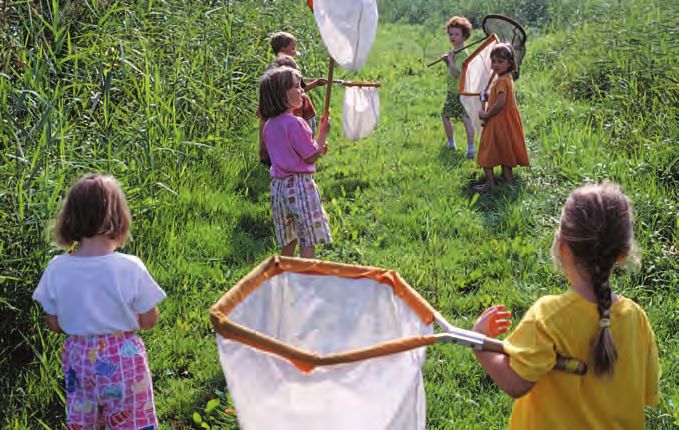
Natural Childhood
            By Stephen Moss

            This report presents compelling evidence that we as a nation, and
            especially our children, are exhibiting the symptoms of a modern
Executive   phenomenon known as ‘Nature Deficit Disorder’. We look at what
summary     this disorder is costing us, why it’s proving so difficult to reverse, and
            gather current thinking on what we must do to eliminate it, before
            opening up the question to the nation for consideration.

            It is important to state from the beginning that this is not an
            anachronistic lament on modernity. The benefits of modern technology
            are many; and to cry out for the return of some mythical golden age
            would be as ineffective as it would be misguided.

            Instead, this report is a call to arms to ensure that as we move forward, we
            do so while retaining what is most precious and gives life most meaning.
            As Octavia Hill, one of the founders of the National Trust, observed over
            100 years ago, ‘the sight of sky and things growing are fundamental
            needs, common to all men.’ The lengthening shadow of what has been
            termed Nature Deficit Disorder threatens the fulfilment of that need; we
            must turn the tide.

            The report’s Foreword presents the issues in more detail, confronting
            head-on perceptions that Nature Deficit Disorder is either peripheral
            to society or simply an inevitable consequence of modernity. It also
            demonstrates the widespread consensus that something needs to be
            done to change the current situation, to enable our children to reconnect
            with the natural world.

            Nature Deficit Disorder: Causes and Consequences focuses on the lives of
Part 1      Britain’s children, particularly with regard to their lack of engagement
            with nature. It presents statistics, and the results of numerous surveys
            and studies, to confirm the dramatic and worrying consequences of
            the current situation. Three specific categories are examined: physical
            health problems including obesity, mental health problems, and children’s
            growing inability to assess risks to themselves and others.

            The Value of Connection: Benefits of Natural Childhood looks at the hard
Part 2      benefits for society from reversing the generational decline in connection
            with the natural world, in four categories:
            (i) Health
            (ii) Education
            (iii) Communities
            (iv) Environment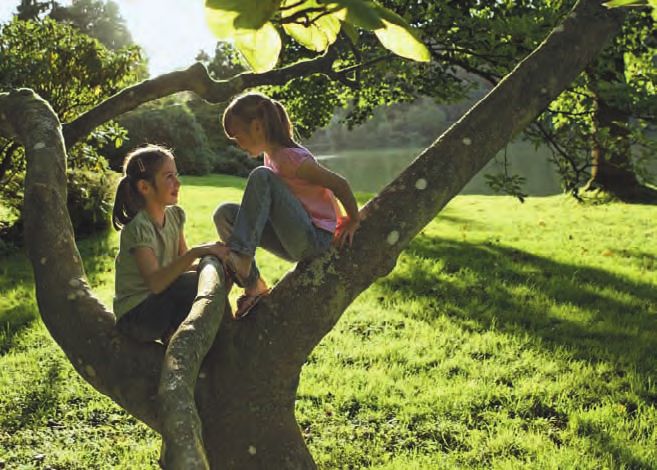
Fear and Complexity: Barriers to Natural Childhood examines what stands in
Part 3         the way of achieving these aims, including:

               – The danger from traffic, and how this severely limits children’s ability to
                 venture outside their homes.
               – The issue of Health and Safety, and how an obsession with trying to
                 achieve a ‘zero-risk’ world is severely limiting children’s freedom.
               – Parental fears of ‘stranger danger’, and its consequences for children’s
                 freedom to roam in the wider environment.
               – The negative attitudes of some authority figures, who regard children’s
                 natural play as something to be stopped rather than encouraged.
               – The past and sometimes present role of nature conservation
                 organisations which should now know better.

               Join the Debate: Towards Solutions brings this report to a conclusion with
Part 4         an appeal: to find out what measures the people of Britain think need
               to be put in place to begin to ensure that every child has the chance to
               develop a personal connection with the natural world.

The National   The National Trust was founded in 1895 with a mission to promote
Trust          the preservation of places of historic interest and natural beauty for
               the benefit of the nation. Over the decades, this has required the Trust
               to take a stand on many different issues – from safeguarding country
               estates in the post-war years to protecting over 700 miles of coastline
               through the Neptune campaign. Today, it is Europe’s largest conservation
               organisation with more than four million members, many of them families
               with children – and today Nature Deficit Disorder demands a response
               from the Trust. With the publication of this report, the National Trust is
               opening the conversation and showing the willingness to play a leading
               role on this vital issue.

The report’s   A lifelong naturalist, Stephen Moss is one of Britain’s leading nature
author         writers. As the original producer of the BBC series Springwatch, author
               of numerous books including The Bumper Book of Nature, and father of
               five, he has a longstanding personal commitment to ensuring all children
               have the chance to form a connection with nature. Building on a national
               online conversation, Outdoor Nation, the Trust has invited him to review
               the latest literature to frame this independent challenge and call to action
               on Nature Deficit Disorder.

                                                                                            1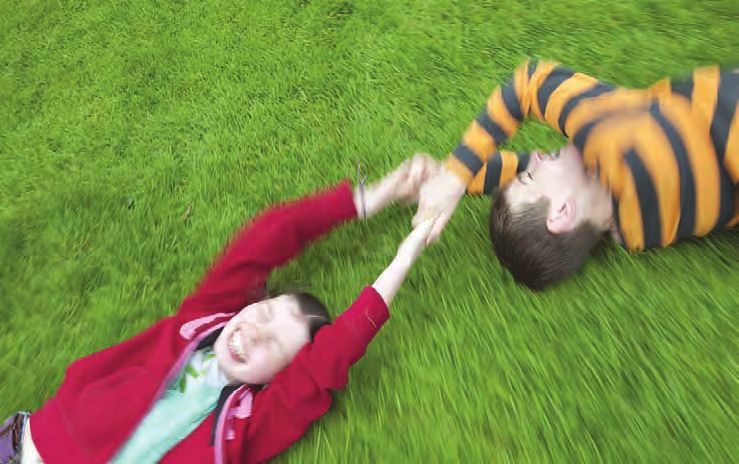
In his seminal book Last Child in the Woods, published in 2005, California-
                           based author Richard Louv coined the phrase that has come to define the
Foreword                   problem we are now trying to solve:

                               Nature Deficit Disorder describes the human costs of alienation
                               from nature, among them: diminished use of the senses, attention
                               difficulties, and higher rates of physical and emotional illnesses.1

                              As we shall see, there is now a critical weight of evidence that our
                           nation is no longer the Outdoor Nation we pride ourselves on: instead,
                           generation by generation, we are increasingly suffering from Nature
                           Deficit Disorder. Although this is not a recognised medical condition, it is
                           nevertheless a useful shorthand term for the situation we currently face,
                           and therefore will be used throughout this report.
                              Our nation’s children are also missing out on the pure joy of
                           connection with the natural world; and as a result, as adults they lack an
                           understanding of the importance of nature to human society.
                              If we do not reverse this trend towards a sedentary, indoor childhood
                           – and soon – we risk storing up social, medical and environmental
                           problems for the future.

                               The reasons for this are not all as they may seem. There is an
                           instinctive reaction, when first discussed, that Nature Deficit Disorder is
                           about two things: poverty and technology.
                               There is some truth in both of these. The problem is more pronounced
                           in low-income urban areas; and when asked why they do not go out and
                           explore the natural world, computer games and TV are on the list of
                           reasons children offer.
                               But this is not the end of the story. Nature Deficit Disorder is society-
                           wide. And while nature does have more competition for the attention of
                           today’s children (and frankly, Playstations and Wiis are good fun), there’s
                           significant evidence that children would really like to spend more time
                           outdoors. At some level, they would recognise the sentiment behind the
A child playing in the     observation of TV presenter and naturalist Nick Baker:
woodland at Clumber
Park, Nottinghamshire
© National Trust Images/       You’ll never forget your first badger – just as you’ll never remember
David Levenson
                               your highest score on a computer game – no matter how important
                               it seemed at the time.2

                           There is too much at stake here simply to accept the situation as an
                           inevitable consequence of modernity. We must dig deeper, and look
                           at issues such as traffic, ‘stranger danger’ and the resulting modern
                           phenomenon of ‘helicopter parents’, who watch and direct their children’s
                           every move, denying them the freedom they themselves enjoyed when
                           they were growing up.3 We must look at the role of the natural world in
                           our education and health systems, and be prepared to think big.

                           So what can we do to combat the problem of Nature Deficit Disorder,
                           to ensure that today’s children can discover the natural world for
                           themselves, and reap the benefits?
                              Unusually, perhaps uniquely amongst today’s political and social
                           concerns, there is a great deal of consensus around this subject. Parents,
                           teachers, doctors, journalists, social workers, conservationists – and

                           2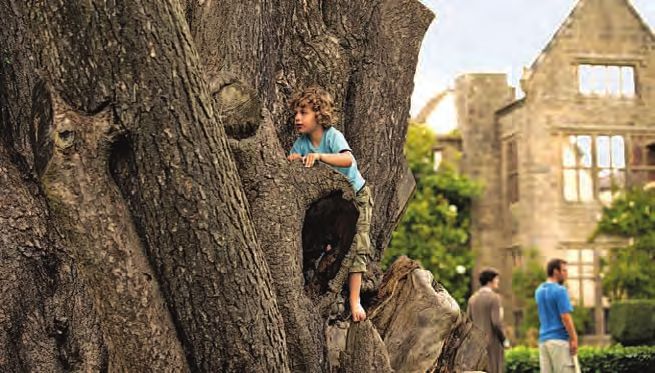
Children on a ‘bug
safari’ funday, at Wicken
Fen, Cambridgeshire
© National Trust Images/
David Levenson

                            the children themselves – are all united in their belief that children
                            would benefit from greater freedom to explore outdoors. Politicians of
                            all colours want change too: after all, no political party ever lost votes
                            campaigning for children to be more in touch with nature.
                                Our nation’s newspapers – from the Mail and Telegraph on one side of
                            the political spectrum to the Observer and Guardian on the other – have
                            run campaigns, written editorials and printed readers’ letters bemoaning
                            the current state of Britain’s children. According to their headlines, we are
                            raising a generation of ‘couch-potato children’, leading ultimately to ‘the
                            erosion of childhood’.4 Parents agree: one recent survey revealed that two
                            out of three now believe that their children have less freedom to roam
                            than free-range chickens.5
                                And yet despite all the heat generated by this debate, in some
                            ways little has actually been achieved. For while we may all agree that
                            ‘something needs to be done’, there has been a conspicuous lack of
                            coordinated action to reverse the trend and reconnect our children with
                            nature once again.

                                But we are now at a tipping point. We have the evidence: both of the
                            harm done by this state of affairs, and the many benefits of allowing
                            children between the ages of seven and 12 the freedom to explore the
                            natural world. We have the support: from virtually everyone who is
                            involved with children, either from a professional standpoint or as a
                            parent, or both. And we have the opportunity: not least because nature
                            is more or less a free resource, which offers many low-cost benefits for
                            children and families, an important factor at this time of economic stress.
                                So we have the means, motive and opportunity. Now we need the will.
                            Things cannot be changed overnight, but we must start somewhere. This
                            report is a first step, attempting to raise the level of the debate on this issue,
                            and providing the commitment to help resolve it. The goal is nothing less
                            than to kick-start the creation of a new way of life for our nation’s children.

                                                                                                            3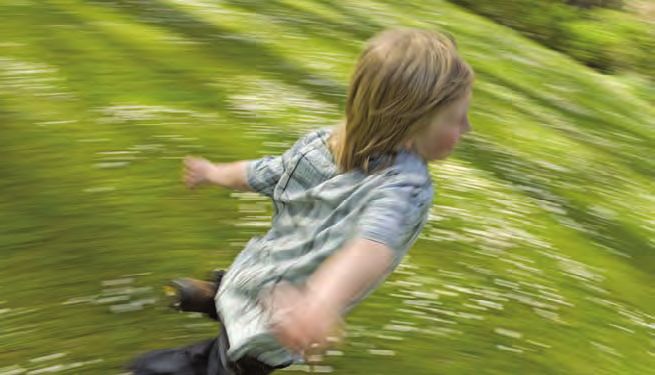
Nature Deficit Disorder: Causes and Consquences
Part One                       ‘For a new generation, nature is more abstraction than reality.
                               Increasingly, nature is something to watch, to consume,
                               to wear – to ignore.’
                               Richard Louv, Last Child in the Woods.6

                           Until quite recently, if a child was sent to their bedroom during daylight
                           hours, it was because they had been behaving badly.
                              Today, things are very different. The average child’s bedroom is no
                           longer a place of punishment, but an entertainment hub: the epicentre of
                           their social lives. Here they can access the outside world via their mobile
                           phone, TV or computer screen; or immerse themselves in a beguiling fantasy
                           world of computer games, whose scenarios are so convincing that children
                           sometimes have difficulty distinguishing between this ‘virtual reality’ and
                           the real world. Why would they ever need to venture outdoors again?
                              Statistics confirm the widespread perception that our nation’s children
                           have a largely screen-based lifestyle:

                           – On average, Britain’s children watch more than 17 hours of television a
                             week: that’s almost two-and-a-half hours per day, every single day of
                             the year. Despite the rival attractions of the Internet, this is up by 12%
                             since 2007.7
                           – British children are also spending more than 20 hours a week online,
                             mostly on social networking sites.8
                           – As children grow older, their ‘electronic addictions’ increase. Britain’s
                             11–15-year-olds spend about half their waking lives in front of a screen:
                             7.5 hours a day, an increase of 40% in a decade.9

                           The growth of virtual, as opposed to reality-based, play is, not
                           surprisingly, having a profound effect on children’s lives; indeed, it has
                           been called ‘the extinction of experience’.10 (Pyle)
                               When looking for the reasons why today’s children no longer engage
                           with the natural world, many people pin the blame firmly on this screen-
                           based lifestyle. But we must not forget that technology brings many
                           benefits to children, not least the ability to access information about the
                           natural world. And while it would be easy to draw the conclusion that the
                           lure of this screen-based entertainment is the main reason why children
                           rarely go outdoors, it may be a symptom of what Richard Louv refers to as
                           ‘well-meaning, protective house arrest’.11
                               To find out the true causes of the current situation, we must examine
                           the many other ways in which our children’s freedom to venture outdoors
                           has been eroded.

Children playing in the
garden at Little Moreton
Hall, Cheshire
© National Trust Images/
Paul Harris

                           4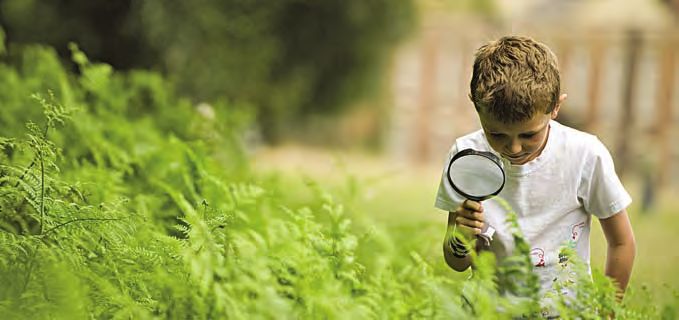
‘Climbing a tree –      So are our children really prisoners in their own homes? The statistics
working out how         would appear to support this view. In a single generation since the 1970s,
to start, testing for   children’s ‘radius of activity’ – the area around their home where they are
strength, feeling       allowed to roam unsupervised – has declined by almost 90%.12 In 1971,
how the breeze          80% of seven- and eight-year-olds walked to school, often alone or with
in your face also       their friends, whereas two decades later fewer than 10% did so – almost
sways the branches      all accompanied by their parents.13
underfoot, glimpsing
the changing               Running errands used to be a way of life; yet today, two out of three
vista through the       ten-year-olds have never been to a shop or park by themselves.14 A poll
leaves, dreaming        commissioned by the Children’s Society revealed that almost half of all
about being king        adults questioned thought the earliest age that a child should be allowed
or queen of the         out unsupervised was 14 – a far cry from just a generation ago, when ten-
jungle, shouting to     year-olds would have had more freedom than a teenager does nowadays.15
your friends below
once you’ve got as      If most of today’s children are not even allowed down the street by
high as you dare        themselves, the chances of them exploring the natural world are even
– is an immersive,      more remote, as survey after survey has shown:
360-degree
experience              – Fewer than a quarter of children regularly use their local ‘patch of
that virtual or           nature’, compared to over half of all adults when they were children.16
indoor settings         – Fewer than one in ten children regularly play in wild places; compared
simply cannot             to almost half a generation ago.17
compare with.’          – Children spend so little time outdoors that they are unfamiliar with
Tim Gill                  some of our commonest wild creatures. According to a 2008 National
Child play expert         Trust survey, one in three could not identify a magpie; half could not
                          tell the difference between a bee and a wasp; yet nine out of ten could
                          recognise a Dalek.18

                        There is evidence to suggest that this sedentary, indoor lifestyle is having
                        profound consequences for our children’s health, especially with regard to
                        what has been called the ‘modern epidemic’ of obesity:

                        – Around three in ten children in England aged between two and 15 are
                          either overweight or obese.19
                        – The proportion classified as obese increased dramatically from 1995
                          to 2008: rising from 11% to almost 17% in boys, and from 12% to 15%
                          in girls.20
                        – If current trends continue, by 2050 more than half of all adults and a
                          quarter of all children will be obese.21

                        Other physical health problems on the increase include vitamin D
                        deficiency, leading to a major rise in the childhood disease rickets;22
                        short-sightedness;23 and asthma.24 There has also been a reduction
                        in children’s ability to do physical tasks such as sit-ups, producing
                        ‘a generation of weaklings’;25 and a major decline in children’s
                        cardiorespiratory (heart and lung) fitness, of almost 10% in just one
                        decade.26 All these health problems have been, at least in part, attributed
                        by the researchers involved to a decrease in the time children spend
                        outdoors compared with previous generations.

                        But physical problems are only part of the story. The Good Childhood
                        Inquiry found that our children are suffering an ‘epidemic of mental

                                                                                                      5
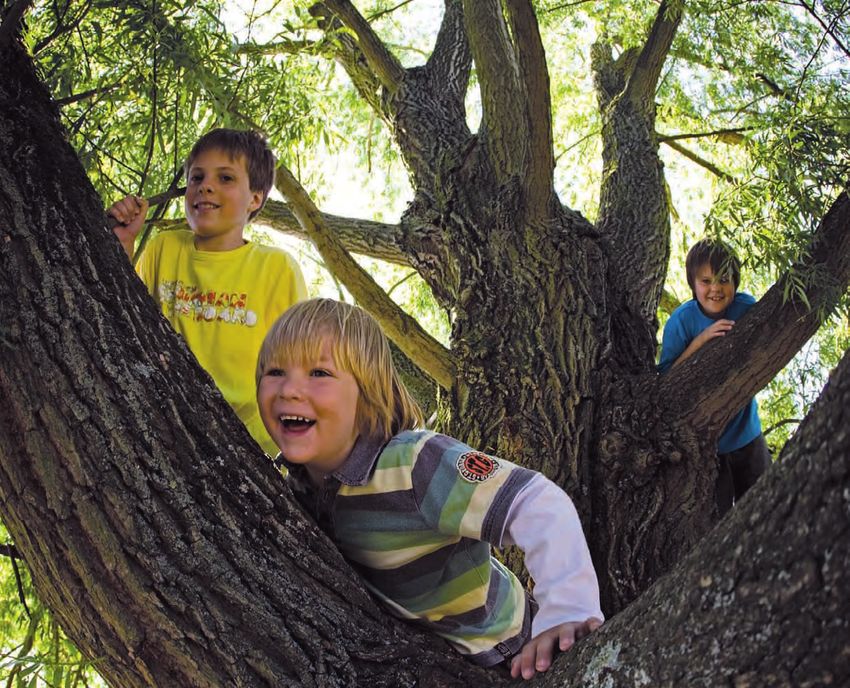
Children sitting in a tree
at Stourhead, Wiltshire
© National Trust Images/
Nick Daly
illness’, with significant increases between 1974 and 1999 in the number of
children suffering from conduct, behavioural and emotional problems:27
– One in ten children aged between five and 16 have a clinically diagnosed
mental health disorder.28
– One in 12 adolescents are self-harming.29
– About 35,000 children in England are being prescribed anti-depressants.30
Physical and mental health problems are the most obvious consequences
‘For many of a lack of engagement with nature, but there are others which are less
people, the tangible, though equally important.
countryside is Principal among these are declining emotional resilience and the
alien territory.’ declining ability to assess risk, both vital life-skills in the development of
Birmingham which outdoor experience is vital, as child psychologist Professor Tanya
Vox Pops Byron has noted:
The less children play outdoors, the less they learn to cope with the
risks and challenges they will go on to face as adults… Nothing can
replace what children gain from the freedom and independence of
thought they have when trying new things out in the open.31
A potential impact is that children who don’t take risks become adults
who don’t take risks. In the current global economy this, too, is a price
we cannot afford to pay, as pointed out by Lord Digby Jones, former
chairman of the CBI:
If we never took a risk our children would not learn to walk, climb
stairs, ride a bicycle or swim; business would not develop innovative
new products… scientists would not experiment and discover, we
would not have great art, literature, music and architecture.32
6The Value of Connection: Benefits of Natural Childhood
Part Two The natural world is vital to our existence, providing us with
essentials such as food, water and clean air, but also other cultural
and health benefits not always fully appreciated because we get
them for free.33
Caroline Spelman MP
Secretary of State for Environment, Food and Rural Affairs
‘People need to So far this has been a story of unrelenting gloom: how a generation of
understand what children appears to be suffering from a lack of contact with the natural
they’re missing out world, with serious consequences both for themselves and for society as
on – something a whole. It is now time to look on the brighter side: what would be the
really fundamental,
benefits of reconnecting our nation’s children with the great outdoors?
a connection with
Fundamentally these benefits all stem from one important
the rest of life.’
characteristic of the natural world, compared with the virtual alternatives.
Dr William Bird Unlike them, nature doesn’t come with an instruction manual, or a set
Outdoor Nation range of possible outcomes; instead it holds infinite possibilities.
Interview
There is also compelling evidence that human beings have an innate
need for nature: a concept known as ‘biophilia’. Originally coined by the
psychologist Erich Fromm,34 and later popularised by biologist Edward O.
Wilson,35 biophilia refers to our primal urge to connect with the natural
world; and although we lead very different lives compared with our
prehistoric ancestors, this remains central to our lives today:
Just as children need good nutrition and adequate sleep, they may very
well need contact with nature…36 [Louv]
Tim Gill, one of the UK’s leading commentators on childhood, expands on
the significance of this:
Natural places are singularly engaging, stimulating, life-enhancing
environments where children can reach new depths of understanding
about themselves, their abilities and their relationship with the world
around them.37
This depth of understanding leads to development opportunities that in
turn lead to a range of benefits at the level of wider society. These fall into
four categories: health, education, communities and environment.
A: Health Benefits If we want to improve our children’s physical fitness through increased
activity, and begin to reduce the epidemic of childhood obesity, an
important thing we can do is to get them to play outside.38 As one
children’s playworker has observed:
If you watch a child playing outside they’re just doing so many physical
tasks – they run for hours, dig, climb. If you told them to do it they
wouldn’t, but they want to because they’re playing. You won’t get that
level of physical activity with anything else.39 (Penny Wilson)
7Moreover, the benefits of regular outdoor play continue into later life.
There is clear evidence to show that a child’s attitude towards exercise
lays the foundation for their habits as an adult.40
Exposure to the natural world can even enable people to live longer.
In 2009 researchers at the University of Essex published a report into
nature, childhood, health and life pathways.41 On one pathway, where
children are ‘free-range’, people’s lifespan increases; on the other, where
they are kept indoors and have little or no connection with nature, they
die earlier.
But if outdoor play itself is so good for children, why do they need to
leave the playground and explore beyond its boundaries? Because unlike
playgrounds created by a human designer, natural environments allow
children to play in far more varied and imaginative ways.
Compared with man-made playgrounds, the natural world is highly
A child climbing trees in complex, with lots of places to hide and explore; it is untidy, which may be
the Lime Avenue at The off-putting for adults, but adds to its attraction for children; and above all it
Argory, County Armagh
© National Trust Images/ is dynamic, varying from day to day, season to season and year to year.
Arnhel de Serra
Of course being outdoors can also confront children with less
enjoyable experiences: being frightened, getting cold and wet, and even
sometimes being hurt. But consider the alternative: that our children
grow up without ever encountering these ‘difficult’ things, and enter the
adult world unprepared for the challenges it might bring.
‘The outdoors is This is why the mental health benefits of connection are just as important,
bursting with if not more so, than the physical, although the two are of course
health benefits – inextricably linked: greater physical activity promotes better mental
it takes away stress, health, and a sedentary childhood leads to more mental health problems.42
it increases physical
Specifically, a high proportion of children suffering from the medical
activity, and it gets
condition Attention Deficit Hyperactivity Disorder (ADHD) benefit from
people meeting
each other…’ increased contact with nature. In one study, exposure to nature reduced
symptoms of ADHD in children threefold compared with staying indoors.43
Dr William Bird But it is not only children with a specific diagnosis who benefit from
Outdoor Nation
increased contact with nature. Exposure to the natural environment can
Interview
reduce stress and aggressive behaviour in all children, and give them a
greater sense of self-worth.44
In the longer term, continued regular contact with nature brings an
increased level of satisfaction with life in general. A recent National Trust
survey revealed that 80% of the happiest people in the UK said that they
have a strong connection with the natural world, compared with less than
40% of the unhappiest.45
Even short-term ‘doses’ of nature can make a marked impact on
mental health – indeed, as little as five minutes of ‘green exercise’ can
improve mood and self-esteem by a significant margin.46 So clear is the
link between increased contact with nature and better mental health that
in 2007 the charity MIND launched a campaign to incorporate nature
into mainstream NHS treatments, under the banner Ecotherapy: The green
agenda for mental health.47
Recent research for Natural England has shown that where people have
good access to green space they are 24% more likely to be physically
active. The research concludes that if the population were afforded
equitable good access to green space, the estimated saving to the health
8service could be in the order of £2.1 billion per annum in England alone.48
As Dr William Bird, GP and medical advisor to Natural England and the
RSPB, puts it:
The outdoors can be seen as a great outpatient department
whose therapeutic value is yet to be fully realised. 49
A child running in the
garden at Trelissick
Garden, Cornwall
© National Trust Images/
John Millar
B: Educational Increased contact with nature also improves the way children learn,
Benefits both formally and informally. Outdoor learning gives them direct
experience of the subject, making it more interesting and enhancing their
understanding.50 It also enables them to develop the vital connections
between the outside world and what educationalists call children’s
‘interior, hidden, affective world’.51 (Robin Moore)
The evidence for improvement, which child psychologist Aric Sigman
calls the ‘countryside effect’, is considerable. He found that children
exposed to nature scored higher on concentration and self-discipline;
improved their awareness, reasoning and observational skills; did better in
reading, writing, maths, science and social studies; were better at working
in teams; and showed improved behaviour overall.52
But children don’t simply learn more, or learn better, when freed from
their desks. They also learn differently, experiencing improvements in four
specific ways:
‘Children who
don’t connect – Cognitive Impacts (greater knowledge and understanding)
with nature before – Affective Impacts (attitudes, values, beliefs and self-perceptions)
the age of 12
– Interpersonal and Social Impacts (communication skills, leadership
are less likely as
adults to connect
and teamwork)
with nature. They – Physical and Behavioural Impacts (fitness, personal behaviours and
therefore lose out social actions.53
on the resilience
nature provides So children who learn outdoors know more, understand more, feel better,
when you’re really behave better, work more cooperatively and are physically healthier.
stressed.’ Not a bad result from simply changing the location where they are
Dr William Bird being taught. Importantly, this is not just for able and motivated pupils:
Outdoor Nation under-achievers also do better in a natural environment, especially when
Interview exposed to high-quality, stimulating activities.54
9The economic benefits up for grabs here are again significant: even
a tiny improvement of just one-tenth of one per cent in children’s
educational attainment and behaviour would save between £10 and £20
million per annum.55
Now that we know what works, it is time to implement it across
the country for the benefit of all our children. The Natural Connections
programme, coordinated by Natural England, which aims to enable the
majority of schoolchildren to learn outdoors, is exactly the kind of sector-
wide initiative needed to achieve real and lasting change.56
But the profile of this project and others like it is not high enough
within the sector it seeks to affect. More needs to be done: until every
teacher in the country embraces this way of teaching and learning, the
trend to disconnection with nature is likely to continue.
C: Community Reconnecting children with nature is not just for their advantage. There
Benefits are also positive outcomes for communities and society as a whole.
In 2011, a cross-cultural ethnographic study by UNICEF, comparing
childhood in the UK, Spain and Sweden, found that British parents are
trapping their children in a cycle of ‘compulsive consumerism’.57 The
study, triggered by an earlier quantitative study which placed the UK
bottom for childhood well-being out of all 21 nations surveyed,58 heard
remarkably constant feedback from children in all three countries:
Children in all three countries told researchers that their happiness is
dependent on having time with a stable family and plenty of things to
do, especially outdoors, rather than on owning technology or branded
clothes. Despite this, one of the most striking findings is that parents
in the UK said they felt tremendous pressure from society to buy
material goods for their children; this pressure was felt most acutely in
low-income homes. [My italics]
As Sue Palmer, author of the book Toxic Childhood,59 commented:
We are teaching our children, practically from the moment they
are born, that the one thing that matters is getting more stuff.60
We can observe strong evidence that even the lightest contact with
nature makes for stronger communities; studies have shown that even in
cases where the only variable is the view of green space from a window,
incidences of crime are reduced by as much as 50%.61
This makes intuitive sense. In a world where children play in their
local green space and are welcomed and expected to do so, those
children become part of the community. Perhaps the days of ‘I know your
mother!’ are past, but the benefits of such ties for the strength of Britain’s
communities would be pronounced.
D: Environmental However important the short-term economic arguments may be, we must
Benefits not lose sight of those that refer to the longer term.
With the recent publication of the National Ecosystem Assessment,62 we
are starting to recognise the extent to which we depend on the natural
world for the viability of our economy. But rebuilding the connections
10between children and nature will be vital to ensuring we continue to reap
the economic benefits of the natural world. This is because, in the words
of David Attenborough:
No one will protect what they don’t care about; and no one
will care about what they have never experienced. 63
For all the logical economic arguments for our dependence on nature, we
will not maintain our two-way relationship with the natural world unless
we develop those connections at a young age.
This is partly because only adults who experience nature as children
are likely to be motivated to protect the environment, as Dr William Bird
notes in his work for the RSPB:
The critical age of influence appears to be before 12 years. Before
this age contact with nature in all its forms, but in particular wild
nature, appears to strongly influence a positive behaviour towards
the environment.64
But it is also partly because in order to continue to harness the services of
our ecosystems, we will need to continue to develop our understanding of
them – for which we will need to continue the strong British tradition of
cohorts of naturalists, both amateur and professional.
Today there are thousands of these men and women in the UK, many
of whom contribute their observations to national wildlife surveys such
as the British Trust for Ornithology’s Atlas,65 or the RSPB’s Big Garden
Birdwatch.66 No other country in the world has such a strong tradition of
‘citizen science’, adding hugely to our knowledge and understanding of
our natural heritage, and enabling us to safeguard it for the future.67
But sadly, these amateur naturalists are now an endangered species.
The vast majority of those active in, for example, BTO surveys, are more
than 40 years old; most are over 60.68 As time goes by, we look in vain
for their successors. Young people are still studying biology and zoology
A child with a snail degrees, and many have a keen interest in environmental issues; but
on the beach at according to ecologist Roger Key, few have the practical, hands-on field
Portstewart Strand,
Co. Londonderry knowledge of their predecessors.69 Indeed, a study by Anne Bebbington
© National Trust Images/
Rod Edwards
found that most A-level biology students could not identify more than
three wild plants.70
In an internal report for Natural England, Key demonstrated that the
decline in young people’s natural history knowledge is at all educational
levels, from primary school to postgraduate studies. Paradoxically, as
he points out, the huge rise in awareness of environmental issues has
coincided with a decrease in people’s specific knowledge of the wildlife
they wish to save.
If we want to create a better environment – for wildlife and people
alike – this expertise and knowledge is an essential building block. As
Richard Louv concludes:
If we are going to save environmentalism and the environment,
we must also save an endangered species: the child in nature.71
It is not just children who need nature; nature needs children too.
11Fear and Complexity: Barriers to Natural Childhood
Part Three Childhood is being undermined by adults’ increasing aversion to
risk and by the intrusion of that fear into every aspect of their lives.
Tim Gill, Author of No Fear: Growing Up in a Risk-averse Society 72
The weight of evidence for the benefits of getting children back to nature
is, as we have seen, overwhelming. The consensus that ‘something must
be done’ is also there, right across the social and political spectrum. We
even have a government White Paper, The Natural Choice,73 which makes
several recommendations explicitly designed to reconnect our nation’s
children with the natural world, including:
– A recognition that we need to exploit ‘nature’s health service’, in
particular relating to children’s physical and mental health.
– A specific pledge to increase outdoor learning, by offering practical
support to schools and reducing ‘red tape’.
– Creating better neighbourhood access to nature, both locally and
in the wider countryside, in order to allow children (and adults) to
experience its benefits.
‘I think children And yet the stream continues to flow in the wrong direction. So what is
are born with an stopping us?
inherent love of the The answer is that there are a whole host of barriers – some justified,
outdoors… but as others less so; some functional, and others more deep-seated and
parents we stop
psychological – which stand in the way of excellent ideas being turned
letting them have
into effective actions.
their freedom, and
we work that love These barriers may be very hard to break down, not least because they
of nature out have become ingrained in our daily lives, as Richard Louv points out:
of them…’
Some of these obstacles are cultural or institutional – growing
Kate Macrae
Education
litigation, educational trends that marginalise direct experience
Consultant in nature; some are structural – the way cities are shaped. Other
and Teacher barriers are more personal or familial – time pressures and fear,
for example. A shared characteristic of these institutional and
personal barriers is that those of us who have erected them
have usually done so with the best of intentions.74
The fundamental truth is that it is these misplaced good intentions that
we must target – but it will not be easy to do so. For the true scale of
the challenge is that we will need to convince the nation’s parents and
teachers, conservationists and politicians, journalists and legislators,
that the way we treat our children is – at least in this regard – at best
counterproductive, and at worst utterly wrong.
A: Traffic First of all, though, there is one barrier that is largely functional, and
concern about which is entirely rational – though the picture is not what
it might at first seem.
Successive governments, and motoring organisations, would have
us believe that the story of children’s road safety in recent years has
been one of unqualified success. The statistics appear to bear this out:
12the number of children killed on our roads has fallen dramatically, from
almost 700 deaths in 1976 to just 81 in 2009.75
But these raw figures conceal the true reason behind the drop in
deaths: that nowadays children are rarely allowed to venture outdoors.
In 2007, the Daily Mail reported on a single Sheffield family who neatly
demonstrated this.76 Great grandfather George, brought up in the 1920s,
had almost unlimited freedom as an eight-year-old, regularly walking
six miles to go fishing on his own. But 80 years later, his great-grandson
Edward enjoyed none of this freedom: he was taken to and from school
by car, and was only allowed to roam within a radius of 300 yards from his
home.
Indeed, Mayer Hillman’s study One False Move found that in 1971,
Children in the long grass 80% of seven- and eight-year-old children went to school on their own;
of the estate at Croome by 1990 only 9% were making the journey unaccompanied.77 Hillman et
Park, Worcestershire
© National Trust Images/
al concluded that road accidents involving children have declined not
Arnhel de serra because the roads have become safer, but because children are no longer
exposed to the dangers they pose.
‘You can’t get In 2004, the children’s charity Barnardo’s joined forces with the pressure
outdoors – group Transport 2000 (now Campaign for Better Transport) to produce
the traffic is a report: Stop, look and listen: children talk about traffic.78 This contained
everywhere. powerful first-hand testimony from children on the way traffic has limited
You try to go
their freedoms.
somewhere and
In a hard-hitting conclusion, the authors called on the government
you’re stuck in
queues – you just to make our streets safer, so that children could play outdoors again.
give up!’ Children of all ages wanted to be able to play outside, walk and cycle
more safely, but said that speeding, bad driving and a lack of safe play
Bristol Vox Pops
spaces made them feel unsafe when outside their homes.
Almost a decade later, the situation has not improved. Car use remains
at historically high levels. If things do not change, the danger from traffic
will remain a primary reason why children do not play outdoors. This is a
fundamental barrier to be overcome if we are to reinstate our children’s
‘right to roam’: both on the streets where they live, and in the wider
natural environment.
B: Attitudes Traffic represents a physical risk to children that should never be
to risk understated. But there are other forms of risk that are worth taking.
Giving children the freedom to explore natural environments
inevitably incurs an element of danger. Yet we should put this in
perspective: three times as many children are taken to hospital each year
after falling out of bed, as from falling out of trees.79 Indeed ironically, by
far the most dangerous place for a child to be is at home:
– Every year, one million children aged 14 or under go to A&E
departments: 30,000 with symptoms of poisoning, mostly from
domestic cleaning products, and 50,000 with burns or scalds.
– Half a million babies and toddlers are injured each year at home,
35,000 from falling down stairs.
– On average, ten children die each year from falling through a window or
off a balcony, while house fires cause almost half of all fatal accidents
to children.80
13A child climbing a tree
at Nymans, West Sussex
© National Trust Images/
John Millar
Yet despite these horrific statistics, we continue to assume that all
dangers lie outside the home, and that by keeping our children indoors
we are somehow removing them from all risk. Clearly the statistics above
show that is not the case.
Of course no natural environment is completely free from risk either.
But these risks are a fundamental part of childhood: by gradually learning
what is safe and what is dangerous, especially with regard to their own
actions and behaviours, children develop their own ‘risk thermostat’.81
Climbing a tree is a good example: it may be easy to climb up, but the
child may then realise that getting down is rather trickier. The experience
has taught them an important lesson about their own limits, and the risks
they are prepared to take. But if children are shielded from any possibility
of being in a risky situation, how will they ever know what their safe limits
are? In the words of Fiona Danks and Jo Schofield, authors of Nature’s
Playground:
Life is full of risk, so the best way to prepare children for life
is to ensure they know how to judge risk for themselves.82
Tim Gill has called for ‘the wholesale rejection of the philosophy of
protection’. In its place, he argues, we should embrace risk, uncertainty
and challenge – even danger – as essential ingredients of a rounded
childhood.83
Fortunately those in charge of health and safety legislation seem to
agree. Launching its ‘Get a Life’ campaign in August 2006, the Health and
Safety Executive chairman Bill Callaghan accused over-zealous ‘pedants’
of using health and safety as an excuse to ban perfectly normal activities,
including playing conkers, and urged those in authority to allow ‘sensible
risks’.84
In July 2011 his successor Judith Hackett reinforced this message: what
she calls ‘the creeping culture of risk aversion’ is, she believes, harming
children’s preparation for adult life.85
When activities like playing conkers are banned or restricted, it is
not at the call of the Health and Safety Executive; indeed, it is explicitly
against their recommendations. The inevitable conclusion is that it is a
cultural norm that has become deeply rooted in our national psyche: risk
is bad, and must be avoided at all costs.
14This will not be easy to overcome. But we must do so. The work of
consultants Tim Gill and Bernard Spiegal with organisations including the
National Trust on the concept of Risk/Benefit Assessments, whereby both
risks and benefits are assessed and decisions made as a result of weighing
up both factors, is a ground-breaking approach, and one completely
consistent with Health and Safety Executive advice. Efforts like these
need a greater profile in our society – they strike at the core of finding a
solution to the issue of Nature Deficit Disorder.
C: Stranger While we’re on the subject of risk, we must also take on the most emotive
danger and controversial aspect of this question. There can be no doubt that
most parents’ greatest fear is stranger danger. Fear of strangers is likely to
be hard-wired into our consciousness,86 having evolved as a strategy for
survival amongst our distant ancestors. But Richard Louv suggests ‘the
bogeyman syndrome’ may have become counter-productive today:
Fear is the most potent force that prevents parents from allowing their
children the freedom they themselves enjoyed when they were young.87
This is a result of what social psychologists would refer to as an availability
heuristic: a phenomenon in which people predict the frequency of an
event, or how many people it will affect within a population, based on how
easily an example can be brought to mind.
In other words, as a result of news coverage of attacks on children,
it is easy for people to recall horrendous, tragic examples – Madeleine
McCann, Holly Wells and Jessica Chapman, and so on. And as a result of
that, they significantly and systematically overestimate the likelihood of
something happening to their own children.
As a result, a significant minority of parents are becoming so
concerned about safeguarding their children that they are resorting
to extreme measures, such as GPS tracker devices that allow them to
monitor their child’s every move.88 Superficially this may seem rational,
but there may be damaging consequences for the children involved.
A 2008 Channel Four documentary, Cotton Wool Kids,89 highlighted
the growing tendency for some parents to become obsessively over-
protective. One pre-school girl was bombarded with her mother’s
increasingly hysterical warnings about stranger danger; a teenage boy
was not even allowed to walk to the bus stop on his own; and a working
mother used a webcam constantly to monitor her child at nursery.
Yet ironically, the greatest dangers facing Britain’s children are not outside
in the woods and fields, but in the very place their parents regard as a safe
haven: their bedrooms. The vast majority of sexual abuse is carried out by
relatives of the victim: parents or step-parents, uncles or ‘family friends’.
Even when a stranger is involved, they often initially approach their
victim via Internet chatrooms, posing as teenagers themselves. With
three out of four 8–11-year-olds, and two out of three 5–7-year-olds,
now regularly using the Internet, more – and younger – children may be
inadvertently putting themselves at risk.90
When it comes to the most serious cases of all, involving the
abduction and murder of a child, the statistics are revealing. On average
55 children in England and Wales are unlawfully killed each year. But eight
out of nine victims are less than one year old, two out of three are under
15five, and the vast majority are killed by either a parent or step-parent –
mostly in the family home.91
The statistics do not reveal the exact number of children abducted
and killed by strangers, but it can be inferred that it is likely to be in very
low single figures. To put this in context, more than 200 children die each
year from accidental injury or poisoning.92
But these figures are irrelevant when compared to the readiness with
which the name of the tragic victims of these rarest of crimes can be
brought to mind; names like James Bulger and Sarah Payne, which are
etched in our collective memory.
So are our children any safer in their bedrooms than if they were out
and about with a group of friends? Statistics, experience and common
sense suggest not; yet persuading parents of the real dangers indoors,
compared to the imaginary ones outside, will be very hard to do.
D: Authority We can all empathise with the dilemma faced by parents fearful of the
Attitudes risks posed by traffic or stranger danger, even if we may not agree that
these fears are always justified. But there is another barrier preventing
our children reconnecting with nature: figures of authority. These include
teachers, police and other officials who, often with the best of intentions,
are eroding our children’s freedom.93 And while most professionals take a
more balanced view, it only takes a small minority to discourage children
from engaging with the natural world.
According to a 2008 study by Play England,94 half of all children
have been stopped from climbing trees, one in five banned from playing
conkers, and almost the same number told they cannot play games of
tag. As Tim Gill observes, activities that earlier generations of children
enjoyed as part of growing up are now being relabelled as ‘troubling’ or
‘dangerous’.95 And remember, the Health and Safety Executive is an active
advocate of sensible risk.
Children on an Easter In addition, because children are no longer allowed to venture
egg hunt, hiding in an outdoors, any who do stand out from the crowd. So whereas their
old tree trunk at Dyrham
Park, Gloucestershire behaviour would once have been accepted, it is increasingly regarded as
© National Trust Images/
Jennie Woodcock
abnormal and delinquent, leading to what Richard Louv has called ‘the
criminalisation of natural play’.96
Cases include a family with three young daughters being reprimanded by
police for picking daffodils;97 a group of youngsters being given anti-social
behaviour warnings for ‘making too much noise’ while playing in a park;98 and
a mother fined £75 because her little boy had thrown bread to ducks on their
local park pond – a fine that was, after a storm of protest, withdrawn.99
In July 2006, three 12-year-olds who built a den in a cherry tree were
arrested, DNA tested and locked up in police cells, accused of criminal
damage. They were later reprimanded and released, but their details will
be kept on file for five years. The children’s parents accused the police of
over-reacting, and were backed up by the chairman of the Youth Justice
Board for England and Wales. But the police defended their actions, and
described the children’s behaviour as ‘anti-social’ and ‘low-level crime’.100
An even more disturbing example occurred two years later, when
Dorothy Judd took her five-year-old grandson Max into the local woods to
build a den. But when they returned the next day a uniformed police officer
approached them, took their personal details and escorted them out of the
woods, following two complaints about their ‘suspicious behaviour’.101
16We now, it seems, live in a world in which even the most innocent
childhood actions are sometimes regarded as unacceptable, with all the
consequences for children’s freedom this entails.
E: Arms-closed ‘Take only photographs, leave only footprints…’ For environmentalists
Conservation and conservationists the world over, this mantra has become the
equivalent of one of the Ten Commandments.
But it has had exactly the opposite effect of what was originally
intended. If conservation organisations and their wardens ban hands-on
experiences, then instead of children’s passion for nature being nurtured
and encouraged, they may simply be put off. One expert commentator,
Martin Maudsley of the National Children’s Bureau, has pointed to the
importance of children taking a hands-on approach: touching, picking
and collecting, and occasionally being bitten or stung!
Widespread evidence suggests that the strongest environmental
sensibilities in adulthood stem from childhood experiences of
unstructured play in natural environments, including interactive
(potentially damaging) activities.102 [my italics]
‘What we’ve done We should also be wary of the tendency to turn every encounter with
is we’ve put Nature nature into some kind of ‘interactive experience’. Nature reserves were
over there – we’ve once indistinguishable from the wider countryside; today they have so
put a fence around many signs, exhibits and organised activities that many visitors may never
it and said ‘That’s
actually get to look at the wildlife they have come to see.
Nature’ – this is why
Also, by turning what should be a spontaneous experience into an
we’re now strangers
to each other.’ organised one, there is a real danger that people assume they need special
skills and equipment to take part. As Nick Baker points out:
Dr William Bird
Outdoor Nation
Even nature itself has become a commodity. Many believe they cannot
Interview
experience it unless they are in a nature reserve, have the right pair
of binoculars, or are wearing the correctly endorsed clothes… So
often nature is seen as something to travel to – not something we
are immersed in all the time and dependent upon for our physical,
emotional and spiritual health.103
Conservation organisations including the National Trust are now taking
on board these criticisms, and a new era of ‘arms open’ conservation is
very definitely dawning; but there is more – much more – to be done.
A child taking a close
look at wildlife in the
garden at Quarry Bank
Mill, Cheshire
© National Trust Images/
John Millar
17Join the Debate: Towards Solutions
Part Four The tipping point is the moment of critical mass,
the threshold, the boiling point.
Malcolm Gladwell, The Tipping Point 104
Anyone involved with children – as a parent, as a professional, or both –
knows that there is no ‘magic bullet’, which can instantly reconnect our
nation’s children with the natural world. Reaching this goal will require
long-term changes across the whole of society, in three broad spheres:
individual, collective and political.
Achieving effective and permanent changes in behaviour, attitudes
and policies will need a holistic approach, involving all interested parties.
These range from politicians and policymakers at the top, through
teachers, health practitioners, journalists and conservationists in the
centre, to families, parents and children at the point of delivery.
Individuals and families – including grandparents and godparents as
well as the parents themselves – have a crucial role in kick-starting their
children’s process of engagement with the natural world. But to keep the
momentum going, community groups, local and national organisations,
and internet-based special interest groups, also need to get involved.
These groups – from school PTAs to Parish Councils, the Scout
and Guide Movement to Mumsnet, and the Women’s Institute to
Neighbourhood Watch, have a vital part to play: in practical ways, such
as organising outdoor events or campaigning for children’s play areas and
safe access routes; but also by helping to promote changes in attitudes
and practices. One effective approach would be to set up Family Nature
Clubs, a model that has already had great success in the USA and
Australia.105 These are groups of people who get outside in nature on
a frequent basis, gathering children, friends and community members
to share outdoor adventures and experience the benefits of time spent
together outside.
The conservation bodies must also continue to lead the way in
promoting the importance of getting children back to nature. They have
already put in an enormous amount of groundwork, in the form of the
many popular initiatives and authoritative reports already cited, and their
continued good work with children and young people.
Alongside this report, the National Trust is launching its next
contribution: a campaign called ‘50 things to do before you’re 11¾’,106
rooted in the studies that show the importance of developing a
connection with nature before the age of 12. Devised by staff and
volunteers from across the Trust, it is a call-to-arms throughout the
organisation to ensure that its commitment to ‘arms open’ conservation
extends to the nation’s children.
But individuals, community groups and conservation organisations,
however loud they shout, and however hard they work, can only go so
far. Even government policy – as has been proposed in the 2011 Natural
Environment White Paper 107 – will not be enough.
This needs to be something we all decide to do together. At a time
when our nation faces some of the greatest challenges in its history, from
18climate change to economic meltdown, it may seem naïve to think
that reconnecting children with nature should be placed at the top of
the agenda.
But consider the social, economic and political advantages of
achieving such a goal. Imagine a world where our children are physically
and mentally healthier, communities more cohesive and connected, and
everyone enjoys a closer relationship with the natural world, and all the
benefits this brings.
Reduced costs to the NHS, higher educational attainment in our
schools, and happier, more fulfilled families are just the start. Ultimately,
this would help produce generations of children with a more balanced
approach to risk-taking, deeper bonds with their peers, and a genuine
self-awareness and perspective on the wider world – ready to take their
place in adult society.
Previous social changes have shown that once the majority of
stakeholders identify a shared goal, and agree on what needs to be
achieved, things gradually begin to move forward. Progress happens
slowly at first, but eventually reaches what journalist and social
commentator Malcolm Gladwell memorably called the ‘tipping point’.108
At this stage, new norms are established, and what was once the
status quo rapidly gives way to new attitudes, behaviours and practices.
The huge reduction in drink-driving and smoking habits during the past
few decades are just two examples of such change.
So we are now at a crossroads. Having identified the issue, and formed
a consensus of opinion on what we wish to achieve, we must now agree
on a strategic, long-term plan.
This is where you come in. With this report, the National Trust is
A child running on the launching a major consultation process, asking individuals and
estate at Croome Park,
Worcestershire
institutions to come up with practical, workable and effective solutions to
© National Trust Images/ reconnect Britain’s children with the natural world.
Arnhel de Serra
If you are a parent or grandparent, or work with children in a
professional or voluntary capacity, we want to hear from you. And
especially if you are in a position of influence – a journalist or broadcaster,
teacher or conservationist, politician or author – we also need you to
spread the word. Only then will real change begin to happen.
There will be some who will consider the aims of this report and its
associated campaign impossible to accomplish. They will argue that
society has changed since the days when children roamed free, and that it
is now too late to reverse the trends of the past few decades.
But we are not trying to put back the clock to some nostalgic,
rose-tinted image from the past, like something out of Enid Blyton’s
Famous Five books. This is all about looking forward, and creating a new
world: where the sight of children playing outdoors, without parental
supervision, is the norm rather than the exception.
This will not be easy to achieve. But ultimately it comes down to
one question: should we ensure that every child has the opportunity to
develop a personal connection with the natural world, with all the benefits
this will bring… or not?
You decide.
19You can also read


