Nexus Considerations in a Post-Wayfair World - SPECIAL REPORT - Davis CPAs
←
→
Page content transcription
If your browser does not render page correctly, please read the page content below

Nexus Considerations
in a Post-Wayfair World

Sarah Horn, Jill C. McNally, Rebecca Newton-Clarke, and Melissa A. Oaks
Released on June 28, 2018

                                                                          SPECIAL REPORT
Special Report: Nexus Considerations in a Post-Wayfair World                                                                                                                                       2

                               On June 21, 2018, the U.S. Supreme Court issued an opinion in South Dakota v.
                               Wayfair, overturning its earlier precedents in National Bellas Hess and Quill, and
                 21            eradicating the decades-old “physical presence” requirement for sales and use tax
                               nexus.1 The case centered on a South Dakota law that imposes sales tax collection
                               obligations on certain remote sellers, based on the dollar amount or volume of sales
                               into the state. This “economic nexus” case impacts thousands of state and local
                               jurisdictions across the United States that impose a sales or use tax.2

                               Overview of Sales and Use Tax Nexus
                               The Due Process Clause and Commerce Clause of the U.S. Constitution limit states’ ability to impose
                               sales and use tax collection obligations on sellers. Under the Due Process Clause, a seller must have
                               “minimum contacts” with a state before the state can require the seller to collect and remit sales tax.3
                               This low threshold is typically very easy to meet. The Commerce Clause historically required a higher
                               standard – physical presence in a state – as set forth in National Bellas Hess, Inc. v. Dept. of Revenue
                               of Illinois in 1967.4 Ten years later, in Complete Auto Transit, Inc. v. Brady, the Supreme Court further
                               defined the Commerce Clause standard by laying out a four-prong test.5 Under the Complete Auto
                               test, a state tax must:

                               1. apply to an activity with “substantial nexus” in the taxing state;
                               2. be fairly apportioned;
                               3. not discriminate against interstate commerce; and
                               4. be fairly related to the services provided by the taxing state.
                               In 1992, the Court, in Quill Corp. v. North Dakota, upheld the Bellas Hess physical presence standard
                               for establishing substantial nexus specific to sales and use tax collection responsibilities. The Court
                               ruled that North Dakota could not require sellers to collect use tax when the seller had no physical
                               presence in the state. In the ensuing 26 years, states have aggressively pursued nexus policies that
                               stretch the boundaries of what constitutes “physical” presence. “Click-through” nexus and affiliate
                               nexus laws have become commonplace; economic nexus and “cookie” nexus laws have arisen in the
                               last few years and assert nexus against large internet sellers.6

                               Individual sellers are not the only target of these more aggressive assertions of nexus. Some large
                               internet retailers, including at least one of the Wayfair respondents, act as marketplaces or platforms
                               through which third-party retailers sell their products to customers. Some economic nexus laws reach
                               beyond individual sellers, targeting these so-called “marketplace facilitators” and requiring that they
                               collect tax on sales by the third-party sellers if the gross receipts from those transactions exceed an
                               annual threshold and other conditions are met. In 2017, the Multistate Tax Commission spearheaded
                               a limited Online Marketplace Seller Voluntary Disclosure Initiative, for third-party sellers that may
                               have established nexus through inventory held by the facilitator in the state or other activities that the
                               facilitator performed in the state on behalf of the seller. Many states participated.

                               1   South Dakota v. Wayfair, Inc., 585 U.S. ___ (2018).
                               2   Delaware, Oregon, and New Hampshire decline to impose a general sales or use tax at the state or local level. Alaska and Montana do not impose a state-level sales
                                   or use tax, but local jurisdictions are permitted to impose sales and use taxes.
                               3   International Shoe Co. v. Washington, 326 U.S. 310 (1945).
                               4   National Bellas Hess, Inc. v. Department of Revenue of State of Ill., 386 U.S. 753 (1967).
                               5   Complete Auto Transit, Inc. v. Brady, 430 U. S. 274 (1977).
                               6   See Checkpoint Catalyst, Topic #1050, Sales and Use Tax: Nexus.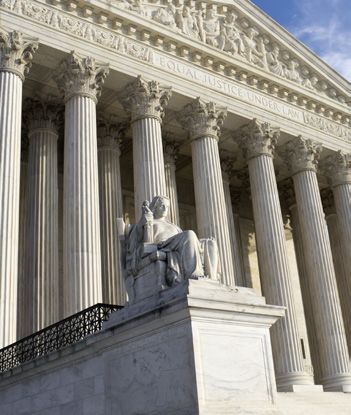
Special Report: Nexus Considerations in a Post-Wayfair World                                                                                                                                    3

                               Economic Nexus and South Dakota v. Wayfair
                               In South Dakota v. Wayfair, the U.S. Supreme Court considered the constitutionality of South Dakota’s
                               S.B. 106, enacted in March 2016. The law, codified at S.D. Codified Laws § 10-64-1, et al., requires
                               certain remote sellers to register for, collect, and remit South Dakota sales tax. A remote seller has
                               sales tax nexus with South Dakota if the seller, in the current or previous calendar year:

                                • had gross revenue from sales of taxable goods and services delivered into the state exceeding
                                  $100,000; or
                                • sold taxable goods and services for delivery into the state in 200 or more separate transactions.7
                               South Dakota’s law was designed to create an express route to the U.S. Supreme Court in an attempt
                               to overturn the Court’s Quill precedent.8 The law included procedural protections for taxpayers that
                               prevented retroactive collection.

                               Following the law’s enactment, the state asserted sales tax jurisdiction over four remote sellers, and
                               sought equitable relief affirming the legality of the nexus law through a declaratory judgment action
                               in state court. Three of the sellers moved for summary judgment, while one seller chose to register
                               and collect the tax. The South Dakota trial court, bound by the precedent in Quill, granted summary
                               judgment for the remote sellers, which was affirmed in the Supreme Court of South Dakota. The
                               U.S. Supreme Court granted certiorari in January 2018 and heard oral argument in the case on April
                               17, 2018.9 Ultimately, the Court overturned the longstanding physical presence standard espoused
                               in Quill, vacating the Supreme Court of South Dakota’s ruling, and remanding the case for further
                               proceedings in light of the decision.10

                                          The U.S. Supreme Court left the door open for other Commerce Clause challenges
                                          to South Dakota’s law on rehearing in the lower court.

                               7 S.D. Codified Laws § 10-64-2.
                               8 S.D. Codified Laws § 10-64-1, et al.
                               9 Melissa A. Oaks, Justices Focus on Compliance Burden and Congressional Inaction in Wayfair Oral Argument, Checkpoint State & Local Tax Update (04/18/2018).
                               10 Sarah Horn, Jill McNally, Rebecca Newton-Clarke, and Melissa A. Oaks, Supreme Court Abandons Physical Presence Standard: An In-Depth Look at South Dakota v.
                                  Wayfair, Checkpoint State & Local Tax Update (06/22/2018).
Special Report: Nexus Considerations in a Post-Wayfair World 4
Since 2016, a number of states adopted laws with sales thresholds similar to or exceeding South Dakota’s.
Economic Nexus
Does the state assert sales/use tax jurisdiction on the basis of economic nexus?1
WA13 Asserts economic
VT17 NH nexus
MT
OR ND16
ME
Does not assert
ID MN9 economic nexus
SD18 MA8
WY WI NY
MI
NV No statewide
NE IA5 RI12
CA PA11 sales tax
UT
CO IL4 IN OH
CT2
KS WV
MO VA
KY6
AZ NJ
TN NC
NM OK10
AR
SC DE
AK MS GA3
AL14
TX LA7 MD
FL DC
HI15
1 Current as of June 21, 2018. 10 Only as an elective alternative to notice and reporting requirements.
2 Beginning December 1, 2018. 11 Only as an elective alternative to notice and reporting requirements.
3 Beginning January 1, 2019; only as an elective alternative to notice and reporting 12 Only as an elective alternative to notice and reporting requirements.
requirements. 13 Only as an elective alternative to notice and reporting requirements.
4 Beginning October 1, 2018. 14 Regulation will be enforced only to the extent permitted under South Dakota v. Wayfair.
5 Beginning January 1, 2019. 15 Beginning July 1, 2018.
6 Beginning July 1, 2018. 16 Contingent on the outcome of South Dakota v. Wayfair. The North Dakota Office of State
7 Contingent on the outcome in South Dakota v. Wayfair. The Louisiana Department of Tax Commissioner announced that the law took effect on June 21, 2018.
Revenue is studying the decision. 17 Contingent on the outcome of South Dakota v. Wayfair. The Vermont Department of
8 Massachusetts Department of Revenue considers cookies and apps Taxes announced that the law is effective and will be enforced beginning July 1, 2018.
to be “physical presence.” 18 An injunction prevents the state from enforcing the law until the South Dakota Supreme
9 Sales via third-party marketplace can create nexus effective July 1, 2019 or, if earlier, Court rules on the case remanded by the Wayfair Court.
a U.S. Supreme Court decision overturning the physical presence requirement.
While the Wayfair ruling strikes down the physical-presence requirement, it is not a blanket approval
of all virtual or economic nexus policies. The Court cited several features of South Dakota’s economic
nexus law that weighed in favor of upholding it, including that:
• the law provides a sales threshold (protecting de minimis sellers);
• the law is not retroactive (reducing the burden on small merchants and the likelihood of double
taxation); and
• the state is a party to the Streamlined Sales and Use Tax Agreement (SSUTA) (reducing the
compliance burden on multistate sellers without a traditional physical footprint in a state).
The constitutionality of other states’ economic nexus policies may depend in part on whether they
share these features highlighted by the Court.
CAUTION! Many states also have “sleeper laws” that assert nexus to the fullest extent permitted
by the U.S. Constitution, or that by their plain language exceed the physical presence standard now
overruled by the Court. Taxing agencies in these states may adopt schemes like South Dakota’s by
regulation or through guidance. A handful, including the Alabama Department of Revenue, already
have. Alabama is not a member of the SSUTA, however.
Special Report: Nexus Considerations in a Post-Wayfair World                                                                                                                                        5

                                          Notice and Reporting Requirements
                                          As a complement to the sales tax, states impose a use tax on purchasers for the in-state use, storage,
                                          or consumption of a taxable good or service, when sales tax was not collected. In an attempt to boost
                                          low use tax collection rates on sales that escaped the sales tax, a number of states, led by Colorado,
                                          recently enacted complex use tax notice and reporting requirements for remote sellers. Under these
                                          laws, remote sellers must provide information to customers about potential use tax liability and
                                          report transaction data to the state. Noncompliance can result in stiff per-occurrence penalties.
                                          Colorado’s requirements were upheld by the 10th Circuit U.S. Court of Appeals; the U.S. Supreme
                                          Court denied certiorari.11

                                          While the states can use the reported information to assess use tax against the consumer, these
                                          requirements are primarily intended to induce sellers to register for, collect, and remit sales tax in
                                          the state. A few states, including Pennsylvania, explicitly provide an election between the notice and
                                          reporting regime and seller registration.

                                          CAUTION! Some states are beginning to use transaction data collected from sellers (through formal
                                          or informal processes) to pursue purchasers for use tax liability.12

  Notice and Reporting Requirements
  Does the state impose use tax notice and reporting requirements on remote sellers?1

                                     WA                                                                                                                                               Yes
                                                                                                                                             VT        NH
                                                                MT
                                OR                                                    ND
                                                                                                                                                            ME                        No
                                                 ID                                                MN
                                                                                    SD                                                                           MA
                                                                 WY                                            WI                                 NY                                  No statewide
                                                                                                                           MI                                                         sales tax
                                     NV
                                                                                    NE                 IA                                                        RI
                          CA                                                                                                                 PA
                                                      UT
                                                                     CO                                          IL   IN        OH
                                                                                                                                                                 CT2
                                                                                         KS                                            WV
                                                                                                       MO                                    VA
                                                                                                                            KY
                                                AZ                                                                                                               NJ
                                                                                                                      TN                     NC
                                                               NM                          OK4
                                                                                                        AR
                                                                                                                                        SC                       DE
                         AK                                                                                     MS               GA3
                                                                                                                      AL
                                                                                    TX                  LA                                                       MD

                                                                                                                                        FL                       DC

                                  HI

 1 Current as of June 21, 2018. Note: registering to collect and remit sales tax typically relieves a seller of use tax notice and reporting obligations.
 2 Beginning December 1, 2018 applies to “referrers.” Connecticut also takes the position that existing state records law allows it to require remote sellers to disclose in-state sales.
 3 Beginning January 1, 2019.
 4 Beginning July 1, 2018.

                                          11   Direct Marketing Association v. Brohl, 814 F.3d 1129 (10th Cir. 2016
                                          12   See Rebecca Newton-Clarke, Sales and Use Tax Non-Collection Becomes a PR Risk for Online Sellers, Checkpoint State & Local Tax Update (03/15/2018).
Special Report: Nexus Considerations in a Post-Wayfair World 6
Assessing the Impact of Wayfair
The Wayfair decision affects thousands of state and local tax-collecting jurisdictions across the
country. The most immediate impact will be on sellers with a significant virtual or economic presence
in a state that asserts economic nexus. For certain types of sellers – those that operate only on a
local, in-person basis, and do not maintain an economic or digital presence outside of that state
– Wayfair should have little to no direct impact. However, all sellers should reexamine their nexus
determinations in light of the decision and current state laws.
Example: Alpha is a seller of tangible personal property with a physical presence only in
Texas. Alpha advertises only in Texas and makes sales only at its Texas storefront.
Alpha does not have a virtual, economic, or physical presence outside of Texas. Therefore,
Wayfair should not directly affect Alpha’s sales and use tax collection requirements.
Sellers delivering taxable products or services into South Dakota will need to determine if their sales
surpass the dollar amount or transaction volume thresholds for establishing nexus in the state.
Sellers should complete this analysis for each state that has adopted an economic nexus threshold
policy, and will need to determine whether each product sold is taxable or nontaxable under the
laws of the state. Note, however, that sales of taxable products in exempt transactions (e.g., sales to
exempt organizations) may nevertheless count toward a state’s economic nexus threshold.
Example: Beta, a California-based company, sells mobile apps delivered to customers
electronically. Beta has a traditional physical presence in California only. However, Beta
advertises and sells its apps to customers in all 50 states and the District of Columbia via the
internet. Last year, Beta electronically delivered its apps to South Dakota customers in 400
transactions totaling $20,000 in gross sales.
Sellers delivering
Beta has nexus on the basis of physical presence in California; however, electronically
taxable products or delivered software and digital products are not subject to sales or use tax in the state.
services into South
Dakota will need to Products delivered electronically, such as Beta’s apps, are subject to sales and use tax in
determine if their South Dakota. Since Beta’s sales transactions surpass the transaction threshold set forth in
sales surpass the S.D. Codified Laws § 10-64-2, South Dakota law asserts nexus against Beta, which should
dollar amount or consult with its tax advisors to determine if it should register to collect and remit sales tax
transaction volume in South Dakota. Certain provisions of South Dakota law may provide Beta temporary relief
thresholds for from registration obligations.
establishing nexus
Beta should evaluate its presence – whether physical, virtual, or economic – in each state
in the state.
to which it delivers apps to determine whether that presence rises to the level of substantial
nexus under the state’s laws, keeping in mind that many states have “sleeper” laws asserting
nexus to the fullest extent permissible under the Constitution.
Functions of e-commerce, such as websites that leave “cookies” on customer hard drives and apps
that can be downloaded on customer phones, further complicate nexus standards. While the issue
of “cookie” nexus was not directly before the Wayfair Court, the majority opinion cited the existence
of cookie nexus policies as an indication of the unworkable nature of the physical presence standard.
Sellers should be prepared for states to aggressively enforce expanded nexus provisions, although
future challenges or Congressional action could limit the scope of Wayfair.
CAUTION! The Court cited South Dakota’s SSUTA membership as a factor that could reduce the
potential compliance burden of its economic nexus provisions. In states that are not SSUTA members,
sellers may wish to consult a tax practitioner to consider the likelihood of prevailing on a legal
challenge to the state’s assertion of economic nexus by arguing that the burden of compliance in non-
SSUTA states is too high.Special Report: Nexus Considerations in a Post-Wayfair World 7
Example: Gamma is a seller of tangible personal property that has traditional physical
presence in Montana only. Gamma advertises and sells to customers in Montana and
Massachusetts. As part of its advertising campaign, Gamma places tracking cookies on its
potential customers’ computers.
Montana does not impose a sales or use tax. However, because Gamma advertises and
delivers property to customers in other states, it needs to consider the impact of Wayfair on
its nexus determinations.
While other states
Massachusetts’ longstanding nexus law is broad, asserting nexus on the basis of activities
could interpret their
that do not involve physical presence. Although the Massachusetts Department of Revenue
laws to provide an
traditionally respected the physical presence standard, as of October 1, 2017, the Department
avenue for retroactive asserts economic nexus by regulation, imposing sales and use tax collection duties on out-
collection, doing so of-state “internet vendors” that exceed certain receipts or transaction volume thresholds.13
could raise double In addition, the Department considers cookies stored on customers’ in-state devices to be
taxation and due physical presence in the state. Massachusetts is not a member of the SSUTA, however.
process concerns if
the state imposes a Gamma must determine whether the revenue from or volume of transactions with
compensating use tax. Massachusetts customers surpass the specified thresholds for establishing nexus by
economic presence. Gamma should be aware that it may be considered to have nexus with
the state through its in-state cookies, regardless of the volume or revenue from sales into the
state. Gamma may wish to consult a tax practitioner to consider the likelihood of prevailing
on a legal challenge to the rule, as Mississippi is not an SSUTA member.
South Dakota’s economic nexus does not apply retroactively, a feature cited approvingly by the Court.
While other states could interpret their laws to provide an avenue for retroactive collection, doing so
could raise double taxation and due process concerns if the state imposes a compensating use tax.
As use tax was already due and payable from the customers on purchases from remote sellers prior
to issuance of the Wayfair decision, retroactive collection would, as the Court stated, “make both the
buyer and the seller legally liable for collecting and remitting the tax on a transaction intended to be
taxed only once.”
For sellers currently under audit, the question of retroactivity is nuanced and will need to be
determined after careful review of the laws and procedures of the states at issue and, if relevant, the
Multistate Tax Commission.
Example: Kappa is an online seller of goods currently under audit in Alabama and
Mississippi seeking to determine whether it has nexus. Alabama is a participant in the MTC
joint audit program; Mississippi is not.
As a member of the MTC joint audit program, the MTC audit in Alabama may also extend
to other states that decide to participate in the audit of Kappa and that may attempt to
retroactively apply the court’s ruling.14 The Alabama Department of Revenue has stated
that it will enforce its regulation requiring an out-of-state seller, with no physical presence
in the state, to collect sales and use tax after the Quill decision is issued, so any nexus
determination will likely apply prospectively.
Mississippi recently enacted a rule, effective December 1, 2017, requiring sellers with no
physical presence in the state to collect sales tax if they are “purposefully or systematically
exploiting the Mississippi market” and “their sales into the state exceed $250,000 for the
prior twelve months.”15 Kappa may be held liable for sales tax collection responsibilities
given that the regulation was in effect from December 1. Kappa may wish to consult a tax
practitioner to consider the likelihood of prevailing on a legal challenge to the rule, as
Mississippi is not an SSUTA member.
13 Mass. Regs. Code 830 CMR § 64H.1.7.
14 Arkansas, Colorado, DC, Georgia, Hawaii, Idaho, Iowa, Kansas, Kentucky, Louisiana, New Jersey, North Dakota, Tennessee, Utah, and Wisconsin all currently
participate in the MTC Audit Program for sales tax.
15 Miss. Code. Ann. Title 35, Part IV, Subpart 3, Chapter 9.Special Report: Nexus Considerations in a Post-Wayfair World 8
Foreign sellers based outside of the United States may also be affected by the Wayfair ruling. States
are not automatically bound by U.S. bilateral tax treaties. A seller that, due to treaty protection, is
not subject to federal income tax may nevertheless have sales and use tax collection and reporting
obligations at the state level.
In the past, many Example: Omicron is a company based in Canada with no traditional physical presence
states have offered in any state. However, Omicron makes sales of tangible personal property for delivery
amnesty programs to customers in all 50 states, via a third-party marketplace facilitator, which may house
under which interest Omicron’s inventory in any state in which the facilitator has a warehouse.
and/or penalties
If Omicron maintains an economic or virtual presence in one or more states, it should
on unreported tax
carefully review its nexus determinations. In addition to considering whether state law
liabilities may be fully
asserts nexus against marketplace facilitators, Omicron should review state affiliate
or partially waived to
nexus laws and laws targeting companies that store and distribute inventory from third-
entice remote sellers
party fulfillment centers. The company should review its agreement with the marketplace
to register to collect
facilitator to determine whether the facilitator’s activities beyond storage of inventory could
and remit the tax create nexus for Omicron in any state. In some states, the marketplace facilitator may be
going forward. required to collect and remit tax on Omicron’s sales, regardless of whether Omicron is the
seller of record.
In the past, many states have offered amnesty programs under which interest and/or penalties on
unreported tax liabilities may be fully or partially waived to entice remote sellers to register to collect
and remit the tax going forward. Other states have offered reduced liability for voluntary disclosure.
The Wayfair decision could encourage more of these programs, particularly in states that have not yet
adopted economic nexus or notice and reporting schemes. Sellers considering amnesty or a voluntary
disclosure agreement should carefully evaluate the terms and conditions of each program.
In the days following the Wayfair decision, state taxing agencies have begun to respond. For example,
the Louisiana Department of Revenue observed that the state’s economic nexus provision is “very
similar” to South Dakota’s. While taking the position that “we are still some time away from a final
decision and seeing the full impact,” the agency noted that the state “is currently collecting sales tax
from some of the nation’s largest online retailers, including Amazon, and smaller companies as well.”Special Report: Nexus Considerations in a Post-Wayfair World 9
Congressional Action?
Congress has the power to regulate interstate commerce, including with respect to state taxing
jurisdiction. Examples of this include Public Law 86-272, limiting income tax nexus for mere
solicitation, and the Internet Tax Freedom Act, precluding a state from asserting sales and use
tax nexus if the “sole ability to access a site on a remote seller’s out-of-state computer server is
considered a factor in determining the remote seller’s tax collection obligation.” Over the last decade,
legislators introduced numerous bills that would have established various sales and use tax nexus
guidelines. Despite considerable interest on both sides of the aisle in addressing the issue, none of
these bills succeeded.
Bills are no longer eligible for consideration after the applicable Congress ends or adjourns sine
die. Thus, the bills still under consideration as of publication are the Marketplace Fairness Act, the
Remote Transactions Parity Act, and the No Regulation Without Representation Act.
Marketplace Fairness Act
The Marketplace Fairness Act (MFA) was first introduced in the Senate in 2011 under the 112th
Congress.16 The MFA would authorize each state that was a member of the SSUTA to require
sales tax collection by remote sellers under the terms of the SSUTA, except as to certain
small sellers. States that are not SSUTA members could require remote sales tax collection
if they adopt certain minimum simplification provisions. In the 112th Congress, the bill had
21 co-sponsors and was never passed out of the Committee on Finance. The MFA did not
contain an economic nexus threshold based on volume or gross revenue of in-state sales.
The MFA was introduced in the 113th, 114th, and 115th Congresses.17 In 2012, the Senate
passed the bill (69-27); since then, the bill has not been brought up for a full vote. The MFA
is supported by National Conference of State Legislatures, Center on Budget and Policy
Priorities, and Tax Policy Center; the Council on State Taxation has not taken a position on
the bill. Sens. Tester (D-MT), Wyden (D-OR), Shaheen (D-NH), Hassan (D-NH), and Merkley
(D-OR) introduced a resolution opposing the MFA in 2017.18
Remote Transactions Parity Act
In 2015, former Rep. Chaffetz (R-UT) introduced the Remote Transactions Parity Act, which
was substantially similar to the MFA.19 The bill was also introduced in 2017, this time by Rep.
Noem (R-SD).
No Regulation Without Representation Act
In 2016 and 2017, Rep. Sensenbrenner introduced the No Regulation Without Representation
Act, which would require physical presence in order for a state to tax or regulate a person’s
business activities in interstate commerce. The bill provided a de minimis physical presence
exception and granted U.S. district courts original jurisdiction over civil actions to enforce
the bill’s provisions along with the ability to provide injunctive relief notwithstanding the
Tax Injunction Act.20 Rep. Goodlatte co-sponsored the 2017 bill and the House Judiciary
Committee held a hearing on the issue in July 2017.21
16 Marketplace Fairness Act, S. 1832 (112th Cong.).
17 Marketplace Fairness Act, S. 743/H.R. 684 (113th Cong.); S. 698 (114th Cong.); S. 976 (115th Cong.). Similar legislation was coupled with an extension of the Internet
Tax Freedom Act and introduced under the name “Marketplace and Internet Tax Fairness Act” (S. 2609, 113th Cong.).
18 S.Res.433 (115th Cong.)
19 Remote Transactions Parity Act of 2015 (H.R. 2775; 114th Cong.); Remote Transactions Parity Act of 2017 (H.R. 2193; 115th Cong.).
20 No Regulation Without Representation Act of 2017 (H.R. 2887; 115th Cong.)
21 Congressional Hearing: No Regulation Without Representation: H.R. 2887 and the Growing Problem of States Regulating Beyond Their Borders (July 25, 2017). Any
bill addressing the remote seller issue will need to pass out of the House Judiciary Committee, currently chaired by Rep. Goodlatte.Special Report: Nexus Considerations in a Post-Wayfair World 10
The dissenting opinion in Wayfair, penned by Chief Justice Roberts (joined by Justices Breyer,
Sotomayor, and Kagan), stated that he would have “let Congress decide whether to depart from the
physical-presence rule.” The majority disagreed on this point, but noted that the complexity of sales
tax collection obligations “may pose legitimate concerns in some instances, particularly for small
businesses that make a small volume of sales to customers in many States,” which Congress could
address in the future.
At least one marketplace facilitator is urging its customers to sign a petition and join its effort to
persuade “President Trump, key members of Congress, and select state governors” that “these new
Internet tax burdens could permanently damage U.S. small businesses.”
As states, businesses, courts, and consumers react to the Wayfair decision, Congress could choose to
intervene and provide guardrails or minimum standards for remote sales tax collection.Special Report: Nexus Considerations in a Post-Wayfair World 11
About the Authors
Sarah Horn, M.Acc., J.D., is an editor with Rebecca Newton-Clarke is a Senior Editor/
Checkpoint Catalyst within Thomson Reuters Tax Author in the Knowledge Solutions group of
& Accounting. Before joining Thomson Reuters, Thomson Reuters Tax & Accounting, where she
Sarah was a tax attorney at ExxonMobil, where has written extensively about all areas of state
her work included a variety of state and federal and local taxes for 18 years. A former attorney,
tax matters. Sarah received her B.A. and B.S. Rebecca worked in the SALT services group at
from Southern Methodist University, summa cum PricewaterhouseCoopers in New York City, and
laude, her Master of Accounting from The Ohio at the Florida Department of Revenue, where
State University Fisher College of Business, and she drafted rulings and regulations, handled
her J.D. from The Ohio State University Moritz disputes, and participated in various multistate
College of Law, cum laude. Sarah is admitted to initiatives, including the Streamlined Sales Tax
the State Bar of Texas. Project. She received her J.D. and B.A. from the
University of Florida.
Jill C. McNally, JD, LL.M., is an editor with
Checkpoint within Thomson Reuters Tax & Melissa A. Oaks is a Managing Editor in the
Accounting. Before joining Thomson Reuters, Knowledge Solutions group of Thomson Reuters
Jill was a Deputy Attorney General for the State Tax & Accounting. Melissa was an associate
of New Jersey representing the New Jersey in the tax group at Winston & Strawn LLP and
Division of Taxation in all phases of litigation also worked as a sole practitioner. Melissa is a
and provided counsel to state agencies involving graduate of Cornell University and Columbia Law
tax matters. Jill received her B.A. and M.A. from School. Melissa also received an LL.M. (Taxation)
John Jay College of Criminal Justice, summa cum from the New York University School of Law.
laude, her J.D. from New York Law School, cum
laude, and an Executive LL.M. from Georgetown
University. Jill is admitted to the State Bars of
New York and New Jersey.
Related Resources:
Checkpoint Catalyst™
The fastest and most efficient way to research even the most complicated business tax issues.
Checkpoint Catalyst provides practical guidance for resolving tax questions that arise with business-
related transactions, including sales and use tax topics, nexus issues and more.
Learn more
Checkpoint Learning®
To provide a wider range of services to clients, your staff needs to stay current on evolving regulations
and best practices. Create and manage a complete curriculum tailored to your firm’s learning needs
with Checkpoint Learning.
Learn More
ONESOURCE™ Indirect Compliance and Determination
Provides an end-to-end solution for indirect tax teams looking to get tax right the first time and ease
compliance.
Learn moreThomson Reuters®
Thomson Reuters is the world’s leading source of news and
information for professional markets. Our customers rely on us
to deliver the intelligence, technology and expertise they need to
find trusted answers. The business has operated in more than 100
countries for more than 100 years. Thomson Reuters shares are
listed on the Toronto and New York Stock Exchanges (symbol: TRI).
For more information, visit tr.com.
Thomson Reuters Checkpoint
Thomson Reuters Checkpoint tackles market disruption through
integrated research, editorial insight, productivity tools, online
learning, and news updates along with intelligent links to related
content and software. It is relied on by hundreds of thousands of
tax and accounting professionals and counts among its customers
97 of the Top 100 U.S. law firms, 99 of the Fortune 100 companies
and all of the top 100 U.S. CPA firms.
For more information, visit tr.com/checkpoint.
Visit tax.tr.com/checkpoint
TA582381 June 2018 mhYou can also read


