North Vista Highlands Design Guidelines - North Vista Highlands Community Association
←
→
Page content transcription
If your browser does not render page correctly, please read the page content below
North Vista Highlands Community Association

     North Vista Highlands
        Design Guidelines

                                January 14, 2019

                    Pueblo, Colorado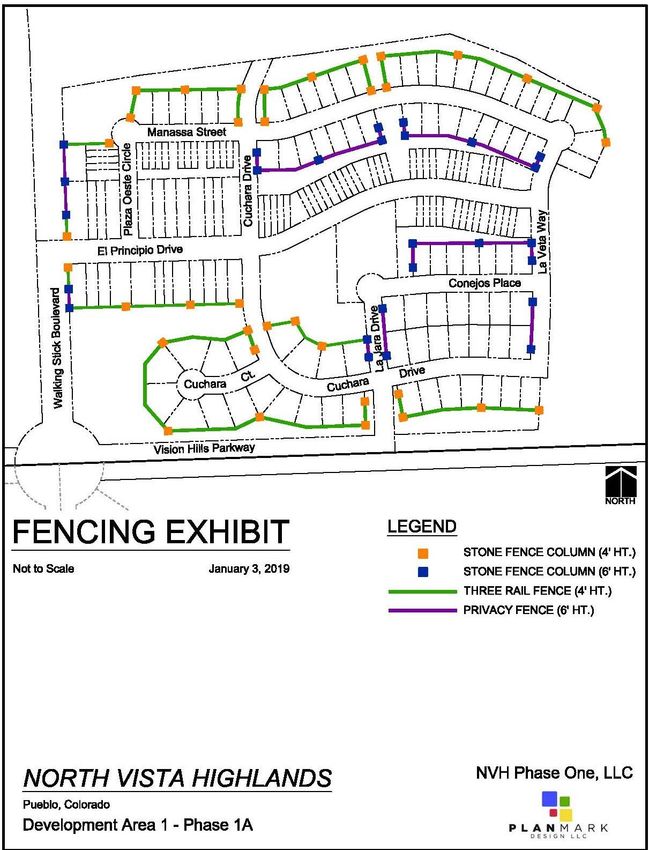
North Vista Highlands Design Guidelines

Table of Contents

1.0 Community Vision ...................................................................................................................... 2
   1.1 Purpose & Applicability ............................................................................................................................. 3
2.0 Site Design .................................................................................................................................. 4
   2.1 Site Grading & Drainage ........................................................................................................................... 4
   2.2 Driveways & Parking ................................................................................................................................. 5
   2.3 Properties Adjacent to Open Space .......................................................................................................... 5
3.0 Architecture ................................................................................................................................. 6
   3.1 Intent ......................................................................................................................................................... 6
   3.2 Residential Design Standards ................................................................................................................... 6
   3.3 Non-Residential & Mixed Use Design Standards .................................................................................... 16
4.0 Landscape Design .................................................................................................................... 25
   4.1 Intent ....................................................................................................................................................... 25
   4.2 Single Family Detached and Attached Residential Use .......................................................................... 26
   4.3 Multi-Family Residential .......................................................................................................................... 31
   4.4 Commercial/Mixed Use ........................................................................................................................... 32
   4.5 Irrigation .................................................................................................................................................. 33
   4.6 Screening ................................................................................................................................................ 34
   4.7 Exterior Lighting ...................................................................................................................................... 34
   4.8 Signage ................................................................................................................................................... 35
5.0 Design Review Process............................................................................................................ 36
   5.1 Design Review Board ............................................................................................................................. 36
   5.2 Design Review Process .......................................................................................................................... 36
   5.3 Review Fees ........................................................................................................................................... 38
   5.4 Waivers & Variances ............................................................................................................................... 39
   5.5 Inspection of Completed Work ................................................................................................................ 39
   5.6 Fines for Non-Compliance ...................................................................................................................... 40
6.0 Construction Regulations ........................................................................................................ 41
   6.1 Procedures.............................................................................................................................................. 41
   6.2 Construction Site Management ............................................................................................................... 41
7.0 Appendix .................................................................................................................................... 44
   7.1 Definitions ............................................................................................................................................... 44
   7.2 Exhibit A: Area Application Map .............................................................................................................. 47
   7.3 Application Form ..................................................................................................................................... 48
   7.4 Approved Plant Materials ........................................................................................................................ 49
   7.5 Exhibit B: District Fence Plan .................................................................................................................. 51

January 14, 2019
                                                                                                                                                                   1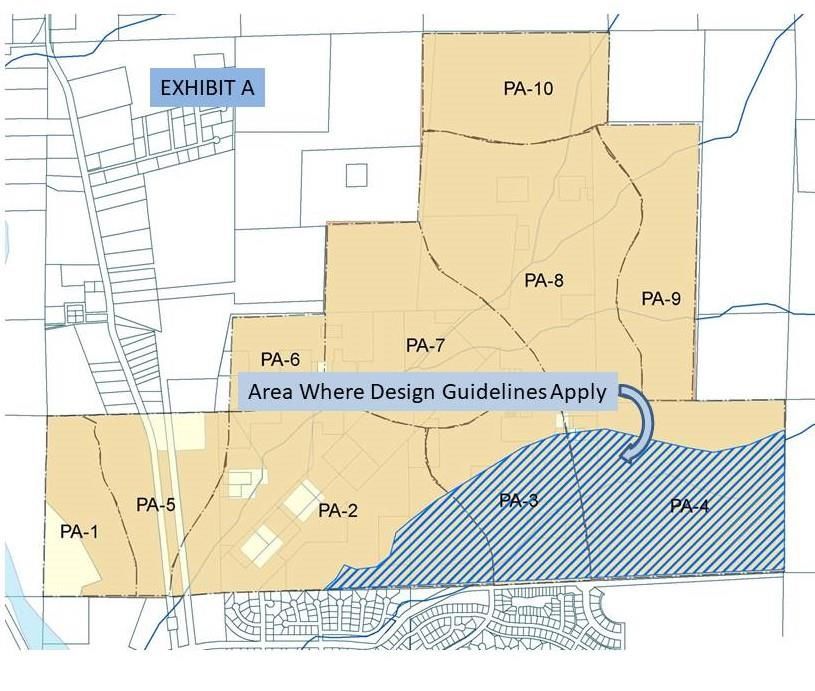
North Vista Highlands Design Guidelines
NORTH VISTA HIGHLANDS
DESIGN GUIDELINES
(Applies to Development Area 1-see Exhibit A)
Pueblo, Colorado
1.0 Community Vision
North Vista Highlands is a master planned community that is the result of a
comprehensive approach to planning over 1,185 acres of undeveloped high
plains land in the northeast quadrant of Pueblo, Colorado. Annexed to
Pueblo and zoned PUD (Planned Unit Development) in 2009, the land has
been entitled for a wide variety of residential and commercial uses all
organized around a network of open spaces, preserved arroyos and trails.
Development of the community into a collection of individual neighborhoods
will occur over time. Development Area 1 is the first community area
consisting of approximately 750 homes and will achieve the following goals:
Create a cohesive and sustainable neighborhood atmosphere through
innovative design and high quality materials.
Provide a variety of housing products that meet the needs of a variety
of lifestyles that are offered at pricing levels that are compatible with
each budget.
Integrate a mix of land uses that promote a complete neighborhood
where the residents can live, work, play, shop and learn within the
community.
Integrate the natural environment into the design of the community to
provide opportunities for trail and recreation within natural drainage
ways and preserve panoramic views from the site.
Strive for neighborhood design that is pedestrian friendly with safe,
clean, all-weather surface walks and trails that connect residents and
visitors to other neighborhoods, commercial centers, schools and civic
uses.
Encourage energy efficient construction and environmentally friendly
design.
With smaller building footprints, high quality construction, chemical
free interiors, innovative floor plans, state-of-the-art HVAC/air quality
systems and smart home automation with certified DOE Zero Energy
Ready and EPA AirPlus status.
The Planned Unit Development document sets design criteria for all planning
areas within the North Vista Master Plan. The PUD and these design
January 14, 2019
2North Vista Highlands Design Guidelines
guidelines strive to set the standard for all neighborhood design where
sidewalks are separated from the street by a landscaped tree lawn and by
allowing on-street parking. Building architecture will be required to address
the street with windows, covered entries, recessed garages and limited width
driveways.
1.1 Purpose and Applicability
Pursuant to the Declaration of Covenants, Conditions and Restrictions
as recorded with each subdivision plat, these design guidelines have
been established to provide property owners, home builders, real
estate developers and architects a set of standards to be addressed
in the preparation of all plans and specifications. These guidelines are
in addition to and augment the standards within the PUD zoning
document and the Declaration of Covenants, Conditions and
Restrictions. Administered by The North Vista Highlands Design
Review Board (DRB), the goal is to:
Ensure that the stated vision for the community is maintained.
Attain the highest quality of development and construction.
Protect and enhance the value of property within North Vista
Highlands.
The intent of the master developer and Design Review Board is to
maintain a high quality development that achieves harmony between
the design of dwellings, commercial buildings, civic structures and the
surrounding landscape.
These Design Guidelines apply to all new construction and
landscaping and all additions and alterations to existing structures and
landscaping. In the event of conflicts between the PUD, CC&R’s and
Design Guidelines, the PUD and CC&R’s controls and overrules the
guidelines.
The Design Review Board (DRB) shall administer these guidelines in
accordance with the procedures set forth in Section 5.0 of this
document.
January 14, 2019
3North Vista Highlands Design Guidelines
2.0 Site Design
2.1 Building Placement:
2.1.1 Residential
Building setbacks are specified in the PUD with the intent to
provide a neighborhood character and streetscape that is
attractive and welcoming by reducing a monotonous
arrangement of homes with similar plans, facades and site
placement. Garage placement is treated differently than
livable portion of structure to enhance the streetscape by
supporting a pedestrian friendly character by designing the
livable portion of the home to be closer to the street than
garages except when garage is side loaded.
2.1.2 Commercial
Commercial or non-residential uses that are predominately
businesses that may include but are not limited to retail,
restaurants, office, medical, or live/work, etc. are
encouraged to be located with entrances close to the street
with on street parking available and additional parking
concentrated in smaller landscaped lots behind or to the
side of structures.
2.1.3 Civic
Uses under this category may include but are not limited to
community centers, school, churches, libraries, city services
(fire/police facilities), etc. are encouraged to locate where
impacts to residential neighborhoods are least impacted.
Site Design should incorporate appropriate buffers to
adjacent uses and accommodate most parking on-site.
Architecture should be compatible with the quality of the
overall community and add to the aesthetic of the
neighborhood and streetscape.
2.2 Site Grading & Drainage
Every effort should be made to maintain graded contours of the
building lot. In certain conditions it may be necessary to re-grade the
lot to accommodate a residential unit. All proposed grading plans shall
require approval from the DRB. Furthermore, all proposed landscape
retaining walls shall require the review and approval of the DRB. As
much as practical, the builder should integrate the structural design of
the residence into the contour of the land in order to avoid excessive
fill slopes or severe cut slopes. Emphasis will be placed on the
January 14, 2019
4North Vista Highlands Design Guidelines
proposed architectural design and site plan. Excessive grading,
retaining walls, and site disturbance will be discouraged.
2.3 Driveways & Parking:
Driveways and walkways leading from the public sidewalk or street to
the home shall be composed of the following materials: concrete,
patterned concrete, inter-locking pavers, permeable pavers, brick, and
other finishes as approved by the DRB. Grass paving blocks for
driveways and parking areas may be allowed provided that they are
well maintained. The materials should be monochromatic and in the
same color palette as the home. Patterns and borders should not be
excessive or have detailed symbols that are distracting and
incompatible with the residential architecture. DRB review and
approval must be granted for multiple driveways.
2.4 Properties Adjacent to Open Space:
Special consideration needs to be provided for all lots adjacent to
open space and common areas. The DRB shall review and determine
whether the proposed residential layout and design detracts,
encroaches, or disturbs these special areas. The architectural design,
site plan, proposed fencing and landscape plan for lots adjacent to
open space and park areas should be complementary to the natural
topography, vegetation, views, and trails. See Section 4.7 regarding
fencing along open space lots.
January 14, 2019
5North Vista Highlands Design Guidelines
3.0 Architecture
3.1 Intent
It is the intent of these guidelines to provide direction for the thoughtful
design and construction of all structures within North Vista Highlands.
By using these guidelines, the community enhances and secures its
quality of life, property values, and visual effectiveness. The
architecture and planning of this community needs to respond to its
location within a unique semi-arid environment, and it is intended that
design be sensitive and environmentally responsible.
North Vista Highlands is committed to achieving the highest practical
quality and design of the built environment through their relationship
with knowledgeable property owners, builders and architects in a spirit
of cooperation and common goals for community and quality. All
parties should understand the subjective nature of architectural review
and be attentive to the vision and intent of North Vista Highlands. All
homes must conform to the Architectural Guidelines outlined within
this document.
These Design Guidelines; in addition to the Pueblo Municipal Code
(PMC) requirements found in Section 17-4-11 for residential and
Sections 17-4-46 or 17-4-47 or 17-4-48 for small-scale, medium-scale
and large-scale commercial performance standards and the North
Vista Master Plan Planned Unit Development shall guide the exterior
architectural design within the North Vista Highlands development. In
the event that the Pueblo Municipal Code, the North Vista PUD, NVH
CC&Rs, NVH Rules & Regulations and/or these Design Guidelines
differ; whichever is the most stringent shall be met.
All buildings shall meet the requirements of the adopted building
codes for the City of Pueblo.
3.2 Residential Design Standards
3.2.1 Form, Massing & Scale:
All dwellings and accessory structures shall provide quality
architectural design that takes into consideration building
massing and style, roof lines, window and door placement,
exterior materials and colors and other architectural
features. The use of building articulation that breaks up the
building mass into modules, which reflect proportions similar
to other parcels within the development, shall be required.
January 14, 2019
6North Vista Highlands Design Guidelines
3.2.1.1 Dwellings on corner, end, or double frontage lots
shall include architectural features, such as
windows and doors, porches and entry features,
building materials, and other features that match
the front of the dwelling, along the sides or back
of dwellings that face streets, drives, or open
space areas.
3.2.1.2 New or replacement dwellings, dwelling additions
and accessory structures shall be designed to be
architecturally compatible with the primary
structure, as applicable, in terms of building
materials and colors, roof forms, building massing
and style and other architectural features.
3.2.1.3 Dwellings shall incorporate facade modulation-
stepping back or extending forward a portion of
the façade.
3.2.1.4 Dwellings shall incorporate changing rooflines by
alternating dormers, stepped roofs, gables, or
other roof elements to reinforce the modulation or
articulation interval.
3.2.1.5 Changes of material shall occur with the change
in building plane, but never at an outside corner.
3.2.1.6 Rooftop patios/terraces and/or 2nd/3rd floor
balconies are encouraged.
3.2.2 Building Height
Building height is defined as the vertical distance from the
grade plane to the average height of the highest roof
surface. As applied to flat roofs, height is measured as the
vertical distance from the mean level of the finished grade
of the front of the building to the highest point on the
finished roof. For a pitched roof, it is the measured from the
mean level of the finished grade of the front of the building
to the average height of the rise of the pitched roof. Building
height shall be measured from existing, pre-development
grades or proposed grades (whichever is lower).
The North Vista PUD specifies maximum building height for
residential and non-residential uses. These vary by Planning
January 14, 2019
7North Vista Highlands Design Guidelines
Area.
3.2.3 Architectural Styles:
3.2.3.1 All residential structures shall express a creative
presentation of exterior building materials,
exterior details and texture, treatment of windows
and doors, and use of angles and multiplicity of
planes within the wall and roof design.
3.2.3.2 To provide diversity of housing types within this
residential development, subdivision of ten or
more lots containing one-family and two-family
dwellings shall contain a sufficient number of
different housing models of varying style and
architectural features so that no more than 30
percent of the lots contain the same housing
mode.
3.2.4 Energy Efficient/Sustainable Design
All dwelling units shall meet the most current locally
adopted International Energy Conservation Code and shall
be built to the "DOE Zero Energy Ready Home", and shall
meet all current DOE Zero Energy Ready Home National
Program Requirements. The current (at time of printing)
requirements can be found at:
https://www.energy.gov/sites/prod/files/2017/04/f3
4/DOE%20Zero%20Energy%20Ready%20Home
%20National%20Program%20Requirements%20
Rev06%20-%20Final_0.pdf
At the time of printing: A DOE Zero Energy Ready
Homes must:
3.2.4.1 Comply with ENERGY STAR for Homes Program
Requirements and Inspection Checklists for:
3.2.4.1.1 Thermal Enclosure
3.2.4.1.2 HVAC Quality Installation (Contractor and
HERS Rater)
3.2.4.1.2.1 Exceptions for QA-Credentialed
HVAC Contractor (December
2016)
3.2.4.1.2.2 DOE Zero Energy Ready Home
January 14, 2019
8North Vista Highlands Design Guidelines
‘Hardship’ Waiver (May 2018)
3.2.4.1.3 Water Management
3.2.4.1.4 The target home/size adjustment factor
used by ENERGY STAR
3.2.4.2 Feature energy efficient appliances and fixtures
that are ENERGY STAR qualified.
3.2.4.3 Use high-performance windows that meet
ENERGY STAR v5.0 and v6.0 specifications
(depending on climate zone).
3.2.4.4 Meet 2015 International Energy Conservation
Code (IECC) or the current locally adopted IECC
for levels for insulation; whichever is the most
stringent.
3.2.4.5 Follow the latest proven research
recommendations by installing ducts in
conditioned space or in an optimized location as
defined in the program specs.
3.2.4.6 Conserve water and energy through an efficient
hot water distribution system that provides rapid
hot water to the homeowner.
3.2.4.7 Provide comprehensive indoor air quality through
full certification in EPA’s Indoor AirPlus Program
3.2.4.8 Accomplish savings on the cost of future solar PV
installations by following the PV-Ready checklist
for climates with significant solar insolation. This
checklist references EPA's solar electric guide.
3.2.4.9 Refer to the DOE Zero Energy Ready Home
National Program for all requirements.
3.2.5 Passive Energy Design
All dwelling units shall integrate passive energy features to
maximize solar gain to the maximum extent practicable.
Passive energy features include:
January 14, 2019
9North Vista Highlands Design Guidelines
3.2.5.1 Building location and orientation on the site to
maximize passive solar gain and/or passive
cooling.
3.2.5.2 Building layout to maximize comfort and utilization
of passive solar gain and/or passive cooling.
3.2.5.3 Window design and placement including the use
of energy efficient windows, operable windows for
passive cooling, support of day lighting, and to
aid in maintenance of thermal comfort.
3.2.5.4 Insulation to maintain thermal comfort.
3.2.5.5 Thermal mass to aid in passive heating and/or
cooling
3.2.5.6 Shading to allow the sun to passively heat the
interior during the winter/cooler months and to
shade it during the summer/hotter months.
3.2.5.7 Passive ventilation to aid in passive cooling.
3.2.6 Garages-Single Family Detached:
Requirements not addressed by the North Vista PUD or
these guidelines are described in Section 17-4-23 (Off
Street Parking Requirements) of the Pueblo Municipal
Code.
3.2.6.1 Location
3.2.6.1.1 All single family detached dwelling units
must have at least a one-car garage.
Carports are not permitted.
3.2.6.1.2 The PUD specifies garage setbacks that
are separate from livable portions of
residence. Garages must be recessed
from the street-facing façade of an
unenclosed, covered porch provided the
porch is at least 60 square feet.
3.2.6.1.3 Side-loaded garages (doors that are
perpendicular to the front lot line) are
permitted.
January 14, 2019
10North Vista Highlands Design Guidelines
3.2.6.2 Garage Doors
3.2.6.2.1 Garage doors shall contain window lites.
3.2.6.2.2 Garage doors shall not comprise more
than 50 percent of the street-facing linear
building frontage, except that garage doors
located on the side of a dwelling facing a
side yard street may comprise up to two-
thirds of the street-facing linear building
frontage. For purposes of this provision,
the width of the garage door(s) shall be
measured as the linear distance between
the outer edges of the door(s), including
any wall area separating two or more
garage doors that is less than two feet
wide.
3.2.6.2.3 When garage doors are other than street-
facing (e.g., the doors face a side or rear
lot line), the side of the garage facing the
street shall include windows or other
architectural details that mimic the features
of the living area portion of the dwelling.
3.2.6.3 Electric Vehicle Charging Stations
Each single family dwelling unit shall provide at
least one electric vehicle charging station
accessed in the garage.
3.2.7 Garages-Single Family Attached:
Requirements not addressed by the North Vista PUD or
these guidelines are described in Section 17-4-23 (Off
Street Parking Requirements) of the Pueblo Municipal
Code.
3.2.7.1 Location
3.2.7.1.1 All single family attached dwelling units
must have at least a one-car garage per
dwelling unit. Carports are not permitted.
3.2.7.1.2 The PUD specifies garage setbacks that
January 14, 2019
11North Vista Highlands Design Guidelines
are separate from livable portions of
residence. Garages must be recessed
from the street-facing façade of an
unenclosed, covered porch provided the
porch is at least 60 square feet.
3.2.7.1.3 Side-loaded garages (doors that are
perpendicular to the front lot line) are
permitted.
3.2.7.2 Garage Doors
3.2.7.2.1 Garage doors shall contain window lites.
3.2.7.2.2 Garage doors shall not comprise more
than 50 percent of the street-facing linear
building frontage, except that garage doors
located on the side of a dwelling facing a
side yard street may comprise up to two-
thirds of the street-facing linear building
frontage. For purposes of this provision,
the width of the garage door(s) shall be
measured as the linear distance between
the outer edges of the door(s), including
any wall area separating two or more
garage doors that is less than two feet
wide.
3.2.7.2.3 When garage doors are other than street-
facing (e.g., the doors face a side or rear
lot line), the side of the garage facing the
street shall include windows or other
architectural details that mimic the features
of the living area portion of the dwelling.
3.2.7.3 Electric Vehicle Charging Stations:
Each single family dwelling shall provide at least
one electric vehicle charging station accessed in
the garage.
3.2.8 Garages-Multi-Family
Requirements not addressed by the North Vista PUD or
these guidelines are described in Section 17-4-23 (Off
January 14, 2019
12North Vista Highlands Design Guidelines
Street Parking Requirements) of the Pueblo Municipal
Code.
3.2.8.1 Location:
Garages may be attached to the residential
building or detached and combined with other
garages within the parking areas. Structures must
include architecture and materials that relate to
the main buildings. Carports are permitted for
multi-family rental communities.
3.2.8.2 Electric Vehicle Charging Stations:
In Multi-family structures where garages are
provided; each garage shall have at least one
electric vehicle charging station.
In Multi-family developments where carports are
provided; there shall be one electric vehicle
station for every 5 dwelling units and the charging
station shall be accessible to all tenants.
3.2.9 Entries & Porches
3.2.9.1 Each dwelling unit in single-family detached,
single-family attached and multi-family dwelling
units with individual exterior entries shall have a
covered entry. Multi-family dwellings units which
have shared exterior entries shall have a covered
entry at the shared entry.
3.2.9.2 Porches, where provided shall be a min. 60
square feet.
3.2.10 Materials & Colors
3.2.10.1 Each dwelling unit shall have a minimum of (3)
exterior finish materials (not including doors,
windows, roofing or trim).
3.2.10.2 Acceptable Materials:
–Brick
–Stone
–Stucco
–Fiber Cement Siding (lap, shingle, vertical,
square panel with grid)
–Metal (corrugated metal siding, metal panels)
see requirements below.
January 14, 2019
13North Vista Highlands Design Guidelines
–Architectural Concrete (by pre-approval only)
–Wood
3.2.10.3 Metal:
Metal may be used on the exterior of buildings for
architectural features, but it shall not be the
primary exterior surface material on buildings.
Metal may be used as architectural features
covering no more than ten percent of the facades
of the building, unless the decision-making body
determines that additional metal in the design
creates a high-quality or unique building design
that meets the purpose and intent of the
standards in this section. Standing seam (not
corrugated metal) roofs are allowed and are
exempt from the limitation on percentage of
metal.
3.2.10.4 The use of brick, acceptable stone, architectural
concrete or stucco shall be incorporated into the
building architecture on all sides of the structure,
unless the DRC shall determine that the use of
alternate building materials enhances the
structure with the overall development.
3.2.10.5 Colors:
Fluorescent, neon or primary colors shall not be
used on any wall or roof of any dwelling or
accessory structure.
3.2.11 Roofs
Acceptable roof types:
3.2.11.1 Sloped:
If a roof is a sloping roof; it shall have a min. 2 in
12 slope and shall have min. 10" overhang.
–Gable
–Hip
–Pyramid Hip
–Shed
–Mansard
–Gambrel
–Butterfly
January 14, 2019
14North Vista Highlands Design Guidelines
3.2.11.2 Flat:
Flat roofs shall have a parapet that is a min. 2'-0"
HT. or an average height of no more than 15
percent of the height of the supporting wall, and a
maximum height at any point equal to 33 percent
of the height of the supporting wall (whichever is
highest) around the entire perimeter of the roof
except where an access ladder is installed.
3.2.11.3 Barrel:
If a roof is a barrel roof; it shall have a min. 10"
overhang.
3.2.11.4 Materials:
Acceptable roof materials:
–Asphalt Shingle
–Slate Roofing
–Tile Roofing (concrete, clay)
–Metal Standing Seam
–Wood Shingle
–Low Slope (Flat) roofing material acceptable on
flat roofs only.
3.2.12 Solar Panels
Solar panels are permitted on structures and carports but
cannot be free standing. Panels shall be installed to lay flat
on the roof unless the roof is flat or barrel. Roofs should be
designed for maximum effectiveness. Panels shall not
create glare onto adjacent properties.
3.2.13 Exterior Utility Equipment
3.2.13.1 Wall mounted utility equipment shall be painted to
match the exterior wall or shall be screened with
either landscaping or fencing.
3.2.13.2 Ground mounted utility equipment shall be
screened with either landscaping or fencing.
3.2.13.3 Satellite dishes must be mounted on the primary
structure and not free standing. Every attempt
should be made to locate dish where its view from
the street or neighboring properties is mitigated.
January 14, 2019
15North Vista Highlands Design Guidelines
3.2.14 Exterior Lighting
3.2.14.1 Exterior residential lighting fixtures shall
coordinate with the architectural style of the
primary structure.
3.2.14.2 Exterior residential and street lighting shall meet
the requirements as stated in the City of Pueblo
Municipal Code.
3.2.14.3 See section 4.7 for Landscape Lighting
guidelines.
3.2.15 Windows & Doors
Acceptable material for windows and door:
–Metal/Aluminum
–Wood/Wood Clad
–Composite/Vinyl/Fiberglass
3.3 Non-Residential & Mixed Use Design Standards
3.3.1 The design standards in this subsection are intended for
commercial, mixed use and other nonresidential
development and are to promote quality design of an urban
environment.
3.3.2 These Design Guidelines; in addition to the Pueblo
Municipal Code (PMC) requirements found in Sections 17-
4-46 or 17-4-47 or 17-4-48 for small-scale, medium-scale
and large-scale; respectively, commercial performance
standards and the North Vista Planned Unit Development
shall guide the exterior architectural design within the North
Vista Highlands development. In the event that the Pueblo
Municipal Code, the North Vista Planned Unit Development
and/or these Design Guidelines differ; whichever is the most
stringent shall be met.
3.3.3 Pedestrian Access & Circulation:
3.3.3.1 Nonresidential development shall provide
adequate pedestrian connections with
surrounding areas, including all principle
structures having direct pedestrian connection
that meet ADA requirements:
3.3.3.1.1 From each principal structure entrance
used by residents, employees, or the
public to perimeter public sidewalks.
January 14, 2019
16North Vista Highlands Design Guidelines
3.3.3.1.2 Between each principal structure in the
development.
3.3.3.1.3 To sidewalks on adjacent properties.
3.3.3.1.4 To existing or planned transit stops
3.3.3.2 A development that has parking areas extending
more than 250 feet from the principal structure
shall provide a designated pedestrian walkway
extending from the row of parking located furthest
from the principal structure to a principal structure
entrance, or to a sidewalk leading to such
entrance. Such walkways shall be distinguished
from the surrounding parking areas and drives by
changes in materials, color and texture, raised
surfaces, or landscaped edges.
3.3.3.3 All non-residential and mixed-use developments
shall provide:
3.3.3.3.1 An unobstructed walkway at least seven
feet wide extending across each facade of
a principal structure that features a
customer entrance or that abuts a public
parking area; and
3.3.3.3.2 Weather protection and architectural
features such as awnings or arcades at
each structure entrance.
3.3.3.4 Pedestrian Gathering Spaces:
Provide outdoor spaces for pedestrians, such as
plazas with seating areas and connecting path in
all developments to the maximum extent
practicable.
3.3.4 Parking Areas
3.3.4.1 Screening:
Parking areas for nonresidential and mixed-use
uses shall be screened from adjacent streets and
properties to the maximum extent practicable.
3.3.4.2 Location:
No more than 50 percent of the off-street parking
shall be located between the facade of the
principal building and the facing primary street or
January 14, 2019
17North Vista Highlands Design Guidelines
highway, unless the parking is located within a
parking structure, or the decision-making body
determines that the applicant has provided a
more appropriate design, or demonstrated that it
is not practical to distribute the parking in this
manner, and the applicant has provided
additional parking area landscaping or other
amenities to mitigate a concentration of parking
areas.
3.3.4.3 Driveways:
Driveways shall be consolidated to the maximum
extent practicable to reduce the number of
sidewalk/driveway crossing points.
3.3.5 Building Form, Massing and Scale
Multi-family, mixed-use and commercial buildings shall
attempt to express a creative presentation of exterior
building materials, exterior details and texture, treatment of
windows and doors, and use of angles and multiplicity of
planes within the wall and roof design to lessen an ordinary
appearance which can be characteristic of large residential
and retail buildings. The use of building articulation that
breaks up the building mass into modules, which reflect
proportions similar to other parcels within the development,
shall be required. Methods used to create intervals, which
reflect and promote compatibility include:
3.3.5.1 Facade modulation - stepping back or extending
forward a portion of the façade. Building facade
articulation. Building facades shall include a
variety of elements to the maximum extent
practicable, including but not limited to, materials,
colors, textures, wall plane projections or
recesses, entry features, window and door
placement, roof forms, canopies, and arcades.
3.3.5.2 Providing a covered entry or awning to the
articulation interval.
3.3.5.3 Changing the rooflines by alternating dormers,
stepped roofs, gables, or other roof elements to
reinforce the modulation or articulation interval.
3.3.5.4 Changing materials with the change in building
plane, but never at an outside corner.
3.3.5.5 Providing a lighting feature, trellis, tree, or other
landscape feature with each interval.
January 14, 2019
18North Vista Highlands Design Guidelines
3.3.5.6 Using colors, materials and details that blend with
the other buildings within the area and to
reinforce the modulation or articulate the interval.
3.3.5.7 Rooftop patios/terraces and/or 2nd/3rd floor
balconies area encouraged.
3.3.5.8 Building Orientation:
To the maximum extent practicable, building
setbacks from adjacent streets should be
minimized to establish pedestrian-oriented street
fronts. Building entrances should be oriented
toward pedestrian walkways and plazas, with
direct, continuous connections to the street
without requiring pedestrians to walk through
parking areas.
3.3.6 Building Height
3.3.6.1 Definition:
Building height is defined as the vertical distance
from the grade plane to the average height of the
highest roof surface. As applied to flat roofs,
height is measured as the vertical distance from
the mean level of the finished grade of the front of
the building to the highest point on the finished
roof. For a pitched roof, it is the measured from
the mean level of the finished grade of the front of
the building to the average height of the rise of
the pitched roof.
3.3.6.2 Measurement:
Building height shall be measured from existing,
pre-development grades or proposed grades
(whichever is lower). Maximum heights are
specified for residential and non-residential uses
in North Vista PUD for each Planning Area.
Building height is defined as the vertical distance
from the grade plane to the average height of the
highest roof surface. As applied to flat roofs,
height is measured as the vertical distance from
the mean level of the finished grade of the front of
the building to the highest point on the finished
roof. For a pitched roof, it is the measured from
the mean level of the finished grade of the front of
the building to the average height of the rise of
the pitched roof.
January 14, 2019
19North Vista Highlands Design Guidelines
3.3.7 Energy Efficient/Sustainable Design
Each dwelling unit located in a mixed-use or multi-family
structure shall be built to the "DOE Zero Energy Ready
Home", and shall meet all current DOE Zero Energy Ready
Home National Program Requirements. The current (at
time of printing) requirements can be found at:
https://www.energy.gov/sites/prod/files/2017/04/f34/DOE%2
0Zero%20Energy%20Ready%20Home%20National%20Pro
gram%20Requirements%20Rev06%20-%20Final_0.pdf
At the time of printing: A DOE Zero Energy Ready Homes
must:
3.3.7.1 Comply with ENERGY STAR for Homes Program
Requirements and Inspection Checklists for:
3.3.7.1.1 Thermal Enclosure
3.3.7.1.2 HVAC Quality Installation (Contractor and
HERS Rater)
3.3.7.1.2.1 Exceptions for QA-Credentialed
HVAC Contractor (December
2016)
3.3.7.1.2.2 DOE Zero Energy Ready Home
‘Hardship’ Waiver (May 2018)
3.3.7.1.3 Water Management
3.3.7.1.4 The target home/size adjustment factor
used by ENERGY STAR qualified.
3.3.7.1.5 Use high-performance windows that meet
ENERGY STAR v5.0 and v6.0
specifications (depending on climate
zone).
3.3.7.1.6 Meet 2012 International Energy
Conservation Code levels for insulation. In
some states 2015 IECC insulation levels
are required – see End Note #15 of the
Rev.06 specs
3.3.7.1.7 Follow the latest proven research
recommendations by installing ducts in
conditioned space or in an optimized
location as defined in the program
specifications.
3.3.7.1.8 Conserve water and energy through an
January 14, 2019
20North Vista Highlands Design Guidelines
efficient hot water distribution system that
provides rapid hot water to the
homeowner. Download the WaterSense
Excel tool for estimating the stored volume
in hot water distribution systems.
3.3.7.1.9 Provide comprehensive indoor air quality
through full certification in EPA’s Indoor
AirPlus Program
3.3.7.1.10 Accomplish savings on the cost of future
solar PV installations by following the PV-
Ready checklist for climates with
significant solar insolation. This checklist
references EPA's solar electric guide.
3.3.7.2 Refer to the DOE Zero Energy Ready Home
National Program for all requirements.
3.3.8 Materials & Colors
3.3.8.1 Acceptable Materials: A variety of exterior facade
building materials are required for nonresidential
buildings. Allowed materials include brick, stone,
split-face and ground-face masonry units,
decorative architectural tile, stucco, integrally
colored concrete, decorative concrete, glass, or
other compatible quality materials.
3.3.8.2 Metal: Metal may be used on the exterior of
buildings for architectural features, but it shall not
be the primary exterior surface material on
buildings. Metal may be used as architectural
features covering no more than ten percent of the
facades of a building, unless the decision-making
body determines that additional metal in the
design creates a high-quality or unique building
design that meets the purpose and intent of the
standards in this section. Standing seam (not
corrugated) metal roofs are allowed and are
exempt from the limitation on percentage of
metal.
3.3.8.3 Reflective Glass: Any glazing materials shall
have a maximum of 15 percent outside visual
light reflectivity value.
3.3.8.4 Building/Roof Colors: Intense, bright or
fluorescent colors shall not be used as the
predominant color on any wall or roof of any
January 14, 2019
21North Vista Highlands Design Guidelines
principal or accessory structure. These colors
may be used as building accent colors provided
they are compatible with the building design and
other primary colors on the building, and
providing they do not constitute more than ten
percent of the area of each elevation of a
building, excluding windows, doors, and wall
signs.
3.3.9 Roofs
3.3.9.1 Roof design and screening: All non-residential
and/or mixed use buildings shall have fully
enclosed roofs or articulated roof forms that
shield roof-mounted mechanical systems from
public view to the maximum extent practicable.
3.3.9.2 All roofs of non-residential and/or mixed used
buildings shall meet the requirements of Section
3.2.11 of these Design Guidelines.
3.3.9.3 If sloped roofs are utilized in non-residential
and/or mixed used buildings they shall meet the
requirements of Section 3.2.11 of these Design
Guidelines.
3.3.9.4 Parapets. Roofs of buildings shall have parapets
or enclosures concealing flat roofs and roof-top
equipment from public view, and such parapets
and enclosures shall be constructed of materials
that match the building in quality and detail. Each
such parapet or enclosure shall have an average
height of no more than 15 percent of the height of
the supporting wall, a maximum height at any
point equal to 33 percent of the height of the
supporting wall or 2'-0" high (whichever is
highest), and three- dimensional cornice
treatments.
3.3.10 Doors & Windows
Acceptable materials for doors and windows:
-Metal/Aluminum
-Wood/Wood Clad
-Composite/Vinyl/Fiberglass
3.3.11 Exterior Lighting
3.3.11.1 Exterior residential and commercial lighting
January 14, 2019
22North Vista Highlands Design Guidelines
fixtures shall coordinate with the architectural
style of the primary structure.
3.3.11.2 Exterior street lighting shall meet the
requirements as stated in the City of Pueblo
Municipal Code.
3.3.12 Signage
3.3.12.1 Commercial signage shall meet the requirements
of the City of Pueblo Municipal Code. The North
Vista PUD requires a Planned Sign Program
application and approval by the City.
3.3.13 Retail, Office, Financial, Restaurant, Hotel and Mixed Use
Design Standards
These design standards are intended for new commercial
development design, including promoting designs that
produce facilities with human scale, that are pedestrian
friendly, and that allow for alternative means of
transportation.
The standards stated in this subsection apply to all new
retail, office, financial, restaurant, hotel and mixed-use uses,
defined as uses housed in a single structure or series of
attached structures. These design standards are in addition
to the general design standards for nonresidential uses
stated in subsection 3.3 of these Design Guidelines.
3.3.13.1 Entrances
Non-residential entryways. Customer entrances
shall be highly visible and shall incorporate at
least one element from each of the following
groups of features (for a minimum of two features
per customer entrance):
3.3.13.1.1 Group 1:
3.3.13.1.1.1 Roof overhangs, raised cornice
parapets, or peaked roof forms.
3.3.13.1.1.2 Recessed or projecting wall
sections.
3.3.13.1.1.3 Arcades, canopies, or arches.
3.3.13.1.2 Group 2:
3.3.13.1.2.1 Outdoor patios with seating
areas;
January 14, 2019
23North Vista Highlands Design Guidelines
3.3.13.1.2.2 Display windows;
3.3.13.1.2.3 Other architectural details.
3.3.13.1.3 Residential Entrances in Mixed Use:
Residential entrances shall be separate
from primary customer entrances in mixed-
use structures.
3.3.13.2 Building Facades: The following standards are
intended to prevent long, unbroken, monolithic
walls visible to the public from streets or adjacent
properties.
3.3.13.2.1 Each building façade greater than 100 feet
in length shall incorporate wall plane
projections or recesses having a depth of
at least three percent of the length of the
façade and extending at least 20 percent
of the length of the facade. No
uninterrupted length of any facade shall
exceed 100 horizontal feet. The Design
Review Board may approve alternative
designs that feature innovative use of high-
quality building materials to break up
building facades.
3.3.13.2.2 Each building facade shall incorporate at
least three changes including, but not
limited to, materials, colors, textures, wall
projections or recesses.
3.3.13.2.3 Ground floor facades that face public
streets shall have arcades, display
windows, entry areas, awnings, or other
such features along at least 60 percent of
the horizontal length. All windows must be
clear and allow views into the
establishment during business hours.
3.3.13.2.4 The sides and rear of buildings that are
visible to the public shall be as visually
attractive as the front of the building
through the use of similar architectural
features, detailing and building materials,
and design of landscaping features.
January 14, 2019
24North Vista Highlands Design Guidelines
4.0 Landscape Design Standards
4.1 Intent
The landscape treatment of all private properties, public right-of-ways
and open space/park areas has a tremendous impact on property
values and the overall perceived values of the community. In order to
protect and promote the values of the residents and property owners,
these Landscape Guidelines have been established. It is not the intent
of these guidelines to narrowly restrict design choices, but to allow
variation within the framework of compatibility and harmony with the
surroundings. The design review process encourages an early dialog
regarding concepts and the interpretation and application of these
guidelines in order to achieve the desired outcome. It is highly
recommended that all property owners obtain the assistance of a
Landscape Architect. The Landscape Architect should be thoroughly
familiar with all elements of landscape design and construction as well
as the proper selection and placement of plant materials.
Landscaping shall adhere to or exceed the Pueblo Municipal Code. In
addition, these Design Guidelines shall apply for all residential and
non-residential uses as administered by the North Vista Highlands
Design Review Board (DRB). All builders/homeowners must obtain
approval from the DRB prior to landscaping of the property and any
significant additional improvements thereafter.
The landscape theme for North Vista Highlands should provide a high
quality appearance, which harmonizes with the architecture. Special
attention should be paid to earth forms, site drainage, plant forms and
placement, hardscape materials, and ground plane treatments. It will
be necessary for all landscape plans to address soil types and
climate. It is also the intent to promote low water use plant material,
which is reflected in the recommended plant palette listed in these
Design Guidelines.
Water Conservation
North Vista Highlands will be a community that will implement careful
planning and design make sure lots sizes and usable open spaces
are configured to be efficient in their use of irrigation which is the
largest use for household water. Landscape design should emphasize
the use of water-wise plant materials, the amount of water needed to
support the landscape can be greatly reduced, resulting in resource
conservation and cost savings.
Use water wise plant material to reduce landscape water
demand.
Utilize water-efficient irrigation systems such as smart irrigation
January 14, 2019
25North Vista Highlands Design Guidelines
controller, low flow sprinkler heads and drip irrigation. This
includes moisture sensors and wind gauges.
Mulch planting beds to maintain soil moisture, minimize
evaporation, reduce weed growth and keep plant roots cool.
Limit turf areas that require a lot of supplemental watering.
Improve soil so that it can better absorb the water and also
encourage deeper roots.
4.2 Single Family Detached and Attached Residential Uses:
The following Guidelines apply to all single family detached and
attached homes (not including townhomes or multi-family residential)
Requirements must be satisfied prior to the issuance of certificate of
occupancy. This includes landscaping in the street right-of-way in all
planning areas. Landscape design for all tree lawns will be provided
by the master developer and installed by builders/homeowner
including an automated irrigation system. Property owners will
maintain all tree lawn areas and are responsible for replacement of
plant materials/mulch and repair of irrigation system.
In addition:
4.2.1 Street trees along arterial and collector streets shall be
required at a quantity calculated at one (1) tree for every 35
lineal feet. The minimum size for all street trees on arterial,
collectors, and local streets is 2.5 inch caliper.
4.2.2 Tree lawns (area between back of curb and detached
sidewalk) must be a minimum of 8’ wide and 75% of area
must have living ground cover.
4.2.3 Service areas and utility cabinets must be screened from
view of street and adjacent properties by appropriate plant
materials or fencing.
4.2.4 Adjacent property owners will maintain all landscaping to
the back of the curb.
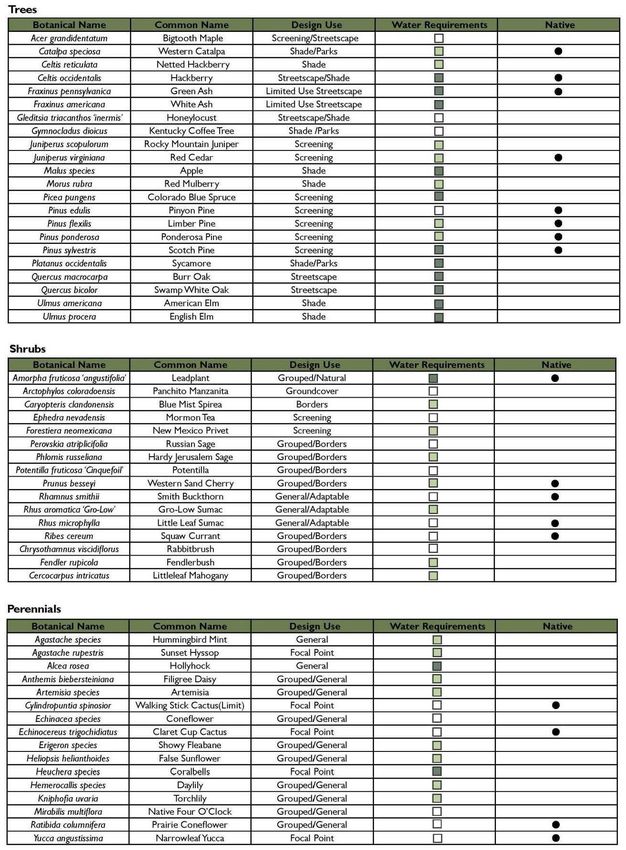
4.2.5 Native and drought tolerant plant materials shall be used
whenever possible.
4.2.6 Front and Side Yard Requirements
Landscaping within the front yard must consist of a
combination of turf lawn, trees and shrub beds. Large areas
of rock or wood mulch without any vegetation, is prohibited.
Shrub beds must be coordinated between lots, as much as
possible, to provide visual continuity. Side yards which are
visible from streets or public open spaces must also be
landscaped by the homeowner with a minimum of 30%
living material. The balance of area may be rock mulch,
walkway or other permeable surface.
January 14, 2019
26North Vista Highlands Design Guidelines
4.2.6.1 Plant Materials:
It will be necessary for all plans to address soil
types and climate. It is also the intent to promote
low water use plant material, which is reflected in
the recommended plant list. All landscape plans
shall be prepared so that all plant material is
clearly identified by common name, botanical
name, size, spacing, quantity and any special
planting notation. All required plant materials
must conform to minimum standards established
by the American Association of Nurserymen, as
published in the American Standards of Nursery
Stock. Plant growth habits and mature sizes
should be taken into consideration when spacing
trees, shrubs and groundcover.
4.2.6.1.1 Deciduous Trees:
Front Yard: A minimum of one deciduous
shade tree and one flowering ornamental
tree must be planted in the front yard. The
deciduous tree must be a minimum of 2 ½
inch caliper at the time of installation and
the flowering ornamental tree must be 2
inch caliper minimum at time of installation.
All trees must be staked or guyed using
metal T-post or wood lodge pole stakes.
Guy wires must be maintained by the
homeowner to keep all newly planted trees
set plumb for at least one full growing
season.
Rear Yard: A minimum of one deciduous
shade tree, 2” minimum caliper at time of
installation placed at least 6’ from property
lines and structures. Location should result
in providing shade to a portion of the yard
or patio area.
4.2.6.1.2 Evergreen Trees:
An evergreen tree may be substituted for
the required ornamental tree. The
minimum size is 6 feet in height at time of
installation. Spacing for evergreen trees
January 14, 2019
27North Vista Highlands Design Guidelines
must respond to individual species growth
habit but should generally be spaced at
least 10 to15 feet away from structures.
4.2.6.1.3 Shrubs, Groundcovers and Perennials:
A minimum of three, 5-gallon size shrubs
must be planted in the front yard.
Additional Vines, groundcovers, vines and
perennials are encouraged in planting
beds (Minimum 1 gallon plant size)
Spacing of all plant material should
anticipate mature growth size and be
placed a minimum of 5’ from foundations.
Shrub beds must be separated from turf
and mulch areas with edging material.
4.2.6.1.4 Turf Grass:
All turf areas must be sodded or seeded
with an improved variety of Kentucky
bluegrass or drought tolerant equivalent.
No turf areas permitted within 2’ of
foundations. Areas must be irrigated on
separate zones from shrub beds. Artificial
turf is permitted with approval provided it is
professionally installed and has a natural
appearance.
4.2.6.2 Landscape Materials:
4.2.6.2.1 Edging
Lawn areas must be separated from shrub
beds with edging material. Edging must be
limited to heavy (wide gauge) steel,
concrete, brick, or stone.
4.2.6.2.2 Mulch
Mulch may include river rock, crushed
stone, or gravel. Weed barrier material is
required under all mulch areas. High
contrasting color mulch will be prohibited
and earth tone colors will be encouraged.
4.2.6.2.3 Pavers/Flagstone
All weather surfaces for walks and patios
can be concrete, concrete pavers,
January 14, 2019
28North Vista Highlands Design Guidelines
permeable pavers, or stone. Preparation of
base course at manufacturer
recommended depth is advised to prevent
settling and drainage issues especially
towards foundations. Use of asphalt,
gravel and soil stabilizer is discouraged.
4.2.6.3 Installation Timeframe
Front and side yard landscaping must be installed
within 90 days of occupancy, unless the home is
first occupied between September 1st and March
31st. In this instance the completion of the front,
rear and side yard landscaping could be delayed
until the following July 1st. Failure to complete
minimum landscaping within the allotted time will
result in fines as specified in CC&Rs for non-
compliance. The North Vista Highlands HOA
retains the right to access the Property to install
the minimum landscaping at its option and has
the right to file a lien against the Property until the
Buyer has reimbursed the HOA for the costs of
the minimum landscaping.
4.2.7 Landscape Features (Section 6.4.3 North Vista PUD Guide)
A detailed plan of the following features must be submitted
for review and approval by the North Vista Highlands DRB
prior to installation:
Fences: (see Section 4.2.9)
Walls: Retaining walls
Structures: Free standing pergolas, gazebos, arbors,
trellises or sports goals, baskets, etc.
Large boulders: Required to complement the
architecture and landscape and must be installed 1/3
below ground level and incorporating into planting beds.
Pools & Hot Tubs
Play Equipment
Exterior Lighting
Bird Houses and Baths
Dog Runs: Must be located in rear yard abutting the
home and screened from view by landscaping. Open
wire fencing cannot exceed 6’ in height. No chain-link
fencing or covers (tarps, sheets, and blankets) allowed.
Limited to 200 square feet in area.
January 14, 2019
29North Vista Highlands Design Guidelines
Sculpture/Artwork
Artificial Turf
Flagpoles
Sheds: Must be attached to primary structure and
maintained in good condition
Vegetable Gardens
4.2.8 Irrigation
Automatic irrigation systems shall be required to be installed
and maintained by the homeowner in all front, side and rear
yards including the tree lawn area between the sidewalk
and curb. Irrigation systems must be operated by the owner
in a fashion as to conserve water to the maximum extent
practicable while still maintaining landscaping in an
attractive, green and growing condition. Turf areas must be
zoned separately from shrub and groundcover beds.
Builders/Owners will be encouraged to design irrigation
systems using state-of-the art technology that conserves
water through moisture sensors and wind sensors as well
as using solar energy to power controllers and
programmers.
4.2.9 Fencing & Screening
4.2.9.1 Fencing Along Open Space, Parks and Common
Areas:
Fences for properties which abut a public open
space, trail corridor or park shall be designed with
fencing materials that allow views from and to the
open space.
All fencing adjacent to open space and streets to
be installed and maintained by builder/owner
(prior to home occupancy), as specified in design
guidelines. All additional fencing to be installed by
builder/owner requires approval by the Design
Review Board before installation. Installation and
maintenance will be the responsibility of the
homeowner.
Community Open Space Fence:
The standard fence consists of a three-rail vinyl
fence (4’ height) in beige/sand color with brick or
stone columns at key property corners as
January 14, 2019
30You can also read


