October 2021 - IIFL Mutual Funds
←
→
Page content transcription
If your browser does not render page correctly, please read the page content below
October 2021

MONTHLY MARKET UPDATE

 Macro Economy & Event Update

 •      Global equity markets closed on a mixed note during the month        Event Update
        under review. While U.S. and European equity markets fell            India’s Index of Industrial Production (IIP) rose 11.5% in Jul 2021
        Asian equity markets largely closed on a positive note. Worries      •   IIP rose 11.5% in Jul 2021 as compared to a contraction of 10.5%
        over solvency issues of a major property developer in China              in Jul 2020. The manufacturing sector grew 10.5% in Jul 2021 as
        dampened market sentiments across the globe. This coupled                compared to a contraction of 11.4% in Jul 2020. The mining sector
        with worries that major central banks may pull the plug on               grew 19.5% in Jul 2021 as compared to a contraction of 12.7% in
        their accommodative ultra-easy monetary policy at a time
                                                                                 Jul 2020 and the electricity sector witnessed a growth of 11.1% in
        when global growth is showing tentative signs of a slowdown
                                                                                 Jul 2021 as compared to a contraction of 2.5% in Jul 2020.
        also kept market participants wary. However, positive cues
        from political developments in Japan and ease in tensions
        between U.S. and China provided some support to market               Consumer Price Index based inflation (CPI) marginally eased to
        sentiment.                                                           5.30% in Aug 2021
                                                                             •   Consumer Price Index based inflation (CPI) marginally eased to
 •      U.S. equity markets fell during the period under review as               5.30% in Aug 2021 from 5.59% rise in Jul 2021 and 6.69% in Aug
        lawmakers in U.S. remain deadlocked on raising the debt ceiling          2020. The CPI for Aug 2021 stayed within the Reserve Bank of
        of the U.S. government. Concerns that the U.S. Federal Reserve           India's tolerance level (2% - 6%) for second straight month. The
        may start tapering its asset purchase program from Nov 2021              Consumer Food Price Index also eased to 3.11% in Aug 2021
        and raise interest rates earlier than expected also weighed on           from 3.96% in Jul 2021 and 9.05% in Aug 2020.
        the market sentiment.
                                                                             India’s merchandise trade deficit widened to $13.81 billion in Aug
 •      European equity markets also went down as weak economic              2021 from Aug 2020
        data from the region raised doubts regarding the growth
                                                                             •   India’s merchandise trade deficit widened to $13.81 billion in
        prospects of the euro zone economy moving ahead. Concerns
        over political uncertainty in Germany further dampened                   Aug 2021 from $8.20 billion in Aug 2020. The trade deficit thus
        market sentiment to some extent.                                         widened by 68.30%. Merchandise exports grew 45.76% YoY to
                                                                                 $33.28 billion in Aug 2021 from $22.83 billion in Aug 2020.
 •      Asian equity markets however managed to buck the trend and               Merchandise imports rose 51.72% YoY to $47.09 billion in Aug
        largely closed on a positive note following positive cues from           2021 from $31.03 billion in Aug 2020. Oil imports in Aug 2021
        political developments in Japan. Concerns over escalating                stood at $11.65 billion which was higher by 80.64% in dollar
        tensions between U.S. and China over issues like trade,                  terms compared to Aug 2020. Non-oil imports were estimated at
        espionage and the COVID-19 pandemic also eased to some                   $35.43 billion in Aug 2021 which was 44.13% higher in dollar
        extent after the U.S. President reached out to the Chinese               terms compared to Aug 2020.
        President for the first time in seven months.
                                                                             India’s index of eight core industries grew 11.6% in Aug 2021
 •      Back home, domestic equity markets rose as continued pick up         •   Government data showed that the index of eight core industries
        in COVID-19 vaccination pace and decline in COVID-19                     grew 11.6% in Aug 2021 as compared to a growth of 9.9% in Jul
        infection cases eased concerns over the deadly pandemic.                 2021 and a contraction of 6.9% in Aug 2020. The cement sector
        However, concerns over foreign fund outflow from the
                                                                                 witnessed the maximum growth of 36.3% followed by natural
        domestic capital markets as the U.S. Federal Reserve starts
                                                                                 gas sector and coal sector which grew 20.6% each. All the sectors
        tightening its monetary policy capped the gains.
                                                                                 grew in Aug 2021 barring crude oil and fertilizers sector which
 •      In domestic debt market, bond yields fell initially following            witnessed a contraction of 2.3% and 3.1%, respectively, in Aug
        upbeat goods and services tax collection in Aug 2021 and after           2021. For the period from Apr to Aug of 2021, the index of eight
        fiscal deficit for the period from April to July of FY22, narrowed       core industries grew 19.3% as compared to a contraction of
        significantly. However, gains were neutralized following                 17.3% in the corresponding period of the previous year.
        increase in global crude oil prices and rise in yields of U.S.
        Treasuries.                                                          Fiscal deficit from Apr to Aug 2021 stood at 31.1% of the budget
                                                                             estimate for FY22
 •      Market sentiment moving ahead will be dictated by the                •   Government data showed that India’s fiscal deficit for the period
        upcoming earning season for the quarter ended Sep 2021                   from Apr to Aug 2021 stood at Rs. 4.68 lakh crore or 31.1% of the
        which shall indicate the stability and sustainability of the             budget estimate for FY22 as compared to 109.3% in the
        recovery of the domestic economy from the COVID-19                       corresponding period of the previous fiscal. Tax revenue stood at
        pandemic. The upcoming monetary policy review on October 8,
                                                                                 Rs. 6.45 lakh crore or 41.7% of the budget estimate for FY22 as
        2021, will also have its impact on the markets.
                                                                                 compared to 17.4% in the corresponding period of the previous
     Key Economic Indicators                                                     fiscal. Total expenditure stood at Rs. 12.77 lakh crore or 36.7% of
     Indicators                                Current       Previous            the budget estimate for FY22 as compared to 41.0% in the
     WPI (Aug-21)                              11.39%         11.16%             corresponding period of the previous year. Total receipts stood at
     IIP (Jul-21)                              11.50%         13.60%             Rs. 8.09 lakh crore or 40.9% of the budget estimate for FY22 as
     CPI (Aug-21)                               5.30%          5.59%             compared to 16.8% in the corresponding period of the previous
     Source: Refinitiv                                                           year.

October 2021                   Mutual Fund investments are subject to market risks, read all scheme related documents carefully.             Page | 1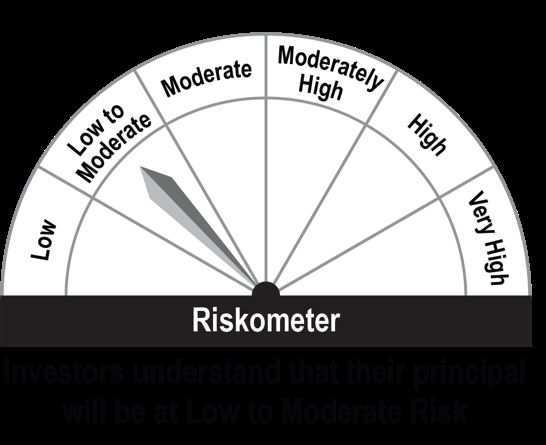
MONTHLY MARKET UPDATE
Equity Market
• Domestic equity markets ended the month with modest gains Domestic Indices Performance
after moving up leaps and bounds and the benchmark indices Indicators 30-Sep-21 31-Aug-21 Chg. % YTD
touching fresh closing highs. Upbeat economic growth data and
inflation numbers generated positive vibes. Additionally, growing S&P BSE Sensex 59,126 57,552 2.73 23.82
covid vaccination numbers and encouraging domestic core sector Nifty 50 17,618 17,132 2.84 26.01
growth data for Aug 2021 boosted the risk appetite of the S&P BSE 200 7,617 7,386 3.12 28.95
investors. Nonetheless, weak global cues largely downplayed
market sentiments with investors pondering over U.S. Federal Nifty Midcap 100 30,384 28,417 6.92 45.78
Reserve’s recent comments on the tapering of its stimulus Nifty Dividend
3,747 3,636 3.07 31.14
measures soon. Worries over the health of Chinese corporate Opportunities 50
sector too kept bourses on tenterhooks. S&P BSE Small cap 28,082 26,920 4.32 55.16
Source: NSE BSE
• U.S. markets ended the month in the negative territory with Global Indices Performance
investors largely ignoring news that lawmakers in the U.S. 31-Aug-
avoided a government shutdown, with the Senate and the House Global Indices 30-Sep-21 Chg. % YTD
21
both passing a stopgap spending bill. While a government Dow Jones 33,844 35,361 -4.29 10.58
shutdown was avoided, U.S. still faces a potential default amid an FTSE 7,086 7,120 -0.47 9.69
impasse over raising the debt ceiling. The elevated level of U.S. CAC 6,520 6,680 -2.40 17.45
Treasury Yields kept investors wary following U.S. Federal
Hang Seng 24,576 25,879 -5.04 -9.75
Reserve’s plans to begin scaling back its asset purchases in the
SSE Composite Index 3,568 3,544 0.68 2.74
near future. Worries over debt crisis of a major real estate
developer in China loomed large before easing to some extent Source: Refinitiv
after the embattled property developer said it will sell a $1.5
billion stake in a regional Chinese bank to raise much-needed Sectoral Performance (Monthly Returns %)
capital. Se
S&P BSE Metal -1.93%
• European markets too closed in the red after witnessing initial S&P BSE HC -1.80%
strength as euro area consumer confidence improved in Sep 2021
S&P BSE IT 0.70%
while Germany's Ifo Institute projected the German economy to
grow faster than previously estimated next year. Gains were S&P BSE FMCG 1.93%
reversed after eurozone manufacturing growth weakened in Sep. S&P BSE Teck 2.59%
Political uncertainty in Germany also weighed on the market S&P BSE Bankex 3.03%
sentiment. S&P BSE CG 3.98%
S&P BSE Auto 5.74%
• Asian markets largely closed in the green despite concerns over S&P BSE Oil & Gas 7.13%
surging coronavirus cases in the region. Investors took positive S&P BSE Power 9.50%
cues from political development in Japan. Easing concerns about
S&P BSE PSU 9.50%
U.S.-China tensions and clarifications that Chinese regulatory
crackdown on gaming companies were not as harsh as originally S&P BSE CD 10.65%
Source: BSE
reported, lifted sentiment in the region. However, gains were Performance (Monthly returns %)
restricted by debt crisis scenario of China’s major property
developer, which made headlines around the world and sparked Nifty EPS
broader fears about China's real estate market.
700 619
• Major pressing issues that are currently dominating investor 600 482 447
sentiments include crisis surrounding China's biggest real estate 500 404 387 378 416 407 390
player and U.S. Federal Reserve’s decision on tapering the 400 284 320 345 355
300 244 257
stimulus measures. In case the slowdown problem rises in China,
200
Yuan may depreciate which may have a domino effect on other
100
Asian currencies including Indian rupee that may lead to some 0
FIIs outflow in the near term. Meanwhile, U.S. Federal Reserve
FY08
FY09
FY10
FY11
FY12
FY13
FY14
FY15
FY16
FY17
FY18
FY19
FY20
FY21
FY22
indicated slowing down the bond purchase program from Nov
onwards which would go till June-July next year. The financial
markets in India and also the RBI will start to factor in the likely
outflow of capital from India especially the foreign portfolio Institutional Flows (Equity) As on September 30, 2021
investments. Since the U.S. Federal Reserve has given a clear (INR Cr) Purchases Sales Net YTD
signal, investors are unlikely to face any knee-jerk reaction. Back FII Flows 228757 215603 131534 64271
home, the upcoming corporate earnings calendar for the Sep MF Flows 111338 104378 6960 27882
quarter will have a bearing on the buying interest of the investors. DII Flows 144147 138198 5949 26639
Source: CDSL, NSE & SEBI
October 2021 Mutual Fund investments are subject to market risks, read all scheme related documents carefully. Page | 2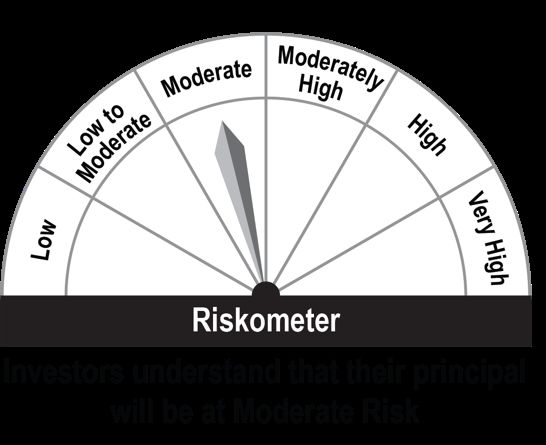
MONTHLY MARKET UPDATE

 Debt Market

 •   Bond yields were steady after moving in a range during the Sep           10-Year Benchmark Bond (06.10% GS 2031) Movement
     month. Yields fell in the first half as gross domestic product
     growth came in line with market expectations and on strong goods                     6.25
     and services tax collection in Aug 2021 and fiscal deficit for the

                                                                                Yield %
     period from April to July of FY22, narrowed significantly. Yields                    6.20
     fell further after U.S. inflation rose less than expected in Aug 2021,
     which eased concerns over an interest rate hike by the U.S. Federal                  6.15
     Reserve. On the other hand, yields rose in the second half of the
     month following rise in global crude oil prices and U.S. Treasury
     yields. Yields also went up after the Reserve Bank of India (RBI)                    6.10
                                                                                            31-Aug-21          10-Sep-21         20-Sep-21                30-Sep-21
     bought small quantum of benchmark note at its debt purchase
     operation.                                                                Source: Refinitiv

 •   Yield on the 10-year benchmark bond remained unchanged at                Spread Movement
     6.22% compared with the previous months’ close
                                                                               Spreads                  Maturity                      AAA         AA            A
                                                                                                         Period
 •   Yield on gilt securities fell in the range of 2 to 21 bps across the      30-Sep-21            1 Yr                                  78      130          615
     maturities, barring 1 to 3, 5 10 & 11year papers that rose by up to
     26 bps. Yield fell the most on 19-year paper and the least on 4-year                           3 Yr                                  31      162          513
     paper. Yield on corporate bonds rose in the range of 4 to 21 bps                               5 Yr                                  48      142          405
     across the curve, leaving 1 and 15year papers that fell 2 & 9 bps,        31-Aug-21            1 Yr                                  98      213          1520
     respectively. Yield on rose the most on 2-year and the least on 4-
     year paper. Difference in spread between corporate bond and gilt                               3 Yr                                  31      202          110
     securities expanded by up to 18 bps, leaving 1,2 and 15year                                    5 Yr                                  44      225           --
     papers that contracted 20, 5 and 2 bps, respectively. Spread rose         Source: Refinitiv
     the most on 7year paper and the least on 3year paper.
                                                                               Yield (%)                                              30-Sep-21         31-Aug-21
 •   Market participants are anticipating over the possibility of some
     action towards liquidity withdrawal and policy normalization by           10 Year G-Sec                                               6.22               6.22
     the rate-setting Monetary Policy Committee at its next meeting on         5 Year G-Sec                                                5.66               5.65
     Oct. 8, 2021.On a positive side, central government has maintained
                                                                               Certificate of Deposit
     its gross full-year borrowing of Rs. 12.05 lakh crore. Also RBI’s
     bond buying program under G-SAT 1.0 helped sail through                   3-Month                                                     3.54               3.37
     elevated government’s borrowing program and kept bond yields              6-Month                                                     3.69               3.50
     in check. Reports on India’s potential addition in global bond            9-Month                                                     3.57               3.54
     indices may lead to foreign inflows and would in turn lower the
                                                                               12-Month                                                    4.04               4.22
     need for the RBI to support the market via bond purchases. Global
     factors such as oil prices, which have implications for the country’s     Commercial Papers
     inflation outlook, will keep playing a major role going ahead. This       3-Month                                                     3.75               3.53
     along with, U.S. treasury yields will also trigger movement in bond
                                                                               6-Month                                                     4.10               3.95
     yields.
                                                                               12-Month                                                    4.50               4.30
 Currency and Commodity                                                        Source: Refinitiv

 •   The Indian rupee fell against the U.S. dollar on on anticipation of       Treasury Bill                                          30-Sep-21         31-Aug-21
     withdrawal of policy support by the U.S. Federal Reserve and on
                                                                               91 Days                                                    3.32                3.10
     worries over solvency issues of a major Chinese property
     developer.                                                                364Days                                                    3.75                3.63
                                                                               Source: CCIL
 •   Brent crude oil prices rose following delayed recovery in output
     from the Gulf of Mexico region, which has been severely disrupted        Event Calendar
     by two hurricanes. Tight supplies due to OPEC+ supply curbs and
                                                                               Release             Event                                               Country
     a weaker U.S. dollar too contributed to gains in oil prices.
                                                                               8-Oct-21            Nonfarm Payrolls (Sep)                              U.S.
                                                                               13-Oct-21           FOMC Minutes                                        U.S.
                                                                               18-Oct-21           Gross Domestic Product (QoQ)(Q3)                    China
                                                                               20-Oct-21           PBoC Monetary Policy Review                         China
                                                                               28-Oct-21           Bank of Japan Monetary Policy Review                Japan

October 2021                Mutual Fund investments are subject to market risks, read all scheme related documents carefully.                                  Page | 3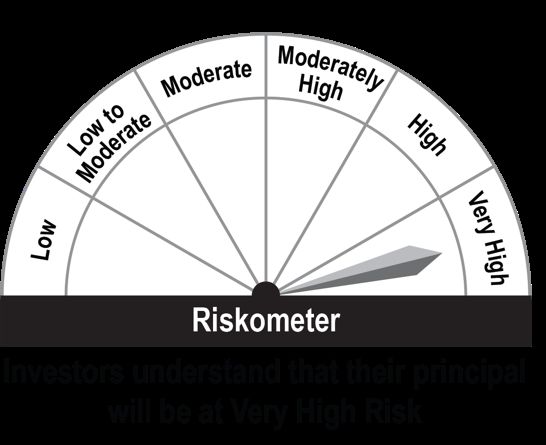
IIFL FOCUSED EQUITY FUND
(An open ended equity scheme investing in maximum 30 multicap stocks)
Investment Objective Portfolio as on September 30, 2021 Sector Allocation^^
The investment objective of the scheme is to % to Net
Company Name Sector SCDV
Assets
generate long term capital appreciation for Equity & Equity Related Total
investors from a portfolio of equity and equity Bharti Airtel Limited(Right
TELECOM V 0.07
related securities. However there can be no Entitalment) **
assurance or guarantee that the investment ICICI Bank Limited FINANCIAL SERVICES C 8.73
objective of the scheme would be achieved. Infosys Limited IT D 7.44
HDFC Bank Limited FINANCIAL SERVICES S 6.41
Axis Bank Limited FINANCIAL SERVICES S 4.85
Fund Manager Mr. Mayur Patel
Larsen & Toubro Limited CONSTRUCTION C 4.53
Mr. Mayur Patel has 15 years of work experience Larsen & Toubro Infotech
IT S 4.35
including investment management and research Limited
experience of more than 10 years. Prior to joining SRF Limited CHEMICALS S 4.35
Bajaj Finance Limited FINANCIAL SERVICES S 4.20 Sector allocation as per AMFI classification
^^
IIFL, he managed equity portfolios of DSP
BlackRock Equity Savings Fund and MIP Fund at Bharti Airtel Limited TELECOM V 4.14
Crompton Greaves Consumer
Market Capitalisation wise Exposure^
DSP BlackRock Investment Managers (a joint CONSUMER GOODS S 4.07
Electricals Limited
venture between BlackRock and the DSP Group in State Bank of India FINANCIAL SERVICES V 3.94
India). Mr. Patel joined DSP BlackRock in 2013 as Cyient Limited IT S 3.19
an Equity Analyst responsible for origination and Bharat Petroleum Corporation
OIL & GAS D 3.10
dissemination of ideas across energy, industrials Limited
and utilities sectors. Earlier he was associated Divi's Laboratories Limited PHARMA D 3.08
with Spark Capital as Lead Analyst, Energy in their Mahindra & Mahindra Limited AUTOMOBILE V 2.94
Institutional Equities division and has also Apollo Tricoat Tubes Limited Miscellaneous S 2.79
worked with Tata Motors and CRISIL. He is a Dr. Reddy's Laboratories
PHARMA S 2.45 a. Large Cap Companies: 1st -100th company in terms of full market capitalization
Limited
Chartered Accountant and a CFA charter holder. b. Mid Cap Companies: 101st -250th company in terms of full market capitalization
CCL Products (India) Limited CONSUMER GOODS D 2.22 c. Small Cap Companies : 251st company onwards in terms of full market capitalization The
Sona BLW Precision Forgings consolidated list of stocks in terms of full market capitalization is as per the list uploaded by AMFI, in
AUTOMOBILE S 2.22
Limited terms of SEBI circulars dated October 6, 2017 and December 4, 2017.
Fund Details Tata Motors Limited AUTOMOBILE C 1.89 ^
As of September 30, 2021
Date of Allotment : October 30, 2014 CONSUMER
Zomato Limited V 1.86
Bloomberg Code : IIFGRRG IN SERVICES NAV Movement (Since Inception) Rebased to 100
Muthoot Finance Limited FINANCIAL SERVICES S 1.79
Benchmark Index : S&P BSE 200 TRI
Tata Communications Limited TELECOM V 1.72
Plans Offered : Regular & Direct Kajaria Ceramics Limited CONSUMER GOODS S 1.68
Options Offered : Growth & IDCW Aavas Financiers Limited FINANCIAL SERVICES S 1.67
Minimum : Mahanagar Gas Limited OIL & GAS D 1.63
Application Sansera Engineering Limited AUTOMOBILE C 1.60
New Purchase : ₹5,000 and in Asian Paints Limited CONSUMER GOODS D 1.57
multiples of ₹100 Coforge Limited IT D 1.49
thereafter INDUSTRIAL
EPL Limited V 1.03
Additional : ₹1,000 and in MANUFACTURING
Purchase multiples of ₹100 Sub Total 97.00
thereafter TREPS## 2.77
Net Receivables / (Payables) 0.23
Monthly SIP Option : ₹1,000 per month for a
Portfolio Total 100
minimum period of 6
months
Quarterly SIP : ₹1,500 per quarter for Scheme Performance
Option a minimum period of 4 30-Sep-20 to 30-Sep-18 to 30-Sep-16 to Since
quarters Scheme / Benchmark PTP (₹) PTP (₹) PTP (₹) PTP (₹)
30-Sep-21 30-Sep-21 30-Sep-21 Inception
Entry Load : NIL IIFL Focused Equity Fund - Reg - Growth 63.33% 16,333 27.89% 20,960 18.42% 23,288 17.01% 29,669
Exit Load : 1% - if IIFL Focused Equity Fund - Dir - Growth 65.17% 16,517 29.62% 21,824 20.04% 24,921 18.49% 32,370
redeemed/switched Benchmark* 61.22% 16,122 19.44% 17,066 16.85% 21,785 14.12% 24,956
out, on or before 12 Additional Benchmark** 56.96% 15,696 19.03% 16,888 17.60% 22,488 13.19% 23,576
Past performance may or may not be sustained in future. Different plans shall have different expense structure. Point to Point (PTP) returns in ₹ is based on standard investment of ₹10,000; Since
months from the date Inception date is 30 October 2014; *S&P BSE 200 TRI; **S&P BSE Sensex TRI; Managed by the fund manager since 11 November 2019. The performance of the scheme is benchmarked to the
of allotment w.e.f April Total Return variant of the Index.
02, 2019.
Dematerialization : D-Mat Option Available
Portfolio Turnover : 0.37 times SIP - If you had invested ₹10,000 every month
Ratio (based on 1 Scheme / Benchmark
30-Sep-20 to 30-Sep-18 to 30-Sep-16 to Since
year monthly data) 30-Sep-21 30-Sep-21 30-Sep-21 Inception
Total Amount Invested (₹) 1,20,000 3,60,000 6,00,000 8,20,000
Total Value as on September 30, 2021(₹) 1,52,521 5,99,128 11,09,775 17,13,725
Returns 53.84% 36.04% 24.86% 21.23%
NAV as on September 30, 2021 Total Value of Benchmark: S&P BSE 200 TRI (₹) 1,51,553 5,57,059 10,10,347 15,35,661
Regular - Growth : ₹ 29.6694 Benchmark: S&P BSE 200 TRI 52.14% 30.50% 20.97% 18.06%
Regular - IDCW : ₹ 26.249 Total Value of Benchmark: S&P BSE Sensex TRI (₹) 1,48,953 5,41,780 10,11,990 15,31,913
Direct - Growth : ₹ 32.3704 Additional Benchmark: S&P BSE Sensex TRI 47.61% 28.43% 21.03% 17.99%
Direct - IDCW : ₹ 32.04 (Inception date :30-Oct-2014) (First Installment date :01-Dec-2014)
Source: MFI Explorer; Above returns are calculated assuming investment of ₹10,000/- on the 1st working day of every month. CAGR return are computed after accounting for the cash flow by
using XIRR method (investment internal rate of return) for Regular Plan -Growth option. The above investment simulation is for illustrative purposes only and should not be construed as a
promise on minimum returns and safeguard of capital. Managed by the fund manager since November 11, 2019.
AUM as on September 30, 2021 The performance of the scheme is benchmarked to the Total Return variant of the Index.
Net AUM : ₹ 2366.98 crore Dividend Details
Monthly Average : ₹ 2361.14 crore Cum Dividend NAV (₹) As
AUM Record Date Face Value (₹) Dividend Per Unit
on Feb 15, 2017
Regular IDCW Plan 15 February 2017 10 12.7777 1.50
Direct IDCW Plan 15 February 2017 10 13.0738 0.17
Total Expense Ratio Dividend is gross dividend. Past performance may or may not be sustained in future. After payment of dividend the NAV has fallen to the extent of payout and distribution taxes if applicable.
Dividend is not assured and is subject to availability of distributable surplus.
Regular Plan : 2.01% p.a.
Direct Plan : 0.90% p.a.
Scheme Risk-O-Meter Benchmark Risk-O-Meter
Total Expense Ratio is as on the last business day of the month. THIS PRODUCT IS SUITABLE FOR INVESTORS WHO ARE
SEEKING*
Volatility Measures • Capital appreciation over long term;
Fund Benchmark • Investment predominantly in equity and equity related
Std. Dev instruments.
14.41% 17.46%
(Annualised) * Investors should consult their financial advisers if in doubt
Sharpe Ratio 0.83 0.54 about whether the product is suitable for them.
Portfolio Beta 0.94 1.00 ##With effect from November 05, 2018, Triparty Repo has
R Squared 0.96 NA replaced CBLOs for all schemes with provisions to invest in CBLO.
Treynor 0.13 0.10
October 2021 Mutual Fund investments are subject to market risks, read all scheme related documents carefully. Page | 4
IIFL FOCUSED EQUITY FUND
    (An open ended equity scheme investing in maximum 30 multicap stocks)

 Fund Commentary

Dear investor,
Indian equity indices had a strong run and touched an all-time high during September’21, but the benchmark indices BSE-30 and Nifty-50 indices ended the month with gains of 2.7% and 2.8% respectively
(over last month). The indices down the capitalization curve outperformed the benchmark indices with BSE Mid-cap and BSE Small-cap indices recording gains of 5.9% and 4.3% respectively. Amongst the
sectoral indices, realty stocks soared (BSE Realty 33%) on account of pick-up in demand. Meanwhile, demand recovery also augured well for stocks in the consumer durables space (BSE Consumer Durables
up 10.7%). However, stocks in the metal space corrected (BSE Metals down 1.9%) due to the continued uncertainty regarding global growth along with concerns over Chinese steel production.

FPIs were net buyers of Indian equities to the tune of US$1.8 bn in September’21. The YTD flows at US$8.8 bn continue to remain robust. We believe there could be continued investor interest towards higher
risk participation even though rising inflation and tapering of monetary stimulus from central banks of a few major economies could have an overhang on investor sentiments.

Indian Equity Markets: Feather on the Cap – The 60K mark, supported by multiple factors

The month of September’21 began on a positive note with the US Fed chairman mentioning that the US central bank won’t be in a hurry to raise rates, even after they taper their asset purchases. At home, the
Indian government announced a flurry of reforms—cabinet approved PLI schemes for auto, drone and textiles sectors, relief package for telecom sector and the Finance Minister announced further steps
towards formation of a bad bank. Meanwhile Covid-19 cases showed a declining trend, pace of vaccination continued to move northwards and restrictions were relaxed in most of the states in anticipation of
strong medium-term growth. However, rise in crude oil prices, anxiety on account of the contagion effect from China’s property giant Evergrande, rising US bond yields and continuing debt ceiling debate in
the US weighed on sentiments which ultimately limited the monthly gains.

The manufacturing PMI which had printed 52.3 in August’21 showed a rebound and recorded 53.7 September’21 as companies benefited from strengthening demand conditions amid the easing of COVID-19
restrictions. Increase in new orders and output sub-components of the PMI led to the up move in the headline index. Other high frequency data such as power consumption, e-way bill collection and rail freight
were robust for September’21 indicating continued momentum in the economic activity. Some indicators viz. rail freight and electricity are already back to pre-pandemic levels.

The GST revenues collected in September’21 continued to remain above INR 1 lakh crore on the back of recovery in Indian economy. The fiscal health of government has improved remarkably on the back of
robust tax collections. For now, the centre’s fiscal situation seems to be comfortable.

What lies ahead - Great Expectations or Caution Clatter?

While most of the indicators are showing encouraging signs, one of the indicators is still lagging. Credit growth continues to be in low single digits. Credit flow to industry has also remained weak and this
weakness cannot be attributed to the pandemic alone as the same has been subdued for several quarters. On one side small and medium sized firms have taken more loans under special schemes but on the
other side, deleveraging by large companies has kept the overall credit flow negative. Given that retail is a key contributor to the growth, the upcoming festive season doles out a hope of recovery.

Festive cheer coupled with increasing information about a weaker/non-existent third wave is expected to keep the market sentiment upbeat. The immediate threat could be coal shortage and renewed spike
in crude oil prices. Further, it would be interesting to see how global enterprises react to the recent disruptions (electricity shortages, targeted plant closures) in the Chinese production and their actions on
de-risking the production capabilities – wherein India may stand to benefit.

All is generally well in the long run!

On a long-term basis, we believe there is a strong correlation between GDP growth, corporate earnings and equity market returns. An expected rise in nominal GDP growth will in turn boost corporate earnings.
As long as the corporate India continues to grow, the equity markets are likely to remain buoyant. That said, when everything looks attractive, it is even more important to exercise caution in terms of
businesses that one should invest and that should be a function of both quantitative (financial ratios) as well as qualitative parameters (quality managements).

Portfolio Positioning

We are always overweight the secular quadrant and underweight the value traps quadrant. Tactically we are overweight cyclicals and underweight defensives given our positive view on the economic recovery.
In terms of sectors, we see interesting opportunities in Private Sector Financials, Consumer Discretionary and Industrials to play the domestic economic recovery. However, defensive sectors like Indian
Healthcare and Indian IT services would continue to perform irrespective of the economy returning back to normalcy. Our focus is on having a balanced mix – the defensive plays where new growth drivers
have emerged due to pandemic and cyclical sectors to play the reopening theme.

                                                                                                                 Sectors stated in SCDV investment framework are indicative and based on internal research. The
                                                                                                                 scheme may or may not hold the securities in all the sectors as mentioned in the investment framework
                                                                                                                 above. S- Secular – Companies with consistent ROE & PAT growth > 15%, C- Cyclical – Companies with
                                                                                                                 PAT growth > 15% but ROE < 15%, D- Defensive – Companies with ROE > 15% but PAT growth < 15%,
                                                                                                                 V- Value Traps – Companies with both ROE & PAT growth < 15%. The portfolio weights mentioned in
                                                                                                                 SCDV investment framework are of IIFL Focused Equity Fund as of September 30, 2021. The weights
                                                                                                                 are rounded off to the nearest decimal.

 Disclaimer
 The above commentary/opinions/in house views/strategy incorporated herein is provided solely to enhance the transparency about the investment strategy / theme of the Scheme and should not be treated as endorsement
 of the views / opinions or as an investment advice. The above commentary should not be construed as a research report or a recommendation to buy or sell any security. The information / data herein alone is not sufficient
 and shouldn’t be used for the development or implementation of an investment strategy. The above commentary has been prepared on the basis of information, which is already available in publicly accessible media or
 developed through analysis of IIFL Mutual Fund. The information/ views / opinions provided is for informative purpose only and may have ceased to be current by the time it may reach the recipient, which should be taken
 into account before interpreting this commentary. The recipient should note and understand that the information provided above may not contain all the material aspects relevant for making an investment decision and the
 stocks may or may not continue to form part of the scheme’s portfolio in future. The decision of the Investment Manager may not always be profitable; as such decisions are based on the prevailing market conditions and the
 understanding of the Investment Manager. Actual market movements may vary from the anticipated trends. The statements made herein may include statements of future expectations and other forward-looking statements
 that are based on our current views and assumptions and involve known and unknown risks and uncertainties that could cause actual results, performance or events to differ materially from those expressed or implied in
 such statements. This information is subject to change without any prior notice. The Company reserves the right to make modifications and alterations to this statement as may be required from time to time. Neither IIFL
 Mutual Fund / IIFL Asset Management Ltd, its associates, directors or representatives shall be liable for any damages whether direct or indirect, incidental, punitive special or consequential including lost revenue or lost
 profits that may arise from or in connection with the use of the information.

October 2021                              Mutual Fund investments are subject to market risks, read all scheme related documents carefully.                                                                         Page | 5
IIFL DYNAMIC BOND FUND
(An Open Ended dynamic debt scheme investing across duration)
Investment Objective Portfolio as on September 30, 2021 Composition by Rating^
% to Net
The investment objective of the scheme is to Name of the Instrument Rating
Assets
generate income and long term gains by investing REIT/InvIT Instruments 3.32
in a range of debt and money market instruments Powergrid Infrastructure Investment Trust Power 2.06
of various maturities. The scheme will seek to Embassy Office Parks REIT Construction 1.26
flexibly manage its investment across the Debt Instruments
maturity spectrum with a view to optimize the Sovereign Securities 16.35
risk return proposition for the Investors. 9.15% GOVERNMENT OF INDIA SOVEREIGN 4.44
7.84% STATE GOVERNMENT SECURITIES SOVEREIGN 3.57
Fund Manager Mr. Milan Mody 6.97% GOVERNMENT OF INDIA SOVEREIGN 2.79
Mr. Milan Mody has over 18 years of work 7.17% GOVERNMENT OF INDIA SOVEREIGN 2.10
experience in the Fixed Income market. Prior to Instrument Wise Composition^
joining IIFL Asset Management Limited, he was 7.59% GOVERNMENT OF INDIA SOVEREIGN 1.42
associated with ITI Asset Management Limited as 6.1% GOVERNMENT OF INDIA SOVEREIGN 1.32
Fixed Income Fund Manager for three years. His
previous experience includes working 7.69% STATE GOVERNMENT SECURITIES SOVEREIGN 0.71
with Darashaw, Birla Sun-life Securities, Sahara Non-Convertible Debentures/Bonds 68.18
Life Insurance and Zyin Research Pvt. Ltd. He has 6.6861% MINDSPACE BUSINESS PARKS CRISIL AAA 9.38
done MBA Finance and B.Com.
8.9% STATE BANK OF INDIA* CRISIL AAA 5.65
9.15% ICICI BANK LIMITED* ICRA AA+ 5.53
Fund Details 7.75% LIC HOUSING FINANCE LIMITED CRISIL AAA 4.20
Date of Allotment : June 24, 2013 5.85% REC LIMITED CRISIL AAA 3.98
^
Bloomberg Code : IIFDBDBIN Maturity Profile^
8.99% BANK OF BARODA* CRISIL AA+ 3.53
Benchmark Index : Crisil Composite Bond
Fund Index TATA CAPITAL HOUSING FINANCE
CRISIL AAA 3.51
Plans Offered : Regular & Direct LIMITED
7.17% POWER FINANCE CORPORATION
Options Offered : Growth & IDCW CRISIL AAA 3.47
LIMITED
Minimum :
6.88% REC Limited CRISIL AAA 3.44
Application
New Purchase : ₹10,000 and in multiples 7.25% Embassy Office Parks REIT CRISIL AAA 3.39
of ₹100 thereafter
6.75% Sikka Ports and Terminals Limited CRISIL AAA 3.39
Additional Purchase : ₹1,000 and in multiples
of ₹100 thereafter 7.6% Muthoot Finance Limited CRISIL AA+ 3.35
Monthly SIP Option : ₹1,000 per month for a 5.78% Housing Development Finance
CRISIL AAA 3.31
minimum period of 6 Corporation Limited
months 7.62% Export Import Bank of India CRISIL AAA 2.13
Quarterly SIP Option : ₹1,500 per quarter for a ^ As of September 30, 2021
8.95% Jamnagar Utilities & Power Private
minimum period of 4 Limited
CRISIL AAA 2.11 NAV Movement (Since Inception) Rebased to 100
quarters 8.4% India Grid Trust InvIT Fund CRISIL AAA 2.05
Entry Load : NIL
5.58% Cholamandalam Investment and
Exit Load : NIL ICRA AA+ 1.99
Finance Company Limited
The revised exit load as
8.5% State Bank of India* CRISIL AA+ 1.38
mentioned above shall be
applicable on a 8.55% ICICI Bank Limited* ICRA AA+ 1.37
prospective basis and will
8.85% India Grid Trust InvIT Fund CRISIL AAA 0.69
be applicable to all
investments made on or 6.72% Power Finance Corporation Limited CRISIL AAA 0.34
after July 6, 2020 TREPS## / Reverse Repo
(''effective date''). TREPS## 10.61
Dematerialization : D-Mat Option Available Net Current Assets 1.54
Asset Allocation : Portfolio Total 100.00
Debt Market : 0% to 100% * BASEL III Compliant
Money Market : 0% to 100% Dividend Declared - Monthly IDCW Plan
REITs & InvITs : 0% to 10% Gross Dividend (₹) Regular Plan NAV Direct Plan NAV
Date Face Value (₹)
(Per Unit) (₹) (Ex-Dividend) (₹) (Ex-Dividend)
30-Sep-21 10 0.05 12.0512 12.7261
31-Aug-21 10 0.05 12.0755 12.7466
NAV as on September 30, 2021
27-Jul-21 10 0.05 11.9942 12.655
Regular Plan Growth : ₹ 17.5698
#Regular Plan Bonus : ₹ 17.5698
Regular Quarterly IDCW : ₹ 16.9548 Quarterly IDCW Plan
#Regular Half Yearly IDCW : ₹ 16.9548 04-Jun-15 10 0.40 11.4678 11.5708
#Regular Monthly IDCW : ₹ 12.0598 HalfYearly IDCW Plan
Direct Plan Growth : ₹ 18.3631 04-Jun-15 10 0.40 11.4678
Direct Monthly IDCW : ₹ 12.7354 Dividend is gross dividend. To arrive at the net dividend payable for corporate and non-corporate investors applicable dividend distribution tax, if any, needs to be adjusted respectively. Past
#Note: Bonus plan and Monthly & Half yearly Dividend payout options performance may or may not be sustained in future. After payment of dividend the NAV has fallen to the extent of payout and distribution taxes if applicable. Monthly Dividend is not assured and is
are discontinued no new investors can invest in the said option subject to availability of distributable surplus.
,existing investors remain invested in the said options.
Scheme Performance
AUM as on September 30, 2021 Scheme / Benchmark
30-Sep-20 to
PTP (₹)
30-Sep-18 to
PTP (₹)
30-Sep-16 to
PTP (₹)
Since
PTP (₹)
30-Sep-21 30-Sep-21 30-Sep-21 Inception
Net AUM : ₹ 745.61 crore
Monthly Average AUM : ₹ 740.60 crore IIFL Dynamic Bond Fund - Reg – Growth 7.57% 10,757 7.61% 12,469 6.91% 13,969 7.05% 17,570
IIFL Dynamic Bond Fund - Dir - Growth 7.96% 10,796 8.20% 12,675 7.50% 14,362 7.62% 18,363
Benchmark* 5.83% 10,583 10.23% 13,403 7.77% 14,542 8.46% 19,578
Total Expense Ratio Additional Benchmark** 3.88% 10,388 9.17% 13,020 6.17% 13,491 6.71% 17,120
Past performance may or may not be sustained in future
Regular Plan : 0.52% p.a. Different plans shall have different expense structure
Direct Plan : 0.27% p.a. * Crisil Composite Bond Fund Index,** Crisil 10yr Gilt Index; Point to Point (PTP) returns in ₹ is based on standard investment of ₹ 10,000 made on the inception date; Inception date 24-June-2013;
Scheme Risk-O-Meter Benchmark Risk-O-Meter
Total Expense Ratio is as on the last business day of the month. THIS PRODUCT IS SUITABLE FOR INVESTORS WHO ARE
SEEKING*
• Income and long term gains
Statistical Debt Indicators • Investment in a range of debt and money market instruments
Macaulay Duration : 3.29 years of various maturities
Modified Duration : 3.11 years
Average Maturity : 4.09 years * Investors should consult their financial advisers if in doubt
Yield to Maturity : 5.76% about whether the product is suitable for them.
##With effect from November 05, 2018, Triparty Repo has
replaced CBLOs for all schemes with provisions to invest in CBLO.
October 2021 Mutual Fund investments are subject to market risks, read all scheme related documents carefully. Page | 6
IIFL DYNAMIC BOND FUND
     (An Open Ended dynamic debt scheme investing across duration)

  Fund Commentary

 What moved the bond yield during the month

 Indian bond yields moved in a range of 10 bps driven by mixed factors from optimism on account of better centre’s fiscal health and caution on the back of commodity price rise and pace of
 normalization of rates.
 Indian economic indicators continue to provide comfort and evince that economic recovery from the pandemic, particularly post the second wave, is continuing as reinstated by growth in core
 industries as well as healthy growth in government revenue receipts, tax and non-tax. The monthly government finances data shows that the spending mix has also been healthier with increased
 focus on Capex. In case of the monthly indicators it was a bit of a mixed bag in September with high frequency indicators suggesting modest to flattish increment in activity. COVID-19 infection
 rate is falling which has prompted easing of restrictions and therefore gradual improvement in mobility, traffic and e-way bills generated. On the other hand, electricity consumption, freight
 carried and vehicle sales show some pull back in activity during the month. The seasonal rainfall for 2021 has been at -1% of the long period average and thus can be classified as a ‘normal’
 season augurs well for upcoming sowing season as well; suggesting that the agriculture output is poised to grow in FY22 as well, total food grains sowing registered positive growth of 0.5% at
 74.3 hectares. The latest development of the Moody’s revision in India’s rating outlook to Stable from Negative earlier reinforces the fact that India’s macroeconomic fundamental, in the face
 of the pandemic, have shown resilience and that recovery is gaining traction.

 Based on the published government finances, we expect the Central Government to get tax and non-tax revenues of Rs. 3.15tn over and above the budgeted targets for FY22E. This should be
 led by higher excise duty collections (Rs. 901bn), GST collections (Rs. 780bn), dividend from RBI & PSUs (Rs. 701bn), direct taxes (Rs. 522bn) and custom duty collections (Rs. 250bn). After
 adjusting for Rs. 1.6tn for the extra devolution to states (Rs. 796bn, which is a positive for State government finances) and extra expenditure (Rs. 787bn mainly on salaries and subsidies), the
 government should be left with Rs. 1.64tn revenue over and above the budgeted revenue target for FY22. What can the government do with this? we think the government can focus on these
 four options: (i) Capex would jump to Rs. 7.2tn (3.5% of GDP) in FY22E from Rs. 5.5tn (2.5% of GDP) in FY22BE, (ii) Government can cut taxes or spend more on Healthcare and Education
 sectors, (iii) Fiscal deficit can reduce to 6% of GDP vs. the budgeted 6.8%, and (iv) In case the LIC IPO or BPCL divestment gets further delayed, it can be used as a revenue shock absorber.

 Economic recovery showed up in central governments numbers as the borrowing calendar announced for H2 FY22 at Rs. 5.03 Lakh Crore was lower than market expectations of Rs. 5.4-5.6
 Lakh Crore, and this should bolster market sentiment. The Central Government’s budget calculations as far as the tax revenues were concerned were conservative to begin with, and the revenue
 collections so far appear to be outpacing the estimated run rate, aiding to narrow the fiscal deficit gap. RBI announced Q3FY22 indicative SDL borrowings calendar of ~INR 2.02tn, almost equal
 to Q3FY21A borrowings and ~23% higher versus Q2FY22A borrowings. All-in-all, given that the government has gone “long” on the curve (issuances scaled up in the 30Y and FRBs also suggests
 the belly of the curve would not see a spike in yields (unless the RBI/MPC outcome surprises the market negatively). The government has refrained from borrowing heavily on the shorter end
 of the curve; thus, the curve is unlikely to steepen much. Nonetheless, in the absence of RBI support, increased net supply would weigh on the yields. Recent comments from Indian government
 officials have raised hopes of its bond’s inclusion in global indices this fiscal year. Indian bonds remain significantly under-owned by foreign investors, among all EMs, overall there would be
 inflows aggregating USD 30-33 bn by FY23 through different global bond indices, FDI inflows in India increased 62% during the first four months of current financial year.

 Maintaining its liquidity guidance, RBI choose to suck-out surplus liquidity at frequent intervals during the month but with higher than expected cut-offs (last one was @3.61% for 7 day and
 3.48% for 14 days) in the primary auctions made investors cautious in the money market curve resulting in average 12-15 bps rise in yields. Steepening was also observed in the short-term
 (1-3 year) yield curve with an average 20 bps,5-10 year yield curve remained flattish while above 14 year curve eased by average 8 bps on back of above-estimate fiscal numbers.

 Outlook:
 Overall, RBI is likely to view the current macro-events somewhat tepid but sturdy recovery since the second wave with risks to the momentum coming from global supply disruptions. Moreover,
 there is not much happening on credit demand despite market rates staying well below policy rate and excess liquidity conditions. The RBI may not want to add to the drag on the economy by
 signalling interest rate increases in the near-term. The only macro pain point is pass through of externally driven inflation which will dampen consumer sentiments and burden the recovery.
 The latest supply hitch comes from China and other global supply disruptions could be a source of shock, it is not domestic demand led and must be absorbed either by taxes, margins or
 households. No role for RBI here. Inflation may be transient but the price rise is largely permanent which means that real income impact for households in India can burden the recovery pace.

 We expect rates to remain unchanged till second quarter of next year however in the near-term the magnitude and tenure of VRRRs are expected to further increase especially given the
 improving projections of liquidity surplus in 2HFY22. Taking advantage of yield curve steepness, better fiscal number projections along with cautious approach towards rates normalization
 and inflation fears due to commodity price pass-through we maintain our yield curve preference in the medium-term yield curve (3-6 year) with an opportunistic approach towards 10 year
 segment according to macro-events unfolding with over-all maintaining a modified duration of 3.00-3.25 in our dynamic bond fund. We remain cautiously positive on the bond yields where
 there could be touch of volatility due to the speculation regarding no more OMO Purchases under G-SAP plan, liquidity management via VRRRs are bound to influence the yield curve. The key
 factors to watch out for are crude price trajectory and the US Fed taper plan on asset purchases. Unlike 2013 taper-tantrum episode, India is better placed to weather the taper episode. As seen
 in the latest Balance of Payments data, the current account balance recorded a surplus of US$ 6.5bn

  Disclaimer
  The above commentary/opinions/in house views/strategy incorporated herein is provided solely to enhance the transparency about the investment strategy / theme of the Scheme and should not be treated as endorsement
  of the views / opinions or as an investment advice. The above commentary should not be construed as a research report or a recommendation to buy or sell any security. The information / data herein alone is not sufficient
  and shouldn’t be used for the development or implementation of an investment strategy. The above commentary has been prepared on the basis of information, which is already available in publicly accessible media or
  developed through analysis of IIFL Mutual Fund. The information/ views / opinions provided is for informative purpose only and may have ceased to be current by the time it may reach the recipient, which should be taken
  into account before interpreting this commentary. The recipient should note and understand that the information provided above may not contain all the material aspects relevant for making an investment decision and the
  stocks may or may not continue to form part of the scheme’s portfolio in future. The decision of the Investment Manager may not always be profitable; as such decisions are based on the prevailing market conditions and the
  understanding of the Investment Manager. Actual market movements may vary from the anticipated trends. The statements made herein may include statements of future expectations and other forward-looking statements
  that are based on our current views and assumptions and involve known and unknown risks and uncertainties that could cause actual results, performance or events to differ materially from those expressed or implied in
  such statements. This information is subject to change without any prior notice. The Company reserves the right to make modifications and alterations to this statement as may be required from time to time. Neither IIFL
  Mutual Fund / IIFL Asset Management Ltd, its associates, directors or representatives shall be liable for any damages whether direct or indirect, incidental, punitive special or consequential including lost revenue or lost
  profits that may arise from or in connection with the use of the information.

October 2021                               Mutual Fund investments are subject to market risks, read all scheme related documents carefully.                                                                          Page | 7
IIFL LIQUID FUND
(An Open Ended Liquid Scheme)
Investment Objective Portfolio as on September 30, 2021 Composition by Rating^
To provide liquidity with reasonable returns % to Net
Name of the Instrument Rating
commensurate with low risk through a portfolio Assets
of money market and debt securities with Debt Instruments
residual maturity of up to 91 days. However, Bonds
there can be no assurance that the investment 6.72% NTPC Limited CRISIL AAA 5.12
objective of the scheme will be achieved. Tata Capital Financial Services
Limited CRISIL AAA 4.45
Fund Manager Mr. Milan Mody 7.24% Indian Railway Finance
Corporation Limited CRISIL AAA 3.41
Mr. Milan Mody has over 18 years of work
Sub Total 12.98
experience in the Fixed Income market. Prior to
Certificate of Deposit
joining IIFL Asset Management Limited, he was
associated with ITI Asset Management Limited as Axis Bank Limited CRISIL A1+ 8.48
Fixed Income Fund Manager for three years. His Sub Total 8.48
previous experience includes working Commercial Paper
with Darashaw, Birla Sun-life Securities, Sahara Housing Development Finance
ICRA A1+ 8.48
Corporation Limited
Life Insurance and Zyin Research Pvt. Ltd. He has
done MBA Finance and B.Com. Reliance Jio Infocomm Limited CRISIL A1+ 8.47 Instrument Wise Composition^
Reliance Industries Limited CRISIL A1+ 8.47
Fund Details Axis Finance Limited CRISIL A1+ 8.44
Date of Allotment : November 13, 2013
LIC Housing Finance Limited CRISIL A1+ 5.09
Benchmark Index : Crisil Liquid Fund Index
Plans Offered : Regular & Direct NTPC Limited CRISIL A1+ 3.40
Options Offered : Growth & IDCW Sub Total 42.35
Minimum : TREPS## / Reverse Repo
Application TREPS## 33.86
New Purchase : ₹5,000 and in multiples Sub Total 33.86
of ₹100 thereafter Net Receivables/(Payables) 2.33
Additional Purchase : ₹1,000 and in multiples Portfolio Total 100.00
of ₹100 thereafter
Monthly SIP Option : ₹1,000 per month for a
minimum period of 6
months ^ As of September 30, 2021
Quarterly SIP Option : ₹1,500 per quarter for a
minimum period of 4
quarters Scheme Performance
Entry Load : NIL
Exit Load^ :
30-Sep-20 to 30-Sep-18 to 30-Sep-16 to Since
Investor exit upon Exit load as a % of Scheme / Benchmark PTP (₹) PTP (₹) PTP (₹) PTP (₹)
30-Sep-21 30-Sep-21 30-Sep-21 Inception
Subscription redemption proceeds
Day 1 : 0.0070%
Day 2 : 0.0065% IIFL Liquid Fund - Reg - Growth 2.85% 10,285 4.40% 11,382 5.22% 12,897 6.20% 16,070
Day 3 : 0.0060%
Day 4 : 0.0055%
Day 5 : 0.0050% IIFL Liquid Fund - Dir - Growth 2.90% 10,290 4.45% 11,399 5.27% 12,929 6.25% 16,134
Day 6 : 0.0045%
Day 7 Onwards : 0.0000%
Dematerialization : D-Mat Option Available Benchmark* 3.59% 10,359 5.37% 11,704 6.00% 13,384 6.91% 16,932
Asset Allocation :
Money market and : 0% to 100%
debt instruments Additional Benchmark** 3.89% 10,389 6.30% 12,017 6.11% 13,455 6.85% 16,867
with residual
Past performance may or may not be sustained in future. Different plans shall have different expense structure. * Crisil Liquid Fund Index,** Crisil 1 Year T-Bill Index; Point to Point (PTP) returns in ₹ is
maturity up to 91 based on standard investment of ₹10,000 made on the inception date 13-Nov-2013;
days
^The revised exit load as mentioned above shall be applicable on a
prospective basis to all fresh investments (purchase or switch-ins)
made on or after October 20, 2019 (Effective Date).
Redemption/Switch out of units would be done on First in First out
Maturity Profile^ NAV Movement (Since Inception) Rebased to 100
basis. Please refer addendum notice dated Oct 18, 2019 for more
details.
NAV as on September 30, 2021
Regular Plan Growth : ₹ 1607.4134
Regular Plan Weekly IDCW : ₹ 1005.1478
Regular Plan Daily IDCW : ₹ 1000.0701
Direct Plan Growth : ₹ 1613.7686
Direct Plan IDCW : ₹ 1000.0427
Direct Plan Weekly IDCW : ₹ 1005.1445
AUM as on September 30, 2021
Net AUM : ₹ 294.31 crore
Monthly Average AUM : ₹ 323.21 crore
Total Expense Ratio ^ As of September 30, 2021
Regular Plan : 0.25% p.a.
Direct Plan : 0.20% p.a.
Scheme Risk-O-Meter Benchmark Risk-O-Meter
Total Expense Ratio is as on the last business day of the month. THIS PRODUCT IS SUITABLE FOR INVESTORS WHO ARE
SEEKING*
• Income over short term horizon
Total Expense Ratio • Investments in money market and short term debt
Macaulay Duration : 25.8 days instruments, with maturity not exceeding days
Modified Duration : 24.9 days
* Investors should consult their financial advisers if in doubt
Average Maturity : 20.7 days about whether the product is suitable for them.
Yield to Maturity : 3.41%
##With effect from November 05, 2018, Triparty Repo has
replaced CBLOs for all schemes with provisions to invest in CBLO.
October 2021 Mutual Fund investments are subject to market risks, read all scheme related documents carefully. Page | 8MONTHLY MARKET UPDATE
GLOSSARY OF TERMS
An employee of the asset management company such as a mutual fund or life insurer, who manages investments of
FUND MANAGER
the scheme. He is usually part of a larger team of fund managers and research analysts.
APPLICATION AMOUNT FOR
This is the minimum investment amount for a new investor in a mutual fund scheme.
FRESH SUBSCRIPTION
MINIMUM ADDITIONAL AMOUNT This is the minimum investment amount for an existing investor in a mutual fund scheme.
The Yield to Maturity or the YTM is the rate of return anticipated on a bond if held until maturity. YTM is expressed
YIELD TO MATURITY as an annual rate. The YTM factors in the bond's current market price, par value, coupon interest rate and time to
maturity.
SIP or systematic investment plan works on the principle of making periodic investments of a fixed sum. It works
SIP similar to a recurring bank deposit. For instance, an investor may opt for an SIP that invests ₹ 500 every 15th of the
month in an equity fund for a period of three years.
The NAV or the net asset value is the total asset value per unit of the mutual fund after deducting all related and
NAV permissible expenses. The NAV is calculated at the end of every business day. It is the value at which the investor
enters or exits the mutual fund.
A group of securities, usually a market index, whose performance is used as a standard or benchmark to measure
BENCHMARK investment performance of mutual funds, among other investments. Some typical benchmarks include the Nifty,
Sensex, BSE200, BSE500, 10-Year Gsec.
A mutual fund may have a sales charge or load at the time of entry and/or exit to compensate the
distributor/agent. Entry load is charged at the time an investor purchases the units of a mutual fund. The entry load
ENTRY LOAD
is added to the prevailing NAV at the time of investment. For instance, if the NAV is ₹ 100 and the entry load is 1 %,
the investor will enter the fund at ₹ 101.
Exit load is charged at the time an investor redeems the units of a mutual fund. The exit load is deducted from the
EXIT LOAD prevailing NAV at the time of redemption. For instance, if the NAV is ₹ 100 and the exit load is 1%, the redemption
price would be ₹99 per unit.
MODIFIED DURATION Modified duration is the price sensitivity and the percentage change in price for a unit change in yield.
Standard deviation is a statistical measure of the range of an investment's performance. When a mutual fund has a
STANDARD DEVIATION
high standard deviation, its means its range of performance is wide, implying greater volatility.
The Sharpe Ratio, named after its founder, the Nobel Laureate William Sharpe, is a measure of risk-adjusted
SHARPE RATIO
returns. It is calculated using standard deviation and excess return to determine reward per unit of risk.
Beta is a measure of an investment's volatility vis-a-vis the market. Beta of less than 1 means that the security will
BETA be less volatile than the market. A beta of greater than 1 implies that the security's price will be more volatile than
the market.
R-squared measures the relationship between a portfolio and its benchmark index. It measures the correlation of
R-SQUARED
the portfolio's returns to the benchmark's returns.
Developed by Jack Treynor, the Treynor ratio (also known as the "reward-to-volatility ratio") attempts to measure
TREYNOR RATIO how well an investment has compensated its investors given its level of risk. The Treynor ratio relies on beta, which
measures an investment's sensitivity to market movements, to gauge risk.
AUM or assets under management refers to the recent I updated cumulative market value of investments managed
AUM
by a mutual fund or any investment firm.
The holdings or the portfolio is a mutual fund's latest or updated reported statement of investments/securities.
HOLDINGS These are usually displayed in terms of percentage to net assets or the rupee value or both. The objective is to give
investors an idea of where their money is being invested by the fund manager.
The investment objective and underlying investments determine the nature of the mutual fund scheme. For
instance, a mutual fund that aims at generating capital appreciation by investing in stock markets is an equity fund
NATURE OF SCHEME
or growth fund. Likewise, a mutual fund that aims at capital preservation by investing in debt markets is a debt
fund or income fund. Each of these categories may have sub-categories.
Mutual funds invest in securities after evaluating their creditworthiness as disclosed by the ratings. A depiction of
RATING PROFILE the mutual fund in various investments based on their ratings becomes the rating profile of the fund. Typically, this
is a feature of debt funds.
Dividend option is renamed as Income Distribution cum Capital Withdrawal (IDCW) option for all Schemes effective
IDCW
from April 1, 2021
Note: SEBI, vide circular dated June 30, 2009 has abolished entry load and mandated that the upfront commission to distributors will be paid by the
investor directly to the distributor, based on his assessment of various factors including the service rendered by the distributor.
October 2021 Mutual Fund investments are subject to market risks, read all scheme related documents carefully. Page | 9You can also read


