Our business plan summary for 2015-2020 - December 2013 - Bournemouth ...
←
→
Page content transcription
If your browser does not render page correctly, please read the page content below
Our business
plan summary
for 2015-2020
December 2013
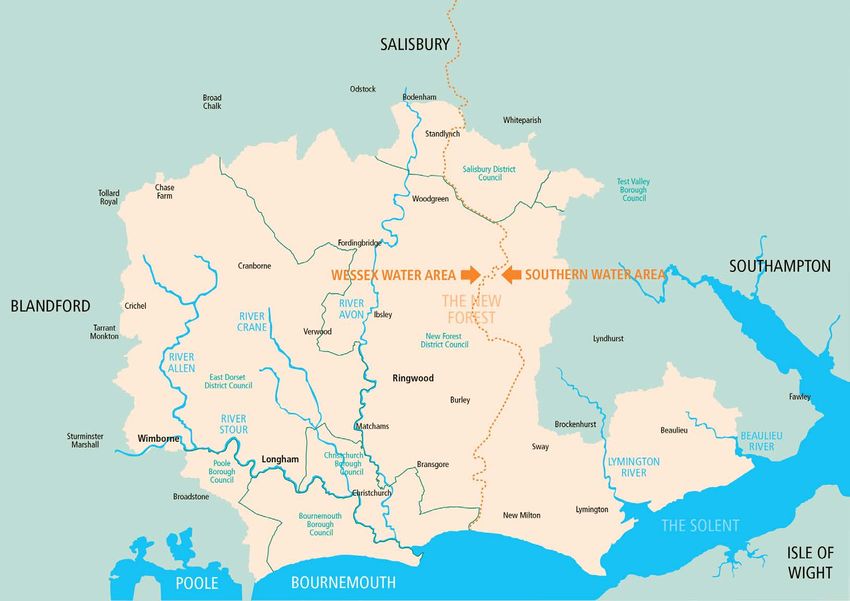
Area of supply
The business plan
                                                                                                summary for
                                                                                                 2015-2020
                                                                                                 Introduction

Introduction
Sembcorp Bournemouth Water supplies water to just under half a million people. We
have been in existence for 150 years as a local company employing local people to
serve the local community consistently and reliably with safe drinking water, and to be
responsive when customers contact us.

Our customers tell us that a safe and reliable water supply is their top priority for the
service. We have made good progress over recent years in ensuring that the service
is reliable and will remain so, well into the future by striking an appropriate balance
between managing risks to the service and keeping bills as low as possible. Demand
from customers has been slowly but steadily falling for over more than a decade as a
result of metering and greater awareness of the need to conserve water.

Our customers also tell us they expect very good service, that we must operate
efficiently and in a sustainable manner, and that we should continue to engage with
the local community because we are part of it.

Our strategy in the past has been successful in providing a dependable service which
95% of our customers tell us they are happy with both in respect of the water supply
and their experience of dealing with us.

This is our plan for the future, focussing especially on the five years from 2015 to
2020, but also considering the longer-term need to continue to provide a reliable and
sustainable service at a reasonable price. We plan well ahead to ensure that we take
into account longer-term issues such as population growth and the challenge of a
changing climate.

A non-technical summary of our plan has been published on our website and hard
copies are available on request.

                                                                                            page 1 of 31
The business plan
summary for
2015-2020
Summary
Context
Sembcorp Bournemouth Water delivers its services efficiently and to high standards,
and is one of the best-performing water companies across a range of indicators
including:
Value for money – average water bill in 2013/14 is 17% below the industry
•
average
Customer service – ranked equal top using the industry’s Service Incentive
•
Mechanism (SIM) over the two-year period 2011/12 to 2012/13; and received
the Customer Service Excellence Award for the 13th consecutive year
Reliability of service – number and duration of interruptions is one of the
•
lowest in the industry, with 1% of customers experiencing a loss of supply for
more than three hours in 2012/13
Costs – retail and customer debt costs are amongst the lowest in the
•
industry, with bad debt averaging £4.52 per customer per year over the last
three years. Wholesale costs are also low.
We will continue to provide a ‘best in class’ service to our customers. We regard this
as particularly important as customers do not have a choice in respect of their water
supply. Our commitment is to improve the service and reduce our base costs even
further, achieving more at a lower cost, which will benefit our customers.
At the 2009 price review, we made a series of commitments to maintain our network
of assets in a serviceable condition overall; to deliver certain enhancements to the
assets and service; and to take necessary action to ensure it is safeguarded into the
future. The overall performance of our asset base is in a stable state and we are on
track to deliver what we have committed to.
Our performance as a whole in the current Asset Management Period (AMP) has been
strong, and we have met or exceeded targets across all key indicators.
We are preparing for, and welcome, competition in the non-household retail sector.
We hold accurate information about our customers and understand our customer
base. This is supported by work carried out by external consultants. Therefore, we
page 2 of 31The business plan
summary for
2015-2020
do not anticipate the need to spend further time or money improving our customer
databases in preparation for a new market, unless specific additional requirements
emerge.
Our current position, performance and the economic climate has led to an overall
approach to our plan as one of incremental rather than step change, ensuring
continuous and measurable improvement across all areas while reducing bills, because
we are very conscious of the pressure on customers’ income at this time.
Indeed, because of this pressure and the scope we have to reduce bills from 2015/16,
we propose to freeze our prices in 2014/15, thereby bringing forward part of the price
reduction so that customers get the benefit as soon as possible. Our modelling shows
that keeping bills low in 2015-2020 will not result in large rises at PR19.
page 3 of 31The business plan
summary for
2015-2020
Key features of the plan
79% of customers surveyed regarded the plan as being acceptable, 14% were neutral.
This represents a high level of support.
The plan makes provision for:
What How
1 Prices to fall A price freeze for 2014/15, followed by a price reduction
by about 10% of 4.7% in real terms in 2015/16, and further reductions of
in real terms 0.5% each year thereafter until 2019/20
by 2020
2 Meeting our Maintaining our assets in serviceable condition
statutory
Delivering the National Environment Programme
obligations
Maintaining financeability through prudent management
3 Improving Achieving and maintaining a Service Incentive Mechanism
the service to score of ≥ 90
customers
Reducing leakage – by 5% from 21 Ml/d in 2014/15 to 20
Ml/d in 2019/20
Reducing the risk of supply outage – to 12,000 customers
supplied though a single trunk main
Metering – the remainder of households, where viable, over
10 years but more efficiently
4 Reducing costs Improving efficiencies across the business. Reducing our
base operating costs by about 5% or over £1m by 2019/20
when compared with 2013/14, after allowing for real input
cost pressures, mainly in the areas of energy and construction
Keeping our retail costs low – and maintaining our
excellent performance relative to others
Reduced returns – assuming a weighted average cost of
capital of 4.5%
Managing customer debt – and keeping debt levels at their
current low level in real terms
5 Keeping our Delivering outcomes – based on customer engagement and
promises to discussion with our challenge group
customers
Publishing our performance against the schedule of
outcomes annually
Imposing financial penalties on ourselves for non-delivery
of two specific service improvements, which customers have
said they are prepared to pay for – leakage reduction and
outage risk reduction
Sharing with customers as soon as practicable during
AMP6, any material unexpected gains from cost reductions
page 4 of 31The business plan
summary for
2015-2020
How we developed the plan
Our plan is set within the context of the long-term nature of our business and the
need to ensure that the operation is sustainable. We have developed it in consultation
with our customers, the customer challenge group, the Board and our shareholder.
These parties have all challenged and endorsed our plan, with a very high proportion
of our surveyed customers finding the plan and our interpretation of customers’ views
acceptable.
We have developed our plan based on:
• Continuing to provide an excellent service
• Customers’ priorities and preparedness to pay for service improvements
• Minimising bills to customers as soon as possible
• Extensive work to review the performance of our network of assets and our
operations
• Our ability to maintain and improve performance where necessary
• Our statutory obligations
• Reducing our costs
• The demand for water in the future
• New legal obligations, and
• Our aim to reduce our impact on the environment.
In arriving at this plan, we have carefully considered risks to the service, as well as risks
related to fulfilling the commitments we have made. Risks to the service are closely
monitored and key risks to the delivery of the plan are covered later in this summary.
Central to the planning process has been the extensive customer research undertaken
and our engagement with our customer challenge group, known as the Customer
Engagement Planning Forum (CEPF). Our research methodology, results, analysis and
engagement programme has been thorough and subject to an independent report by
the CEPF to Ofwat.
The plan has been developed around a set of outcomes we are committed to
delivering. These outcomes are derived from the six key customer priorities identified
through our customer research and endorsed by the CEPF. We have developed a series
of measures and targets to evaluate our progress towards delivering these outcomes.
We have detailed the targets, how we arrived at them, how we will measure our
performance against them and what we will do if we do not achieve them. We
page 5 of 31The business plan
summary for
2015-2020
will track our performance against the proposed outcomes and outputs and report
publically on progress.
What our customers have told us
Customers would like to know more about what we do. Our research indicates that
customers are very happy with the service and have had little problem with their water supply.
The most frequent ‘top of mind’ issue is leakage and they expect a rapid response
from the company to visible leaks. They are keen to ‘do their bit’ to save water in the
future, but want us to help them achieve it. And the large majority of them feel that
everyone should be metered – because it’s the fairest way to charge people.
More than 80% of customers find a bill increase at the rate of inflation to be
acceptable provided that the current service is maintained. However, 9% of customers
would like to see the bill fall slightly even if this means a drop in the level of service.
What they are prepared to pay for
We conducted a willingness to pay study as part of our programme of research and
the following emerged:
• Customers are prepared to pay an additional £3.80 for a modest package of
service improvements which include reducing leakage and reducing the risk
of interruptions to supply.
• There were mixed views on paying for accelerating our metering programme.
• Customers are also prepared to pay a small amount towards the cost of
environmental improvements – 80% willing to pay 25p on additional spend
of £100,000, dropping to 60% on spend of £25,000.
• We found very mixed views about the preparedness to support social tariffs,
with a significant proportion (29%) of customers simply not willing to
subsidise these.
page 6 of 31The business plan
summary for
2015-2020
Their key priorities and what we will deliver
We grouped what customers told us into six key themes, which we then put before
them to both validate the groupings and to identify their order of priority. The themes
and how we interpret them in the context of what we will deliver are as follows:
Customer wishes in How we interpret these and what we will deliver
order of priority
1 A safe and Meet at least the minimum standards required by law
wholesome supply
Provide water which customers find acceptable in
of water
terms of taste, colour and odour
Ensure that customers are not affected by significant
events which lead to any temporary deterioration in
the quality of the water
2 A reliable supply Water supply 24/7
that will not run out
Occasional interruptions are acceptable provided that
in the future
they are of short duration
Ensure that we will have sufficient water in the long
term
Reduce water consumption by helping customers to
save water
Ensure that we do not waste water, by managing
leakage
Continue our metering programme
Maintain our assets in a stable condition
Ensure adequate pressure of the supply
A quality-assured approach to all operations
3 An excellent Best possible customer service and SIM score
customer experience
Choice in how to interact with us
Fix visible leaks promptly
4 Environmentally Be efficient in our water operations
sustainable
Protect the local environment
operations
Minimise our carbon footprint
Reduce energy use, and work to a recognised standard
for managing our carbon footprint
Maintain and improve the ecology of our own sites
and those we affect
Cause no serious pollution events
page 7 of 31The business plan
summary for
2015-2020
Customer wishes in How we interpret these and what we will deliver
order of priority
5 A financially Earn a fair profit and return for the shareholder
sustainable business
Ensure customers who can pay their bills do so, and
that we manage debt so as not to place an undue
burden on those who do pay
Customers have mixed views about the desirability of
social tariffs so immediate implementation does not
form part of our plan
Maintain a strong investment grade credit rating
6 Engage well with Do the right thing and demonstrate that we put
our community and customers at the heart of what we do and that their
customers interests are being looked after
Contribute to the local community
Be a good employer
Govern the company well and transparently
Stakeholders must see this to be the case
Find out how well customers believe we do this so that
we can respond with appropriate changes
Better information to customers about the service, the
industry and in particular who we are and what we
stand for
(Much of what is encompassed here relates to
improving the way we communicate with and inform
our customers of what we do)
page 8 of 31The business plan
summary for
2015-2020
Price limits and household bills
We have followed two main principles in determining price limits for customers:
• Prices must be as low as possible, as soon as possible, and must not rise by
more than inflation in any year.
• Future price changes must be consistent and easy to understand.
In following these principles, we have sought to reduce prices in real terms every year
and to bring the reductions forward as fast as we can.
The plan based on price limits being set from April 2015 leads to the following ‘K’
adjustments to revenue requirements:
Year 2015/16 2016/17 2017/18 2018/19 2019/20
K factor Minus 7.5% Minus 0.5% Minus 0.5% Minus 0.5% Minus 0.5%
However, we want to give customers the benefit of paying less as soon as possible,
so we propose to freeze prices for 2014/15 thereby bringing forward the impact. This
leads to the following profile of ‘K’ factors:
Year 2014/15 2015/16 2016/17 2017/18 2018/19 2019/20
K factor Minus Minus Minus Minus Minus Minus
3.2% 4.7% 0.5% 0.5% 0.5% 0.5%
Ideally, we would prefer to freeze all tariffs for 2014/15 at 2013/14 levels, but accept
that we must satisfy ourselves that doing so would not breach the terms of our licence.
This translates to an average household bill in 2012/13 prices of:
Year 2013/14 2014/15 2015/16 2016/17 2017/18 2018/19 2019/20
Average 153 149 142 141 139 137 136
household
bill
(rounded
to whole £)
page 9 of 31The business plan
summary for
2015-2020
What is driving a change in household bills (in 2012/13 prices)
Approximate figures and rounded £ per
year
Average household bill in 2013/14 153
Reductions Adjustments from the 2009 price review including revenue -3
correction, the capital investment incentive and operating
cost efficiencies
Future efficiencies -6
Ensuring that present and future customers each pay a fair -7
proportion of costs (pay as you go ratio)
Reduced shareholder return on investment -6
Increases New legal obligations 4
Investment for improved services and growth 1
Average household bill in 2019/20 136
Revenue
The proposed service and associated costs of delivery lead to the following turnover
requirements:
Year 2012/13 2013/14 2014/15 2015/16 2016/17 2017/18 2018/19 2019/20
(actual)
Turnover £43.1m £43.1m* £42.5m £40.5m £40.3m £40.1m £39.9m £39.7m
(in 2012/13
prices)
* It is a coincidence that these numbers are the same
The above turnover figures include a 0.4% upward adjustment in respect of our SIM
performance to reflect our relative position as reported by Ofwat in Information Notice
IN13/11.
page 10 of 31The business plan
summary for
2015-2020
What delivering our plan will cost
Our plan proposes the following operating costs (£000s in 12/13 prices):
Cost savings fully offset new obligations
AMP5 Period AMP5 Period
Real costs, £million 13/14 14/15 15/16 16/17 17/18 18/19 19/20
Base costs net of falling 19.9 19.8 19.8 19.8 19.7 19.7 19.7
demand
Loss of major customer -0.3 -0.3 -0.3 -0.3 -0.3
Efficiency savings in -0.3 -0.4 -0.7 -0.9 -1.1 -1.1 -1.2
our base day-to-day
operational costs
Real cost increases, mainly 1.1 1.5 1.9 2.1 2.2 2.3 2.3
as a result of forecast
upward pressure on energy
and construction prices
Cost of delivering 20.7 20.9 20.7 20.7 20.5 20.6 20.5
current obligations
New obligations 0.3 0.4 0.9 1.1 1.2 1.1 1.1
Service improvements and 0.1 0.2 0.2 0.2 0.2 0.3
growth that customers
have expressed a
willingness to pay for
Total 21.0 21.4 21.8 22.0 21.9 21.9 21.9
Real price impacts and resultant upward cost pressures are forecast to be significant,
mainly in respect of the price of energy, plant and materials. However, during the
AMP6 period we will offset these as far as possible through operating cost efficiencies.
page 11 of 31The business plan
summary for
2015-2020
The plan includes the following capital investment costs (£000s in 12/13 prices):
Investment over 15 years is increasing
AMP5 AMP6 AMP7
Maintenance of assets 41,596 43,136 43,744
Quality and security 1,793 200 0
Supply demand 8,775 9,936 9,678
Improved service, which 909 1,280 2,000
customers are prepared
to pay for
Total (gross of 53,073 54,552 55,422
contributions)
Grants and contributions 3,986 4,480 4,132
Total (net of grants and 49,087 50,072 51,290
contributions)
Our underground network of water mains and services performs well in comparison
to others, and provides a service that customers are generally happy with. We forecast
that in the longer term we will need to increase investment in our underground
network. However, we do not need to substantially increase this during the AMP6
period and have included only a modest increase which will enable us to meet our
customers’ wish of not increasing bills in real terms, while ensuring that we begin to
address longer-term needs. The proposed rate of investment in both above and below
ground assets will enable us to meet our statutory obligations.
We have reviewed the DEFRA Statement of Obligations published in October 2012 and
are satisfied that we will meet the obligations set out therein.
page 12 of 31The business plan
summary for
2015-2020
How we will deliver the plan
We will deliver our plan through innovation, a process of continuous improvement,
and increasing efficiencies.
Innovation and continuous improvement
We need to continue to find ways to get better at what we do and at the same time
reduce our costs, and have set ourselves challenging cost and service targets. Although
benefits will arise from normal business management initiatives and challenging our
own unit costs, we will identify new ways of operating our business without undue
risk to the service.
The following is a list of our key planned initiatives:
Innovation and customer benefit How we will achieve this
Implementing a customer relationship • Putting in place a leading-edge
management system new to the UK billing and customer relationship
water industry which will provide: management system by December
2014
• Seamless interaction with the
company for customers, especially • Providing a full on-line account
when carrying out follow-up management facility
operational work. End-to-end
• Developing a smartphone ‘App’ for
managed processes
transactions
• Greater choice for customers in
interacting with us and managing
their account
• Choice to multi-site customers as to
how they are billed
Introducing software new to the UK and • Using sophisticated and newly-
the water industry, together with the use developed software to analyse energy
of renewables, to achieve: consumption using operations data
in order to identify opportunities
• Reduced energy use – 8% reduction
for optimisation. Currently in
by 2020
implementation phase for use in
• Reduced carbon footprint, and following years. Guarantee of benefits
• Reduced cost to customers from supplier
Introducing ‘Network calming’ to • Using ‘big data analysis’, a technique
achieve: involving the analysis of large sets
of operational data, to help identify
• A reduced number of burst water
opportunities to further reduce any
mains and impact on customers
negative impacts of our routine and
• Reduced costs emergency operations on the network
page 13 of 31The business plan
summary for
2015-2020
Innovation and customer benefit How we will achieve this
Introducing a new method for field • Changing the existing process and
response with single-man units to putting in place trained operational
achieve: customer response technicians who
will provide fast response and rapid
• Faster and more effective response
resolution of customer needs
to technical or operational issues for
customers
Systematically putting in place ‘sleeping • By metering properties more
meters’ to record customers’ water usage systematically, while maintaining the
so that: current rate of metering
• Customers currently charged by
reference to a rateable value will be
provided with their actual water usage
information so that they can make an
informed choice as to how they wish
to be billed – which they have told us
is important.
• The cost of metering is reduced by
around 8%
Working collaboratively with a • Having jointly identified an
neighbouring water provider to improve opportunity to achieve benefits to
resilience of the water distribution the customers of both companies by
network to achieve: linking our respective infrastructure,
we will be able to connect two large
• Improved security of supply
treated water distribution zones
• Significant cost savings as this is a very allowing us to share treated water
cost-effective solution between them in times of operational
difficulty.
page 14 of 31The business plan
summary for
2015-2020
Wholesale and retail efficiency
Wholesale
Published data on costs and activity show our operating costs as being amongst the
most efficient in the industry, and our capital maintenance costs towards the lower end
of the range. We forecast some significant real input cost increases over the coming
years, largely related to energy and construction prices (energy prices are forecast to
increase by 49% and construction-related prices by 7% between March 2013 and
March 2020 in real terms). However, we have set ourselves a target to further reduce
the base costs of our existing operations by an average of approximately 0.8% a year
by 2020 from their 2013/14 forecast base, and so absorb most of the real input cost
inflation. We have based this on advice received about likely cost pressures, together
with our own detailed assessment of the scope for real efficiencies in the future.
Retail business
Our retail costs are low with an unmetered average cost to serve in 2012/13 of
£16.74, including the cost of customer debt, amongst the lowest in the industry. We
face some upward cost pressure in this area and despite having already reduced costs
further and faster than others, we will manage costs to keep increases below inflation.
We know our customers well in terms of having good data about their location
and connections to our network. We are in the process of replacing our billing and
customer relationship management systems and this will help us to provide an even
better service in the future. The replacement system will be better able to deal with
the needs of customers with multiple connections or multiple sites. It will also help us
to ensure seamless end-to-end business processes, and will provide more choice and
channels for customers to communicate with us and pay their bills.
We are committed to providing excellent service and we support the SIM being
retained through the AMP6 period. We are aware that Ofwat is consulting on possible
changes to the framework and we will comment on this shortly. On the infrequent
occasions when our service falls short of levels assured by the Guaranteed Standards
Scheme (GSS) or our own additional standards (in our Customer Charter), we
compensate customers accordingly. We will continue to do this for non-household
customers until the opening of a new retail market planned for 2017, after which we
will further tailor our guarantees to emerging needs. We are concerned that very small
page 15 of 31The business plan
summary for
2015-2020
businesses might subsequently fail to benefit from either the protection afforded by
the current GSS or competitive market pressures. We will therefore continue to apply
to very small businesses – those using up to 750 cubic metres a year – at least the
standards required by the GSS and other promises we make to household customers.
For the retail service to household customers, we face no greater business risk in the
future than in the past. Therefore, we have not included a margin on top of the cost
to serve. For the retail service to non-household customers, we propose a net margin
on sales of 2.5% to be used to set default tariffs. However, this is aimed at addressing
only any increased risk faced by the non-household competitive retail arm of the
business. We have included some costs of contributing to the management of the
programme for implementing a market as will be enabled by the Water Bill currently
in Parliament and via licence fees collected by Ofwat or any other agreed mechanism,
as well as what we estimate to be our contribution towards the market set-up costs
indicated in Ofwat’s letter to companies dated 28 October 2013. These costs have
been included in our wholesale costs.
Tariffs
We do not propose to make any significant changes to the structure of our household
tariffs. The transactional component of retail costs will form the fixed element of the
household bill and our calculations show that this should not cause any undue shift
from current practice.
For non-household customers, we have reviewed our current approach to large users
and simplified the structure of tariffs proposed for the future. We do not want to
cause any undue incidence effects with changes to the way tariffs are set and our
approach to charging. For non-household customers, the transactional part of the
retail costs will form the fixed element of the bill with other volume-related costs being
added to the wholesale volumetric charge.
We propose that the wholesale part of the total tariff will be a volumetric charge.
Financing the plan
We are satisfied that our plan is financeable. We have existing debt that is largely
index-linked, long-term borrowing repayable in 2033, the indexation being added to
the capital sum. This instrument was put in place in 2005/6 at a real cost of 3.08% per
annum. The costs of refinancing this would far outweigh any benefits. The investment
page 16 of 31The business plan
summary for
2015-2020
plan proposed for the AMP6 and AMP7 periods can be funded from cash flows from
turnover and it is forecast that gearing (as measured by Ofwat) will remain between
60% and 70% during the period. We do not anticipate the need to raise any material
amount of money during the AMP6 period.
How stakeholders can be confident that we will deliver
our plan
While we have a good track record of delivering to our commitments in the past,
we have developed a series of outcomes and associated outputs for which we have
set ourselves targets. Some of these relate to meeting statutory obligations such as
maintaining our assets and providing safe drinking water. The two measures listed
in the table below carry a self-imposed financial penalty, and are in addition to the
national comparative measures put in place to incentivise performance in respect
of customer service and leakage. These measures relate to two service areas where
customers expressed a willingness to pay for improvements to the current service.
We will regularly publish our performance against these indicators.
Area of service Measure Proposal for a one-sided
penalty for under-
performance
Total leakage management Reduce from our current For each 0.1 Ml/d that
target of approx. 21 Ml/d is not achieved we will
in the AMP5 period, to 20 return up to £94,000 to
Ml/d by March 2020 customers in the AMP7
period through price limits
set in 2019.
Minimising interruptions Construct and commission If this is not completed,
by March 2020 a new we will return up to £1.8m
trunk main to reduce risk to customers in the AMP7
to 12,000 properties period through price limits
set in 2019.
page 17 of 31The business plan
summary for
2015-2020
Key risks to delivery of the plan
There are risks to delivery, some of which are normal business risks. In addition, we
have statutory duties in respect of the base service and maintaining our assets in a
stable condition, as well as in respect of drinking water quality and environmental
obligations. Key risks to delivery include:
Risk Comment Impact on customers
Major service We operate two large treatment Our plans allow for
failure works where the combined output dealing with this and
serves on average about 80% of although the cost could
our customers. A major problem be very substantial for the
potentially involving alternative company, we conclude
supplies (e.g. tankers/bottled water) that it would not prevent
to customers served by one of these us dealing with and
plants would place a very significant resolving any event nor
burden of cost and management would it jeopardise the
resources on the company. The business in terms of
management of this risk must remain financeability.
high on the Board’s agenda.
Reliance on a One large customer provides more A determination of prices
large industrial than 10% of our regulated turnover. which does not include
water supply Should this customer’s need for the turnover from this
water cease, there would be a large customer would have
substantial effect on the company. a material and adverse
impact on customer bills,
as would loss of the
customer for a period.
Water resources Robust analysis of the supply- There is a small risk that
capacity and demand balance looking 25 years customers may face
drought ahead. Comfortable headroom temporary use bans more
forecast. Demand falling and frequently than planned.
expected to continue to do so
until about 2030. No forecast
sustainability issues at this time.
Service We have set ourselves a financial The worst outcome is
improvements penalty for non-delivery of two considered to be that
specific service improvements. service levels will not
improve but the current
SIM performance represents a risk
high level of service will
but we have a good track record
not deteriorate.
of delivering customer service
improvements.
page 18 of 31The business plan
summary for
2015-2020
Risk Comment Impact on customers
Capex costs The large majority of the investment Little – maintaining the
needed is to maintain the assets. asset base in a serviceable
Our experience over the last 20 condition is a requirement
years and our understanding of the of our licence.
assets enables us to be reasonably
confident in our forecasts in real
price terms. We will bear the risk
of real construction cost increases
above those assumed in the plan.
Customer debt Although a challenge, paying Paying customers will
customers expect us to do whatever have a positive view if
we can to avoid them subsidising the company is successful
the debts of others. There is an in minimising any future
asymmetric risk here which we will cross subsidy. We believe
bear. the risk to the company is
acceptable.
Operating costs There will always be a risk of costs No impact on customers
being materially exceeding those assumed in the plan unless a substantial change
more than of circumstance occurs.
forecast
Costs of market There is considerable uncertainty
opening about the costs of developing,
implementing and operating a
market for non-household retail
customers. We have included a
central estimate of these costs
provided by Ofwat but expect any
variance from this to be addressed
through logging up or down at the
2019 price review.
We have considered and reviewed a number of possible scenarios that could impact on
customers or our ability to deliver the plan.
page 19 of 31The business plan
summary for
2015-2020
Board involvement in the planning
The Board has dedicated an appropriate amount of time to understand where the
company will be at the end of the AMP5 period in March 2015 and what issues it
faces in both the medium and longer term.
The Board welcomes the much stronger focus on customers and the need to fully
understand how they perceive the service, as well as what their preferences are for the
future, and for the company to identify the outcomes that are important to customers.
Customer challenge group members have met with Board members over the last two
years and the Board has received regular information regarding the process put in
place for this group to challenge the company to engage well with its customers, listen
to their views with an open mind and ensure that they have been addressed in the
business plan.
The Board has overseen and challenged the development of this plan; how it can be
reconciled with current and targeted future performance, both in respect of meeting
statutory obligations, and ambitions for the service; and the associated costs and self-
imposed targets for operating more effectively in the future and for delivering certain
elements of the plan.
The Board recognises that there is more work to be done in raising awareness of
the company and the industry with customers and in helping them to achieve a
common aim – saving water in the future, as well as demonstrating to them openly
and transparently that the company does a good job and can be trusted to earn a fair
return.
This plan is put forward by the Board, and the directors of the company are satisfied
that they have been provided with sufficient information so as to be able to approve
this plan as being one that: is based on reasonable assumptions; will enable the
company to continue to meet its obligations; and will provide service enhancements
that customers have said that they want, at an overall price that customers are willing
to pay.
A full explanation of the involvement of the Board in the development of this plan and
description of the governance arrangements in place, together with a statement by the
Board is provided in the Board assurance statement on the following pages.
page 20 of 31The business plan
summary for
2015-2020
Board assurance
statement
Board assurance statement
Summary
The Board develops strategy and steers and directs its implementation. The Board has
been involved in the developing approach to, and methodology for the 2014 price
review for many months, having sought expert third party advice on how the periodic
review was to be approached.
In particular, the Board welcomes the much stronger focus on customers in terms
of how they perceive the service, their preferences for the future, and the optimal
outcomes in the next regulatory period. The Board recognises that more work is
needed to build on the work already done to foster a climate of greater understanding
and transparency with appropriate commitments to deliver promised services, and
sharing of benefits from any unexpected gains, should these arise. The Board is
satisfied that this plan is based on reasonable assumptions which will enable the
company to continue to meet its obligations and provide service enhancements for
customers at prices that most customers are willing to pay.
The company established a customer challenge group following guidance issued by
Ofwat, appropriately constituted for the company’s circumstances. Its members have
met with the Executive Directors over the last two years and its Chairman has met the
Board on a number of occasions. The Board has therefore received regular feedback on
the group’s views to ensure that these have been addressed in the business plan. The
Board has overseen and challenged the development of this plan and how it can be
reconciled with current and targeted future performance in respect of both statutory
obligations and proposed service improvements.
page 21 of 31The business plan
summary for
2015-2020
Board assurance
statement
Specific actions taken
Leadership and strategy
The Board comprises directors with a broad range of skills and experience, whose aim
it is to ensure that customers remain the focus of the business and are appropriately
protected through the right balance of innovative thinking and management of risks,
while recognising shareholder needs. The Board understands the monopoly nature of
the business, its obligations under the terms of the Water Industry Act and its Licence,
and the need for real legitimacy with customers. In particular, the developing strategy
for the future has been considered over many months in the context of feedback
from customers and other stakeholders in deciding the way ahead, which must be
affordable for customers.
In preparing this plan, the Board has been advised of and has discussed and challenged
at least the following areas:
• Ofwat’s consultations on setting price limits
• The Water Bill with proposals for a non-household competitive market
• The company’s developing water resources management plan
• Performance in AMP5
• The establishment and composition of the customer challenge group
• The approach to engagement with customers, research methodologies,
feedback from customers, and feedback from the challenge group
• Shareholder requirements and balancing these with those of customers and
other stakeholders
• Outcome-based setting of objectives
• Outcome delivery and setting appropriate incentives to achieve these
• The need for a strong evidence base to support the plan
• Proposals for wholesale and retail price setting
• Potential for adjustments based on FD09, e.g. SIM, revenue correction and
capital incentive scheme
• Proposed service level improvements, both through challenging the team to
continually improve, and based on customers’ wishes and willingness to pay
• Impact of totex and pay as you go ratios
• Forecasts of operating and capital investment costs, innovation and efficiency
• The financial impact of modelled scenarios
• Assurance processes and confidence in the plan
page 22 of 31The business plan
summary for
2015-2020
Board assurance
statement
Current performance and delivery of AMP5 obligations and
objectives
In arriving at this plan the Board has carefully considered the company’s current
performance and how it is progressing in delivering its AMP5 obligations and
objectives. As part of the process in place to assure the Board, the company has
continued to use the services of an independent engineering expert in the role of
a ‘Reporter’, with terms of reference very similar to those which applied when the
independent expert also had a duty of care to Ofwat. The following are the key means
by which the Board is made aware of performance:
Aspect of performance How reported Assurance
AMP5 delivery obligations A ‘Monitoring Plan’ is The ‘Reporter’ reviews an
and objectives in place for reporting annual return as part of
progress against key the company’s processes
outputs and objectives for assurance of reported
in the AMP5 period. performance. The data
Progress has been regularly and systems used for
reported to the Board. monitoring AMP delivery
progress are closely linked.
Annual Return The company chose to The data and commentary
continue to compile are reviewed by the
what, until 2010, formed independent ‘Reporter’,
the June Return, with who reports in person
commentary by managers each year to the Audit
for detailed tracking of Committee of the Board.
service performance.
KPIs published in Annual These form part of the The ‘Reporter’ and Auditor
Report company’s Annual Report, review this report and
but are intentionally present their findings and
reported in a manner any concerns to the Audit
and style aimed at the lay Committee.
reader.
Monthly internal reporting Monthly management The core data used
reports include a range of for reporting service
key performance indicators performance is the same
designed to highlight any data used to report
areas of potential concern annually and as such is
including information on reviewed by the ‘Reporter’
service performance and on an ongoing cyclical
the capital investment audit basis.
programme.
There is a structured
system of internal audit.
page 23 of 31The business plan
summary for
2015-2020
Board assurance
statement
Aspect of performance How reported Assurance
Risk management All managers review risk Key individual managers
on an ongoing basis. in the company have
The Senior Management direct access to the Audit
Team reviews risk and Committee. These cover at
reports progress against least the areas of:
any agreed actions at least
• Risk management and
twice a year to the Audit
safety
Committee.
• Compliance with
The Board periodically
standards
reviews key operational
risks and the actions • Whistleblowing policy
in place to mitigate • Internal audit
and manage them and
the Board challenges • Systems of financial
the executive on its control
management of risks.
Comparative performance Key aspects of This mostly uses published
performance relative to information.
other water companies
are reported as and when
available and if material.
Standards The company operates These help to ensure
to a number of externally consistency and
accredited and audited repeatability of operations,
published standards (e.g. and to assure the Board
ISO 9000, 14000, 18000, that the company is doing
Investors in People and the what it says.
Government’s Customer
Service Excellence Award)
Costs The Board sets annual Forecasts and outturn
budgets for operating and are reviewed periodically
capital investment costs. against FD assumptions
and executives challenged
to explain variances.
page 24 of 31The business plan
summary for
2015-2020
Board assurance
statement
Aspect of performance How reported Assurance
Incentives for employees The Remuneration The Board ensures that
Committee determines remuneration at all
and recommends to the levels is linked to service
Board remuneration and performance.
incentives for executive
directors and key senior
managers.
The Board determines
appropriate incentive
arrangements for the
company’s staff that align
reward to delivery of
service to customers while
meeting target financial
performance.
page 25 of 31The business plan
summary for
2015-2020
Board assurance
statement
Assurance
The following mechanisms, together with other processes in place, allow the Board to
be reasonably satisfied that the activities needed to ensure the meeting of statutory
obligations in the future have been appropriately identified and are included in the
plan. In addition, it is satisfied that engagement with customers has ensured that their
views about the service and their preferences for the future have been understood and
taken into account in compiling the plan. The mechanisms in place to satisfy the Board
as to the robustness of the plan have included:
Component Brief description of activity How this is considered
appropriately robust
Customer Customer challenge group, Professional market research
views and appropriately constituted to organisation advised as to
preferences include other stakeholders appropriate research methodology
based on Ofwat’s guidance. and gave its professional opinion
on feedback. The combined impact
Customer challenge group
of the challenge group, which
reviewed and challenged
involved other key sector regulators,
research proposals, feedback
a professional market research firm,
received from customers, and
and a third party industry expert
the company’s interpretation
gives assurance that customer views
of it. During its work, the
have been genuinely sought and
group probed the company’s
honestly reflected in the planning.
investment proposals, costs
and general objectives for the
service.
The challenge group report
has been seen by the Board.
Research material has been
reviewed by Dr Scott Reid
of ICS Consulting, a leading
expert, who has also ‘peer
reviewed’ willingness to pay
studies.
Service See previous above A multi-strand performance-
performance monitor to forecast outcome of the
and delivery of AMP5 period
AMP5 outputs
in AMP5
page 26 of 31The business plan
summary for
2015-2020
Board assurance
statement
Component Brief description of activity How this is considered
appropriately robust
Assessment Company experts’ assessment Third party expert review of
of capital of needs, supported where investment needs in maintenance of
maintenance necessary by the use of the infrastructure
needs in the external experts, with
Supported by EA and DWI
future appropriate third party review
commentary through the customer
by the ‘Reporter’
challenge group that based on the
plan, the company should be able
to meet its statutory obligations
Financial Use of third party constructed An appropriate process to assure
forecasts model (also used by three the Board about the integrity of
other water companies) forecasts of input activity and
quality assured by the costs, turnover requirements and
provider, Frontier Economics, proposed price limits
and tested against Ofwat’s
model
Assurance ‘Reporter’ and Auditor review The ‘Reporter’ and Auditor
of data in of data in tables have detailed knowledge of the
submitted company, together with appropriate
tables knowledge and experience to
assure the Board that reasonable
assumptions have been made and
that data is of sufficient accuracy
for the purpose.
Reflection of ‘Reporter’ has reviewed the Expert third party review,
legacy FD09 calculations (SIM, RCM, considered to appropriately support
adjustments in capital incentive scheme, the plan
forecasts opex efficiency adjustments)
Service The Board has over a period The processes involved have
improvements of time challenged the given the Board a really good
management in respect of understanding, that even though
the service customers want the company provides good service
and expect, how it can be by current industry standards,
improved at little or no extra expectations are increasing and
cost, and how the plan will there are lessons to be learned from
meet those expectations. leaders in other sectors.
Need for Requirements developed High level of satisfaction but some
specific from the customer research concerns to reduce leakage and
changes to the process the impact of distribution network
level of service failures. The Board is very aware of
provided i.e. the sensitivity of leakage and repair
reducing times with customers.
leakage and
risk of supply
interruptions
page 27 of 31The business plan
summary for
2015-2020
Board assurance
statement
Component Brief description of activity How this is considered
appropriately robust
Outcomes The executive team has The Board has been provided
developed a series of with regular updates on emerging
customer-based outcomes. thinking over many months, and
is satisfied that these appropriately
reflect customers’ views.
Outcome ‘Reporter’ has reviewed the Expert third party review of
delivery company’s interpretation interpretation. The Board is satisfied
incentives of the required logic and that the company has identified
reasonability of proposals appropriate areas to apply financial
incentives to deliver what it
promises.
Future Professional advice from Helped the Board to challenge
efficiencies – economist John Earwaker its executive team in respect of
general on the scope for future ensuring that projected costs are no
efficiencies higher than they need to be. This
has included challenge of individual
components of costs.
Future Review of performance and The Board is conscious that a
efficiencies – Board challenge in respect significant portion of the customer
customer debt of the cost of customer debt base does not wish to cross
and the Board’s desire to subsidise those who do not pay and
maintain at current levels places great store in keeping this as
low as possible.
Risk The Board regularly reviews Allows the Board to understand
potential risks to delivery of the risks faced by the company and
the plan to ensure provision measures in place to mitigate them
for sufficient resources to where necessary
meet statutory obligations.
The Board regularly
challenges the management
to demonstrate that risks are
appropriately controlled.
Returns to Review of the cost of The work carried out by an expert
investors embedded debt and the advisor (Oxera) and has been
options available, together specific to the company and its
with expert advice on the circumstances.
appropriate weighted
The independent directors have
average cost of capital
discussed in an open manner and
challenged the shareholder in
respect of target returns on equity.
The Board has received advice directly from third party experts in respect of the
developing regulatory approach and methodology so that its members have been able
to fully understand what is expected of the company.
page 28 of 31The business plan
summary for
2015-2020
Board assurance
statement
The Board is acutely aware of the current climate and pressure on customers in respect
of the cost of living. The plan represents a challenge to the company in controlling
costs while maintaining the serviceability of the assets, continually improving the
service to customers, as well as making some limited specific service improvements
where customers have expressed a desire and willingness to pay for them. The Board
is satisfied that the plan represents a reasonable balance between the interests of
customers, the shareholder, and other stakeholders.
The plan is based on data, forecasts and estimates of costs that have been arrived
at independently of other water companies or competitors. The company has made
limited specific use of sharing resources in two areas:
• Financial modelling – for reasons of controlling costs, a group of four water-
only companies have employed a common resource, Frontier Economics, to
construct a financial model. The Board is confident that no data has been
shared with other companies.
• Advice on the cost of capital – again for reasons of controlling costs, a group
of four smaller water-only companies have jointly commissioned an expert,
Oxera, to advise. No discussions have taken place between this company and
any of the others, other than those necessary to jointly appoint the advisor.
Governance
The Board is fully aware of the need for transparency and good governance and its
obligations in this respect, in particular the requirements under the conditions of the
licence to act and report the affairs of its Appointed Business as if its sole business is a
water undertaker having its equity share capital listed on the London Stock Exchange.
The Board is committed to applying the principles of leadership, transparency and
governance as published by Ofwat in draft form in October 2013. A draft code setting
out how the company will meet the principles proposed by Ofwat will be provided by
the end of December 2013.
The Board aims to comply fully with the UK Corporate Governance Code and will
explain any areas where this is not possible or appropriate, although it is expected that
the need in the future for such explanation will be very limited.
page 29 of 31The business plan
summary for
2015-2020
Board assurance
statement
Statement
The Board is satisfied that this business plan proposing price limits for the period
April 2015 to March 2020 is based on sound data and information regarding the
company’s current performance, and that assessments of the resources and activity
needed for the company to meet its statutory obligations in the future, in addition to
other proposals made in respect of the service, have been appropriately identified and
quantified.
The directors are satisfied that they have been provided with sufficient information to
fully understand the company’s current and projected performance, customers’ views
about the service, what they want for the future and what they are prepared to pay
for this, and that the business plan reasonably reflects those views.
The Board considers that in preparing this plan:
• Appropriate methodologies have been used which have been supported by
reasonable judgement and estimates where necessary
• The data used and its accuracy has been reasonable for the purpose
• There are sufficient systems of internal control in place to enable the
company to meet its obligations in respect of the provision of information to
the regulator
• There is adequate provision for the resources necessary to enable the
company to meet its statutory obligations, and
• The risks faced by the company in delivering this plan are adequately
understood and managed.
page 30 of 31The business plan
summary for
2015-2020
Board assurance
statement
page 31 of 31Registered office George Jessel House, Francis Avenue, Bournemouth, BH11 8NX, UK Customer Service 01202 590059 Fax 01202 597022 Email customerservice@sembcorpbw.co.uk www.sembcorpbw.co.uk
You can also read


