PANDA: Portable and Adaptable Neutron Diagnostics for ARPA-E
←
→
Page content transcription
If your browser does not render page correctly, please read the page content below
PANDA: Portable and Adaptable Neutron
                                                                Diagnostics for ARPA-E
                                                                FUSION Program Review (Virtual)
                                                                March 5, 2021

                                                                Drew P. Higginson, LLNL
                                                                LLNL: Chris Cooper, Clement Goyon, Matt McMahon, James Mitrani,
                                                                Amanda Youmans
                                                                UCB/LBNL: Bethany Goldblum (PI), Josh Brown, Thibault Laplace

This work was performed under the auspices of the U.S. Department of Energy by Lawrence Livermore National Laboratory under contract
DE-AC52-07NA27344. Lawrence Livermore National Security, LLC. LLNL-PRES- 820196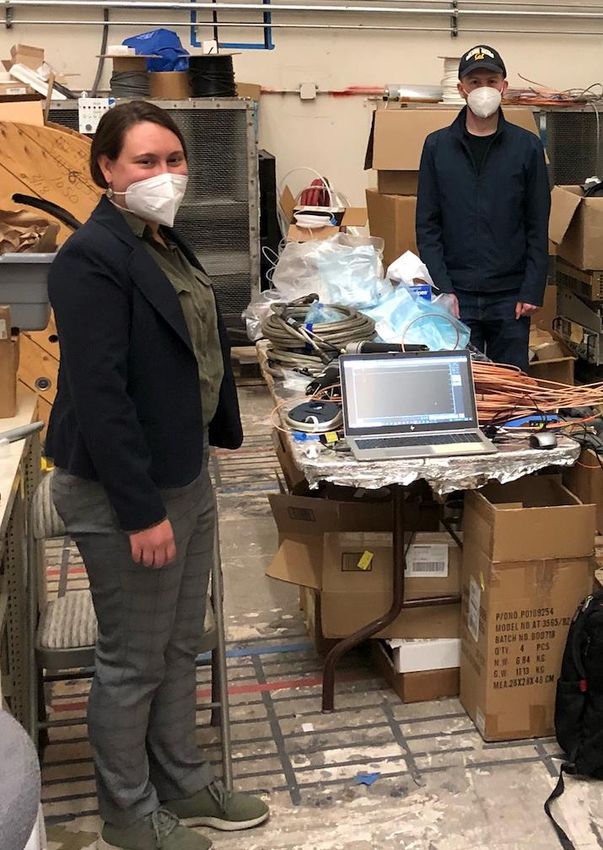
Team members and roles
                                 LLNL
                                                                LLNL Team
          Cooper + S/PMT                                        •   Drew Higginson – PI
                                                                •   James Mitrani – Detector design,
                                                                    assembly and calibration
                                                        James   •   Amanda Youmans – Detector assembly,
                                                                    calibration and fielding, data analysis
                    Clement
                                                                •   Clement Goyon – LaBr analysis
                                    Amanda                      •   Chris Cooper – LaBr design and
                                                                    assembly
Drew
                                  Josh                          •   Matt McMahon – MCNP analysis of
                                                                    neutron scattering

                                                                UCB/LBNL Team
                                             Thibault           •   Bethany Goldblum – PI
       UCB/LBNL        Bethany                                  •   Josh Brown – Geant4 simulations and
                                                                    data analysis
                                                                •   Thibault Laplace – Pulse metrology and
                                                                    data analysis
                                                                                                              1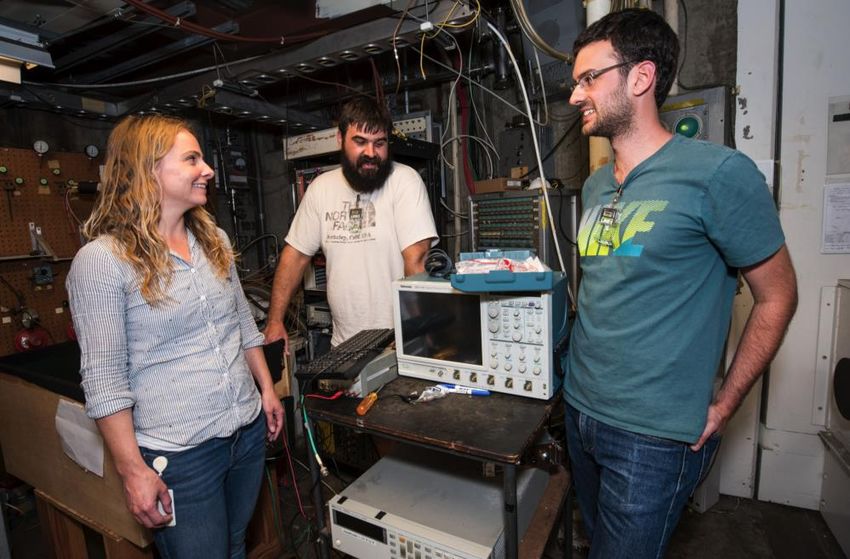
Our diagnostics measure neutron yield and infer neutron energy for
neutron emission as small as a few ns to multi-millisecond.
             106       107
                               Neutron Yield [into 4π]
                                   108       109             1010         1011         1012
                                                                                                   Total neutron yield via activation:
Activation
    All
                                                   79Br   Activation
                                                                                                       • Viable at yields >5e6 neutrons.
Timescales                                                  89Y   Activation

  S/PMT
                                                                                                       • Yield calculated to better than 20%.
 few ns            Time-of-flight (5x5 cm)                        Time-of-flight (1x1 cm)

               Counting (5x5 cm)                            Integration (5x5 cm)
                                                                                                   Thermonuclear & beam-target fusion discrimination via
                                                                                                   Scintillator/PMTs:
   5 µs
                                         Counting (1x1 cm)                Integration (1 x 1 cm)

   1 ms                      Counting (5x5 cm)                                 Counting (1x1 cm)
                                                                                                       • Viable at yields >1e5.

                                   Multi-nanosecond emission                                           • Few ns emission: time-of-flight method.
                                     Time-of-flight method
                             x-rays                                                                    • Multi-µs emission: pulse counting method
                                                                                                       • Ion beams > 100 keV can be detected.
                                                               neutrons
                                                                                                                         Multi-microsecond emission
                                                                                                                          Pulse counting method[1]

                                                                                                                                                                                     2
                                                                                                                                         [1] Mitrani et al., NIM-A 947, 162764 (2019).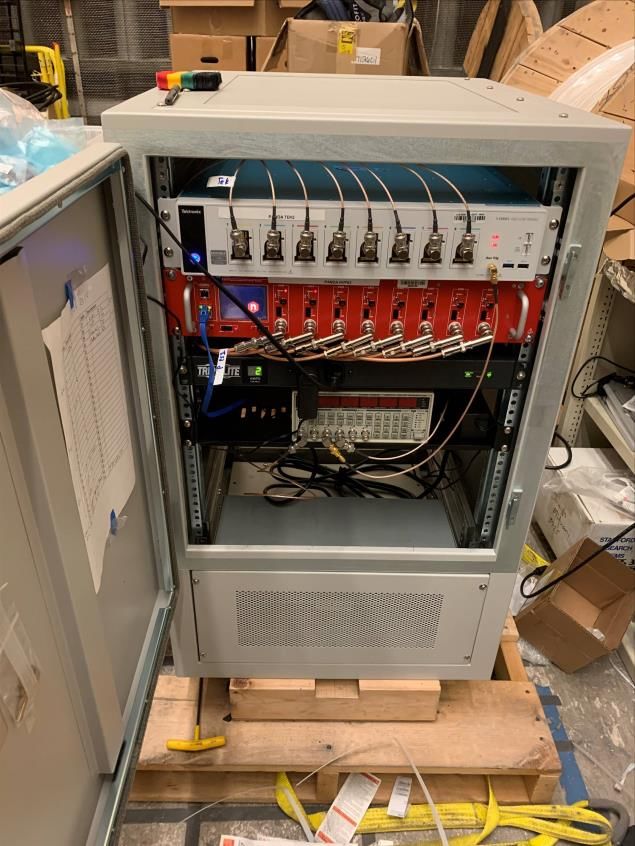
Diagnostics ship in single EMI racks that are easy to transport.
                                                                                                        • Simple, compact, easy to transport & non-invasive.
                                             ”Full-Rack”                        ”Half-Rack”
                             • 3x8 S/PMT • 3x LaBr/Y •                      • 2x8 S/PMT • 3x LaBr/Y •   • Detectors: 3x LaBr activation & 24x S/PMTs.
                                                                                                        • Easy to use scripts; provide raw and analyzed data
                                                         F
                                                         i
                                                                                                          for the user. Data delivered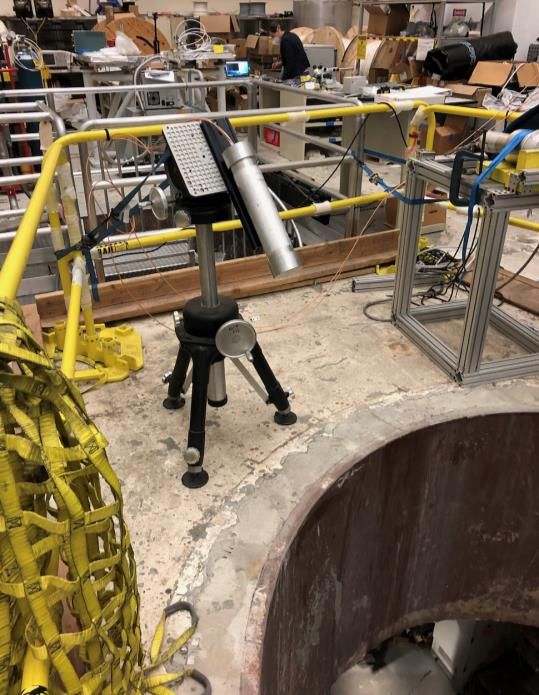
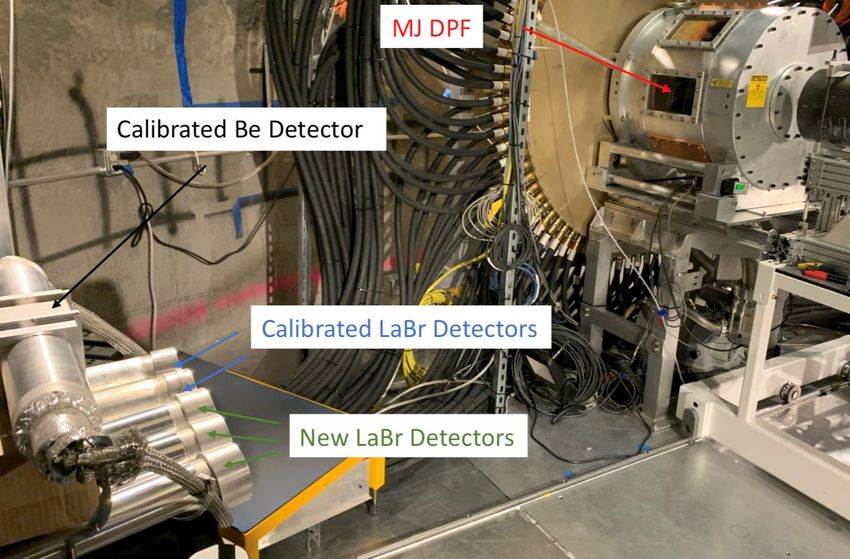
Activation & S/PMTs calibrated & tested on the LLNL Mjolnir DPF
     Activation Detector Calibration Setup                                                 S/PMT Test Setup
                                                 Activation Calibration Results
                                                                                                  S/PMT

                                                                                                          MJ DPF

                                                       Distance    Min Yield
                                                        20 cm      5.0e+06
                                                        50 cm      3.1e+07
                                                       100 cm      1.2e+08

                                                                                  x-rays
                                                                                                    S/PMT Results
 • Calibration and test shots taken on the Mjolnir DPF at LLNL
                                                                                                    neutrons
 • Diagnostics performed very well in this harsh environment.

 • All systems ready for deployment.

                                                                                                                    4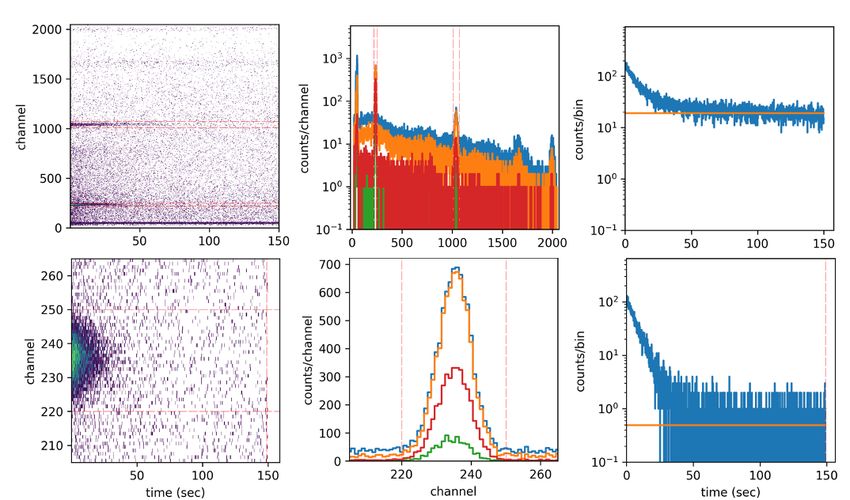
Ready to deploy! MIFTI (UC San Diego) & ZEI (Zap lab)
                      MIFTI at UC San Diego                                         Zap Energy Inc. at Zap Lab
• MCNP sims of device/room used to determine                • Monte-Carlo: ions -> neutrons -> protons -> pulses
  the best diagnostic placement .
                                                            • Used data pipeline w/ previous FuZE data from ALPHA.
• Shipping in March; deuterium ops coming soon.
                                                            • Plan to take data at first plasma, ~May 2021.
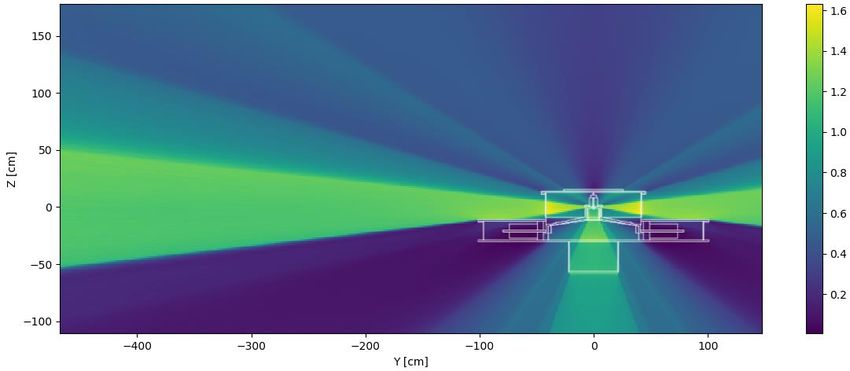
      H-factor = expected neutrons / neutrons in vacuum
                                                                Geant4 Model                           Data vs Model

                 33º

                                                                   Neutron Source                                      Data
       5.8º                                                                                                                   Model
                       Synthetic
                       detectors

              -5.8º
                                                            Detectors

                                       Close-up on device

                                                                                                                                      5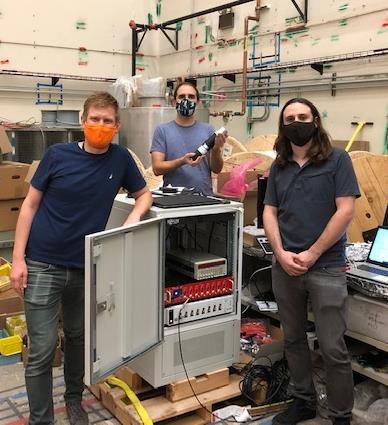
Future Plans

• We aim to work closely with teams at MIFTI and ZEI to fully realize the data
  analysis methods and uncertainties. This will result in publications to help make
  the method clear to others.

• We will work with the teams if they want to bring up their own versions of these
  diagnostics (e.g., procurement, calibration, analysis scripts).

• This work has already been interesting to LLNL’s DPF where anisotropy is
  expected and understanding ion beam dynamics is a core question for device
  optimization.

                                                                                      6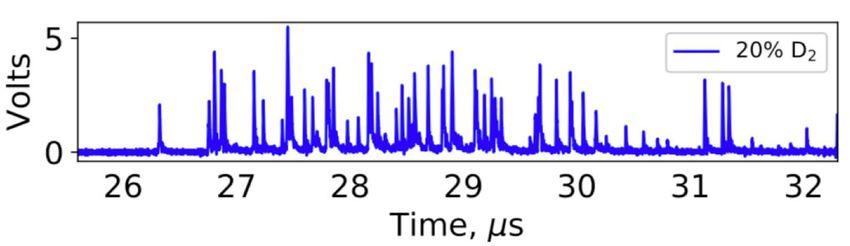

You can also read


