Monitoring the Impact of Transposable Element activity on genome structure and function, in response to environmental - and chemical Stresses ...
←
→
Page content transcription
If your browser does not render page correctly, please read the page content below
Monitoring the Impact of Transposable Element activity on
  genome structure and function, in response to environmental
                    and chemical Stresses

                                                TE

Anna-Sophie Fiston-Lavier,                     TE                  Séverine Chambeyron,
       MCF, INEE                                                         DR, INSB
                             Présentation MITI – 16 février 2021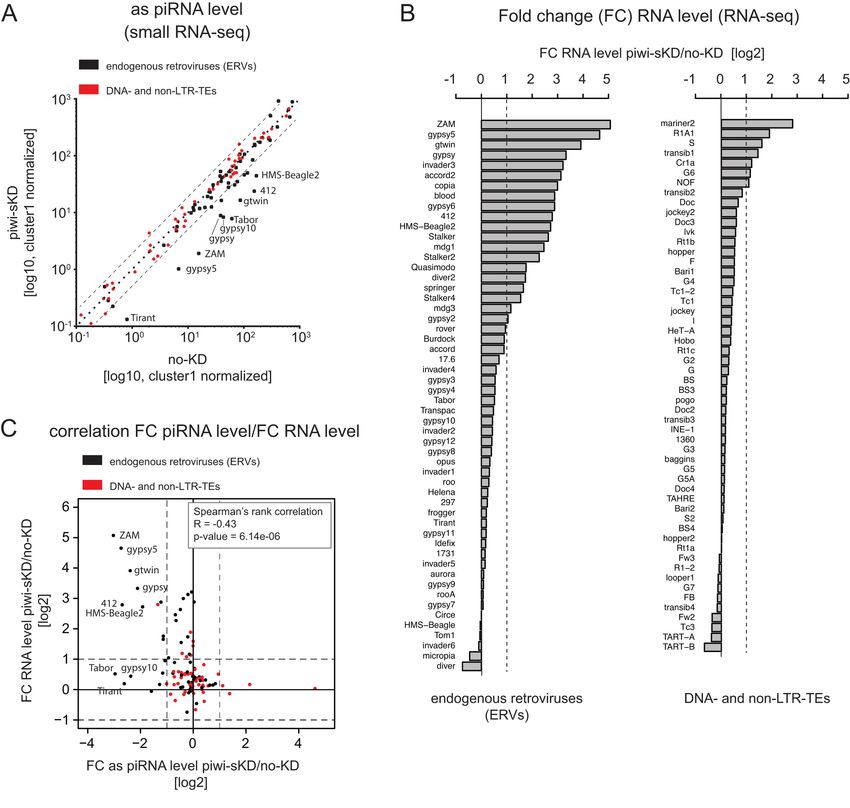
~90%

                                                Transposable Elements (TEs)

                                                             Mobile DNA
                       >60%
                                                 TEs are ubiquitous DNA sequences
                                                      Mostly dispersed repeats
                                         Highly repetitive sequences (over ~million copies)
                                         Highly diverse (Classes, Superfamilies, Families…)
                ~20%

               ~17%

                                         TIR      TIR       LTR                       LTR

                                                          Adapted from Wessler 2006

                       Biémont C, 2010

Introduction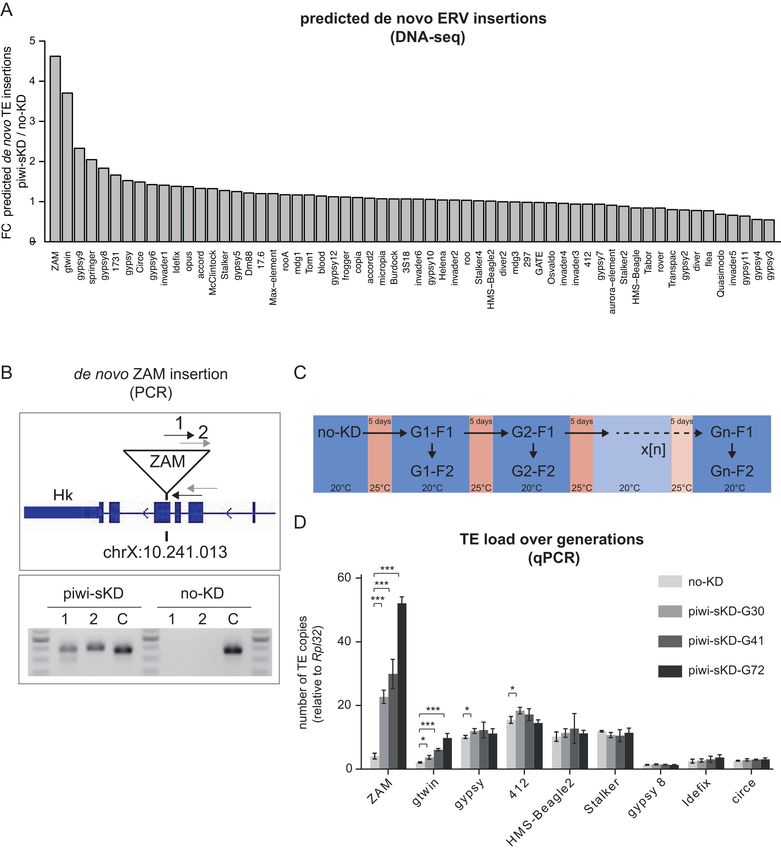
TE dynamics

                             Structural and functional impact of the
                                    TE activity due to their :

                                    ●   Mechanism,
                                    ●   Repetitiveness,
                                    ●   Insertion site.

Introduction
1) Most of the TE
  insertions are deleterious              Drosophila melanogaster natural populations

                                                                                  Functional enrichment analysis
                                                                                      of genes nearby TEs

                                                 3) 300 adaptive-TEs
  2) Recombination is the stronger               detected using T-lex
evolutionary force explaining the TE                 (Fiston-Lavier
distribution (Fiston-Lavier et al 2009;            2011,2015,2020;
           Petrov et al 2011)                     Reich et al 2019)

                                                                         Green: stress response, Red: behavior, Blue: development

   Introduction
piRNA mediated silencing in somatc ovarian tssues
                                                                                                   Egg chamber

                                                                                 piRNA

                                                                          X
                                                                          Piwi            1

                                                                                                     Follicle cells
                                                                                     TE

                                                                                               germ line
                                    A genetic tool to activate   Oocyte                        infecton
       control        Piwi-KD       mobilization of TEs over
                                    generations maintaining          Oocyte nucleus
                                        fertile progenies                                                  2
                                                                     3
Piwi-knockdown (KD) induces a                                         New TE
                                                                                              Reverse
                                                                     insertion
 reduction in fertility (ovaries)                                                             Transcripton (RT)

       Introduction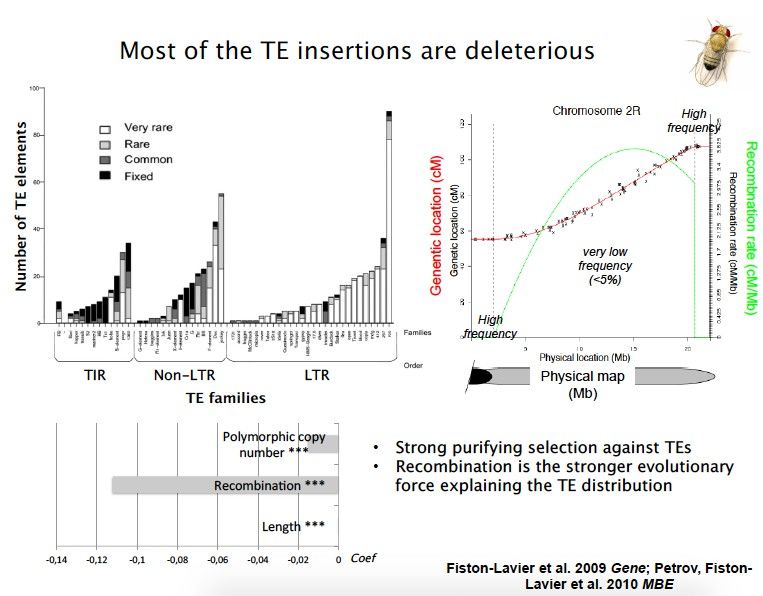
TE

                                 TE

Can we activate the transposition after one generation ?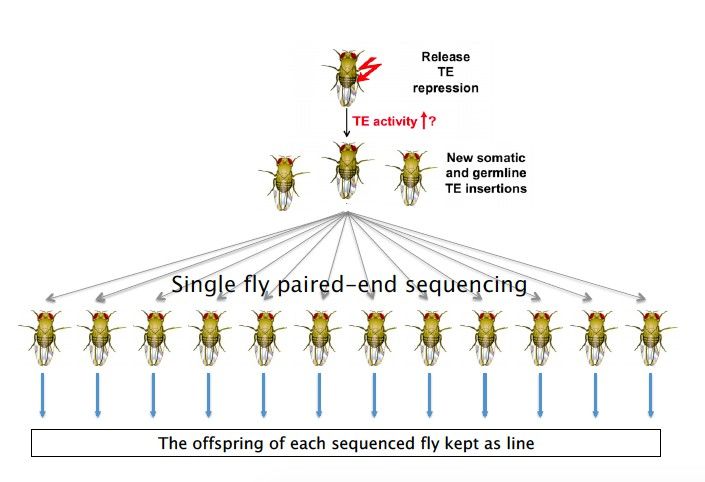
Can we activate the transposition after one generation ?

G0

                                                                  TE piRNA

                                                           1    TE transcription

                                                           2 Germ line infection and TE RT

G1
                                                           3   New TE insertions

     Introduction          Previous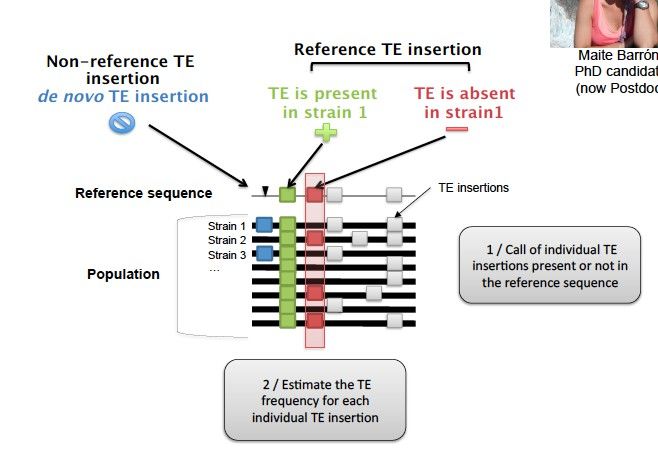
Can we activate the transposition after one generation ?

      TE piRNA

1   TE transcription
                                   G1
2 Germ line infection and TE RT

3 New TE insertions

                                                        G0
       ●   9 TE families with less small RNA
       ●   4 out of 9 TE families with a higher TE expression level

                                                                      Barckmann et al, 2018
       Introduction                  Previous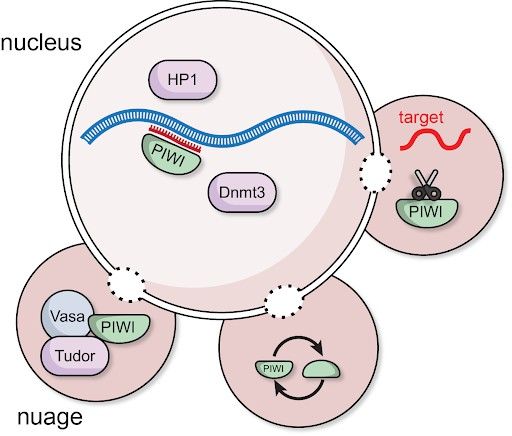
germ line
                                                                      Oocyte                                 infecton
Does TE soma-to-germline transfer
   lead to genome integration ?                                           Oocyte nucleus
                                                                                                                         2
                                                                          3
                                                                           New TE
                                                                          insertion
                                                                                                            Reverse
                                                                                                            Transcripton (RT)
                        Mobile-seq: sequencing of
                        the eccDNA (circular DNA)
                         from Drosophila embryos
                         hallmarks of TE insertions
       TE piRNA

1   TE transcription

                                                           Piwi-sKD
                                                      G1
2 Germ line infection and TE RT
                                                                                                      Barckmann et al, 2018
3 New TE insertions

                                                                                      normalized TE reads
                                                                                             G0
Introduction                Previous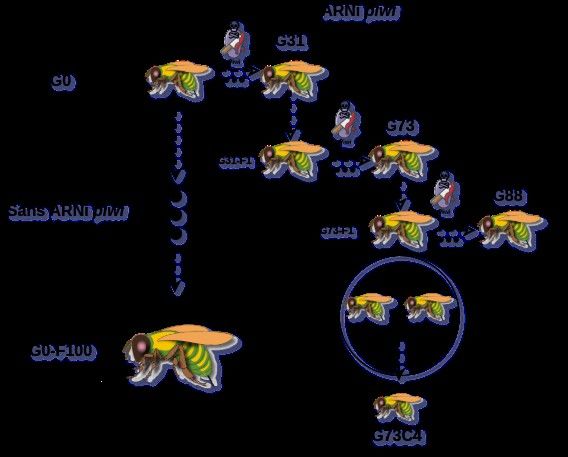
Germ line infection results in de novo TE
       integrations in the next generation

               DNA-seq: Short read PE sequencing of G0 and G1

                           Ratio de novo insertions piwi-KD / control
                                                                                   Piwi-sKD (G1) / control ratio (G0)
        TE piRNA                                                                   of putative de novo TE insertions

1    TE transcription
                                                                                                                        Barckmann et al, 2018

2 Germ line infection and TE RT

3 New TE insertions

       Introduction                                                     Previous
TE
TE
Monitoring the Impact of Transposable Element activity on
genome structure and function, in response to environmental
and chemical Stresses
● Aim1 : How to reactivate the transposition over
generations ?
● Aim2 : Investigate the TE dynamics based on the
detection of novel TE insertions over time
● Aim3: Analysis of the functional impact of the TE insertions
over time and under different stress conditionsTE load over generations of somatic Piwi-KD
G0 G1 G11 G17 G30 G41 G72
qPCR
Number of TE copies relative to Rpl32 Somatic piwi-KD at each generation
***
***
**
**
***
**
**
** ***
ZAM and gtwin show strongly increased transposition rate
that stays stable over generations
Introduction Previous ResultsTE
TE
Monitoring the Impact of Transposable Element activity on
genome structure and function, in response to environmental
and chemical Stresses
● Aim1 : How to reactivate the transposition over
generations ?
● Aim2 : Investigate the TE dynamics based on the
detection of novel TE insertions over time
● Aim3: Analysis of the functional impact of the TE insertions
over time and under different stress conditionsIn-depth analysis of the TE dynamics Introduction Previous Results
In-depth analysis of the TE dynamics

Experimental          G0 G1   G11      G17     G30   G41           G72

Pooled
sequencing (x100)     G0                       G31                  G73   G88
                      REF
                                                            73 generations of TE
               no TE mobilization                               mobilization

               ZAM

     Introduction                   Previous           Results
Step1 : Identification of new TE insertions using long-reads
in G73 compared to G0
Assumption : Global TE insertions, expected
to be common insertions should be present in
the assemblies while minor insertions, less
frequent, need to be saved.
274 new TEs
ERV
Mohamed et al, 2020
Introduction Previous ResultsStep 2 : In depth analysis of the new TE insertions detected
Target site duplication,
hallmarks of new TE insertions
Intron Exon Intergenic
43% 27% 31%
Master TE insertions can be
detected
Introduction Previous ResultsStep 3 : TE population frequency using long-read pooled data
Frequency spectrum
of non-reference TEs
Publication of the
Bioinformatics tool in process
Introduction Previous ResultsConclusion & next Others stresses
(Paraquat)
Experimental G0 G1 G11 G17 G30 G41 G72
With stress
Without stress
Pooled
sequencing (x100) G0 G31 G73 G88
REF
● Aim1 : How to reactivate the transposition over generations ?
2019 Publication #1 : Mohamed et al 2020
● Aim2 : Investigate the TE dynamics based on the detection of
2020 novel TE insertions over time
Publication #2 : Mansour et al 2021
Publication #3 : How to estimate the TE frequency in long read pooled data
2021
● Aim3 : Analysis of the functional impact of the TE insertions over time
and under different stress conditions (RNA-seq and Paraquat test in
process) Master 2 student / Publication #4
Introduction Previous Results 2021Merci pour votre attention
Anna-Sophie Fiston-Lavier, MCF Chambeyron Séverine, Dr CNRS
Mansour Yasmine, PhD student Alain Pelisson, Dr CNRS
Mohamed Mourdas, Bioinformatican
Yuki Ogiyama, CR CNRS
Bruno Mugat, Techician
François Sabot, DrYou can also read


