PARENT HANDBOOK HELP! IT'S HOMEWORK TIME - Homework Habits Create Success
←
→
Page content transcription
If your browser does not render page correctly, please read the page content below
HELP! IT’S HOMEWORK TIME
                                                         PARENT HANDBOOK

       Homework Habits
        Create Success

This handbook cannot be reproduced in whole or in part
              without written permission.

       South Slave Divisional Education Council
       P.O. Box 819, Fort Smith, NT, Canada, X0E 0P0
                      www.ssdec.nt.ca
Acknowledgements

The South Slave Divisional Education Council (SSDEC) commends the following
Homework and Study Skills Committee members for their long hours of work in
the development of this Parent Homework Handbook:
     Iona Neumeier             South Slave Divisional Education Council
     Marnie Villeneuve         Paul William Kaeser High School
     Lora Sinclair             Joseph Burr Tyrrell Elementary School
The SSDEC acknowledges the support of the other committee members for the
development of this handbook:
     Sue Warren                Princess Alexandra School
     Virginia English          Lutsel K’e Dene School
     Nancy Makepeace           Chief Sunrise Education Centre
     Jennifer Rosendahl        Diamond Jenness Secondary School
     Liz Buckley               Harry Camsell School (K-3)
     Laura Boucher             Deninu School
The SSDEC also acknowledges the contribution of the Superintendent, Curtis
Brown, for his advice and editing, and the committee members who developed the
previous parent homework handbook, Creating Futures: How Parents and Families Can
Assist With Homework.

                                                                                    South Slave Divisional Education Council
                                                                                    Homework and Study Skills Committee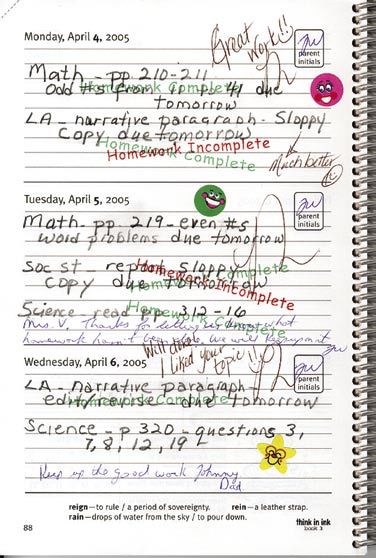
Table
 Of Contents

Help! It’s Homework Time – Parent Handbook   i

“Education starts in the home; it’s not just
     something that happens at school...”
                           (Richard Garcia – Founder,
                 Colorado Statewide Parent Coalition)

ii                   Help! It’s Homework Time – Parent Handbook
Homework
 and Study Skills Initiative
History
Homework and study skills has been a regional priority since 2001, when
South Slave principals identified homework completion and effective study
skills as important to student success.
In response, the South Slave Divisional Education Council (SSDEC) implemented the
Homework and Study Skills Committee. This committee, made up of South Slave
educators, meets occasionally during the year to implement, evaluate and update the
initiatives to improve study skills instruction, homework completion rates, parental
involvement and student achievement.

Goals
The focus of the Homework and Study Skills initiative is to improve the achievement
of all students in the South Slave region by:
• developing student study skills and habits;
• clarifying homework expectations and increasing homework completion;
• reinforcing student knowledge and skills acquisition;
• strengthening the school/home communication and partnership; and
• further involving parents in their children’s learning.

Purpose of this Handbook
This handbook is intended to help parents help their         Did you know...
children develop the habits that students need to            ...that a parent’s attitude
succeed in school and in life. These habits are the skills   toward learning is the greatest
of managing time, organizing information and staying         influence on how successful a
on task until the task is completed. Such skills are         student will be as a learner?
important for dealing with daily assignments, doing          What a family does is more
project work, meeting deadlines and taking tests. This       important to student success
handbook helps families to set the stage for successful      than how much money a
learning and performance in school and in later life.        family makes or how much
                                                             education a family has.
Parents are their children’s first teachers. In fact,
students spend less than 15% of their waking hours
in school. Parents have a key role to play in helping
students achieve to the best of their abilities. That
means the home is the first place where students
learn about having a positive attitude toward learning,
setting high expectations and reaching goals.

Help! It’s Homework Time – Parent Handbook                                                     1
Definitions
            and Examples

    Homework
    What it is!                                What it does!
    • unfinished classwork and missed           • reinforces what has been learned;
      assignments;                             • prepares students for new learning;
    • studying for quizzes, tests and exams;   • enriches student learning;
    • project work, or additional practice     • encourages time management and
      work assigned by the teacher;              meeting deadlines; and
    • problem-solving activities that takes    • promotes organization and
      place outside of the classroom;            independence.
    • learning experiences that involve
      parents and/or community members;
    • reviewing subject materials
      covered in class;
    • correcting errors made in quizzes
      and tests;
    • collecting information for and
      completing projects;
    • preparing for oral presentations;
    • independent reading; and
    • independent writing such as
      paragraphs, reports and essays.

         “Perhaps the most valuable result of all
         education is the ability to make yourself do
         the thing that you have to do, when it ought
         to be done, whether you like it or not…”
                                           Thomas H. Huxley

2                                         Help! It’s Homework Time – Parent Handbook
Study Skills
What they are!                             What they do!
• skills that help with acquiring,         • encourage careful listening and
  organizing, remembering and using          reading;
  information and ideas;                   • promote the skills of keen
• strategies that help with solving          observation and detailed
  problems;                                  examination;
• learning strategies that foster          • make remembering and recalling
  independent thinking, originality          information easier;
  and new ways of interpreting             • support logical thought and
  information; and                           sequencing of ideas; and
• methods to help remember and apply       • develop the habit of applying the
  what is being learned.                     mind to any subject in order to
                                             acquire knowledge.
Examples:
• read over notes and highlight key
   concepts or keywords;
• make up practice tests and write them;
• make up questions for each topic and
   ask each question in three
   different ways;
• draw diagrams that you have learned,
   label the parts and explain how the           “A student who
   diagram works to someone else;                develops efficient
• play a jeopardy game by using                  study methods
   keywords as answers and making up
                                                 has in a true
   questions for each of the keywords;
• create and use flashcards;                      sense learned
• create an ideas web for individual             how to learn.”
   topics;
                                                              Kuethe
• use graphic organizers to organize
   information and ideas;
• become a student and have a classmate
   teach the information
   to you; and
• become a teacher and teach someone
   else the information.

Help! It’s Homework Time – Parent Handbook                                       3
Working Together
            for Student Success
               (Roles and Responsibilities)
    The work that students do in class is very important. However, it would be a mistake
    to believe that nothing else is necessary for students to succeed. Evidence suggests
    that parents are critical in setting the stage for success in learning.
    Active parental involvement helps students to have more positive attitudes and
    behaviours. This leads to better attendance, improved performance in class, and
    students being more able to set and reach education, career and personal goals.
    One of the ways that schools communicate with the home about what is being
    learned is through homework and study tasks. Homework and study tasks show
    parents what their children need to know and how they are performing in relation
    to those expectations.

    Student Responsibilities
    • records all assignments and due           • meets assignment deadlines;
      dates in his/her student agenda daily;    • manages time and materials (e.g.
    • ensures that s/he understands the           borrowing a book from the library);
      homework assigned                         • brings homework back to school on
    • discusses questions or concerns with        time;
      the teacher;                              • shows parent completed homework
    • shows agenda to parent daily and            and gets parent to sign off agenda for
      explains assignment and when it is          the day;
      due;                                      • schedules homework/study time in
    • asks parent or calls a study buddy if       the student timetable (see sample
      help is needed;                             in Homework Timetable section of
    • completes all homework to the best          this handbook, and use the blank
      of his/her ability;                         timetable in Appendix B); and
                                                                • makes up missing
                                                                  assignments and tests
                         “Education works      best               due to absence.
                         when it’s a genuine
                         partnership between the
                         home and the school”
                                    Lucas and Smith, 2004

4                                         Help! It’s Homework Time – Parent Handbook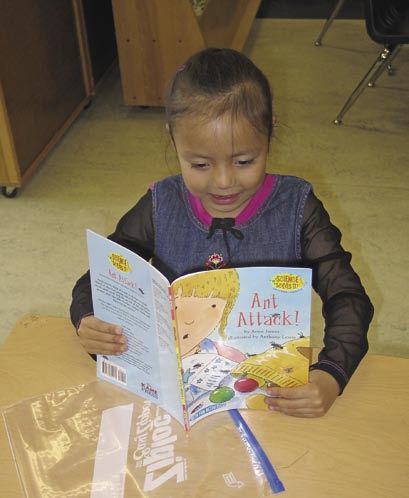
Parent/Family Responsibilities
• schedules time every evening for        What Can I Do if My Child
  homework or study time in student       Misses School?
  timetable (see sample in Homework       Regular attendance at school is critical
  Timetable section of this handbook,     to student success. When students are
  and use the blank timetable in          absent from school at times other than
  Appendix B);                            scheduled holidays, parents/guardians
• provides a well-lit place for working   are encouraged to contact the teacher
  (e.g. home, library, relative’s or      to see if there is anything the student
  friend’s place);                        can do to minimize disruption to
• checks student agenda daily to see      learning.
  what has been assigned and
  what is due;                            Depending on the course/class and the
• reads the assignment to check if the    time of year, the teacher may be able
  student has everything needed to        to assign homework so that the child is
  complete the assignment;                able to keep up and does not require
• makes sure the student understands      a great deal of catch up when he/she
  what the assignment is asking him/      returns to school.
  her to do;                              For extended absences, it is in the best
• monitors and encourages student         interest of the students for parents/
  progress and homework completion;       guardians to contact the teacher well in
• signs agenda when homework or           advance to discuss a possible homework
  study time has been                      plan. In addition to a homework plan,
  completed;                                                 parents/guardians are
• communicates                                               encouraged to provide
  with the teacher(s)                                        the student with
  regularly throughout                                       literacy and numeracy
  the year and when                                          activities such as daily
  questions or                                               journals, travel logs and
  concerns arise; and                                        reading.
• establishes an
  appropriate
  balance between
  homework and
  other activities.
Adapted from:
http://www.pickens.k12.sc.us/
eeeteachers/blackwed/homework_tips.htm

Help! It’s Homework Time – Parent Handbook                                               5
Working Together
     for Student Success
      (Roles and Responsibilities) continued

    Teacher/School Responsibilities
    • teaches and assigns, monitors           • ensures that students write down
      completion, and assesses student          homework, due dates and important
      work;                                     directions about assignments in
    • ensures that the resources and            student agenda;
      materials required to complete          • monitors to be sure that homework
      the work are available and can be         is completed and is done correctly;
      accessed by students;                     and
    • makes clear how assignments will be     • communicates with a parent if a
      evaluated;                                child repeatedly fails to complete
    • checks to be sure that students           assignments.
      understand what is expected;            Adapted from:
                                              http://schools.monterey.k12.ca.us/~sbenanci/toro/general/hwguide.html
    • gives students adequate time in class
      to work on assignments containing
      unfamiliar concepts;
    • assigns work that is linked to
      classroom activities and matches
      student ability, maturity level and
      attention span;
    • makes clear to students the
      relationship of homework
      assignments to class work;
    • regularly assigns homework,
      mainly Monday through Thursday
      (sometimes projects or special
      assignments may require work over
      the weekend);

6                                        Help! It’s Homework Time – Parent Handbook
Our Initiatives Hugo the Homework Hero Hugo the Homework Hero, our Hugo’s motto is “Homework Habits mascot, is intended to inspire students Create Success.” Both Hugo and and to show them that commitment, his motto are featured on regional organization and effective work initiatives and on incentives that are and study habits lead to academic awarded for student agenda use and achievement and success in adult life. homework completion. Help! It’s Homework Time – Parent Handbook 7
Our Initiatives continued

    Student Agendas (K-12)
    At the beginning of the school year, each    This allows the teacher, home and
    kindergarten to grade 12 student is          student to be organized and connected
    given an agenda courtesy of the SSDEC        to each other. It allows all parties to
    Homework and Study Skills Initiative.        value student, family and school life and
    The agenda is a daily planner for students   the progress of each student.
    and a communication tool between the
                                                 School events and extra-curricular
    home and the school:
                                                 activities can be recorded in the agenda
    • It is important that each day, students
                                                 as well.
       write their homework and study
       assignments in their agendas.             Students, parents and teachers can
    • It is important also that parents check    earn regional and in-school incentives
       the agenda every night and sign the       for using the agenda for planning and
       daily entry.                              communication.

    This is a sample agenda
    entry for a student with
    more than one teacher:
    • The student has recorded both
      homework assignments and other
      activities.
    • Teachers have initialed each
      academic entry to show that the
      homework is properly recorded.
    • The parent has initialed the agenda
      entry to indicate that he/she has
      checked if the homework has
      been done and, in this instance,
      has chosen to write a note to the
      teacher.

8                                           Help! It’s Homework Time – Parent Handbook
Colour-coded Subject Organizers (K-9)
In order to help students keep Colour-coding also helps parents know
organized and successful, they are in what subject areas their children
provided with four colour-coded have homework. For example, if you
duotangs (grades K-6) or four read in the student agenda that your
colour-coded binders (grades 7-9). son/daughter has homework in Social
The four colours identify the core Studies, s/he should have brought home
subjects – Math (black), Science (red), the blue duotang/binder.
Social Studies (blue) and Language Arts
(green).
Colour-coding helps students to
organize lessons and assignments
more effectively and to locate subject
materials more quickly, enabling them
to stay on track throughout the
school year.
It is never
too early to
start good
homework
habits and foster
positive attitudes
toward homework.
Help! It’s Homework Time – Parent Handbook 9Our Initiatives continued
Student Homework Bags
and Read-along Books
(Grades K-3)
The Homework and Study Skills
Committee provides reusable plastic
homework bags to primary students
from kindergarten to grade three
to carry their student agenda and
homework between home and school.
In support of the regional Literacy
Project, the Homework and Study Skills
Committee also provides a read-along
book to encourage families to read
together.
Even if your child does not have
homework, get them into the
regular habit by reading with them
nightly. Research shows that the
best predictors of elementary
achievement are positive family
participation in fun activities such
as sharing books and talking about
experiences.
10 Help! It’s Homework Time – Parent HandbookHomework and Study Skills Resources (in SSDEC Schools)
Each school has a broad range of Other resources provide parents with
informative homework and study skills easy-to-use strategies to support
resources for staff, students and parents. student achievement in school.
Examples of the resources available for
Some of these resources are intended
parents are:
to help students learn how to organize
• The School-savvy Parent: 365 Insider
their learning and how to study
Tips to Help You Help Your Child – by
effectively. For example, resources for
Clark, R., Hawkins, D. and Vachon, B.
students include:
(1999)
• Starting Early with Study Skills – by
• How to Help Your Child With
Irvin, J. and Rose, E. (1995)
Homework: Every Caring Parent’s Guide
• How To Do Homework Without
to Encouraging Good Study Habits
Throwing Up – by Romain, T. (1997)
and Ending the Homework Wars – by
• True or False? Tests Stink! – by Romain,
Radencich, M., and Shay Schumm, J.
T. and Verdick, E. (1999)
(1997)
• School Power: Study Skill Strategies
for Succeeding in School – by Shay Contact the Homework and Study
Schumm, J. (2001) Skills Committee representative at your
daughter’s/son’s school for access to
these resources.
Help! It’s Homework Time – Parent Handbook 11How Do I Help
My Child Succeed?
(Tools and Resources)
SSDEC Homework Guidelines
The following are suggested guidelines for the amount of daily homework time that
should be done to maximize the chance of a student’s success in school and in later
life:
Grades Suggested Daily Homework Time
K–3 15 to 30 minutes/day
4–6 30 to 45 minutes/day
7–9 45 to 60 minutes/day
10 – 12 1 to 2 hours/day
** Weeknights (Sun., Mon., Tues., Wed., Thurs.) **
12 Help! It’s Homework Time – Parent HandbookHomework Timetables
Homework is a priority and needs to be Once you set a schedule and stick to
taken seriously. Making time for learning it, your daughter/son will get used to
gets easier once it becomes a pattern the idea that homework and study will
of behaviour that everyone in the family be done no matter what. A homework
knows is expected. schedule provides structure, consistency
and routine – components of developing
It is important to set a schedule, so
the habit of homework.
that students can organize their after-
school times efficiently, setting times for
homework, extra-curricular activities
and friends.
Below is an example of a timetable for a junior high student:
Time Sunday Monday Tuesday Wednesday Thursday Friday Saturday
soccer Study hall
4:00-5:00 free time soccer practice free time free time activities
practice homework
5:00-6:00 chores dinner chores dinner chores free time activities
Homework Homework or
6:00-7:00 dinner dinner dinner dinner dinner
or Study Study
Homework Recreation Homework Youth
7:00-8:00 free time Dance class free time
or Study Centre or Study group
Recreation Youth
8:00-9:00 free time free time Dance class free time free time
Centre group
Youth
9:00-9:30 free time free time free time free time free time free time
group
9:30 bedtime bedtime bedtime bedtime bedtime free time free time
A blank timetable is provided in Appendix B so that you and your daughter/son can
copy, set and then post a homework schedule that takes into account activities in
which s/he may be involved.
Post the schedule in a place, such as on the refrigerator, that reminds both you and
your daughter/son when it is time to do homework.
Help! It’s Homework Time – Parent Handbook 13How Do I Help
My Child Succeed?
(Tools and Resources) continued
Parent General Homework Helper Checklist
Questions To Ask Daily: Other Ways To Help:
• Where is your student agenda? • Be positive about homework.
• Have you started today’s assignment? • Be sure that basic supplies, such as
Finished it? paper, pencils, pens, markers and
• Is the assignment clear? (If not, call a ruler are available.
study buddy or classmate.) • Look over the homework, but don’t
• When is the assignment due? do the work! (Remember, it is not
• Do you need special resources (e.g. your homework.)
a trip to the library or access to a • Eliminate distractions that interfere
computer)? with doing homework.
• Do you need special supplies (e.g. • If necessary, read the homework
graph paper or poster board)? directions together and discuss what
• For an upcoming test or major needs to be done.
project, would it help to write out • If your daughter/son does not know
the steps or make a schedule? (Break how to organize the homework,
the assignment into manageable write out a “to do” list; check off the
tasks, such as researching the topic, homework tasks as they are done.
writing the first draft, etc. Schedule • Get to know the teachers early in
time for each task in the student the year and find out about their
agenda.) homework expectations.
• Would a practice test be useful? • Review teacher comments on
• Would you like me to quiz you from returned homework assignments and
your notes or old tests? discuss them.
Adapted from: • Observe your daughter’s/son’s
http://www.njea.org/FamilyCircle/QuestionsAboutHomeworkPrintable.asp
http://www.nea.org/parents/homework.html learning style.
• Establish reasonable consequences
at home for missed homework
assignments.
• Be available to help your child review
for tests.
• Show interest and congratulate your
son/daughter on a job well done.
Adapted from:
http://www.fcps.k12.va.us/CubRunES/guidance/relievinghomework.htm:
http://familyeducation.com/article/0,1120,24-9358,00.html?relinks
http://www.nea.org/parents/homework.html
14 Help! It’s Homework Time – Parent HandbookParent and Student Nightly Homework Checklist
P S
Bring homework to “Homework Spot”.
Review agenda and homework.
Complete assignments.
Check work together.
Make any comments in the agenda and complete any parent
forms that need to be returned to the school.
Sign agenda.
Pack up signed agenda and work for school the next day.
Key:
P = PARENT Check Box
S = STUDENT Check Box
Adapted from: http://www.vineland.org/winslow/about/wps_nightly_homework_checklist.pdf
Help! It’s Homework Time – Parent Handbook 15How Do I Help
My Child Succeed?
(Tools and Resources) continued
Web Sites for Homework Help
The following homework and study Middle School
skills web sites contain a wealth of Fact Monster
information, resources and homework Homework Centre
tips, and they are just a mouse click www.factmonster.com/homework
away: Provides a wide variety of resources
for students. From subject specific
General
resources (Science, Math and Social
Homework Spot
Studies) to information on improving
www.homeworkspot.com
writing and study skills. Factmonster has
Provides information and resources for
every student’s tools for school.
parents and for students of all ages and
is easy to navigate as individual sections BJ Pinchbeck’s Homework Helper
are presented for elementary, middle http://school.discovery.com/
and high school students. homeworkhelp/bjpinchbeck/
Created by 17-year-old BJ Pinchbeck,
How to Study
this site provides students with access
www.how-to-study.com
to over 700 links that help with
Designed for elementary, middle and
homework ranging from subjects such
high school students, and provides
as art to computer science and English.
valuable information on preparing how
to study and improving listening and High School
reading skills. High School Hub
www.highschoolhub.org
Elementary
Is a free online interactive learning
Kids Hub
centre for high school students that
www.kidshub.org
features subject guides for English,
A free online
foreign languages,
interactive
math, science and
learning centre for
social studies.
elementary school
students. It features
fun educational
games, puzzles and
quizzes.
16 Help! It’s Homework Time – Parent HandbookFrequently Asked Questions (FAQs)
1. Why is checking my child’s daily 4. Why does my child seem to have a lot
agenda and signing it every day so more homework than I ever did when
important? I was going to school?
Agendas help students to be more There may be a couple of reasons for
organized and are an essential this.Your child may not be working
communication tool between home efficiently during class time, resulting
and school. By consistently signing in more work for him/her to complete
parents demonstrate interest in what at home. It is probably true that
is happening at school, know what current curricular requirements are
the school expects, and develops more challenging than in the past due
a relationship with their children’s to the rapid increase in the world’s
teachers. knowledge and technology base, and
the related public pressure for quality
2. How will doing homework really make education and accountability.
a difference in my child’s grade?
Our committee’s survey shows that on 5. How do I make sure my child gets
average: his/her assignments done and still has
• Students who did homework more time to take part in other activities?
than 80% of the time – Work with your child to develop a
97% achieved curriculum homework schedule (see the blank
outcomes for the grade; and timetable sample in Appendix B), using
• Students who did homework less the example of the timetable also
than 50% of the time – provided in this handbook. Prioritize
only 31% achieved curriculum their homework and other important
outcomes for the grade. activities. It is essential that your child
Being promoted to the next grade is understands that their education is
dependent on achieving the curricular important and that getting schoolwork
outcomes for the current grade. done will be a priority in your home.
Teachers have indicated that, even if Most students cannot be in every
courses are difficult, students who activity offered and still get their
complete homework regularly pass. homework done properly, so it will be
important for you to help your child
3. My son/daughter seems to have little make choices about the number of
or no homework.What do I do? activities in which s/he will participate.
Check your child’s agenda daily to see
if homework is being assigned. Contact
the teacher about your concern. It
may simply be that your child is very
efficient with his/her classwork and/or
is doing homework during school
breaks and after school.
Help! It’s Homework Time – Parent Handbook 17How Do I Help
My Child Succeed?
(Tools and Resources) continued
6. How do I provide my child with 7. What if my child and I do not
appropriate space to do homework? understand the homework
What is important is that you find an assignment?
environment that works for your child If the teacher is available, contact
and family. For example, most students him/her for clarification. If the teacher
need a comfortable chair and table, is unavailable, call a classmate. If your
and quiet, in order to work effectively. child is still unable to do her/his
Some children, however, may work homework, please note the reason to
best with music playing quietly, or the teacher in your child’s agenda.
the television or people talking in the
background. It might be that the best 8. What do I do when I feel my child
time for the homework to be done has been working too long on an
without interruption is before other assignment and has not finished the
family members have come home from homework?
work. If your child has been working on an
If a quiet place in your home is not assignment for a period of time far
possible: beyond the suggested guidelines and
• some schools have homework is not making progress, let the teacher
clubs, tutoring services, or library know by writing in the agenda how
hours when and where students long your child has worked on the
can work; assignment. If working too long on
• community libraries are places assignments without making progress
where students can do homework becomes a pattern, contact your child’s
and also access the Internet for teacher. Together you and the teacher
research purposes; can find strategies to help your child
• friendship centres work more effectively.
may offer tutoring 9. When I have
services; or
concerns or problems
• the home of a
relative or friend
about my child’s
may be a good schoolwork, what do
place to do I do?
homework and Always contact your
get extra help. child’s teacher first,
concerning homework
or anything else.
18 Help! It’s Homework Time – Parent HandbookReferences Cooper, H., 2001, The Battle Over Homework: Common Ground for Administrators, Teachers and Parents (Second Edition); CA: Corwin Press Inc. Lucas, B. and Smith, A., 2004, Help Your Child To Succeed:The Essential Guide for Parents; ON: Pembroke Publishers First Nations Education Steering Committee and the First Nations Schools Association, Gathering Strength: Education Reform 2001/2002 as downloaded from: http://www.fnesc.bc.ca/publications/pdf/gspfinalrptcopy20002001.pdf MOEC, 1989, Parent Involvement Programs in Education as downloaded from: http://www.unocoe.unomaha.edu/parent.htm#why Help! It’s Homework Time – Parent Handbook 19
Appendix A

     SSDEC Homework Policy HKB
     The South Slave Divisional Education        1. The completion and extension of
     Council believes that homework is              class assignments should guide the
     a necessary part of the education              assignment of homework.
     program. To be successful in school         2. The assignment should take into
     and later life, students require               account the age of the student, and
     appropriate study habits. Homework             the other demands placed on the
     can also contribute to positive student        students.
     attitudes relative to self-discipline and
                                                 3. At the secondary level, co-operation
     independent responsibility. Further, the
                                                    among teachers involved, by way of
     motivation which comes from parent
                                                    homework schedule, should avoid
     interest in children’s school work can be
                                                    uneven assigning of homework.
     invaluable to the child.
                                                 4. Suggested guidelines for daily
     The use of homework should be                  homework are:
     used as a way of strengthening the
                                                    • K-3 – 15 to 30 minutes/day
     partnership between home and school,
                                                      - parent reading with child:
     developing appropriate study habits, and
                                                          shared reading; listening
     providing opportunities for learners
                                                          to child read; independent
     to acquire new knowledge and to
                                                          reading from Home Reading
     consolidate and reinforce learning in
                                                          Program, public library or
     practical and meaningful ways. Study
                                                          school materials in English,
     and the completion of homework
                                                          French and/or Aboriginal
     is primarily the responsibility of
                                                          language;
     the student, with the support and
                                                      - on occasion, collecting
     encouragement of parents and school
                                                          materials for use in the
     staff.
                                                          classroom program; and
     Each school principal shall establish            - using day-to-day activities
     homework expectations and                            such as shopping list and
     procedures for their school considering              food preparation to practice
     the unique nature of their students,                 counting, calculating, arranging
     and the programs using the following                 objects and amounts by size
     guidelines:                                          and shape, and estimating
                                                          quantity.

20                                         Help! It’s Homework Time – Parent Handbook
• 4-6 – 30 to 45 minutes/day • 10-12 – 1 to 2 hours/day
- parent reading with child: - assignments, reading, review,
shared reading; listening revision, writing, editing,
to child read; independent organizing, studying for tests,
reading from home, public working on on-going long-
library or school materials term projects and preparing
in English, French and/or for presentations;
Aboriginal language; - discussing mathematics in
- collecting materials for use in relationship to applications in
the classroom program; business and industry; and
- completing unfinished - explore career opportunities
classroom assignments/ through making connections
project work/reflective with family, friends and
journals; colleagues in the world of
- reviewing an area of difficulty; work.
- interpreting graphs,
… five days a week.
advertising claims, and
working out unit costs Students may need more or less
from newspapers and other time depending on assignment due
media; and dates, how quickly and fully they
- review and drill of number have completed assignments, and
operations and troublesome how well they have grasped facts and
spelling words concepts. The level of student academic
• 7-9 – 45 to 60 minutes/day achievement is a key determining
- assignments, reading, review, factor to guide students,
revision, writing, editing, teachers and parents in
organizing, studying for tests, the amount of extra
working on on-going long- home practice and
term projects and preparing studying needed.
for presentations; and References:
Education Act 22(1), 117
- discussing examples of Date: October 2002
problem solving strategies in
day-to-day work experiences.
Help! It’s Homework Time – Parent Handbook 21Appendix B
Blank Timetable
Time Sunday Monday Tuesday Wednesday Thursday Friday Saturday
Photocopy or cut out this page, fill in and post in your house where you and your son/daughter see it regularly.
Help! It’s Homework Time – Parent Handbook
22You can also read


