PARTICIPATION PLAN 2022 - February 2022 www.oki.org
←
→
Page content transcription
If your browser does not render page correctly, please read the page content below

PARTICIPATION
                PLAN 2022

February 2022
www.oki.org
OKI Participation Plan

                                February 2022

                  Ohio-Kentucky-Indiana Regional Council of Governments

                              720 East Pete Rose Way, Suite 420

                                   Cincinnati, Ohio 45202

                                        513-621-6300

                                        www.oki.org

The preparation of this document was financed cooperatively by the Federal Highway
Administration; the Federal Transit Administration; the Commonwealth of Kentucky
Transportation Cabinet; the Ohio Department of Transportation; the Indiana Department of
Transportation; and the local and county governments within the OKI region. The opinions,
findings and conclusions expressed in this document are those of the OKI Regional Council of
Governments; and they are not necessarily those of the U.S. Department of Transportation (U.S.
DOT). This report does not constitute a standard, specification, or regulation.

                                                                                            1
OKI 2022-XX

                                    RESOLUTION
                        OF THE BOARD OF DIRECTORS OF THE
             OHIO-KENTUCKY-INDIANA REGIONAL COUNCIL OF GOVERNMENTS
                    AUTHORIZING ADOPTION OF THE UPDATE TO THE
                              OKI PARTICIPATION PLAN

        WHEREAS, the Ohio-Kentucky-Indiana Regional Council of Governments has adopted a
Participation Plan that meets the planning regulations of Fixing America’s Surface
Transportation (FAST) Act at all levels as part of a comprehensive public / community outreach;
and

       WHEREAS, the Participation Plan is periodically updated by OKI staff to ensure
consistency with federal regulations and guidelines; and

        WHEREAS, OKI staff has incorporated the most current data and processes to deliver an
effective program: Now, therefore,

       BE IT RESOLVED, that the Board of Directors of the Ohio-Kentucky-Indiana Regional
Council of Governments, at its regular public meeting of February 10, 2022, hereby adopts the
update to the OKI Participation Plan as recommended by OKI staff.

                                                        ________________________________
                                                        DAVID PAINTER, PRESIDENT

FP

2/10/22

                                                                                                2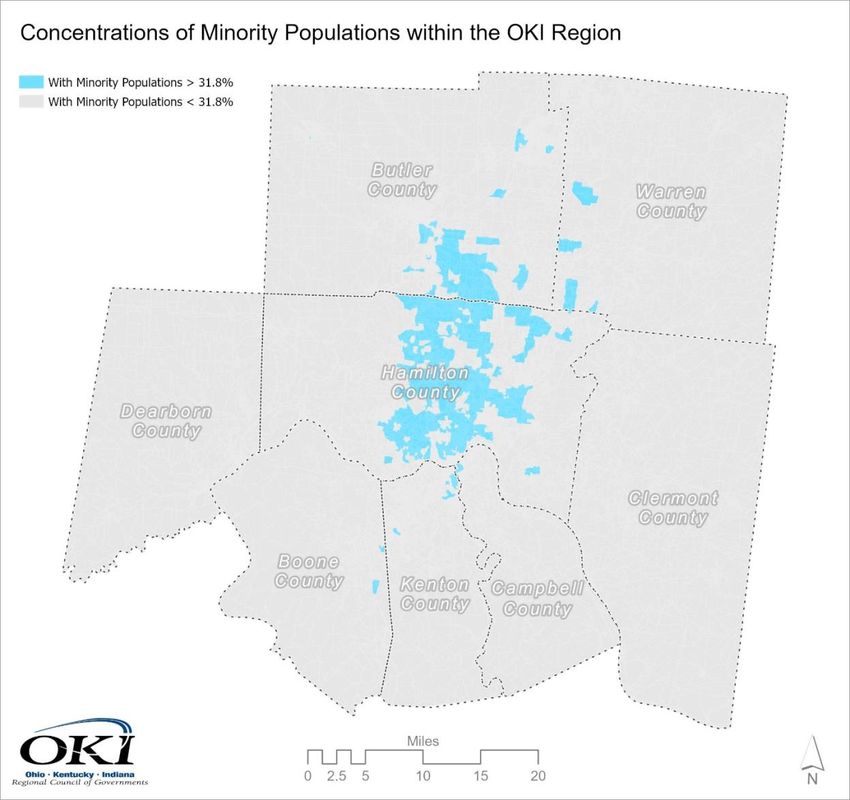
Acknowledgements
The Federal Highway Administration (FHWA); the Federal Transit Administration (FTA); the Ohio
Department of Transportation (ODOT); the Kentucky Transportation Cabinet (KYTC); and the local and
county governments within the OKI region financed the preparation of this document cooperatively.

The opinions, findings and conclusions expressed in this document are those of the Ohio-Kentucky-
Indiana Regional Council of Governments (OKI); and they are not necessarily those of the U.S.
Department of Transportation (U.S. DOT). This report does not constitute a standard, specification, or
regulation.

OKI
Mark R. Policinski, Executive Director
Robert Koehler, Deputy Executive Director

Communications
Lorrie Platt, Manager of Communications and Legislative Affairs
Florence Parker, Senior Planner and Public Involvement Specialist
Jim Pickering, Communications Specialist
Suzanne Parkey, Sr. Digital Communications Strategist

Transportation Improvement Program (TIP)
Andy Reser, Transportation Programming Manager

Transportation Planning
Robyn Bancroft, Strategic Initiatives Manager
Brandon Rudd, Senior Planner/Demographer

OKI Environmental Justice Advisory Committee Members
Adam Goetzman, Committee Chair, Green Township
Megan Bessey, Planning and Development Services of Kenton County
Karla Boldery, La Mega Media
Scott Brown, Ohio Department of Transportation – District 8
Polly Doran, Council on Aging of Southwestern Ohio
Gina Douthat, Transit Authority of Northern Kentucky (TANK)
James A. Foster, City of Trenton Economic Development
Allan C. Harris, Cincinnati NAACP; National Technical Association – Cincinnati Chapter
Joyce Kinley, Kinley and Associates
Erin Lynn, City of Fairfield Planning
Cindy M. Minter, Campbell County Planning & Zoning
Rosalind Moore, City of Forest Park
Pamela Mullins, Resident, Covington, Kentucky
Keith Smith, Ohio Department of Transportation – District 8

                                                                                                         3
Table of Contents
INTRODUCTION: CONTEXT FOR POLICY DEVELOPMENT .......................... 6
ELEMENT 1: PARTICIPATION POLICY AND PROCESS
Introduction ...................................................................................................8
OKI’s Organizational Structure.......................................................................8
Range of Participation Efforts ........................................................................10
Administrative Modification ..........................................................................13
Participation Policy ........................................................................................15
Participation Process......................................................................................15
• General Provisions for Public Meetings .............................................15
• Participation Process for
Metropolitan Transportation Plan Update ........................................17
• Participation Process for TIP Update .................................................18
• Participation Process for Amendments to the TIP and
Metropolitan Transportation Plan .....................................................18
• Corridor and Special Studies ..............................................................19
• Other Provisions for Involving the Public ..........................................22
Amending the Participation Plan ...................................................................23
ELEMENT 2: PROCESS FOR DEFINING TARGET GROUPS AND AREAS
Introduction ...................................................................................................24
Environmental Justice Population Groups and Areas....................................24
Target Definition Policy ..................................................................................26
Target Groups and Areas ...............................................................................27
ELEMENT 3: ASSESSING PARTICIPATION EQUITY
Introduction ...................................................................................................28
Participation Assessment ...............................................................................28
ELEMENT 4: PLAN IMPLEMENTATION
Administration of Participation Plan..............................................................30
Environmental Justice Advisory Committee ..................................................30
Technical Support for Plan Implementation ..................................................31
Evaluation of Participation Plan .....................................................................33
4Tables and Figures
Page
Tables
1-1 Transportation Conformity Exempt Project Types ..................................20
A-1 Year 2015-2019 EJ Groups for the OKI Region ........................................36
A-2 Year 2015-2019 EJ Target Groups/Areas for the OKI Region ..................36
Figures
1-1 Public Participation and Conformity Decision Tree
for Changes to Plan and TIP ...........................................................................12
A-1 Standard Hierarchy of Census Geographic Entities.................................35
A-2: EJ Minority Target Areas 2015-2019 ......................................................37
A-3: EJ Low Income Target Areas 2015-2019 ................................................38
A-4: EJ Elderly Target Areas 2015-2019 .........................................................39
A-5: EJ Population with Disabilities Target Areas 2015-2019 ........................40
A-6: EJ sZero-Car Household Target Areas 2015-2019 ..................................41
A-7: Combined EJ Target Areas 2015-2019 ...................................................42
5Introduction: Context for Policy Development
The Ohio-Kentucky-Indiana Regional Council of Governments (OKI) is the regional planning and
intergovernmental coordination agency for the Greater Cincinnati metropolitan area. OKI’s
planning area covers nearly 200 local governments in a tristate area composed of Butler,
Clermont, Hamilton, and Warren counties in Ohio; Boone, Campbell, and Kenton counties in
Kentucky; and Dearborn County in Indiana.
As the designated Metropolitan Planning Organization (MPO) for the Ohio, Kentucky and
Indiana counties in its region, OKI is responsible for the development of a long-range plan and a
short-range programming document for transportation, as well as other planning initiatives.
Civic engagement concerns apply to the broad spectrum of transportation investments and
impacts considered in metropolitan planning, as well as individual projects recommended by
OKI.
Notices of public participation activities and time established for public review of and
comments on the Transportation Improvement Program (TIP) shall also satisfy the Program of
Projects (POP) requirements for the Butler County Regional Transit Authority; Clermont
Transportation Connection; City of Middletown Transit System; Southwest Ohio Regional
Transit Authority; Transit Authority of Northern Kentucky; and Warren County Transit System
for all projects funded through the Federal Transit Administration.
This updated Participation Plan carries forward many of the elements of the existing Plan
updated in January 2018. However, some key changes have been made including:
• Addition of a process and procedures for conducting video or teleconferencing
• New criteria for defining Environmental Justice communities
As a public agency that receives federal funds and makes recommendations on federal
expenditures, OKI is bound by participation requirements for ensuring that federal funds are
used fairly and without discrimination. And, per Title 49 U.S.C. Chapter 53, to ensure that the
requirements of its transportation planning processes are met for flexible funded projects,
including project selection requirements.
The basis for EJ is Title VI of the Civil Rights Act of 1964, which states:
No person in the United States shall, on the grounds of race, color, or national origin, be
excluded from participation in, be denied the benefits of, or be subjected to discrimination
under any program or activity receiving Federal financial assistance.
Participation, and/or civic engagement has become a prominent issue for public agencies as the
result of a series of federal orders that serve to amplify Title VI. These include:
• FAST Act (Fixing America’s Surface Transportation) effective Dec. 4, 2015
• Moving Ahead for Progress in the 21st Century Act (MAP-21) effective Oct. 1, 2012
6• SAFETEA-LU Act (Safe, Accountable, Flexible, Efficient Transportation Equity Act: A
Legacy for Users)
• Federal Highway Administration Order in 1998
• U.S. Department of Transportation Order in 1997
• President Bill Clinton issued Executive Order12898 in 1994, which directed every federal
agency to make EJ part of its mission by identifying and addressing the effects of all
programs, policies and activities on minority and low-income populations.
• The U.S. Department of Transportation issued Departmental Order 5610.2(a) (Actions to
Address Environmental Justice in Minority Populations and Low-Income Populations).
This order updates the Department's original Environmental Justice Order 12898. The
order continues to be a key component of the Department's strategy to promote the
principles of EJ in all departmental programs, policies and activities.
• Section 504 of the Rehabilitation Act of 1973
• For agencies like OKI, the orders issued by federal departments clarified the need to
involve the potentially affected public in transportation decision-making processes and
assess the equity of transportation investments. The targets of the Participation Plan are
the entire public, but provide for additional consideration of EJ minority and low-income
populations. OKI has expanded its efforts to include the elderly, disabled, and residents
living in zero-car households.
• In August 2000, President Bill Clinton issued the Federal Executive Order No. 13166,
“Improving access to services for persons with Limited English Proficiency (LEP) … to
improve access to federally conducted and federally assisted programs and activities for
persons who, as a result of national origin, are limited in their English proficiency …”
President George W. Bush affirmed his commitment to Executive Order 13166 through a
memorandum issued on Oct. 25, 2001, which directed a strengthening of enforcement
of Title VI in a memorandum dated July 10, 2009.
This Plan contains the following four distin ct but related elements:
Element 1: Presents a policy and process for involvement including focused special efforts
to involve EJ target populations.
Element 2: Describes a process for defining the population groups and areas in the OKI
region to be targeted for EJ processes.
Element 3: Describes a process for assessing the equity of transportation investments on EJ
target populations.
Element 4: Lists the initiatives that OKI will undertake to support the implementation of this
plan.
7Element 1: Participation Policy and Process
Introduction
OKI seeks public participation as a means of developing effective solutions that can be
implemented to address regional issues and needs. To develop solutions that account for the
region’s diversity, OKI seeks participation from a broad expanse of its geographic region, as well
as the many sectors of its population. To address EJ, OKI makes special efforts to involve
minority and low-income population groups per Executive Order 12898; but it also chooses to
track three additional population groups, which are the elderly, people with disabilities, and
residents who live in zero-car households. Many of these special efforts are focused on areas
where EJ populations are most prevalent (terms are defined in Element 2 of the Participation
Plan).
In response to federal directives, this plan accounts for the Clean Air Act Amendments of 1990
and federal requirements referenced in the FAST Act. Together, these federal initiatives have
greatly enhanced the role of participation in metropolitan-level planning.
Element 1 of the Participation Plan outlines OKI’s strategy and structure used to engage the
public in regional planning and agency decisions that may affect their quality of life. The success
of efforts to engage the public to participate depends upon the:
• Methods employed to publicize opportunities for participation
• Access to information for education or comment
• Type and format of information provided
• Timing of participation in terms of frequency and correlation to final decision-making
• Opportunities for dialogue and comment
• Consideration given to public comments and discussion
• Incorporation of public participation
OKI’S Organizational Structure
Independent of OKI’s Participation Plan, the public is involved in OKI decision-making through
provisions in the agency’s organizational structure. This structure is related to OKI’s
establishment as a public, non-profit organization under the Ohio Revised Code. Agency
structure, responsibilities and authority are described in the OKI Articles of Agreement.
The structure of OKI includes four standing committees that involve public officials and others
in the development of plans, programs and policy adoption. These committees are the Board of
Directors; the Executive Committee; the Intermodal Coordinating Committee (ICC); and the
Environmental Justice (EJ) Advisory Committee. In 2000, the OKI Board established the EJ
Advisory Committee to ensure participation from and to address the needs of EJ population
groups. Additional opportunities for direct participation are provided by interim groups – such
8as task forces, stakeholder groups, or subcommittees, which are established for specific
purposes for a short time.
As legally required, OKI’s policy-level committees are dominated by public officials that
represent local governments and major transportation and planning agencies. Other public
organizations, as well as individual citizens, also serve on these committees. The times and
agendas of committee meetings are made available in advance by notification placed on OKI’s
website. All meetings are open to the public. Board and committee composition and major
functions are summarized below.
• The Board of Directors governs OKI and is responsible for regional policy decision-
making. Two-thirds of the members are elected officials; the other third comprise
representatives of local planning agencies, community groups, the private sector, and
individual citizens. The Board meets quarterly. The Executive Committee is drawn from
its membership.
• The Executive Committee serves the Board by developing consensus on area-wide or
multi-jurisdictional transportation policy matters. The Executive Committee can
establish policy, adopt plans and resolve issues. It can also establish additional
committees for advisory purposes. Executive Committee members constitute an elected
official from each member county’s governing body; a cross-section of local
governments; and representatives from state transportation agencies, regional planning
commissions, and transit agencies. The Executive Committee meets monthly.
• The Intermodal Coordinating Committee (ICC) is the technical advisory committee that
advises the Board of Directors and Executive Committee on technical issues related to
transportation planning. The ICC provides technical review and input to staff and the
Executive Committee. Members include local traffic engineers and representatives of
transit agencies, utilities, community and environmental groups, and state agencies.
The ICC meets monthly, two days prior to meetings of the Executive Committee/Board
of Directors.
• The Environmental Justice Advisory Committee (EJ) was established to oversee the
implementation of the agency’s EJ component of the Participation Plan. The
committee’s on-going work includes the review of funding applications and regional EJ
efforts.
Other interim groups provide additional planning support for specific issues or projects.
Members may include policy-makers, planning professionals, stakeholders, or individual citizens
to provide policy and/or technical input to OKI decision-making processes. A group’s
membership, mission and duration are determined by the need it is addressing. Interim groups
have provided planning support in areas such as corridor studies, long-range plan development
and bicycle planning.
9Range of Participation Efforts
The OKI Transportation planning program includes a wide range of outreach participation
efforts, each with varying degrees of intensity based on the nature of planning effort, project
type and federal requirements. This document outlines the approach, timing and level of
intensity of the OKI participation efforts for the agency’s primary planning activities.
Opportunities to participate in OKI’s transportation decision-making are provided through the
scheduled updates of the long-range planning and short-range programming elements of the
planning process, as well as through the development of corridor or special studies. The term
“update” as used herein refers to a major revision where the major planning assumptions are
revised to reflect new base year population, employment, travel, estimates, or other data. An
“amendment” refers to adjustments made to a plan or program in the intermediate years
between updates.
One other mechanism permissible under federal planning guidelines available to MPOs is a
“modification.” Used almost exclusively for Transportation Improvement Plans (TIP), a
modification allows for minor changes in project funding, timing or scope when a new air
quality conformity determination is not required. A modification does not require public review
or a solicitation for public comment. Figure 1-1: Public Participation and Conformity Decision
Tree for Changes to Plan and TIP, which is illustrated below, is used to assist in determining the
level of public involvement the agency will undertake for a given change to TIP.
Notices of public participation activities and time established for public review of and
comments on TIP shall satisfy the Program of Projects (POP) requirements for the Butler County
Regional Transit Authority; Clermont Transportation Connection; City of Middletown Transit
System; Southwest Ohio Regional Transit Authority; Transit Authority of Northern Kentucky;
and Warren County Transit System for all projects funded through the Federal Transit
Administration (FTA).
Amendment
Amendment applies to a revision made to the Plan and the TIP. The type of change that can
trigger an amendment includes major changes to:
• project cost,
• project phase initiation dates,
• design scope (e.g., changing project termini or the number of through traffic lanes), the
• addition or deletion of a project, or
• a major change that triggers the need for a new regional emissions analysis for
transportation conformity per 40 CFR Part 93
An amendment is a revision that does require:
• public review and comment,
10• re-demonstration of fiscal constraint, and a
• new transportation conformity determination (in air quality non-attainment and
maintenance areas).
Definition and Function of the Interagency Consultation Group (ICG)
OKI initiates review and discussion by local, state and federal agencies. ICG will review the
proposed changes to the Plan and TIP and begin an air quality conformity review, if needed. In
cases where an air quality conformity determination is needed, the interagency consultation
process must be undertaken in accordance with OKI’s Transportation Conformity Memorandum
of Understanding (MOU) as adopted by the OKI Board of Directors. The Conformity MOU sets
forth policy, criteria and procedures for demonstrating and assuring conformity of such
activities applicable to implementation plans developed according to Part A, Section 110 and
Part D of the Clean Air Act.
11Figure 1-1 Public Participation and Conformity Decision Tree for Changes to Plan and TIP
Determine scope of
revision to Plan/TIP
Does revision include a major change in project
cost, phase initiation dates, scope, or
addition/deletion of a project?
Yes No
Revision is an amendment and OKI initiates Project is an Administrative
Interagency Consultation. Does amendment Modification. Conformity is
involve changes to timing and scope of a non- not required. Review and
exempt project? (Project type not listed in approval by ICC. (Projects
Table 1-1 of Participation Plan) must meet guidelines for as
Conformity is not required. Public
adopted by OKI)
participation will include posting on OKI’s
website and opportunity to provide
Yes No comment for at least 14 days prior to
approval by OKI resolution.
Is the non-exempt project regionally
significant as defined by the transportation
conformity regulations? New conformity determination is required, but
may rely on a previous emissions analysis and a
short conformity report Public participation
Yes No through posting on OKI’s website and other
opportunities to provide comment for at least
14 days prior to approval by OKI resolution.
Is the non-exempt, regionally significant
project listed in the adopted Metropolitan
Transportation Plan, with no major changes to
timing or scope? (i.e., Addition to TIP with
same timing and scope in Plan.)
Project must be incorporated into Plan
through either a Plan update or Plan
amendment. Participation is thus provided
Yes No through either a series of public
involvement opportunities, posting on OKI
website and a public hearing related to the
Plan update or, if the TIP amendment
occurs in the interval between Plan
New conformity determination is required, updates, through a posting on OKI website
but may rely on a previous emissions for at least 14 days and a public hearing to
analysis and a short conformity report. amend the Plan. A new conformity
Public participation through posting on determination and a new regional emission
OKI’s website and opportunity to provide analysis, with a full conformity report, will
comment at least 14 days prior to approval be completed.
by OKI resolution.
12Tip Administrative Modification
The following guidelines are used to determine if a change may be made using an
administrative modification. If the change falls within these guidelines, an administrative
modification may be used; changes that exceed these guidelines require an amendment. These
guidelines were approved by the OKI Executive Committee in November 2021. Administrative
modifications are reviewed and approved by the Intermodal Coordinating Committee.
Highway (FHWA Projects) Transit (FTA Projects)
Revision to projects in TIP Grouped Project Revision to projects in TIP Grouped Project
Phase funding revision within threshold (see below) Project funding revision within threshold (see below)
Revision to TIP Fund Type of FY within TIP period Revision to TIP Fund Type of FY within TIP period
Minor termini, scope, design, description, project name Addition/removal/revision of FTA Activity Line Item (ALI)
change (does not add/remove transportation feature) code
Sponsoring Agency revision Quantity revision
Combining/Splitting of project/phase Minor revision to project name or description (no scope
added or removed)
All other minor changes to projects, groups, and/or TIP All other minor changes to projects, groups and or TIP
document document and/or TIP document
Unobligated projects/phases included in the TIP carried Unobligated projects/phases included in the TIP carried
forward as part of next TIP update forward as part of next TIP update
Revise the project phase funding amount in the TIP within Revise the project phase funding amount in the TIP within
the following thresholds for Highway (FHWA Projects): the following thresholds for Transit (FTA projects):
Current Project Phase Cost Amendment Needed if Current Project Phase Cost Amendment Needed if
Project Phase Cost Project Phase Cost Changes
Changes More Than: More Than:
$1 to $3,000,000 $1,500,000 $1 to $600,000 $300,000
$3,000,000 to $5,000,000 50% $600,000 to $1,000,000 50%
$5,000,000 to $10,000,000 30% $1,000,000 to $5,000,000 30%
$10,000,000 or greater 20% $5,000,000 20%
13• The Transportation Improvement Program, (TIP), which is the short-range
programming element of OKI’s transportation planning process, schedules
transportation projects for funding and implementation over a four-year period. The
opportunity for participation is provided when the TIP is updated, which is every two
years. Project amendments can occur routinely in the interim between updates. Notices
of public participation activities and time established for public review of and comments
on the TIP shall also satisfy the Program of Projects (POP) requirements for the Butler
County Regional Transit Authority; Clermont Transportation Connection; City of
Middletown Transit System; Southwest Ohio Regional Transit Authority; Transit
Authority of Northern Kentucky; and Warren County Transit System for all projects
funded through the Federal Transit Administration.
TIP includes a variety of projects, but capacity-expansion projects recommended in the
Plan must be included in the TIP to be eligible for federal funding. These projects are
selected and prioritized in coordination with local governments and the ICC. Prioritization
is based on criteria that reflect the regional transportation goals found in the Plan, such
as increasing safety, reducing congestion and improving economic vitality.
• Corridor and Special Studies focus on specific areas within the region or specific
transportation issues. They are not conducted on a scheduled basis. The study
recommendations are reviewed and adopted by the Board of Directors and
incorporated into the Plan. Public participation is defined at the on-set of each study
and provided for throughout the study’s development.
Corridor and Special Studies are conducted for issues requiring detailed study. For
Corridor Studies, the participation process is geared toward developing consensus for a
solution among those who are most affected. For Special Studies, participation is most
often designed to obtain technical or specialized input (such as in a bike plan or freight
study). The participation opportunities provided during these studies tend to generate
greater numbers of participants and more intense interest than other transportation
planning processes. But the participants tend to be drawn from a relatively small
geographic area or interest group.
14Participation Policy
OKI’s Participation Plan is designed to secure active and representative involvement from all
segments of the community in planning and decision-making about regional planning issues,
goals, problems, alternatives, and solutions. To accomplish this purpose, OKI commits to the
following goals:
• Enable an early and active role for the public in the development of transportation
plans and programs;
• • Identify and invite a broad range of potentially affected and interested persons, with
special efforts to identify EJ populations;
• Tailor techniques to meet the diverse needs of the public and the variety of planning
activities;
• Make special efforts to secure participation and input from EJ populations, including
the use of facilities and outreach methods that facilitate their participation;
• Consult the public about participation methods as well as planning issues;
• Evaluate participation processes and procedures periodically so that adjustments
can be made for maximum effectiveness; and
• Coordinate with Ohio, Kentucky and Indiana statewide participation plans.
Participation Process
General Provisions for Public Meetings
Public meetings will be convened as forums for interactive discussion on a variety of planning
studies, so as to receive input from community residents. When in-person meetings are not
permissible or appropriate, OKI will conduct meetings using video or teleconferencing means.
To encourage meaningful participation by the public, OKI arrangements for public meetings will
provide for the following:
15• Timing so that public comment can be considered as part of the planning process prior
to final decision-making;
• Promotion to reach a broad and diverse public;
• Facility locations that are accessible to people with physical disabilities and in
compliance with the Americans with Disabilities Act (ADA); accessible to public transit, if
available and appropriate to the particular study or project; geographically convenient and
accessible to the majority of potentially impacted and interested stakeholders; and
• Develop strategies that promote participation and facilitate discussion by providing
relevant information for public review and a viable opportunity for public comment and
discussion.
The information or proposals for which public comment is sought may be presented in a variety
of ways including, but not limited to, display boards, 3D models, handouts and audio visual
presentations. OKI will present information in a form and style to be generally understood by
the public. Terms commonly used only in the transportation planning field will be avoided or
explained. Qualified personnel will be available for discussing the information and for
answering questions from the public. The meetings will include some format for requesting and
obtaining public input, which may include a question-and-answer session, survey, or comment
form. OKI will continue to use social media platforms as appropriate.
OKI will strive to accommodate persons with special needs. In addition to ensuring that the
facility for public meetings is ADA compliant, OKI will provide translation services upon request
at no cost to the recipient; and it will participate in hearing relay services for individuals with
hearing impairments. OKI is required to conduct a public meeting on a biennial basis, at a
minimum, for its transportation planning process. The meeting will be held at OKI and may be
conducted in conjunction with an ICC Meeting.
Notification Process for Public Meetings
OKI will use a variety of ways to attract the general public, elected officials and representatives
of agencies and organizations to attend public meetings. At a minimum, these methods will
include:
1. Place notices in general circulating newspapers and major minority newspaper(s) in
their native language at least fourteen days in advance of the meetings;
2. Post a notice on OKI’s website at least fourteen days in advance of the meetings;
163. Submit press releases to major newspapers and community papers and/or purchase
a notice in appropriate media outlets at least fourteen days in advance of the
meeting;
4. Notify OKI committee members;
5. Notify EJ organizations (i.e., agencies and organizations that serve or represent EJ
populations) and selected media targeting EJ populations;
6. Utilize OKI’s various social networks; and
7. Make documents to review and comment on at public meetings for the Plan and TIP
adoption or amendment available at least fourteen days prior to the public meeting,
which will coincide with the placement of a notice on the OKI website and in general
circulating newspapers and major minority newspapers. Copies of draft documents
will be placed at the OKI office and copies may also be requested from OKI.
The notification will include, at a minimum, 1) information on the public meeting subject; 2)
location, time and link to join the video conference meeting; 3) locations where documents are
available for review (if applicable); and 4) invitation to participate in the public meeting.
Particular efforts will be made to encourage the participation of EJ populations.
Process for Public Comment and Response
Comments from public meetings will be recorded, reviewed and summarized in a document. A
summary of comments will be presented to the OKI Board for its consideration prior to Board
action on the item. Changes that are significantly different and/or raise new issues from the
initial item presented to the Board for action will be made available for public comment. The
OKI Board will determine if additional opportunity for public comment is warranted.
Process for Public Comment and Response
Comments on documents subject to public meetings may be made verbally or in writing at the
public meeting or transmitted during the comment period.
Comments presented verbally at the public meetings will be recorded and documented. All
comments submitted within the comment period will be reviewed and summarized in a
document that includes staff responses. Staff responses will be made available to those who
provided comment. A summary of comments will be presented to the OKI Board for its
consideration prior to Board action on the item.
Participation Process for Metropolitan Transportation Plan Update
Due to the regional, macro-level, and conceptual planning recommendations generated by the
Plan, outreach must be flexible to obtain optimal participation from the region’s broad and
diverse populations. For each Plan update, OKI will design a unique participation plan which
takes advantage of the most current and effective techniques. To address EJ concerns, each
Plan update will include an EJ component. Staff will report to ICC and the OKI Executive
17Committee/Board at regularly scheduled meetings. Participation is critical to developing
consensus so that recommendations will advance to implementation.
Notification Process for Public Meetings
The notification process for public meetings will be in accordance with the General Provisions
for Public Meetings described above.
Process for Public Comment and Response
Comments from public meetings will be recorded and summarized in a format that includes
staff analysis and responses. A summary of comments and responses will be presented to the
OKI Board for its consideration prior to the Plan’s adoption, and will subsequently be included,
along with any Board modifications, as an appendix to the Plan. If the Plan is changed
significantly from the original format made available for public comment and raises new issues,
OKI will provide additional opportunity for public comment on the revised document.
Public Meeting
A public meeting will be held prior to adoption of the Plan update by the OKI Board in
accordance with the General Provisions for Public Meetings discussed previously.
Participation Process for TIP Update
For comments on the TIP, OKI will maintain a separate record of comments for subsequent
incorporation into the summary of comments prepared in conjunction with the public meeting
on the TIP. If the TIP is changed significantly from the initial document made available for public
comment and raises new issues, then OKI will provide additional opportunity for public
comment on the revised document.
A public meeting will be held prior to adoption of the TIP update by the OKI Board in
accordance with the General Provisions for Public Meetings discussed previously.
Participation Process for Amendments to the TIP and Metropolitan Transportation Plan
(Plan)
In the intervals between updates, amendments to the TIP and the Plan will be documented in a
resolution presented to OKI’s ICC for consideration and then to the OKI Board for approval.
In accordance with FAST Act, participation plans should incorporate a recommended list of
project types for which TIP and/or Plan amendments can be processed without a requirement
for public review and a new transportation conformity determination. Table 1-1 lists project
types that are exempt from a public review requirement and transportation conformity.
Exemption of such projects would not deny the public the right for interested parties that are
affected by transportation plans, programs and projects to be involved in the early stages or at
18key decision points in the planning process, since the exempted projects are of types that are
typically not identified through the planning process and/or are known to be non-controversial,
negligible impact projects. A project for which public review is not required could be subject to
public involvement requirements if OKI, in consultation with either the Kentucky Transportation
Cabinet (KYTC), Indiana Department of Transportation (INDOT), Ohio Department of
Transportation (ODOT), Federal Transit Administration (FTA) or Federal Highway Administration
(FHWA), determines that public review is appropriate due to a potential for controversy,
negative impacts, or public concern for any other reason.
For amendments involving non-exempt projects (project types not included in Table 1-1), public
review and a new transportation conformity determination are required. OKI, in consultation
with KYTC, INDOT, ODOT, FTA or FHWA, may determine that the amended projects are not
regionally significant and, therefore, the new conformity determination may rely on a previous
regional emissions analysis. In this case, the participation process will consist of posting the
amendment and conformity report on OKI’s website, and the opportunity to provide comment
for at least fourteen days prior to OKI Board action.
If a TIP amendment involves a non-exempt, regionally significant project, it must be
incorporated into the Plan to be eligible for federal funding, which involves either a Plan update
or amendment. Participation is thus provided through either a series of public meetings and a
public meeting related to the Plan update or, if the TIP amendment for a capacity expansion
project occurs in the interval between Plan updates, through a public meeting to amend the
Plan.
Corridor and Special Studies
Corridor Studies
Due to the discussion of local issues, which often generates intensive public interest, corridor
studies are a major focus of OKI’s participation efforts. For each corridor study, OKI will design a
unique participation process to obtain optimal participation from the area’s key stakeholders; a
diversity of community and special interest groups; and the general public. To address EJ
concerns, each corridor plan will include an EJ component for participation. At a minimum, each
corridor study will have its own advisory group that oversees the study process and is involved
in designing the participation process, study goals, problem definition, alternative solutions,
and selection of preferred alternatives. In addition, each study may apply any number of other
methods to provide public outreach or obtain public input. Participation is important for
developing consensus so that recommendations will advance to implementation. Public
Meetings are valuable to the process. They will be held at locations appropriate to attract
stakeholder input.
19Special Studies
For special studies that focus on specific transportation issues (such as a bike plan or a freight
study), OKI will tailor an individual participation program based on project scope, funding and
purpose. Efforts to involve the public may include developing a separate committee for the
study duration as well as a combination of efforts to provide outreach and obtain input from
affected organizations and the general public. Study recommendations incorporated into the
Plan are subject to the participation efforts conducted as part of the Plan amendment process.
Public Meetings are valuable to the process and will be held at locations appropriate to attract
stakeholder input.
Table 1-1: Transportation Conformity Exempt Project Types
Safety
Railroad/Highway crossing Skid treatments
Shoulder improvements Adding medians
Increasing sight distance Truck climbing lanes outside the urbanized
areas
Traffic control devices and operating Lighting improvements
assistance
Railroad/highway crossing warning devices Widening narrow pavements or
reconstructing, rehabilitation, or
replacement of bridges (no additional travel
lanes)
Guardrails, median barriers, crash cushions Emergency truck pullovers
Pavement resurfacing, restoration and/or Safety roadside rest areas
rehabilitation
Pavement marking Changes in vertical and horizontal alignment
*
Emergency relief Truck size and weight inspection stations *
Fencing Interchange reconfiguration projects *
Changes in access control for safety Intersection signalization at individual
intersections *
Hazard elimination program, highway safety Intersection channelization *
improvement program
20Transit
Operating assistance to transit agencies Construction of small transit passenger
shelters and information kiosks
Purchase of transit support vehicles Reconstruction or renovation of transit
buildings and structures
Rehabilitation of transit vehicles Purchase of new buses or rail cars to replace
existing vehicles or for minor expansions
Purchase of office, shop, and operating Transportation corridor fringe parking
equipment for existing transit facilities facilities
Purchase of operating equipment for transit Bus terminal and transfer points *
vehicles (e.g. radios, fare boxes, lifts, etc.)
Construction or renovation of power, signal, Construction of new bus or rail
and communications systems for transit storage/maintenance facilities *
Alterations to facilities or vehicles in order to
make them accessible for elderly and
handicapped persons
Air Quality
Continuation of ride-sharing and van-pooling Bicycle and pedestrian facilities
promotion activities at current levels
Other Minor Projects
Planning and technical studies Acquisition of scenic easements
Engineering to assess social, economic, and Planting and landscaping
environmental effects of the proposed action
Noise attenuation Directional and information signs
Emergency or hardship advance land Repair of damage caused by natural
acquisitions disasters, civil unrest, or terrorist acts
*Projects must meet criteria for categorical exclusion
21Other Provisions for Involving the Public
OKI Website
To increase public awareness and understanding of OKI planning efforts and opportunities for
participation, OKI will maintain a website (www.oki.org) with information on the agency, its
planning activities, and special opportunities for participation. Information will be updated
regularly.
Networking
Networking involves OKI staff presenting information and seeking opportunities for discussion
to groups with a special interest in transportation planning. OKI will offer networking
opportunities during the update of the Plan and in the intervals between Plan updates. A
networking session may feature an explanation of the planning process, plan
recommendations, or a planning issue and will include a question-and-answer session. OKI may
distribute handouts, a survey form, or use other methods to provide information or obtain
input. OKI will be available for networking in response to requests and will continue to promote
its availability to EJ communities and organizations.
Additionally, OKI’s analysis of roadways within the urbanized area is a critical element that will
be provided to each individual State Highway Safety Plan (SHSP). The use of safety conscious
planning workshops is a component of this process and furthers the interagency consultation
efforts to implement projects and programs. Through such participation efforts, OKI ensures
outreach to and input from local and regional safety stakeholders including, but not limited to,
transit providers, elected officials, and staff from departments of environmental services,
police, fire, emergency services and planning.
Other Outreach Methods
Independent of efforts to involve the public as described in preceding sections, OKI may make
additional outreach efforts at any time. The outreach method and timing will be determined
based on the need for education, the nature of the planning effort, and the audience to be
reached. Methods for increasing public awareness of transportation issues or participation
opportunities include, but are not limited to, social media, press releases, public service
announcements, media briefings, newspaper articles, and coordination with EJ communities or
organizations. Methods to provide for public education include, but are not limited to, social
media, newsletters, information displays, fact sheets, brochures, a speaker’s bureau, and
information for distribution by EJ communities or organizations.
Additional Participation of EJ Populations
In addition to the efforts to involve EJ populations in OKI transportation planning as provided in
the preceding sections, and in addition to the resources to improve communication with EJ
populations as discussed in Participation Plan Element 4, there may be occasions in which
22public comment is needed from one or more EJ populations or, perhaps for a corridor study, at
a level more localized than which OKI is traditionally involved. In that case, OKI will seek to
collaborate with the public and private organizations that represent or serve these special
populations. This collaboration would involve working with agencies/organizations willing to
present information to the people they serve or represent; provide space in their newsletters;
allow meetings in their facilities, or otherwise serve as intermediaries. These
agencies/organizations may include, but are not necessarily limited to, congregations, schools,
neighborhood centers, housing associations, adult education centers, and sponsors of special
events.
Availability of Data
In addition to drafts of the Plan and the TIP being available for review and comment, these and
other documents and technical information will be available to the public in response to
requests. Reproduction costs of more than 10 pages will be the responsibility of the party
making the request.
Statement of Non-Discrimination
In carrying out this policy to involve the public in transportation plans and programs,
discrimination against any person because of political or religious opinion or affiliation or
because of race, creed, color, national origin, sex, age, income or disability is hereby prohibited.
Amending the Participation Plan
In accordance with FAST Act legislation, this OKI Participation Plan is developed “in consultation
with all interested parties.” This consultation requirement is intended to afford all parties who
participate in the regional planning process a specific opportunity to comment on the Plan prior
to its approval or subsequent amendment. The update process for this document – the OKI
Participation Plan – is required four years after the document’s adoption and every four years
thereafter. Revisions to this document will be preceded by a 45-day public review period. OKI is
committed to consideration of public input.
23Element 2: Process for Defining Target Groups and Areas
Introduction
Environmental Justice (EJ) is the fair treatment and meaningful involvement of all people
regardless of race, color, national origin, or income, with respect to the development,
implementation, and enforcement of environmental laws, regulations, and policies.
Environmental Justice Population groups, referred to as “Target Groups,” are concentrations
within the OKI region of the population groups addressed by EJ. These concentrations are
located within “Target Areas.” The process for defining Target Groups goes hand-in-hand with
the definition of Target Areas, and the terms Target Group and Target Area are often
interchangeable.
OKI has defined Target Groups and Areas for five population groups: Minority, Low-Income, and
Elderly populations; People with Disabilities; and Zero-Car Households. These target groups and
areas are subject to special efforts in OKI’s Participation Plan, as described in Plan Elements 1
and 4. The minority and low-income target groups and areas are also the focus of an
assessment of the equity of transportation recommendations, as explained in Plan Element 3.
The focus of Plan Element 2 is OKI’s process for defining target groups and areas. The process
uses census data to identify where EJ population groups are most concentrated. The data and
maps developed at the time of this plan’s publication are based on the most current available
census data. The target groups and areas will be reviewed no less than every four years, in
conjunction with the update of the Plan, and the definition process may be revised at any time.
As a two-step process, the definition of target groups and areas involves first identifying the
general distribution of each EJ population group, and then defining where each group is most
concentrated. Where the concentration of an EJ population group meets or exceeds the
regional average and has an EJ population of more than 250, the EJ population is considered to
be part of a target group and area. The definition process is based on small-area data that
results in the identification of multiple, non-contiguous areas with EJ population
concentrations. For each EJ population group, these dispersed concentrations are referred to
collectively as a target group and the multiple locations of the concentrations are referred to
collectively as a target area.
Environmental Justice Population Groups and Areas
Of the five population groups for which OKI defines target groups and areas, only the minority
and low-income populations are listed in the Executive Order 12898 on Environmental Justice.
The elderly population and people with disabilities are included in FAST Act, but they are not
required to be addressed under EJ -- unless they are included in the finalized version of the
federal rules. Zero-Car Households are a logical and reasonable extension of EJ, but this group is
24not included in the executive order or the proposed rules. OKI chooses to track all five EJ
population groups.
The composition of the five EJ population groups is defined in federal documents related to EJ
and in U.S. decennial censuses and the American Community Survey (ACS).
Minority is composed of four groups as defined in final U.S. DOT Order on Environmental
Justice (Federal Register April 15, 1997), which includes persons from every racial category
except White Alone plus all Hispanic persons:
Minority is composed of four groups as defined in final U.S. DOT Order on
Environmental Justice (Federal Register April 15, 1997) which includes persons from every
racial category except White Alone plus all Hispanic persons:
(1) Black (a person having origins in any of the black racial groups of Africa);
(2) Hispanic (a person of Mexican, Puerto Rican, Cuban, Central or South American, or
other Spanish culture or origin, regardless of race);
(3) Asian American (a person having origins in any of the original peoples of the Far East,
Southeast Asia, the Indian subcontinent, or the Pacific Islands); or
(4) American Indian and Alaskan Native (a person having origins in any of the original
people of North America and who maintains cultural identification through tribal
affiliation or community recognition).
Low Income, as defined in final U.S. DOT Order on Environmental Justice (Federal
Register April 15, 1997), refers to people in households where the median income is at or
below poverty level.
Elderly, as per Federal guidelines, comprises those age 65 and older.
People with Disabilities, non-institutionalized persons aged 16-64 who have a
sensory, physical, mental or self-care disability; going outside the home disability; or
employment disability.
Zero-Car Households, occupied housing units for which there is no car or access to
one.
25Target Definition Policy
For each EJ population group, the target group and area is the basis for conducting efforts
under this Participation Plan. The target group lives where the EJ population group is most
concentrated.
Typically low-income and minority populations are spread throughout the region and
state, yet are more likely to be located in concentrated locations or neighborhoods.
These areas should have a significantly higher percentage of low-income and minority
populations than the regional or statewide average. These areas can then be identified
as target areas.
Target groups and areas are defined based on U.S. Census data. Census data is available at
different levels including place, township, census tract, block group and block. Block groups are
subdivisions of a census tract and are the smallest geographic units for which the Census
Bureau tabulates sample data needed in EJ analysis. Since block groups are more refined than
census tracts, OKI will use U.S. Census data allocated to census block groups for the purpose of
identifying target groups and areas. The target areas based on block groups will be used for
individual project evaluation and for assessing participation equity.
OKI’s definition process corresponds to ODOT’s guidance for identifying target populations for
low-income and minority populations. OKI has further expanded its process to include the
elderly population, people with disabilities, and zero-car households by:
• Identifying the number and the percentage of low-income and minority populations in
the entire OKI region, project impact region or the state
• Calculating the average percentage of low-income and minority populations of the
entire region, project area or state
• Using that percentage as a reference point to identify locations where low-income and
minority populations exceed the regional average by at least 50 percent.
As clarified in ODOT’s “Guidance for Best Practices for Incorporating Environmental Justice into
Ohio Transportation Planning and Environmental Processes,” the average percentage is a
reference point for calculating a threshold percentage for defining a target group and area. OKI
has made the decision to more precisely target our communities of need by increasing the
threshold to 50 percent above the regional average. In addition, OKI will apply a numeric
threshold of 250 for defining a target group and area. The EJ populations in census block groups
where the EJ population both exceeds the regional average by 50 percent, and there are more
than 250 EJ persons (or households in the case of zero cars) will be defined as the target group.
For example, for the minority population, the 2015-2019 regional average is 21.2 percent,
which makes the threshold percentage 31.8 percent. The census block groups where the
minority population is 31.8 percent or more of the block group’s total population and the
number of minority persons exceeds 250 are part of the target area that contains the target
group population. It should be noted that the Census Bureau combines five years’ worth of data
26You can also read


