POLAND Cities - fib Symposium 2019
←
→
Page content transcription
If your browser does not render page correctly, please read the page content below
POLAND
                    Cities

www.poland.travel
1

Cities
Polish cities
have a character and a soul
Every Polish town has its own particular history. Some of them are
full of treasures of the past; others have built their identity in more
recent times. A walk down the street in any town or city in Poland
can be a walk through different eras.

P
      olish cities are sure to welcome tourists with a panoply of things to
      see and do, offering distinctive sights and rich cultural programme.
      Whether it’s a film festival, a musical contest, a theatrical performance,
a sporting event, or a sound and light show, every town has its own trademark
event during the calendar year. State-of-the-art concert venues and stadiums
stage critically acclaimed performances by the world’s biggest names in enter-
tainment, while philharmonic halls host classically trained virtuosos who
play Frederic Chopin repertoire. And there’s much, much more. ▶

           Online, more and more cities
           tempt future visitors by
           showing live views via webcams,                   www.poland.travel/en
           taking them on virtual wal ks
           and displaying 360 degrees
            panora mic views.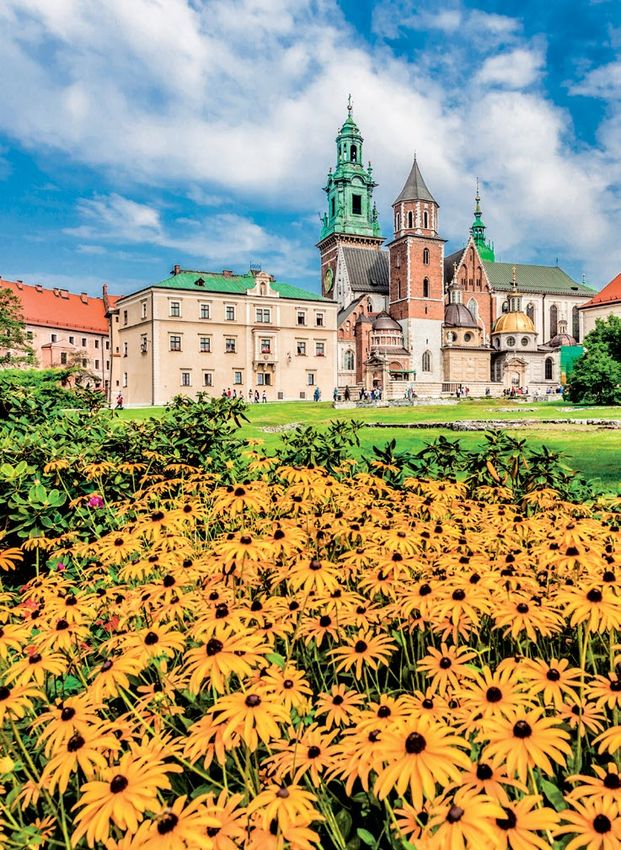
Cities 3
Baltic Coast, Warmia and Masuria
Central and Eastern Poland
Southern Poland
Lower Silesia and Wielkopolska
Cities                              5

▶ Museums are a must-see for visitors with their varied, enriching
programme and interactive multimedia exhibits. Old Town squares,
passages and boulevards tempt passers-by with their charming cafés
and restaurants, serving traditional Polish dishes, while others are skilled
in all various of the world. Shopping centres are not only places where
the tourist can purchase desired souvenirs, works of local artisans or folk
handicraft, but also invite the keen shopper to a huge selection of stores
and designer boutiques. Numerous art galleries are also definitely worth
visiting, by displaying paintings, drawings, sculpture and jewellery created
by top contemporary artists.
Szczecin:
Sailing Ship Parades and the White
Philharmonic Hall
Despite being located one hundred kilometres away from the Baltic
Coast, the town is one of Poland’s two most crucial gateways to the sea.

S
       zczecin is known for its maritime traditions. Even the popular, locally-
       produced gingerbread biscuits, a yummy baked tradition of over 100 years,
       reflect the symbolism of the sea in their shapes. One can really understand
the city’s connection to the sea, when the world’s most beautiful sailing ships
enter Szczecin Harbour. The city has already hosted The Tall Ship Races twice.
It’s an international racing event with a tradition going back to 1927. Szczecin
is actually closer to Berlin than to Warsaw, which is perhaps why the city has
so many architectural and urban accents linking it to Western Europe.
A spectacular example of such connections is the urban pattern in which
streets radiate from Grunwald Square. It was modelled on Georges Haussman’s
design, which he then carried out in Paris in the 19th century. The graceful
edifice of the Philharmonic Hall is also a sign marking a new age.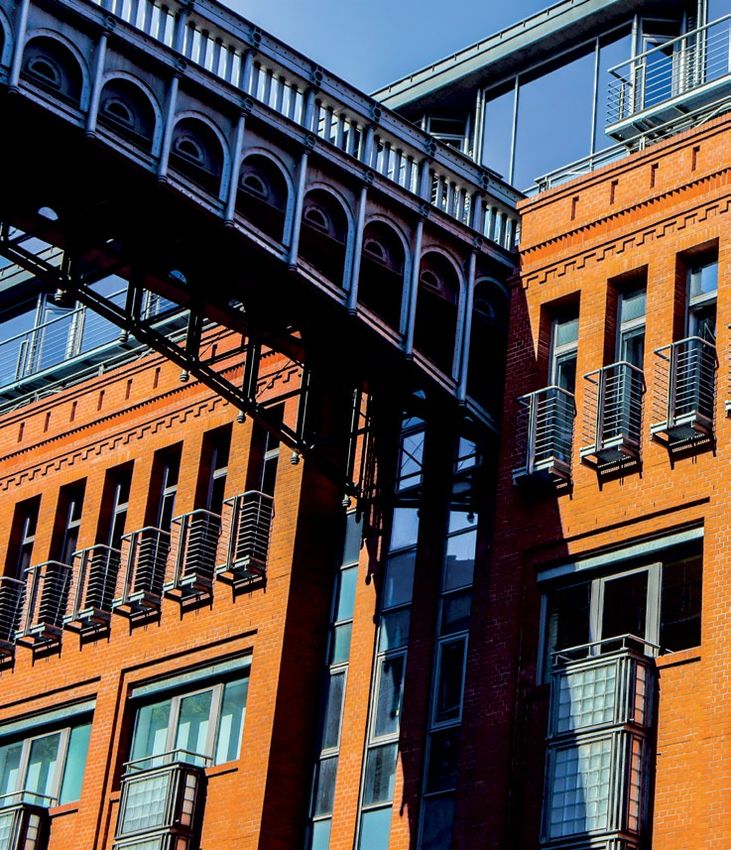
Cities 7
      One can rea lly underst
                                and the cit y’s
      connection to the sea,
                               when the world’s
      most beautif ul sai ling
                               ships enter
      Szczecin Ha rbour.

www.szczecin.eu/en             www.seaofadventure.eu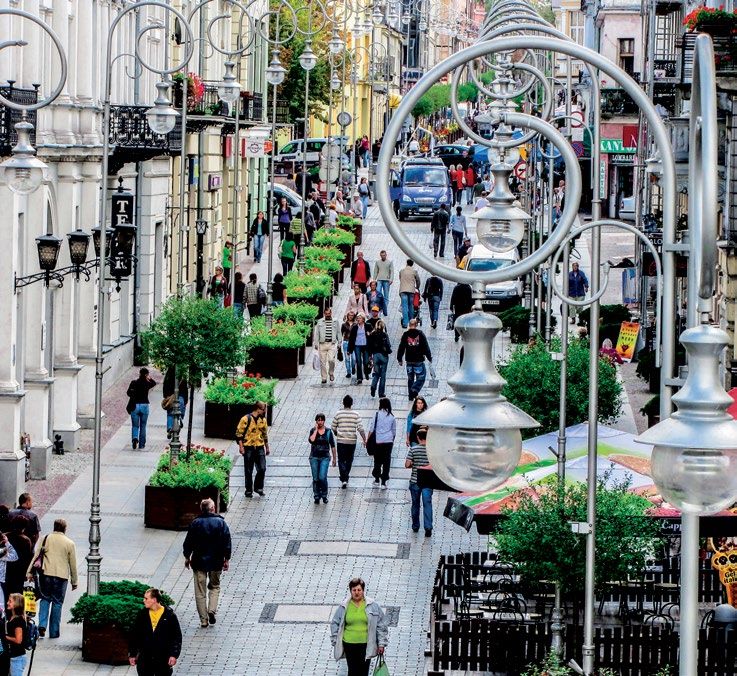
Cities 9

Gdańsk, Sopot, Gdynia:
The Tri-City
Three cities, each with a different history and character, form one
flourishing metropolitan area known as the Tri-City.

A
        lthough they are closely interconnected, Gdańsk , Gdy nia
        and Sopot each have a different character. Gdańsk is the business
        and cultural capital of the Pomorze region, imbued with a history
spanning a thousand years. The Old Town boasts splendid manor houses,
Gothic churches, the Neptune Fountain and the Artus Court (Dwór
Artusa), which used to be the seat of the guild of merchants at the time
when Gdańsk belonged to the Hanseatic League. The trademark of the city
is the Medieval port crane called the Żuraw, which was used for loading
and unloading goods. The new football stadium, built in 2011, is another
landmark and source of pride. ▶

The cathedral in Gdańsk-Oliwa is home
to a rare 18th century pipe organ.
It is one of the largest
such instruments
in the world.
▶ Sopot is a luxury seaside resort town, a venue for mass events and a trendy
shopping area. Its most recognisable symbol is its pier. Jutting out half
a kilometre into the sea, it is the longest pier in Europe. At its end, the concen-
tration of iodine is twice the amount recorded on the shoreline, which means
that walks along the pier are good for your health. More than a hundred
vessels can be moored along the pier at any given time. Plac Zdrojowy,
the town’s central square, is the extension of the pier on land. The light-
house towering over the square offers a panoramic view of the area, while
the nearby outdoor concert hall is alive with music all summer. In winter,
the square becomes an ice-skating rink.
Gdynia is a distinctive, special place. Constructed in the 1920s, it was
the background of a freshly built modern harbour. To this day, the harbour
area with its long promenade is the most characteristic part of the city.
It is here that the historical ships are docked: the ORP Błyskawica, a 1930s
destroyer, which is the oldest preserved ship of this kind in the world,
and the famous sailing frigate Dar Pomorza. The Naval Museum proudly
shows the history of the Polish navy, while the Gdynia Aquarium allows you
to discover fascinating secrets of underwater life.
www.guide.trojmiasto.pl
www.mhmg.gda.pl/en
www.akwarium.gdynia.pl
www.cmm.plCities 11
Wooden and brick grana
                           ries reflect
in the waters of the river
                           Brda, on which
the town was born.
Cities 13
Bydgoszcz:
Fascinating glimpse of modernity in the region
A city where modernity goes hand in hand with the past.
B
uilt hundreds of years ago, wooden and brick granaries are reflected
in the waters of the Brda River, on whose shores the town was born.
The late 19th century bridge spanning the Brda’s banks is an example
of daring, avant-garde architecture. Today, its truss construction is a symbol
of the town. So is the Opera NOVA, the opera house built during the first
decade of the 21 st century. It is one of the most versatile music theatres
in Poland, with a team of talented artists famous for daring performances
of world class repertoire. Bydgoszcz is also the only place in Europe which
has a Museum of Soap and the History of Dirt (Muzeum Mydła i Historii
Brudu). Among the most significant events held in Bydgoszcz, there are
the music festival, the Musicology Congress, and prestigious speedway
motorcycle races.
www.visitbydgoszcz.pl/index.php/en/Toruń:
Hometown of Copernicus
UNESCO Heritage gem, the world’s capital of gingerbread,
the birthplace of Nicolaus Copernicus: what else does one need?
O
ne of the oldest towns in Poland, Toruń amazes the visitor with its
Medieval layout of streets and squares, and with its thousands of red
brick houses. It’s a place where tradition is very much alive. Actors,
dressed in 16th century period costumes, walk along the Old Town streets
in the evening, calling for people to turn off their lights, as it was the custom
in olden times. Of course, the pivotal personage for Toruń is the venerable
astronomer, Copernicus. His family home has been turned into a museum.
The Planetarium, situated in the old, 19th century gas-works complex, offers
audiences outstanding shows explaining the mysteries of our vast, incredible
universe. The multi-media Cosmopolis Fountain, controlled electronically,
alludes to Copernicus’ famous work, De revolutionibus orbium coelestium.
In the Old Town square, on the Gingerbread Walk of Fame (Piernikowa Aleja
Gwiazd), one can find brass plaques shaped like gingerbread biscuits.
Gingerbread biscuits are the most delicious souvenir
to bring home from Toruń. Visitors can
even make them themselves
during workshops organised
inside the 16th century
gingerbread bakery.
www.visittorun.pl www.toruntips.com/ www.muzeum.torun.pl planetarium.torun.pl/en
things-to-see.htmlCities 15
www.olsztyn.eu

www.planetarium.olsztyn.pl

www.muzeum.olsztyn.pl

www.muzeumolsztynek.com.pl
Cities 17

Olsztyn:
Capital of a thousand lakes
The heart of the Warmia and Masuria region, and a perfect starting
point for wildlife lovers and fans of water sports.

O
        lsztyn boasts an amazing location in the middle of wild nature.
        As is fitting, the capital of the Warmia and Masuria region has
        several lakes and a large forest complex, all within the munici-
pality. The omnipresent greenery surrounds Gothic and Art Nouveau
buildings and provides a pleasing contrast to the colours of the town.
Towering over Olsztyn is St. James’s Basilica, an impressive brick edifice,
becoming the dignity of a bishop’s seat, which the town has been for over
600 years. The Basilica has amazing acoustics which one can appreciate all
the more during the Olsztyn Organ Concerts. The town, which grew around
a 14th century Teutonic Knights’ watchtower, has close links to the history
of our great astronomer, Copernicus, who lived here for many years as a high
ranking church official. His astronomical instruments are kept in the castle.
Visitors can also see the Planetarium and the Astronomical Observatory.

                                                               of the Warmia
                                   As is fitting, the capita l
                                                               severa l lakes
                                   and Masuria region has
                                                                x, all within
                                   and a large forest comple
                                   the municipa lity.
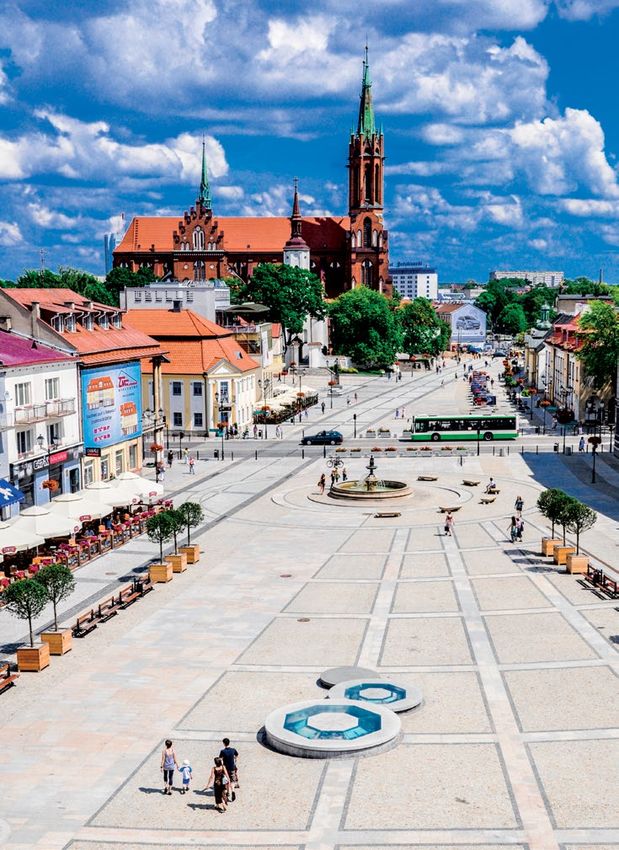
Białystok:
a multi-cultural melting pot
This metropolis in northeastern Poland is situated in an area
of pristine landscape, known as the “Green Lungs” of Poland.
F
or centuries, the town’s inhabitants have been forming a lively mosaic
of religions and languages. Like nowhere else in the world, the cupolas
of Orthodox churches harmoniously co-exist with Roman Catholic
church spires. Living next to one another, Poles, Ruthenians, Jews, Tartars
and the Romani peoples provided inspiration for Ludwik Zamenhof,
the inventor of the universal language, Esperanto. The Branicki Palace,
one of the most stunning Baroque residences in Central Europe, is consid-
ered the gem of the town’s historical heritage. The gardens which surround
the palace are among the best-preserved garden complexes in Poland.
Białystok’s setting brings to mind ancient Rome, as it, too, was founded
on seven hills. The city hosts many music festivals, just like the open-air
event called “Pozytywne Wibracje” (“Good Vibrations”).
There is a reference in the heavens
to Bia łystok. The asteroid 19981
was named after the city in 2007.Cities 19
Lublin:
Centre of Academia and Gateway to the East
A vibrant university, business and cultural centre in eastern Poland.

F
       or centuries, Lublin was the key town for the relations between
       Poland and Lithuania, which were joined in the late 16th century
       into one united nation. The Roman Catholic chapel in the castle
with its opulent frescos in the Byzantine style symbolises this unification.
Before the war, the city was also home to the largest Jewish community
in Poland. The Nobel Prize winning author Isaac Bashevis Singer immortal-
ised the erstwhile atmosphere of his hometown in the novel The Magician
of Lublin. The Chachmei Lublin Yeshiva, active until 1939, was considered
the best Talmudic school in the world. Academic traditions are upheld
these days by the Marie Curie-Skłodowska University and the John Paul
II Catholic University of Lublin, with a robust student community of one
hundred thousand shaping the character of the town.

                                                                festival
                                           hosts an unusua l
                     Ever y year, Lublin                        ring which
                                           tuk-Mistrzów, du
                     ca lled Carnaval Sz                        usicians
                                           urers, jugglers, m
                     circus artists, conj                        e organisers
                         d da nc er s show off their sk ills. Th
                     an                                             e.
                                            teningly funny” tim
                      guarantee a “frigh

     www.lublin.eu            www.lubelskietravel.pl
Cities 21
Cities 23

Warsaw:
The City that won’t be harnessed
The capital and the seat of the highest governing bodies. Razed to
the ground during the Second World War, it was rebuilt and has
been developing rapidly ever since.

F
      or centuries, the landscape of this town on the Vistula was dominated
      by the Royal Castle and the palaces of mighty magnate families. Aris-
      tocrats were responsible for the highest offices of the country and tried
to maintain close affiliation with the royal court. Today’s Presidential Palace
used to be the seat of the Viceroy (Namiestnik), the deputy of the Tsar. Other
palaces are now home to the University of Warsaw and the Polish Academy
of Sciences. The most interesting historical buildings are situated on
the top of the lofty escarpment which circumscribes the Vistula valley from
the west. Among palaces and parks, there is also the Sejm (the lower chamber
of the parliament). The most picturesque tourist route in the capital, known
as the Royal Route, goes from the Royal Castle, located at the edge of the Old
Town, towards Wilanów Palace. ▶
▶ Warsaw is characterised by polycentrism. It offers a large number of places intended for leisure, social life and business meetings. As far as popularity is concerned, the Old Town has strong rivals: the trendy main artery Krakowskie Przedmieście, the Nowy Świat thoroughfare, the Three Crosses Square or the Saska Kępa neighbourhood. The Polish capital is full of greenery: the non-regulated riverbanks are lined with a riparian forest, and there are numerous parks even in the central part of the city. Warsaw is known for its ultra-modern museums: the Fryderyk Chopin Museum, the Warsaw Uprising Museum, the Museum of Modern Art, Centre for Con- temporary Art Ujazdowski Castle, and the Museum of the History of Polish Jews. A more traditional, but no less captivating, exhibit can be seen in the Maria Skłodowska-Curie Museum, dedicated to the Polish Noble Prize winning chemist, and the first woman to have studied at the Sorbonne. ▶
Cities 25
▶ The capital is a paradise for music lovers. Every five years, it hosts
the International Chopin Piano Competition. One can listen to the music
of the virtuoso pianist every summer weekend in the Łazienki Park, consid-
ered Warsaw’s most attractive green area. The concerts of the International
Festival of Contemporary Music, “Warsaw Autumn” (“Warszawska Jesień”),
fill rooms in the Philharmonic Hall. Open-air events such as the summer-
time “Jazz na Starówce” (Jazz in the Old Town), the “Noc Pragi” (The Night
of Praga) held in May, or the “Święto Saskiej Kępy” (Saska Kępa Fair) held
in June, have a magical atmosphere. The largest multi-purpose venue
of the city, the National Stadium, can hold an audience of fifty thousand
and its majestic silhouette towers over the town.

                                                                       f r om
                                                        l ly a gi ft
                                             Officia                    le,
                                                           i e t p e op
                                             t h e S ov                  i e nc e
                                                              c e of S c
www.warsawtour.pl/en
                                                       a l a
                                              th  e  P                        a rsaw
                                                    d  C  u  lt u re i n W g
                                               an                       ui ldin
                                                             a l lest b
                                                i s t he t                si x t h
                                                               nd , t he
                                                 in Pola                   g
                                                               bui ldin
en.1944.wp.pl
                                                  ta l lest
                                                                  U.
                                                   i n t he E

www.kopernik.org.pl
Cities 27
Cities 29

Łódź:
City of filmmakers, or the Polish Tinseltown
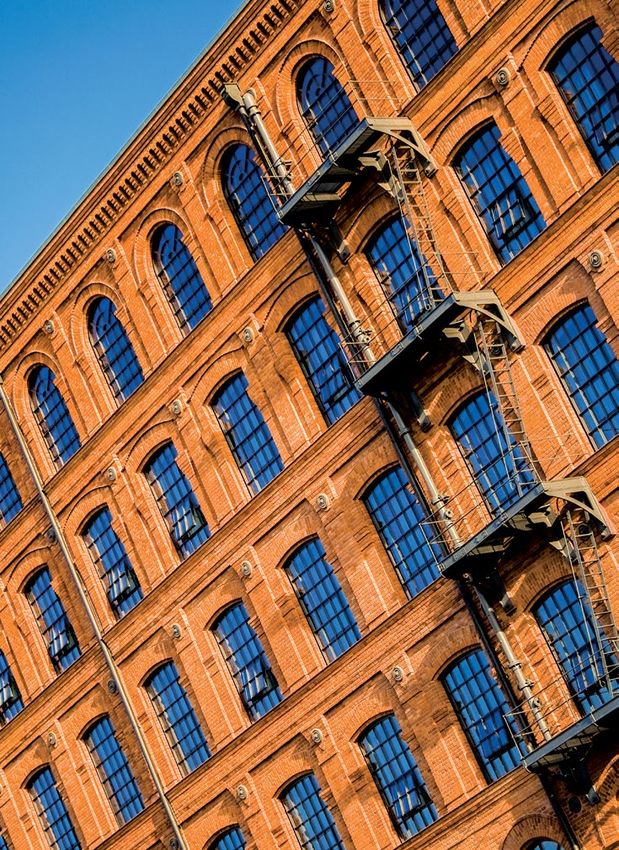
A former capital of the weaving and textile industry in Poland,
today it is a busy centre, well respected for its arts and film activity.

Ł
       ódź flourished during the industrial boom of the 19th and 20th centu-
       ries. Thanks to extensive investments and the hard labour of Jews,
       Germans, Russians and Poles, it became the leading manufacturer
of textiles in Europe. Entrepreneurs had their handsome residences built close
to their factories. These elegant palaces are now part of Piotrkowska Street:
the city’s busiest commercial artery with its inimitable atmosphere formed by
boutiques, clubs, pubs and monuments commemorating famous Polish artists.
Each May, the backyards in Piotrkowska Street become the venue for
the artistic events of the Łódź Four Cultures Festival (Festiwal Łódź Czterech
Kultur). The organisers allude to the mixture of ethnicities, languages
and religions in the old Łódź. The most important annual event for the Polish
film industry is the International Film and Television Schools’ Festival. ▶
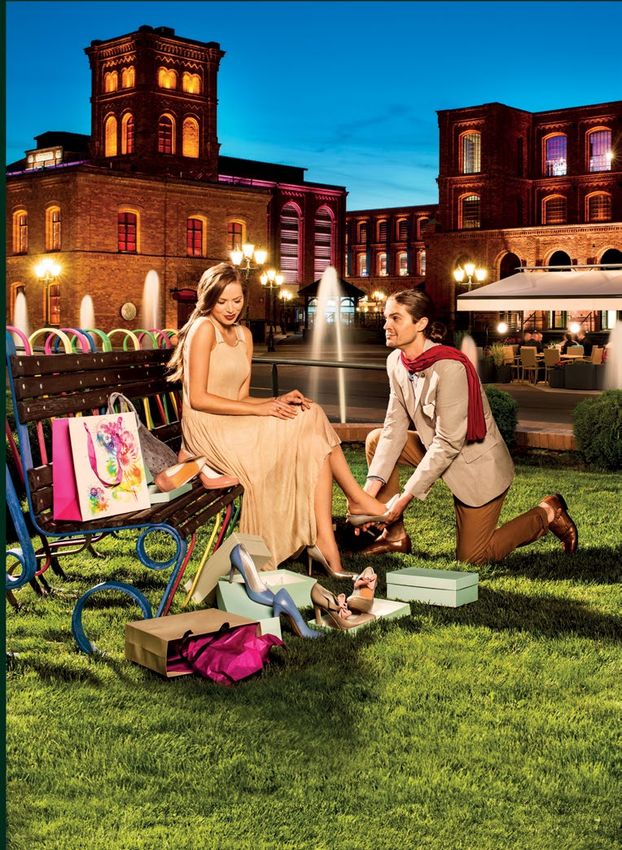
▶ Łódź is home to a film and theatre academy, whose famous graduates such as Roman Polański, Andrzej Wajda and Krzysztof Kieślowski have become part of the history of cinematography. Just as in Hollywood, Piotrkowska Street has its own Walk of Fame, honouring distinguished Polish actors and filmmakers. The streets of Łódź have so far provided the setting for over two hundred films and television series. Łódź is also home to the animation studio “Se-ma-for,” specialising in animated cartoons for children. Two films produced by the studio went on to win Oscars. The museums of Cinematogra- phy and Animation provide an insight into the local filmmaking history. Łódź is also a trend-setting town when it comes to fashion. Polish designers and stylists present their works in competition with the designs of such top fashion houses as Kenzo, Prada or Gucci. During the “Fashion Week Poland,” held twice per year, the eyes of all media are focused on the self-named Designers Avenue (Aleja Projektantów).
Cities 31

                                     exemplar y
         k tu  r a is  one of the th ntur y
Manufa                                    ce
                             It is a 19
   nd m a rk s of Łódź.               a shopping
la                       r ne d into
             to  r y  tu
 textile fac                          emas,
                 c e n tre with cin
 and le is u re                        staurants.
           e , m  u  se u ms and re
  a theatr

                                   www.en.uml.lodz.pl

                                   www.lodzkie.travel
Cities 33
Zamość:
the original “Renaissance Pearl”
Built far away from major towns, Zamość became an incarnation
of the Renaissance concept of the “ideal town.”
T
he complex of the Old Town was acknowledged and distinguished
as a UNESCO Heritage site. The urban landscape is composed out
of multi-colour manor houses and the high towers of the Town Hall
and the collegiate church. The town is surrounded by massive defensive
walls. Meticulously restored buildings are a feast for the eye, making each
walk in Zamość a live history lesson. But, Zamość is not only about history;
it is also a dynamic centre of culture and industry. The beautiful Old Town
scenery becomes a venue for many different events: music concerts, open-air
theatre performances, film festivals and historical re-enactments. Cosy side
streets which are home to pubs, clubs, cafes and restaurants, teem with
social life. The city is also a perfect starting point for trips to the nearby
region of Roztocze, a land of breathtaking natural landscapes.
www.lubelskietravel.pl/
index.php?lang=enKielce: City in the very heart of Poland Where the mysteries and treasures of the prehistoric past wait to be uncovered.
Cities 35

F
       or four centuries, Kielce belonged to Krakovian bishops. The baroque
       Bishop’s Palace remains one of the most attractive landmarks
       of the town. The main commercial artery in Kielce was named after
Henryk Sienkiewicz, the distinguished writer recognised with a Nobel Prize
for his novel Quo Vadis. Nowadays, there are countless bustling shops, pubs
and restaurants along this long street which takes the pedestrian down to
the 19th century market halls, housing the Museum of Toys and Play (Muzeum
Zabawek i Zabawy). The exhibit here will entertain not only the young ones.
The Kielce Geopark offers a multimedia exhibit, thanks to which we can
witness the history of our planet displayed before our eyes. A modern amphi-
theatre has been integrated into the limestone landscape of a former quarry.

                                    In 2009, in one of the qua rries
                                    nea r Kielce, archaeologists found
  www.swietokrzyskie.travel/en/     the remnants of a tetrapod, i.e.,
                                    a specimen of a species which
                                    marked the beg inning of life on
                                     dry land 400 mil lion years ago.
                                     The discovery star ted a revolution
                                     in the world palaeontology.
Kraków: Poland’s most recognisable town Once the royal residence, by far, the most visited city in Poland today.
Cities 37

T
        he Old Town surrounded by the green belt of the Planty Park,
        the Jagiellonian University and the Royal Castle Wawel: these sights
        are the most strongly associated with Poland. All walking tours
begin or end in the Main Market Square, near the Cloth Hall, a 16th century
market hall continuing the tradition of trade to this day. The upper floor
of the Cloth Hall houses the Gallery of 19 th Century Polish Art. Below
the square, preserved vaults are a priceless repository of knowledge about
the town’s history and its connections to Europe. Centuries-old artifacts are
on display as part of this extraordinary archaeological multimedia exhibit.
During the most momentous events and ceremonies, the Sigismund Bell
tolls and its sound carries from the Wawel Cathedral over the Old Town. ▶

                                                                 ntur y
                                             ot h Hal l, a 16 ce
                                                             th

                    Th e st al ls in th e Cl
                                                              on of trade
                                           inue the traditi
                    market ha ll, cont
                    to this day.
Cities 39
▶ The vaults of the Wawel Cathedral are the burial site of Polish kings,
saints, poets and distinguished military leaders. Under the golden cupola
of the Sigismund Chapel, the last kings from the Jagiellonian dynasty
lie interred. The cathedral vaults are also the place where many influen-
tial people, including poets or saints, are buried. In 2013, the Cathedral
saw the funeral of one of Poland’s most distinguished writers, Sławomir
Mrożek, who had returned home after 33 years of emigration. A few steps
away from the Old Town, Kazimierz begins. Nowadays a distinct of the city,
it was once a separate town, inhabited mostly by Jews between the 14th and
the 19th centuries. Orthodox Jews from all over the globe come here to pay
homage to distinguished rabbis buried in the old cemetery in Kazimierz.
For locals and tourists, Kazimierz is chiefly synonymous with clubs, pubs
and restaurants and a tremendous nightlife. ▶
On a corner of the Ma in
dieva l
Squa re, the largest Me
ry ’s
square in Europe, St. Ma
On the top
Basilica sta nds.
eter
of every hour, a trump
plays a bugle ca ll from
tower.
a window of its hig her
lod y cu ts off,
Sudden ly the me
of yea rs
just like hundreds
r was
ago when the trumpete
g
shot with an arrow durin
a Ta rta r attack .▶ Greenery is no less vital to Kraków’s cityscape than its historical
monuments. Kraków’s Old Town is surrounded by the impressive four
kilometre-long green ring called the Planty. This park was constructed
on the site of the city’s medieval moats, which were filled in early
in the 19th century. Forty species of trees and shrubs were gradually planted
in their place. The most magnificent specimens, such as the hundred-thirty
year old plane tree at the end of Wiślna Street, are natural monuments.
Kraków is also home to Europe’s largest urban meadow. Drained
in the 19th century, nowadays Błonia is a favourite place for walking, jogging
and cycling. In the past, the meadow was used for military exercises
and served as a venue for momentous events. Today, it regularly hosts large-
scale cultural and sporting events with thousands in the audience. Among
the other green areas beloved by the locals, one has to name the two mounds
towering over Kraków. They were built to commemorate Poland’s national
heroes, Tadeusz Kościuszko and Józef Piłsudski.
The vaults of the
Wawel Cathedra l
the burial site of are
Polish kings, sa in
poets and distingu ts ,
ished military lead
ers.Cities 41 www.muzeum.krakow.pl/?L=1 www.katedra-wawelska.pl www.krakow.travel
www.visitmalopolska.pl/
Strony/main/main.aspx
Cities 43

Tarnów:
Historical beauty on a mini scale
Known for being the warmest city in Poland, Tarnów has a friendly
atmosphere where tradition intertwines with the modernity that
teems with the bustle of city life.

T
       arnów wins hearts with its narrow streets which follow the same
       layout they did during the Middle Ages, with its intriguing archi-
       tecture of manor houses, its fairytale Town Hall and the remnants
of defensive walls. Poles and Jews, together with newcomers from Hungary,
Ukraine, Germany, Scotland, Austria and the Czech Republic, wrote this
town’s history, giving it a multicultural dimension.
There are many different ways to go about sightseeing here. For example,
one can visit exemplary samples of Italian Renaissance architecture or
monuments recounting Jewish history. Why not pay a visit to the local
Ethnographic Museum, as it has the only exhibition in Europe devoted to
the history and culture of the Romani people? Near Tarnów, one should
stop at the village of Zalipie, famous for subtle ceramics and quaint cottages
painted with flower motives.

Tarnów has a deep
Jewish heritage traces
of which are still
visible today.
Rzeszów:
the Polish frontier
A metropolis in southeastern Poland, Rzeszów is a business, culture
and technology centre of the Podkarpacie region.
T
he heyday of the city’s growth was during the 16th and 17th centuries
when Rzeszów belonged to the aristocratic Ligęza and Lubomirski
families. That was when the most beautiful churches and syna-
gogues were built, along with the castle, the Piarist convent and the Town
Hall. Ever since, the main square has been the centre of trade, business
and entertainment. Under the square, one can find vast cellars which used to
serve as storage rooms for merchants. Their deepest levels provided shelter
during the Tartar attacks of the 16th and 17th centuries. Today, visitors can
enjoy the underground tourist route, “Rzeszowskie Piwnice,” or “Rzeszów
Cellars.” The city is also the heart of “Aviation Valley” (Dolina Lotnicza),
an association with a 70-year long tradition, whose members are aviation
companies, research institutes and pilot training centres.
www.podkarpackie.travel/enCities 45 Rzeszów is home to the Museum of Bedtime Cartoons (Muzeum Dobranocek), dedicated to cartoons and animated films for children, traditionally shown on TV in the evening.
Cities 47

Katowice:
The Place to be
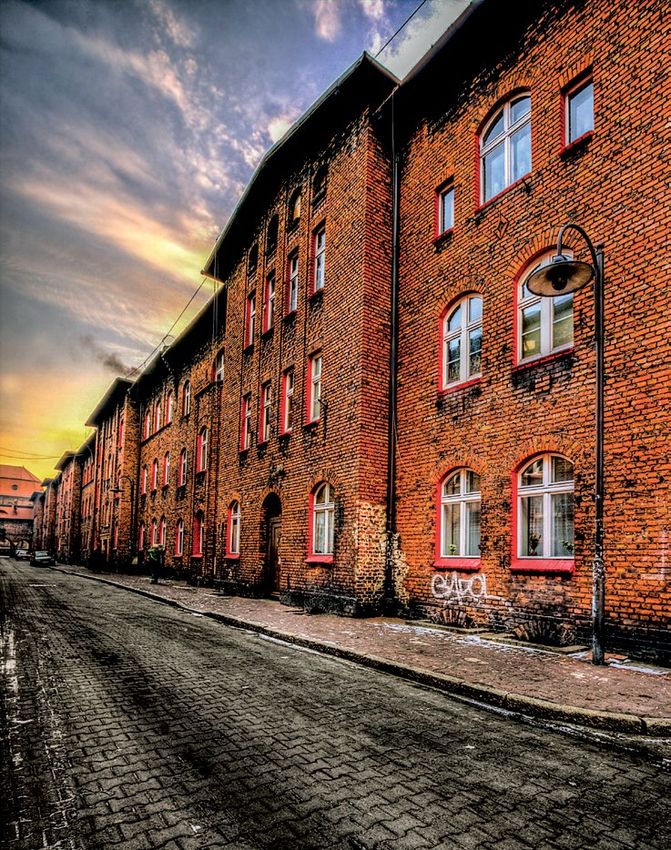
Katowice, a town which has seen a lot of modernisation
in the recent years, more and more often finds itself ranking high
among the most beautiful cities in Europe.

T
       he landmark symbolising Katowice is the “Spodek,” Poland’s
       largest multi-purpose venue. The city boasts the largest urban park
       in Poland. It was built during the 1950s on an industrially-devastated
area of slag heaps, in a pioneering move for a European country, when it
comes to environmental renewal projects. The park in Katowice can only be
rivalled by the hugely popular Silesian Culture and Recreation Park (Park
Kultury i Wypoczynku) in the neighbouring city of Chorzów. Katowice is the
capital city of the Silesian region, the centre of the mining area and the heart
of the gigantic Silesia Metropolis, formed by fourteen neighbouring towns
connected through their common industrial past.
The Industrial Monuments Route (Szlak Zabytków Techniki) runs through
each town of the Silesia Metropolis, marking places of interest related
to coal mining. It was the extraction of coal that brought about the creation
of a very exceptional culture, characteristic perhaps of this region alone. This
place never sleeps. In Zabrze, one can visit the Historical Old “Guido” Mine.
Katowice hosts the biggest blues festival in the world, known as the Rawa
Blues Festival, as well as the open-air event called OFF Festival Katowice.
It is one of the best alternative music festivals in the world. An interesting
fact, the town of Gliwice has a Palm House open to visitors, a real tropical
oasis amid the industrial landscape.
www.katowice.eu
In the tow n of Gliw
ice
there is Pa lm Hou
se
open to visitors,
www.slaskie.travel/en-US
a real tropical oa
sis
amid the industri
al
la ndscape.
www.muzeumslaskie.plCities 49
Cities 51

    Opole:
    Capital of Polish pop culture
    The pearl of the region stretching between Upper and Lower Silesia,
    Opole lives and breathes music.

   T
           he Old Town in Opole recalls the times of the Middle Ages, when it lay
           under the rule of Polish princes from the Piast dynasty. The oldest
           buildings are Gothic churches which were later redecorated in the Ba-
    roque style. The Piast Tower, remaining as the only one of the fortified
    towers of the dismantled Medieval castle, is the town’s most famous land-
    mark. The viewing platform on its top it offers a marvellous panoramic view
    of Opole, with its Old Town and riverside promenade. Together with the Mil-
    lenium Amphitheatre (Amfiteatr Tysiąclecia), an open-air music venue, they
    symbolise meeting the past with modernity.
    Without a doubt, the city is the Polish capital
    of pop music. The National Festival of Polish
    Song, with a tradition going back fifty years,
    is a huge celebration with lots of fanfare.
    Many rare species of plants can be found within
    the municipal area, including twenty-three
    protected by law. Their largest concentration can
    be found on Bolko Island.

The town’s most famous landmark,
the Piast Tower, offers a panoramic view
of Opole from its viewing platform.

           www.visitopolskie.pl
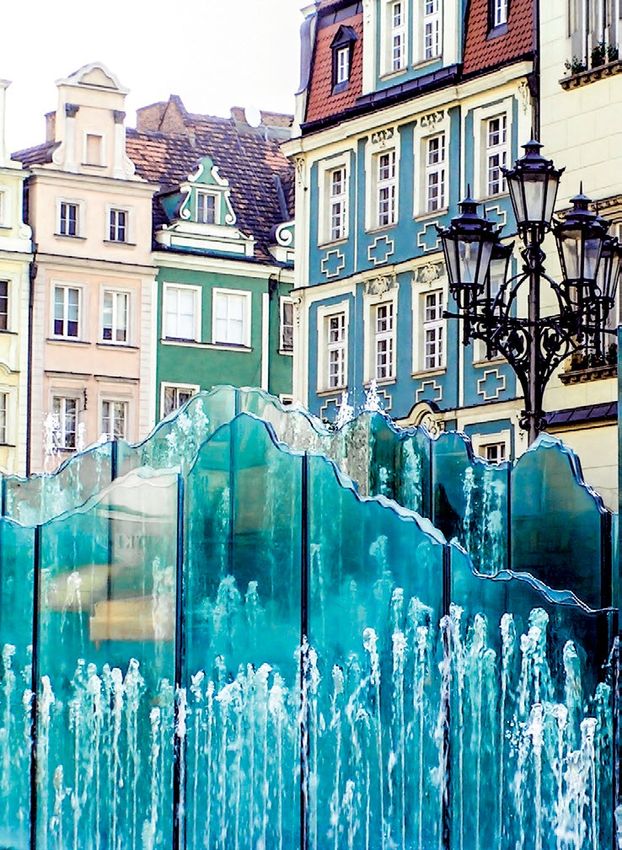
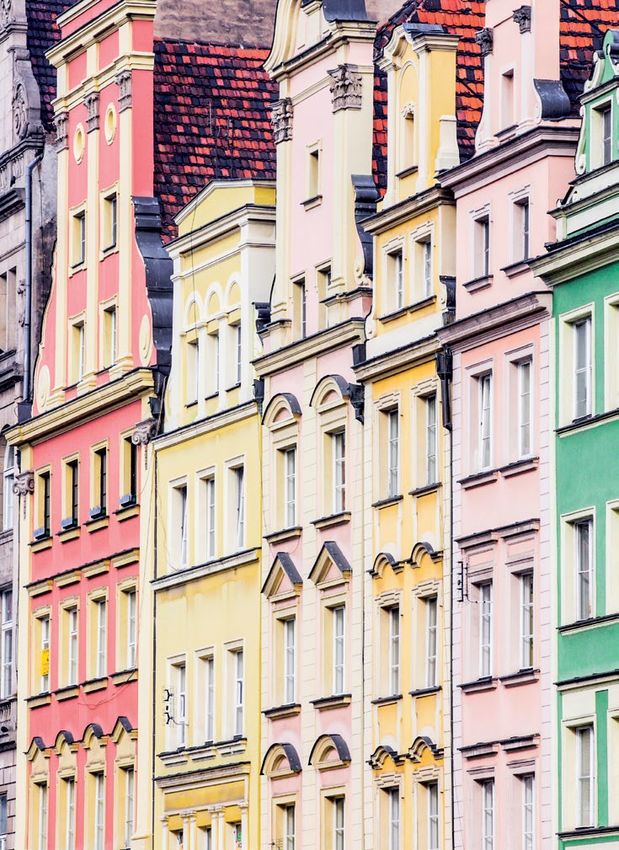
Wrocław:
European Capital of Culture in 2016
Wrocław has been overlooking the waters of the Oder River for
over a thousand years. Bearing the traces of the Czech, German
and Polish rule, the present-day city of Wrocław is a true European
melting pot.
M
agnificent manor houses, churches, the university and a whole
gamut of Nobel Prize winners are all witnesses of the town’s former
splendour. Ostrów Tumski, once an island on the Oder, recalls
the earliest period of Wrocław’s history. Its soaring Medieval churches tower
over the Old Town which stretches on the other side of the river. The Old
Town is the focal point of city life, with the busy Wrocław Market Hall (Hala
Targowa), the NewStock Exchange (Nowa Giełda), countless banks and office
buildings and, amid all of them, the splendid Wrocław Opera. The Centen-
nial Hall often serves as the venue for the Opera, as it allows for staging
large-scale shows with top performers. ▶Cities 53
s
During the T-Mobile New Horizon
Film Festival, held in July,
the Main Square turns into
a huge open-air cinema.highest skyscraper
In front of Sk y Tower, the
re Profile of Time,
in Poland, one can admi
Da lí.
a sculpture by Sa lvadorCities 55 ▶ Constructed out of reinforced concrete, the Centennial Hall (Hala Stulecia) is a groundbreaking work in the history of world architecture. Inscribed on the UNESCO World Heritage list, it is a well-deserved object of local pride. Its dome, rising 23 metres high, is topped by a lantern whose lighthouse-like housing is made out of steel and glass. Since 2009, the Hall has had an extraor- dinary neighbour: Europe’s largest fountain with synchronised projections of water, sound and light. Another exceptional site is the Racławice Panorama, a monumental cycloramic painting depicting the 1794 battle between Poles and Russians. The decorations and lighting effects used in the oval room, where the 114 by 15 metre painting is exhibited, create a 3-D ambiance. Small figurines of dwarves are a charming decorative landmark of Wrocław. Their number has been continually growing, as tours are being organised to see them all, and even guidebooks are devoted to the phenomenon. www.wroclaw.pl www.wro2016.pl www.muzeum.miejskie.wroclaw.pl/
While being a visitor
in this town, tasting loc
                          al
wine is an absolute must.
Cities 57
Zielona Góra:
Capital of Polish winery
The patron saint of Zielona Góra is St. Urban of Langres. It is
a European tradition for people working in the wine industry to
commit their fate into his hands.
T
he climate in the area of Zielona Góra is favourable for the cultiva-
tion of vines. While being a visitor in this town, tasting local wine
is an absolute must. Vines have been harvested in this region as
early as the Middle Ages. The traditions related to winemaking in this
part of Europe are presented in the Museum of Wine (Muzeum Wina).
The highlight of the museum’s exhibition is a large collection of wine glasses
and decanters. It is also a venue for wine-makers’ conferences, as well as
hosting wine-tasting events. Indeed, vines complete the look of the city,
reflecting its Polish name: Zielona Góra, meaning Green Hill, is really green.
More than half of the metropolitan area consists of woods. There is a cap-
tivating Botanical Garden here, and the neighbouring locality of Nietków
there is an arboretum. Each September, Zielona Góra becomes the setting
of the sumptuous Wine Harvest Festival called Winobranie, with a tradition
going back to 1862.
cit.zielona-gora.pl
www.lubuskie.pl/lang/en/
www.muzeumwina.plPoznań:
Home of Poznań International Fair
The multi-cultural city attracts people from all over the globe.
Poznań is the Polish capital of commerce.
T
he most momentous event all year is the Poznań International Fair,
held since 1921. Many cultural events are organised in the Shopping,
Arts and Business Center, “Stary Browar,” or “Old Brewery,” which
is located in a meticulously restored brewery complex from the 19th century.
The modern look of the city is largely due to the fair buildings comprised
of sixteen exhibition halls. The crowning piece of the complex is the Eastern
Entrance (Hol Wschodni), referred to by the locals as the “aquarium,” with
its modernist Spire from the 1950s visible through the glass walls. The Spire
is the Fair’s symbol, as well as Poznań’s most recognisable landmark. Over
eighty different events take place here annually. ▶Cities 59
The Boys’ and Men’s Ch
                          oir of the Poznań
Philharmonic, the “Poz
                         nań Nightinga les”
(Poznańskie Słowiki), con
                            tinues traditions
of chora l song dating ba
                          ck to the 15th centur y.
Cities 61
▶ Poznań also has a charming Old Town. The streets all meet in the Old
Square where the Renaissance Town Hall proudly overlooks the area. It is one
of the most beautiful examples of Renaissance culture. A bugle call comes
from its tower and the clock installed in 1551 delights the tourists with its
figurines of mechanical goats which emerge and butt heads. Another inter-
esting sight in the square is the fountain with its statue depicting a woman
in traditional garb carrying water. Unveiled in 1915, it is the acknowledge-
ment of the specific culture forged in the 18th century, thanks to the arrival
of German settlers. The old Poznań was a town of many cultures where
the Poles, Germans and Jews lived in harmony. The oldest section of the city
is Ostrów Tumski with a Romanesque cathedral and an archaeological
reserve. The route running from the Old Town to Ostrów Tumski is a popular
tourist walk known as the Royal-Imperial Route.
www.poznan.pl www.mnp.art.pl www.en.wielkopolska.travelGorzów Wielkopolski
City on the river
This small town, situated on the Warta River, is famous for its
hospitality.
F
or 700 years, the history of Gorzów Wielkopolski was connected
with Germany. After the Second World War, the city ended up inside
Polish territory and got its current name. Gorzów is a mid-sized town
which proclaims its fondness for the river it lies on. Its picturesque river
promenade boasts a city beach which becomes the venue for various events
during the summer. The Granary Museum (Spichlerz) hosts a very popular
event on its grounds each summer, the “Honey Fair of St. James” (Jarmarki
Miodne św. Jakuba). Also worth visiting are the modernist town baths
from the 1930s. They used to be the largest sport and recreation complex
in the area between the cities of Wrocław and Szczecin. Their open construc-
tion made of concrete and steel, along with a glass-paned cupola, is indeed
an extraordinary sight.Cities 63
The river promenade in
Gorzów Wielkopolski
boasts a city beach which
becomes the venue
of various events during
the summer.Publisher: Polish Tourist Organisation (POT) ul. Chałubińskiego 8 00-613 Warszawa contact: pot@pot.gov.pl, phone: +(4822) 536 70 70 www.pot.gov.pl Writer: Paweł Wroński Editors: Maja Laube, Marta Olejnik Cover photography: photograph from the POT promotional campaign “Come and find your story” within the project “Lubię Polskę” Photography: POT archives, A. and W. Bilińscy (6, 7, 13, 16, 39, 50, 53, 56), Fotolia, fotopolska.pot.gov.pl, K. Krämer (25), A. Młynarczyk (34, 35), B. Nowosielski (62, 63), Shutterstock, Urząd Miasta w Białymstoku (18, 19), J. Włodarczyk (12, 15, 21, 27, 29-32, 59) Photo editor: Karolina Krämer DTP design: BOOKMARK Graphic Design Studio Cover design: Przemysław Gast Typesetting: Katarzyna Marcinkiewicz Production: Jadwiga Szczęsnowicz Translation and proofreading: Translation Street, www.translationstreet.pl © Copyright by Polish Tourist Organisation (POT) © Copyright by BOOKMARK SA Publishing Group Warszawa 2014 All rights reserved BOOKMARK SA Publishing Group ul. Puławska 41 lok. 19 02-508 Warszawa e-mail: biuro@book-mark.pl www.book-mark.pl ISBN: 978-83-8010-009-1 ISBN: 978-83-8010-014-5
ISBN 978-83-8010-009-1

EN
You can also read


