Port Lincoln - FARM TO PROFIT FARM BUSINESS UPDATE - GRDC
←
→
Page content transcription
If your browser does not render page correctly, please read the page content below
FARM TO PROFIT
FARM BUSINESS UPDATE

   Port Lincoln
           Tuesday 26th March
            9.00am to 1.00pm
            Port Lincoln Hotel,
    Port Lincoln Highway, Port Lincoln
             #GRDCUpdates

             2019 PORT LINCOLN GRDC FARM BUSINESS UPDATE

                              1
Port Lincoln GRDC Farm Business Update
                                       convened by ORM Pty Ltd.

              Additional copies of the proceedings can be ordered through ORM for
                                $25 (including postage and GST))

                                                        46 Edward Street           T 03 5441 6176
                                                        PO Box 189                 E admin@orm.com.au
                                                        Bendigo VIC 3552           W orm.com.au

                    CAUTION: RESEARCH ON UNREGISTERED PESTICIDE USE
   Any research with unregistered pesticides or of unregistered products reported in this document does not
constitute a recommendation for that particular use by the authors, the authors’ organisations or the management
 committee. All pesticide applications must accord with the currently registered label for that particular pesticide,
                                              crop, pest and region.

                                         DISCLAIMER - TECHNICAL
 This publication has been prepared in good faith on the basis of information available at the date of publication
 without any independent verification. The Grains Research and Development Corporation does not guarantee or
 warrant the accuracy, reliability, completeness of currency of the information in this publication nor its usefulness
                                              in achieving any purpose.
 Readers are responsible for assessing the relevance and accuracy of the content of this publication. The Grains
    Research and Development Corporation will not be liable for any loss, damage, cost or expense incurred or
                arising by reason of any person using or relying on the information in this publication.
 Products may be identified by proprietary or trade names to help readers identify particular types of products but
this is not, and is not intended to be, an endorsement or recommendation of any product or manufacturer referred
                  to. Other products may perform as well or better than those specifically referred to.

                                        2019 PORT LINCOLN GRDC FARM BUSINESS UPDATE

                                                          2
GRDC Farm Business Update
     PORT LINCOLN

Contents
 Program
         5

 LEADA information		                                                                                   7

 Economic analysis of decisions for grain growers on the                    Ed Hunt                    9
 Eyre Peninsula                                                             Ed Hunt Ag Consultancy

 Grain and pulse storage – looking at the options for maintaining           Ben White                 13
 quality in storage                                                         GRDC Grain Storage
                                                                            Extension Team

 Grain storage – the economic considerations                                Chris Warrick             17
                                                                            GRDC Grain Storage
                                                                            Extension Team

 How to borrow using a self-managed superannuation fund to                  GRDC Fact Sheet           21
 acquire farmland                                                           November 2018

 Eight lessons from fifty years in business                                 Lachlan Polkinghorne      27
                                                                            ProAdvice Pty Ltd

 Creating a prosperous farming future                                       Ken Solly                 35
                                                                            Solly Business Services

 GRDC Southern Regional Panel		                                                                       41

 GRDC Southern Region Grower Solutions Group and			                                                   42
 Regional Cropping Solutions Network

 GRDC Southern Region Key Contacts			                                                                 43

 Acknowledgements			                                                                                  45

 Evaluation			                                                                                        47

                         On Twitter? Follow @GRDCUpdateSouth and use the
                         hashtag #GRDCUpdates to share key messages

                                   2019 PORT LINCOLN GRDC FARM BUSINESS UPDATE

                                                    3
PREDICTA® B
                                                                           SOUTHERN/WESTERN REGION*

    KNOW BEFORE YOU SOW               *CENTRAL NSW, SOUTHERN NSW, VICTORIA, TASMANIA, SOUTH AUSTRALIA, WESTERN AUSTRALIA

         Cereal root diseases cost grain growers in excess of $200 million
         annually in lost production. Much of this loss can be prevented.
         Using PREDICTA® B soil tests and advice from your local accredited agronomist,
         these diseases can be detected and managed before losses occur. PREDICTA® B
         is a DNA-based soil-testing service to assist growers in identifying soil borne
         diseases that pose a significant risk, before sowing the crop.
         Enquire with your local agronomist or visit
         http://pir.sa.gov.au/research/services/molecular_diagnostics/predicta_b

         Potential high-risk paddocks:                         There are PREDICTA® B tests for
         ■ Bare patches, uneven growth,                        most of the soil-borne diseases of
           white heads in previous crop                        cereals and some pulse crops:
         ■ Paddocks with unexplained poor yield                ■ Crown rot (cereals)
           from the previous year                              ■ Rhizoctonia root rot
         ■ High frequency of root lesion                       ■ Take-all (including oat strain)
           nematode-susceptible crops,                         ■ Root lesion nematodes
           such as chickpeas
                                                               ■ Cereal cyst nematode
         ■ Intolerant cereal varieties grown
                                                               ■ Stem nematode
           on stored moisture
                                                               ■ Blackspot (field peas)
         ■ Newly purchased or leased land
                                                               ■ Yellow leaf spot
         ■ Cereals on cereals
                                                               ■ Common root rot
         ■ Cereal following grassy pastures
                                                               ■ Pythium clade f
         ■ Durum crops (crown rot)
                                                               ■ Charcoal rot
                                                               ■ Ascochyta blight of chickpea
                                                               ■ White grain disorder
                                                               ■ Sclerotinia stem rot

                                                                              CONTACT:
                                                                              Russell Burns
                                                                              russell.burns@sa.gov.au
                                                                              0401 122 115

PredAA4_SW_advert1811.indd 1                                                                                      13/11/18 4:29 pm
GRDC Farm Business Update
     PORT LINCOLN

Program
 9.00 am    Announcements                                                   ORM

 9.05 am    GRDC welcome and update                                         GRDC

 9.20 am    Economic analysis of decisions for grain growers                Ed Hunt,
            on the Eyre Peninsula                                           Ed Hunt Ag Consultancy

 10.05 am   To store on-farm or not, that is the question                   Ben White and Chris Warrick,
                                                                            GRDC Grain Storage
 		                                                                         Extension Team

 10.50 am   Morning tea

 11.20 am   Self-managed superannuation funds – guidelines                  Naomi Durdin,
            for investment                                                  Eyre Accounting

 12.05 pm   Creating a prosperous farming future –                          Lachlan Polkinghorne,
            building resilience                                             ProAdvice

 12.50 pm   Close and evaluation

 12.55 pm   Lunch

                                   2019 PORT LINCOLN GRDC FARM BUSINESS UPDATE

                                                    5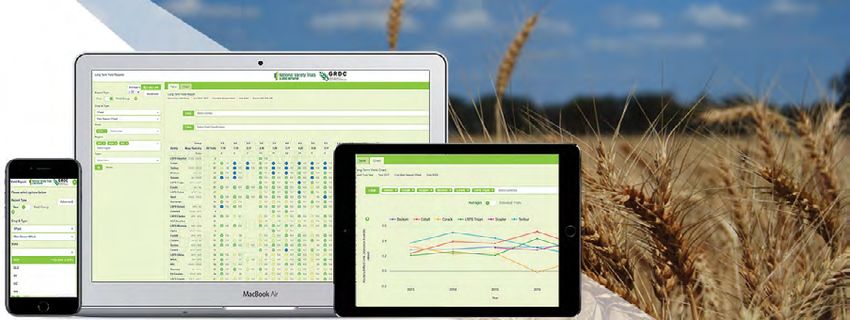
GET THE LATEST STORED GRAIN INFORMATION ONLINE

                STORED GRAIN PROJECT        storedgrain.com.au

                                            Booklets and fact sheets
                                            on all things grain storage

                                                                           Workshops in all regions
                                                                           covering topics such as:

                                                                           ´   Economics of on-farm storage
                                                                           ´   Grain storage hygiene
                                                                           ´   Aeration cooling or drying
                                                                           ´   Managing high moisture
                                                                           ´   Fumigation
                                                                           ´   Insect pest management
                                                                           ´   Managing different storages
                                                                           ´   Storage facility design
                                                                           ´   Storing pulses and oilseeds
                                                Call the
                                                 National
                                                 Grain
                                                 Storage        Download the new
                                               Information
                                     Hotline 1800 WEEVIL         storedgrain app
                                     (1800 933 845) to           to get the latest
                                     speak to your local         information and
                                     grain storage specialist   storage recording
                                     for advice or to arrange
                                     a workshop                     tool on your
                                                                  iPhone or iPad

     www.grdc.com.au                      www.storedgrain.com.au     02 6166 4500                           STORED GRAIN PROJECT

STOREDGRAIN website A4_1411.indd 1                                                                                 11/12/2014 2:50 pm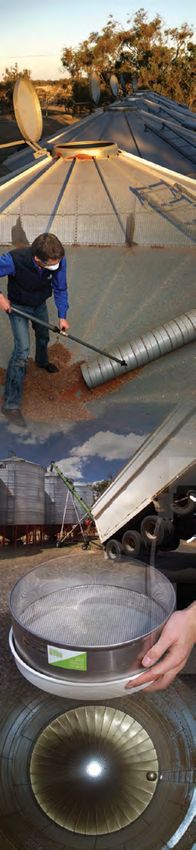
#+&-&&
) ()& * #$!"(''#
(
#"5 6
'&#+&&#)$(
(
'$
-&'''
'')'"'# )(
#"'(#
!$&#*&!
"'-'(!'#" #+&-&
"
"') "
'#!!
(((#$&#*
"')$$#&("((&(
"(
*
(-(# #+&-&
"
"') (
()
'(
$&#)(
*
(-"*
(-##)&&!
"'-'(!'.&
*"- #
'')'"(
'&
#&'# )(
#"'(
(')
( # '-'(!'1
2'$ "
'
*
"(#(
&(
!'(
(&#"
'(
!$#&("#&'&
"
,("'
#".'
* #$!"(" &'
$
"&#+
"'(&#"#&"
'(
#"(
(
'!(
"
(
"'#
('&!&!!&'1
$ "
'"* #$
"#"') ((
#"+
(
#
(
!!&'#(
#!!
(((
&#)
')&*-'.+#& '
#$
')''
#"'"
#"') ((
#"+
(
(
&'
$1
2')
"&
"
$ '
• &!&&
*"'&
.* #$!"("* )(
#"/
• (
*(#)&&"(
'')'+
'( '#&''
"(
",(
#$$#&()"
(-3'/
• "-#)"&!&'/
• # )(
#"''&
.* #$!"("* )(
#"+
(
%)
(-#)(#!'/
• &(&
"*# *!"(#
")'(&-,$&('&#!(
&
#"/
2')&&"(&#
('
" )0
• &#
( &!
"'-'(!'+
(
&(
"'() #" #+&4
•
#" "&
((#&4 #&
•
(-&#
(4
• #$$& "!"(#&(
)()&4
• "&'("
"&#$&#)(
#"#&#!"4 #&
• $&
"
",$#4 #&
• * )(
#"##*&&#$&!
"-'(!'4 #&
'
((
'
((
(($033+++1 1#&1)3(#*
+$'($&#
('.)$#!
"
*"('"(
'#)(!!&'
$1 &#"(( " #+ ,7!
1#!
-#)
*"-%)&
'1 
NVTapps
 CANOLA | WHEAT | DURUM | BARLEY | CHICKPEA | FABA BEAN | FIELD PEA |
 LENTIL | LUPIN | OAT | SORGHUM

 Long Term Yield Reporter
 New web-based high speed Yield Reporting tool, easy-to-use means of accessing
 and interpreting the NVT Long Term MET (Multi Environment Trial) results.

                                                            http://app.nvtonline.com.au/

 Crop Disease Au App                                 Long Term Yield App
                         Access to current disease           Easy access to the analysed
                         resistance ratings &                NVT Multi Environment
                         disease information.                Trial (MET) data.

 www.nvtonline.com.au
NVTapps_A4_1811.indd 1                                                             9/11/18 1:54 pm
Economic analysis of decisions for grain growers
on the Eyre Peninsula
Ed Hunt.
Ed Hunt Ag Consultancy.
Notes
Contact details
Ed Hunt
edmund.hunt@bigpond.com
Return to contents
2019 PORT LINCOLN GRDC FARM BUSINESS UPDATE
9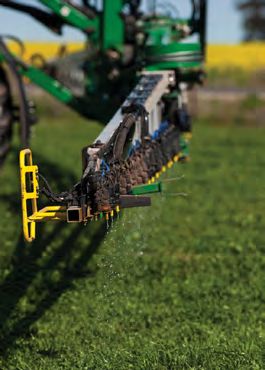
Notes

        2019 PORT LINCOLN GRDC FARM BUSINESS UPDATE

                        10
Notes
2019 PORT LINCOLN GRDC FARM BUSINESS UPDATE
11JOIN THE
CONVERSATION
@theGRDC
Get the latest info on GRDC’s research, news and events.
Join an online community of thousands of grain growers,
researchers and advisers from all over Australia.
P Level 4 | 4 National Circuit, Barton ACT 2600 | PO Box 5367, Kingston ACT 2604
T +61 2 6166 4500 F +61 2 6166 4599 E grdc@grdc.com.auGrain and pulse storage – looking at the options
for maintaining quality in storage
Ben White.
GRDC Grain Storage Extension Team.
GRDC project code: PRB00001
Keywords
grain quality, storage, silo, grain bags, fumigation, weevils, seed treatments, hygiene,
monitoring, aeration.
Take home messages
Select a grain storage option that provides flexibility to meet market requirements.
The only silos suitable for fumigation are gas-tight (meeting AS2628-2010), pressure tested.
Hygiene and monitoring are keys to maintaining grain quality in storage.
Aeration is an effective tool worthy of consideration – best paired with an automated controller.
Background Grain bags have a place for improved harvest
logistics but are a short term (3-4 months) option.
Storing grain on-farm is increasing in popularity
For best results, site selection and preparation
nationally, but growers need to select storage
are critical, as are regular weekly inspection and
options carefully to ensure grain quality is
maintenance to maintaining bag integrity and
maintained and market options are not limited.
preventing grain spoilage.
When it comes to storage options, gas-tight
pressure-tested silos offer simple fumigation in
insect disinfestation. Aeration is a valuable tool
used to cool the grain with carefully selected air.
2019 PORT LINCOLN GRDC FARM BUSINESS UPDATE
13Top ten tips 9. Aeration cooling works well and is worth
considering if purchasing new silos and there
1. Start clean – hygiene is essential. Insects only
is power on site. Note that used properly,
need a handful of grain to survive and breed.
aeration will slow or even stop insect
Feed any spilt grain out or bury it away from
reproduction and activity by cooling the grain
the storage facility.
– but will not kill insects.
2. Make sure the pressure relief valve has light
10. Call the GRDC grain storage extension team
hydraulic oil (ISO46) in it (wetter can be used
on 1800 WEEVIL (1800 933 845) and go to
as an alternative).
www.storedgrain.com.au if you are unsure
3. To pressure test, pressurise the silo with an or just want to check on anything grain
air compressor to 25mm water gauge (250Pa storage related.
or 0.036psi). The pressure in the silo should
not drop below 12.5mm (125Pa) over a three- Useful resources
minute period. Most silos have a marked
www.storedgrain.com.au/
semi-opaque or clear pressure relief valve
to measure the 25mm and 12mm pressure
lines, but if not, use a home-made u-tube Acknowledgements
manometer using a length of clear hose with The research undertaken as part of this project
some water in it. is made possible by the significant contributions
4. Fumigate within three weeks of the of growers through both trial cooperation and the
completion of harvest while grain is still warm support of the GRDC — the author would like to
and any insects that may have come into thank them for their continued support.
storage with the grain are most active.
Contact details
o Silos must be gas-tight and seal-tested
to meet a 3-minute half-life pressure test. Ben White
Spread the tablets out – no more than 1800 933 845
2-deep on a tray in the headspace or in ben@storedgrain.com.au
the ground-level applicator. Do not mix @1800WEEVIL
tablets in with grain — there is nothing to
be gained by doing this — phosphine is a
very active gas.
Return to contents
5. Keep your gas-tight sealable silos for
untreated grain – fill these first and if using for
seed, apply any treatments on outload.
o This also means you can sell this surplus
pesticide residue free (PRF) grain if you do
not use it at seeding.
6. Use your unsealed silos for treated grain
and make sure any seed treatment includes
an insecticide for protection but check with
potential buyers first. Do not use phosphine in
silos that do not meet the seal pressure test in
point 4.
7. Follow the label — a fumigation cycle will
take between 10 to 17 days including
ventilation and withholding. Follow the GRDC
fumigation flowchart.
8. Phosphine is usually applied at two tablets per
tonne of capacity of wheat (regardless how full
the silo is) but check the label to be sure.
2019 PORT LINCOLN GRDC FARM BUSINESS UPDATE
14Notes
2019 PORT LINCOLN GRDC FARM BUSINESS UPDATE
15Notes
2019 PORT LINCOLN GRDC FARM BUSINESS UPDATE
16Grain storage – the economic considerations
Chris Warrick.
Consultant and National Coordinator for the GRDC Grain Storage Extension Project.
GRDC project code: PRB00001
Keywords
grain storage, economics, costs, benefits, comparison.
Take home messages
In majority of cases, on-farm storage requires multiple financial benefits to cover the costs.
The most economic form of storage will be the one that suits your system, the grain being stored
and the length of time it’s stored.
Permanent on-farm storage is a 25+ year investment – it’s worth taking the time to do the
numbers, consider the options and make informed decisions.
Background versus expected returns from other farm business
investments, such as more land, a chaser bin, a
As growers continue to expand on-farm grain
wider boomspray, a second truck or paying off
storage, the question of economic viability gains
debt. The other comparison is to determine if we
significance. There are many examples of growers
can store grain on-farm cheaper than paying a bulk
investing in on-farm grain storage and paying for it
handler to store it for us.
in one or two years because they struck the market
at the right time, but are these examples enough to Calculating the costs and benefits of on-
justify greater expansion of on-farm grain storage? farm storage will enable a return-on investment
(ROI) figure, which can be compared with other
The grain storage extension team conduct
investment choices and a total cost of storage to
approximately 100 grower workshops every year
compare to the bulk handlers.
Australia-wide and it’s evident that no two growers
use on-farm storage in the exact same way. Like
many economic comparisons in farming, the
Most economic form of storage
viability of grain storage is different for each grower. The key to a useful cost–benefit analysis is
Depending on the business’s operating style, the identifying which financial benefits to plan for and
location, the resources and the most limiting factor costing an appropriate storage to suit that plan.
to increase profit – grain storage may or may not be People often ask, ‘what’s the cheapest form of
the next best investment. For this reason, everyone storage?’ The answer is the ‘storage that suits the
needs to do a simple cost benefit analysis for their planned benefits.’ Short term storage for harvest
own operation. logistics or freight advantages can be suited to grain
bags or bunkers. If flexibility is required for longer
Comparing on-farm grain storage term storage, gas-tight, sealable silos with aeration
cooling allow quality control and insect control.
To make a sound financial decision, we need to
compare the expected returns from grain storage
2019 PORT LINCOLN GRDC FARM BUSINESS UPDATE
17Benefits For more information or advice on grain storage
or to download a copy of the cost benefit analysis
To compare the benefits and costs in the same
booklet and spreadsheet or contact the grain
form, work everything out on a basis of dollars per
storage extension team via www.storedgrain.com.au
tonne. On the benefit side, majority of growers will
require multiple financial gains for storing grain to
Contact details
make money out of it. These might include harvest
logistics or timeliness, market premiums, freight Chris Warrick
savings or cleaning, blending, or drying grain to 0427 247 476
add value. info@storedgrain.com.au
Costs
The costs of grain storage can be broken down
Return to contents
into fixed and variable. The fixed costs are those
that don’t change from year to year and have to be
covered over the life of the storage. Examples are
depreciation and the opportunity or interest cost
on the capital. The variable costs are all those that
vary with the amount of grain stored and the length
of time it’s stored for. Interestingly, the costs of
good hygiene, aeration cooling and monitoring are
relatively low compared to the potential impact they
can have on maintaining grain quality. One of the
most significant variable costs, and one that is often
overlooked is the opportunity cost of the stored
grain. That is the cost of having grain in storage
rather than having the money in the bank paying off
an overdraft or term loan.
The result
While it’s difficult to put an exact dollar value on
each of the potential benefits and costs, a calculated
estimate will determine if it’s worth more thorough
investigation. If we compare the investment of
on-farm grain storage to other investments and
the result is similar, then we can revisit the numbers
and work on increasing their accuracy and
assessing the sensitivity. If the return is not even
in the ball park, we’ve potentially avoided a costly
mistake. On the contrary, if after checking our
numbers the return is favourable, we can proceed
with the investment confidently.
Summary
Unlike a machinery purchase, grain storage is a
long-term investment that cannot be easily changed
or sold. Based on what the grain storage extension
team are seeing around Australia, the growers who
are taking a planned approach to on-farm grain
storage and doing it well are being rewarded for it.
Grain buyers are seeking out growers who have a
well-designed storage system that can deliver insect
free, quality grain without delay.
2019 PORT LINCOLN GRDC FARM BUSINESS UPDATE
18Notes
2019 PORT LINCOLN GRDC FARM BUSINESS UPDATE
19Farming the Business
Module 1 Module 2 Module 3
Mike Krause
Mike Krause Mike Krause Mike KrauseHow to borrow using a self-managed
superannuation fund to acquire farmland
Key points
A self-managed super fund (SMSF) can use a limited recourse borrowing arrangement (LRBA) to
acquire farmland.
Problems may arise if buying land which is spread across multiple titles.
Funding can come from a related party.
Background (e.g. real property), due to the strict adherence to
the sole purpose test. However, in September 2007,
The superannuation system provides several
amendments to the superannuation legislation
benefits when it comes to a self-managed
enabled SMSF trustees to borrow or gear their
superannuation fund (SMSF) owning farmland.
investment acquisitions, initially using instalment
These include asset protection and the
warrants (up until July 2010) and currently via a
management of estate planning risk. However,
limited recourse borrowing arrangement (LRBA –
the overriding advantage is that it provides a tax-
from July 2010). This fact sheet focuses on a SMSF
effective environment to help build wealth. In most
using a LRBA to acquire farmland.
circumstances a superannuation fund will be taxed
at a maximum rate of 15% and in certain instances its
income will be tax free.
What is a LRBA and how does it work?
A LRBA involves a SMSF taking out a loan from a
In circumstances where a SMSF has borrowed to
third-party lender or from a related party (e.g. fund
acquire an asset, theoretically there could be 85%–
member). The SMSF then uses the borrowed money
100% of income (after tax) available to pay back
and any of its own available funds (e.g. a deposit) to
the debt. This potentially allows debt to be paid off
purchase a single asset (real property) that is to be
faster when compared to a ‘non-superannuation’
held in a separate custodian or ‘bare’ trust.
environment, thereby generating wealth at a
superior rate. The downside of such tax-effective The trustee of the bare trust is the legal owner
conditions are the strict regulations and compliance of the asset, whilst the SMSF has only a beneficial
rules a SMSF faces. The ‘sole purpose test’ is the interest in the asset, up until the loan has been
fundamental doctrine that all superannuation fund extinguished. During the LRBA any income received
trustees must legally comply with. from the asset, such as a farm lease, is paid directly
to the SMSF. The loan repayments, including
The sole purpose test imposes a requirement
interest, are to be made by the SMSF. Once the loan
on the trustee to maintain the fund for the primary
is paid out the SMSF’s trustee has a right to acquire
purpose of providing its members with retirement
legal ownership of the asset.
benefits. The test is the underlying rationale behind
the four key SMSF investment restrictions that If the SMSF defaults on the loan, under a LRBA,
relate to how the investment is transacted and with the lender’s right to recourse is limited to the asset
whom, rather than the type of asset being acquired. (under finance) held in the related bare trust. All
The restriction relating to the ability of a SMSF to other fund assets are not exposed to any claim from
borrow money has had several significant changes that lender. Therefore, the retirement benefits of the
since 2007. fund’s members are protected, and the sole purpose
test is met.
Prior to September 2007 a SMSF basically had
no capacity to borrow money to acquire an asset
2019 PORT LINCOLN GRDC FARM BUSINESS UPDATE
21Figure 1. The structure of a limited recourse borrowing arrangement.
Benefits of utilising a LRBA Furthermore, if the SMSF is in the ‘retirement’
phase, and the farmland forms part of the asset base
Growing fund assets through borrowing – A
supporting the payment of a pension stream, any
LRBA provides the ability to acquire farmland in
income (including capital gains) derived from the
the superannuation system when a SMSF has not
land will be tax free.
enough cash to purchase it outright. Initially the
fund only has a beneficial interest in the property, Asset protection – By the SMSF owning farmland
however it is entitled to receive all derived lease separate from the farming business operations, the
income and/or any capital gain proceeds from the land is basically shielded from exposure to financial
sale of the land. Legal ownership of the land will and legal risk. Also, assets in a SMSF are usually
pass to the SMSF on loan payout. treated as non-divisible property and protected
against creditor claims in the event of bankruptcy.
Concessional tax rates – Lease income derived
from farmland owned by a SMSF will only be subject Estate planning – Assets held in superannuation
to a maximum tax rate of 15% during ‘accumulation’ will not form part of a deceased individual’s estate.
phase. This rate would also apply to any capital By having in place, a superannuation binding death
gain realised on the disposal of the land. When benefit nomination, a member(s) of a SMSF can
compared to the marginal (individual) and company ensure farmland (inside the fund) is transferred on
tax rates applicable outside the superannuation their death to a specified individual. This can be
environment, there is potential for any income used to provide certainty and security to the next
received from farmland to be taxed substantially less farming generation as the listed land will not form
when owned by a SMSF. part of the estate or any contested Will action.
2019 PORT LINCOLN GRDC FARM BUSINESS UPDATE
22Disadvantages of a LRBA 2010 and only permits a SMSF trustee to borrow
to acquire a single asset or a collection of identical
A SMSF cannot acquire an asset from a related
assets (e.g. 1,000 BHP shares).
party – One exception to this rule is business real
property acquired at market value. Business real A major issue arises where a SMSF acquires
property generally means land and buildings used farmland on a single contract of sale, consisting of
wholly and exclusively in a business. multiple separate titles. Put simply, where land can
potentially be sold in separate lots, the collective
‘Single acquirable asset’ (SAA) – This concept is
will not be classed as a SAA. Each individual title
relevant where a LRBA is used to acquire farmland
will be deemed a separate SAA, requiring their own
comprising multiple titles. Refer to the case study
respective bare trust and LRBA, which in turn means
opposite for a detailed example.
extra administrative costs and complexities.
Property improvement costs cannot be funded
The Australian Taxation Office (ATO) has taken a
– Alterations or improvements to the farmland, such
hard line on this in their tax ruling (SMSFR 2010/1),
as new sheds, fencing, yards, bores etc. cannot be
specifically noting that crops, fencing or irrigation
paid for by the LRBA loan funds. However, repairs
systems spanning more than one title, is not
and maintenance associated with purchased
sufficient to gain a SAA classification. However, if the
farmland (e.g. fence repairs) can be funded by the
farm being acquired conducts an intensive industry
LRBA borrowings.
such as a piggery enterprise that has shedding and
Additional costs and complexity – Extra costs infrastructure constructed over multiple land titles,
relating to the set-up and administration of the this may achieve a SAA status. This is on the proviso
bare trust, including potentially a corporate trustee, that the intensive industry’s infrastructure value is
are a direct impost when acquiring an asset using a considerable component of the farm’s purchase
a LRBA. Financial institutions may also charge price. If this was the case, the farm would obtain a
for additional costs of vetting the SMSF’s deed SAA classification and could be purchased under a
to confirm the trustees are able to maintain a single LRBA.
borrowing arrangement. A LRBA loan will attract a
higher interest rate to compensate financiers for CASE STUDY
their limited recourse capabilities.
When new entities are added to a business Single Acquirable Asset
structure, as is the case with a LRBA, it is inherent • Peter and Pauline are the only members of their
that administrative complexities also increase. SMSF
Farmland security unavailable – A major • Peter is interested in purchasing a parcel of
disadvantage of farmland being owned by a SMSF land from a neighbour for $800,000 (including
is that the asset cannot be used as security for ‘standing’ crops). The farmland is split across
further borrowing (e.g. to buy more land). Any such three separate titles.
asset exposure is in direct contravention of the
Superannuation Industry (Supervision) Act. • All their current farmland holdings have either
been transferred to or purchased by the SMSF.
The devil is in the detail – If a LRBA has not For succession planning purposes, they want
been structured correctly, this may require the all future land acquisitions within the SMSF.
arrangement to be unwound, potentially requiring
the farmland to be sold. The SMSF deed’s governing • Their farming operations utilise a discretionary
rules must also specifically permit entering a LRBA. trust structure.
The asset investment should also be consistent with • They both have fully utilised their non-
the fund’s investment strategy. If not, there could concessional contribution caps.
be action to recover loss and damages by an
• The SMSF has $250,000 in cash available.
aggrieved member.
What are the issues to be dealt with?
Single acquirable asset and implications for
farmland acquisitions • The SMSF does not have the cash to buy
the land outright and cannot be injected
The key concept of a ‘single acquirable asset’ with additional funds via non-concessional
(SAA) applies to LRBAs put in place on or after 7 July contributions.
2019 PORT LINCOLN GRDC FARM BUSINESS UPDATE
23• With the parcel spread across three separate Frequently asked questions
titles and if the sale is under one contract, the
Can a SMSF borrowing arrangement be
land will not be deemed a SAA, thus cannot be
refinanced? Yes. The 2010 legislation clarifies that
acquired using a LRBA.
a SMSF trustee can refinance an existing LRBA.
Refinancing may allow the SMSF trustee to minimise
Possible options the risk of default on a borrowing resulting from
1. Use the SMSF’s cash ($250,000 or part of) to a temporary inability to make a repayment, for
purchase one or two titles under one contract example a SMSF facing solvency issues due to
of sale, and any remaining title/s are acquired benefit payment obligations.
with a separate contract of sale and LRBA.
Can farmland in a LRBA be replaced with
2. Each respective title is acquired with its own another parcel of land? No.
separate contract of sale and LRBA.
Who signs the contract of sale for a property
LRBA with a related-party lender purchased under a LRBA? The bare trust is the
There are only a limited number of banks willing entity that holds the legal title to the property in trust
to lend to a SMSF. Those that do often place for the SMSF. Therefore, the trustee of the bare trust
onerous obligations on the trustee and/or have an should be noted as the purchaser of the property
approval process that can be slow and expensive. on the contract of sale. As each state or territory has
An appealing alternative to using a third-party different requirements regarding how the trustee
lending institution, is for the SMSF’s trustee to (bare) is noted on the contract, it’s recommended
arrange a LRBA with a related party (see definition in that you speak with your relevant revenue office or a
FAQs), provided arm’s length terms are invoked. The property law expert to confirm contract notations.
ATO has issued new guidelines for a related-party What is the definition of a related party?
loan to acquire real property, including farming land, Includes all members of the SMSF, their relatives,
as follows: the business partners of each member, any spouse
• An interest rate of 5.8% (2017-18). The interest or child of those business partners, any trust or
rate must be updated every financial year company controlled or influenced by a member,
(using May Reserve Bank of Australia (RBA) employers who contribute to the fund for a member
lending rates). The trustees may choose and associates (business partners, companies
to fix the rate at the commencement of the and trusts controlled by the employer) of those
arrangement for a specified period, up to a employers.
maximum of five years.
Useful resources
• The term of the loan can be no more than
15 years, which includes any refinancing GRDC Farm Business Fact Sheet – National
arrangement. The transfer of farmland into a self-managed
• Maximum loan-to-value ratio (LVR) cannot superannuation fund (https://grdc.com.au/
exceed 70 per cent. The market value of the the-transfer-of-farmland-into-a-self-managed-
asset is established when the loan is entered superannuation-fund)
into. GRDC Farm Business Fact Sheet – National
• There must be a registered charge or mortgage Financing: Debt structuring and asset life cycles
over the property. (https://grdc.com.au/debt-structuring-and-asset-life-
cycles)
• Repayments are to be both principal and
interest and to be made monthly. More information: Contact your accountant or
financial adviser
• A written and executed loan agreement
is required. Contact details: ORM Pty Ltd
In practical terms, it means that any funding from a Email address: admin@orm.com.au
related party to a SMSF needs to be under the kind DISCLAIMER Any recommendations, suggestions or opinions contained in this
publication do not necessarily represent the policy or views of the Grains Research
of loan terms offered by the commercial lenders. and Development Corporation. No person should act on the basis of the contents of
this publication without first obtaining specific, independent, professional advice. The
Corporation and contributors to this Fact Sheet may identify products by proprietary or
trade names to help readers identify particular types of products. We do not endorse
or recommend the products of any manufacturer referred to. Other products may
perform as well as or better than those specifically referred to. GRDC will not be liable
Return to contents for any loss, damage, cost or expense incurred or arising by reason of any person
using or relying on the information in this publication.
2019 PORT LINCOLN GRDC FARM BUSINESS UPDATE
24Notes
2019 PORT LINCOLN GRDC FARM BUSINESS UPDATE
25NATIONAL MODULE 04 Drift management strategies PAGE 10
February 2017
GROWNOTES™
3. Drift management strategies:
things that the spray operator
has the ability to change
PLAY VIDEO
Factors that the spray operator has the ability to change include the sprayer set-
up, the operating parameters, the product choice, the decision about when to start
spraying and, most importantly, the decision when to stop spraying.
Things that can be changed by the operator to reduce the potential for off-target
movement of product are often referred to as drift reduction techniques (DRTs) or drift
management strategies (DMSs). Some of these techniques and strategies may be
Drift Reduction referred to on the product label.
Technology an
introduction
3.1 Using coarser spray qualities
Spray quality is one of the simplest things that the spray operator can change to
manage drift potential. However, increasing spray quality to reduce drift potential
should only be done when the operator is confident that he/she can still achieve
reasonable efficacy.
Applicators should always select the coarsest spray quality that will provide
appropriate levels of control.
The product label is a good place to check what the recommended spray quality is for
the products you intend to apply.
In many situations where weeds are of a reasonable size, and the product being
SPRAY
applied is well translocated, it may be possible to use coarser spray qualities without
seeing a reduction in efficacy.
However, by moving to very large droplet sizes, such as an extremely coarse (XC)
spray quality, there are situations where reductions in efficacy could be expected,
For more these include:
APPLICATION MANUAL information see the
GRDC Fact Sheet
• using contact-type products;
FOR GRAIN GROWERS ‘Summer fallow
spraying’ Fact
•
•
using low application volumes;
targeting very small weeds; SPRAY APPLICATION MANUAL FOR GRAIN GROWERS
EDITED BY BILL GORDON Sheet
• spraying into heavy stubbles or dense crop canopies; and
Module 17
FOREWORD BY STEVE JEFFERIES
Pulse width modulation systems
• spraying at higher speeds.
TABLE OF CONTENTS
How they work and set-up
If spray applicators are considering using spray qualities larger than those
LIST OF VIDEOS recommended on the label, they should seek trial data to support this use. Where data
CONTRIBUTING AUTHORS
is not available, then operators should initially spray small test strips, compare these
with their regular nozzle set-up results and carefully evaluate the efficacy (control)
considerations
MODULE 08 Calibration of the sprayer system – ensuring accuracy MODULE 08 Calibration of the sprayer system – ensuring accuracy PAGE 7
obtained. It may be useful to discuss these plans with an adviser or agronomist and
Tom Wolf
ask him/her to assist in evaluating the efficacy.
Step 2: Check pressure
Flow though
pressure tester.
Photo: Bill Gordon
PLAY VIDEO
SPR
AY AP
PL
Mod ICAT
ION
Options for
u
Pum le 11
MAN measuring
UAL pressure at the
FOR Check the pressure in each boom section adjacent to the inlet and ends of the
ps, p GRAI nozzle section. If only using one calibrated testing gauge, set the pressure to achieve,
How lumb N GR
OWER
they in
for example, 3 bar at the nozzle outlet.
can w g and S
Graha
m Bet o rk c
togeth ompon PLAY VIDEO
Mark the spray unit’s master gauge with a permanent marker. This will ensure the
ts an
d Bill er ents same pressure is achieved when moving the test gauge from section to section.
G ordo
n Step 3: Check flow meter output
• If pressure across a boom section is uneven check for restrictions
in flow – kinked hoses, delamination of hoses and blocked filters.
Make the required repairs before continuing.
• When the pressure is even, set at the desired operating pressure.
Measuring Record litres per minute from the rate controller display to fine-tune
nozzle pressure
the flow meter (see flow meter calibration).
and output to
check flow • Without turning the spray unit off, collect water from at least four
meter accuracy nozzles per section for one minute (check ends and middle of the
section and note where the samples came from).
GrowNotesSpray_adA41810_outline.indd 1 10/10/18 5:52 pmEight lessons from fifty years in business
Terry Wills Cooke¹ and Lachlan Polkinghorne².
¹Techard Company Pty Ltd; ²ProAdvice Pty Ltd.
Keywords
Management, resources, leadership, strategic, tactical, risks, employees, employer.
Take home messages
Understand the role of management (and your part in it!)
Operate productively within the resource bases – or else!
If you keep on doing what you do now you will keep on getting what you get now.
Taking a risk you can avoid is taking a risk you cannot afford.
Always choose and use qualified people.
Only do the important stuff in all three parts of your life.
Don’t get emotional! Always act on facts and plausible assumptions.
Value is the key to success.
Eight lessons of business and how they Leadership involves:
apply to agriculture • Establishing a clear vision.
1. Understand the role of management (and your • Sharing that vision with others so that they will
part in it!) follow willingly.
To manage is to: • Providing the information, knowledge and
methods to realise that vision.
• Develop longer term strategies supported by
shorter term business plans. • Coordinating and balancing the conflicting
interests of all members and stakeholders.
• Assemble and allocate the resources to
achieve those plans. A leader steps up in times of crisis and can
think and act creatively in difficult situations. Unlike
• Organise the team and activities to implement
management, leadership cannot be taught, although
the plan in detail.
it may be learned and enhanced through coaching
• Lead and direct the human resources. or mentoring.
• Control the outcome through Key Performance The best farming businesses exhibit common and
Indicators (KPIs) and reports focussing on the repeatable characteristics:
issues which are not going according to plan,
• Strong family or corporate leadership.
so that the agreed objectives are met.
• Communication of a clear vision
To lead is defined as:
• An identified strategic pathway (not always
‘A process of influence in which one person
written down, it should be!).
can enlist the aid and support of others in the
accomplishment of a common objective’. • Commitment from the family or team.
2019 PORT LINCOLN GRDC FARM BUSINESS UPDATE
27• Best use of resources to implement the plans at The value of comparative benchmarking is in an
hand. understanding of what is being achieved and what
the best producers achieve. We acknowledge that
• Recruitment of highly capable people, from
not all benchmarks are useful, but it is certain that
within or outside of the family.
measuring business performance forms part of
Picture the example of the Bell Cow compared to business best practice.
a Blue Heeler dog. The Bell Cow leads, the Blue
The statement above which implores people
Heeler manages. How do you operate within to identify a sound business case warrants further
your farm business team (employees, contractors, discussion. It is a generalisation however, that
agribusiness professionals) – as a ‘manager’ or as many operators consider farm expansion without
a ‘leader’? adequately identifying and justifying the business
case. Vague hopes rarely produce financial results!
2. Operate productively within the resource bases
– or else! We do see examples of farm businesses suffering
growing pains because of expansion. Often, the
The five resource bases:
chance to buy the neighbour’s farm occurs at a time
1. Physical resources – land, buildings, plant, which is not financially convenient. But the purchase
machinery, technology, etc. occurs, thus pushing the boundaries of at least one
2. Financial resources – capital and the capacity of the five resource bases.
to borrow and service borrowings. 3. If you keep on doing what you do now you will
3. Human resources – people, corporate keep on getting what you get now
knowledge, expertise, labour. Get the strategy right!
4. Intangible resources – intellectual property, Strategy is different from vision, mission, goals,
systems, know how, networks, brand. priorities and plans. It is the result of the choices the
5. Time – the same amount is available executives make, on where to play and how to win,
to everyone. to maximise long term value.
Productivity In any business, to win you need to be better,
different, or cheaper than those with whom you
There is nothing complex or magic about compete. Today in our global environment, it is very
productivity. Productivity is simply doing more difficult to be ‘cheaper’ – there are limits to being
with the same resources or the same with fewer cheap (or cheapest) producer of beef, wool or sheep
resources. Therefore, good management requires meat. There is always someone ‘cheaper’ in the
us to thoroughly examine each of our resources to world than you!
establish how it would be possible to make them
work harder. It is essential to be very disciplined and Consider these five basic strategic questions:
identify a sound business case (not an instinct of a 1. What business are you really in?
vague hope) prior to investing further in resources.
2. Who, specifically, are your potential customers
When considering the causes of business failure, and how are they segmented?
it is rare that it is the financial resource which is the
3. What do they perceive their needs to be in
real cause of the failure, it is more often a result of
relation to the products or services we can
one or more of the other four.
presently or potentially provide?
The need to improve productivity is a regularly
4. How can we meet those perceived
repeated mantra. How to increase productivity is
needs?
a regular discussion point within agriculture. We
use benchmarking extensively to help us diagnose 5. How can we communicate effectively with
where in a business there is either a weakness these identified target groups?
or the capacity to improve the performance of When Black & Decker considered these five basic
the business. strategic questions, they decided that they were
The aim of improving productivity is to alter in the business of ‘removing unwanted materials
the relationship between revenue and costs. The using electric power’. This provides a good example
obvious is to operate with more revenue and less of strategy ……. and from the answers to these five
cost, but there is also a consideration of producing basic strategic questions, Black & Decker arrived at
more on a finer margin with an overall greater result. a new product; the Whipper Snipper.
2019 PORT LINCOLN GRDC FARM BUSINESS UPDATE
28While the questions above appear to have a It is worth reflecting on experience and observing
closer relationship to an urban business, the area the common mistakes that are made in the approach
of strategy is the most challenging area for most to strategy:
farm businesses. How do the best farm business
• Decision making: the statement, ‘if you keep
managers get strategy right? Most will answer
doing what you are doing now, you will get
that they do not always get it right, but there are
the results of what you are doing now’ holds
consistent factors which apply to their approach:
true. To change, decisions of magnitude are
• Clear understanding of the position they want required. Focus on the difference between
to achieve. This relates to how they define strategy and tactics.
success for themselves. For example, a client
• Family tradition: people are often constrained
may wish to manage a farming enterprise
by their close relatives, even when they are
which allows the business to crop 12,000 acres.
dead! The strategic process can be poisoned
Similarly, a client may wish to reach a position
before the start.
of running a business which is based on 5,000
beef cows. The strategy will address how these • Emotional attachment: this can be difficult to
‘wishes’ are going to be achieved, and whether shed, but the most effective strategic thinking
the targets are realistic. is not constrained by emotional attachment to
assets.
• Reference to a simple strategic plan. The best
strategic plans are the simple ones, easy to • Diversification: chasing the rainbow often ends
report against and easily understood. Forget in tears. Usually, a change in enterprise takes
the 100-page strategic plan prepared at Master about two years to reach a point of enterprise
of Business Admin (MBA) business school. Keep stability.
it simple, and people will stay involved. One • Distractions: you can name them!
or two-page strategic plans can and do work.
They include key goals/outcomes, performance It is also most important to emphasise that a
indicators, scorecards and strategic pathways perfectly good strategy can be destroyed by poor
which build the required action plans. implementation. This is better described as poor
management. There are numerous corporate
• Understanding of the business they are in, examples, within and outside of agriculture.
and a strong focus on working in this business
without distractions. Benchmarking results 4. Taking a risk you can avoid is taking a risk you
often indicate that it is not the enterprise cannot afford
choice which is critical to profitability, it is how Do you have a risk management plan? Australian
the management occurs within that enterprise Standards AS/NZS 430:1777 defines risk as ’the
which is the major determinant of profitability. chance of something happening that will have an
• Understanding the difference between strategic impact upon the objectives’ which can be ‘measured
management and tactical management. Often in terms of consequences and likelihood’.
people spend a lot of energy focussing on These risks may be classified under the
shorter term tactical management that may following headings:
improve management yet will not significantly
impact the overall strategic position. • Governance risk
• Commitment from the team, often a family, to • Investment risk
the strategies at hand. Strategies and strategic • Operational risk
planning operate at different levels and hence
there are multiple dimensions. A strategy for • Outsourcing risks
succession planning may have a ten or fifteen- • Market risks
year timeline, or even longer. In contrast, a plan
to buy another property may have a five-year • Reputational risk
timeline. • Inadequate policies and procedures risk
• Utilising a trusted adviser to help retain the • Competition risk
focus on strategy on a regular basis.
• Sovereign risk
2019 PORT LINCOLN GRDC FARM BUSINESS UPDATE
29• Third party risk business principals and the need to manage the
liquidity of the balance sheet. These categories can
• Other risks
be turned into policies for interest rates, training and
So, what is to be done? education and investment off farm. Of course, the list
The business should apply the following options of policies for management is much longer than this.
for risk management strategies applicable to the A regular review of a small number of the relevant
material risks identified: policies ensures a regular focus on an important
administrative aspect of the business.
• Accepting the risk, because controls would not
be cost effective. Even for the most optimistic in agriculture, things
do not always go to plan. What needs to be done
• Reducing the likelihood of the risk being with your business to ‘control the controllable
realised, through preventative actions such risks’ and ‘manage the uncontrollable risks’ so that
as reconciliations, documented authorities, resilience can be a part of your business?
manuals, rules and policies supported by a
culture of risk awareness and appropriate 5. Always choose and use qualified people –
compliance processes. it is easier
• Reducing the consequences or impact of The characteristics which make people
realised risk to the company, e.g. business qualified are:
continuity or disaster recovery planning. • Capability – physical and intellectual
• Transferring the risk to other parties, e.g., • Aptitude
through insurance arrangements or outsourcing
contracts with appropriate indemnities. • Motivation
• Avoiding the risk, e.g. avoiding certain activities • Skills – education, training, experience
or projects altogether (while this will remove Most managers hire people for their skills, but this
the immediate risk, it may introduce other risks does not always get the best result. Skilled people
consequently). can be the wrong people in the workplace if they
• Modifying the risky activity to reduce or remove have an indifferent attitude or lack motivation. It can
the risk. be argued that if people can do it, comprehend it
and want to do it then they can learn any skill.
• Remember to always consider the secondary or
consequential risks arising from the transfer of Service providers like lawyers, accountants,
risks to outsourced service providers. agents and advisers are just outsourced staff and
the same level of care should be used in choosing
Once the options are considered, a written and them as is used in choosing staff within the
regularly reviewed risk management plan should workplace.
be developed.
Unqualified people can damage or even ruin
Conversations around risk management are your business.
often met with a less than enthusiastic response.
Yet, good operators establish and maintain a sound ‘Montgomery’s dictum’ “Everyone has a ceiling
risk management plan. When thinking about risk beyond which they should not be permitted to go”
management and the occurrence of certain events, versus the ‘Peter Principle’ “Everyone is promoted to
think about firstly impact, and then response. their level of incompetence”, both have application.
Consider the impact on individuals, or the business, Never take the best of a bad lot.
and then consider the range of responses which
could apply. In rural businesses, the principles of human
resource management cannot be different from any
The templates for the preparation of risk other business. There are stories of the good and
management policies are reasonably standard. the bad. We often hear conversations such as ‘they
A more innovative approach turns the risk have been lucky with their manager’, or ‘he has a
management policy into the policy of management, very good agent’. Good operators look after their
combining the two areas thus streamlining people well and people are attracted to those who
administration. can demonstrate good leadership skills. There is a
For example, consider the different risks of the wealth of information and training programs directed
cost of finance, lack of training and education of the towards how to manage the team, look after labour
2019 PORT LINCOLN GRDC FARM BUSINESS UPDATE
30and other human resource-based initiatives. What the urgent things if they still exist and we have the
is often missing though, is a focus on oneself and time left to do them, most urgent things disappear if
an understanding of how the individual impacts we leave them for a while.
on others.
So, what are the important things? We will only
As advisers, we have been asked to mediate know this when we have set specific objectives for
between employees and employers on many the three different parts of our lives:
occasions. What often emerges is the need for every
• Our family and community life.
team member to undertake some form of personality
profiling. The best place to start in developing teams • Our personal and private life.
is to discover the best talents of each individual and • Our work life.
this can then help with relationships such as that
existing between employer and employee. To be useful, the specific objectives must meet
four criteria:
Personality profiling can be used and has the
following benefits: • They must be credible in the circumstances
and achievable given the resources which are
• It allows people to communicate to other presently or potentially available.
peoples’ strengths.
• They must be clear and definite, having a time
• People understand the different approaches to limit and being specifically measurable – not
decision making. vague or all embracing.
• Attitudes towards risk and change • They must be understandable to and
are identified. understood by all the people who can
• Individual team members strengths can be contribute to their achievement.
better used. • They must be capable of being changed if the
• Potential conflict can be avoided between two circumstances against which they were set
individuals of significantly different personality. have changed.
• The process helps prepare people for Once your objectives are established, then it is a
best performance. matter of establishing which priorities are important:
• Ultimately more effective working relationships Priorities can be set using the points outlined in
are established. Figure 1.
A further benefit is that a team profile can be
established. It is beneficial to consider whether the
team profile is the one which is applicable to the
business at hand.
If you’re finding it difficult to manage and keep
staff in your farm business perhaps the problem
is you! What is it with your management style and
communication that might need changing to create
better work outcomes for all? After all, the easiest
person to change first is yourself!
6. Only do the important stuff in all three parts of
your life Figure 1. Matrix for determining priorities.
Much is made of ‘time management’ but the Delegation – delegation is not telling someone
truth is that we cannot manage time which continues else what to do, it is making sure that what you want
to tick away at the same pace no matter what done gets done using other people. Once your
we might do – what we can do is to manage our objectives and priorities are established, you then
activities within the time frame we have allotted to have the pathway to good delegation Too many
our activities. ‘good ideas’ are highly distractive – focus on the
few things which are important, always work on
For most people, this is difficult until we learn that your TOP 5 priorities, apply discipline, refuse to be
we should do the important things and then only do distracted and FOCUS.
2019 PORT LINCOLN GRDC FARM BUSINESS UPDATE
31You can also read


