Preliminary report: Ethiopia crew followed Boeing procedures - Phys.org
←
→
Page content transcription
If your browser does not render page correctly, please read the page content below
Preliminary report: Ethiopia crew followed
Boeing procedures
4 April 2019, by Elias Meseret

                                                           Air flight crashed off the coast of Indonesia under
                                                           similar circumstances in October. Thursday's
                                                           revelations raise questions about repeated
                                                           assertions by Boeing and U.S. regulators that pilots
                                                           could regain control in some emergencies by
                                                           following steps that include turning off an anti-stall
                                                           system designed specifically for the Max, known by
                                                           its acronym, MCAS.

                                                           Investigators are looking into the role of MCAS,
                                                           which under some circumstances can automatically
                                                           lower the plane's nose to prevent an aerodynamic
                                                           stall. The Max has been grounded worldwide
                                                           pending a software fix that Boeing is rolling out,
                                                           which still needs to be approved by the U.S.
In this Wednesday March 13, 2019 file photo, a grieving Federal Aviation Administration and other
relative who lost his wife in the plane crash is helped by regulators.
a member of security forces and others near Bishoftu, in
Ethiopia, at the scene where the Ethiopian Airlines jet    Ethiopian investigators did not specifically mention
crashed just after taking off from Addis Ababa on March    the MCAS, but recommended that Boeing review
10, killing all 157 on board. A preliminary report finds   "the aircraft flight control system related to the flight
that the crew of the Ethiopian Airlines jet that crashed   controllability." They also recommended that
last month performed all the procedures recommended
                                                           aviation officials verify that issues have been
by Boeing but could not control the plane. (AP
Photo/Mulugeta Ayene, File)                                adequately addressed before allowing the planes to
                                                           fly again.

The pilots of a doomed Ethiopian Airlines jet
followed all of Boeing's recommended procedures
when the plane started to nose dive but still
couldn't save it, according to findings from a
preliminary report released Thursday by the
Ethiopian government. The plane crashed just six
minutes after taking off from Addis Ababa, killing all
157 people on board.

The report, based on flight data and cockpit voice
recorders on the Boeing 737 Max 8, was not
released in full. Boeing declined to comment
pending its review of the report on the March 10
crash.
                                                           In this Wednesday March 13, 2019 file photo, relatives
The Max 8 has been under scrutiny since a Lion             react at the scene where the Ethiopian Airlines jet
                                                           crashed near Bishoftu, in Ethiopia, just after taking off

                                                                                                               1/6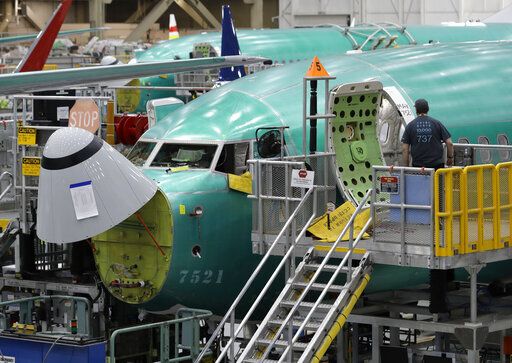
from Addis Ababa on March 10, killing all 157 on board. A
 preliminary report finds that the crew of the Ethiopian
 Airlines jet that crashed last month performed all the
 procedures recommended by Boeing but could not
 control the plane. (AP Photo/Mulugeta Ayene, File)

Boeing is the focus of investigations by the U.S.
Justice Department, the Transportation
Department's inspector general, and congressional
committees. Investigations are also looking at the
role of the Federal Aviation Administration in the
U.S., which certified the Max in 2017, declined to
ground it after the first deadly crash in October. The
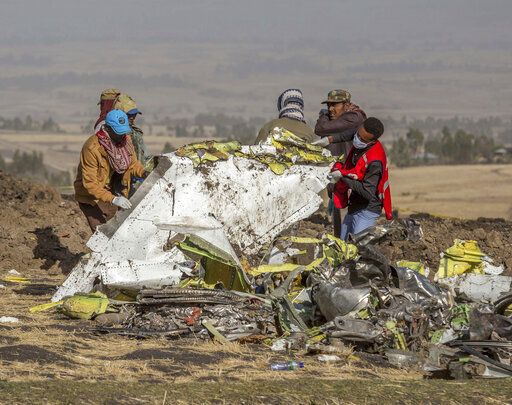
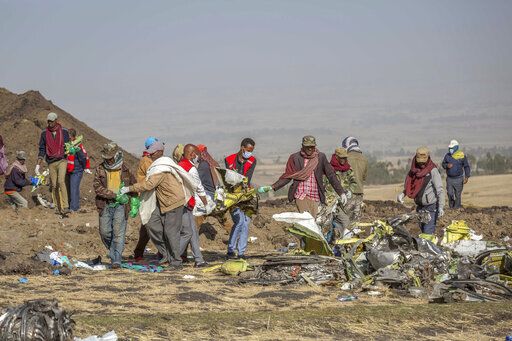
agency was also reluctant to ground the planes         In this March 11, 2019, file photo, wreckage is piled at
after the Ethiopian Airlines crash and was among the crash scene of an Ethiopian Airlines flight crash near
the last agencies to do so.                            Bishoftu, Ethiopia. A published report says pilots of an
                                                            Ethiopian airliner that crashed followed Boeing's
                                                            emergency steps for dealing with a sudden nose-down
The FAA, which must certify the 737 Max is safe
                                                            turn but couldn't regain control. (AP Photo/Mulugeta
before it can go back into the air, said in a
                                                            Ayene, File)
statement that the investigation is still in its early
stages.

"As we learn more about the accident and findings The agency said Monday that it anticipates
become available, we will take appropriate action," Boeing's final software improvements for 737 Max
the agency said.                                    airliners "in the coming weeks."

The statement did not say if the FAA would review           But it wasn't clear whether the Ethiopians are
the Max's flight control system as recommended by           seeking just that or a broader update in the Max's
Ethiopian investigators, and FAA spokesman Greg             flight controls.
Martin would not comment beyond the statement.
Boeing is working on improvements to the MCAS               What also isn't clear is whether the Ethiopian pilots
software that would make it less aggressive in              followed Boeing's recommendations to the letter in
pointing the nose down and easier for pilots to             dealing with the system repeatedly pointing the
disable. The FAA has said it will review the                nose down.
software before allowing the Max to fly again.
                                                            The pilots initially followed Boeing's emergency
                                                            steps by disconnecting the MCAS system, but for
                                                            an unknown reason, they turned the system back
                                                            on, an official familiar with the crash investigation
                                                            told The Associated Press on Wednesday. The
                                                            official spoke on condition of anonymity because at
                                                            the time, Ethiopian investigators had not released
                                                            their preliminary report. Boeing's procedures
                                                            instruct pilots to leave the MCAS system
                                                            disconnected and continue flying manually for the
                                                            rest of the flight.

                                                                                                           2/6
In this March 27, 2019, file photo, a worker enters a
                                                             Boeing 737 MAX 8 airplane during a brief media tour of
In this March 11, 2019, file photo, rescuers work at the
                                                             Boeing's 737 assembly facility in Renton, Wash. A
scene of an Ethiopian Airlines flight crash near Bishoftu,
                                                             published report says pilots of an Ethiopian airliner that
Ethiopia. A published report says pilots of an Ethiopian
                                                             crashed followed Boeing's emergency steps for dealing
airliner that crashed followed Boeing's emergency steps
                                                             with a sudden nose-down turn but couldn't regain control.
for dealing with a sudden nose-down turn but couldn't
                                                             (AP Photo/Ted S. Warren, File)
regain control. (AP Photo/Mulugeta Ayene, File)

Ethiopian investigators did not address that issue at
its press conference, saying only that the pilots had
done what they were supposed to.

"The crew performed all the procedures repeatedly
provided by the manufacturer but was not able to
control the aircraft," said Minister of Transport
Dagmawit Moges.

However, Moges told The New York Times after
the press conference that the pilots turned MCAS
on and off, but she couldn't say how many times.
That will be addressed in the final report, she said.

In a statement Thursday, Ethiopian Airlines said its         In this Wednesday March 13, 2019 file photo, a family
pilots followed Boeing instructions. "Despite their          member reacts at the scene where the Ethiopian Airlines
                                                             jet crashed near Bishoftu, in Ethiopia, just after taking off
hard work and full compliance with the emergency
                                                             from Addis Ababa on March 10, killing all 157 on board.
procedures, it was very unfortunate that they could          A preliminary report finds that the crew of the Ethiopian
not recover the airplane from the persistence of             Airlines jet that crashed last month performed all the
nose diving," the airline said.                              procedures recommended by Boeing but could not
                                                             control the plane. (AP Photo/Mulugeta Ayene, File)

                                                                                                                  3/6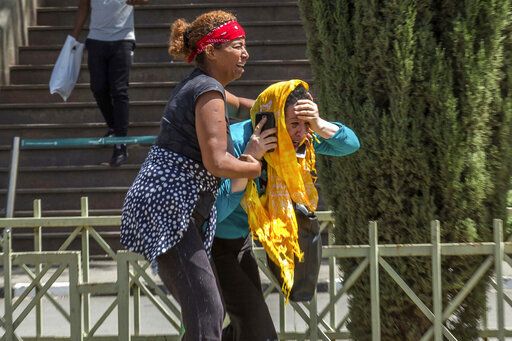
In this Thursday March 14, 2019 file photo, Ethiopian
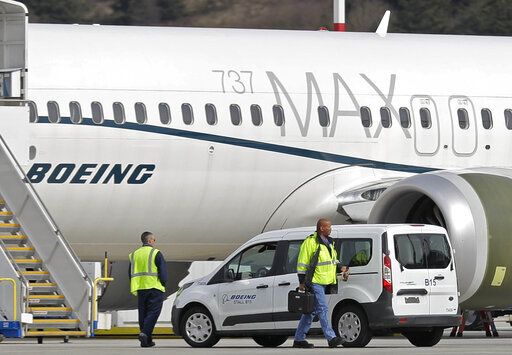
relatives of crash victims mourn at the scene where the       In this March 14, 2019, file photo, workers walk next to a
Ethiopian Airlines jet crashed near Bishoftu, in Ethiopia,    Boeing 737 MAX 8 airplane parked at Boeing Field, in
just after taking off from Addis Ababa on March 10, killing   Seattle. A published report says pilots of an Ethiopian
all 157 on board. A preliminary report finds that the crew    airliner that crashed followed Boeing's emergency steps
of the Ethiopian Airlines jet that crashed last month         for dealing with a sudden nose-down turn but couldn't
performed all the procedures recommended by Boeing            regain control. (AP Photo/Ted S. Warren, File)
but could not control the plane. (AP Photo/Mulugeta
Ayene, File)

                                                              The Ethiopian officials did not say whether the
                                                              MCAS system activated because of a faulty sensor
                                                              that measures the plane's angle relative to the
                                                              wind. One of the sensors, called Angle of Attack,
                                                              malfunctioned in the Lion Air crash, triggering the
                                                              MCAS system.

                                                              David Hasse, an aviation analyst and editor of
                                                              industry publication airliners.de in Berlin, says it is
                                                              significant that the report found that the pilots
                                                              followed the proper procedures, because that links
                                                              the case more closely to the Lion Air crash.

                                                         "What is special about this case is that two crashes
                                                         seem to have a very, very similar reason. This is
                                                         something that is very rare in aviation. The question
In this Monday March 11, 2019 file photo, rescuers work is whether the Boeing 737 Max should have been
at the scene of an Ethiopian Airlines flight crash near  grounded after the Lion Air crash and before the
Bishoftu, or Debre Zeit, south of Addis Ababa, Ethiopia. Ethiopian Airlines crash," said Hasse.
The Ethiopian Airlines jet crashed just after taking off
from Addis Ababa on March 10, killing all 157 on board.
                                                              He noted that crash reports are not meant to assign
A preliminary report finds that the crew of the Ethiopian
Airlines jet that crashed last month performed all the        legal blame and that it is too soon to know what the
procedures recommended by Boeing but could not                legal implications might be for Boeing, but it clearly
control the plane. (AP Photo/Mulugeta Ayene, File)            raises the pressure on the company.

                                                                                                                 4/6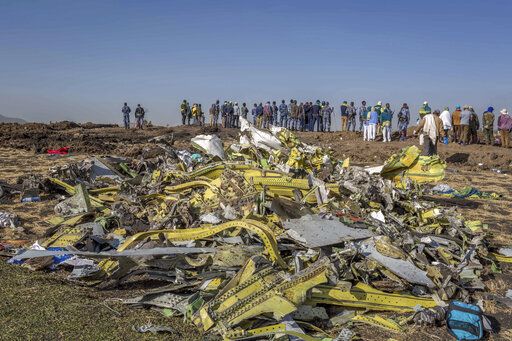
Hansman said it's key to know if the angle of attack
                                                            sensor malfunctioned, and how long after takeoff it
                                                            took for the pilots to diagnose the problem and shut
                                                            off MCAS. The later they shut it off, the less time
                                                            they had to recover, he said. He also would like to
                                                            know at what point the MCAS system was turned
                                                            back on and if it was too late to prevent the crash.

                                                            © 2019 The Associated Press. All rights reserved.

In this Sunday March 10, 2019 file photo, family
members of the victims involved in a plane crash react at
Addis Ababa international airport. The Ethiopian Airlines
jet crashed just after taking off from Addis Ababa on
March 10, killing all 157 on board. A preliminary report
finds that the crew of the Ethiopian Airlines jet that
crashed last month performed all the procedures
recommended by Boeing but could not control the plane.
(AP Photo/Mulugeta Ayene, File)

"If pilots sit there and follow the rules that have
been given to them by the manufacturer, then they
should be able to rely on the fact that they are
correct," Hasse said.

But John Hansman, an aeronautics professor at the
Massachusetts Institute of Technology, said turning
the MCAS system back on after disabling it would
be a logical step for the pilots to take. If pilots find
that the plane is repeatedly pointing the nose down,
Boeing procedures say they should flip two
switches to the left of their knees that would cut
electrical power to motors that control a horizontal
stabilizer on the tail. MCAS points the nose down
by moving the stabilizer with the motors. After
disabling the stabilizer, the pilots would have had to
control it by turning a wheel manually to point the
nose up.

Turning the wheel is slower than the electric
motors, so the pilots could have turned MCAS back
on in hopes of using the electric motors to quickly
point the nose up, he theorized.

                                                                                                         5/6
APA citation: Preliminary report: Ethiopia crew followed Boeing procedures (2019, April 4) retrieved 23
                                   May 2019 from https://phys.org/news/2019-04-crew-doomed-ethiopia-jet-procedures.html

                                   This document is subject to copyright. Apart from any fair dealing for the purpose of private study or research, no
                                   part may be reproduced without the written permission. The content is provided for information purposes only.

                                                                                                                                                6/6

Powered by TCPDF (www.tcpdf.org)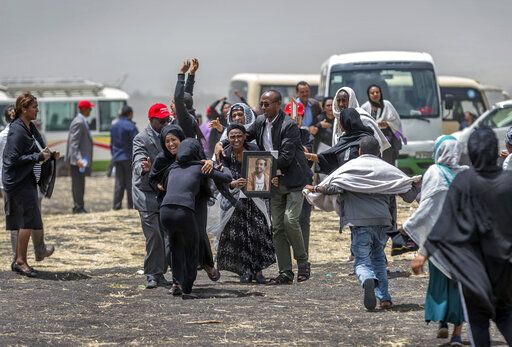

You can also read


