Premium Seed Catalog 2023 - Sorghum Partners Hybrids Double Team Sorghum Hybrids Alfalfa Partners Varieties
←
→
Page content transcription
If your browser does not render page correctly, please read the page content below
Premium
   Seed
 Catalog
   2023
   Sorghum Partners Hybrids

Double Team™ Sorghum Hybrids

     Alfalfa Partners Varieties
Seeding the World                                                                                                    Introducing New and Better Products Faster
                                                                                                                     Crop innovation begins with elite germplasm. Over the next decade
For over 40 years S&W Seed Company has provided the world’s farmers with the very best alfalfa and sorghum           our expert team will expand our brands and offer new and innovative
seed to maximize yields and profits. We are dedicated to breeding crops that mitigate the most difficult agronomic   products for greater crop success.

issues such as soil salinity, drought conditions, herbicide tolerance, pest and disease resistance, and many other   In sorghum, our collection of more than 10,000 unique breeding
                                                                                                                     lines, sourced from commercial, public, and wild collections now
challenging growing conditions. With the world’s population continuing to increase and the availability of arable
                                                                                                                     represent the most diverse collection of proprietary genetics in the
land decreasing, S&W Seed Company works with growers—through both classical breeding and biotechnology               industry. This unique germplasm is combined to create over 100,000
initiatives—to offer the largest and most diverse platform of products and traits available.                         unique hybrid combinations, including industry leading hybrid grain,
                                                                                                                     forage, food grade, and sweet sorghum seed optimized for feed, food,
Our innovative work with trait technology has developed hybrids and varieties with improved yield, not only in       and fuel markets. Our domestic testing programs range from Texas to
                                                                                                                     South Dakota and from California to the Carolinas. We combine that
good soil conditions, but in some of the toughest soil conditions in the world—taking on unprecedented drought.
                                                                                                                     work with data collected from our international locations in Mexico,
We are committed to providing products resistant to the diseases and insects that pose problems for farmers,         South America, Europe, Asia, Australia, and Africa to help us refine
while ensuring enhanced digestibility for livestock producers. Our dedicated teams also develop technologies         our new hybrid selections.

to make crops resistant to certain herbicides, offering farmers enhanced productivity.                               Our alfalfa breeders continue to develop the most innovative,
                                                                                                                     university-verified varieties available anywhere in the world. It takes
Our expertise in agricultural breeding, production, and processing for both the sorghum and alfalfa industries       many years to develop, test, and produce alfalfa varieties, depending
                                                                                                                     on the methodology or traits being developed. We stay abreast of
is what sets us apart to provide industry-leading traits and technologies through our company brands:
                                                                                                                     current trends through innovative research and development.
Sorghum Partners® and Alfalfa Partners.®
                                                                                                                     Since 2010, we have dramatically expanded both the acreage
                                                                                                                     dedicated to alfalfa production and our R&D focus to include dormant
                                                                                                                     and biotech varieties. Our state-of-the-art breeding facility at Nampa,
                                                                                                                     Idaho maintains performance trials in dormant growing areas all
                                                                                                                     across North America. The vast majority of our alfalfa varieties have
                                                                                                                     been approved through the National Alfalfa Variety Review Board           Over the past few years, we have expanded our production and
                                                                                                                     of the Association of Official Seed Certifying Agencies (“AOSCA”), a      treatment capabilities and now export seed from multiple production
                                                                                                                     requirement for certification and export to OECD countries.               facilities in United States, Australia, South America, and Africa to over
                                                                                                                     With our multiple nursery locations, molecular teams and world class      40 countries around the world. We have the production capacity to
                                                                                                                     greenhouses, we evaluate and advance new seed technologies                ensure sufficient inventory to meet demand. With these resources,
                                                                                                                     year-round. This makes it possible for us to launch products rapidly in   S&W is uniquely positioned to respond to changes in the market and
                                                                                                                     response to industry needs.                                               committed to deploying its facilities, capabilities, and team to deliver
                                                                                                                                                                                               leading sorghum and alfalfa products to our industry.
Sorghum Partners®                                                                   Our Trait Development Leads the Industry
                                                                                    As our team continues to identify new traits and technologies that
In October of 2018, Sorghum Partners became a proud member of the S&W brand         improve sorghum, next generation innovations are on the horizon.
legacy and will continue to carry on the mission of providing proprietary seed      We now offer Double Team Sorghum with the herbicide tolerant
                                                                                    DT® Trait, developed with non-GMO technology. Double Team
products that support the growing global demand for animal proteins and healthier
                                                                                    Sorghum is part of the Double Team Sorghum Cropping Solution to
consumer diets with grain, silage, and forage hybrids.                              control weeds and increase yields. We also have the exclusive license
                                                                                    to develop the new dhurrin-free sorghum trait which will provide safer
Sorghum Partners has been producing quality seed for over 15 years. We operate a    and tastier sorghum for cattle and other livestock.
global breeding program for grain and forage sorghum from technology developed      Our elite brand is known for its innovative hybrids. Growers
by S&W Seed Company. We partner with industry drivers and decision makers in the    worldwide trust us to develop and deliver products that meet their
                                                                                    most crucial needs:
row crop and livestock feed markets to provide new and innovative solutions—
creating an expansive market-leading product line:                                  • Increased yield              • Sugarcane aphid tolerance
                                                                                    • Water scarcity and drought   • Pest and disease resistance
• Grain sorghum hybrids with key traits that increase yield                         • Standability                 • Enhanced digestibility

• Silage sorghum hybrids that fit all livestock feeding needs                       • Staygreen                    • Weed control and rotation

• Forage sorghum hybrids that deliver quality and yield                             Our Team is Focused Solely on Sorghum
                                                                                    Sorghum Partners is dedicated to your operation’s success.
• Double Team™ sorghum hybrids with herbicide tolerance for grass weed control      Our team is comprised of seasoned sorghum experts with decades
                                                                                    of experience who have helped launch successful innovations to
                                                                                    improve sorghum potential. We are committed to providing our
                                                                                    customers industry-leading expertise, advanced agronomic support
                                                                                    and the highest level of customer support. As a customer, you have
                                                                                    access to experts who can answer questions on products, crop
                                                                                    management, agronomy, sales, and marketing.
Grain Sorghum
Product Ratings
loom
nce
urity
urity
nd
olera
e
n
%B
r Pou
ility
ranc
Trait Technologies
ility
ertio
Mat
Mat
lity
lor
ce
ut
pe
to 50
Stab
ght T
shab
dabi
Tole
d Sm
s Pe
rgen
n Co
for
d Ex
tive
d Ty
ht
Grain sorghum trait technologies address issues such as maxi-
Yield
Yield
Seed
Drou
Stan
Days
Heig
SCA
Thre
Rela
Eme
Hea
Grai
Hea
Hea
PRODUCT RATINGS
mum insect and disease resistance, grain quality, harvest-ability, Deviation from normal planting
drought and heat tolerance, and herbicide tolerance. SP 24C20 DT Very Early 48-52 Short 3-7” Semi-Open Cream 16,000 3 2 2 2 2 4 S U date, cultural practices and
growing conditions may affect
DOUBLE TEAM
SP 30A30 DT Early 55-59 Medium 5-7” Semi-Open Bronze 12,000 1 1 2 3 3 3 S U performance and cause
DT Trait variation in characteristics.
The DT Trait inside Double Team sorghum was developed to SP 31C06 DT Early 54-58 Short 4-7” Semi-Compact Cream 16,500 4 2 2 4 3 4 S U Ratings and descriptions are
tolerate FirstAct herbicide to allow for superior over-the-top based on research and field
SP 45A45 DT Medium Early 57-61 Medium 2-5” Semi-Open Bronze 12,000 1 1 2 2 4 3 S U observations from multiple
grass weed control. Cleaner fields mean bigger yields. locations over multiple years;
comparisons with company
SP 58M85 DT Medium 62-66 Medium 5-7” Semi-Compact Bronze 14,000 1 2 2 2 2 3 MT U
Stiff Stalk products only.
Stiff Stalk trait improves standability by increasing stalk rind Days to bloom may vary due
251 Early 50-54 Short 4-6” Semi-Open Red 18,000 2 3 2 1 1 1 S 2 to growth characteristics,
thickness, for more structural strength and tolerance to stalk rots. planting dates or environment.
SP 25C10 Early 49-54 Short 3-7” Semi-Open Cream 17,600 3 2 2 2 2 4 S U
Seeds per pound may vary due
Staygreen to environmental influences
SP 31A15 Early 54-58 Medium 3-7” Semi-Open Bronze 11,700 2 2 2 3 2 2 S 5 during the production.
Our Staygreen trait allows the plant to maintain green leaves under
CONVENTIONAL GRAIN SORGHUM
stress to produce carbohydrates through photosynthesis and SP3303 Medium Early 57-61 Medium 5-7” Semi-Compact Cream 13,000 5 2 2 2 2 2 S U
reduce remobilization.
RATINGS 1-9
SP 43M80 Medium Early 58-62 Medium 4-6” Semi-Open Bronze 13,500 3 3 2 2 2 3 HT 3
1=Excellent
Sugarcane Aphid Tolerant (SCA)
SP 68M57 Medium 66-71 Medium 4-6” Semi-Open Bronze 14,300 3 1 1 3 3 3 MT 3 5=Average
Our industry-leading SCA tolerant trait offers a range of protection 9=Poor
from sugarcane aphids. Look for this SCA tolerance key: SP 66M16 Medium 65-66 Medium 4-6” Semi-Open Bronze 13,500 3 1 2 2 3 4 HT U
LEGEND
Limited Moderate High SP 67B17 Medium-Full 66-68 Medium-Tall 5-7” Semi-Open Bronze 13,500 2 2 2 2 2 2 HT U T=Tolerant
MT= Moderately Tolerant
White and yellow sugarcane aphids can be further managed by SP 72M42 Medium-Full 70-72 Medium-Tall 5-7” Semi-Open Bronze 13,800 3 2 2 2 4 2 HT U HT= Highly Tolerant
implementing a comprehensive Integrated Pest Management S=Susceptible
SP 74M21 Medium Full 69-74 Medium Tall 4-7” Semi-Compact Bronze 12,700 3 2 2 3 3 2 HT 2 U=Undetermined
(IPM) program. An IPM program is a strategy that combines the
NA=Not Available
use of multiple pest control tactics to maximize your operation’s SP7715 Medium Full 71-75 Medium Tall 5-7” Semi-Compact Bronze 14,000 3 2 2 2 4 2 HT 3
economic returns. Contact us for details.
NK8828 Full 74-78 Tall 3-6” Semi-Compact Cream 16,500 3 2 2 4 3 3 S 2
SEEDING RATES Yield Goal Seed/acre
If planting in 20 inch rows or less
≤80 bu/acre ≤ 4,500 lbs/acre 25 – 35,000
always use the higher rates.
80 -125 bu/acre 4,000 – 5,600 lbs/acre 40 – 55,000
Increase seeding rate by 20% if
planting is delayed significantly to 125+ bu/acre 7,000+ lbs/acre 55 – 70,000
account for lower tillering rates. Irrigated Irrigated 80 – 120,000
6 1-855-SORGHUM S O R G H U M PA R T N E R S .C O M 1-855-SORGHUM S O R G H U M PA R T N E R S .C O M 7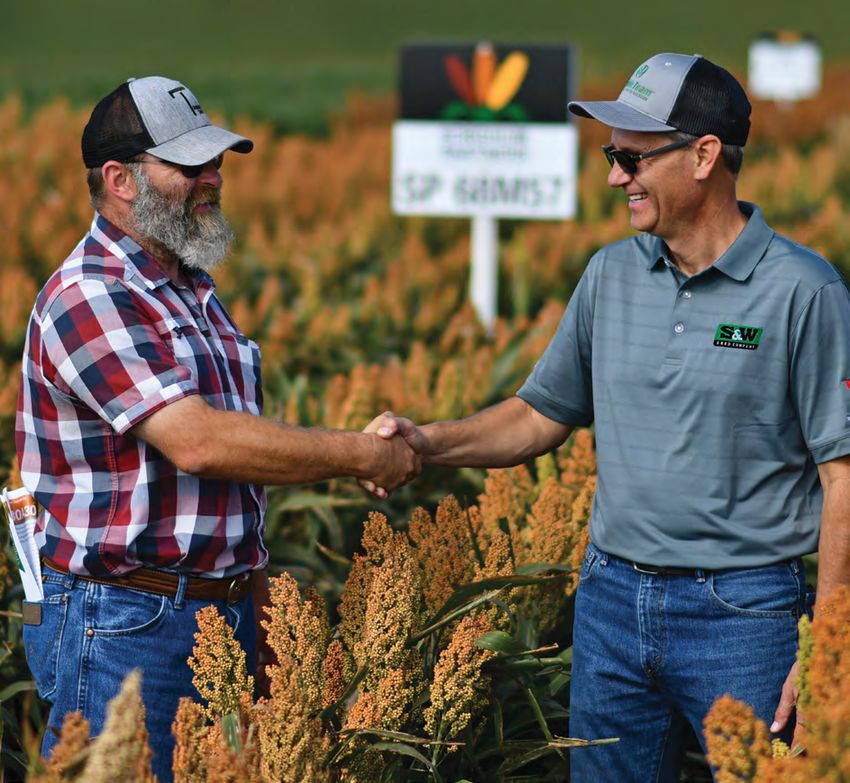
Grain Sorghum
Grain Sorghum
9 8 7 6 5 4 3 2 1 9 8 7 6 5 4 3 2 1 9 8 7 6 5 4 3 2 1 9 8 7 6 5 4 3 2 1 9 8 7 6 5 4 3 2 1 9 8 7 6 5 4 3 2 1 9 8 7 6 5 4 3 2 1 9 8 7 6 5 4 3 2 1 9 8 7 6 5 4 3 2 1 9 8 7 6 5 4 3 2 1
Emergence Emergence Emergence Emergence Emergence Emergence Emergence Emergence Emergence Emergence
Yield for Maturity Yield for Maturity Yield for Maturity Yield for Maturity Yield for Maturity Yield for Maturity Yield for Maturity Yield for Maturity Yield for Maturity Yield for Maturity
Yield Stability Yield Stability Yield Stability Yield Stability Yield Stability Yield Stability Yield Stability Yield Stability Yield Stability Yield Stability
Standability Standability Standability Standability Standability Standability Standability Standability Standability Standability
Drought Tolerance Drought Tolerance Drought Tolerance Drought Tolerance Drought Tolerance Drought Tolerance Drought Tolerance Drought Tolerance Drought Tolerance Drought Tolerance
Threshability Threshability Threshability Threshability Threshability Threshability Threshability Threshability Threshability Threshability
SP 25C10 SP 31A15 SP3303 SP 43M80 SP 72M42 SP 74M21 SP7715
SP 25C10 SP 31A15 SP3303 SP 43M80 SP 68M57 SP 66M16 SP 67B17 SP 72M42 SP 74M21 SP7715
VERY EARLY MATURIT Y EARLY MATURIT Y MEDIUM-EARLY MATURIT Y MEDIUM-EARLY MATURITY MEDIUM MATURITY MEDIUM MATURITY MEDIUM-FULL MATURIT Y MEDIUM-FULL MATURIT Y MEDIUM-FULL MATURIT Y MEDIUM-FULL MATURIT Y
SP 25C10 is an early hybrid SP 31A15 is a bronze early SP3303 is a medium-early SP 43M80 is a medium-early SP 68M57 is a medium maturity SP 66M16 is a medium maturity SP 67B17 is a medium full SP 72M42 is a medium-full, SP 74M21 is a medium-full This medium-full, bronze
with cream colored grain on a maturity grain sorghum with hybrid with cream colored, maturity grain hybrid with high hybrid with intermediate Stay- hybrid with high Staygreen and maturity hybrid with bronze bronze-colored grain hybrid maturity hybrid with light grain hybrid has very high,
purple plant. This hybrid is very very good yield for maturity, food-grade grain on a tan plant. SCA tolerance and excellent green and resistance to downy Stiff Stalk. SP 66M16 has high grain, high Staygreen and with very high, stable yields bronze grain and high white stable yields with superb
well adapted to the Northern strong emergence and seedling This hybrid has high yield appearance. Its semi-open head mildew pathotypes 1, 3, and 6. tolerance to the white sugar- moderate sugarcane aphid and the highest level of SCA sugarcane aphid tolerance. tolerance to anthracnose, all
Plains and late planted double vigor. This hybrid adapts very potential. It is very uniform, and light bronze grain result in SP 68M57 has good resistance cane aphid (SCA). This hybrid tolerance. SP 67B17 excellent tolerance. It has a uniform SP 74M21 has high yield downy mildew pathotypes, and
crop systems in the Great well to shorter growing season has excellent standability, stunning overall field appeal. to head smut and moderate has above average stalk quality drought tolerance that will appearance, a semi-open head. potential and excellent panicle white sugarcane aphids. SP7715
Plains. SP 25C10 is well suited environments, late plantings, threshability, and drought SP 43M80 has Stiff Stalk and tolerance to the white sugar- and excellent appearance. It perform well under irrigation SP 72M42 is an excellent fit exertion under stress. It has has a uniform appearance, a
for late disaster replants follow- and double crop scenarios. Its tolerance. This hybrid performs Staygreen to provide excellent cane aphid (SCA). SP 68M57 is an excellent fit for favorable and high yielding dryland con- for Central and South Texas moderate Stiff Stalk and strong semi-open head, and very good
ing failed cotton acres as late very good drought tolerance, well in drought-prone regions standability and drought stress has above average stalk quality dryland and irrigation in the ditions. Well adapted to the I-35 irrigated and higher yielding Staygreen traits. threshability. Excellent stand-
as mid-July. Very good drought above average stalk quality, and can produce grain with tolerance. This hybrid is well and is an excellent fit for South High Plains with high yield corridor and East, from Central dryland fields. ability and drought tolerance
• Highly-tolerant to
tolerance and intermediate along with strong stand estab- very little precipitation. adapted for dryland fields in Texas through the Plains. potential. Texas to Central Nebraska. sugarcane aphid allows maximum yields across
• High level of SCA Tolerance
Staygreen along with very good lishment and seedling vigor Great Plains with excellent different geographies such as
• Excellent drought tolerance • High yielding medium to • High yielding medium hybrid • Excellent drought tolerance • Staygreen for improved drought • Excellent appearance &
stalk quality provide consistent, provide a very consistent, stable yield potential. medium-full hybrid very good yield Central/South Texas, Mississippi
• Copes with heat very well • Bronze grain, excellent • Great seedling vigor tolerance
stable performance. performance. Delta, and East Coast regions.
• High sugarcane aphid • Well-suited for South Texas appearance • Stiff Stalk for improved • Stiff Stalk and strong
• Excellent standability through the Plains • High sugarcane aphid tolerance Staygreen traits
• Very good yield for early • Very good yield for early maturity tolerance standability • Very high yield potential
• Tolerates high aphid intensity
maturity • Excellent yield for maturity • Bronze grain, excellent • High Staygreen • Uniquely adapted to the
• Very good drought tolerance • Excellent drought stress • Semi-open head • Very good standability
appearance • Well-suited for favorable dryland Great Plains irrigated and
• Very good stalk quality and Staygreen • Great eye appeal and and irrigation in the High Plains. • High test weight favorable dryland acres
• Excellent panicle exertion under • High yielding in South Texas • Excellent anthracnose tolerance
uniformity • Resistant to downy mildew
• Very good option for late planted • Excellent option for double crop, drought stress • Good exsertion under irrigated and favorable
pathotypes 1, 3, and 6 • High Staygreen and Stiff Stalk • Excellent panicle exertion
double crop or disaster plantings late plantings, or shorter • Cream colored, food grade drought stress dryland fields • Good general leaf disease
• Semi-Open head with great under drought stress
growing seasons • Widely-adapted resistance
• Very good drought tolerance uniformity
• Excellent drought stress
• Strong emergence and • Very good threshability
• Stiff Stalk and Staygreen traits tolerance
• Recommend 15 inch rows seedling vigor
or narrower • Resistant to greenbug
• Excellent for Great Plains • Semi-compact head and
• Consistent, stable performance biotypes C & E
dryland fields excellent uniformity
8 1-855-SORGHUM S O R G H U M PA R T N E R S .C O M 1-855-SORGHUM S O R G H U M PA R T N E R S .C O M 9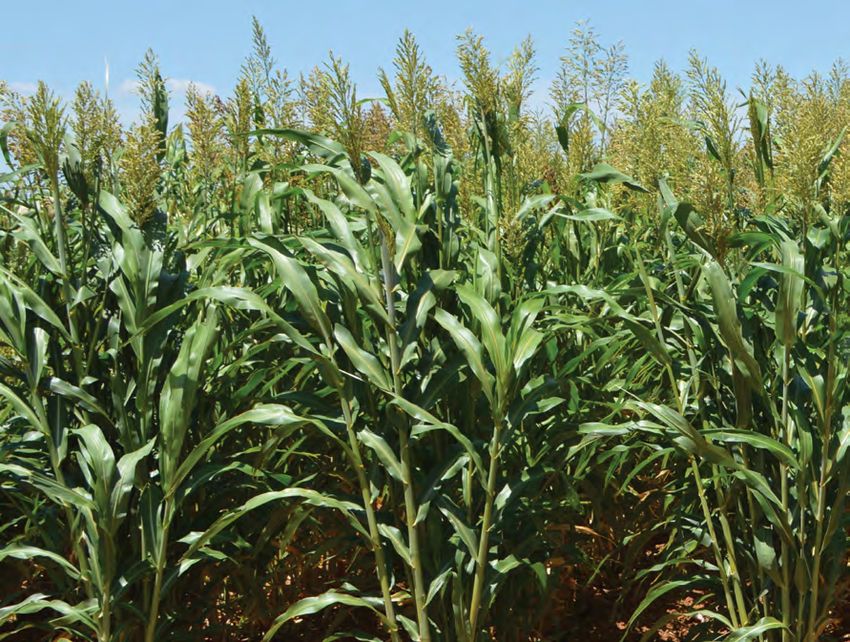
Double Team Grain Sorghum
Double Team Grain Sorghum
9 8 7 6 5 4 3 2 1 9 8 7 6 5 4 3 2 1 9 8 7 6 5 4 3 2 1 9 8 7 6 5 4 3 2 1 9 8 7 6 5 4 3 2 1
How the Double Team™ Solution Works Emergence Emergence Emergence Emergence Emergence
Yield for Maturity Yield for Maturity Yield for Maturity Yield for Maturity Yield for Maturity
• DT® Trait inside Double Team sorghum provides herbicide tolerance
Yield Stability Yield Stability Yield Stability Yield Stability Yield Stability
• FirstAct™ herbicide for superior over-the-top grass and weed control
Standability Standability Standability Standability Standability
• Two reliable technologies integrate for superior yields and profits Drought Tolerance Drought Tolerance Drought Tolerance Drought Tolerance Drought Tolerance
• Flexible solution designed with few rotational crop restrictions Threshability Threshability Threshability Threshability Threshability
SP 24C20 DT SP 30A30 DT SP 31C06 DT SP 45A45 DT SP 58M85 DT
Part 1: Double Team Sorghum Hybrids
Sorghum Partners’ Double Team hybrids come with S&W’s DT Trait SP 24C20 DT SP 30A30 DT SP 31C06 DT SP 45A45 DT SP 58M85 DT
VERY EARLY MATURITY EARLY MATURIT Y EARLY MATURIT Y MEDIUM EARLY MATURIT Y MEDIUM MATURIT Y
inside—a technology developed specifically to tolerate quizalofop,
the active ingredient in FirstAct herbicide. Our innovative, non-GMO, SP 24C20 DT is a cream grain, SP 30A30 DT is a bronze grain, SP 31C06 DT is a cream grain, SP 45A45 DT is a bronze grain, SP 58M85 DT is a medium
mutation-based lab techniques and rigorous testing programs have very early maturity hybrid with early maturity hybrid with high early maturity hybrid with good medium-early maturity hybrid maturity hybrid with bronze
resulted in elite hybrids with the proven ability to undergo FirstAct high yield potential. This hybrid yield potential. The hybrid is drought tolerance and uniform with high yield potential. grain and moderate SCA
applications, continue growing, and deliver unprecedented yields. is ideally suited for environ- ideally suited for dryland acres appearance. Suitable for high This hybrid is ideally suited tolerance. This hybrid has high
ments with shorter growing in the Great Plains where higher pH soils, shorter growing for dryland areas with higher levels of Staygreen for improved
Part 2: FirstAct Herbicide seasons and for double crop soil pH may be a problem. Can seasons, and areas where rainfall or irrigated acres. Can standability and excellent
The FirstAct herbicide utilizes ADAMA’s proprietary formula for following wheat or other early also be utilized as double crop double crop is planted following also be utilized as a double crop emergence in cool soils. An
superior grass weed control. When applied to Double Team hybrids, harvested crops. in area with longer growing wheat or other early summer in areas with longer growing excellent choice throughout
growers get reliable and safe, broad spectrum over-the-top control seasons. harvested crops. seasons. the Great Plains.
of Crabgrass, Volunteer Corn, Sanbur, Texas Millet, Panicum, Foxtail, • Tolerant to FirstAct™ Herbicide
Barnyardgrass and a long list of others. Cleaner fields mean increased • Over-the-top grass weed control • Tolerant to FirstAct™ Herbicide • Tolerant to FirstAct™ herbicide • Tolerant to FirstAct™ Herbicide • Tolerant to FirstAct™ herbicide
yields, and the kind of profits conventional methods just can’t match. • High yield for maturity • Over-the-top grass weed control • Over-the-top grass weed control • Over-the-top grass weed control • Over-the-top grass weed control
• Good stalk quality • High yield for maturity • High yield for maturity • High yield for maturity • High yield for maturity
The Double Team Solution
• Good drought tolerance • Excellent emergence • Good drought tolerance • Excellent emergence • Moderately tolerant to SCA
Integrating these two powerful and reliable technologies enables
• Good option for late planting or • Excellent for late planting or • Good for high pH soils • Excellent standability • Staygreen for excellent
the Double Team Solution for improving sorghum profits in the U.S. double crop double crop standability
• Very uniform plant
This solution has few rotational crop restrictions while offering • Excellent emergence from
growers flexibility and crop selectivity. Double Team understands cool soils
that each field is unique and provide ongoing support to address
your individual needs.
10 1-855-SORGHUM S O R G H U M PA R T N E R S .C O M 1-855-SORGHUM S O R G H U M PA R T N E R S .C O M 11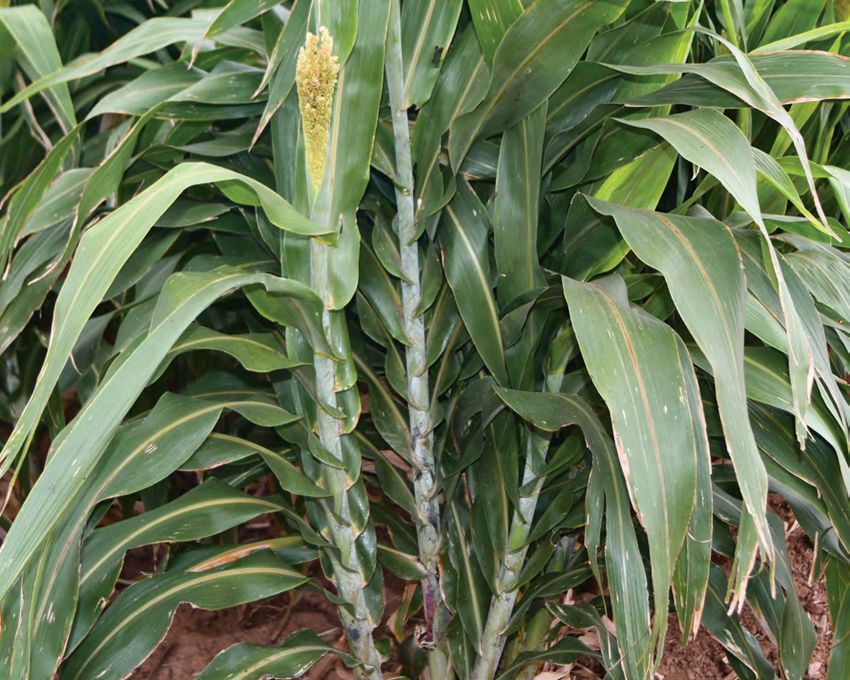
Silage Sorghum
Product Ratings
ge
nce
Rate
Fora
riod
urity
nd
ess
Silage Hybrids Decision Tree
)
ht
olera
nage
t
r Pou
Sens Photope
(Day e Harves
Heig
eetn
Tole acnose
n in
owth
Mat
lity
ght T
)
(Ton
e
ness
Grai
itive
dabi
s Pe
ranc
k Sw
tive
tive
y Gr
s)
r
(
Leafi
Yield
Drou
Anth
BMR
Silag
Seed
% of
Stan
Rela
Rela
PPS
Stal
Earl
Medium Early PRODUCT RATINGS
SP2774 BMR SP3905 BD
BMR Deviation from normal planting
BMR SP2774 BMR Medium Early 13,000 8-9’ Yes 100 2 No 3 4 3 4 5 10-15% S date, cultural practices and
growing conditions may affect
Medium Full SP2904 BD SP1727 MS
BMR BMR performance and cause
SP3905 BD BMR Medium Early 18,000 6-7’ Yes 85-95 2 No 2 2 2 2 5 15-20% T variation in characteristics.
Ratings and descriptions are
Medium Early based on research and field
NK300 NK300 Medium Early 13,000 6-7’ No 100-110 3 No 2 3 2 3 5 15-20% S observations from multiple
locations over multiple years;
Medium comparisons with company
SP1792 MS HIKANE II SP1792 MS Medium 19,000 7-9’ No 85-105 3 No 2 3 3 3 2 0% T products only.
SIL AGE SORGHUM
CONVENTIONAL
Medium Full Dough stage from emergence.
SS304 Hikane II Medium 19,000 8-10’ No 110-120 3 No 2 3 4 3 2 10-15% S
Seeds per pound may vary due
to environmental influences
Full
SS405 SP1615 SP3904 BD BMR Medium Full 17,500 6’ Yes 110-115 2 No 2 2 2 2 5 15-20% T during the production.
RATINGS 1-9
SP1727 MS BMR Medium Full 17,500 8-10’+ Yes 90-120 3 No 2 3 3 2 2 0% S
Trait Technologies 1=Excellent
5=Average
Silage sorghum trait technologies address issues such as yield, SS304 Medium Full 21,000 10-12’ No 115-120 2 No 2 3 3 3 2 10-15% T 9=Poor
digestibility, feeding efficiencies and nutrients.
LEGEND
SS405 Full 14,500 10-12’ No 120-125 2 No 2 3 4 3 2 5-15% S
Brachytic Dwarf (BD) Trait T=Tolerant
These hybrids have shorter internodes, overall reduced plant MT= Moderately Tolerant
SP1615 Full 14,000 10-12’ No 125-130 1 Yes 2 2 3 3 3 0% S HT= Highly Tolerant
height, reduced lodging, while maintaining yield potential.
S=Susceptible
U=Undetermined
Brown Mid-Rib (BMR) Trait NA=Not Available
SEEDING RATES
A genetic trait that lowers lignin content for increased plant digest-
ibility, which leads to higher feeding efficiency and less manure. Growing Conditions Seed/acre
Adequate Moisture 100,000
Male Sterile (MS) Trait Limited Moisture 70,000
Male sterile sorghum hybrids do not produce pollen or grain in most
environments. Male sterile hybrids convert the carbohydrates that
would have been grain starch in the stem as sugar. These sugars are
quite stable when the hybrid is harvested and ensiled correctly.
12 1-855-SORGHUM S O R G H U M PA R T N E R S .C O M 1-855-SORGHUM S O R G H U M PA R T N E R S .C O M 13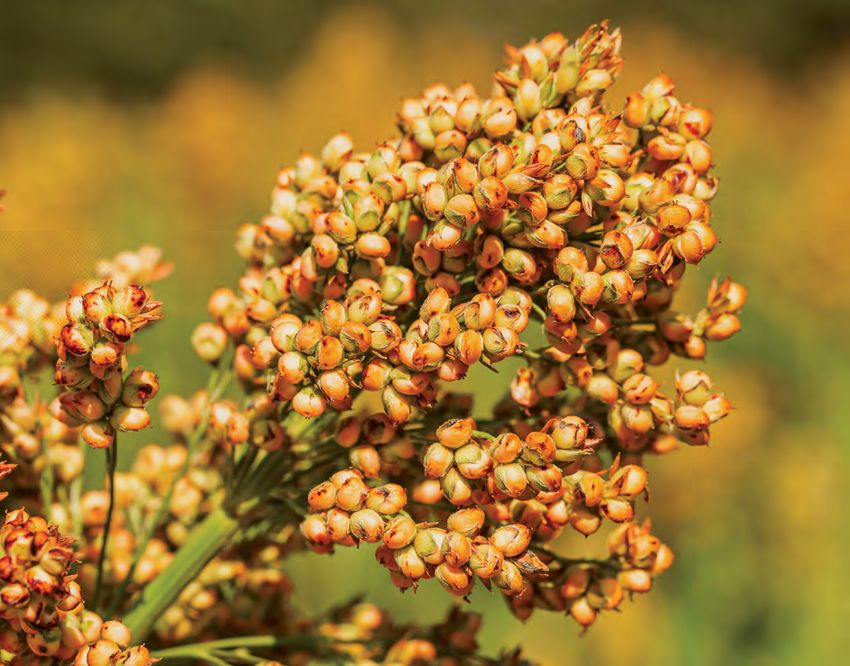
Silage Sorghum
Silage Sorghum
9 8 7 6 5 4 3 2 1 9 8 7 6 5 4 3 2 1 9 8 7 6 5 4 3 2 1 9 8 7 6 5 4 3 2 1 9 8 7 6 5 4 3 2 1 9 8 7 6 5 4 3 2 1 9 8 7 6 5 4 3 2 1 9 8 7 6 5 4 3 2 1 9 8 7 6 5 4 3 2 1
Forage Yield Potential Forage Yield Potential Forage Yield Potential Forage Yield Potential Forage Yield Potential Forage Yield Potential Forage Yield Potential Forage Yield Potential Forage Yield Potential
Early Growth Rate Early Growth Rate Early Growth Rate Early Growth Rate Early Growth Rate Early Growth Rate Early Growth Rate Early Growth Rate Early Growth Rate
Standability Standability Standability Standability Standability Standability Standability Standability Standability
Drought Tolerance Drought Tolerance Drought Tolerance Drought Tolerance Drought Tolerance Drought Tolerance Drought Tolerance Drought Tolerance Drought Tolerance
Leafiness Leafiness Leafiness Leafiness Leafiness Leafiness Leafiness Leafiness Leafiness
SP2774 BMR
SP 2774
SP3905 BD BMR
SP 3905
NK300
NK300
SP1792 MS
SP 1792
Hikane II
Hikane II
SP3904 BD BMR
SP 3904
SP1727 MS BMR
SP 1727
SS304
SS304
SS405
SS405
MEDIUM-EARLY MATURIT Y MEDIUM-EARLY MATURIT Y MEDIUM-EARLY MATURIT Y MEDIUM MATURITY MEDIUM MATURITY MEDIUM-FULL MATURITY MEDIUM-FULL MATURIT Y MEDIUM-FULL MATURIT Y FULL MATURIT Y
SP2774 is a brown mid-rib SP3905 BD BMR is an early NK300 is best adapted and SP1792 MS is a male sterile, Hikane II is a sweet-stalked, SP3904 BD BMR is a brown SP1727 BMR is a brown mid- SS304 is a medium-full matur- SS405 is a late maturing, tall
silage hybrid with good yields maturing brown mid-rib, highly desirable for high silage sorghum hybrid with a medium maturing hybrid with mid-rib, brachytic dwarf forage rib forage hybrid with superior ing, tall silage hybrid with high silage hybrid with high tonnage
across several geographies, brachytic dwarf forage hybrid quality dairy silage due to low sweet, nutritious, and palatable high yield performance. This hybrid that is excellent for pro- forage qualities and tonnage tonnage yield performance. yield performance. Due to
particularly in the Great Plains that will produce excellent lignin content, large heads stalk. It will not produce seed hybrid is best positioned and ducing high quality silage. This over other BMR products when Due to a high sugar content, a high sugar content, stalks
and Midwest. It matures in silage because of its low lignin and high grain-to-forage ratio. unless pollinated by another used for hay, grazing, or silage. hybrid will reach soft dough in properly managed. Its male stalks are very sweet and juicy. are very sweet and juicy. It is
approximately 95-100 days. content and high grain content. It is a proven, dependable sorghum plant. It is high It adapts well in most soils approximately 110 days and will sterile qualities will keep more It reaches silage maturity quick adapted for all but the shorter,
It is best positioned west of the It is the earliest BD BMR hybrid medium-early forage sorghum yielding. It is excellent for hay, and growing conditions from produce high levels of starch, nutrients in the stalk by not enough to harvest as far north cooler growing seasons in the
Mississippi River, since suscep- on the market and works best adapted in a wide range of greenchop, and silage. Texas through the central and which contributes to silage setting seed, making it a great as Nebraska. It also has a high Northern Great Plains and
tibility to gray leaf spot has north of I-70. It handles humid- growing conditions. This Produces excellent quality northern latitudes of the Great digestibility and energy levels. choice for high energy silage level of tolerance to anthrac- at higher elevations. In its
been observed in the South- ity and anthracnose very well. It hybrid averages about 6’ to 7’ silage and greenchop. Plains. Hikane II averages 8-10’ The brachytic dwarf trait reduc- or grazing. This hybrid is an nose allowing it to move into the northern area of use, it may not
east. It may be used cautiously produces more tillers than most and has excellent standability in height and has very good es plant height and improves excellent fit for dairies and can Southeast United States where produce a head. Plant height
• Male sterile for high sugar
in the East when considering hybrids, which will increase throughout the growing season. accumulation in stalks after standability. It can tolerate standability while maintaining be placed throughout the U.S. it is perfect double crop fit. reaches 10 to over 12 feet with
anthracnose. yields and cover the ground Good stress tolerance helps heading drought stress very well. Cut in leafiness. SP3904 BD BMR is an Plant height reaches 10-12 feet very good standability. In some
• Brown mid-rib
quickly. carry NK300 through stressful • Produces excellent quality the soft dough stage for highest excellent fit for dairies and can with very good standability. areas it is grown for biomass
• Strong yields in the Great Plains silage and greenchop • Male sterile for high sugar
and Midwest conditions. In some areas it is tonnage and best quality silage. be placed throughout the U.S. ethanol production.
• Brown mid-rib, brachytic dwarf accumulation in stalks after • High anthracnose tolerance
approved as a cover crop. It is • Produces premium hay heading
• Best positioning west of the • Harvest in 85-95 days after • Quality forage • Brown mid-rib, brachytic dwarf • High tonnage • High tonnage
Mississippi River well adapted to narrow row • High yields • Superior digestibility
emergence • Good standability • Best for high quality silage • Sweet, juicy stalks
production. • Sweet, juicy stalks
• 100 days to maturity • Excellent for silage • Excellent digestibility (dairy) • Excellent grazing potential
• Quality cane hay • High sugar content • High sugar content
• Brown mid-rib (BMR) trait • Double crop silage option • Best for high quality silage • 90 to 120 days to silage harvest • High grain to forage ratio • 90 to 120 days to silage harvest
• Good drought tolerance • 10-12’ tall • 10-12’ tall
• 7-8’ tall at maturity • Earliest brachytic dwarf on the • Consistent tonnage under • Reduced lignin content; excel- • Good drought tolerance
irrigation • Sweet stalk lent palatability • Good standability • Good standability
market
• Reduced lignin content • Good choice for double crop • 110 to 115 days to silage harvest • Good drought tolerance • Good drought tolerance
• Works well North of I-70 with excellent early growth
• 6-7’ tall, excellent standability • Good drought tolerance
• High grain-to-forage ratio
• Average stalk sweetness
14 1-855-SORGHUM S O R G H U M PA R T N E R S .C O M 1-855-SORGHUM S O R G H U M PA R T N E R S .C O M 15
Forage Sorghum
Product Ratings
nce
Rate
riod
Forage Hybrids Decision Tree
ess
nd
)
ht
nage
olera
r Pou
Sens Photope
eetn
Heig
owth
Tole acnose
lity
ype
)
e
ght T
(Ton
ness
itive
dabi
s Pe
k Sw
ranc
rid T
y Gr
tive
r
SP6205 BD
(
Leafi
Anth
Yield
Seed
Drou
BMR
Stan
Rela
Stal
PPS
Earl
Hyb
BMR PRODUCT RATINGS
BMR Deviation from normal planting
SP4555 BMR date, cultural practices and
SP4105 BMR Sorghum x Sudangrass 16,500 8-10’ Yes 2 Yes 2 2 4 3 U U
Sorghum X Sudan
HEADED
growing conditions may affect
performance and cause
CONVENTIONAL SORDAN 79
variation in characteristics.
SP4555 BMR Sorghum x Sudangrass 15,500 6-10’ Yes 4 No 2 3 4 3 U U
Ratings and descriptions are
BMR SP4105 BMR based on research and field
observations from multiple
HEADLESS Sordan 79 Sorghum x Sudangrass 14,500 6-7’ No 3 No 2 3 4 3 U T
locations over multiple years;
CONVENTIONAL SORDAN comparisons with company
HEADLESS
FOR AGE SORGHUM
products only.
Sordan Headless Sorghum x Sudangrass 16,500 8-10’ No 2 Yes 2 2 4 3 U T
Dough stage from emergence.
HEADED CONVENTIONAL TRUDAN 8 Seeds per pound may vary due
Sudangrass
SP6205 BD BMR Sorghum x Sudangrass 15,000 5-7’ Yes 3 No 2 2 1 2 U T
to environmental influences
during the production.
BMR SP7106 BMR
SP7106 BMR Sudangrass 25,000 7-9’ Yes 2 Yes 2 1 3 3 U U
HEADLESS RATINGS 1-9
TRUDAN 1=Excellent
CONVENTIONAL HEADLESS
Trudan 8 Sudangrass 22,500 4-6’’ No 3 No 2 2 3 3 U T 5=Average
9=Poor
Trait Technologies Trudan Headless Sudangrass 25,000 7-9’ No 2 Yes 2 1 3 3 U T LEGEND
Forage sorghum trait technologies address issues such as yield, T=Tolerant
MT= Moderately Tolerant
digestibility, feeding efficiencies and nutrients. Millex 32 Pearl Millet 47,000 4-5’ No 4 No 5 1 3 1 U T
HT= Highly Tolerant
S=Susceptible
Brachytic Dwarf (BD) Trait U=Undetermined
These hybrids have shorter internodes, overall reduced plant SEEDING RATES
NA=Not Available
height, reduced lodging, while maintaining yield potential.
Growing Conditions Sorghum x Sudangrass Sudangrass
Brown Mid-Rib (BMR) Trait Adequate Moisture 20-25 lbs/acre 15 lbs/acre
A genetic trait that lowers lignin content for increased plant digest- Limited Moisture 15 lbs/acre 10 lbs/acre
ibility, which leads to higher feeding efficiency and less manure.
Photoperiod Sensitive (PPS) Trait
Photoperiod sensitive plants have a very wide harvest window to
allow for maximum management flexibility.
16 1-855-SORGHUM S O R G H U M PA R T N E R S .C O M 1-855-SORGHUM S O R G H U M PA R T N E R S .C O M 17
Forage Sorghum
Forage Sorghum
9 8 7 6 5 4 3 2 1 9 8 7 6 5 4 3 2 1 9 8 7 6 5 4 3 2 1 9 8 7 6 5 4 3 2 1 9 8 7 6 5 4 3 2 1 9 8 7 6 5 4 3 2 1 9 8 7 6 5 4 3 2 1 9 8 7 6 5 4 3 2 1 9 8 7 6 5 4 3 2 1
Forage Yield Potential Forage Yield Potential Forage Yield Potential Forage Yield Potential Forage Yield Potential Forage Yield Potential Forage Yield Potential Forage Yield Potential Forage Yield Potential
Early Growth Rate Early Growth Rate Early Growth Rate Early Growth Rate Early Growth Rate Early Growth Rate Early Growth Rate Early Growth Rate Early Growth Rate
Standability Standability Standability Standability Standability Standability Standability Standability Standability
Drought Tolerance Drought Tolerance Drought Tolerance Drought Tolerance Drought Tolerance Drought Tolerance Drought Tolerance Drought Tolerance Drought Tolerance
Leafiness Leafiness Leafiness Leafiness Leafiness Leafiness Leafiness Leafiness Leafiness
SP4105 BMR
SP4105
SP4555 BMR
SP4555
Sordan 79
Sordan 79
Sordan Headless
Sordan Headless
SP6205 BD BMR
SP6205
SP7106 BMR
SP 7106
Trudan 8
Trudan 8
Trudan Headless
Trudan Headless
Millex 32
Millex 32
SORGHUM X SUDANGRASS PPS SORGHUM X SUDANGRASS SORGHUM X SUDANGRASS SORGHUM X SUDANGRASS PPS SORGHUM X SUDANGRASS SUDANGRASS PPS SUDANGRASS SUDANGRASS PPS PEARL MILLET
SP4105 will not head under This versatile brown mid-rib, Sordan 79 is a versatile hybrid Sordan Headless can expand SP6205 BD BMR is a sorghum x SP7106 is a widely-adapted Trudan 8 is an exceptional Trudan Headless is an excep- Millex 32 is a hybrid pearl millet
most conditions. It continues to sorghum x sudangrass can meet sorghum x sudangrass that the window for usage because sudangrass hybrid that has both BMR sudangrass hybrid. hybrid for most summer forage tional hybrid sudangrass for that produces high quality
grow and maintain its nutrient most summer forage needs. It is can meet most summer forage it will not head under most the brown mid-rib and brachytic Because it is PPS (photoperiod needs. It is best for hay, haylage most summer forage needs. forage that is lush and leafy.
value in the leaves and stem well-suited for use as emergency needs. Sordan 79 is well adapt- conditions. Sordan Headless dwarf genes which improve sensitive) it will not head under and grazing, greenchop and It can be used for hay, haylage This hybrid works in hot, dry
until it is chopped or grazed feed. SP4555 is best used for ed to difficult soil conditions continues to grow and maintain standability and forage quality. most conditions providing great cover. Very leafy and fine and grazing. Other limited conditions and is well-suited
thus extending the harvest time hay, haylage and greenchop. like high pH and saline soils. its nutrient value in the leaves This hybrid is best used for hay, harvest flexibility. SP7106 can stemmed. Fast regrowth after uses include greenchop and as for light, sandy soils where
frame. SP4105 is a versatile Other uses include grazing and Hay, haylage and greenchop, and stem until it is chopped or haylage, grazing, and tolerate high cutting frequen- cutting or grazing. It adapts cover. Trudan Headless is finer drought is common. Millex 32 is
sorghum x sudangrass that ground cover. SP4555 has a grazing and ground cover are grazed. It is well-suited for use as green chop. cies or intensive grazing. well and tolerates high cutting stemmed and leafier than Sordan well-suited for summer grazing
meets most summer forage good leaf-to-stem ratio that all excellent uses of Sordan 79. emergency feed. This hybrid is This hybrid has very fine stems frequencies and intensive Headless. Regrowth is fast after or hay and greenchop. Millex
• Brachytic dwarf for high leaf to
needs and produces high qual- helps provide good quality with Sordan 79’s high yields make it best used for hay, haylage, and stem ratio and high leaf-to-stem ratio and grazing with proper manage- cutting or grazing. It adapts well 32 is a great horse feed as a
ity forage for fast weight gain proper management. a better economic choice over green chop. Other uses include produces high quality hay or ment. Produces exceptional to and can tolerate high cutting result of its commonly low
• Brown mid-rib produces excellent
and/or increased milk produc- low cost sorghum x sudangrass grazing and ground cover. quality grazing hay haylage. forage quality, that is high in frequencies and intensive graz- prussic acid content.
• Dependable summer forage
tion. It has a good leaf-to-stem with BMR hybrids that are on the market. Sordan Headless has a good • Excellent standability protein and feed value. Prussic ing practices with management.
• Photoperiod Sensitive • Dependable summer forage
ratio and is best used for hay, leaf-to-stem ratio. (headless) BMR acid potential is low. Exceptional forage quality can be
• Can be grazed • Dependable summer forage • High tillering capacity that leads • Drought tolerant
haylage and green chop. to increased yields Potato & veg. growers - Trudan 8 produced that is high in protein
• Good for late summer planting • Good for late summer planting • Photoperiod sensitive (headless) • Good yield potential in a
Sudan X Sudan hybrid suppresses nematode populations and digestible fiber. Prussic acid • Quality horse feed; low prussic
• Photoperiod sensitive (headless) • Good seedling vigor acid risk
• Good leaf-to-stem ratio • Best for hay, haylage, and • Dual purpose: silage or hay when incorporated as green manure potential is low.
and BMR • Excellent regrowth after haying • Very high leaf to stem ratio
greenchop • Best for hay, haylage, and in the fall, after it is stressed (e.g., • Works in light, sandy soils
• Best for hay, haylage, and or grazing
• Extended harvest window greenchop green chop • Quick regrowth for multiple cuts after first frost or ceasing irrigation). • Photoperiod sensitive (headless)
• Can be grazed • Best for grazing and pasture
• Best for hay, haylage, green chop • Good forage quality • Extended harvest window • Suitable for grazing, haylage, • Extended harvest window
• Good leaf-to-stem ratio • Excellent quality summer forage • Lush, leafy foliage
or dry hay
• Good leaf-to-stem ratio • Good leaf-to-stem ratio • Best for hay, haylage and grazing
• Good for alkaline soils • Very good leaf-to-stem ratio
• Provides good forage quality (salt tolerant) • Tolerates high cutting frequencies
• Best for hay, haylage, and
• Excellent regrowth after harvest • Can be used in rotation to reduce grazing • Adapts well to intensive grazing
or grazing nematode populations
• Tolerates high cutting • Fine stemmed and leafy
frequencies
• Adapts well to intensive grazing
18 1-855-SORGHUM S O R G H U M PA R T N E R S .C O M 1-855-SORGHUM S O R G H U M PA R T N E R S .C O M 19Alfalfa Partners® Expanding Products and Programs
In 2012, S&W acquired Imperial Valley Seed to expand production
Since 1980 S&W Seed Company has bred alfalfa seed of the highest quality with in this rich California growing region and in 2013, Seed Genetics
International (SGI) was acquired, further expanding production
superior genetic traits. With the unique ability to grow in challenging soil conditions capabilities into Australia.
and generate outstanding crop yield, S&W quickly became an industry leader. In late 2014, we acquired Pioneer’s alfalfa breeding program and
conventional alfalfa germplasm—providing a strong germplasm
Our specialty is high-yield alfalfa varieties focused on maximizing profit per acre for
base that goes all the way back to 1958. Alfalfa Partners brings you
the farmer, regardless of soil and water salinity. Starting in 2010, we dramatically top-performing alfalfa varieties developed through a long breeding
expanded both the acreage dedicated to alfalfa production and our R&D focus to legacy, at a more affordable price with a better value proposition than
established national brands.
include dormant and biotech varieties. Our breeding and product development
All along our mission has been to help cattle and dairymen produce
emphasizes high yield, forage quality improvement, persistence, and disease and the best alfalfa hay for their herds. So, in 2019 we branded our prod-
pest resistance. uct line as Alfalfa Partners, to embody the essence of our mission and
our accomplishments over the last 40 years.
We continue to stay abreast of important trends, helping farmers combat today’s
Our Germplasm Improvement Program Delivers
farming challenges and supplying superior seed for alfalfa hay, the “queen of
• Outstanding root rot tolerance for areas with variable soils
forages,” all the while keeping an eye on sustainable solutions for tomorrow.
• High-yielding varieties with emphasis on disease and
pest resistance
• Increased emphasis on forage quality improvement
We conduct extensive testing across numerous environments for IQA™, the Next Innovation
• Salt tolerant varieties spanning FD4 through 9 with proven
performance yield, forage quality, yield stability across environments, dormancy, Our future alfalfa varieties will soon include IQA™, a reduced lignin
• Proven performance in both saline and non-saline soils tolerance to lodging, and regrowth from cutting. We also test up to alfalfa quality trait, achieved through gene editing. It’s integrated into
18 types of pest resistance, such as phytophthora root rot, aphano- elite alfalfa germplasm for both yield and improved forage quality
• Dormant and non-dormant breeding programs with a lifetime of
germplasm improvement myces root rot, and stem nematode. Each of our commercial varieties performance. Growers may have the flexibility to harvest later on
has been developed through this same process of germplasm without the typical rate of reduction in forage quality that occurs
• Dedicated seed production locations in the US and Australia
improvement, characterization for agronomic and pest ratings, yield, with conventional varieties, or they can cut on their normal schedule
Our dormant alfalfa breeding program involves screening, crossing, and winter hardiness—for the highest productivity in your fields. to potentially capture higher RFQ and increased fiber digestibility.
and classification for each new variety. In each phase, teams in
alfalfa. This can offer an extended harvest window with improved
Nampa, Idaho and Keith, South Australia are busy year-round in the Our Team is Focused Solely on Alfalfa
forage quality. Please consult with Alfalfa Partners for availability in
field or greenhouse settings. A typical variety can take 5 to 18 years Our team is comprised of seasoned alfalfa experts with decades of
your region and whether your specific growing environment may be
to produce, depending on the methodology or traits being developed. experience. We are dedicated to your success and available to help in
sensitive to a gene-edited trait.
any way we can. Customers have access to our experts for questions
on products, crop management, agronomy, sales, and service.Dormant Alfalfa
Dormant Alfalfa
Rugged SW3407 SW404S Brand SW4107 SW425 Brand SW4515 NEW! SW4618S SW5213 SW525LH Brand SW5615 NEW!
TM TM
™
Rancher® FALL DORMANCY 3 FALL DORMANCY 4 FALL DORMANCY 4 FALL DORMANCY 4 FALL DORMANCY 4 FALL DORMANCY 4 FALL DORMANCY 5 FALL DORMANCY 5 FALL DORMANCY 5
FALL DORMANCY 3
SW3407 is a high yielding FD3 SW404S is a blend of S&W SW4107 is broadly adapted SW425™ Brand is a blend SW4515 is a FD4 variety with SW4618S is a high-yielding, fall SW5213 is a high-yielding SW525LH™ Brand is a leafhop- SW5615 is a very high-yield
Rugged Rancher alfalfa has variety that produces excellent alfalfa germplasm containing with a wide germplasm base. of S&W proprietary alfalfa high yield potential and high dormancy four variety, bred in variety, with consistent perfor- per resistant, high yield variety potential, fall dormancy 5 vari-
excellent persistence under a quality forage. It has good an elite salt tolerant variety It is highly resistant to seven varieties chosen for their com- resistance to stem nematode. saline growing conditions and mance and broadly adapted with excellent pest resistance: ety with a strong performance
wide range of growing condi- standability and an excellent along with high-yielding, major alfalfa pests and is well- bined suitability for high yield This alfalfa variety has excellent selected for the ability to main- for growers with aggressive high resistance to potato record in research trials across
tions and environments. It is disease resistance index winterhardy conventional suited to fields with variable potential of good quality forage. overall disease resistance, plus tain improved production of hay cutting frequencies for maxi- leafhopper, phytophthora, and a wide area. The combination of
a great choice for rotational (DRI). SW3407 parents were alfalfa. Broad adaptability to drainage where root rot This variety is highly resistant high resistance to stem nema- in saline soils. mum yield and quality. SW5213 multi-race aphanomyces. An excellent winter survival index
grazing or hay production due selections based on half-sib both saline and non-saline resistance is needed. to most major diseases and well tode for the northwest. has a highly resistant rating excellent choice for the and strong disease resistance
• Well adapted to Western US FD4
to its dependable yield and yield performance evaluations growing conditions. Adapted suited throughout US growing growing areas with salinity chal- against nine major alfalfa pests Midwest, Plains and Northeast gives SW5615 a leg up on stand
• Wide germplasm base for broad • Solid agronomic characteristics,
relative feed quality. to determine breeding value. to Plains and Western US FD4 adaptability areas where FD4 is desired. good overall disease resistance, lenges in soil or irrigation water and diseases. where leafhoppers can be a per- persistence.
Half-sib clonal parents were growing areas. plus very good winter-hardiness • Relative Feed Quality (RFQ) is nicious pest on a yearly basis.
• Excellent persistence under a • Top group placement in many • Good choice where medium fall • Broadly adapted late fall • SW5615 is highly resistant to
evaluated for forage quality and University yield trials • Highly resistant to seven major above average, 102% of the
wide range of growing conditions • Good establishment, yield and dormancy is desired along with mean versus RFQ of elite check dormancy helps maintain late • High yield potential to rival elite nine major alfalfa pests and
and environments persistence over a period of good winter hardiness alfalfa pests and diseases for a summer yield diseases, for a solid 35/35 DRI
stand longevity in fields where • 35/35 DRI makes SW4107 highly solid 35/35 DRI score, including varieties. conventional varieties
irrigation water /soil contains score, including multi-race
• Great choice for rotational years following inoculation with resistant to 7 major pests, includ- • Bred using traditional plant multi-race aphanomyces • Highly resistant to nine major aphanomyces
moderate salt concentration ing multi-race aphanomyces • Yield is 97% of the mean under • Good organic production
grazing or hay production main alfalfa disease organisms. breeding methods non-saline growing conditions, pests and diseases for a solid
• Resistant to spotted aphid 35/35 DRI score, including • Excellent pest resistance • Winter survival index of 1 –
• Dependable yield and relative • Highly suitable for fields with • Well-suited to fields with • Varieties are medium fast and pea aphids but demonstrates 12% more
saline areas yield retention in moderate to multi-race aphanomyces for most North American extremely winter-hardy
feed quality • Suitable for wet soils because variable drainage where root rot recovery type that can be highly
of its exceptional resistance to resistance is needed • Good resistance to lodging, strong saline growing condi- environments
• Adaptable where winter and suited for quick regrowth for hay • High resistance to stem • High resistance to phytophthora
• Includes branch-rooting alfalfa multi-race aphanomyces root rot production similar to SW5909 for lodging tions, versus the standard check nematodes – can be important in & aphanomyces root rots,
spring precipitation drive salts • Consistently performs above • Highly suitable to all areas
for its ability to persist resistance variety. irrigated situations where water multiple races and biotypes
• Consistent top yields of dairy down, but irrigation water average to produce good quality where leafhoppers can be a
• Highly suitable in western envi- source includes tail waters from significant pest
• Extremely winter hardy quality hay applied later in the season has forage ronments where stem nematodes • Broad-based parentage includes • Highly suitable for growing areas • High resistance to stem
moderate salinity that obtain 3-4 cuts per season infested upstream fields
can be a concern germplasm from lodging • Excellent winter hardiness nematodes
• Resistant to many major pests • Excellent forage quality • Grows well in a wide range resistant breeding lines
and diseases • Includes a fall dormant salt • Suitable for saline soils • Well suited for soils with variable
combined with good lodging of soils • Highly resistant against stem • Very suitable for 3-5 high yield • SW5615 is an excellent
tolerant variety bred in saline where irrigation water and/or drainage due to its strong root
tolerance for overall yield, nematode, important in irrigated • High resistance to stem cuts of quality hay production replacement for Pioneer 55V50
• Good overall choice for fields conditions, with the ability to • Highly adaptable to the northern soil contains moderate salt rot resistance to phytophthora
cutability, and quality production when the water nematode for the northwest, with increased yield and forage
with variable soils maintain improved production half of the U.S. and Canada, concentration and multi-race aphanomyces
source includes tail-waters from especially well-suited for surface • Highly suitable to heavy soils quality
• Winter hardy fall dormancy 3 whenever fall dormancy 4 is irrigated fields where stem where root rots are a concern
• Best-suited to fields with infested upstream fields • Maintains good yield in saline • Excellent overall root rot resis-
with consistent high yield often suitable nematode can come from • SW5615 is a superb choice for
moderate or variable saline growing conditions, of high tance contributes to persistence
near the top of yield trials with • Formulated for high resistance to irrigation canals • Best overall control of potato overall yield, forage quality and
later FD4 varieties conditions where a majority verticillium wilt, phytophthora quality and quantity of hay or leafhoppers in alfalfa stand persistence
of the field has only moderate root rot and anthracnose haylage
salinity
• Well-rounded overall package of
• In fields with large areas of high pest and disease resistant alfalfa
saline content and/or persistent germplasm
saline growing conditions,
SW4618S is a preferred alterna-
tive for more yield retention
22 1-855-767-4486 A L FA L FA PA R T N E R S .C O M 1 - 8 5 5 - 76 7 - 4 4 8 6 A L FA L FA PA R T N E R S .C O M 23Non-Dormant Alfalfa
Product Ratings
ilt
e
SW8421S SW9720 SW9813S
val
atod
ce
id
um W
t a
s
ilt
s
t
Race nomyce
Race nomyce
Roo phthor
l Wil
ose
Aph
urvi
ran
W
id
e
Nem
id
ancy
Nem Knot
ium
racn
atod
Aph
Tole
icilli
FALL DORMANCY 8 FALL DORMANCY 9 FALL DORMANCY 9
eria
Aph
ter S
t Ro
tted
1
2
to
r
Dorm
Stem
a
Yield
a
Fusa
Anth
t
Bact
Blue
Vert
Salt
Aph
Roo
Pea
Phy
Aph
Spo
Win
PRODUCT RATINGS
SW8421S is a non-dormant This FD9 variety has a very wide SW9813S is our salt tolerant
FD8 variety that produces high area of adaptation with above non-dormant variety with high Rugged Rancher® 3 6 1 R R MR HR HR R R MR MR HR
yields of high quality hay. Bred average forage quality, and is yield potential in both saline
under very saline conditions, tolerant to salty irrigation and non-saline soil conditions. SW3407 3 9 2 HR HR HR HR HR HR HR R R R
it has the ability to maintain waters and saline soils. This variety’s high resistance to
SW404S™ Brand 4 8 2 HR R R HR HR HR R R ST
much of its high yield potential aphids contributes to its strong
• Wide area of adaptation FALL DORMANCY
even in saline production situ- forage production abilities.
• Tolerant to salty irrigation waters SW4107 4 9 2 HR HR HR HR HR HR HR R R R 1 = Most Dormant
ations. It is a strong choice for 10= Least Dormant
and salty soils • Proven performance in U of CA
fields with salinity build-up.
D O R M A N T A L FA L FA
Westside Alfalfa Salinity Trials SW425™ Brand 4 8 2 HR HR HR HR HR HR HR R R
• Highest yielding alfalfa in UC YIELD
• Highest yielding salt tolerant Davis Trial of 48 non-dormant • High yield performance
entries for 2008 1=Lowest Yield
variety in multiple University potential, in both saline and SW4306 4 9 2 R HR HR HR HR HR HR R HR HR
non-saline soil conditions 9= Highest Yield
trials • 8.3% higher yield than CUF101
• A strong choice for fields that at University of Arizona trials • Selected under extreme saline SW4412Y 4 8 2 HR HR HR HR HR HR HR HR R HR WINTER SURVIVAL
contain slick or sodic soils, and conditions in the west side of the
• Leader in yield and feed quality 1=Extremely Hardy
also for situations where deficit San Joaquin Valley SW4515 NEW
at the USDA salinity laboratory 4 9 2 HR HR HR HR HR HR HR R R HR 2= Very Hardy
irrigation could lead to salinity trials; alfalfa and other forages • Very good germination salt 3=Hardy
build-up were under salt water irrigation tolerance plus strong forage SW4618S 4 8 2 HR HR LR HR HR HR R R ST
• Using irrigation water with an management at Riverside, CA production salt tolerance PEST AND DISEASE
Electrical Conductivity (EC)
• Very good overall aphid SW5213 5 9 2 HR HR HR HR HR HR HR HR R HR HR = Highly Resistant
rating of 15 (very salty water),
resistance including blue aphids, R = Resistant
SW 8421S out-produced both
pea aphids and spotted aphids MR = Moderately Resistant
the standard salinity check entry SW525LH™ Brand 5 8 2 HR HR HR HR HR HR HR HR R R
(AZ-90NDC-ST) and Salado by LR = Low Resistance
39% and 32% respectively in S = Susceptible
University of Arizona salinity SW5615 NEW 5 9 1 HR HR HR HR HR HR HR R R HR
trials at Tucson BLANK SPACE
• Produced 18% more hay than SW8421S 8 9 R HR HR R HR R R ST Blank = Insufficient Data or
CUF 101 in the UC trials in
NON-DORMANT
Not Applicable
Fresno County, California and
17% more than CUF 101 in SW9720 9 9 R MR R HR HR R MR HR ST
Tucson, Arizona
• Alfalfa growth is erect with rapid SW9813S 9 9 R R R R R HR MR ST
recovery after cutting
• Stand persistence at the end of SW10 10 9 R MR R HR HR HR R
3 year trial in Tucson, Arizona
was 96%, compared to CUF 101
variety at 61%
24 1-855-767-4486 A L FA L FA PA R T N E R S .C O M 1 - 8 5 5 - 76 7 - 4 4 8 6 A L FA L FA PA R T N E R S .C O M 25You can also read


