PRIMED FOR ACTION: A RESILIENT RECOVERY FOR AUSTRALIA - CLIMATECOUNCIL.ORG.AU - Climate ...
←
→
Page content transcription
If your browser does not render page correctly, please read the page content below
PRIMED
FOR ACTION:
A RESILIENT
RECOVERY FOR
AUSTRALIA

CLIMATECOUNCIL.ORG.AU
Thank you for
supporting the
Climate Council.
The Climate Council is an independent, crowd-funded organisation
providing quality information on climate change to the Australian public.

    Published by the Climate Council of Australia Limited.
    ISBN:    978-1-922404-03-9 (print)
             978-1-922404-02-2 (digital)                                              Tim Baxter
                                                                                      Senior Researcher
    © Climate Council of Australia Ltd 2020.                                          (Climate Solutions)
    This work is copyright the Climate Council of Australia Ltd. All material
    contained in this work is copyright the Climate Council of Australia Ltd except
    where a third party source is indicated.
    Climate Council of Australia Ltd copyright material is licensed under the
    Creative Commons Attribution 3.0 Australia License. To view a copy of this        Greg Bourne
    license visit http://creativecommons.org.au.                                      Climate Councillor
    You are free to copy, communicate and adapt the Climate Council of Australia
    Ltd copyright material so long as you attribute the Climate Council of
    Australia Ltd and the authors in the following manner: Primed for Action: A
    Resilient Recovery for Australia.
    Authors: Tim Baxter, Greg Bourne, Ella Weisbrot, Andrew Stock, Will Steffen       Ella Weisbrot
    and Martin Rice.                                                                  Researcher
                                                                                      (Climate Solutions)
    We would like to thank Dr Deborah Peterson, Professor Lesley Hughes,
    Professor Hilary Bambrick, and Professor Tim Flannery for reviewing and
    providing feedback on drafts of the report. We also appreciate the assistance
    of Huw Jones and Patrick Miller in the preparation of this report.

                                                                                      Andrew Stock
    —                                                                                 Climate Councillor

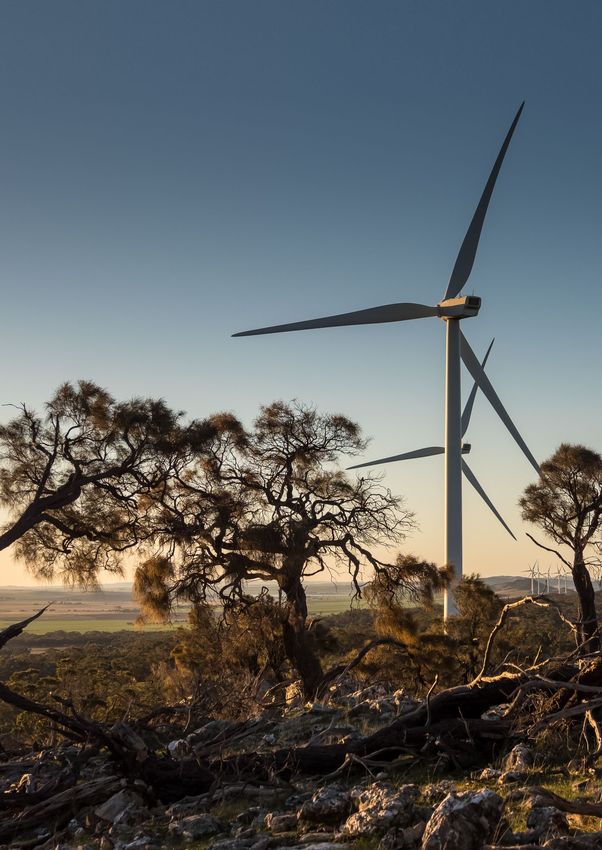
    Cover image: ‘The Path to Certainty’. Image credit: Bill Doyle. Image taken
    at Waterloo Wind Farm, SA. 21 July 2017. Licence: All rights reserved by the
    owner. Used with permission. See more of Bill’s work at: https://www.flickr.
    com/photos/liamjon-d/
    This report is printed on 100% recycled paper.                                    Professor Will Steffen
                                                                                      Climate Councillor

         facebook.com/climatecouncil                 info@climatecouncil.org.au

         twitter.com/climatecouncil                  climatecouncil.org.au
                                                                                      Dr Martin Rice
                                                                                      Head of Research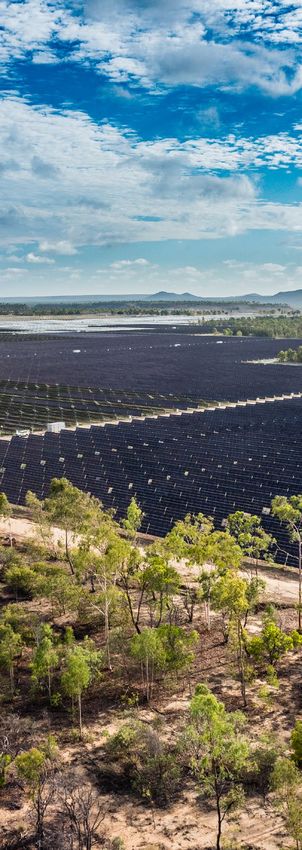
CLIMATE COUNCIL                      i

Contents
Key findings...................................................................................................................................................................................... ii

Introduction.......................................................................................................................................................................................1

1.     Early warnings......................................................................................................................................................................... 2

2.     The climate challenge for Australia....................................................................................................................................10

3.     Australia’s climate advantage............................................................................................................................................ 13

References........................................................................................................................................................................................17

Image credits.................................................................................................................................................................................. 20
ii    PRIMED FOR ACTION:
      A RESILIENT RECOVERY FOR AUSTRALIA

     Key findings
     1            2
     Politicians have listened to expert scientific       A resilient recovery from the coronavirus
     advice on COVID-19 and acted. It is urgent           must prepare Australia for the next major
     they do the same with climate change.                threat - climate change. The potential for
                                                          job creation in the renewables sector is
     › COVID-19 has shown that effective action is        substantial and can set our country up for
       possible when politicians listen to scientific     the 21st Century.
       experts and act swiftly on their advice.
                                                          A goal of net zero emissions must include:
     › A co-ordinated response to COVID-19, with
       co-operation across all levels of government,      1.   Replacing all fossil fuels with other energy
       has so far slowed the spread of the coronavirus.        sources or processes.
       This kind of bipartisanship is needed in
       tackling climate change.                           2.   Meeting our energy needs with renewable
                                                               electricity.
     › Governments must use economic stimulus
       measures to bring about rapid and permanent        3.   Stepping up as a global exporter of zero
       emissions reductions. If we miss this                   emissions energy, technology and expertise
       opportunity, we are bequeathing a dangerous             to help the rest of the world reduce their
       world to our children and grandchildren.                emissions with Australian power, products
                                                               and services.

                                                          4.   Taking action on the land and coasts to
                                                               build future resilience to climate threats.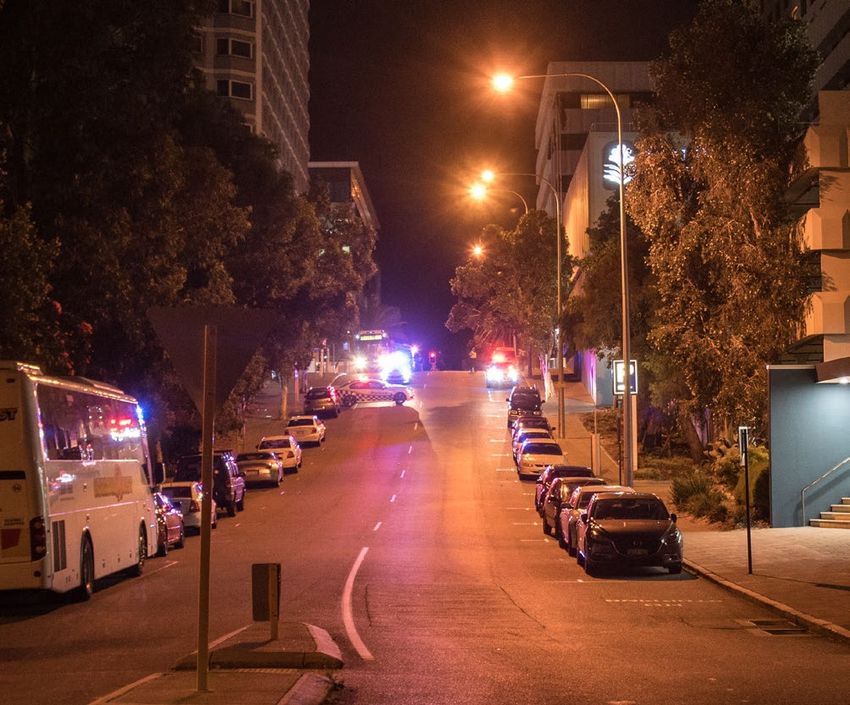
KEY FINDINGS   iii

3                                                   4
Gas has no role to play in building a               Australians are already living with dangerous
prosperous, resilient economy for the               climate change having experienced record-
future. It is volatile, dangerous and               breaking drought, the Black Summer
unnecessary.                                        bushfires and the third mass bleaching event
                                                    of the Great Barrier Reef in the past five years.
› Gas is price volatile, driving energy prices
  for Australians. Investing further in gas risks   › Australia is the world’s 14th highest annual
  locking in huge investment losses, stranded         emitter of greenhouse gases. This means that
  assets and environmental harm.                      181 countries do less to drive global climate
                                                      change each year than Australia.
› Emissions from the extraction, processing
  and export of gas have been the main driver       › Australia is one of the sunniest and windiest
  behind Australia’s emissions staying so high.       countries in the world and has a substantial
  These emissions are likely underestimated.          competitive advantage.

› Gas projects cannot provide sustainable           › The recovery from the COVID-19 crisis presents
  long-term employment opportunities                  a once-in-a-lifetime opportunity to prime
  because of this volatility.                         Australia to be a renewables-led powerhouse
                                                      and to address climate change.

                                                                               climatecouncil.org.au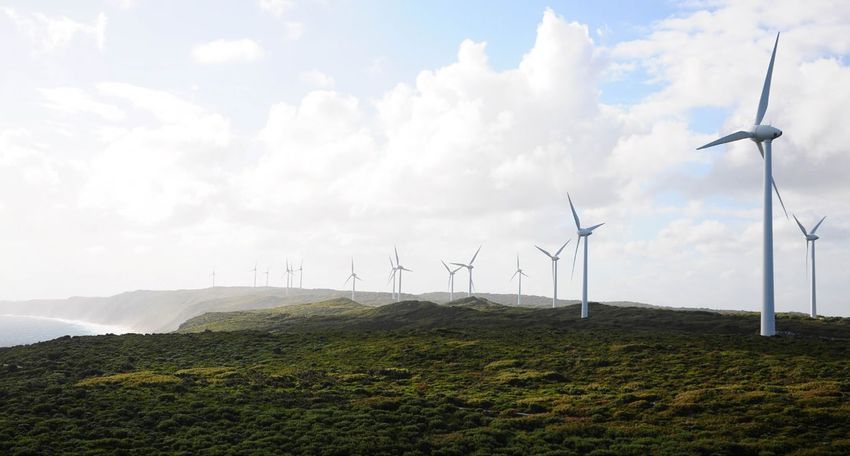
THE FOUR PILLARS OF CLIMATE ACTION

REPLACE ALL                                 TAKE ACTION ON
FOSSIL FUELS                                THE LAND & COASTS

All energy sources or processes             Taking urgent action on climate
requiring fossil fuels, including           change is our best bet at
all transport and off-grid energy           ensuring rural, regional and
use and the few uses of fossil              coastal communities have
fuels outside the energy sector,            everything that they need to
must be replaced.                           thrive in the coming decades.

POWERING AUSTRALIA                          STEP UP AS A
WITH RENEWABLE ENERGY                       GLOBAL EXPORTER

Meeting all our future energy needs,        As the sunniest and windiest
including demand added from replacing       inhabited continent, Australia has a
all existing fossil fuels, with renewable   central role to play in supplying zero
electricity. Renewable plans must aim       emissions energy, products, minerals
higher than 100% of today's demand to       and services to our neighbours and
meet this additional load.                  the rest of the world.
INTRODUCTION   1

Introduction
COVID-19 has fundamentally reshaped the world we know, taking a
horrendous toll on human health and the economy. While the response
has not been perfect, Australia has so far managed this crisis far better
than many comparable countries. Federal, state and territory governments
have been relying on expert, evidence-based advice to lead their response
to the crisis. This crisis is far from over. But another, more long-term crisis
remains an urgent threat to humanity: climate change. Australians only
need look back at the Black Summer of 2019-20, characterised by deadly
bushfires driven by climate change. And while the world has been focused
on the devastating public health crisis of COVID-19, the Great Barrier Reef
has experienced its third major bleaching in five years.

This short report, ‘Primed for Action: A Resilient Recovery for Australia’ outlines
the Climate Council’s response to the COVID-19 crisis. The measures that have
been required to manage COVID-19 have proved themselves to be entirely
justified, but they have not been without their consequences. As Australia reboots
its economy on the other side of this crisis there is a remarkable potential for that
economic recovery to occur through climate action. A gas-led economic recovery
is poorly suited to the task at hand. A reorientation toward net zero emissions is a
fundamental requirement of Australia’s COVID-19 recovery to deal with the two
crises of economic recovery and climate change. The Climate Council has also
commissioned modelling work, which will be released in late June 2020.

In this short, thought leadership piece, we briefly describe how Australia is well
primed for action and a resilient recovery from COVID-19. To embrace this
opportunity, Australia must set its sights on recovery options that are oriented
toward a global goal of net zero emissions as soon as possible.

For Australia, this will mean:

› Replacing all fossil fuels with other energy sources or processes, including all
  transport and off-grid energy use, and the few uses of fossil fuels outside the
  energy sector.
› Meeting all our future energy needs, including those needs created as a result of
  replacing all existing fossil fuel consumption, with 100% renewable electricity.
› Stepping up as a global exporter of zero emissions energy, technology and
  expertise to help the rest of the world reduce their emissions with Australian
  power, products, and services.
› Taking action on the land and coasts to build future resilience to climate threats
  and ensure that Australians can continue to have productive lives and livelihoods.

2   PRIMED FOR ACTION:
    A RESILIENT RECOVERY FOR AUSTRALIA

    1.           Early warnings
                 This past year of living in Australia       In April 2019, Emergency Leaders for Climate
                 has shown the critical importance of        Action, 23 former heads of Australian fire
                 heeding early warnings. Australia’s         and emergency services organisations—
                 approach to COVID-19 has been               including the heads of fire services in all
                 marked by expert led policy, with           eight states and territories—warned the Prime
                 decision makers and the community           Minister that the fire season of 2019-2020
                 adopting recommendations from health        was shaping up to be extremely dangerous
                 authorities. So far, Australia’s response   (Emergency Leaders for Climate Action 2019).
                 has been successful in limiting the harm    Their pleas to meet with the Prime Minister
                 of COVID-19.                                were rebuffed (Cox 2019).

                                                             Australia’s Black Summer was unprecedented
                                                             in scale and harm. Nearly 80 percent of
                                                             Australians were affected either directly or
                                                             indirectly by the bushfires (Biddle et al. 2020).
                                                             Thirty-three Australians lost their lives and an
                                                             estimated 417 more died from the burden of
                                                             toxic smoke (Borchers Arriagada et al. 2020;
                                                             Climate Council 2020a). At least one billion
                                                             animals were killed by the bushfires, 800
                                                             million in New South Wales (University of
                                                             Sydney 2020).

                                                             The 2019-20 season's unprecedented fires
                                                             burned through more than 17 million
                                                             hectares of the Australian mainland (AFAC
                                                             2020; Richards, Brew and Smith 2020). An
                                                             unprecedented 21 percent of Australian
                                                             temperate broadleaf and mixed forests was
                                                             burnt (Boer, Resco de Dios, and Bradstock
                                                             2020), far more than the annual average two
                                                             percent per year. The Gospers Mountain fire

    Respect for experts'                                     was the largest single forest fire ever recorded
                                                             in Australia, burning more than 500,000

    early warnings is                                        hectares. Catastrophic fire danger ratings
                                                             were experienced at locations and times of

    central to ensuring                                      the year where they have never occurred
                                                             before (Climate Council 2020b).

    the safety of                                            But Emergency Leaders for Climate Action
                                                             were not the first to make such warnings
    Australians.                                             about escalating climate risks.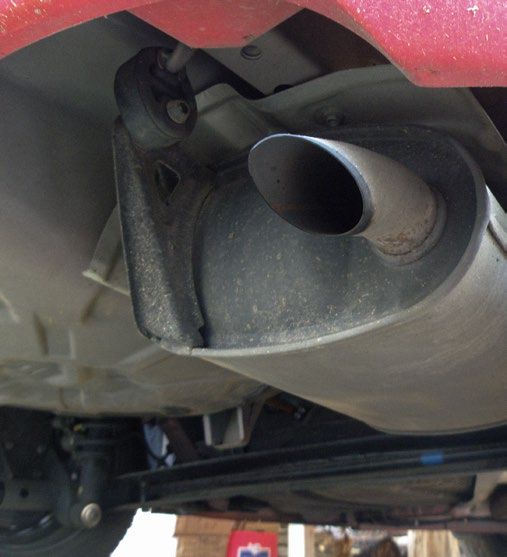
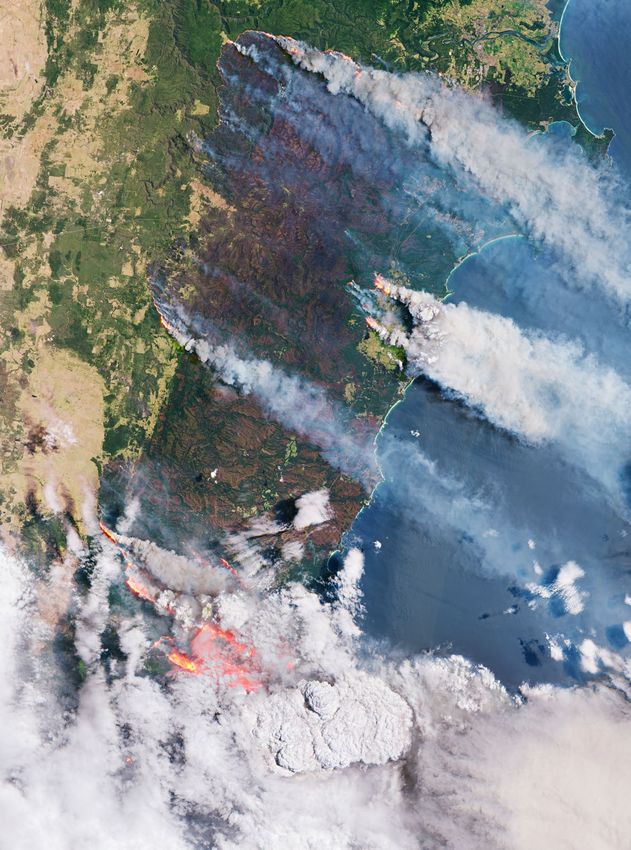
Figure 1: Aerial photo showing fires burning on the east coast of Australia, 31 December 2019.
4   PRIMED FOR ACTION:
    A RESILIENT RECOVERY FOR AUSTRALIA

                 The first warnings about the link between           But even before Australia could recover from
                 the burning of coal, oil and gas—dangerous          the 2019-20 bushfire crisis, another crisis
                 fossil fuels—and its impact in elevating            arrived in the form of the novel coronavirus,
                 fire risk in Australia date back more than          SARS-CoV-2. Globally, millions have been
                 thirty years (Beer, Gill, and Moore 1988).          infected, and hundreds of thousands have
                 These warnings of increased bushfire risk           died (Johns Hopkins University 2020). The
                 under climate change have been repeated             necessary response to limit harm from this
                 in expert scientific reports to Australian          public health crisis has been to put entire
                 state and federal governments over the              economies on hold to slow the spread, and
                 decades since. This includes warnings from          to varying levels, this has been done across
                 the most pre-eminent bodies, such as the            the world and in Australia.
                 Intergovernmental Panel on Climate Change.
                                                                     Australia’s early, expert-led approach to
                 Efforts to reduce greenhouse gas emissions          managing COVID-19 has meant that so far,
                 from the consumption of coal, oil and gas—a         the country is managing well compared to
                 central task in limiting future harm—have           many other countries. While the response
                 been totally insufficient. Where emissions have     has not been perfect anywhere, a co-
                 come down in an individual sector in Australia,     ordinated, largely bipartisan approach,
                 like electricity, this has been more than offset    with co-operation across all levels of
                 by the growth in emissions from the extraction      government, has slowed the spread, with
                 of fossil fuels (Department of Industry, Science,   Australia’s infection and mortality rates
                 Energy and Resources 2020).                         relatively low thus far.

    Australians are paying the price
    of governments’ failure to act on
    decades of scientific warnings
    about climate change and the
    escalating bushfire threat.
CHAPTER 01 5
EARLY WARNINGS
The actions taken to meet this goal To make the best decisions under both
have been drastic. The social distancing crises, expert advice informed by decades
measures put in place to slow COVID-19 will of research isn’t simply nice to have. It is
have permanent effects. These measures essential. Further, while understanding of
have been necessary, proportionate and both threats rests on more than a century of
effective in response to the immediate and scientific knowledge, successfully dealing
serious threat posed by the virus. with these crises requires learning by
doing and deep engagement with experts.
It is important not to make too much of the Their expertise should be used to design
similarities between coronavirus and the precautionary, collective and evidence-based
crisis of a supercharged climate, but there action, co-ordinated with other trusted
are important parallels and we can learn leaders in their community across business
from them. and civil society and all levels of government.
Figure 2: Social distancing measures under COVID-19 have been necessary to slow the spread of the virus. Here, Western
Australian police are escorting new international arrivals to hotels for 14 days of mandatory isolation.6 PRIMED FOR ACTION:
A RESILIENT RECOVERY FOR AUSTRALIA
Under COVID-19, Australians have seen It is vital that we invest in solutions that
promising signs of what is possible from meet not only our immediate needs
its leaders. Respect by decision-makers for but also those of the future generations
the best available science is exactly what is who will be repaying these debts. If we
required to limit the future harm of climate miss this opportunity during times of
change. It must become a permanent economic stimulus to bring about rapid,
feature of government policy formulation. immediate and permanent emissions
reductions, designed to reach global net
During coronavirus, and in the coming zero emissions as soon as possible, then we
years, Australian governments—federal, are bequeathing a harsh and hostile world
state and territory, and local—will be forced to our children and grandchildren.
to spend heavily to restart economies,
creating historically-large debts to be
repaid in the future.
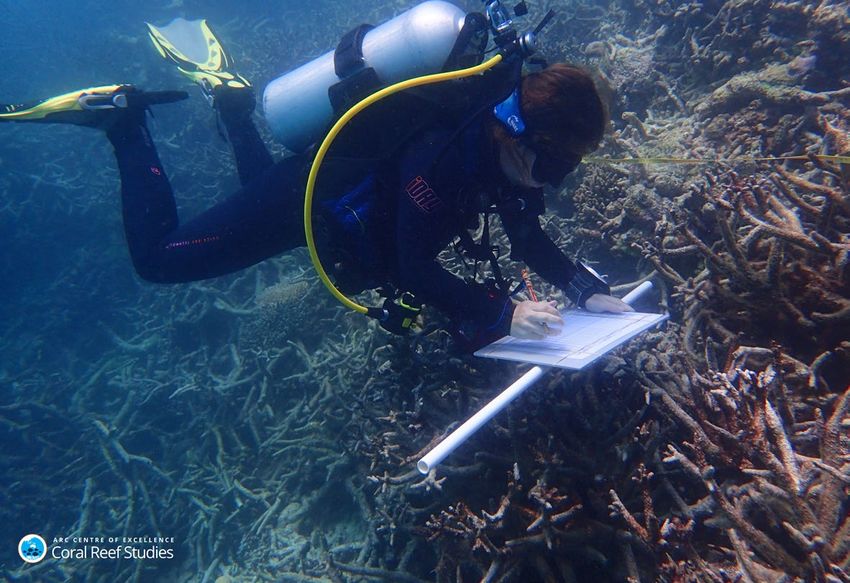
Figure 3: The Great Barrier Reef is under strain after facing its third mass-bleaching event in five years (2016 (below), 2017,
and now 2020).CHAPTER 01 7
EARLY WARNINGS
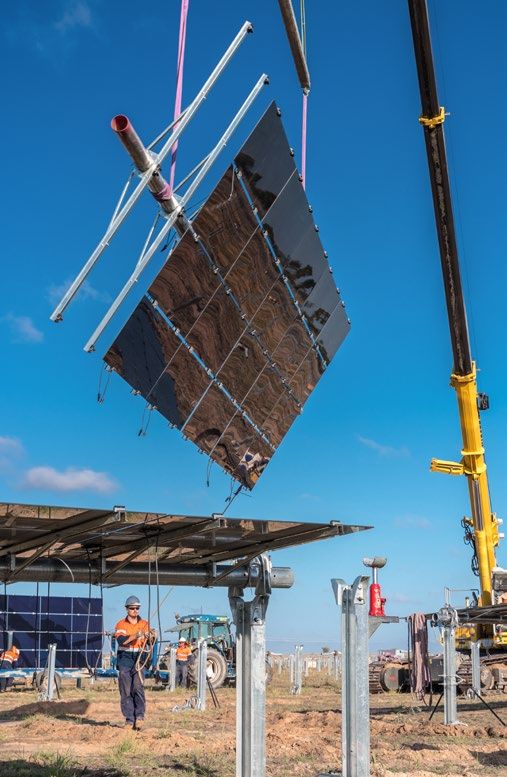
These same children and grandchildren will Figure 4: It is critical that investments made to reboot the
be the ones who are required to repay the economy achieve deep and lasting emissions reductions, as
well as delivering immediate and sustainable employment.
debts being incurred to tackle COVID-19. It
would be unconscionable for these stimulus
investments to be made in industries and
infrastructure which exacerbate emissions
and increase the 21st century climate change
challenge.
The effects of burning coal, oil and gas
are already with us. Australians have
experienced these effects via the record-
breaking drought which peaked across vast
swathes of the continent through 2019, made
worse by a superheated climate (Abram et
al. 2020; Hannam 2019), the unprecedented
fires of the Black Summer, and the third mass
bleaching event of the Great Barrier Reef in
only five years (James Cook University 2020).
It is essential that, as one of the world’s
most climate-vulnerable developed nations,
we invest now for the future. We must not
squander this historic opportunity to invest
in a clean and safe future.
It is critical that investments made to
reboot the Australian economy as a result
of COVID-19 do not increase emissions, but
rather achieve deep and lasting emissions
reductions, as well as delivering immediate
and sustainable employment.
We have a unique
opportunity to invest in
a clean and safe future.8 PRIMED FOR ACTION:
A RESILIENT RECOVERY FOR AUSTRALIA
BOX 1: A NEGATIVE RECOVERY THROUGH GAS
While economic shocks from coronavirus were In the past two months, three of Australia’s largest
inevitable, these shocks have been exacerbated by oil and gas companies—Woodside, Santos and
an oil price war between Saudi Arabia and Russia Oil Search—have all been forced to drop planned
(Padilla 2020). A strategic play between the major expansions (McDonald-Smith 2020; Toscano
producers over how to manage declining demand 2020a; 2020b). Origin Energy has likewise
for their fossil fuels has seen these countries break been forced to stall exploration in the Northern
apart their informal cartel, and drastically ramp up Territory’s Betaloo Basin (Robertson 2020).
supply to price each other, and any other country,
out of the market for oil. Even setting aside the climate dangers of economic
growth through gas, it is an unreliable and
Australia is one of the countries being pushed out. unnecessary path to getting the Australian economy
By carbon content, Australia is the world’s third back on its feet. Gas-driven industrial projects
largest fossil fuel exporter (Swann 2019). It is also cannot provide sustainable long-term employment
the world’s largest exporter of liquefied gas (Office opportunities. Now that it is exposed to the global
of the Chief Economist 2020). market, the Australian gas industry will continue to
be affected, over and over, by the same volatile forces
Paired with the collapse in oil demand under that are currently creating havoc in the industry.
coronavirus constraints, this price war has had
major consequences for the Australian gas market Australia does not have a competitive advantage
because where the price of oil goes, the price of in the global market for gas because its gas must
gas follows. The sale price of most Australian gas be compressed and shipped, making it relatively
export contracts is linked directly to the price of expensive. There is no prospect of reducing
oil, with the delivery price for gas adjusting along greenhouse gas emissions by increasing fossil fuel
with the price of oil at any given time (Office of production (Stockholm Environment Institute et al.
the Chief Economist 2020). This means that as the 2019). Industries built on gas and gas-fired electricity
price of oil has collapsed, so too has the revenue will have higher ongoing operating costs than those
of Australia’s major gas exporters. built on renewables, even before considering their
exposure to future gas and oil price spikes or supply
The oil trade war has shocked the world’s fossil disruptions (Graham et al. 2018).
fuel exporting companies to their core.
The oil trade war has shocked
the world’s fossil fuel exporting
companies to their core.CHAPTER 01 9
EARLY WARNINGS
The high energy prices in Australia in recent are considered, they could eliminate any benefit
years are a result of the growth in Australia’s of the transition from coal to gas (Baxter 2020;
fossil gas sector (Long 2020; Sandiford 2016; Climate Council 2017).
Llewellyn-Smith 2020). To date, the increase in
gas extraction, and increased exposure to the While emissions in the electricity sector continue
international market has driven energy prices up to decline as a result of record deployments of
for Australians. The recent price war has caused renewable energy, this is being more than offset
these prices to crash again. This demonstrates by continual increases in emissions from fossil
just how unreliable gas is as a source of jobs gas expansions (Department of Industry, Science,
and energy. It is a shaky foundation on which to Energy and Resources 2020).
reboot a fragile economy.
Australia cannot continue to throw good money
Meanwhile, CSIRO analysis has shown that after bad: gas is driving up prices of energy for
renewables backed by storage are the cheapest Australian households and businesses while
way to build new electricity generation locking in huge investment losses, stranded assets
infrastructure (Graham et al. 2018). and colossal environmental harm. There is no
argument for a gas-led recovery in Australia that
But we cannot forget about the urgency of the makes sense in the 21st century.
climate crisis. Gas is a fossil fuel and is driving
up Australians’ exposure to the climate impacts The response to coronavirus, when it comes
we are already seeing. To make matters worse, time to restart the Australian economy, must
emissions from the extraction and processing set Australia on a path to a positive and resilient
of gas are vastly under-estimated (Lafleur et al. recovery that reorients the country toward net
2016). Even when you accept the official data at zero emissions as fast as possible.
face value, the growth of the gas industry is a
core reason why Australia’s official emissions
figure are yet to fall (Department of Industry,
Science, Energy and Resources 2020; Kelly
2019). Once these under-estimated sources
Investing in more gas will lock in
investment losses, stranded assets
and environmental harm.10 PRIMED FOR ACTION:
A RESILIENT RECOVERY FOR AUSTRALIA
2. The climate
challenge for Australia
Failure to heed warnings and act For decades, the international and
on scientific advice has disastrous Australian scientific communities have
consequences. been warning about the climate impacts
that will be felt if Australia, along with the
rest of the world, does not move away from
the consumption of coal, oil and gas for
energy (Houghton, Jenkins, and Ephraums
1990; Pearman 1988).
Over that time, Australian consumption
of fossil fuels for energy has dramatically
increased, virtually uninterrupted, year-
after-year (Global Carbon Project 2020).
While there are no developed countries
where fossil fuel consumption is reducing
fast enough to meet the goals of the Paris
Agreement (United Nations Environment
Programme 2019), most developed
countries have made far greater progress
than Australia (Burck et al. 2019).
Figure 5: The Paris Agreement was met with great fanfare, but its goals for limiting climate change will
very soon become impossible without immediate action.CHAPTER 02 11
THE CLIMATE CHALLENGE FOR AUSTRALIA
There are also very few developed countries
that are as vulnerable to failure to meet
A remote chance
internationally agreed temperature goals
as Australia (Climate Council 2018). The
at meeting 1.5°C
impacts on Australia are set to intensify.
would require
Through the Paris Agreement of 2015, the
international community agreed to limit unprecedented
global temperature increase to well below 2°C
above the world’s average temperature before action.
wholesale consumption of coal, oil and gas
began in the 1700s, while pursuing efforts to
limit these increases to 1.5°C.
The climate impacts experienced today, focus must be on those emissions linked to
such as escalating extreme weather events the consumption of coal, oil and gas, which
and sea level rise, have been as a result of make up a far greater share of the problem
1.1°C of global temperature increase since than any other. Current production of
developed countries began burning coal, fossil fuels is more than capable of tipping
oil and gas in earnest (World Meteorological the world past global goals (Stockholm
Organization 2020).1 Having a chance to Environment Institute et al. 2019).
meet the international goal of limiting
the superheating of the global climate to While Australia is extremely exposed to
1.5°C— significantly hotter and far riskier these ever-worsening climate impacts, the
than today—means global emissions must Australian Federal Government is at the
drop 7.6% per year, every year, for the next back of the pack when it comes to taking the
decade (United Nations Environment necessary action required to deal effectively
Programme 2019). Escalating emissions with climate change. An annual analysis by
over the past decade means that it is now the New Climate Institute of close to 60 of
nearly impossible to achieve the immediate, the world’s biggest emitters has consistently
precipitous, ongoing emissions reductions rated Australia’s climate policy as either
needed to meet this goal (Rogelj et al. 2018). last or near last since its inception. (Burck
Even a remote chance of meeting the et al. 2019). The effect of this can be seen
Paris 1.5°C target would thus take a global in Australia’s continued high emissions
transformation of human societies at a speed (Department of Industry, Science, Energy
and magnitude never achieved before. and Resources 2020).
The goal of limiting global heating to well
below 2°C is still within reach, but only with
immediate, rapid and permanent reductions
of global greenhouse gas emissions. The
1
The World Meteorological Organization uses the average temperature of the years 1850 to 1900 as its baseline temperature for this comparison.12 PRIMED FOR ACTION:
A RESILIENT RECOVERY FOR AUSTRALIA
Australia must become one of the key players of the Chief Economist 2020). By total impact
in this global effort, given the escalating risks on the climate, Australia is the world’s third
of a super-charged climate to our nation, largest fossil fuel exporter, behind only
our massive fossil fuel exports and our lack Russia and Saudi Arabia (Swann 2019).
of effective action on domestic emissions.
In 2019, Australia was the world’s largest But it is not just Australia’s fossil fuel exports
liquefied gas exporter, the world’s largest that have been causing harm. Australia is a
metallurgical coal exporter, and the world’s very large emitter both in terms of the total
second largest thermal coal exporter (Office greenhouse gas emitted in its borders and
emissions per person.
Even before considering exports, Australia
is the world’s 14th highest annual emitter of
greenhouse gases (Gütschow et al. 2019).
Of the world’s 195 countries, this means
181 countries do less to drive global climate
change each year than Australia. The full
list of countries emitting less each year
than Australia includes the birthplace of the
industrial revolution, the United Kingdom,
and Pakistan, one of the world’s largest
countries, with a population well over eight
times the size of Australia’s. As with the
COVID-19 response, climate change is a
problem that requires collective action. There
is no such thing as too small. Every country
must play its part, especially a relatively large
emitter like Australia.
On a per person basis, again even before
considering its fossil fuel exports, Australia is
the largest emitter of all developed countries
Figure 6: Australia’s emissions are stubbornly high through a and the largest emitter of all large countries. 2
failure to act to reduce fossil fuel consumption. (Gütschow et al. 2019).
Like COVID-19, climate change is a
problem requiring collective action.
2
Here, a ‘large’ country is any country with a population above 10 million people.CHAPTER 03 13
AUSTRALIA’S CLIMATE ADVANTAGE
3. Australia’s climate
advantage
Australia is well placed to benefit from Achieving this vision requires political
taking action on climate change. As will and courage, just as has been shown
the world’s sunniest continent, and through the COVID-19 crisis. Embracing
the windiest inhabited continent, the path to a resilient, prosperous
Australia has everything it could and healthy Australia means taking
ever need to reduce emissions to concrete steps along the path to net zero
zero and benefit from the transition emissions. There is no path through
(Garnaut 2019). Achieving this goal, fossil fuels such as gas to a resilient
given Australia’s world-leading future. The impact of continued growth
mineral and energy resource potential in gas extraction on global temperatures
(Geosciences Australia 2018; 2019), would make Australia incapable of
could see Australia become a true realising its renewable potential.
energy superpower in the zero
emissions world (Kuper 2019).
Figure 7: As the world’s sunniest and windiest inhabited continent, Australia has everything it could ever need to reduce
emissions to zero and benefit from the transition.14 PRIMED FOR ACTION:
A RESILIENT RECOVERY FOR AUSTRALIA
Australia has seen crises before. The country invest in renewing the nation’s future, rather
will almost certainly overcome the trials of than locking in future harm to Australian
COVID-19. But how the nation does this will lives, livelihoods and property through the
determine its own future, as well as playing continued burning of coal, oil and gas.
a major role in the future of the planetary
environment. This will require the same co-ordinated
leadership displayed through the
If Australia slips back into business as usual coronavirus period so far, where states and
after this crisis, then the nation will be territories are empowered to work alongside
propping up a failing fossil fuel industry at the federal government with a common
its own peril and the peril of our children purpose and with all work being informed by
and grandchildren (O'Malley 2020). There is the best available expert evidence.
no more time for locking in the continued
extraction of coal, oil, or gas. Planned Australia’s best bet for the future is to shift
fossil fuel developments are more than away from the price volatile and exposed
enough to tip the world past globally-agreed fossil fuel industry and reorient the country
temperature goals (Stockholm Environment toward net zero emissions as fast as possible.
Institute et al. 2019). Even on conservative estimates, the potential
for job creation in the renewable sector
The increase in the frequency and severity dwarfs anything that is on offer from the
of extreme events that we have seen so far fossil fuel industry (Hepburn et al. 2020).
is difficult to bear. To improve resilience to
future disasters, Australia must do more To embrace this opportunity, Australia must
than simply restore its economy to its set its sights on recovery options that are
previous state. It must step up to its role oriented toward a global goal of net zero
as a global clean energy superpower. This emissions as soon as possible.
will require the Australian Government to
How Australia recovers
from COVID-19 will
determine its future.In the long term, for Australia this will mean: › Replacing all fossil fuels: All energy sources or processes requiring fossil fuels, including all transport and off-grid energy use and the few uses of fossil fuels outside the energy sector must be replaced. Most uses of fossil fuels can be replaced through electrification—such as heat pumps for space heating and electric vehicles. Where electrification isn’t viable—such as in some high-energy industrial uses and aviation—green hydrogen and biofuels should be used. These latter steps will take time, making electrification of other fossil fuel uses all the more urgent. › Powering Australia with renewable energy: Meeting all of our future energy needs, including those needs created as a result of replacing all existing fossil fuel consumption, will require that Australia’s high emitting electricity sector be brought to zero emissions as soon as possible. However, it is crucial that the deployment of renewables aim beyond 100% of today’s electricity demand. The electrification of virtually all energy will increase demands on the grid and will require far more electricity supply. › Stepping up as a global zero emissions exporter: As the sunniest and windiest inhabited continent, Australia has a central role to play in supplying zero emissions energy, products, minerals and services to our neighbours and the rest of the world. This will bring immense opportunity to Australia as the world reorients to zero emissions. Figure 8: The potential for job creation in the renewable sector dwarfs anything that is on offer from the fossil fuel industry.
16   PRIMED FOR ACTION:
     A RESILIENT RECOVERY FOR AUSTRALIA

                  › Action on the land and coasts to                interests to ensure that the economic
                    build resilience: Taking urgent action          recovery is positive and deploys solutions to
                    on climate change is our best bet at            the country’s climate vulnerability. The core
                    ensuring rural, regional and coastal            feature must be reducing Australia's impact
                    communities have everything that they           on global temperature both domestically,
                    need to thrive in the coming decades.           through its own high emissions, and abroad,
                    The jobs created through taking these           through its exports, which are fuelling the
                    actions will themselves bring immense           climate crisis.
                    benefit to regional Australian workers
                    and economies.                                  By following this path to recovery, the
                                                                    country stands the best chance of avoiding
                  Taking these steps will boost Australia’s         the very worst economic impacts. With jobs
                  resilience to future geopolitical,                to be found in new and growing industry
                  environmental and public health shocks,           and cheaper energy prices, Australia will also
                  with Australia’s status as a direct exporter of   finally step up to meet the far greater crisis of
                  renewable energy—whether through high             unmitigated climate change.
                  voltage undersea cables, green hydrogen,
                  or any other means—ensuring that the              Australia would not be walking alone toward
                  Australian economy has the strength to ride       a net zero emissions future after COVID-19,
                  the wave of future economic difficulties,         should it choose to go down that path, with
                  whether global or domestic.                       several countries across Europe and Asia
                                                                    aiming to walk that same path (Farand 2020;
                  The solutions exist to bring about this           Krukowska 2020).
                  vision, and the need to create a positive
                  recovery for Australia provides a point of        The recovery from this crisis presents a
                  leverage to shift Australia away from its         once-in-a-lifetime opportunity to prime
                  past poor performance and toward net zero         Australia to be a renewables-led powerhouse.
                  emissions (Garnaut 2019). It is in Australia’s

     The solutions exist and
     this is a once-in-a-lifetime
     opportunity to put Australia
     on a path to net zero emissions.
REFERENCES 17
References
Abram, Nerilie J., Nicky M. Wright, Bethany Ellis, Bronwyn Cox, Lisa. 2019. “‘Hugely Disappointed’ Emergency
C. Dixon, Jennifer B. Wurtzel, Matthew H. England, Chiefs to Hold Bushfire Summit with or without PM.” The
Caroline C. Ummenhofer, et al. 2020. “Coupling of Indo- Guardian, December 16, 2019, sec. Australia news. https://
Pacific Climate Variability over the Last Millennium.” www.theguardian.com/australia-news/2019/dec/17/
Nature 579 (7799): 385–92. https://doi.org/10.1038/s41586- hugely-disappointed-emergency-chiefs-to-hold-bushfire-
020-2084-4. summit-with-or-without-pm.
AFAC (2020) Cumulative Seasonal Summary, AFAC Department of Industry, Science, Energy and Resources.
National Resource Sharing Centre, 28 February 2020. “Quarterly Update of Australia’s National Greenhouse
2020. Accessed at https://twitter.com/AFACnews/ Gas Inventory: September 2019: Incorporating Emissions
status/1233262259612213248/photo/1 from the NEM up to December 2019.” Australia’s National
Greenhouse Accounts. Commonwealth of Australia. https://
Baxter, Tim. 2020. “Scott Morrison’s Gas Transition Plan Is a
www.industry.gov.au/data-and-publications/national-
Dangerous Road to Nowhere.” The Conversation, February
greenhouse-gas-inventory-september-2019.
4, 2020. http://theconversation.com/scott-morrisons-gas-
transition-plan-is-a-dangerous-road-to-nowhere-130951. Emergency Leaders for Climate Action. 2019. “Australia
Unprepared for Worsening Extreme Weather.” https://www.
Beer, T, AM Gill, and PHR Moore. 1988. “Australian Bushfire
climatecouncil.org.au/emergency-leaders-climate-action/.
Danger under Changing Climatic Regimes.” In Greenhouse:
Planning for Climate Change, edited by Graeme Pearman. Farand, Chloé. 2020. “South Korea to Implement Green
Melbourne, Victoria: CSIRO Publishing. New Deal after Ruling Party Election Win.” Climate Home
News, April 16, 2020. https://www.climatechangenews.
Biddle, Nicholas, Ben Edwards, Diane Herz, and Toni
com/2020/04/16/south-korea-implement-green-new-deal-
Makkai. 2020. “Exposure and the Impact on Attitudes of
ruling-party-election-win/.
the 2019-20 Australian Bushfires.” ANU Centre for Social
Research and Methods. Garnaut, Ross. 2019. Super-Power: Australia’s Low-Carbon
Opportunity. Carlton, Vic: La Trobe University Press.
Boer, Matthias M., Víctor Resco de Dios, and Ross A.
Bradstock. 2020. “Unprecedented Burn Area of Australian Geosciences Australia. 2018. “Australia’s Identified Mineral
Mega Forest Fires.” Nature Climate Change 10 (3): 171–72. Resources.” December 31, 2018. https://www.ga.gov.au/
https://doi.org/10.1038/s41558-020-0716-1. scientific-topics/minerals/mineral-resources-and-advice/
aimr.
Borchers Arriagada, Nicolas, Andrew J. Palmer, David MJS
Bowman, Geoffrey G. Morgan, Bin B. Jalaludin, and Fay Geosciences Australia. 2019. “Australian Energy Resources
H. Johnston. 2020. “Unprecedented Smoke-related Health Assessment.” July 5, 2019. http://aera.ga.gov.au.
Burden Associated with the 2019–20 Bushfires in Eastern
Global Carbon Project. 2020. “Global Carbon Atlas.” 2020.
Australia.” The Medical Journal of Australia 213 (6): n/a-n/a.
http://www.globalcarbonatlas.org/en/CO2-emissions.
https://doi.org/10.5694/mja2.50545.
Graham, Paul W, Jenny Hayward, James Foster, Oliver
Burck, Jan, Ursula Hagen, Niklas Höhne, Leonardo
Story, and Lisa Havas. 2018. “GenCost 2018: Updated
Nascimento, and Christoph Bals. 2019. “Climate Change
Projections of Electricity Generation Technology
Performance Index 2020.” GermanWatch, New Climate
Costs.” CSIRO. https://publications.csiro.au/rpr/
Institute, Climate Action Network. https://www.climate-
pub?pid=csiro:EP189502.
change-performance-index.org/.
Gütschow, J, Louise Jeffery, R Geiseke, and Günther A.
Climate Council. 2017. “Pollution and Price: The Cost of
2019. The PRIMAP-Hist National Historical Emissions
Investing in Gas.” https://www.climatecouncil.org.au/
Time Series (1850-2017) v2.1. 2019. https://doi.org/10.5880/
resources/price-of-gas/.
pik.2019.018.
Climate Council. 2018. “The Good, the Bad and the
Hannam, Peter. 2019. “How Bad Is This Drought and Is
Ugly: Limiting Temperature Rise to 1.5°C.” https://www.
It Caused by Climate Change?” Sydney Morning Herald,
climatecouncil.org.au/resources/limiting-temperature-rise/.
November 4, 2019, sec. Climate change. https://www.smh.
Climate Council. 2020a. “Summer of Crisis.” https://www. com.au/environment/climate-change/how-bad-is-this-
climatecouncil.org.au/resources/summer-of-crisis/. drought-and-is-it-caused-by-climate-change-20191024-
p533xc.html.
Climate Council. 2020b. “Summer of Crisis.” https://www.
climatecouncil.org.au/resources/summer-of-crisis/.18 PRIMED FOR ACTION:
A RESILIENT RECOVERY FOR AUSTRALIA
Hepburn, Cameron, Brian O’Callaghan, Nicholas Stern, McDonald-Smith, Angela. 2020. “Oil Search Capex Cut
Joseph Stiglitz, and Dimitri Zenghelis. 2020. “Will Fails to Quell Market Fears.” Australian Financial Review,
COVID-19 Fiscal Recovery Packages Accelerate or Retard March 18, 2020. https://www.afr.com/companies/energy/
Progress on Climate Change?” Working Paper 20-02. oil-search-capex-cut-fails-to-quell-market-fears-20200317-
Oxford Smith School of Enterprise and the Environment. p54b5h.
https://www.smithschool.ox.ac.uk/publications/wpapers/
Office of the Chief Economist. 2020. “Resources and
workingpaper20-02.pdf.
Energy Quarterly - March 2020.” Commonwealth of
Houghton, J T, G J Jenkins, and J J Ephraums, eds. Australia. https://publications.industry.gov.au/publications/
1990. Climate Change: The IPCC Scientific Assessment. resourcesandenergyquarterlymarch2020/index.html.
World Meteorological Organization and United Nations
O'Malley, Nick. 2020. "Old friendships alone won't save us
Environment Programme. https://www.ipcc.ch/site/assets/
from climate change." Sydney Morning Herald. May 20,
uploads/2018/03/ipcc_far_wg_I_full_report.pdf.
2020. https://www.smh.com.au/environment/climate-
James Cook University. 2020. “Climate Change Triggers change/old-friendships-alone-won-t-save-us-from-
Great Barrier Reef Bleaching.” Media Release. ARC Centre of climate-change-20200519-p54ui2.html
Excellence for Coral Reef Studies. https://www.coralcoe.org.
Padilla, John. 2020. “Dysfunctional Oil Market Needs a New
au/media-releases/climate-change-triggers-great-barrier-
Model.” Financial Times, May 4, 2020. https://www.ft.com/
reef-bleaching.
content/ddfb18f6-89f6-11ea-a109-483c62d17528.
Johns Hopkins University. 2020. “COVID-19 Case Tracker.”
Pearman, Graeme, ed. 1988. “Greenhouse: Planning for
2020. https://coronavirus.jhu.edu/.
Climate Change.” In Greenhouse: Planning for Climate
Kelly, Fran. 2019. “Delayed Government Figures Change. Melbourne: CSIRO Publishing.
Show Greenhouse Gas Emissions up for Fourth Year
Richards, Lisa, Nigel Brew, and Lizzie Smith. 2020. “2019–
in a Row.” Sound. ABC Radio National. Australian
20 Australian Bushfires—Frequently Asked Questions:
Broadcasting Corporation. June 7, 2019. https://www.
A Quick Guide.” Research Paper. Parliamentary Library
abc.net.au/radionational/programs/breakfast/figures-
(Commonwealth). Australia. https://www.aph.gov.
show-emissions-have-risen-for-fourth-consecutive-
au/About_Parliament/Parliamentary_Departments/
year/11188756.
Parliamentary_Library/pubs/rp/rp1920/Quick_Guides/
Krukowska, Ewa. 2020. “European CEOs, Ministers Start AustralianBushfires.
Campaign for Green Recovery.” Bloomberg, April 14, 2020.
Robertson, Bruce. 2020. “Origin Pulls Plug on Gas
https://www.bloomberg.com/news/articles/2020-04-14/
Exploration in Northern Territory. Who’s next?”
european-ceos-ministers-start-campaign-for-green-
RenewEconomy, March 27, 2020. https://reneweconomy.
recovery.
com.au/origin-pulls-plug-on-gas-exploration-in-northern-
Kuper, Stephen. 2019. “Australia’s Growing Global Role as territory-whos-next-32526/.
a New Energy Superpower.” DefenceConnect. September
Rogelj, Joeri, Drew Shindell, Kejun Jiang, Solomone Fifita,
30, 2019. https://www.defenceconnect.com.au/key-
Piers Forster, Veronika Ginzburg, Collins Handa, et al. 2018.
enablers/4860-australia-s-growing-global-role-as-a-new-
“Mitigation Pathways Compatible with 1.5°C in the Context
energy-superpower.
of Sustainable Development.” In Global Warming of 1.5°C:
Lafleur, Dimitri, Tim Forcey, Hugh Saddler, and Mike An IPCC Special Report on the Impacts of Global Warming
Sandiford. 2016. “A Review of Current and Future Methane of 1.5°C above Pre-Industrial Levels and Related Global
Emissions from Australian Unconventional Oil and Gas Greenhouse Gas Emission Pathways, in the Context of
Production.” Working Paper. Melbourne Energy Institute. Strengthening the Global Response to the Threat of Climate
https://energy.unimelb.edu.au/articles/a-review-of- Change, Sustainable Development, and Efforts to Eradicate
current-and-future-methane-emissions. Poverty, edited by Valérie Masson-Delmotte, Panmao Zhai,
Hans-Otto Pörtner, Debra Roberts, Jim Skea, Priyadarshi
Llewellyn-Smith, David. 2020. “Scotty from Marketing
R Shukla, Anna Pirani, et al. Geneva, Switzerland: World
Incoherent on Gas.” MacroBusiness, January 29, 2020, sec.
Meteorological Organization. https://www.ipcc.ch/sr15/.
Australian Economy. https://www.macrobusiness.com.
au/2020/01/scotty-from-marketing-incoherent-on-gas/. Sandiford, Mike. 2016. “We Really Must Talk about Gas.” The
Conversation, September 7, 2016. http://theconversation.
Long, Stephen. 2020. “Cheap Gas, Really? Why Gas — from
com/we-really-must-talk-about-gas-64213.
Coal Seams or Ships — May Not Mean Low Power Prices.”
The Business (ABC News), February 11, 2020. https://www.
abc.net.au/news/2020-02-12/coal-seam-gas-import-or-
mining-will-not-guarantee-lower-prices/11954268.REFERENCES 19 Stockholm Environment Institute, International Institute for Sustainable Development, Overseas Development Institute, Climate Analytics, CICERO Centre for International Climate Research, and United Nations Environment Programme. 2019. “The Production Gap 2019.” http://productiongap.org/. Swann, Tom. 2019. “High Carbon from a Land Down Under Quantifying CO2 from Australia’s Fossil Fuel Mining and Exports.” Australia Institute. https://www.tai.org.au/content/ new-analysis-australia-ranks-third-fossil-fuel-export. Toscano, Nick. 2020a. “Woodside Shelves Plans, Wipes Billions from Budget as Oil Crash Bites.” Sydney Morning Herald, March 27, 2020. https://www.smh.com.au/business/ companies/woodside-shelves-plans-wipes-billions-from- budget-as-oil-crash-bites-20200327-p54ehj.html. Toscano, Nick. 2020b. “Santos Braces for Heavy Hit as Oil Price Tumbles ‘into the Teens.’” Sydney Morning Herald, April 23, 2020, sec. Companies. https://www.smh.com.au/ business/companies/santos-braces-for-heavy-hit-as-oil- price-tumbles-into-the-teens-20200423-p54mge.html. United Nations Environment Programme. 2019. “Emissions Gap Report 2019.” http://www.unenvironment.org/ resources/emissions-gap-report-2019. University of Sydney. 2020. “More than One Billion Animals Impacted in Australian Bushfires.” Media release. https:// sydney.edu.au/news-opinion/news/2020/01/08/australian- bushfires-more-than-one-billion-animals-impacted.html. World Meteorological Organization. 2020. “WMO Confirms 2019 as Second Hottest Year on Record.” January 15, 2020. https://public.wmo.int/en/media/press-release/wmo- confirms-2019-second-hottest-year-record.
20    PRIMED FOR ACTION:
      A RESILIENT RECOVERY FOR AUSTRALIA

     Image credits
     Cover image: ‘The Path to Certainty’. Image credit: Bill
     Doyle. Image taken at Waterloo Wind Farm, SA. 21 July
     2017. Licence: All rights reserved by the owner. Used with
     permission. See more of Bill’s work at: https://www.flickr.
     com/photos/liamjon-d/
     Page 3: Figure 1: Smoke from the Black Summer bushfires
     as seen from space. Image credit: ESA (European Space
     Agency) Image/EPA. Contains modified Copernicus
     Sentinel data (2019). Licence: CC BY-SA 3.0 IGO.
     Page 5: Figure 2: Western Australian police escorting new
     international arrivals to hotels for 14 days of mandatory
     isolation. 17 April 2020. Image credit: Wikipedia user
     Gnangarra. Licence: CC-BY-2.5.
     Page 6: Figure 3: Dead corals on the Great Barrier Reef
     being assessed by coral surveyor Margaux Hein. October
     2016. Image credit: Greg Torda, ARC Centre for Excellence
     for Coral Reef Studies. Licence: CC-BY-ND 2.0
     Page 7: Figure 4: Installers placing solar Panels and Genex’s
     Kidston Solar farm. Image credit: Genex. Licence: All rights
     reserved by the owner. Used with permission.
     Page 10: Figure 5: The passage of the Paris Agreement in
     2015. Image credit: UNFCCC Secretariat. Licence: CC-
     BY-2.0
     Page 12: Figure 6: Car exhaust pipe and muffler. Image
     credit: Matthew Paul Argall. Licence: Public Domain.
     Page 13: Figure 7: Wind farm in Albany, WA. Image credit:
     Shutterstock user Chichmaru. Licence: All rights reserved
     by the owner. Used with permission.
     Page 15: Figure 8: Kidston solar farm from above. Image
     credit: Genex. Licence: All rights reserved by the owner.
     Used with permission.
Thank you for
supporting the
Climate Council.
The Climate Council is an independent, crowd-funded organisation
providing quality information on climate change to the Australian public.
CLIMATE COUNCIL
facebook.com/climatecouncil
twitter.com/climatecouncil
info@climatecouncil.org.au
climatecouncil.org.au
The Climate Council is a not-for-profit organisation
and does not receive any money from the Federal
Government. We rely upon donations from the
public. We really appreciate your contributions.
DONATE climatecouncil.org.au/donateYou can also read


