Electricity Price Outlook 2018 - Perspectives for the power price in North West Europe towards 2035 - Dansk Energi
←
→
Page content transcription
If your browser does not render page correctly, please read the page content below
Electricity Price Outlook
2018

Perspectives for the power price in
North West Europe towards 2035

VE
                                                    Electricity Price
Contents

                                                                  What is the Electricity Price Outlook?

1.     Key Messages and Analysis Summary                          The Electricity Price Outlook is an extension of Danish
                                                                  Energy’s earlier electricity price scenarios that, besides
                                                                  demonstrating different possible futures for the electricity
2.     Status of the Electricity Market
                                                                  price, also zooms in on Denmark and the terms for Danish
     2.1. Historical Prices                                       electricity production.
     2.2. Key Tendencies for Technology, Consumption and Prices   While wind and solar power will make up the majority of
     2.3. Political Drivers Related to the Electricity Market     the electricity production in the future, there is still a need
                                                                  for capacity for days without sunshine or wind. Thus, this
                                                                  outlook also investigates the situation for the Danish power
3.     Scenarios for Electricity Prices in Northwestern Europe    plants.
     3.1. Scenarios and Main Uncertainties                        Chapter 4 on the specific situation on Danish power plants
     3.2. Main Scenario Results                                   has been omitted from this English translation.

     3.3. Sensitivity Scenario Results
     3.4. Electricity Storage
                                                                  Report made by:
                                                                  Karsten Capion, 35300487, kac@danskenergi.dk
                                                                  Morten Stryg, 35300489, mst@danskenergi.dk
                                                                  Kristian Rune Poulsen, 35300477, krp@danskenergi.dk

 2
1. Key Messages and
Analysis Summary

VE
                                                       Electricity Price
The good news: electricity can be entirely green and secure for a small
additional cost
The wholesale electricity market is decisive           Price reductions on wind and solar PV are
for investment                                         creating a new reality
A large part of the investment in the energy sector    The main conclusion of our analysis is positive: it                   Small extra cost
is dependent on expectations for developments in       appears that electricity will become a greener,          Secure       - If the market gets to pick the
                                                                                                                             cheapest solutions
the wholesale electricity market. It is therefore of   and still cheap product in the future. The recent
interest to understand the constraints and the         dramatic price reductions in wind and solar power
central drivers of the market.                         is not only good news for the green transition, it is
                                                                                                                 Green       Small extra cost
                                                       good news for electricity consumers too.
For this purpose, Danish Energy prepares a                                                                                   - If a fair price on CO2 is set.
range of scenarios every year that outline             Our analysis shows that new investments in wind
different possible electricity price outcomes, given   and solar power are expected to limit possible
a number of political decisions, fuel prices and       electricity price increases, ensuring that the
technological developments.                            electricity price will not rise above an annual
                                                       average value of 47 to 60 €/MWh. Earlier
Furthermore, in this year’s iteration, we have
                                                       projections have indicated significantly greater
sought to investigate which impacts market
                                                       increases in prices.                                                  Cheap
developments might have for Danish power
plants. Power plants are experiencing rapid            Electricity can become even greener for a small
                                                                                                               Electricity   – Our analysis shows that the
                                                                                                                             average electricity price will
changes currently, with fewer operational hours        additional cost, ideally through a higher price on                    maintain a relatively low price
and an increased importance of revenues from           CO2 emissions.                                                        level.
supply of heat for district heating.
                                                       Additionally, it seems that the price for ensuring
The change from an electrical system dominated         the desired level of security of supply is bearable,
by power plants with large baseload plants to one      though decisions are still to be made regarding
dominated by wind has consequences for our             the goals for future security of supply, as well as
security of supply and the ability to always cover     which instruments should be used in order to
our consumption with sufficient electricity            ensure it.
production.

 4         1. Key Messages and Analysis Summary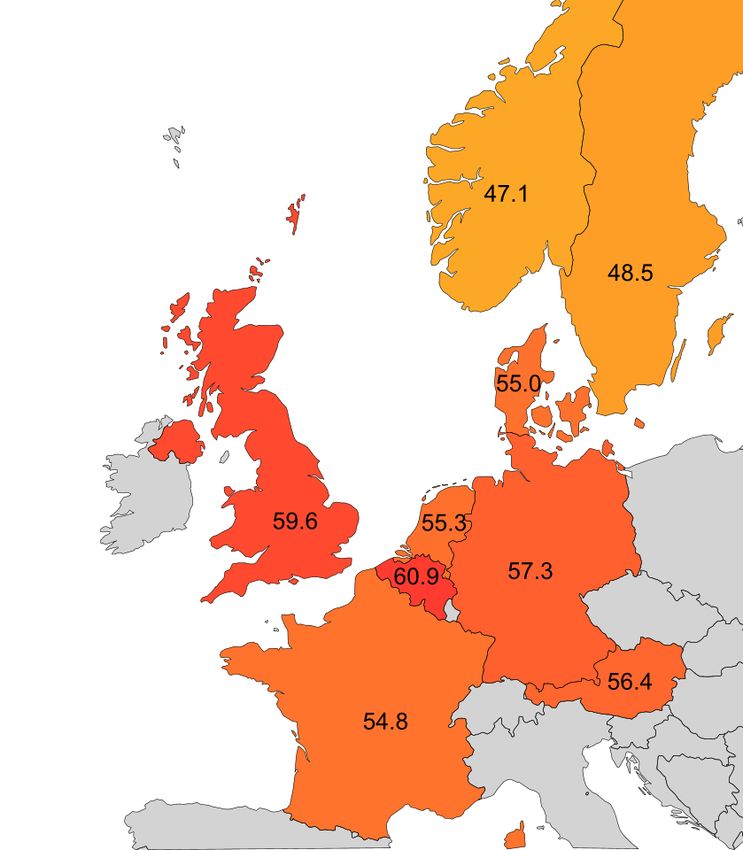
VE
                                                                Electricity Price
The not-so-good news: Electricity will not be green and secure by itself
The CO2 price is too low to drive the green transition
Despite numerous reforms of the EU’s carbon market              The price on CO2 is still much less                                                                 Forecasts for security of supply
(ETS), the CO2 price is still much less than the originally          than the expected level                                                                             worsen year by year
expected price of 20 to 30 €/ton. This is due to a large
surplus of quotas that were built up after the financial
crisis, primarily due to decreases in electricity                       50                                                                                          35
consumption and industrial production.
                                                                        45
                                                                                                                                                                    30
With the new reforms this surplus is reduced but the
number of quotas issued by the system is still too high.                40
This keeps the carbon price low and means that the
                                                                                                                                                                    25
                                                                        35                                                                                               Kriegers Flak-

                                                                                                                                                    Outages (min)
green transition continues to primarily be driven by
                                                                                                                                                                    20   connection to
national support systems, which, overall, is a less                     30                                                                                                 Germany
effective and more expensive way than setting a higher          €/ton               Expected level at the creation of the
price on pollution.                                                     25                       EU ETS                                                             15
Security of supply to worsen                                            20
                                                                                                                                                                    10
The Danish security of supply will move into uncharted                  15
waters in the years to come, where we cannot be sure                                                                                                                5
that demand can be satisfied at all times. Luckily, it is               10
often possible to import electricity. However, our
                                                                         5                                                                                          0
neighbors are in the same situation as we are, as a
large part of the reliable electricity production capacity in
                                                                         0
these countries will be retired during the next few years.
                                                                             2009
                                                                                     2010
                                                                                            2011
                                                                                                   2012
                                                                                                          2013
                                                                                                                 2014
                                                                                                                        2015
                                                                                                                               2016
                                                                                                                                      2017
                                                                                                                                             2018
Fewer power plants with fewer operational hours
increase the risk of a lack in the technical properties that                                                                                                                                     2017
                                                                                                                                                                          Energinet’s
those power plants deliver today, which has already led                                                                                                                   examination of
to instances of forced operation. In the absence of a                                                                                                                                            2016
                                                                                                                                                                          security of supply
price on necessary services, the security of supply will                                                                                                                                         2015
decrease in tandem with power plant closure.
 5          1. Key Messages and Analysis Summary
VE
                                                       Electricity Price
Policy instruments should use the market as much as possible
The price on CO2 ensures green electricity and
fair competition
Ensuring a fair CO2 price, will make renewables
                                                                   CO2
become competitive with fossil electricity production.                                                             Support
A strong and reformed emissions trading system                                          Two ways of
                                                                                        ensuring fair
(ETS) is the preferred option, but hard to reach
                                                                                        competition
agreement on. Another solution could be to place a                          RES         between fossil-
regional price floor among a sufficiently large group of          Fossil                and renewable     Fossil
                                                                                                                    RES
countries. The alternative to a fair price on CO2 is to                                 energy
subsidize renewable energy to ensure a certain
tempo in the green transition. This is, however, a less
effective and more expensive solution.
The market can deliver a high level of security of              With a price on CO2                   Without a price on CO2
supply
Marketization of all the services the electricity system    Marketization ensures competition on delivery of services
needs can ensure transparency and fair remuneration
for the actors that contribute to stabilizing the
electricity system. At the same time competition and
innovation is cultivated. Wind turbines, solar PV,
electricity storage and other technologies can also                                                                          Advanced
deliver some of the services that the electricity system
                                                                                                                             wind turbines
demands and thereby supplement the power plants in         Power plants
ensuring the security of supply. The alternatives to                                                                         and solar PV
marketization of services is either lower levels of
security of supply, or the TSOs, investing in and
operating more assets instead of the market actors.                                                                     Energy
                                                             Synchronous                                                storage
 6        1. Key Messages and Analysis Summary               Compensator              Flexible consumption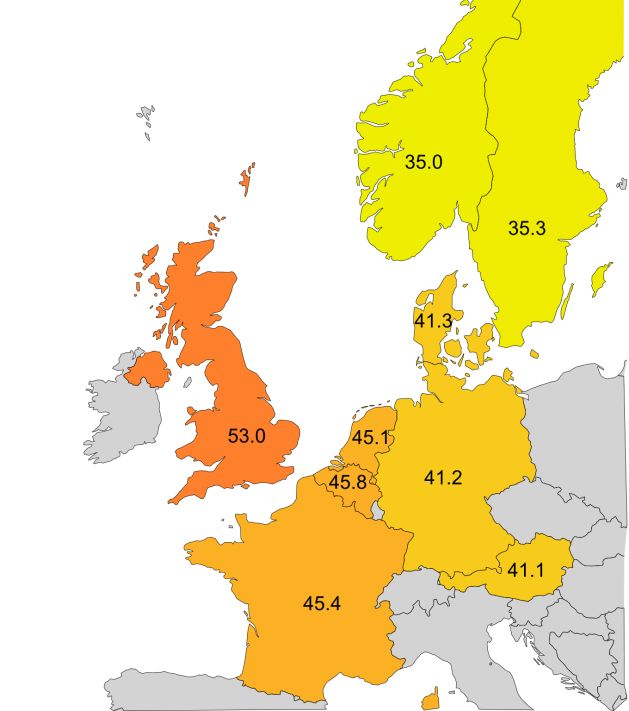
VE
                                                      Electricity Price
Summary of Danish Energy’s Electricity Price Outlook 2018: On developments
in electricity prices and the electricity market in Northwestern Europe
1. Low costs for new wind and solar PV will           5. The balance between RES and electricity          9. Reliable electricity capacity from power
limit both earnings from RES and the average          consumption is crucial to the electricity price.    plants or storage will increase in value in
electricity price. Decreasing costs for new wind      An RES-expansion that grows much faster than        tandem with old plants closing. Storage is a
and solar capacity causes electricity production      the demand will bring about significantly lower     competitor to gas power and is able to serve a
from these sources to be the cheapest available.      prices, while higher consumption does not lead to   large share of new reliable capacity requirements.
The future remuneration for wind is limited by        equivalent price increases, as RES limits the
                                                                                                          10. Electricity storage will be able to lower
costs for future wind.                                price of electricity under market conditions.
                                                                                                          electricity production fueled by natural gas.
2. Costs for electricity production from coal         6. The price of CO2 is of great importance to       Batteries can play a role as the future peak load
will continue to have great impact on the             power plants, wind and solar PV. High CO2           plants, while long-term storage can lower the
electricity price, but it is increasingly the costs   prices will significantly lower the earnings from   curtailment of wind and solar. Further
for renewable energy and gas that set the price.      coal power but increase remuneration for wind       breakthroughs for electricity storage to replace
This is further amplified by a large move away        and solar to a level where these can be             power plants requires both low costs for
from coal in Europe.                                  established under market conditions, without        renewable energy and long-term storage.
                                                      support. Earnings for biomass-fired plants will
3. Differences in the value of electricity                                                                11. Transmission can increase the value of
                                                      increase with higher CO2 prices.
production from different types of plants will                                                            wind and solar. Cables between the Nordic
grow. The relative remuneration for wind and          7. Higher CO2 prices today translate into rising    region and Great Britain can increase
solar will decrease compared to the average           electricity prices, but will in the future mostly   remuneration for wind power in both markets.
electricity price, while the flexible power plants    translate into greater amounts of renewable
relative remuneration will increase. The average      energy. The expansion of wind and solar power
electricity price will therefore become less          under market conditions in scenarios with high
relevant over time to producers.                      CO2 prices impedes electricity price increases.
4. Price reductions on RES have amplified the         8. The economics of power plants remaining
political appetite for the green transition.          in the market will improve slightly towards
Whether the transition continues through support      2030 but fewer operational hours and increased
systems or by a higher CO2 price is crucial to the    dependence on unpredictable hours with extreme
electricity price.                                    prices result in uncertain revenues.

 7         1. Key Messages and Analysis Summary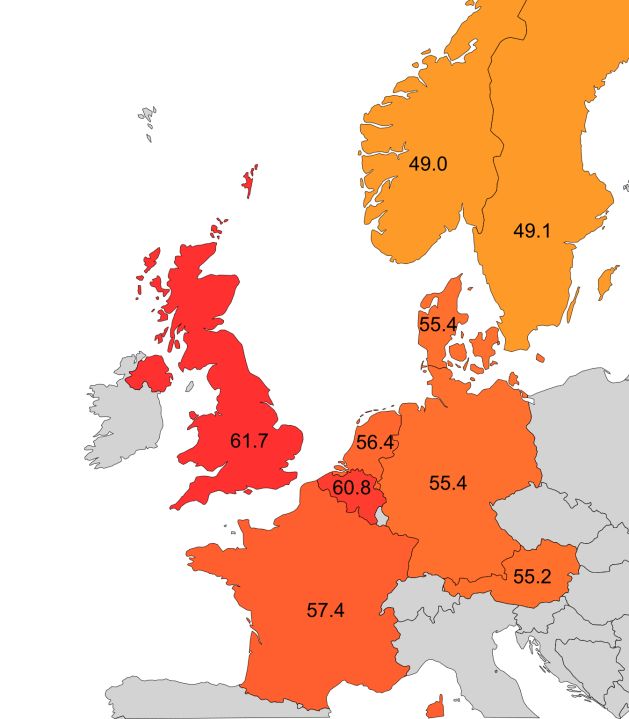
2. Electricity Market
Status
VE
                                                      Electricity Price
Denmark is not an island
A small part of a large electrical system                      Denmark with current and future transmission connections
Denmark is strongly connected to our neighbors
through various transmission connections, which                          Skagerak
make it possible to trade electricity across
                                                                         (Norway)        Kontiskan (Sweden)
borders.
                                                                         1630 MW         740 MW / 680 MW
Three additional connections (to Germany, the
Netherlands and the UK) have been decided
upon and will be commissioned in the coming
years. Likewise, the connection between Jutland
and Germany is currently being upgraded.                                              In 2023:
                                                                                      Danish peak load
When the new transmission connections are                                             electricity
completed in 2023, Denmark’s total transmission                                       consumption:                   Øresund (Sweden)
capacity with neighboring countries will exceed                                       approx. 7,000 MW
10,000 MW. For comparison, Denmark’s peak
                                                                                                                     1700 MW / 1300 MW
load consumption in 2023 is expected to be            Viking Link (UK)                Towards north:
approx. 7,000 MW.
                                                      1400 MW                         approx. 4,000 MW
For this reason, Denmark is definitely not an         2022
island in electricity system terms but rather a                                       Towards
small part of a large system, where the electricity   Cobra (the                      southwest:                            Kriegers Flak
price is set in a much larger market and where                                                   Storebælt
                                                                                      approx. 6,600 MW
                                                      Netherlands)                              600 MW                      (Germany)
decisions in neighboring countries affect the
                                                      700 MW                                                                400 MW
conditions for Danish electricity production and
                                                      2020                                                                  2019
security of supply tremendously.

                                                                               DK1-Germany
                                                                               2021: 2500 MW             Kontek (Germany)
 9         2.1 ELECTRICITY MARKET STATUS                                       2022: 3500 MW             585 MW /600 MW
VE
Electricity Price
Introduction to the electricity market
Supply and demand sets the price
Most expensive plant activated in every hour sets the electricity price for all
The electricity price is set every day based on
bids filed by consumers and producers in the
European electricity exchanges. An algorithm
(Euphemia) that sets the price hour by hour in the
following day in each price region then clears the Price
market, taking into account limits in the
transmission grid. Consumption
Danish electricity producers thus compete against
German, Swedish, Norwegian and sometimes
even Spanish producers to deliver electricity to
consumers. Electricity price
The various producers provide bids equal to their
costs and the price is then set at the point where
the supply and the demand curve cross. Wind
and solar PV typically bid close to zero but earn a
contribution margin equal to the electricity price.
During hours with high consumption and low wind
power production, gas usually dictates the price. Volume
Coal-fired power plants, with their lower marginal Wind Nuclear Coal
costs, earn a large share of their money during
these hours. Solar PV CHP Gas
During hours with strong wind the supply curve is
pushed towards the right, the price becomes very
low and only a low or no contribution margin is
obtained.
10 2.1 ELECTRICITY MARKET STATUSVE
Electricity Price
The most important parameters which set the electricity price are outside
Danish influence
Denmark is generally a price taker in the
electricity market. Factors that affect the Danish electricity price and Denmark’s influence on these.
Numerous factors affect the electricity price and Red points have descending influence – green points ascending influence.
Danish decision makers have little chance to
influence most of them. Influence
Today the cost of coal (coal price and CO2 price)
are of great importance to the electricity price. Coal price
These are decided by the world market (primarily CO2 price
by decisions in China) and the EU respectively,
with limited influence from Denmark.
The support for RES in our neighboring countries RES support in neighboring countries
also places a downwards pressure on the The weather
electricity price by increasing the supply of Gas price
electricity and by pushing the electricity price
below the costs for renewable energy.
EU Power plant capacity
EU electricity consumption
Danish politicians can affect the consumption and
capacity of power plants, wind turbines and solar Market design Cross border cables
PV in Denmark through frameworks such as fees,
subsidies and auctions but this has a limited DK capacity
influence on the greater European electricity RES costs DK consumption
market and thereby a limited influence on the
Danish electricity price.
Danish influence
As an example the decision to establish Viking
Link will increase the Danish electricity price by
approx. 1.3 to 2.7 €/MWh.
. 11 2.1 ELECTRICITY MARKET STATUS2.1 Historical Prices
Electricity   VE
                                                               ELPRIS
                                                                 Price
Great variation in electricity prices in Europe
Neighboring countries       affect   the   Danish    wind power. The price in Germany is historically a    Electricity prices in Northwestern
electricity price                                    little higher than in Denmark.                           Europe in 2017 (EUR/MWh)
Denmark is strongly connected to our neighbors       Great Britain is traditionally the Northwestern
in    Northwestern      Europe     via numerous      European country with the highest electricity
interconnectors. The electricity price in our        price. This is largely due to a high degree of
neighboring countries, and sometimes their           natural gas electricity production and their Carbon
neighboring countries, influences the Danish         Price Floor (CPF), which underpins the British
electricity price heavily. Regarding electricity,    CO2 price.
Denmark is very small compared to our neighbors
                                                     The other Western European countries have
which, besides having a larger population, have
                                                     electricity systems dominated by thermal
more electricity intensive industry.
                                                     production units and nuclear power. Generally,
To the North, Denmark is connected to Norway         this provides higher electricity prices than in
and Sweden that both have electricity systems        Denmark and the other Nordic countries.
dominated by production units with low marginal
                                                     As shown on the map, Denmark is located
costs. This is particularly the case for hydro
                                                     between low prices in the North and high prices in
power but investment is flowing massively into
                                                     the South/West.
new wind power while Sweden still have a
significant amount of nuclear power. This makes
these countries low price areas that are, however,
very sensitive to precipitation levels.
To the South, Denmark is connected to Germany
which has an electricity system with a lot of
thermal capacity and nuclear power. However,
                                                                                                                      Source: Syspower and ENTSO-E
the German power system is undergoing major
restructuring, particularly towards solar PV and

 13        2.1 ELECTRICITY MARKET STATUS – Historical Prices
Electricity VE
ELPRIS
Price
Electricity prices have risen again after a historically large fall
Coal and rain largely dictate the electricity price Average Danish electricity prices German electricity price determined
Fuel and CO2 prices, rain and temperatures are the primarily by costs for coal-fired
main factors which determine the electricity price. electricity production
60 60
Electricity prices rose until the financial crisis in
2008, after which they fell significantly. After a short
rise towards 2011, the electricity price fell almost 50 50
uninterrupted until 2015 where low coal and CO2
prices, coupled with high rainfall in the Nordic 40
region, caused a particularly sharp fall in prices. 40
EUR/MWh
Since then, the price has increased in tandem with
EUR/MWh
30
the coal price.
30
The electricity price in the two Danish bid-areas is
20
virtually identical, except in 2010 where Eastern
Denmark and Sweden experienced several price 20
spikes during the winter, which drove up the 10
average. 10
0
Looking at German prices, which are influenced
only to a limited degree by variations in rainfall, we
0
can identify a significant link between the marginal 2003 2005 2007 2009 2011 2013 2015 2017
costs for electricity production using coal (‘MC Electricity price MC Coal
coal’) and the German electricity price. Western Denmark Eastern Denmark Coal share CO2 share
The CO2 price has been low since 2012 and today
Source: Nordpool Spot Source: SysPower
it affects the electricity price by a modest
+7 €/MWh.
14 2.1 ELECTRICITY MARKET STATUS – Historical PricesElectricity VE
ELPRIS
Price
Greater spread in value of production
Average electricity price loses its meaning
The average remuneration in the electricity Market value of electricity production relative to the average electricity price
market for different producers displays a Western Denmark
gradually greater spread as the share of electricity
production from wind increases. In other words,
125%
the yearly average of electricity prices is
increasingly irrelevant to the market actors. 120%
The relative market value of wind has thus been
115%
decreasing towards 2013. Today, the other
producers’ remuneration is about 10 % above the
Market Value Factor
110%
average electricity price, where they previously
were about 7 % above average. 105%
In 2012 and 2015, the relative remuneration for 100%
thermal plants was particularly high. These two
years were so-called ‘wet years’, where Nordic 95%
hydro power pushed the summer prices down. As
CHP plants’ production are biggest in the winter 90%
season they avoided the worst price pressure
85%
from hydro.
Solar PV has historically had a significantly higher 80%
value in the market than wind and thus 2009 2010 2011 2012 2013 2014 2015 2016 2017 2018
remunerates about 10 % above the average Vind
Wind Sol
Solar Central Decentral
electricity price. This is due to solar’ limited
market share. In Germany, which has far more
Source: Dansk Energi pba. SysPower
sun and wind, remuneration has declined
significantly over recent years.
15 2.1 ELECTRICITY MARKET STATUS – Historical PricesElectricity VE
ELPRIS
Price
Remuneration for wind and solar falls in tandem with expansion
Onshore wind in particular faces low market
value today
Remuneration for wind and solar Germany
Looking at data for Germany, which in absolute
compared to general electricity price
numbers has the largest RES production and
(Germany)
consequently influences the electricity market the
most, it is evident that the relative market value of 115% 120%
wind and solar PV falls in tandem with expansion.
110% 110%
From 2013, data is available for offshore wind and
105%
Market Value Factor
the market value of the more stable offshore wind
Market Value Factor
100%
power production is seen to be higher than onshore 100%
power production. This is because production from 90%
onshore turbines to a larger extent occurs during 95%
hours with strong wind and low electricity prices. 80%
90%
Solar PV facing a potentially large loss of value
85% 70%
Solar is still worth more than wind power, but this
relationship might change swiftly, which is evident 80%
60%
from the figure on the right. If the linear projection is 75%
to be trusted, market value of the solar production is 50%
to be halved if the solar share of electricity 70% 0% 10% 20% 30%
2013
2010
2011
2012
2014
2015
2016
2017
2018
consumption is increased to 20 %. Share of electricity consumption
The market value of wind is experiencing a smaller
fall in tandem with expansion, which is due to wind Sol
Solar PV Havvind
Offshore wind Landvind
Onshore wind Vind
Wind Sol PV
Solar
power producing more evenly and having a better
seasonal match for the electricity consumption, Note: 2018 alone covers January and February. Note: Best straight lines through points provide
which as with wind power, is the highest during the simple projection of market value factor at higher
winter season. proportions from wind and sun
16 2.1 ELECTRICITY MARKET STATUS – Historical Prices2.2 Key Trends in Technology, Consumption and Prices
Electricity   VE
                                                                  ELPRIS
                                                                    Price
IEA does not predict a collapse in the coal price even with falling
consumption
Large fluctuations in world market coal prices          new mines (as the closing rate of old mines is        Global coal consumption in IEA’s
As noted earlier, the price of coal strongly
                                                        higher than the decline in consumption) and                three WEO scenarios
                                                        therefore the price will not collapse.
influences the electricity price.
                                                        With 64 $/ton and the current dollar rate, the coal
The coal price was at a high level in 2011, at
                                                        price is contributing about 21 €/MWh to the costs
approx. 120 $/ton. After 2011, the price declined
                                                        for production on coal power in condensing mode.
by almost two thirds until the start of 2016, falling
                                                        This does not include costs for operation,
to a price of 43 $/ton. At that time, various mining
                                                        maintenance and carbon allowances, thus
companies went bankrupt and the Chinese
                                                        making the total price a bit higher (depending on
government intervened and shut down a large
                                                        the CO2 price).
number of loss-making mines. The price has
since more than doubled, and is at 80-90 $/ton
today.
Continued need for opening new mines
                                                                                                                              Coal price historically
The central ‘New Policies’-scenario in IEA’s
WEO2017 predicts a slight increase in coal
                                                                                                                        140
consumption and coal prices from 2020 until
                                                                                                                        120
2040, ending at 82 $/ton. This scenario is the
                                                                                                                        100

                                                                                                              USD/ton
starting point for the WEO-scenario in their report.
                                                                                                                         80
In the ‘Sustainable Development Scenario’ in                                                                             60
WEO2017, the coal price is predicted to fall                                                                             40
slightly to 64 $/ton by 2040, despite a reduction of                                                                     20
more than 50% in coal consumption. IEA notes                                                                              0

                                                                                                                              2010
                                                                                                                                     2011
                                                                                                                                            2012
                                                                                                                                                   2013
                                                                                                                                                          2014
                                                                                                                                                                 2015
                                                                                                                                                                        2016
                                                                                                                                                                               2017
                                                                                                                                                                                      2018
that even with a reduction in production of this
magnitude, there will still be a need for opening

 18        2.2 ELECTRICITY MARKET STATUS – Key Trends in Technology, Consumption and Prices
Electricity VE
ELPRIS
Price
Price falls have brought gas back into the spotlight
The economy of gas CHP is still challenged
Gas CHP had a little comeback in 2016-2017
The economy of gas cogeneration is, roughly
Ratio between electricity and gas price in DK1
speaking, dictated by the price for converting gas
into electricity. Gas converts into about 50 % heat
and 40 % electricity, thus electricity has to be 1.25 4,0 1 600
times more expensive than gas for CHP to be better
than boiler operation. 3,5 1 400
The figure shows the relationship between the 3,0 1 200
electricity price in DK1 and the gas price. The
relationship has been better the last year than during 2,5 1 000
the four years from 2012 to 2015, thus there has
been more gas CHP in 2017 than former years. 2,0 800
The analysis uses the monthly average of the
electricity price and does not take into account that 1,5 600
GWh
the gas CHP plants remunerates at a higher price
during the hours of operation. 1,0 400
The gas price is calculated as the wholesale price, 0,5 200
which does not include transport fees. In addition,
the operating costs of the CHP plant are ignored. 0,0 0
However, the analysis reveal a strong indication of 2009 2010 2011 2012 2013 2014 2015 2016 2017 2018
the competitiveness of gas CHP. Elpris/Gaspris forhold
Electricity-/gasprice relation Decentral electricity
Decentral elproduktion (højre akse)
production (right axis)
Source: SysPower & The Danish Energy Agency’s monthly statistics
Gasprice = TTF price without transport grants; Electricity price = NordPool Spot price for DK1
Decentral electricity production is comprised by more than gas (e.g. waste) and is typically CHP and thus
the highest during the winter
19 2.2 ELECTRICITY MARKET STATUS – Key Trends in Technology, Consumption and PricesElectricity VE
ELPRIS
Price
Falling costs for RES and a boom in Swedish onshore wind
Expected remuneration has more than halved Expected remuneration for RES Swedish wind power experiencing
An owner of a Swedish wind turbine has two based electricity production in heavy growth in spite of low
streams of revenue: sales of electricity in the spot Sweden remuneration
market and sales of RES-certificates. Investment in 80 35
new projects takes into account the expectations
for these two revenue streams. 70
30
The forward markets’ expectation for the sum of 60
the two have fallen by approx. 5 €/MWh each year 25
since 2010 and is today approx. 30 €/MWh, with a
EUR/MWh
50
very small contribution from certificates at 3-4
€/MWh. This goes to show that we are very close 40 20
TWh
to reaching subsidy-free onshore wind.
30 15
Investment boom in spite of low subsidies
20
Despite very low subsidies, the expansion is far
10
from coming to a halt. The race of developers 10
seeking to join the market before it became
saturated resulted in contracts signed for 2,079 0 5
2009
2010
2011
2012
2013
2014
2015
2016
2017
2018
MW to be installed during the next few years.
Numerous Swedish investors that own wind power
0
2011
2012
2013
2014
2015
2016
2017
2018
2019
2020
2021
projects built early in the period have had to write Spot market Green certificates
down their asset values following the unexpectedly
large price falls on new wind power that has Source: SysPower, SKM
Source: Svensk Vindenergi
pushed down the remuneration for everybody. Electricity price is forward+2years.
Certificate price is forward+3years. Note that 2015 was a year with strong wind
Both are targets for long-term price expectations. Dotted line is central scenario
20 2.2 ELECTRICITY MARKET STATUS – Key Trends in Technology, Consumption and PricesElectricity VE
ELPRIS
Price
Denmark is increasingly part of a net export region
Surplus for replacing nuclear power even faster. The closure of four Swedish nuclear
power plants will roughly be offset by the electricity
Increasing electricity production from renewable
energy and a decreasing consumption of electricity
production from the highly delayed Finnish nuclear Increasing net exports from the
power plant ‘Olkilutoto 3’ that is expected to go into Nordic region and Germany
in Germany has led to massive exports of electricity
operation next year after a ten year delay and about
to neighboring countries.
a 200 % budget overrun. The remaining Swedish
60
Germany installed 5.3 GW of new onshore wind and nuclear power plants have been given a life
1.2 GW offshore wind in 2017. The total wind extension until some time during the 2030s and are 50
power production exceeded 100 TWh in 2017 corre- going to be hard to push out of the market for other
sponding to about 20 % of the consumption. 40
actors. This year, Vattenfall have communicated a
The German nuclear power production will be cost target of 19 €/MWh for their nuclear based 30
phased out completely by 2022. Nuclear power electricity production.
20
produced 72 TWh in 2017, which is about 38 % Cables can increase value of production
TWh
above the net export on 52 TWh during the same 10
During the years to come more cables between the
year. A large share of the net export is thus
Nordic Region and Great Britain are expected. 0
expected to disappear as the majority of Germany’s
These will ensure a higher value of the Nordic
RES expansion will be used to replace nuclear -10
production by supplanting gas in the British market.
power during the years to come. However, the
electricity price will come under pressure during the Better connections between the Nordic region and -20
next few years following the temporary surplus of continental Europe, Great Britain and the Baltic
-30
capacity. region are key to realizing the vision of the Nordic
2005
2006
2007
2008
2009
2010
2011
2012
2013
2014
2015
2016
2017
region as a green power plant as they enable a
Nordic power production exceeds consumption
great RES expansion without prices collapsing. Nordics
Norden Germany
Tyskland
At the same time, the Nordic Region is becoming a
Increased electricity consumption in the form of
bigger and bigger net exporter with its great
datacenters and electricity intensive industrial
potential for expansion of low cost wind power. The
production can also contribute to exploiting the
Nordic electricity consumption has grown by about
potential for Nordic wind power production.
10 TWh since 2010 but RES expansion is running
21 2.2 ELECTRICITY MARKET STATUS – Key Trends in Technology, Consumption and PricesElectricity VE
ELPRIS
Price
Batteries entering the electricity system as a backup
A new actor in the electricity market
The battery in Southern Australia makes money from selling
During the last couple of years, batteries have been
electricity during hours with extreme prices
introduced in the European electricity system.
Primarily functioning as a stabilizer for the electricity
grid by delivering high power in short periods of time.
Along with price falls, we see configurations with
larger energy amounts that can discharge for hours.
Great earnings during few hours
During 2017, Tesla delivered the so far biggest
battery to Southern Australia in a trade that got big
media coverage. The battery consists of two parts:
One for delivering system- and grid services with 70
MW and 39 MWh driven by the distribution company
and a privately owned share of 30 MW and 90 MWh.
The battery made money from arbitrage during the
days of 18-19 January 2018 where the electricity
price reached 9,300 €/MWh because of a very tight
power balance. (The price cap in NordPool Spot is
3,000 €/MWh)
The battery earned about 1 million Australian dollars
in total during the two days by delivering the 30 MW
for a few hours with the extremely high prices.
In the figure on the right, the black line is the Source: ing.dk
electricity price while red and blue shows charging
and discharging.
22 2.2 ELECTRICITY MARKET STATUS – Key Trends in Technology, Consumption and Prices2.3 Political Drivers of Importance to the Electricity Market
Electricity   VE
                                                                  ELPRIS
                                                                    Price
Political push toward green transition
Massive green transition of the electricity             Germany has set more ambitious targets for solar       High ambitions demand either price
production.                                             PV and onshore wind expansion and announced                 on CO2 or support for RES
                                                        more auctions of offshore wind in the future.
The Paris agreement from 2015 set a target to
limit the increase in the global average                Two ways to green transition                           CO2 price
temperature to 2 degrees Celsius. This rerquiresa
                                                        As shown in our RES Outlook, there are two ways
massive green transition of the entire economy
                                                        to realizing a green transition.
and some of the lowest hanging fruits are in the
electricity sector.                                     Either you let the polluters pay through a high
                                                        price on CO2 or compensate the producers of
                                                                                                                                            Green
The mechanisms of the agreement implies a
                                                        RES using government support to create fair
gradually increasing level of ambition with so-
                                                        competition.
called ‘no backsliding’ on the delivered promises.
                                                        Historically the green transition with a few
                                                                                                                           ?   The future
Cheap RES brings about bigger ambitions
                                                        exceptions has primarily been driven by national
The EU’s targets for RES is currently under             support schemes as it has become evident that
negotiation. The EU Parliament wants a 35 %             reaching an agreement on reforming the EU ETS
target in 2030, which is significantly higher than      system is difficult.
the Commission’s plan with a target of 27 %.
                                                        A higher price on CO2 is, however, the
Numerous analytics have pointed out that it is          prerequisite for RES without government support
possible to raise the level of ambition significantly   and, at the same time, can collect the lowest                                        Today
beyond the 27 %, especially by expansion of             hanging fruits in terms of curbing emissions. (For       Black
wind- and solar PV power in the electricity sector.     instance reduced operation on the least efficient
The renewable energy agency, IRENA, has in              coal power plants).
their latest analysis pointed towards 34 % as the                                                                                              RES support
                                                        A third option is active closures of power plants as
cost efficient level.
                                                        seen in Germany where the oldest lignite power
                                                        plants receive a payment to be on standby.

 24        2.3 ELECTRICITY MARKET STATUS – Political Drivers of Importance to the Electricity Market
Electricity VE
ELPRIS
Price
Massive shift away from coal in Europe
Great Britain leading the phase-out of coal
While the use of lignite in Northwestern Europe
Electricity production on fossil fuels The European countries’ plans for
has been more or less constant since 2000, the in Northwestern Europe phasing out coal
use of (hard) coal is changing.
Electricity production based on coal was nearly 1.200
halved from 341 TWh in 2013 to 177 TWh in 2017.
Since 2014 it has primarily been gas that has 1.000
taken over while the expansion of RES has
roughly compensated for the loss of nuclear 2030
power. 800
No coal
Numerous countries have announced and end to 2022 No coal
using coal for electricity production towards 2030 TWh 600 No coal
and Great Britain especially has reduced its coal 2030
No coal
2030
consumption significantly during the last four
2025
years. This is particularly due to the establishment 400 2030
of the so-called ‘Carbon Price Floor’ that sets a No coal
floor for the CO2 price.
200
More countries join the coal-free alliance 2025
2022
Several countries have joined the Powering Past 0
Coal alliance and set an end date on the use of
2025
coal in electricity production in the wake of the 2030
Paris agreement. Large parts of Western Europe
have announced a stop for coal and Denmark Lignite
Brunkul Stenkul
Coal Other
Øvrig fossil Gas
joined in 2017 with an announced coal stop in
2030. In addition, Danish company Ørsted have Source: Sandbag/Agora
announced that they will stop using coal after
2023.
25 2.3 ELECTRICITY MARKET STATUS – Political Drivers of Importance to the Electricity MarketElectricity VE
ELPRIS
Price
Insufficient reform of the EU ETS system has brought about low CO2 prices
Long prospects for real scarcity
ETS price way below 20-30 €/ton There are still structural problems
The EU’s ETS carbon market was born before the
regarding over-allocation in the ETS
financial crisis and has suffered from a massive
surplus of allowances since electricity and industrial
system
production dived after 2008. 50 2500
Actual emissions are 11 %
Despite numerous reforms, it has still not been 45 lower than cap
successful in creating an expectation of real scarcity
40 2000
of quotas and thus the price has stayed under 10
€/ton since 2012. This is much below the originally 35
expected level of 20-30 €/ton.
1500
30
Mtons
Since the summer of 2017, the price has increased
from about five to 10 €/ton. This is probably due to a €/ton Expected level at creation of
25
greater trust in the politicians of the EU to use the the ETS 1000
ETS to drive the green transition while at the same 20
time new mechanisms such as the so-called ‘market
15
stabilization reserve’ soon goes into operation and 500
will soak up a large part of the historical surplus. 10
Continued structural surplus 5 0
In spite of the reforms, the ETS system is still
0
suffering from the annual number of new allowances
2009
2010
2011
2012
2013
2014
2015
2016
2017
2018
being larger than that needed. This leads to no Emissions
Emissioner Emission cap
Udledningsloft
scarcity of allowances today even if the historical
surplus would disappear. It is, in other words, not Source: SysPower Source: Sandbag
enough to handle the historical surplus. There is a
need to limit the supply as well going forward.
26 2.3 ELECTRICITY MARKET STATUS – Political Drivers of Importance to the Electricity MarketElectricity VE
ELPRIS
Price
Unilateral carbon price floors distort competition
The Netherlands have adopted a national price
floor for the CO2 price starting at 18 €/ton in 2020, Expectations for the electricity price increased following the agreement on a
rising to 43 €/ton in 2030. The price floor is a top- Dutch carbon price floor in October 2017
up on the EU ETS price like in the British market.
The decision came unexpectedly for the market, €/MWh
which reacted by increasing the electricity price on
Dutch forwards - carbon price floor
41
the 2020 forward contract by about 0.02 DKK/kWh Decision on
more than the 2019 contract increased during the 40 national price floor
same period. from 2020
39
The national price floor reduces the
38
competitiveness of Dutch electricity producers
using coal and gas compared to foreign fossil- 37
fueled plants. Therefore, the price floor will result
36
in more imports of German coal power and thus,
the climate effect is limited. The slightly higher 35
electricity price, however, betters the economy in
34
both domestic and foreign fossil-free electricity
production. 33
The UK decided in 2017 to continue their price 32
floor towards 2030. The rates are to be negotiated
31
but the former plan aimed towards an increase
01-10-2017 08-10-2017 15-10-2017 22-10-2017 29-10-2017
from £30 to £70 per ton from 2020 to 2030. 2019 Forward 2020 Forward
In so far as a number of European countries agree
to introduce a price floor in an area so large that
fair competition can be ensured, it could be a good
alternative to an EU-wide high CO2 price.
27 2.3 ELECTRICITY MARKET STATUS – Political Drivers of Importance to the Electricity Market3. Scenarios for Developments in the Electricity Price in Northwestern Europe
3.1 Scenarios and Main
Uncertainties
Electricity   VE
                                                                     ELPRIS
                                                                       Price
The base scenarios are defined by politically driven RES expansion
Constant consumption and pressure on green                  electricity price scenarios.
transition                                                                                                                                  Coal marginal
                                                            Neither IEA nor the forward market have historically
The analysis assumes that Northwestern European             had any significant predictive power. The latter is
countries will carry out a green transition regardless      primarily an instrument for covering risk.                       90
of the developments in CO2 and fuel prices.                                                                                  80                                              WEO2016
                                                            The CO2 price has increased in the forward market                70
The assumption of a significant RES expansion must          and is now about 10 €/ton. In the WEO scenario it is             60
be understood in light of the fact that price falls on      expected to increase to 13 €/ton in 2020 and 36 €/ton                                                            WEO2017

                                                                                                                     €/MWh
                                                                                                                             50
wind and solar PV have increased the political              in 2035.                                                         40
appetite for more expansion. In Denmark, an                                                                                                                                  Forwards
                                                            Scenarios with different competitive conditions                  30
                                                                                                                                                                             feb. 2018
expansion delivering 100 % RES in the electrical                                                                             20
system in 2030 is assumed, which is considered a            The marginal costs for production using coal rises to            10                                              Forwards
reasonable bid for the electricity sector’s contribution    above 60 €/MWh in 2030 in the WEO scenario while                                                                 jan. 2017
                                                                                                                              0
for the government’s target of at least 50 % RES.           remaining at 35 €/MWh in Forwards.                                    2015 2020 2025 2030 2035

The electricity consumption in foreign countries is         The difference in costs between electricity production
assumed to develop constantly with exception of new         using coal and gas develops almost identically in the
electricity consumption for electric vehicles.              two scenarios. The competitive relationship between                             Gas marginal
Denmark’s consumption follows the Danish Energy             RES and fossil fuels, however, develops significantly
Agency’s base projection from 2017.                         differently as RES’s competitiveness is greater in               90
                                                            WEO.                                                             80                                              WEO2016
Forwards and WEO define constraints
                                                                                                                             70
                                                            As in our RES Outlook, we base our analysis on RES
The electricity price and remuneration for electricity                                                                       60
                                                            costs from the Danish Energy Agency’s technology                                                                 WEO2017

                                                                                                                     €/MWh
producers in the future is largely dictated by fuel and                                                                      50
                                                            catalogue.
CO2 prices. As in our former electricity price outlooks                                                                      40
                                                                                                                                                                             Forwards
we let the prices from the forward market and IEA’s         Politically announced plans for nuclear plant closure            30
                                                                                                                                                                             feb. 2018
World Energy Outlook New Policy Scenario define             is included in the calculations, while already passed            20
the constraints.                                            transmission connections between countries are one               10                                              Forwards
                                                                                                                                                                             jan. 2017
                                                            of the main assumptions as well.                                  0
In the figures to the right, marginal costs for coal and                                                                          2015 2020 2025 2030 2035
gas power are compared to the basis for last year’s
                                                                                                                                   Note: All prices in chapter 3 are stated in fixed 2017-€
 30        3.1 ELECTRICITY PRICES – Scenarios and Main Uncertainties
Electricity VE
ELPRIS
Price
There are significant uncertainties about the future development
Sensitivity analysis widens the scope
Besides uncertainties in fuel- and quota prices that
vary between base scenarios, there is uncertainty Support stop Falling or rising
about numerous other developments that potentially (no exogenous RES) electricity demand
can have great impact on the electricity price.
In addition, a number of points are best illustrated by
varying different assumptions, politics and
technological advances. Thus, we have chosen to
Fuel- and
model what will happen if government support for
CO2 quota price
new RES projects disappears completely after 2020
and the expansion is thus only possible on market
Cheaper solar
conditions. Transmission
and wind Forward WEO
investment
Technology costs for wind and solar are a significant power
uncertainty. Indications of more sharply falling costs
has prompted us to calculate a scenario with 30 % Politically driven wind/solar
lower capital costs for solar and wind power. expansion
Furthermore, sensitivity calculations have been Constant consumption
made on the quota price (in relation to the WEO
scenario) and the electricity consumption, which is
evaluated in terms of both rises and falls.
In addition, we have simulated scenarios with Higher or lower Batteries and long
investment in transmission and batteries to see what carbon price term storage
effect it might have on electricity price development.
31 3.1 ELECTRICITY PRICES – Scenarios and Main Uncertainties3.2 Base Scenario Results
Electricity   VE
                                                                      ELPRIS
                                                                        Price
Continued variation in electricity prices in Europe
Prices highest in the South and West                         Electricity prices in Northwestern       Electricity prices in Northwestern
The analysis shows that the relative differences in          Europe in the ‘Forwards Scenario’          Europe in the ‘WEO Scenario’
electricity prices today continues in the future. Prices                 (EUR/MWh)                                 (EUR/MWh)
are still lower in the North and higher in the South                         2025                                     2025
and West, where Great Britain in particular pushes
the price up. The fact that the price is the highest in
Great Britain is due to their CO2 price floor, among
other factors. The planned price floor in the
Netherlands is also modeled, but because of
competitive pressure from producers in neighboring
countries, the electricity price is not rising to as high
levels here. The Dutch electricity price remains
lower than in Belgium which remains a net importer.
In the WEO scenario the electricity prices increase
significantly more in areas with the lowest prices as
the effect of a generally higher quota price breaks
through here.
Denmark will receive around the same electricity
prices as in Germany and about 6 EUR/MWh higher
than in Norway and Sweden, which primarily is due
to the absence of extreme prices in Norway and
Sweden (they have more than sufficient amounts of
reliable capacity from hydro power). Norway and
Sweden are modelled as a combined area. In reality,                                               Note: All prices in chapter 3 are stated in fixed 2017-€
Norway is split into five bidding areas and Sweden
into four. Extreme prices may in practice occur in
some of these areas.
  33        3.2 ELECTRICITY PRICES – Base Scenario Results
Electricity VE
ELPRIS
Price
Green transition of the electricity system in Northwestern Europe
Politicians ensure tempo in the green transition Electricity production in Northwestern Europe – The Forwards scenario
It is assumed that, through support schemes and
auctions, politicians will ensure that the green
transition of the electricity system continues towards 2.500
2030, making wind and solar constitute about half of
the electricity production in Northwestern Europe in
2035. 2.000
It is further assumed that solar and wind is to be
expanded to at least 1030 TWh, corresponding to
440 GW (66 GW offshore, 205 GW onshore and 1.500
167 GW solar) in 2035. Nuclear power will be TWh
halved and existing power plants are shut down
after 45 years of operation. 1.000
265 TWh 1030 TWh
In the Forward scenario, the model does not find it
economically sound to invest in more RES than
what has been decided politically. However, 500
investment is still commencing with 100 GW natural
gas and 21 GW (heat effect) heat pumps towards
2035. -
2015 2020 2025 2030 2035
In the WEO scenario, a corresponding amount of
politically decided RES expansion is established but Kul
Coal Naturgas
Nat. Gas Sol
Solar Landvind
Onshore Havvind
Offshore Akraft
Nuclear Hydro Andet
Other
following the higher costs for fossil-based electricity
production, some countries might be better off
building further RES corresponding to 106 TWh.
This RES comes into the system on behalf of
natural gas.
34 3.2 ELECTRICITY PRICES – Base Scenario ResultsElectricity VE
ELPRIS
Price
Fuel and carbon prices significantly influence the electricity price
More expensive coal and gas brings higher Electricity prices in scenarios with a constant electricity consumption
electricity prices Western Denmark
The electricity price in the Forwards scenario with
fixed fuel and carbon prices is close to constant 60
through the entire period.
The price rises a little towards 2025 following a 50
tighter capacity balance that brings about more
extreme prices and because of the politically
decided phase out of nuclear power in Germany 40
during the start of the 2020s. Afterwards, the price
will fall towards 2030 in tandem with the RES €/MWh 30
expansion rate being held high without other
electricity production being phased out at the
same rate. 20
The rising prices on gas and CO2 in the WEO
scenario, however, leads to a stronger increase in 10
the average electricity price that is about 0.10
DKK/kWh higher than in the Forwards scenario.
0
2020 2025 2030 2035
Forwards WEO17
35 3.2 ELECTRICITY PRICES – Base Scenario ResultsElectricity VE
ELPRIS
Price
Remuneration for wind and solar PV falls further compared to the
average electricity price
Expansion under market conditions might be hard Wind and solar remuneration Market value factors Western Denmark
The remuneration price for solar and wind decreases Western Denmark WEO scenario
over time in both scenarios in tandem with the
politically driven expansion continuing at a high pace. 50 160%
The expansion in Denmark, and the rest of the world, 45
140%
pressures the remuneration for solar and wind. In the
40
Forwards scenario, where fossil-based electricity
120%
production is relatively cheap, the wind and solar 35
remuneration falls to about 27 €/MWh in Denmark.
30 100%
€/MWh
In 2020 wind, solar and power plants are remunerated
25
at about the same electricity price as each other, but 80%
the spread of electricity prices in the various 20
technologies’ remuneration is broadened significantly 60%
15
over time. The remuneration of solar PV falls to about
half of the average electricity price in 2035 in the WEO 10 40%
scenario.
5
20%
The demanded high pace in the green transition
0
means the expansion can not be taken as given 2020 2025 2030 2035 0%
without government support. Especially in the absence 2020 2025 2030 2035
of an efficient ETS quota market that delivers a high WEO - Wind WEO - Solar
price on CO2. Forwards - Wind Forwards - Solar Wind Solar Thermal power plants
However, the continually decreasing cost of renewable
energy implies that low levels of support are
necessary.
36 3.2 ELECTRICITY PRICES – Base Scenario ResultsElectricity VE
ELPRIS
Price
Investors must look towards long-term earnings
The value of production might fall over time Differences in plant type’s remuneration Average remuneration
The prospects of decreasing earnings on wind As noted in our RES Outlook, different types of 2020-2039
and solar matter for the projects that are decided plants receive different remunerations in the
today. Wind and solar projects invested in today electricity market. This is true for both solar and 45
must compete against future projects. wind but also for different types of wind turbines
that, for instance, have a smaller or larger share 40
The remuneration today is thus most likely a bad
of their production during hours with strong wind
indicator for future earnings. If investments are 35
and low prices. In chapter four of our RES
made on this basis, the actors risk having to take
Outlook, we describe these considerations in
large write-offs just like the Swedish example in 30
more detail. Here we have simply highlighted the
chapter two highlights.
average remuneration for all wind turbines.
€/MWh
25
The analysis also shows that current conditions
As a rule of thumb, plant types with higher
such as the earnings on solar PV being higher 20
capacity factors (more even production) will
than for wind might not be true in ten years when
receive a higher remuneration in the market. This
the deployment of solar PV has reached higher 15
means that new wind turbines generally realize a
levels.
higher remuneration than older wind turbines and 10
The present value of electricity production in the that offshore wind remunerates at a higher price
two scenarios is found by discounting the future than onshore wind. 5
earnings and these should be estimated on a
basis of expected future technology costs. 0
Wind Solar Wind Solar
Future RES investment costs are based on the
Forwards WEO
Danish Energy Agency’s technology catalogue.
Should these turn out to be too conservative, it
Note: Average earnings displayed as the
will pressure future earnings for all plants further.
remuneration that would deliver the same earnings
over a 20 year period as the calculated electricity
prices.
37 3.2 ELECTRICITY PRICES – Base Scenario Results
.Electricity VE
ELPRIS
Price
Power plants to become middle load rather than base load
Danish power plants to receive fewer Full load hours for power plants in Full load hours in Western Denmark
operational hours Western Denmark divided by fuels – WEO Scenario
The Danish power plants will receive fewer
operational hours in the future, but with higher 6000 8000
earnings during the hours of operation. From
2020, the western Danish power plants are going 7000
to be operational for 5000 hours, falling to 3000 5000
hours in 2030. As can be seen from the figure on 6000
the right, there is no big difference between the 4000
two scenarios. 5000
If power plants are categorized by fuel type, the
3000 4000
decline in operational hours is shown to primarily
be due to a falling number of operational hours in
3000
the coal-fueled power plants, which goes from 2000
having an operational time of about 6000 hours in
2000
the 2020s before being retired towards 2030. The
gas-fueled plants can also look forward to a falling 1000
1000
number of operational hours but are better suited
for a future where the earnings in the electricity
0 0
market are possible during hours with high prices. 2020 2025 2030 2020 2025 2030
The biomass-fueled power plants are relatively Forwards WEO2017 Træpiller
Wood pellets Kul
Coal Naturgas
Natural Gas Flis chips
Wood
stable during the whole period as their electricity
production primarily is dictated by the heat
Note: Average found by dividing total power
demand.
generation by total capacity available through the
spot market
38 3.2 ELECTRICITY PRICES – Base Scenario ResultsElectricity VE
ELPRIS
Price
Coal-fueled plants economy to better slightly over time
Large share of earnings during few hours earnings from the other operational hours (typically
Power plants earnings can be divided into two
about 4-6000 hours). The figure shows what Contribution margin for a generic
earnings are demanded annually to pay for
types: the earnings during normal operation and coal plant in DK - Forwards
operation and maintenance as well as costs for
earnings during hours with extreme prices where
return on investment of a lifetime extension, at
the demand exceeds supply and the market is
approx. 53.7 €/kW annually. 120
cleared at the price cap of 3000 €/MWh. As more
power plants close, more of these hours will occur. The figure shows data for a plant that exclusively
The return on a new gas-fueled peak load plant produces electricity. Including the earnings from 100
demands earnings of about 48.3 €/kW annually. heating sales, the power plants would be better off.
These earnings can be achieved when there is an 80
A bit more money for those that hold out
average of 16 hours with extreme prices during a
€/kW/year
year. The earnings from operation during hours with
normal prices is to better moderately over time and 60
The Balmorel Model invests to make this balance
can cover the fixed operational costs in 2025. If a
occur but in practice the frequency of extreme price
lifetime extension is to be repaid, the owner of the 40
hours is very hard to predict. Wind and weather play
power plant has to make a bet on the relatively
a major role for the frequency of extreme prices as
uncertain earnings from extreme prices.
well as national regulatory frameworks as capacity 20
markets and politically determined power plant Investment in new coal power is far from
closures can quickly change the foundation for worthwhile. If it were possible it would demand 188
€/kW annually. 0
earnings from extreme prices.
2020 2025 2030 2035
The figure on the right shows the annual The earnings for coal power are decided primarily
Normal prices Extreme prices
contribution margin from the electricity market for a by the competitive relations with gas, which are
generic coal-fueled power plant in the model about the same in both scenarios (the effects of Fixed O&M + Life extention
simulations. The earnings are divided into normal higher gas prices and CO2 prices are largely equal).
operation and extreme prices. The extreme prices Thus, the result in the WEO scenario is almost the Note: For the WEO scenario, the result is about
represent the 16 operational hours with particularly same as shown here. 13 €/kW/year higher for normal operation.
high prices, while normal operation represents Source: Prices for fixed operation and maintenance
39 3.2 ELECTRICITY PRICES – Base Scenario Results plus lifetime extension are based on the Danish
Energy Agency’s technology catalogue.Electricity VE
ELPRIS
Price
Biomass CHPs can hope for higher CO2 prices
Fossil fuels are the main competitors Contribution margin for wood pellet CHPs in Denmark
The Danish CHPs have transitioned from fossil
fuels to biomass-based fuels during the last couple
of years. These plants run almost exclusively in 200
cogeneration mode and earnings from heating
sales are an important part of the economy. As
heating contracts are different from plant to plant, it 150
is very hard to say anything about the general
earnings of CHPs. In our calculations, we assume
100
that the wood pellet based plants sells their heat at
a price that is dependent on the wood pellet price.
€/kW/year
In addition, we have calculated earnings from 50
electricity sales as well as government support for
electricity production. The numbers are an average
of all Danish wood pellet CHPs. -
2020 2025 2030 2035 2020 2025 2030 2035
The calculations reveal a very big difference in the WEO17 Forwards
contribution margin for the wood pellet CHPs in -50
Denmark across scenarios. In the Forwards
Scenario, the electricity prices are lower than in
the WEO Scenario. This is tough to the CHPs, -100
which often are obliged to produce electricity and contribution margin - Wood pellets Fixed O&M + Conversion/Life extention
heat at the same time. In 2035, the contribution
margin turns negative in the Forward scenario
Source: Prices for fixed operation and maintenance plus lifetime extension are based on the Danish
following a lot of forced operation (CHP electricity
Energy Agency’s technology catalogue.
production due to heating demands at a loss).
Usually, the heat purchasers cover these losses.
40 3.2 ELECTRICITY PRICES – Base Scenario ResultsYou can also read


