Product Guide 2021 - pggwrightsonseeds.com.au
←
→
Page content transcription
If your browser does not render page correctly, please read the page content below
Product
     Guide
     2021

     pggwrightsonseeds.com.au
Back to Index
PGG Wrightson Seeds provides
    trusted, proven and innovative
    performers backed by exciting
    new technology and extensive
    Research and Development.

2    pggwrightsonseeds.com.au   Back to Index
Contents
INTRODUCTION
      4      Who Are We?
      5      Research and Development Trial sites
   6-9       PGG Wrightson Seeds Programmed Approach® to pasture renewal
  10-11      How to Choose a Ryegrass
  12-15      Endophytes
     16      Diploids
     17      Tetraploids
 18-19       Heading Dates

CULTIVARS
20-41        Grass
42-45        Cereals
46-69        Legumes
47-48        Introduction to lucerne
49-50        True grazing tolerent lucerne
    51       Understanding Dormancy
   52        Established Stand Management
   55        Grazing Management - How to
   56        Cutting - How to
   57        Trial Analysis
58-69        Legume varieties
70-73        Chicory
74-86        Brassicas
   75        Introduction to Brassica
   76        Grazing Management
   77        Feeding Brassica Crops
78-85        Brassica varieties
86-91        Forage crop
   87        The Corson Maize Story
88-92        Forage crop varieties
92-93        Forage Sorghum & Miscellaneous

USEFUL INFORMATION AND MISCELLANEOUS
   94        Selenium Chip
95-97        Seed Treatment
98-99        Pest & Disease Guide
Back cover   Our Team

                                                                 pggwrightsonseeds.com.au   3
Who are we?
    Here at PGG Wrightson Seeds we pride ourselves on delivering top of the line, innovative products
    backed by extensive Research and Development.
    › We have been helping Australian farmers achieve their goals for over 80 years.
    › We deliver market-leading technologies, advice and systems fit for a wide range of farming
       operations and climatic conditions.
    › We work closely with various local and international partners, breeding programmes and retailers to
       improve productivity.
    › We have experienced Sales Agronomists across all Australian states and territories.
    › Purpose built cold storage facilities to ensure endophyte percentages are maintained.
    › All PGG Wrightson Seeds varieties go through vigorous testing with animal grazing trials
       incorporated into plant breeding.

    THE PGG WRIGHTSON SEEDS STORY.
    PGG Wrightson Seeds have been in the Australian forage seed business since 1938 and introduced
    the first proprietary cultivar into Australia in 1987. Since this time we have proudly led the
    development of improved pasture plant genetics in this country, with a focus on grazing, animal health,
    farm productivity, farm system fit and agronomy advice.

    We have relationships with primary research partners including AgResearch and Plant and Food
    Research in New Zealand. We are able to take advantage of this research and incorporate it for
    performance in the Australian environment. This includes, but is not limited to Forage Innovations
    Limited (FIL) a joint venture between Plant & Food Research and PGG Wrightson Seeds, which is the
    the largest dedicated forage brassica breeding company in the world.

    At PGG Wrightson Seeds we appreciate that there is a lot of information around cultivars.
    Our aim is to help remove some of the confusion and make your decision easier. Your local PGG
    Wrightson Seeds Sales Agronomists are always here to help with your decisions.

    Call your local PGG Wrightson Seeds Sales Agronomist shown on the back cover of this guide,
    call 1800 619 910 or visit us at pggwrightsonseeds.com.au.

4      pggwrightsonseeds.com.au                                                            Back to Index
Research and Development Trial sites
With over $9 million per annum invested in research and development,
25 full time plant breeders and 58 research staff across Oceania, we have the
knowledge, resources and ability to deliver quality, innovative varieties for
the Australian environment.

  Regional trial sites
   Facilities
   Major research hubs

  Back to Index                                          pggwrightsonseeds.com.au   5
Have you considered
    a Programmed Approach
                                    TM

    to pasture renewal?

6   pggwrightsonseeds.com.au   Back to Index
Get the most out of your pastures with
homegrown feed and the PGG Wrightson
Seeds Programmed Approach®
Improving your pastures allows you to capture the best value and return from your land. The PGG
Wrightson Seeds Programmed Approach® is an easy to follow step-by-step process to help you improve
your pasture and increase the supply and quality of your homegrown feed, all year round.

                                1st Autumn      Glyphosate +      2nd Autumn
                                glyphosate      insecticide       glyphosate

                                  February       October            March
                                                                              New perennial pasture

            Old pasture
    Yield                                                                        - Break perennial weed cycle
            Capital                  Annual     Summer brassica or chicory,
            fertiliser & lime        ryegrass   Titan, Barkant, Pallaton or      - Break standard endophyte cycle
                                     Ascend     Rocket Fuel
                                                                                 - Encourage forward planning

  Back to Index                                                                     pggwrightsonseeds.com.au        7
BACKGROUND
    The PGG Wrightson Seeds Programmed Approach® to pasture renewal allows a farmer to capture the
    full value of improved pasture genetics in today’s new grasses and legumes. It encourages the view that
    by treating pastures as a crop, farmers ensure they have a good supply of quality, homegrown feed all
    year round.

    BRASSICAS                                            GRASSES
    Brassica crops are an integral part of a             Annual and Italian ryegrasses can also be used
    systematic approach to pasture renewal.              in conjunction with brassicas (refer to: break the
    As excellent sources of high-quality feed,           perennial weed cycle phase).
    brassicas improve animal productivity due
    to the high quantities of forage available for       By starting the Programmed Approach™ in
    grazing. Brassicas also allow the use of selective   autumn, the autumn application of glyphosate
    chemistry, which is an essential part of cleaning    offers a better long term control option for
    paddocks up before perennial pastures are sown.      hard to kill perennial grasses and weeds due to
                                                         important translocation during autumn.

              BENEFITS OF THE
              PROGRAMMED APPROACH™.
              › Improved supply of high energy feed all year round
              › O
                 pportunity to break the perennial weed cycle using
                glyphosate, leading to pastures free of Couch, Californian
                Thistle, Kikuyu, Paspalum
              › Introduce improved chemistry within cycle (brassica crop
                herbicides)
              › O
                 pportunity to break the standard endophyte cycle to allow
                summer-safe grazing and the introduction of novel endophytes
              › E ncourages forward planning and the opportunity to address
                 fertility and drainage issues earlier, resulting in more productive
                 pastures and crops
              › Increases the success of establishing a new perennial pasture
              › Reduces the requirement for more expensive or bought in
                supplementary feed

8      pggwrightsonseeds.com.au                                                            Back to Index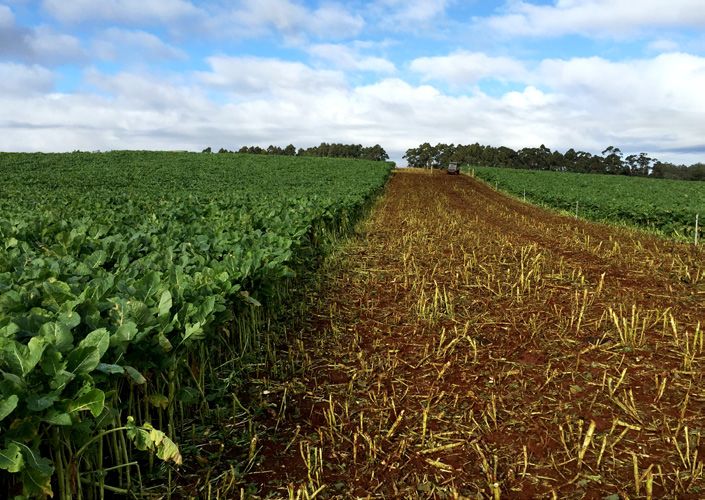
How to implement PGG Wrightson Seeds
Programmed Approach®

STEP 1	Identify poor performing paddocks before soil testing (sparse plant population)

STEP 2	Soil test before starting the Programmed Approach™ and six months
        before planting a brassica

STEP 3	Spray out existing pasture with glyphosate + Dicamba® to control
        all pasture species, including clover

STEP 4	Direct drill an Ultrastrike® treated winter active ryegrass such as Ascend or Astro®

STEP 5	Spray out annual ryegrass with glyphosate + insecticide in spring

STEP 6	Sow a brassica or chicory crop of, Titan, Pasja II, Goliath,
        Pallaton Raphno®* or Rocket Fuel

STEP 7             Manage brassica crop effectively

STEP 8	After autumn rains, spray out germinating weeds with glyphosate when full
        germination has occurred

STEP 9	Prepare paddock and sow an elite perennial pasture variety such as Base AR37,
        Reward Endo 5, #Platform AR37, Confederate or Quantum II MaxP® mixed with
        PGG Wrightson Seeds proprietary clovers

STEP 10            Introduce new pasture management

Note: Refer to pggwrightsonseeds.com.au for full version of the
PGG Wrightson Seeds Programmed Approach® to pasture renewal or contact your
local PGG Wrightson Seeds Sales Agronomist.
* Pallaton Raphno® is available through accredited retailers only.
# Platform has been bred, selected and successfully tested as a perennial and will function as a perennial
   ryegrass. Due to small number of tip awns, Platform is certified as Lolium boucheanum.
For more information on AR37 see pages 14-15.

   Back to Index                                                               pggwrightsonseeds.com.au       9
10 pggwrightsonseeds.com.au Back to Index
How to Choose a Ryegrass
THE FOUR STEPS TO CHOOSE A RYEGRASS
At PGG Wrightson Seeds we believe there are four steps to choose a ryegrass:

1.   How long do you want it to last?*
›    Less than 1 year Annual ryegrass
›    1 - 2 years          Italian ryegrass
›    2 - 3 years          Short rotation ryegrass
›    3 + years            Long rotation ryegrass
›    5 + years            Perennial ryegrass
*Under average or better management, soil fertility and moisture, and with the optimum endophyte.

2. What endophyte do you need?
i.e. which insects does your paddock have?
› Argentine Stem Weevil                                       › African Black Beetle
› Pasture Mealy Bug                                           › Root Aphid
To see which endophytes protect against these insect pests see pages 13-15.

3. How will your paddock be grazed?
i.e. which grass to use, diploids versus tetraploids?
Rotational grazing or short periods of set stocking                                                  Tetraploids
Rotational grazing, short periods of set stocking and long periods of set stocking                   Diploids

See pages 16-17 on diploids and tetraploids.

4. Do you need strong ryegrass growth rates early in spring or is late spring feed
    quality more important?
Early-mid season heading ryegrasses can provide more dry matter, earlier in spring. Late season
heading ryegrasses yield better quality feed in late spring and more total yield. Your farms’ ryegrass
portfolio should include a range of early-mid and late heading ryegrasses to deliver a balance of early
season growth plus late spring feed quality.
See page 18 for more information about heading dates.

     Back to Index                                                                    pggwrightsonseeds.com.au     11
Endophytes
WHAT IS AN ENDOPHYTE?
An endophyte is a fungus found naturally in many grass species, including ryegrass. It provides
the plant with protection from insects, and in return the plant provides the endophyte a place to live
and reproduce.
HOW AN ENDOPHYTE PROTECTS YOUR PASTURE
Ultrastrike® seed treatment
protects between 0-6 weeks
Endophyte is found The endophyte grows Endophyte
in the embryo of an into the emerging leaf protection
infected seed as the seed germinates 8 weeks
onwards
The endophyte grows up the The endophyte is concentrated
stem and into the seed head of in the base of the plant,
the reproductive plant not in the roots
The Neotyphodium endophytes infecting these grasses are not known to be transferred with pollen or by
physical contact (Siegel et al., 1984).
David E. Hume and David J. Barker 2005 GROWTH AND MANAGEMENT OF ENDOPHYTIC GRASSES IN PASTORAL AGRICULTURE.
In Neotyphodium in cool-season grasses. Eds. CA Roberts, CP West, DE Spiers 201-226 Iowa, IA: Blackwell Publishing
12 pggwrightsonseeds.com.au Back to IndexEndophytes
ENDOPHYTE INSECT CONTROL
Perennial, and long rotation ryegrass and continental tall fescue
These ratings are indicative and may vary slightly between cultivars. If Argentine Stem Weevil or Black
Beetle are present at sowing, an appropriate seed treatment is recommended to improve insect control
during establishment. The ratings in these tables are based in part on glasshouse studies where test
plants are 100% infected with endophyte, whereas commercial seed must meet minimum standards of
70% of seeds infected.
The tables were compiled in New Zealand and approved by the NZPBRA. (Correct as at December 2020).
Key to Tables 1-4
– NO CONTROL
• LOW LEVEL CONTROL: Endophyte may provide a measureable effect, but is unlikely to give any practical control.
•• MODERATE CONTROL: Endophyte may provide some practical protection, with a low to moderate reduction in insect population.
••• GOOD CONTROL: Endophyte markedly reduces insect damage under low to moderate insect pressures. Damage may still occur when insect pressure is high.
•••• VERY GOOD CONTROL: Endophyte consistently reduces insect populations and keeps pasture damage to low levels, even under high insect pressure.
( ) PROVISIONAL RESULT: Further results are needed to support the rating. Testing is ongoing.
Diploid Perennial Ryegrasses - Table 1
Argentine Pasture Black Root Grass Field
Insect Porina
Stem Weevil Mealy Bug Beetle aphid Grub Cricket
AR1 •••• •••• • -2 - - Not tested
NEA2 ••• ( ••••) ••• •• Not tested - Not tested
NEA4 ••• ( ••••) ••• •• Not tested Not tested Not tested
AR37 •••• 1
•••• ••• •••• ••• • Not tested
Standard Endophyte •••• •••• ••• •• • - Not tested
Without Endophyte - - - - - - Not tested
Tetraploid Perennial Ryegrasses - Table 2
Argentine Pasture Black Root Grass Field
Insect Porina
Stem Weevil Mealy Bug Beetle aphid Grub Cricket
AR1 (•••) (••••) • -2 - - Not tested
AR37 (••• ) 1
(•••• ) ••• •••• ( •••) • Not tested
Without Endophyte - - - - - - Not tested
Back to Index pggwrightsonseeds.com.au 13Italian and Short Term (Hybrid) Ryegrass - Table 3
Argentine Pasture Black Root Grass Field
Insect Porina
Stem Weevil Mealy Bug Beetle aphid Grub Cricket
AR1 •• (••••) • -2 Not tested - Not tested
NEA Not tested (•••• ) ••• Not tested Not tested - Not tested
AR37 ••• 1
(•••• ) ••• Not tested Not tested - Not tested
Without Endophyte - - - - - - Not tested
Continental tall fescue - Table 4
Argentine Pasture Black Root Grass Field
Insect Porina
Stem Weevil Mealy Bug Beetle aphid Grub Cricket
MaxP (AR584) Not tested Not tested ••• ( ••••) Not tested ••
( ) •••
Without endophyte - - - - - - -
Notes on Tables 1, 2, 3, 4, and 5
1. A
R37 endophyte controls Argentine stem weevil larvae, but not adults. While larvae cause most damage to pastures, adults can damage emerging
grass seedlings. In Argentine stem weevil prone areas it is recommended to use treated seed for all cultivars with novel endophyte.
2. AR1 plants are more susceptible to root aphid than plants without endophyte.
3. Festulolium U2 endophyte has not been included in Tables. For information on Festulolium U2 endophyte please refer to NZPBRA.
ENDOPHYTE ANIMAL SAFETY
Ryegrass and continental tall fescue
The information in (Table 5) is based on animal safety trialling protocols designed to expose animals
to simulated worst-case scenario management. This involves forcing them to graze deep into the
base of pure perennial ryegrass pastures that have been allowed to grow for several weeks over late
spring/summer (similar to a hay crop) where they will encounter the highest concentrations of harmful
endophyte chemicals if these are present.
This management does not represent normal farm practice although similar situations may arise on
farms in in rare circumstances. Under normal farm grazing practices, the contribution of basal pasture
material to total animal dry matter intake is relatively low and therefore the intake of harmful chemicals
(if they are present) is diluted. Thus, the likelihood of adverse effects on animals is reduced, but the
potential for problems to occur may still exist if the endophyte brand is rated < 4-star for ‘freedom from
staggers’ and/or there are comments on animal performance which flag potential issues.
Comments on animal performance have been moderated based on information from other trials
(in addition to the formal animal safety testing protocols), consideration of the ‘normal’ grazing
management practices implemented on farm (see previous paragraph), and recognition that animal
diets are very seldom pure ryegrass. Other dietary components such as clovers or non-ryegrass grass
species, crops or supplements will dilute the intake of endophyte alkaloids.
14 pggwrightsonseeds.com.au Back to IndexAnimal Safety - Table 5
Endophyte Freedom
Effects on animal performance
brand from staggers
Sheep and Cattle and
lambs dairy cows
AR1 •••• •••• High level of animal performance.
Typically provides a high level of animal performance. Can cause ryegrass
staggers in sheep and lambs in extreme circumstances. Lamb liveweight
AR37 ••• •••• gain can be reduced during periods of severe staggers. While ryegrass
staggers has not been observed in cattle and dairy cows, it could occur on
rare occasions.
NEA •••• •••• High level of animal performance.
Typically provides a high level of animal performance.
NEA2 •••• •••• Lamb liveweight gain could be reduced in extreme circumstances.
While no effects have been observed in cattle and dairy cows, body
temperature could be elevated on rare occasions.
Typically provides a high level of animal performance. Lamb liveweight
NEA4 •••• •••• gain could be reduced in extreme circumstances.
While no effects have been observed in cattle and dairy cows, body
temperature could be elevated on rare occasions.
MaxP (AR584) •••• •••• High level of animal performance.
Can cause ryegrass staggers in sheep and lambs, and significantly
Standard
Endophyte • •• decrease lamb growth rates in summer and autumn, and significantly
increase dags. In dairy cows, it has been shown to depress milksolids
production through summer and autumn.
Without
Endophyte •••• •••• High level of animal performance.
Key to Table 5
• LIKELY TO CAUSE SEVERE STAGGERS IN MOST YEARS
•• CAN CAUSE SEVERE STAGGERS IN SOME YEARS
••• CAN CAUSE SEVERE STAGGERS OCCASIONALLY
•••• VERY UNLIKELY TO CAUSE STAGGERS
Back to Index pggwrightsonseeds.com.au 15Diploids
Diploid ryegrasses have two sets of chromosomes per cell, compared to a tetraploid which has four.
Diploids combine yield and robustness, ensuring that even in less than ideal conditions, they will deliver
for your stock.
Dependable diploids:
› Densely tillered
› Competitive with weeds
› Cope with lower fertility
› Ideal for grass to grass situations
› Can handle wetter environments
› Can be set stocked or rotationally grazed
Delivering to you Australasian-bred and locally trialled ryegrasses
that you and your stock can depend on:
› Concord® II Italian ryegrass
› Maverick GII short rotation ryegrass
› Expo perennial ryegrass
› Platform perennial ryegrass#
› Rely perennial ryegrass
› Somerset perennial ryegrass
#Platform has been bred, selected and successfully tested as a perennial and will function as a perennial ryegrass.
Due to a small number of tip awns, Platform is certified as Lolium boucheanum.
Cell contents consist
of rapidly available
nutrients, such as
sugars and starches,
necessary for good
rumen function
Cell wall (fibre)
DIPLOID CELL TETRAPLOID CELL
The cells within a diploid ryegrass are smaller than in tetraploids resulting in a lower ratio of water
soluble carbohydrates (sugar) compared to fibre.
16 pggwrightsonseeds.com.au Back to IndexTetraploids
A tetraploid plant has four sets of chromosomes per cell (a diploid has two sets) which simply means
tetraploid ryegrasses are more palatable for your livestock. Tasty tetraploid ryegrasses are just what
your stock ordered. Stock prefer tetraploids over diploids if they have a choice and tetraploids are more
quickly and completely eaten by livestock.
Tasty tetraploids:
› Fast to establish
› Extremely tasty and palatable
› Excellent pasture utilisation
› Very high quality
› Higher animal dry matter intakes
› Better animal performance
› Great for silage and hay quality
› Clover friendly
Remember that tetraploids:
› Need a higher sowing rate – the seed is larger than diploids
› Should be rotationally grazed or set stocked for short periods only
› Are easily overgrazed, watch post-grazing residuals
› Should be sown with clovers or herbs
› Tetraploids are darker green. Don’t rely on colour change before applying nitrogen
PGG Wrightson Seeds tetraploid breeding programme
Delivering to you Australasian-bred and locally trialled ryegrasses that you and your
stock can depend on:
› Ascend tetraploid annual ryegrass
› Lush tetraploid Italian ryegrass
› Feast® II tetraploid Italian ryegrass
› Nourish® tetraploid Italian ryegrass
› Reward tetraploid perennial ryegrass
› Base tetraploid perennial ryegrass
Back to Index pggwrightsonseeds.com.au 17Heading Dates
RYEGRASS HEADING DATES
Heading date is when a paddock visually has 10% of the plants seed heads emerged.
Heading dates are defined relative to the cultivar Nui, heading at day 0.
Days relative to Nui
Heading date definition (approximately 15th October)
Very early–season ≤ -12
Early–season -11 to -6
Mid–season -5 to +7
Nui 0
Late–season +8 to +21
Very late–season ≥ +22
Ryegrass heading date influences pasture production in two ways:
1. Timing of spring-flush
Very early through to mid season heading ryegrasses often produce more dry matter earlier
2. Timing of late spring/early summer loss of quality
Later heading cultivars hold quality, providing leafy high quality feed later in spring
Key recommendations: Heading dates
› Sow a range of ryegrass cultivars with different heading dates to spread timing of
heading and reduce loss of summer quality
› S ow ryegrasses with different heading dates in separate paddocks
› Sow no more than 50% of the farm in late or very late cultivars to reduce early spring
feed pinches
Aftermath heading
Aftermath heading refers to the number of seed heads produced after the main heading event.
If there are a lot of seed heads produced (high aftermath heading) then this means pasture quality
is reduced. If there are minimal seed heads produced (low aftermath heading) then pasture quality
is maintained for longer.
18 pggwrightsonseeds.com.au Back to IndexEarlier heading
› Often earlier flush of spring growth
› Early maturing
› Poorer late season quality
› Improved spring quality if aftermath heading is low
Barbaria – 20 days
EARLY
VERY
Days
≤ –12
Kangaroo Valley – 17 days
Boomer – 17 days
Victorian – 10 days
EARLY
–11 to –6
Days
Camel – 8 days
Bolton – 8 days
Kingsgate – 3 days
Rely
Nui 00 days
days
Rely 0 days
–5 to +7
MID
Days
Somerset + 3 days
Avalon + 3 days
Excess + 7 days
Arrow + 7 days
Platform# + 12 days
Prospect# + 12 days
Alto + 14 days
AberDart + 15 days
Impact II + 16 days
+8 to +21
LATE
Days
Revolution + 19 days
AberMagic + 19 days
Viscount* + 19 days
One50 + 20 days
Ultra + 20 days
Expo + 21 days
Base* + 22 days
VERY LATE
Matrix + 23 days
Days
≥ +22
Reward* + 24 days
Halo* + 24 days
Bealey* + 25 days
Later heading
› Can be later flush of spring growth
› Late maturing
› Better late season quality
› Responds well to summer rainfall
Approximate heading dates of long-rotation and perennial ryegrasses relative to Nui at day 0.
*Tetraploid #Platform and Prospect have been bred, selected and successfully tested as a perennials and will function as a
perennial ryegrasses. Due to a small number of tip awns, Platform and Prospect are certified as Lolium boucheanum.
Back to Index pggwrightsonseeds.com.au 19Grasses
ANNUAL, ITALIAN AND
PERENNIAL RYEGRASS VARIETIES
20 pggwrightsonseeds.com.au Back to IndexGrasses
ANNUAL
RYEGRASS
Maintain quality late into the
Uses
season with Ascend, the upgraded
replacement to Winter Star® II Beef
Ascend was selected by plant breeders for its exceptional seedling
vigour and ability to provide valuable forage from early winter Dairy
through until late in the growing season. With improved rust
tolerance, Ascend maintains high leaf quality enabling excellent
Sheep
pasture utilisation as well as silage and hay quality during the spring
and summer months.
Hay
› Exceptional seedling vigour
› Improved early winter production
Silage
› High rust tolerance
› Maintains quality late into the season
› Offers real flexibility
› Densely tillered and fine leaved compared to Winter Star II
➜ Excellent total dry matter production
Sowing Rate
15-50kg/ha
“I was surprised at the speed of
emergence and the cattle love eating
it. The key benefit is in the late season
quality giving feed well into summer.”
Ready
Kirk Wagner
to Graze
Tasmania 45-70 days
Rainfall /
Irrigation
Minimum
500mm p.a
Back to Index pggwrightsonseeds.com.au 21Astro
tetraploid annual ryegrass
Grasses
ANNUAL
RYEGRASS
New cost effective option
Uses
for quick winter feed
As a replacement for Diamond T, the new early maturing Astro® Beef
annual ryegrass continues to be a great low cost option when quick
winter feed is the priority. Astro’s excellent seedling vigour combined
Dairy
with early maturity provides growers the option of early winter to
spring grazing along with an early cut of silage enabling timely
preparation for sowing of summer forage crops. Sheep
The combination of impressive seasonal dry matter yields and fast
post grazing recovery means Astro can be relied on to supply quality Hay
feed during those times of the year when you need it most.
› Good seedling vigour and pasture establishment Silage
› Ready to graze in 45-70 days
› Rapid post grazing recovery
› Bred for improved rust and leaf spot resistance
› Early heading ryegrass suited to silage/early hay production
➜ Ideal short term grazing option prior to sowing paddocks to Sowing Rate
summer forage crop in spring 15-50kg/ha
“I’m very happy with Astro. It performs how
we need a pasture grass to perform to fit our
business structure.
We used Astro this season (2020) in a Ready
paddock earmarked for silage production.
The paddock was sown in mid May and had
to Graze
45-70 days
two winter grazings and was then locked
up for silage. The paddock was locked up
for eight weeks which is a few weeks longer
than we would normally do, but we were
unable to cut it due to the rain. It yielded
exceptionally well.” Rainfall /
Temasek Holdings Irrigation
Cowaramup, Western Australia Minimum
450mm p.a
22 pggwrightsonseeds.com.au Back to IndexGrasses
diploid Italian ryegrass
ITALIAN
RYEGRASS
Proven performer
Uses
Concord® II is an outstanding Italian ryegrass with exceptional speed
of establishment. It delivers increased winter production and solid
Beef
seasonal dry matter production with the ability to carry through to
the second year where conditions allow.
Dairy
› Exceptionally fast to establish
› Even growth over the season
Sheep
› Regrowth into the second season is very good,
given favourable conditions
Hay
› Excellent disease resistance
➜C
an be sown with other ryegrasses and clovers to
maximise forage opportunities Silage
“We get 4 or 5 good grazings from
Concord II and then we cut it twice for
silage. Even on the second cut it is lush
and highly palatable.
Sowing Rate
10-30kg/ha
We have found Concord II fits into our
system well. It has continued to grow
into its second year filling the autumn
feed gap giving us feed when it is
needed the most.” Ready
Gary Haddon to Graze
Busselton, Western Australia 45-70 days
Rainfall /
Irrigation
Minimum
500mm p.a
Back to Index pggwrightsonseeds.com.au 23Grasses
ITALIAN
RYEGRASS
Remarkable performance
Uses
and quality
Feast® II tetraploid Italian ryegrass continues to perform strongly and Beef
we believe it sets the benchmark for quality and production in the
Italian ryegrass market. It provides exceptional winter and
Dairy
spring growth combined with low aftermath heading.
Feast II offers farmers an excellent return on investment achieved by
multiple grazing opportunities during cooler months as well as high Sheep
quality hay and silage later in the season.
› Rapid establishment Hay
› Easily established by oversowing
› Exceptional disease resistance Silage
› Outstanding summer quality
➜ Monitor fertility levels to optimise production
“We have been growing Feast II for
2-3 years now and have significantly
Sowing Rate
15-50kg/ha
increased the area of Feast II on the
irrigated portion of the farm. In spring
2018, I couldn’t believe how much grass
we were cutting for silage. It has proved
to recover well after grazing and even Ready
better after cutting, Feast II has been
an important tool for us in managing
to Graze
45-70 days
difficult seasonal conditions.”
Tom Pearce
Bega, New South Wales
Rainfall /
Irrigation
Minimum
500mm p.a
24 pggwrightsonseeds.com.au Back to IndexGrasses
tetraploid Italian ryegrass
ITALIAN
RYEGRASS
The first tetraploid Italian ryegrass
Uses
available with AR37 endophyte
Lush AR37 is the perfect fit for pastures in areas that experience high Beef
insect pressure, particularly African Black Beetle. AR37 endophyte
has clearly demonstrated a superior level of protection against a
Dairy
number of damaging pasture pests in Australia.
Lush AR37 is a southern favourite that is making its way up north.
Sheep
It is quick to establish, has exceptional rust tolerance and provides
quality feed into summer, especially under favourable conditions.
Hay
› AR37 endophyte for increased pest protection
› Quick to establish
Silage
› Excellent rust tolerance
› High quality feed throughout the growing season
➜ Ultrastrike seed treatment recommended
For more information on AR37 see pages 13-15.
Sowing Rate
15-40kg/ha
“We have included Lush AR37 Italian
ryegrass into blends to drive production
for 3-4 years. The grasses established
very quickly and gave us fantastic winter
production under irrigation.
Ready
I would recommend adding Lush AR37 to Graze
to increase feed.” 45-70 days
Alex Muirhead
Tasmania
Rainfall /
Irrigation
Minimum
500mm p.a
Back to Index pggwrightsonseeds.com.au 25Grasses
ITALIAN
RYEGRASS
High yielding, late maturing
Uses
Nourish® is a fast establishing tetraploid Italian ryegrass ideally
suited to warmer northern environments. It offers excellent winter
Beef
and early spring production as well as high quality hay and silage.
Nourish can persist into the second year when conditions are
favourable. Dairy
› Holds quality well through summer and autumn
› Fast establishment Sheep
› Better suited to warmer environments
➜ S ow as early as possible in autumn to maximise Hay
winter production
Silage
“Its heat tolerance is second to none,
obviously you’ve got to look after
it and water it, but if a variety can
tolerate the heat, like Nourish can,
you get the variety for an extra two Sowing Rate
or three months, and you’re getting 15-40kg/ha
high quality ryegrass instead of a low
quality perennial pasture.”
Chad Parker
Kenilworth, Queensland
Ready
to Graze
45-70 days
Rainfall /
Irrigation
Minimum
500mm p.a
26 pggwrightsonseeds.com.au Back to IndexGrasses
SHORT ROTATION
RYEGRASS
Add hybrid vigour to your Italian
Uses
ryegrass system
Maverick GII is a diploid short rotation ryegrass that offers improved Beef
growing performance over standard short term ryegrasses.
This style of grass is best suited to situations where high winter
Dairy
production is required along with late season growth and quality.
› Robust and densely tillered with exceptional
Sheep
cool season growth
› Excellent summer quality (low aftermath heading)
Hay
› Very good disease resistance
› Perfect for oversowing
Silage
› High yielding Italian perennial cross
› Sowing rate dependent on environment and situation
Sowing Rate
10-30kg/ha
Ready
to Graze
45-70 days
Rainfall /
Irrigation
Minimum
500mm p.a
Back to Index pggwrightsonseeds.com.au 27Grasses
PERENNIAL
RYEGRASS
Top performer in Dairy Australia’s
Uses
Forage Value for 3 consecutive
years^ Beef
Base is a late maturing tetraploid perennial ryegrass available with
AR37 endophyte. Base offers superb dry matter yield meaning more Dairy
feed is available for your stock. An added feature of Base is its high
seasonal production in autumn and winter. It also responds well to
summer rainfall, providing growth when moisture and fertility are Sheep
available.
› One of the top performers in the FVI (Forage Value Index) Hay
› Bred in Australia from drought surviving plants
› Ideally suited for dairy and beef farming Silage
› Excellent late season quality feed
› Very high tiller density and high dry matter production
➜ Avoid hard set stocking during dry periods
For more information on AR37 see pages 13-15.
For more information on the FVI visit dairyaustralia.com.au.
^The FVI is calculated by multiplying a cultivars dry matter performance value
Sowing Rate
(PV) by its economic value (EV), and Base AR37 perennial ryegrass topped the 20-30kg/ha
rankings across all four areas tested in Southwest Victoria, Gippsland (VIC),
Northern Victoria and Tasmania. Correct as of December 2020
“Combining surviving north-west Spanish
ryegrass plants from the mid 2000s Ready
drought with an effective endophyte to Graze
has given Base AR37 a clear competitive 55-85 days
advantage over ryegrass with SE. It will
consistently carry more ewes through
winter and deliver significantly greater
lamb production per hectare right through
Rainfall /
spring and early summer.”
Irrigation
Martin Harmer, Research Manager Minimum
PGG Wrightson Seeds Australia 650mm p.a
28 pggwrightsonseeds.com.au Back to IndexAsk us about the value added of Base AR37
in comparison to Victorian Ryegrass or find
out for yourself by downloading a copy of our
Base AR37 vs Victorian ryegrass case study at
pggwrightsonseeds.com.au
Choose AR37 novel endophyte instead of standard endophyte
as it
› assists with post-drought recovery
› may produce greater carcass weight per hectare
› helps to provide a greater return on investment
› creates higher dry matter yield potential
› provides increased insect protection
› has no Ergovaline increasing milk production
› provides increased persistence and higher feed nutritional value
Back to Index pggwrightsonseeds.com.au 29Grasses
PERENNIAL
RYEGRASS
The versatile perennial all-rounder
Uses
Reward is a new generation tetraploid perennial ryegrass with
Endo5* endophyte bred for the Australian farmer.
Beef
Reward is ideally suited to a broad range of farming systems
including sheep, beef and dairy, making it a great all-round option.
Dairy
It is very late maturing which means high quality feed for longer,
especially at times when feed is needed most.
Sheep
› Excellent persistence and dry matter production
› Improved rust tolerance
Hay
› Endo5 endophyte for broad spectrum pest control
› No Lolitrem B (the main toxin that causes ryegrass staggers)
Silage
➜ Bred for low aftermath heading
* Endo5 contains ergovaline for insect protection. It is recommended to avoid
prolonged set-stocking or grazing fresh regrowth of such pastures during
summer and autumn.
“Reward is the best perennial ryegrass Sowing Rate
20-30kg/ha
that we have used and the late
flowering allows it to maintain quality.”
Kirk Wagner
Tasmania
Ready
to Graze
55-85 days
Rainfall /
Irrigation
Minimum
650mm p.a
30 pggwrightsonseeds.com.au Back to Index#
Grasses
PERENNIAL
RYEGRASS
The resilient diploid
Uses
A diploid perennial ryegrass which has been bred to suit a range
of farming regions in southern Australia. Platform AR37 is a fine
Beef
leaved, mid-late heading (+12) ryegrass with low aftermath heading
enabling excellent pasture utilisation and quality late into the
season. The combination of high tiller density, resilient ryegrass Dairy
genetics and AR37 endophyte means Platform AR37 displays
strong persistence as well as the ability to provide excellent forage
production across all seasons. Sheep
› Diploid perennial ryegrass with high tiller density
Hay
› Fine-leaved and low aftermath heading providing excellent
feed quality
Silage
› Mid-Late heading (+12 days)
› Excellent, year round dry matter production
➜ High insect tolerance from AR37 endophyte
#
Platform has been bred, selected and successfully tested as a perennial and
will function as a perennial ryegrass. Due to a small number of tip awns,
Platform is certified as Lolium boucheanum.
For more information on AR37 see pages 13-15. Sowing Rate
15-30kg/ha
“I planted 16 Ha of Platform last year (2019) and the grass is still
persisting and providing good quality feed throughout the
season. I have found the AR37 endophyte is giving Platform
excellent resistance to the bugs that have come onto the farm. Ready
I would recommend Platform as part of a dairy farming system
as considering how hard I push the farm, we really need top
to Graze
55-85 days
notch grasses.”
Shaun Hulse
Leongatha North
Rainfall /
Irrigation
Minimum
650mm p.a
Back to Index pggwrightsonseeds.com.au 31Grasses
PERENNIAL
RYEGRASS
Bred for increased palatability
Uses
Expo is a late flowering diploid perennial ryegrass that has
been bred to improve feed quality. It is an exceptional year-
Beef
round producer of dry matter with outstanding quality from a
late maturing variety providing higher levels of water soluble
carbohydrates (sugars). Good fertility management will enhance Dairy
production of Expo on your farm.
› Bred for low aftermath heading Sheep
› Excellent late season quality
› Higher levels of water soluble carbohydrates (sugars) Hay
› Very high tiller density
➜ Good fertility will enhance production Silage
*For more information on AR37 see pages 13-15.
Sowing Rate
15-25kg/ha
Ready
to Graze
55-85 days
Rainfall /
Irrigation
Minimum
650mm p.a
32 pggwrightsonseeds.com.au Back to IndexRely
diploid perennial ryegrass
Grasses
PERENNIAL
RYEGRASS
Economical and high
Uses
animal output
Rely is a versatile diploid perennial ryegrass with fine leaves Beef
and dense tillers bred to cater for a wide range of environments.
Rely can tolerate lower fertility and periods of set stocking.
Dairy
Only available with AR1 endophyte, Rely delivers better animal
performance compared to Victorian ryegrass.
Sheep
› AR1 Endophyte
› Mid season maturity Hay
› Excellent rust tolerance
➜ Fine leaf and dense tillers Silage
*For more information on AR1 see pages 14-15.
Sowing Rate
15-25kg/ha
Ready to
Graze
55-85 days
Rainfall /
Irrigation
Minimum
600mm p.a
Back to Index pggwrightsonseeds.com.au 33Somerset
diploid perennial ryegrass
Grasses
PERENNIAL
RYEGRASS
Somerset (SE) mid-heading diploid
Uses
perennial ryegrass
Somerset (Standard Endophyte) is a mid-heading (+3 days), diploid Beef
perennial ryegrass suited to beef, sheep and dairy grazing systems.
With impressive seedling vigour to provide rapid establishment, Dairy
combined with good autumn, winter and spring yields, Somerset is
a reliable dry matter producer. Somerset is also well suited to high
Sheep
quality silage and hay production.
With medium tiller density and tolerance to a wide range of insect Hay
pests, Somerset displays very good pasture persistence. Due to
Somerset containing Standard Endophyte it does require careful
grazing management, particularly during drier times of the year Silage
when the possibility of ryegrass staggers is increased.
› Mid-heading (+3)
› High rust tolerance
› Medium tiller density
› High insect tolerance Sowing Rate
15-25kg/ha
Ready
to Graze
55-85 days
Rainfall /
Irrigation
Minimum
500mm p.a
34 pggwrightsonseeds.com.au Back to IndexGrasses
DEEP ROOTED AND LONG TERM VARIETIES
Back to Index pggwrightsonseeds.com.au 35Available with
® Grasses
TALL
FESCUE
A market leading,
Uses
summer active tall fescue
Quantum II changed the landscape in the continental tall fescue Beef
market. With its rapid establishment, increased animal acceptance
(due to low aftermath heading) and high disease resistance,
Dairy
it is widely recognised as a market leader. It continues to offer
Australian farmers outstanding productivity gains over conventional
tall fescues. Sheep
Quantum II is ideally suited to farms looking for quality feed through
the summer months. Hay
› Excellent winter dry matter yields
› MaxP® endophyte protects against African Black Silage
Beetle attack
› Improved leaf softness, disease resistance and digestibility
› Reduced aftermath heading further enhances
productivity and quality
➜ Should be sown in autumn for best establishment Sowing Rate
8-25kg/ha
“Quantum II produces when ryegrass
can’t and cattle and sheep love it. The
modern fescues are so much better
and softer than older types, and it
Ready
performs all year round. to Graze
70-110 days
We will use more Quantum II across
the farm.”
George Shea
Tasmania
Rainfall /
Irrigation
Minimum
600mm p.a
36 pggwrightsonseeds.com.au Back to IndexQuantum II MaxP® Proven Persistence
Quantum II MaxP® has proven over many years that it can survive challenging conditions.
After 3 difficult seasons in Armidale, Quantum II MaxP® kept the most ground cover in a
replicated trial against commercial varieties Demeter, SF Finesse-Q and Tower
(as shown in Figure 1).
What is the benefit of the proven persistence of Quantum II
MaxP® to you?
› Maintains high production in later years - due to higher plant numbers, this means more
ground cover and less open ground where weeds normally thrive.
› Saves re-sowing costs - being able to delay re-sowing is cost effective and ensures you don’t
miss out on production while paddocks establish.
Figure 1: Ground cover % in 3rd year after sowing at
Armidale, NSW, Trial was sown in 2015
60
LSD5% = 22. 2
50
Ground Cover %
40
30
20
10
0
Quantum II Demeter SF Finesse-Q Tower
MaxP®
Note: Refer to “Quantum II MaxP® proves itself in Armidale NSW” trial data. Published March 2020
Back to Index pggwrightsonseeds.com.au 37Grasses
winter-active tall fescue
TALL
FESCUE
Highly persistent, winter active
Uses
tall fescue
Temora Mediterranean tall fescue is a summer dormant, deep Beef
rooted perennial that offers improved persistence for Australian
producers. Temora has been bred for greater tiller density, leading
Dairy
to increased yield at critical times such as autumn and winter.
Ideally suited for low to medium rainfall areas with heavier soil
types, Temora is a great option for filling the feed gap soon after Sheep
the opening rains.
› Summer dormant Hay
› Increased tiller density
› Excellent seasonal dry matter production Silage
› Extremely palatable when rotationally grazed
➜ Highly persistent
“Since commencing trials in 2008 Sowing Rate
Temora has proven itself in our drought 8-25kg/ha
screening sites in Maryborough (VIC)
and Dunbogan (NSW). Temora’s
autumn and winter growth was found
to be exceptional and its persistence
under severe drought stress excellent.” Ready
Martin Harmer to Graze
Research Manager 70-110 days
PGG Wrightson Seeds Australia
Rainfall /
Irrigation
Minimum
500mm p.a
38 pggwrightsonseeds.com.au Back to IndexGrasses
phalaris
PHALARIS
Bred for Australian farmers
Uses
Confederate phalaris is a winter active phalaris that is best suited to
500mm+ rainfall and heavier soil types. It has a similar growth habit
Beef
to Sirosa and Holdfast. The selection criteria was for strong winter
activity combined with low alkaloid production and improved late
season growth. Dairy
As a companion species, Confederate phalaris can be sown with
legumes to improve feed quality and increase animal productivity. Sheep
› Excellent dry matter production
› Improved disease resistance Hay
› Prefers rotational grazing, tolerates periods of set stocking
› Excellent companion with legumes Silage
➜ L ow levels of the alkaloids which are known to cause
phalaris staggers
Sowing Rate
0.5-4kg/ha
Ready
to Graze
85-110 days
Rainfall /
Irrigation
Minimum
500mm p.a
Back to Index pggwrightsonseeds.com.au 39Aurus
cocksfoot
Grasses
COCKSFOOT
Strong winter growth and overall
Uses
total yield
Aurus is an upright, summer active cocksfoot with strong winter Beef
growth and a parentage that combines Uruguayan and French
genetics. This combination provides both good winter growth and
Dairy
overall total yield. For a cocksfoot Aurus displays strong seedling
vigour and establishment and with its upright growth habit is well
suited to being sown with clover or lucerne in a mixed pasture Sheep
sward.
Being a continental cocksfoot, it has very good drought tolerance Hay
compared to many other perennial grass species and excellent re-
seeding ability. Aurus cocksfoot is a very persistent grass when sown
in appropriate rainfall zones with the ability to provide important Silage
forage production after tough dry periods and during cooler times
of the year.
› High yielding variety with improved winter activity
over Tekapo
› Upright growth habit Sowing Rate
› Strong seedling vigour enabling rapid establishment 2-8kg/ha
› Excellent re-seeding ability to ensure strong persistence
› Excellent drought tolerance in an appropriate rainfall zone
Ready
to Graze
85-110 days
Rainfall /
Irrigation
Minimum
650mm p.a
40 pggwrightsonseeds.com.au Back to IndexGrasses
prairie grass
®
PRAIRIE
GRASS
The feed your animals will love
Uses
Leona is a prairie grass for Australian producers who are looking
for improved productivity, quality and persistence. Leona has
Beef
been selected for increased seedling vigour resulting in faster
establishment which can lead to a reduced time to the first graze.
Palatability of Leona is exceptional and with the improved winter Dairy
yields, results in high quality feed at a very valuable time of year.
Leona has the ability to produce excellent quantities of seed which
gives improved persistence. Sheep
› Improved seedling vigour
Hay
› Exceptional winter production
› High tiller density
Silage
› Improved persistence through higher reseeding
› Extremely palatable
➜ L ower rates for fine, firm seed beds and high rates for
broadcast and direct drill situations
Sowing Rate
25-55kg/ha
Ready
to Graze
75-110 days
Rainfall /
Irrigation
Minimum
500mm p.a
Back to Index pggwrightsonseeds.com.au 41Forage Cereal 42 pggwrightsonseeds.com.au Back to Index
Cereals
                                                                                      FORAGE
                                                                                     RYECORN

     High yielding, quick winter
                                                                                        Uses
     feed option
     Southern Green ryecorn is an exceptionally fast establishing grazing                  Beef
     option particularly when sown late into cold conditions. Southern
     Green can be up and ready to graze three weeks before oats and
                                                                                          Dairy
     when managed correctly can offer multiple grazing opportunities.

     Unlike common ryecorn, Southern Green produces high quality feed
                                                                                          Sheep
     at a time when feed is in short supply. Southern Green can be used
     on its own or as part of a mixed pasture sward.
                                                                                         Silage
     › Exceptional speed of establishment
     › Excellent yield when blended with annual ryegrass
     › Can be sown with Italian ryegrass to extend spring growth
     ➜ Sowing depth of 10-15mm

                          “I’ve been using Southern Green Ryecorn
                           in a mix with Ascend annual ryegrass for            Sowing Rate
                           a few years now and find that it provides                60-120kg/ha
                           terrific feed early in the season as it
                           gets up and going quicker than other
                           cereals. I can carry 600-800 lambs on
                           20ha throughout the winter and with the                    Ready
                           ryegrass pushing feed later into spring
                                                                                    to Graze
                           and summer I find this mix very good.”                    30-55 days
                           Albert Whipp,
                           New South Wales

                                                                                   Rainfall /
                                                                                  Irrigation
                                                                                      Minimum
                                                                                    400mm p.a

Back to Index                                                        pggwrightsonseeds.com.au     43
Cereals
FORAGE
OATS
Quick winter grazing and quality
Uses
spring feed
Cooee® is a versatile, fast growing, winter forage oat that provides Beef
good winter to early spring feed. One of the features of Cooee
oats is its broader style leaves that, when used in a hay production
Dairy
system, offer the benefits of higher quality conserved feed.
› Fast winter growth
Sheep
› Provides extended grazing opportunities
› Excellent silage and hay options
Hay
› Can be mixed with ryegrass to extend the growing season
➜ I t is suggested to sow 3-4 oat paddocks for every paddock
Silage
of forage ryecorn
“We utilise Cooee Oats for finishing
cross bred lambs over winter and
fatten other stock later in the season. Sowing Rate
Cooee Oats has a great ability to 80-110kg/ha
grow and provides amazing feed on
limited rainfall, it has a nice wide leaf
which adds to the total feed available.
Compared to older oat varieties the
Ready
production we get off Cooee is much
to Graze
greater.” 40-55 days
Neil Granger
New South Wales
Rainfall /
Irrigation
Minimum
500mm p.a
44 pggwrightsonseeds.com.au pggwrightsonseeds.com.au
Back to Index 44Flinders
forage oats
Cereals
FORAGE
OATS
Highly palatable forage oat
Uses
Flinders has been evaluated in field trials across a range
of Australian locations for a number of years, where it has
Beef
demonstrated good performance. Flinders is a late maturity, erect
type oat with prolific tillering. Its stems are of medium thickness, with
wide leaves and it is resistant to all current rust strains. Flinders has Dairy
the ability to germinate and establish from early sowings into warm
soil which is an important requirement for forage oat varieties.
Sheep
› Strong establishment and early growth
› High dry matter yield and prolific tillering ability
Hay
› Excellent recovery from cutting and grazing
› Highly resistant to crown rust
Silage
➜ Late maturity
Sowing Rate
80-110kg/ha
Ready
to Graze
40-55 days
Rainfall /
Irrigation
Minimum
500mm p.a
Back to Index pggwrightsonseeds.com.au 45Legumes 46 pggwrightsonseeds.com.au Back to Index
Introduction to lucerne
BACKGROUND
Lucerne (Medicago sativa.) is a perennial legume and a valuable crop worldwide, often being referred
to as the ‘King of Fodders’. It has this reputation because of its high nutritional quality, high yield,
persistence under dry conditions, ability to fix atmospheric nitrogen and flexibility of being a dual
purpose crop for both grazing and hay, or for specialty hay and silage crops. It is estimated to be
adapted to over 30 million hectares in Australia, but the area currently sown is approximately 3.2
million hectares.

Lucerne has a deep taproot which can extract available water from the soil profile and also has high
water use efficiency, making it a very drought tolerant species. It can fix its own nitrogen and this is
proportional to the foliage grown (approximately 25kg N/t above ground dry matter). Numerous
studies have shown the benefits of lucerne based pastures, for improvement in animal production in
Australia. This is through increased growth rates and live-weight gain attributed to increases in forage
production and quality over the spring-autumn months.

It offers high nutritional quality at critical times of the year, in comparison to dry annual pastures over
summer which contain less than 8% protein and low digestibility. Lucerne can be as high as 20% protein
with high digestibility. Lucerne responds well to summer rains and is very productive under irrigation.

   Back to Index                                                           pggwrightsonseeds.com.au           47
PERSISTENCE
     Persistence of a lucerne stand is affected by a number of factors which include dormancy group,
     grazing and/or hay management, soil fertility, drought and weed invasion. Choosing the right lucerne
     is about selecting the right characteristics for the environment and management system required, with
     the aim to ensure the stand produces well for as long as it is needed. As lucerne relies on stored energy
     in its roots to regrow new foliage following grazing/cutting, a simple grazing rotation with minimum
     recovery periods of 35 days (dependent on seasons) and short grazing periods (5-7 days) will ensure a
     good compromise between quality, yield, animal safety, performance and persistence.

     However, often the ‘ideal’ grazing management techniques can be difficult because of various factors.
     These include size of paddocks or livestock numbers, infrastructure and grazing time required during
     dry periods (when the only feed available may be the lucerne paddocks). These factors mean that
     at times lucerne can be over-grazed and stand life depleted. However, the recent release of grazing
     tolerant lucerne cultivars, which have been developed to withstand continuous and less than ideal
     grazing practices, offers a significant benefit to producers.

48      pggwrightsonseeds.com.au                                                              Back to Index
True grazing tolerent lucerne When identifying lucerne cultivars for true grazing tolerance, ensure you choose cultivars that are evaluated here in Australia under the internationally recognised Standard Test Protocol for grazing tolerant lucerne. Remember that there’s lucerne that tolerates grazing and there’s grazing tolerant lucerne. DEVELOPING GRAZING TOLERANT LUCERNE. Developing grazing tolerant lucernes for Australia’s dryland farms has taken nearly two decades and was a joint venture project between PGG Wrightson Seeds Australia and CalWest Seeds in the USA. The products were initially developed in the US after a 6 year screening programme in which elite breeding lines and successful commercial varieties were set stocked by both sheep and beef cattle for a period of 6-7 months per year. Paddocks were maintained at a constant vegetative height of 2-5cm throughout the grazing periods. Further screening was conducted in Australia by PGG Wrightson Seeds who evaluated 24 advanced lines in trials that ran for 7 years. Plots were grazed for periods of 10 months at a stocking rate of 40 sheep/ha. Lucerne varieties bearing the Stamina® brand were selected as ‘best of the best’ in these ultra-rigorous evaluations. Overview of the recovery of GT lucernes from 2010 illustrate how hard the lucerne early trials – Leigh Creek, Victoria (2004) was grazed Sheep on grazing tolerance trial, 2014 Example of grazing tolerant lucerne vs non illustrate how hard lucerne was grazed grazing tolerant lucerne (trial 2013) Back to Index pggwrightsonseeds.com.au 49
HOW TO CHOOSE GRAZING TOLERANT LUCERNE WITH
     TRUE GRAZING TOLERANCE.
     When purchasing lucerne cultivars for true grazing tolerance, ensure you choose cultivars that are
     evaluated here in Australia under the internationally recognised Standard Test Protocol for grazing
     tolerant lucerne.

     When choosing a variety for grazing, Stamina® GT varieties are the ultimate choices for a grazing
     tolerant lucernes. Stamina GT varieties will persist under set stocked grazing for prolonged periods and
     have been trialled over many years under the internationally recognised Standard Test Protocol for
     grazing tolerant lucerne.

     The Stamina range of TRUE grazing tolerant lucerne provides:

     › high yields and strong stand density                 › high return on investment
     › improved traffic tolerance                           › strong recovery from drought
     › lower crown height causing less stress on           › the ability to tolerate pests and diseases such
        crowns                                                 as aphids, Sitona Weevil, fungi and viruses
     › long term, reliable feed (5 plus years of grazing)   › quality hay production
     › persistence under multiple grazings
     › reduced risk of weed invasion by maintaining
        stand density for longer

     IMPORTANT
     Remember that there is lucerne that tolerates grazing and there is grazing tolerant lucerne.
     For true grazing tolerance ensure you choose cultivars that are evaluated here in Australia under
     the Internationally recognised Standard Test Protocol by Smith & Bouton in 1998.

50      pggwrightsonseeds.com.au                                                               Back to Index
You can also read


