Production of Sm-153 With Very High Specific Activity for Targeted Radionuclide Therapy
←
→
Page content transcription
If your browser does not render page correctly, please read the page content below
ORIGINAL RESEARCH
                                                                                                                                                published: 19 July 2021
                                                                                                                                       doi: 10.3389/fmed.2021.675221

                                              Production of Sm-153 With Very High
                                              Specific Activity for Targeted
                                              Radionuclide Therapy
                                              Michiel Van de Voorde 1*, Charlotte Duchemin 2,3 , Reinhard Heinke 2,3 , Laura Lambert 3 ,
                                              Eric Chevallay 3 , Thomas Schneider 4 , Miranda Van Stenis 4 , Thomas Elias Cocolios 2 ,
                                              Thomas Cardinaels 1,5 , Bernard Ponsard 1 , Maarten Ooms 1 , Thierry Stora 3 and
                                              Andrew R. Burgoyne 1*
                                              1
                                               Belgian Nuclear Research Center, Institute for Nuclear Materials Science, Mol, Belgium, 2 Department of Physics and
                                              Astronomy, Institute for Nuclear and Radiation Physics, KU Leuven, Leuven, Belgium, 3 European Organization for Nuclear
                                              Research, MEDICIS, Geneva, Switzerland, 4 European Organization for Nuclear Research, Thin Film Lab, Geneva,
                                              Switzerland, 5 Department of Chemistry, KU Leuven, Leuven, Belgium
                            Edited by:
                     Anil Kumar Mishra,
  Institute of Nuclear Medicine & Allied      Samarium-153 (153 Sm) is a highly interesting radionuclide within the field of targeted
                Sciences (DRDO), India
                                              radionuclide therapy because of its favorable decay characteristics. 153 Sm has a half-life
                      Reviewed by:
                 Caterina Ramogida,           of 1.93 d and decays into a stable daughter nuclide (153 Eu) whereupon β− particles [E
      Simon Fraser University, Canada         = 705 keV (30%), 635 keV (50%)] are emitted which are suitable for therapy. 153 Sm
                Katherine Zukotynski,
         McMaster University, Canada
                                              also emits γ photons [103 keV (28%)] allowing for SPECT imaging, which is of value
                  *Correspondence:
                                              in theranostics. However, the full potential of 153 Sm in nuclear medicine is currently
                Michiel Van de Voorde         not being exploited because of the radionuclide’s limited specific activity due to its
    michiel.van.de.voorde@sckcen.be           carrier added production route. In this work a new production method was developed
                 Andrew R. Burgoyne
       andrew.burgoyne@sckcen.be;             to produce 153 Sm with higher specific activity, allowing for its potential use in targeted
                 burgoynear@ornl.gov          radionuclide therapy. 153 Sm was efficiently produced via neutron irradiation of a highly
                                              enriched 152 Sm target (98.7% enriched, σth = 206 b) in the BR2 reactor at SCK CEN.
                    Specialty section:
          This article was submitted to       Irradiated target materials were shipped to CERN-MEDICIS, where 153 Sm was isolated
                      Nuclear Medicine,       from the 152 Sm target via mass separation (MS) in combination with laser resonance
                a section of the journal
                                              enhanced ionization to drastically increase the specific activity. The specific activity
                   Frontiers in Medicine
                                              obtained was 1.87 TBq/mg (≈ 265 times higher after the end of irradiation in BR2 +
           Received: 02 March 2021
            Accepted: 25 June 2021            cooling). An overall mass separation efficiency of 4.5% was reached on average for
            Published: 19 July 2021           all mass separations. Further radiochemical purification steps were developed at SCK
                               Citation:      CEN to recover the 153 Sm from the MS target to yield a solution ready for radiolabeling.
       Van de Voorde M, Duchemin C,
     Heinke R, Lambert L, Chevallay E,
                                              Each step of the radiochemical process was fully analyzed and characterized for further
            Schneider T, Van Stenis M,        optimization resulting in a high efficiency (overall recovery: 84%). The obtained high
Cocolios TE, Cardinaels T, Ponsard B,
                                              specific activity (HSA) 153 Sm was then used in radiolabeling experiments with different
  Ooms M, Stora T and Burgoyne AR
    (2021) Production of Sm-153 With          concentrations of 4-isothiocyanatobenzyl-1,4,7,10-tetraazacyclododecane tetraacetic
Very High Specific Activity for Targeted      acid (p-SCN-Bn-DOTA). Even at low concentrations of p-SCN-Bn-DOTA, radiolabeling
                Radionuclide Therapy.
                Front. Med. 8:675221.
                                              of 0.5 MBq of HSA 153 Sm was found to be efficient. In this proof-of-concept study, we
      doi: 10.3389/fmed.2021.675221           demonstrated the potential to combine neutron irradiation with mass separation to supply

Frontiers in Medicine | www.frontiersin.org                                         1                                              July 2021 | Volume 8 | Article 675221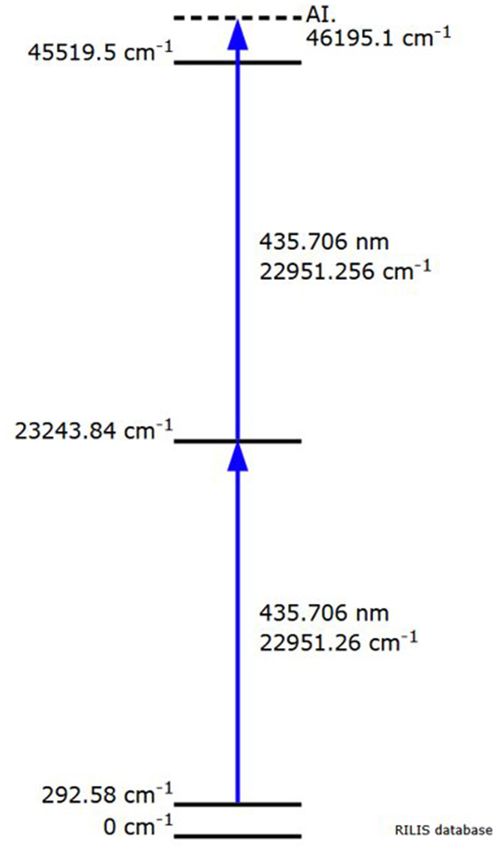
Van de Voorde et al.                                                                                                          Production of HSA Sm-153

                                              high specific activity 153 Sm. Using this process, 153 SmCl3 suitable for radiolabeling, was
                                              produced with a very high specific activity allowing application of 153 Sm in targeted
                                              radionuclide therapy. Further studies to incorporate 153 Sm in radiopharmaceuticals for
                                              targeted radionuclide therapy are ongoing.

                                              Keywords: radiolanthanides, samarium-153, theranostics, targeted radionuclide therapy, cancer, nuclear
                                              medicine, mass separated radionuclides, resonant laser ionization

INTRODUCTION                                                                      a low therapeutic efficiency thus making carrier added 153 Sm
                                                                                  ineffective in TRNT.
Targeted radionuclide therapy (TRNT) has proven to be                                 152 Sm targets are typically irradiated for several days to
successful in oncology over the last decade (1–5). In TRNT                        reach high production yields for 153 Sm. As a consequence of
a radionuclide is linked to a molecule that selectively binds                     the relatively short half-life of 153 Sm, trace amounts of the
to over-expressed receptors of cancer cells, allowing for a                       long-lived 154 Eu (t1/2 = 8.6 y) are co-produced by neutron
targeted approach in cancer therapy. Accumulation of the                          irradiation of the stable 153 Eu (σth = 300 b) daughter nuclide.
radiopharmaceutical in tumor tissue delivers toxic levels of                      The presence of these long-lived impurities limits the shelf-
radiation directly to the malicious tumor cells minimizing dose                   life of the radiopharmaceutical significantly as they might
given to healthy tissue.                                                          deliver unacceptable dose to the patient on the long term.
    The use of rare earth elements (REEs) in TRNT have been                       Therefore, the 154 Eu content allowed in radiopharmaceuticals,
especially investigated intensively because of their favorable                    such as Quadramet, is strictly regulated by international
decay characteristics for nuclear medicine applications (6–14).                   agencies (15, 16).
The application of several drugs, containing REE radionuclides
                                                                                      The use of mass separation on irradiated 152 Sm targets
(90 Y, 153 Sm and 177 Lu), have been approved in nuclear medicine,
                                                                                  allows for reaching much higher levels of specific activity of
while the use of others are being studied (149,152,155,161 Tb, 166 Ho,            153 Sm, i.e. pure non-carrier-added 153 Sm corresponds to a
169 Er, 167 Tm, and 175 Yb). Fortunately many of the therapeutic
                                                                                  theoretical specific activity of 16.4 TBq/mg. Moreover, any long-
REE radionuclides can be easily produced in a nuclear research
                                                                                  lived 152 Eu and 154 Eu impurities are removed from 153 Sm
reactor with high yields and high specific activities.
    153 Sm has a half-life of 1.93 d and decays into a stable daughter            simultaneously by applying mass separation. The possibility
                                                                                  to produce high specific activity (HSA) 153 Sm will make this
nuclide (153 Eu). Upon decay β− particles (Emax = 705 keV, 635
                                                                                  radionuclide and its beneficial β− and γ emissions eligible for
keV) and γ photons (103 keV) are emitted which are suitable
                                                                                  receptor-targeted β− therapy, leading to the development of
for therapy and SPECT imaging, respectively. Therefore, 153 Sm is
                                                                                  various novel radiopharmaceuticals.
a very interesting radioistope in theranostic clinical applications
                                                                                      In this study, we demonstrated the possibility to perform
of nuclear medicine. 152 Sm has a high thermal neutron cross
                                                                                  neutron activation of 98.7% highly enriched 152 Sm as Sm
section (σth = 206 barn), which allows for efficient neutron
                                                                                  (NO3 )3 targets using thermal neutron fluxes of 2.0–2.5 × 10¹⁴
activation of 152 Sm via an n,γ reaction to produce 153 Sm [152 Sm
                                                                                  neutrons/cm2 /s in the BR2 reactor, and to isolate 153 Sm from
(n,γ) 153 Sm] in a nuclear research reactor with a high thermal
                                                                                  its neutron activated 152 Sm target matrix by means of mass
neutron flux using highly enriched 152 Sm target material. Despite
                                                                                  separation at the CERN-MEDICIS facility (17). Mass separation,
its highly interesting decay characteristics for nuclear medicine,
                                                                                  both on-line and off-line, have proven to be of added value to
the use of 153 SmCl3 (as Quadramet) is currently restricted to
                                                                                  produce non-conventional radionuclides for medical research
bone pain palliation, for patients suffering bone metastases
                                                                                  (18). Examples include the production of 149 Tb, 152 Tb, 155 Tb,
originating from various types of cancer. This is a consequence                   169 Er, 167 Tm, and 175 Yb (19–21). The MS collection foil was
of the direct carrier added production route. Considering a
                                                                                  processed in the NURA radiochemistry labs at SCK CEN to
2 × 10¹⁴ neutrons/cm2 /s thermal neutron flux, at the end of
                                                                                  obtain 153 SmCl3 with high specific activity (1.87 TBq/mg) and
irradiation (EOI) a maximum specific activity of ≈135 GBq/mg
                                                                                  high radionuclidic and chemical purity suitable for TRNT.
can be reached after 13 days of irradiation. Neglecting the high
                                                                                  Radiolabeling experiments using the HSA 153 Sm demonstrated
burn-up of the target, this corresponds to a ratio of 120:1
                                                                                  high radiolabeling yields. This proof-of-concept study confirms
between 152 Sm and 153 Sm nuclides. The specific activity drops
                                                                                  the ability to produce 153 Sm with very high specific activity
exponentially as a function of time after EOI as a result of the
                                                                                  suitable for radiolabeling and opens perspectives for future
fast nuclear decay of 153 Sm, drastically increasing the 152 Sm-to-
153 Sm ratio. Chemical isolation of 153 Sm from its 152 Sm target                 large supply.
matrix is impossible. Therefore, the achievable specific activity
of c.a. 153 Sm remains too low to be used in TRNT. The high
content of stable 152 Sm would make chelation at the needed
                                                                                  MATERIALS AND METHODS
low ligand concentrations inefficient. Moreover, the excessive                    Neutron Activation of 152 Sm
amount of 152 Sm-complex would saturate the receptor sites                        Highly enriched 152 Sm2 O3 (98.7% ± 0.1, Neonest AB) target
at the targeted cancer cells with inactive material, leading to                   material was converted to 152 Sm (NO3 )3 prior to neutron

Frontiers in Medicine | www.frontiersin.org                                   2                                      July 2021 | Volume 8 | Article 675221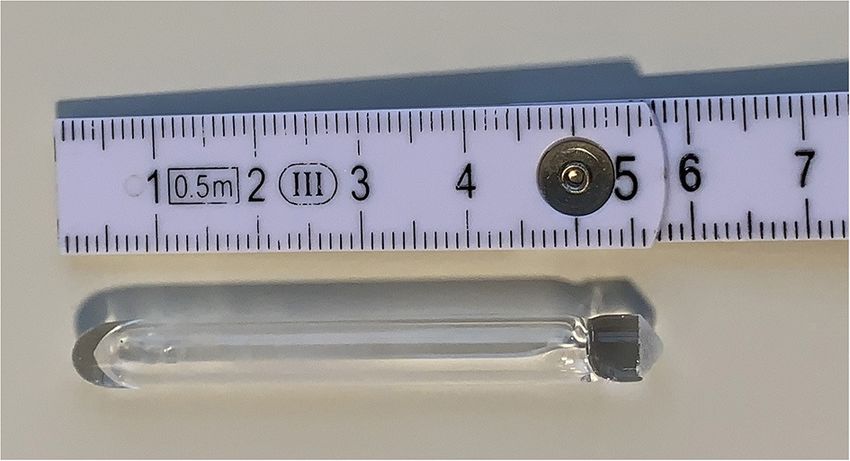
Van de Voorde et al.                                                                                                                Production of HSA Sm-153

                                                                                        of 153 Sm, to allow safe optimization of the different process
                                                                                        steps involved.

                                                                                        Off-Line Mass Separation of 153 Sm
                                                                                        After each reception, the sample holder containing the
                                                                                        radioactive samarium source was loaded into the empty oven of
                                                                                        a standard ISOLDE target and ion source unit (23) at CERN-
                                                                                        MEDICIS. The target’s oven is made of tantalum and is connected
                                                                                        to a rhenium surface ion source via a hot transfer line. Dedicated
                                                                                        sample holders have been designed and produced by CERN
                                                                                        in order to efficiently and safely load the irradiated target
                                                                                        material inside the target container. In addition, the sample
 FIGURE 1 | Typical example of a vacuum-sealed quartz ampoule ready for
                                                                                        holder has been designed to ensure the safe transportation of
 irradiation. The target material is deposited at the bottom of the ampoule (left       the irradiated materials from the external institutes to CERN.
 side here).                                                                            Once the radioactive material is loaded into the target container,
                                                                                        the target unit is coupled to the MEDICIS target station in
                                                                                        preparation for the collection. The target station includes a
                                                                                        coupling flange held at a potential ranging from 30 to 60 kV
activation to facilitate target handling after irradiation. 152 Sm2 O3                  and an extraction electrode placed after an acceleration gap,
was dissolved in 4 mol/L HNO3 solution (trace metal grade,                              at a distance ranging from 55 to 80 mm, for a surface ion
VWR). Afterwards, the solution was evaporated to dryness using                          source, from the ion source’s exit. An Einzel lens is used to
a rotavapor (Büchi) and a vacuum oven (Thermo Fisher). The                              shape the ion beam downstream of the extraction electrode. Two
obtained 152 Sm (NO3 )3 was dissolved in a known volume of trace                        electrostatic XY deflector stages at 5 kV are located between the
metal grade H2 O (VWR), and dispensed in high-purity quartz                             Einzel lens and the extraction electrode. The targets are heated
glass ampoules (Heraeus). A target mass of 150 µg 152 Sm was                            to very high temperatures, typically up to 2,300 ◦ C depending
used in the first series of irradiations. After optimization of the                     on the target material and radionuclide considered, to allow
processing protocols, the target mass was increased to 350 µg                           for the diffusion and effusion of the isotopes of interest out
152 Sm to allow for gradual up-scaling of the 153 Sm production,                        of the target to the ion source for subsequent ionization. The
while following the ALARA principle. The target solution inside                         ions are then accelerated and sent through a mass separator
the quartz ampoules was evaporated to dryness inside a vacuum                           which is a dipole magnet (24). The dipole magnet has been
oven (80 ◦ C, 300 mbar). The quartz ampoules were sealed                                modified to allow its use with the MEDICIS Laser Ion Source for
under vacuum using a custom-made sealing station and a                                  Separator Assembly (MELISSA) laser laboratory (25), resembling
propane/oxygen torch. An example of a vacuum-sealed ampoule                             the Ti:sapphire laser setup of the ISOLDE Resonance Ionization
with the target material deposited at the bottom is presented in                        Laser Ion Source (RILIS) (26). MELISSA has been in service
Figure 1. The outer surface of the ampoules underwent thorough                          since April and helps to increase the separation efficiency
cleaning to avoid the undesired activation of any contaminants.                         and the selectivity at CERN-MEDICIS. 153 Sm and its isobaric
    The quartz ampoules were irradiated in the BR2 reactor at                           daughter 153 Eu were implanted into a metallic zinc layer that
SCK CEN following the routine production procedure (22).                                was deposited on a gold foil. These implantation foils were
They were loaded into standard cold-welded “CFS” irradiation                            prepared by a 99.995% pure metallic zinc granulate being
capsules containing an aluminum insert and helium gas. The                              thermally heated in a molybdenum boat under high vacuum
capsules were irradiated in thimble (DG – “Doigt de Gant”)                              and evaporated onto gold substrates. A zinc layer thickness of
irradiation devices during 2 or 3 days in thermal neutron                               500 nm in this Physical Vapor Deposition (PVD) process was
fluxes of 2.0 to 2.5 × 10¹⁴ neutrons/cm2 /s and cooled for                              attained and confirmed by the use of a build-in INFICON
5 days to allow the decay of short-lived radionuclides. The                             thickness sensor. The surface of the gold substrates underwent
irradiation capsules were sent to the BR2 Hot-Cells for decanning                       crucial surface roughening and ultrasonic cleaning steps prior
to recover the quartz ampoules, which were then shipped to                              to the zinc deposition to allow for proper zinc adherence and
the radiochemical labs at SCK CEN for opening and target                                layer uniformity.
processing. The irradiated target material was dissolved in trace
metal grade water and transferred into a tantalum sample                                Radiochemical Processing of the Mass
boat lined with a rhenium foil provided by CERN. A small                                Separation Target
aliquot of the solution was taken for analysis by gamma                                 The implanted 153 Sm and its daughter 153 Eu were recovered
spectrometry. The target material was evaporated to dryness,                            from the gold foil by dissolving the metallic zinc implantation
by using a 350 W infra-red lamp, resulting in the deposition of                         layer. The metallic zinc layer was readily dissolved in a 4
the irradiated target on the rhenium foil before being shipped                          mol/L HNO3 solution (trace metal grade, VWR). The gold
to CERN-MEDICIS for mass separation. So far, eight batches                              foil was rinsed twice with 4 mol/L HNO3 . The activity of
underwent mass separation. The activity of the shipped batches                          the gold foil was measured in a dose calibrator (Veenstra)
increased stepwise over time, ranging from 1.9 to 14.8 GBq                              before and after the dissolution of the metallic zinc layer to

Frontiers in Medicine | www.frontiersin.org                                         3                                      July 2021 | Volume 8 | Article 675221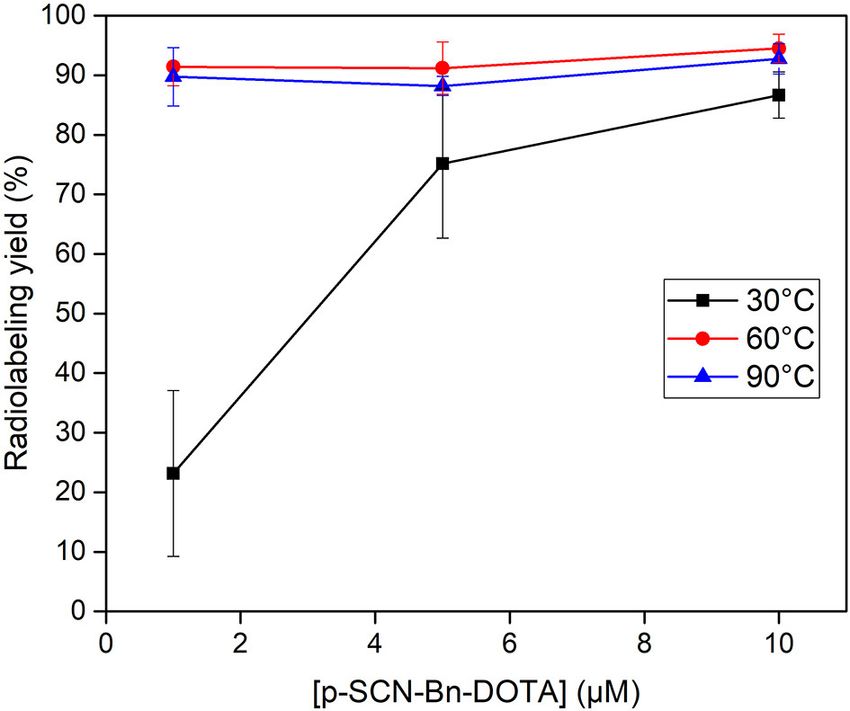
Van de Voorde et al.                                                                                                       Production of HSA Sm-153

estimate the efficiency of activity removal from the gold foil.              Radiolabeling of High Specific Activity
The collected fractions were loaded onto a PEEK column (ø:                   153 Sm
2.1 mm, l: 30 mm, Bio-Safe, TrisKem International) packed with               The suitability of the obtained HSA 153 SmCl3 for radiolabeling
DGA extraction chromatography resin (branched, 50–100 µm,                    was demonstrated with various concentrations of 4-
TrisKem International) using a peristaltic pump (ISMATEC IPC-                isothiocyanatobenzyl-1,4,7,10-tetraazacyclododecane tetraacetic
8) peristaltic pump. Before being used, the DGA column was                   acid (p-SCN-Bn-DOTA, Macrocyclics). 0.5 MBq of HSA
conditioned with 10 mL of 4 mol/L HNO3 . 153 Sm and its 153 Eu               153 SmCl was added to different concentrations of p-SCN-Bn-
                                                                                      3
daughter are retained on the DGA resin in acidic conditions,                 DOTA (1, 5 and 10 nmol/L) in 0.1 mol/L NaOAc buffer (pH
whereas Zn2+ is not. The loaded DGA column was washed                        4.7) with a total reaction volume of 1 mL. The reactions were
excessively with 20 mL of 4 mol/L HNO3 to rinse the large                    incubated in a thermomixer (Eppendorf) for 60 min while
amount of Zn2+ from the column. The wash solutions were                      maintaining a constant temperature of 30, 60 or 90◦ C. To obtain
checked for activity in the dose calibrator to ensure no 153 Sm              robust results, test reactions were performed in triplicate for
or 153 Eu were co-eluted during the washing of the loaded DGA                each reaction condition. After incubation, the radiolabeling
column. 153 Sm and 153 Eu were readily eluted off the DGA                    yield was evaluated using thin-layer chromatography. 5 µL of
column using water. The eluted activity was monitored by means               each reaction was spotted on a glass microfiber chromatography
of a dose calibrator.                                                        paper strip impregnated with silica gel (iTLC-SG, Agilent
    Taking logistics and the relatively short half-life of 153 Sm into       Technologies) and set in an acetonitrile: water mixture (70/30)
account, the 153 Sm eluent still contains a high amount of the               to allow migration of the 153 Sm-p-SCN-Bn-DOTA complex. The
stable 153 Eu daughter isotope. This lowers the radiochemical                TLC papers were cut in half and the activity of the bottom and
purity drastically. Therefore, 153 Sm and 153 Eu are separated               top parts of the TLC paper were counted for 2 min each using a
using a high-pressure ion chromatography system (HPIC,                       gamma counter (Perkin Elmer).
Shimadzu) equipped with a strong cation exchange column
(ø: 6 mm, l: 50 mm, Shodex IC R-621). To ensure retention
on the strong cation exchange column, the pH of the                          RESULTS AND DISCUSSION
153 Sm eluent from the DGA column was adjusted with

a 1 mol/L NH4 OH (trace metal grade, VWR) solution                           Off-Line Mass Separation of 153 Sm
to reach a pH range of 2.5–4.5. After injection on the                       Prior to the reception of radioactive samarium, tests with
HPIC system, 153 Sm was separated from 153 Eu using a 180                    natural stable samarium sources had been performed with an
mmol/L 2-hydroxyisobutyric acid (α-HIBA) solution, which                     evaporated sample of Sm2 O3 (in 5% HNO3 ) in order to define
was adjusted with NH4 OH (trace metal grade) to pH 4.6.                      the laser excitation scheme for the MELISSA ion source and the
The HPIC system was equipped with a radio-detector (Elysia-                  optimal temperature window for samarium release. These tests
Raytest, operated via GINA Star V4.8) to allow on-line                       allowed the facility to operate with a reproducible extraction
monitoring of the activity eluting off the strong cation                     and collection protocol, and to reach 8% of separation efficiency
exchange column.                                                             already at the first collection of 153 Sm, exceeding the best
    The collected 153 Sm fractions were combined and loaded                  operation performances achieved so far (18).
onto a PEEK column (ø: 2.1 mm, l: 30 mm, Bio-Safe, TrisKem                       The separator parameters were set with a beam extraction
International) packed with LN3 extraction chromatography                     voltage of 60 kV and an acceleration gap of 60 mm from the ion
resin (50–100 µm, TrisKem International) to remove α-HIBA                    source’s exit. The target container oven was heated at 1,130 ◦ C by
from the purified 153 Sm. The LN3 column was conditioned                     ohmic heating and the ion source line at 2,100 ◦ C for preliminary
with a 1 mol/L HNO3 (trace metal grade, VWR) solution                        optimization steps with stable 152 Sm. Most of the 153 Sm activity
and washed with copious amounts of water prior to loading                    was extracted between 1,640 and 1,900 ◦ C (corresponding to
of the 153 Sm (α-HIBA)3 solution. After loading, α-HIBA was                  a current of 500–580 A). Figure 2 shows the ion beam profile
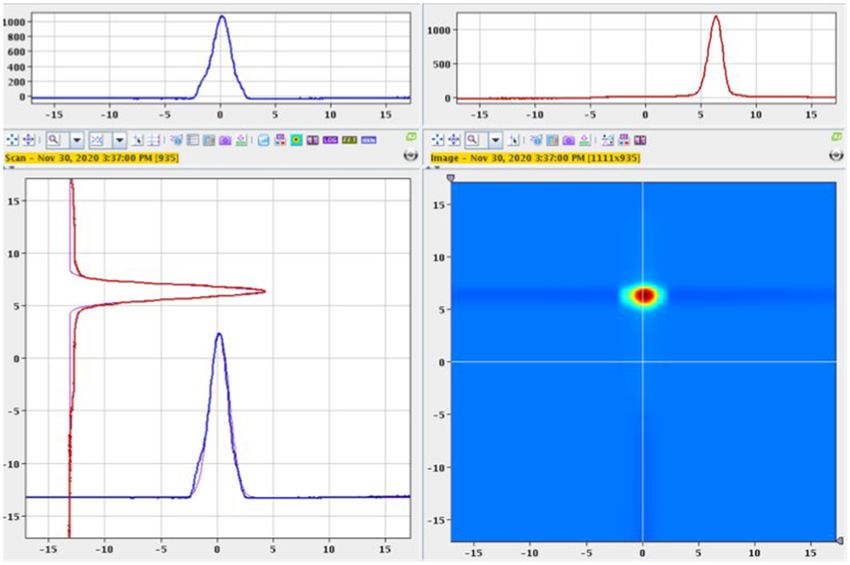
washed from the column with water while 153 Sm was retained                  during implantation for A = 153. Samarium was ionized by
on the column. 153 Sm was eluted from the LN3 column                         resonantly exciting the electronic shell from the low-lying E =
in a concentrated fraction using a 50 mmol/L HCl solution                    292.6 cm−1 state (17% thermal population at 2,100 ◦ C) via two
(trace metal grade, VWR), obtaining a 153 SmCl3 solution                     subsequent λvac = 435.706 nm transitions into an auto-ionizing
ready for radiolabeling. A small aliquot was taken for gamma                 state (Figure 3) (27). In the exceptional case that only one
spectrometry analysis to determine the specific activity, via co-            laser is required for both transitions enabled alternating pulsing
analysis with ICP-MS, and radionuclidic purity of the produced               of the two available pump lasers This doubles the standard
HSA 153 SmCl3 . Chemical purity was determined via ICP-MS.                   repetition rate to 20 kHz and increased the laser ionization rate by
Radiochemical purity was determined via radio-TLC, using                     30%, compared to synchronous operation at 10 kHz. The 153 Sm
a 0.1 mol/L sodium citrate solution (pH 5). In total, four                   implantation rate in MBq/h was monitored by a compact room
of the retrieved mass separation targets were fully dedicated                temperature gamma-spectrometer (Kromek R GR-1) which was
for analysis and evaluation for optimization of the entire                   positioned in front of the collection chamber window. The
radiochemical purification process, collecting valuable data after           identification and quantification of the implanted ions were
each process step.                                                           based on the observation of the 103.2 keV gamma-line. The

Frontiers in Medicine | www.frontiersin.org                              4                                        July 2021 | Volume 8 | Article 675221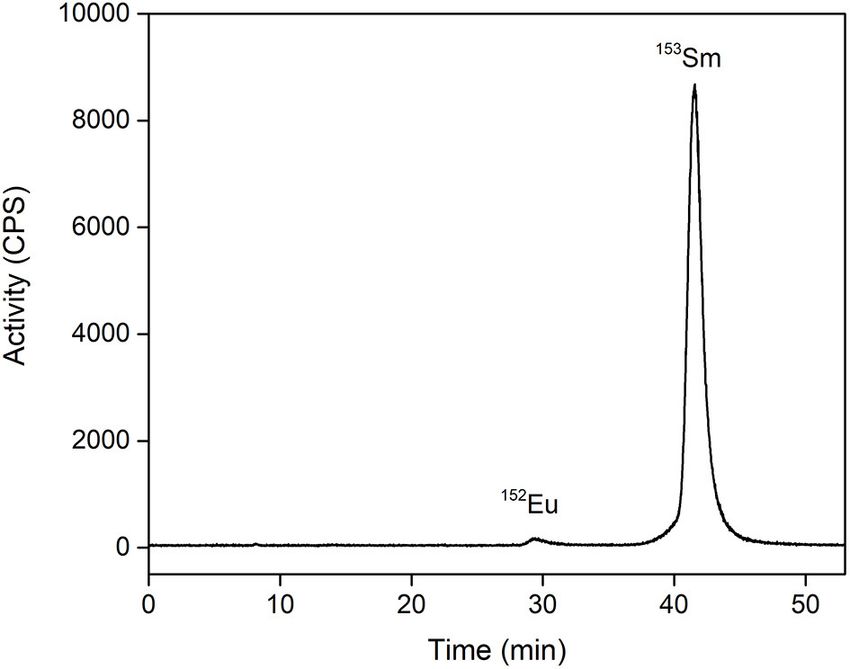
Van de Voorde et al.                                                                                                                        Production of HSA Sm-153

              153
 FIGURE 2 |         Sm beam profile with σhorizontal = 0.88 mm and σvertical = 0.62 mm.

average 153 Sm collection time for the 8 collections performed in                             HNO3 and HCl media (28), following the extraction mechanism
2020 was 36 h with an average efficiency of 4.5% and a maximum                                Ln3+ + 3X− + 3 DGA ⇋ LnX3 (DGA)3 , with X being NO−              3 or
separation efficiency of 12.7%. This efficiency was calculated                                Cl− . The high affinity of Sm3+ for DGA resin allows efficient
based on the activity measured on the collection foil at the end                              retention of 153 Sm on the column. Zn2+ ions have much lower
of the collection as a ratio to the 153 Sm activity in the target                             affinity for DGA, i.e., a very low k′ value, and are easily eluted
at start of the collection. In 2020, 330 h of MEDICIS operation                               off the column. Excessive washing of the loaded DGA column
were devoted to the collection of 153 Sm. Each collection foil was                            with concentrated HNO3 allows for efficient removal of the
shipped back to SCK CEN for further radiochemical processing.                                 Zn2+ impurities from 153 Sm. Sm3+ can be easily stripped from
                                                                                              the DGA column by reducing the nitrate concentration in the
Radiochemical Processing of the Mass                                                          mobile phase, i.e., reversing the above extraction mechanism.
Separation Target                                                                             Quantitative 153 Sm elution was obtained using water as an eluent.
The metallic zinc layer, into which the mass-separated 153 Sm was                             Despite the elution of 153 Sm from the DGA column in water, the
implanted, was readily dissolved using a mineral acid, oxidizing                              obtained solution remained too acidic for direct loading onto the
Zn0 to Zn2+ . By measuring the radioactivity of the gold foil                                 strong cation exchange column used in the next process step (vide
before and after dissolution of the metallic zinc implantation                                infra). The pH of the 153 Sm fraction was adjusted to 2.5–4.5 using
layer, a 153 Sm recovery of 85–92% was achieved. Activity                                     a dilute NH4 OH solution. Activity measurements of the wash
remaining on the gold foil after the acid washes originates from                              solutions and the collected 153 Sm fraction resulted in a process
153 Sm that penetrated the metallic zinc layerand got implanted                               efficiency of >99.9%. Chemical purity of the 153 Sm fraction was
into the gold foil as a result of the high ion beam intensity. This                           found to be highly dependent on the volume wash solution used.
activity could not be removed by the chemical conditions used                                 5 mL of 4 mol/L HNO3 proved to be insufficient as 60 ppb Zn was
and was considered a total loss in the production process. No                                 still present in solution. Also, some traces of iron (17 ppb), copper
additional efforts were undertaken to dissolve the gold foil, as                              (5 ppb) and lead (126 ppb) were found. Therefore, the volume
more aggressive media (e.g., aqua regia), would be required.                                  wash solution was increased to 20 mL to further decrease the
    An extraction chromatography column packed with branched                                  zinc and lead impurities in the 153 Sm fraction (Zn
Van de Voorde et al. Production of HSA Sm-153
FIGURE 4 | Radio-chromatogram of 153 Eu/153 Sm separation on a strong
cation exchange column using α-HIBA. Flow rate: 1 mL/min. The feed solution
was spiked with 152 Eu tracers to enable detection of the Eu3+ fraction.
stationary phase to interact with the lanthanides. To date, this
method proved to be the most efficient in separation of micro
amounts of non-carrier-added produced radiolanthanides from
macro amounts of redundant target material, being a neighboring
lanthanide (13, 29, 30). Sm3+ /Eu3+ separation is a result of the
FIGURE 3 | Resonant laser ionization from the low-lying E = 292.6 cm−1
small differences in complex formation between α-HIBA and
state of samarium via two subsequent λvac = 435.706 nm transitions into an
auto-ionizing state (RILIS database).
the lanthanide, and is based on their small difference in ionic
radius and charge density as a result of a phenomenon known
as lanthanide contraction. A slightly more stable complex is
formed between Eu3+ and α-HIBA because of its higher charge
154 Eu, and 155 Eu was below the minimum detectable activity density. Careful selection of the α-HIBA concentration results
(MDA) limit of the gamma spectrometer. Gamma spectrometry in separation of Sm3+ and Eu3+ , with the Eu3+ fraction eluting
of a non-purified 152 Sm target irradiated in BR2 at 2 × 10¹⁴ prior to the Sm3+ fraction. In the method applied, Sm3+ /Eu3+
neutrons/cm²/s contained 26 Bq/GBq 152 Eu, 29 Bq/GBq 154 Eu separation was achieved using an α-HIBA concentration of 0.180
and 4 Bq/GBq 155 Eu at EOI. The absence of these long-lived mmol/L at a flow rate of 1 mL/min, with Eu3+ eluting from
europium isotopes proves the high separation efficiency and the column after 30 min (Figure 4). The α-HIBA concentration
selectivity of the mass separator at CERN-MEDICIS. was gradually increased to 0.200 mmol/L after elution of the
The majority of the ions in the 153 Sm fraction consists of Eu3+ fraction to accelerate the elution of the Sm3+ fraction. The
the inactive 153 Eu daughter isotope. Because samarium and Sm3+ fraction eluted after 42 min. During method development,
europium possess very similar chemical properties, high amounts a 152 Eu tracer was added to the feed solution to enable on-line
of inactive 153 Eu would significantly decrease the radiolabeling detection of the Eu3+ fraction with the radio-detector of the
efficiency of 153 Sm, as well as its use in TRNT. The isobaric 153 Eu HPIC system. A baseline separation with a resolution of 5.22 was
cannot be physically separated from 153 Sm in a mass separator, observed for Sm3+ /Eu3+ . The recovery rate for 153 Sm after HPIC
and therefore requires a chemical separation step. The use of was determined to be 98–99%.
a resonant laser for selective ionization of Sm prior to mass The 153 Sm fraction collected after HPIC purification was
separation favored collection of 153 Sm over 153 Eu but remains further processed to remove the α-HIBA, and for up-
less efficient than chemical separation. Moreover, the mass concentration. This was done by loading the 153 Sm fraction
separated 153 Sm sample had to be transported from Switzerland onto a column packed with LN3 extraction chromatography
to Belgium by road. Given the relatively short half-life of 153 Sm, a resin. LN3 resin comprises the organophosphorus extractant
significant amount of 153 Sm decayed into 153 Eu during transport. di-(2,4,4-trimethylpentyl) phosphinic acid [H (TMPeP)] which
Therefore, 153 Sm was separated from 153 Eu on a radio-HPIC is impregnated on an inert polymer support (31, 32). In
system using a strong cation exchange column and an aqueous neutral conditions H (TMPeP) coordinates stronger to trivalent
mobile phase comprising the weak acid α-HIBA. The pH of the lanthanides than α-HIBA, efficiently extracting the 153 Sm into the
mobile phase was 4.6, i.e., above the pKa of α-HIBA (4.01). This thin organic layer of the LN3 resin via the extraction mechanism:
pH enables the weak acid as well as the functional groups of the Ln3+ + 3 H[TMPeP] ⇋ Ln(TMPeP)3 + 3H+ . α-HIBA is not
Frontiers in Medicine | www.frontiersin.org 6 July 2021 | Volume 8 | Article 675221Van de Voorde et al. Production of HSA Sm-153
hence leading to less decay of the HSA 153 Sm, and will enhance
process safety.
Radiolabeling of High Specific Activity
153 Sm
Radiolabeling experiments were performed to investigate
applicability of the produced HSA 153 Sm for TRNT.
Radiolabeling was performed in the presence of different
concentrations of p-SCN-Bn-DOTA. Radiolabeling reactions
containing 0.5, 0.1 and 0.05 MBq/nmol were used to evaluate
the radiolabeling of the produced HSA 153 Sm, i.e., having a
5,000, 25,000, and 50,000 stoichiometric excess, respectively, of
ligand with respect to 153 Sm. p-SCN-Bn-DOTA was selected as
chelator in this study because it is a well-established chelator
that is commonly used in TRNT applications with multiple
radiolanthanides (33, 34). Radiolabeling was performed at
different temperatures and different ligand concentrations
(Figure 5). Incubating the reactions at 30 ◦ C was found to
FIGURE 5 | Radiolabeling of 153 Sm with various concentrations of
be insufficient to form a radiocomplex at low concentrations
p-SCN-Bn-DOTA at 30 ( ), 60 ( ) and 90◦ C ( ) in a 0.1 mol/L NaOAc buffered
solution (pH 4.7). (radiochemical yield 23.1 ± 13.9% at 1 µmol/L p-SCN-Bn-
DOTA). This could be expected considering the rigid structure
of DOTA which generally requires energy for the radionuclide
to be incorporated into the chelator (35). When using high
retained by the LN3 resin and is washed from the column with
ligand concentrations, higher radiolabeling yields were observed,
water. Because of the high k′ value of Sm3+ for LN3, 153 Sm
however the yields were not as high as the yields at elevated
was well-retained on the column in neutral conditions. Sm3+
temperatures (75.2 ± 12.6% at 30 ◦ C, 5 µmol/L; 86.7 ± 3.9%
could be efficiently (recovery rate >99.9%) back-extracted to
at 30 ◦ C, 10 µmol/L). Radiolabeling of p-SCN-Bn-DOTA at
the aqueous mobile phase using a dilute acid solution, i.e., 50
60 and 90 ◦ C resulted in much higher radiochemical yields in
mmol/L HCl, as the addition of protons reverses the above
all investigated ligand concentrations. Even when using low
extraction mechanism. In the best instance a 153 SmCl3 solution
concentrations of p-SCN-Bn-DOTA, radiolabeling yields were
of 67 MBq/mL suitable for radiolabeling was obtained. Analysis
almost quantitative (91.4 ± 3.2% at 60 ◦ C and 89.8 ± 4.9% at
of the solution resulted in a specific activity of 1.87 TBq/mg
90 ◦ C using 1 µmol/L DOTA). These results clearly demonstrate
at the time of MS collection, i.e., achieving a 152 Sm-to-153 Sm
the applicability of the produced HSA 153 SmCl3 . Radiolabeling
ratio of 8:1. No other radionuclides could be identified above
conditions still require further optimization to achieve maximal
the detection limit of the gamma spectrometer in both the active
molar activity and radiolabeling yields. However, we already
and decayed sample, resulting in a very high radionuclidic purity.
demonstrated the ability to achieve radiolabeling yields
Radiochemical purity of this HSA 153 SmCl3 batch was 98.9
which are acceptable for radiopharmaceutical production
± 0.24%.
in TRNT. Further optimization and application of 153 Sm
The entire radiochemical process was found to be highly
radiolabeled radiopharmaceuticals in preclinical tests are
efficient, reaching an average overall recovery rate of 84%. Most
currently ongoing.
of the 153 Sm is lost at the front-end of the process, as not all
activity could be recovered from the MS collection foil. 153 Sm
implanted into the gold foil could not be leached out in the CONCLUSIONS
conditions used. The amount of 153 Sm ending up in the gold
foil varied over the different batches, which may indicate a 153 Sm has highly interesting decay characteristics to be used as
difference in thickness of the metallic zinc layer on the gold a theranostic radionuclide. However, its application in TRNT
foils used. is hampered by its low specific activity as a result of the
With the different process steps optimized, longer irradiation carrier-added production route for 153 Sm. In this work we
times and larger target masses will be used for neutron activation. demonstrated the proof-of-concept to produce 153 Sm with high
Higher levels of radioactivity at the front-end of the cycle specific activity by combining neutron activation in a high-
will automatically result in higher amounts of HSA 153 Sm flux nuclear research reactor with off-line mass separation.
that can be used for further pre-clinical evaluation. Higher Ionization of samarium for mass separation was enhanced by
throughput of radioactivity at the mass separation step will be resonant laser ionization, taking advantage of the exceptional
evaluated, while the collection efficiency will be continuously case that only one laser is required for both transitions. The
increased. Manipulations during radiochemical processing will ionization rate could be increased by 30% by doubling the
be reduced by fully automating the procedure. Automation standard repetition rate to 20 kHz. Over the different collections,
of the full radiochemical process will increase time-efficiency, an average mass separation efficiency of 4.5% could be reached,
Frontiers in Medicine | www.frontiersin.org 7 July 2021 | Volume 8 | Article 675221Van de Voorde et al. Production of HSA Sm-153
with a maximum of 12.7%. 153 Sm could be recovered from FUNDING
the MS collection foil by applying a variety of radiochemical
processing steps, obtaining a 153 SmCl3 solution suitable for This work was performed as part of the NURA research program
radiolabeling. The specific activity of 1.87 TBq/mg at the time of SCK CEN. This work was supported by Research Foundation
of MS collection was achieved, i.e., a 152 Sm-to-153 Sm ratio of Flanders FWO (Belgium) via the FWO IRI CERN ISOLDE
8:1. Near-quantitative radiolabeling yields of HSA 153 Sm with I002619N and FWO SBO Tb-IRMA-V S005019N funding
various concentrations of p-SCN-Bn-DOTA were obtained at 60 awarded to KU Leuven.
and 90 ◦ C, demonstrating the applicability of the produced HSA
153 SmCl for radiolabeling.
3 ACKNOWLEDGMENTS
DATA AVAILABILITY STATEMENT The authors would like to thank the CERN HSE-RP team
and Frank Vanderlinden (SCK CEN) for establishing a smooth
The original contributions presented in the study are included coordination of the nuclear transports between CERN and SCK
in the article/Supplementary Material, further inquiries can be CEN, as well as reception of the radioactive targets. MV, MO, and
directed to the corresponding authors. AB would like to thank Guiseppe Modolo and Dimitri Schneider
(Forschungszentrum Jülich GmbH) for their help with the hot
AUTHOR CONTRIBUTIONS ICP-MS analyses in this work. The Radiochemical Analyses
group at SCK CEN is acknowledged for their help with gamma
BP: neutron activation. MV and AB: radiochemical spectrometry and ICP-OES analyses.
processing. RH: laser ionization. LL, EC, MVS, and TSc:
mass separation. MV, MO, and AB: radiolabeling. MV and SUPPLEMENTARY MATERIAL
CD: project coordination. MV, TEC, MO, TC, TSt, and AB:
conceptualization. MV, CD, and RH: initial draft manuscript. The Supplementary Material for this article can be found
All authors contributed to the article and approved the online at: https://www.frontiersin.org/articles/10.3389/fmed.
submitted version. 2021.675221/full#supplementary-material
REFERENCES 11. Gracheva N, Müller C, Talip Z, Heinitz S, Köster U, Zeevaart JR, et al.
Production and characterization of no-carrier-added 161 Tb as an alternative
1. Ashutosh D, Knapp FF, Pillai MRA. Targeted radionuclide to the clinically-applied 177 Lu for radionuclide therapy. EJNMMI Radiopharm
therapy - an overview. Curr Radiopharm. (2013) 6:152– Chem. (2019) 4:12. doi: 10.1186/s41181-019-0063-6
80. doi: 10.2174/18744710113066660023 12. Müller C, Umbricht CA, Gracheva N, Tschan VJ, Pellegrini G,
2. Müller C, Schibli R. Prospects in folate receptor-targeted radionuclide Bernhardt P, et al. Terbium-161 for PSMA-targeted radionuclide
therapy. Front Oncol. (2013) 3:1–10. doi: 10.3389/fonc.2013.00249 therapy of prostate cancer. Eur J Nucl Med Mol Imag. (2019)
3. Bavelaar BM, Lee BQ, Gill MR, Falzone N, Vallis KA. Subcellular 12:1919–30. doi: 10.1007/s00259-019-04345-0
targeting of theranostic radionuclides. Front Pharmacol. (2018) 9:1– 13. Van de Voorde M, Van Hecke K, Cardinaels T, Binnemans
17. doi: 10.3389/fphar.2018.00996 K. Radiochemical processing of nuclear-reactor-produced
4. Goldsmith SJ. Targeted radionuclide therapy: a historical and personal review. radiolanthanides for medical applications. Coord Chem Rev. (2019)
Semin Nucl Med. (2020) 50:87–97. doi: 10.1053/j.semnuclmed.2019.07.006 382:103–5. doi: 10.1016/j.ccr.2018.11.007
5. Sgouros G, Bodei L, McDevitt MR, Nedrow JR. Radiopharmaceutical therapy 14. Talip Z, Favaretto C, Geistlich S, van der Meulen NP. A step-by-
in cancer: clinical advances and challenges. Nat Rev Drug Discov. (2020) step guide for the novel radiometal production for medical applications:
19:589–608. doi: 10.1038/s41573-020-0073-9 case studies with 68 Ga, 44 Sc, 177 Lu and 161 Tb. Molecules. (2020) 25:1–
6. Cutler CS, Smith CJ, Ehrhardt GJ, Tyler TT, Jurisson SS, Deutsch E. Current 29. doi: 10.3390/molecules25040966
and potential therapeutic uses of lanthanide radioisotopes. Cancer Biother 15. Van de Voorde M, Van Hecke K, Binnemans K, Cardinaels T. Separation of
Radiopharm. (2000) 15:531–45. doi: 10.1089/cbr.2000.15.531 samarium and europium by solvent extraction with an undiluted quaternary
7. Lewis MR, Zhang J, Jia F, Owen NK, Cutler CS, Embree MF, et al. Biological ammonium ionic liquid: towards high-purity medical samarium-153. RSC
comparison of 149 Pm-, 166 Ho-, and 177 Lu-DOTA-biotin pretargeted by CC49 Adv. (2018) 8:20077–86. doi: 10.1039/C8RA03279C
scFv-streptavidin fusion protein in xenograft-bearing nude mice. Nucl Med 16. Van de Voorde M, Van Hecke K, Binnemans K, Cardinaels T. Supported
Biol. (2004) 31:213–23. doi: 10.1016/j.nucmedbio.2003.08.004 ionic liquid phases for the separation of samarium and europium in nitrate
8. Müller C, Zhernosekov K, Köster U, Johnston K, Dorrer H, Hohn A, et media: towards purification of medical samarium-153. Sep Purif Technol.
al. A unique matched quadruplet of terbium radioisotopes for PET and (2020) 232:115939. doi: 10.1016/j.seppur.2019.115939
SPECT and for α- and β− -radionuclide therapy: an in vivo proof-of-concept 17. dos Santos Augusto RM, Buehler L, Lawson Z, Marzari S, Stachura M, Stora
study with a new receptor-targeted folate derivative. J Nucl Med. (2012) T, et al. CERN-MEDICIS (Medical isotopes collected from ISOLDE): a new
53:1951–9. doi: 10.2967/jnumed.112.107540 facility. Appl Sci. (2014) 4:265–81. doi: 10.3390/app4020265
9. Banerjee S, Pillai MRA, Knapp FF. Lutetium-177 therapeutic 18. Duchemin C, Ramos JP, Stora T, Aubert E, Audouin N, Barbero E, et al.
radiopharmaceuticals: linking chemistry, radiochemistry, practical CERN-MEDICIS: a unique facility for the production of non-conventional
applications. Chem Rev. (2015) 115:2934–74. doi: 10.1021/cr500171e radionuclides for the medical research. In: 11th Intenrational Particle
10. Bergmann R, Meckel M, Kubíček V, Pietzsch J, Steinbach J, Accelerator Conference. Caen: JACoW Publishing (2020). p. 75–9.
Hermann P, et al. 177 Lu-labelled macrocyclic bisphosphonates for 19. Formento-Cavaier R, Haddad F, Sounalet T, Stora T, Zahi I. Terbium
targeting bone metastasis in cancer treatment. EJNMMI Res. (2016) radionuclides for theranostics applications: a focus on MEDICIS-PROMED.
6:1–12. doi: 10.1186/s13550-016-0161-3 Phys Procedia. (2017) 90:157–63. doi: 10.1016/j.phpro.2017.09.053
Frontiers in Medicine | www.frontiersin.org 8 July 2021 | Volume 8 | Article 675221Van de Voorde et al. Production of HSA Sm-153
20. Webster B, Ivanov P, Russell B, Collins S, Stora T, Ramos JP, et al. 31. Horwitz EP, McAlister DR, Bond AH, Barrans RE, Williamson JM.
Chemical purification of Terbium-155 from pseudo-isobaric impurities A process for the separation of 177 Lu from neutron irradiated 176 Yb
in a mass separated source produced at CERN. Sci Rep. (2019) 9:1– targets. Appl Radiat Isot. (2005) 63:23–36. doi: 10.1016/j.apradiso.2005.
9. doi: 10.1038/s41598-019-47463-3 02.005
21. Formento-Cavaier R, Köster U, Crepieux B, Gadelshin VM, Haddad F, Stora 32. Ramzan M, Kifle D, Wibetoe G. Comparative study of stationary
T, et al. Very high specific activity erbium 169 Er production for potential phases impregnated with acidic organophosphorus extractants for HPLC
receptor-targeted radiotherapy. Nucl Instrum Meth Phys Res. (2020) 463:468– separation of rare earth elements. Sep Sci Technol. (2016) 51:494–
71. doi: 10.1016/j.nimb.2019.04.022 501. doi: 10.1080/01496395.2015.1112400
22. Ponsard B. Production of radioisotopes in the BR2 high-flux reactor for 33. Moreau J, Guillon E, Pierrard, J.-C., Rimbault J, Port M. Complexing
applications in nuclear medicine and industry. J Labelled Comp Radiopharm. mechanism of the lanthanide cations Eu3+ , Gd3+ , and Tb3+ with
(2007) 50:333–7. doi: 10.1002/jlcr.1377 1,4,7,10-Tetrakis(carboxymethyl)-1,4,7,10-tetraazacyclododecane (DOTA) –
23. Catherall R, Andreazza W, Breitenfeldt M, Dorsival A, Focker GJ, Gharsa characterization of three successive complexing phases: study of the
TP, et al. The ISOLDE facility. J Phys G Nucl Part Phys. (2017) thermodynamic and structural properties of the complexes by potentiometry,
44:094002. doi: 10.1088/1361-6471/aa7eba luminescence spectroscopy, and EXAFS. Chem A Eur J. (2004) 10:5218–
24. Duchemin C, Fernandes Pinto Ramos JP, Stora T, Ahmed E, Aubert E, 32. doi: 10.1002/chem.200400006
Audouin N, et al. CERN-MEDICIS: A review since commissioning in 2017. 34. Stasiuk GJ, Long NJ. The ubiquitous DOTA and its derivatives: the
Front Med. (2021) doi: 10.3389/fmed.2021.693682 impact of 1,4,7,10-tetraazacyclododecane-1,4,7,10-tetraacetic acid on
25. Gadelshin VM, Barozier V, Cocolios TE, Fedosseev VN, Formento- biomedical imaging. Chem Commun. (2013) 49:2732–46. doi: 10.1039/c
Cavaier R, Haddad F, et al. MELISSA: laser ion source setup at CERN- 3cc38507h
MEDICIS facility. Blueprint. Nucl Instrum Meth Phys Res. (2020) 463:460– 35. Mishiro K, Hanaoka H, Yamaguchi A, Ogawa K. Radiotheranostics
3. doi: 10.1016/j.nimb.2019.04.024 with radiolanthanides: design, development strategies, medical
26. Fedosseev V, Chrysalidis K, Goodacre TD, Marsh B, Rothe S, Seiffert applications. Coord Chem Rev. (2019) 383:104–31. doi: 10.1016/j.ccr.2018.
C, et al. Ion beam production and study of radioactive isotopes with 12.005
the laser ion source at ISOLDE. J Phys G Nucl Part Phys. (2017)
44:084006. doi: 10.1088/1361-6471/aa78e0 Conflict of Interest: The authors declare that the research was conducted in the
27. RILIS Database. RILIS Elements (2021). Available online at: http:// absence of any commercial or financial relationships that could be construed as a
riliselements.web.cern.ch/ (accessed February, 2021). potential conflict of interest.
28. Pourmand A, Dauphas N. Distribution coefficients of 60 elements on TODGA
resin: application to Ca, Lu, Hf, U and Th isotope geochemistry. Talanta. Copyright © 2021 Van de Voorde, Duchemin, Heinke, Lambert, Chevallay,
(2010) 81:741–53. doi: 10.1016/j.talanta.2010.01.008 Schneider, Van Stenis, Cocolios, Cardinaels, Ponsard, Ooms, Stora and Burgoyne.
29. Cutler CS, Wilder SL, Embree MF. Separation Method for Carrier- This is an open-access article distributed under the terms of the Creative Commons
Free Radiolanthanides. Columbia, MO: US patent application Attribution License (CC BY). The use, distribution or reproduction in other forums
US20110277592A1 (2011). is permitted, provided the original author(s) and the copyright owner(s) are credited
30. Burgoyne A, Ooms M, Elema D, Cardinaels T. 161 Tb purification by high and that the original publication in this journal is cited, in accordance with accepted
performance ion chromatography (HPIC) from irradiated 160 Gd. J Labelled academic practice. No use, distribution or reproduction is permitted which does not
Comp Radiopharm. (2019) 62:S303. doi: 10.1002/jlcr.3725 comply with these terms.
Frontiers in Medicine | www.frontiersin.org 9 July 2021 | Volume 8 | Article 675221You can also read


