A network pharmacology study on analgesic mechanism of Yuanhu-Baizhi herb pair
←
→
Page content transcription
If your browser does not render page correctly, please read the page content below
Mi et al. BMC Complementary Medicine and Therapies                  (2020) 20:284
https://doi.org/10.1186/s12906-020-03078-0
                                                                                                                              BMC Complementary
                                                                                                                              Medicine and Therapies

 RESEARCH ARTICLE                                                                                                                                    Open Access

A network pharmacology study on
analgesic mechanism of Yuanhu-Baizhi
herb pair
Bobin Mi1, Qiushi Li2, Tong Li3, Jessica Marshall4 and Jiayang Sai1,3*

  Abstract
  Background: Millions of people are suffering from chronic pain conditions, such as headache, arthritis, cancer.
  Apart from western medicines, traditional Chinese medicines are also well accepted for pain management,
  especially in Asian countries. Yuanhu-Baizhi herb pair (YB) is a typical herb pair applied to the treatment of stomach
  pain, hypochondriac pain, headache, and dysmenorrhea, due to its effects on analgesia and sedation. This study is
  to identify potentially active compounds and the underlying mechanisms of YB in the treatment of pain.
  Methods: Compounds in YB were collected from 3 online databases and then screened by bioavailability and drug
  likeness parameters. Swiss target prediction was applied to obtain targets information of the active compounds.
  Pain-related genes were conducted for Gene ontology (GO) and Kyoto Encyclopedia of Genes and Genomes
  (KEGG) analysis. Protein-protein interaction (PPI) networks of the genes were constructed using Cytoscape software.
  In addition, the hub genes were screened using maximal clique centrality (MCC) algorithm.
  Results: In total, 31 compounds from Yuanhu were screened out with 35 putative target genes, while 26 compounds
  in Baizhi with 43 target genes were discovered. Hence, 78 potential target genes of YB were selected for further study.
  After overlap analysis of the 78 genes of YB and 2408 pain-associated genes, we finally achieved 34 YB-pain target
  genes, as well as 10 hub genes and 23 core compounds. Go enrichment and KEGG pathway analysis indicated that YB
  had a strong integration with neuro system, which might significantly contribute to antinociceptive effect.
  Conclusion: Our data provide deep understanding of the pharmacological mechanisms of YB in attenuating pain. The
  discovery shed new light on the development of active compounds of YB for the treatment of pain.
  Keywords: Rhizoma Corydalis, Radix angelicae dahuricae, Pain, Analgesic, Network pharmacology

Background                                                                              of life in this population. Although stepwise escalation
Pain is a common syndrome related to various diseases,                                  of analgesic therapy (paracetamol, non-steroidal anti-
such as cancer, fracture, etc. It is estimated that 20% of                              inflammatory drugs, mild to strong opioids) according
individuals around the worldwide have some degree of                                    to the World Health Organization’s three-step pain lad-
chronic pain [1]. Adequate pain assessment and ra-                                      der works well for majority patients suffering from pain
tional management are essential to improve the quality                                  [2], the prevailing adverse effect still exist among pa-
                                                                                        tients after using the primary drugs. Thus, adjuvants
* Correspondence: saijiayang90@126.com                                                  are always recommended for the management of noci-
1
 Department of Orthopaedics, Union Hospital, Tongji Medical College,                    ceptive pain to maximize nonopioids and minimize
Huazhong University of Science and Technology, Wuhan 430022, China
3
 Department of oncology, The Third Affiliated Hospital, Beijing University of
                                                                                        long-term opioid use in patients who may live for de-
Chinese Medicine, Beijing 100029, China                                                 cades with a chronic pain syndrome.
Full list of author information is available at the end of the article

                                         © The Author(s). 2020 Open Access This article is licensed under a Creative Commons Attribution 4.0 International License,
                                         which permits use, sharing, adaptation, distribution and reproduction in any medium or format, as long as you give
                                         appropriate credit to the original author(s) and the source, provide a link to the Creative Commons licence, and indicate if
                                         changes were made. The images or other third party material in this article are included in the article's Creative Commons
                                         licence, unless indicated otherwise in a credit line to the material. If material is not included in the article's Creative Commons
                                         licence and your intended use is not permitted by statutory regulation or exceeds the permitted use, you will need to obtain
                                         permission directly from the copyright holder. To view a copy of this licence, visit http://creativecommons.org/licenses/by/4.0/.
                                         The Creative Commons Public Domain Dedication waiver (http://creativecommons.org/publicdomain/zero/1.0/) applies to the
                                         data made available in this article, unless otherwise stated in a credit line to the data.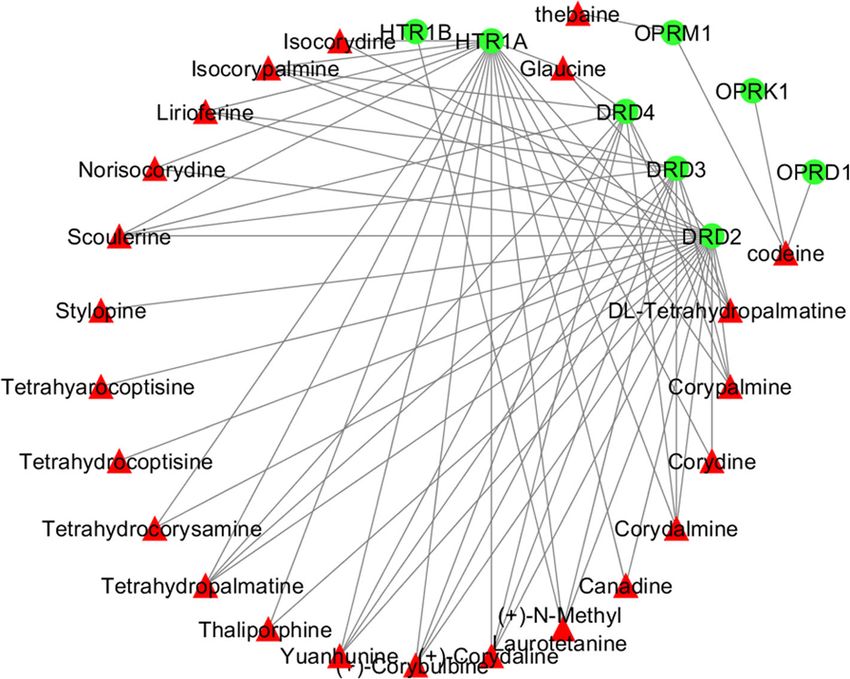
Mi et al. BMC Complementary Medicine and Therapies   (2020) 20:284                                                    Page 2 of 8

  Nowadays, accumulative studies provide substantial                 SMILES, including MW, ALogP, Hbond donor count,
evidence that traditional Chinese medical therapy, in-               and Hbond acceptor count, Rotation bond count. Those
cluding herbs, formulas, etc. has an additive effect when            properties were applied to the drug likeness evaluation
used in combination with opioids or may be used as sin-              based on Lipinski’s rule of five (RO5) [8]. Systemic
gle agent treatment for pain relief [3, 4].Yuanhu-Baizhi             evaluation of ADME (absorption, distribution, metabol-
herb pair (YB), consisting of Corydalis yanhusuo W. T.               ism, excretion, toxicity) was carried out by ADMETlab
Wang (Yuanhu in Chinese) and Angelica dahurica                       (http://admet.scbdd.com/), among which, F (30% Bio-
(Fisch.ex Hoffm.) Benth. et Hook. f. (Baizhi in Chinese),            availability) and drug likeness (DL) were collected for
is well-known for its analgesic effect [5]. Diverse forms            further screening. Then, compounds with F (30%) ≥ 30%
of YB, such as capsules, pills, and oral solution, have              and DL ≥30% were identified as active compounds.
been developed and widely used in the treatment of
stomachache, headache and dysmenorrhea. In addition,                 Targets prediction
previous studies have proved pain alleviating effects of             The potential targets of active compounds of YB are pre-
YB [5–7]. Considering the widely clinical use of Yuanhu              dicted by Swiss ADME and collected using a probability
and Baizhi on pain management, the active compounds                  ≥30%. The pain-associated target genes were obtained
and potential targets of YB on analgesia has yet to be               from six databases, including DISGeNET [9], drugbank
discovered.                                                          [10], GeneCards [11], The Online Mendelian Inheritance
  Traditional Chinese medicine (TCM) network pharma-                 in Man database (OMIM) [12], Therapeutic Target
cology is a preferred method to study herb-compounds-                Database (TTD) [13], and The Human Protein Atlas
diseases-targets because of its capacity of describing com-          (THPA) [14]. The species was set to Homo sapiens.
plex interactions between drugs and biological systems               Venn diagram was drawn for overlap analysis to obtain
and the “multi-component, multi-target, and multi-                   potential pain-associated target genes of active
pathway” characteristics of TCM. Therefore, in the                   compounds.
present study, we are committed to screen the active com-
pounds in YB that may modulate pain-related genes. Be-               Network construction
sides, the underlying mechanism of YB-induced pain relief            Protein-Protein Interaction (PPI) data were obtained
was investigated.                                                    from the Search Tool for the Retrieval of Interacting
                                                                     Genes (STRING) database and a confidence score of >
Methods                                                              0.4 was selected to construct PPI network [15]. The net-
Active compounds and targets                                         works were generated using Cytoscape (version 3.7.1) to
All of the chemical monomer compounds in YB were re-                 further illustrate scientific interpretation of the compli-
trieved from The Encyclopedia of Traditional Chinese                 cated relationships among genes.
Medicine (ETCM, http://www.nrc.ac.cn:9090/ETCM/),
Traditional Chinese Medicine Information Database                    Enrichment analysis
(TCMID, http://bidd.nus.edu.sg/group/TCMsite/), and                  Gene Ontology (GO) Enrichment and Kyoto
TCMGeneDIT (http://tcm.lifescience.ntu.edu.tw/). ETCM                Encyclopedia of Genes and Genomes (KEGG) Pathway
includes comprehensive information for the commonly                  Enrichment Analysis were carried out using DAVID tool
used herbs and formulas of TCM, as well as their ingredi-            (https://david.ncifcrf.gov/) [16].
ents. TCMID is a systemic platform designed to identify
informative materials on all aspects of TCM including for-           Results
mulation, herbal composition, chemical composition, etc.             Drug likeness and bioavailability analysis for compounds
TCMGeneDIT serves as a database system providing asso-               in YB
ciation information about TCMs, genes, diseases, TCM ef-             In this study, we obtained 47 compounds in Yuanhu
fects and TCM ingredients automatically mined from vast              (Corydalis yanhusuo W. T. Wang) and 84 compounds in
amount of biomedical literature.                                     Baizhi (Angelica dahurica (Fisch.ex Hoffm.) Benth. et
                                                                     Hook. f., Supplementary Excel.1). Then we selected com-
Pharmacokinetic predictions                                          pounds using descriptors retrieved from Swiss ADME,
Canonical Simplified Molecular-Input Line-Entry System               results in 43 compounds out of 47 in Yuanhu and 77
(SMILES) of compounds were collected from three data-                out of 84 in Baizhi, respectively. The statistic results of
bases, including Swiss ADME (http://www.swissadme.                   their drug-like property descriptors were listed in
ch/), Pubchem (https://pubchem.ncbi.nlm.nih.gov/), and               Table 1. Further screening was carried out based on F
ChEMBL (https://www.ebi.ac.uk/chembl/). Then five im-                (30%) ≥ 30% and DL ≥ 30% collected from ADMETlab.
portant pharmacology-related properties were obtained                Finally, we obtained 41 compounds in Yuanhu and 64
from Swiss ADME by accurate searching canonical                      compounds in Baizhi (Supplementary Excel. 2).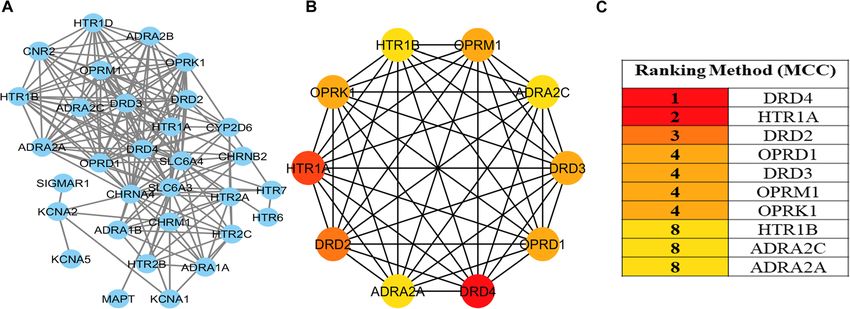
Mi et al. BMC Complementary Medicine and Therapies      (2020) 20:284                                                        Page 3 of 8

Table 1 Drug-like property descriptors of compounds in YB               Table 2 YB compound–candidate target network parameters
Herbs        Descriptors        Median         Mean           Std       Herbs          Network parameter                      Values
Yanhu        MW                 341.40         332.74         53.60     Yanhu          Number of nodes                        64
             a_acc              5.00           4.86           0.95                     Network heterogeneity                  0.830
             a_don              1.00           0.67           0.84                     Average number of neighbors            5.969
             logP(o/w)          2.79           2.59           0.88                     Characteristic path length             3.088
Baizhi       MW                 204.35         208.61         73.31                    Shortest paths                         3784 (93%)
             a_acc              2.00           2.44           2.30                     Network centralization                 0.246
             a_don              0.00           0.66           0.95      Baizhi         Number of nodes                        68
             logP(o/w)          3.24           3.00           1.62                     Network heterogeneity                  0.931
                                                                                       Average number of neighbors            4.824

YB compound-target network                                                             Characteristic path length             2.473
Swiss Target Prediction was applied to identify target                                 Shortest paths                         1930 (42%)
genes of active compounds. After screening using a                                     Network centralization                 0.156
probability ≥30%, 31 active compounds from Yuanhu
with 35 putative target genes, and 26 active compounds                  pain-related genes were obtained. After overlapping ana-
in Baizhi with 43 putative target genes were identified in              lysis, 34 frequently affected therapeutic target genes for
the results. The interaction between active compounds                   pain in active compounds of YB were discovered (Fig. 2).
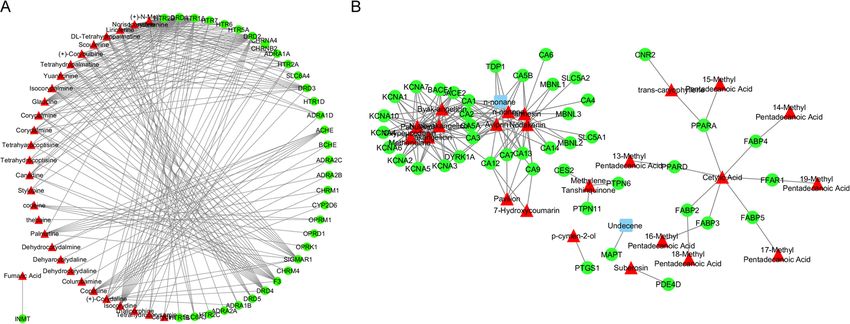
and genes were constructed by Cytoscape. (Fig. 1a, b).                  We also created a PPI network for all the 34 genes with
   As shown in Fig. 1, the network showed that com-                     Cytoscape (settings: Homo sapiens and confidence > 0.4)
pounds which connected to the most target genes were                    and 10 hub genes with plugcluster Cytohubba by max-
tetrahydropalmatine, codeine, lirioferine etc., indicating              imal clique centrality (MCC) method were screened. To
that these compounds might play a major role in                         be more specific, the 34 targets were as follows:
Yuanhu, while cetylic acid, Neobyakangelicol etc., might                CYP2D6, KCNA1, HTR7, DRD3, ADRA2A, OPRK1,
be the critical compounds in Baizhi. In addition, we                    CHRM1, CHRNB2, ADRA1A, HTR1A, DRD4, HTR1D,
listed the compound–candidate target network parame-                    HTR2A, SLC6A3, ADRA2C, SLC6A4, PTPN11, HTR2C,
ters in Table 2.                                                        KCNA2, MAPT, DRD2, ADRA1B, SIGMAR1, PPARA,
                                                                        CNR2, HTR2B, HTR1B, ADRA2B, CHRNA4, HTR6,
Overlap analysis between YB targets and pain associated                 OPRD1, KCNA5, OPRM1, and PTGS1 (Fig. 3a). Among
targets                                                                 which, the top 10 hub genes were DRD4, HTR1A,
Six databases were mined including TTD, DISGeNET,                       DRD2, OPRD1, DRD3, OPRM1, OPRK1, HTR1B,
DrugBank, Genecards, OMIM, and The Human Protein                        ADRA2C, and ADRA2A (Fig. 3b, c). The PPI network
Atlas to screen the pain-related genes. In total, 2408                  was rebuilt with top 8 hub genes and related active

 Fig. 1 Yuanhu and Baizhi compound–target network. a Yuanhu compound–target network. b Bai zhi compound–target network. Red represents
 compounds and green represents the targets of compounds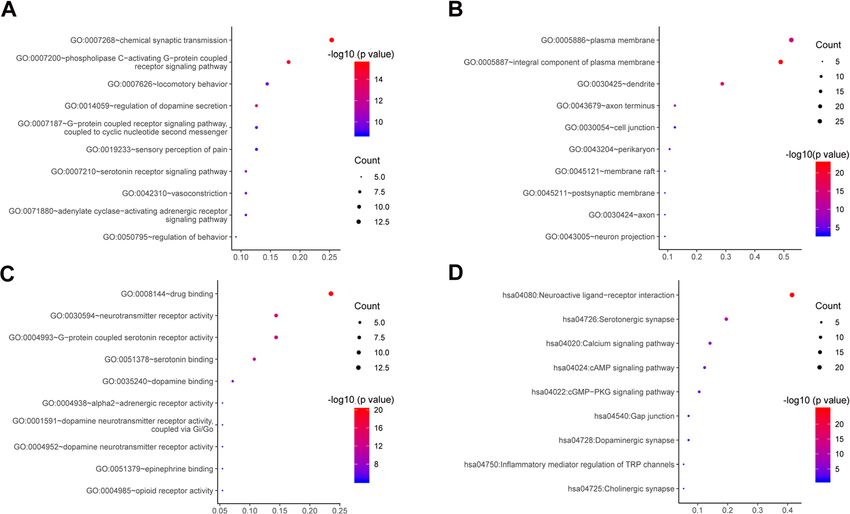
Mi et al. BMC Complementary Medicine and Therapies       (2020) 20:284                                                              Page 4 of 8

 Fig. 2 Venn Diagram for the overlap analysis of YB tageted genes and pain related genes

compounds of YB, resulting in 23 core compounds,                          adrenergic receptor activity, dopamine neurotransmitter
which may be active therapeutic compounds related with                    receptor activity, dopamine neurotransmitter receptor
pain relief in YB (Fig. 4).                                               activity, epinephrine binding, opioid receptor activity,
                                                                          which are all classical pathways involved in pain indu-
GO enrichment and KEGG enrichment                                         cing and relieving. BP and CC terms analysis indicate
To further explore the multiple mechanisms of YB as a                     that YB are mainly involved in chemical synaptic trans-
therapy drug against pain, GO enrichment analysis of 34                   mission, G protein coupled receptor signaling, and loco-
target genes shared by YB and pain was performed using                    motory behavior. What’s more, YB are strongly related
DAVID bioinformatics resources. The top 10 signifi-                       to the integral component of plasma membrane, cell
cantly enriched terms including biological process (BP),                  junction, and dendrite.
molecular function (MF), and cellular component (CC)                        The KEGG enrichment analysis of 34 target genes was
are presented (p-value < 0.05) in Fig. 5a-c. The top 10                   performed to explore the potential biological pathways.
MF pathways included: drug binding, neurotransmitter                      We obtained 9 pathways in total which belong to several
receptor activity, G-protein coupled serotonin receptor                   categories, including neuroactive ligand receptor inter-
activity, serotonin binding, dopamine binding, alpha2-                    action, serotonergic synapse, calcium signaling pathway,

 Fig. 3 Protein–protein interaction (PPI) network of YB compound targets against pain. a The PPI Network constructed by Cytoscape; b Hub genes
 cluster generated from a; c Hub genes list for YB on pain by MCC method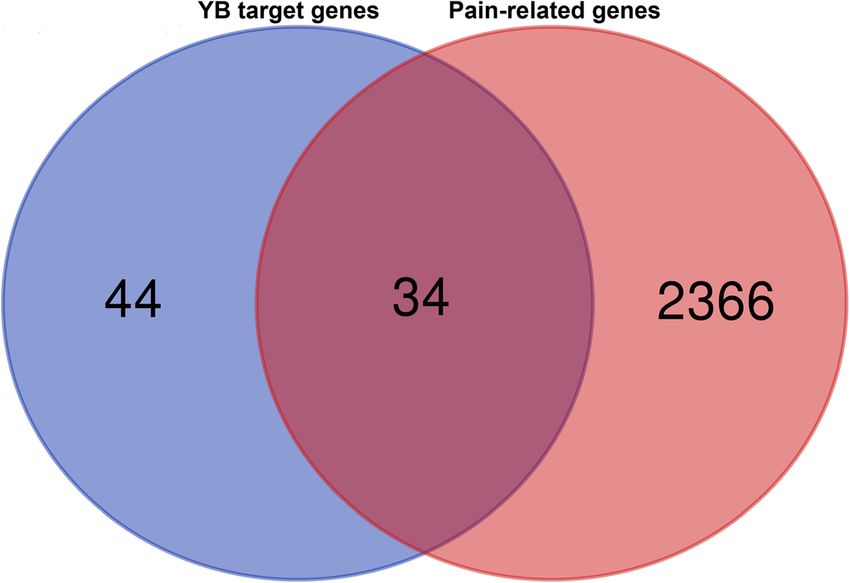
Mi et al. BMC Complementary Medicine and Therapies        (2020) 20:284                                                              Page 5 of 8

 Fig. 4 The network for 8 YB-related pain target genes and their interactive YB compounds. Green nodes represent pain-related targeted genes,
 and red nodes represent YB active compounds

cAMP signaling pathway, dopaminergic synapse, etc.                        referred to as the degree and rate at which the active
(Fig. 5d).                                                                compound is absorbed by the systemic circulation, is
                                                                          calculated by Random forests (RF) method with accuracy
Discussion                                                                of 0.669 and AUC score of 0.715 by fivefold cross valid-
As Traditional Chinese Medicine (TCM) has been                            ation. DL, which is defined as a complex balance of mo-
widely accepted around the world, there are still several                 lecular properties and structure features, is closely
problems to be addressed, among which, the active com-                    related to bioactivity and bioavailability. DL is evaluated
ponents and target genes have always been the issue and                   using one well-performed classification model with clas-
key point for TCM modernization [17, 18]. While exist-                    sification accuracy of 0.800 and AUC score of 0.867 by
ing methods mainly concerned the indicative ingredients                   external test set [21]. An oral bioactivity of ≥20% is con-
and their potential pharmacological effects, network                      sidered acceptable to identify compounds with accepted
pharmacology study emerged as a more powerful                             oral bioavailability. In this study, F ≥ 30% and DL ≥ 30%
method to identify active compounds and target genes                      were used as screening criteria, which was stricter and
due to multi-component and multi-target mode of TCM                       more rigorous [22–24].
[19]. Le et al. reported that 7 alkaloids from Yuanhu and                    As shown in PPI network of Yuanhu, the most fre-
8 coumarins from Baizhi were selected as active com-                      quently targeted genes are ACHE, HTR1A, DRD2,
pounds by LC–MS/MS method [5]. In the present study,                      HTR2A, HTR7, DRD1, HTR2B, DRD1, HTR7, HTR6,
three databases were mined, resulting in 47 compounds                     HTR5A, OPRM1, F3. Amongst them, the target genes in
in Yuanhu and 84 compounds in Baizhi. In total, 131                       the neuro system accounted most, indicating that
compounds were obtained from YB, which provided                           Yuanhu plays an important role in neuroprotection.
more compounds for further analysis. Normally, OB ≥                       While the top frequently targeted genes in Baizhi are
30% and DL ≥ 0.18 are considered chemically suitable                      CA12, CA9, CA7, PTGS1, DYRK1A, BACE1, BACE2,
for drug development, they are used as the included cri-                  MBNL1. Among which, CAs, BACE, are involved in
teria of bioactive compounds in most literatures [20]. In                 mechanism of neuronal protection against ischemia.
the current study, we calculated drug likeness probability                PTGS1, known as Cyclooxygenase 1 (COX-1), are in-
and F (30% Bioavailability) probability of active com-                    volved in osteogenic differentiation [25], cancer preven-
pounds of YB using ADMETlab. Bioavailability, which is                    tion and therapy [26], etc. And DYRK1A, MBNL1 are
Mi et al. BMC Complementary Medicine and Therapies (2020) 20:284 Page 6 of 8 Fig. 5 Gene enrichment (GO) analysis for the 34 shared YB compounds and pain-related target genes. The color represents the different -log10 (p values), while the size of the circle represents the counts. a Biological Process (BP); b Cellular component (CC); c Molecular Function (MF); d KEGG pathway analysis for the 34 shared YB compounds and pain-related target genes most involved in immune system [27], which suggest modulation especially under pre-sensitized conditions that Baizhi may be active in neuro-immune system. Dys- [32], and related to CNS inflammation [33]. KCNA1 functional pain is thought to arise from altered process- were found to be associated with membership in the ing of nociceptive information in the central nervous mild pain class [34], endogenous Kcna2 antisense RNA system [28], and primary sensory neurons are involved was suggested as a therapeutic target for the treatment in both acute and chronic pain [29], we deduct that YB of neuropathic pain [35], while KCNA5 is mainly in- may interact with neuro system to exert analgesia effect. volved in drug uptake [36]. The alpha-2-adrenergic re- The PPI network also presents top 8 hub genes and its ceptors targeted by YB, including ADRA2A, ADRA1A, related 23 core compounds in YB. The top 8 genes actu- ADRA2C, ADRA1B, ADRA2B, are involved in regulating ally belong to 3 families, dopamine receptors, 5- the release of neurotransmitter molecules from sympa- hydroxytryptamine (serotonin) receptors, and opioid re- thetic nerves and from adrenergic neurons in the central ceptors, which all are typical pain related genes, indicat- nervous system. SLC6A4, a member of neurotransmitter ing that YB is definitely a pain-relieving candidate. symporter family, can be targeted by psychomotor stim- Besides, the 34 genes targeted by YB contribute unevenly ulants, such as amphetamines and cocaine and can ter- to the mechanism of analgesia effect. Take CYP2D6 for minate the action of serotonin and recycles it in a instance. CYP2D6 is the most frequently addressed can- sodium-dependent manner. While SLC6A3 is a dopa- didate gene in the literature on pain, which is involved mine transporter. In addition, MAPT, CNR2 CHRM1, in the biological activation of codeine into morphine and CHRNB2, CHRNA4 are all neuro-related proteins. tramadol into O-desmethyltramadol [30]. Based on the While PTPN11, PPARA, PTGS1 have been shown to be extensive evidence for this gene, the availability of guide- more involved in cell proliferation. All the lines of evi- lines for healthcare professionals, and the fact that active dence suggest that YB function as an analgesia through metabolites of codeine and tramadol are formed by this multi targets, amongst which, neuroprotection may ac- enzyme, this is a highly suitable biomarker for improving count the most. This indicates that YB may be more pain therapy in the clinic [31]. The sigma-1 receptor suitable for chronic pain than acute ones, which is more (SIGMAR1) is reported to be involved in pain related to inflammation.
Mi et al. BMC Complementary Medicine and Therapies   (2020) 20:284                                                                    Page 7 of 8

   The 23 compounds are as follows: Stylopine, Tetra-                Conclusion
hydropalmatine, Canadine, (+)-Corybulbine, (+)-Cory-                 In summary, we found more potential compounds in YB
daline,     Corydalmine,      Corydine,     Corypalmine,             involved in intrinsic control of pain besides the well-
Glaucine, Isocorydine, Isocorypalmine, Lirioferine,                  known ones, which still need further study to be verified
(+)-N-Methyl Laurotetanine, Norisocorydine, Scouler-                 about their specific roles in YB on pain. In addition,
ine, Tetrahydrocoptisine, Tetrahydrocorysamine, Tha-                 some crucial target genes, besides the already reported
liporphine,    Yuanhunine,     DL-Tetrahydropalmatine,               ones tested in animal experiments, such as CYP2D6,
codeine, thebaine. Among which, Glaucine, tetrahy-                   SIGMAR1, KCNA1, alpha-2-adrenergic receptors,
dropalmatine, canadine, corydaline, and tetrahydro-                  SLC6A3, MAPT, CNR2 CHRM1, CHRNB2, CHRNA4,
coptisine were determined relatively high in Rhizoma                 all may play significant roles in YB for attenuating pain.
corydalis extract by HPLC-TOF/MS and they were
absorbed into blood quickly [37]. Codeine is a well-                 Supplementary information
known natural plant alkaloid commonly used to treat                  Supplementary information accompanies this paper at https://doi.org/10.
                                                                     1186/s12906-020-03078-0.
mild-to-moderate pain and cough [38]. Thebaine
(paramorphine), chemically similar to codeine and                     Additional file 1.
morphine, is not used therapeutically but often con-                  Additional file 2.
verted to codeine for use. Dehydrocorybulbine
(DHCB), has been identified as a dopamine receptor                   Acknowledgements
antagonist, exhibiting high to moderate binding affin-               The authors would like to express their gratitude to the Chinse Scholar
ities to sigma 1 and 2 receptors, serotonin 5-HT7 re-                Counsel for their support.
ceptor, and histamine H2 receptors [39]. While (R)-
                                                                     Authors’ contributions
glaucine appears to act as a positive allosteric modu-               JS conceived the research theme and supervised the implementation. BM
lator at the 5-HT2A receptor [40]. Levo-                             and QL designed the method and performed the experiments. JS wrote the
tetrahydropalmatine (L-THP) and Isocorypalmine                       manuscript. TL and JM revised the language. All authors read and approved
                                                                     the final manuscript.
exerted analgesic effects by agonism D1R and antag-
onism D2R [41, 42]. Levo-corydalmine attenuates                      Funding
vincristine-induced neuropathic pain by regulating the               Not applicable.

CXCL1/CXCR2 signaling pathway [43].                                  Availability of data and materials
   We also discovered several compounds in YB,                       The datasets used and/or analyzed in the current study are available from
which have not been reported to be related with anal-                the corresponding author on request.
gesia in previous studies. However, they did have im-                Ethics approval and consent to participate
portant functions in diverse diseases. For instance,                 All experiments were reviewed and approved by the Committee of Ethics on
tetrahydrocoptisine was reported to exert neuropsy-                  Human Experiments (S2243) and were carried out under the Guidelines for
                                                                     Animal Experiments at the Huazhong University of Science and Technology.
chopharmacological property in 1976 [44]. Thalipor-                  A written signed informed consent was provided by all individual
phine, along with reperfusion therapy conferred                      participants included in the study.
cardioprotection via activation of opioid receptor [45].
                                                                     Consent for publication
Stylopine, which also exits in Chelidonium majus L.                  Not applicable.
(Papaveraceae), is tested to have anti inflammation ac-
tivity [46]. While Lirioferine and (+)-N-Methyl Lauro-               Competing interests
tetanine were shown as good candidate with                           The authors declare that they have no competing interests.

antileishmanial activity [47]. Isocorydine can select-               Author details
                                                                     1
ively inhibit human cancer stem cells, which have an                  Department of Orthopaedics, Union Hospital, Tongji Medical College,
important role in the development of chemoresistance                 Huazhong University of Science and Technology, Wuhan 430022, China.
                                                                     2
                                                                      Department of Cardiology, Beijing Chaoyang Integrative Medicine
[48]. Scoulerine is a potent antimitotic compound and                Emergency Medical Center, Beijing 100029, China. 3Department of oncology,
it merits further investigation as an anticancer drug                The Third Affiliated Hospital, Beijing University of Chinese Medicine, Beijing
[49]. These lines of evidence demonstrate that YB                    100029, China. 4Department of Surgery, Brigham and Women’s Hospital,
                                                                     Harvard Medical School, Boston, 02115, Boston, MA 02115, USA.
may act on multiple targets to play their pharmaco-
logical roles on pain. What’s more, little reports were              Received: 20 March 2020 Accepted: 13 September 2020
found about Canadine, (+)-Corybulbine, (+)-Coryda-
line, Corydine, Corypalmine, Norisocorydine, Tetrahy-                References
drocorysamine, Yuanhunine, which may act as                          1. Varrassi G, Yeam CT, Rekatsina M, Pergolizzi JV, Zis P, Paladini A. The
potential compounds for pain relief. It will be inter-                   Expanding Role of the COX Inhibitor/Opioid Receptor Agonist Combination
                                                                         in the Management of Pain. Drugs. 2020;1–11. [Epub ahead of print].
esting to develop the potential active compounds as                  2. Scarborough BM, Smith CB. Optimal pain management for patients with
new anti-pain drugs.                                                     cancer in the modern era. CA Cancer J Clin. 2018;68(3):182–96.
Mi et al. BMC Complementary Medicine and Therapies (2020) 20:284 Page 8 of 8
3. Xu L, Lao LX, Ge A, Yu S, Li J, Mansky PJ. Chinese herbal medicine for 27. Valencic E, Piscianz E, Sirchia F, Tommasini A, Faletra F, Todaro F, et al. Tregs
cancer pain. Integr Cancer Ther. 2007;6(3):208–34. and Th17 lymphocytes in human DYRK1A haploinsufficiency. Immunol Lett.
4. Yuan QL, Guo TM, Liu L, Sun F, Zhang YG. Traditional Chinese medicine for 2019;214:52–4.
neck pain and low back pain: a systematic review and meta-analysis. PLoS 28. Ruscheweyh R, Wilder-Smith O, Drdla R, Liu XG, Sandkuhler J. Long-term
One. 2015;10(2):e0117146. potentiation in spinal nociceptive pathways as a novel target for pain
5. Le J, Lin Z, Song L, Wang H, Hong Z. LC-MS/MS combined with in vivo therapy. Mol Pain. 2011;7:20.
microdialysis sampling from conscious rat striatum for simultaneous 29. Bennett DL, Clark AJ, Huang J, Waxman SG, Dib-Hajj SD. The role of voltage-
determination of active constituents of Yuanhu- Baizhi herb pair and gated sodium channels in pain signaling. Physiol Rev. 2019;99(2):1079–151.
endogenous neurotransmitters: application to pharmacokinetic and 30. Mercadante S. Opioid metabolism and clinical aspects. Eur J Pharmacol.
pharmacodynamic study. J Pharm Biomed Anal. 2019;176:112807. 2015;769:71–8.
6. Gu Y, Huang J, Guo H, Song X, Li J, Shi Y, et al. A randomized controlled 31. Matic M, de Wildt SN, Tibboel D, van Schaik RHN. Analgesia and opioids: a
study for Yuanhu Zhitong dropping pills in the treatment of knee Pharmacogenetics shortlist for implementation in clinical practice. Clin
osteoarthritis. Medicine (Baltimore). 2020;99(24):e20666. Chem. 2017;63(7):1204–13.
7. Wang P, Li K, Tao Y, Li D, Zhang Y, Xu H, et al. TCM-ADMEpred: a novel 32. Sachau J, Bruckmueller H, Gierthmuhlen J, Magerl W, Kaehler M, Haenisch S,
strategy for poly-pharmacokinetics prediction of traditional Chinese et al. SIGMA-1 receptor gene variants affect the somatosensory phenotype
medicine based on single constituent pharmacokinetics, structural similarity, in neuropathic pain patients. J Pain. 2019;20(2):201–14.
and mathematical modeling. J Ethnopharmacol. 2019;236:277–87. 33. Wheeler MA, Jaronen M, Covacu R, Zandee SEJ, Scalisi G, Rothhammer V,
8. Lipinski CA. Lead- and drug-like compounds: the rule-of-five revolution. et al. Environmental control of astrocyte pathogenic activities in CNS
Drug Discov Today Technol. 2004;1(4):337–41. inflammation. Cell. 2019;176(3):581–96 e18.
9. Pinero J, Bravo A, Queralt-Rosinach N, Gutierrez-Sacristan A, Deu-Pons J, 34. Langford DJ, Paul SM, West CM, Dunn LB, Levine JD, Kober KM, et al. Variations in
Centeno E, et al. DisGeNET: a comprehensive platform integrating potassium channel genes are associated with distinct trajectories of persistent
information on human disease-associated genes and variants. Nucleic Acids breast pain after breast cancer surgery. Pain. 2015;156(3):371–80.
Res. 2017;45(D1):D833–D9. 35. Zhao X, Tang Z, Zhang H, Atianjoh FE, Zhao JY, Liang L, et al. A long
10. Barneh F, Jafari M, Mirzaie M. Updates on drug-target network; facilitating noncoding RNA contributes to neuropathic pain by silencing Kcna2 in
polypharmacology and data integration by growth of DrugBank database. primary afferent neurons. Nat Neurosci. 2013;16(8):1024–31.
Brief Bioinform. 2016;17(6):1070–80. 36. Yang T, McBride BF, Leake BF, Kim RB, Roden DM. Modulation of drug block
11. Safran M, Dalah I, Alexander J, Rosen N, Iny Stein T, Shmoish M, et al. GeneCards of the cardiac potassium channel KCNA5 by the drug transporters OCTN1
Version 3: the human gene integrator. Database (Oxford). 2010;2010:baq020. and MDR1. Br J Pharmacol. 2010;161(5):1023–33.
12. Hamosh A, Scott AF, Amberger JS, Bocchini CA, McKusick VA. Online 37. Hong Z, Zhao L, Wang X, Le J, Jia J, Chai Y, et al. High-performance liquid
Mendelian inheritance in man (OMIM), a knowledgebase of human genes chromatography-time-of-flight mass spectrometry with adjustment of
and genetic disorders. Nucleic Acids Res. 2005;33(Database issue):D514–7. fragmentor voltages for rapid identification of alkaloids in rat plasma after oral
13. Wang Y, Zhang S, Li F, Zhou Y, Zhang Y, Wang Z, et al. Therapeutic target administration of rhizoma Corydalis extracts. J Sep Sci. 2012;35(13):1690–6.
database 2020: enriched resource for facilitating research and early development 38. Celic I, Bach-Rojecky L, Mercep I, Soldo A, Petrak AK, Bucan A. Resolving
of targeted therapeutics. Nucleic Acids Res. 2020;48(D1):D1031–D41. issues about efficacy and safety of low-dose codeine in combination
14. Uhlen M, Oksvold P, Fagerberg L, Lundberg E, Jonasson K, Forsberg M, et al. analgesic drugs: a systematic review. Pain Ther. 2020;9(1):171–94.
Towards a knowledge-based human protein atlas. Nat Biotechnol. 2010; 39. Wang L, Zhang Y, Wang C, Zhang X, Wang Z, Liang X, et al. A natural
28(12):1248–50. product with high affinity to sigma and 5-HT7 receptors as novel
15. Szklarczyk D, Morris JH, Cook H, Kuhn M, Wyder S, Simonovic M, et al. The therapeutic drug for negative and cognitive symptoms of schizophrenia.
STRING database in 2017: quality-controlled protein-protein association Neurochem Res. 2019;44(11):2536–45.
networks, made broadly accessible. Nucleic Acids Res. 2017;45(D1):D362–D8. 40. Heng HL, Chee CF, Thy CK, Tee JT, Chin SP, Herr DR, et al. In vitro functional
16. Dennis G Jr, Sherman BT, Hosack DA, Yang J, Gao W, Lane HC, et al. DAVID: evaluation of isolaureline, dicentrine and glaucine enantiomers at 5-HT2
database for annotation, visualization, and integrated discovery. Genome and alpha1 receptors. Chem Biol Drug Des. 2019;93(2):132–8.
Biol. 2003;4(5):3. 41. Wang JB, Mantsch JR. L-tetrahydropalamatine: a potential new medication
17. Li S, Zhang B. Traditional Chinese medicine network pharmacology: theory, for the treatment of cocaine addiction. Future Med Chem. 2012;4(2):177–86.
methodology and application. Chin J Nat Med. 2013;11(2):110–20. 42. Xu W, Wang Y, Ma Z, Chiu YT, Huang P, Rasakham K, et al. L-isocorypalmine
reduces behavioral sensitization and rewarding effects of cocaine in mice by
18. Zhang R, Zhu X, Bai H, Ning K. Network pharmacology databases for traditional
acting on dopamine receptors. Drug Alcohol Depend. 2013;133(2):693–703.
Chinese medicine: review and assessment. Front Pharmacol. 2019;10:123.
43. Zhou L, Hu Y, Li C, Yan Y, Ao L, Yu B, et al. Levo-corydalmine alleviates vincristine-
19. Wang L, Li Z, Shao Q, Li X, Ai N, Zhao X, et al. Dissecting active ingredients
induced neuropathic pain in mice by inhibiting an NF-kappa B-dependent
of Chinese medicine by content-weighted ingredient-target network. Mol
CXCL1/CXCR2 signaling pathway. Neuropharmacology. 2018;135:34–47.
BioSyst. 2014;10(7):1905–11.
44. Bhattacharya SK, Pandey VB, Ray AB, Dasgupta B.
20. Liu H, Wang J, Zhou W, Wang Y, Yang L. Systems approaches and
Neuropsychopharmacological studies with (−-)-tetrahydrocoptisine. Short
polypharmacology for drug discovery from herbal medicines: an example
communication. Arzneimittelforschung. 1976;26(12):2187.
using licorice. J Ethnopharmacol. 2013;146(3):773–93.
45. Chang WL, Lee SS, Su MJ. Attenuation of post-ischemia reperfusion injury
21. Dong J, Wang NN, Yao ZJ, Zhang L, Cheng Y, Ouyang D, et al. ADMETlab: a
by thaliporphine and morphine in rat hearts. J Biomed Sci. 2005;12(4):611–9.
platform for systematic ADMET evaluation based on a comprehensively
46. Jang SI, Kim BH, Lee WY, An SJ, Choi HG, Jeon BH, et al. Stylopine from
collected ADMET database. J Cheminform. 2018;10(1):29.
Chelidonium majus inhibits LPS-induced inflammatory mediators in RAW
22. Tian S, Li Y, Wang J, Zhang J, Hou T. ADME evaluation in drug discovery. 9.
264.7 cells. Arch Pharm Res. 2004;27(9):923–9.
Prediction of oral bioavailability in humans based on molecular properties
47. Correa JE, Rios CH, del Rosario CA, Romero LI, Ortega-Barria E, Coley PD,
and structural fingerprints. Mol Pharm. 2011;8(3):841–51.
et al. Minor alkaloids from Guatteria dumetorum with antileishmanial
23. Ma CY, Yang SY, Zhang H, Xiang ML, Huang Q, Wei YQ. Prediction models
activity. Planta Med. 2006;72(3):270–2.
of human plasma protein binding rate and oral bioavailability derived by 48. Pan JX, Chen G, Li JJ, Zhu QD, Li JJ, Chen ZJ, et al. Isocorydine suppresses
using GA-CG-SVM method. J Pharm Biomed Anal. 2008;47(4–5):677–82.
doxorubicin-induced epithelial-mesenchymal transition via inhibition of ERK
24. Veber DF, Johnson SR, Cheng HY, Smith BR, Ward KW, Kopple KD. Molecular signaling pathways in hepatocellular carcinoma. Am J Cancer Res. 2018;8(1):154–64.
properties that influence the oral bioavailability of drug candidates. J Med 49. Habartova K, Havelek R, Seifrtova M, Kralovec K, Cahlikova L, Chlebek J, et al.
Chem. 2002;45(12):2615–23. Scoulerine affects microtubule structure, inhibits proliferation, arrests cell cycle and
25. Wang Y, Liu Y, Zhang M, Lv L, Zhang X, Zhang P, et al. Inhibition of PTGS1 thus culminates in the apoptotic death of cancer cells. Sci Rep. 2018;8(1):4829.
promotes osteogenic differentiation of adipose-derived stem cells by
suppressing NF-kB signaling. Stem Cell Res Ther. 2019;10(1):57.
26. Benelli R, Vene R, Ferrari N. Prostaglandin-endoperoxide synthase 2 Publisher’s Note
(cyclooxygenase-2), a complex target for colorectal cancer prevention and Springer Nature remains neutral with regard to jurisdictional claims in
therapy. Transl Res. 2018;196:42–61. published maps and institutional affiliations.You can also read


