Partnerships Victoria Project Summary - Victorian Desalination Project
←
→
Page content transcription
If your browser does not render page correctly, please read the page content below
Partnerships Victoria
Project Summary

Victorian Desalination Project

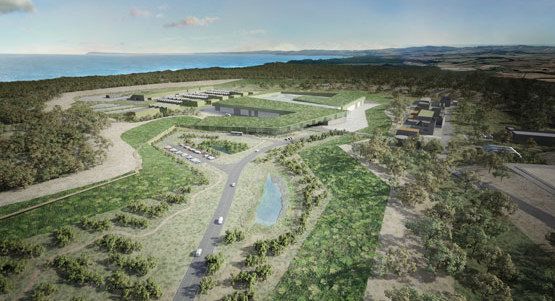
Artist’s impression: General View to the West - Victorian Desalination Plant

November 2009

                                                       Prepared by
                Capital Projects Division (a division of the Department of Sustainability and Environment)
                             in conjunction with the Department of Treasury and Finance
Partnerships Victoria Victorian Desalination Project
Contents
Part One: Project overview................................................................................................... 2
1.1 Victorian Desalination Project...............................................................2
1.2 A public private partnership ..................................................................6
1.3 Tender process..........................................................................................6
1.4 Value for money ........................................................................................8
1.5 Public interest considerations ............................................................10
1.6 Project milestones ..................................................................................11
Part Two: Key commercial features................................................................................. 12
2.1 Parties to the contract ...........................................................................12
2.2 Contractual relationships .....................................................................13
2.3 Risk transfer .............................................................................................13
2.4 General obligations of the contractor ...............................................16
2.5 General obligations of the State .........................................................16
2.6 Government service payments ...........................................................17
2.7 State contributions .................................................................................17
2.8 Performance measures and abatement............................................18
2.9 Default and termination regime...........................................................19
2.10 Finance and security arrangements ..................................................19
2.11 State rights at expiry of contract ........................................................20
2.12 Process for Government modification of services / facility........21
2.13 Future Technology Improvement .......................................................21
Glossary .................................................................................................................................. 22
Appendix 1: Useful References......................................................................................... 25
Appendix 2: Key Contact Details...................................................................................... 26
Appendix 3: Evaluation Criteria ........................................................................................ 27
Appendix 4: Public Interest Test....................................................................................... 30
iPartnerships Victoria Victorian Desalination Project
Foreword
The Project Summary series provides information about the procedural and contractual
nature of Partnerships Victoria projects.
The Victorian Desalination Project (the Project) represents the largest public sector
investment in water infrastructure in Australia’s history. The Project is being delivered within
the Partnerships Victoria framework. It represents a major non-rainfall dependant addition to
Melbourne’s and regional Victoria’s urban water supply. The Project is a key step in the
implementation of the State’s Water Plan: Our Water Our Future – The Next Stage of the
Government’s Water Plan (Water Plan), announced in June 2007.
Partnerships Victoria is part of the Victorian Government’s strategy to provide better services
to all Victorians by expanding and improving Victoria’s public infrastructure.
Since 2000, 19 Partnerships Victoria projects have been contracted with a total value of $9.5
billion of capital investment, including $3.5 billion of capital investment for the Project.
This project summary is divided into two parts. The first part provides a broad overview of the
Project, including the rationale for undertaking it under the Partnerships Victoria policy, a
summary of the tender process, the value for money calculation, the public interest
considerations for the project and the project timetable. The second part provides more detail
on the key commercial features of the Project, including the main parties and their general
obligations, the broad allocation of risk between the public and private sectors, the treatment
of various key project issues including the payment mechanism and the finance and security
arrangements.
NB: This summary should not be relied on as a complete description of the rights and
obligations of the parties to the project and is not intended for use as a substitute for the
contracts.
1Partnerships Victoria Victorian Desalination Project
Part One: Project overview
1.1 Victorian Desalination Project
The Project
The Project is the largest seawater desalination plant currently being developed in Australia.
It will supply up to 150 gigalitres (GL) of water a year to Melbourne, Geelong and, via other
connections, South Gippsland and Western Port towns, with the capacity to upgrade to supply
up to 200 GL in future. The Project’s production capacity represents approximately one third
of Melbourne’s annual water usage from a source that is entirely independent of rainfall. The
Project will assist in providing water security for Melbourne.
The marine intake and outlet tunnels, transfer pipeline, and the power supply will all be built
for 200 GL per annum capacity from the outset. This way, if the State requires the additional
capacity, only the plant would be required to be upgraded.
The Project is the world’s largest Public Private Partnership (PPP) project undertaken in the
last 12 months. It is a landmark transaction conducted in the most adverse financial markets
since the Great Depression. The Project will be delivered by the AquaSure consortium,
comprising Degrémont SA, Suez Environnement, Thiess Pty Ltd and Macquarie Group, in
partnership with the Capital Projects Division of the Department of Sustainability and
Environment.
The Project capital cost of $3.5 billion will be fully funded by the private sector. The bank
group has committed to seven to ten year funding. The State Government has acted as
lender of last resort for an initial bank syndication process run by AquaSure to seek additional
long term investors for $1.7 billion of debt funding. This syndication process has now been
completed, within the first two months of a three year syndication support period. The State’s
syndication support liabilities are now no longer required.
The success story of this Project bears testament to the robustness of the Australian PPP
market and the ability of the State and leading Australian banks to structure PPP transactions
which continue to attract significant international investment and offer value for money to the
tax payer.
Project Objectives
In the context of the overarching objectives of the Water Plan to provide water security for
Victoria’s growing population and economy in the face of drought and the challenge of climate
change, the State’s objectives for the Project are:
Time:
• to commence delivery of Desalinated Water from the Project to Victoria’s water supply
system by 19 December 2011;
Scope:
to provide Victoria with a non-rainfall dependent supply of initially up to 150 GL per
annum;
to allow for the efficient future expansion of the Project to supply up to 200 GL per
annum;
2Partnerships Victoria Victorian Desalination Project
to ensure desalinated water delivered meets the State’s water quality requirements;
to retain flexibility to vary supplies over time to support optimisation of Victoria’s water
supply network;
to deliver the Project in a manner consistent with the State’s policy of retaining
ownership and management of water resources in public hands;
Value for money:
• to deliver innovative solutions and overall value for money to the State, water users
and the general public, through a whole of life approach to service delivery, risk
management and the design, construction, operation and maintenance of the Project;
Environmental:
to minimise the environmental impact of the Project through design and appropriate risk
management and mitigation measures and in particular, to minimise adverse impacts
on the coastal and marine environment from construction activity, visual intrusion, noise
and waste discharge and disposal;
to protect the beneficial uses of the coastal and marine environment, including the
landscape and recreational values of the adjacent coastal reserve;
to optimise energy efficiency and ensure that 100% of the electricity used in operating
the Desalination Plant and associated infrastructure will be offset by the purchase of
renewable energy credits;
Social:
to maximise benefits to the local community and wider economy within relevant State
Government policy frameworks;
to establish and maintain the highest levels of health, safety and aesthetics throughout
the delivery and operation of the Project; and
to minimise disruption to the surrounding area during construction.
Water Security
The Transfer Pipeline will be supplying the water from the plant into the Melbourne Water
network near Soldiers Road in Berwick, and water will then flow to consumers directly, or to
the Cardinia Reservoir.
The 1.9m diameter Transfer Pipeline has also been designed to operate as a ‘two way’ pipe,
which means that when the plant is not running, water from Cardinia Reservoir can flow down
the Transfer Pipeline to supply off-takes along the pipeline, including to supply the Wonthaggi
area. This creates an 85km extension to the Melbourne Water network, providing water
security to regional towns in South Gippsland and WesternPort, which can be supplied with
desalinated water when the plant is running and with water from the Melbourne Water
network at other times.
A number of water authorities have already requested connections along the Transfer
Pipeline – six connections in all. South East Water has requested three connections, South
Gippsland Water two connections and WesternPort Water one connection. South Gippsland
Water is also currently constructing a new pipeline from the Transfer Pipeline near the plant
site, to supply Wonthaggi, Inverloch and Cape Paterson.
3Partnerships Victoria Victorian Desalination Project
Water Quality
Melbourne’s consumers currently receive some of the best water quality in the world. The
quality of the water produced by the Project will continue to match the high expectations of
Victorian water consumers.
Flexible Water Supply
Water will be ordered annually by the State Government. AquaSure will supply water to the
State only when requested to do so. AquaSure is not entitled to sell water to third parties.
The State has flexibility to order water between 0 GL and 150 GL per annum, generally in 25
GL increments (0, 50, 75, 100, 125 and 150).
Each year on 1st April, an order is placed for the water to be supplied in the following financial
year i.e. between 1 July of that year and 30 June of the following year. There is scope for the
State to restrict supply during wet winter months or to increase supply (subject to plant
capacity) during any year.
Payment for water will be in two components – a water security payment reflecting the
security of having the Desalination Plant producing or able to produce water and a water
usage payment which reflects the variable costs of producing such water as is required.
The water security payment is made on the condition that AquaSure is capable of delivering
the water that is ordered, to the required quantity and quality. If no water is ordered, to
receive the water security payment AquaSure must demonstrate that the Project could have
responded to an order for the supply of water.
The water usage payment is made only if water is ordered and delivered. Both the water
security and the water usage payments are at risk if there is a failure to perform to the
required standards.
Desalination Technology
The plant will use reverse osmosis technology – the same as that being used for all of the
major plants in Australia and the predominant desalination technology used worldwide. It will
be constructed in three 50 GL modules, which will provide significant flexibility for the supply
needs of Melbourne, Geelong and the surrounding regions. Degrémont, a member of the
successful consortium, delivered (on time and within budget) and is operating the Western
Australian Desalination Plant using similar technology.
Plant Architecture and Landscaping
Visual amenity has always been an active concern of the community. With the assistance of
the Office of the Victorian Government Architect and a range of state government
architectural and landscape specialists, the Project objective of ensuring the plant integrated
into the coastal landscape was set. AquaSure’s world class, state of the art design achieves
this objective and includes a novel expansive ecological restoration program of the plant site
land. This will result in one of the largest ecological restoration programs, with millions of
plants and around 150,000 trees planted on the site. The plant building will also include a
green roof, composed of living native species, ensuring integration into the coastal landscape.
Intake and Outlet Tunnels
Long tunnels under the sand dunes, beach and marine sensitive areas, will be constructed to
protect the environment. These tunnels are around 1.1 kilometres long for the intake (4m
diameter), and around 1.4 kilometres long for the outlet (4m diameter). The design and
operation of the intake and outlet tunnels must meet the contractual Performance
4Partnerships Victoria Victorian Desalination Project
Requirements of the State. These were set following the completion of the Environment
Effects Statement (EES), commentary from the public, a range of government regulators and
other stakeholders, the EES Inquiry Panel and the EES Independent expert.
The Environment Protection Authority (EPA) has also set requirements as part of its Works
Approval, granted for the Project on 3 March 2009. Ultimately, AquaSure must obtain a
Discharge License from the EPA before the plant will be able to operate.
Power Supply
The power supply will be an underground high voltage alternating current transmission line
(HVAC Transmission Line), largely co-located (within the one easement) with the Transfer
Pipeline except where it diverges towards the Cranbourne terminal station (along an existing
high voltage overhead power line easement at Pound Road, Clyde North). Where co-located,
the Transfer Pipeline and Power Supply will be generally within a single 20 metre easement,
which is within the width shown in the EES for the pipeline alone (15 to 20m).
The design of the HVAC Transmission Line will require some power load compensator
equipment, which will be co-located with the booster pump station in Cardinia, and located
separately at a point approximately mid-way along the length of the HVAC Transmission Line.
Each of these installations will occupy a small area.
The power supply is being sized to suit the requirements of the plant at 200 GL capacity, and
will be dedicated to supplying the plant only.
The HVAC Transmission Line will be easier to construct than other underground solutions.
There are multiple suppliers capable of delivering this technology, which was considered
lower cost and able to be constructed in a shorter timeframe than other solutions. HVAC
technology has less energy loss than HVDC technology and does not require complex,
supplier-specific converter stations. The HVAC Transmission Line is an innovative solution to
the challenge of meeting community expectations for minimising visual amenity and
disturbance to landowners, while meeting the power supply requirements of the project in
both the short and long term.
Energy and Renewable Energy
A key feature of the Project is that all power usage during the operating phase of the Project
will be fully offset by power generation by renewable energy sources commissioned after 1
July 2007. The State has agreed to a minimum level of renewable energy credits each year.
The energy procurement arrangement contract is load following and fixed price for the full
Project Term. This means for the life of the Project only energy which is consumed is paid for
and at a pre-agreed price.
Independent Reviewer and Environmental Auditor
The State has required the appointment of an Independent Reviewer and Environmental
Auditor (IR&EA). Davis Langdon has been appointed to this role, which is a joint appoint of
the State and AquaSure.
The role of the IR&EA is to review the design, construction and environmental management
of the project as it progresses, to seek to ensure safety is maintained and to assist in ensuring
compliance with the numerous technical, environmental and social requirements of the
contract documents. The environmental auditor aspect of the IR&EA role will also continue
during the operation and maintenance phase of the project through to the end of the 30 year
term of the contract.
5Partnerships Victoria Victorian Desalination Project
1.2 A public private partnership
The decision to deliver the Project as a PPP was driven by a detailed assessment of the
following four alternative delivery models:
Traditional State funded procurement – under a design and construct contract, with
public sector operation and maintenance of the plant, or separate short term operating
contracts with the private sector;
State funded alliance – alliance for design and construction with either public sector or
a further alliance for the operation and maintenance of the plant;
State funded procurement under the DBOM model – with private sector design,
build, operation and maintenance of the plant; and
Partnerships Victoria privately funded PPP – with private sector design, finance,
construction, operation and maintenance over an extended period of time.
Following a detailed assessment, the PPP structure was considered likely to offer the optimal
value for money result in delivery of and outcomes for the Project, through the following key
benefits:
effective risk transfer: the PPP model offered the optimum risk profile given the size
and complexity of the Project, both during the construction phase and beyond into
operations and maintenance, with the most efficient and effective management of risks
overall. The private sector proponent is committed to delivering water and related
services, and maintaining the Desalination Plant and associated infrastructure, to the
State’s required standards throughout the term of the Project, including meeting
changing technology, water quality and environmental requirements;
whole of life efficiencies: the PPP model encouraged bidders to take a whole of life
approach to optimising the balance between capital costs and ongoing maintenance /
lifecycle costs;
improved asset and service quality: the PPP model was considered to offer greater
control over the quality of infrastructure and services due to the high degree of rigour
and robust review and control (including additional layers of review through third party
financiers) inherent in the PPP procurement process and, on an ongoing basis, by
providing for performance standards, supported by an abatement regime to ensure
those standards are met;
design innovation: the PPP model provided a highly competitive structure within
which there was significant scope and incentive for the private sector to deliver
innovative solutions to achieve the best whole of life cost and management of risk,
while still meeting the performance requirements;
timely delivery: the PPP model was considered most likely to facilitate the required
timeframe of commencement of delivery of water by late 2011 and to be effective in
mitigating the risks of delay to commissioning compared to the other options
considered; and
operational flexibility: the PPP model permitted the level of operational flexibility
sought by the State, from water production of 0 GL to production at full capacity.
1.3 Tender process
The State is facilitating the delivery of the Project by having obtained all key State and
Commonwealth approvals, concurrently with the bidding process. This included approvals or
facilitation under the following Acts:
6Partnerships Victoria Victorian Desalination Project
• the Environment Protection Act 1970 (Vic);
• the Environment Effects Act 1978 (Vic);
• the Environment Protection and Biodiversity Conservation Act 1999 (Cth);
• the Planning and Environment Act 1987 (Vic);
• the Coastal Management Act 1995 (Vic);
• the Aboriginal Heritage Act 2006 (Vic);
• the Land Acquisition and Compensation Act 1986 (Vic);
• the Heritage Act 1995 (Vic);
• the Project Development and Construction Management Act 1994 (Vic);
• the Flora and Fauna Guarantee Act 1988 (Vic); and
• the Water Act 1989 (Vic).
The State conducted a competitive tender process to determine the private sector party to
deliver the Project. The tender process was implemented in accordance with Partnerships
Victoria policy and principles seeking to ensure that the State received the best value for
money outcome.
The base evaluation structure used throughout the tender process was:
The State
Cabinet Committee
Inter-Departmental
Reference Group
Executive Group Department of
Probity Adviser
Evaluation Panel Treasury & Finance
Architecture &
Commercial Panel Technical Panel
Landscape Panel
Specialist Specialist
Specialist A&L
Commercial Technical Adviser
Adviser Sub-Panel
Adviser Sub-Panel Sub-Panel
Figure 1 - Base evaluation structure
Each of the Commercial, Technical and Architecture and Landscape (A&L) Panels were
structured with specific sub-panels to provide detailed advice in their areas of expertise.
This structure was utilised to provide governance to the tender process, which comprised:
Expressions of Interest: evaluation of the Expressions of Interest submitted by
consortia seeking to participate in the tender process;
7Partnerships Victoria Victorian Desalination Project
Initial Proposals: evaluation of initial proposals submitted March 2009 in response to
the State’s Request for Proposals (RFP);
Amended Proposals: based on consultation and community feedback, the
government announced its decision to prefer an underground power supply solution in
April 2009. Following that decision, the State sought and then evaluated amended
proposals from shortlisted bidders which encompassed and priced an underground
power solution; and
Final Proposals: due to the volatility in the financial markets over the tender period,
the State sought final proposals from shortlisted bidders in July 2009 with firm financing
commitments, to optimise the risk allocation and debt/equity solutions available for the
Project.
The shortlisted bidders were evaluated in accordance with the RFP and Appendix 3 sets out
relevant evaluation criteria.
The robustness of the tender process, and the decision to adopt a ‘two-to-the-wire’, fully
documented approach, achieved significant value for money, certainty as to the transaction
evaluation by the State and competitive risk allocation for the State.
The tender process was conducted under strict probity guidelines, with a probity plan
developed and approved by the Project’s Probity Adviser. The probity plan identified probity
principles for the Project and specific rules which were required to be followed by the Project
Team in delivering the Project. The probity plan also required each shortlisted bidder to
appoint a Probity Auditor to report on the performance of that shortlisted bidder in relation to
specific obligations under the Probity and Process Deed. A review of these reports formed
part of the evaluation.
The Premier and the Minister for Water announced that the AquaSure consortium had been
awarded the contract for the Project on 30 July 2009. The AquaSure proposal offered:
state of the art proven technology and high energy efficiency membranes and
equipment, producing high quality desalinated water matching Melbourne’s world class
water, with a solution that provided certainty to the delivery of water by end of 2011;
world class architecture and landscaping, integrating the plant into the coastal
environment and incorporating a large network of recreational trails, wetlands and one
of the largest ecological restoration programs with more than 150,000 tress and
millions of plants;
landmark financing secured in some of the toughest market conditions ever seen;
high levels of goods and services supplied by Australian businesses;
a low cost, reliable underground power solution which could be constructed within the
State’s timeframe; and
a long term, fixed price electricity and renewable energy solution, including a major
announcement by AGL Energy Ltd committing to a new wind farm at Oakland Hills (63
MW), and with Macarthur wind farm (330 MW) in final commitment phase.
1.4 Value for money
The Partnerships Victoria framework seeks to identify and implement efficient infrastructure
delivery (value for money). The concept of value for money is not a simple selection of the
cheapest solution. Value for money analysis requires consideration of the true value of each
method of delivery whether by the State or the Private Sector. The analysis considered
8Partnerships Victoria Victorian Desalination Project
quantifiable elements (i.e. items that can be quantified in dollar terms) as well as subjective or
qualitative elements.
Public Sector Comparator
The Public Sector Comparator (PSC) is an estimate of the risk-adjusted, whole-of-life cost of
the Project if delivered by the State. The PSC is developed according to the same output
specifications included in the Project Brief and assumes the most likely and efficient form of
conventional (i.e. non-PPP) delivery by the State.
The PSC is expressed in terms of the net present cost to the State, calculated using
discounted cash flow analysis and seeks to take full account of the costs and risks of that
method of procurement. The PSC includes amounts to cover both the design and
construction costs and the maintenance, operation and facilities management costs during
the Project Term.
The net present cost of the service payments to be paid to AquaSure is compared with the
PSC. If it is lower than the PSC, it indicates that the bid represents value for money.
Table 1 – Public Sector Comparator
Components of the Public Sector Comparator (PSC) Net Present Cost $m
Hypothetical, risk-adjusted estimate of the most (150 GL output per annum)
efficient, likely and achievable form of public sector
delivery.
Capital Costs 3,272
Operating and Asset Replacement Costs (27 years) 2,602
Raw PSC 5,874
Transferred Risk 782
Competitive Neutrality 0
PSC 6,656
Note the assumptions used to calculate the PSC include:
• all numbers are expressed in net present values as at 30 June 2009.
• discount rate of 7.3% (Real) to reflect the nature of the Project
• discounting basis: annual, period end.
• the transferred risk calculation of $782 million refers only to the risks transferred to the private sector
under the Partnerships Victoria arrangements (i.e. those risks that the State would otherwise assume)
and excludes the State’s estimates of its retained risks)
• the competitive neutrality adjustment removes any net competitive advantages that accrue to a
government business by virtue of its public ownership
Table 2 - Quantitative value for money comparison between public and private sector delivery as at Financial
Close
Public Sector Comparator AquaSure’s Winning Bid Saving
(Net Present Cost) (Net Present Cost)
$6,656 million $5,720 million 14.1%
9Partnerships Victoria Victorian Desalination Project
The $5,720million includes design and construction costs, asset replacement, all
maintenance and operating costs such as power, 100% renewable energy credits and
chemicals (over the 30 year and 1 month contract). This cost takes into account and provides
for the fact that the Project is fully privately financed, and assumes annual output of 150 GL of
desalinated water per annum during the operating period and covers all components of the
project ie the Plant with marine intake and outlet tunnels, the 84km Transfer Pipeline and
Booster Pump station, the 87km underground power supply and other works required under
the contract.
The $5,720million NPC represents a cost of $1.37 per kilolitre, in June 2009 dollars, on the
assumption that the plant operates to produce its required capacity of 150 GL per annum for
27.75 years.
The Project Deed requires the project assets to be handed back to the State at the end of the
30 year and 1 month Project Term, for no additional payment by the State. In addition, on
handover, the project assets are required to have a specified residual life in order to ensure
that they are in good working condition. Many of the project assets are to have a design life
longer than the Project Term, such as tunnels and pipelines which have a 100 year design life
and the desalination plant building which has a 50 year design life. If the cost of running the
plant and other project assets at 150 GL per annum for a 50 year period is considered (20
years after handover to the State) the real cost of water per kilolitre of $1.37 has been
estimated to reduce by around 40%.
Additional value for money benefits
The net present cost of the successful AquaSure proposal is approximately 14% below the
PSC, which is a key indicator that the Project delivers value for money for the State. However,
this comparison does not recognise a range of other significant value for money elements
provided by AquaSure’s Final Proposal including:
the certainty of the long term energy and renewable energy offsets;
the certainty of the use of almost identical technology to that successfully deployed in
other desalination plants constructed and operated by members of the AquaSure
consortium;
the design amenity delivered by the ground breaking design, with full integration of the
plant into the local coastal environment including a living “green” roof on the process
plant, recreational trails, wetlands and one of the largest ecological restoration
programs with more than 150,000 tress and millions of plants;
a high speed communications cable along the entire length of the Transfer Pipeline,
which will facilitate broadband access to the region; and
the benefit of the underground power solution delivering visual amenity to properties
crossed by the power supply.
1.5 Public interest considerations
The Partnerships Victoria guidelines require that the public interest be considered from the
early stages of the options appraisal process. The Project business case (prepared in
September 2008), provided a detailed analysis of public interest issues, and the test was
revisited in the context of the Final Proposals received from the shortlisted bidders in July
2009.
Based on the assessment of the public interest element and the procurement of the Project, it
was concluded that the Project can adequately protect the public interest. Appendix 4
provides further detail on the final Public Interest Test.
10Partnerships Victoria Victorian Desalination Project
1.6 Project milestones
The following table outlines the major milestones for the Project.
Table 3 - Key date summary
Key Event Date
Contract Close 30 July 2009
Financial Close 02 September 2009
Commercial Acceptance (water delivery) 19 December 2011
Reliability Testing January – June 2012
Contract expiry date 30 September 2039
11Partnerships Victoria Victorian Desalination Project
Part Two: Key commercial features
Part Two of the project summary outlines the contractual relationships between the parties
involved in the Project, including the allocation of risk and the obligations of both AquaSure
and the State. In some areas, it provides more detail on the issues and topics that have been
discussed more generally in Part One.
2.1 Parties to the contract
On 30 July 2009, the Premier and the Minister for Water announced that the AquaSure
consortium had been awarded the contract for the Project. AquaSure Pty Ltd and related
entities were specifically incorporated for the Project and entered into Project Documents with
the State for the Project.
AquaSure has subcontracted its design and construction obligations to its D&C Contractor
and its operation and maintenance obligations to its O&M Contractor.
The key parties to the contracts are summarised below:
The State - The State is the contracting entity for the Project and is a signatory to the
Project Deed and other ancillary documents. The Minister for Water is the person
empowered that executed these contracts on behalf of the State.
The Department of Sustainability and Environment (DSE) - The DSE Secretary is
the facilitating agency under the Nomination Order made under section 6 the Project
Development and Construction Management Act 1994 (Vic) and published in the
Victorian Government Gazette, and in that capacity has acquired the Desalination Plant
site and certain other land, and using powers delegated by Melbourne Water under the
Water Act, has acquired the pipeline and power easements, for the purposes of the
Project and will grant rights to AquaSure in relation to that land and for other purposes.
The Capital Projects Division of DSE is managing and facilitating the Project on behalf
of the Secretary.
AquaSure - AquaSure is the entity contracted to deliver the Project and is a signatory
to the Project Deed and other ancillary documents with the State.
Equity providers - Equity for the Project has been sourced from both domestic and
international equity providers.
Financiers - AquaSure has arranged for commercial debt to be provided by a large
group of banks.
D&C Contractor - AquaSure has engaged a Thiess Degrémont joint venture to design
and construct the Desalination Plant and associated infrastructure.
O&M Contractor - AquaSure has engaged a Degrémont Thiess Services joint venture
to operate and maintain the Desalination Plant and associated infrastructure.
Transmission Line Operator - The State proposes to engage a third party to operate
and maintain the HVAC Transmission Line during the O&M Phase of the Project.
Electricity and REC provider - AquaSure has engaged AGL to supply the electricity
and renewable energy requirements of the Desalination Plant and associated
infrastructure during the O&M Phase of the Project.
12Partnerships Victoria Victorian Desalination Project
2.2 Contractual relationships
The State has contracted with a single entity, AquaSure, to deliver all aspects of the Project.
The relationship between the State, AquaSure and other related parties is detailed in the
Project Deed and associated documentation.
The following diagram sets out the structure and principal agreements required for the
delivery of the Project:
Figure 2 - Contractual Structure
Direct Direct
Deeds The State Deeds
Project Deed
Leases and Licenses
State Security
D&C Contract O&M Contract
Thiess Degremont JV AquaSure Degremont Thiess JV
(D&C Contractor) (Project Co) (O&M Contractor)
HVAC Operation
Agreement
Debt Financiers Transmission Line
Financing
Documents Operator
Equity Providers
REC Contract Electricity Supply Contract
AGL AGL
(REC provider) (electricity provider)
2.3 Risk transfer
The following risk summary outlines the risk allocation under the Project Documents.
Table 4 - Risk Summary
Type of Risk Description State AquaSure
Site Risks
Land acquisition Risks associated with acquiring interests in land
required for Project Co’s design accepted by the b
State (as identified at Contractual Close).
Key Approvals The risk of delay in obtaining, or delay to the
Project resulting from legal action, revocation or
amendment of, specified Key Approvals for the b
Project.
Other approvals All risks of obtaining any other necessary
approvals, consents, permits, licences, etc for the
Project, including any additional cost or delay to
the Project in obtaining those approvals, or if those b
approvals are subject to unanticipated and
onerous conditions, or are challenged.
Site conditions Risks of geotechnical, marine and other site
conditions. b
13Partnerships Victoria Victorian Desalination Project
Type of Risk Description State AquaSure
Environmental Risk of contamination on Project sites.
contamination b
Native Title Risk of cost and delay if native title claims are
claims and made or native title is found to exist, or if work
artefacts must be suspended due to the discovery of b
artefacts on the site.
Scope Risks
Output Risk that the State’s output specification (as set
specification / out in the Project Requirements) does not meet
Project the State’s requirements, including if the capacity b
Requirements of the Project is not adequate to meet Victoria’s
needs.
Design, Construction and Commissioning Risks
Design and Risk that the design, construction and
construction risk commissioning of the Project cannot be completed
on time or to budget (other than as specified
below), or that the Project (as built) does not meet b
the State’s output specification resulting in delayed
or reduced service to the State.
Force Majeure Risk of delay to completion and increased
Events and construction costs caused by force majeure events
Extension Events or specified extension events (State risk items) b b
such as State breach, court decisions preventing
the Project and change in law.
Power supply Risk that sufficient power supply infrastructure is
infrastructure available to supply electricity during the b
construction phase.
Water supply Risk that there is a delay to completion of the
system Project and commencement of delivery of water
connection risk attributable to a delay in Melbourne Water b
completing the preparatory works at the main
delivery point near Cardinia Reservoir.
Operational
Risks
Operation, Risk that the requirements for operation,
maintenance and maintenance and repair to meet the State’s
repair specification are different or cost more than b
anticipated (subject to the risks identified below).
Design risks Risk that the design and technology are incapable
of delivering Project services at required service b
levels.
Input seawater Risk associated with the characteristics of input
characteristics seawater. b
Output volume Risk that the quantity and quality of desalinated
and quality risk water supplied to the Delivery Points does not b
meet the State’s requirements.
Discharge risk Risk associated with EPA or any other
requirements existing at Contractual Close b
14Partnerships Victoria Victorian Desalination Project
Type of Risk Description State AquaSure
concerning the quality and rate of environmental
discharge, including diffusion of concentrate or
sludge discharge.
Power supply risk Risk that sufficient power supply is available to
supply electricity during the operation phase. b b
Electricity and Risk that the cost and consumption of electricity
renewable energy and renewable energy credits required for the
credits Project differs to that anticipated. b
consumption and
costs
Water supply Risk that the State’s water supply system is
system unavailable for a prolonged or unanticipated period
of time to receive desalinated water from the b
Project.
Water supply Risks of damage to the State’s water supply
system damage system caused by the Project. b
Force majeure Risk that force majeure events affect the Project
during the operating phase. b b
Industrial
Relations
Industrial action Risks of all strikes or industrial action, except as
identified below. b
Risks of strikes or industrial action directed at the
Project during the construction or operating phase,
if it can be reasonably demonstrated that the b
action results from a wrongful act or omission of
the State directly in connection with the Project.
Asset Risk
Asset ownership, Risks associated with the maintenance and
maintenance and ownership of assets – including the requirement to
life span maintain assets in order to deliver the Project b
services, and that Project assets do not have the
required asset lives.
Upgrades due to Risks associated with implementing Project
technological upgrades consistent with market practice. b
innovation
Handover risk Risks associated with satisfying the State’s
requirements regarding asset condition and b
residual design life at the end of the Project Term.
Change in Law
Specified Specified changes in law, including changes to
changes in law Part IVAA of the Wrongs Act 1958 (Vic), changes
to reference documents set out in the State’s
Project Requirements, implementation of the
carbon pollution reduction scheme, enactment of b
the draft Environmental Protection Regulations for
Industrial or Prescribed Waste or the Fair Work Bill
2008, changes in tax law, or other changes
15Partnerships Victoria Victorian Desalination Project
Type of Risk Description State AquaSure
reasonably foreseeable when the contracts were
entered into.
Other changes in Risk of other changes in law.
law b b
Sponsor and Finance risk
Interest rate and Risk of movements in interest or foreign exchange
foreign exchange rates between bid submission and Financial Close.
risk prior to b
Financial Close
Interest rate and Risk of movements in interest or foreign exchange
foreign exchange rates after Financial Close.
risk after b b
Financial Close
Cost movements Risk of movements in the cost between bid
prior to Financial
Close
submission and Financial Close.
b
Construction Risk of changes to pricing of construction phase
phase
insurances
insurance.
b
Operations phase Risk of changes to pricing of operations phase
insurances insurance. b b
2.4 General obligations of the contractor
In summary, AquaSure’s obligations under the Project Documents are to finance, design,
construct, commission, operate, maintain and handover the Desalination Plant over the
Project Term.
The major obligations of AquaSure under the Project Documents include:
to finance and/or procure financing for the Project;
to design, construct and commission the Desalination Plant, Transfer Pipeline and
HVAC Transmission Line;
to operate, maintain and repair the Desalination Plant and Transfer Pipeline for the
Project Term, and handover that infrastructure to the State at the end of the Project
Term;
to handover the HVAC Transmission Line to the State upon completion of reliability
testing; and
to offset 100% of the Project’s energy usage during the O&M Phase with renewable
energy.
2.5 General obligations of the State
The State’s obligations under the Project Deed include obligations to:
deliver the land required for the Project;
establish and facilitate a community liaison group to seek to ensure stakeholder and
community involvement in the Project;
16Partnerships Victoria Victorian Desalination Project
notify AquaSure of the volume of desalinated water to be delivered in the following
year;
make payments to AquaSure in accordance with the Project Deed (subject to any
applicable abatements);
procure that Melbourne Water construct the preparatory works at the main Delivery
Point and that Melbourne Water and other Water Authorities whose systems are
connected to the Project comply with operational protocols agreed between the State,
AquaSure and those Water Authorities regarding the delivery of water at Delivery
Points; and
to repay the HVAC Supported Facility. The HVAC Transmission Line will be handed
over to the State (or its nominee if the State elects to sell the HVAC Transmission Line
to a third party operator) and the State will provide consideration for the asset by
repaying the facility drawn down to fund construction costs.
2.6 Government service payments
The Project Deed sets out the basis on which the State is required to make payments to
AquaSure. The State only pays for water it receives, up to the amount of water ordered by
the State.
Service payments from the State commence once Preliminary Commercial Acceptance (PCA)
is reached, and then step up as Commercial Acceptance is reached, and reliability testing of
the Desalination Plant is completed. Payments then continue on a monthly basis throughout
the Project Term.
Monthly service payments are made up of two key elements:
a security element that is paid to the extent the Project delivers water that is ordered, or
is capable of delivering 150 GL per annum of desalinated water at the required quality;
and
a usage payment that relates specifically to the volume of desalinated water delivered
to the State each month. The State does not pay any usage payment for any volume
of desalinated water delivered that exceeds the amount ordered, nor for any
desalinated water that is ordered but not received.
If performance does not meet the State’s requirements, either in terms of quality of service or
quantity of water delivered, the payment mechanism contains an abatement regime
(discussed below) which abates the payments proportionately (including proportionate to
volume produced as a percentage of volume ordered) and provides an incentive for
AquaSure to remedy any poor performance as quickly as possible.
2.7 State contributions
Land
The State has granted, or procured the grant of, leases and licences over the various parts of
the Project area (as appropriate given the nature of the various parcels of land), including a
lease over the Desalination Plant site for the Project Term and licenses for the pipeline and
power easements. The Desalination Plant site was acquired in the name of the DSE
Secretary, while Melbourne Water’s powers under the Water Act were utilised to acquire
rights over the parcels of land for the Transfer Pipeline and power easements. The State has
obtained all Key Approvals and will manage all land acquisition and compensation matters for
the Project under the Land Acquisition and Compensation Act 1986 (Vic).
17Partnerships Victoria Victorian Desalination Project
Finance
The global financial crisis has made it very difficult for project financing in Australia and all
around the world. Despite this, the Project team (in collaboration with Treasury officials and
Treasury Corporation of Victoria) has developed ground breaking funding structures resulting
in high volumes of committed equity and debt being secured for the Project at the time of the
Final Proposals in July 2009. Debt and equity was sourced both domestically and
internationally.
The Project is the largest PPP financing of the last twelve months, during the global financial
crisis (GFC). Other major PPP projects which have closed since the GFC commenced, such
as Greater Manchester Waste, M25 widening, A2 Poland, and Liefkenshoek Rail Tunnel,
have all contained a mixture of State co-funding, guarantees and other forms of government
liquidity support.
The funding solution for this Project included State support for syndication in the form of a
guarantee, under which the State would effectively act as a lender of last resort if the debt
which was to be syndicated (slightly under half the senior debt) was not completely sold down
(State Syndication Guarantee Facility). The syndication process is now complete and that
debt was successfully sold down, so the State Syndication Guarantee Facility was not called
upon and there is no residual risk for the State in respect of syndication of the debt or under
that guarantee.
Given the HVAC Transmission Line will be financed, designed and constructed by AquaSure,
and then handed back to the State on completion of construction and reliability testing, the
State provided a repayment guarantee for the dedicated debt facility for construction of the
HVAC Transmission Line. This can only be drawn down as that infrastructure is actually
constructed, subject to a cost-to-complete test (HVAC Supported Facility). It is intended
that the HVAC Supported Facility will be paid out by the proceeds of the sale by the State of
the HVAC assets, which may be accomplished through a separate tender process by the
State, to be completed before 2011.
2.8 Performance measures and abatement
If the Project does not meet the State’s requirements for water quality, availability of
desalinated water and a number of other defined key performance indicators (including non-
water related performance indicators, such as noise levels), the service payments otherwise
payable to Project Co will be abated.
The abatements proportionately increase with the severity or repetition (or both) of failures to
meet the key performance indicators.
Non Availability or Partial Availability
The availability of the Project to deliver desalinated water will be judged on:
its actual performance in delivering the volume of desalinated water ordered by the
State; and
direct testing of the potential future ability of the Project to deliver the guaranteed
supply capacity (150 GL) if requested by the State.
An abatement will be made if AquaSure fails to deliver the ordered amount of desalinated
water for a supply period (in which case the quantum of the abatement will be proportional to
the amount of the shortfall) or if the Project is not capable of producing 150 GL per annum (in
which case an abatement fixed at a predetermined (indexed) amount will be applied).
18Partnerships Victoria Victorian Desalination Project
Poor Performance
Abatements will also be made to the monthly service payments payable to AquaSure
(comprising both the water security payment and water usage payments discussed above) for
failing to meet the State’s required performance standards in relation to water quality,
environmental management, general operation, social and community requirements and other
Project Deed obligations.
Abatements for failure to meet the specified performance standards will be calculated as a
monetary amount per incidence of failure with increases in the quantum of the deduction
depending on the frequency and size of the failure.
In the case of failures in water quality, additional parameters have been defined on which the
State may refuse to accept and pay for desalinated water. In this situation, no variable
(usage) payment will be made by the State and water will not count towards the volume of
water ordered.
2.9 Default and termination regime
The State has rights to terminate the Project Deed, subject to certain conditions and notice
requirements:
for default by AquaSure, if an event of default is not remedied within applicable cure
periods, if AquaSure is not diligently pursuing a cure of an event of default, or if
completion is not achieved by the applicable date specified in the Project Deed (in each
case, subject to debt and equity cure periods, as provided for in the Finance Direct
Deed);
if there is a subsisting force majeure event; or
at any time, on 60 Business Days notice to AquaSure (regardless of whether or not
there has been any default or breach of a Project Document by AquaSure).
AquaSure may terminate the Project Deed, subject to certain conditions and notice
requirements, if there is a subsisting force majeure event (but not in any other
circumstances).
Upon termination, the State will pay AquaSure a termination amount. The basis for
calculation of the amount varies depending on the cause of the termination. For example, if
the Project is terminated for AquaSure default, the State will only pay the market value of the
Project at that time as reduced in value by AquaSure’s default.
In addition, if AquaSure breaches an obligation under the State Project Documents, the State
may exercise its step-in rights to remedy the breach.
2.10 Finance and security arrangements
Funding package
The funding package for the Project included:
senior commercial debt in the form of nominal bank debt;
mezzanine debt in the form of nominal bank debt;
State supported debt in the form of the State Syndication Guarantee Facility [(now no
longer provided)] and the HVAC Supported Facility; and
19Partnerships Victoria Victorian Desalination Project
a mix of sponsor and third party equity investment.
The State has security over all of AquaSure’s rights and interests in the Project, in order to
secure AquaSure’s obligations to the State under the contract, including the right to step in.
The security enables the State to appoint a receiver over all or part of the secured assets.
The Project’s financiers hold, via a Security Trustee, a suite of securities in relation to the
Project including a fixed and floating charge over the assets of AquaSure. The rights and
priorities as between the State and the Security Trustee are reconciled in the Financier Direct
Deed
Global Financial Crisis
The State has provided limited and specific support for the Project to address the prospect of
there being significant adverse developments in the financial markets in the future which
affect the debt funding of the Project.
This support takes three forms:
the State will share the risk of refinancing losses equally with AquaSure. However, the
State will also share to a significant extent in refinancing gains;
the State will share the risk of the funding costs due to market disruption of more than a
specified percentage of the senior debt increasing above market rates, with the State
having the right to recover extra costs through future refinancing gains;
if the financial markets will not support a refinancing of the initial debt at the time that
debt is scheduled to expire, because of significant market dislocation, then the State
will provide support through adopting one of a number of options, including:
− procuring alternative funding;
− procuring a State-supported guarantee for the debt funding;
− termination of the Project Deed and payment of the relevant termination
payment;
− pay out of the balance of any unrefinanced debt; and
− any other agreed arrangement.
2.11 State rights at expiry of contract
At end of the Project term, AquaSure is required to hand over the Desalination Plant and
associated infrastructure to the State, at no cost.
The State may require AquaSure to carry out joint inspections with the State up to three years
prior to the end of the Project Term (and at 6 monthly intervals until the end of the term).
The State and AquaSure will agree (or seek independent determination of), a schedule of
maintenance and repairs (if any) needed to ensure the Desalination Plant and associated
infrastructure meets the required handover conditions (including residual design lives for
particular assets), the cost of any such maintenance and repairs, and a program for carrying
out any works required. To provide the State with certainty that it will receive a properly
maintained Desalination Plant and associated infrastructure at handover (or the funds to bring
the Project up to the required standard if there are any deficiencies), AquaSure must either
deposit funds into an escrow account or provide the State with a bond, to the value of the
estimated cost of maintenance and repairs.
20Partnerships Victoria Victorian Desalination Project
2.12 Process for Government modification of services / facility
The Project Deed provides for modifications, which may be initiated at any time by either the
State or AquaSure.
If the State proposes a modification, AquaSure must provide a notice setting out details of the
effect of implementing the modification, including the cost of the modification, any approvals
required and the effect on timing of completion or delivery of water. A full list of the matters
that must be detailed in such a notice is set out in the Project Deed. The State will then elect
whether or not to proceed with implementation of the modification. The State will pay for the
modification (unless otherwise agreed with AquaSure) either by way of a lump sum or
adjustment to the payments to be made under schedule 1. The State will receive 100% of the
benefit of any costs savings resulting from the modification.
If AquaSure proposes a modification, the modification can only be implemented with the
State’s approval. Any savings resulting from the modification are shared equally between
AquaSure and the State. This provides an incentive to AquaSure to identify and propose
variations which reduce the overall cost of the Project.
2.13 Future Technology Improvement
The Project has adopted leading edge technology and practices for membrane efficiency and
energy efficiency.
Over time, there will be advances in the technology used in desalination plants (for example,
new, more efficient membrane models). Significant benefits may be achieved by upgrading
the Desalination Plant and associated infrastructure to utilise new technology (both in terms of
cost savings and efficiency or environmental benefits), however there will also be an
associated cost of implementing that technology. The Project Deed balances these
considerations to achieve the best value for money outcome, while retaining flexibility for
Project Co and the State to weigh the costs and benefits of new technology on a case-by-
case basis.
AquaSure must maintain a level of technology in the Desalination Plant and associated
infrastructure that is consistent with O&M best practice and ensures the system is able to
operate effectively and efficiently with the Victorian water and electricity networks. If
AquaSure implements new technology, AquaSure and the State will share any resulting cost
savings. Alternatively, the State may at any time direct AquaSure to implement new
technology, in which case the State will retain the whole of the benefit of any resulting cost
savings.
21You can also read


