Promotion policy Annual Work Programme and Calls for proposals 2018 - Elodie Clerc DG Agriculture and Rural Development
←
→
Page content transcription
If your browser does not render page correctly, please read the page content below
Promotion policy

Annual Work Programme
            and
Calls for proposals 2018

     INFO DAY in Estonia, 19 March 2018

                            Elodie Clerc
   DG Agriculture and Rural Development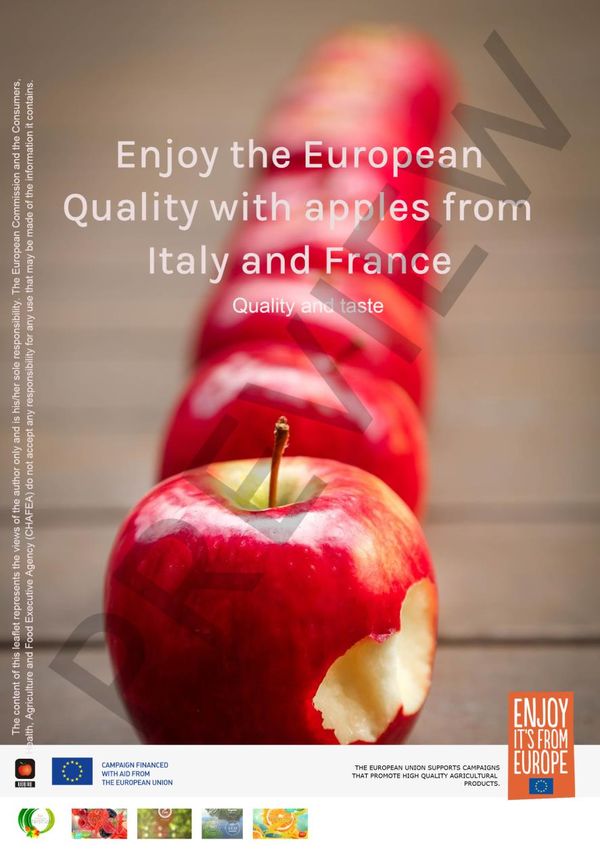
Content of the
     presentation

Promotion policy - reminder

Annual work programme 2018

Calls for proposals 2018

Statistics of passed calls and
lessons learned

Support available to candidates

                                  2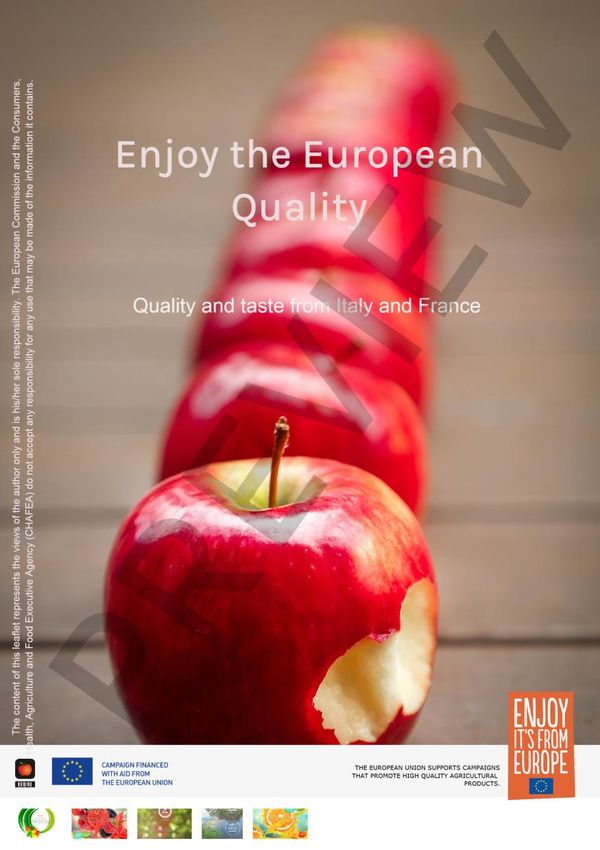
Promotion policy – Legal base
Basic act
Regulation (EU) No 1144/2014

Delegated and implementing acts
Commission Delegated Regulation (EU) 1829/2015
Commission Implementing Regulation (EU) 1831/2015

Annually:
• Annual work programme
• Calls for proposals

                                3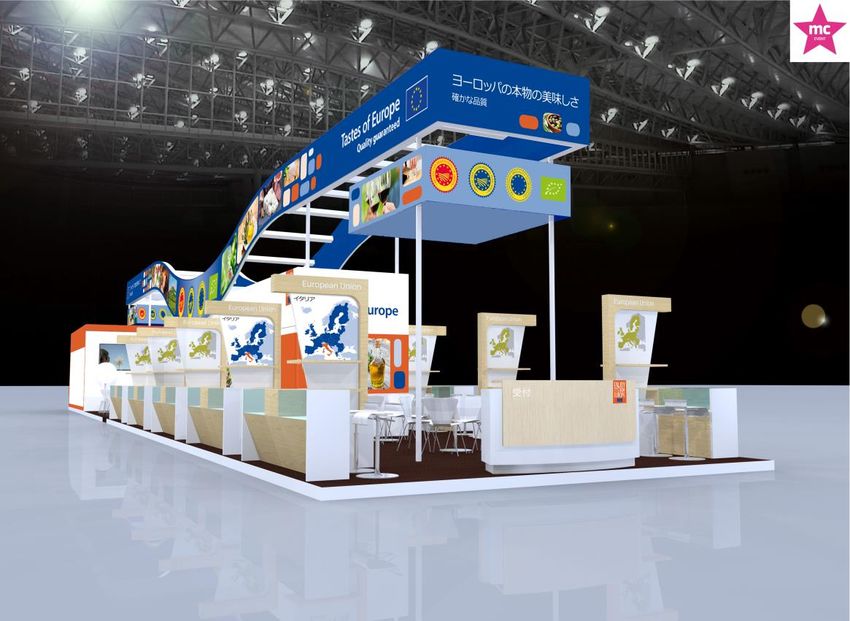
What is a promotion programme?

    A coherent set of operations (marketing and communication
    campaigns comprising print, TV, radio, online, activities on points of
    sales, public relations, participation at events/fairs)
-   B2B and/or B2C activities)
-   implemented over a period of at least one but not more than three
    years

-   With an EU main message

                                     4
SIMPLE vs MULTI programmes
SIMPLE programmes:
- Implemented by one or several organisations representative of the
  sector from the same Member State

MULTI programmes:
Implemented by at least two organisations representative of the sector
  from different Member State and/or by at least one organisation
  representative of the sector at the Union level

EU COFINANCING rates:

                                   5
What's the content of the new promotion policy?

      Targeted on EU                 Align with needs of                      Greater
       added value                        the sector                       effectiveness

• Clear priorities established   • Enlarge to new beneficiaries      • New selection process with
  annually - work programme                                            gain in time and evaluation
                                                                       exclusively at Commission
• Increase the promotion         • Wider list of eligible products     level through external experts
  campaigns in third-country       including processed products
  market                                                             • End-up of national
                                                                       cofinancing
• Enhance the cooperation        • Recognition of the strategic
  between operators from           importance of brands and          • Simplification of
  different MS through multi       origin                              administrative procedure for
  programmes                                                           Multi-programmes : directly
                                                                       managed by the Commission
                                 • Reactive in case of crisis
• Incentive EU cofinancing
                                                                     • Delegation to an executive
  rates
                                                                       agency foreseen
                                 • Technical support services

                  Increased expenditure : up to 200M€

                                                 6
Eligible products and schemes
All agricultural products covered excluding tobacco
Open to certain processed products listed in Annex
(beer, chocolate, pasta, sweet corn, cotton...)
Spirits with a Protected Geographical Indication
Wine:
Simple programmes = Basket approach
Multi programmes = Wine alone possible
On the internal market = Information on
quality schemes or responsible consumption
Fishery and aquaculture products : Basket approach
Schemes : EU quality schemes, organic, RUP,
national quality schemes
Main message: Union message
7
Proposing organisations
Trade or inter-trade organisations representative
of the sector(s) concerned at MS
Trade or inter-trade organisations at EU level
Producer organisations
Bodies with public service mission in charge of
promotion of agricultural products (example:
Agence Bio, Chambers of agriculture)
8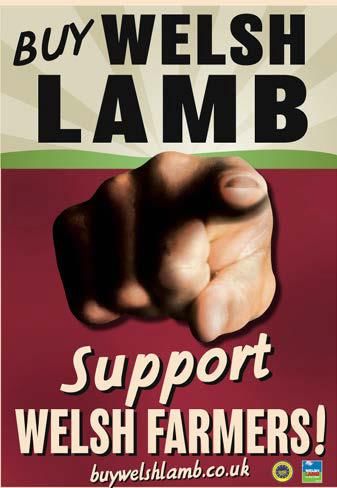
Display of Brands: under strict conditions
Brands : Trade marks
Brands can be mentioned only for certain types of actions :
Demonstrations (incl. fairs, B2B events) & tastings
Websites
Justification of why the mention of brands is necessary to meet the objectives of
the campaign to be done in the application
Equal visibility and in a distinct area compared to main EU message
Minimum of 5 brands
Maximum of 5% of the total surface area
Conditions to derogate to the minimum number of 5:
Less brands produced; and
Not possible to build a multi-products or multi-country programme
Derogation for national quality schemes registered as trademarks (e.g. Label
Rouge)
9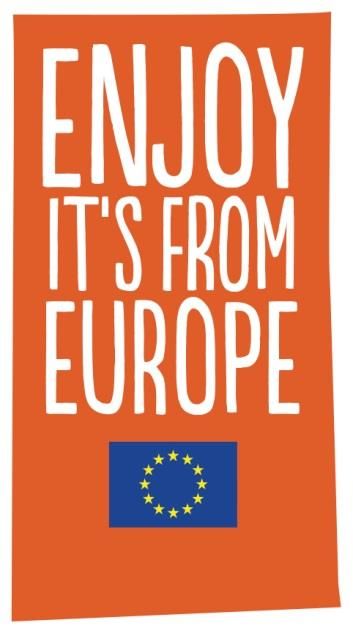
Brands: example for poster in a fair
Banner with five brands under the organisation's logo, the EU
emblem and the signature 'Enjoy, it's from Europe'

            Only for illustration purpose regarding how brand names can appear.
            Any EU co-financed programme shall respect all eligibility conditions of the
            promotion policy regulation.

                                            10
Brands : example for a stand
Individual but identical corner for each representative of brands
Same size of the names of the brands – under an EU message
Only for illustration purpose regarding how brands can be showcased.
Any EU co-financed programme shall respect all eligibility conditions of the
promotion policy regulation.
11Display of origin: under strict conditions
MENTION OF ORIGIN
Internal market : always secondary in relation to the main EU message of the
campaign
Third country market may be on the same level as the main EU message of the
campaign
Products recognised under EU quality schemes (PDO, PGI...) : the origin as
registered in the denomination may be mentioned without any restriction
12Not acceptable: programmes which encourage or give
preference to the purchase of domestic products
• Article 34 TFUE
• Case 249/81 Commission v Ireland
[1982] ECR 4005
13Origin and implementing act
The mention of origin shall be limited to visual supports
Implicit or explicit references
Shall not divert or mislead the main Union message:
Shall complement and reinforce the main Union message
The mention of origin should be the national origin or common supra national origin
EU quality schemes which refer to origin may mention their specific origin
without any restriction
National quality schemes which refer to origin may mention this origin,
provided that:
It is secondary in relation to the main Union message of the campaign in
the IM,
may be on the same level as the main Union message of the campaign in
TC
14Example: Internal Market
Main
message:
European
message
national
origin
15Example: third countries
Mention of origin
on the same
level as main EU
message
16AWP 2018 17
What is 'Annual work programme' ?

The tool to define the promotion strategy

                   With the input of the sector
=> A dynamic
promotion policy                       Defines priorities with a dedicated
                   => A policy         budget
                   aligned with the                        Adopted annually
                   needs of the        => Weighted
                   sector              priorities but with
                                       a certain           => Possibility to
                                       flexibility         adjust it each
                                                           year

                                        18
How did we draft the AWP 2018?
• The objectives of the Regulation itself: (i) increase the number of
activities aimed at third countries where there is the highest potential
of growth and (ii) in the internal market, inform consumers about the
high standards of EU products, notably the EU quality and organic
logos
• For third countries, a macro-economic analysis on projected increase
in imports on existing or emerging markets, as well as a policy
evaluation on FTAs or expected removal of SPS barriers
• Contributions from stakeholders, consulted in January through the
Civil Dialogue Group on Quality and Promotion (Food drink, Copa-
Cogeca, AVEC, Interfel, Hortiespaña, CEEV, AREFLH, Freshfel,
Europatat, Slow food…)
• Comments from Member States
• Results of the 2017 calls and HLM
19Structure of 2018 AWP
Annex I
1- GRANTS – co-financing of programmes: 179 M€
2- PROCUREMENT – measures on the initiative of the Commission:
9,5 M€
Annex II
Criteria (eligibility/exclusion/selection/award) for financial
contribution to simple programmes
Annex III
Criteria (eligibility/exclusion selection/award) for financial
contribution to multi programmes
Consult the 2018 AWP at: https://ec.europa.eu/chafea/agri/funding-
opportunities
20The priorities of the Annual Work Programme for 2018
• Continuity with AWP 2017
• Novelties:
• Increased budget!
• Earmarked envelope to promote healthy eating and increase the
consumption of fruits and vegetables in the internal market
• Earmarked envelopes for sustainable sheep/goat meat in the internal
market
• Multi programmes: emphasis on third countries
• Additional multi call in case of market disturbance
21Priorities and budget
SIMPLE programmes % Mio EUR
Internal market 20% 20
TOPIC 1. EU quality schemes(PDO, PGI, TSG, OMR,
55% 11
organic)
TOPIC 2. Programmes highlighting the specific features of
agricultural methods in the Union and the characteristics 35% 7
of EU agrifood products
TOPIC 3. Programmes on sustainable sheep/goat meat 10% 2
Third countries 75% 75
TOPIC 4. China, Japan, South Korea, Taiwan, SE Asia,
35% 26.25
Southern Asia
TOPIC 5. Canada, USA, Mexico, Colombia 30% 22.5
TOPIC 6. Other geographical regions 35% 26.25
Serious market disturbance / crisis call 5% 5
Total SIMPLE programmes 100% 100
22Priorities and budget
MULTI programmes % Mio EUR
Internal market 42
TOPIC A. Programmes on sustainable sheep/goat meat 5% 4
TOPIC B. Programmes to increase the consumption of
fruits and vegetables in the IM in the frame of proper 10% 8
dietary practices
TOPIC C. Programmes highlighting the specific features
of agricultural methods in the Union and the
38% 30
characteristics of EU agrifood products or on EU quality
schemes
Third countries
TOPIC D. Programmes highlighting the specific features
of agricultural methods in the Union and the
characteristics of EU agrifood products or on EU quality 41% 32.1
schemes
Serious market disturbance / crisis call
6% 5
Total MULTI programmes 100% 79.1
23Activities organised directly by the EC
Economic diplomacy of Commissioner Hogan
- November 2017: business delegation visit to Iran and Saudi Arabia
14-19 May 2018: business delegation visit to China
Possibility to participate in business delegation visits (registration
for May closed)
Communication campaigns, events, support services for
potential applicants
24Calls for proposals 2018
25Calls for proposals 2018 • 2 calls published in OJEU: • simple and • multi programmes • Available in all EU official languages • Online submission of proposals via the Participant Portal • Submission deadline: 12 April 2018, 17:00 CET
Timetable simple programmes

             29
Calls for proposals 2018
Relates to the implementation of simple and multi
programmes in the framework of the 2018 Annual
Work Programme
• Thematic priorities
• Budget available and financial provisions
• Admissibility requirements
• Criterion: eligibility, exclusion, selection, award
• Publicity
• Procedure for the submissionThematic Priorities for AWP 2018 (compared to AWP 2017) - (Annex I AWP)
SIMPLE PROGRAMMES % Mio EUR
SIMPLE PROGRAMMES in Internal Market 20% 20 (22,5)
TOPIC 1. Programmes on EU Quality Schemes 55% 11 (12,3)
TOPIC 2. Programmes highlighting the specific features of agricultural methods
in the Union and the characteristics of EU agrifood products 35% 7 (10,1)
TOPIC 3. Programmes on sustainable sheep/goat meat 10% 2
SIMPLE PROGRAMMES in Third Countries 75% 75 (63)
TOPIC 4. China, Japan, South Korea, Taiwan, South East Asia, Southern Asia 35% 26,25 (14,7)
TOPIC 5. Canada, USA, Mexico, Columbia 30% 22,5 (11,6)
TOPIC 6. Other geographical areas 35% 26,25 (20)
Market disturbance/additional call for proposals 5% 5 (4,5)
100
Total SIMPLE % 100 (90)
MULTI PROGRAMMES % Mio EUR
MULTI PROGRAMMES in Internal Market 42
TOPIC A. Programmes on sustainable sheep/goats meat 5% 4
TOPIC B. Programmes to increase the consumption of fruits and vegetables in the IM
in the frame of proper dietary practices 10% 8
30
TOPIC C. Programmes highlighting the specific features of agricultural methods (15,05 for EU logos in IM
in the Union and the characteristics of EU agrifood products or on EU Quality Schemes 38% or TC)
Multi programmes in Third countries 32,1
TOPIC D. Programmes highlighting the specific highlighting the specific features of 32,1
agricultural methods in the Union and the characteristics of EU agrifood products or on EU (12,9 for generic in IM or
Quality Schemes 41% TC)
Market disturbance/additional call for proposals 6% 5
Total MULTI 100 79,1 (43)
TOTAL SIMPLE and MULTI PROGRAMMES 179,1 (133)
Commission own initiatives 9.5 (9,5)
TOTAL PROMOTION 32 188,6 (142,5)Criteria for financial contribution
(Annex II of the AWP)
1. Eligibility criteria
To define whether an applicant is allowed to participate in the call
2. Exclusion criteria
To eliminate from participation in the procedure or award, applicant
who are in one of the exclusion situations.
3. Selection criteria
To assess the applicant's financial and operational capacity
to complete a proposed action.
4. Award criteria
To assess the relevance of the proposal's scope to the annouced
priorities and other quality aspects taking into account its costs.
33Eligibility criteria: is my organisation eligible to the EU
promotion aid scheme?
Trade or inter-trade organisations at MS level
Trade or inter-trade organisations at EU level
Producer organisations
Agri-food bodies with public service mission in charge of
promotion of agricultural products
No permanent support: a proposing organisation shall not receive support
for information and promotion programmes on the same product or scheme,
carried out in the same geographical market on more than two consecutive
occasionsIs my organisation representative of the sector?
Shall be representative of the sector or product concerned
Trade or inter-trade organisations at MS or EU level:
50% rule;
Group – GIs: 50% rule
Eligible activities (section 6.2 of the call)
Proposals must fall within the chosen priority topic of the call
Proposals can only cover products and schemes listed in Article 5 of
   Regulation (EU) No 1144/2014
Proposals must have a Union dimension
Simple programmes:
   • Programme has to be implemented in a Member State other than that of
     the applicant (exception – campaigns on Union quality schemes or proper
     dietary practices)
   • Obligation to implement programme through implementing bodies
     (competitive selection procedure)
   • If part implemented by the proposing org., costs not in excess of normal
     market rates, min. 3 year experience implementing similar measures
Messages conveying information on impact on health – conditions
  stipulated in reg. 2015/1831
Mentioning of origin and brands – conditions stipulated in reg.
  2015/1831

                                     36
Eligible activities (section 6.2 of the call) cont.
Indicative list:
• Management of project
• Public relations (PR activities, Press events)
• Website, social media (Website setup, updating, maintenance, Social
media accounts setup, regular posting, Other - mobile apps, e-
learning platforms, webinars, etc.-)
• Advertising (Print, TV, Radio, Online, Outdoor, Cinema)
• Communication tools (Publications, media kits, promotional
merchandise, Promotional videos)
• Events (Stands at trade fairs, Seminars, workshops, B2B meetings,
trainings for trade/cooks, activities in schools, Restaurant weeks,
Sponsorship of events, Study trips to Europe)
• Point-of-sale (POS) promotion (Tasting days, Other: promotion in
retailers' publications, POS advertising)
37Exclusion criteria (section 7 of the call)
the economic operator is bankrupt;
it has been established by a final judgment or a final administrative
decision that the economic operator is in breach of its obligations
relating to the payment of taxes or social security;
it has been established by a final judgment or a final administrative
decision that the economic operator is guilty of grave professional
misconduct;
applicant has shown significant deficiencies in complying with main
obligations in the performance of a contract financed by the EU
budget;
other situations.
38Selection criteria (section 8 of the call)
Financial capacity
Applicants must have stable and sufficient sources of funding to
maintain their activity throughout the period of implementation of the
action and to participate in its funding;
The check is not performed for public bodies and for applicants
requesting a grant lower than 60.000 EUR;
Applicants requesting a grant above 750.000 EUR: audit report
produced by an approved external auditor certifying the accounts for
the last financial year available;
Supporting documents: annual accounts, financial viability form
39Selection criteria (section 8 of the call) cont.
Operational capacity
Applicants must have the professional competencies and
qualifications required to complete the action
SIMPLE programmes: if the applicant implements part of the action,
min. 3-year experience in implementing similar measures
At least one natural person under employment or similar contract
with min. 3-years experience in project management
Supporting documents: general profiles of the core team, declaration
by the project leader, activity report
40Award criteria
Please refer to annex VI of the Guide for applicants
Union dimension
Quality of the technical proposal
Quality of the project management
Budget and cost-effectiveness
Make sure to address each (sub)criterion
41Award criteria (section 9 of the call)
1 - Union dimension
a) Relevance of proposed information and promotion measures to the
general and specific objectives listed in Article 2 of Regulation (EU)
No 1144/2014, aims listed in Article 3 of that Regulation, as well as
to priorities, objectives and expected results announced under the
relevant thematic priority
b) Union message of the campaign (Example 1, example 2)
c) Impact of project at Union level
2 - Technical quality of the project
a) Quality and relevance of the market analysis
b) Coherence of the programme strategy, objectives, and key messages
c) Suitable choice of activities with respect to objectives and
programme strategy, adequate communication mix, synergy between
activities
d) Concise description of activities
e) Quality of the proposed evaluation
42 methods and indicatorsAward criteria (section 9 of the call) cont.
3 – Quality of the project management
a) Project organisation and management structure
b) Quality control mechanisms and risk management
4 – Budget and cost-effectiveness
a) Justification of the overall level of investment
b) Suitable allocation of budget in relation to the objectives and scope
of the activities
c) Clear description of the estimated costs and accuracy of the budget
d) Consistency between the estimated costs and deliverables
e) Realistic estimation of costs of project coordination and of activities
implemented by the proposing organisation, including number and
rate of person/days
43Award criteria – quality thresholds
Maximum
Criteria Threshold
Points
1. Union dimension 20 14
2. Technical quality of the project 40 24
3. Quality of the project management 10 6
4. Budget and cost-effectiveness 30 18
TOTAL 100 62
44Evaluation
Ranked list established for each topic indicated in the call
Proposals will be ranked according to the number of points they
receive based on the evaluation against the award criteria and
sorted in descending order of points
Proposals which receive the number of points above the threshold
for quality for each award criterion will be accepted up to the limit
of the available budget. The highest ranked of the remaining
successful proposals will be put on a reserve list (and could be
funded in case additional budget becomes available), the others
will be rejected
Proposals which do not fulfil the eligibility, selection or exclusion
criteria, or which do not reach the threshold for quality (for one or
several of the award criteria) will be rejected
45After submission
Chafea to contact applicants only to clarify issues regarding
eligibility or to request other clarifications
Information to applicants (by MS or by Chafea): outcome of
evaluation including evaluation summary report
Successful applicants will be invited to make non-substantial
adjustments to the proposal, based on the comments of the
evaluation committee
46LESSONS
LEARNED
2016-2017
47Proposals received in 2017
Number of Increase on Requested Available Requested /
Call proposals 2016 grant budget Available
Simple 189 -5% 306,434,124 85,500,000 358%
Multi 35 30% 132,149,762 43,000,000 307%
48Outcome of evaluation: simple programmes 2017
49Outcome of evaluation MULTI programmes 2017
50Submission statistics SIMPLE call 2017
Estadísticas
51Lessons learned from 2016 and 2017 - Competition (and therefore probability of getting EU funding) depends on the topic chosen; for some topics, there is a 1:8 ratio of retained proposals - Even though the number of ineligible proposals is decreasing year to year, eligibility conditions still seem difficult to grasp applicants to analyze carefully eligibility conditions listed in Section 6 of the call for proposals
Reasons for rejection: eligibility and
             admissibility

• Inadmissible:    mandatory       annexes and
  supporting documents not submitted, proposal
  sent by email after the deadline
• Ineligible applicants: applicant organization not
  eligible   or    not   representative    of   the
  product/sector promoted, private companies
  acting as co-applicants, non-EU applicants
Reasons for rejection: eligibility and
admissibility
• Ineligible products, schemes or activities: wine
in simple proposal not combined with another
product, promotional activities targeting
consumers for wine or spirits on the internal
market
• No significant scale: simple proposals which do
not promote EU quality schemes or proper
dietary practices are implemented only in the
Member State of the applicantReasons for rejection – quality of
proposals (2017 calls)Final advice Read carefully the call text, FAQ, and the relevant regulations: Is my organisation eligible? Does my proposal correspond to the topic objectives? Is it compliant with all call conditions? Follow the instructions provided in the Guide for applicants Pay attention to “Award criteria” Do not wait until the last minute to submit your proposal
Information available to applicants:

• Legal base
• Guide for applicants (submission template, detailed award
  criteria)
• Model grant agreement
Available on Chafea website:
• Info day in Brussels 31.01.18 (recording)
• Webinar "How to submit a proposal"
• Frequently asked questions (FAQ)
• Helpdesk: chafea-agri-calls@ec.europa.eu

                                57
SUPPORT TOOLS 58
Market reports
Statistical and third country reports

                                59
Find partners
60Interactive map of EU-funded projects
6162
Campaign visual creator

           63
Webinars 64
Webinars

   65
FAQs
https://ec.europa.eu/chafea/agri/faq.html
Visit: www.agripromotion.eu

Follow us on social media: #EUAgriPromo and @EUAgri

                         67
Thank you for your attention!
68You can also read


